
Some commentaries on the jeepney modernisation
The nationwide transport strike last Monday elicited a lot of reactions from both supporters and opponents of the the initiatives to modernise the jeepney. Both sides have valid points but both, too, have weak points. Much has been discussed about the cost of acquiring new jeepneys to replace the old ones and whether you agree or not, these are really a bit steep to the typical jeepney driver-operator.
A low downpayment will certainly mean higher monthly amortisations. And most drivers/operators can only afford a low downpayment with or without the 80,000 pesos or so subsidy from the government. Even if you factor in some tax incentives, the net amount to be paid every month will still be too much for a typical driver/operator. Anyone who’s ever purchased a vehicle, new or used, through a loan should know this, and to deny it means you probably are privileged enough not to take out a loan.
Certainly there are exceptions like certain Beep operations that are supposed to be run like a company or cooperative, and where fleet management techniques allow these to operate more efficiently and cost-effectively. The latter supposedly allows the owners to recover their capital (return of investment) for the purchase of the new jitney units. The reality, however, is that not all routes are good enough for the required revenues and the better earning ones subsidize (forced?) those that are not profitable. The ‘company’ or ‘coop’ can therefore hide these unprofitable cases as the collective performance of the routes they operate along become the basis for assessment.
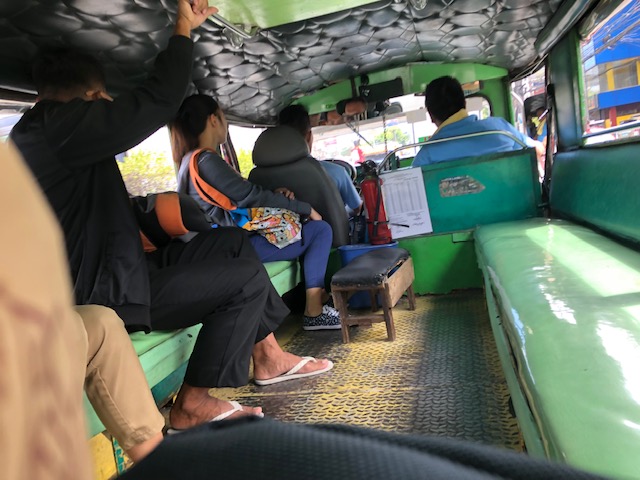 Snapshot inside a jeepney while waiting for it to fill with passengers
It is true that the business model (or what is passed off for one) for jeepney operations is flawed. More so if you place this in the context of transport demand for a metropolis like Metro Manila. That is why perhaps corporatization or cooperatives can probably help in terms of improving processes and practices (e.g., maintenance regimes, deployment). So perhaps this is where government should step in and be more aggressive in organising jeepney drivers and operators. I would even dare say that government should be willing to extend more financial support if significant change in public transport is to be achieved. The Office of the President, Senators and Congressmen enjoy a lot of pork and the numbers for a single year indicate that they can, if willing, purchase new jitneys for their constituencies perhaps focusing on the cities and retiring the old, dilapidated public utility vehicles. That, I think, is a more ‘intelligent’ use to these funds that are allegedly being misused by our politicians.
So, was the strike a success? I think the answer is yes it was. Government cannot deny this as it was forced to suspend classes in schools in order to address the impending shortfall of services during the strike and many LGUs were forced to provide free transport services (libreng sakay) in many forms (e.g., dump trucks, flat bed trucks, etc.). You can only say it was a failure if it was business as usual with commuters feeling minimal impact of the stoppage in jeepney operations.
–
Mixed messages for commuters?
I had spotted buses (or perhaps its just the same bus?) for a P2P service between Antipolo and Ortigas Center bearing what appears to be a statement for improving the quality of life of commuters. Many have been suffering and continue to suffer on their daily commutes starting from difficulties getting a ride to very long travel times. The term “dignity of travel” comes to mind, which a colleague coined many years ago to describe
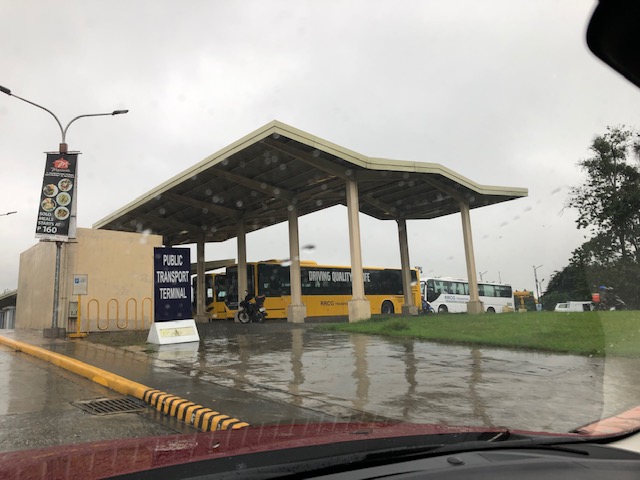 P2P buses at the public transport terminal at Robinsons Place Antipolo
 Whoever thought of this probably meant well; thinking about improving quality of life. The choice of words though may convey a different message as “driving” is in all caps and usually associated with a different, less appealing activity to sustainable transport advocates. I think they should have chosen “improving” instead of “driving” here.
This is somewhat similar to a much earlier post of mine showing SMRT buses in Singapore with ads promoting Uber and how it was supposed to complement public transport. That, of course, was a bit of a stretch in the city-state, which already has excellent public transport compared to elsewhere, and already complemented by very good taxi services.
Yesterday, there was a nationwide transport strike and depending on which side you are on, the reality is that we are still far from having more efficient public transport. But that’s another story and hopefully, I get to write about it in the next few days.
–
Changi Jewel and transit
The trip to Sri Lanka afforded me some hours at Singapore’s Changi Airport. En route to Colombo, we made sure to go around the complex and check out one of the attractions of the top airport in the world. Changi’s Jewel is very impressive and can make you forgot you were actually inside an airport terminal. Here are some photos taken as we trekked to the Jewel via Terminal 2 and 3.
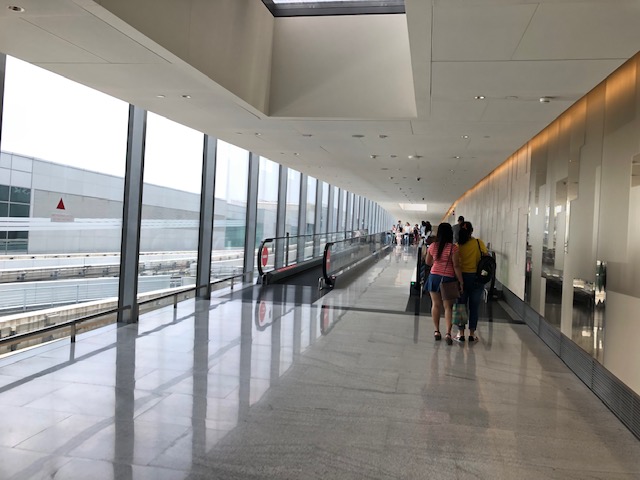 Visitors have the option of walking by themselves or using the moving walkway whenever these were available.
 The automated guideway transit (AGT) system of Changi allow you to transfer from one terminal to another with the exception of Terminal 4.
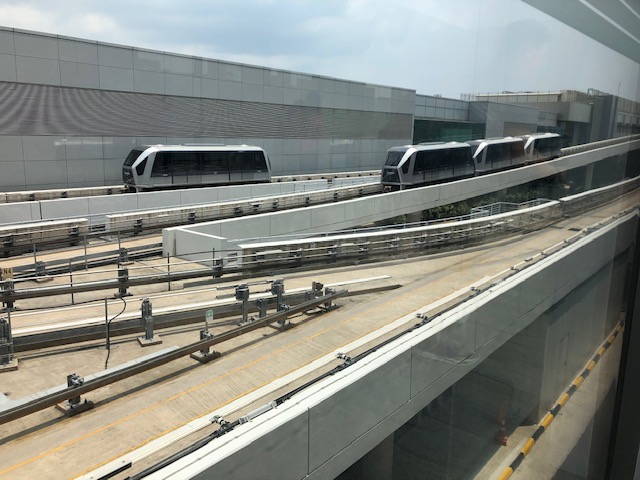 I took this photo of the guideway and the AGT as reference for my lectures
 Another view of the corridor connecting Terminal 3 to the Jewel
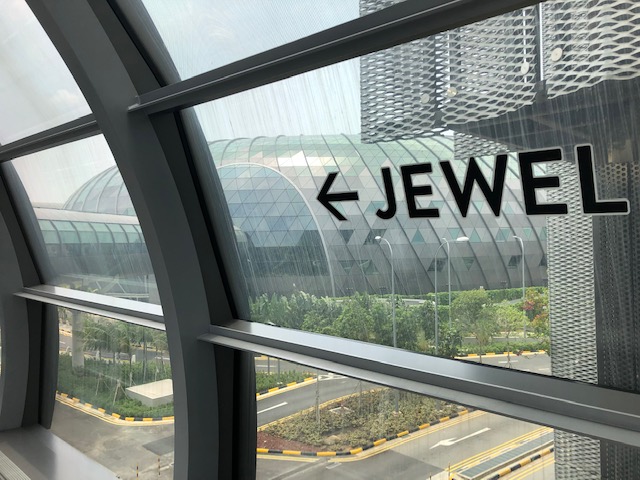 Directional sign to the Jewel
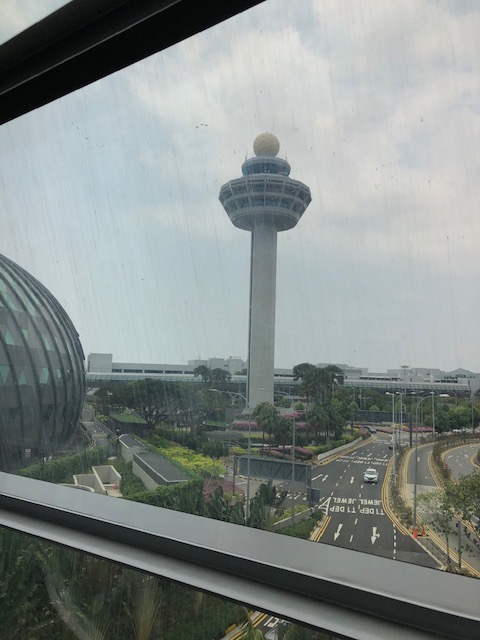 Changi’s air traffic control tower
 The main attraction is this gigantic waterfall located at a man-made complex that’s designed to imitate conditions at a rainforest.
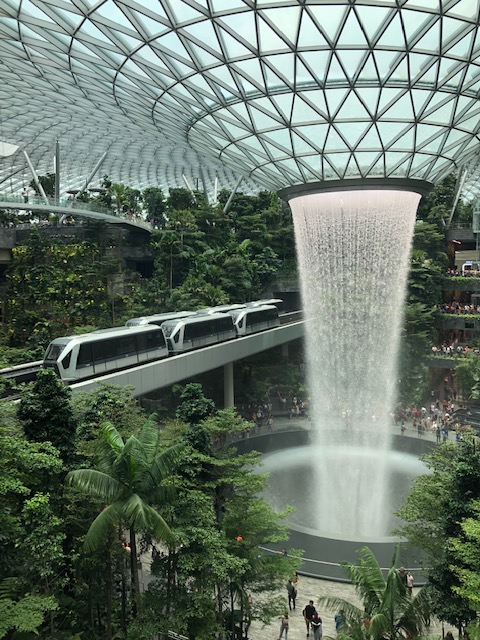 Changi AGT slow down for passengers to have a good close view of the Jewel
 All the water used is recycled and one can get mesmerised by the vortex where all the water falls and seem to be sucked into.
 Here’s another look at the Jewel and the airport AGT
 There is a mall with shops, restaurants and cafes around the Jewel.
 Another photo of the AGT guideway above the road system at Changi
 Taxis queued along airport roads
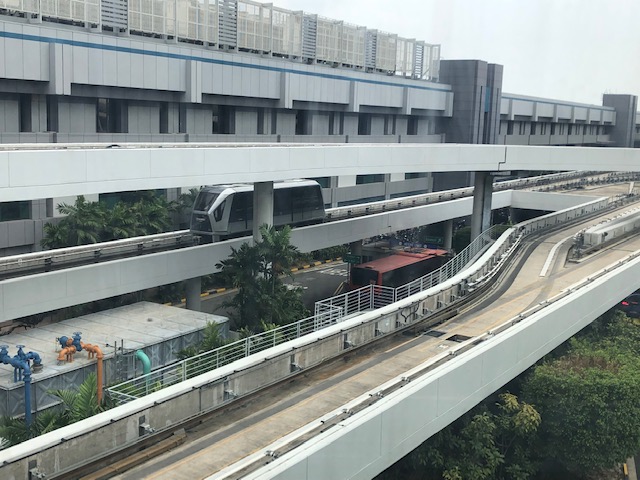 More guideways
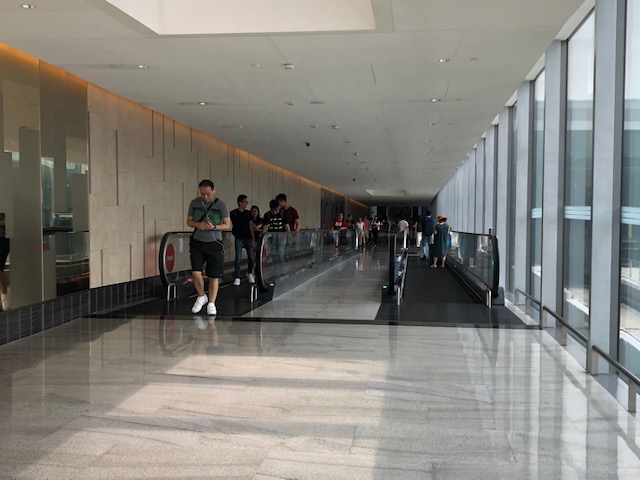 A look back at the way from the Jewel
More photos of Changi soon!
–
Paseo Recoletos
The sidewalks around the University of San Jose Recoletos in Cebu City are named Paseo de Recoletos and Paseo de San Jose. Here are a few photos on Paseo de Recoletos.
 Arcade-type walkway along the perimeter of the University of San Jose Recoletos. This part is the Paseo de Recoletos along Magallanes Street and across from the Freedom Park Market. The other is Paseo de San Jose but is not wholly covered. The latter is along P. Lopez Street.
 The Paseo leads to the church of Our Lady of Mt. Carmel, which is on the second level from the ground.
 View of the Paseo de Recoletos from our vehicle. Note the architectural details on the USJR building.
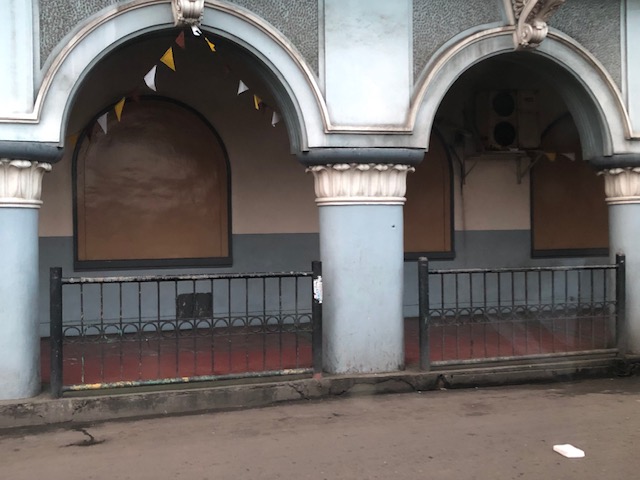 Another view of the Paseo de Recoletos
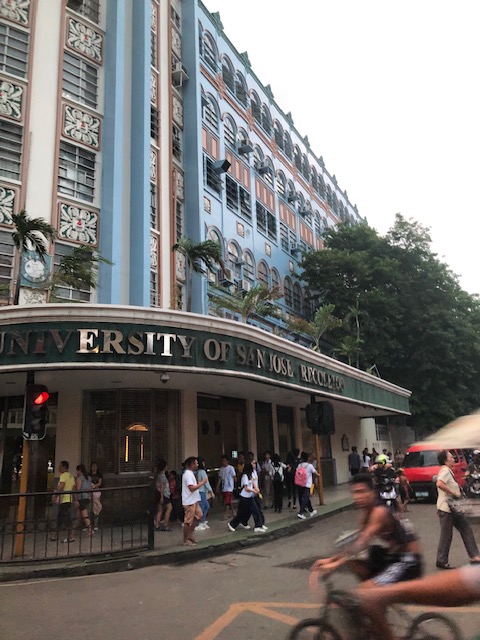 The main gate of the USJR is at the corner of Magallanes and P. Lopez Streets. The photo capture the view towards P. Lopez and the side of the university along this street is Paseo de San Jose.
 Frontage of Our Lady of Mt. Carmel Parish Church, which is integrated with the main building of the university, which is run by the Order of Augustinian Recollects (OAR).
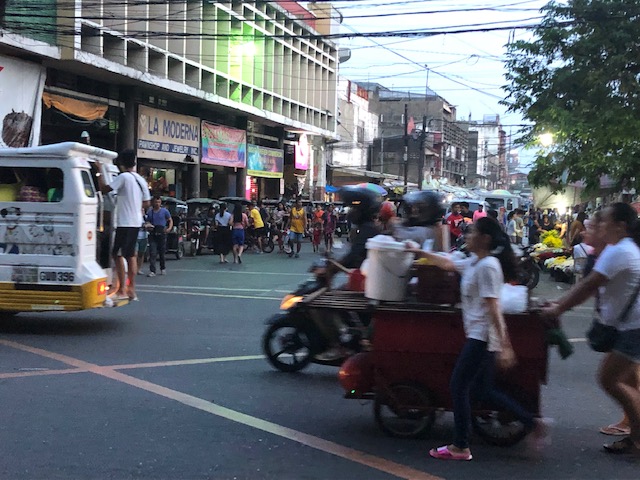 Scenes along the Paseo de Recoletos included overloaded jeepneys, motorcycle taxis and various vendors both mobile and those who’ve set up shop across the street.
 Vegetable vendor pushing a cart containing his merchandise
Scenes like these are common in many Philippine cities especially the old ones that have narrow streets and have retained much of the commerce in many areas around the city centre. It gives you a glimpse of the marketplace and commerce before the arrival of the large malls. Of course, there are what are already termed as malls around the area but these are more like large department stores than the types of SM City, Ayala Center and Robinsons Place.
–
The Barkadahan Bridge situation
The Barkadahan Bridge is currently undergoing rehabilitation. To be accurate, the old bridge is being rehabilitated and upgraded/retrofitted to be able to carry the traffic projected to use it being a vital link between the Province of Rizal and Metro Manila via Pasig and the C-6 corridor. The bridge is named after the “friendship” established among Rizal municipalities and Pasig City for an area that has been subject of a territorial dispute among them. These are the municipalities of Cainta and Taytay (Rizal Province) and the city of Pasig. The bridge spans the Manggahan Floodway, much of which is in Pasig City.
To increase the capacity for this crossing, which is the most direct route to C-6 and popular among many headed to Taguig/BGC and Makati, a new bridge had been constructed to the south of the old one. The older one had 2 traffic lanes and was no longer sufficient for the volume of vehicles crossing it after the expansion of C-6 resulting to it steadily gaining more users over the years. Use of this route cut down travel times between Rizal and BGC and Makati by at least 30 minutes based on our experiences using the route.
Late last year as far as I could recall, the new bridge opened and immediately increased capacity but then congestion quickly set-in due to two factors: the traffic management at the intersection with the East Bank Road and the constrained (two-lane, two-way) leg of Highway 2000. Add to this the lack of discipline by local traffic in the form of tricycles and motorcycles counter-flowing in the area.
Earlier this year, signs were posted around Rizal about the then impending project for the rehabilitation of the old bridge. The signs advised for most travellers to avoid using the Barkadahan Bridge due to the congestion in the area because of the project. It turns out that what was thought by most as a project retrofitting the old bridge alone was actually a bigger one involving increasing the capacity of the Highway 2000 leg of the intersection with the East Bank Road. Following is a photo posted at the official Facebook page of the Rizal Provincial Government showing the demolition of buildings and other structures along the Highway 2000 leg. The photos were taken from the new Barkadahan Bridge approaching the intersection, the southbound direction of the East Bank Road, and from the westbound side of Highway 2000.
 Demolition and clearing of ROW for the expansion of Highway 2000 in relation to Barkadahan Bridge [Photo collage from the Lalawigan ng Rizal Facebook page]
From the photos above, it is clear that at least 2 lanes will be added to Highway 2000 and that this leg will soon be well-aligned with the Barkadahan Bridge, which will also have a total of 4 lanes. Hopefully, this project will be completed soon and within the year (before December?) in order to alleviate the commuting woes of Rizalenos working in the BGC and Makati CBD areas. Of course, that goes without saying that there is also a need to optimise the traffic signals at the intersection and to strictly enforce traffic rules and regulations vs. erring motorists in the area.
–
NAIA Terminal 3 departure 2019
My recent travel to Sri Lanka allowed me to take photos at 3 airports – NAIA, Changi and Bandaranaike. For NAIA, I used Terminal 3. For Changi, I had the opportunity to take photos at Terminals 2, 3 and 4. And Bandaranaike was my new airport for 2019. Here are photos I took at the departure area of NAIA Terminal 3. There were a few new items here from my last overseas trip using this terminal (I traveled onboard Emirates last year to and from Europe).
 Directional signs greet you as you clear immigration
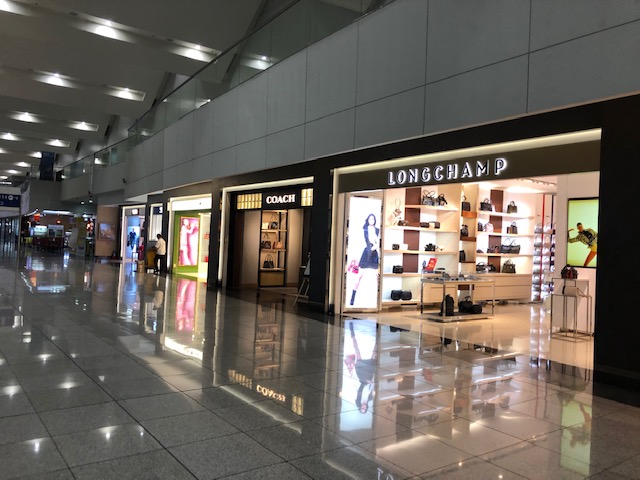 Shops at Terminal 3
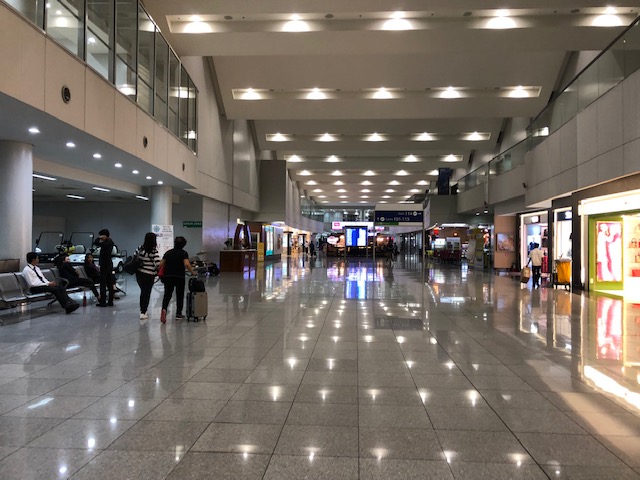 Long corridor leading to the boarding gates is lined with shops at either side
 Local cafe at the departure area
 Chocolates for sale
 I was very happy to see that the best of Philippine chocolates are being sold at the duty free shop. These include Malagos (the Davao brand, which I think is the top quality chocolate in the country), Auro (also from Davao and with high quality comparable to Malagos), and Theo & Philo (another good quality chocolate). At the bottom of the shelf are high quality liquor.
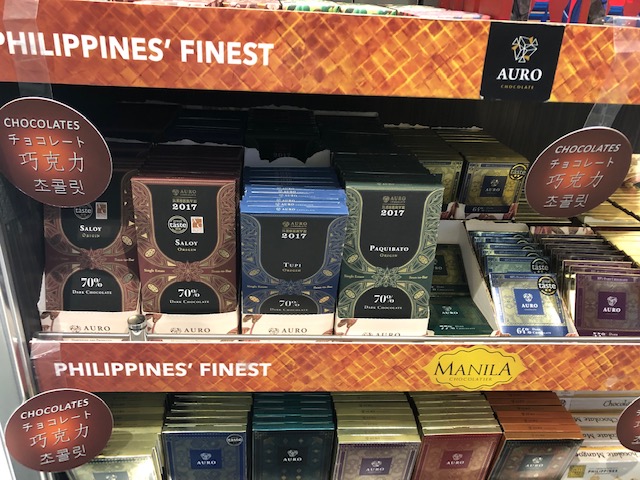
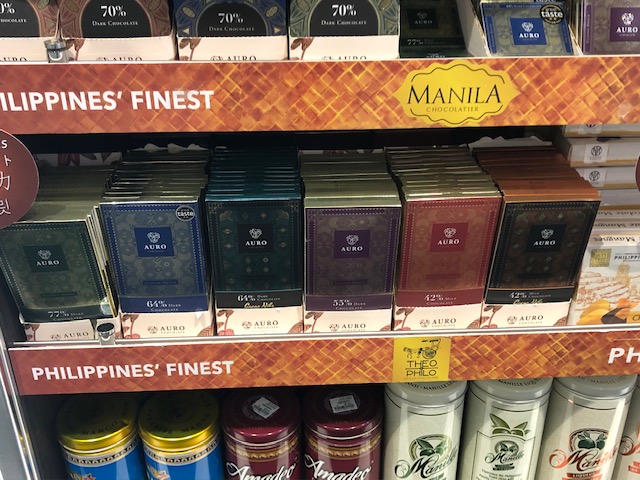 Close-up of the selection of Auto chocolates.
 At the other side of the shelf are boxes of chocolate-covered dried fruit. For me, the chocolate-covered mangoes are the top picks.
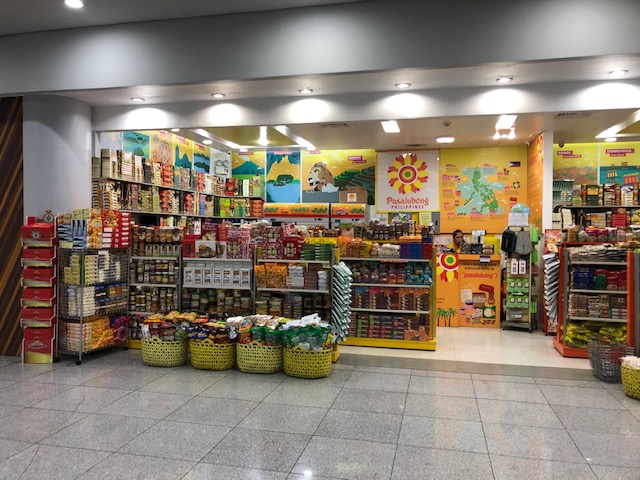 Souvenir shop specialising in local delicacies from different regions of the country.
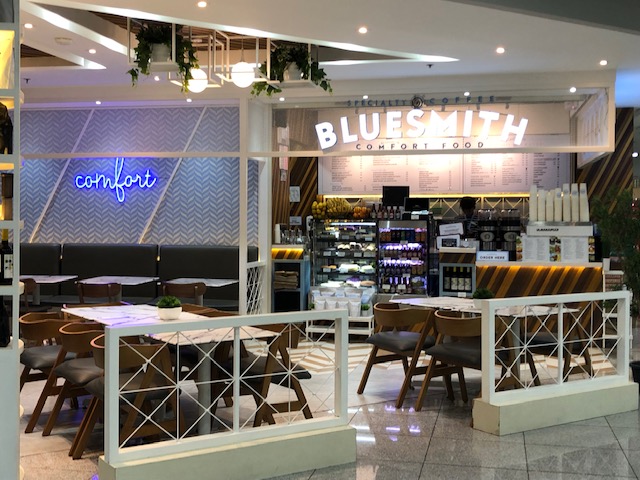 It was the first time I saw this cafe at the T3 departure area
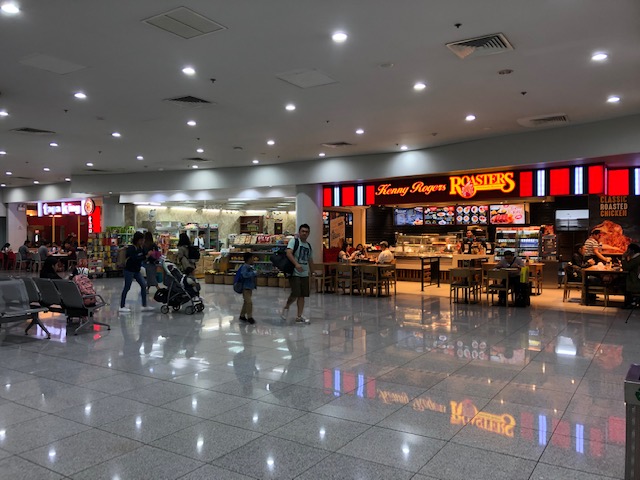 There are also the familiar and reliable restaurants like Kenny Rogers’
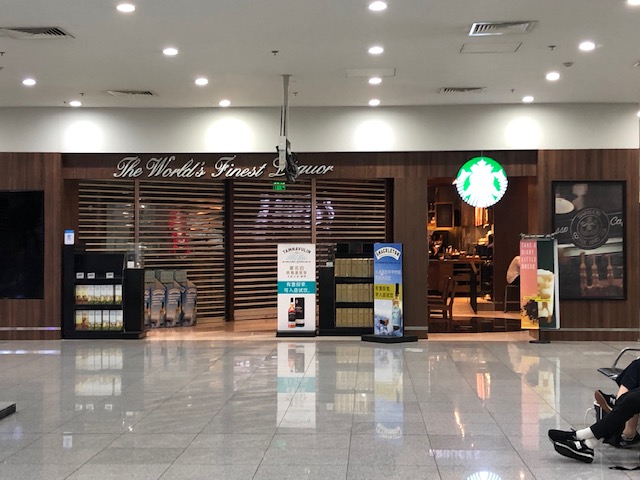 Starbucks for those who prefer their drinks and food. Don’t get me wrong. I also patronise their drinks and food and they are a sure thing compared to other brands you are not familiar with.
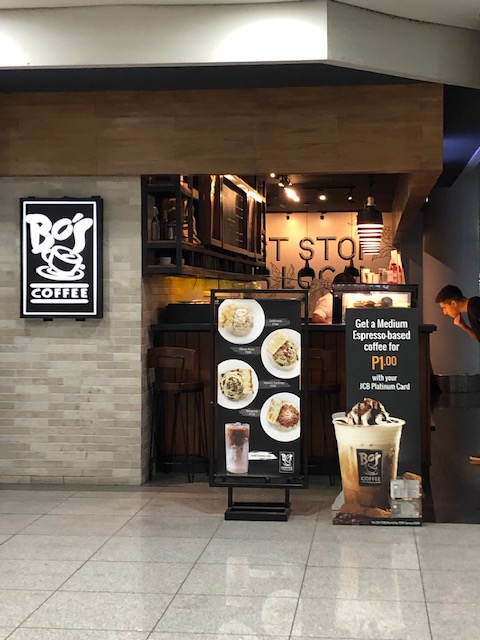 Bo’s Coffee might be preferable to many Filipinos. This is another brand that originated in Davao.
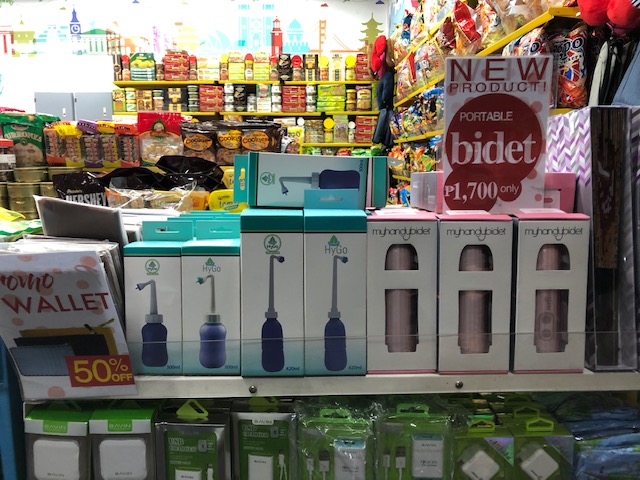 We were amused by this somewhat novel product – portable bidet
 This is the second airport where I’ve seen WHSmith. The other is Mactan Cebu International Airport.
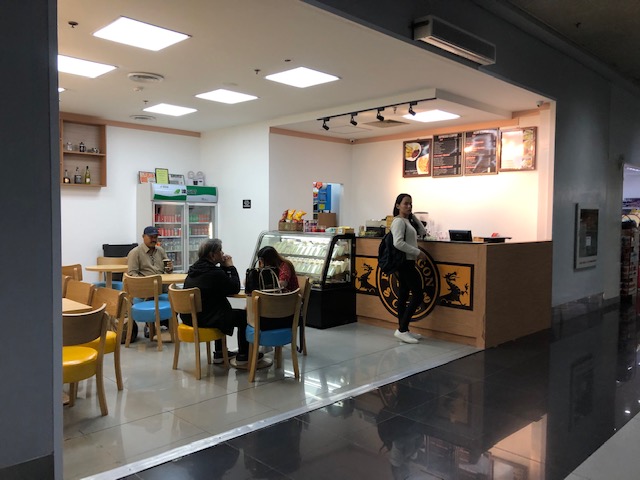 Another local cafe at the terminal
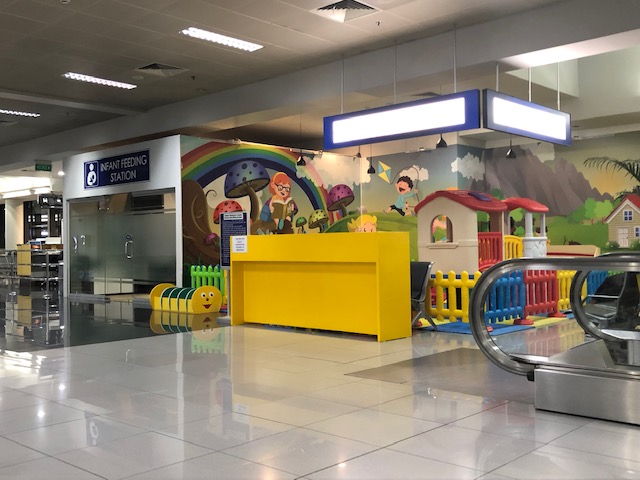 Children’s play area and infant feeding section at the terminal
–
On commuting characteristics in Metro Manila – Part 2
Late last month, I wrote some comments about a recent survey conducted by a group advocating for improved public transport services in Metro Manila. In that post I stated that perhaps its not a lack of public transport vehicles but that they are not traveling fast enough to go around. Simply, the turnaround times for these vehicles are too long and that’s mainly due to congestion. But how do we translate the discussion into something of quantities that will allow us to understand what is really happening to road-based public transport.
As an example, and so that we have some numbers to refer to, allow me to use data from a study we conducted in 2008. Following are a summary of data we collected on jeepneys operating in Metro Manila and its surrounding areas.
| Route Class | Coverage Distance | Distance traveled per day, km |
| Short | 5 kilometers or less | 68.75 |
| Medium | 6 – 9 kilometers | 98.24 |
| Long | 10 – 19 kilometers | 111.22 |
| Extra Long | 20 kilometers & above | 164.00 |
[Source: Regidor, Vergel & Napalang, 2009, Environment Friendly Paratransit: Re-Engineering the Jeepney, Proceedings of the Eastern Asia Society for Transportation Studies, Vol. 7.]
Coverage distance refers to the one-way distance between origins and destinations. If we used the averages for the coverage distances for each route class, we can obtain an estimate of the number of round trips made by jeepneys for each route class. We assume the following average round-trip distances for each: short = 3.5 x 2 = 7km; medium = 7.5 x 2 = 15km; long = 14.5 x 2 = 29km; and extra long = 50 km. The last is not at all unreasonable considering, for example, that the Antipolo-Cuba (via Sumulong) route is about 22km, one way, and there are certainly other routes longer than this.
The number of round trips can then be estimated as: short = 68.75/7 = 9.82 or 10 roundtrips/day; medium = 98.24/15 = 6.54 or 6.5 roundtrips/day; long = 111.22/29 = 3.84 or 4 roundtrips/day; and extra long = 164/50 = 3.28 or 3 roundtrips/day. Do these numbers make sense? These are just estimates from 2008/2009. Perhaps everyone would be familiar with certain routes for their regular commutes and the number of roundtrips made by jeepneys (or buses or UV express) there then and now. Short routes like those of the UP Ikot jeepneys might have more roundtrips per day compared to other “short” route jeepneys since there is practically no congestion all day along the Ikot route. It would be worse in the case of others especially those running along the busiest corridors like Ortigas Ave., Marcos Highway, Commonwealth, Espana Avenue, Shaw Boulevard and others. If you factor current travel speeds into the equation then it can be pretty clear how these vehicles are not able to come back to address the demand for them.
In a recent Senate hearing tackling the transport issues in Metro Manila, a certain study was mentioned. This was the EDSA Bus Revalidation Study conducted in 2005/2006. The findings of that study and subsequent ones showed that there was an oversupply of public transport vehicles in Metro Manila. These studies also recommended for the rationalisation or optimisation of road public transport routes in the megalopolis. I think it is timely to revisit these reports rather than pretend there never were formal studies on public transport in Metro Manila and its surrounding areas.
–
Another look at the Francisco Bangoy (Davao) International Airport – Departure Part 2
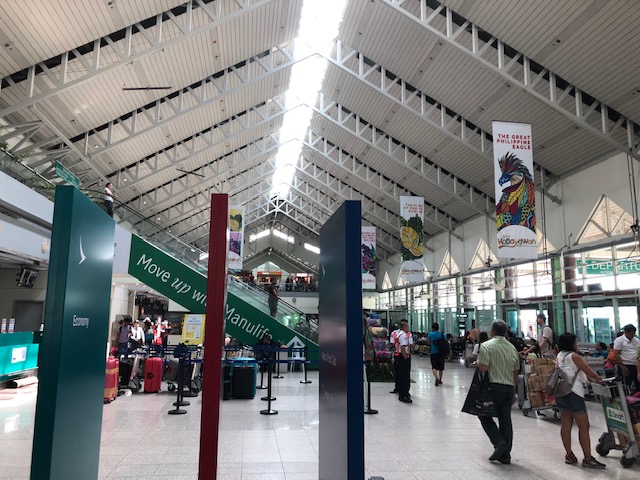
This is the last part of the feature on the Davao International Airport. Here are the last batch of photos I took of the airport departure areas.
 Spacious departure level containing the airline check-in counters
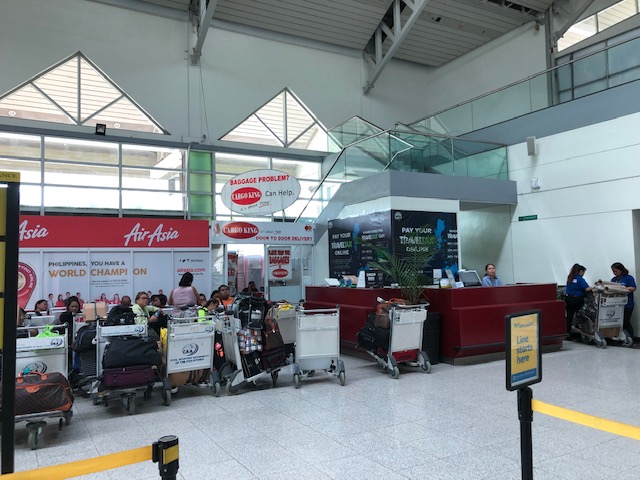 Passengers wait for their check-in times and counter for travel tax payments
 Passengers with their luggage filing into the terminal
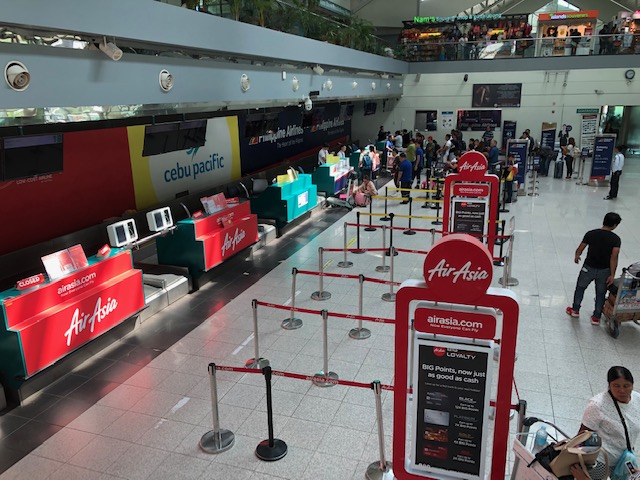 View of the airline check-in counters from the escalator
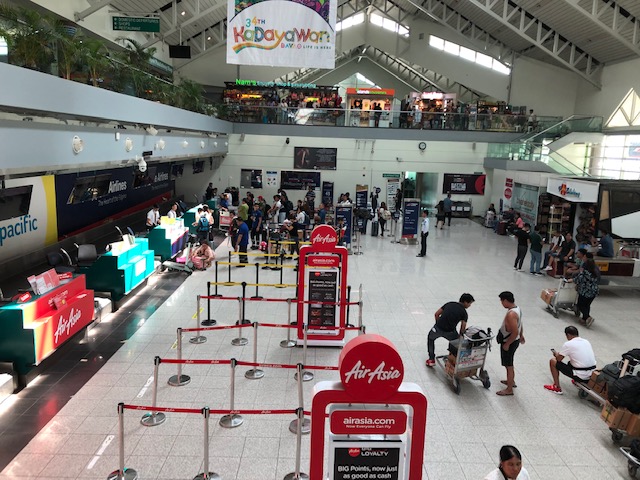 Another view of the airline check-in counters and the departure area. This photo also shows the shops at the second level.
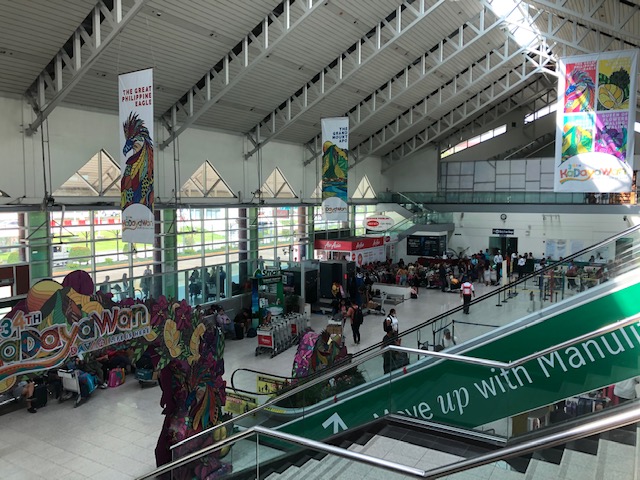 View of the terminal entrance from the escalator
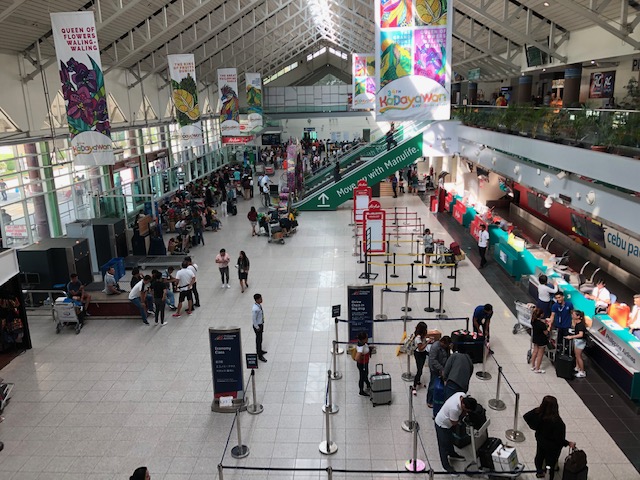 Another view of the ground floor area showing the airline counters and the escalators and stairs to the departure level lounges
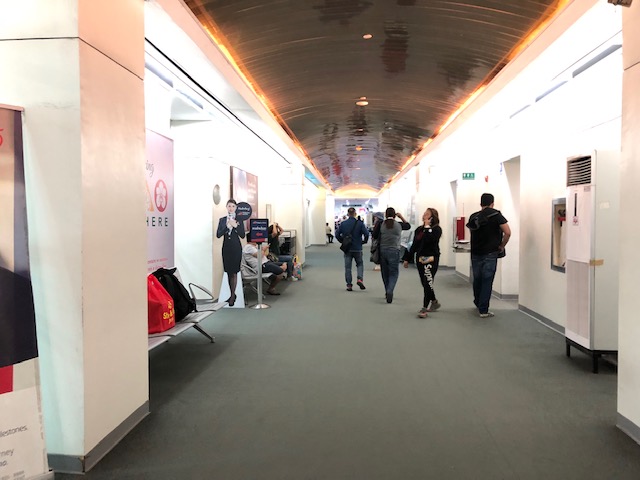 After clearing the final security check, passengers pass through this corridor towards the departure lounge and boarding gates
 Passengers waiting for their boarding calls.
Coming up soon are photos of Changi (Singapore) and Bandaranaike (Sri Lanka) airports. I haven’t been to Singapore in 7 years and it was my first time to go to Sri Lanka so I made sure to take a lot of photos at those airports.
–
EASTS 2019 Conference
The 13th International Conference of the Eastern Asia Society for Transportation Studies (EASTS 2019) is currently underway. This conference is hosted by the domestic society of Sri Lanka from September 9-11, 2019. The conference was almost canceled or relocated due to the safety and security concerns following the bombings in Colombo last April. After assurances by the organisers plus the full support from government, the conference was decided to push through in Colombo.
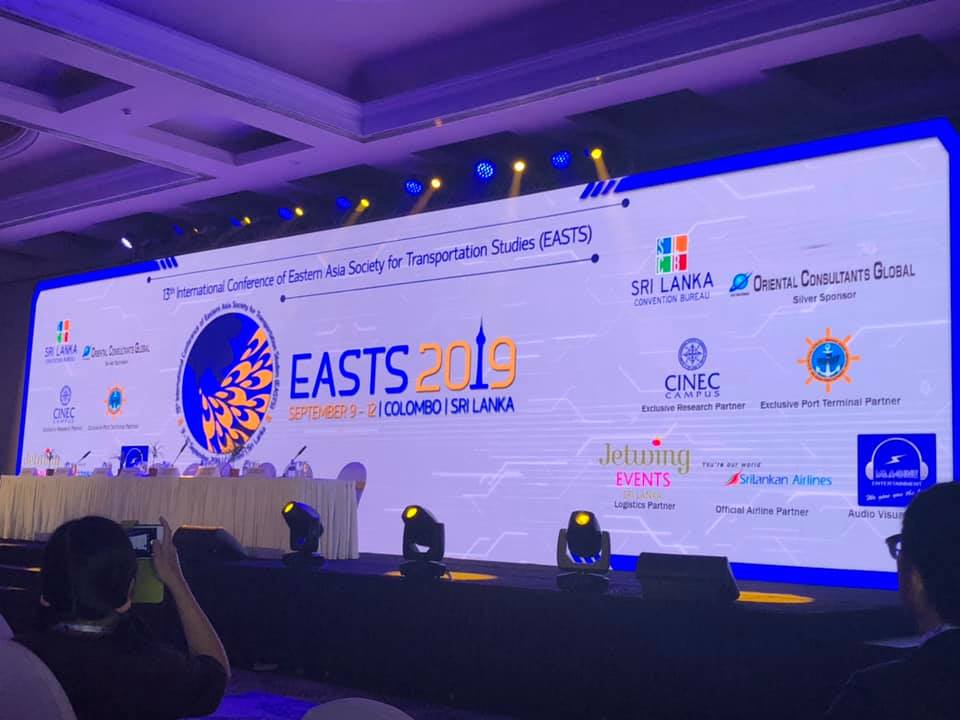 Backdrop of the opening program
 Delegates from the Philippines pose with EASTS President Prof. Tetsuo Yai and other friends from Japan
More information on the conference and others about the domestic society may be found on the EASTS homepage, which also has a link to the organizers’ website.
–
Another look at the Francisco Bangoy (Davao) International Airport – Departure Part 1
To continue on the series on Davao’s international airport, here are a few photos on the airport upon our departure last week.
 Taxi stand at the airport There are two lanes here along which taxis are queued to pick-up passengers. The other two lanes to the right in the photo are for dropping-off passengers.
 Passengers walking towards the terminal. Those with lots of luggage may avail of the porter services. The porter assists you until the check-in process.
 Driveway for private vehicles and VIPs
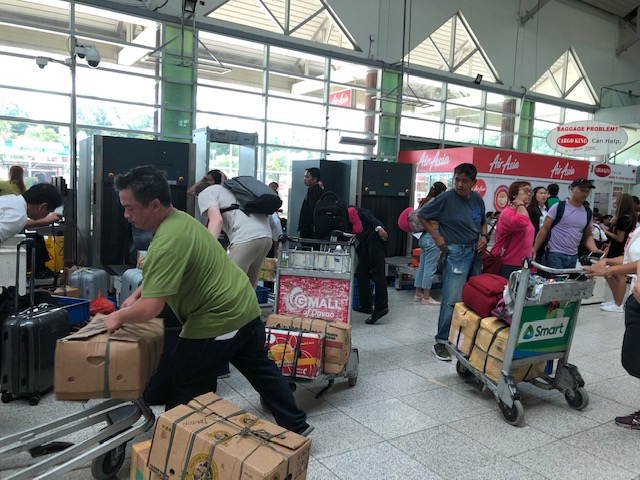 Typical scene right after the first security check at the airport
I will be completing this series with another post on this airport soon. Meanwhile, I am preparing for a trip to Sri Lanka via Singapore. That means more photos of airports. I have not been to Singapore in a while. The last one was in 2012 when Changi still had a budget terminal (terminal for low-cost carriers like Cebu Pacific and Tiger Airways) and I have not been to Sri Lanka at all. And so I am looking forward to there travels and will be sharing the experiences through photos and some narratives in future posts.
–

