
Home » Academe
Category Archives: Academe
Successful 32nd TSSP Annual Conference
The 32nd Annual Conference of the Transportation Science Society of the Philippines (TSSP) was a success. A total of 16 papers were presented at 4 technical sessions while the main sponsor GIZ facilitated the practical session on e-mobility. While most participants came from Cagayan State University (CSU), there were many from Metro Manila and Mindanao (Iligan and Zamboanga cities).
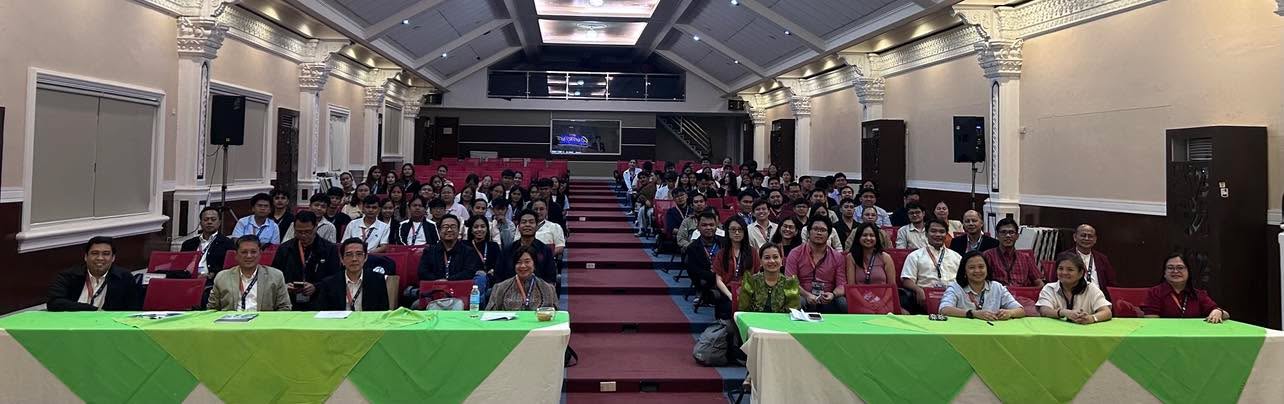 Closing group photo – this was taken after the concluding program for the conference. Instead of forming at the stage, our photographers asked us to be seated instead.
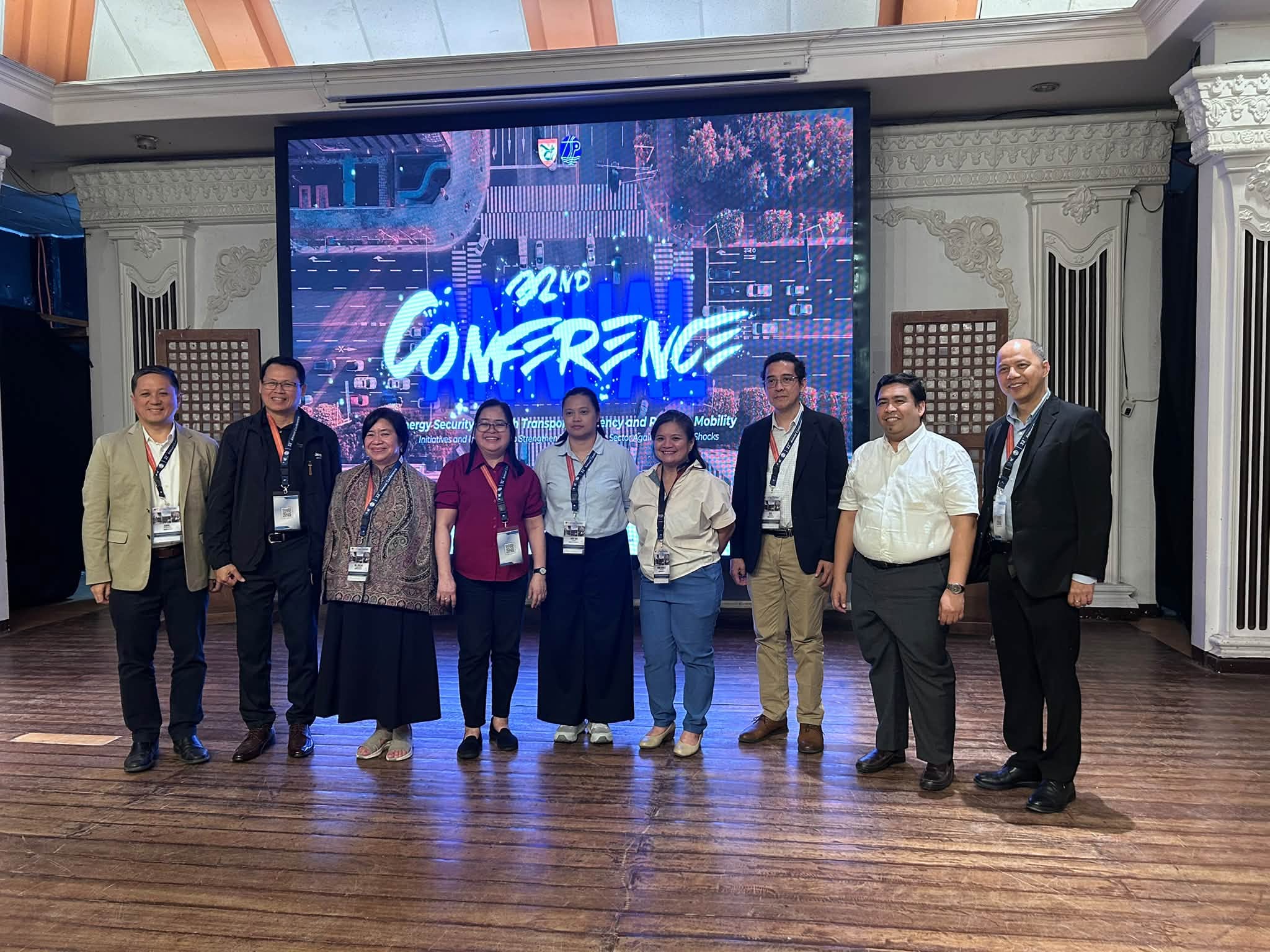 This year’s conference committee was chaired by Dr. Daniel Mabazza of UP Diliman’s College of Social Science and Philosophy (Department of Geography). From L-R: Dr. Dan Mabazza, Dr. Marloe Sundo (UPLB-CEAT-DCE), Dr. Sheilah Gaabucayan-Napalang (UPD-SURP), Ms. Alorna Abao (UPD-NCTS), Dr. Sandy Gaspay (UPD-COE-ICE), Dr. Danielle Guillen (UPD-AIT), Dr. Karl Vergel (UPD-COE-ICE), Dr. Regin Regidor (UPD-COE-ICE) and Dr. Noriel Tiglao (UPD-NCPAG).
There was no formal announcement for next year’s conference though as TSSP is still considering the schedule in relation to next year’s EASTS Conference to be held in Adelaide, Australia sometime in September 2027. A strong candidate host though is Naga City, which already has an active core group for transportation based in the Bicol State College of Advanced Science and Technology (BISCAST). Of course, the LGU itself is ably led by its current Mayor Leni Robredo. I will post an update on this soon as I get some firm info from the society, which is currently also being supported by GIZ. GIZ, incidentally, also has an engagement with Naga City so the timing seems perfect for the next conference to be held there. Naga City is well known for its academic institutions including the Ateneo de Naga and University of Nueva Caceres. Naga, of course, is in Region 5 (Bicol) and there are certainly a lot of universities and colleges there including Bicol University and UST-Legazpi (Aquinas University) and many other SUCs and private HEI’s that probably have students and faculty doing transportation studies.
–
5th Workshop for Young Researchers (WYRe) at TSSP 2026
We successfully held the 5th Workshop for Young Researchers or WYRe today. The workshop was held at the Claude Andrews Convention Center at the Cagayan State University Andrews campus.
There were 2 talks – 1 on the importance of doing research and another on how to get published. These were followed by workshops on abstract writing, and outline drafting.
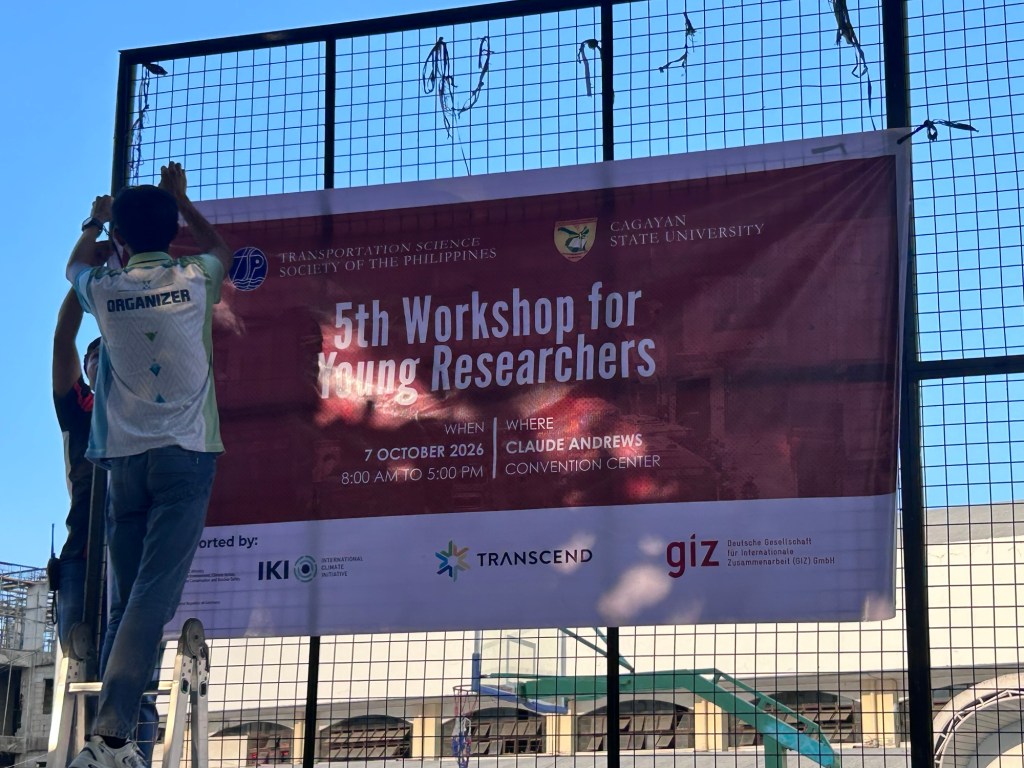
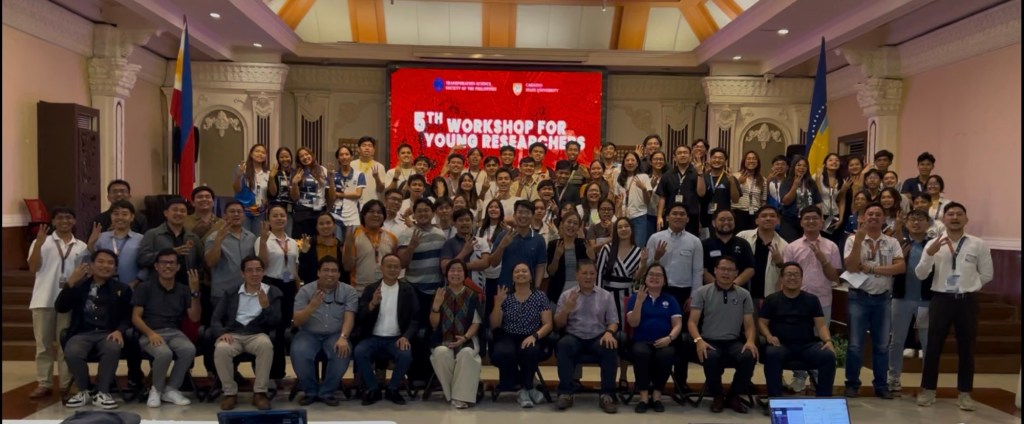
WYRe was inspired by a similar workshop conducted by the Eastern Asia Society for Transportation Studies (EASTS) back in 2017 to help young researchers including graduate students and early career researchers and academics develop skills particularly for proposal drafting and publication of their outputs.
–
TSSP 2026 Conference Program
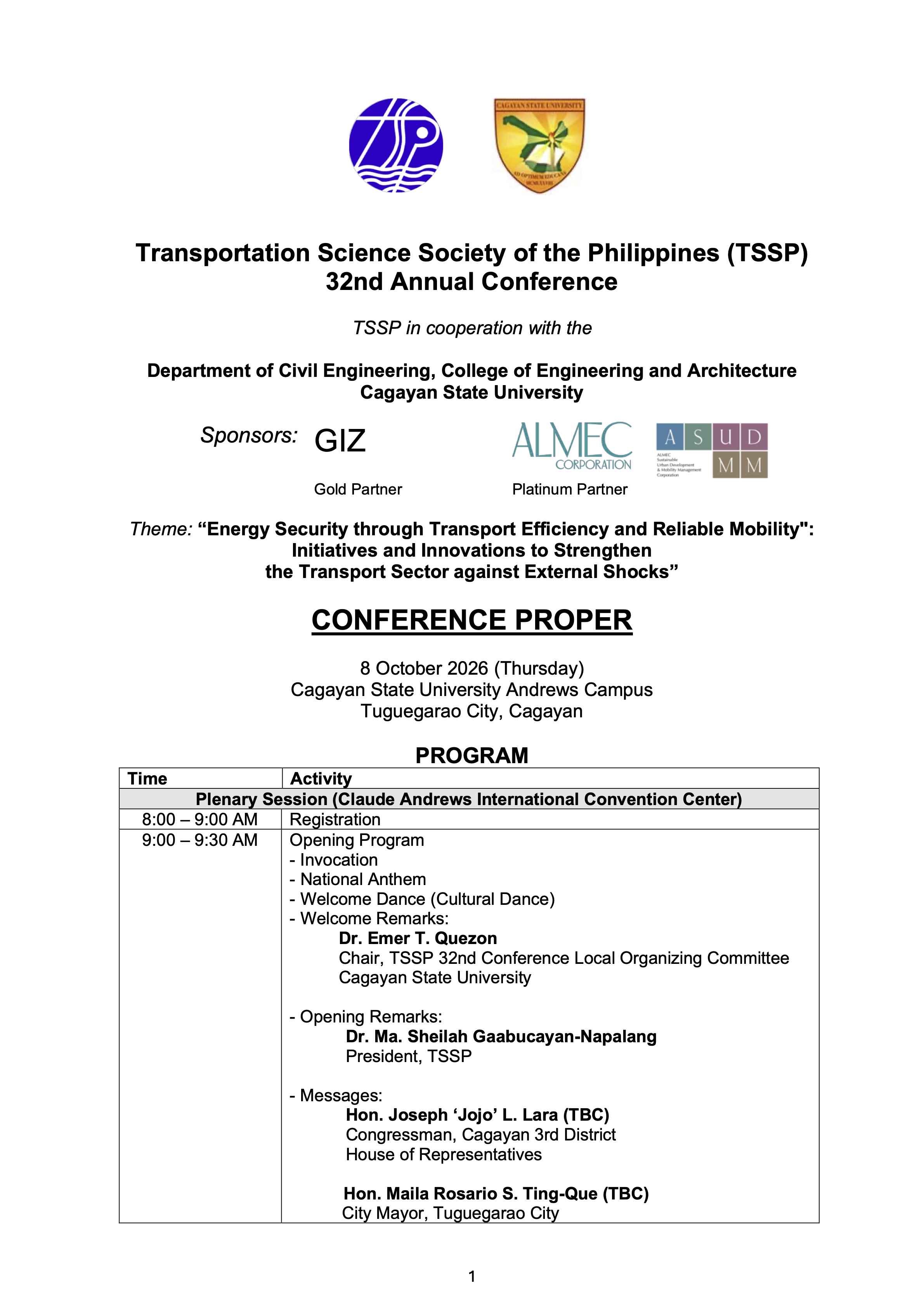
I reproduce below the conference program of the 32nd Annual Conference of the Transportation Science Society of the Philippines:
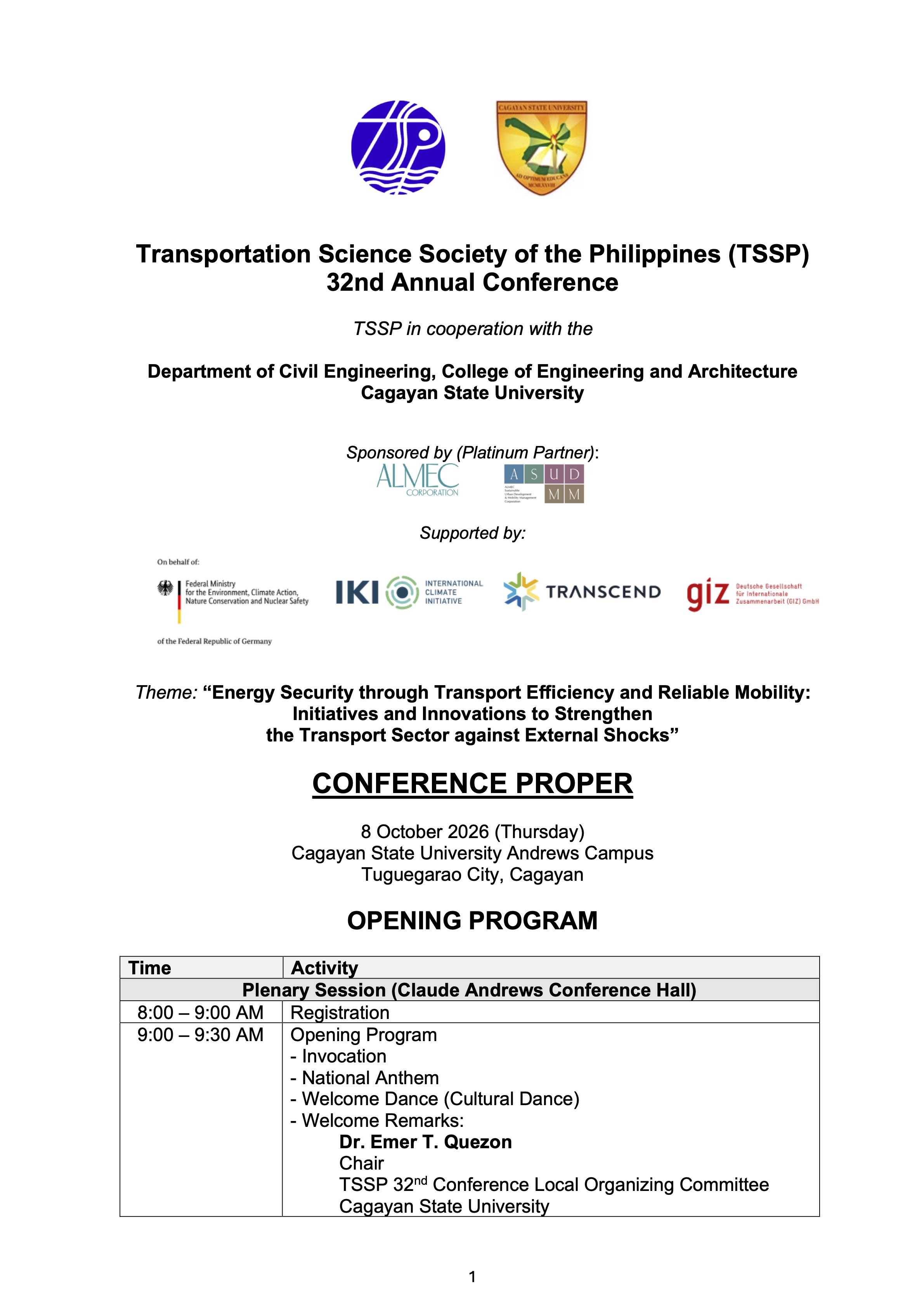
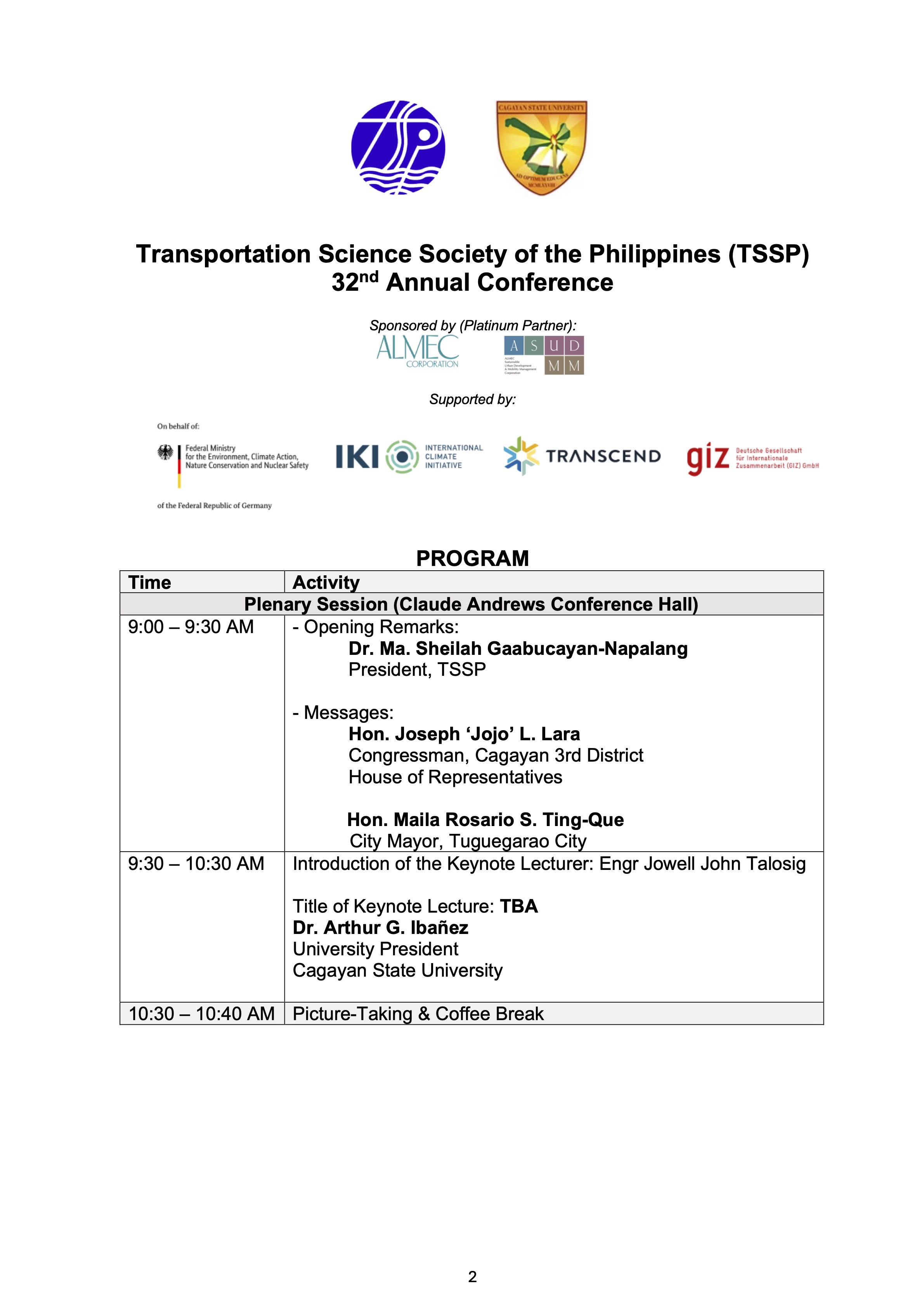
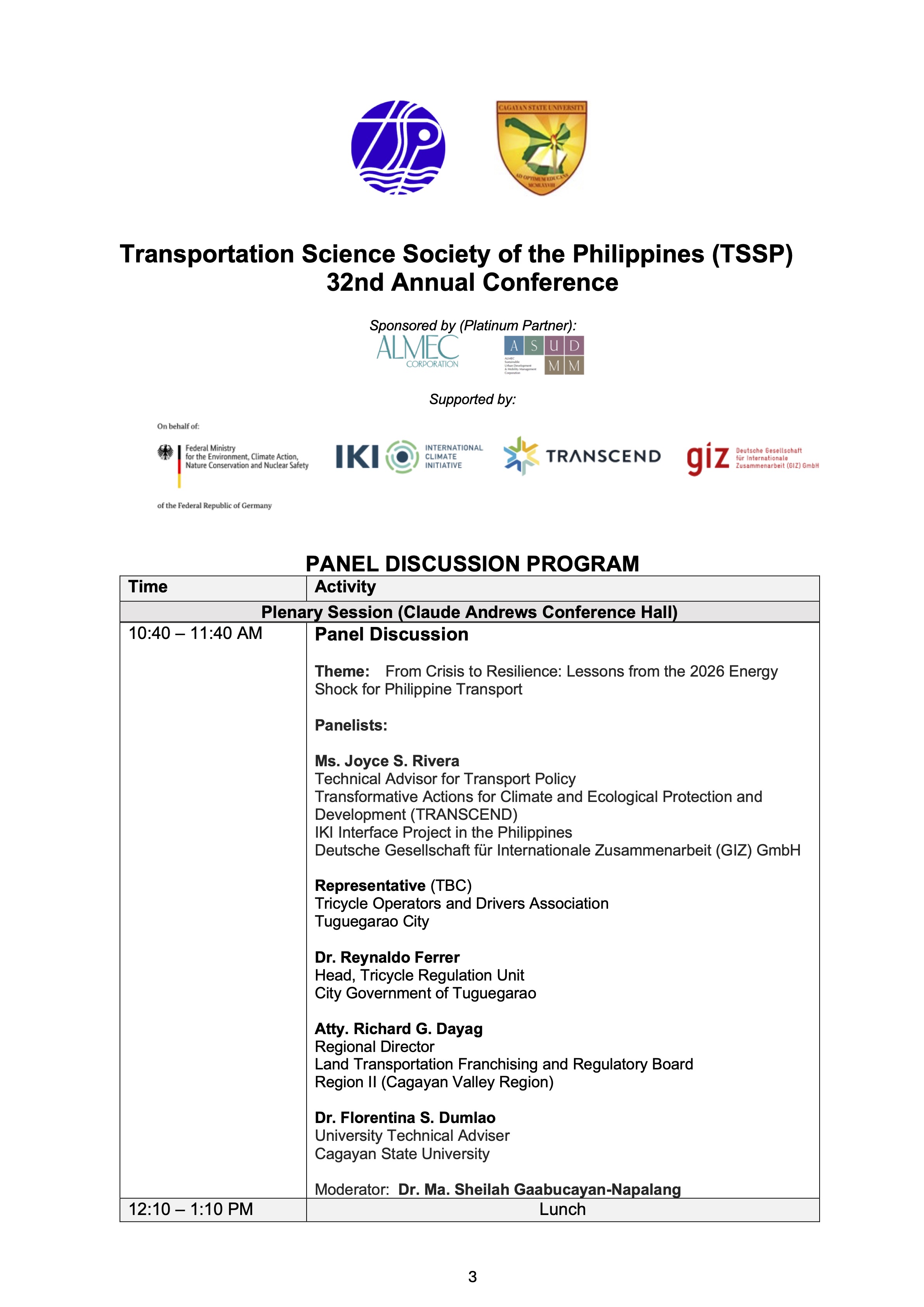
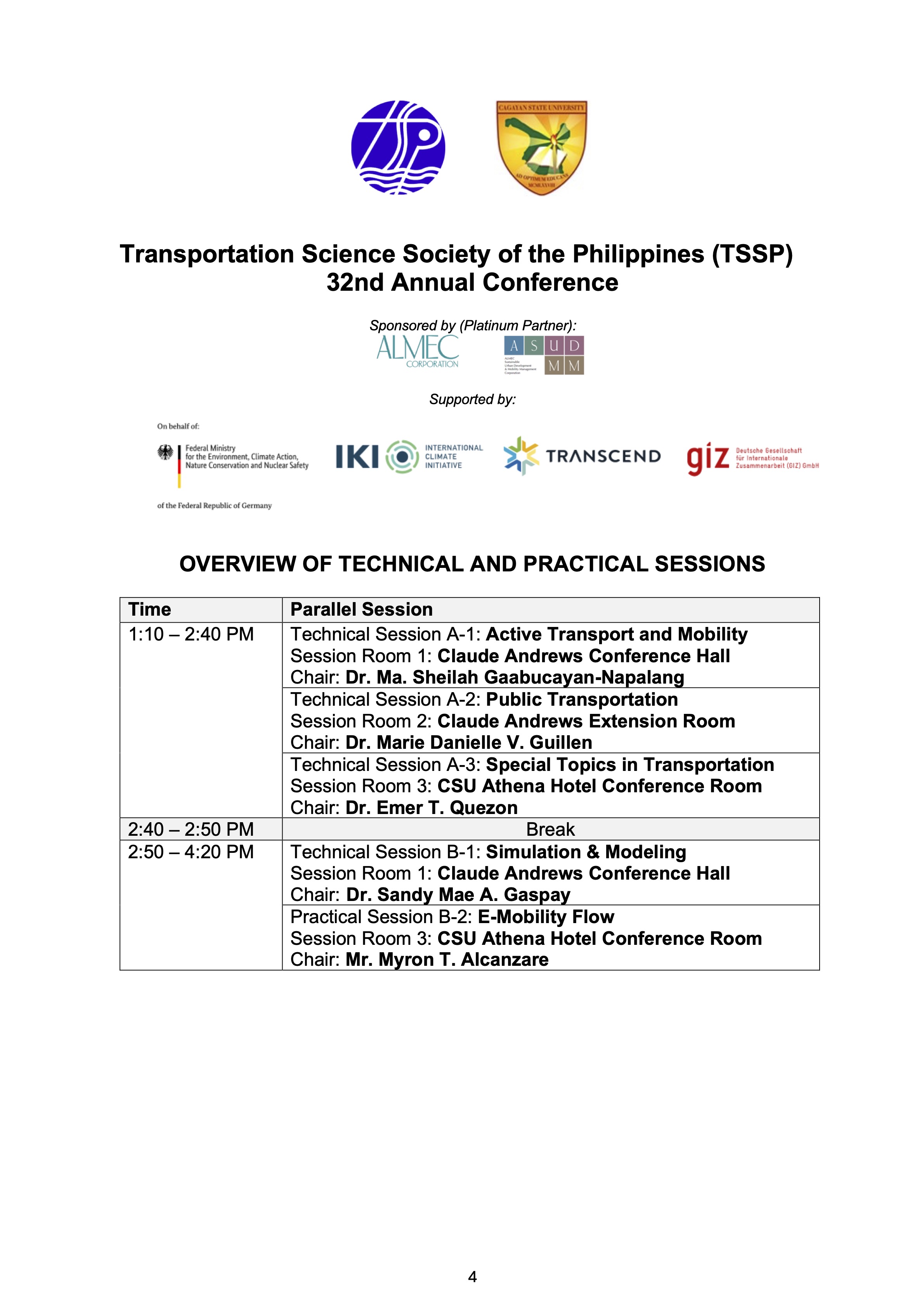
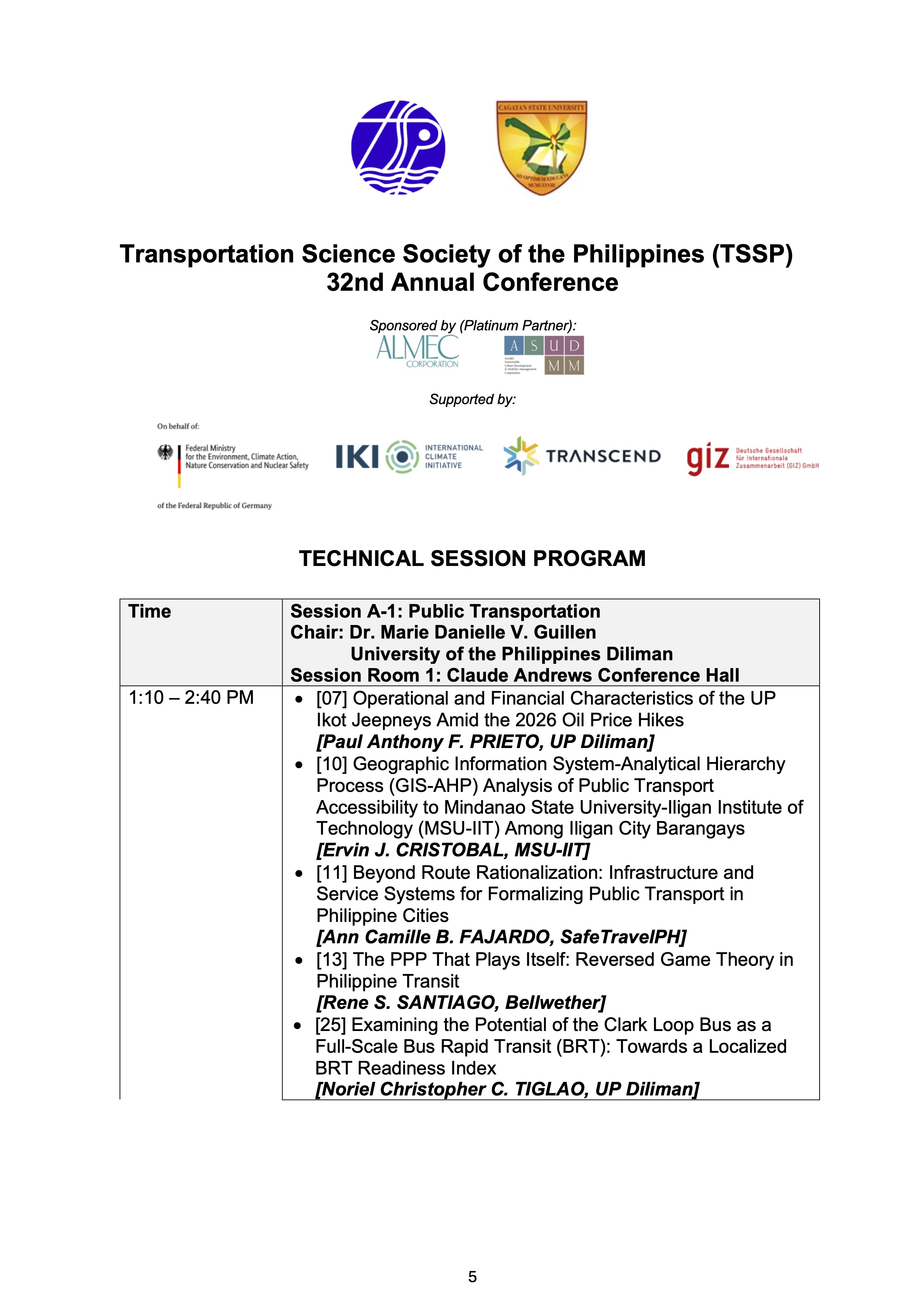
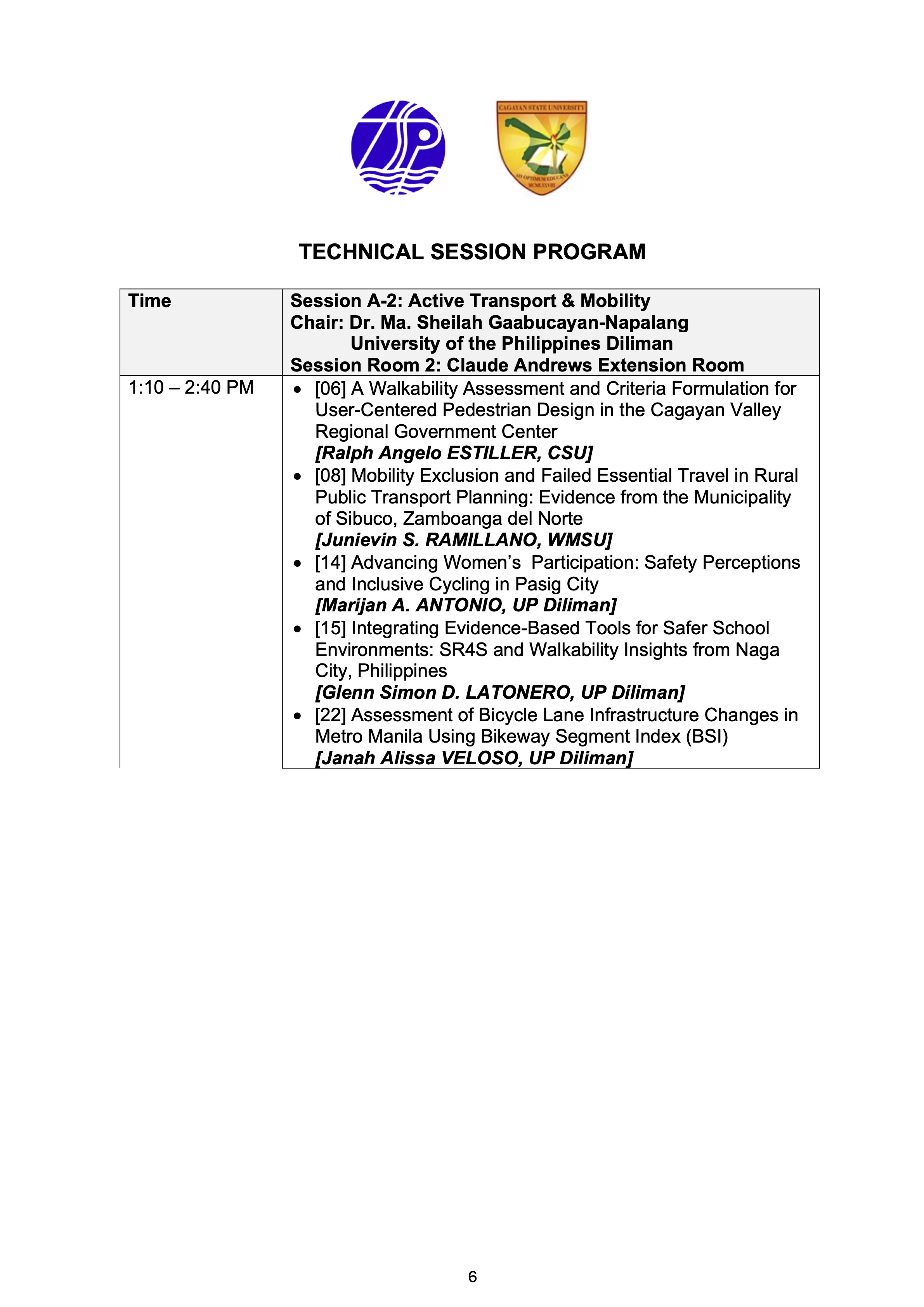
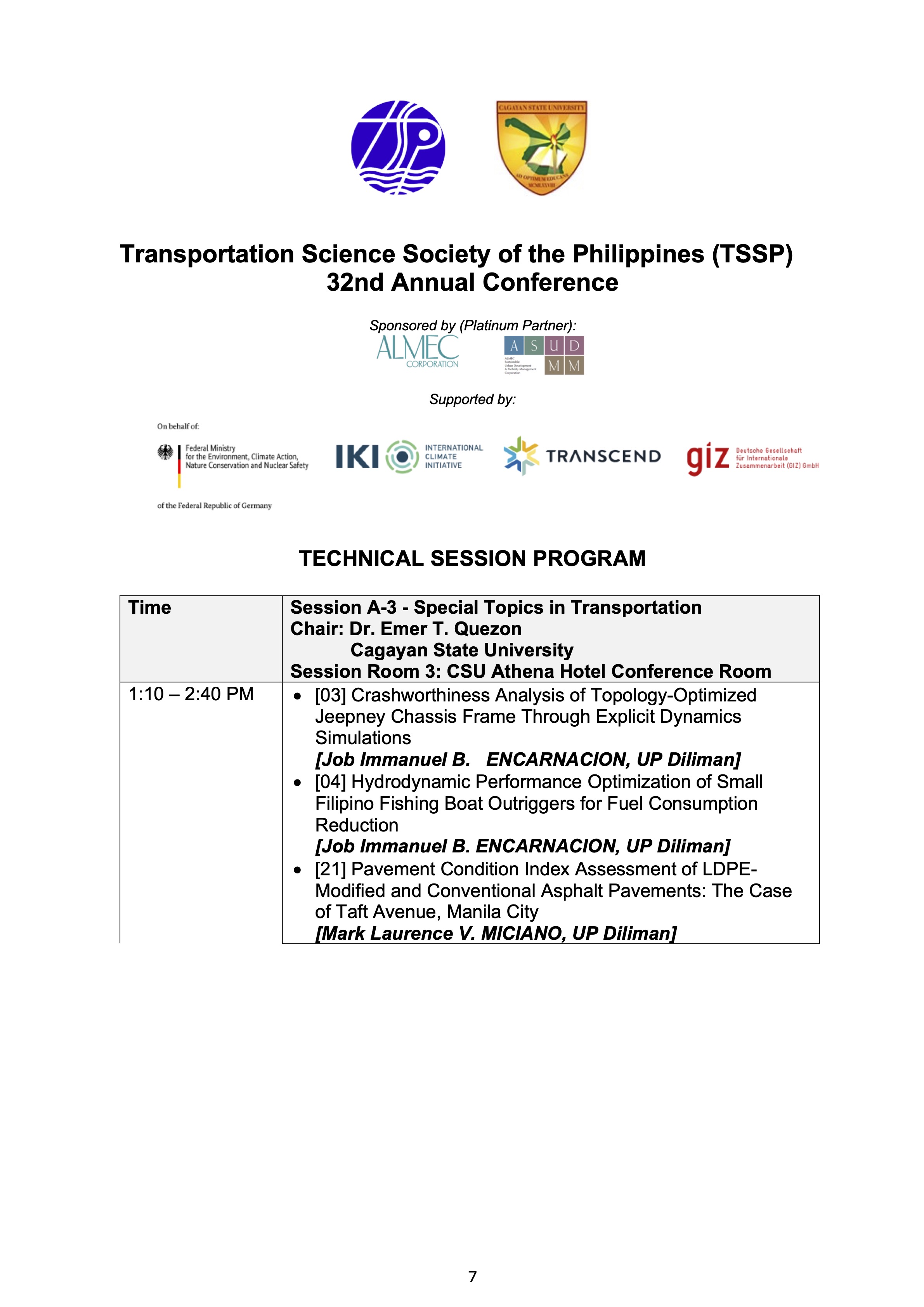
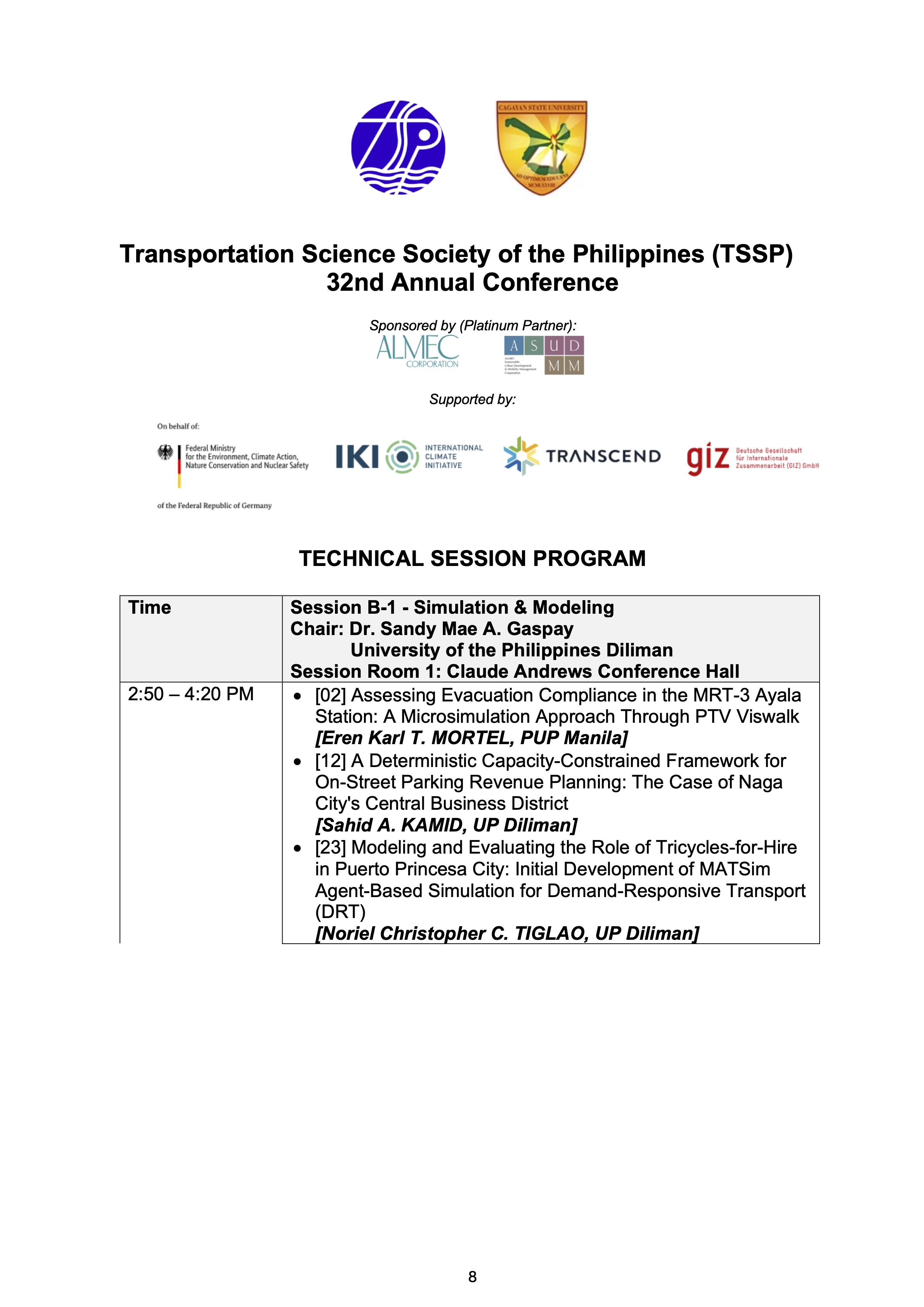
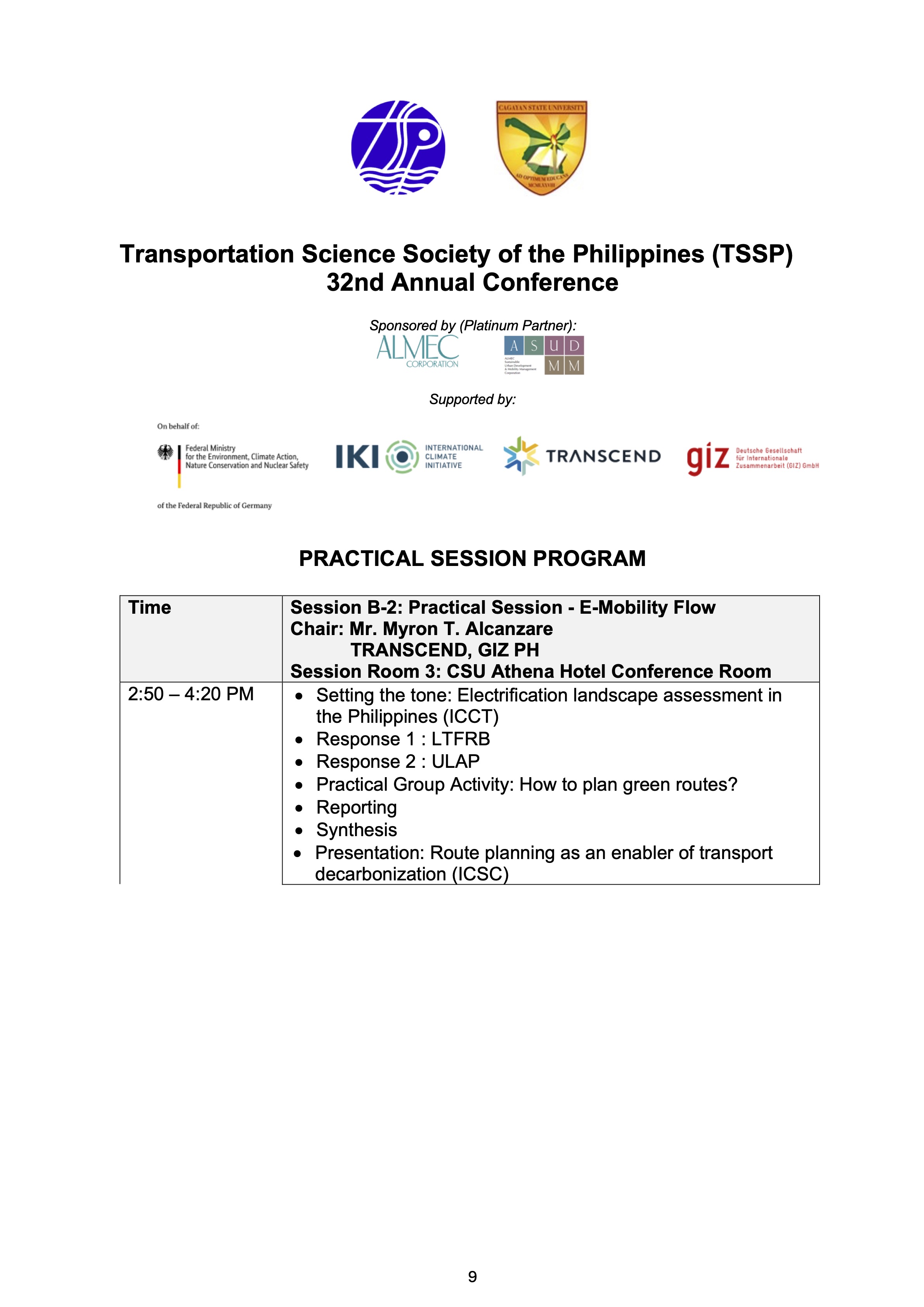
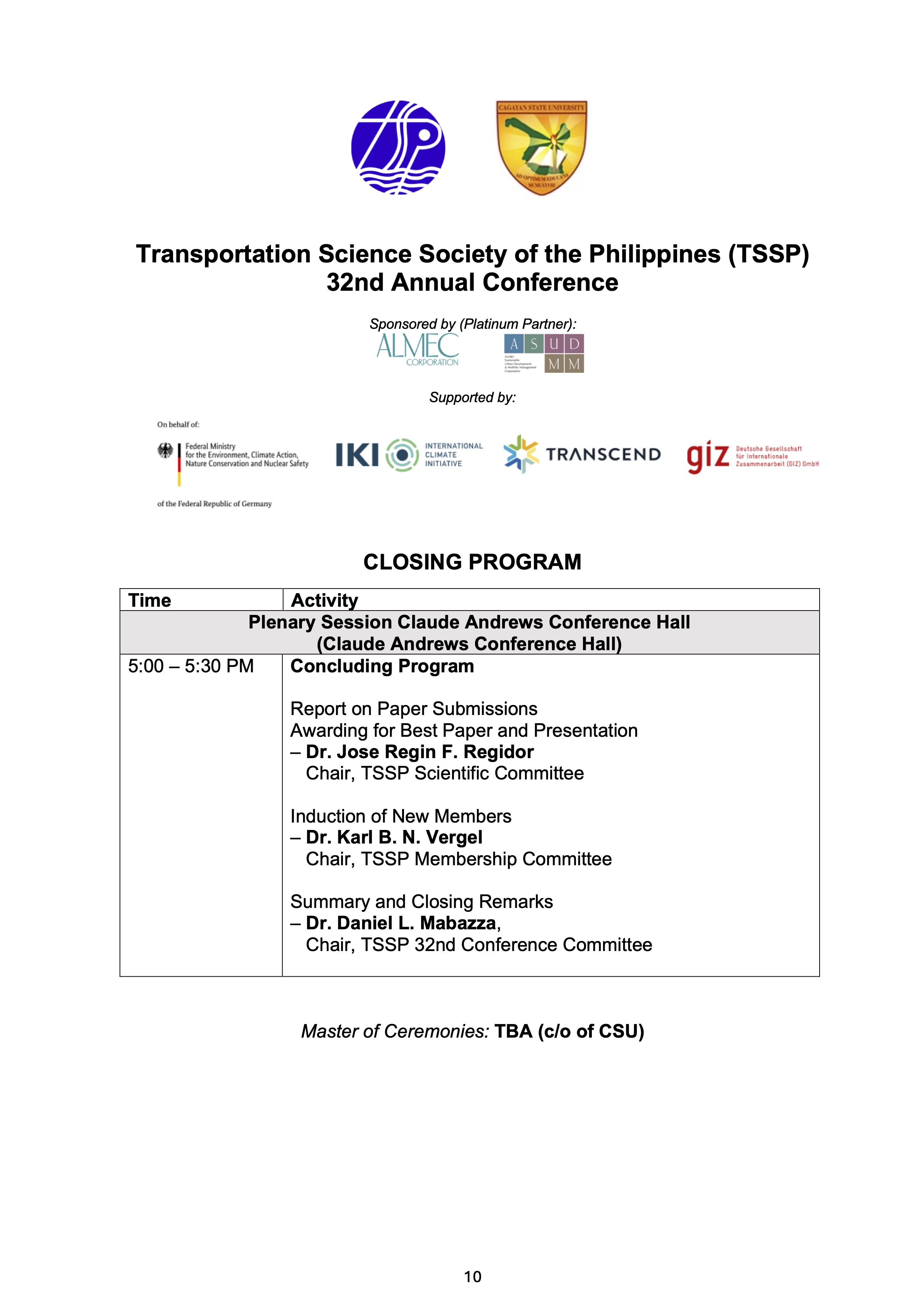
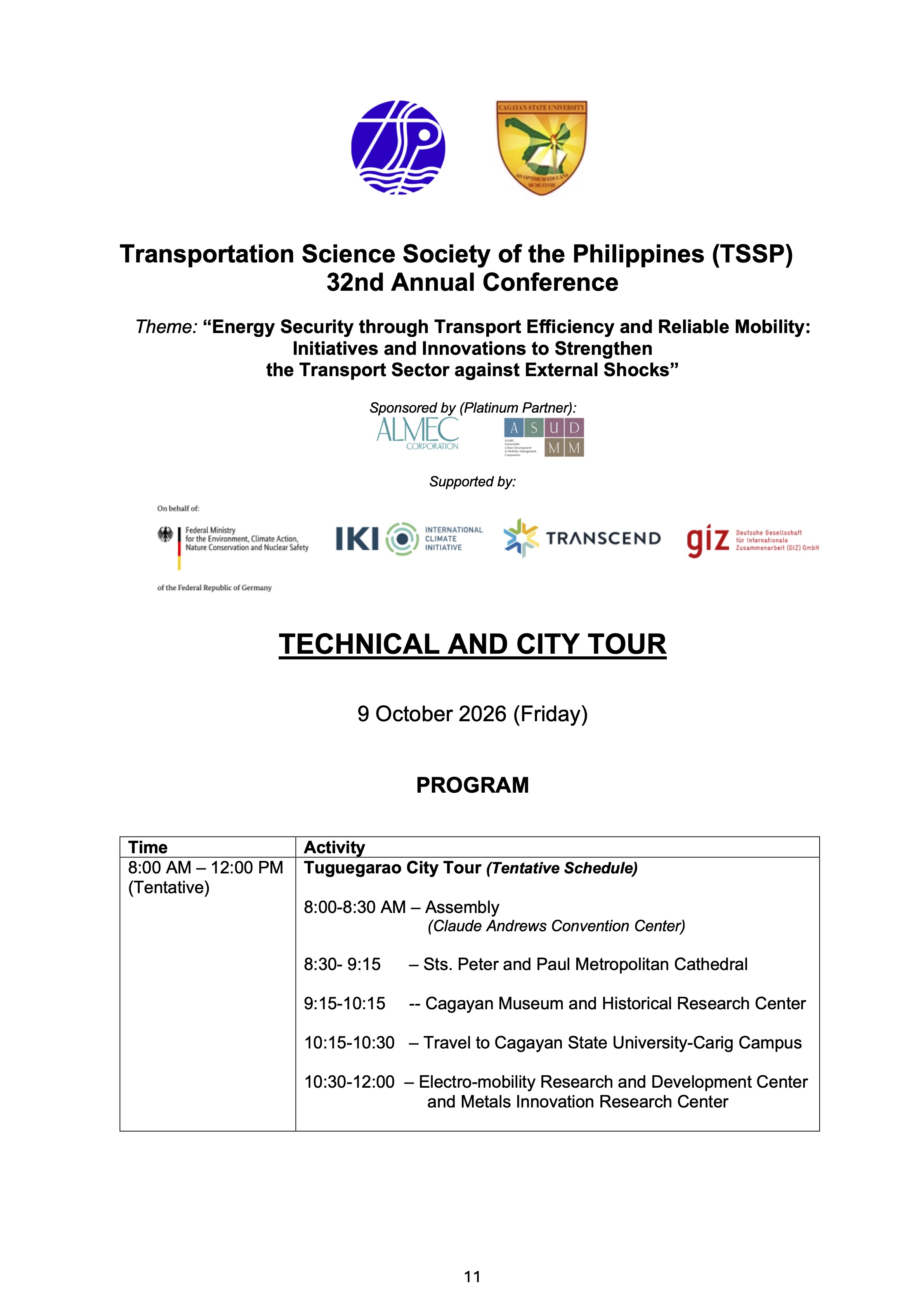
There is actually a pre-conference activity in the Workshop for Young Researchers (WYRe) also organized by TSSP. However, the workshop is by advance registration and limited considering it is for young researchers that include graduate students and young professionals embarking on research work.
–
Philippine Transportation Journal, Vol. 8, No. 1
The latest issue of the Philippine Transportation Journal is out. Volume 8, Number 1 includes five (5) papers derived from the Transportation Science Society’s 2025 conference held in December 2025. PTJ didn’t have a 2025 issue as last year was an EASTS Conference year and TSSP held its 31st Annual Conference in December instead of the usual September or October. Most if not all papers published in PTJ are from the best of the conference including the best paper and best presentation. Authors are given the chance to further refine their papers based on the feedback or comments in the conference sessions, which may be different from the comments received during the review process.
I reproduce below the list of papers in the latest PTJ issue. Three papers are associated with UP Diliman: #2 with the National College of Public Administration and Governance, #3 with the Asian Institute of Tourism, and #4 with the College of Engineering. One paper, #1 is from the University of Asia and the Pacific. The last but not the least, #5, is from UP Los Banos.
1. Empowering Local Government Units in Public Transport Service
Provision through Franchise Policy Reform – SUNIO, V., MANUEL, G., PACHECO, J.A.
2. Optimizing Route-based Fleet Size Computation through Network-Based Modeling for Puerto Princesa City, Philippines – Fajardo, A.C., SANCIANGCO, E., OLLERO, L.J., ALTEA, J.R., CASTILLO, C.A., TIGLAO, N.C., CUNANAN, P., SIPASIP, H.D., TOLENTINO, N.J.
3. Understanding Inland Water Transportation and Its Potential for Tourism: The Case of Navotas – Malabon River Boats in Metro Manila, Philippines – MASONG, G.R., AMIDAO, P.J.M., GUILLEN, M.D.V.
4. Measuring the Traffic Impacts of Tactical Urbanism: A Corridor and Intersection Analysis in Quezon City– MICIANO, M.L., HALIL, J., RAMILLANO, J., SIGUA, R.
5. Comparative Analysis of the Influence of Environmental Awareness on Transportation Mode Choice Between Students of UP Diliman and Ateneo de Manila University – SERIOSA, V.J., REYNOSO, C., LIM, M.B., SUNDO, M.
Here is the link to the PTJ Vol. 8, No. 1: https://ncts.upd.edu.ph/tssp/archives/3319
–
TSSP’s 32nd Annual Conference – 08 October 2026
The Transportation Science Society of the Philippines (TSSP) will hold its 32nd Annual Conference on 08 October 2026 in Tuguegarao City, Province of Cagayan. This year’s conference is hosted by Cagayan State University. The TSSP is the Philippine affiliate of the Eastern Asia Society on Transportation Studies (EASTS).
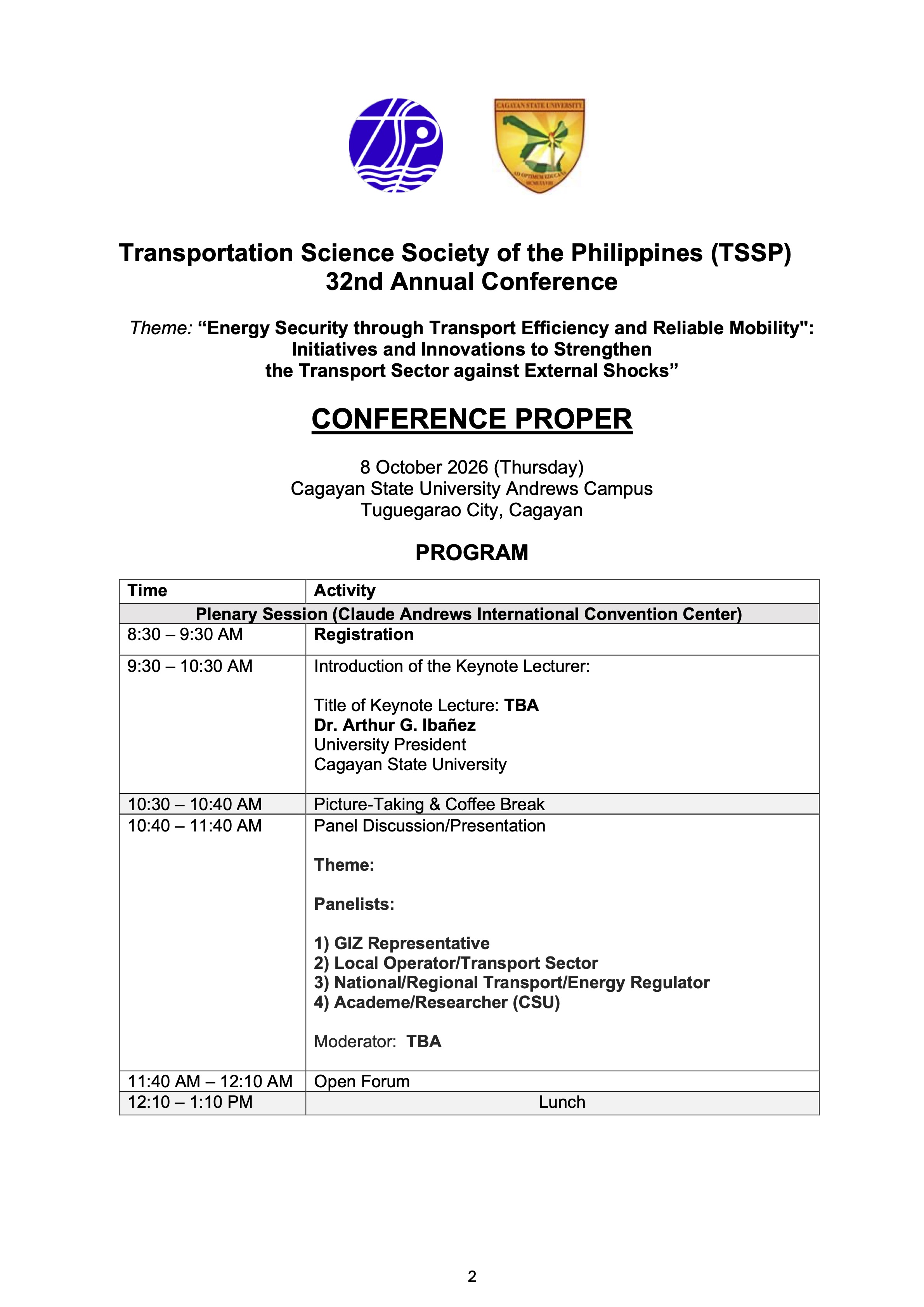
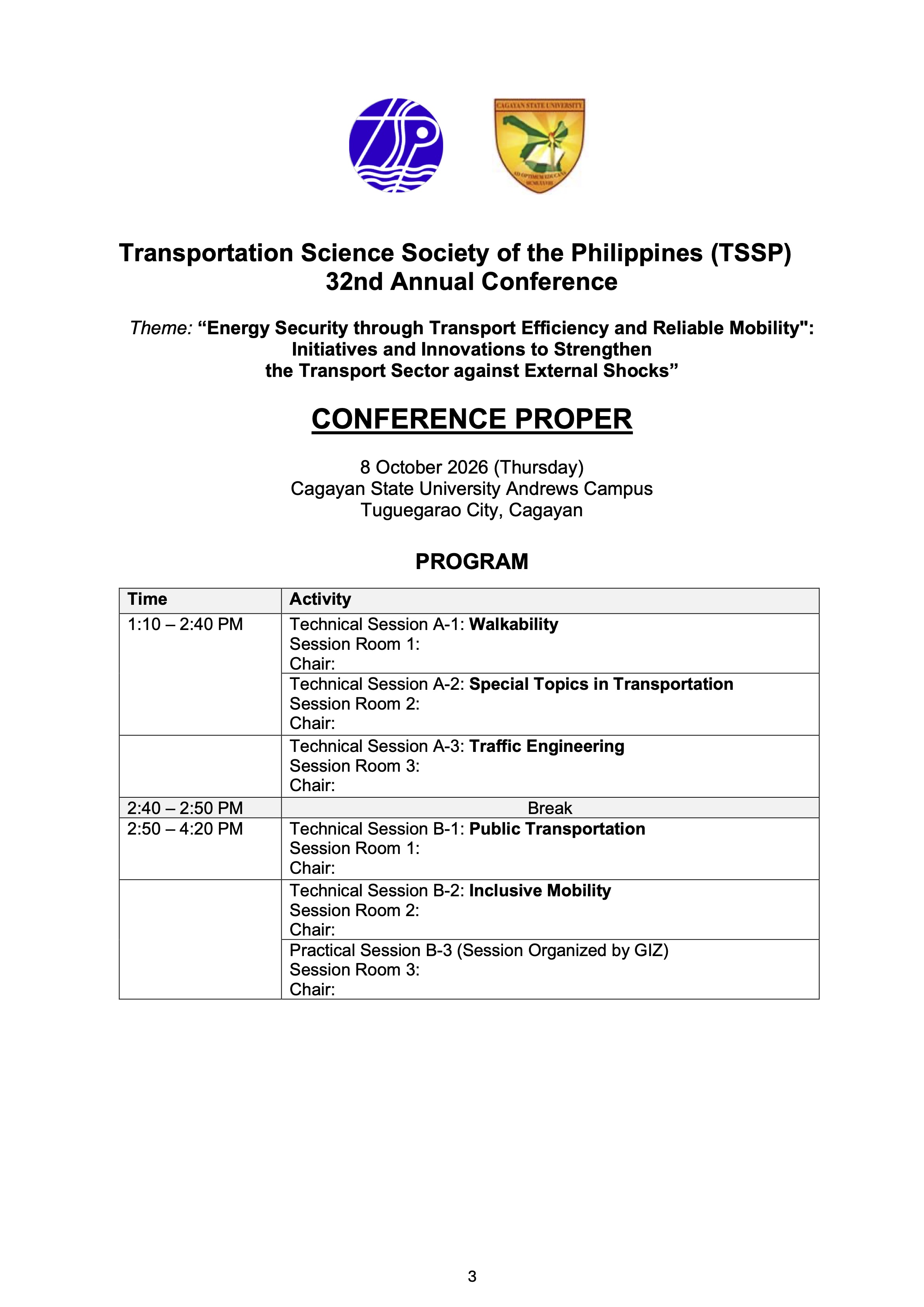
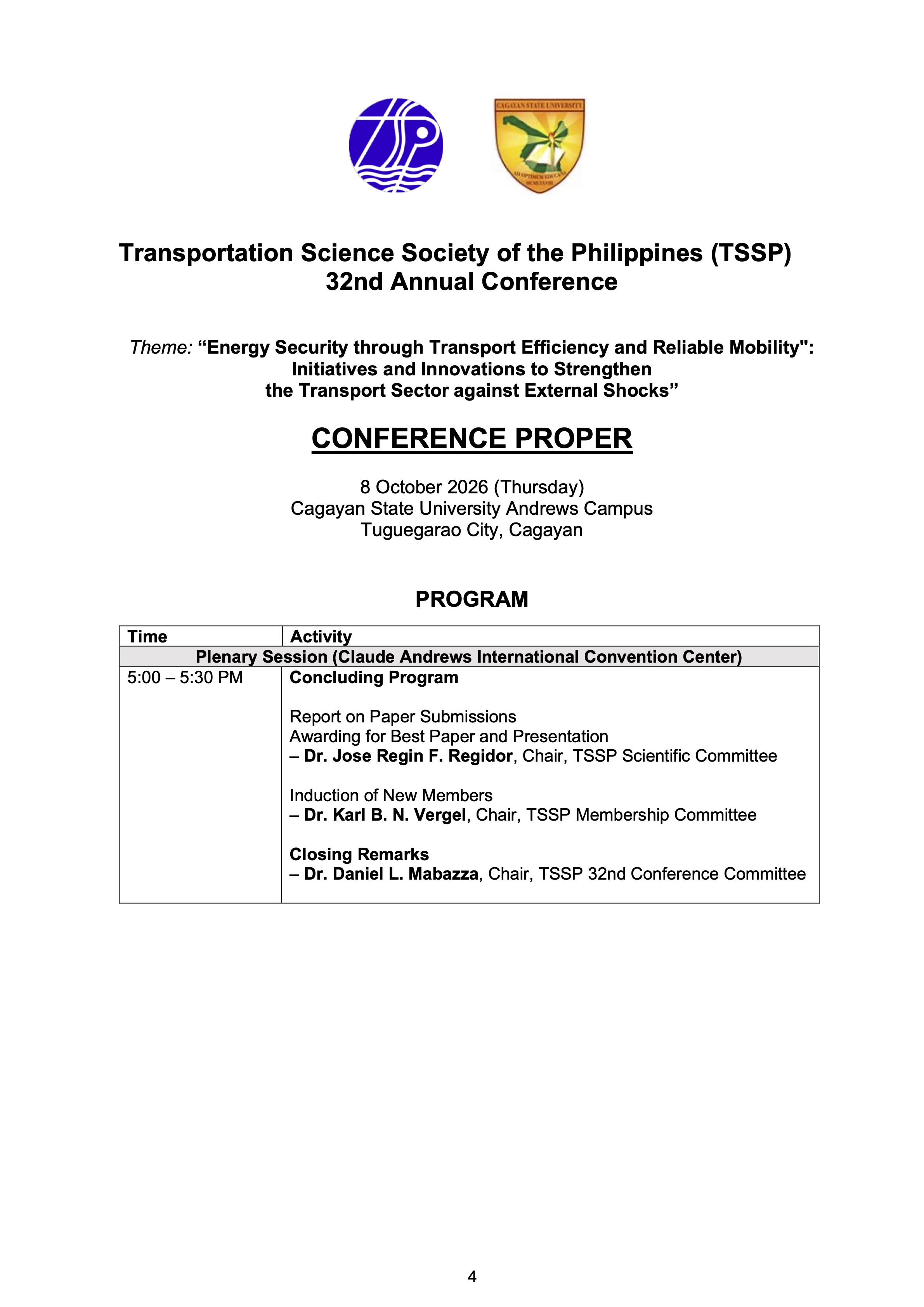
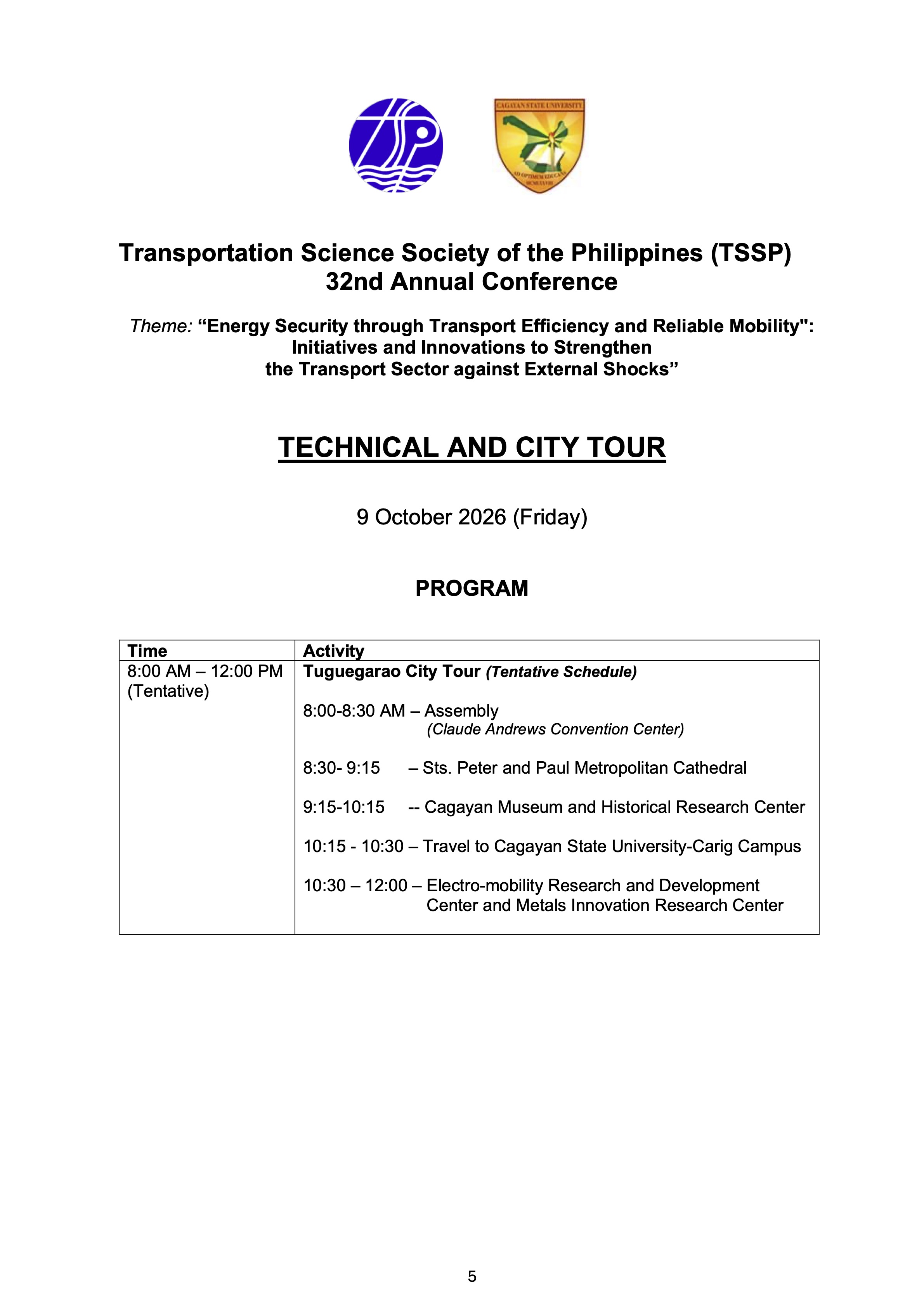
Details on the conference including accommodations and travel information may be found in the TSSP official Facebook page: https://www.facebook.com/share/p/167Y7fRWGAH/
Updates will also be posted there.
–
Drones for road safety assessments
We recently started a research collaboration with a Belgian university where we will be using drones to conduct a more comprehensive survey around schools. The drones will be able to capture wider areas where conflicts can be identified; ultimately allowing us to determine solutions for various situations in schools zones.
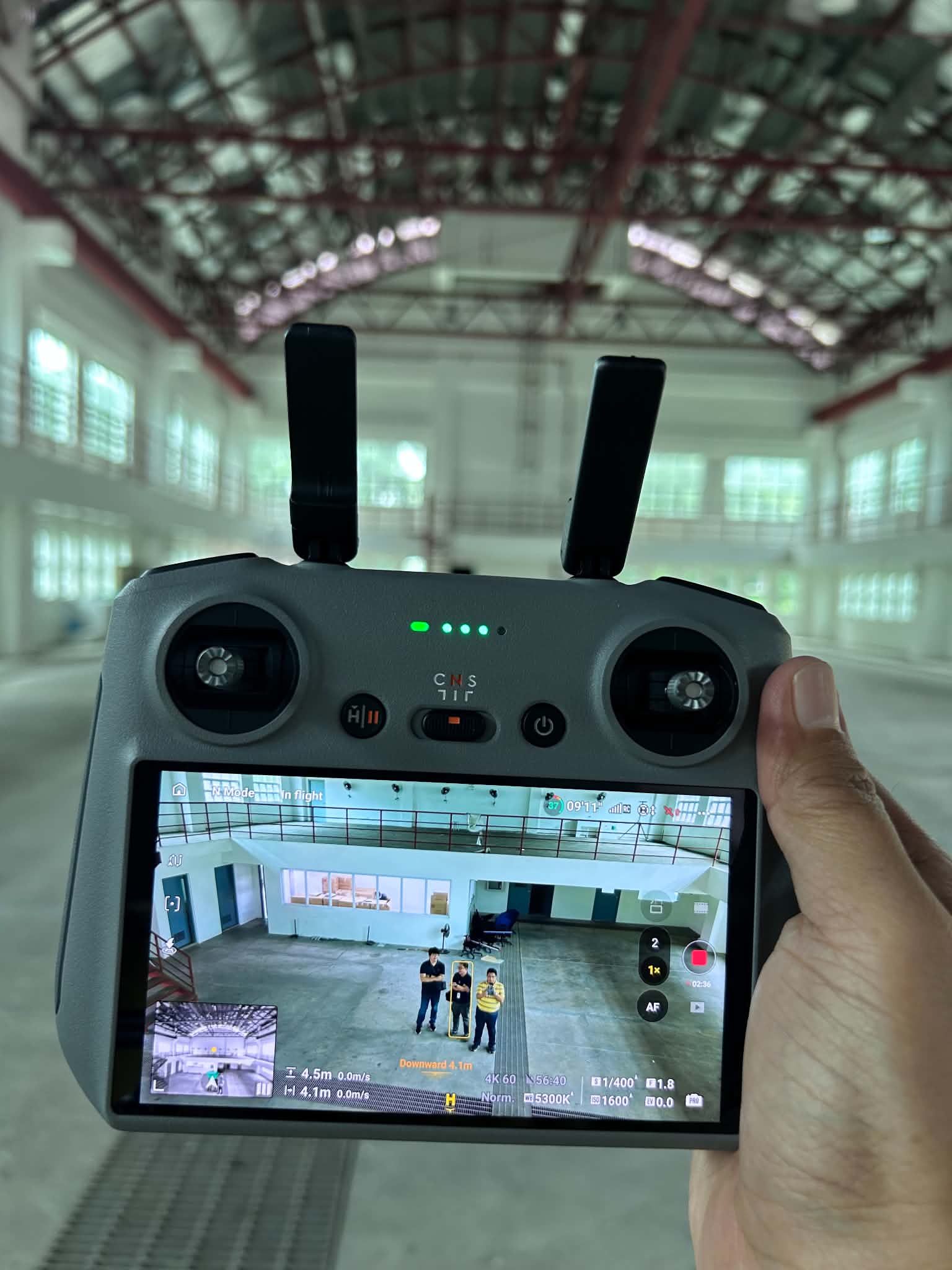 We had scheduled many activities last week but the weather did not cooperate. And so we had to improvise. That meant some indoor training on using the drone.
–
From Blog to Vlog
I was checking the submissions of our students for an assignment that was given to them earlier in this concluding semester. As I watched and rewatched the vlogs they were supposed to create in relation to civil engineering, I was surprised to see this blog being cited by at least 3 students who chose topics related to transportation. I am not into creating videos or vlogs like those you find on YouTube or TikTok (at least not for now?) but I appreciate the production and creativity of many of our students as they attempted to articulate civil engineering and civil engineering history through their videos. Most amusing to me were one student who sang the entire vlog about her commute along Marcos Highway and another who used Minecraft for his vlog about construction. While I can’t share their work here due to privacy policies at the university, I can say that these among other excellent works by our students show that most of them understood what civil engineering was all about.
–
Second Call for Papers for TSSP 2026
The Second Call for Papers for the Transportation Science Society’s 32nd Annual Conference is out. I am sharing here the call for those who may want to present or publish their papers, or perhaps participate by attending the conference. This year, the conference will be hosted by Cagayan State University in Tuguegarao City. CSU currently conducts research on electric vehicles; particularly on electric tricycles and charging stations. This is a collaboration with UP Diliman’s Electrical and Electronics Engineering Institute (EEEI). The projects are supported by the Department of Science and Technology (DOST).
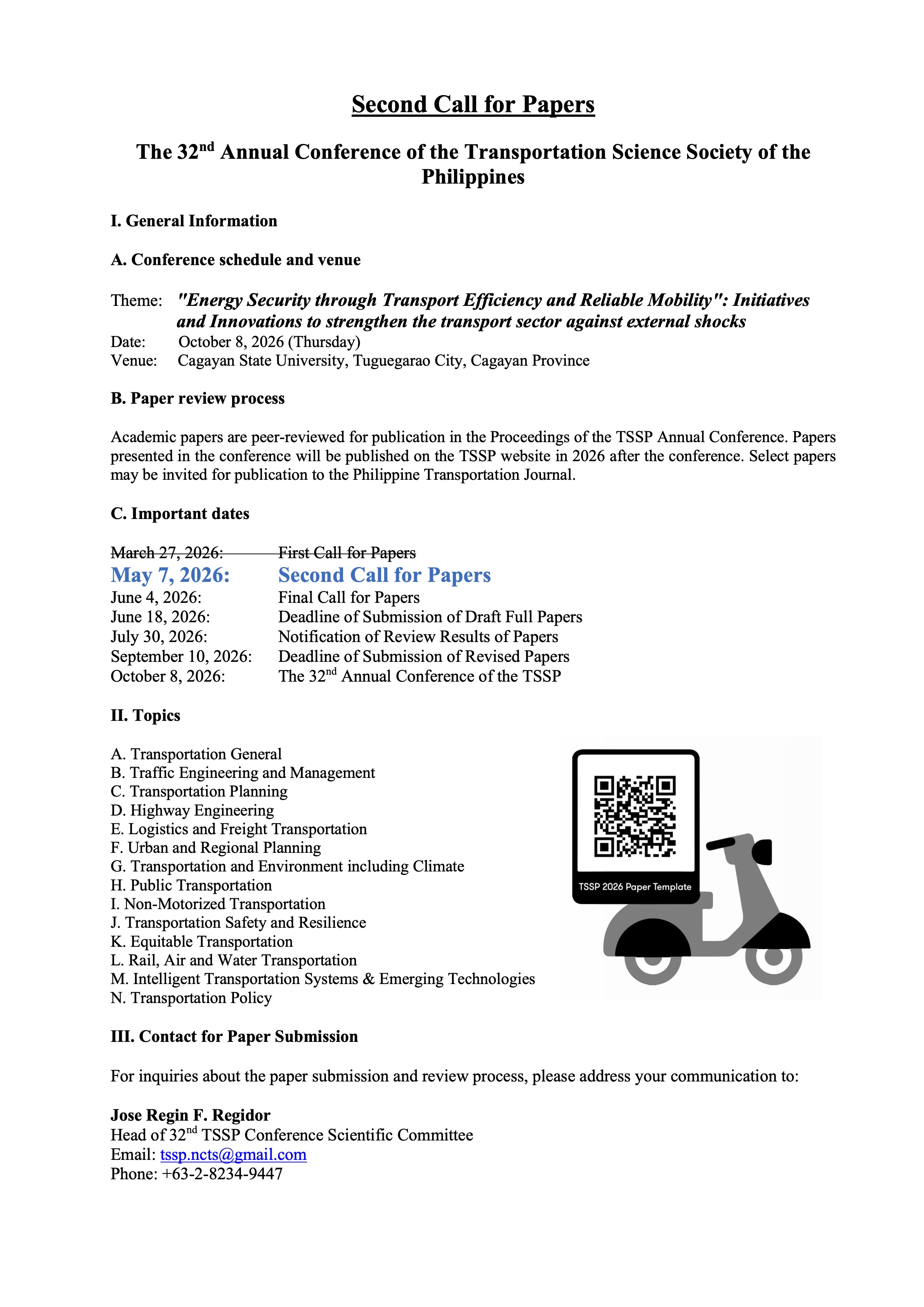
The paper template can be obtained by scanning the QR code provided.
CSU follows last year’s hosting by UPLB of the 31st Annual Conference. Previous host universities aside from UP Diliman were Xavier University (Cagayan de Oro), University of San Jose-Recoletos (Cebu City) and UP Visayas (Iloilo City).
–
Looking back on Philippine railway history
The Philippine Railway Conference 2025 is coming up soon. I am very glad to see a lot of people interested in rail – from the technical people running our railways to those involved in planning and management to the advocates and enthusiasts. Rail was not so “fashionable” or “glamorous” (to use these words liberally) many years ago. Perhaps people traveling and experiencing rail in countries where it has persevered and evolved plus social media have changed this – and for the better. Sharing here some papers that were the outcomes of an interdisciplinary research program led by the Third World Studies Center of UP. Rail, after all, is not just about the technical but also the social and human aspects of the mode.
The website for the Emerging Inter Disciplinary Research (EIDR) program supported by the UP System is still up and hosted by the Third World Studies Center. I think it’s something worth a Phase 2. The program leader, Dr. Ricardo Jose, is now retired from UP but is a Professor Emeritus of UP so he can still be engaged. Nevertheless, there are many at UP and other higher education institutions who can be involved in a program that should have a more expanded coverage. There were railways, after all, in other parts the country including Panay, Negros, Cebu and Mindanao.
–
On safety along boring roads
I saw this interesting article about “boring” roads. It seems to be consistent with anecdotal evidence about ordinary roads with unremarkable features especially along adjacent lands. What may be termed as “beautiful” and “remarkable” may not necessarily be distractions to road users. Rather, it may keep people’s attention on the roads and people outside cars or, as the article refers to them, non-motorist car injuries or fatalities. There seems to be some confusing outcomes or perhaps confusing use of terminology in how the article is written (i.e., how perceptions are stated in the article).
Wilson, K. (August 21, 2025) “Study: Boring Roads End Up With More Injuries For People Outside Cars,” Streets Blog USA, https://usa.streetsblog.org/2025/08/21/study-boring-roads-end-up-with-more-injuries-for-people-outside-cars [Last accessed: 8/27/2025]
Quoting from the article:
“Researchers at the University of Connecticut recently analyzed the emotional reactions of more than 81,000 volunteers to a trove of Google Street View images from 56 cities around the world — and found that certain recurring perceptions correlated tightly with how many car crashes involving vulnerable road users actually happened where those photos were taken.
Perhaps unsurprisingly, the participants were pretty good at gauging whether a road was “safe” for walking and biking just by eyeballing it and reporting on how safe it made them feel in general, adding further evidence to the pile that “perceived safety” is a critical metric that every transportation leader should take seriously. Streets that volunteers perceived as “wealthier” also tended to record lower crash volumes — which also might be intuitive, considering that some of the most obvious signs of neighborhood affluence can be great public infrastructure like smooth sidewalks, pristine bike lanes, and ample street lighting.
Roads that were rated as “lively,” meanwhile, were associated with higher crash volumes — though the researchers were careful to note that may just be because there were more people in those images, and crash rates per capita, or per pedestrian- or bike-mile traveled, might actually be lower in hopping human-centered areas.”
In that last paragraph, the term “lively” might have different perceptions depending on the people looking at images of streets. In our case, the street scene in Divisoria, for example, can be described as “lively” yet it may be safer than what is perceived in other countries, especially in the west. I think we have to be careful with the kind of studies as described in the article and to be fair, they did say that their study is still at an exploratory stage.
–

