
Home » Academe (Page 13)
Category Archives: Academe
Transport and health
The University College London (UCL) recently released a publication with the title “Transport, Physical Activity and Health: Present Knowledge and the Way Ahead.” It is authored by Roger L Mackett and Belinda Brown of the Centre for Transport Studies, University College London. The material presents an excellent discussion relating travel behavior (like the preference for car use or taking public transport) to physical activity. It should be a good reference for those seeking to explore the link between healthy living and transport and a study that can be replicated in other countries. It should be of interest to cities looking at ways to promote public transport, walking and cycling (sustainable transport). Perhaps our own Department of Health (DOH) should collaborate with the Department of Transport and Communications (DOTC) to put in the local figures so we can determine how much our dependence on cars is affecting our health especially in our cities. The outcomes should further reinforce the need to put up infrastructure to encourage people to leave their cars. Perhaps the more progressive cities or the MMDA could also look into such studies so that we can have a firm foundation for appreciating the benefits of a good transport system and healthy cities.
–
Graduate student seminar – December 2011
Graduate students majoring in Transportation Engineering at the University of the Philippines Institute of Civil Engineering (UP-ICE)currently conducting their research through the NCTS presented during the graduate seminar held last December 15, 2011. There were 4 presentations made during the seminar, which was attended by 3 faculty members of the UP-ICE: Dr. Karl Vergel, Dr. Sean Palmiano and Dr. Regin Regidor. Following are a few snapshots from the seminar, which was facilitated by Mr. Ernesto Abaya, D3 student under Dr. Vergel, who is also a technical staff of the NCTS.

Mr. Nirman Pokharel, a Nepalese student presented on the progress of his research on the public utility jeepney (PUJ) application of Auto LPG. Mr. Nirman is also working with researchers of the Vehicle Research Testing Laboratory (VRTL) of UP Mechanical Engineering.
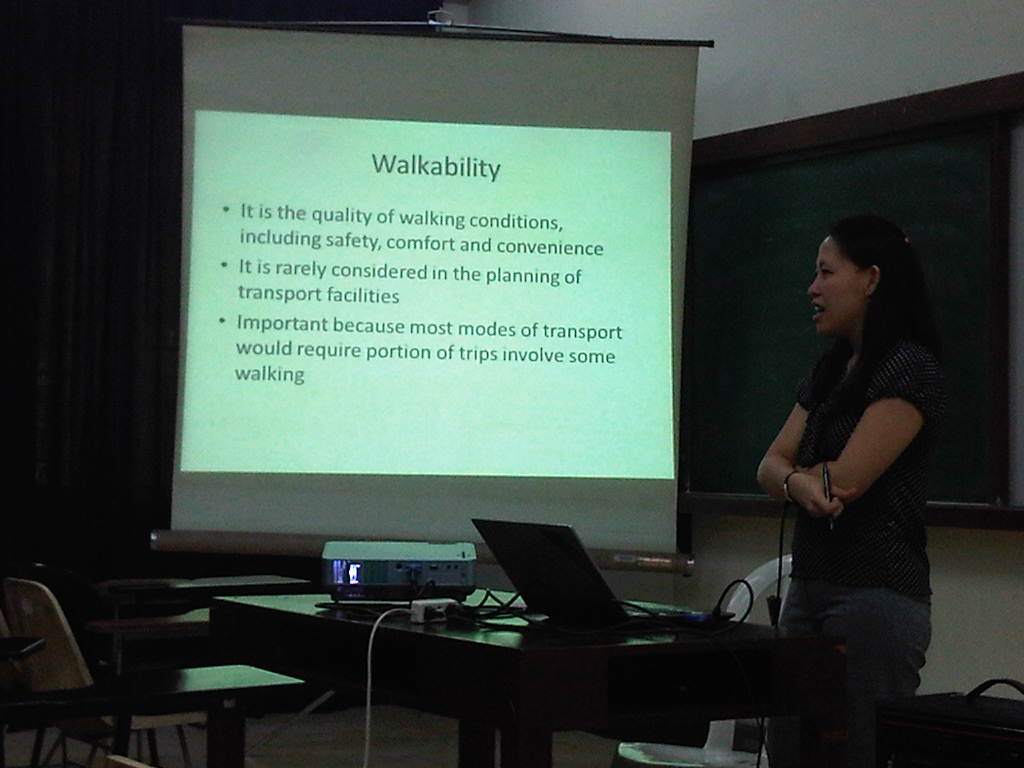
Ms. Anna Tiamzon presented her preliminary research proposal on walkability. She is a faculty member of the University of Sto. Tomas (UST) in Manila.
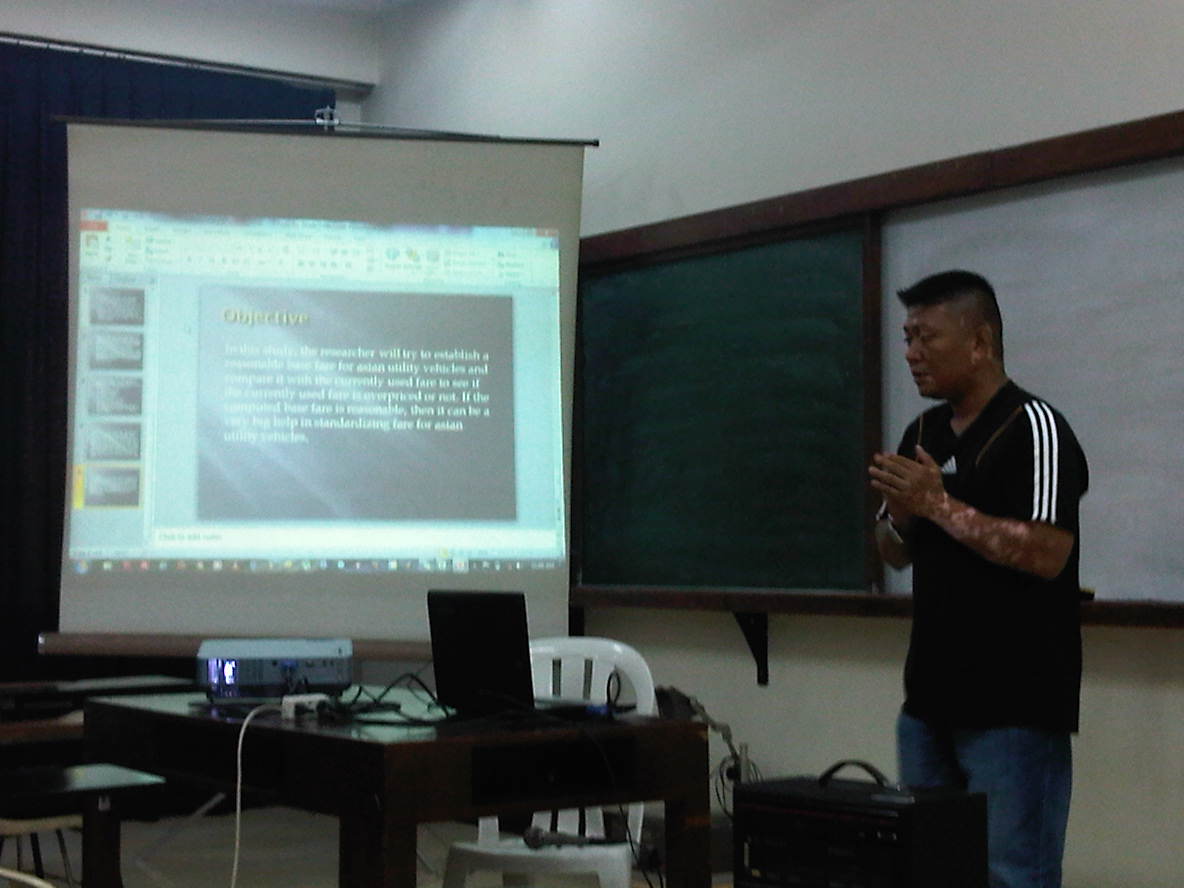
Mr. Edmon Favila presented his preliminary proposal on fare setting for UV Express services (van-type service) in Metro Manila.

Mr. Ali, an Iranian student, also presented a preliminary topic on the determination of bus terminal locations for Metro Manila.
Other graduate students who were not able to present in the December seminar will be making their presentations in January 2012 including two PhD program students and 3 MSCE students. The undergraduate students of the Transportation Engineering Group (TEG) of UP-ICE made progress presentations earlier last December 7, 2011 and are on-track to complete their researches by March 2012.
Parking galore
I met Paul Barter not too long ago when he visited Manila to give a presentation on parking at the ADB. This was at the then annual ADB Transport Forum held around May every year at the ADB’s headquarters in Manila. He is a faculty member at the Lee Kuan Yew School of Public Policy of the National University of Singapore. I keep forgetting that he is a regular blogger and writes a lot about sustainable transport and particularly about parking. And so I share this awareness to my readers about Paul’s blog Reinventing Parking.
Reinventing Parking is an excellent resource for a lot of articles and references on parking. Paul has researched on parking in most Asian countries and has been to major cities in the region where he has collected first hand data on parking policies and behavior. I find his materials well researched and his discussions and opinions on parking quite interesting as many of the issues he has delved into in his posts are very much applicable to our experience in the Philippines. I have had the pleasure of sitting down with him to talk about parking policies and standards (?) in this country for his comparative research and a paper he was doing at the time. I’m sure there’s a lot our planners and developers will learn from Paul’s work. Perhaps, even decision-makers or government officials in-charge of parking standards (e.g., National Building Code) can pick up a thing or two from his body of work.
–
Memorandum Order No. 25, Series 2011
MALACAÑAN PALACE
MANILA
BY THE PRESIDENT OF THE PHILIPPINES
MEMORANDUM ORDER NO. 25
RECONSTITUTING THE INTER-AGENCY TECHNICAL COMMITTEE ON TRANSPORT PLANNING (IATCTP)
WHEREAS, transportation infrastructure has the biggest share in the country’s infrastructure investment program and will continue to be among the critical drivers of the country’s economic growth;
WHEREAS, a number of government agencies are involved in transport planning activities within their respective areas of jurisdiction;
WHEREAS, the Department of Transportation and Communications (DOTC) is the primary policy, planning, programming, coordinating, implementing, regulating and administrative entity of the government in the promotion, development and regulation of dependable and coordinated transportation network in the country;
WHEREAS, the Department of Public Works and Highways (DPWH) is the lead agency for the planning, design, construction and maintenance of the national road network, which continues to dominate the country’s transport system;
WHEREAS, the Philippine Ports Authority (PPA) is mandated to facilitate the implementation of an integrated program for the planning, development, financing, operation and maintenance of ports or port districts in the country;
WHEREAS, the Maritime Industry Authority (MARINA) is tasked to integrate the development, promotion and regulation of the maritime industry in the country;
WHEREAS, the Philippine National Railways (PNR) is the first instrumentality of the government mandated to provide railway system and services within the integrated national transport system;
WHEREAS, the Light Rail Transit Authority (LRTA), by virtue of Executive Order (EO) 603, is responsible for the construction, operation, maintenance and/or lease of light rail transit systems in the country, which are recommended and envisioned to alleviate traffic and transportation situation in a congested metropolitan area within the context of rational land use planning;
WHEREAS, the Metropolitan Manila Development Authority (MMDA) is tasked, among others, to coordinate development planning, transportation and traffic management, urban renewal and land use planning, urban protection, pollution control and public safety in Metro Manila which is the country’s premier economic and financial capital;
WHEREAS, the Civil Aviation Authority of the Philippines (CAAP), created on 04 March 2008 by virtue of Republic Act (RA) 9497, is mandated to be the technical regulator of air transport;
WHEREAS, the University of the Philippines-National Center for Transportation Studies (UP-NCTS) aims to, among others, conduct research activities on transportation, provide extension services to various government agencies and the private sector, and provide information services on transportation; and,
WHEREAS, transportation affects the country’s economic development and therefore there is a need to effectively coordinate its planning and policy formulation process led by the National Economic and Development Authority (NEDA) in order to achieve the objectives of sustainable economic growth in the country.
NOW, THEREFORE, in consideration of the foregoing premises, the IATCTP is hereby reconstituted in view of the important roles of the other transport agencies in achieving a comprehensive and integrated coordination function in transport planning. The Committee shall now be composed of the following:
| Deputy Director-General, NEDA-National Development Office | – Chairperson |
| Assistant Director-General, NEDA-National Development Office | – Member |
| Director, NEDA-Infrastructure Staff | – Member |
| Director, NEDA-National Planning and Policy Staff | – Member |
| Director, NEDA-Project Monitoring Staff | – Member |
| Director, UP-NCTS | – Member |
| Head of Planning Service/Unit, DOTC | – Member |
| Head of Planning Service/Unit, DPWH | – Member |
| Head of Planning Service/Unit, PPA | – Member |
| Head of Planning Service/Unit, MARINA | – Member |
| Head of Planning Service/Unit, PNR | – Member |
| Head of Planning Service/Unit, LRTA | – Member |
| Head of Planning Service/Unit, MMDA | – Member |
| Head of Planning Service/Unit, CAAP | – Member |
The Committee shall continue to perform the following duties and functions:
a. Formulate and recommend to the NEDA Board Committee on Infrastructure (INFRACOM) comprehensive and integrated transport plans;
b. Formulate standards and guidelines for the preparation of agency plans for transport development;
c. Develop a transport information system that shall serve the information needs of all transport planning and other relevant agencies;
d. Coordinate the conduct of studies, researches and data-gathering on various aspects of the transport sector;
e. Formulate areas of cooperation and coordination among the various agencies and instrumentalities of the government involved in transport programs and projects to avoid duplication of efforts;
f. Provide the NEDA Board with up-to-date information needed in the review and evaluation of transport plans and projects; and
g. Serve as a forum for the resolution of operational problems of transport agencies.
The Committee shall submit to the NEDA Board INFRACOM any issues/concerns that require adoption/resolution by the latter.
The Committee shall meet for the purpose of discharging its functions and may create sub-committees as may be necessary. Other relevant transport agencies and organizations may also be invited to attend meetings when warranted.
The NEDA Infrastructure Staff shall provide secretariat services to the Committee.
All heads of departments, bureaus, offices and instrumentalities of the government are hereby requested to extend full cooperation and assistance to the Committee to ensure the successful execution of its tasks.
This Memorandum Order (MO) shall take effect immediately and shall supersede MO 473 (1974).
DONE, in the City of Manila, this 26th day of October in the year of our Lord Two Thousand and Eleven.
(Sgd.) BENIGNO S. AQUINO III
By the President:
(Sgd.) PAQUITO N. OCHOA, JR.
Executive Secretary
EST and Green Urbanism
I had the great opportunity of presenting excerpts of the National Environmentally Sustainable Transport Strategy (NESTS) and talk about its implementation at the local level at the recently concluded Green Urbanism Conference. The Conference was organized by the School of Urban and Regional Planning (SURP) of the University of the Philippines Diliman in cooperation with the Faculty of Design of Kyushu University, with support from various partners including AusAID. It ran from October 18-20, 2011 at the Heritage Hotel Manila, featuring a variety of topics divided into 5 sessions namely:
- Green Cities
- Green Architecture and Ecological Landscapes
- Green Infrastructure
- Environmentally Sustainable Transport
- Developing Climate and Disaster Resilient Urban Centers
“This paper presented current and past efforts focusing on sustainable transport. Many of these are continuing especially the promotion of good practices in EST that emanate from the national strategy that was recently formulated. The national EST strategy identifies action plans and the corresponding responsible agencies or entities. The key competencies and skill sets that will enable cities to formulate and implement meaningful programs and projects were also presented. More importantly, the paper examined the capacities of cities for transportation planning and recommended for collaborative agreements with local universities with sustainability in mind.
The general observation has been that LGUs are often unaware that certain programs and projects they are implementing or planning actually fall under EST. As such, they are unable to package their programs and projects in a way that can be attractive to both local and foreign support. One main objective of social marketing for EST is to assist cities by capacitating them with the fundamentals they would need to undertake projects geared towards sustainable transport.
The strategies developed for each EST thematic area are collectively called the national strategy and implies responsibility of a national agency for its implementation. Upon closer scrutiny, however, it must be realized that significant impacts will only be attained if EST is successfully implemented at the local level. The role of national agencies such as the DOTC and the DENR is to provide guidance and capacity to cities for the latter to be able to come up with meaningful programs and projects. After all, while big ticket EST projects may be initiated by national agencies, their success will be determined by how these are implemented at the local level. In the Philippines, cities have been empowered for such purposes and localizing national programs and strategies would be essential in addressing enduring and emerging problems concerning transport and traffic.”
PNR Field Trip in 2003 – Part 3
At the end of our field visit to the PNR yard in Tutuban, our group was treated to a free ride to the Buendia (Gil Puyat Ave.) Station. Some of us sat on the last car so we were afforded a view of the railway tracks and the environment along the PNR right of way. The result is a set of photos that I like to call “a peep into the train’s backdoor.”
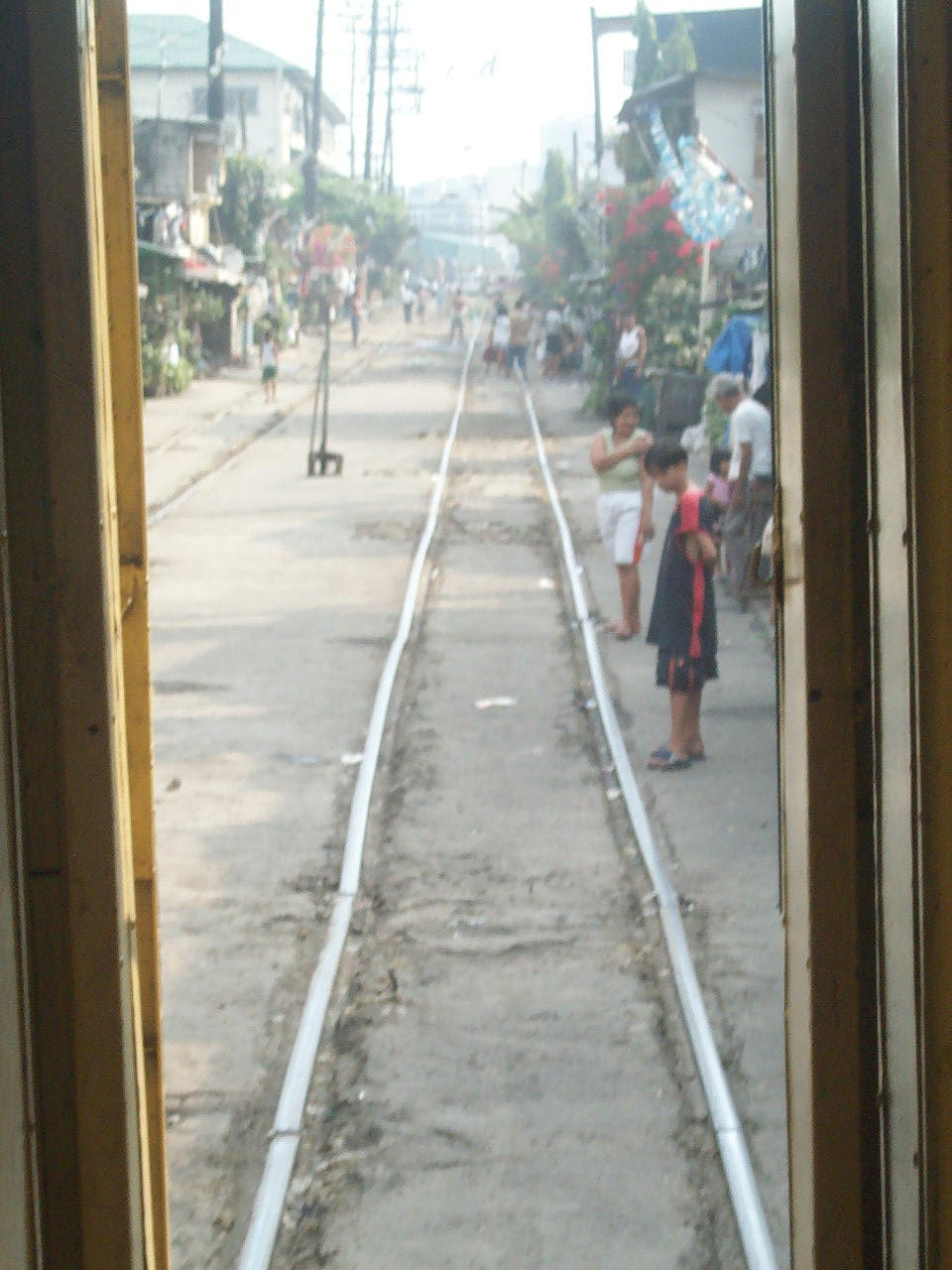 At the time, there were no rehabilitation work along the commuter line and one could clearly see the state of the tracks that could easily lead to derailment. Communities were dangerously close to the tracks as many informal settlers have encroached upon the PNR ROW. There is even a makeshift basketball court in the middle of the tracks. Thus, trains moved quite slowly partly because of the tracks and partly because of the people, mostly children who routinely cross the path of the train.
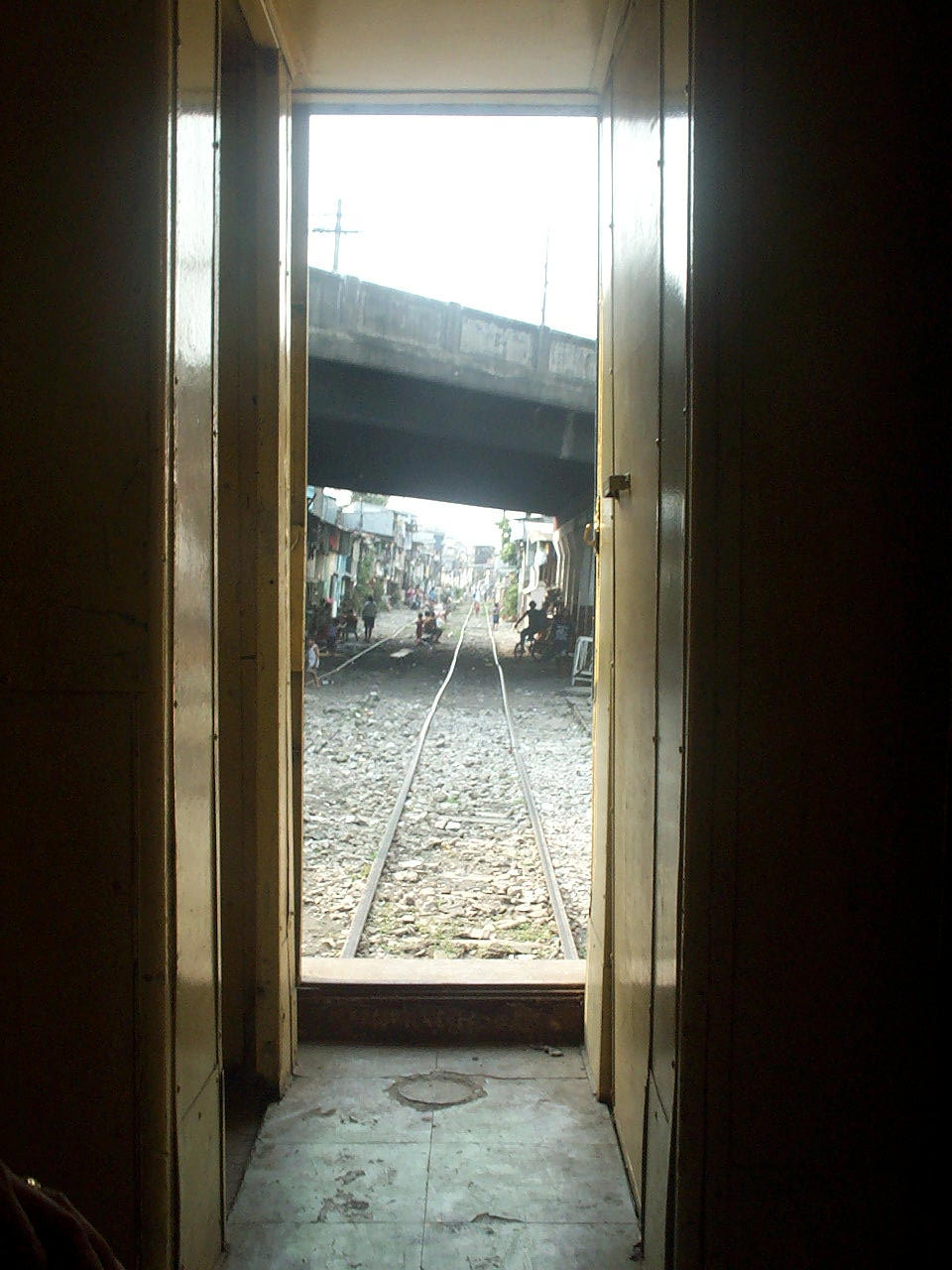 People have set up benches between the tracks and tambays are often found drinking or gambling, of the dangers posed by the trains.
Absent at the time were the trolleys that serve as informal transportation for communities along the line. These trolleys were generally human-powered, pushed by their operators and taking advantage of the the tracks and the unseen slopes to generate momentum and speed. These trolleys were light enough that they could easily be removed in case a train happened to be passing. I have photos of trolleys from my trip to Bicol that I will be including in future posts.
 It is said that the state of a country is clearly reflected in the conditions or situation of its transportation system. I guess the photo above gives us a pretty good picture of where the Philippines is right now if only we can deduce the essential elements from the photo. We have children wandering about and not getting the education they need to become productive members of society. This, despite primary and secondary eduction being free and compulsory. We have a problem concerning waste disposal that definitely has environmental consequences, not to mention a contribution to the perennial problems of flooding. We also have a housing problem where affordable, well-located housing is generally unavailable thereby attracting people to informal settlements. In the latter case, some settlements seem to be encouraged by local politicians if not local governments as they provide cheap votes come election time. And of course, there’s our transport system that needs a lot of attention if only to fix the results of failures in transport planning.
Need I say more?
PNR Field Trip in 2003 – Part 2
During the field in 2003, we also visited the PNR yard in Tutuban. The original central station/terminal of the PNR was already lost to what is now the Tutuban Mall. Perhaps in the near future, the PNR would again have a central terminal with architecture evoking its glory days. I’ve always imagined something that looks like what is Tokyo Station today. After all, stations of what was the PNR Main Line North featured red bricks.
 At the PNR yard in Tutuban, one could see what were operational and abandoned rolling stock and other equipment. Notice the roofs of the passengers cars? The roofs were modified because informal settlers were throwing their garbage and other wastes on top of the cars. The reasoning for the modification was that the wastes would just slide down. There’s some anecdotal evidence that the settlers also did their own adjustments by tying two plastic bags of garbage and hurling the two in such a way that the two bags would be on either side of the roof.
 A turnout at the PNR yard – turnouts allow for the diversion of trains from one set of tracks to another. It has three basic components: switches, acute angle or vee crossings (also known as “frogs”), and obtuse angle crossings. Visible in this photo is the frog at the middle of the picture and the check rails across from either side of the frog.
 Every wonder how the switches are activated so trains can transfer from one set of tracks to another? The contraption on the left is a lever that moves the rails for the trains to switch tracks. Of course the LRT and MRT lines use a more modern version of these devices so trains can transfer tracks once reaching the end of the lines.
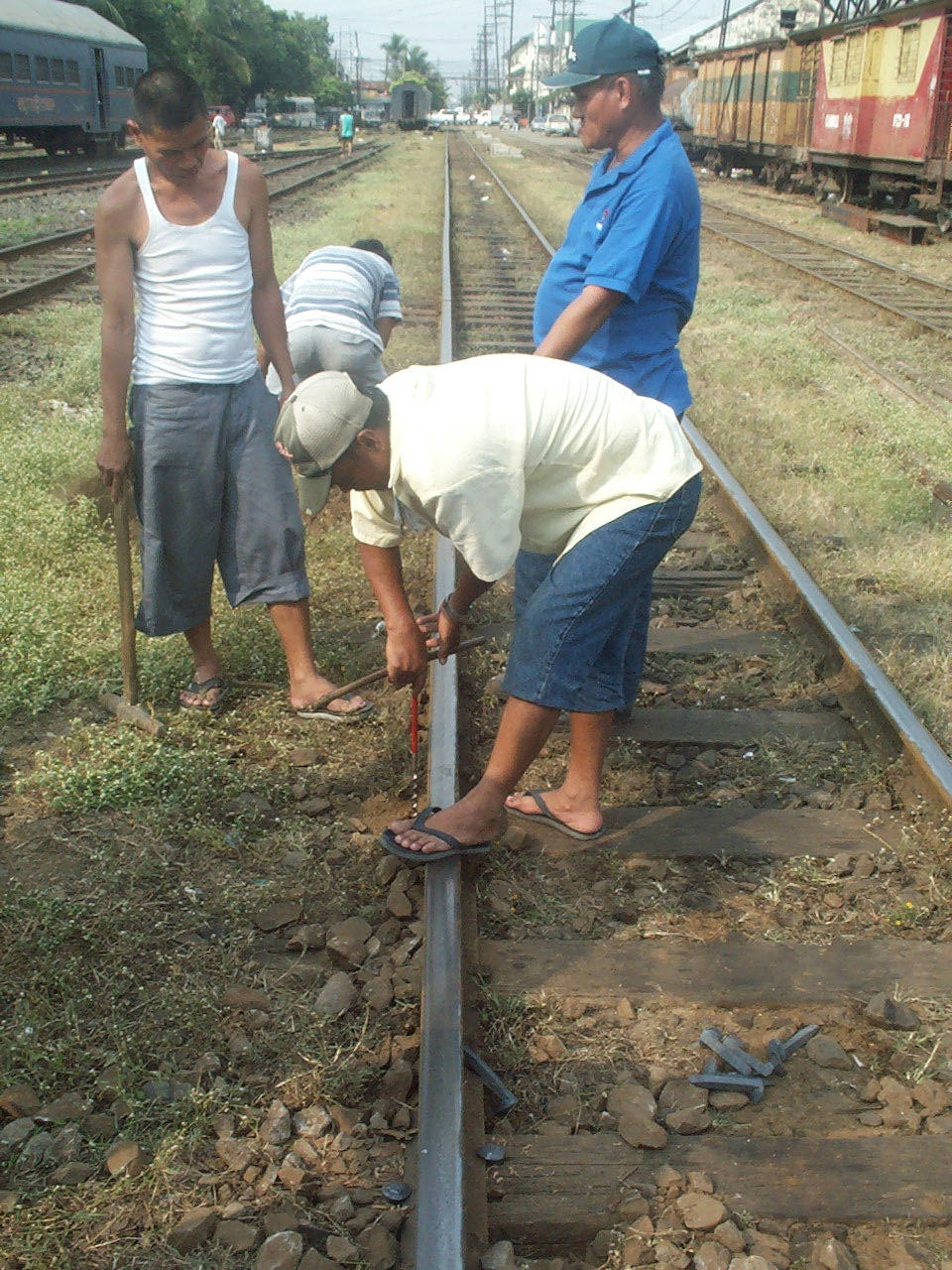 PNR staff working to secure the rails to the railroad ties (sleepers or traviesa) – it may look pathetic but the PNR was really so ill-equipped that they had to use manual drills to make holes on the wooden sleepers and then hammer the spikes (shown in the foreground) to the ties. Note the man with the big hammer on the left waiting for his turn to work. Since then, the PNR has changed many of these sleepers so we see mostly concrete ties in their places. Many sleepers were stolen not just along abandoned tracks in the north and central Luzon but those along active tracks as well. These were sold as construction material, garden accessories or even accents for houses, offices or restaurants.
PNR Field Trip in 2003 – Part 1
I found some old photos from a field trip at the PNR we organized for our students back in 2003. I remember we had a big delegation composed of senior undergraduate students of Civil Engineering, senior Tourism students, and graduate students taking up MS Civil Engineering and MA Transportation Planning. The PNR was very kind to accommodate us and explain to the students how the company was making ends meet at the time. Many of us faculty and technical staff who were still fresh out of our stints in Japan were saddened by the state of the PNR and could only utter words of support and encouragement to its management. We are now quite happy that there has been significant progress in the past few years for both the commuter line and Main Line South.
Following are a few photos from that 2003 field trip:
 Students gathered around an old bogey under maintenance at the PNR facilities. The two people on the right in the photo are Dr. Dayo Montalbo of the School of Urban and Regional Planning and Dr. Val Teodoro who was senior technical staff with the NCTS at the time.
 Taking a closer look at a bogey with the detached cars in the background. The state of PNR rolling stock at the time was a depressing sight considering what was once a proud company.
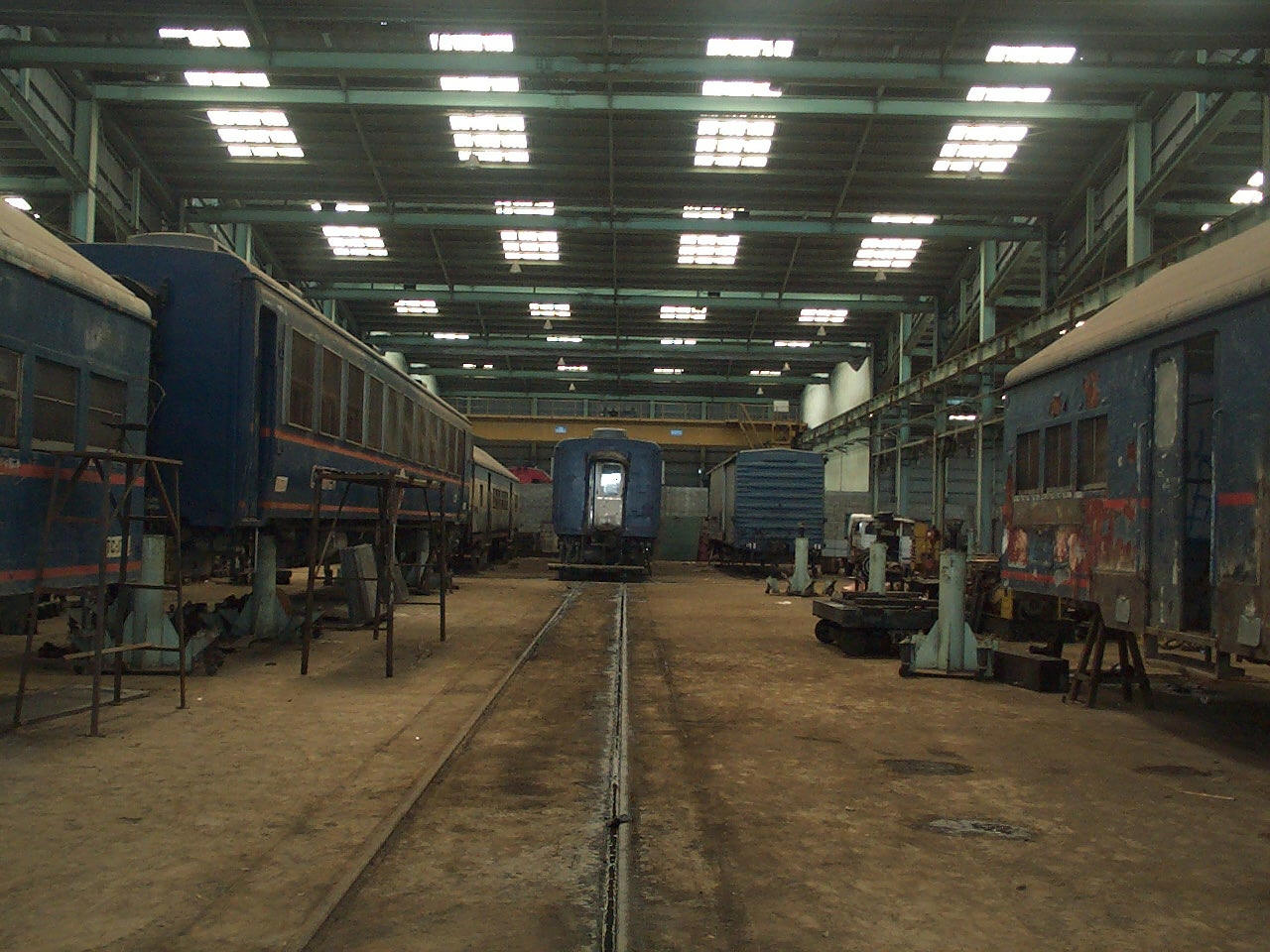 A look at the maintenance facilities at PNR Caloocan. This is a far cry from the modern facilities we later saw at the LRT 2 Depot in Santolan, which was only recently opened at the time.
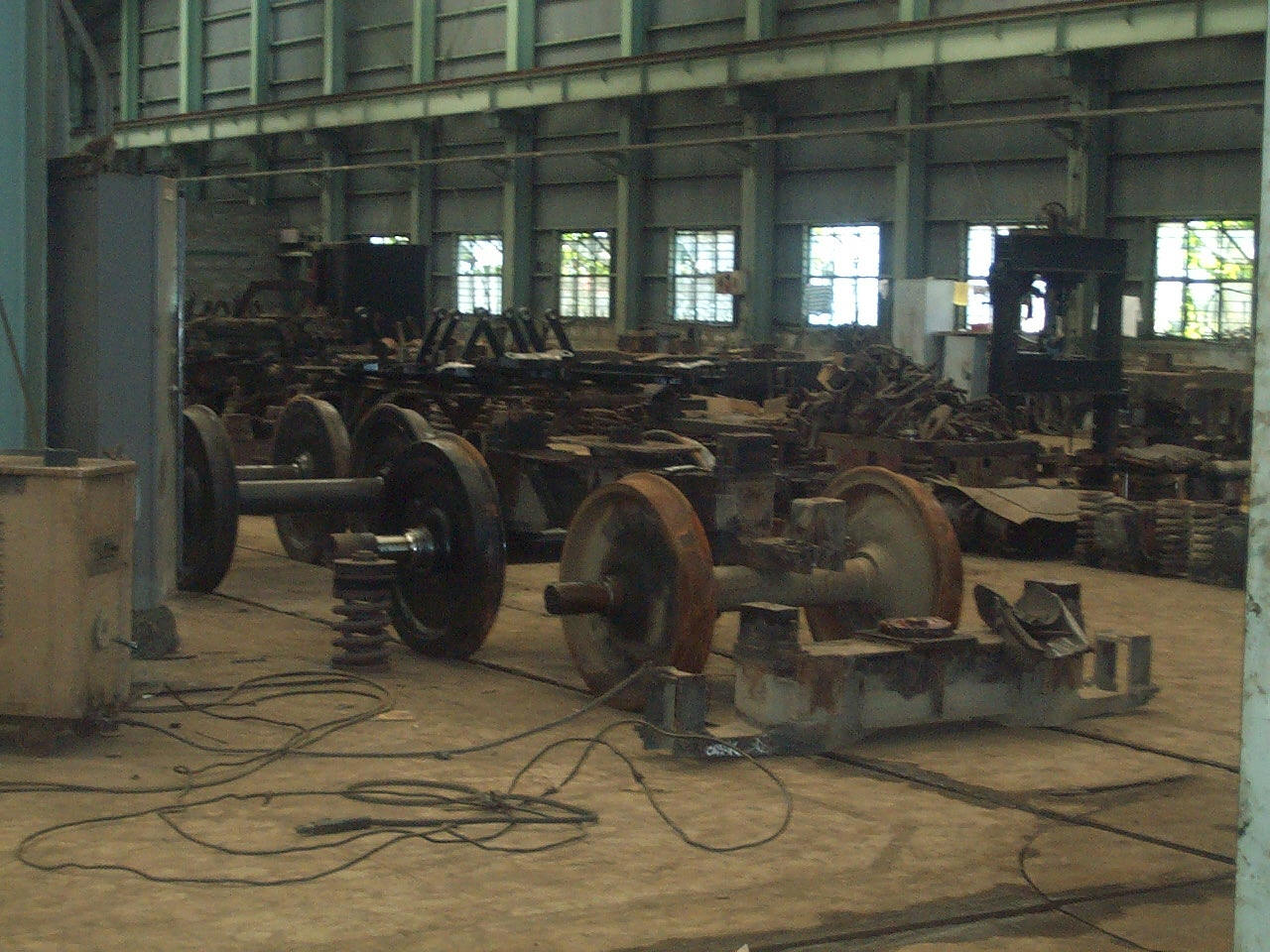 Barbells? These are the trains’ wheels. Other spare parts are in the background. To the untrained eye, the area where they keep the spare parts looks like a scene in a junk shop.
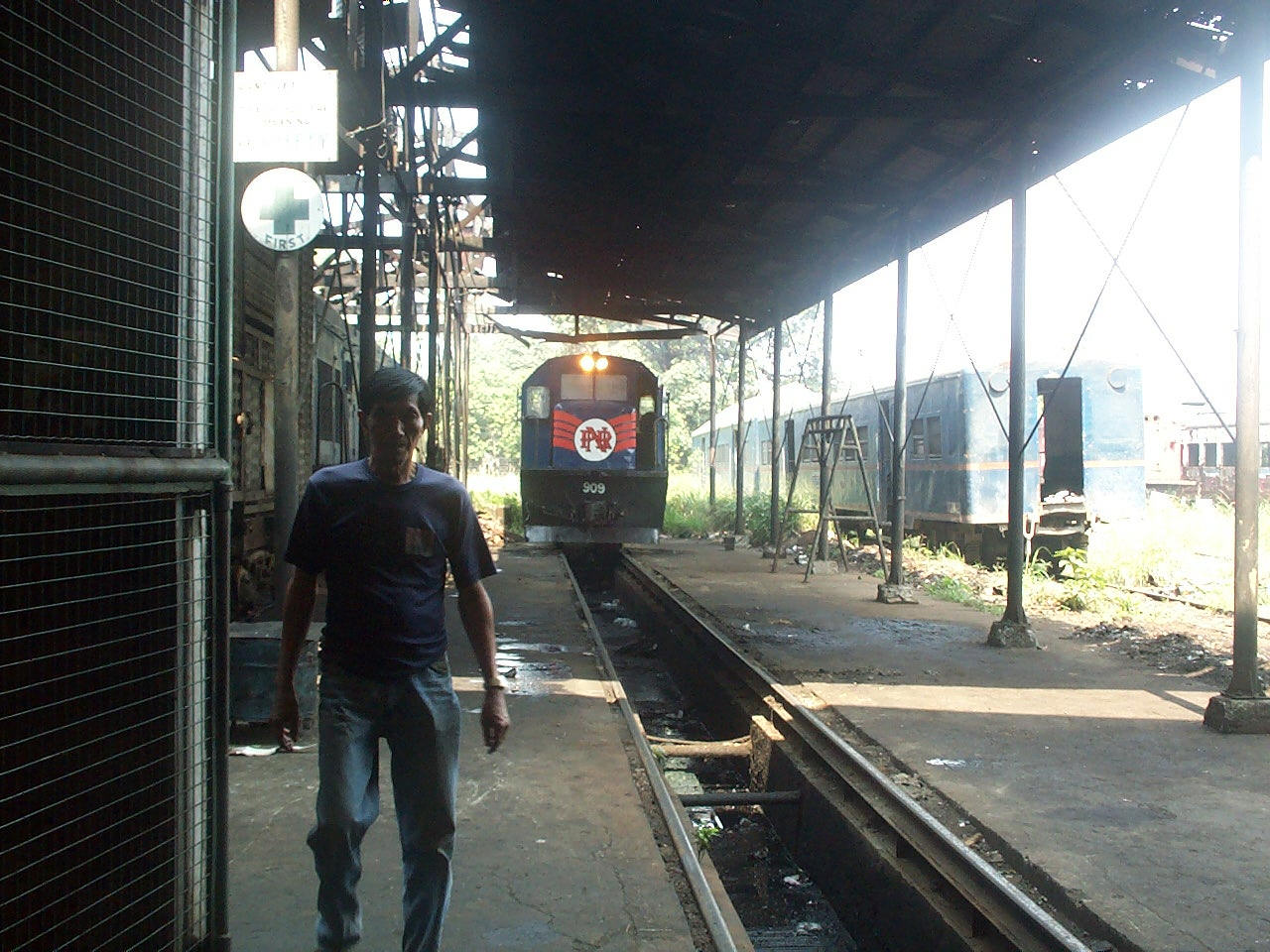 Locomotive coming in for maintenance. PNR rolling stock at the time have seen better days and required a lot of work in order to keep the trains running. Passenger share of the PNR was insignificant due to its often irregular service at the time, partly due to the conditions of its rolling stock and partly, too, because of the conditions of the tracks.
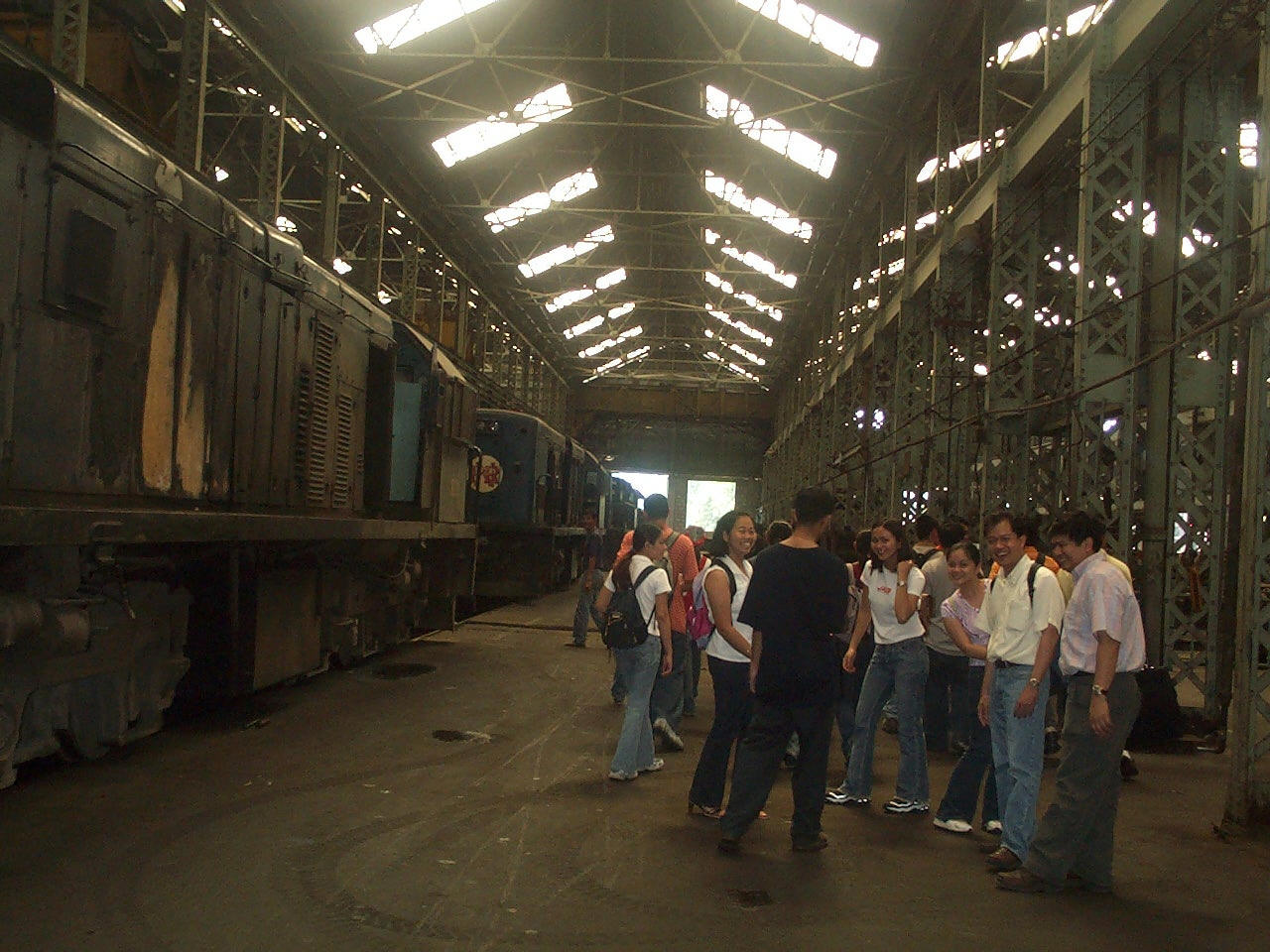 Students and their teachers during a light moment beside locomotives undergoing maintenance in the PNR garage.
More photos on the field trip in a succeeding post.
Undergraduate research topics on transportation 2011-2012
The Institute of Civil Engineering of the University of the Philippines Diliman is conducting its undergraduate research colloquium today. Expected to present are students who are either at the proposal stage or completing their research. Topics being completed are the following:
- Analysis of Road Accidents Involving Children Below 15 Years Old
- Analysis of the Impact of Billboards on Road Accidents Along EDSA
- Assessment of the Parking Management System in Shopping Malls
- In-Depth Comparative Analysis of Female and Male Bus Drivers for Public Transport in Metro Manila
Meanwhile, topics being proposed are the following:
- Accident Risk by Mode of Public Road-Based Passenger Transport in Metro Manila
- Analysis of Operations of Electric Tricycles
- Applicability of Unconventional Transit Systems in Selected Metropolitan Areas in the Philippines
- Assessment of the Philippine National Railways Commuter Line Services
- Assessment of the Re-Introduction of Traffic Signal at the University Avenue-Commonwealth Avenue Intersection
- Development of a Public Transport Information System for the UP Diliman Campus
- Estimating Ridership for a Proposed Public Transport System for UP Diliman
- Measuring Delay Caused by U-turn as Traffic Control Facility
- Quantitative Assessment of Road Safety Initiatives Along EDSA
- Travel Time Estimation of Jeepneys: The Case of University of the Philippines Diliman, Quezon City
The coverage of undergraduate research this year concerns mainly public transportation and road traffic safety but with one topic dealing primarily with traffic engineering. It is hoped that these researches would be able to answer certain nagging questions pertaining to transport and traffic particularly where safety and efficiency are concerned. In the case of topics on mass transport such as those on the PNR commuter services and the applicability of unconventional systems such as the automated guideway transit (AGT) and the monorail, the potential outcomes may actually be able to address questions that concern alternatives or options to road-based transport. This is essential and presently a very relevant issue given the shortcomings in transport infrastructure in many Philippine cities and the current efforts exploring the possibility and feasibility of systems that will alleviate congestion and address travel demand. Overall, such researches are targeted towards contributing to the body of knowledge that should serve as inputs to the formulation of solutions suitable for the Philippine setting.
Car crazy: remembering an acquaintance
I met Prof. Lee Schipper for the first time when I attended the WCTR Conference held in UC Berkeley in 2007. I was presenting a paper on traffic schemes in Metro Manila at the time while a student was presenting our paper on bus operations. We had a sizable delegation from the Philippines at the conference considering Filipino students who were studying in Japan, Australia and Canada were also participating in the conference. Prior to the conference, my student was already communicating with Prof. Schipper who was reviewing our paper and he was very helpful with his comments to improve the material during the refereeing process.
I had the pleasure of meeting him a few more times in Manila at one ADB Transport Forum and at meetings organized by Cornie Huizenga’s Partnership for Sustainable Low Carbon Transport (SLoCaT). He always had a unique opinion on transport and I found his ideas quite useful for as an alternative take on a lot of things about transport that we often take for granted and orthodox.
As a tribute, here is an article by Lee Schipper published online by World Streets:
Car Crazy: Lee Schipper on the Perils of Asia’s Hyper-Motorization
Prof. Schipper was quite passionate about transport in Asia as he probably realized that motorization in Asia would have tremendous impacts on the environment (mainly on air quality and energy) and not just on the local or national levels. Perhaps the battle has been on the losing side in many industrialized countries and the huge Asian market is where efforts should be exerted in order to prevent or mitigate experiences similar to those in the US and other countries.
Prof. Schipper will be missed.
 Caught (up) in traffic