
Home » Academe (Page 13)
Category Archives: Academe
Professorial Chair Lectures on Transportation Topics – 2012
The College of Engineering of the University of the Philippines Diliman recently held its Professorial Chair Colloquium where lectures were delivered by faculty members from the various institutes and departments comprising the college. Four lectures were delivered last August 10, 2012 at a special session held at the Toyota Training Room of the National Center for Transportation Studies. The lectures were on transportation topics and presented by faculty members of the Institute of Civil Engineering who are also Fellows at the NCTS. Following are the lectures and the presentation files in PDF:
Palmiano, H.S.O., Investigation of Road Crash Causal Factors in Metro Manila, DMCI Developers Professorial Chair: Road Safety Researches HSOPalmiano 10Aug2012
Vergel, K.N., Design of Traffic Signal Timing and Traffic Impacts of the Re-Introduction of Traffic Signal Control at the Intersection of the University Avenue and Commonwealth Avenue, Maynilad Professorial Chair: Traffic Signal Timing KNVergel 10Aug2012
Sigua, R.DG., Microscopic Simulation: A Tool for Evaluation of Traffic Schemes, Prof. Emeritus Norbert S. Vila Professorial Chair: Traffic Simulation RDGSigua 10Aug2012
Regidor, J.R.F., Revisiting the Costs of Traffic Congestion in Metro Manila and their Implications, Pozzolanic Philippines, Inc. Professorial Chair: Revisiting Costs of Congestion JRFRegidor 10Aug2012
–
Transportation-related lectures at the UP College of Engineering 2012 Professorial Chair Colloquium
The College of Engineering of the University of the Philippines Diliman will be holding its Professorial Chair Colloquium for 2012 on July 30, 2012 at the Melchor Hall and the UP Alumni Engineers Centennial Hall at the UP Diliman campus. Among the topics under many disciplines of engineering are several lectures on transportation. These are the following and mainly under three departments of the college.
Institute of Civil Engineering [P & G Room, Melchor Hall]
- “Investigation of Road Crash Causes in Metro Manila,” Dr. Hilario Sean O. Palmiano, DMCI Developers Professorial Chair [8:30 – 8:50 am]
- “Design of Traffic Signal Timing and Traffic Impacts of the Re-introduction of Traffic Signal Control at the Intersection of the University Avenue and Commonwealth Avenue,” Dr. Karl B.N. Vergel, Maynilad Professorial Chair [8:50 – 9:10 am]
- “Microscopic Simulation: A Tool for Evaluation of Traffic Schemes,” Dr. Ricardo G. Sigua, Prof. Emeritus Norbert S. Vila Professorial Chair [9:10 – 9:30 am]
- “Revisiting the Costs of Traffic Congestion in Metro Manila and Their Implications,” Dr. Jose Regin F. Regidor, Pozzolanic Philippines, Inc. Professorial Chair [9:30 – 9:50 am]
Department of Mechanical Engineering [Maynilad Room, Melchor Hall]
- “Performance And Emission Characteristics of a Direct Injection Diesel Vehicle with Different Blends of CME Biodiesel,” Dr. Edwin N. Quiros, Emerson Professorial Chair in Mechanical Engineering [9:30- 9:50 am]
- “Design and Local Fabrication of an Energy- Efficient Electric Vehicle,” Asst. Prof. Joseph Gerard T. Reyes, Emerson Professorial Chair in Engineering [10:30 – 10:50 am]
Department of Chemical Engineering [Maynilad Room, Melchor Hall]
- “Co-Production of Alternative Fuels for the Philippines,” Dr. Rizalinda L. De Leon, Semirara Professorial Chair in Engineering [10:50 – 11:10 am]
The lectures are all open to the public and will be held from 8:30 AM to 12:30 PM. There are 8 lecture groups that are assigned to 8 venues at Melchor Hall and UPAE Centennial Hall. Melchor Hall is located at the university core along the Academic Oval while the UPAE Hall is located along Velasquez Street beside the EEE Institute Building and across from the National Institute of Geological Sciences (NIGS).
–
The Transport Training Center
Today marks the 36th anniversary of the founding of an institution that since 1976 has been dedicated towards providing capacity on transportation engineering and planning mainly for the government of the Philippines. The National Center for Transportation Studies (NCTS) of the University of the Philippines was founded as the Transport Training Center (TTC) in July 12, 1976 by virtue of Letter of Instructions No. 428 by then Pres. Ferdinand E. Marcos. The center was established at the UP Diliman campus with assistance from the Government of Japan through the Japan International Cooperation Agency (JICA).
LETTER OF INSTRUCTIONS NO. 428
TO : The Secretary of Public Highways
The President, University of the Philippines System
The Director-General, National Economic and
Development Authority
The Secretary of Public Works,
Transportation and Communications
The Commander, Constabulary Highway Patrol Group
WHEREAS, the present accelerated development program of the country coupled with rapid urbanization growth due to migration and population increase, has further aggravated the already complex traffic problems;
WHEREAS, there is an urgent need for trained personnel with adequate background and skill in transport planning, more specifically in the fields of traffic engineering and management;
WHEREAS, such need cannot be fully met by limited programs for technical training here and abroad;
WHEREAS, a Transport Training Center geared to provide intensive and practical training in the fields of traffic engineering, planning and management can provide the means for upgrading the capability and potential of a significant number of personnel in government agencies concerned with transportation; and
WHEREAS, the Japan International Cooperation Agency (JICA) has offered to donate equipment needed for such training and to provide, for a period of three (3) years, several experts who shall, together with local Instructors, conduct the training course;
NOW, THEREFORE, I, FERDINAND E. MARCOS, President of the Philippines, in order to establish an efficient transport system that will provide a fast, safe and convenient movement of people and goods on all streets and highways do hereby direct:
1. The Secretary of the Department of Public Highways and the President of the University of the Philippines System to jointly establish, manage and operate a Transport Training Center within the campus of the University of the Philippines System;
2. The Secretary of the Department of Public Highways to include in its budget the yearly operational expenses of the Transport Training Center, starting from Calendar Year 1976, and for the succeeding years;
3. The Secretary of the Department of Public Works, Transportation and Communications to include in its budget (C.Y. 1976) an amount to cover the construction of the Transport Training Center building at UP;
4. The Director-General of the National Economic and Development Authority to create a Steering Committee to be chaired by the representative from the Department of Public Highways, being the lead agency, and to draw one member each from all the concerned agencies. This Committee shall promulgate rules and regulations as guide to management, and such other policies deemed necessary for the effective and successful operation of the Training Center;
5. That all agencies concerned shall assist in every way possible, and to closely coordinate and take such measures as may be necessary or appropriate to carry out the purpose and intent of these instructions.
Done in the City of Manila, this 12th day of July, in the year of Our Lord, nineteen hundred and seventy-six.
Future of road assessments in the Philippines
The field surveys conducted under the International Road Assessment Program (iRAP) in cooperation with the Department of Public Works and Highways (DPWH) employed a van fitted with cameras taking video of the road environment. The surveys were mobile and covered more than 2,000 kilometers of national roads in Luzon and Visayas. The video is then processed prior to evaluation by a team trained to rate road sections according to a criteria established by iRAP and applied in many other countries including Malaysia and Australia. I haven’t had the chance to explain the project to a close friend of ours with the Geodetic Engineering Department of the University of the Philippines Diliman when he explained to me his proposal for a mobile mapping system that we included in the Intelligent Transport System (ITS) program for consideration by the Department of Science and Technology (DOST) with their Engineering Research and Development for Technology (ERDT) program.
The GE Department recently acquired state of the art equipment for mobile mapping under another project. I presume this will eventually be used for the road environment and the equipment includes a 3D Laser scanner installed on top of a survey vehicle. The scanner will enable the construction of 3D images of the road environment with an accuracy that will allow for a more automated (and objective) assessments of road safety.
They also installed an inertial measurement unit (IMU) on the vehicle. This device will be able to measure horizontal and vertical movement of the vehicle, enabling it to measure displacement that can be used to determine road roughness. The latter may be used to determine the international roughness index (IRI), which is a measure of quality of road pavements.
 State of the art equipment being installed on an AUV
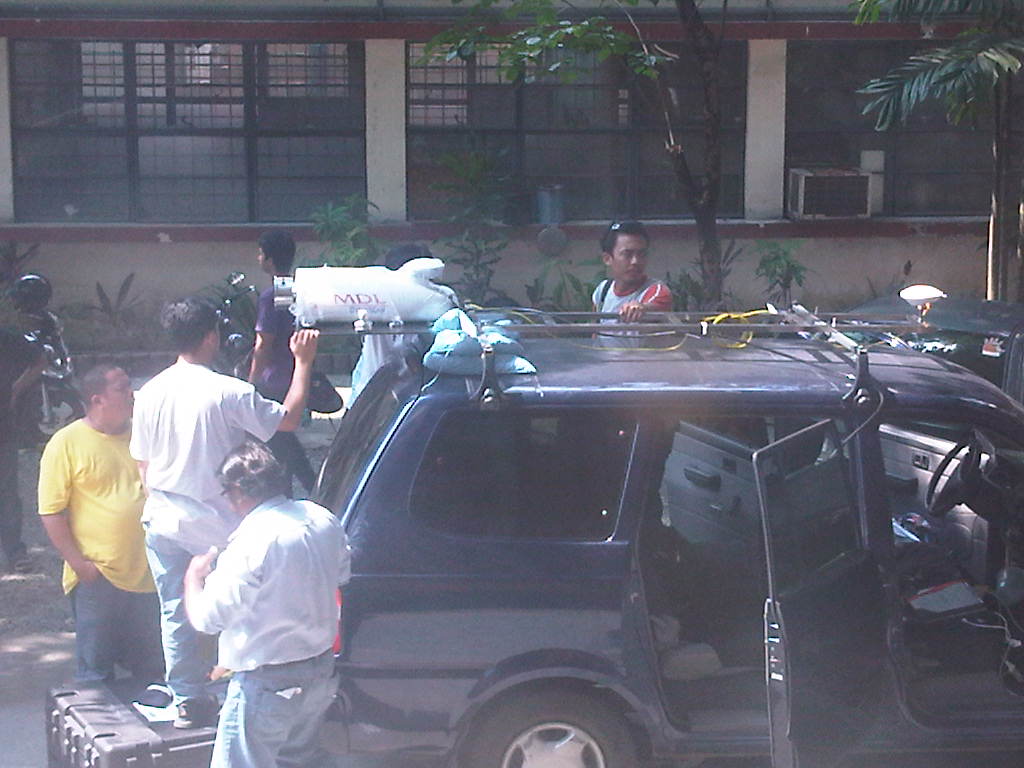 Close-up of installation work
 UP College of Engineering Staff posing after completing installation of the 3D scanner
The Road Safety Research Laboratory (RSRL) of the National Center for Transportation Studies (NCTS) look forward to working with the GE Department on applications of their hardware and software for evaluating road safety in the country. Hopefully, we can get support from the pertinent agencies for this endeavor.
–
Final presentations of undergraduate researches and proposals – March 2012
Undergraduate students under the Transportation Engineering Group of the Institute of Civil Engineering of the University of the Philippines Diliman presented last March 26, 2012. A total of 17 presentation were made including 12 for completed studies and 5 research proposals. One presentation was deferred as the group was still analyzing their data and could not make the deadline for draft manuscripts.
The final presentations of completed undergraduate researches were as follows:
- Travel Time Estimation of Jeepneys: The Case of UP Diliman, Quezon City (Arlish M. Carpio and Joseph Rei Mark Co)
- Assessment of the Philippine National Railway Commuter Line Services (Lara Kriselle B. Paragas and Ma. Katrina Q. Rañeses)
- Applicability of Unconventional Transit Systems in Selected Metropolitan Areas in the Philippines (Joselle Patricia E. Civil and Maiko G. Tenorio)
- Estimation of Traffic Signal Setting for the University Avenue-Commonwealth Avenue Intersection (Aimah C. Busok and Chrislene D. Calivo)
- A Road Safety Assessment Toolkit for Metro Manila (Neil Kendrick L. Sy)
- Analysis of Operation of Electric Tricycles (Demi Anne C. Obediencia and Ruth Noemi F. Sloot)
- Accident Risk by Mode of Public Road-Based Passenger Transport in Metro Manila (Walter T. Crisologo)
- Measuring Delay Caused by U-turn as a Traffic Control Facility (Neil Angelo G. Luzano and Mark Anthony G.Tolentino)
- Comparative Analysis of Male and Female Public Transport Bus Drivers in Metro Manila (Benilda M. Fonseca)
- Effects of Road Features in the Vulnerability of Child Pedestrians (Jordan A. Villanueva)
- Investigation of Factors Affecting PUV-related Accidents Involving Pedestrians along Commonwealth Avenue (Mark Alain C. Norombaba)
- Assessment on Parking Management System in Shopping Malls (Denryl Caesar S. Cortuna)
Deferred final presentation:
- Estimating Ridership for a Proposed Transit System for UP Diliman (Jessica Mae J. Anaque and Kylie Dianne Erika M. Landingin)
The final presentations of research proposals for implementation in the next semester were as follows:
- Perception of Traffic Noise Inside UP Campus (Michelle Monelle S. Quilatan and John Carlo D. Villar)
- Traffic Characteristics and Level of Service of Pedestrian Routes along Velasquez – Roces Street of UP Diliman (Angel U. Gacutan and Maria Jenna M. Tan)
- Determining the Effectiveness of Imposed Speed Reduction Programs Along Commonwealth Avenue (Hessen Noreen Z. Castillo and Hazel E. Maata)
- Analysis of the Presence of Urban Air Pollutants from Road Vehicles Within UP Diliman (Joshua Carlo S. Padilla and Tsuyoshi A. Sakurai)
- Determination of the Walkability Index of UP Diliman (Niki Jon Tolentino)
Following are a few photos taken during the final presentations:
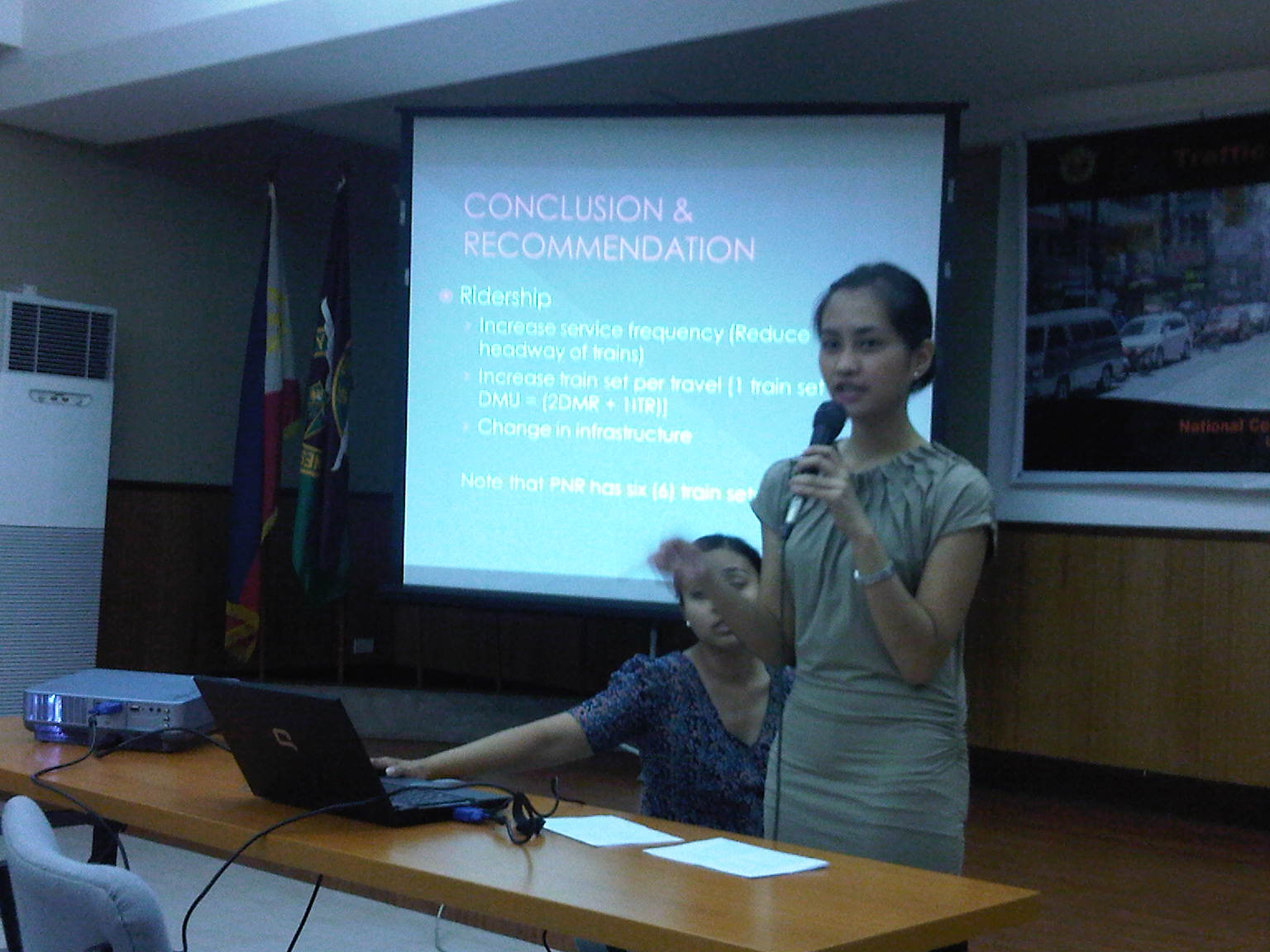 Paragas and Raneses presenting on their study on the PNR operations
 Civil and Tenorio presenting on their study on unconventional transit systems
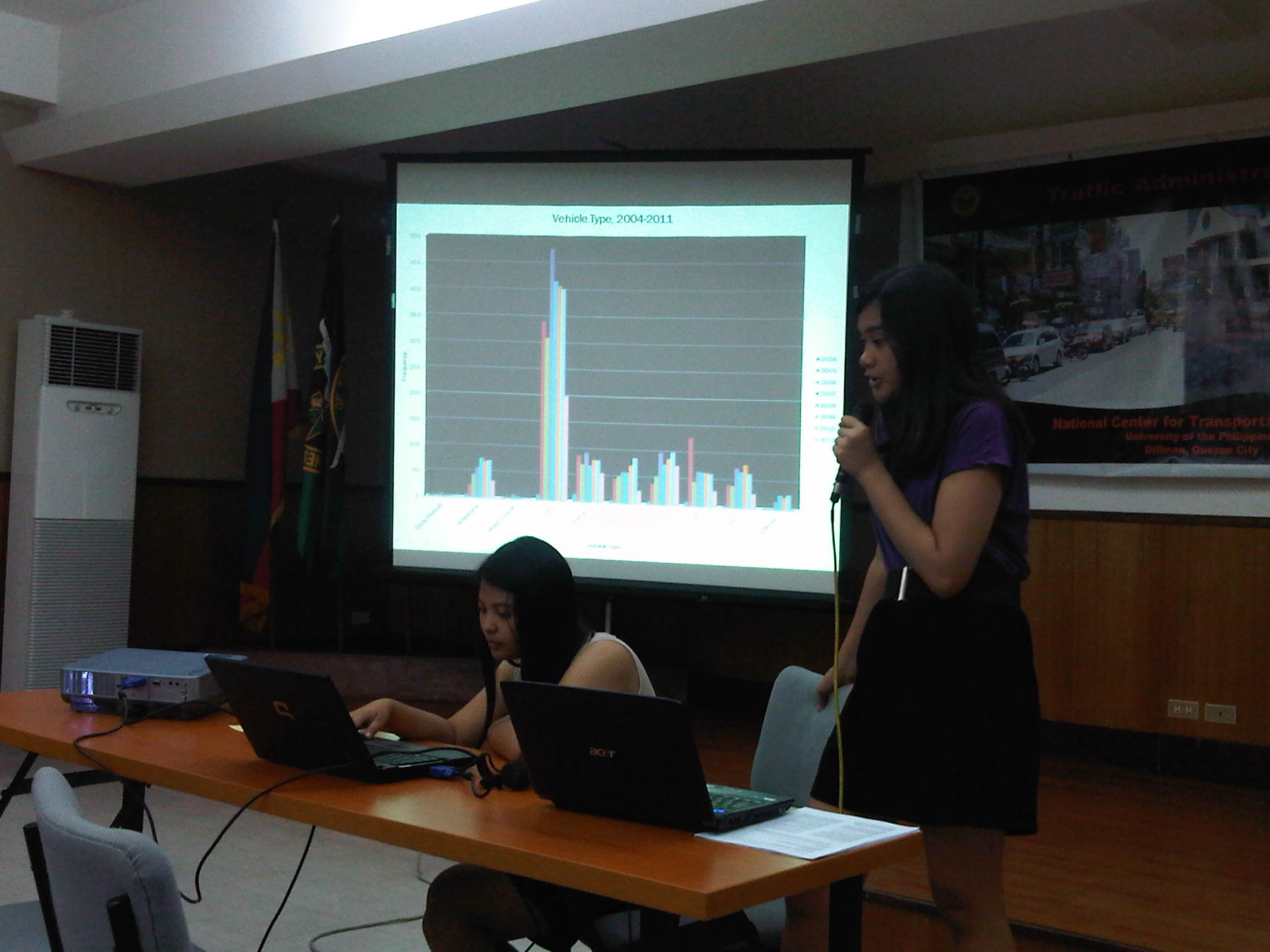 Busok and Calivo presenting on their study on the Commonwealth Ave.-University Ave. intersection
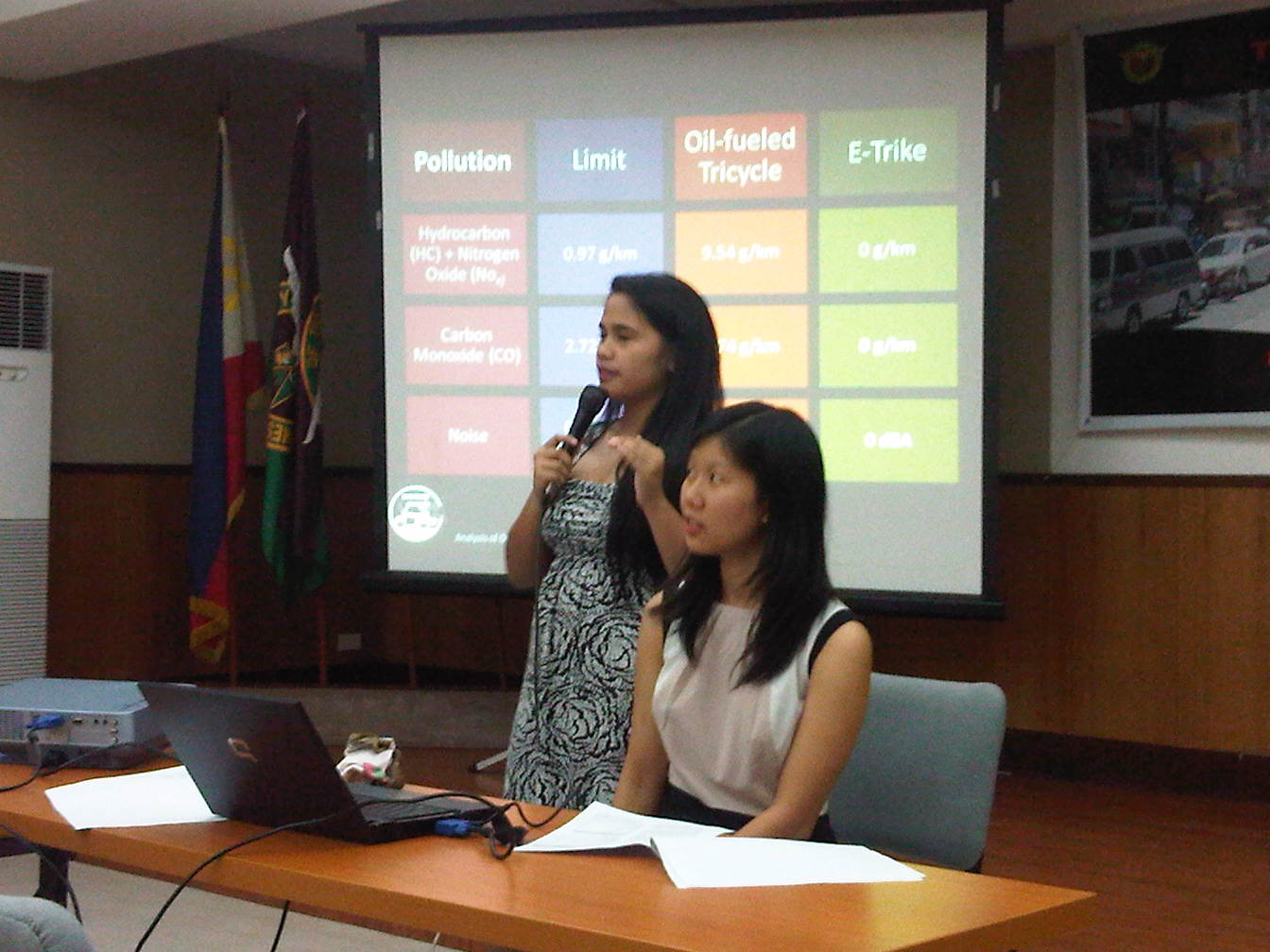 Obediencia and Sloot presenting on their study on electric tricycles
We are already looking forward to the implementation of the researches proposed this semester and those that will be proposed in the next semester of a new academic year (starting June 2012). This academic year has been a very fruitful one with many excellent students taking a renewed interest in Transportation Engineering and Planning. I hope there will be more in the next batch of students.
–
ITS Applications in the Philippines
The Seminar on Intelligent Transport Systems (ITS) Applications in the Philippines was held last March 28, 2012 at the Columbus Room of the Discovery Suites in Ortigas Center, Metro Manila. The seminar was organized by the Institute of Civil Engineering (ICE) and the National Center for Transportation Studies (NCTS) of the University of the Philippines Diliman and was supported by the Engineering Research and Development for Technology (ERDT) Program of the Department of Science and Technology (DOST). The main objective of the seminar was to bring together the academe, government agencies and industry to discuss the state of ITS in the country. The seminar was a venue for presentations and discussions where persons interested in ITS could interact with one another, hopefully forging future partnerships to promote ITS in the country.
 Registration desk – participants from the ERDT universities attended the seminar including Ateneo De Manila University, Central Luzon State University, De La Salle University, Mapua Institute of Technology, Mindanao State University – Iligan Institute of Technology, and UP Diliman and UP Los Banos. Also in attendance were representatives of the Far Eastern University and the Polytechnic University of the Philippines.
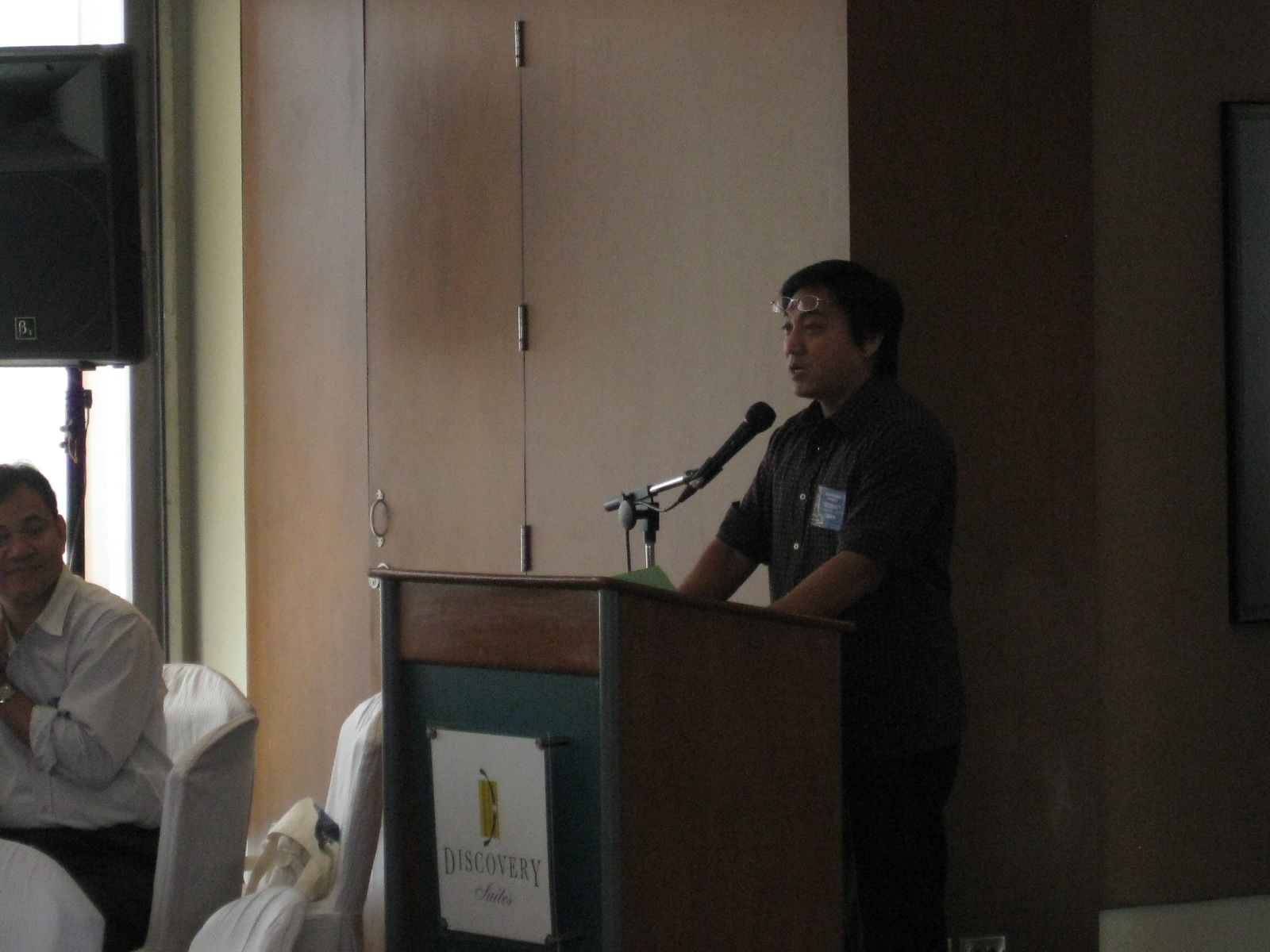 Master of ceremonies – Dr. Sean Palmiano of the ICE welcomed participants to the seminar. He is also a Fellow at the NCTS and part of its Road Safety Research Laboratory.
 Opening Remarks – Dr. Alexis Acacio, ICE Director, opened the seminar, enjoining everyone to participate in the discussions and wishing a fruitful day.
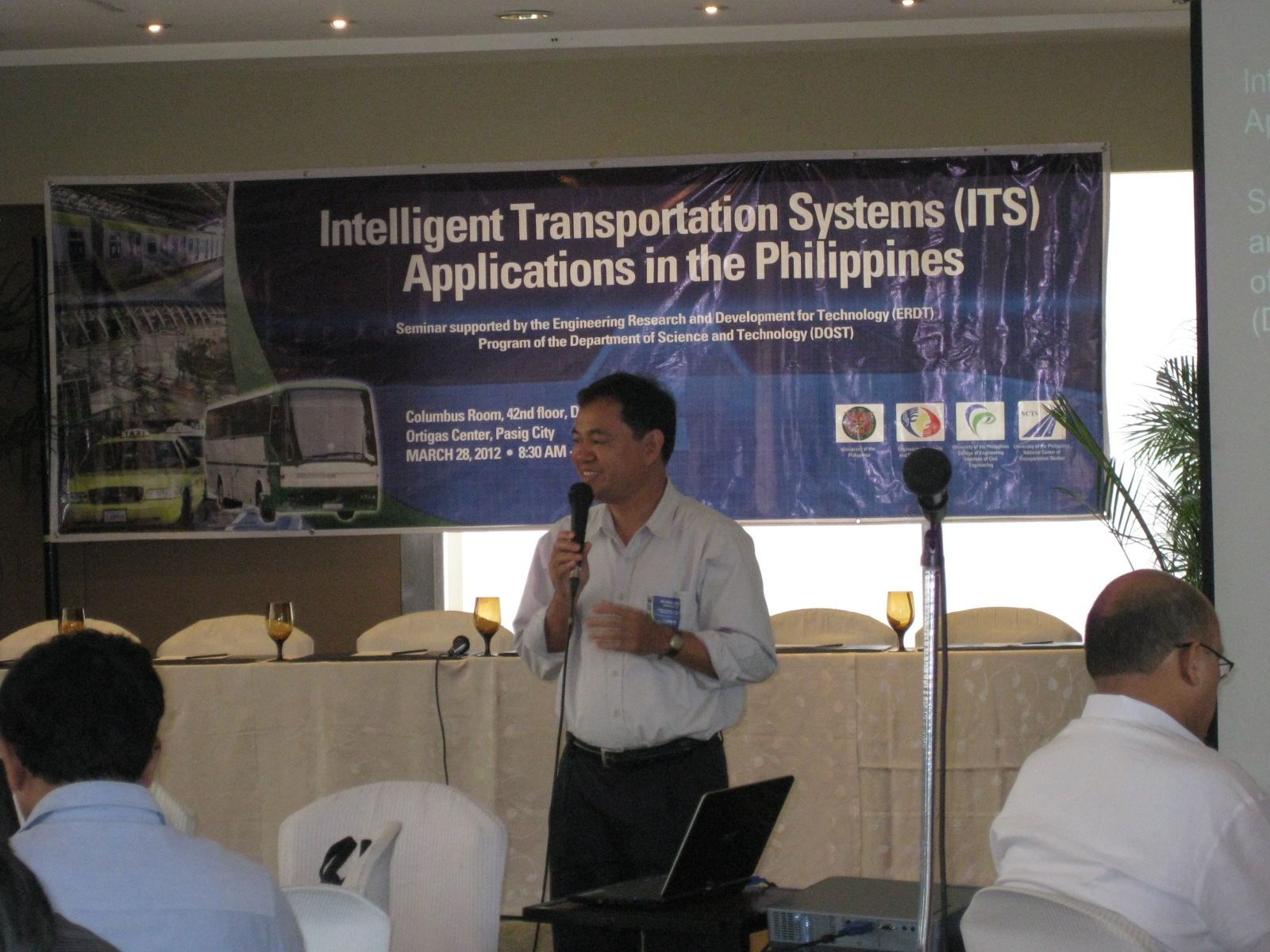 Keynote presentation – Dr. Ricardo Sigua, Professor at the ICE and also a NCTS Fellow delivered a presentation entitled “State of ITS in the Philippines.” It provided an excellent intro about current applications of ITS in the country.
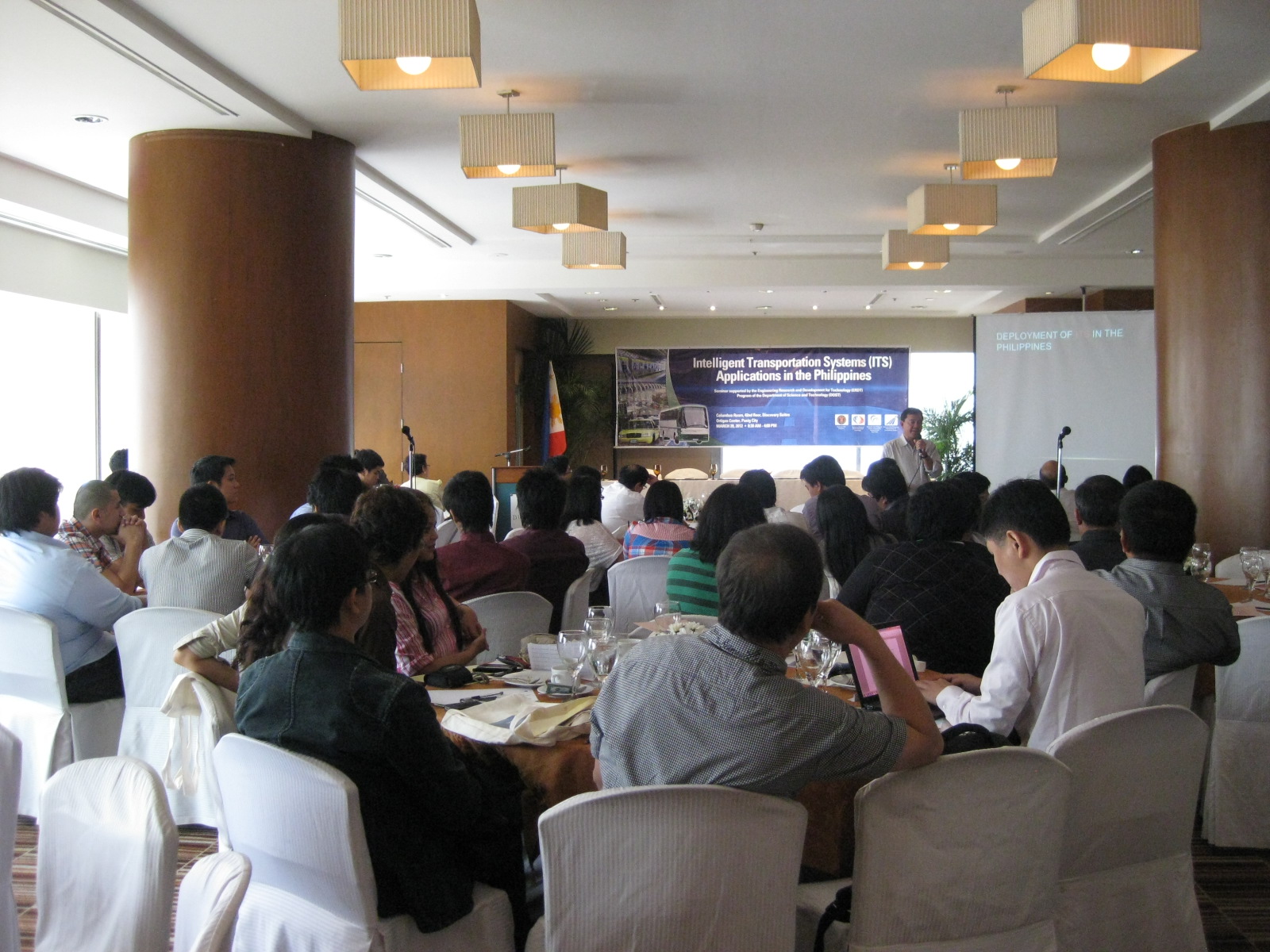 Full house – the seminar was well-attended with, in addition to the universities and DOST, participants from the DOTC, DPWH, MMDA and LTFRB, and the private sector particularly the MNTC.
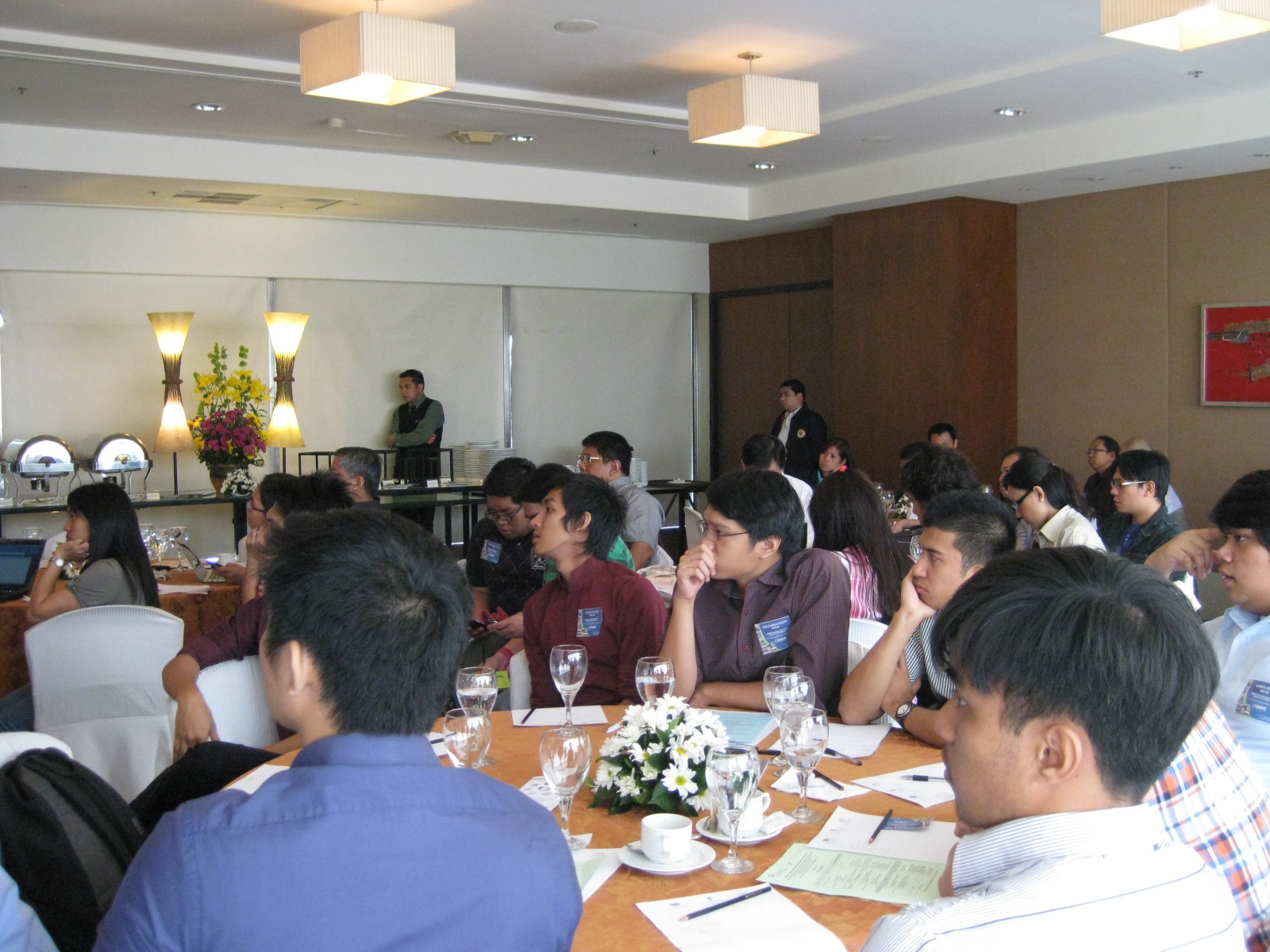 Next generation – it was delightful to see a lot of younger people attending the seminar. In fact, participants from the universities did not come solely from the Civil Engineering programs but included those in Electrical and Electronics Engineering, Mechanical Engineering and Computer Science.
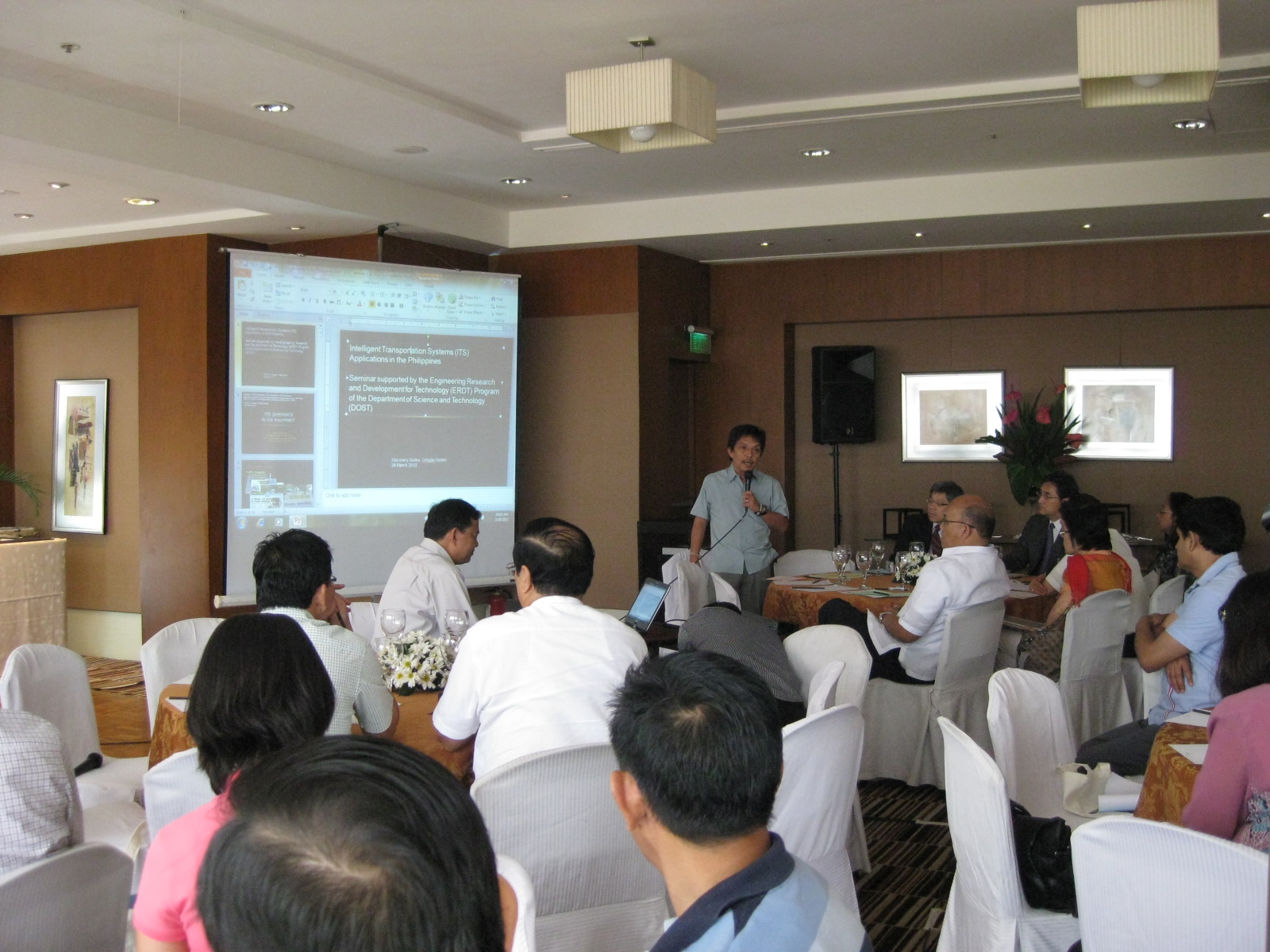 Open forum – Dr. Tho Lidasan of UP’s School of Urban and Regional Planning commenting on the presentation by Dr. Sigua.
 Open forum – Dr. Kardi Teknomo of Ateneo’s Computer Science also makes a point during the open forum.
 Electronic Toll Collection – Engr. Raul Ignacio, Manila North Tollways Corporation Vice President presents on ITS applications in the tollways including issues regarding interoperability. Currently, tollways offering ETC have incompatible systems.
 Q&A – former DPWH Usec. Ted Encarnacion making a comment on the MNTC presentation.
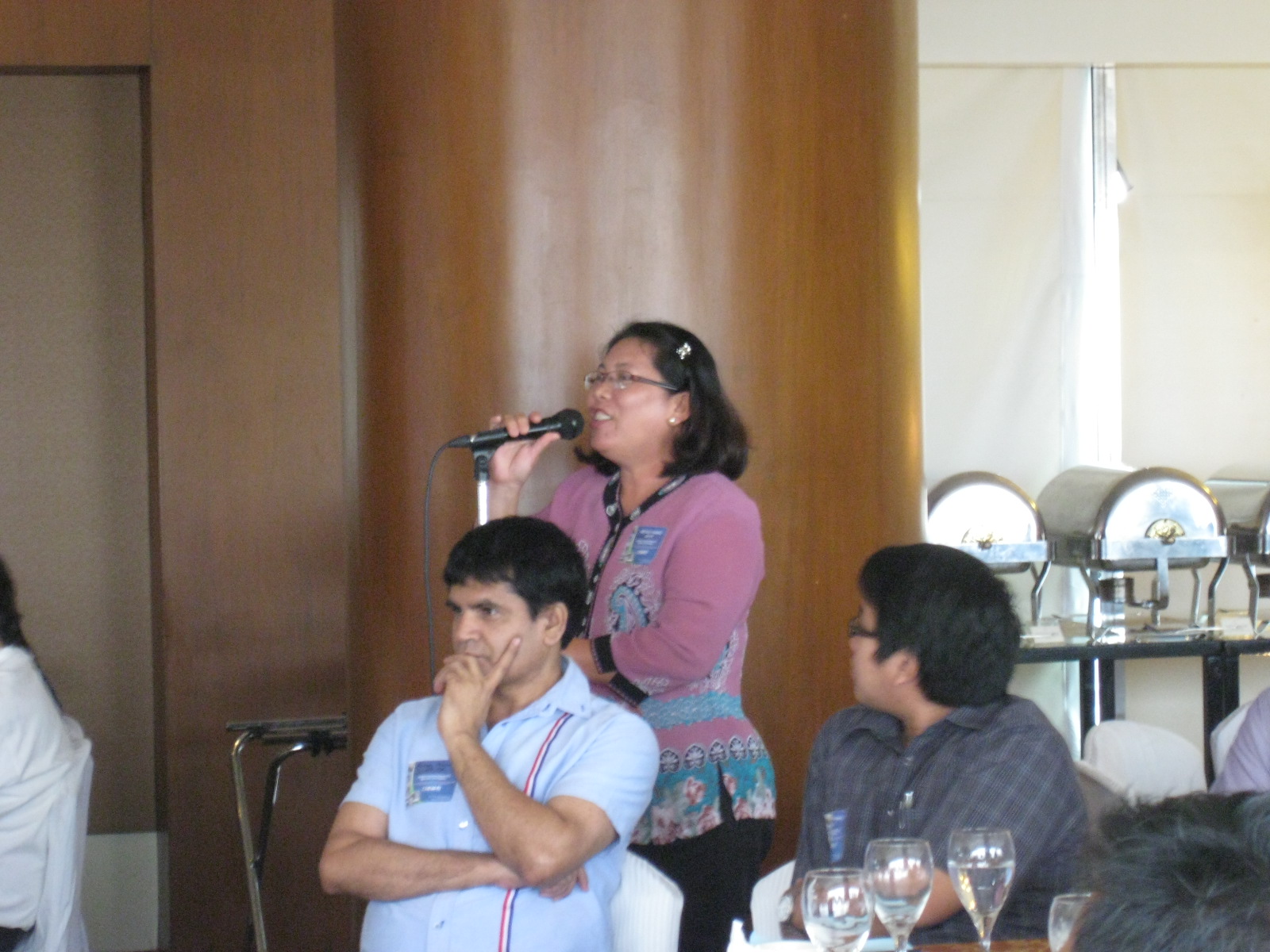 Q&A – Prof. Neneng Trinidad of the MSU-IIT asks a question about MNTC’s system.
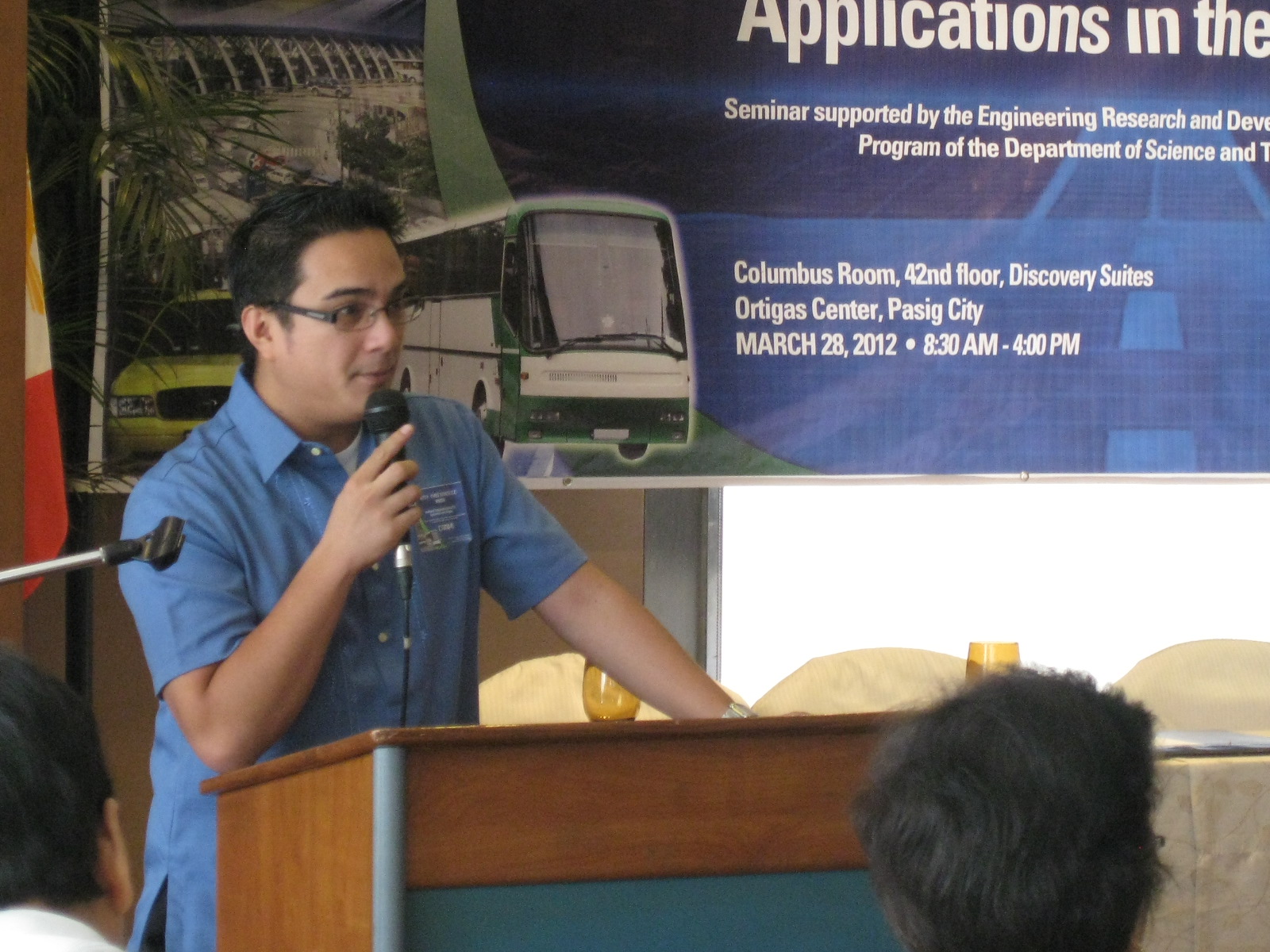 Traveler Information Systems – Atty. Yves Gonzalez, Director of the MMDA’s Traffic Discipline Office, presents on the agency’s Traffic Navigator system.
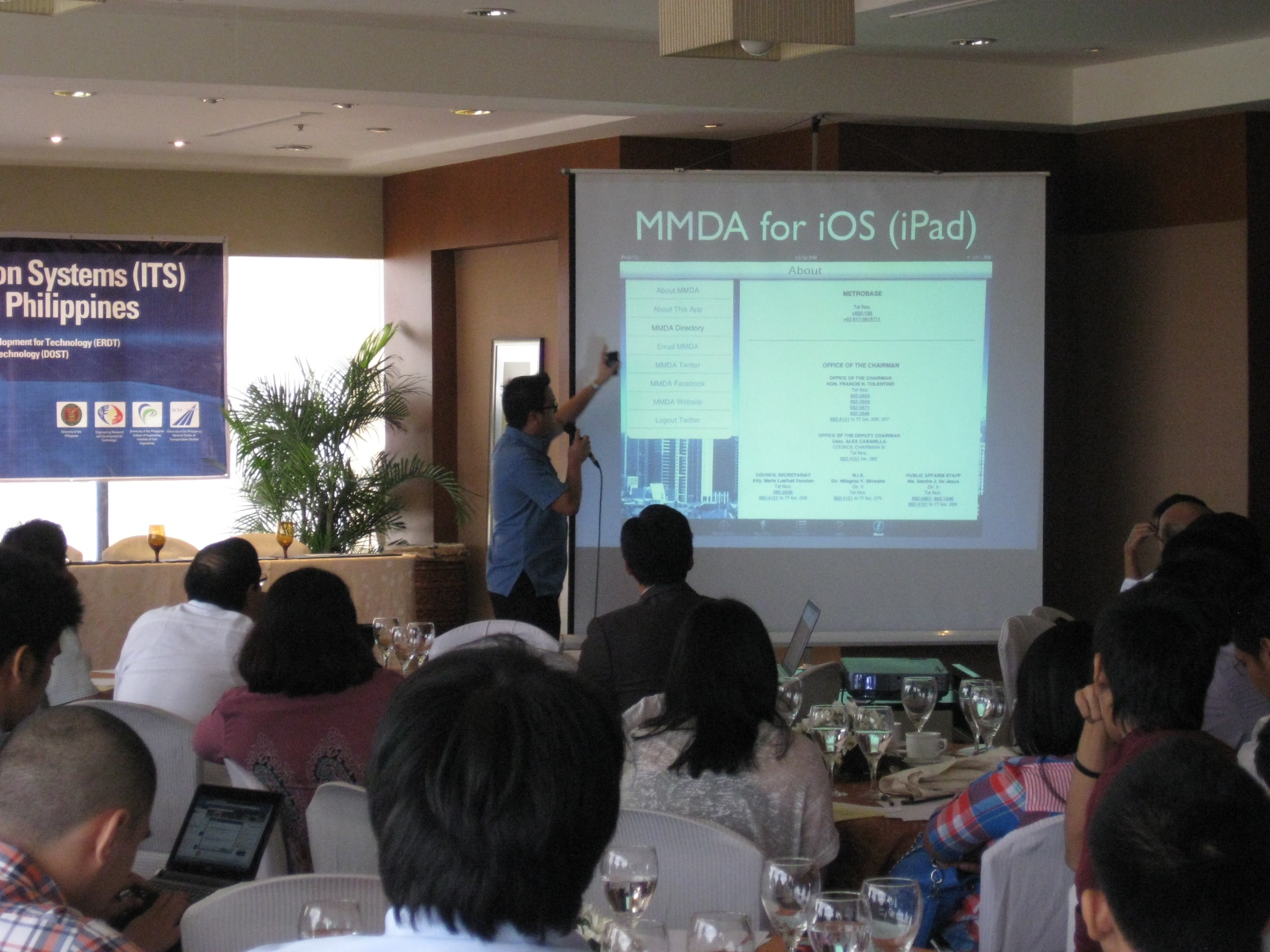 Live demonstration – Atty. Gonzalez even made a live demonstration of how the Navigator works and how the MMDA could monitor and manage traffic using these tools. The presentation impressed the audience and this reflected in the lively Q&A after his presentation.
 Q&A – Prof. Marloe Sundo of UPLB inquiring about the effectiveness of the MMDA’s Traffic Navigator.
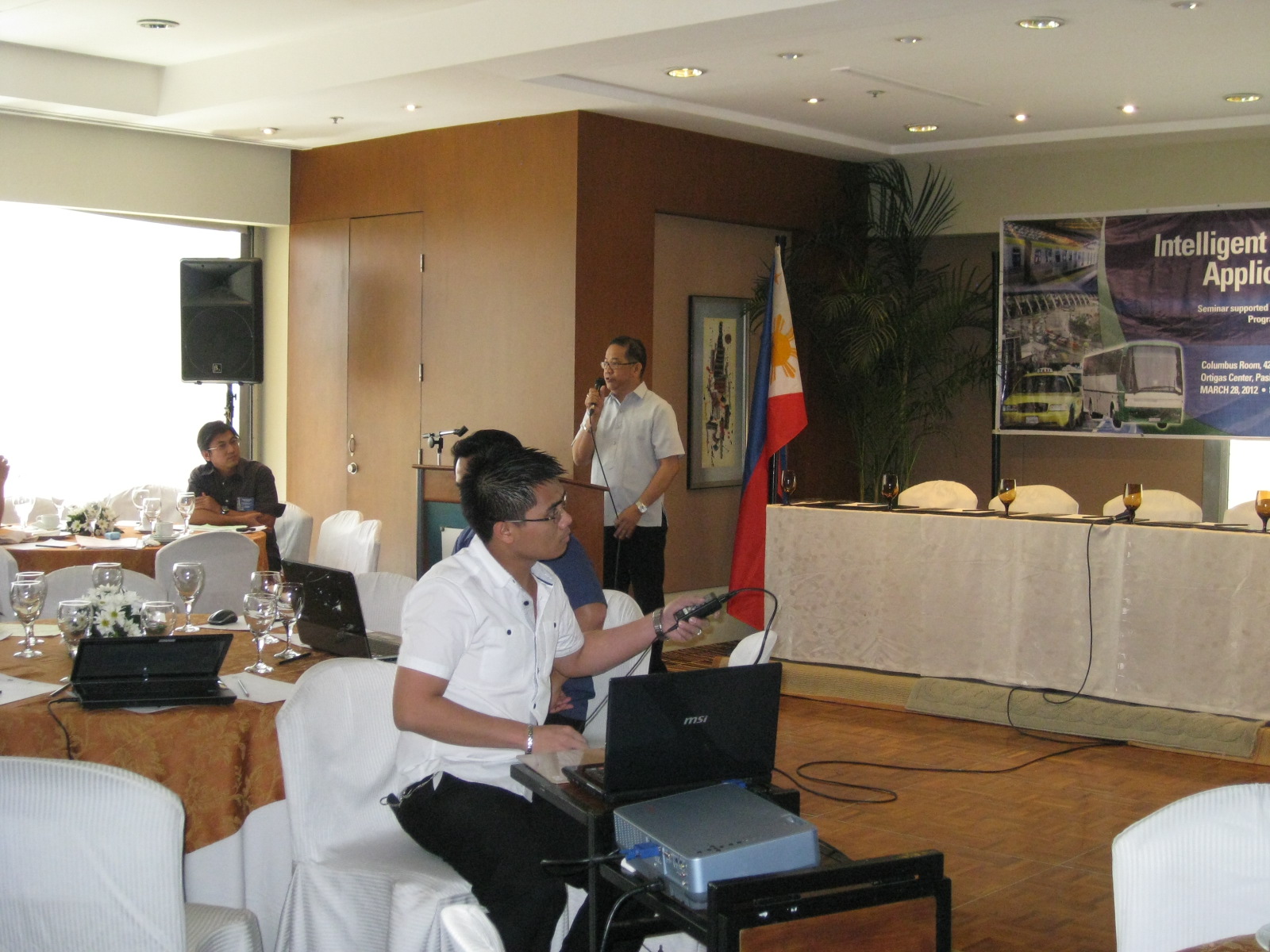 Smart traffic control – Mr. Abratique presents on smart traffic signals including the experience in Davao City. Modern traffic signal control may be found in only a few cities in the country including Cebu, which employs an old version of the SCATS system.
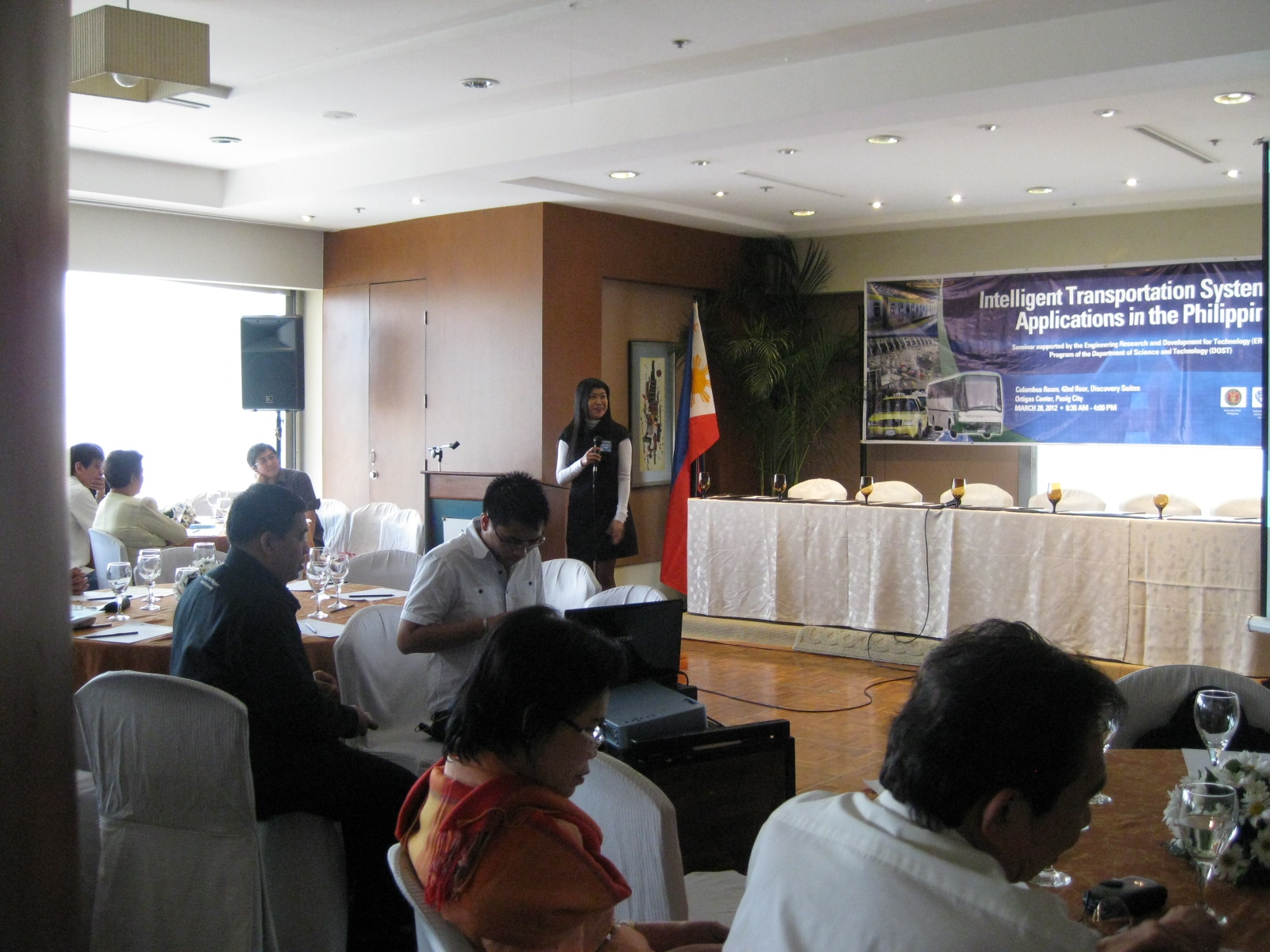 i-Bus – Ms. Elma Arboleras presents her invention that is intended to improve public transport operations, which won an award in London in 2011.
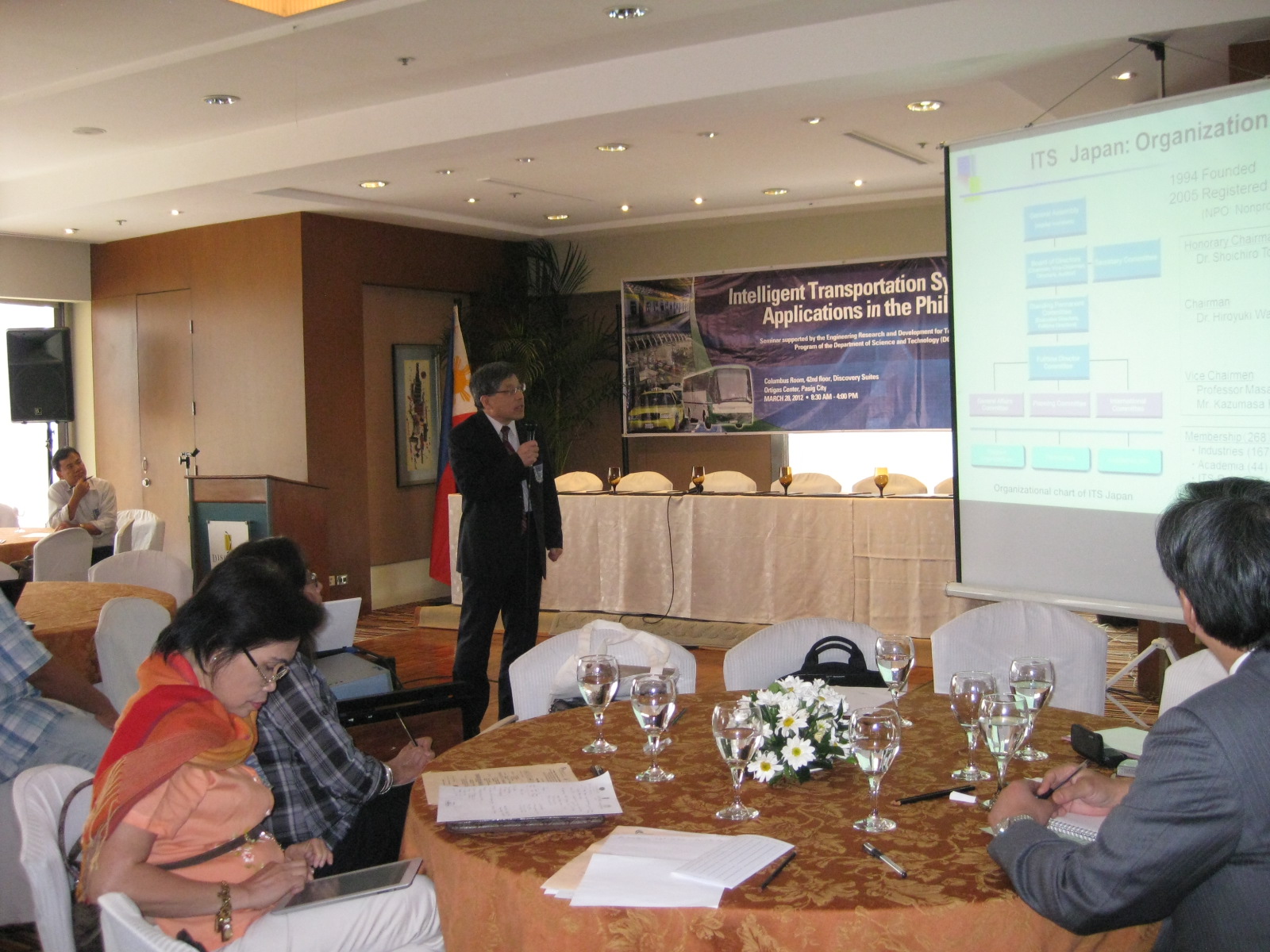 ITS in Japan and Asia Pacific – the afternoon session started with a presentation from ITS Japan.
 Panel discussion – the panel consisted of Ms. Cora Japson of the Road Transport Planning Division of the DOTC, Prof. Metodia Trinidad of MSU-IIT, Engr. Becky Garsuta of the DPWH’s PPP Office, and Engr. Glenn Campos of the MNTC.
 Reactions and remarks – DOTC’s Cora Japson providing a reaction to the question regarding what ITS are needed in the country.
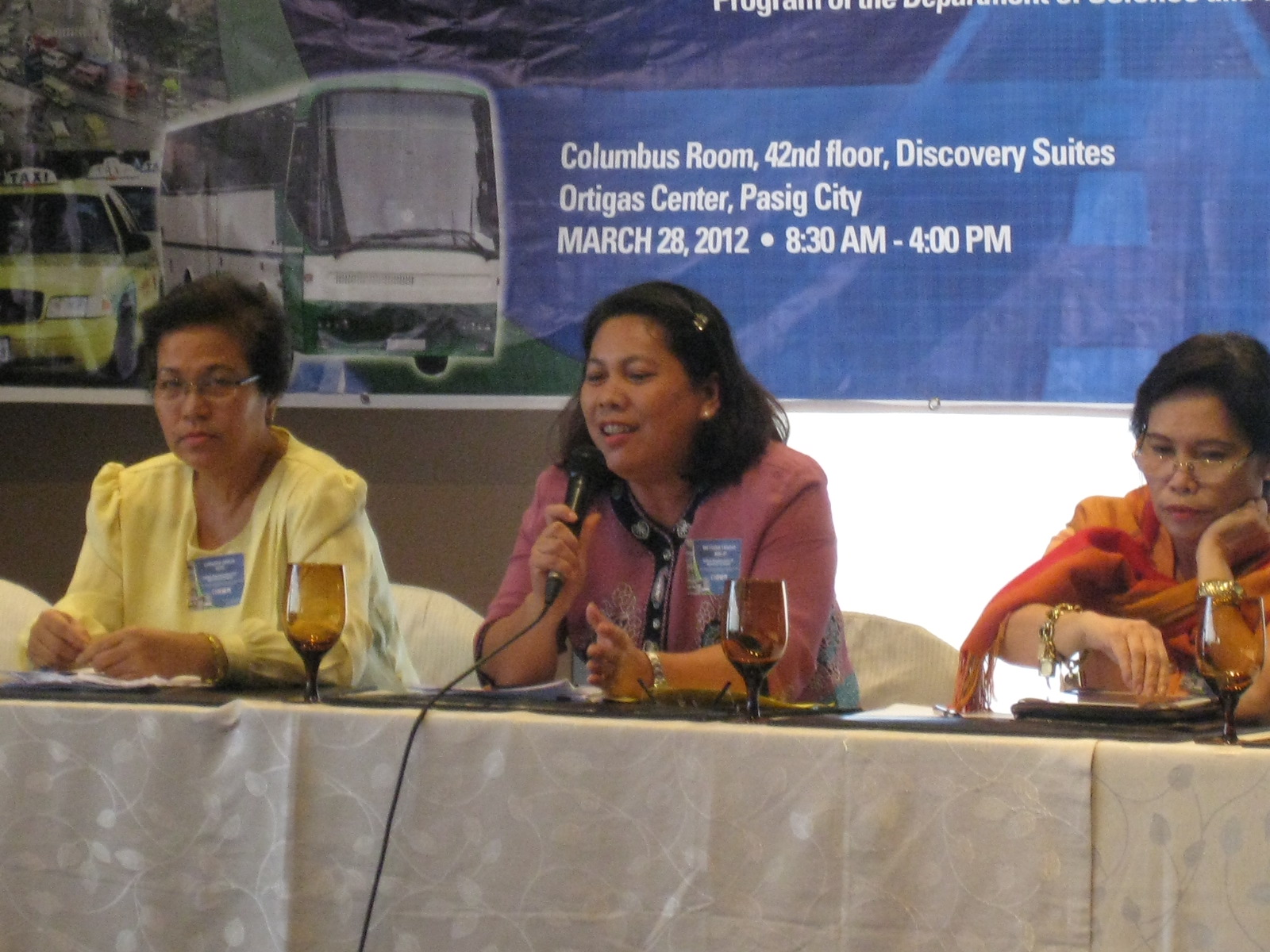 Reactions and remarks – Prof. Trinidad relating their experiences in Iligan City
 Reactions and remarks – Engr. Garsuta relating DPWH initiatives and what she thinks are systems applicable in the local setting. Incidentally, the DPWH just recently received technical assistance from JICA for ITS.
 Conclusion – Dr. Regin Regidor, NCTS Director, delivered the concluding remarks on behalf of the UP Diliman Chancellor.
 Group photo – participants to the Seminar on ITS Applications in the Philippines pose for a group photo.
–
Decoupling transport and fossil fuels in the Philippines
An article appearing in the Business World today caught my attention as it provided, to me, a very good argument to support initiatives to wean transport away from its dependence on fossil fuels. Being a supporter of the initiatives for alternative energy to power public transport, especially the electric jeepneys, I can appreciate the discussions pertaining to urban transport. The DOTC, LGUs and the current dispensation should take heed of the main points in the article and focus attention and resources to building the transport infrastructure that our cities so badly need and that have been delayed for so long that we are often forced into short term (and short sighted) remedies (the FX or UV Express services come to mind).
The author is a former Dean of the School of Economics of the University of the Philippines Diliman and is well respected for his articulate views on practically everything connected to his field of expertise. His piece on urban transport in the Philippines includes mention of what many of our leaders already know but are afraid to touch due probably to its socio-political, and therefore painful, implications. I reproduce below the entire article as it appeared on the March 19, 2012 issue of Business World’s online edition. My sincere apologies for any copyright infringements that I might have committed.
The right thing is doing nothing
The clamor from public transport groups, mass organizations, a few politicians, media columnists, and — surprisingly — even some academics to reduce the VAT on oil products has now become so insistent that the government may just be tempted to cave in.
Doing so would be a big mistake.
It is hard to justify on first principles just why or how a solution to high oil prices should involve a reduction of the VAT on fuel. The VAT, after all, is based on the idea that all consumption must be uniformly taxed — that is, taxed at the same rate. Without good reason, the tax system should not itself be responsible for making some goods more or less expensive than others. Hence, if without taxes the price of a can of corned beef was, say,twice that of a bar of bath soap, then it should still be worth twice as much after a 12% tax is imposed on each. (Note that the ratio of X to Y is the same as the ratio of X(1.12)to Y(1.12).) That relationship is unchanged whether the uniform VAT is set at 5, 10, or 12%, as long as the rate is the same across all goods. (My colleague Ben Diokno has even seriously proposed that the VAT rate be raised to 15 percent in lieu of high income taxes — although he has curiously been reported as supporting a cut in the VAT on fuel.)
To argue that the VAT rate should be reduced for some products but not for others is to privilege the consumption of those products. But why should gasoline and diesel in themselves be more vital to consume than other goods? Why is a peso spent on fuel socially more important than, say, the peso a family spends on electricity or water? Or the toll paid by a bus using the NLEx? Or what a student pays for a cheap sandwich? Or a professional’s hard-won savings to purchase a laptop? Or more meritorious than a farmer’s purchase of fertiliser, pesticides, and farm tools? What entitles petroleum products to this special treatment?
If the answer given is that petroleum products are “consumed by the poor,” that’s not exactly true either. It is vehicle owners, both private and commercial, who consume petroleum-based fuel — and few of them are poor. Indeed, if the government were to cut the VAT on fuel, it would help not only jeepney — and bus — operators but also owners of BMWs, Benzes, Pajeros, and Fortuners. The effect would be to privilege heavier users of auto fuel — poor or not.
Tax-tinkering is fraught with danger, and its deleterious effects should by now be evident in our experience with an already existing fuel subsidy (which everyone seems to have forgotten), namely, the decades-old privilege given to diesel fuel. For starters, note that there is no inherent physical reason that diesel should be cheaper than gasoline. Indeed, from a pure cost perspective, diesel is more costly to refine, so that before any taxes, it is likely to be more expensive than gasoline. In the US and the UK, for example, where the two fuels are taxed uniformly, diesel is more expensive than gasoline; in Germany and Canada they cost virtually the same. So if only the 12% VAT were applied to both — say, at landed cost — gasoline would probably still be cheaper than diesel.
It is not the VAT but the lower specific tax on diesel — at only one-third of that applied to gasoline — that makes the latter more expensive by more than 20%. This low tax, which has been in place since time out of mind, was always meant as a concession to public transport, the predominant user of auto diesel.
And where has this discriminatory policy taken us? First, it has only deepened the country’s reliance on diesel fuel. It has discouraged any search for or shift to alternative fuels on the part of public transport. On the contrary, it has enticed an increasing number of private vehicle owners to shift to diesel fuel themselves. The latter, of course, is a completely unforeseen consequence and embarrassingly gives the same “pro-poor” diesel tax privilege to a jeepney driver and a Mercedes Benz owner. It’s basic Slutsky: cheapen something in relative terms and you divert consumption towards that thing. Similarly, lowering the VAT on fuel will do nothing but deepen the country’s dependence on all petroleum fuels.
The second effect is more pernicious. Cheap diesel — combined with the lax franchising of everything from buses to jeeps to pedicabs — has created an overcrowded and über-fragmented urban transport sector. A 2007 World Bank volume reports that Manila had 13,375 public transport vehicles per million people, compared to only 1,890 for Bangkok and 1,807 for Hong Kong. (Guess where the public is better served.) Philippine public transport today is dominated by numerous and fragmented small operators kept alive only by artificially cheap fuel.
Transport groups routinely blame high fuel prices for their woes. Under-appreciated is the fact that their own uncontrolled proliferation — which leads to cutthroat competition, congestion, and dangerous road rage and warfare — is the main reason for their low incomes. This proliferation of bit-players has itself been unwittingly brought about by the policy of subsidized fuel (diesel). Ultimately, however, this kind-hearted approach has only hurt the poor by depriving them of cheap, clean, and efficient transport. For just as large developers will be discouraged by squatters occupying a property, the transport sector’s preemption by an inefficient and fragmented small sector precludes the entry of firms with larger capacities and more efficient technologies, all of which could have led to better service.
Lowering the VAT on fuel addresses none of these problems. On the contrary, it would only perpetuate them. The country is better served by confronting the real problems of urban transport. Government time, imagination, and effort are better directed at encouraging higher capitalization in the transport sector, larger capacities, more fuel-efficient technologies, and less reliance on imported fuels whose prices are volatile. The initiative to field large numbers of natural gas-powered and electric buses is a promising start. Unlike the transport sector, the power industry weaned itself from imported oil many decades ago, and electric power now is largely sourced domestically and therefore largely immune to the price-gyrations of world oil markets. Using more electricity for transport is the more effective way to insulate the country from the speculative activity that characterizes world oil markets. The same goes for natural gas, which is something the country itself produces.
The sooner the petroleum dependency of public transport can be reduced, the better it will be for the country-including its poor. For that, the most urgent and bold actions are clearly warranted. But as for the demand to reduce the VAT rate on petroleum products-effectively undermining and distorting hard-won legislation for the sake of a temporary exigency-the best response is clearly inaction. And if there are those who choose to call this indolence, indifference, or “Noynoying” (the latest meme), if some critics cannot see the difference between a placebo and real medicine, between palliatives and real reforms-then the president would do well to pay them no heed.
He should simply-igNoy them.
Emmanuel S. de Dios is the treasurer of the Institute for Development and Econometric Analysis and a Professor at the UP School of Economics. For comments and inquiries, please email us at idea.introspective@gmail.com.
–
Indeed, Filipinos deserve better transport services. In most cases, the proliferation of informal modes where they are no longer suitable (e.g., tricycles dominating urban transport in many cities, jeepneys plying long distance routes, etc.) is actually a disservice with many operators no longer committed to providing safe and efficient service. For most, the livelihood aspect of transport has become so deeply rooted in the sector that our leaders have tended to turn a blind eye to the excesses and abuses such operators impose upon the riding public. The result? Filipinos will continue to aspire for their own vehicles (these days this vehicle would be the affordable motorcycle) because of the low quality of service of our public transport modes, eventually contributing to the worsening congestion we experience in our daily commutes. Meanwhile, we continue to envy the transport systems in the major cities of our neighbors like those in Bangkok, Kuala Lumpur and Jakarta. We are eons behind Singapore but soon, even Vietnam will probably overtake us in terms of public transport systems once they start building what they are currently planning for Hanoi and Ho Chi Minh. How long must we all suffer before our leaders are moved to finally address this problem head-on and not be satisfied with remedies.
–
Capacity building: tools for traffic analysis
The National Center for Transportation Studies (NCTS) of the University of the Philippines recently received a very generous donation from the Manila North Tollways Corporation (MNTC), which has partnered with the Center in the conduct of training programs for its staff. The donation includes several software packages that would help the Center leapfrog from its modest capabilities and allow it to be par in as far as tools are concerned with government agencies and private entities who have acquired similar software.
Commercial transport planning and traffic engineering software such as those for travel demand forecasting and traffic simulation are quite expensive, and the Center has been using only old versions of TRAF-NETSIM, JICA STRADA and software developed by its staff using programming languages that are also taught by the several of its fellows. Perhaps the most recent acquisition of the Center prior to the donation is the CUBE transport planning software, which has been utilized to migrate the transport model for Metro Manila that was developed in 1999 using JICA STRADA. The latter effort was conducted in cooperation with the Department of Transportation and Communications (DOTC) with data gathered through various projects over the last few years to update the road network and traffic inputs.
Of course, there have been temptations before as there are bootleg software around but the Center has refrained from acquiring and using such software consistent with the University’s policy pertaining to intellectual property rights and acceptable use. Instead, we have encouraged our students to develop their own applications though some have been crude in terms of user interface. Still, these are effective for tools in their researches.
The donation includes academic versions of VISSIM (the same simulation software acquired some years ago by the MMDA followed by the DPWH) and SIDRA, which is for intersection analysis. Also acquired in the donation are full versions of the same SIDRA, Synchro with SimTraffic (also a micro-simulation software) and Anadelta TESSERA (highway design software). Soon to be delivered are a new version of the TSIS/TRAF-NETSIM software and accident analysis software (road safety). This is in addition to GPS units that were recently delivered and a LIDAR gun for speed measurements that will donated this year (2012).
Dr. Ricardo Sigua, head of the NCTS Road Safety Research Laboratory and a Professor at the Institute of Civil Engineering of UP, recently held a brief training session with our senior undergraduate students for using the VISSIM software. He gave them group assignments afterwards and already, there is much excitement among the students who have the opportunity to use top of the line software for their studies. We look forward to their presentations in two weeks time when they are to show the outcomes of their modeling work.
 Dr. Sigua teaching students how to use the VISSIM at the Toyota Training Room – the tarp is a fixture from a training course held recently at the same room
 Unlike the past decades, many students now have their own notebook computers where they could install the student edition of the VISSIM software.
Transport and health
The University College London (UCL) recently released a publication with the title “Transport, Physical Activity and Health: Present Knowledge and the Way Ahead.” It is authored by Roger L Mackett and Belinda Brown of the Centre for Transport Studies, University College London. The material presents an excellent discussion relating travel behavior (like the preference for car use or taking public transport) to physical activity. It should be a good reference for those seeking to explore the link between healthy living and transport and a study that can be replicated in other countries. It should be of interest to cities looking at ways to promote public transport, walking and cycling (sustainable transport). Perhaps our own Department of Health (DOH) should collaborate with the Department of Transport and Communications (DOTC) to put in the local figures so we can determine how much our dependence on cars is affecting our health especially in our cities. The outcomes should further reinforce the need to put up infrastructure to encourage people to leave their cars. Perhaps the more progressive cities or the MMDA could also look into such studies so that we can have a firm foundation for appreciating the benefits of a good transport system and healthy cities.
–
Graduate student seminar – December 2011
Graduate students majoring in Transportation Engineering at the University of the Philippines Institute of Civil Engineering (UP-ICE)currently conducting their research through the NCTS presented during the graduate seminar held last December 15, 2011. There were 4 presentations made during the seminar, which was attended by 3 faculty members of the UP-ICE: Dr. Karl Vergel, Dr. Sean Palmiano and Dr. Regin Regidor. Following are a few snapshots from the seminar, which was facilitated by Mr. Ernesto Abaya, D3 student under Dr. Vergel, who is also a technical staff of the NCTS.

Mr. Nirman Pokharel, a Nepalese student presented on the progress of his research on the public utility jeepney (PUJ) application of Auto LPG. Mr. Nirman is also working with researchers of the Vehicle Research Testing Laboratory (VRTL) of UP Mechanical Engineering.
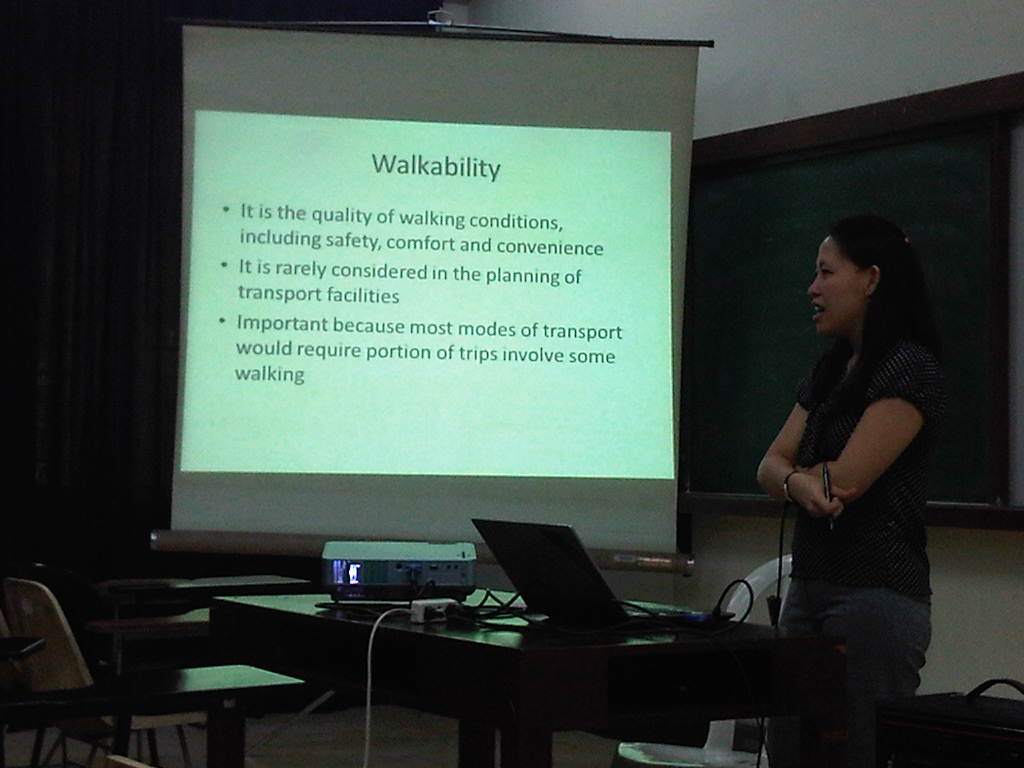
Ms. Anna Tiamzon presented her preliminary research proposal on walkability. She is a faculty member of the University of Sto. Tomas (UST) in Manila.
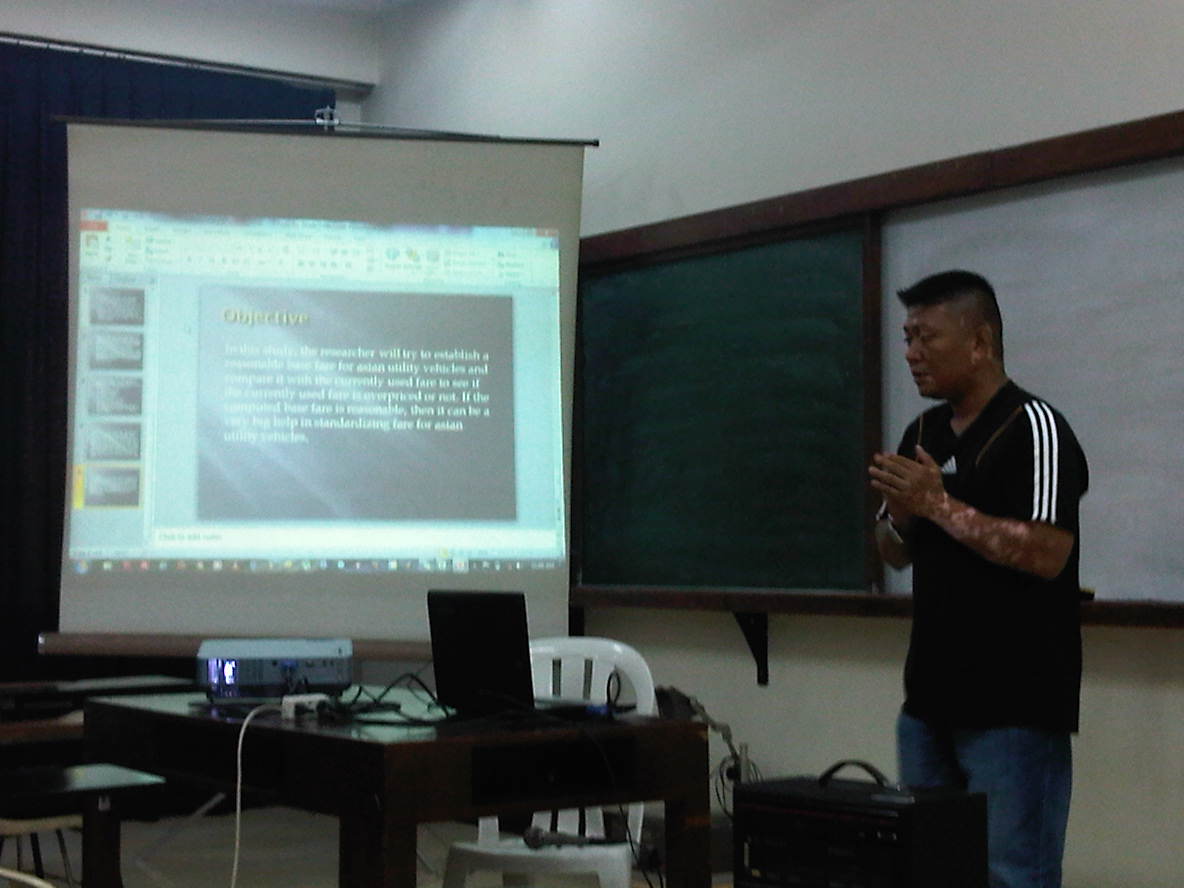
Mr. Edmon Favila presented his preliminary proposal on fare setting for UV Express services (van-type service) in Metro Manila.

Mr. Ali, an Iranian student, also presented a preliminary topic on the determination of bus terminal locations for Metro Manila.
Other graduate students who were not able to present in the December seminar will be making their presentations in January 2012 including two PhD program students and 3 MSCE students. The undergraduate students of the Transportation Engineering Group (TEG) of UP-ICE made progress presentations earlier last December 7, 2011 and are on-track to complete their researches by March 2012.

