
Home » Airports (Page 17)
Category Archives: Airports
Puerto Princesa Airport
I haven’t been to Puerto Princesa, Palawan since 2010 so I had wanted to see for myself what improvements they have done to their airport. This was considering the city and the province in general have become a very popular and accessible tourist destination featuring pristine beaches, hidden natural attractions as well as vibrant communities around the island. While the airport has been under renovation for a while, the terminal is already nearing if not already at capacity. Surely, as the country continues to promote tourism, Palawan will have a steady increase in the number of visitors and Puerto Princesa Airport will be the main airport access to the main island. The islands of Coron to the north of Palawan is served by a small airport in Busuanga, and El Nido at the northern part of Palawan Island will soon likely be served by another airport. But the jump off point for most of the island including the relatively “unexplored” south will be Puerto Princesa, which is also the centre of business/commerce. While its runway can handle large planes (I once rode on a B747 from Palawan), its terminal cannot handle the number of passengers such airliners are able to carry. The prospect of direct and regular international flights also would require a larger terminal to efficiently handle both domestic and international arrivals and departures.
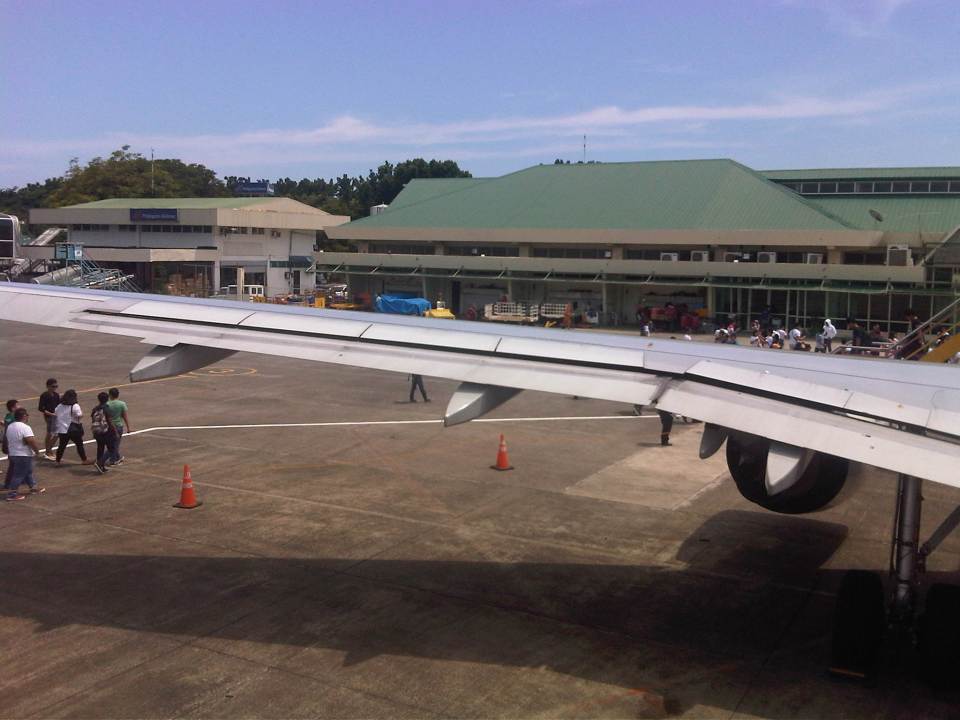 View of the airport upon stepping out from the aft door
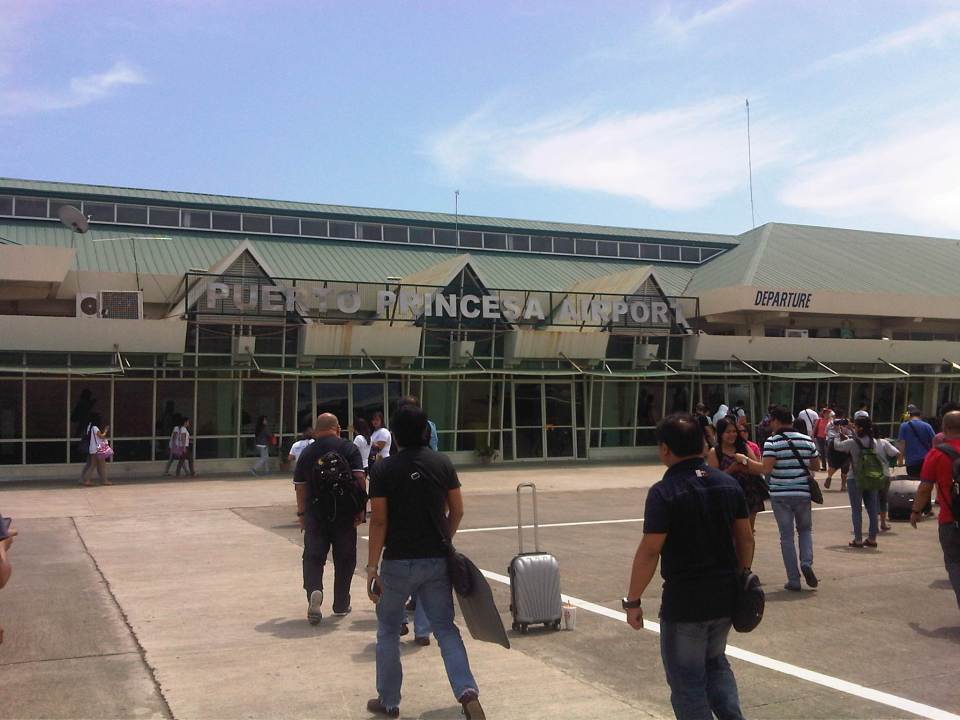 Passengers walk towards the terminal. Many passengers linger or loiter on the tarmac to take photos of themselves with the airport or aircraft in the background. While not unique to the Philippines, lingering on the tarmac is a no-no in many other airports due to security concerns.
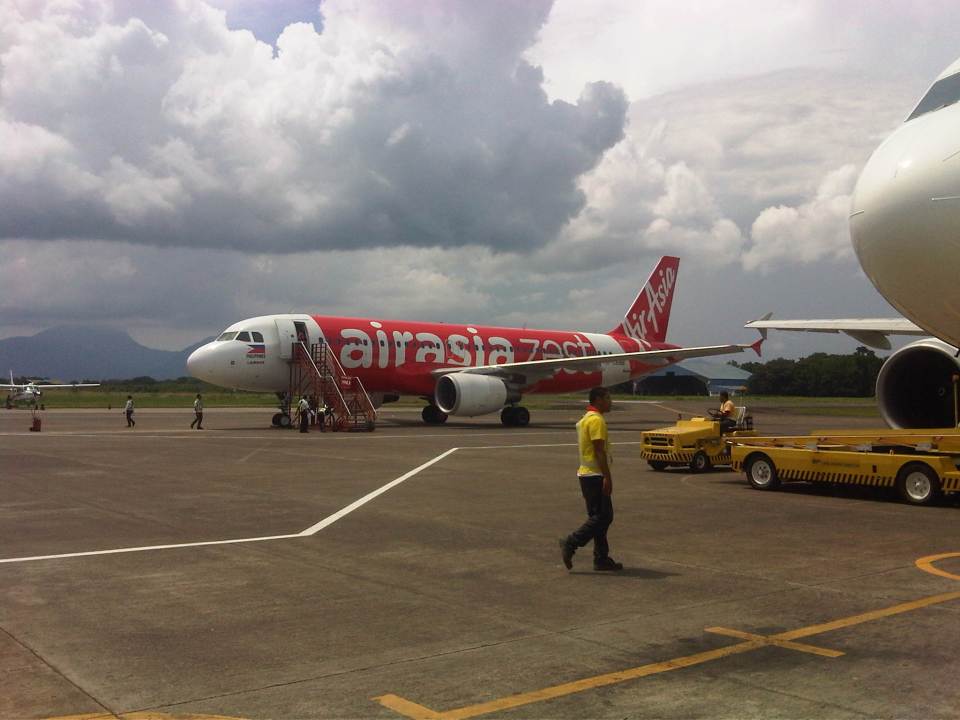 Air Asia recently acquired local budget airlines Zest Air and now services Zest’s domestic destinations like Puerto Princesa.
 We flew Cebu Pacific, which has the most flights servicing Puerto Princesa and had the better schedule for us. Unfortunately, CEB passengers seem to be experiencing a lot of delays. Our flight was delayed by 2 hours, which was definitely a waste of time as we had to go directly to our meeting upon our arrival in the city. Apparently, CEB has already earned the monicker its main competitor had for “planes always late.”
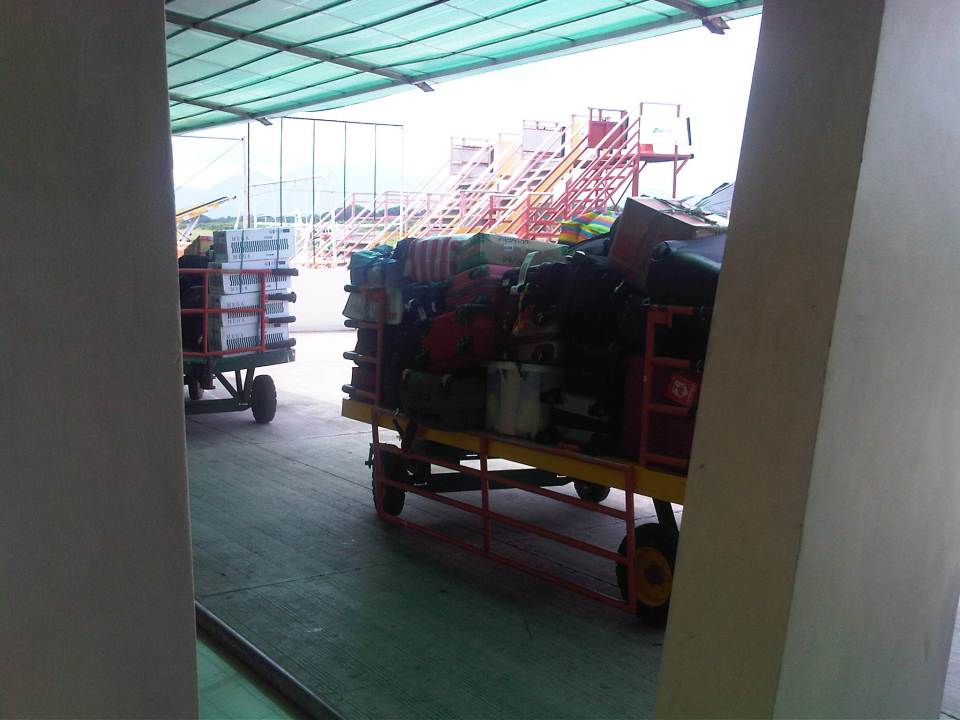 Bags being transported from the aircraft to the baggage claim area. Bags are loaded and unloaded manually so handling can be an issue and a concern especially for those using designer or expensive luggage. On days with inclement weather, luggage can get wet and there is the occasional bags being dropped (and damaged).
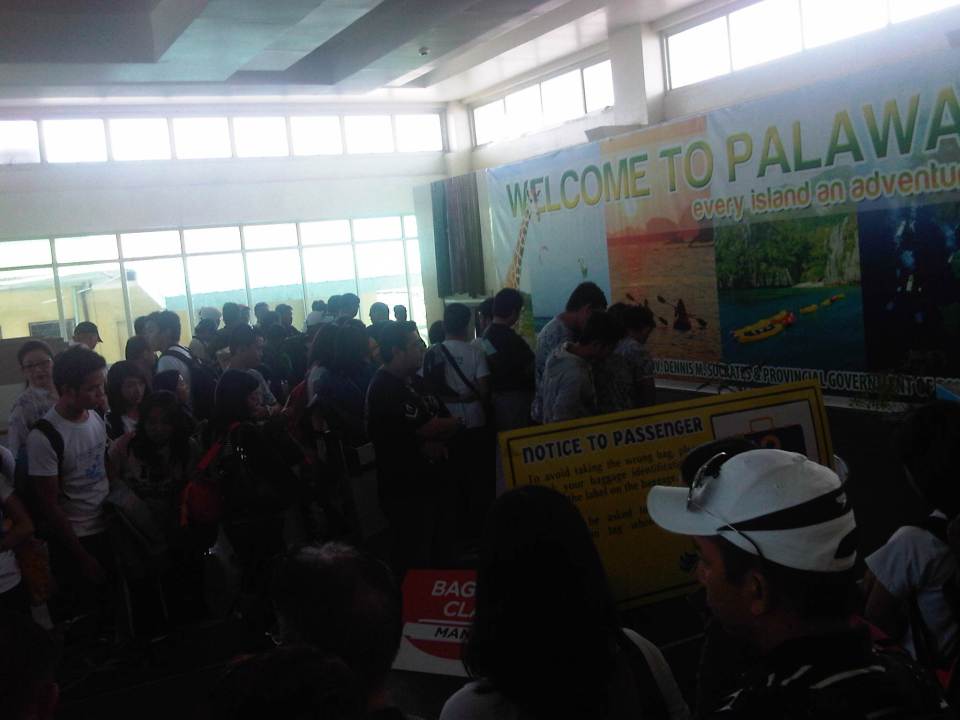 The baggage claim area at Puerto Princesa airport is obviously not so spacious with just a single belt shared by arriving passengers from different flights.
 Crowded but not chaotic. That’s how I would describe the baggage claim area when two flights arrived one almost immediately after the other.
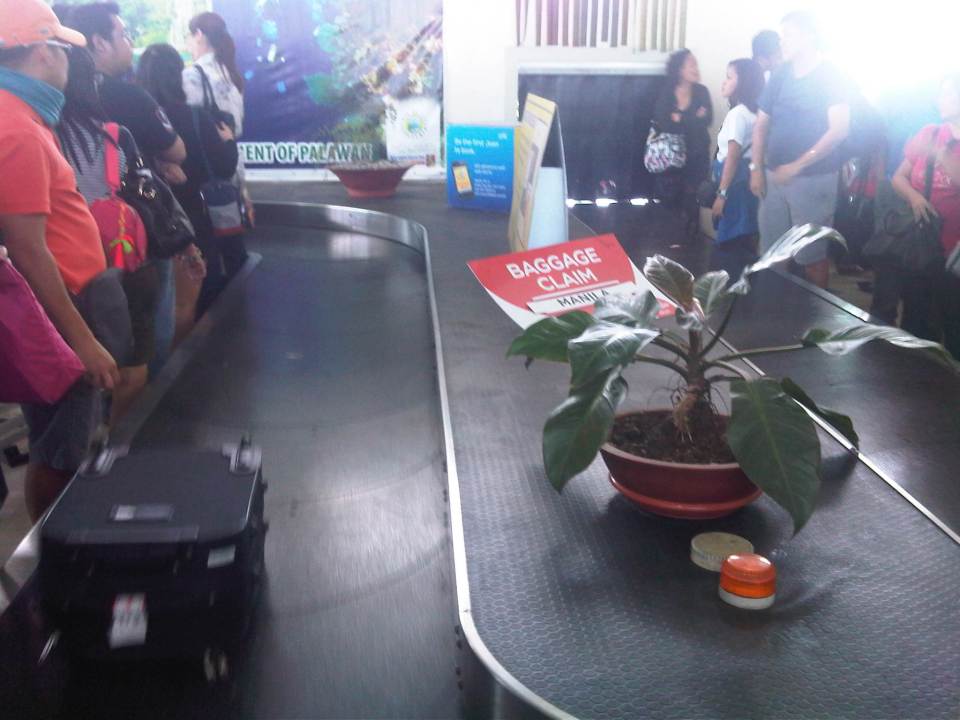 Baggage carousel.
 Sign informing visitors about the policy for going to the Underground River, one of the most popular if not the top attraction in Puerto Princesa.
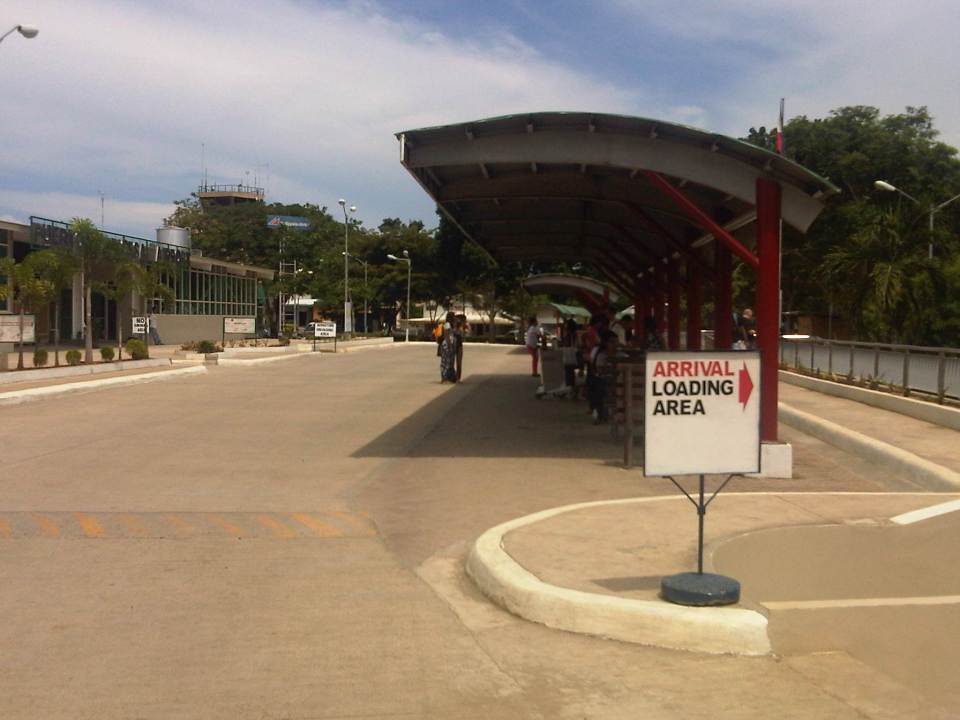 Covered area for loading/unloading passengers and visitors at the airport.
 Waiting area for people fetching passengers just outside the arrival area.
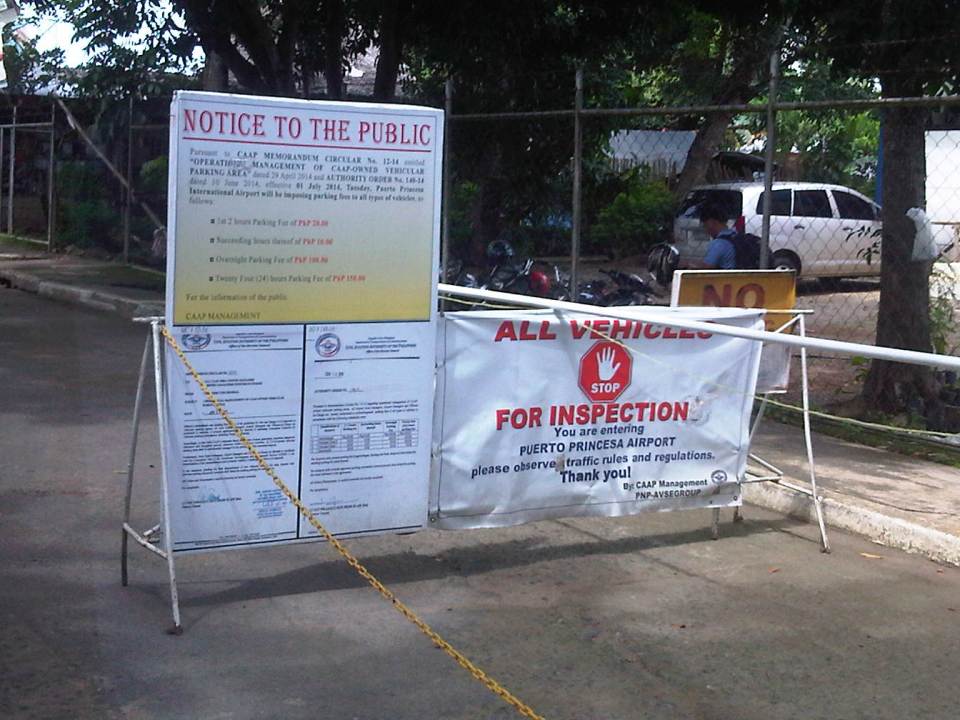 Notices for passengers and others entering the airport driveway.
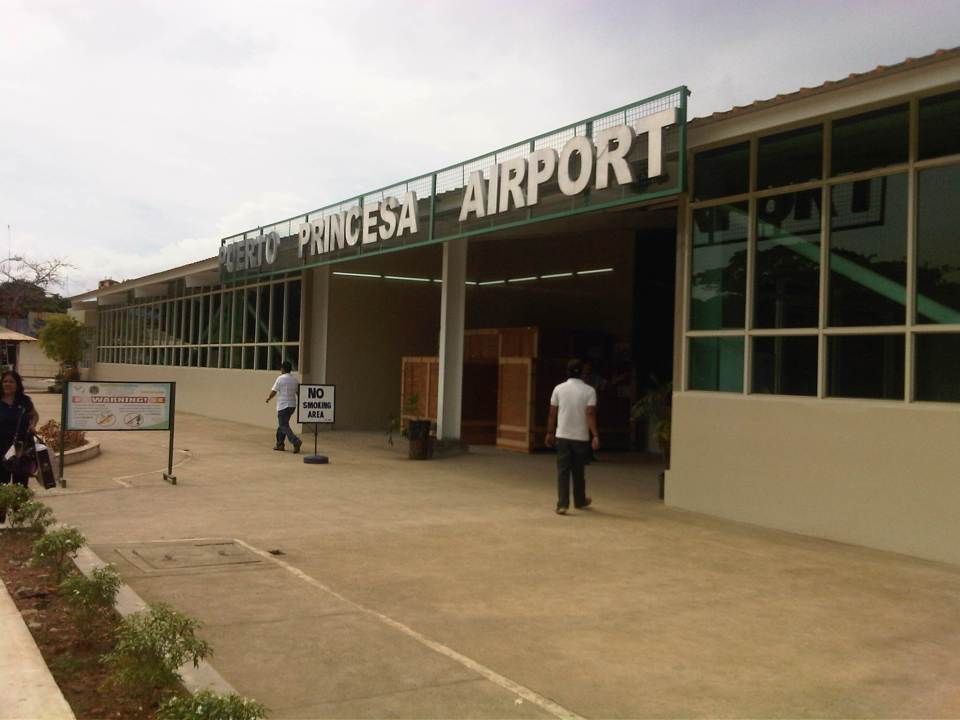 Entrance to the airport.
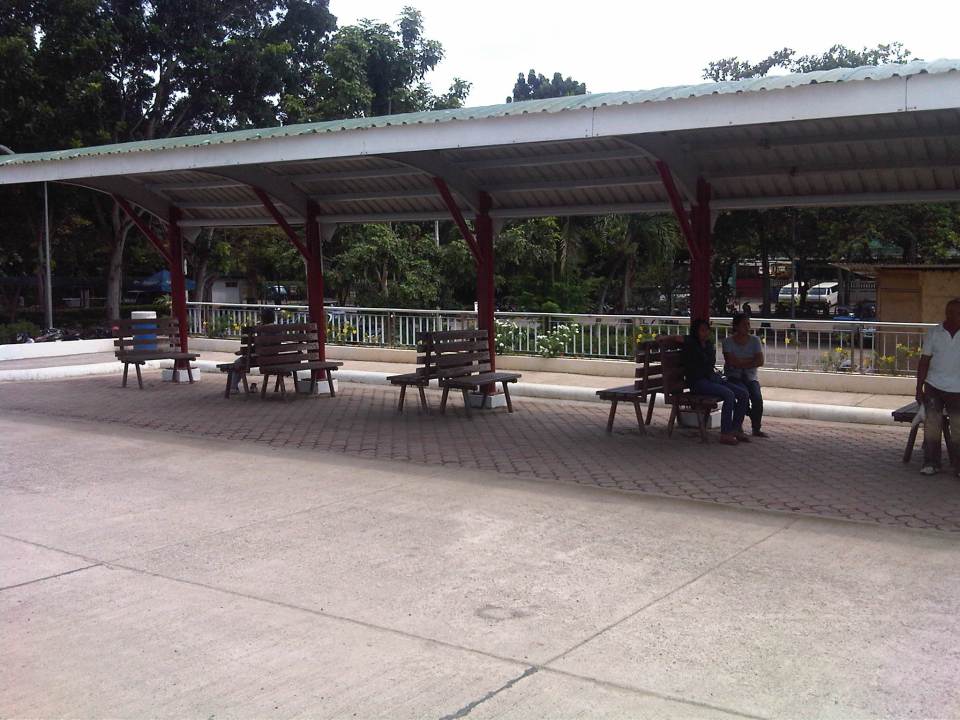 Another look at the loading/unloading/waiting area just outside the terminal building.
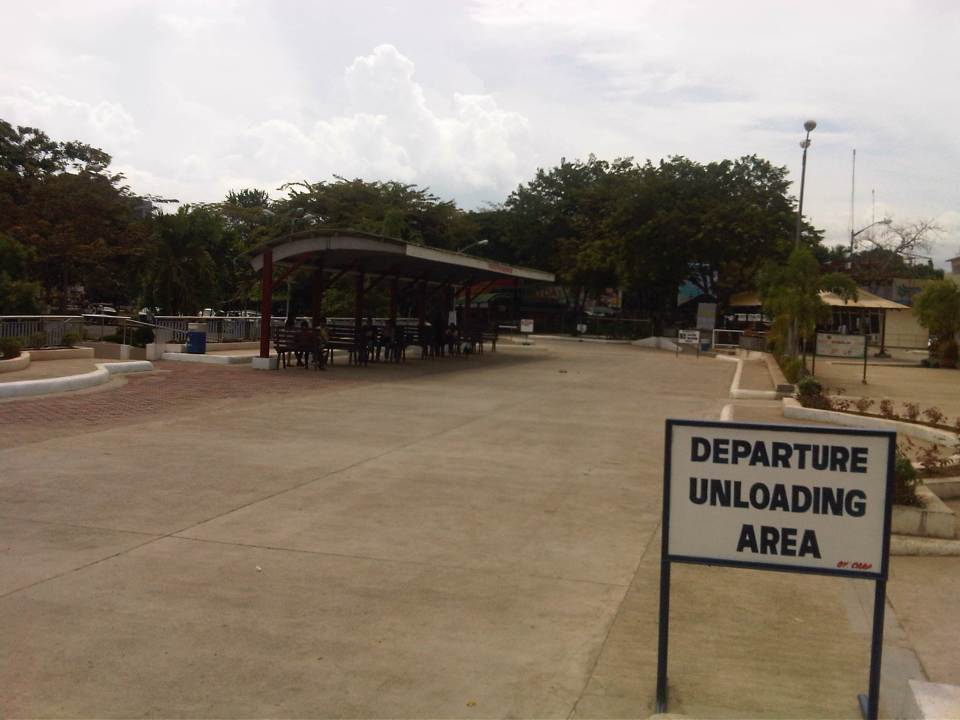 Airport terminal driveway and departure unloading area.
 Departure area under construction/renovation with seats, counters and other materials everywhere.
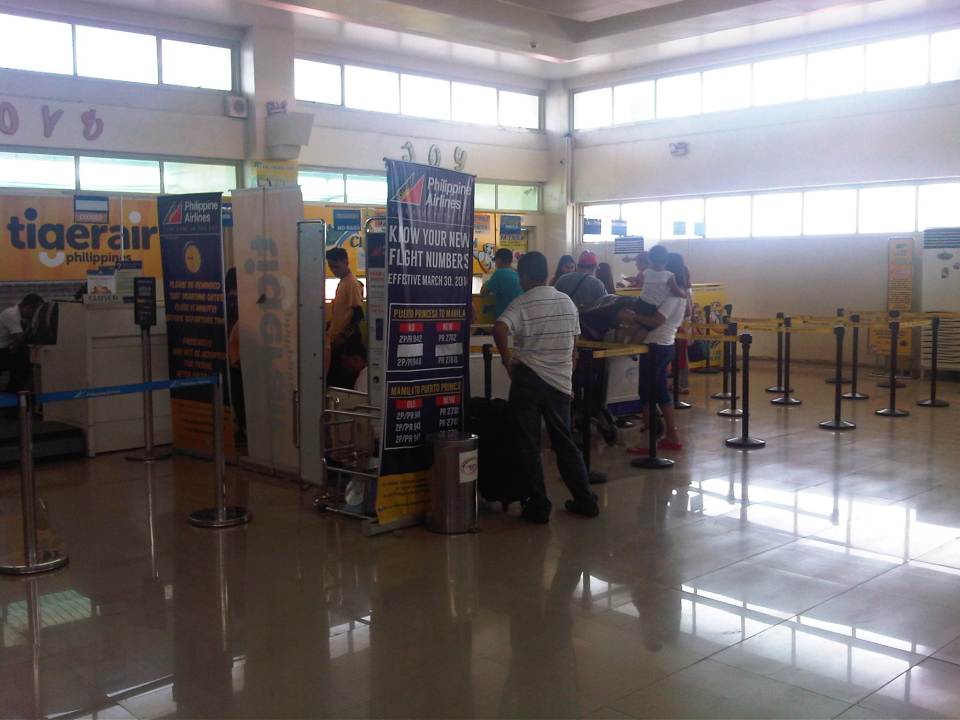 Cebu Pacific check-in counters. Tiger Air flights are operated by Cebu Pacific.
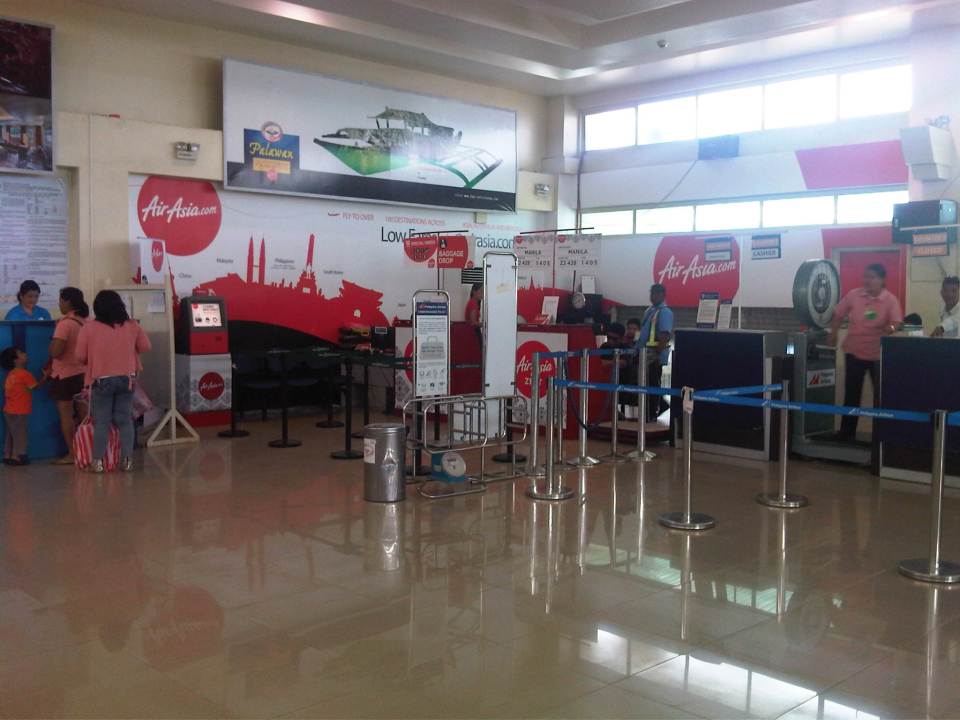 Air Asia Zest check-in counters.
 Entrance to the pre-departure lounge/area.
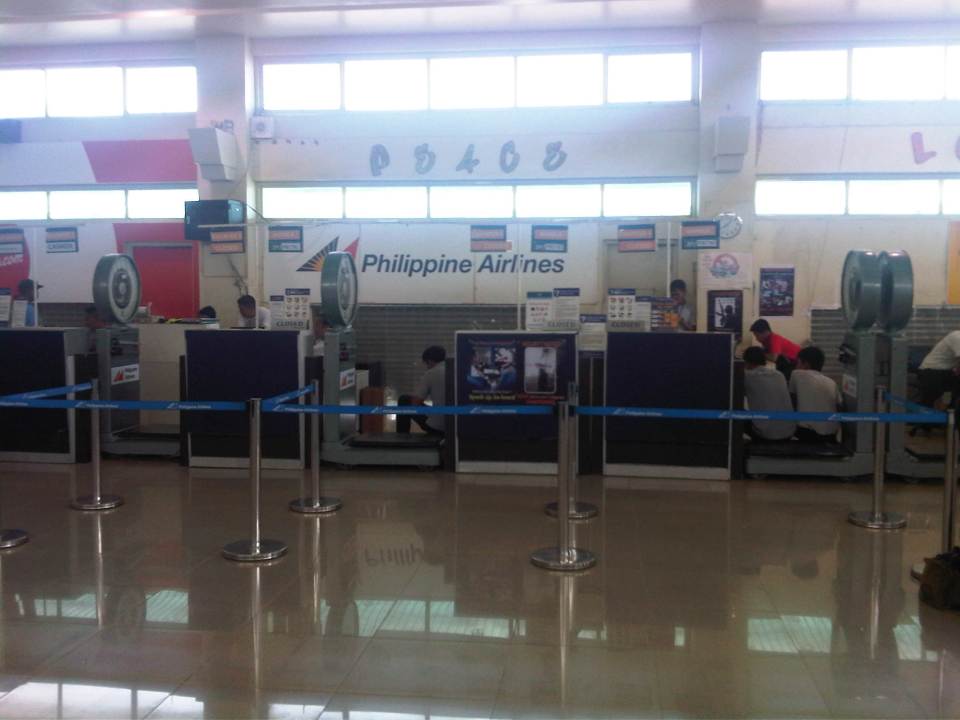 Philippine Airlines check-in counters
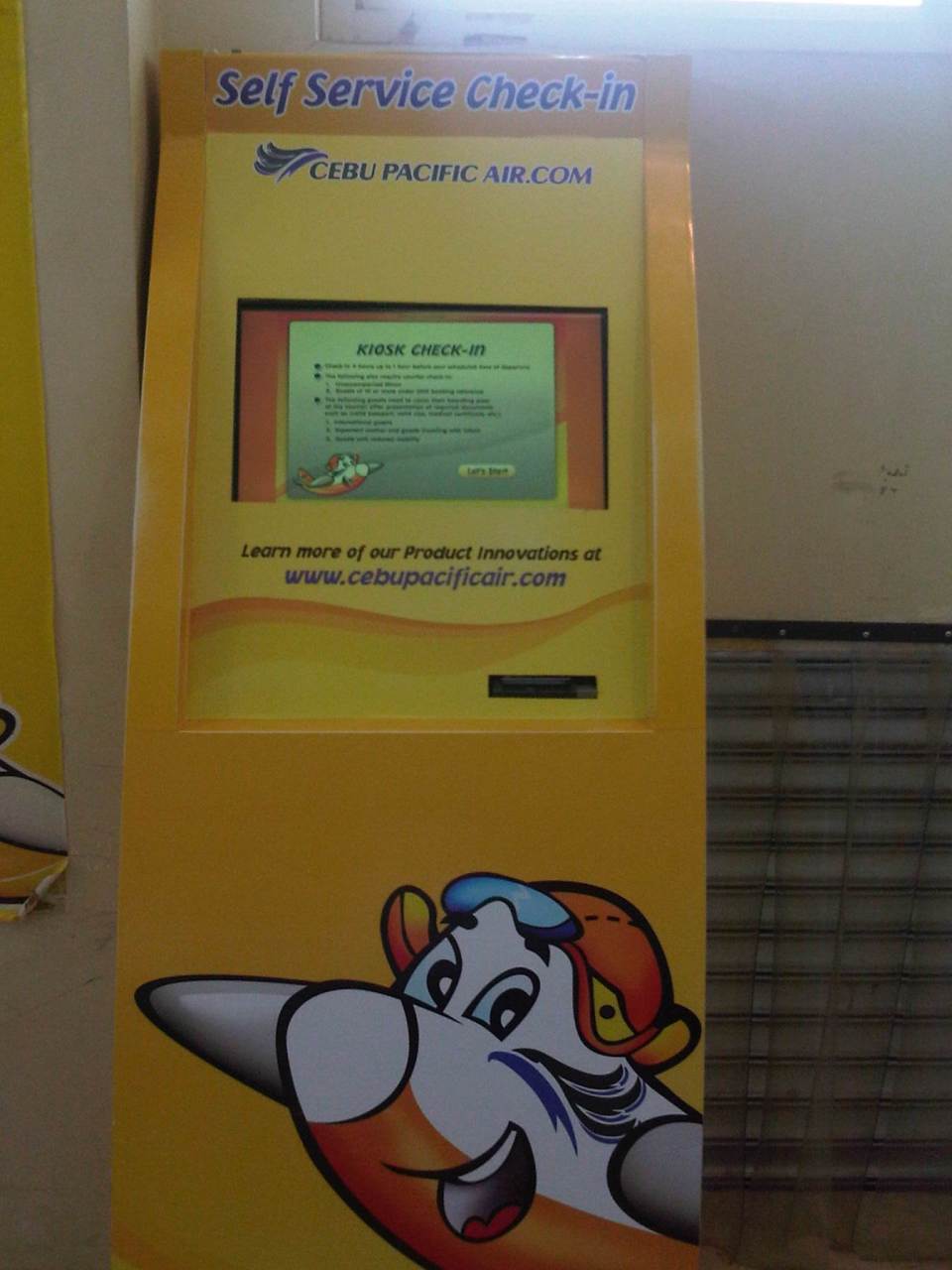 Self service check-in machine by Cebu Pacific. This is very useful for passengers arriving early at the airport for their flights. It allows you to check-in, select seats and get your boarding passes prior to the counters opening for passengers checking-in at the terminal. It’s basically an internet or online check-in so you can go to the internet check-in counter, which usually has a shorter queue.
 Passengers accumulating in near the Cebu Pacific check-in counters. I think airlines shouldn’t have policies preventing passengers arriving early from checking-in. This might be okay for large terminals servicing so many flights but for smaller airports like PPS, Cebu Pacific would probably do better by attending to passengers. Everyone could see that their staff were not at all doing anything behind the counters so they might as well check in passengers so as to reduce and better manage the queuing later on.
 The airport now services international flights but mostly chartered ones. There is an international departure area and a simple immigration counter. These don’t look like they are in regular use.
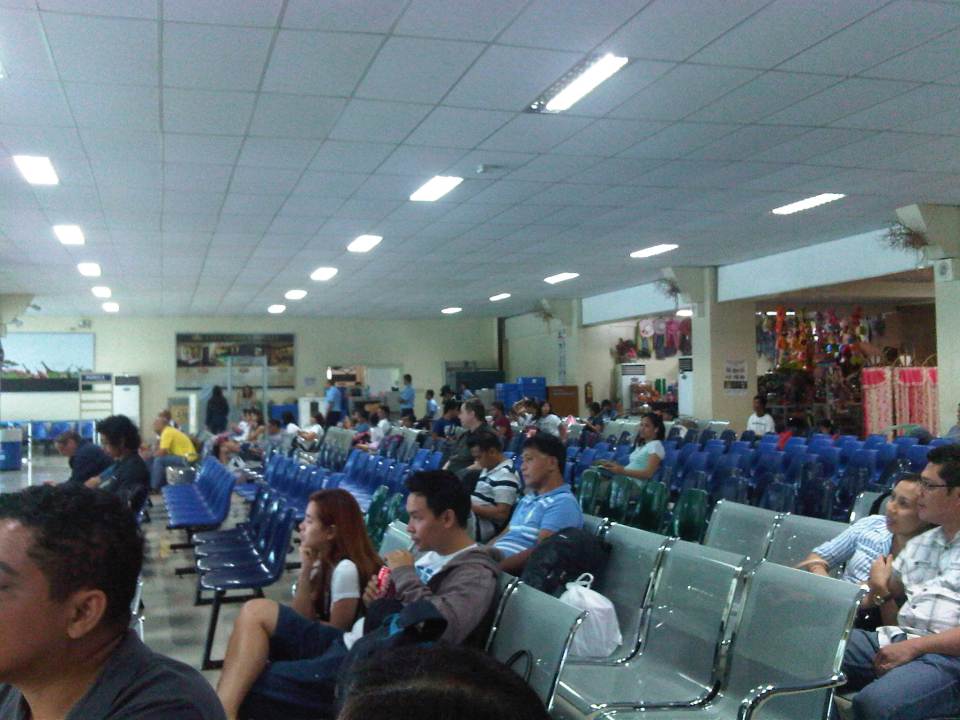 Pre-departure area at the terminal – there seems to be a lot of seats but these are all practically occupied for a single flight. Most aircraft servicing the MNL-PPS route are not wide bodied but the area cannot accommodate 2 plane loads (assuming A319 or A320) of passengers. This is a non-smoking area by law and there is a room for smokers. People though seem to be in-and-out of the room so people seated near the door leading to the smoking room (there are 2 doors) still get a sniff of cigarette smoke.
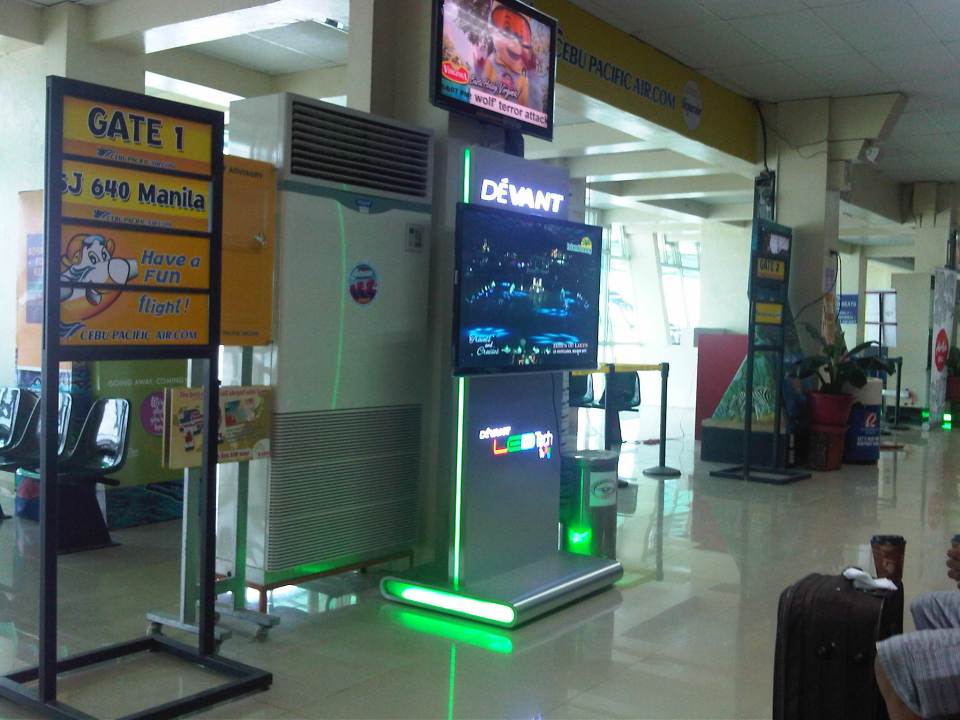 Overall, the terminal is clean and orderly. There are 3 gates reserved for each of the airlines (Cebu Pacific, Philippine Airlines and Air Asia Zest) that have the most flights to and from Puerto Princesa.
 Our Cebu Pacific plane was again late by an hour and so that meant we were getting home later in the night. The good thing about it was that it also meant less traffic (both the airport and roads) in Manila compared to a late afternoon arrival.
–
NAIA Terminal 3 multi-level parking
The multi-level parking facility of NAIA Terminal 3 is open. I have not been to T3 in a while and saw that the multi-level parking was operational only upon returning from a trip to Palawan last week. Last night, as I maneuvered to the open parking lot prior to fetching a friend at the airport, I was directed by airport security to the multi-level facility upon being informed that the open parking lot was already full. Following are a few photos of the multi-level parking at NAIA Terminal 3.
 The entrance and exit to the multi-level parking facility is at the end of the arrival level driveway.
 Motorists should keep to the right heading towards the parking building. There are two lanes clearly marked for the entrance.
 There are two booths but there is currently a desk where staff issue parking tickets to users.
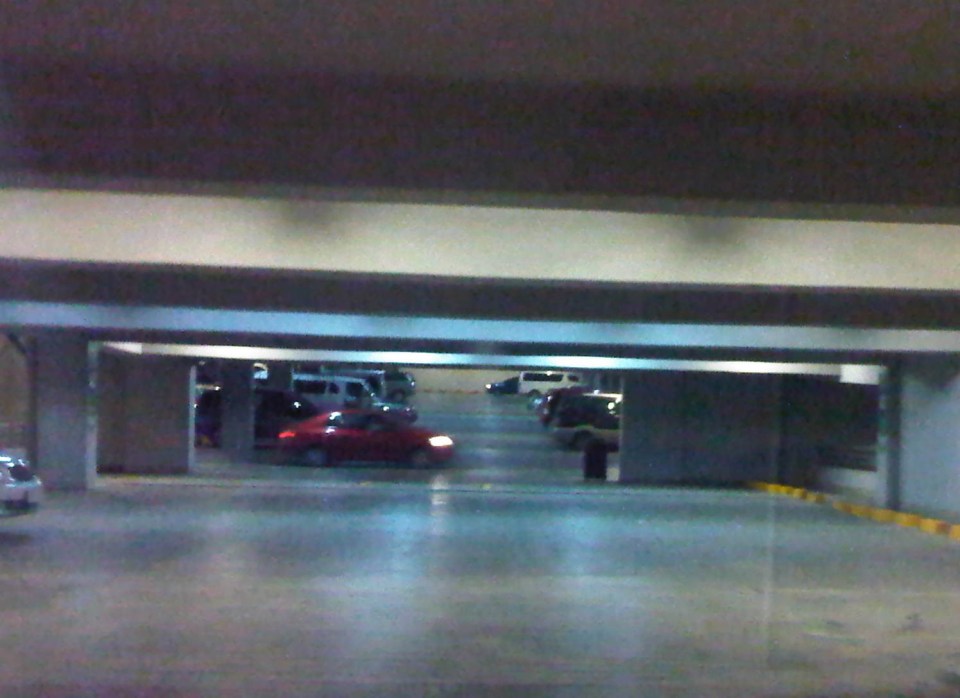 Driving inside the facility, one realises that it is spacious and could handle the vehicles generated by the additional flights begin served by T3.
 Not many people seem to be aware that the parking building is now operational based on the many spaces still available around the multi-level facility. Most people still use the open lot across from the terminal unless its closed off (full) and security staff direct them to the parking building.
 Most driveways are 2-way and so provides good traffic circulation inside the facility.
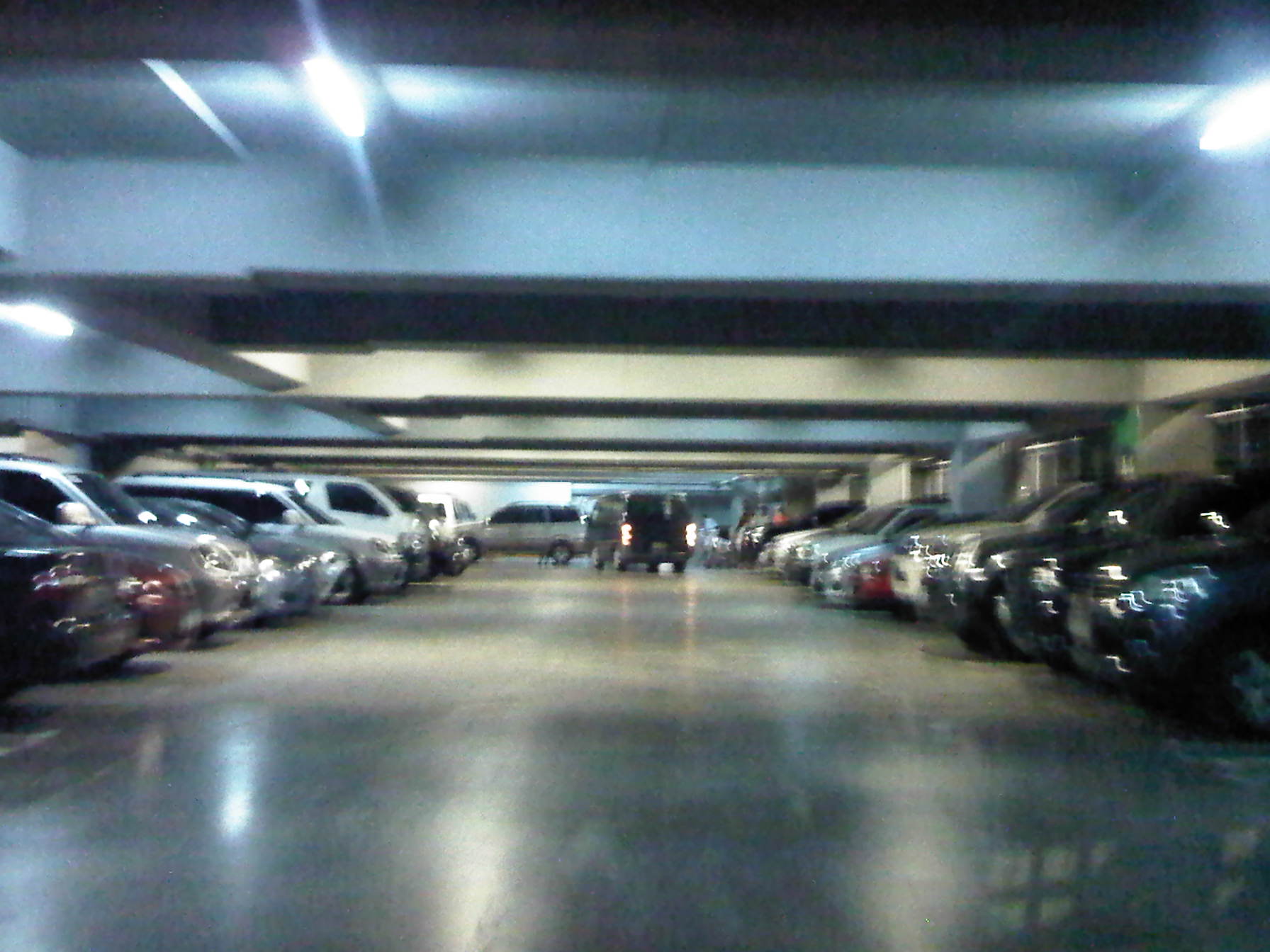 The spaces nearest to the entrance to the terminal are obviously the first ones occupied.
While it took some time for authorities to finally open the multi-level parking at T3, it is a most welcome development considering many international airlines have been transferring operations to T3. These include Cathay Pacific, Delta, Emirates, Japan Airlines and Singapore Airlines among others that will be using T3 as T1 is being rehabilitated. The rates are the same as the open lot (I paid PHP 40.oo for almost 3 hours parking.) and because your vehicle will be basically indoors, it is a good option for trips where you opt to leave your car at the airport (park & fly). NAIA charges PHP 200 per night but I think this is a very reasonable rate assuming that this is a more secure facility compared to the open lot.
–
Full airport operations at NAIA 3?
Articles came out over the last two weeks about Ninoy Aquino International Airport’s Terminal 3 finally going on full airport operations with the transfer there of five international airlines from Terminal 1. These airlines are (in alphabetical order) Cathay Pacific, Delta, Emirates, KLM and Singapore Airlines. I’m not really sure about the terminology or how DOTC and NAIA wanted to package their press release but wasn’t Terminal 3 already operational and does “full” really mean it being maximized or optimized?
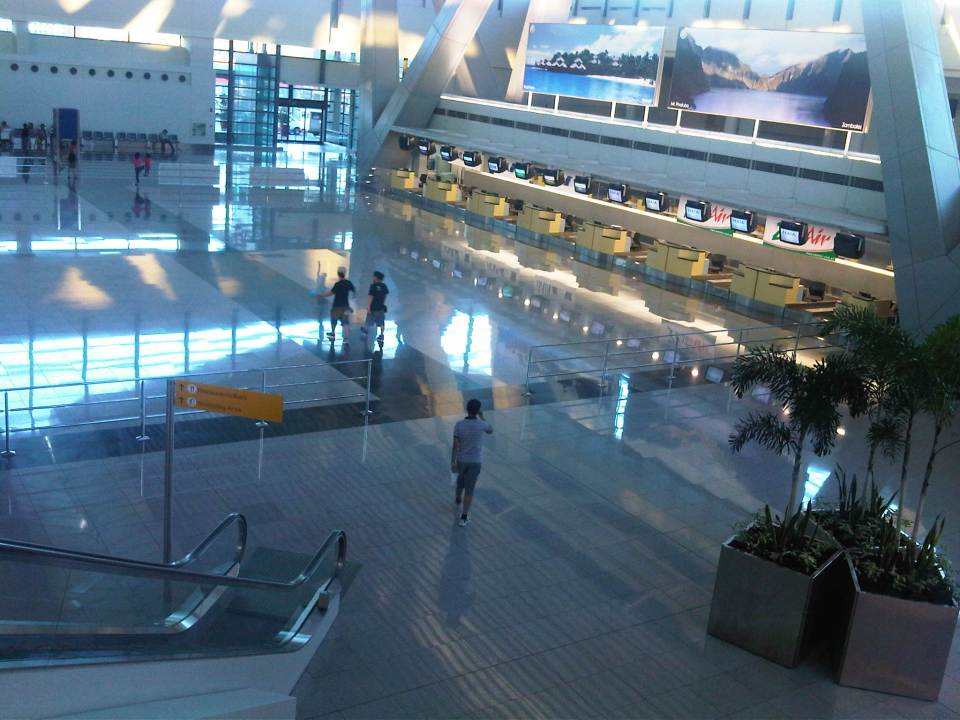 This area will be full of people as five major international carriers transfer to Terminal 3
Prior to the transfer of the 5 airlines this August, T3 was already hosting international flights, mostly by local carrier Cebu Pacific, which is classified as a low cost carrier (budget airlines). The other major international carrier operating out of T3 was All Nippon Airways (ANA) but the latter had far fewer flights compared to CebPac.
However, my interest in this “full operations” pitch is more on the other facilities of the airport and not really about the check-in and immigration operations that I am sure have enough capacities to deal with the additional airlines, flights and passengers that will be served by T3 (most booths were not utilized considering the airport served significantly fewer international flights and passengers than T1). I am also not concerned about the other features of the airport like its shops and restaurants (a regular user of T3 would make the observation that shops and restaurants have been increasing over the past years). My worry is that the airport will not have enough parking spaces for airport users.
There is already a parking problem at T3, no thanks to poor public transport services (taxi anyone?) and the absence of anything resembling an airport shuttle or express services (e.g., Airport Limousine buses). I have written in the past about the multilevel parking facility at T3 that has not been opened for public use since the terminal became operational years ago. Granted that there might have been issues with the structure itself, authorities should have also addressed the issues while they were at it fixing the myriad problems of the terminal over the past years. Much of T3’s open parking spaces have been occupied by exclusive airport taxis (coupon taxis) and there are people who have made the observation that many of the parked cars are actually those of people gambling in the casinos of a nearby resort hotel complex. The latter story might be a bit difficult to prove unless there is deliberate data collection of some sort but can be true for some vehicles given the cheaper parking rates at the airport.
Until NAIA becomes public transport-friendly and perhaps a airport shuttle services can be provided for the convenience of travelers, parking will remain as an issue for many especially during the peak periods or seasons. And with the NAIA Expressway currently under construction, I would expect the airport terminals to be more accessible to private vehicles in the future via the elevated system, thereby generating more demand for parking. Are there already proposals for the solution to this problem or are authorities again going to be dependent on the private sector for solutions?
–
Food for thought – a few articles on transport and traffic
This will just be a quick post for now and I just wanted to share a few recent articles on transport and traffic from a favourite magazine – Wired:
What’s Up With That: Building Bigger Roads Actually Makes Traffic Worse
Why We’re Sad the Best Airport in the World Is Getting Even Better
The Hidden Genius and Influence of the Traffic Light
These are very well written, easy to understand articles on things we encounter everyday (traffic congestion, traffic signals at intersections) and when we travel long distance (airports). They show different perspectives of things we take for granted or assume we understand. An example of the latter includes notions that road widening or road construction will solve traffic congestion problems. Much of what goes around regarding road widening or road construction as solutions do not account for induced demand, which is basically additional traffic generated or encouraged by wider or new roads. The second article talks about Changi Airport, arguably the best in the world, and the high tech approaches they have employed or will employ in order to ensure efficient operations there. Such tools, I think, should be used in our airports especially NAIA where the long standing excuse is the limitations of the runway(s) and the airport terminals. Certainly, there are other issues that need to be addressed and going high tech and employing sophisticated methods for airport operations should alleviate problems until we ultimately build a new airport elsewhere. The third article takes a look into behaviour and mentions a “social contract” we have agreed to in order to reduce mayhem in our roads. This “social contract” as well as others related to it should be revisited and understood as they are very much a part of how we behave when we travel and have a significant effect on others around us.
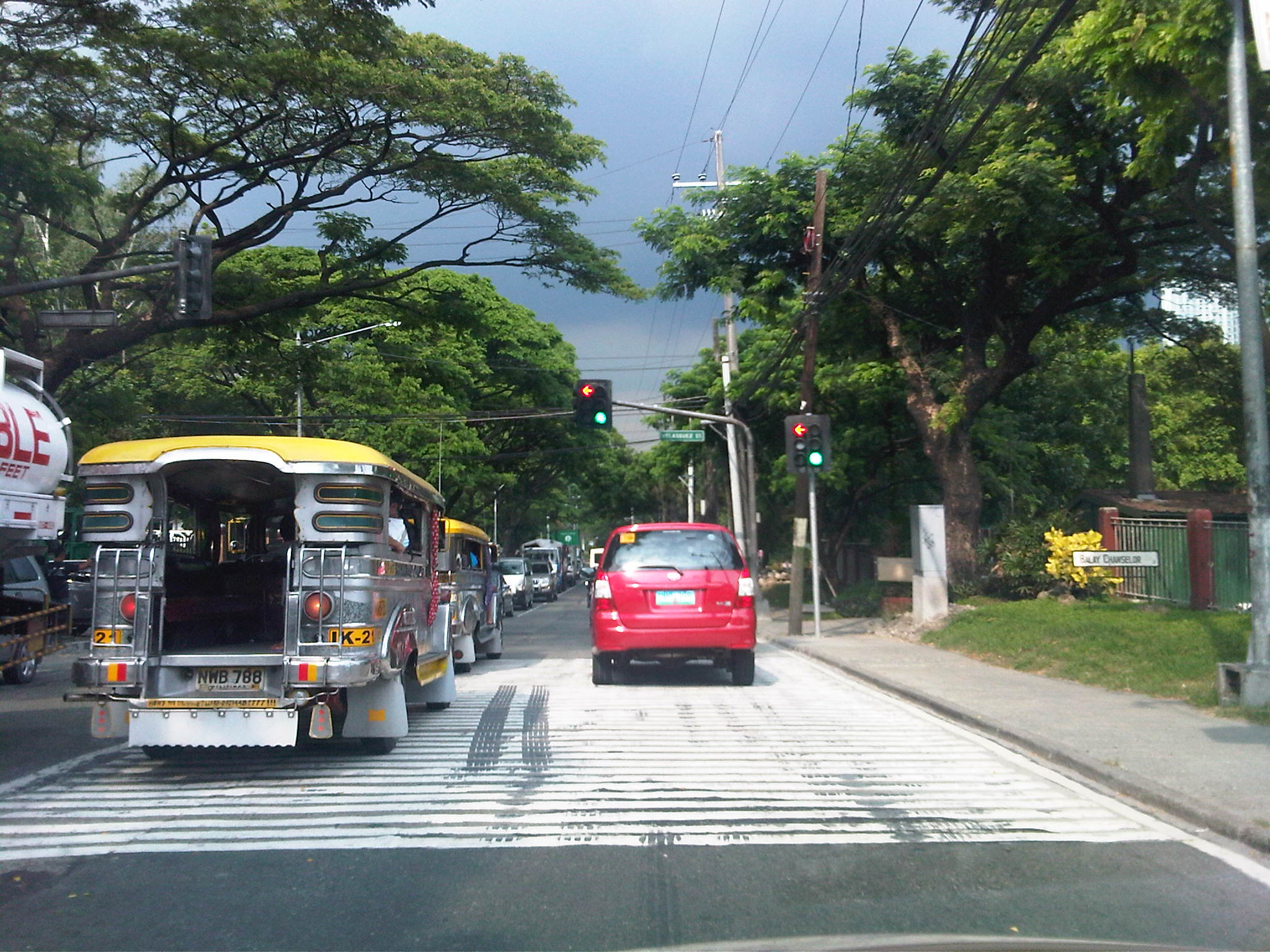 Traffic congestion and traffic signals along the 4-lane C.P. Garcia Avenue in UP Diliman
–
NAIA Terminal 3 revisited
I was back at NAIA Terminal 3 to fetch someone who was flying in from Bacolod last Palm Sunday. Going around while waiting for the plane to arrive, I took some photos of the newer shops and restaurants in the terminal. Here they are with a few photos at the waiting area and outside the terminal.
 The overnight parking spaces were not yet full. It was a Palm Sunday so I guess many people haven’t taken their vacations yet. I remember fetching the wife one Maundy Thursday morning and the parking lot was just full of vehicles. I had to park at a slot that required some walking to get to the terminal building.
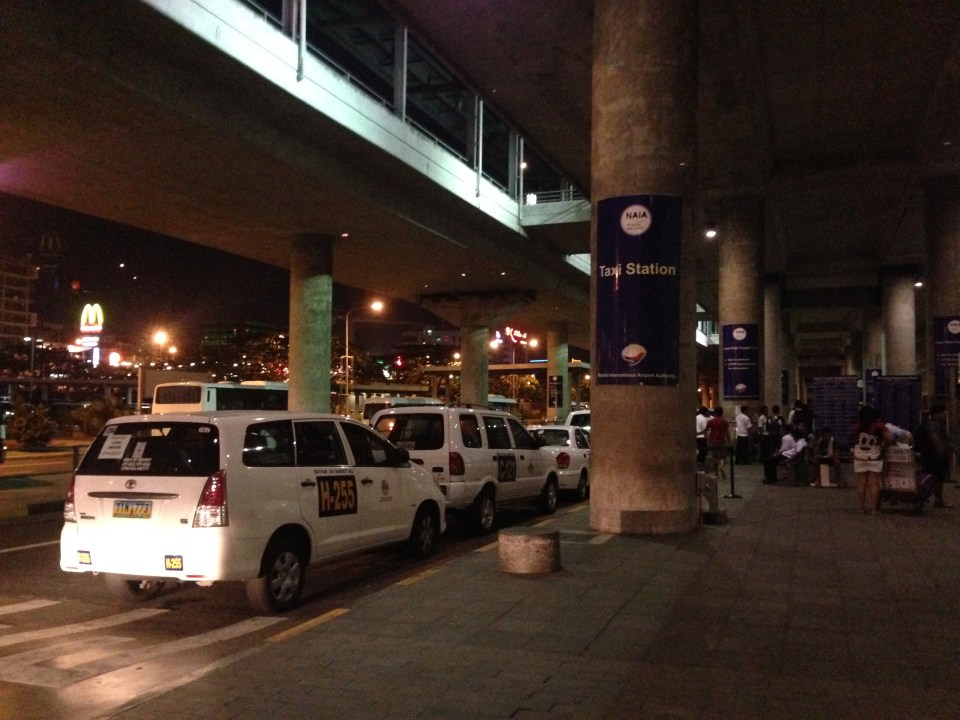 Taxi station at the arrival level of NAIA – only airport accredited taxis are allowed at this station and many, if not most, are not metered (i.e., do not have or use taxi meters). There is a dispatcher at the station and rates are basically higher than regular metered taxis.
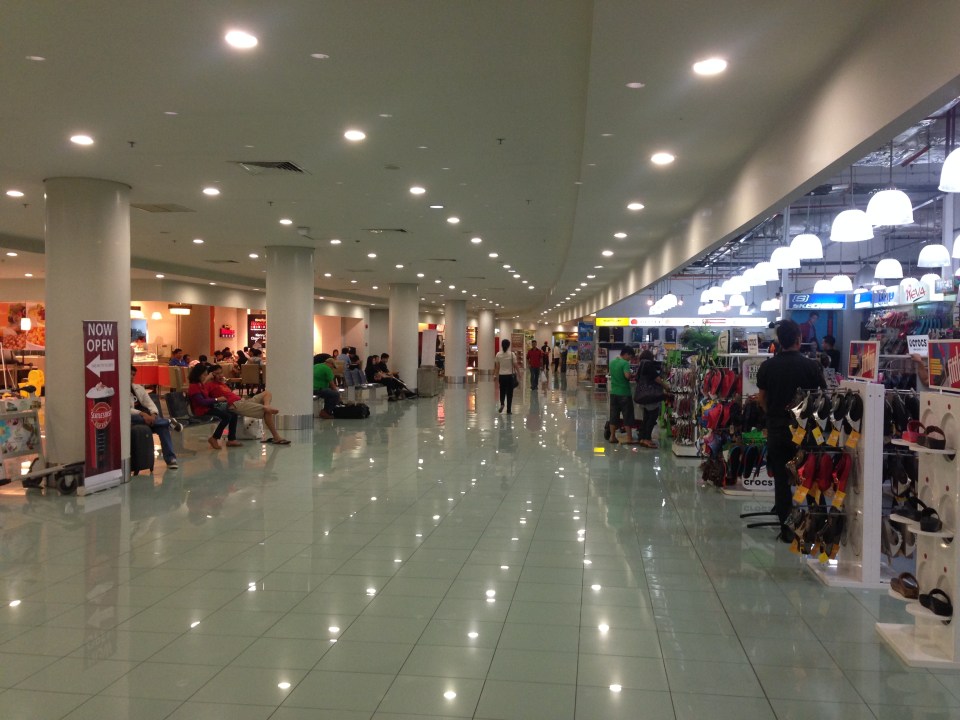 There are more shops, restaurants and cafes at Terminal 3. The old ones are still there but noticeable are the newer shops and restaurants when you explore the 3rd level of the terminal.
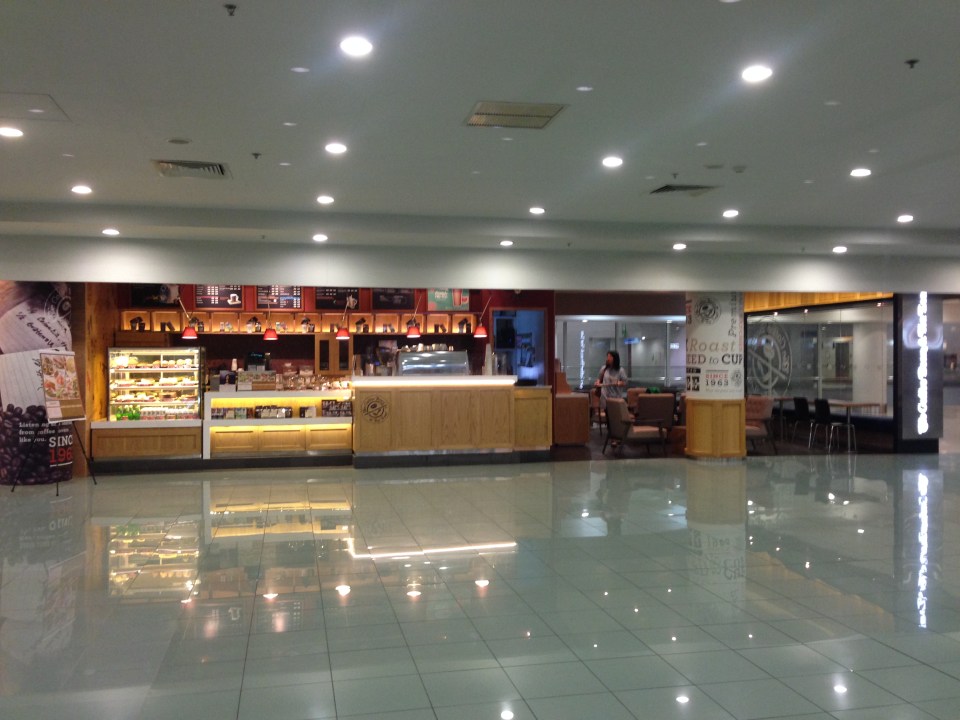 The Coffee Bean & Tea Leaf branch at Terminal 3.
 Wendy’s fastfood restaurant.
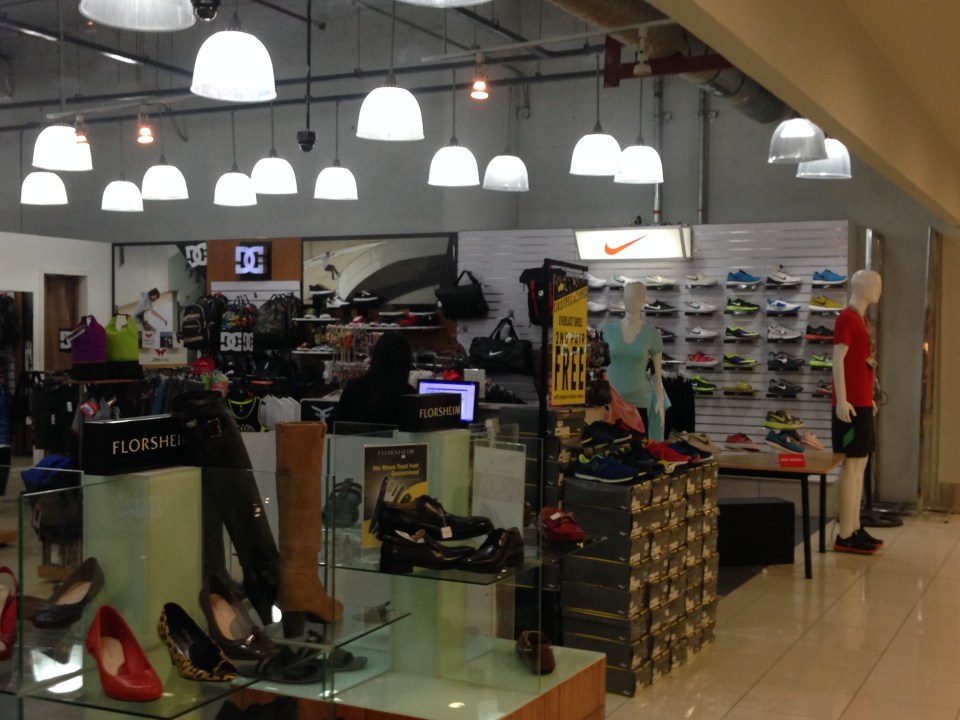 Shoes on display at one of the older shops at the terminal that offers a lot of different merchandise like luggage and apparel and accessories.
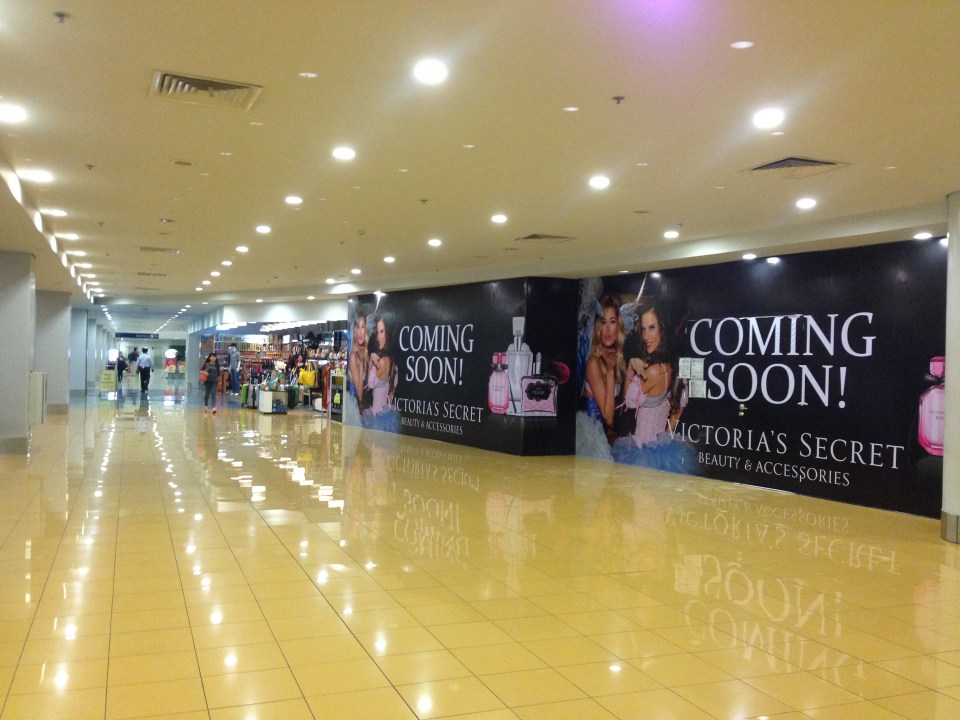 Victoria’s Secret shop opening soon and likely before other international airlines move to Terminal 3 when renovations for Terminal 1 move to full gear.
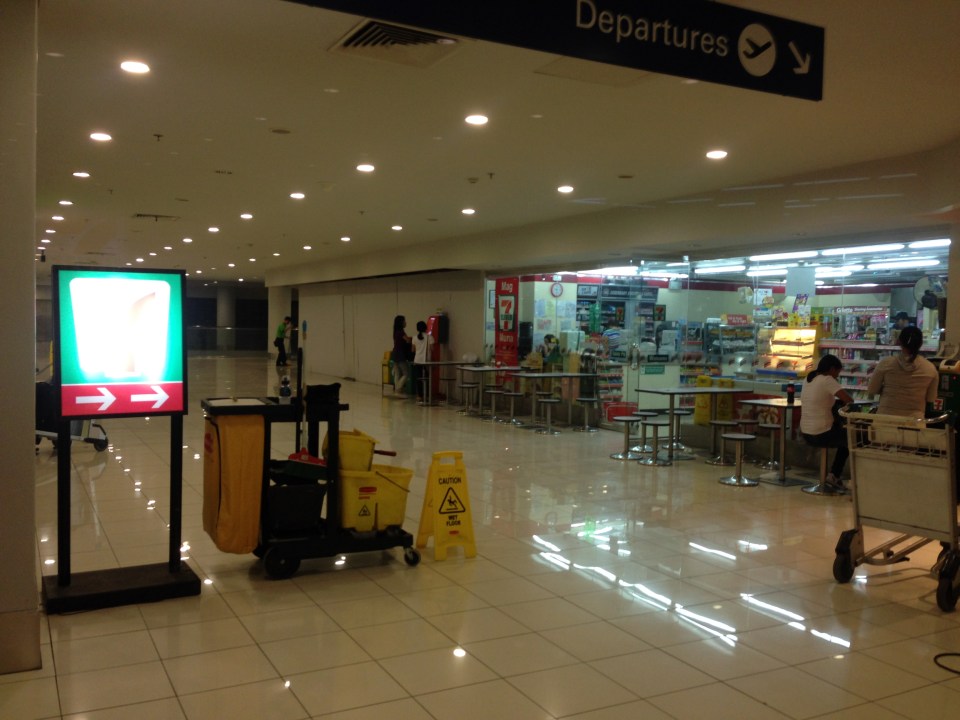 This Seven Eleven store is relatively new. There’s a Mini Stop store near the escalator to the 3rd level of the terminal.
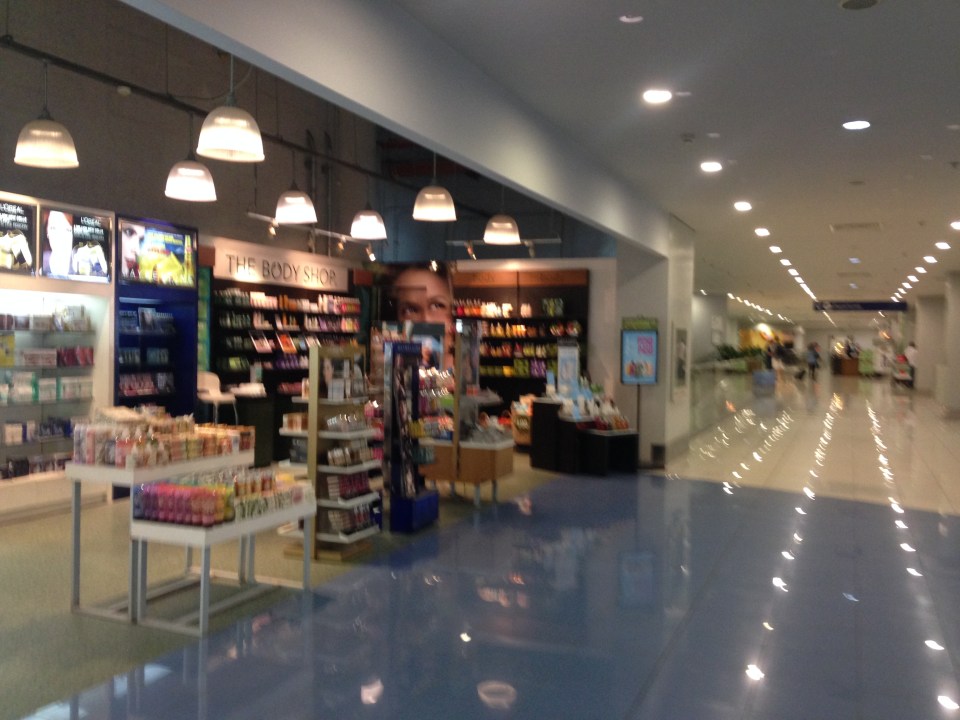 The Body Shop store.
 Not so many people at the Cebu Pacific domestic check-in counters around 8 PM. At this time, most domestic airports in the country are already closed as they are not equipped for night time operations. Thus, there are few flights at this time likely from the handful of modern airports – Cebu, Davao, Iloilo and Bacolod.
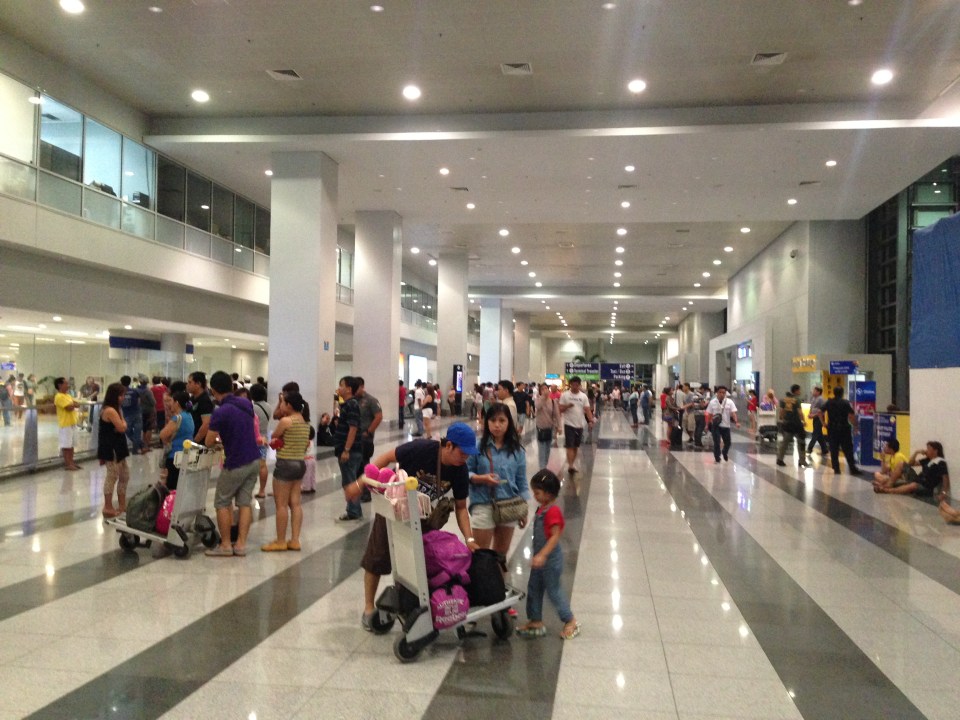 Well-wishers meeting arriving passengers at the spacious arrival area concourse.
 Signs provide directions to passengers and well-wishers.
 Crowds form at the exits to check passengers filing out of the arrival area. International passengers come out from the left while domestic passengers from the right.
 There are more foreign exchange counters now at Terminal 3 and this is likely due to the increased number of international flights served by the terminal.
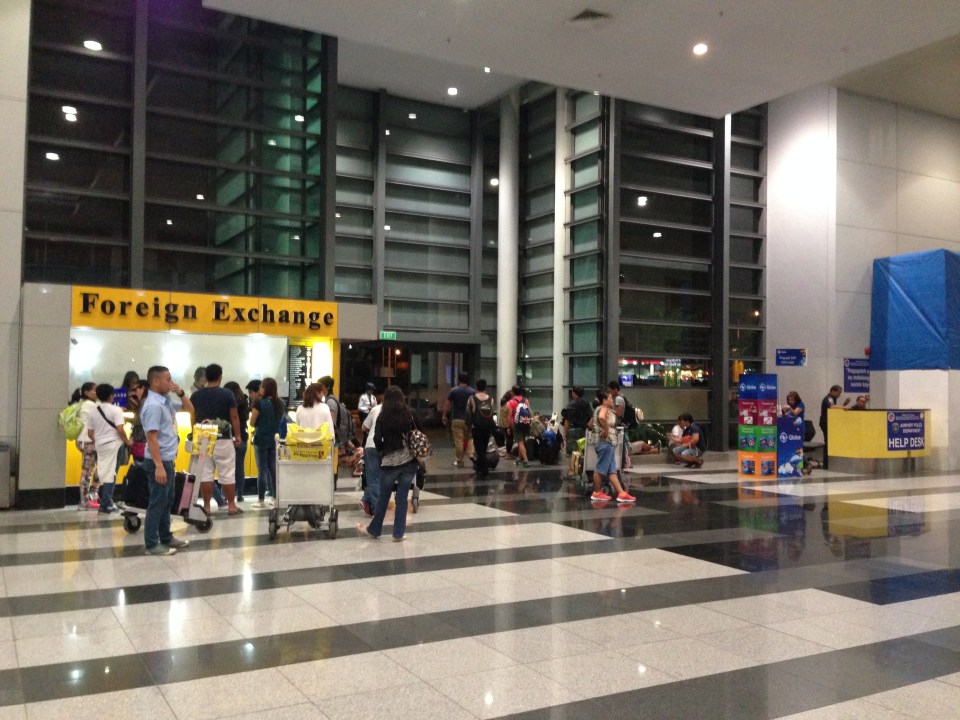 People go out of the terminal at one of the many exits at ground level. However, there are only two entrances to the terminal at the arrival level where security checks are made.
–
Narita Terminal 2 Arrival
On our most recent trip to Japan, we took Philippine Airlines instead of the usual Delta in our previous trips. For one, PAL offered full service at a competitive price (Delta and JAL were more expensive) and the new schedules meant we could fly to Narita in the morning and arrive there early afternoon, and return to Manila in the evening. This was practically Delta’s schedule. It also helped that PAL was using NAIA Terminal 2 so that meant a better terminal for us compared to the congested and dilapidated NAIA Terminal 1. Of course, there were other choices including ANA, which I would have preferred if only it wasn’t so expensive even compared to JAL. Low cost carriers were also not on our list as we had the budget for full service and we didn’t like the schedules.
We arrived at Narita after a smooth flight and our plane proceeded to Terminal 2, which most Asian airlines use. I have not used this terminal for quite some time now as I usually planed in via Delta or its predecessor Northwest. The last time I was in Terminal 2 was in 1999 when I was returning home to Manila after 3 years in Yokohama, Japan. That time, I used JAL as part of my benefits of being a Monbusho scholar.
 Moving walkway or “walkalator” to the arrivals area for immigration processing.
 A view of aircraft docked at the airport shows a couple of JAL planes and one of Cathay Pacific. I like JAL’s old logo compared to its new one. This retro look gives you a feeling of nostalgia.
 A computer-generated, anime image of an airport staff member greeting arriving passengers to Japan.
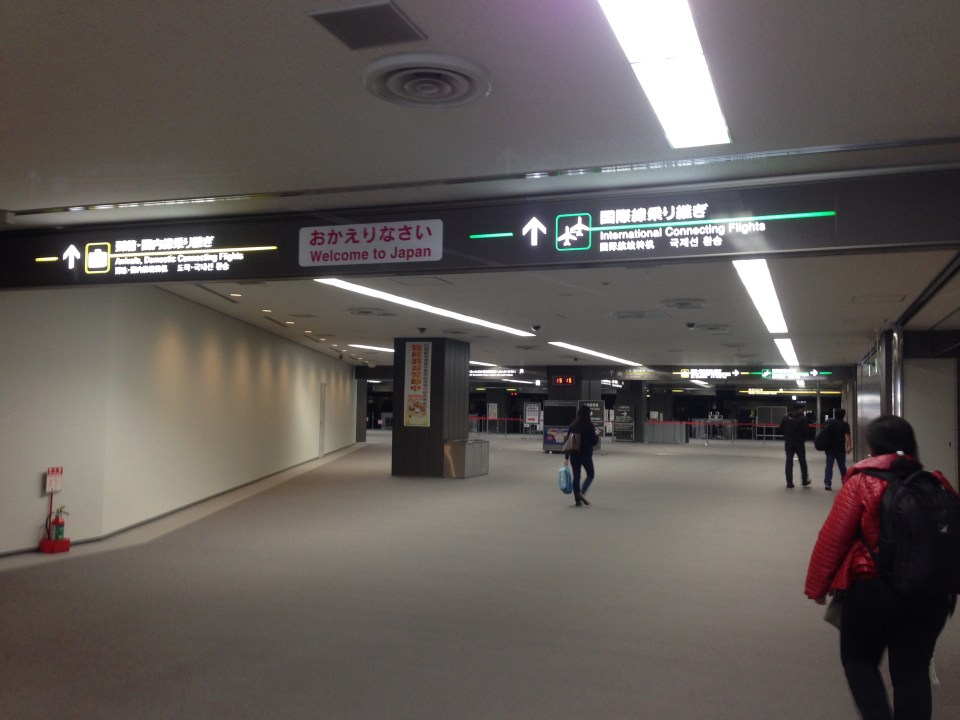 Entry towards the immigration counters
 Past immigration and proceeding towards the baggage claim area.
 Descending to the baggage claim area, passengers are provided information on a huge board on which carousel their baggage will be coming out of. To be sure, ground staff hold a placard directing PAL passengers to the assigned carousel.
 Narita’s expanse becomes more obvious at the baggage claim area.
 Luggage coming out for passengers to pick up from the carousel.
 Ground staff remind passengers to check whether they got the correct luggage from the carousel. Many bags are identical so people should have a distinctive feature on their luggage whether its a tag, sticker, strap or others.
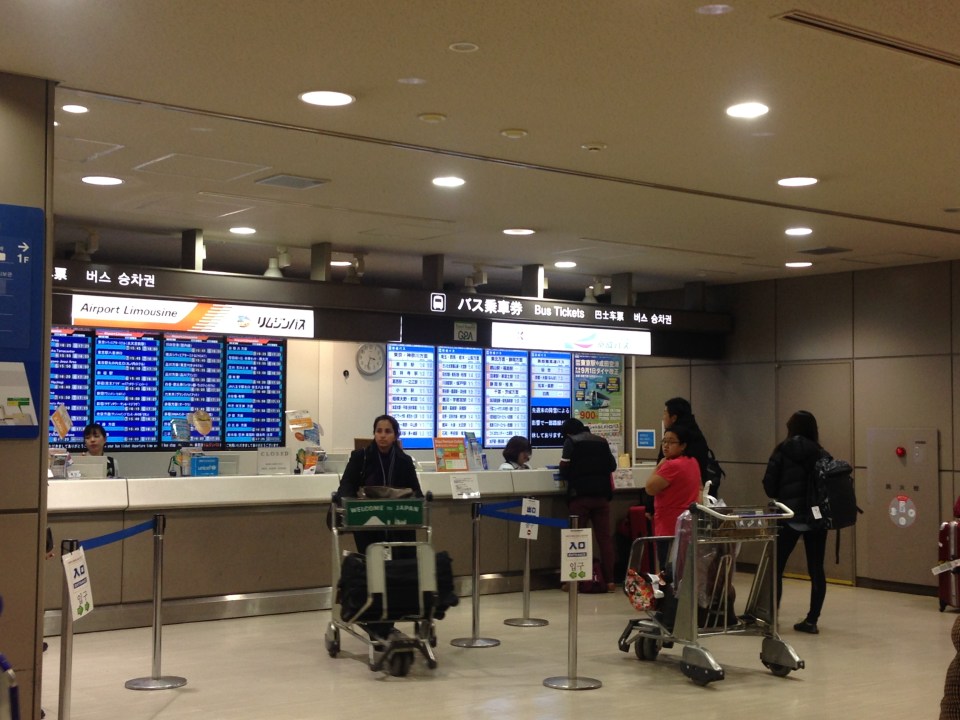 Airport limousine bus counters – there are limousine buses bound for many destinations in the Kanto area. I usually took the limousine bus to get back to Yokohama when I was a student in Japan in the 1990s.
 Keisei Skyliner train counter – the Skyliner is less expensive than the limousine buses and for those who travel light, it is a good option going to Tokyo. The last two stops are at Nippori and Ueno Stations where one can easily transfer to JR or subway lines. Other rail options are JR’s Narita Express (NEX) and JR Yokosuka-Sobu Line’s Airport Narita service. I usually take the latter from Yokohama Station.
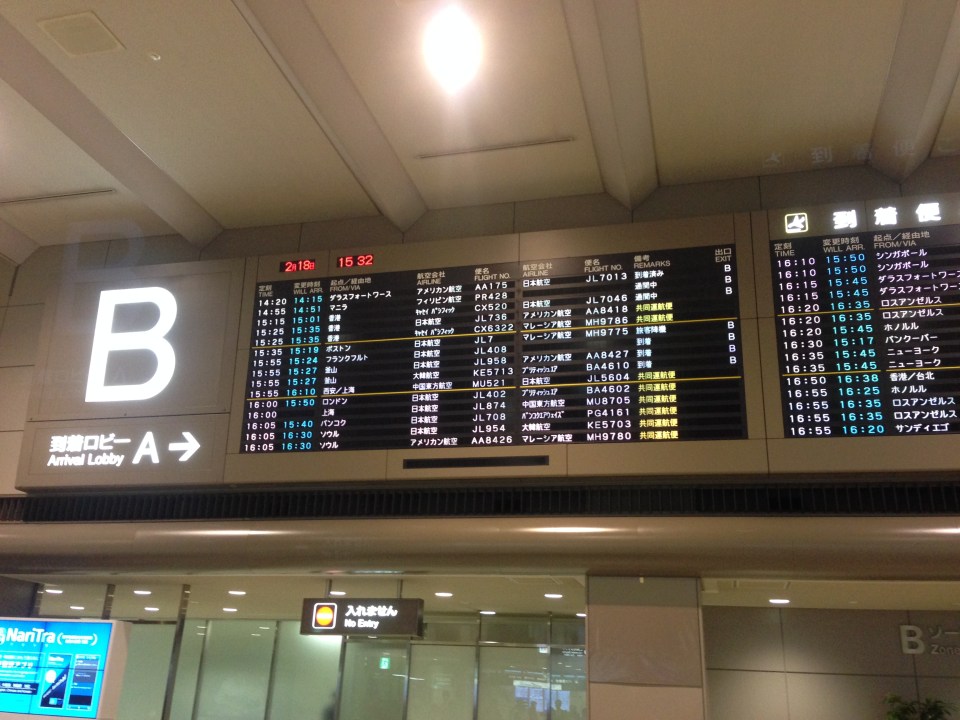 Giant electronic boards at the arrival lobby provide information on flights arriving and departing Narita Terminal 2.
 Our hosts gave instructions to take the limousine bus but part of our group were fetched by car. I was invited to join them because we were staying at the same hotel. The others stayed at another hotel. And so we walked to the upper level of the terminal to cross towards the parking building. The yellow line in the photo is a standard feature of many facilities in Japan that make them PWD-friendly. These are guides for blind people who can use their canes to “feel” the directions.
 Another view of the information board from the upper level of the terminal.
 Quite an unusual description of the parking building levels, which we thought were signature Japanese.
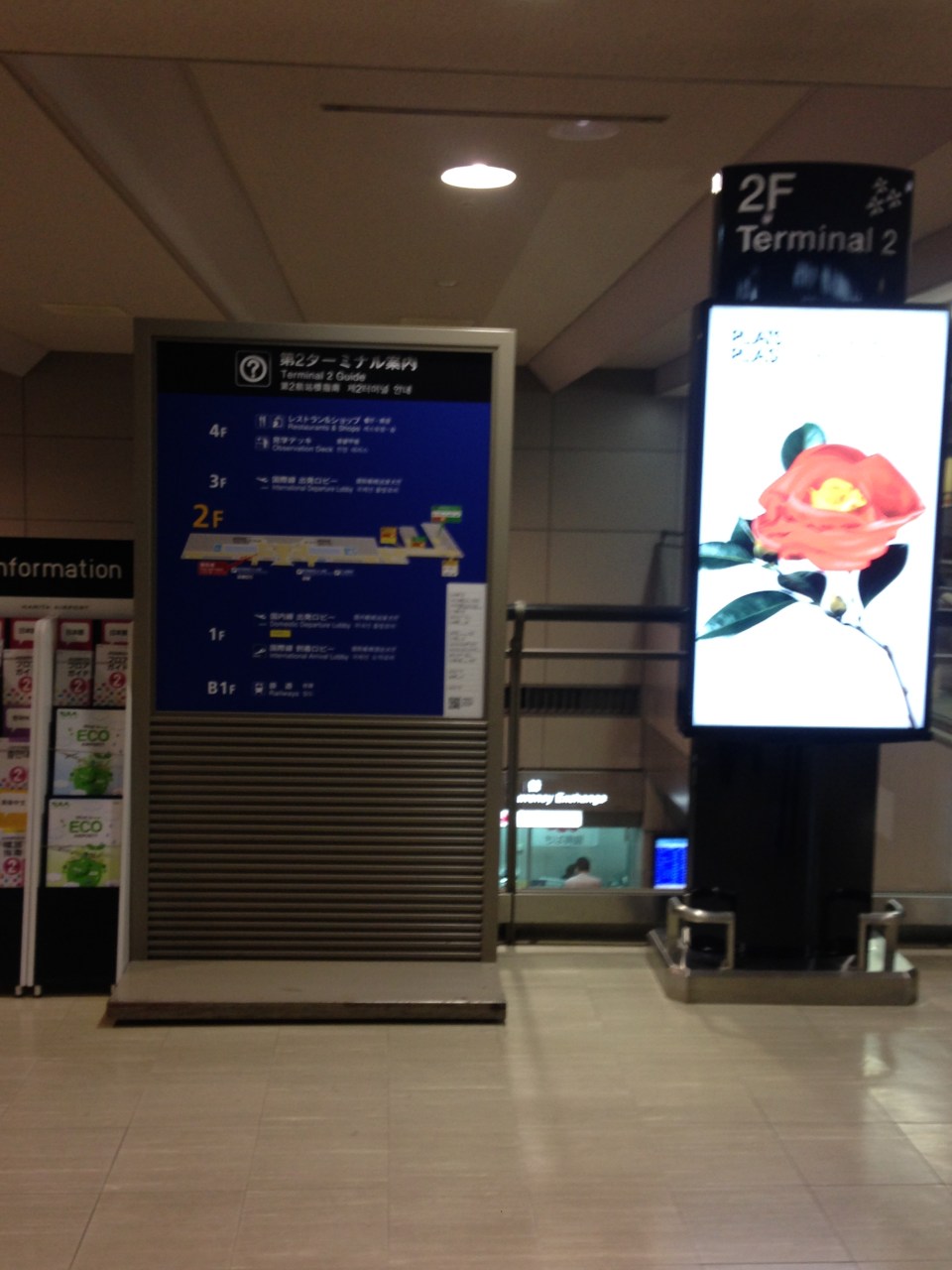 Floor information for Terminal 2
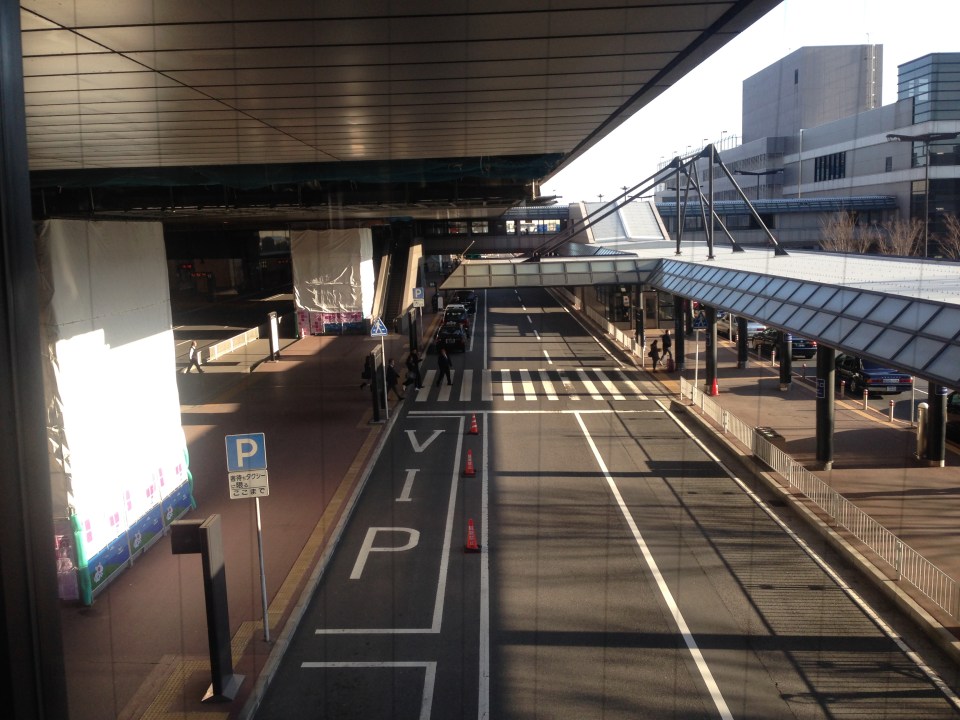 On the bridge from Terminal 2 to the parking building, we have a good view of the driveway and the slots for VIPs.
 Paying for parking at one of the machines at the parking building.
 We were curious about the sign that also mentioned a pet hotel. I guess travelers who didn’t have anyone to leave their pets with at home can now have the convenience of checking in their pets at the hotel to take care of the animals while they were away.
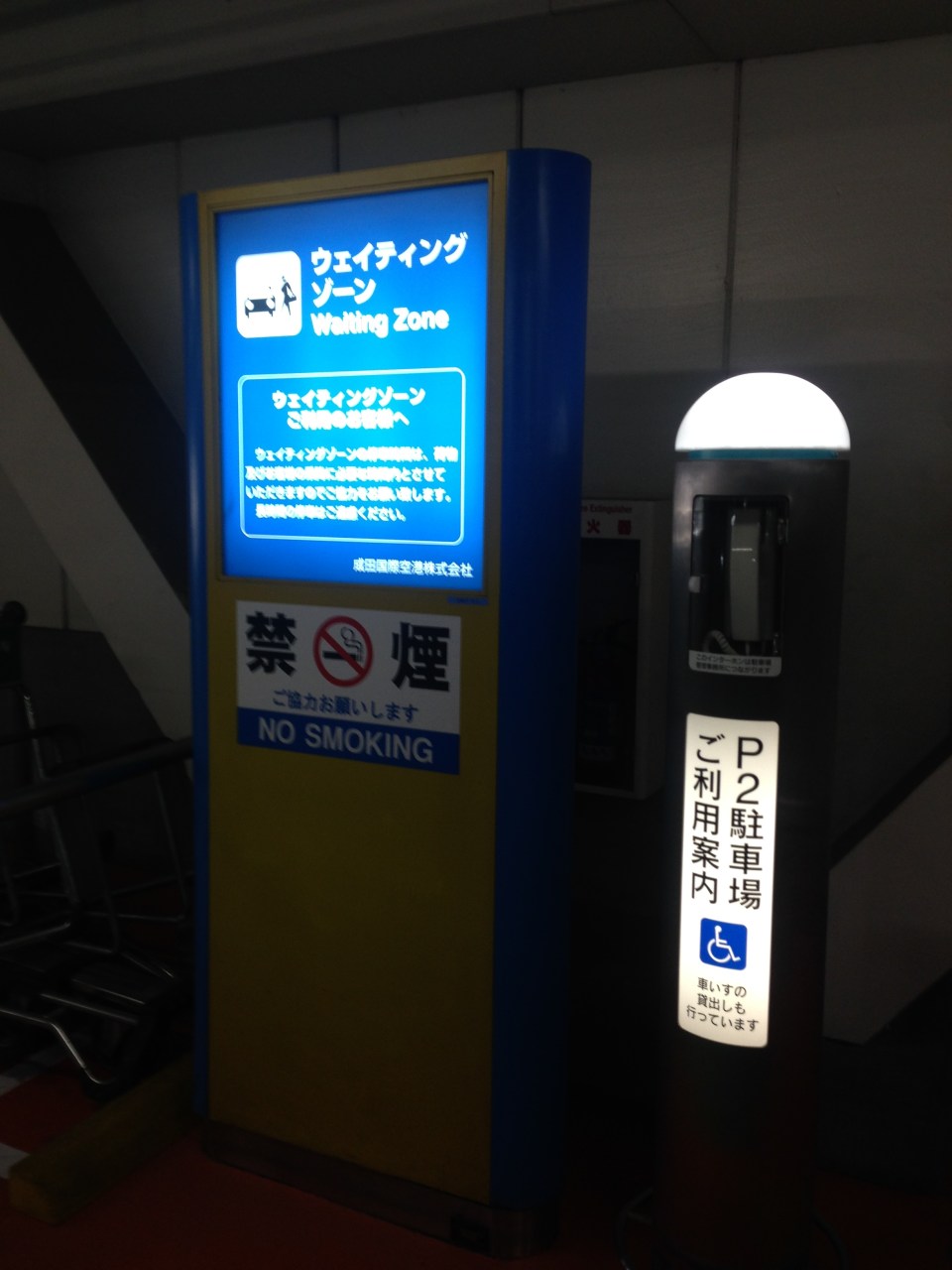 Waiting zone for vehicles – our host went to get our vehicle while we waited at the designated area.
I am already looking forward to a next trip to Japan. Perhaps I will take PAL again in a future flight? Actually, I was a bit disappointed that they used a smaller plane for our flight even if it was a new Airbus A321 Neo. I think I got used to the B747s that Delta and JAL used for their flights (I think JAL and ANA now uses the fuel efficient B777’s while Delta retained its B747s that eventually continue to the US). I think the smaller aircraft by PAL was the result of a combination of cost cutting (fuel-wise) and their increasing the frequency of flights. No matter, if you know that a nice airport like Narita is waiting on the other end of trip, it is a flight worth looking forward to.
–
Narita Terminal 2 Departure
On my previous two trips to Tokyo, I flew on Delta and this meant flying in and out via Narita’s Terminal 1. The last time around only this February, we decided to take Philippine Airlines, which uses Terminal 2 along with most other Asian airlines. Here’s a few photos I was able to take at the terminal.
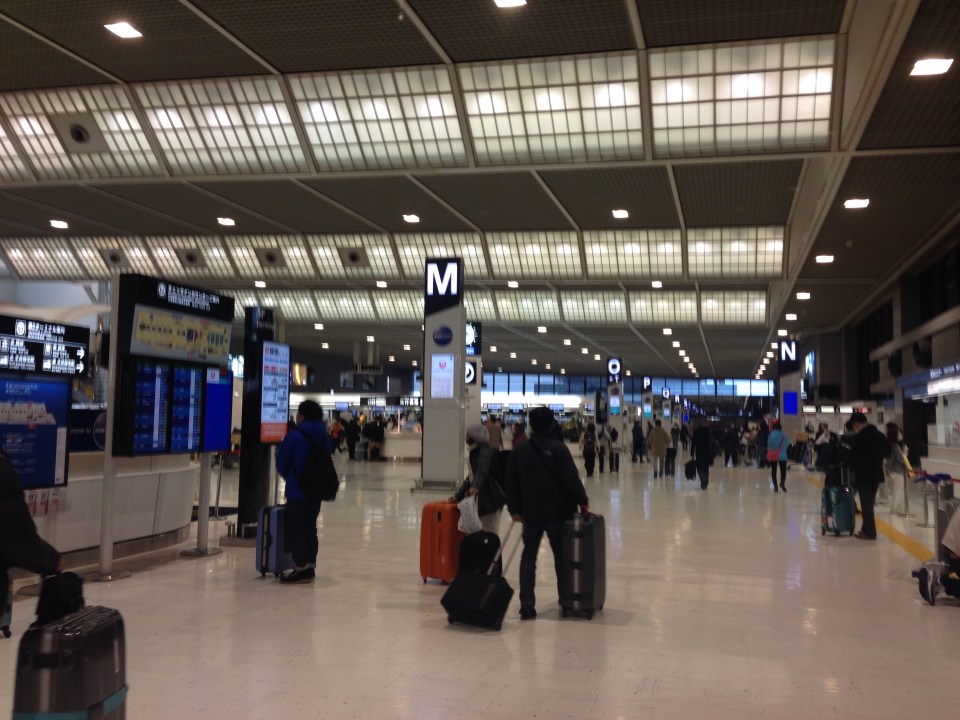 Terminal 2 is also a huge terminal and serves as the hub for Japan Airlines (JAL).
 The many information boards provide up to date info on inbound and outbound flights out of Narita Terminal 2. Many refer to the boards for info on which counters to go to for checking-in for flights.
 Another look at the spacious terminal.
 A passenger reading check-in counter information.
 The giant board provides updates on flights as passengers wait seated in the middle of the terminal. Behind the board are shops and restaurants for the convenience of passengers and well-wishers.
 Airport staff on a huddle for orientation and final instructions from their team leader before checking-in passengers for Philippine Airlines. Meanwhile, a politician and embassy staff assisting him wait patiently among other passengers.
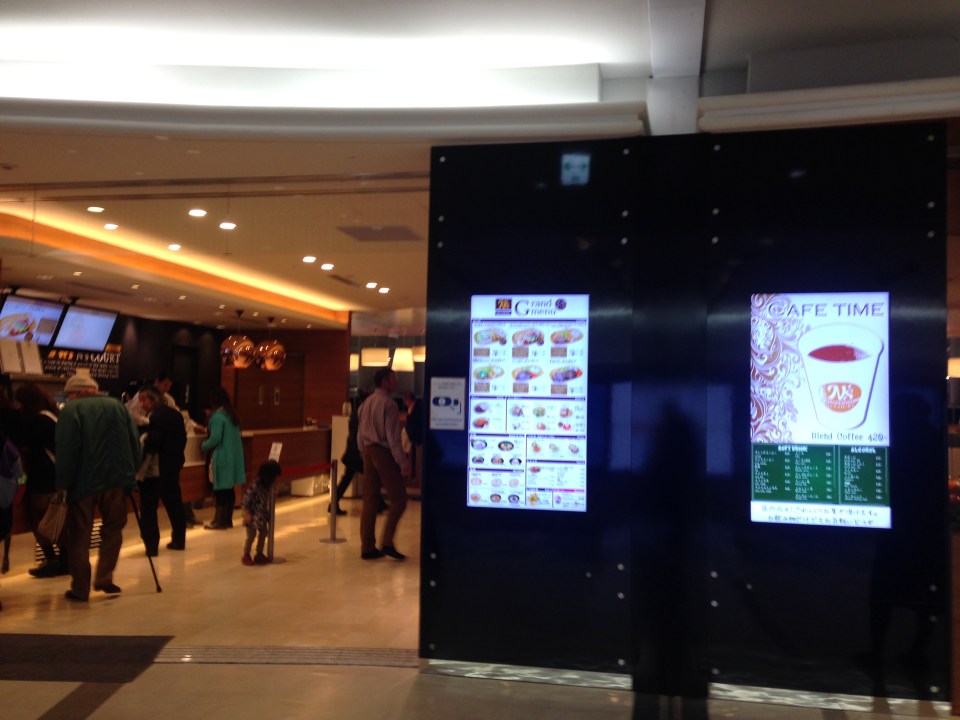 Info board on the various restaurants and cafes at Terminal 2.
 Display in front of one of the many restaurants at Terminal 2. These items on display are artificial but look good enough to eat.
 After going through immigration, passengers are greeted by more shops and cafes. Of course, there are always information boards to provide updates on flights. In many large airports, it is not uncommon for flight to change gates so passengers should always check if they are still boarding at the same gate provided to them upon check-in.
 Pre-departure area for our flight – our plane was actually parked somewhere in the wide tarmac of the airport and we were to be transported by bus from the terminal to our plane.
 A bus transported us to our plane.
 This meant we would have to use the stairs to board the aircraft.
–
Queuing at NAIA immigration
A lot of people get angry or feel aggravated when they arrive at Manila’s international airport and encounter the long, chaotic queues at the immigration section. This is particularly the cases at NAIA’s Terminals 1 and 2, which handle the most international arrivals among the 3 terminals. Terminal 3 has significantly less passengers despite it being the hub of Cebu Pacific, which currently enjoys higher passenger loads compared to rival Philippine Airlines but apparently serves less international passengers than PAL.
 Multiple queues seem to merge into one mass of people, all eager to get to a booth for their passports to be stamped. Early on, you will hear a lot of people already complaining about the queues and stating out loud how the system could be improved.
 Another photo showing multiple queues at the immigration section for arrivals at the NAIA Terminal 1.
The solution to this problem is quite simple and is actually already being implemented at the immigration section for departing passengers at Terminals 2 and 3. In both cases, there is only 1 queue for passengers that is served by several booths. This same approach to manage queues of arriving passengers is already being applied in many other airports elsewhere including Japan’s Narita and Thailand’s Suvarnabhumi where they have to handle even more passengers. Perhaps, also, a couple of booths and a separate line can be provided as courtesy to citizens of other ASEAN countries. There are such courtesy lanes in airports in other ASEAN countries, with whom we have existing agreements for visa free travels like Indonesia, Malaysia, Singapore, Thailand and Vietnam. An illustration of the system is shown in the following diagram:

I posted the figure above to be clear about the systems I’ve seen in other airports that worked quite well in being able to handle the large number of arriving passengers at the airports. It is more orderly and efficient, and to me at least, it is fair for all passengers who tend to shift to lines they think are moving faster but eventually are frustrated when the line turns out slower than their previous one. We’re hopeful that airport or immigration staff can improve the system and really soon as this will effectively cut down the times people spend at the airport terminals.
–
Another look at Narita Airport Terminal 1 – check-in and dining
Last year was quite fun in terms of the travels I made. After about 5 years I was back in Japan for a couple of trips. I decided to stay a couple more days in the last one last October so that I could go around and revisit some of my former haunts in Yokohama and Kamakura. Back at Narita’s Terminal 1, I took the opportunity to take more photos at the departure area.
 Entrance to the North Wing of Narita Airport’s Terminal 1.
 Information counter and automated check-in machines with a mosaic column as backdrop.
 Automated and manual check-in counters at Narita Terminal 1.
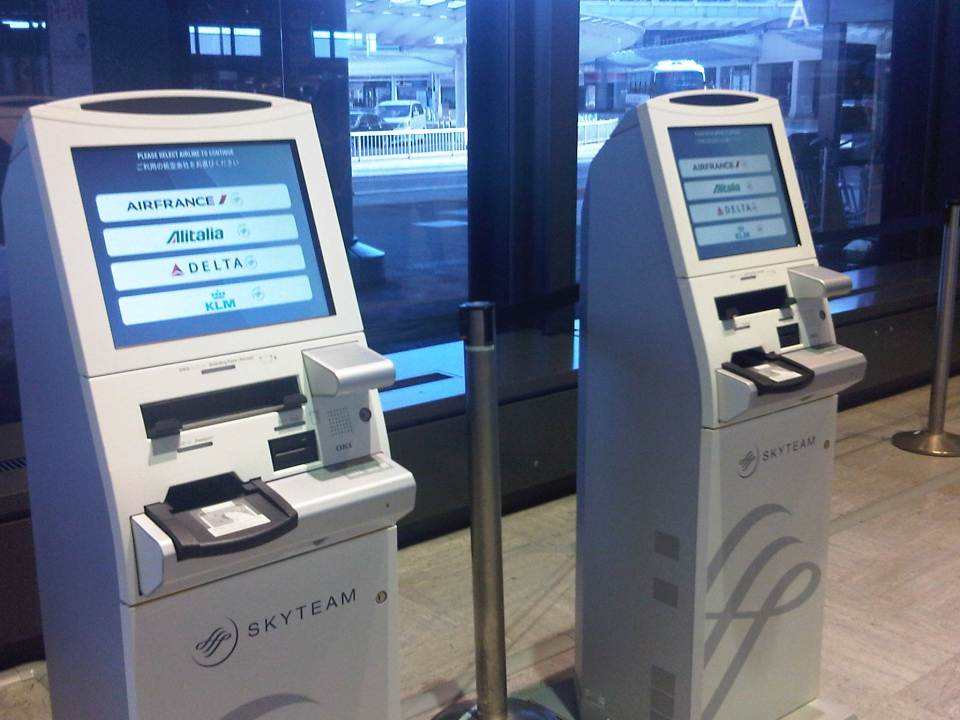 Automated check-in machines for Skyteam member airlines (e.g., Air France, Alitalia, Delta and KLM).
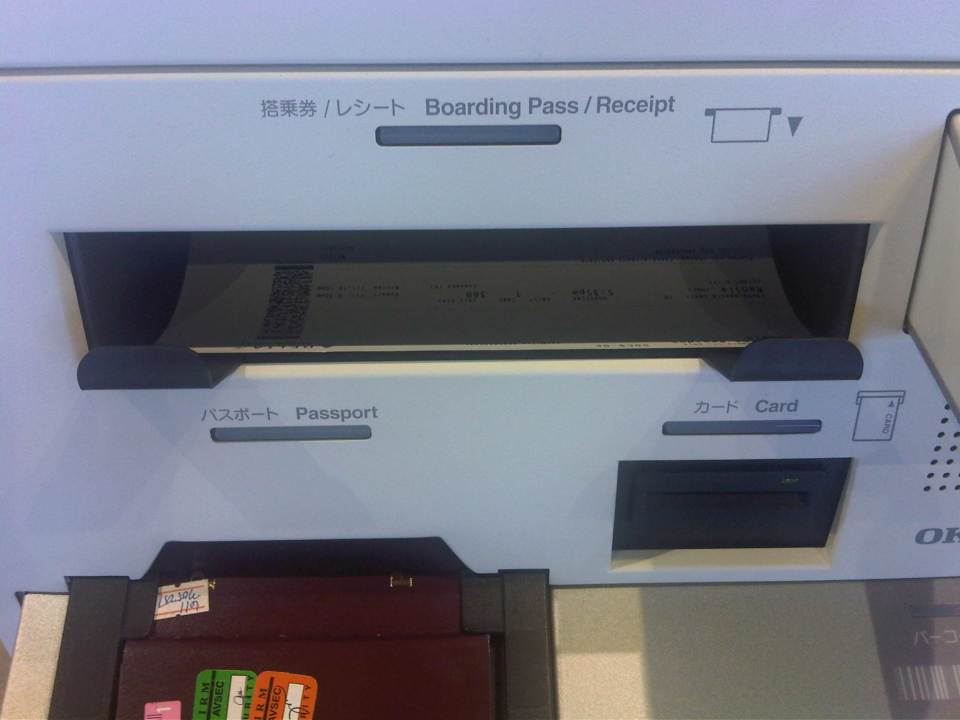 Automated check-in machines at the terminal scan your passport and retrieve electronic ticket information. You can select seats using the terminal and it will issue your boarding pass. You can also upgrade your seat using the machine but you would have to pay for the upgrade using your credit card.
 Weighing scales are available for passengers to be able to check if their luggage are within weight limits.
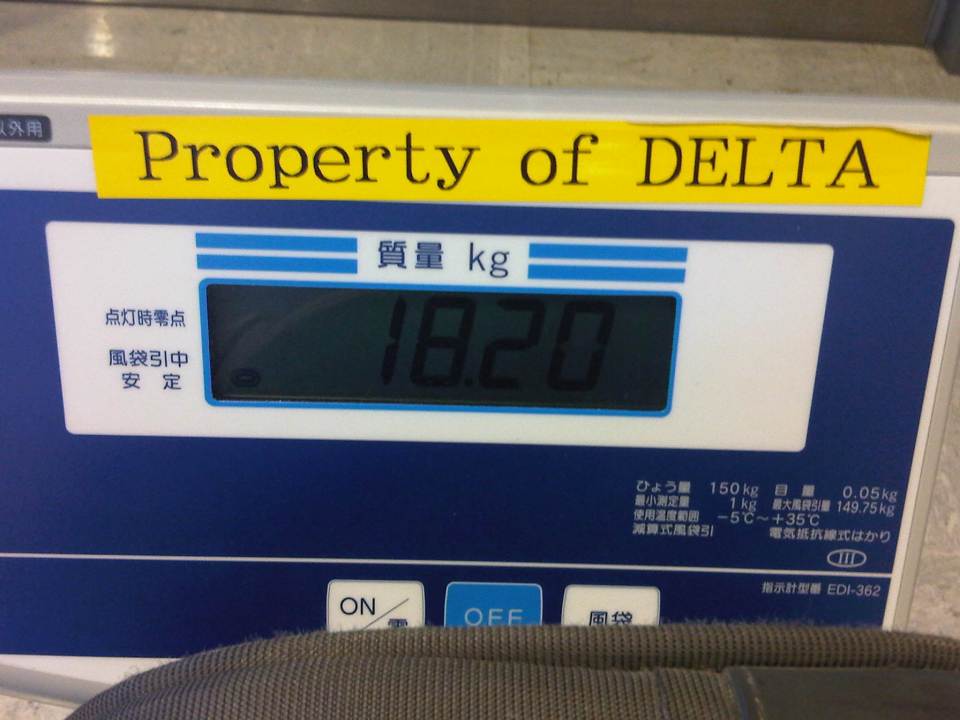 My luggage was well within my 23 kg (50 lb) limit. I like to assume that’s because I’m good at packing my things and estimating how much my bags weigh.
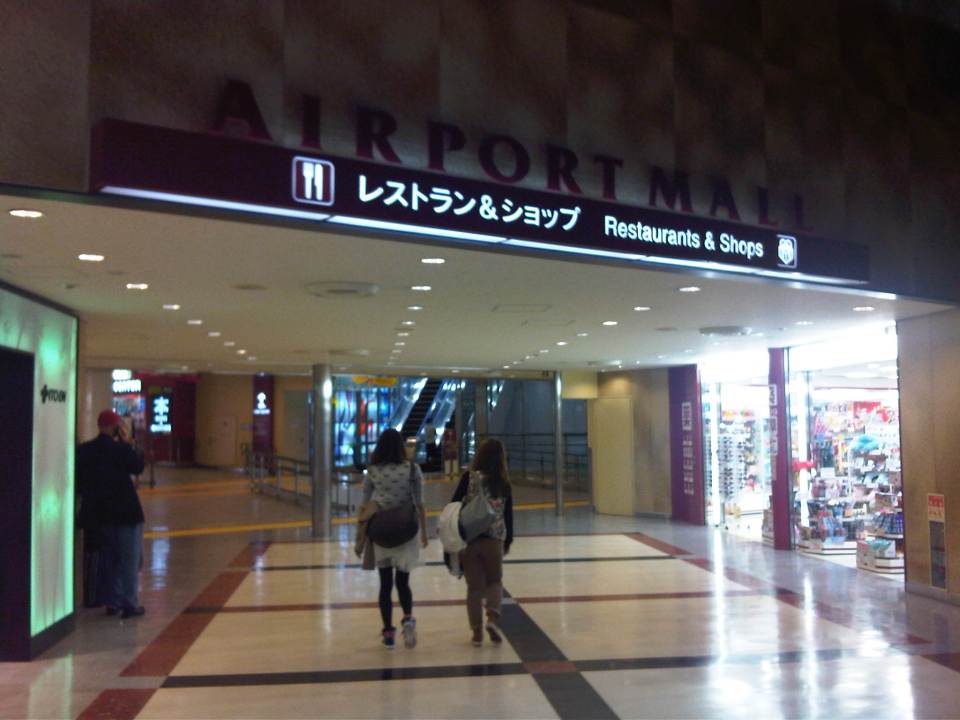 Entrance to restaurants and shops inside Narita Terminal 1. Tip to travelers: the convenience store on the right sells all those special KitKat chocolates that you can only buy in Japan (e.g., Green Tea, Strawberry, etc.) at slightly lower prices than other stores.
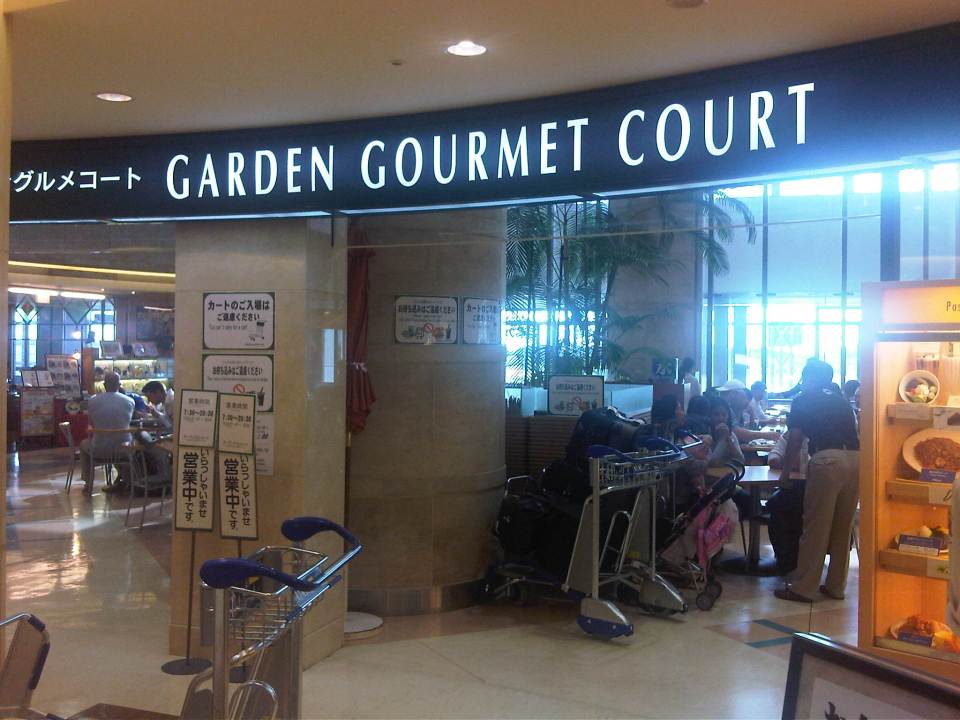 The Garden Gourmet Court provides many choices for the hungry traveler.
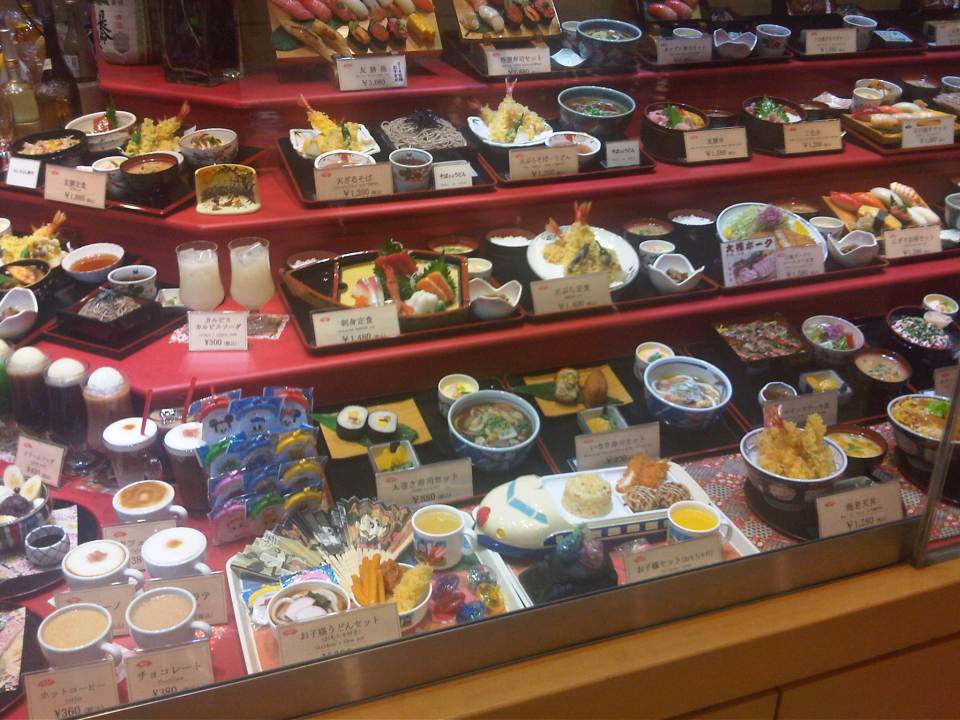 There are also more exclusive restaurants at the airport where travelers, especially tourists, can experience and enjoy Japanese food.
 The last time I was at the food court, I went for the ramen so I decided to try out another stall.
 I opted for this one that seemed popular enough judging with the number of people who bought lunch there. When I’m traveling, I’ve learned to first observe which restaurants, stalls or shops seem to have more customers especially locals. That is usually an indicator of the quality of the food though some times its because of the prices (i.e., less expensive compared to others).
 The chicken karaage lunch set was okay but not as good as the ones I’ve had at the university shokudo or obento shop. I guess the saying “you get what you pay for” applied here. Next time, I’ll stick to the ramen shop.
 Narita has an observation deck where travelers, their companions or the general public can sit around and maybe watch the aircraft taxiing, taking off or landing at the airport.
 Delta airlines plane docked at Narita Terminal 1 – those are solar panels installed at the terminal rooftop.
 It’s pretty windy at the observation deck and this time of year when it’s wintertime in Japan, it would definitely be cold here.
–
New parking rates at NAIA
Here’s something for those who are parking at any of the Ninoy Aquino International Airport’s parking facilities. Here are a few photos showing the new parking rates at NAIA, effective December 1, 2013. Gone are the flat rates of old for those picking-up relatives or friends so it actually discourages people from camping out at the parking lots. Gone, too, are the low overnight parking fees of PhP 50 per night that a lot of people enjoyed for short trips on business or as tourists in local destinations or abroad.
 Information on new parking rates at NAIA effective December 1, 2013 found along the left side of the approach to the parking lot entrance.
 Announcement on the new NAIA parking rates just before the entrance booths of the lot
 Information on the new parking rates at the exit of the lot and just before the payment booths.
It goes without saying that with the increased parking fees at the NAIA, people would expect more in terms of the quality of these facilities particularly pertaining to security and cleanliness. One cannot expect to pay for PhP 300 per night for an open parking space where one’s vehicle is exposed to the environment as well as to possible criminal elements lurking about. Of course, there is practically no competition for these parking facilities so there is a sizable captive market for NAIA parking. In my experience, and in fairness to airport management, I have not had any untoward incidents when I did leave our vehicle at the parking lots of Terminals 2 and 3. And I have done so many times before on trips to the Visayas and Mindanao, and a couple of times on trips abroad. I hope others, too, won’t have any problems with parking at the airport.
–

