
Home » Airports (Page 18)
Category Archives: Airports
On the increase in overnight parking fees at NAIA
I’ve been reading some posts on social media complaining about the increase in the overnight parking rates at the Ninoy Aquino International Airport (NAIA). This seems to be a recent development considering the last time we used any of the parking facilities of NAIA was last November 23 when the wife parked to wait for my arrival at Terminal 2. It wasn’t overnight parking but then she said she doesn’t recall seeing any signs announcing changes in the parking rates. The posts I saw through Facebook are for overnight parking at Terminal 3 where the old charges were 50 PHP (about 1.14 USD) per day. This is actually very cheap even considering that parking is on an open lot with marginal security. Even parking lots in Makati, Taguig and Ortigas charge more for overnight parking on open lots.
The new rate is basically 300 PHP per day including taxes, which apparently surprised a lot of people after everybody got used to the 50 PHP/day rate of old. That meant that for a 3 night trip to Bangkok or Singapore, for example, where people left their cars at the airport, they had to fork over 900 PHP instead of the 150 PHP they used to pay for parking. Indeed, that’s a big jump in parking fees!
NAIA’s parking rates can be compared to the parking rates at the Los Angeles International Airport (LAX) is provided in their website. 30 USD (about 1,315 PHP) is charged for 24 hours for use of the multi-level/covered parking structures at the airport. Meanwhile, open lot parking charges 12 USD (about 526 PHP) per day. Suddenly, NAIA’s parking charges don’t seem to be expensive beside the 526 PHP/day charge at LAX. However, these rates are arguably in a country where there are higher wages and standards of living and so perhaps a fairer comparison would be for parking in a major airport in ASEAN. Doing a bit of research online, I found that Bangkok’s Suvarnabhumi International Airport charges the equivalent of about 341 PHP per day for parking. Singapore’s Changi charges the equivalent of around 701 PHP per day. And Kuala Lumpur International charges the equivalent of about 575 PHP per day for parking. [Note: Rates from the link may not be updated.] These are generally for multi-level parking buildings where vehicles are practically protected against the environment (e.g., rain, sun, etc.).
A comparison is also made for the nearby Park n’ Fly facility, which also publishes their parking rates in their website. The site of the private parking provider states a rate of 340 PHP + EVAT (taxes) per day. And this is for a multi-level, covered parking structure near NAIA Terminals 1 and 2. An argument can be made here for the location and proximity of NAIA parking spaces compared to Park n’ Fly but note that the fee for the private entity includes airport transfers with their own vehicle. Compared to this, the NAIA rates are quite expensive considering that it is for open lot parking and for what is perceived as marginal security. In fairness to airport parking security, I have not heard or read about incidents of burglary or stolen vehicles in relation to NAIA parking areas.
And so there are many questions that need to be answered in as far as the sudden and steep increase in parking rates at NAIA. The most important question here is what is the basis for the parking rate increase? It is assumed that the additional monies generated will cover certain expenses like security and maintenance. So there needs to be transparency in where the additional funds will go or how it will be allocated (e.g., repair works towards ultimately opening the multi level facility at T3). Also, perhaps the information dissemination for this rate increase was lacking and therefore ineffective in advising the public about the change. But then there was generally no major uproar over the increase so perhaps those complaining weren’t paying attention or were caught in the transition to the new parking rates. One can even say that certain posts in social media can be qualified as rants rather than objective takes on parking rates.
I would like to think that parking as an amenity should not generally be a revenue generating scheme for the airport. Collected fees should cover operating expenses and excesses can be used to build a trust fund, for example, for future expansion of the facility, but the latter should be clearly spelled out in a plan for the airport. After all, it is in the best interest of the public, the users of the airport, if improvements can justify what they are paying for and how much they are paying.
–
NAIA Terminal 2 international check-in
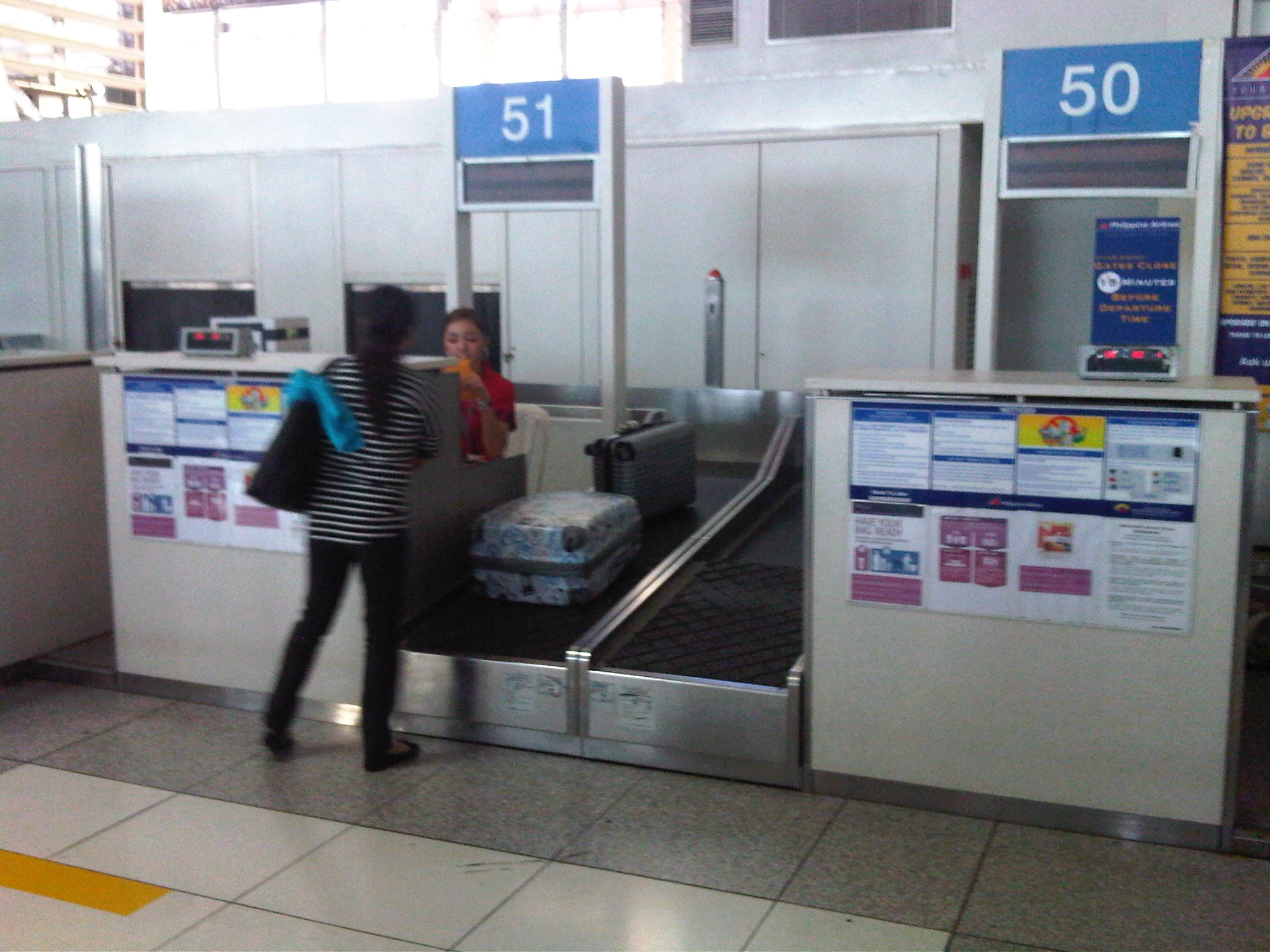
I took a few photos near the check-in counters at NAIA Terminal 2 as I myself checked-in for a flight to Bangkok. There was less confusion now compared to the last time I used PAL for an international flight and their ground staff were relatively unexperienced. This was the result of PAL rationalizing their workforce and opting for outsourcing ground services prior to San Miguel’s takeover of the financially-challenged full service airline. During the transition period, queues were longer as service times at the check-in counters were longer. Ground staff took some time to process each passenger as perhaps they had little training (if any) and thrust into the real work provided an initial shock that translated into slower services.
 Passengers checking-in at NAIA T2. There are no internet check-in booths (for those who already checked-in online and would just drop-off their luggage) or automated check-in machines at Terminal 2. PAL needs to work on these services for more efficient services at the terminal.
 A single queue with multiple servers means more orderly services for passengers. This is actually something that Philippines immigration should implement in all airports whether for departing or arriving passengers. I don’t get it why for departures, immigration can implement this simple system resulting in more efficient processing for travelers while the same cannot be implemented for arrivals.
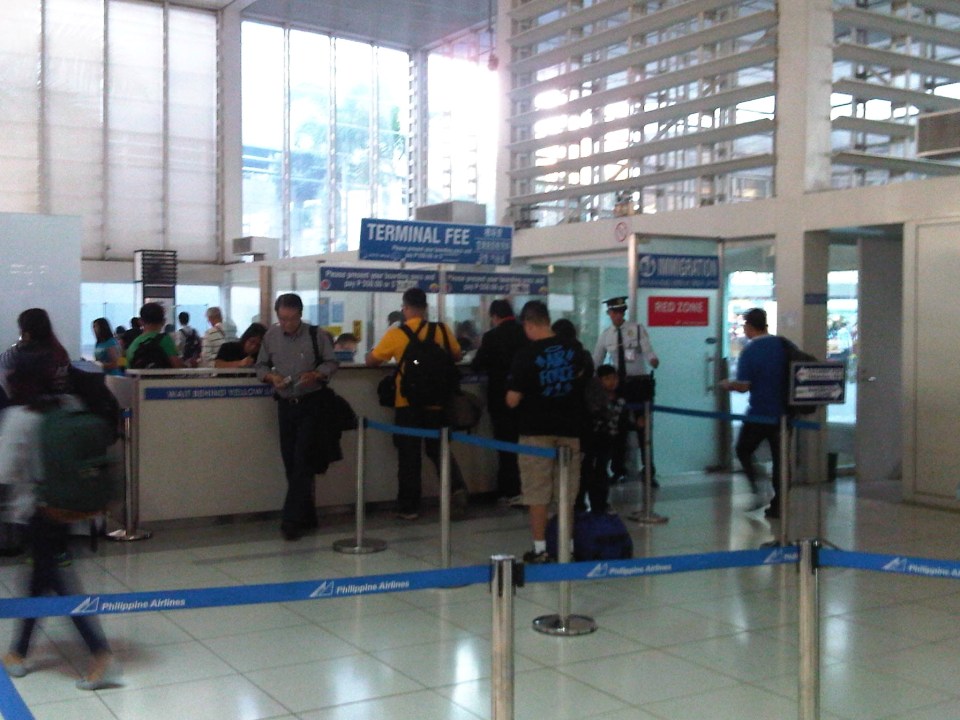 Passengers lining up to pay terminal fees. NAIA is one of very few terminals still charging terminal fees. Elsewhere, these fees (if any) are already integrated into the plane fares and so passengers don’t need to queue and spend time for another transaction.
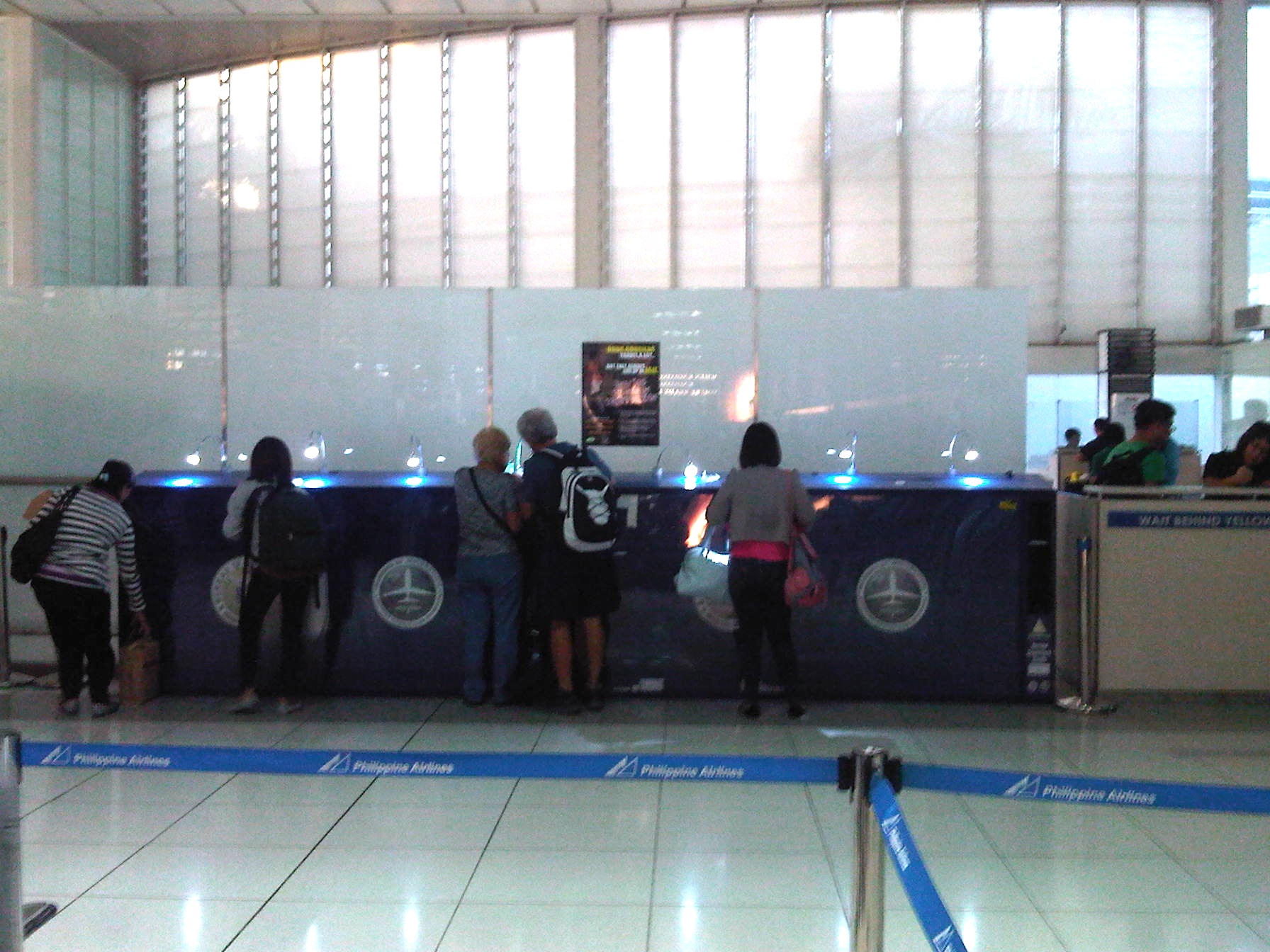 Travelers fill out immigration cards before lining up for the immigration counters. There are still many who seem oblivious to this requirement. While some are really the hard-headed type who end up stalling the queue, these people can easily be filtered by immigration or airport staff managing the queues.
–
Another look at the Iloilo airport – departure
I took the first flight out of Iloilo back to Manila during a recent trip to the city. I also took an opportunity to take some pictures of the terminal including the part when we lined up to enter the terminal. Security was strict (as is necessary for such facilities) so there was a single line to control the inflow of passengers. There’s nothing really new for departures except a few new cafes inside the pre-departure area. The shops prior to the final security check were still closed at the time so I could not do some final pasalubong shopping. I can only imagine that passengers directly bound for international destinations would need to pass through the immigration booths at the terminal.
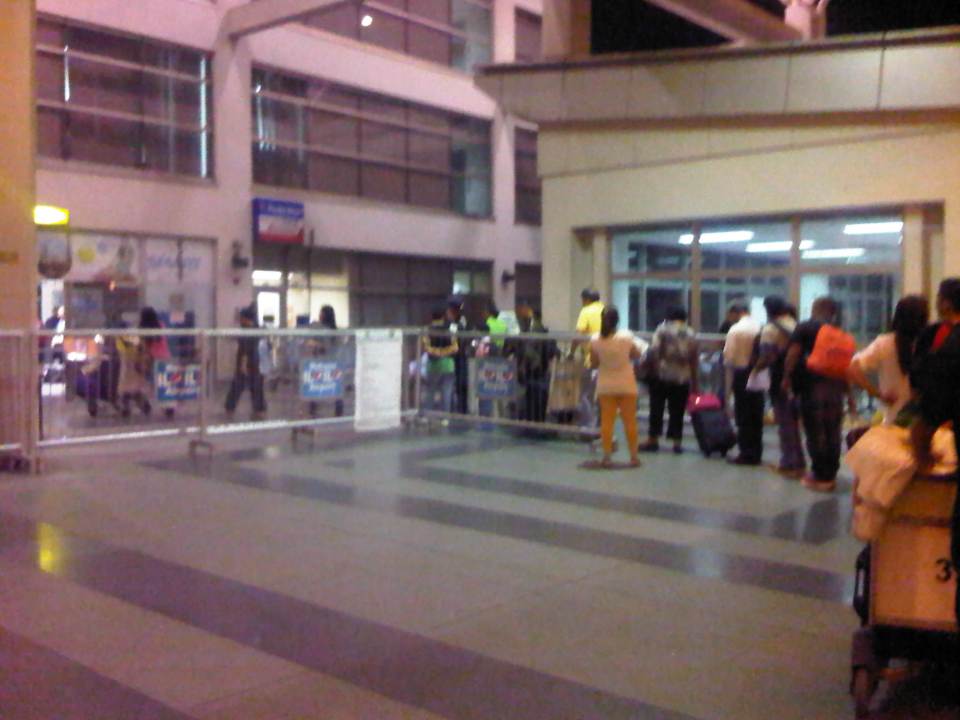 Queue of passengers entering the terminal – there was a single file for the initial inspection by airport security. Well-wishers are not allowed inside the airport unless there is prior clearance from the airport authorities.
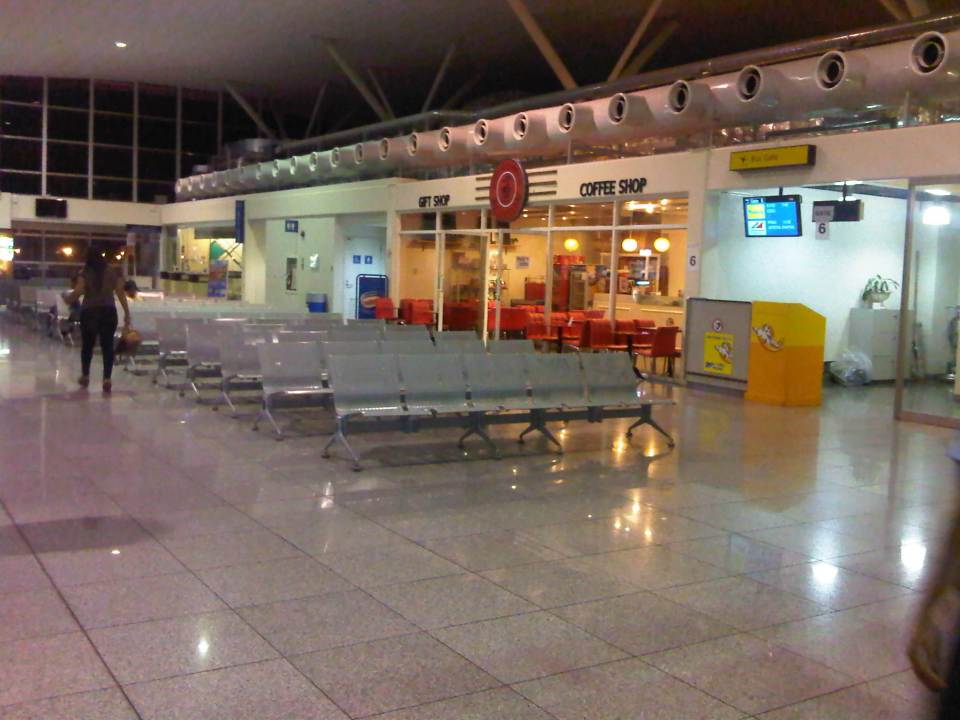 North wing pre-departure area – the shops were already open early in the morning
 A glance back to the center of the terminal where passengers emerge from the final security check.
 Passengers catching an NBA post-game interview while waiting for the boarding call.
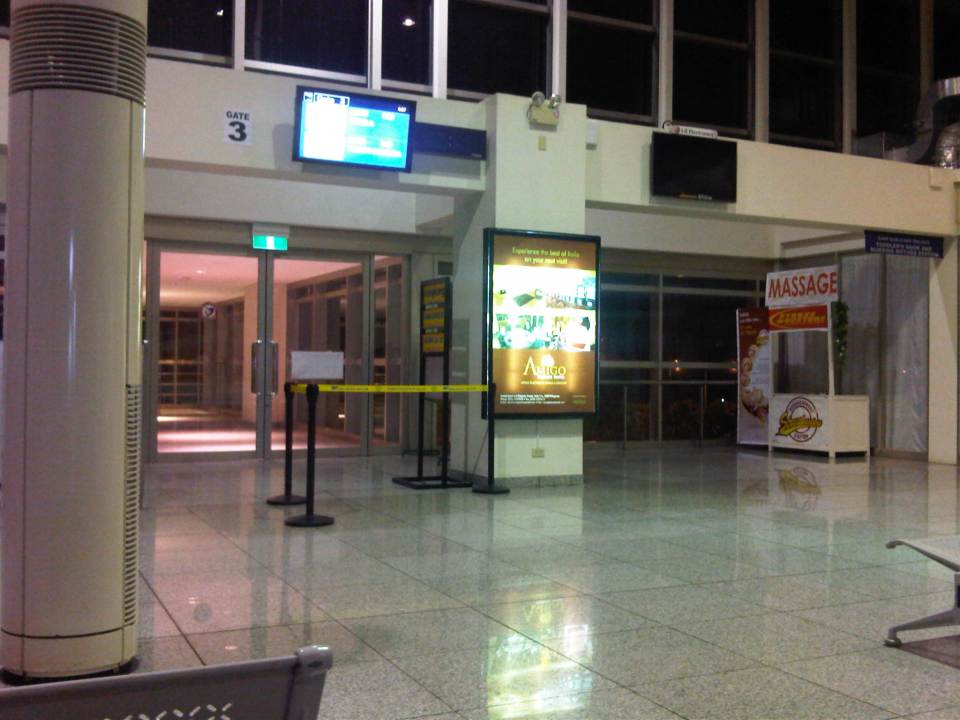 We were initially assigned to board at Gate 3 of the airport terminal.
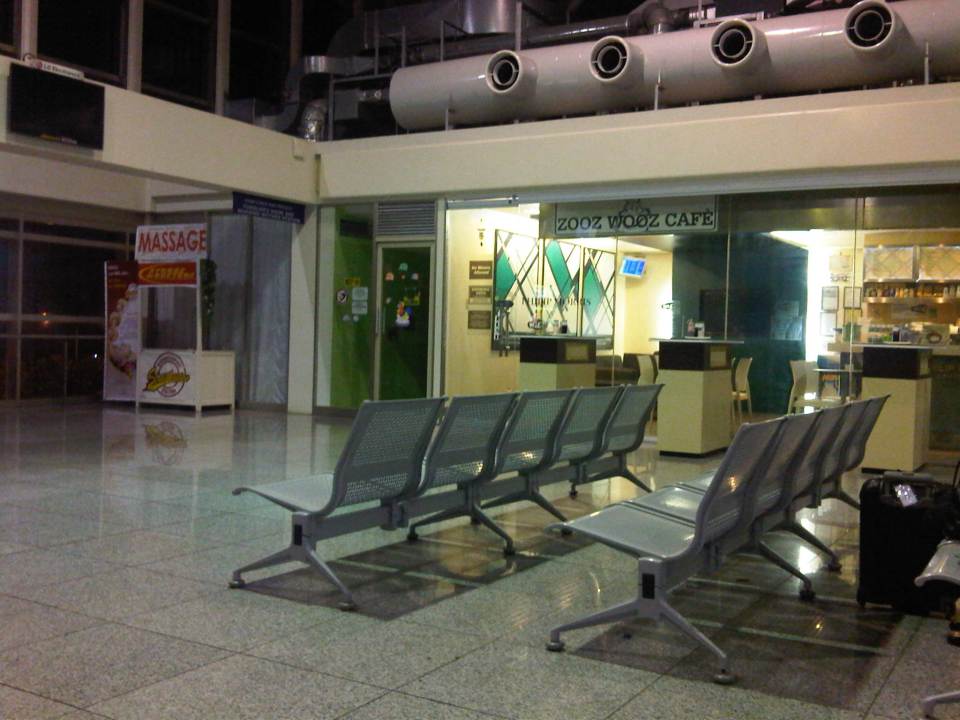 Cafe near Gate 3 that is also designated as a smoking area.
 Later, we were transferred to Gate 5 at the other end of the terminal.
 Waiting passengers seated facing Gate 5. There are also cafes and fast food line along this terminal wing.
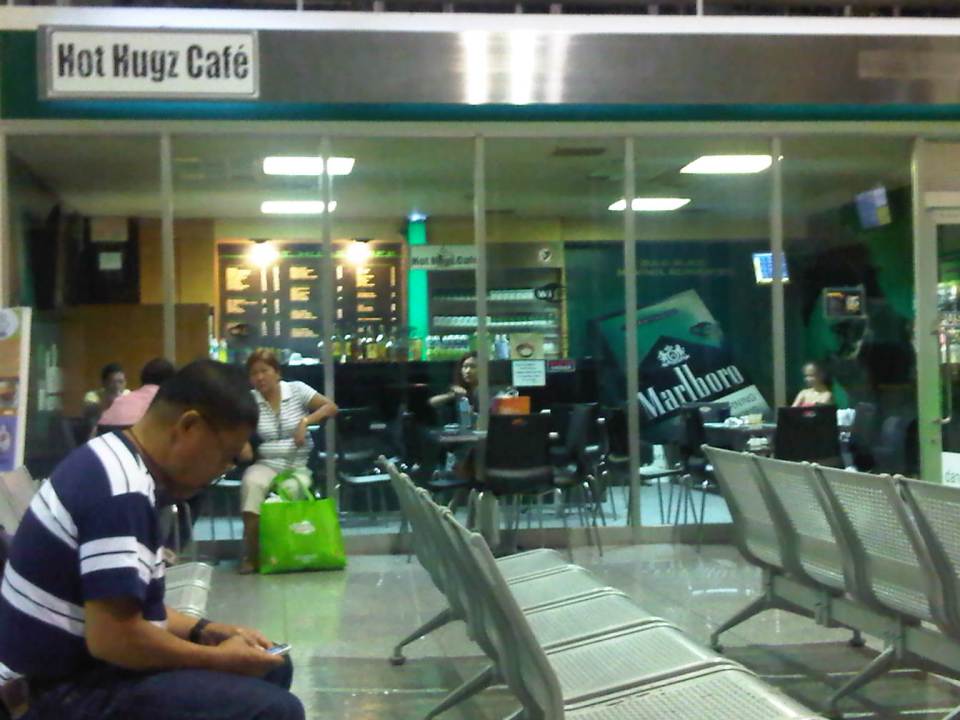 Designated enclosed smoking area near Gate 5.
 Fellow passengers walking on the bridge towards our aircraft.
 The first flight out of Iloilo to Manila is via Cebu Pacific. The second flight is via Philippine Airlines whose plane is shown unloading baggage as it arrived as we were boarding our aircraft.
 View inside the tube as we proceeded to board our aircraft.
–
Another look at the Iloilo airport – arrival
I have not been to Iloilo in a while despite having our ancestral home there on my father’s side of the family. It used to be that I was in Iloilo at least once a year and usually during the Holy Week when we had family reunions on Easter Sunday. Perhaps the last time was in 2010 when I gave a keynote lecture to the Metro Iloilo, Guimaras Economic Development Council (MIGEDC) during one of their last seminars under a JICA-assisted project to improve transportation in the area. And so I was quite happy to have an opportunity to travel to Iloilo even for a short stay to have a meeting and do some field work. I was also happy to have an opportunity to take some new photos of the airport, which is now serving as an international airport with regular flights to and from Hong Kong and Singapore.
 Arriving passengers pass through a corridor after disembarking through one of the three tubes at the terminal.
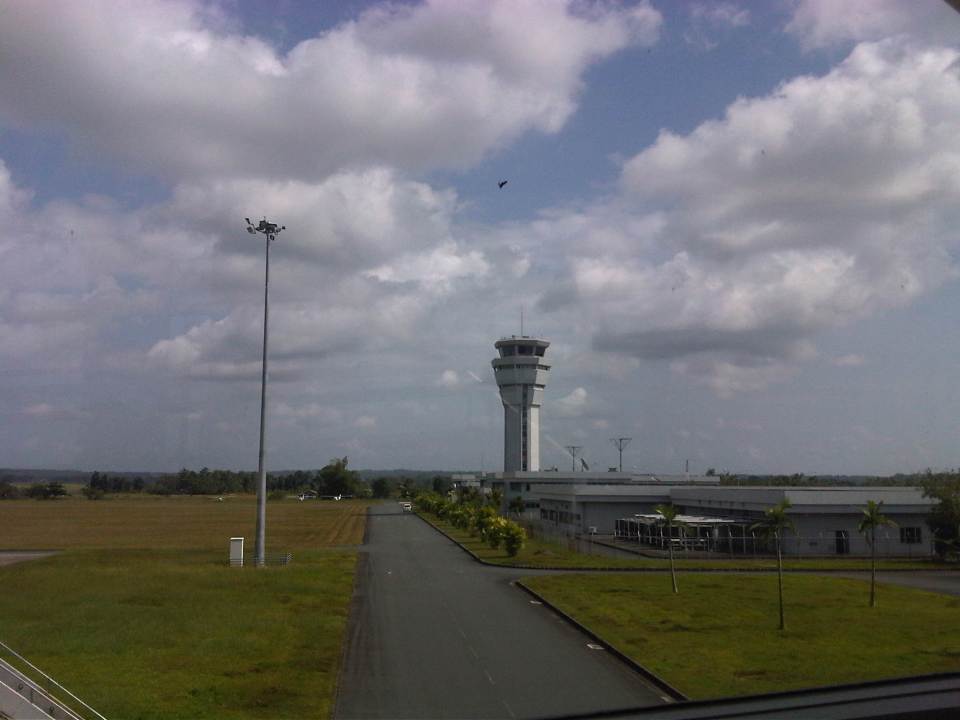 The Iloilo International Airport’s control tower as seen from the terminal building.
 Direction to the baggage claim area.
 Quarantine section along the way to baggage claim.
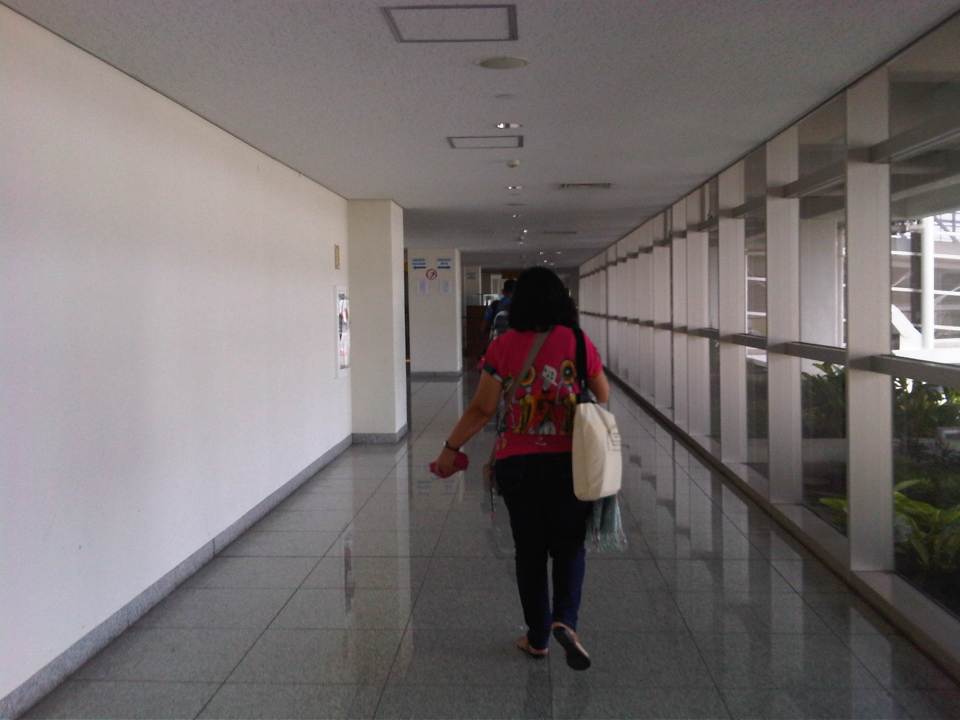 The corridor leads to a section allocated for immigration for international arrivals.
 The immigration booths are manned only when there are international arrivals. Most of the time, these are unmanned as most flights throughout the day are domestic.
 The booths look like they were set up only recently when the airport started catering to international flights. There were only two stations, each with a capacity for 2 immigration officials for a total of 4 officers to process international arrivals. I hope they are able to do their jobs efficiently (i.e., quickly but correctly) as the space for queuing is quite limited. There are few international flights, however, and one A319 or A320 planeload would probably not overwhelm 4 officers. Of course, I am assuming there would be that many officers to handle the arrivals.
 After going through the immigration area, one proceeds towards the baggage claim area via a staircase, which leads passengers to the ground level of the airport terminal.
 There are 2 baggage carousels where arriving passengers can get their checked-in luggage. Carts are provided free for use of passengers.
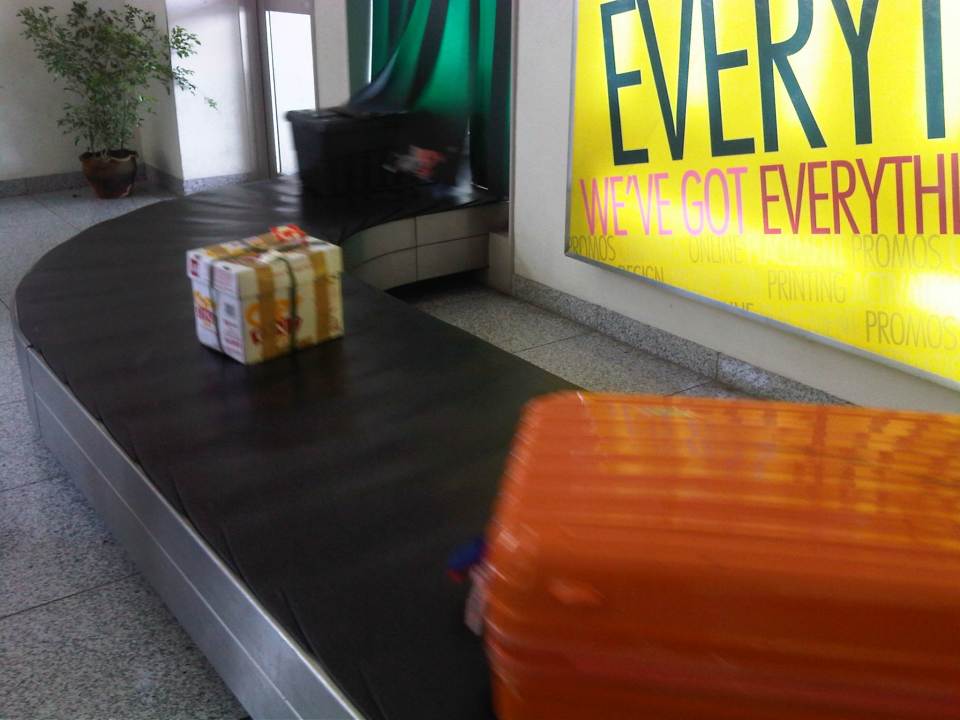 Luggage of all shapes and sizes are loaded unto the carousel and circulate for passengers to sort through and pick up.
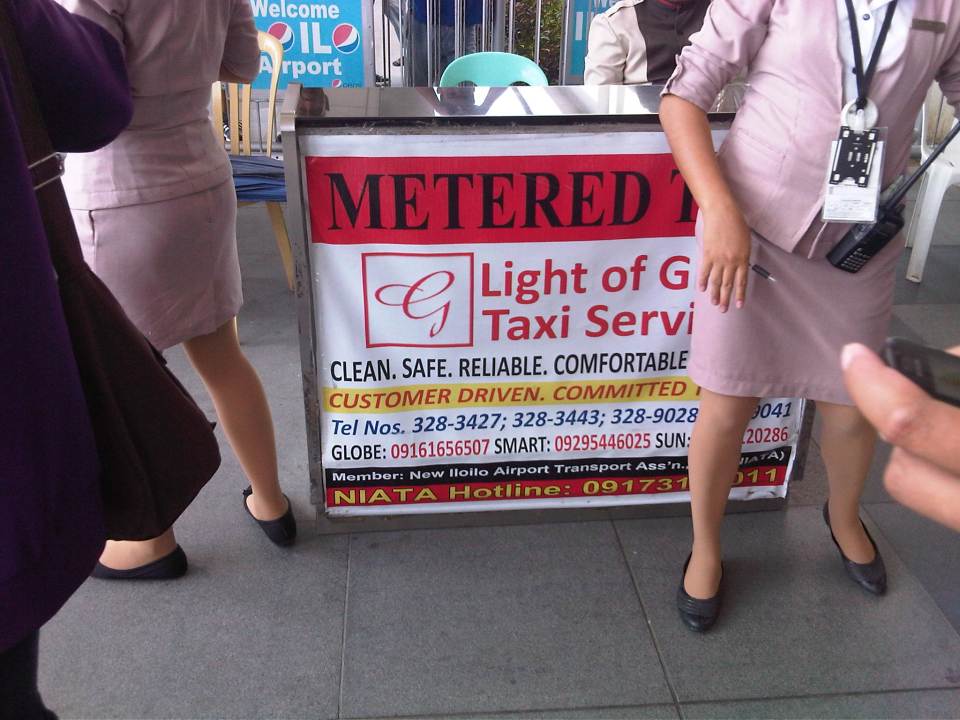 When in need of trustworthy and reliable transport in Iloilo, contact Light of Glory taxi service. Their metered taxi services are the best in the city and the province it is easy to arrange for a vehicle to fetch you at the hotel to any destination within the island. Their drivers practice safe driving so that’s always a plus for those who prefer to take the taxi over the jeepney when in Iloilo. I also noticed that they have a good dispatching system at the airport and at SM City Iloilo – definitely something that we should be replicating in Metro Manila and other cities.
–
NAIA T3 shops and eats
I had wanted to post about airports again but the aftermath of Typhoon Haiyan and the continuing efforts for relief in places affected by the typhoon made me hesitate a bit from doing “business as usual” writing. The past few days though I have seen a demand for information on NAIA Terminal 3 and so I decided to complete an unfinished draft on T3 to add on the information out there on shopping and eating/drinking at T3 once the passengers have passed through the final security check and proceeded towards their respective gates for pre-boarding.
We were at Ninoy Aquino International Airport’s Terminal 3 last month for a flight to Iloilo. I took some new photos to come up with an update to the pictures I’ve posted in the past on T3.
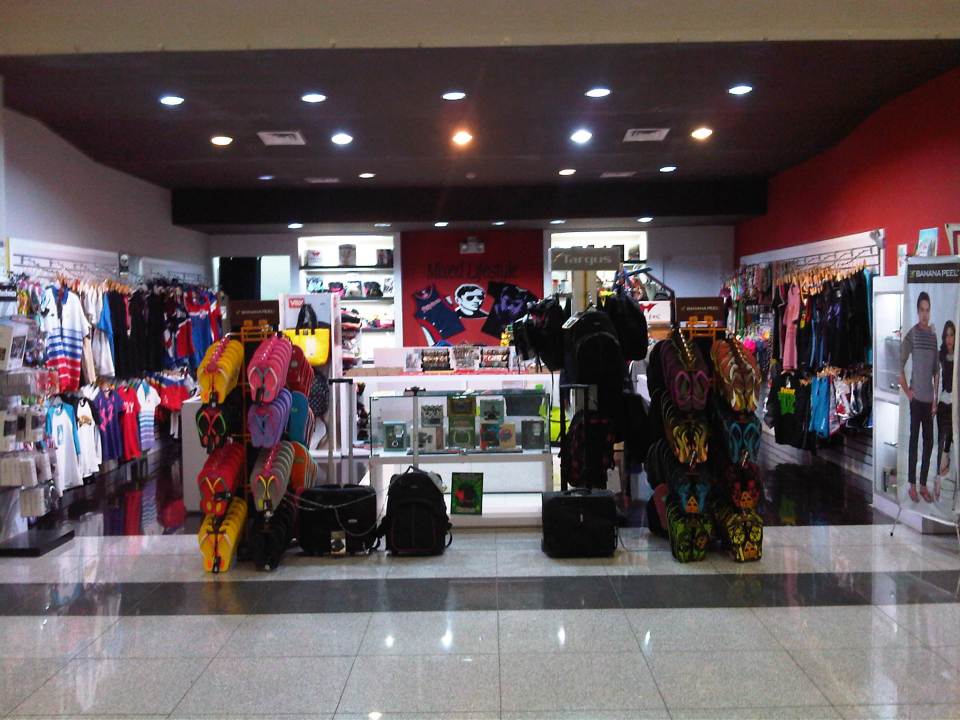 There are many souvenir shops at NAIA T3 including those selling flip flop sandals, shirts, swimwear, electronics, luggage and various accessories.
 There seems to be a lot more options for eating or perhaps sipping a hot cup of coffee or tea while waiting for your boarding call.
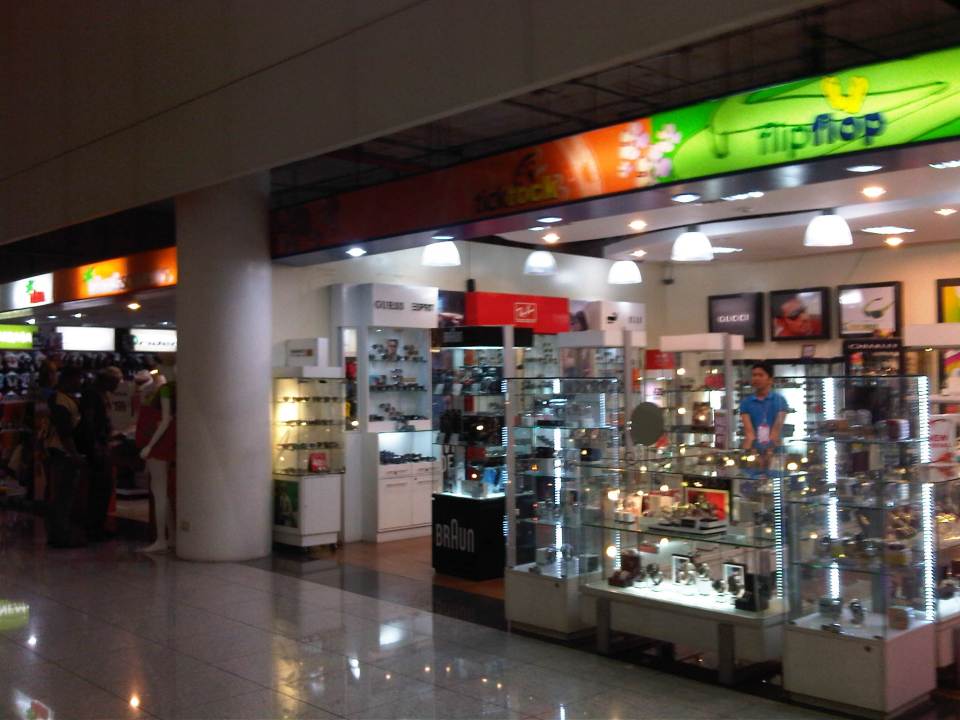 There’s a shop selling eye wear (sunglasses anyone?), electric razors and watches.
 A popular souvenir shop for shirts is Islands Souvenirs. They have shops or stalls all around the country with each basically selling only designs attributed to the city or island where the shop is set-up. That means Cebu shops/stalls basically sell Cebu-themed shirts, Iloilo shops/stalls sell Iloilo-themed merchandise, and so on. The shirts they sell are of very good quality and don’t shrink after you wash them. I have quite a number of shirts (I used to collect them from my travels.) so I can attest to the quality of their products.
 “Pondohan” translates into neighborhood “store” or “shop.” It is also more commonly called “sari-sari” store with the term “sari-sari” meaning “variety” and referring to the merchandise being sold at the store.
 This stall offers quick meals as well as pasalubong in the form of their take on popular kakanin or rice cakes or puddings. Friends say they also have good coffee.
 Colleagues of mine having a quick meal before our morning flight to Iloilo. Beside them are directional and information signs of PAL and Ceb Pac.
 We found that there were already other shops and cafes/eateries along the way to the boarding gates at one end of the terminal. I guess with more passengers now using T3, there is also more demand for shops and options for eating at the airport’s pre-boarding areas (i.e., near the gates of this linear terminal building).
–
Musings while waiting for a delayed flight at Suvarnabhumi Airport
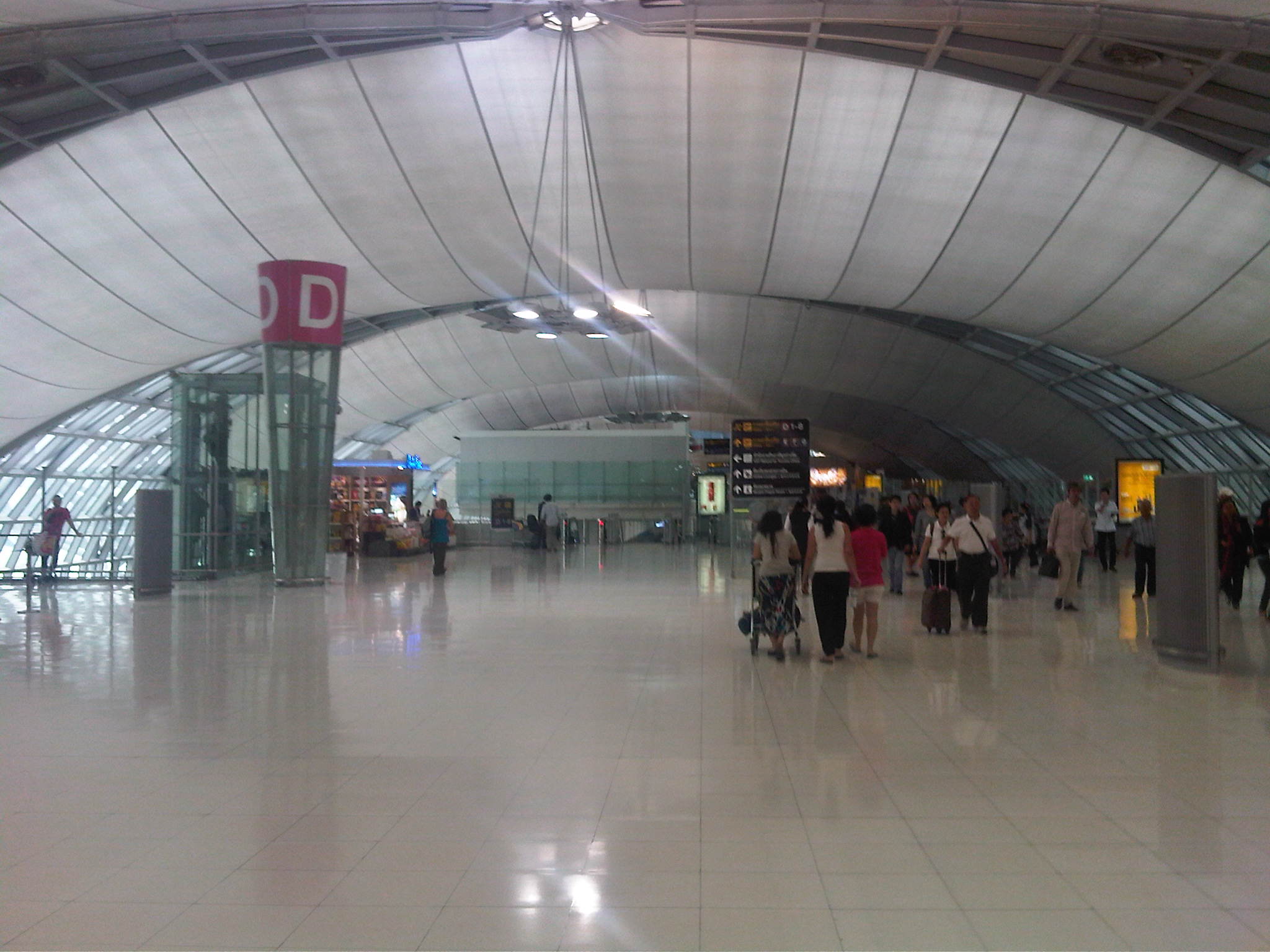
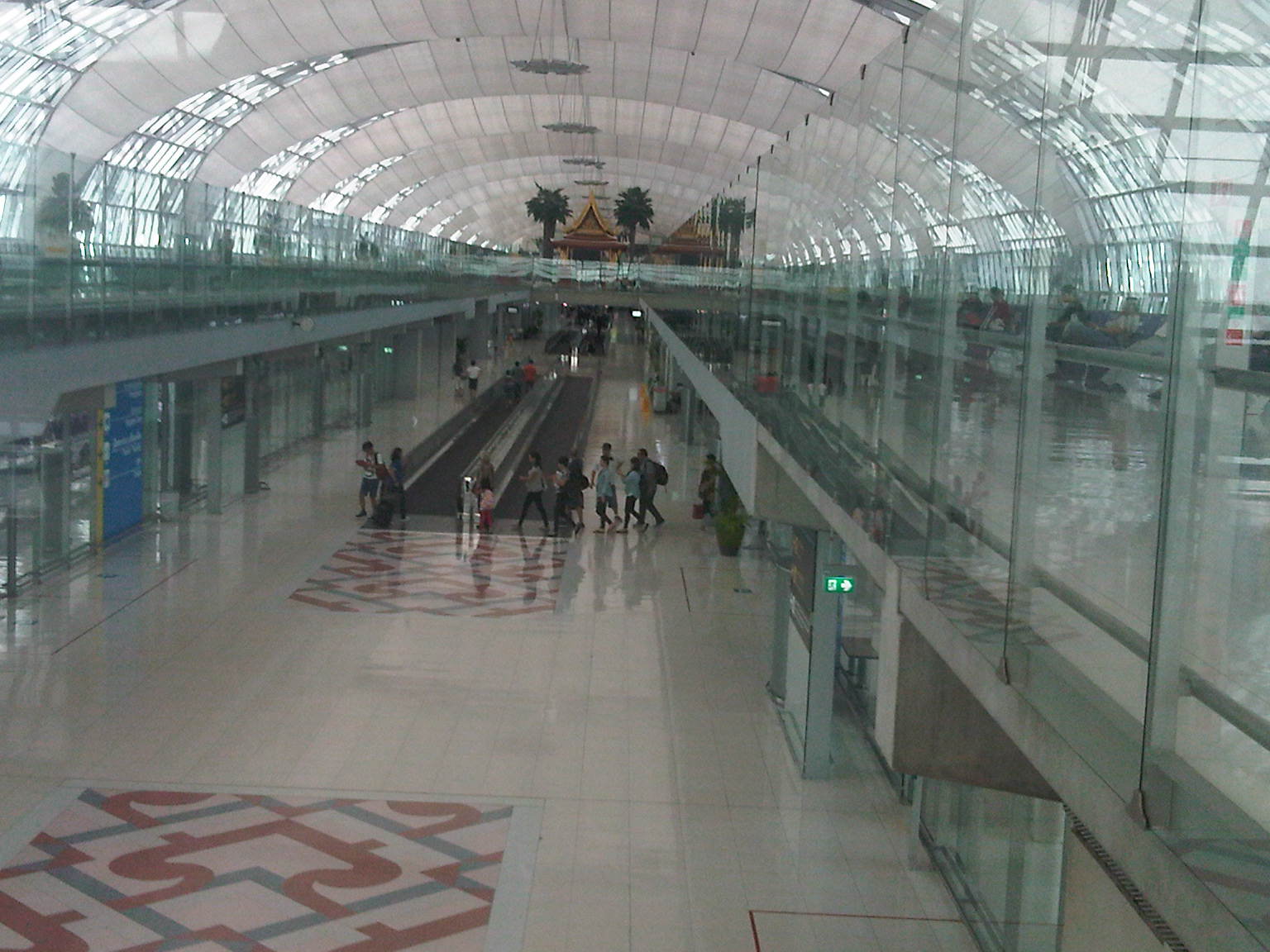
I’m writing this short post as I wait for our overly delayed flight back to Manila from Bangkok. Next to Changi, this is my next favorite airport and I always marvel at the expanse of the terminal everytime I am here. There were management or operations issues when the airport was newly opened (I think I have a post on this years ago) but I guess these have been resolved. Here’s a few photos of Suvarnabhumi International Airport I took while walking away the time until we board the plane.


–
#ReliefPH: Access and needs in many other places
The buzz on the streets and on social media is the focus on Tacloban, Leyte when vast areas and many other towns and provinces have been ravaged by super typhoon Yolanda (Haiyan). This seems unfair to other cities and municipalities considering Yolanda made 6 landfalls at or near peak strength (as a Category 5 typhoon) with winds topping 225 kph and generating destructive storm surges as it hammered through the central Philippines.
If you have Facebook, one provincial government staff has posted a lot of photos describing the situation in the northern towns of Iloilo where the destruction caused by the typhoon is very clear and to many, still unimaginable. These photos along with all others that can be Googled, Yahooed or found via other search engines or news agencies show the extent of the damage brought about by Yolanda.
Some people say that the islands of Cebu, Panay, Negros and Mindoro are fortunate as principal cities in those islands like Cebu City, Iloilo City, Bacolod City, Dumaguete City and Calapan City were relatively undamaged. This is also true, and so the airports and ports in these cities provide direct access to the islands for relief work. Moreover, government agencies and private entities have been able to organize relief activities through these cities and based on various news reports, it looks like a lot of people are already involved in these activities. That goes without saying that more people are still needed to be involved in various capacities for relief, rehabilitation and reconstruction work that are expected to be undertaken over a longer term considering the extent of the damages to towns. But given the circumstances for the said islands, there is no excuse for more rapid aid not being able to reach the affected towns in these provinces. In fact, much more is expected where accessibility is no longer an issue and so faster recovery is possible for Panay, Negros, Cebu and Mindoro. In the cases of Cebu and Bohol, it is important to remember that the provinces already are also still reeling from the impacts of the Magnitude 7.2 earthquake that occurred only a few weeks ago.
On another note…Tacloban Airport is still closed to commercial aircraft but the land routes via RORO or the nautical highways are open to traffic or operational. I think the quickest way to Leyte is via the route from Cebu. There are regular RORO and Supercat services between Cebu City and Ormoc City in Leyte. There are other maritime transport services from Bogo City in northern Cebu but I am not sure those services are back to normal. Then there are also access via the Eastern Nautical Route via the Bicol Region and crossing over to Samar Island (Allen) via Matnog, Sorsogon. Many roads still need to be cleared but the main highway (Pan Philippine Highway) including the San Juanico Bridge that connects the islands of Samar and Leyte.
–
YCAT – Yokohama City Air Terminal
The Yokohama City Air Terminal (YCAT) is one of two city air terminals in the Kanto area, the other being the Tokyo City Air Terminal (TCAT). I have used both in the past including my first trip to Japan where I was instructed to proceed to TCAT where I met with a good friend of mine who took me to the university I was visiting. The second time I went to Japan, I proceeded to YCAT where eventual friends also fetched me to go to the university where I was to study for 3 years. On this sentimental journey of sorts, I made sure to take a few photos at the YCAT, which I chose over my usual Yokosuka-Sobu Airport Narita train between Yokohama and the airport.
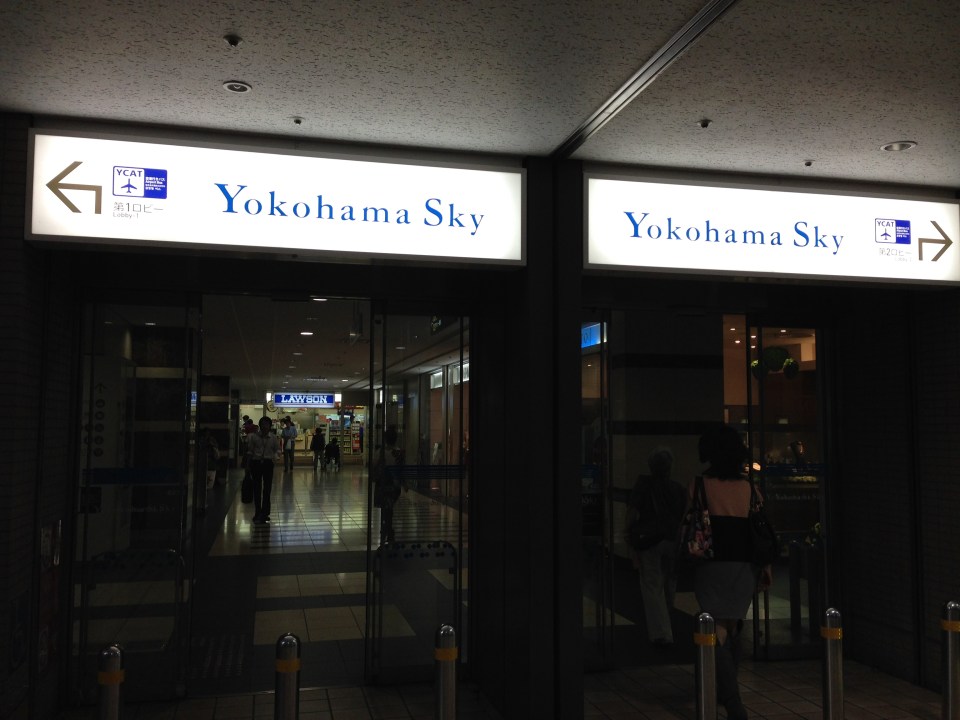 The YCAT is located at the Sky Building, which used to be the tallest building in Yokohama. The building is connected to Yokohama Station (East Exit). Proceeding left takes one to the departure lounge where people can purchase limousine bus tickets. To the right is the arrival lounge where people can wait for passengers arriving from either Haneda or Narita via limousine bus.
 Main entrance to the YCAT right next to a popular coffee shop. Here, one can purchase tickets for Haneda Airport or Narita Airport, exchange currencies and even make some last minute souvenir shopping.
 There are also many vending machines for those who just want a quick hot or cold drink.
 Airport limousine bus tickets can be purchased at these counters. The electronic boards provide information about bus schedules between YCAT and Haneda or Narita Airport. There is also a Travelex counter for currency exchange and a Western Union counter for sending or receiving money transfers.
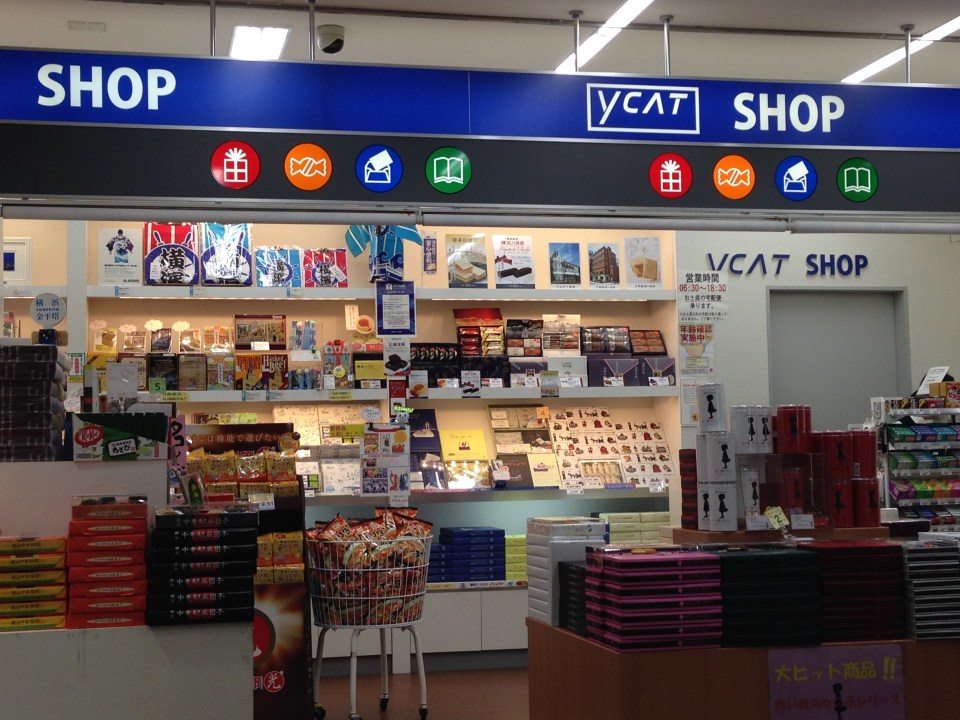 One can make some last minute shopping at the YCAT shop.
 Coin lockers for travelers who might just want to keep their luggage secure while spending a little more time in the area for a meal or some shopping. Note that YCAT is located at the Sky Building, which is connected to shopping malls and Yokohama Station.
 Airport flight information for departures and arrivals.
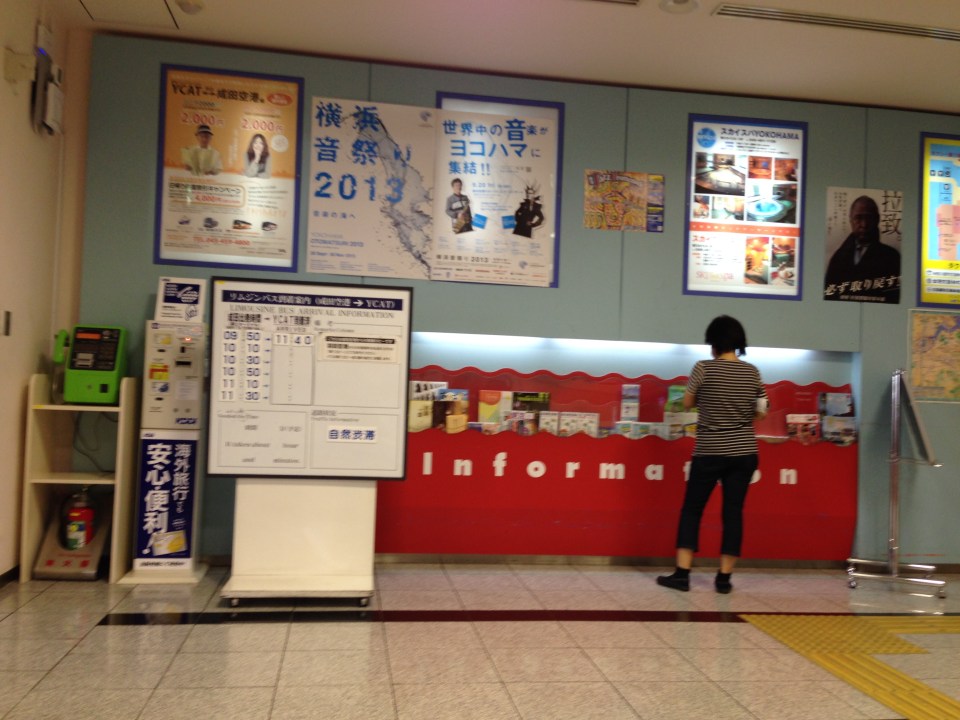 Other information on travel and events at the YCAT include brochures and posters.
 Airport Limousine Bus bound for Narita Airport arriving at the YCAT – luggage are tagged so limousine bus staff at the airport terminals can identify which bags are to be unloaded at which terminals.
 Stop 1 is for Narita-bound buses while Stop 2 is for Haneda-bound buses.
–
Souvenir shops at NAIA Terminal 1
NAIA’s Terminal 1 recently reclaimed the unenviable title of worst airport in the world. While I have seen worse airports in the country, NAIA happens to be the country’s main gateway to the world. Thus, there are a lot of expectations regarding the airport including the facilities and most importantly, the quality of services provided to passengers at the terminals. Just this week, NAIA’s radar had to go through maintenance works and it was shut down for a few days. The shutdown meant air traffic had to be managed manually. The result was quite disastrous to airlines schedules and a lot of flights were delayed or cancelled, thereby costing a lot of people a lot of money.
One feature of international airport terminals are the shops. Most major terminals would have the typical duty free shops selling chocolates, alcohol, and luxury brand items. Many terminals would have shops selling specific merchandise or local products that are popular or associated for that country like electronics, jewelry, fabrics and various crafts. Local crafts are stuff that foreign travelers would probably look for in airports especially for last minute souvenir shopping. If the price is reasonable, then I would assume that such products will sell quite decently at airports.
In the case of NAIA, there are more handicrafts stores at Terminal 1, which serves most international airlines flying to Manila. The larger handicrafts stores are located at the end of the corridor in between the entrances to the two main wings of the terminal and are featured in this post.
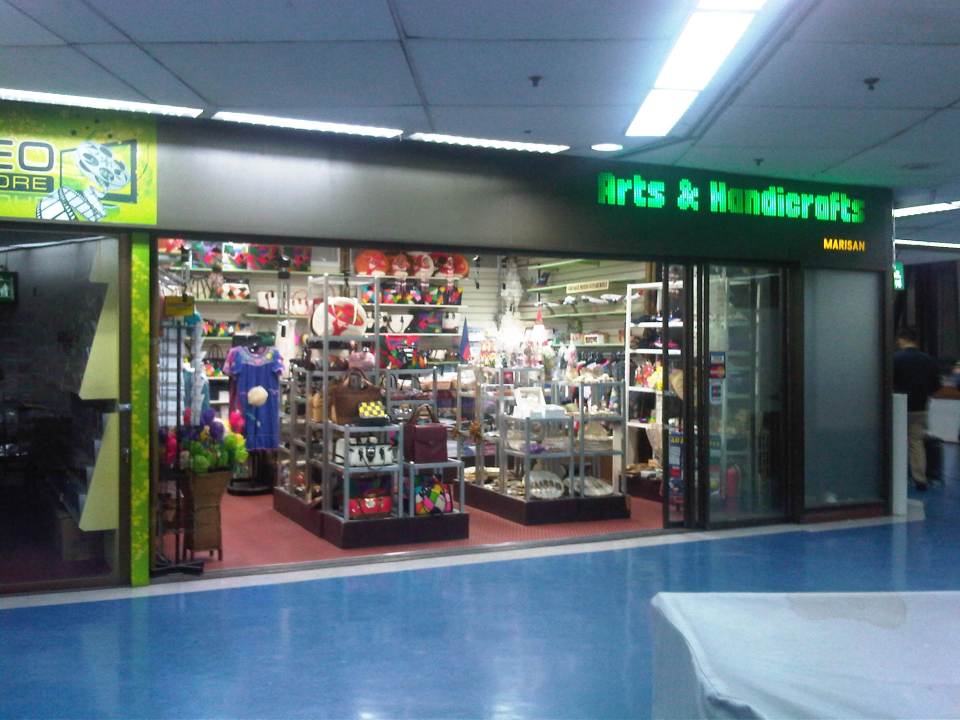 Arts and handicrafts stores sell mainly local or Philippine-made goods. I say mainly because I’ve seen souvenirs like miniature or toy jeepneys and tricycles that are actually made in China.
 Souvenir shops are mostly open early in the morning except a few like this curiously named “Multi-gift” boutique.
 I like this shop “Children of Maisog arts and crafts.” I think their products are authentic and of high quality. Also, and perhaps most importantly, the prices are not pang-airport or pang-turista (for tourists). They are comparable to those in the malls or even some trade fairs.
–
Narita departure
I will be traveling to Japan again in the next few weeks and so I felt I had to finish a draft that I started last month about Narita Airport. Departing for Manila after a few days of meetings in Tokyo, I was able to take some photos around the airport’s Terminal 1. Narita was the first large international airport I have been to because my first foreign trip back in the 1990s was to Tokyo. I was impressed by what I saw as a huge terminal compared to what we had in Manila back then, the current NAIA Terminal 1. Following are photos taken during my recent trip to Japan. Note that there are no photos taken in the sensitive areas where the use of cameras are prohibited.
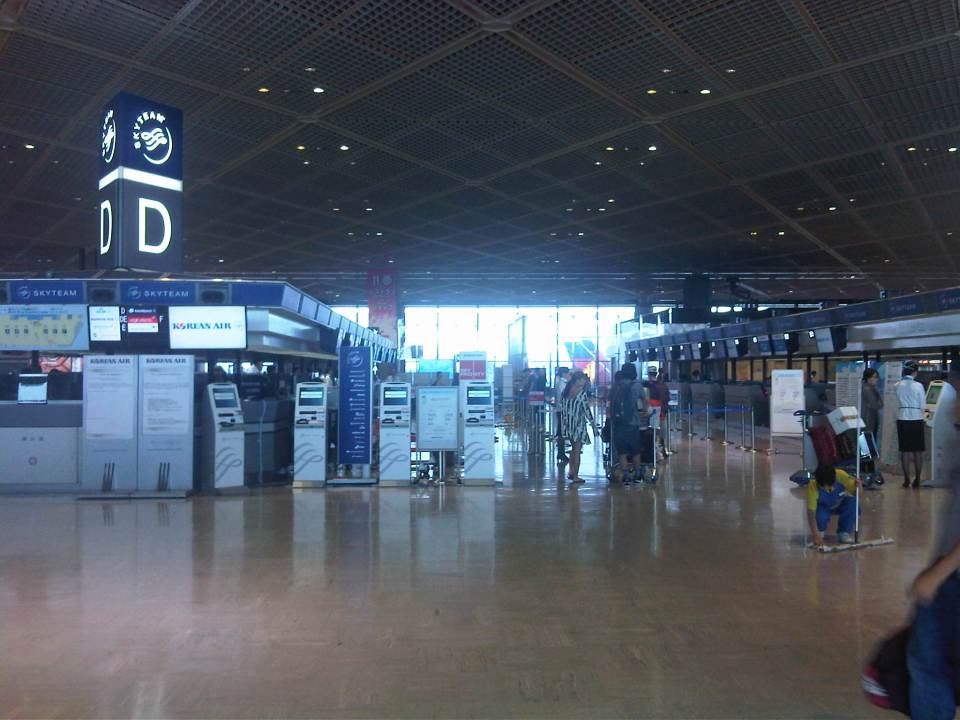 Airline check-in counters at Narita’s Terminal 1 North Wing
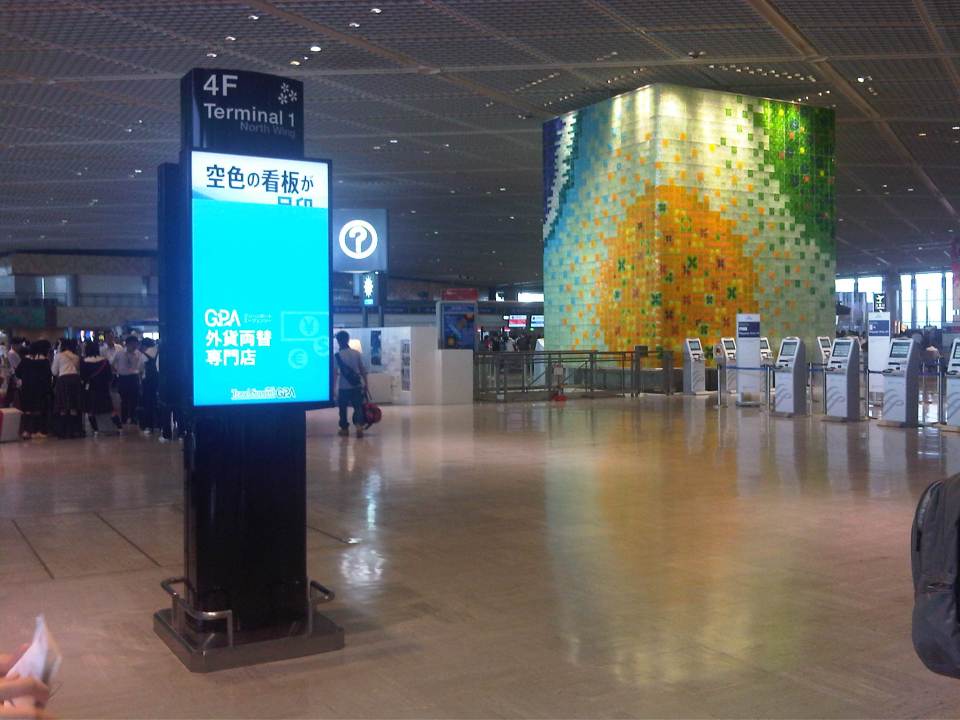 Artistic design of a column at the terminal helps lighten the environment inside the terminal
 Passengers line up to check-in their luggage at the Delta counter
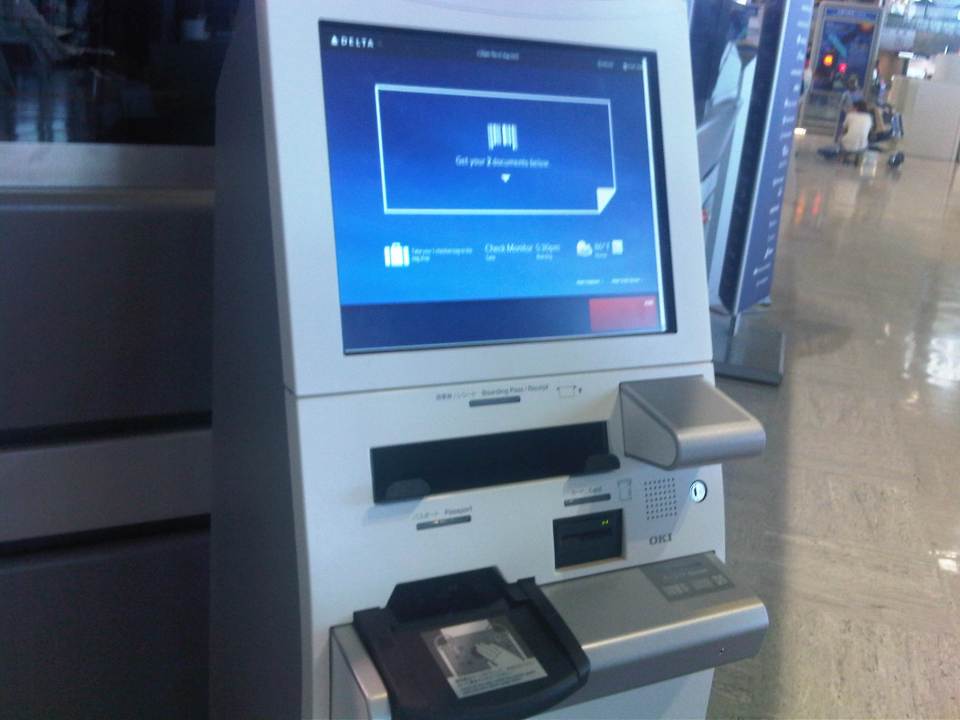 Passengers can check in at one of the many terminals or booths by using their passports and ticket information. If one has not yet selected a seat via online check-in, seats can be selected using the interface.
 Airline and airport ground staff provide assistance to passengers.
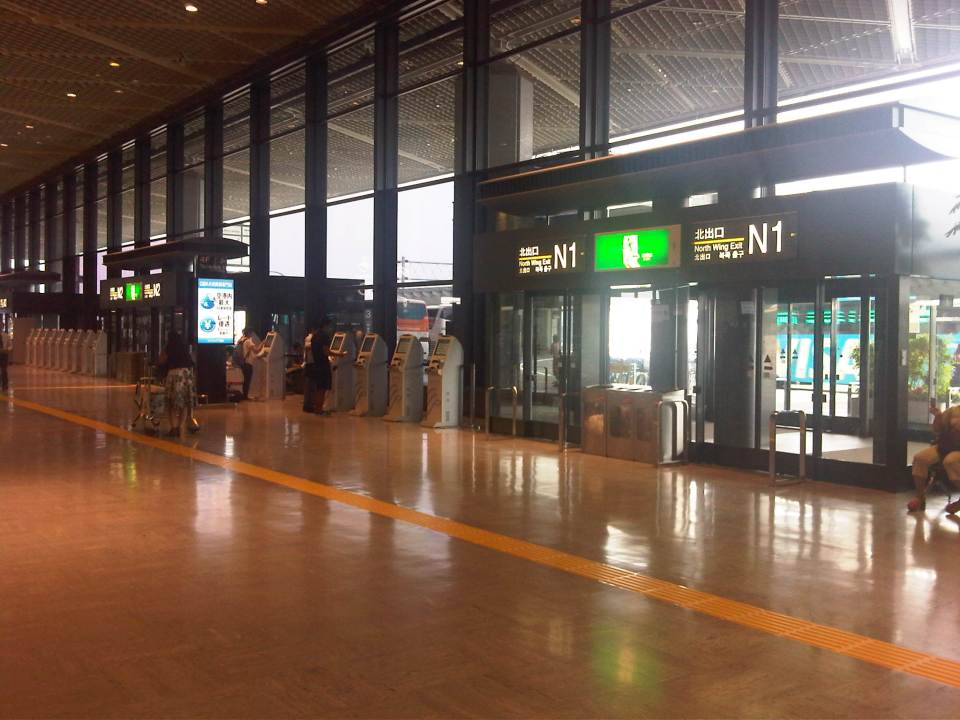 Entrances/exits at the airport. Shown in the photo is a bus parked at the curbside just outside the terminal building.
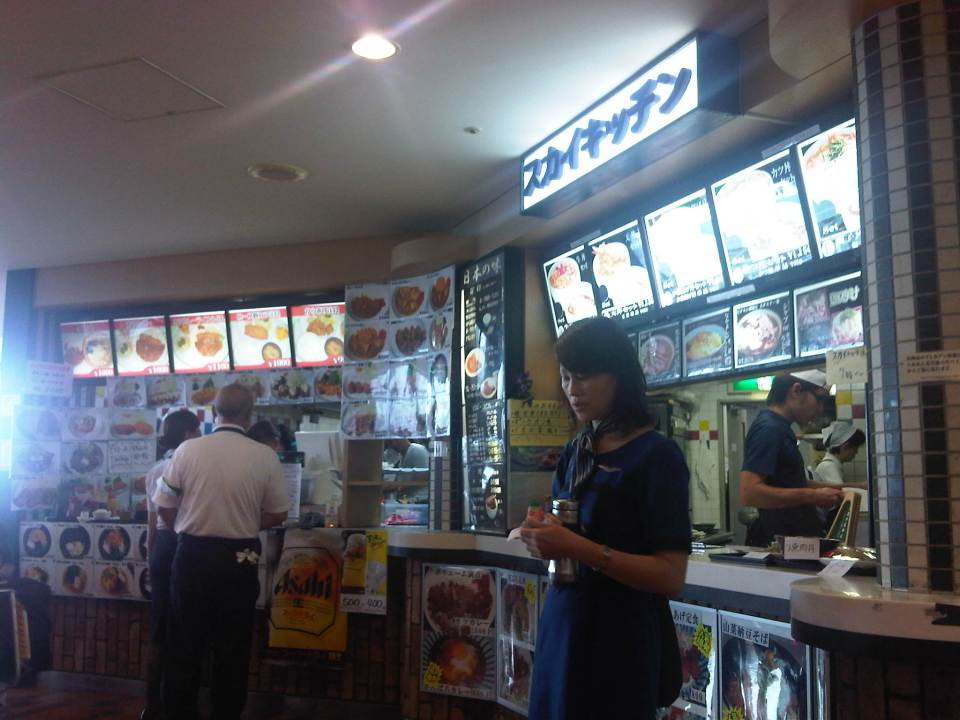 The airport has a nice food court where passengers and well-wishers can have their meals prior to going through immigration control to the pre-departure area.
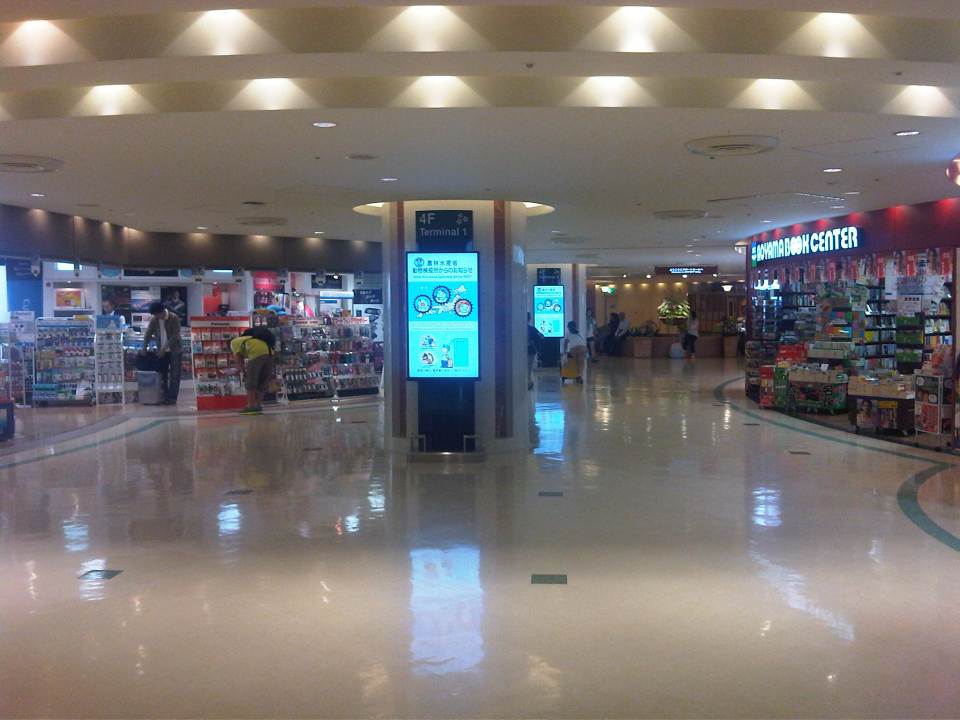 There are many shops at the terminal including those selling souvenirs.
 Shops include those selling Japanese crafts and clothing. Traditional crafts like silkware, woodcrafts, papercraft, etc. are popular souvenir items.
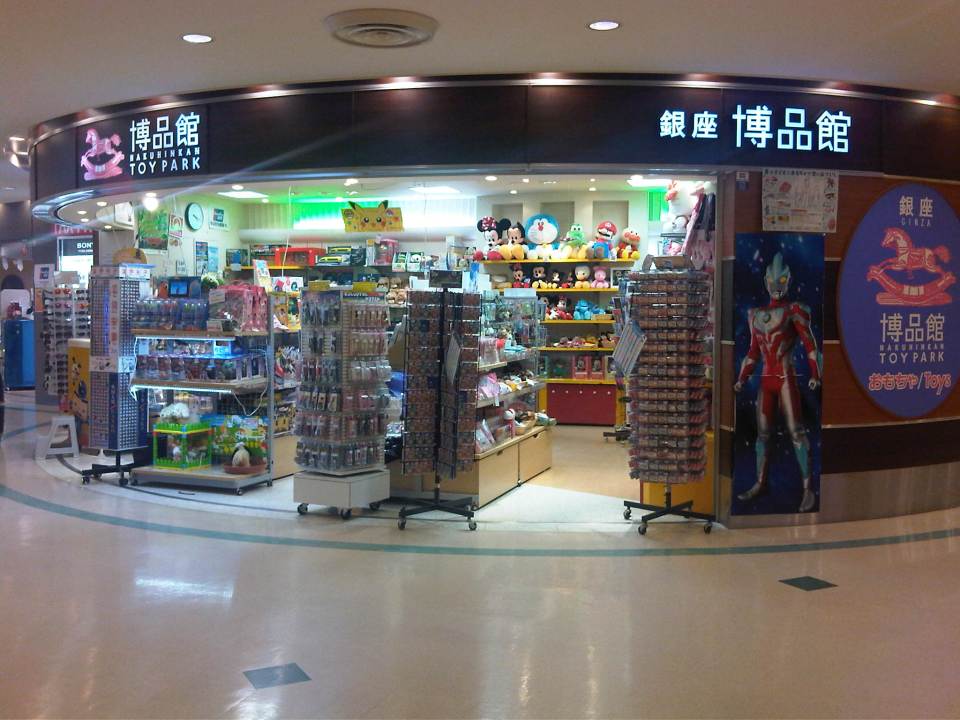 Toys, especially those from anime characters, are very popular with the younger people and children. I myself bought a few souvenirs with characters from Miyazaki’s Totoro (Studio Ghibli) and, of course, Hello Kitty for my niece. There are also Disney and Nintendo themed toys and other items at these shops.
 Information boards are strategically located around the terminal to guide passengers.
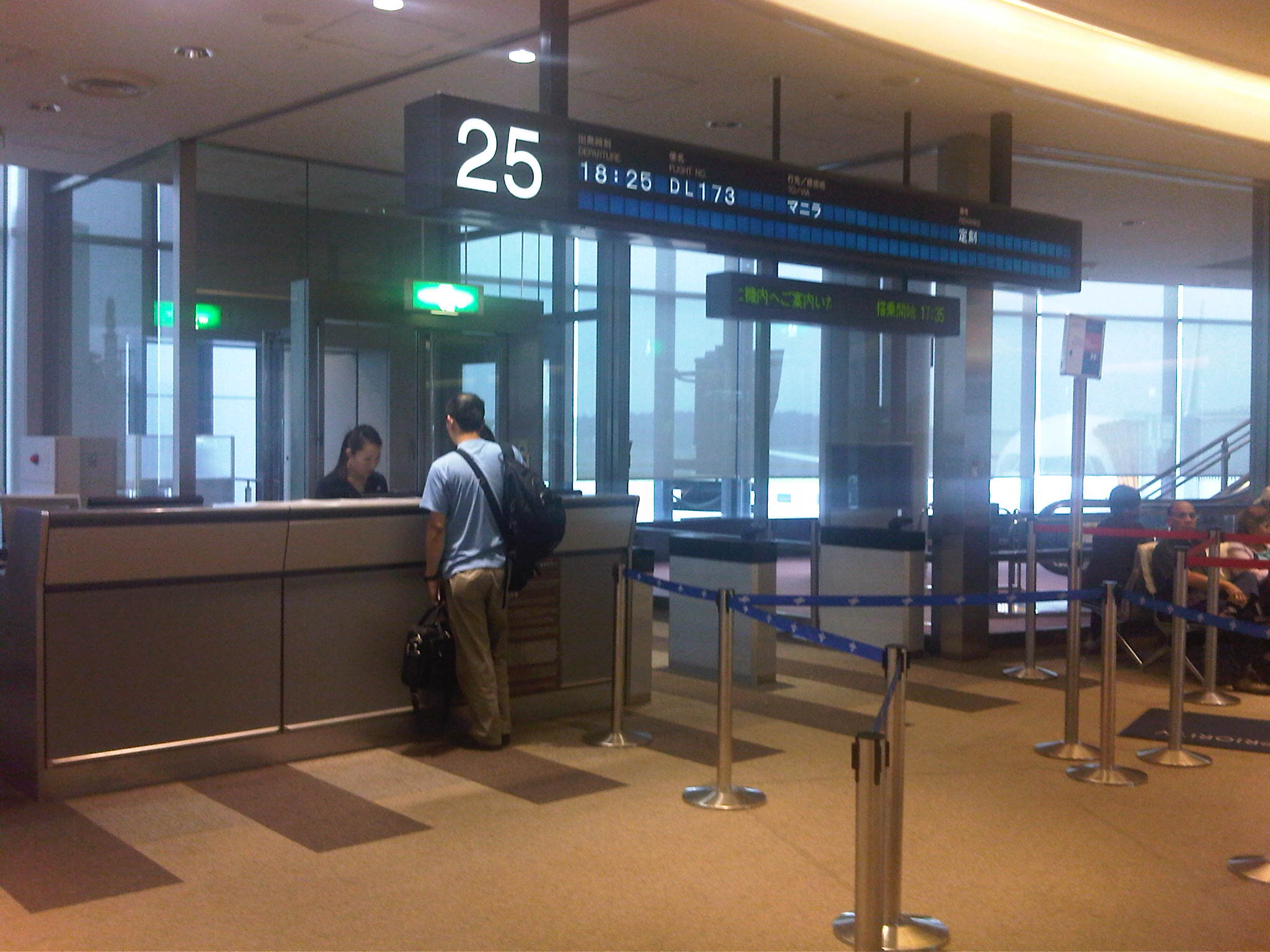 Counter at Gate 25 of Narita Terminal 1’s North Wing.
I have used only five airlines in my trips to Japan; four if one considers Delta’s acquisition of Northwest. These are Philippine Airlines, Northwest/Delta Airlines, Pakistan International Airlines (yes, it was a practical choice back in the 1990s when I was a student in Japan), and Japan Airlines. During a couple of trips within Japan, I took the domestic flights on All Nippon Airways (ANA). Perhaps I will try ANA in my next trip to Japan as the schedule for its flights are good (morning flight to Narita and evening flight to Manila) and the airline uses NAIA Terminal 3, which means its more convenient than the farther NAIA Terminals 1 or 2.
–

