
Home » Airports (Page 21)
Category Archives: Airports
NAIA Terminal 1 arrival driveway and well-wishers area
Despite several opportunities in the past, I haven’t been able to take photos of the area for arriving passengers to be picked up by relatives or friends. I seem to forget doing including taking some while waiting for people at the building designated for sundo. And so I took a couple of photos while waiting for my ride showing the well-wishers area and the driveway for vehicles making pick-ups. Airport security usually limit the time for pick-ups as some vehicles tend to park and clog the area. There is another driveway immediately after exiting the main terminal building that is reserved for VIPs but some people who feel they are important have their drivers wait for them at the driveway featured below making them another breed of pasaway or pa-importante.
 Well-wishers area – building for people fetching arriving passengers from across the Terminal 1 building. At the back of the building is an open parking lot. Inside the building at the second level is a branch of a popular fast food chain and a coffee shop, and just behind the building before the parking lot are kiosks offering refreshments and even meals to waiting people.
 Duty Free Philippines branch at the waiting area.
Last year when talk was hot particularly about NAIA Terminal 1 being one of the worst hotels in the world, plans were being drawn about the renovations for T1. These plans included those from well-known Filipino architects that were eventually “dismissed” in favor of contracting the firm that originally designed the airport. While I have nothing against architects, I feel that T1 is one of those cases where they went more about aesthetics than functionality. This is an observation by many other people who have wondered why the airport didn’t have enough space for the typical groups (or droves?) of well-wishers that seems to be a cultural thing with Filipinos. And so the areas and buildings shown above will likely be among those to be included in a major renovation for T1 that is supposed to increase the capacity of this terminal and improve facilities for passengers and other users. However, more than a year has passed and I’ve seen nothing yet being done to the terminal.
–
Airport Rail Link in Bangkok
The last time I was in Bangkok was in 2005 or 2006 and so it has been a while since that last trip that I was curious about how the city would look like after 6 years. Was there anything new? Did it change much since the last time? At the very least, I was expecting to have new experiences and it didn’t take long before I had one, trying out the express rail link between Suvarnabhumi Airport and the city. The rail link was still under construction the last time I was in Bangkok and one had no choice at the time but to take a taxi or a shuttle between the airport and the hotel.
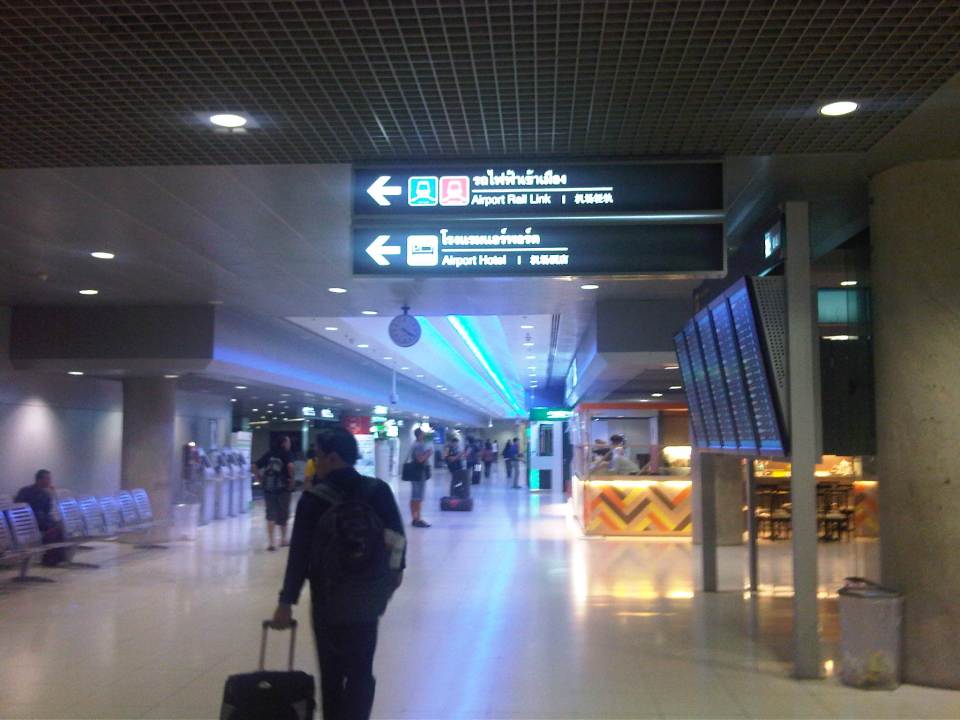 The walk from the arrival area to the Airport Link
 Ticket vending machine with English instructions upon the press of a button. We purchased tickets for the Phaya Thai Express to transfer to the BTS Skytrain
 Token for the Express Rail Link trip from the airport to Phaya Thai Station – the link is operated by the State Railway of Thailand, their counterpart of our Philippine National Railways. The trip cost 90 Baht (~ 130 PhP), very cheap compared to taking a taxi.
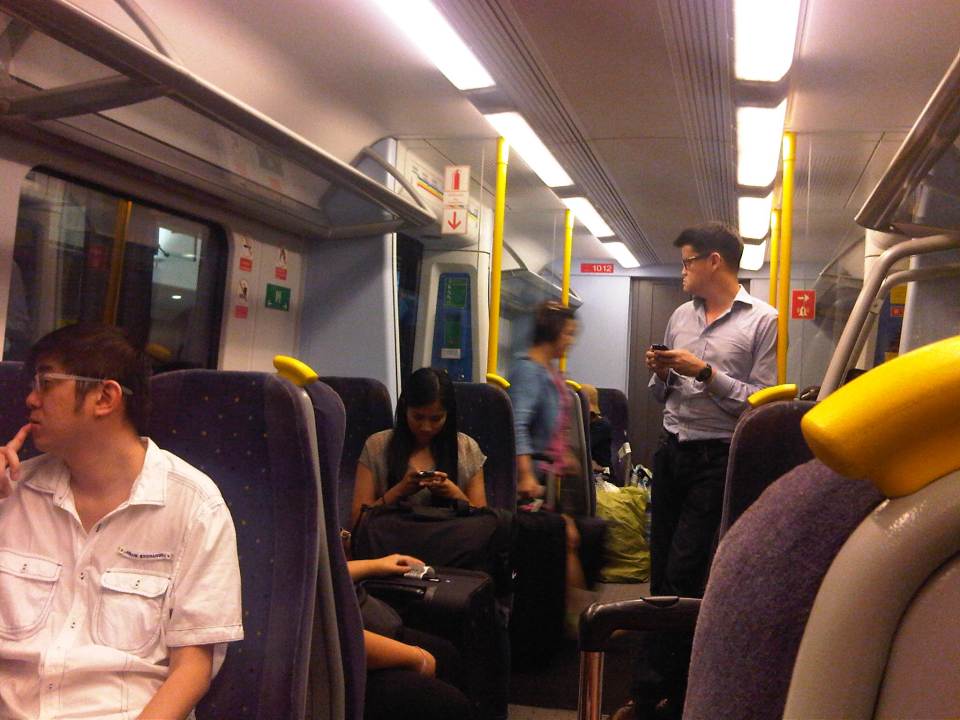 Passengers inside the Airport Link Train
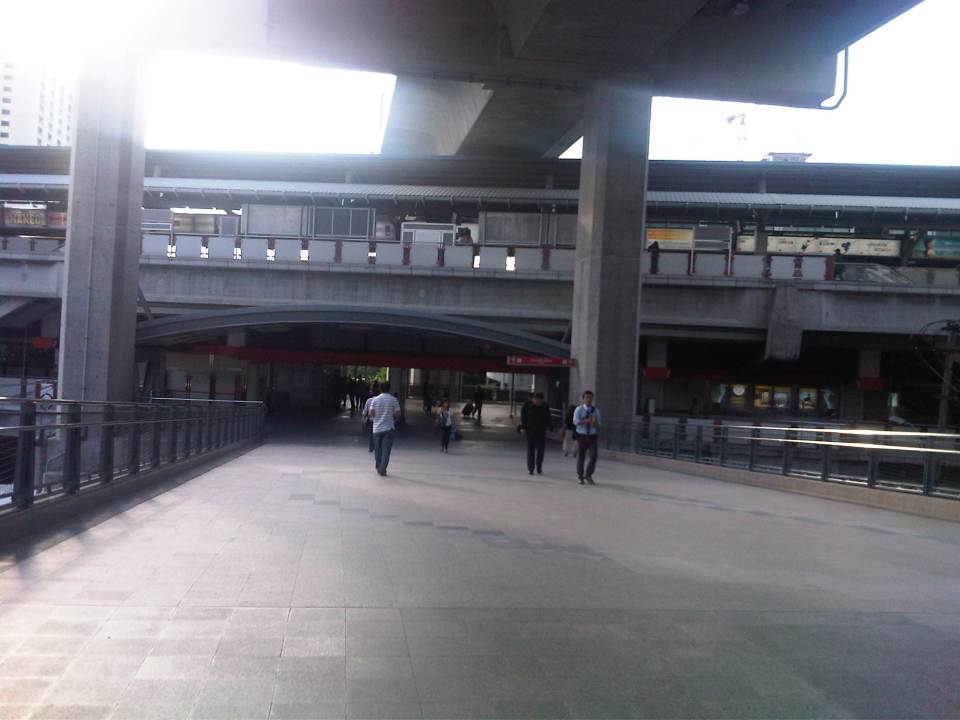 Walk from the Airport Rail Link’s Phaya Thai Station to the BTS Skytrain Station
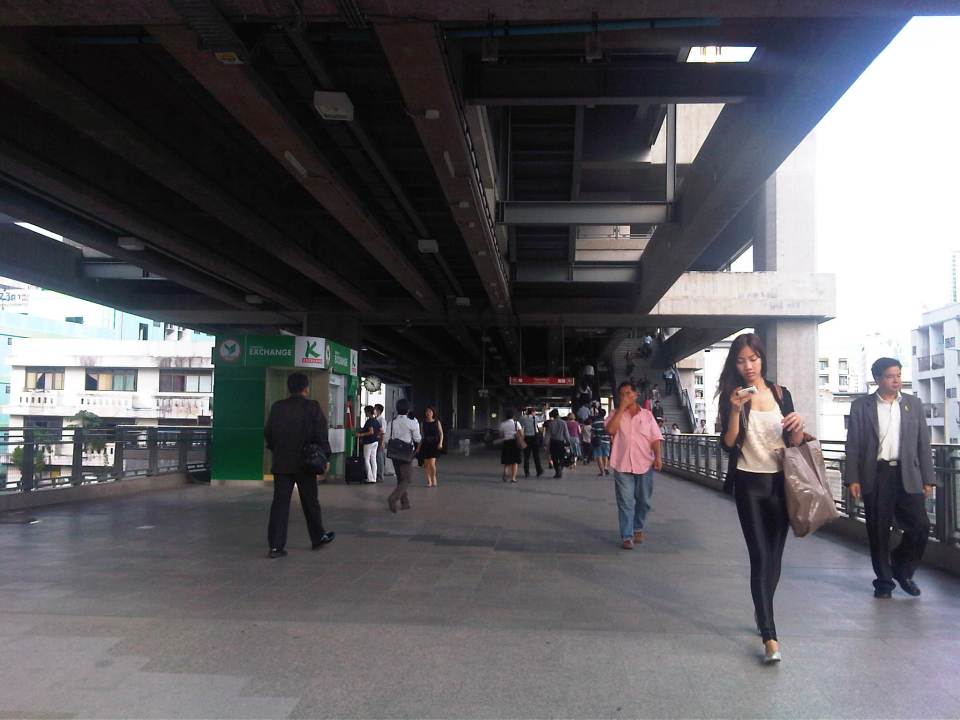 Looking back at the Phaya Thai Station
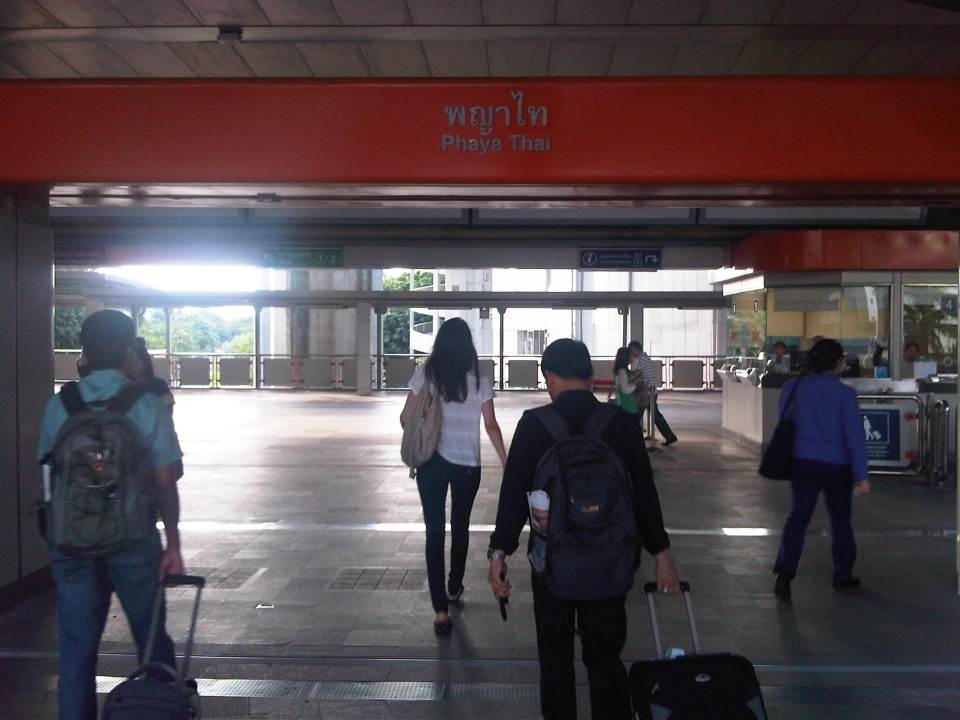 Phaya Thai Station of the BTS Skytrain
It would be very nice to have a similar rail link between the MRT 3 or LRT 1 Lines and NAIA in Manila. In fact, how difficult would it be for the LRT1 Line to have an extension to the airport terminals of NAIA when it’s depot is just across the road from the old domestic terminal? This would probably be easier than constructing a new monorail or whatever system it is that is being planned between Bonifacio Global City and NAIA. It is definitely much easier and perhaps cheaper compared to the still-born Northrail between Caloocan and Clark. One thing for sure is that we are really behind our ASEAN neighbors when it comes to providing the infrastructure for public transport, in this case airport access.
Airport congestion and options to decongest NAIA
Airport congestion refers to two things – congestion at the passenger terminal and congestion at the runway(s). The first may be found in several areas of an airport terminal. Among these areas are at the check-in counters, the immigration counters, customs and the baggage claim counters. Congestion may also refer to the areas allotted to well-wishers although depending on the terminal layout or design, these can be integrated with the check-in or arrival areas. The second concerns aircraft take-offs and landings, and queuing is present both on the ground and in the air. Congestion on the ground can be observed at the end of a runway from where aircraft may be queued according to air traffic control. Congestion in the air is observed in the form of aircraft circling the vicinity of the airport at various designated distances (radius) and altitudes.
Congestion of the first kind is a given at most major airports in the Philippines especially for international flights where security is tighter and there are immigration and customs processes that passengers need to go through. In most cases including domestic flights, airports are usually congested due to the well-wishers taking passengers to the airport or welcoming the same as they arrive. It is not uncommon to see jeepney-loads or tricycle-loads of well-wishers at Philippine airports as it is customary to take relatives or friends (hatid) to the airport or fetch (sundo) people at the terminal
The second type of congestion hogged the headlines earlier this year and during the summer months of April and May when take-off and arrival delays plagued aircraft at Manila’s Ninoy Aquino International Airport (NAIA). Some flights were even cancelled, causing much headaches for passengers and particularly those with connecting flights both for domestic and international destinations. The culprit, technically, seems to be the limited capacities of NAIA’s intersecting runways. Some critics, however, have pointed out that the airlines should share part of the blame for having schedules packed during the day times and offering so many promos. While they have a poin there in as far as scheduling is concerned, one can’t blame airlines from offering such as day flights are more attractive to passengers.
 Aircraft queued along the taxiway leading to NAIA’s main runway
 A newly arrived plane cuts into the queued along the taxiway towards the eastern end of NAIA’s main runway
There are currently several options to decongest the airport in Manila. Many of these are actually proposals that are impractical if not too expensive. One option is to transfer international operations to Clark, which is about 220 kilometers from NAIA or 200 kilometers from Quezon City via the North Luzon Expressway (NLEX). It seems to be the most viable solution and has been compared with the location of other international airports like Narita and Suvarnabhumi, which are outside the metropolitan areas. The thing here is that there needs to be a good link between the airport and the metropolis, which presumably generates much of the demand for the airport. So far, there is already the NLEX for road transport and it should not take so long for someone to travel from, say, Quezon City to Clark. Meanwhile, a rail link has taken so much time in the planning (or procrastinating?) stage that it seems more and more that the Northrail will never become a reality in the foreseeable future.
Two other options have been put forward recently, one by a major corporation that has now expanded its portfolio to include infrastructure, particularly on transportation, and another by a consortium that has developed reclaimed areas along Manila Bay. The head executive of the San Miguel Corporation, which now controls Philippine Airlines, announced plans to build their own airport, initially likely to be somewhere in the province of Bulacan, which is just north of Metro Manila and a shorter distance away compared to Pampanga, which hosts Clark. No details were given making a lot of interested parties including airport aficionados think about which areas in Bulacan are viable and spacious enough to host an airport of international standards. More recent is the idea for the development of the Sangley Point airport that will require reclamation and still another airport link towards the reclaimed areas that include PAGCOR City and the SM MOA. This last proposal seems to be morphing into something that San Miguel is said to be considering based on at least one report that came out today. I think the bottomline here, which ever option is taken, is that we need to have a modern airport that will be able to handle current and projected passengers and freight given our aspirations for commerce and tourism plus the fact that more and more Filipinos are traveling given the OFWs abroad. Decisions will have to be made and government should have a say here considering it is a major piece of infrastructure being considered. One opinion is that we simply cannot rely on the private sector to decide on this and such decisions need to be guided based on the public interest and good.
–
NAIA Terminal 1 Arrival
Arriving at NAIA Terminal 1, I was curious to see if there have been significant improvements in the terminal as the arrival corridors and facilities would probably give visitors a first impression of Metro Manila and the country as well. Terminal 1 serves all other international carriers with flights to Manila with only Japanese airline All Nippon Airways using Terminal 3 for its flights. Domestic carriers Philippine Airlines and Cebu Pacific operate to and from Terminals 2 and 3, respectively.
 The corridors are definitely cleaner and neater than before (when Terminal 1 was heavily criticized as being one of the worst international airports in the world) and I think the tarps featuring tourist destinations around the Philippines help promote the country.
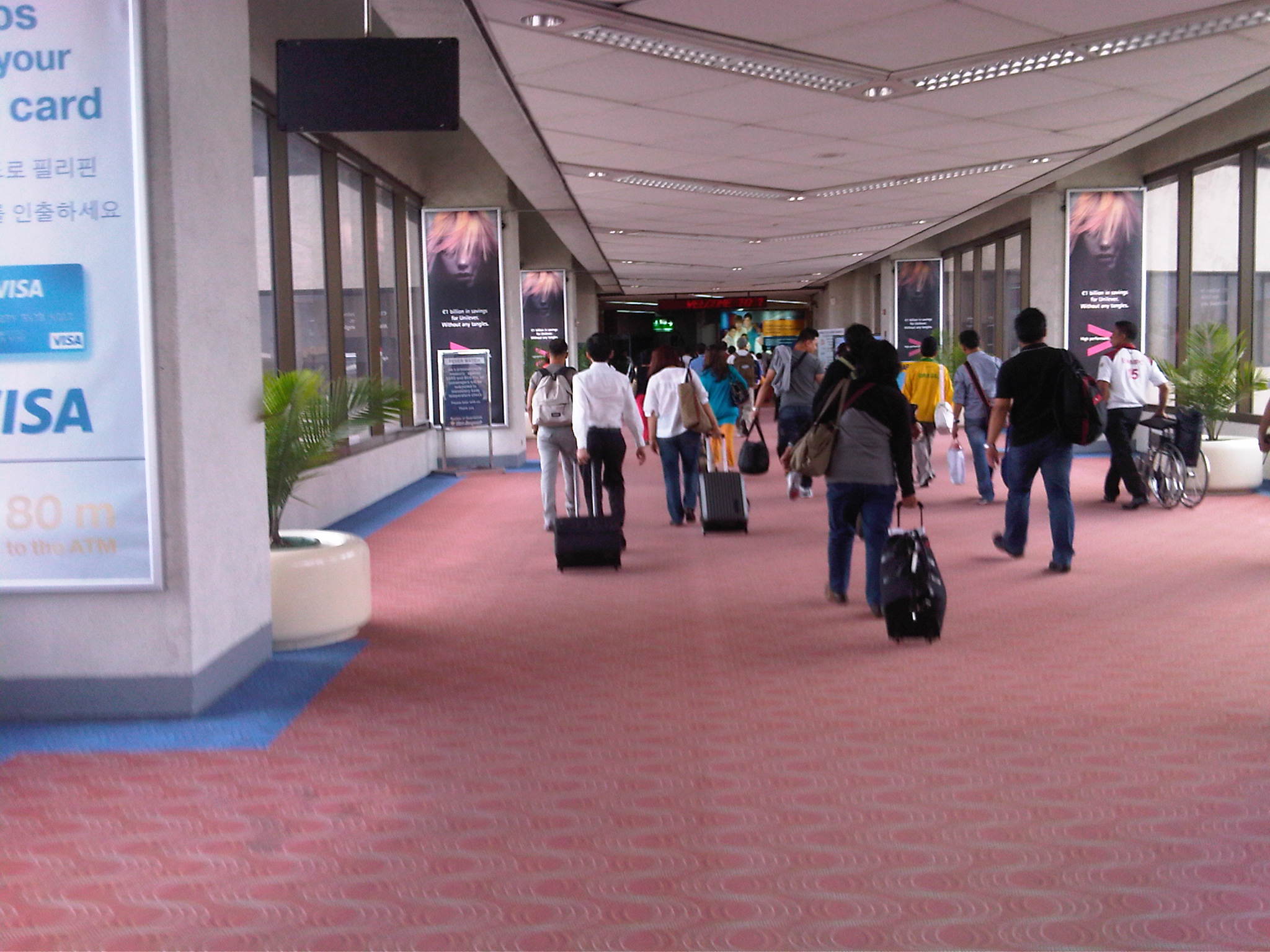 The corridors are spacious enough and the walk is not so long to require moving walkways or “walkalators.” There are staff and equipment at the end of the corridor scanning for indications of high body temperature usually associated with flu.
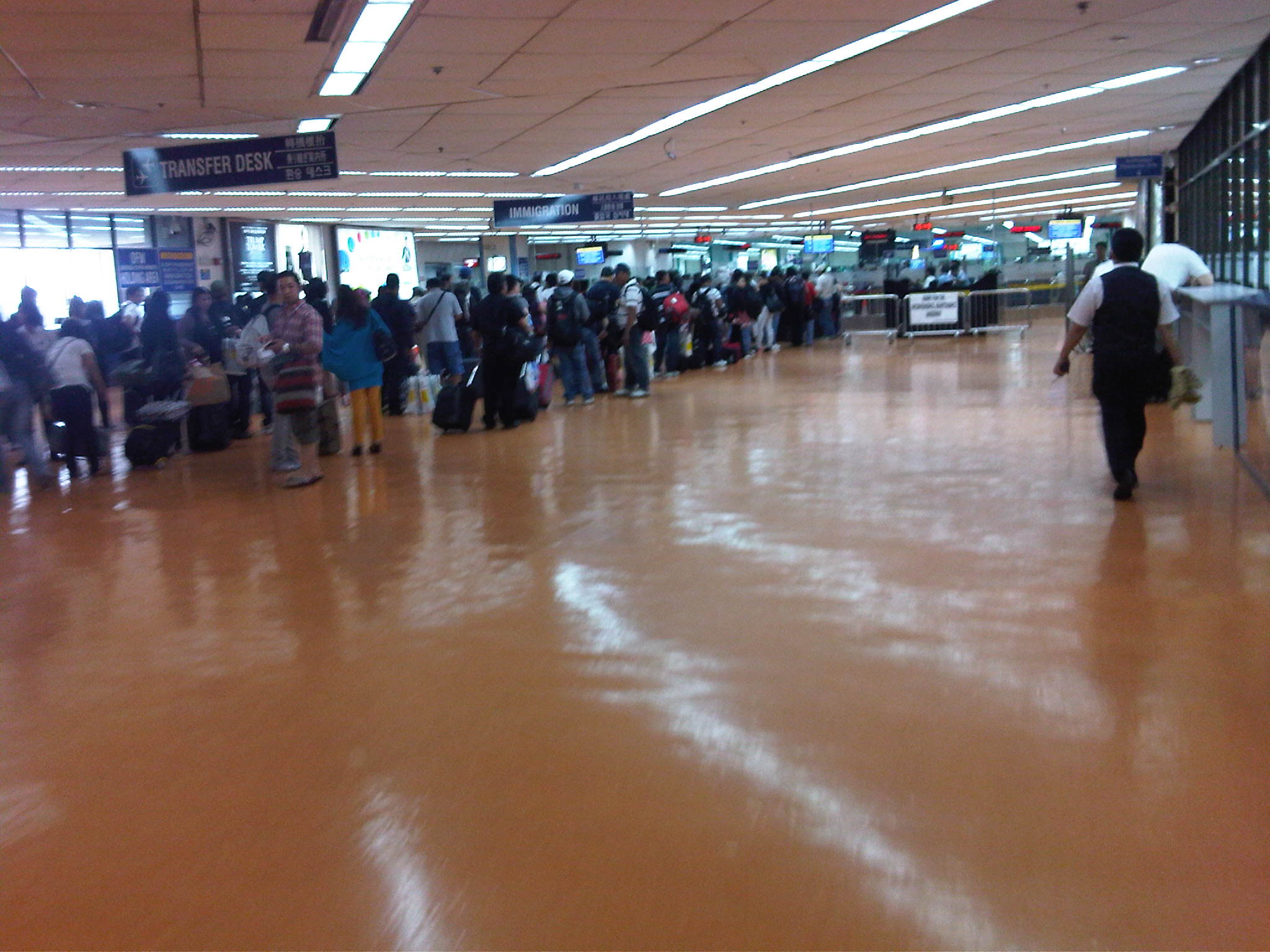 There are still long queues at the immigration counters despite additional booths and personnel posted at Terminal 1.
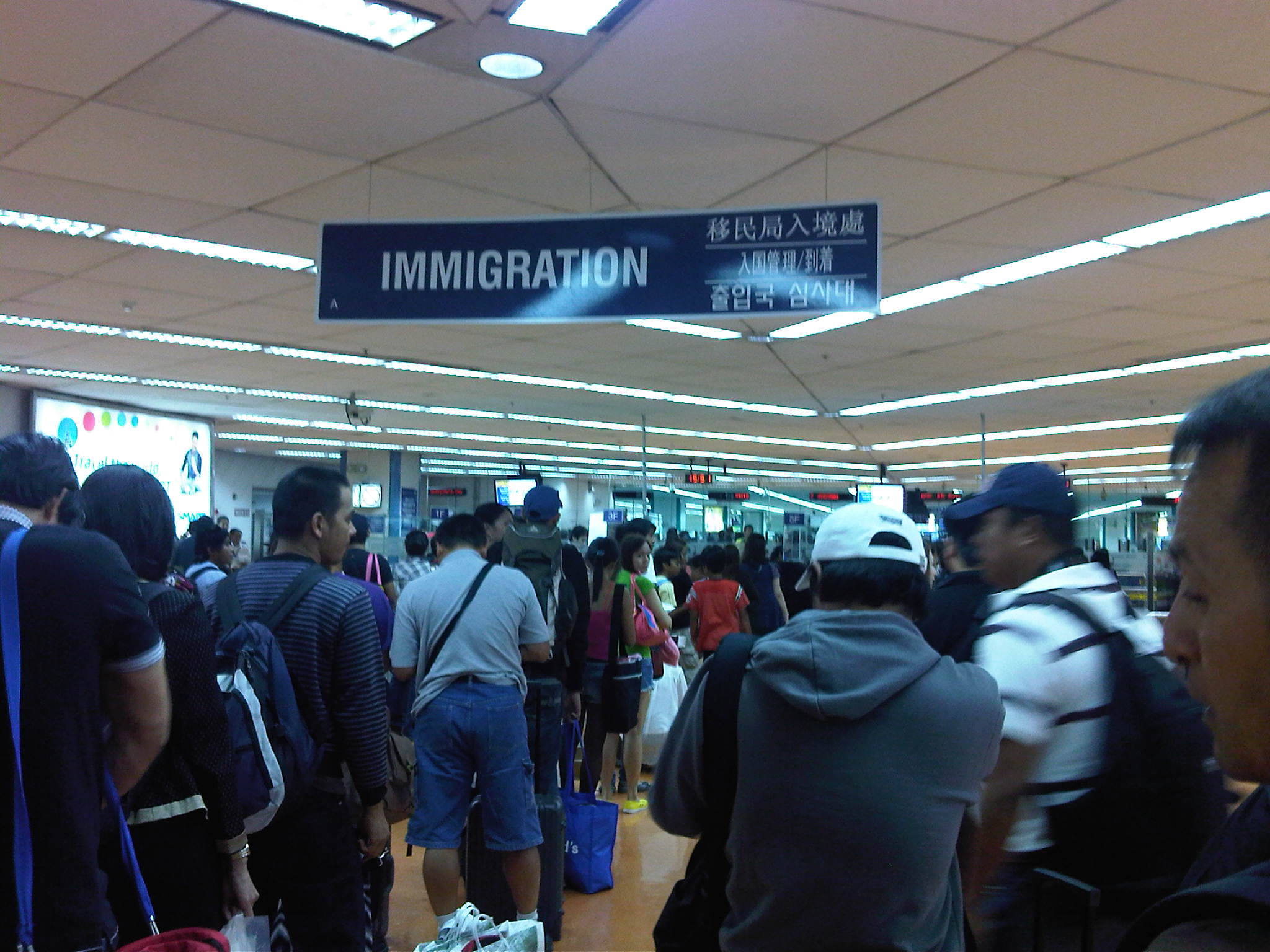 There are separate counters for Philippine passport holders and those bearing passports from other countries. Previously, there were special counters for Overseas Foreign Workers (OFW).
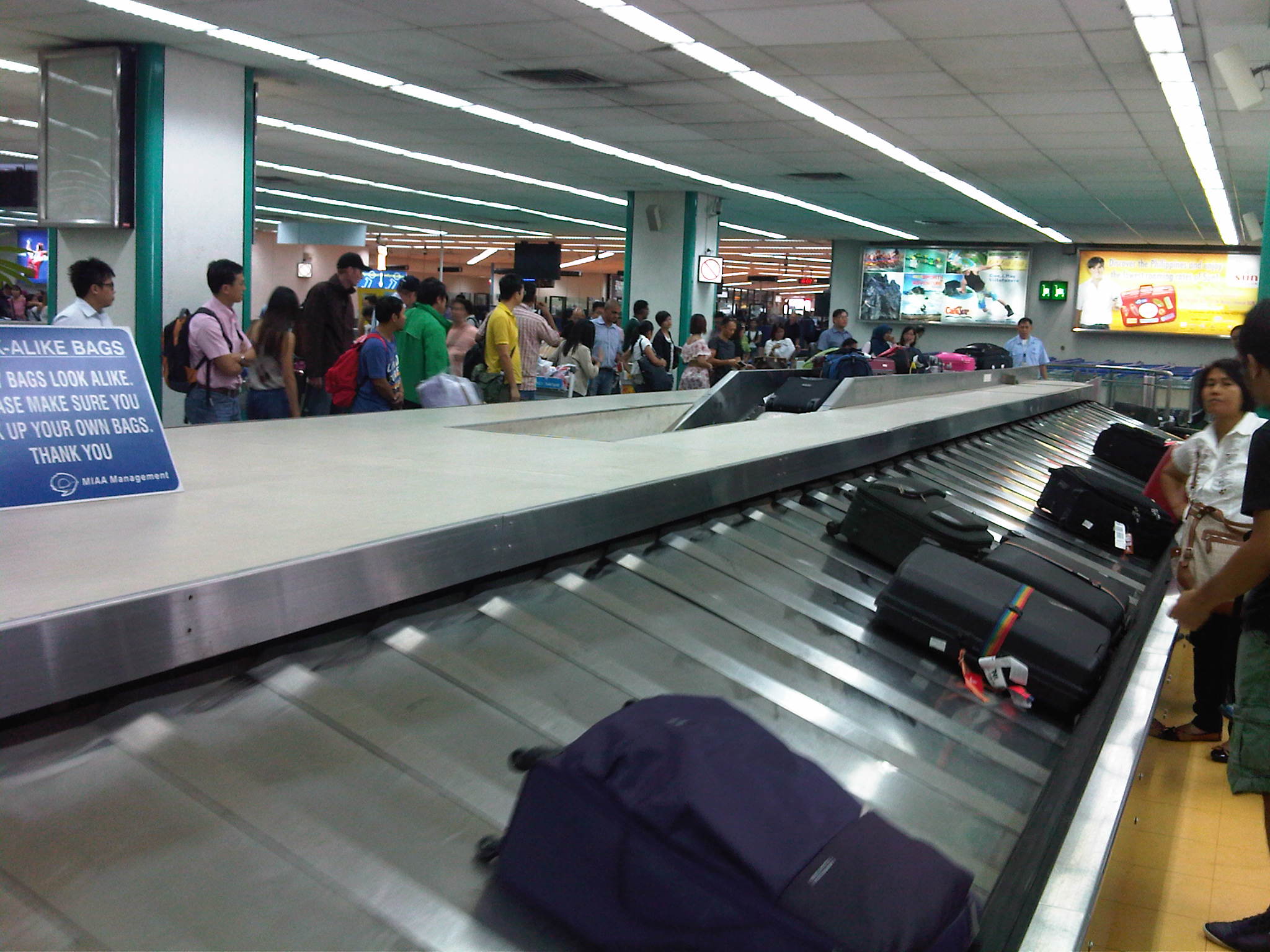 Checked-in luggage emerge and move along at the carousel for our flight.
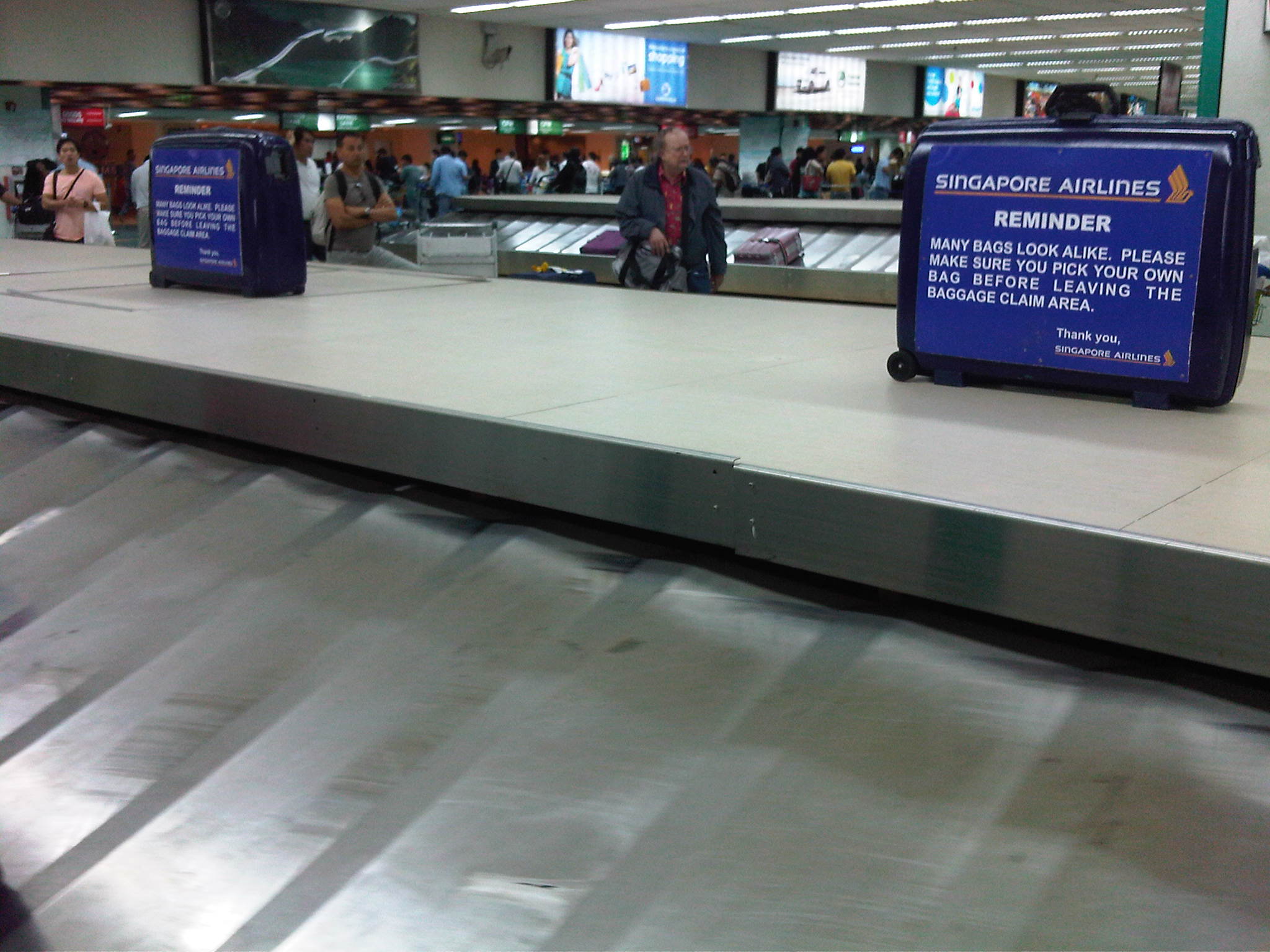 Singapore Airlines placed these signs on old luggage to caution passengers on picking up or identifying luggage from the carousel.
–
Flora at Changi Terminal 2
Changi Airport currently has four terminals including the Budget Terminal serving low-cost airliners particularly Tiger Airways and Cebu Pacific. Each terminal seem to have a unique design and collectively they are regarded as one of the best if not the best airport in the world. Terminal 2 has an indoor garden featuring orchids, ferns and palm trees.
I took a few photos of the plants at the Changi Airport Terminal 2 in Singapore. The orchids and other tropical plants provide a nice touch to the airport and seems to be an added attraction for visitors. I spotted a few tourists taking photos with the plants, particularly the orchids in the background. The orchids are endemic to Southeast Asia and I do remember some of them from my mother’s garden as well as others I’ve seen elsewhere including at the University.
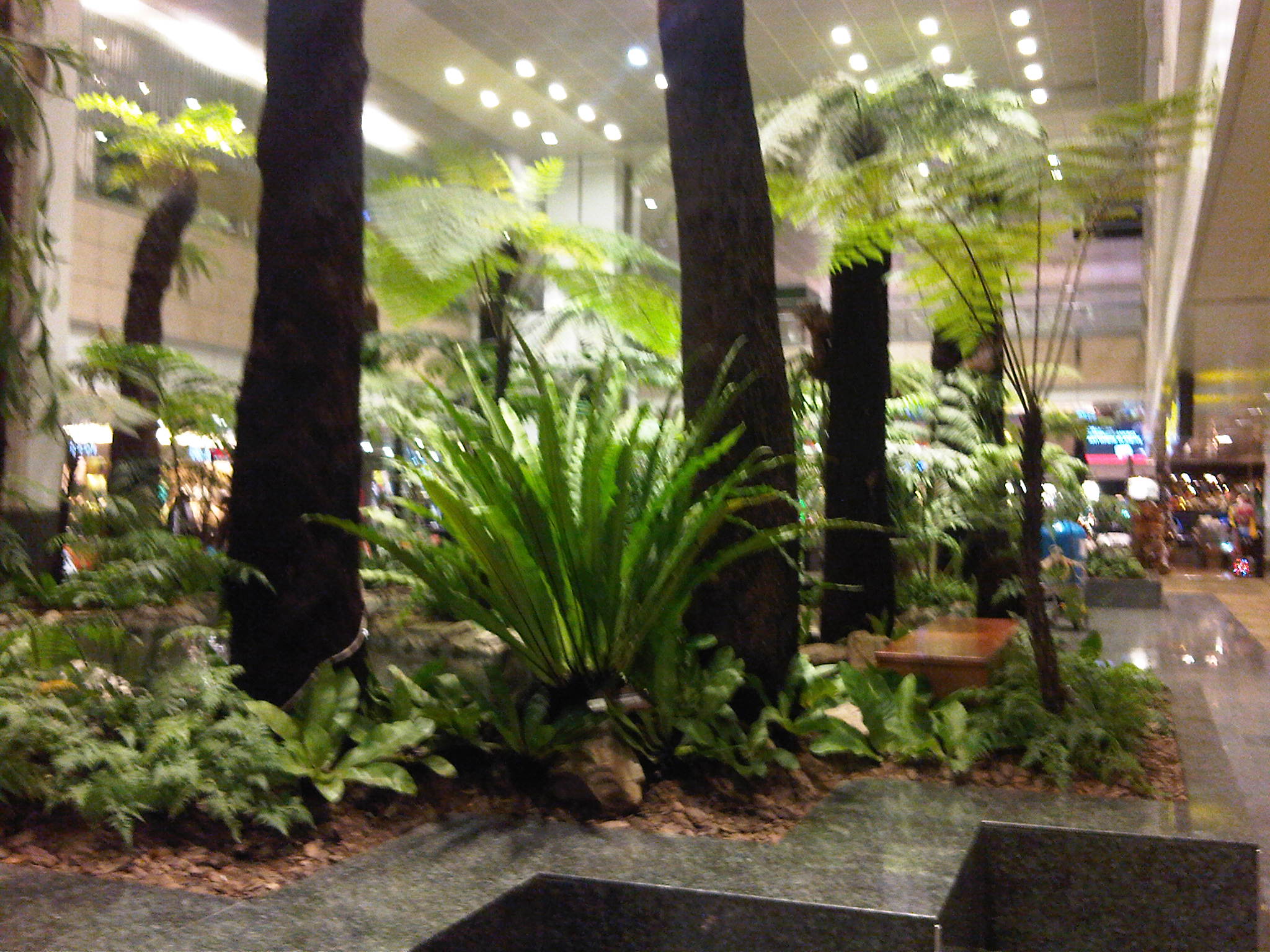 Ferns and palm trees in the middle of the airport
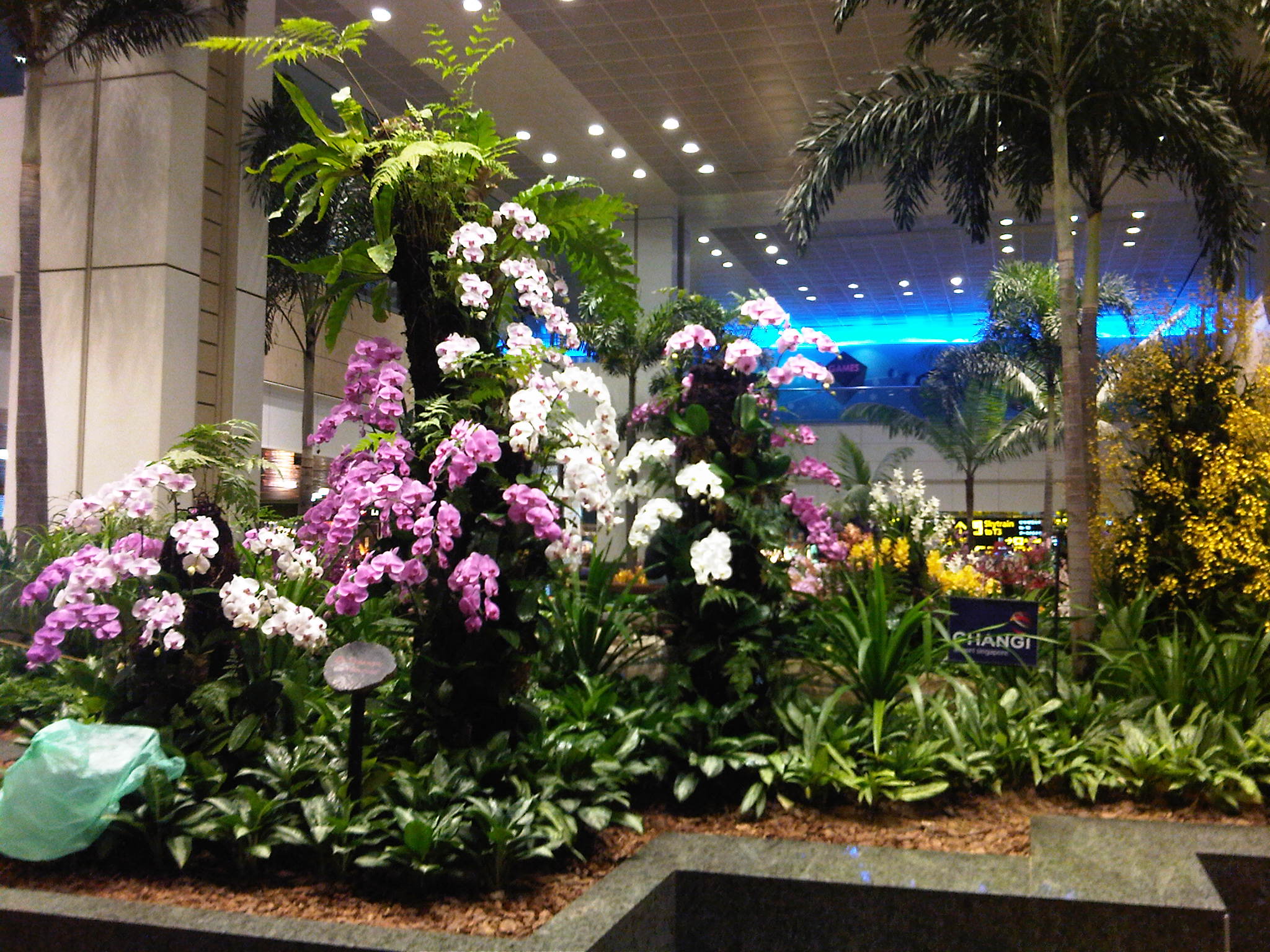 Orchids in full bloom – yes, they are all real and not made out of plastic or paper
 More orchids arranged among the palm trees and other flora in this indoor garden
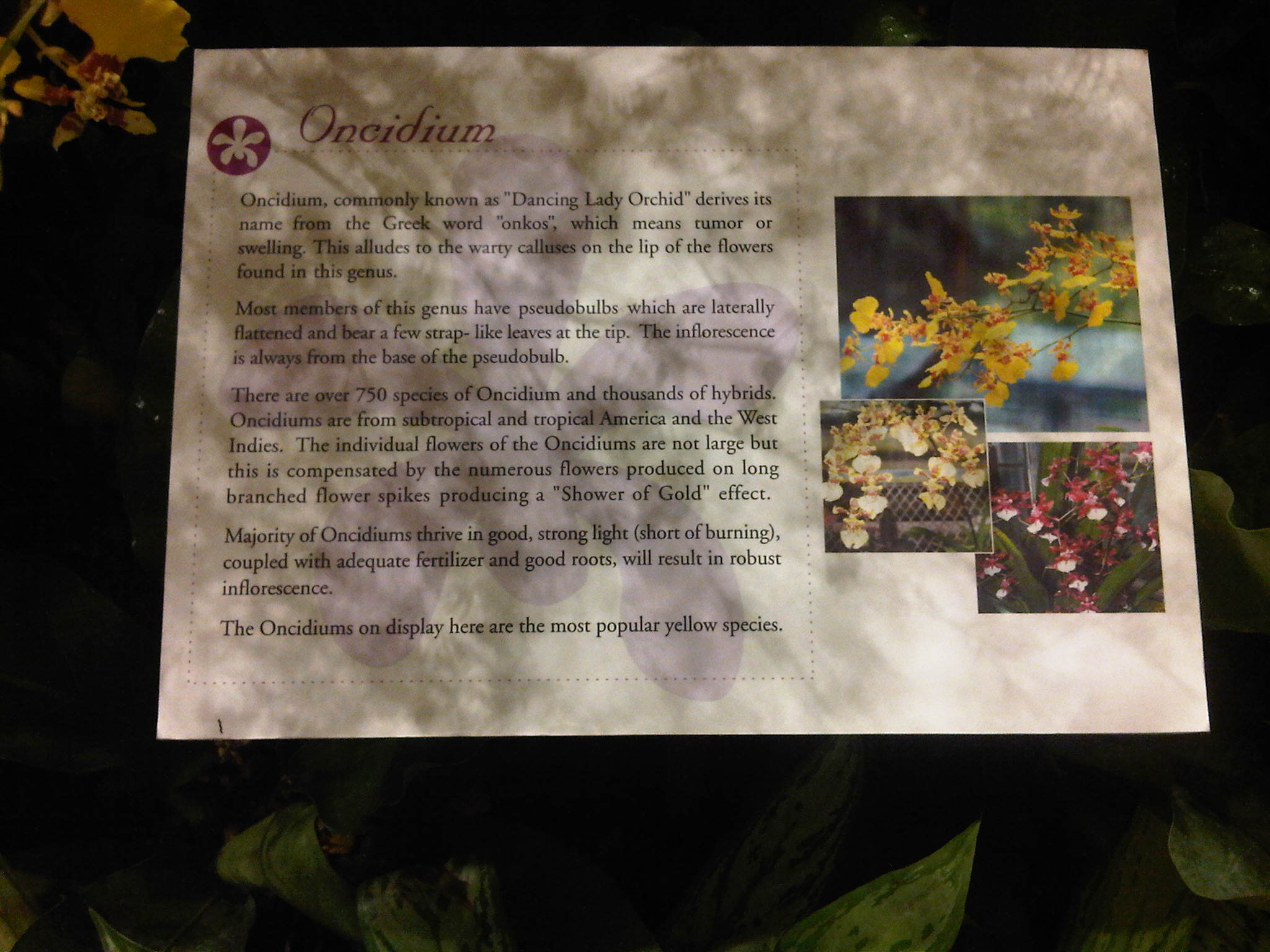 The airport also provided a description of each specie of the plants in the garden
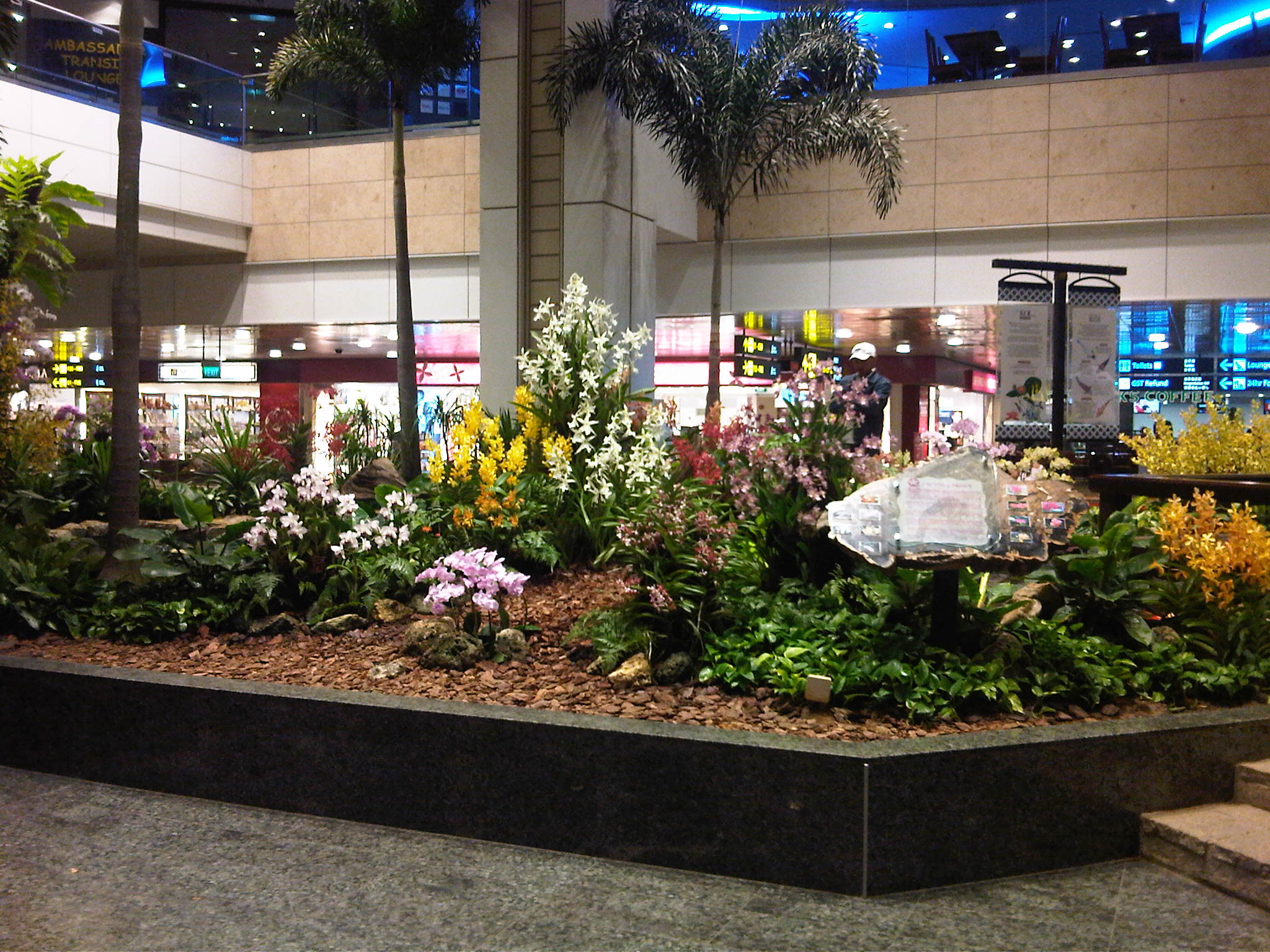 A garden full of flowers with the airport duty free shops in the background
 More of the “Dancing Lady” orchids at the garden
 Orchids of different colors help make the terminal “alive” and perhaps contribute to a more relaxed and pleasing environment indoors.
Perhaps Philippine airports should also consider having such gardens within the terminals to enhance the in-door environments. There are surely many plants and flowers that can be featured here including endemic ones like orchids, jasmine, and hibiscus varieties.
–
NAIA 2 Arrival Sunduan
I took some photos of the NAIA Terminal 2 arrival area while waiting for my in-laws to arrive from Singapore via Philippine Airlines. Terminal 2, which is also called the Centennial Terminal after opening in 1998, the 100th year of Philippines’ Independence, is exclusively used by Philippine Airlines for both its domestic and international operations. The North Wing serves international passengers while the South Wing serves domestic passengers.
 Gate and fence separating the tarmac from the VIP parking area just behind the cafe at the international wing of NAIA Terminal 2 – I was actually taking a photo of the windblown coconut trees and the dark clouds generated by a slow-moving typhoon Gener.
 VIP parking area at the NAIA T2 that is near the gate access to the tarmac. The building in the background is what used to be the Philippine Village Hotel. The building has been unoccupied for many years now and is up for demolition and re-development along with the old Nayong Filipino theme park.
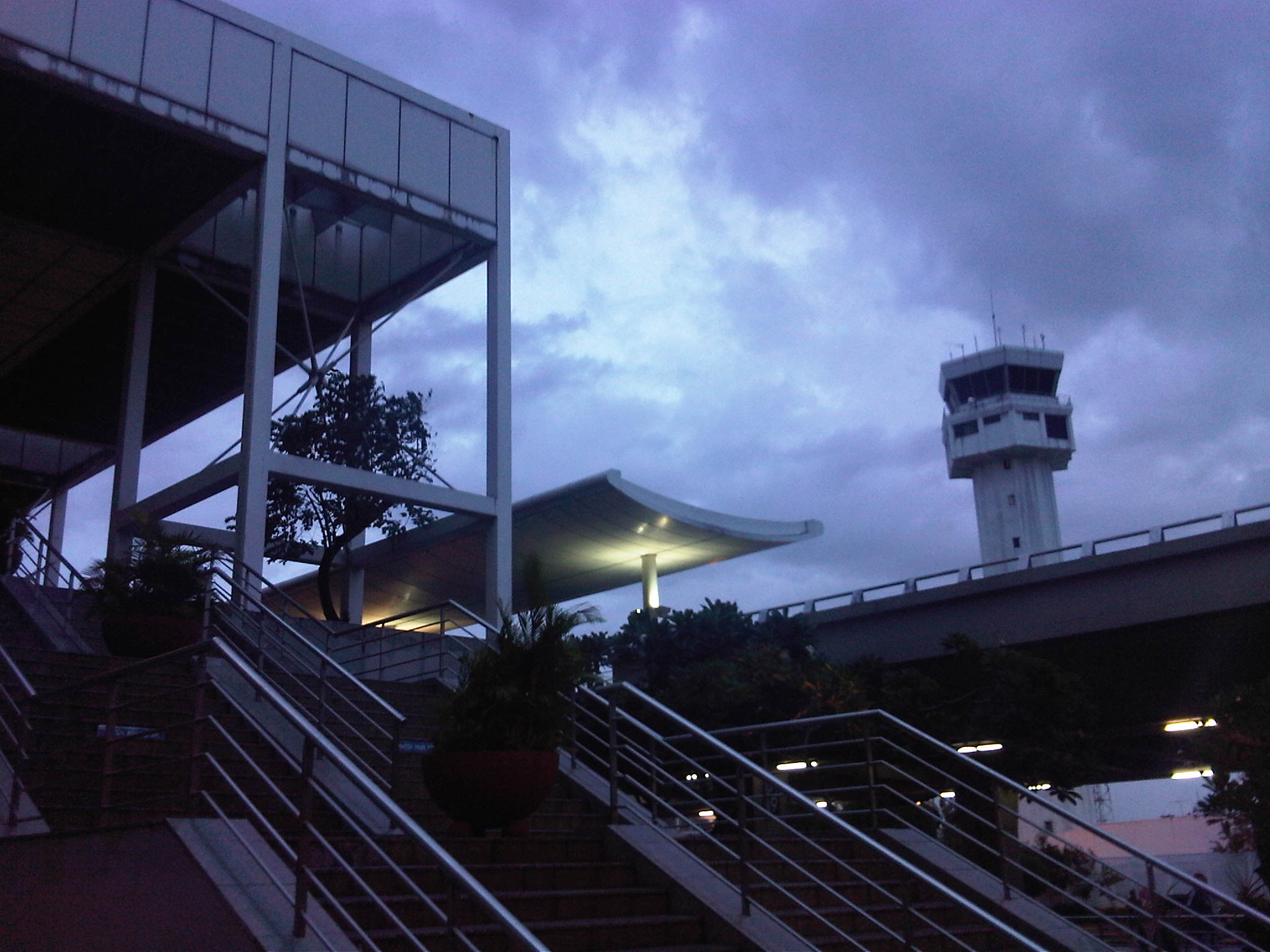 Stairs to the departure level of NAIA-T2 with the control tower in the background
 Cafe just outside the arrival level – I usually have a snack or tea at this cafe if I have time before the plane arrives
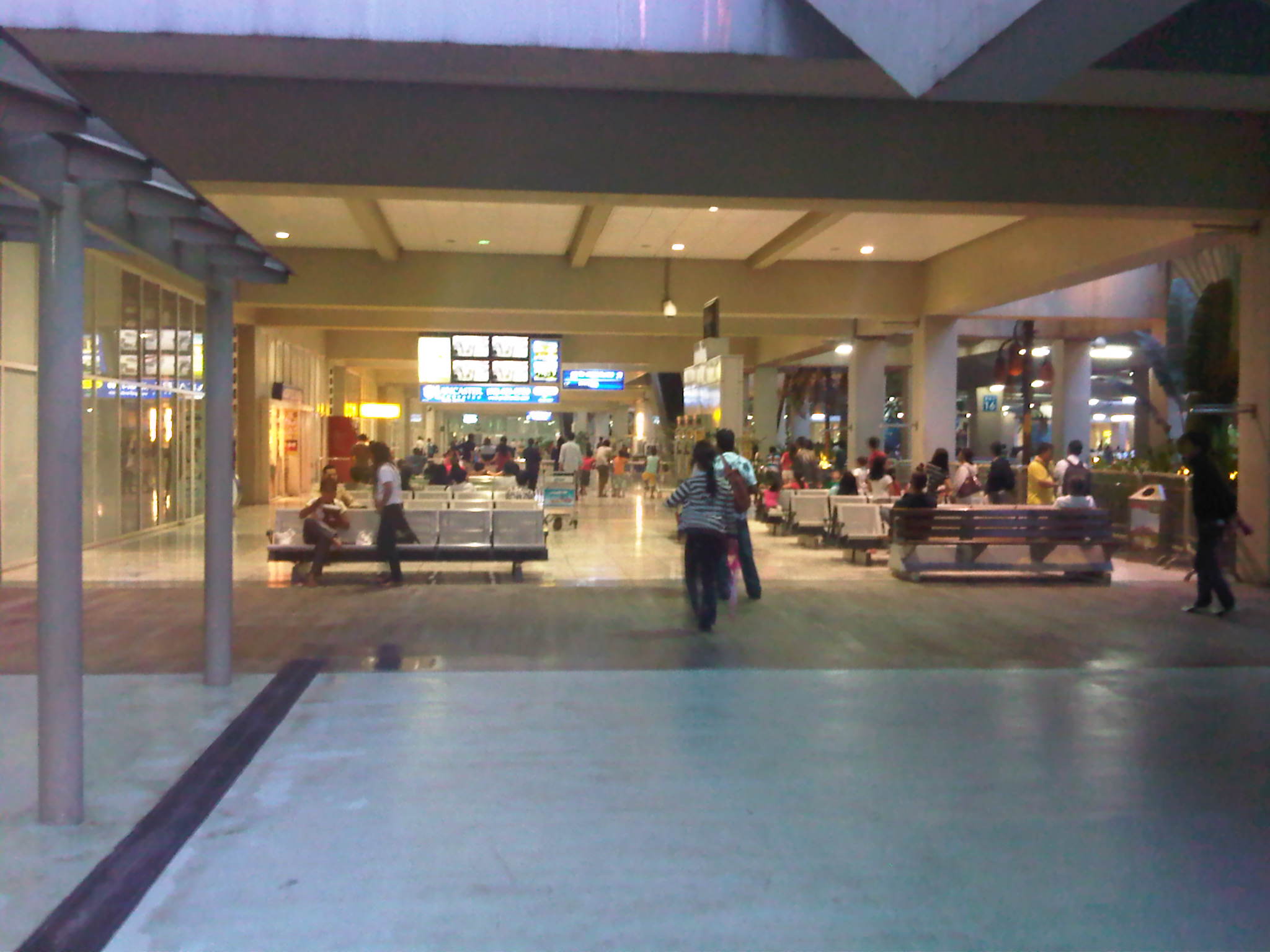 The waiting area has benches for people waiting for their relatives or friends
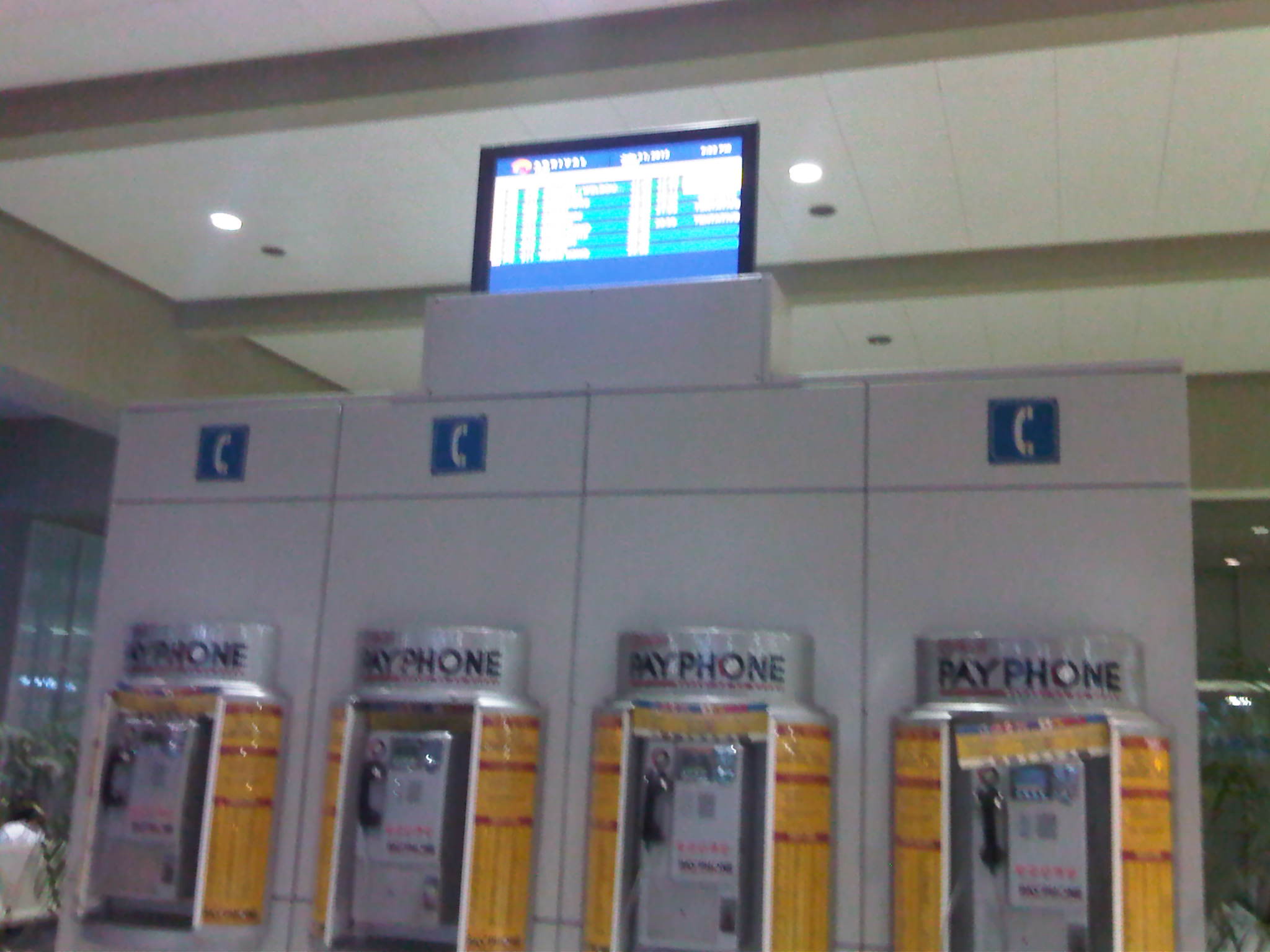 Small screen showing information on aircraft arrivals just above the public phones
 7Coffee shop and screens at the arrival area. This is the only shop in the area as the other concessionaire closed up months ago.
 The screens show passengers arriving at the baggage claim area inside the airport and as they exit from the customs checkpoints.
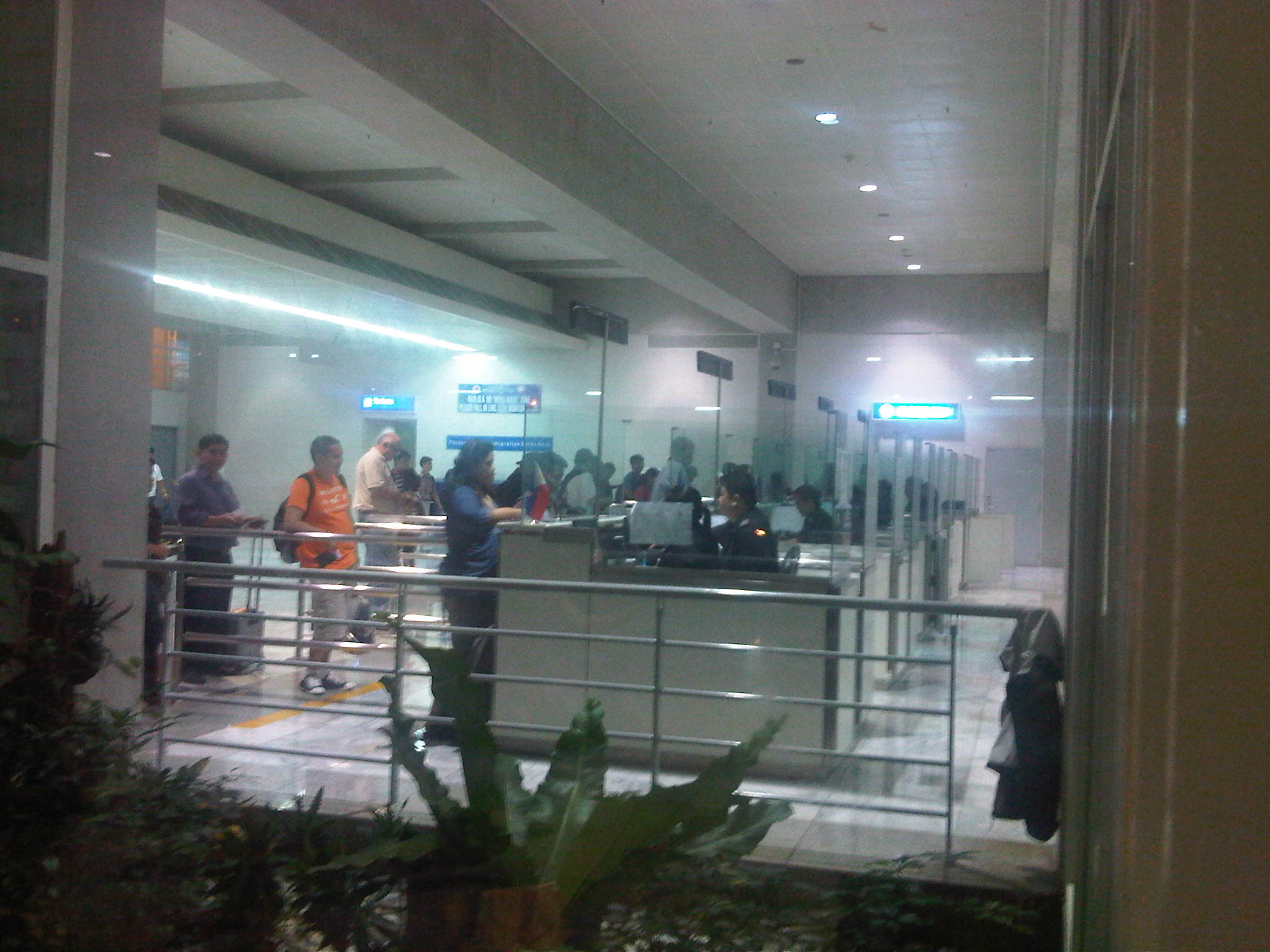 People could see passengers lining up at the immigration counters from the waiting area outside the terminal
 Spacious arrival concourse exclusive to passengers (well-wishers are not allowed here). The yellow sign indicates the small duty-free shop near the exit from the terminal building.
 Passengers transferring to the departure level can take the escalator shown in the photo. The escalator, however, seems to be always under maintenance and unavailable. There is another on the other end of the International Wing of the terminal.
–
NAIA Terminal 1 Departure
I was able to take a few photos inside NAIA Terminal 1 during one recent trip. Terminal 1 is the oldest of the three main terminals of Manila international airport with the exception of the old domestic terminal. It is this Terminal 1 that was known as the New Manila International Airport until 1986, when it was renamed the Ninoy Aquino International Airport after the husband of former President Corazon Aquino, father of current Philippines President Noynoy Aquino. It is also this Terminal which has been the subject of criticisms for being dilapidated and unfit to be a major gateway to the country, particularly its capital.
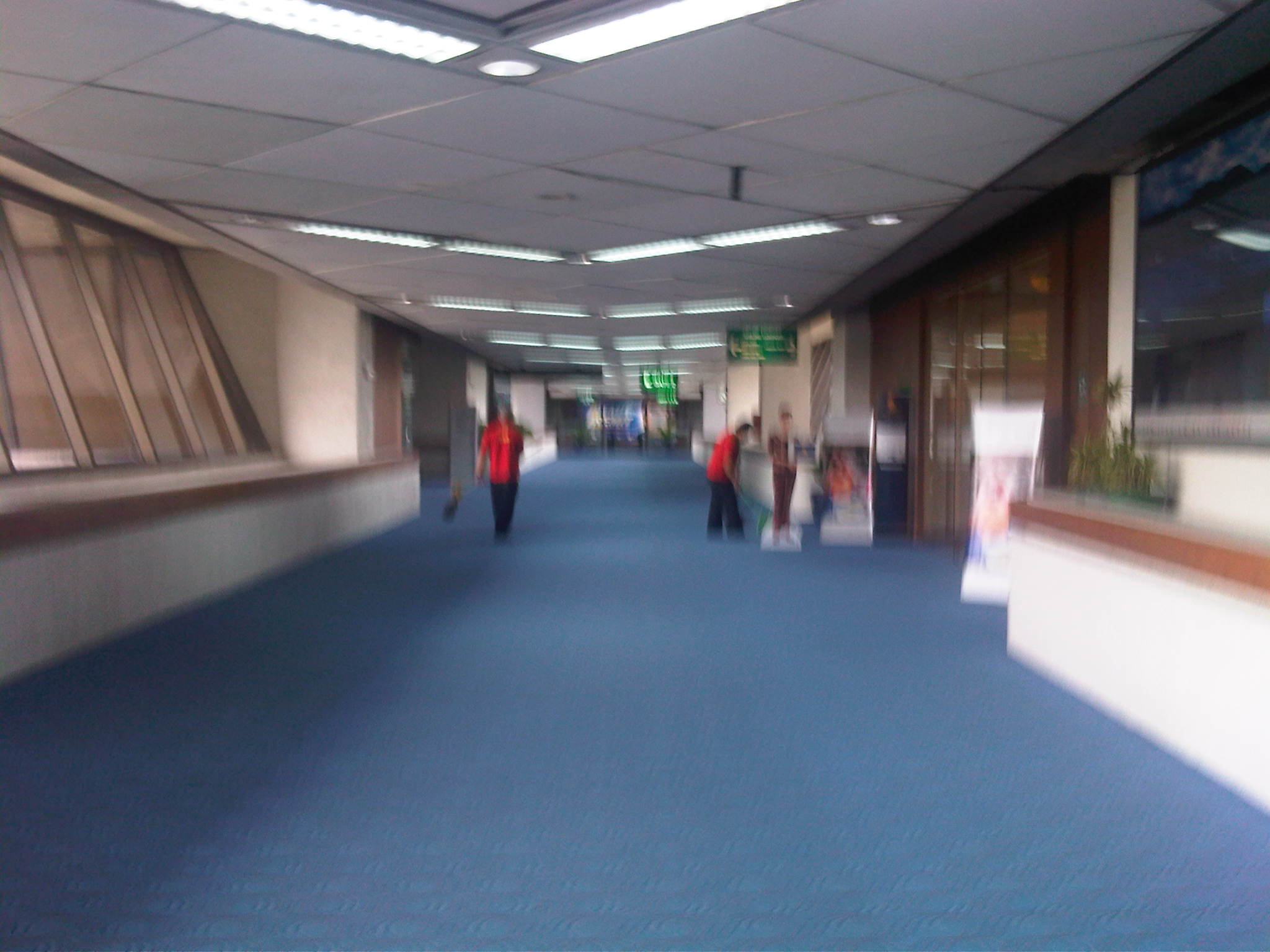 Corridor leading to the pre-departure area and gates at one wing of the terminal – the carpets seem tidy enough and airport staff may be found cleaning the area near one of the airline lounges.
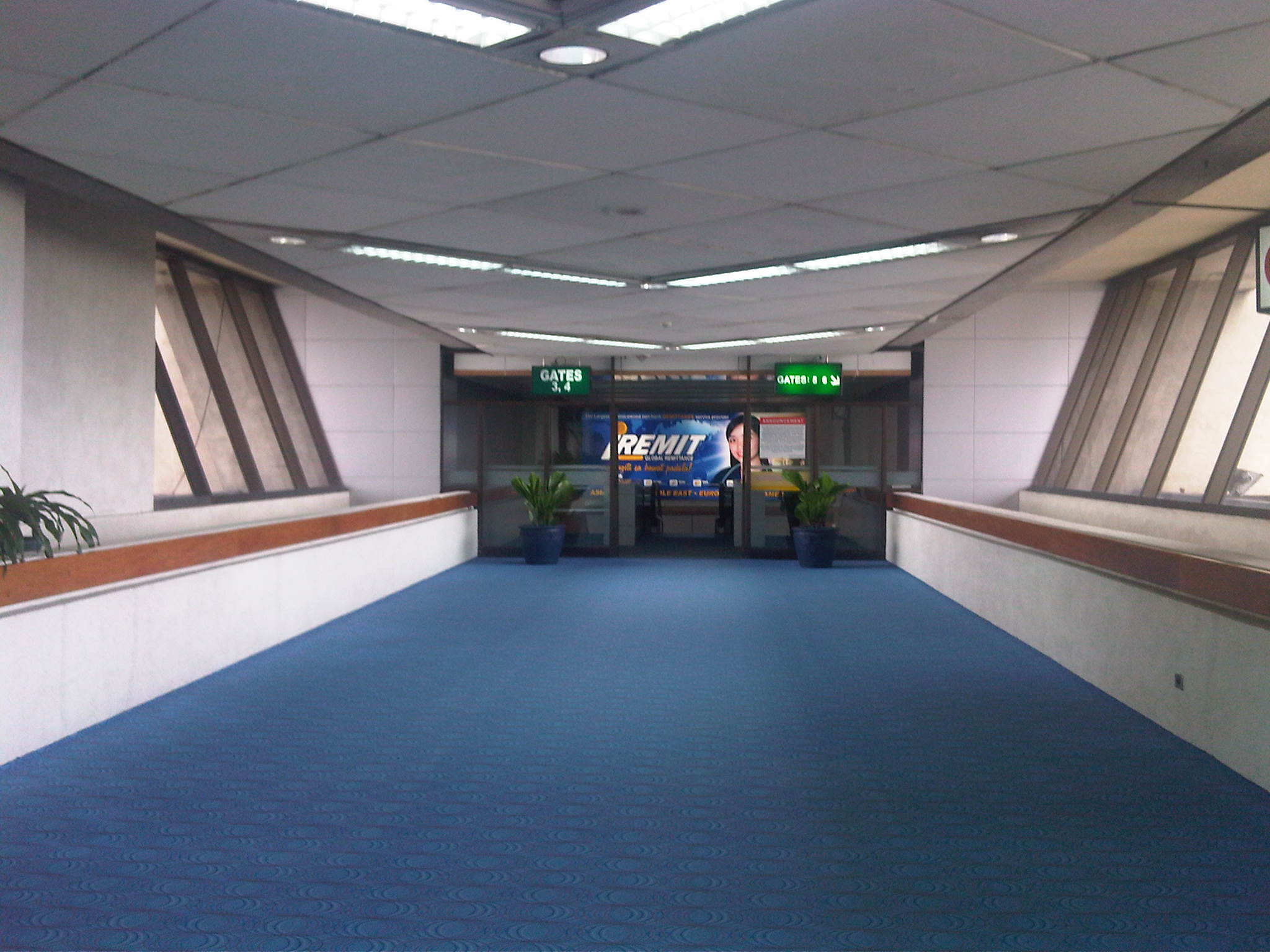 Corridor leading to the pre-departure area – the area
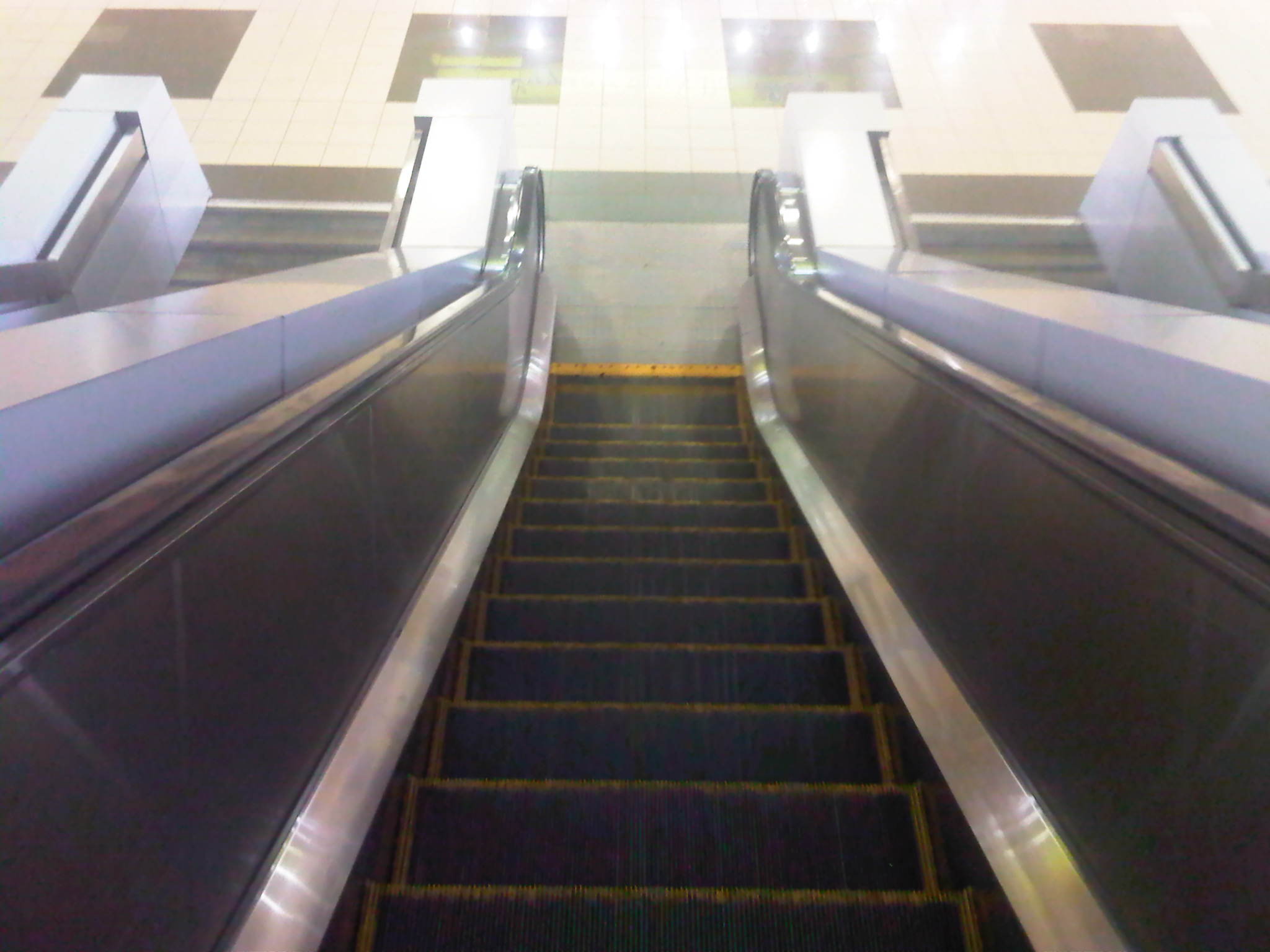 View along the escalator descending towards the pre-departure area – upon reaching the bottom, one will find himself/herself facing counters selling food and drinks to travelers.
 Shops selling local goods like dried fruit, cookies, preserves, souvenirs and other stuff at the pre-departure area of the terminal. Notice the newly tiled floors?
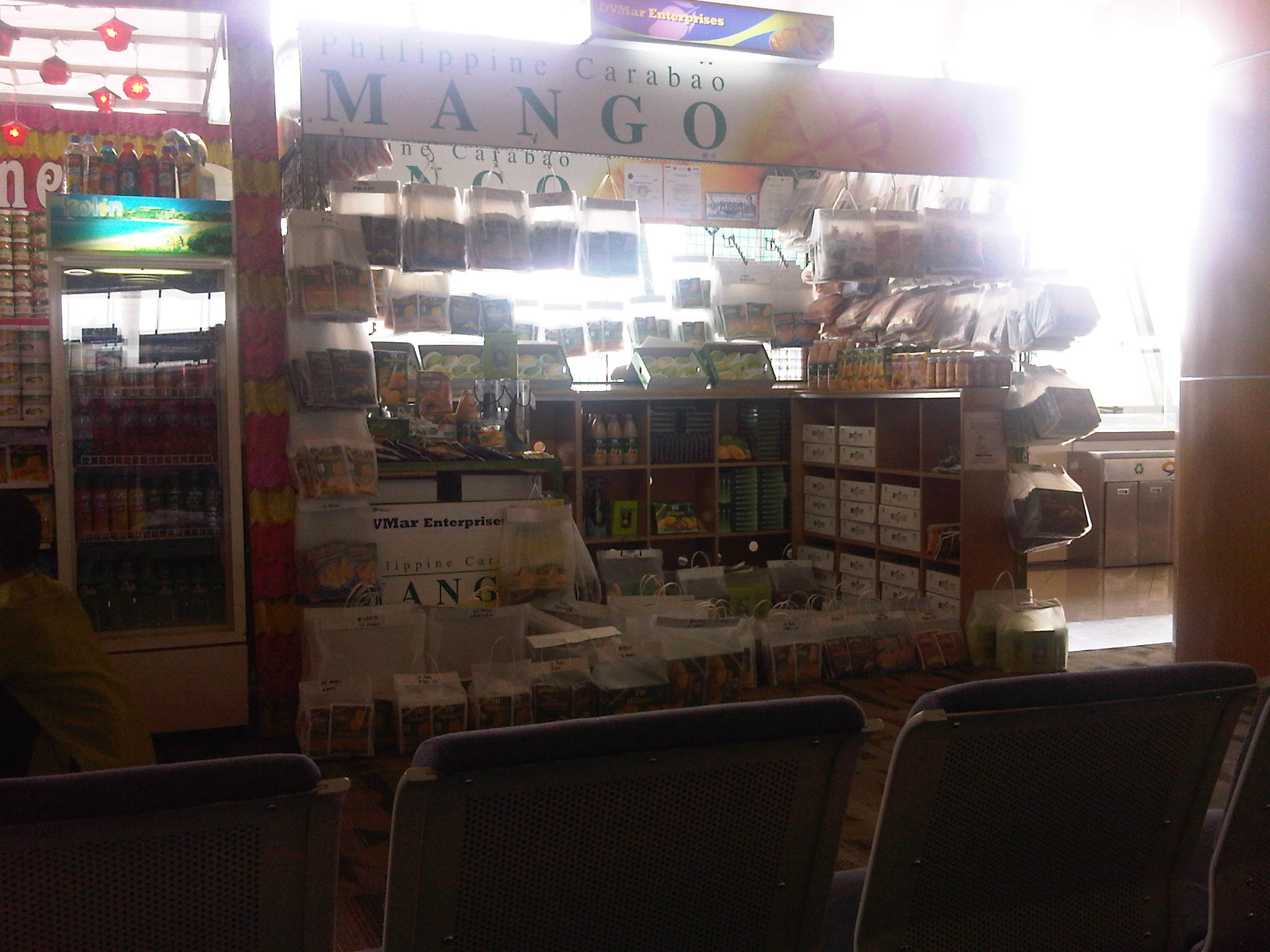 Shop specializing in products made out of Philippine mangoes – they even sell fresh mangoes aside from the popular dried fruit and candies
 Seats at the pre-departure area of the terminal – this is the free seating area that is not associated with any airline. Normally, areas are cordoned off for passenger control and security measures prior to boarding by any airline. The seats are relatively old but are clean and some appear to have been re-upholstered.
 Passengers waiting at the designated area for Singapore Airlines. The airline conducts a security check of all hand-carried baggage for all passengers similar to the practice for US-bound flights.
Admittedly, there is still much work to be done for NAIA’s Terminal 1 in order for it to be able to handle more passengers and well-wishers. There are also a lot to be done in terms of amenities and we can be hopeful that issues pertaining to its facilities will be addressed sooner rather than later.
–
Changi’s Terminal 3
I have been to Singapore many times but usually go through Terminal 2 and the Budget Terminal. It came as a pleasant surprise that our Singapore Airlines staff announced we were arriving at Terminal 3 instead of at 2. I quickly realized the airline could do this as SIA flew out of both Terminals 2 and 3, with 2 used for flights to Asian destinations and 3 for flights to the US and Europe. Our aircraft would probably be flying to a US or European destination after we deplane. I have heard a lot of good stuff about Terminal 3, which is the newest and largest of the 3 main terminals at Changi. Mostly, I’ve heard and seen (in photos) about it from my wife, whom I trust to know what a good terminal is based on her frequent flights abroad. She has been to more international airports than me including those in Europe and the US. My first impression of Terminal 3 is that it is perhaps the best terminal I’ve seen so far and definitely puts Changi in the Top 2 or 3 airports in the world.
 Crowded Skytrain servicing the Changi Airport Terminals (except for the Budget Terminal, which is accessible via a shuttle bus).
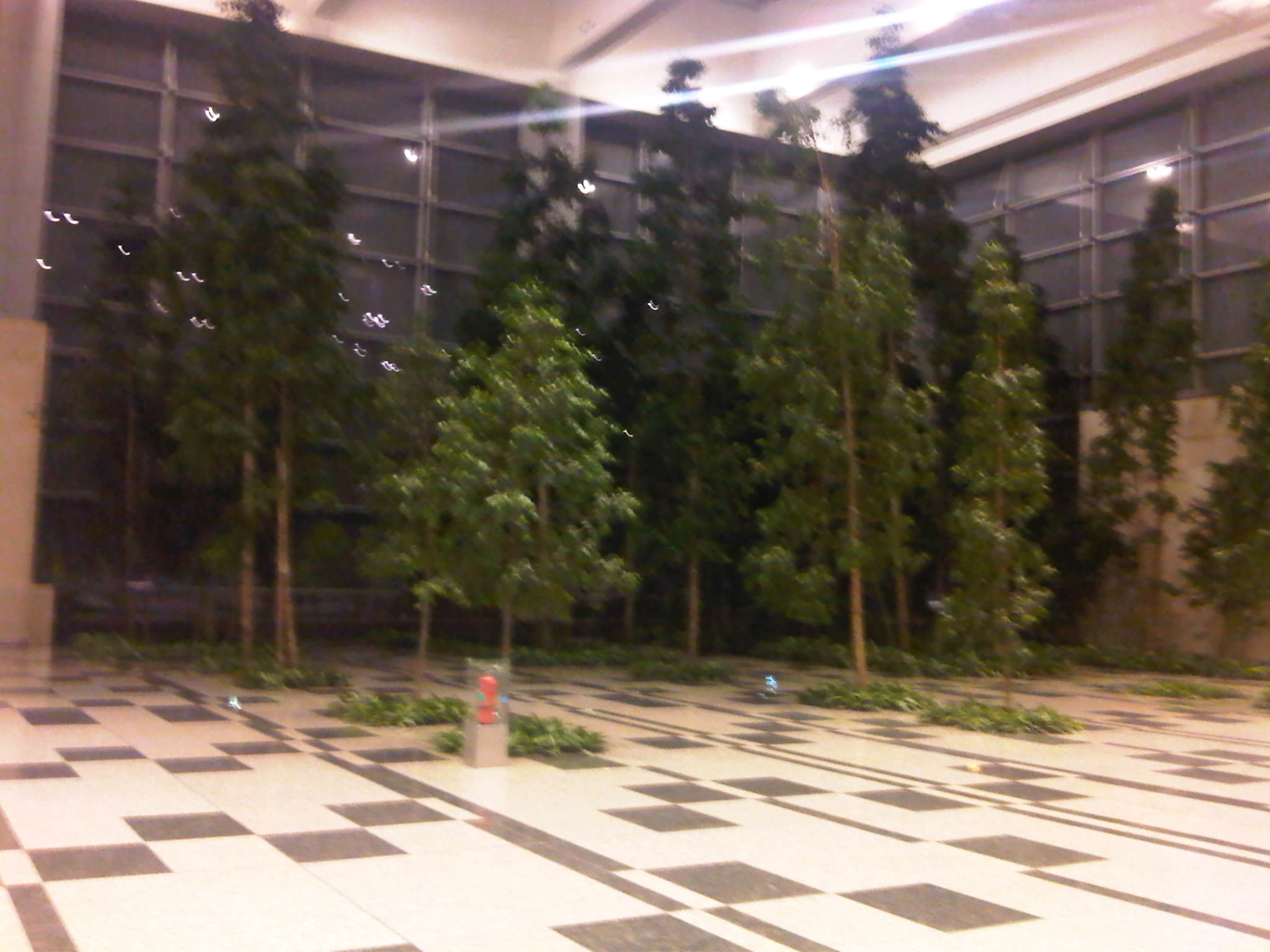 Indoor pocket forest at Changi’s huge Terminal 3 – these were actual trees laid out inside the terminal that visitors could see as they descended the escalators from the concourse to proceed towards the immigration counters.
 Statues of a couple on what looks like real grass with bird flying around them. There was a description near the artwork but opted not to approach and be too touristy considering this area was just before the immigration counters.
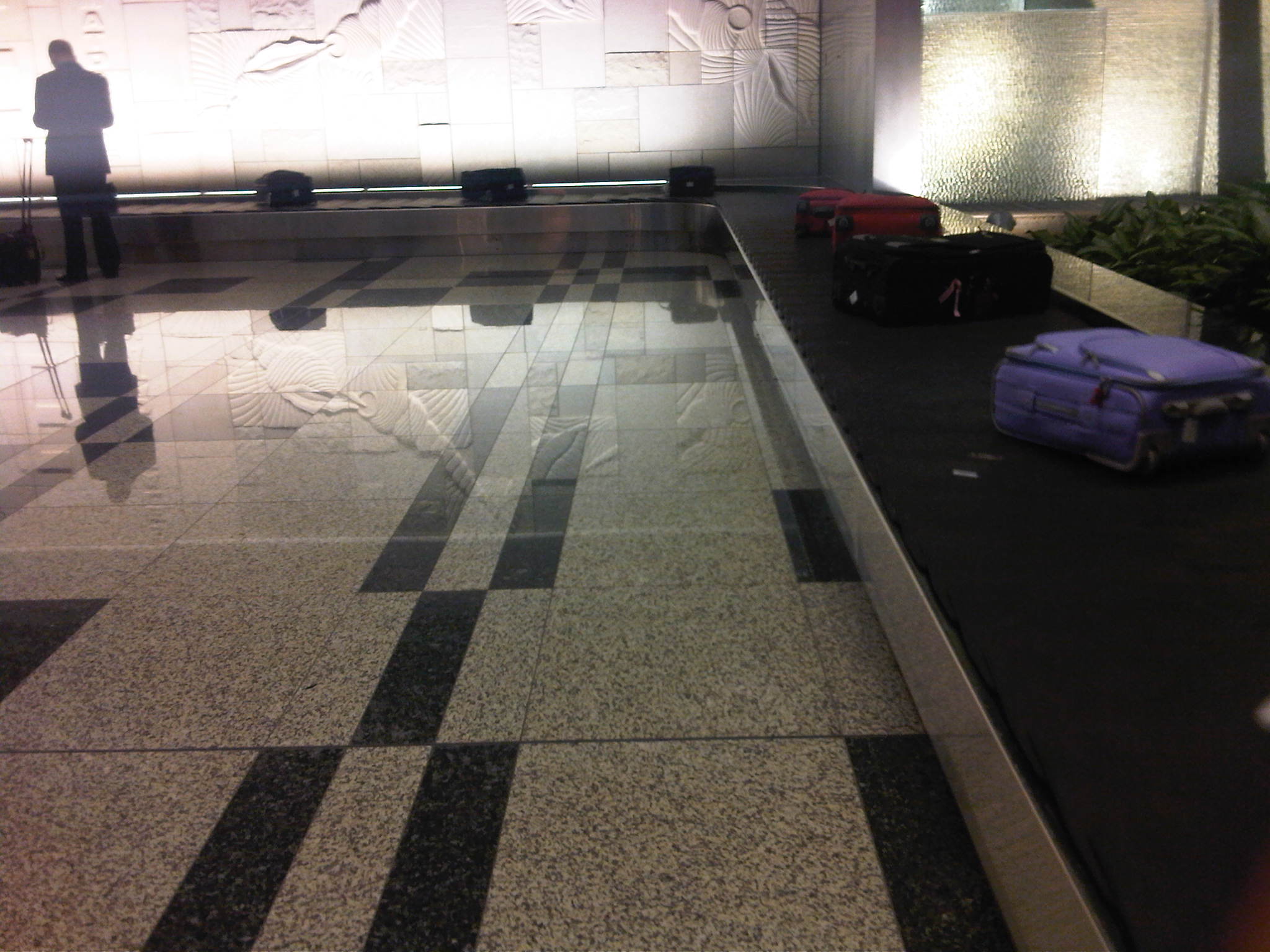 At the baggage claim area waiting for my luggage to arrive via conveyor, I noticed the sparkling floors of the terminal. They actually mirror the relief work of the walls.
–
NAIA Terminal 3 multi-level parking building
I finally had the opportunity to take some quick photos as we drove through the departure level of NAIA’s Terminal 3. The objective was to take a few photos of the still closed multi-level parking facility adjacent to the terminal building, which could be accessed both from the ground and upper level driveways. It was late afternoon and it looked like it was going to rain so the photos were not as good as I would have liked them to be. Still, they clearly show the unused parking facility of T3 that could have been quite helpful to a lot of travelers especially those who wanted to leave their vehicles at the airport a few days or nights for short trips.
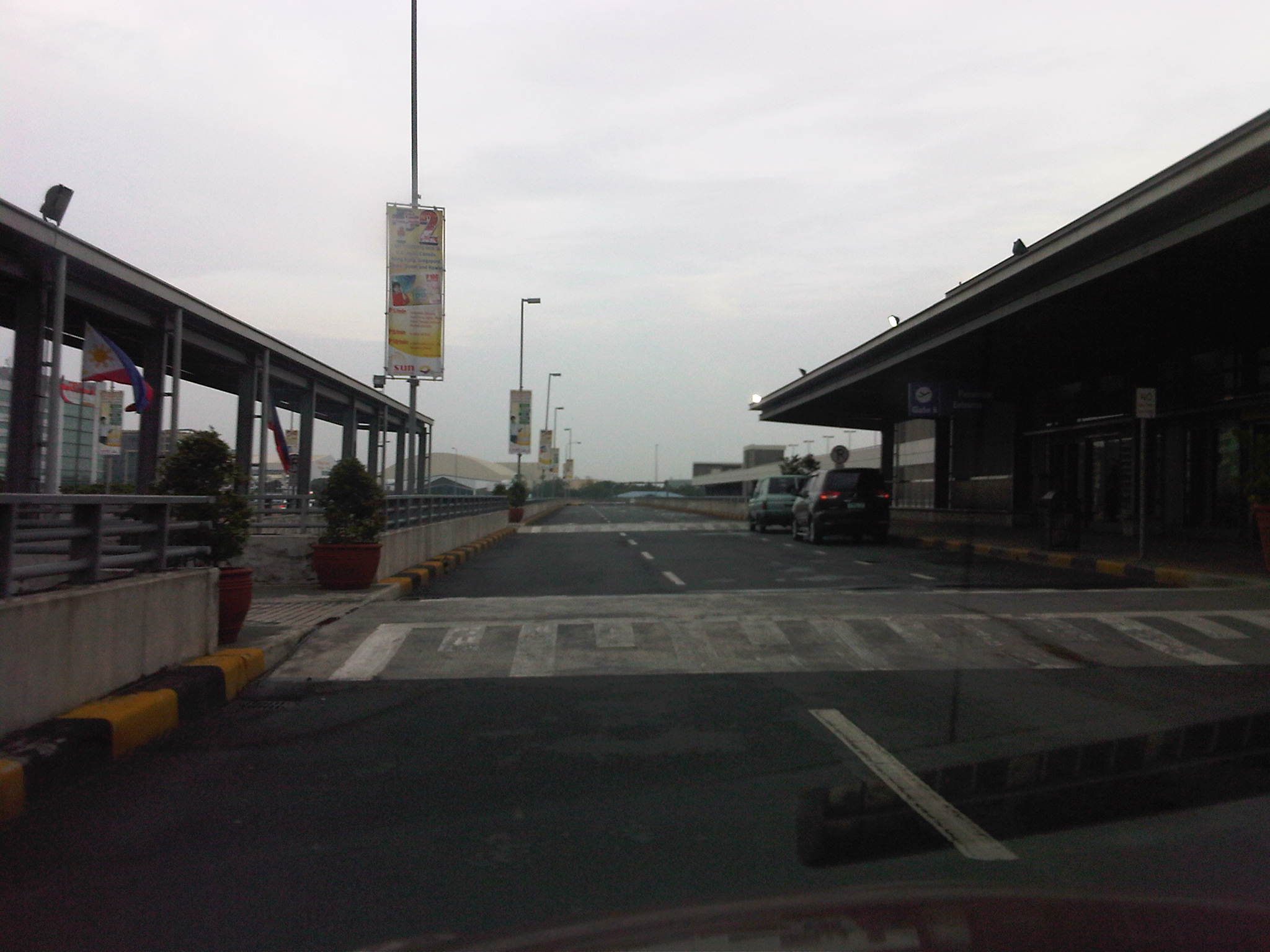 Driveway along the departure level of NAIA Terminal 3
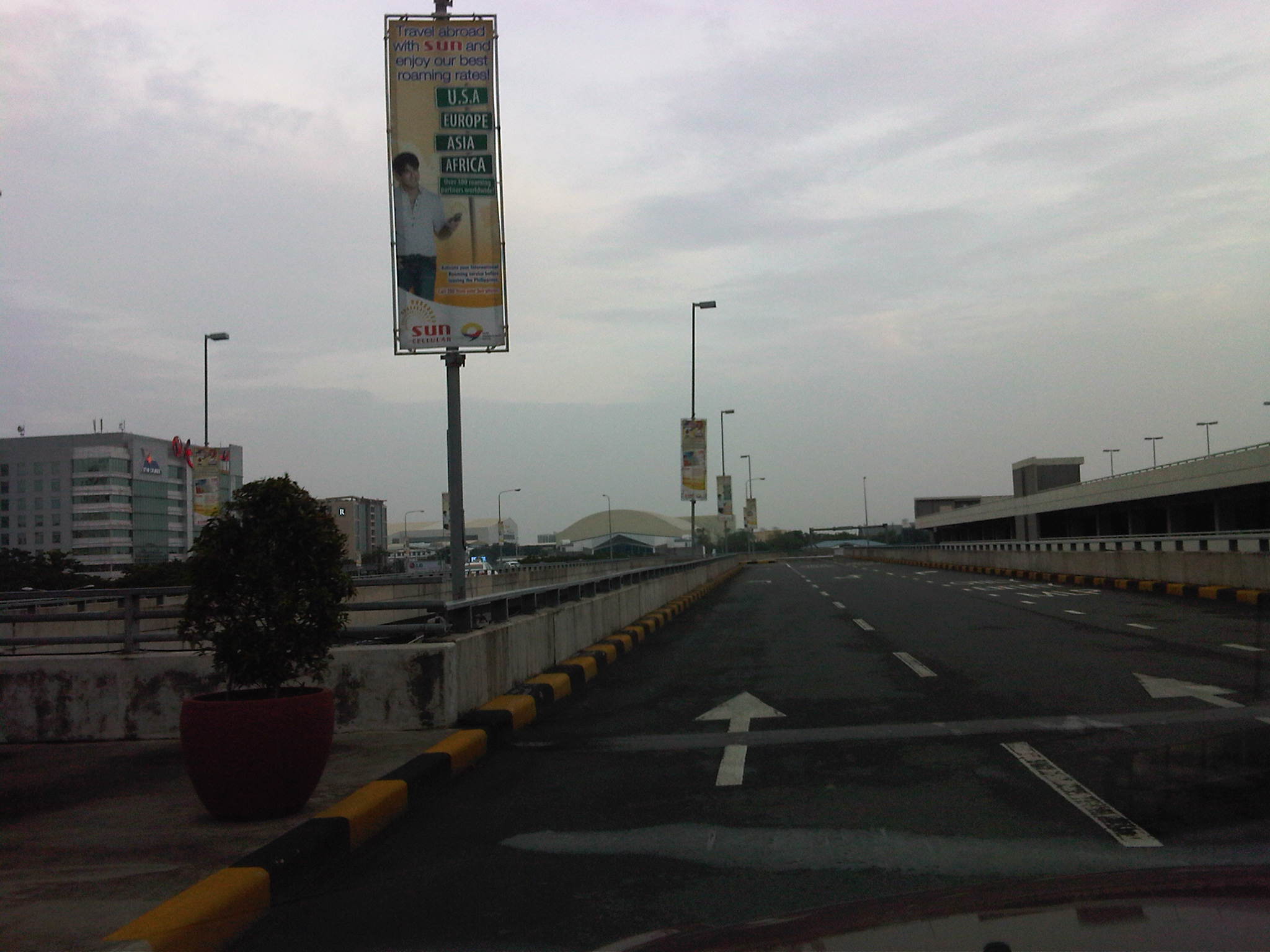 Motor vehicle exit ramp from the departure level – the parking building is seen on the right
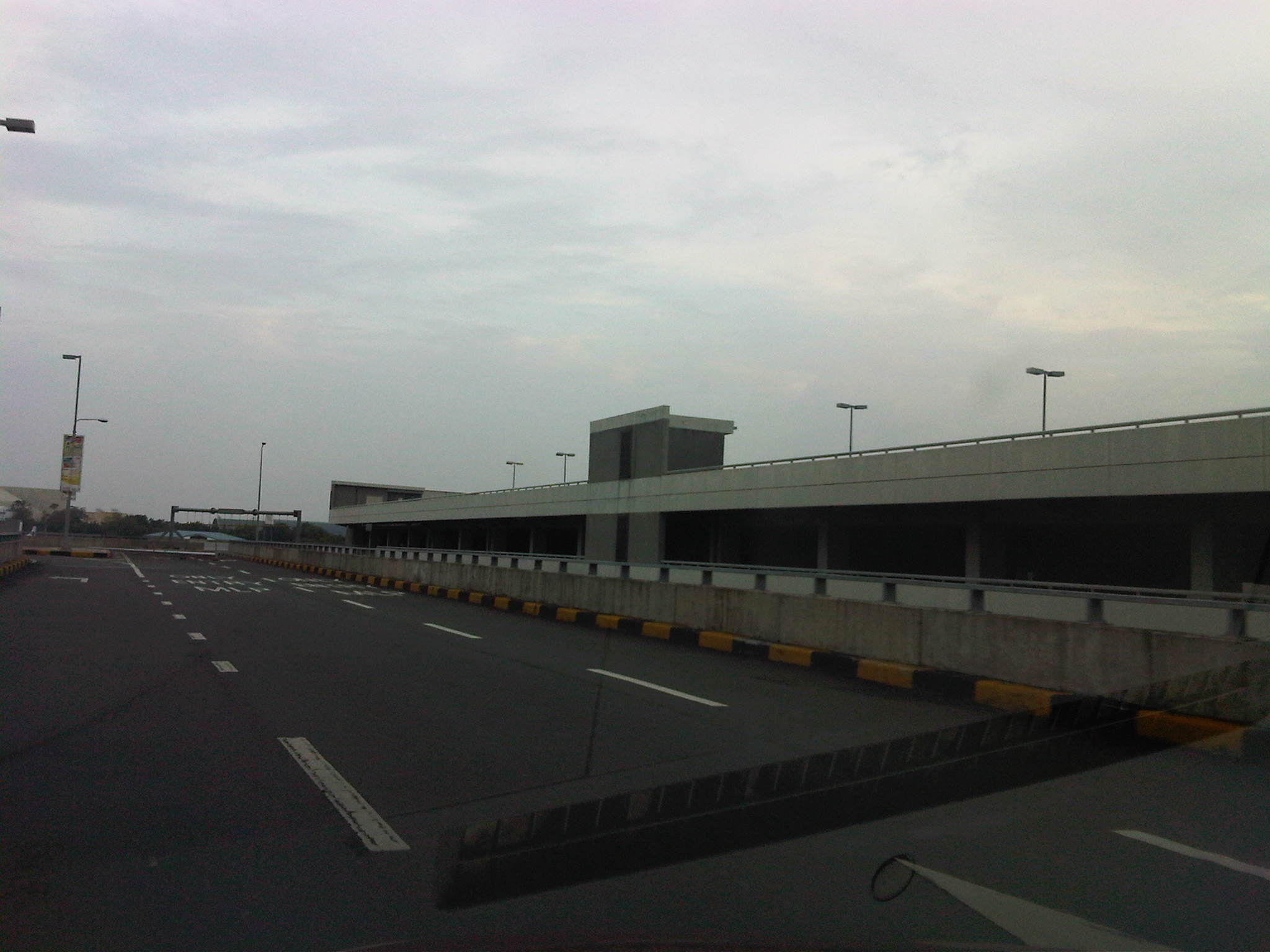 The parking building is seen immediately after the passenger terminal gates for departures
 After unloading passengers and well-wishers, drivers could have proceeded to the parking building via the ramp from the second level driveway (shown at the right in the photo).
 Ramp to Andrews Avenue – the Newport City development that contains several hotels including a Marriott Hotel and Resorts World Manila is located in the complex.
–
Another look at Davao’s Francisco Bangoy International Airport
I featured Davao in a previous post and just had to feature it again after being able to get a few decent photos of the arrival areas, passengers’ lounge and the terminal itself. The photos will also show that the airport is well maintained considering not much has changed since the last time I was there for a few days in 2009. I was actually in Davao in 2010 but it was a very quick visit as I was en route to Manila from General Santos City and had traveled more than 2 hours by land to make the last flight out of the city.
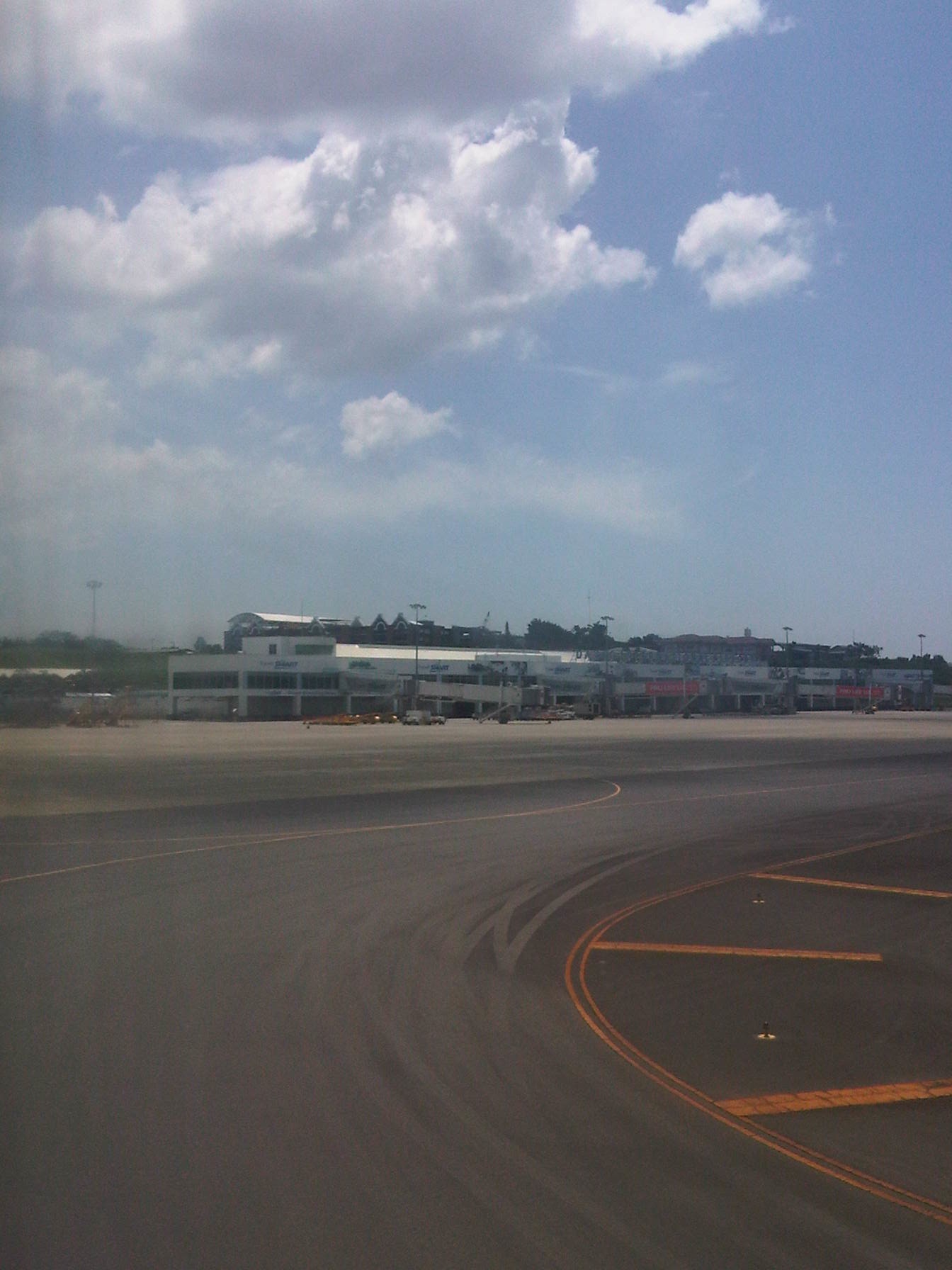 Airport terminal as seen from a plane taxiing from the runway
 Tarmac area at Davao Airport
 Waiting for the plane to unload the pallets containing passengers’ baggage and other freight
 Baggage claim area at the domestic wing
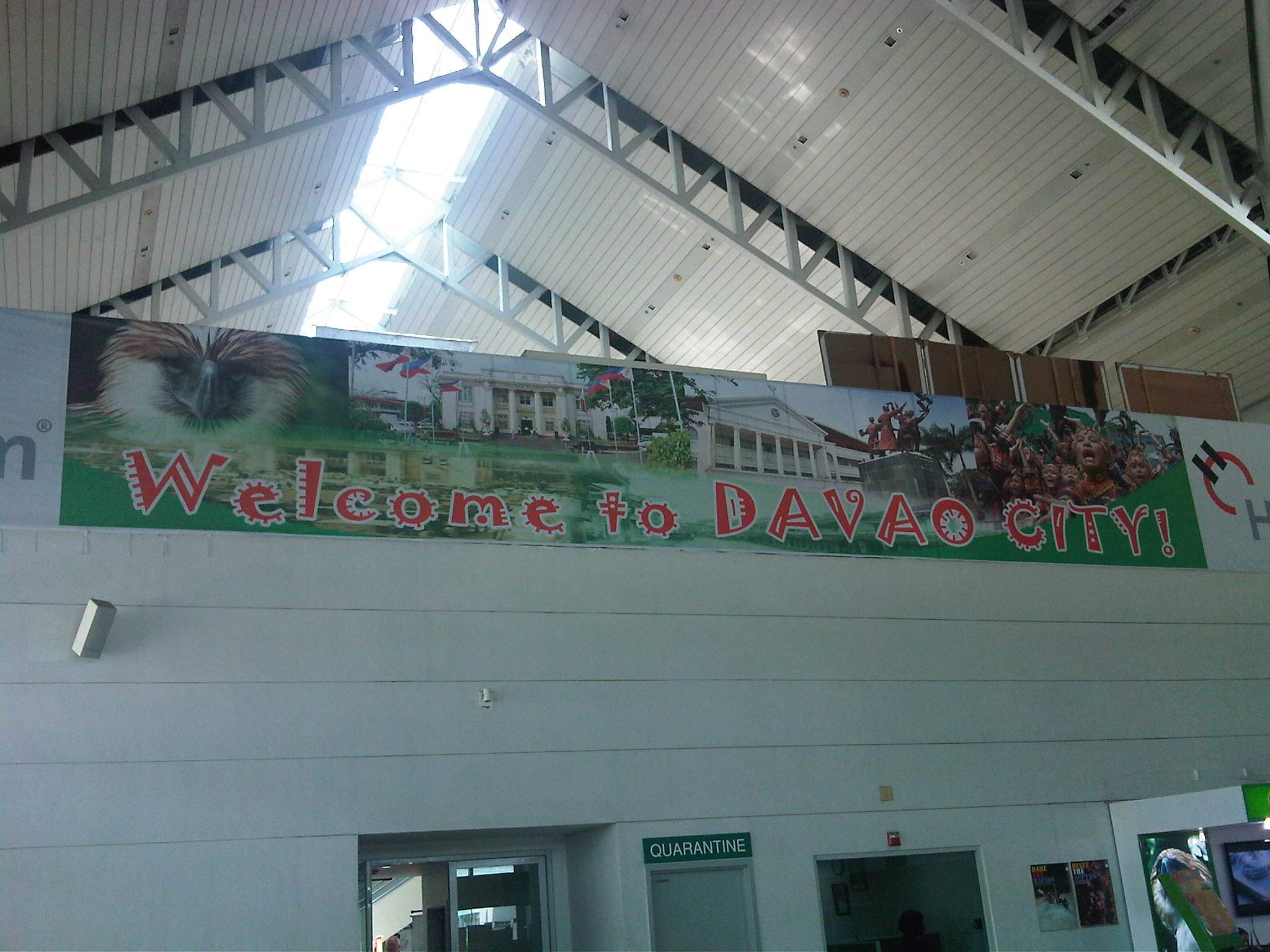 Tarpaulin welcoming visitors and returning residents to Davao City
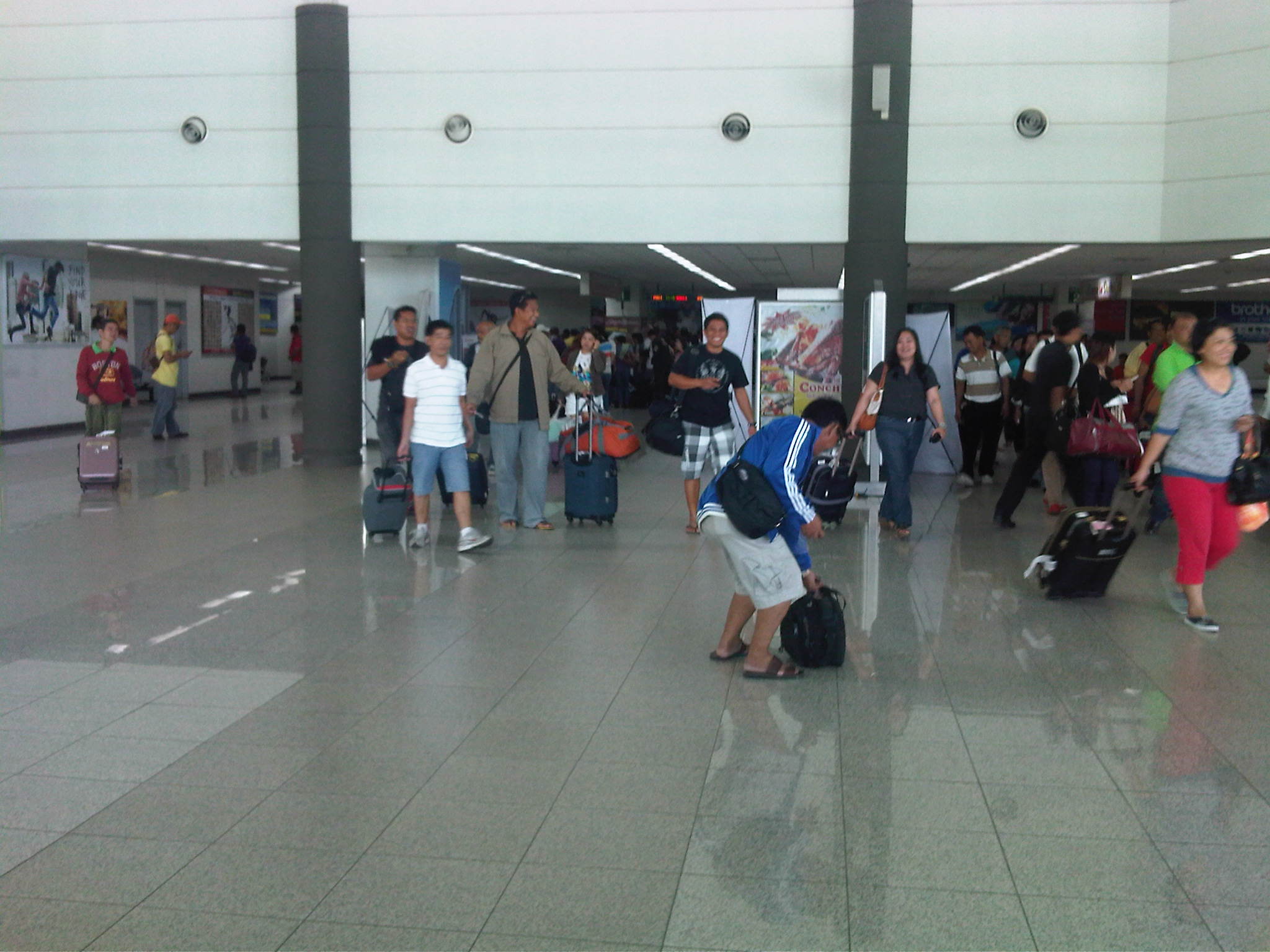 Passengers streaming from the baggage claim towards the exit from the arrival area
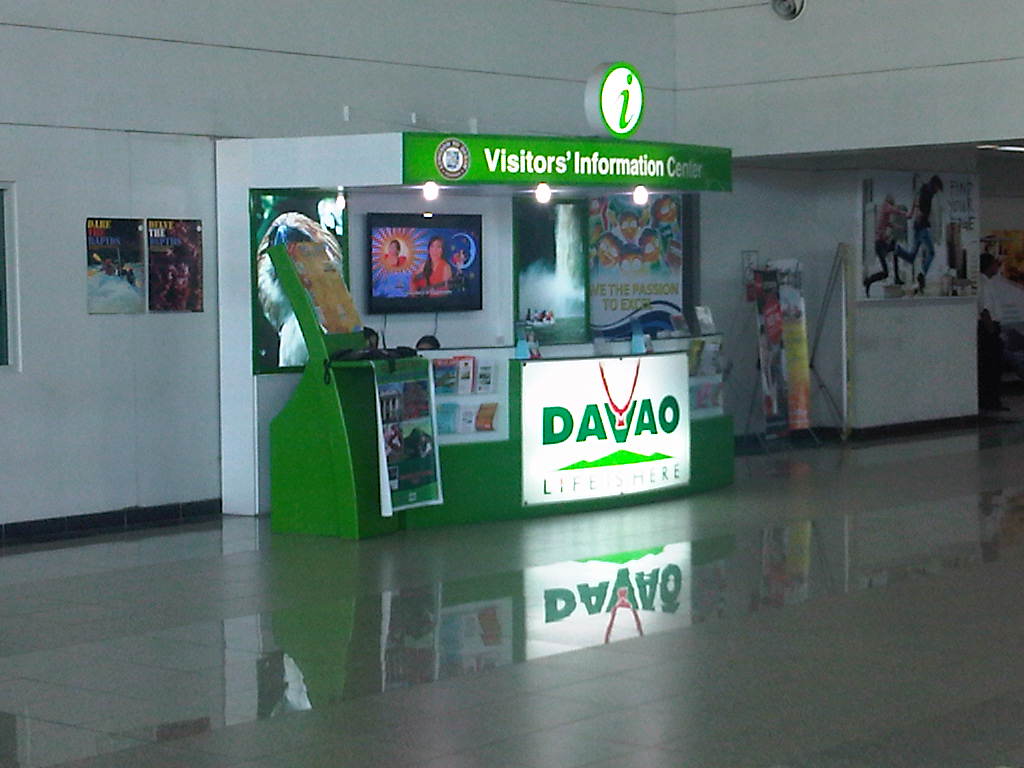 Information booth – they have good materials for first-timers
 Airport terminal as seen from the road leading to the national highway
 It was a pleasant surprise to see self-service check-in machines at the Davao airport. I haven’t seen these at NAIA Terminal 3 as well as at the Iloilo and Bacolod-Silay airports. While I usually check-in online when I’m flying Cebu Pacific, this can be a good alternative for passengers traveling light and have no luggage to check-in.
 Another look at Davao’s spacious terminal – the only glitch seems to be the descending escalator not functioning at the time we were there.
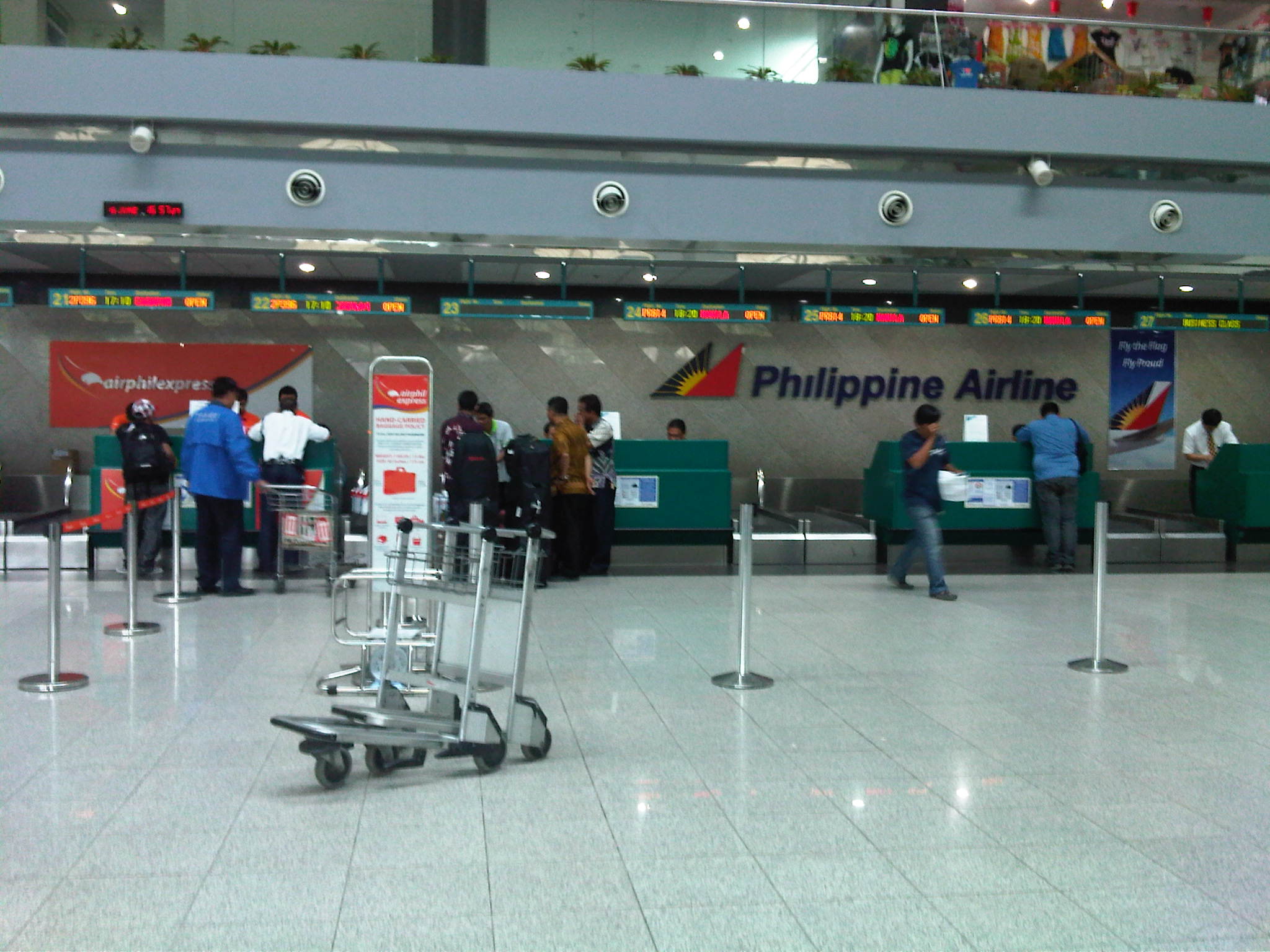 Check-in counters for domestic airline passengers – though spacious, it could get quite crowded not just because of the number of passengers but also because of their luggage and souvenirs. Davao is well-known for its fruits so it is not uncommon for passengers having one or more boxes of pomelo or perhaps durian, which have to be checked-in as the latter is not allowed in the aircraft cabin due to its smell.
 Corridor from the final security check prior to the departure gates
 Along the corridors are a few benches and some small shops as well as the lounges for business and first class passengers, and VIPs.
 The pre-departure lounge of the airport is expansive – appropriate for the number of passengers usually served by the terminal
 Another look at the pre-departure area, which looked crowded because people tended to be seated closer to their departure gates. Our flight would be on board a B747 so there were really a lot of passengers. Still, there were many seats available at the lounge.
 That’s our gate in the middle of the photo.
I think Francisco Bangoy is one of the cleanest airports in the Philippines. It is also among the most organized and more spacious ones. Airport authorities are also quite strict with security, giving travelers that sense of safety once in the airport premises. Airports should provide such feeling to passengers and other users of the facility considering the airport is a major meeting place for a lot of people aside from being gateways and serving as a first impression of that city to visitors.
–
 Caught (up) in traffic