
Home » Behavior (Page 18)
Category Archives: Behavior
On the importance of public transportation post-pandemic
I am sharing another article from Todd Litman that appear yesterday:
Litman, T. (2020) “Lessons from Pandemics: Valuing Public Transportation,” Planetizen, https://www.planetizen.com/blogs/109584-lessons-pandemics-valuing-public-transportation?fbclid=IwAR2jduFuYoyf_MoksI2Th4UoWtQYMQVOdwHuiih8JM9NxMN5pT_e1lwhgDQ [Last accessed: 6/13/2020]
The article contains material derived from previous work by the author and provides a list (and links to) resources or references related to this topic.
–
Are face shields to be recommended for pedestrians and other commuters?
Here are some references regarding the use of face shields. Again, I post these here also for my easy reference whenever I need to search for such in the work I am doing or will be doing.
- Perencevich, E.N., Diekema, D.J. and Edmond, M.B. (2020) “Moving Personal Protective Equipment Into the Community – Face Shields and Containment of COVID-19,” JAMA Network, https://jamanetwork.com/journals/jama/fullarticle/2765525 [Last accessed: 5/25/2020]
- Lindsley, W.G., Noti, J.D., Blachere, F.M., Szalajda, J.V. and Beezhold, D.H. (2020) “Efficacy of Face Shields Against Cough Aerosol Droplets From a Cough Simulator,” Journal of Occupational and Environmental Hygiene, 2014;11(8):509-18.
- Mundell, E.J. (2020) “Face shields a more effective deterrent to COVID?”, WebMD, https://www.webmd.com/lung/news/20200430/face-shields-a-more-effective-deterrent-to-covid#1 [Last
–
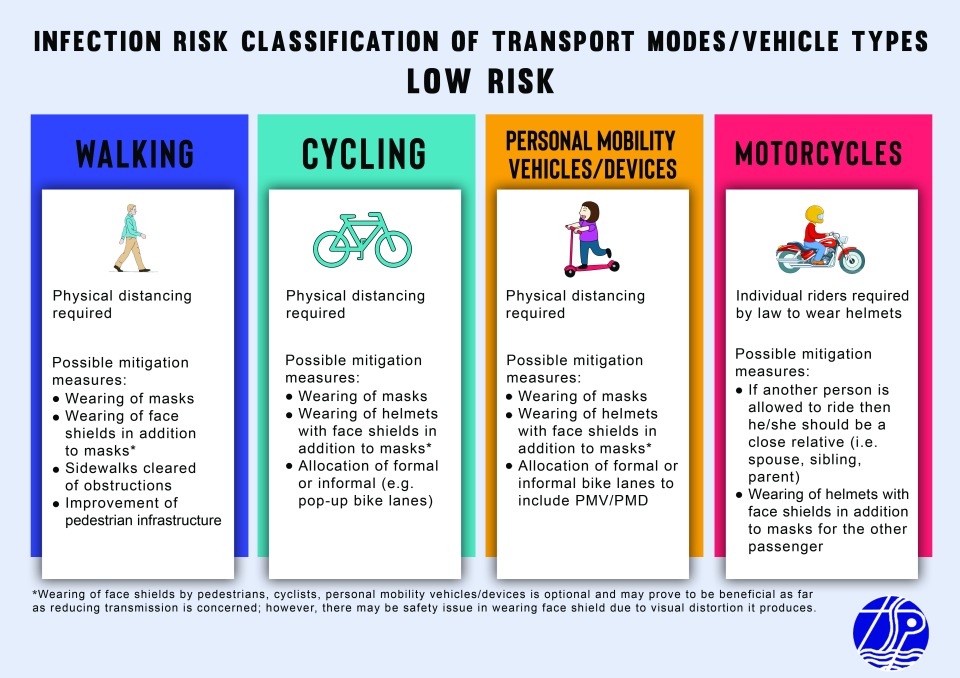
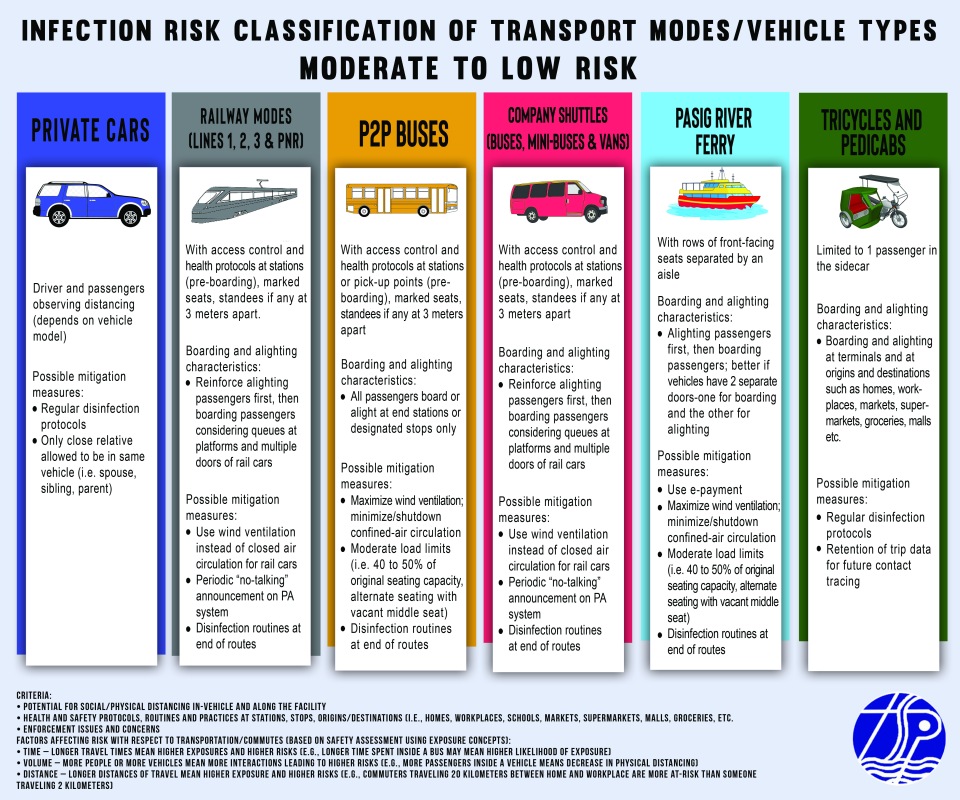
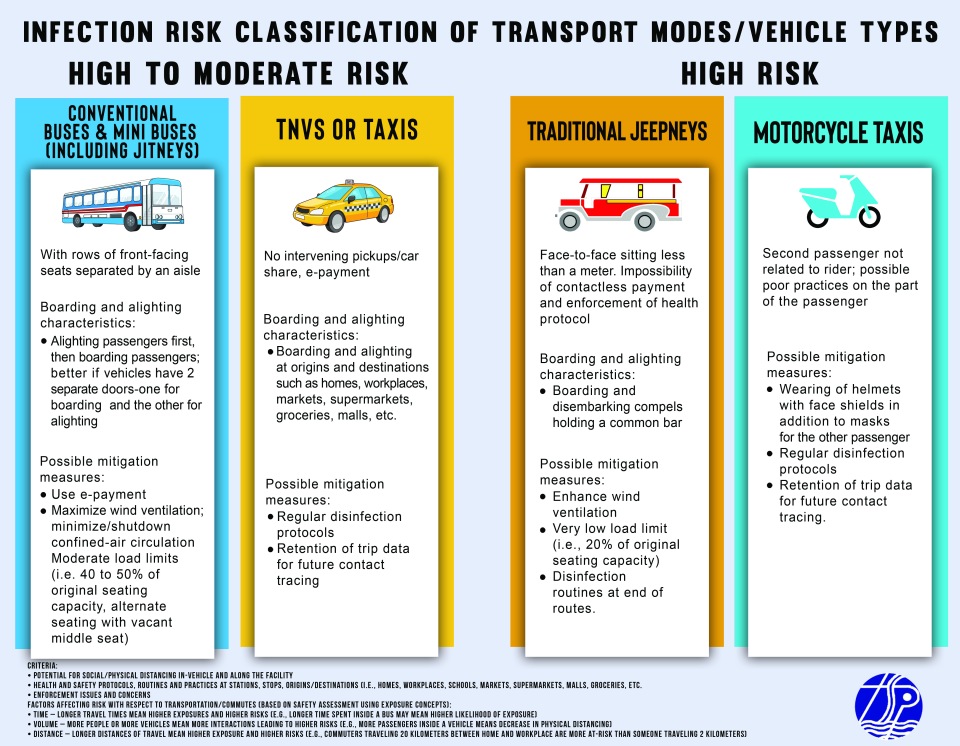
Infographics: Infection Risk Classification of Transport Modes Post-ECQ
The infection risk table I posted a few days ago was improved into the following infographics:
–
COVID-19 Infection Risk Assessment of Transport Modes
I posted about the work we have been doing to assess the infection risk (i.e., spread of COVID-19) for various modes of transport considering the transition of many areas including the National Capital Region (NCR) to the General Community Quarantine (GCQ). The work was undertaken through the Transportation Science Society of the Philippines (TSSP), which is under the umbrella of the Eastern Asia Society for Transportation Studies (EASTS). Here is the outcome in the form of an “Infection Risk Classification of Transport Modes or Vehicle Types” developed by a core group of public transportation and road safety specialists among its members:
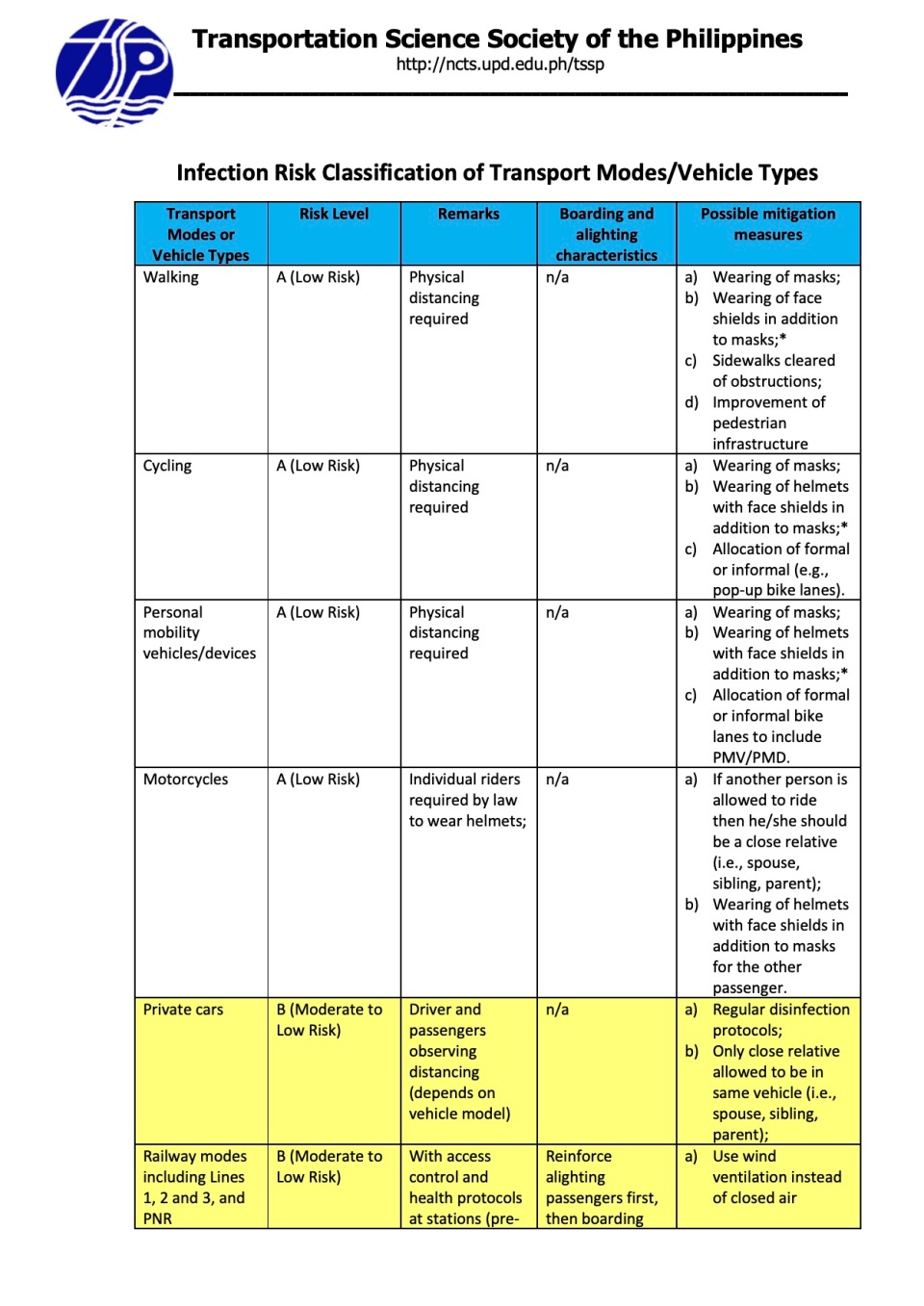
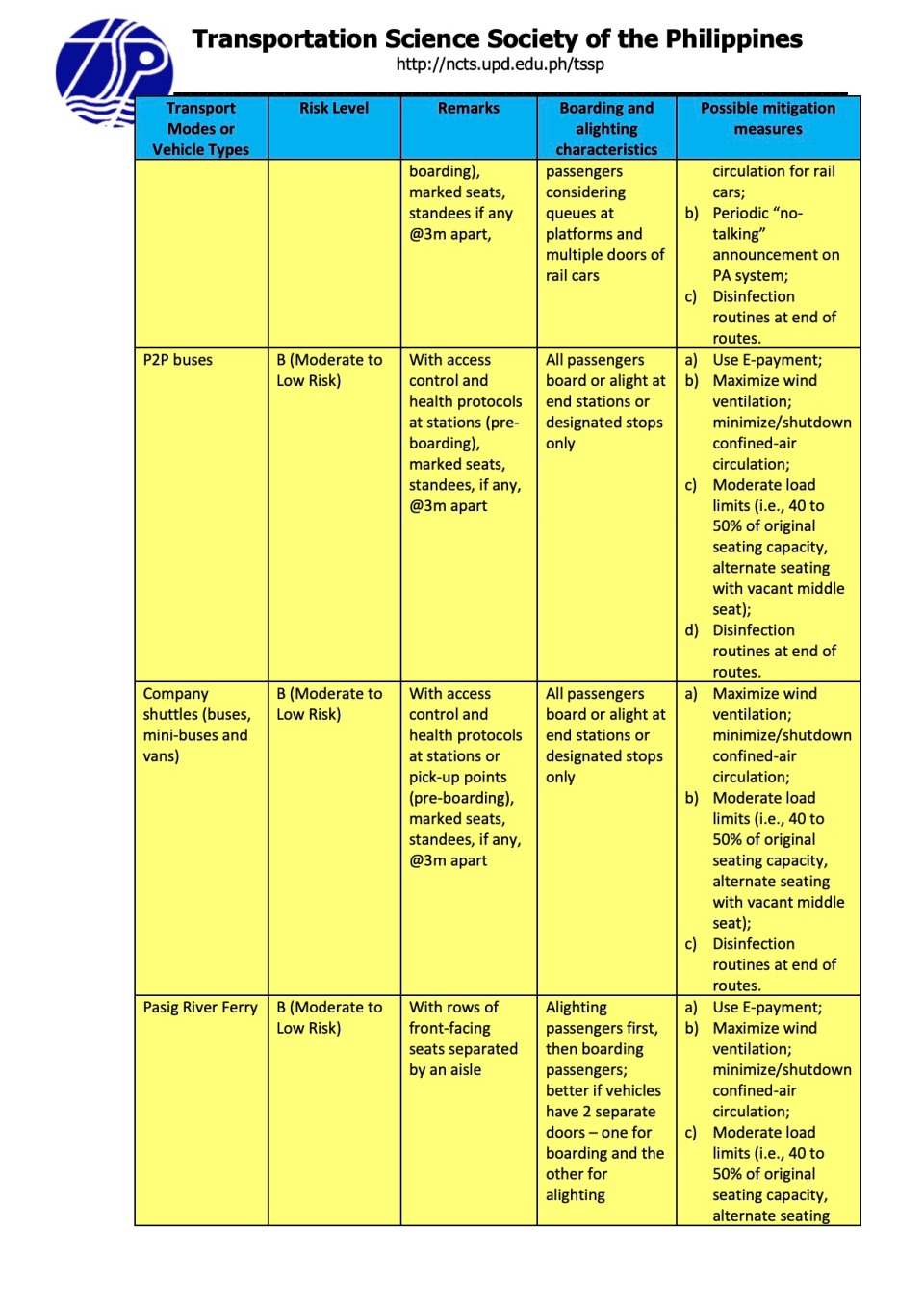
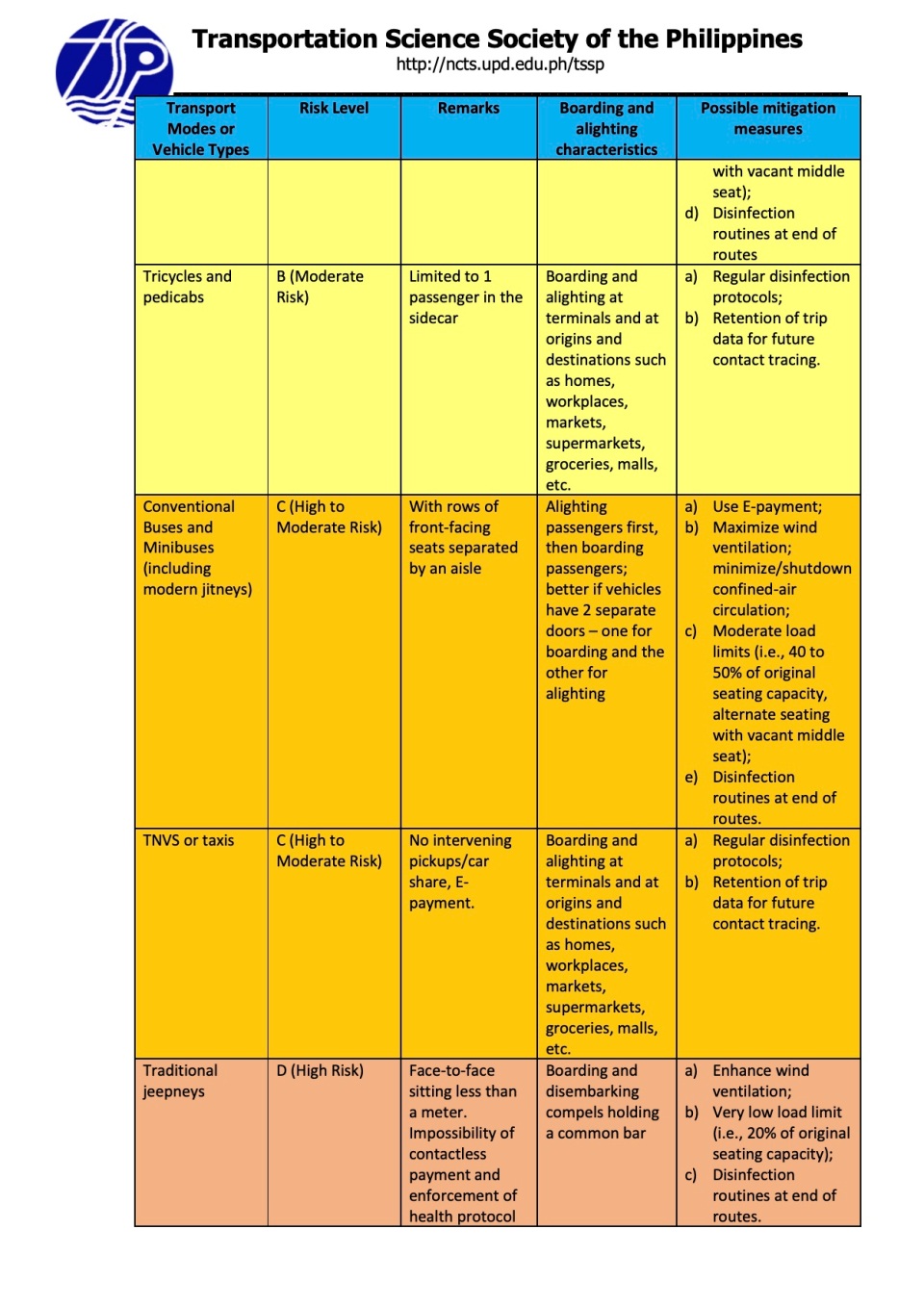
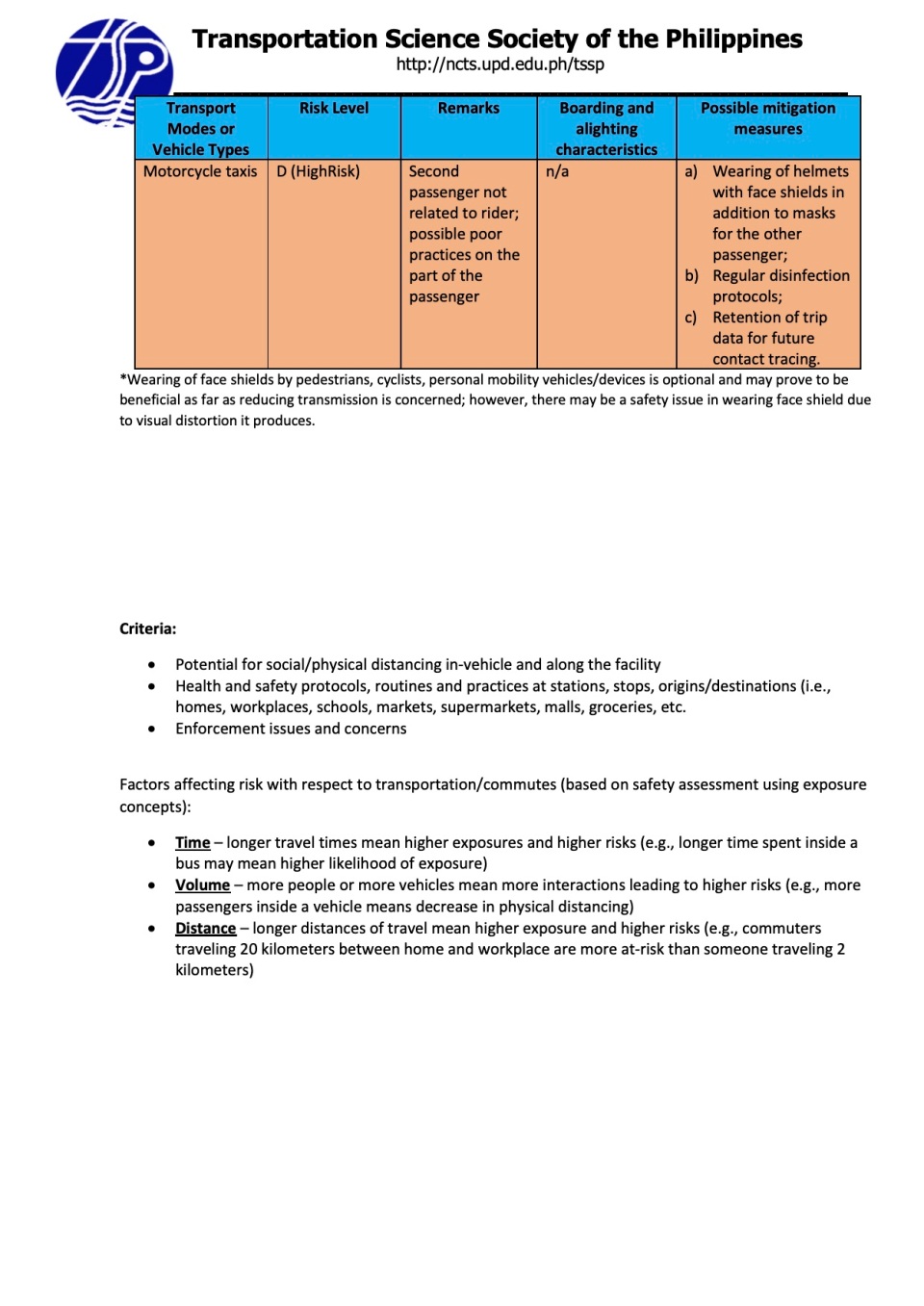
Note again that this is the product of a rapid assessment using the mentioned criteria and factors. It is a qualitative assessment and a quantitative one, given the data, would obviously been preferred. Moreover, this is an assessment for risk of infection rather than for road safety. In the “old normal”, for example, cycling and motorcycle use may have a higher risk in traffic given traffic mix, human behavior and lack of facilities to make these modes safe.
–
Assessing the risk of infection from the transport safety perspective
My colleagues and I have been developing a risk assessment table for land transport modes to be submitted to the UP COVID-19 Response Team. We did a rapid assessment using mainly concepts from road safety.
The concepts are fairly simple. Risk assessment can be based on the likelihood of contracting the virus gauged from certain exposure factors. Exposure estimation may be quantitative where metrics are applied and data collected for the analysis. Estimation may alternatively qualitative based on experiences, perceptions, expert opinions, etc. but subject to logic (e.g., careful deduction). In road safety, for example, these factors may be defined as three: time, distance and volume.
Time exposure can be determined using travel time as a metric. Longer the travel times mean higher exposures for a commuter. Higher exposure translate to a higher likelihood that a person may become involved in a road crash. Thus, a commuter traveling for 1 hour, one way, will have a higher likelihood of being involved in a crash compared to another traveling only 10 minutes even assuming that both use the same mode of transport. Applied to the risk of viral infection, longer commutes may mean people can have higher exposure to potential carriers of the virus.
Distance exposure can be determined using travel distance as a metric. Longer travel distances mean higher exposures for a commuter. Higher exposure again translate to a higher likelihood that a person may become involved in a road crash. Thus, a commuter with a travel distance of 10 kilometers will have a higher likelihood of being involved in a crash compared to someone traveling only 1 kilometer. Applying this to the risk of viral infection is similar to the previous case for time exposure even when assuming the same mode of transport.
Volume exposure can be determined using both the volume of vehicles as well as the number of passengers inside the vehicles. The more vehicles or people you have on the roads interacting, the higher the likelihood of one becoming involved in a crash. It can also be argued that riding public transport in high volume, mixed traffic makes a passenger have a higher likelihood of being involved in a crash. Again, applying this to the risk of viral infection, it should be easy to understand why physical distancing is necessary in vehicles as well as outdoors when walking or cycling. It should also extend to having less vehicles on the road to further reduce the likelihood of spreading the virus.
In the real world, we cannot isolate each factor from one another. Instead, we have to contend with all three combining to create various scenarios. Along expressways, for example, the volume of vehicles might be high and so are distances. Time exposure can be lower due to high speeds. Yet high speeds can contribute to increased likelihood of crashes. Meanwhile, traffic congestion has all the ingredients for maximizing the likelihood for crashes and, by extension, viral infection. Long commutes (by time and distance) plus high volumes of people and vehicles combine to create the worst case scenario from the perspectives of both road safety and infection, which are both public health issues.
Next – Why we should not return to the old normal…
–
On the DOTr GCQ Guidelines for Public Transport Operations – Rail Sector
I had previously posted for information and reference the Department of Transportation’s (DOTr) guidelines for road public transportation. Here are the guidelines for rail public transportation:
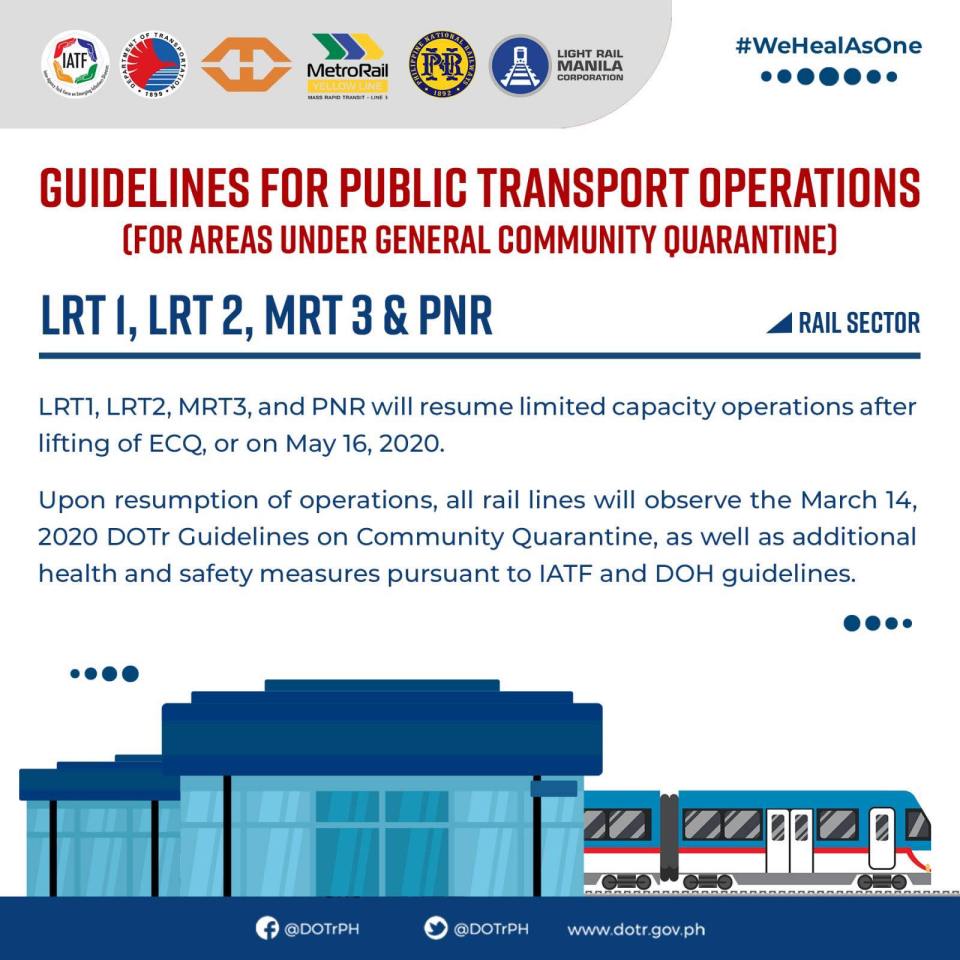
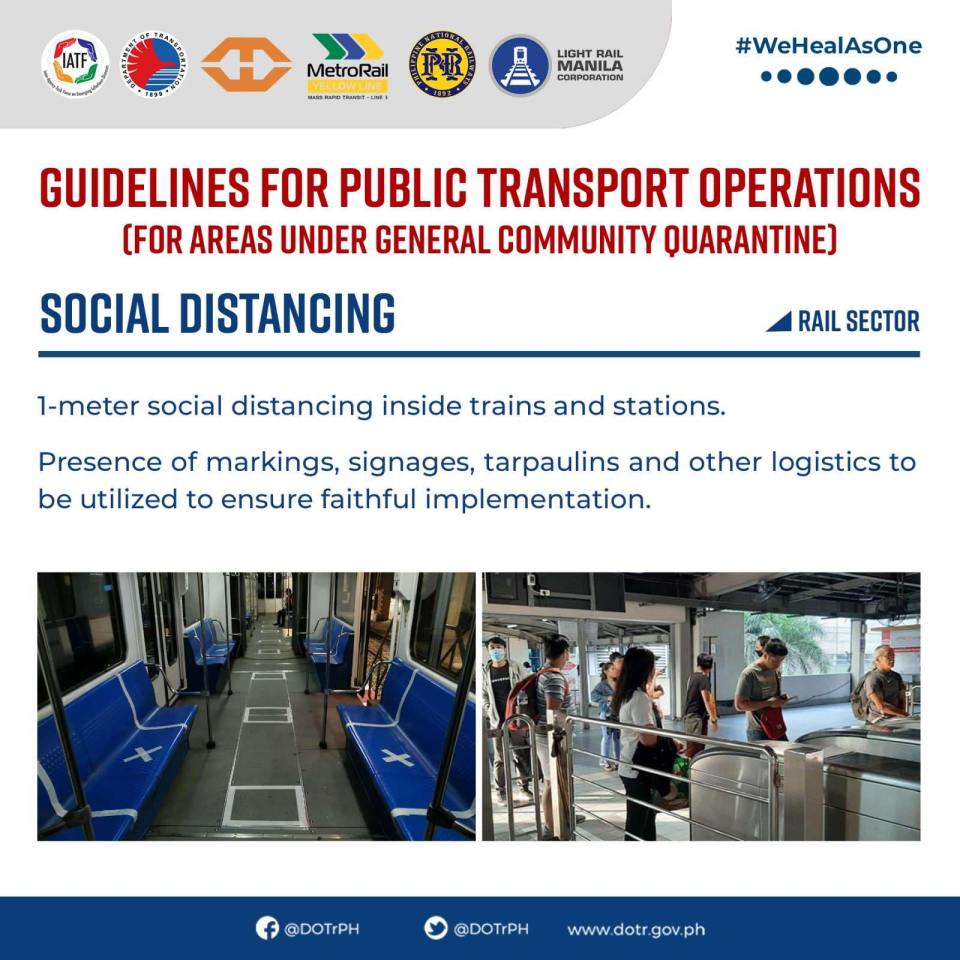

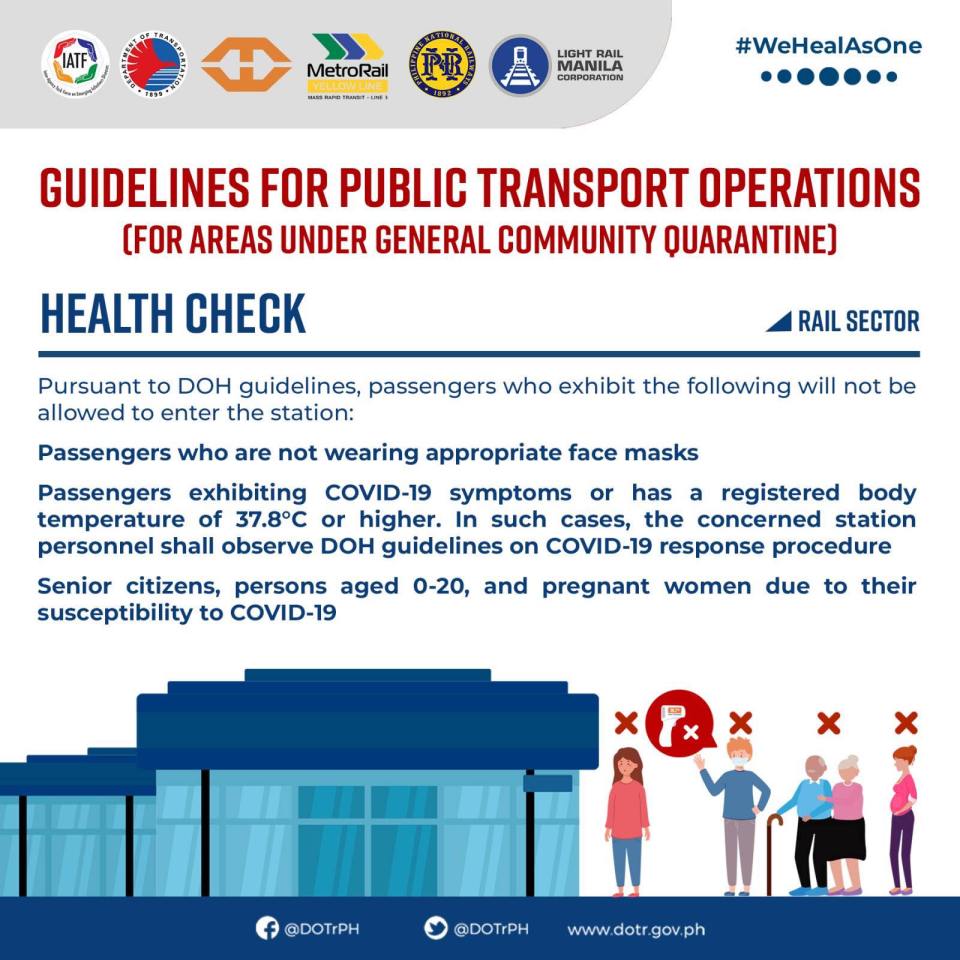

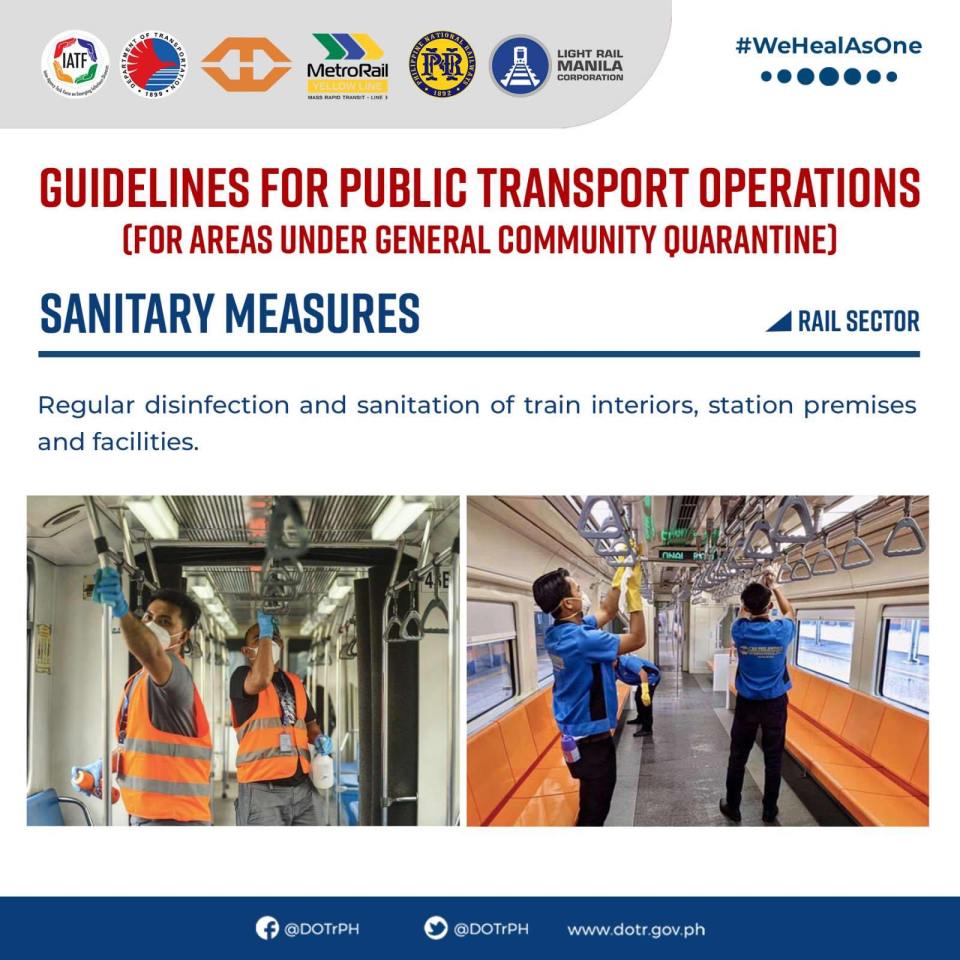

While I said that I will refrain from commenting or critiquing these guidelines starting from the previous post on road public transport, I could not help but say a few things about the case for rail. In particular, I am most concerned about the reduced capacity of trains based on the infographics above. The particular infographic states that passenger capacities for Line 1, Line 2, Line 3 and PNR would be 12, 10, 13 and 20 percent, respectively. These are very low numbers that are not even comparable to the 30 to 50% passenger capacities that road public transportation may be able to achieve. Would it be worth it (and I’m talking about financial terms here) to operate at these capacities? Or are there solutions that could increase train passenger capacities while ensuring physical separation. I use the term “physical separation” here instead of “physical distancing” because it may be possible to design not just a layout but barriers that would also be effective in minimizing if not eliminating the possibility of infection of the virus should any passenger turn out to be infected. People, after all, will be required to wear masks and even gloves. Others may opt to wear face shields. And there are also measures vs infection at the stations or terminals as well as the workplaces. What do you think?
–
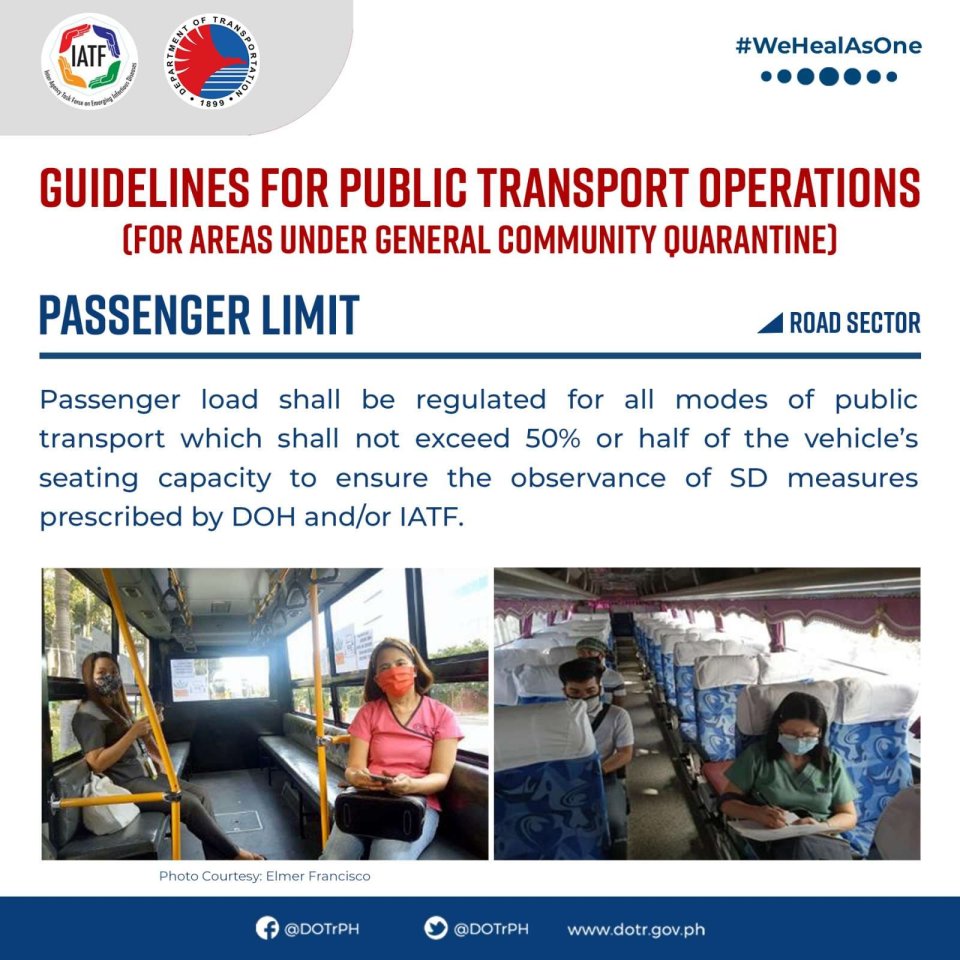
On the DOTr GCQ Guidelines for Public Transportation – Road Sector
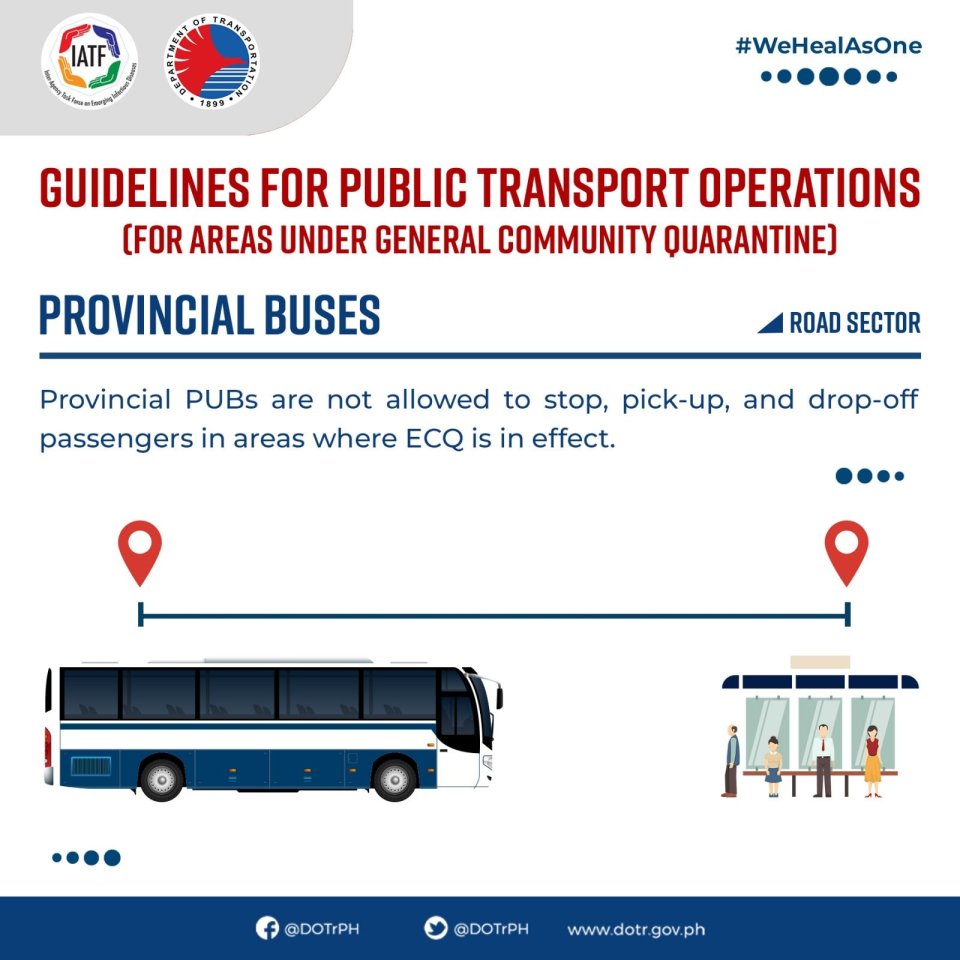
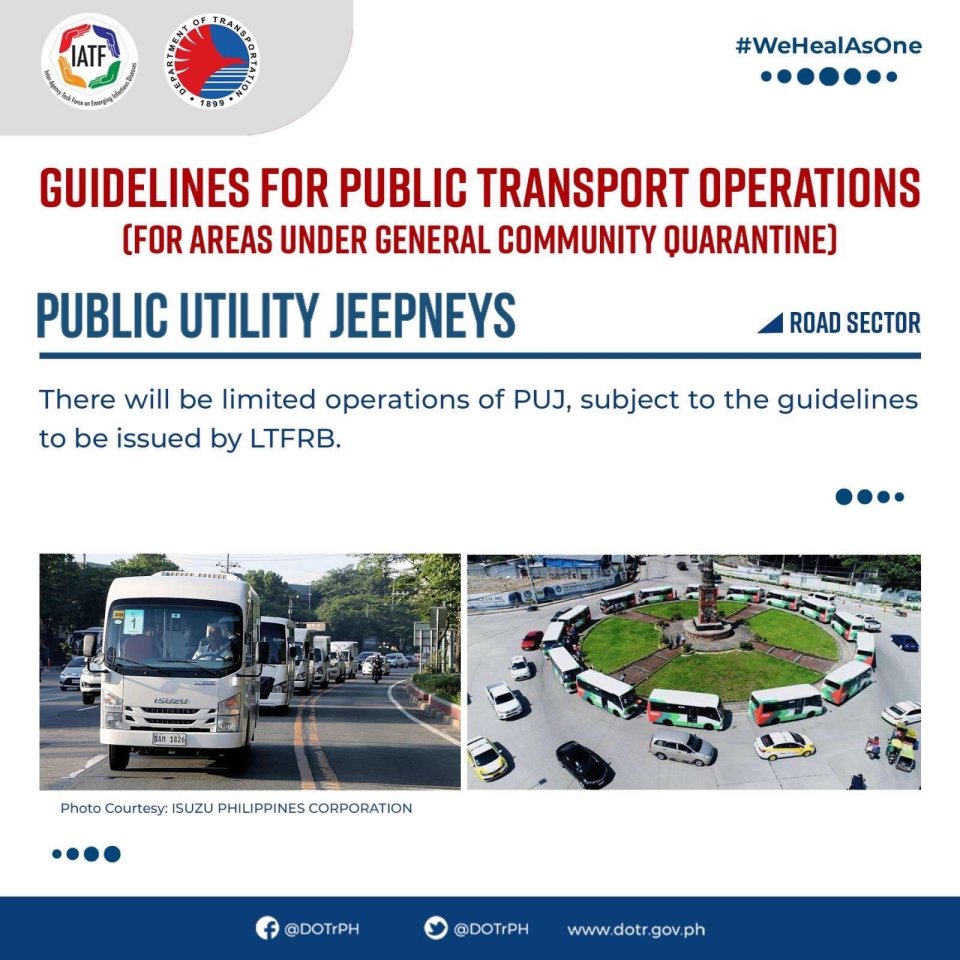
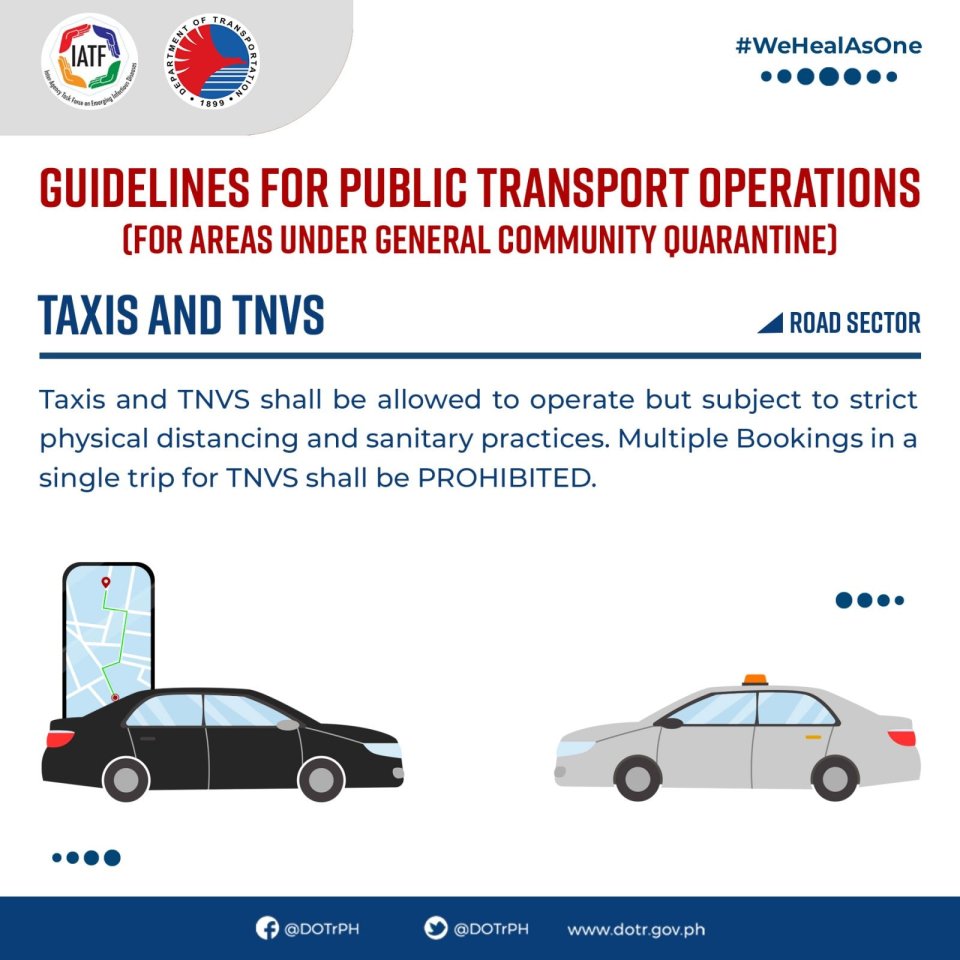
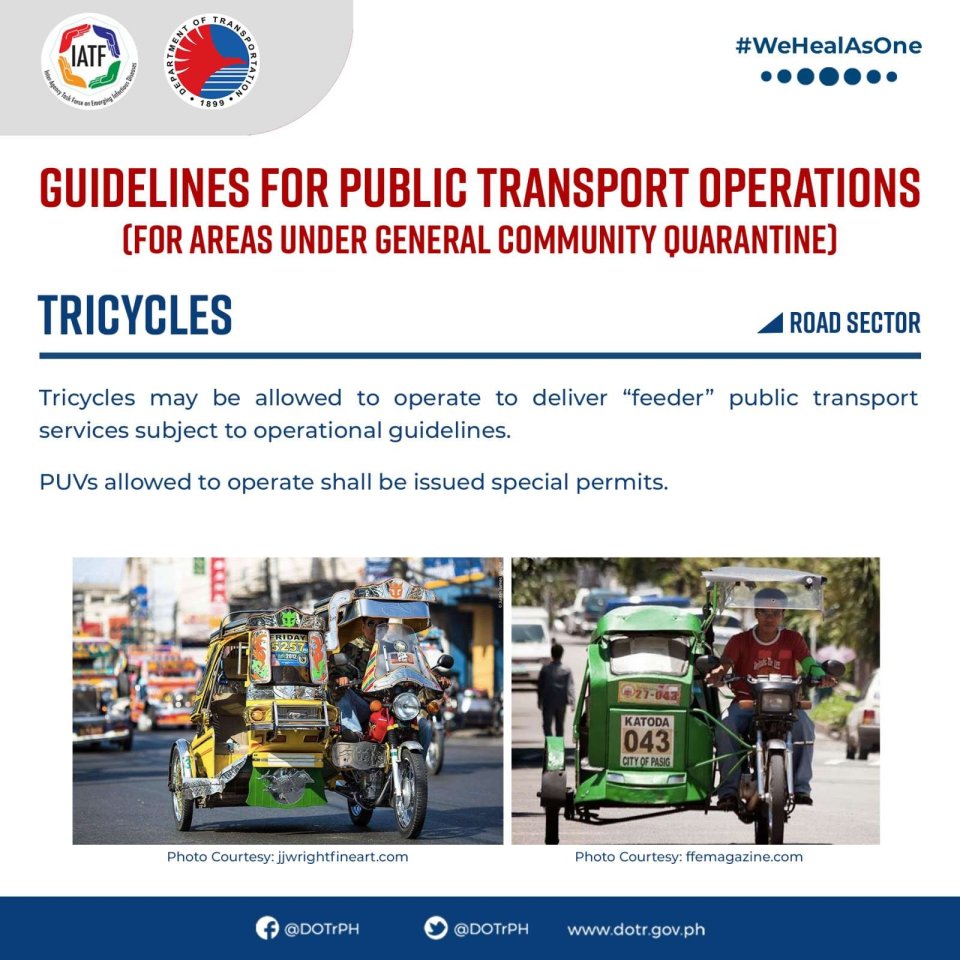
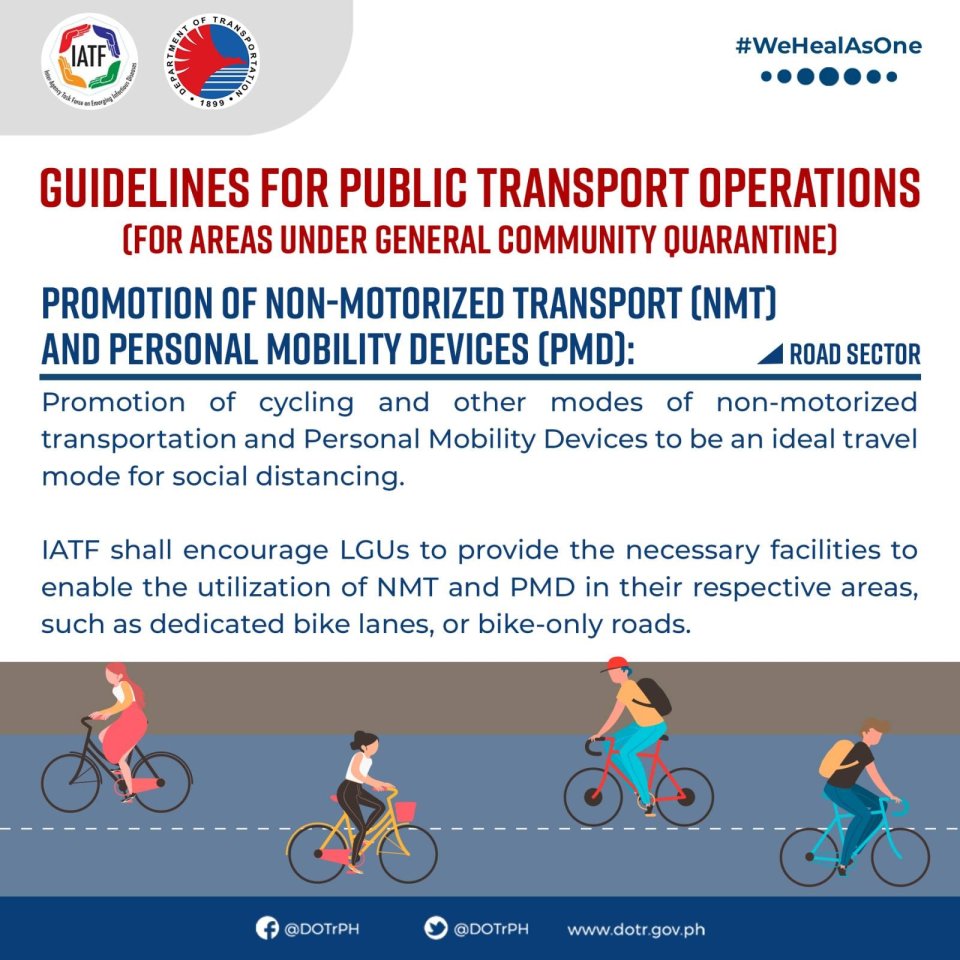
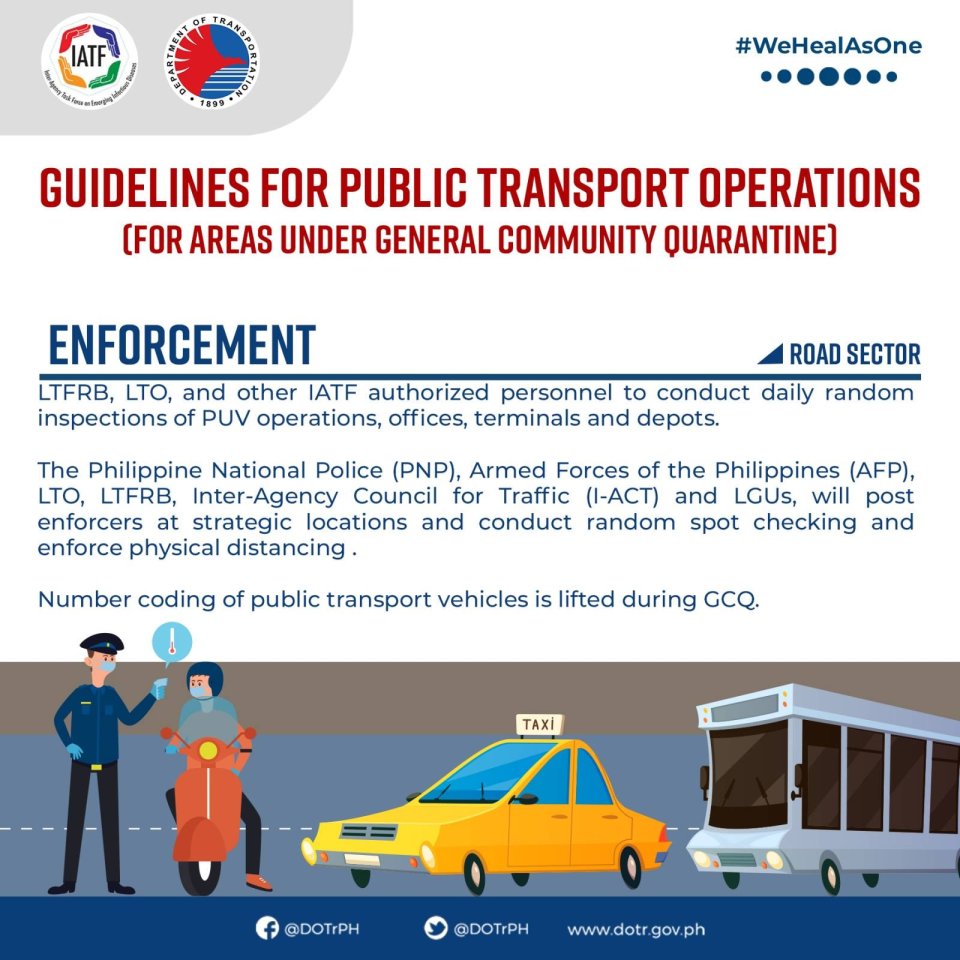
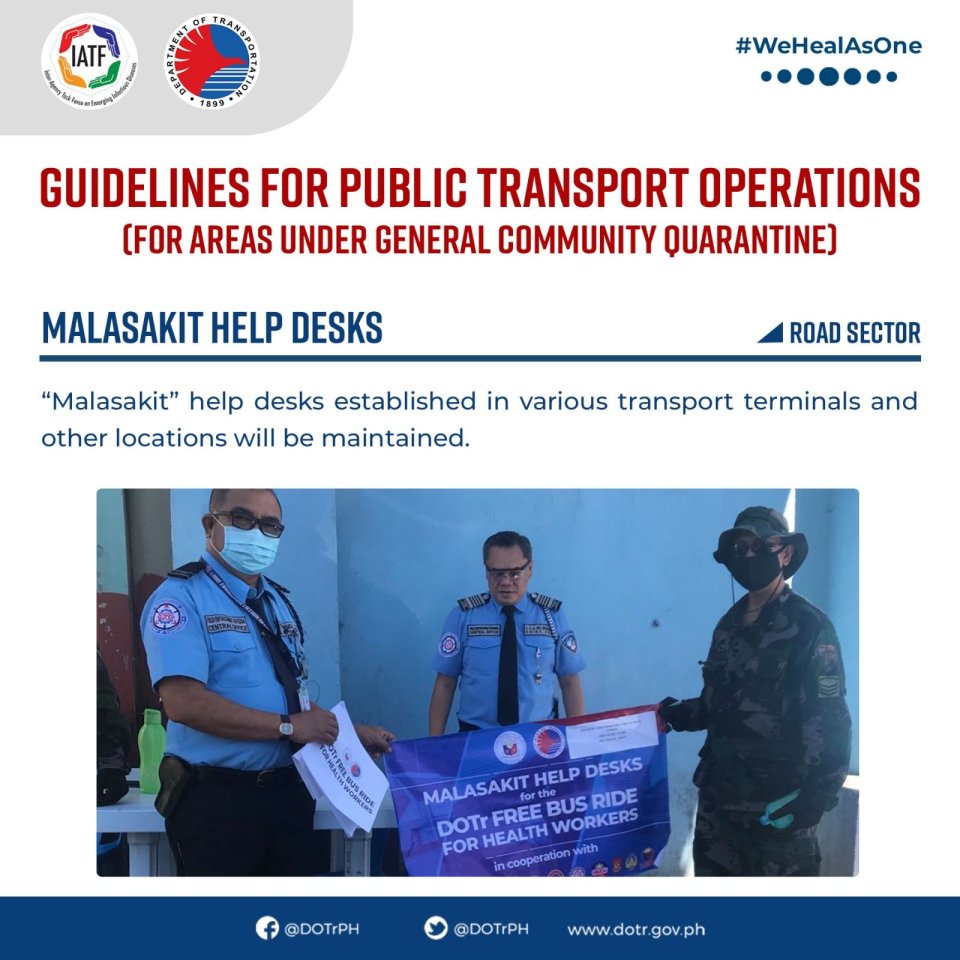
I just wanted to post, share and document here the DOTr’s Guidelines for Public Transport Operations for areas under General Community Quarantine (GCQ). The images are self explanatory so I will not discuss these nor will I offer a critique at this point. The following are public and posted on DOTr’s social media pages (i.e., Facebook) and have been shared and circulating among the public. I also post it here for future reference as I do to many other references like articles and infographics.






–
Reference on Bicycle Facility Preferences and Increasing Bicycle Trips
There are many references that are free for downloading. These include the latest publications from the National Academies Press that includes outputs from the National Academies of Sciences, Engineering and Medicine. I am sharing here and posting also as a reference for me to return to a new publication from the National Cooperative Highway Research Program:
NCHRP Research Report 941: Bicyclist Facility Preferences and Effects on Increasing Bicycle Trips by Watkins, Clark, Mokhtarian, Circella, Handy and Kendall.
The research was supported by the American Association of State Highway and Transportation Officials (AASHTO) in cooperation with the Federal Highway Administration (FHWA).
–
On empty malls and what’s in store for us under the new normal
I took the following photos inside a mall that’s close to my residence. One had to go inside to get to the drugstore located at the second level of the mall so you can see what it looks like during the lockdown. Not surprisingly, it is deserted but it looks clean and orderly. It seems that mall’s doing maintenance work and I did see a couple of janitors inside. They are probably the skeletal staff of the mall in-charge of making sure the building does not deteriorate during the lockdown period.
 This used to the a very busy area leading to the supermarket and the appliance shop. The area also usually was at the events venue and often set-up here are the weekend stalls selling local items including our favorite cashew butter and sylvanas.
 A look back at what was usually a crowded area at the center of the mall as I moved up the working escalator
 The second level was also practically deserted with only a few customers going to the drugstore and the occasional janitor or security personnel going around
 Across from where I was walking was another crowded area as this is the food court with the cinemas just beside it.
 View of the ground floor as I descended on the non-functioning escalator on the other side of the second level.
I saw the photos posted on social media and the news yesterday as people crowded at mall entrances on the first day after the lifting of the Enhanced Community Quarantine (ECQ) in many cities. Of course, they are still under the General Community Quarantine (GCQ) but more people are allowed to go outside their homes with businesses like the malls starting to resume operations. I sure hope this ‘excitement’ and the resulting crowds will not lead to a worse second wave of Covid-19 infections. That will surely lead to the reimposition of ECQ in those areas. There are lessons to be learned from the reopening of businesses like shops and restaurants once quarantines have been relaxed. Those are lessons that are mostly from the experiences of other countries that we should carefully and meticulously consider in order to avoid the mistakes that have led to a second wave of infections. Let us not lead ourselves towards recklessness or irresponsible behavior that can spell disaster to many. Let us not think that things will go back to the ‘normal’ we used to live.
–
On car-shaming and reducing car use
Here is another article I am sharing (re-sharing?). I have seen or read a lot of posts on social media about how we should not go back to the car-centric traffic before the Enhanced Community Quarantine (ECQ) and its variations. I do agree with this point. However, I take reservation about how some people seem to be resorting to car-shaming rather than be more proactive and progressive about coming up with strategies and/or plans that I hope would be evidence-based or supported by valid data. As the article states, “it takes more than car-shaming to change car use”:
Jaffe, E. (2020) “It takes more than car-shaming to change car use”, Medium, https://medium.com/sidewalk-talk/it-takes-more-than-car-shaming-to-change-car-use-107e28ccb2cf [Last accessed: 4/29/2020]
A key message from the article: “People are most open to changing their travel habits during major life events, such as a move. But even a well-timed message isn’t enough.” Perhaps the opportunity is here now to reform our transportation system. But that will take a lot of will or effort from all sectors most especially the national agencies (e.g., DOTr, DPWH) and local governments who have the authority and responsibility to implement changes. These changes include the assignment of exclusive lanes for bicycles, public transport and logistics while restricting car use. There are also other elements that need to be in place as we transition into the so-called “new normal” and so there will be a lot going on among the sectors or parties collaborating or interacting for transportation. Hopefully, there are context-sensitive strategies that will be adopted and implemented in order for everyone to transition more efficiently and effectively. And as they say…life goes on.
–
 Caught (up) in traffic