
Home » Behavior (Page 35)
Category Archives: Behavior
School traffic impacts – issues along Ortigas Ave., Part 1
I have written about school traffic generation in this blog and have mentioned about the traffic congestion experiences along major thoroughfares due to the vehicles attracted by private schools. La Salle Greenhills (LSGH) is an exclusive school found along Ortigas Avenue and during the summer months of April and May, people passing through the stretch of the road from EDSA to the Greenhills Shopping Center are relieved that they won’t have to go through traffic jams due to the school-generated traffic. From June to early December and January to March, however, the area is almost always congested in the morning and afternoon. Such congestion is predictable since it occurs during a period when students come to school and when they are dismissed mid-day or in the afternoon.
Heading to a meeting at the DOTC from the University one morning, we decided to take an alternate route. Instead of EDSA or C5, we took East Ave., Tomas Morato Ave., Gilmore Street and then emerged at the westernmost end of Ortigas in San Juan. It was already 9:00 AM when we arrived at the section most affected by the traffic generated by LSGH and so we didn’t to get caught in a jam as we proceeded towards our destination. We were proven right as traffic was almost free-flowing, and I took advantage of the traffic conditions and to take a few photos of the indicators for the potential traffic congestion in the area. The following photos also show a serious parking problem and (sadly) the usurpation of space from pedestrians. For shame!
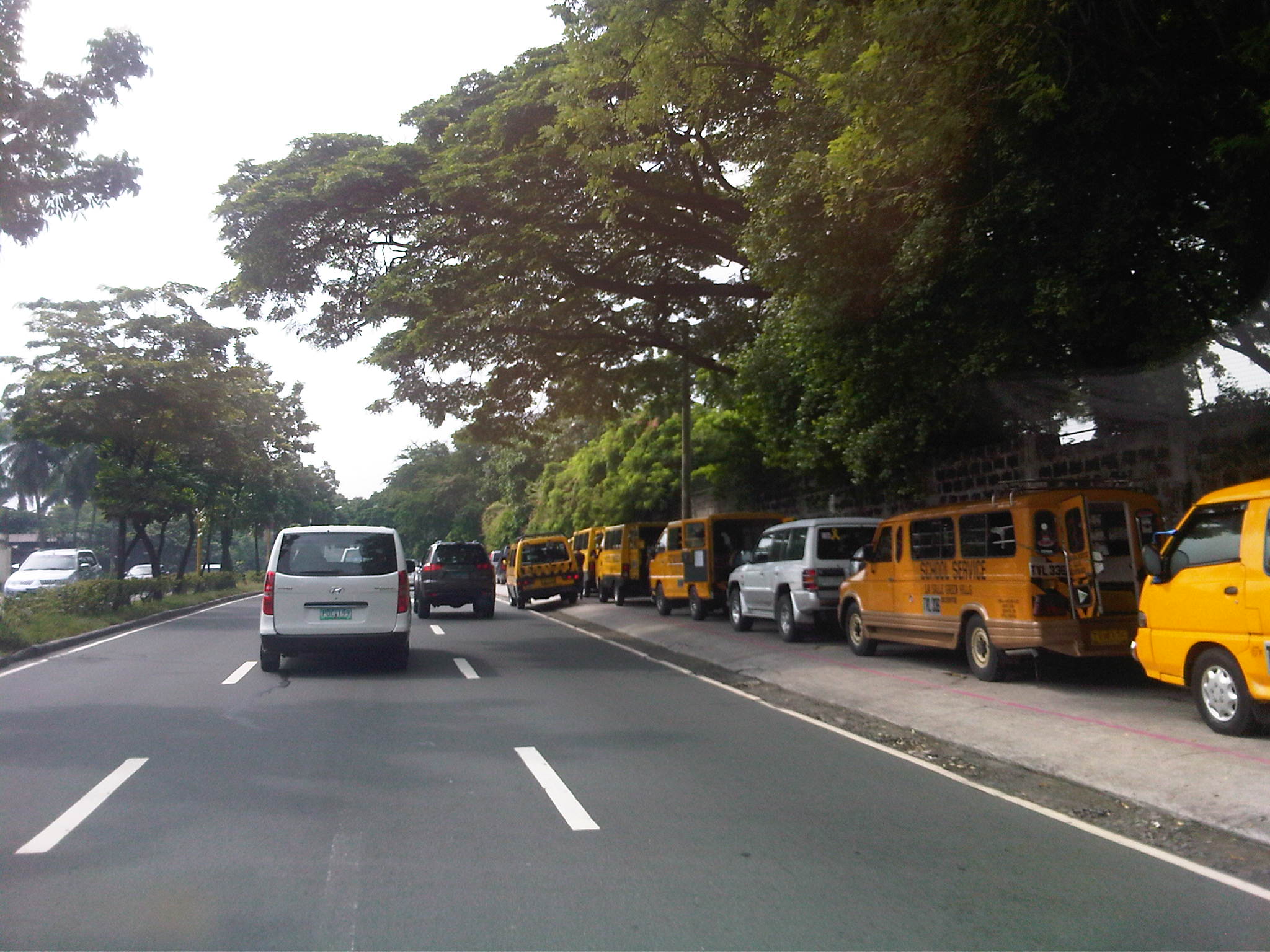 School service vehicles parked along the sidewalk along Ortigas Avenue – beyond the wall on the right is Wack-wack, a high-end residential subdivision named for the sound of golf clubs swinging at its famous course.
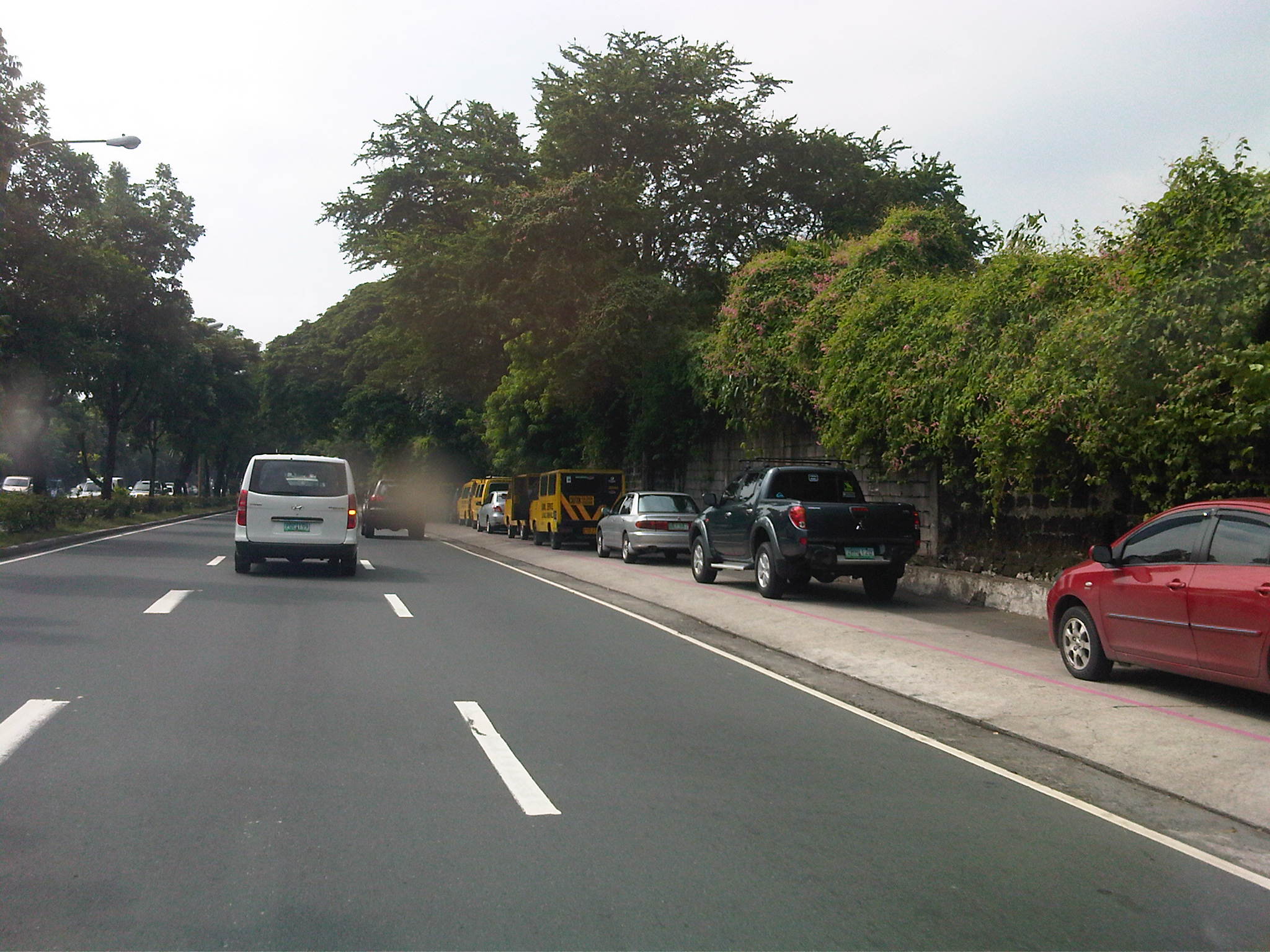 Private vehicles parked along the same sidewalk – noticeable in the photo is the pink line drawn by the MMDA to supposedly demarcate space that should not be obstructed and instead allocated for pedestrian use. It is clear in the photos that pedestrians would have to walk along the edge of the sidewalk or the outer lane of the carriageway itself, increasing the risks for them to get sideswiped by motor vehicles.
 More parked vehicles along Ortigas Avenue, mostly private vehicles that are highly likely owned by those studying at LSGH.
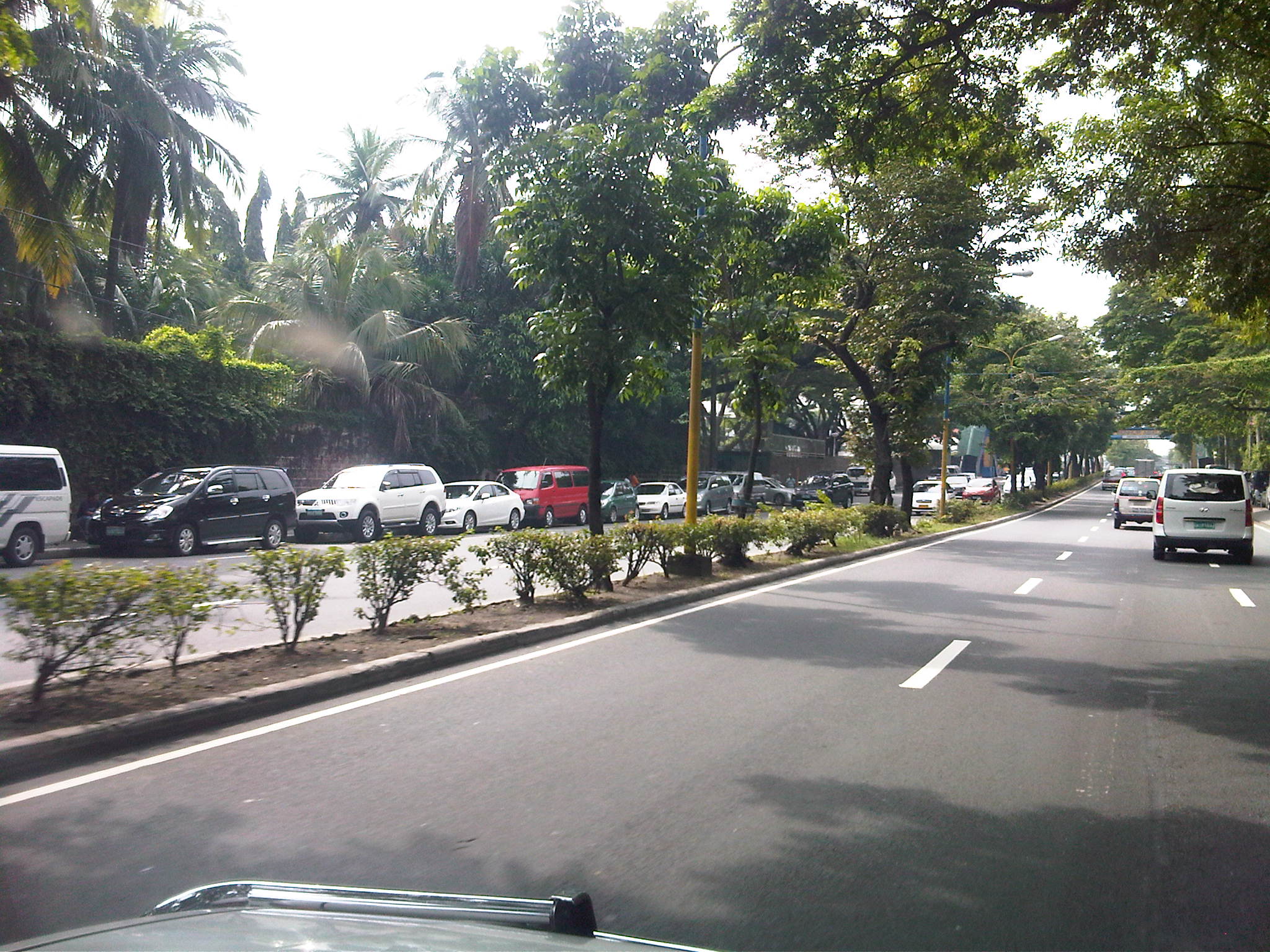 It’s actually worse on the other side of Ortigas Ave. as vehicles occupy a lane of the carriageway, effectively reducing capacity along this stretch of the road.
 It seems the main purpose of the pedestrian overpass is to allow students to safely cross the street to get from and to their vehicles. I can only imagine the congestion caused by drop-offs and pick-ups along Ortigas Ave., which for certain times of the day functions as a driveway for the school.
–
Circumferential Road-4: R-10 to Monumento
Circumferential Road 4 or C-4 is perhaps the busiest among the major arterials of Metro Manila. It is usually associated with its longest segment named Epifanio De los Santos Avenue or EDSA, which stretches from the SM Mall of Asia in Pasay City to Monumento in Caloocan City. There are two other segments of C-4: C-4 Road (R-10 to Letre/Samson Road), Letre Road (Malabon City Hall to Samson Road), and Samson Road (Letre/C-4 to Monumento). All in all, the road cuts across eight cities in Metro Manila: Navotas, Malabon, Caloocan, Quezon City, Mandaluyong, Pasig, Makati and Pasay.
 After turning from R-10, one is greeted with a 4-lane road that at the time didn’t have pavement markings to distinguish the lanes.
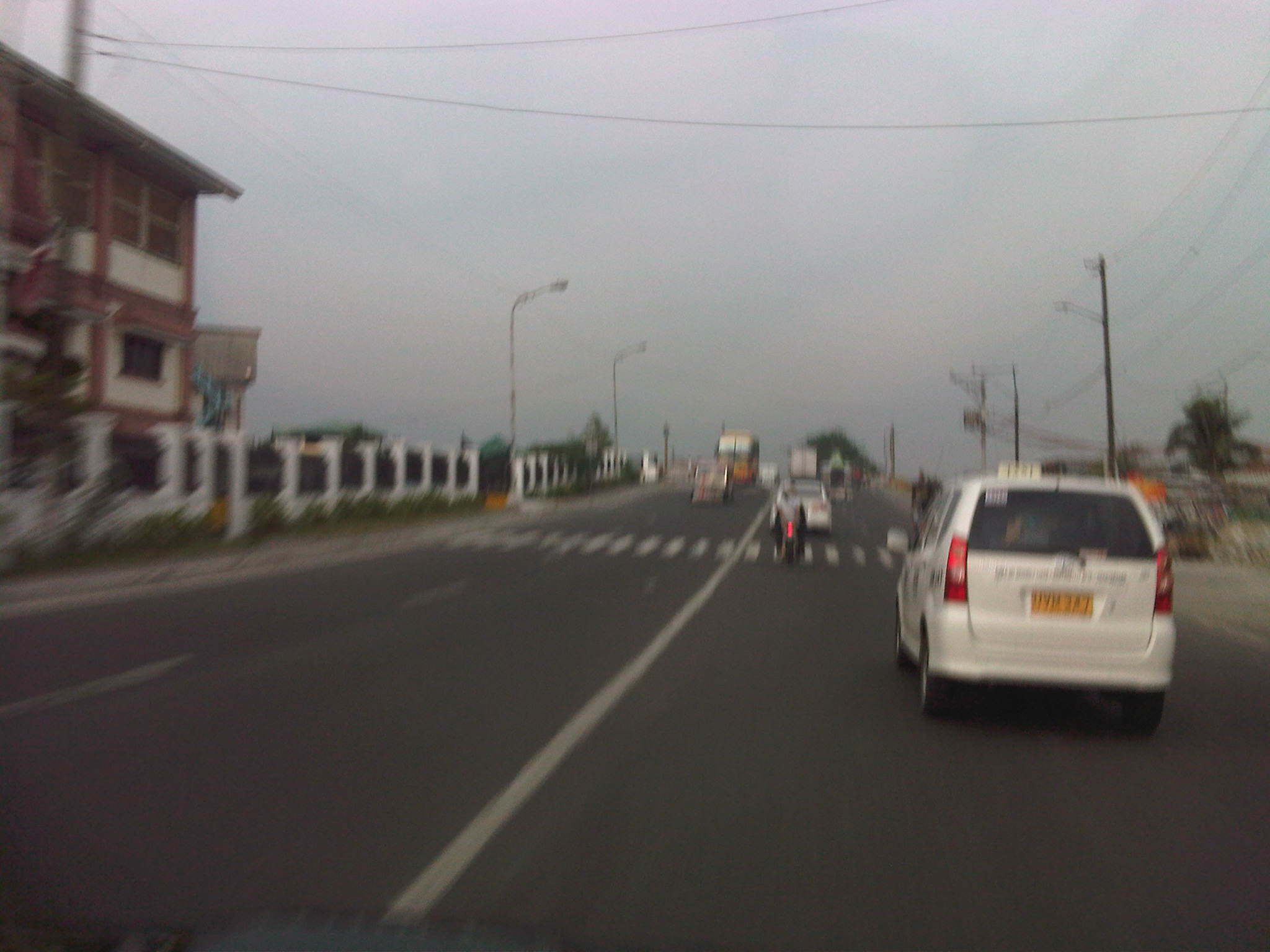 After covering some distance, pavement markings appear before reaching the bridge that connected the Navotas part of C-4 with Malabon.
 The bridge spans the Navotas-Malabon River, which goes around this point and meanders back to Malabon and Caloocan.
 Between the first bridge and the next along the way to Monumento, travelers have a view of the section of Navotas-Malabon River meander on the right side. Garbage floating on the river are quite noticeable but not as many as in the past.
 The 4-lane undivided road eventually becomes a divided road with a median island separating opposing flows of traffic.
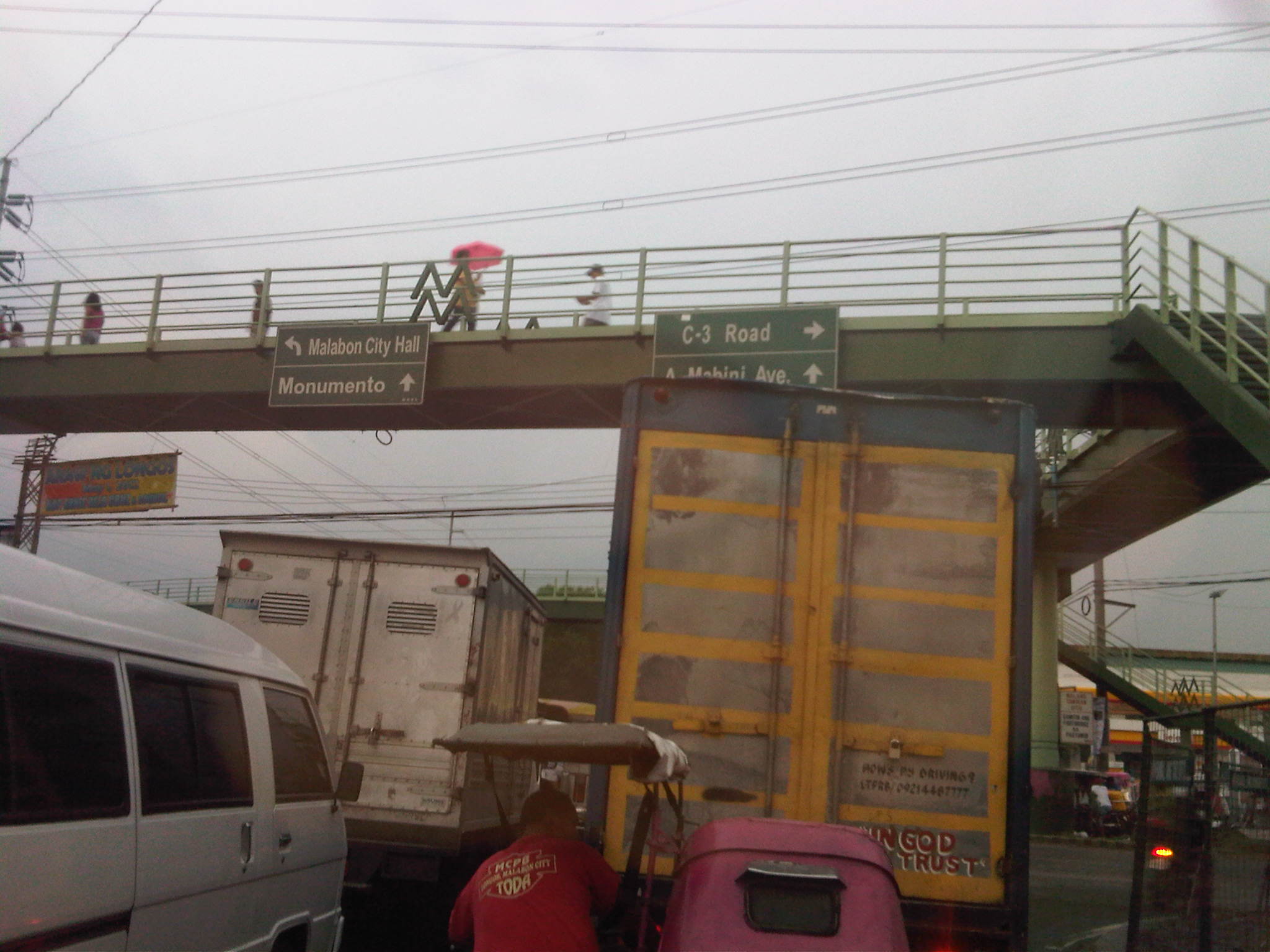 Pedestrian overpass with directional signs before the intersection with Dagat-dagatan Avenue.
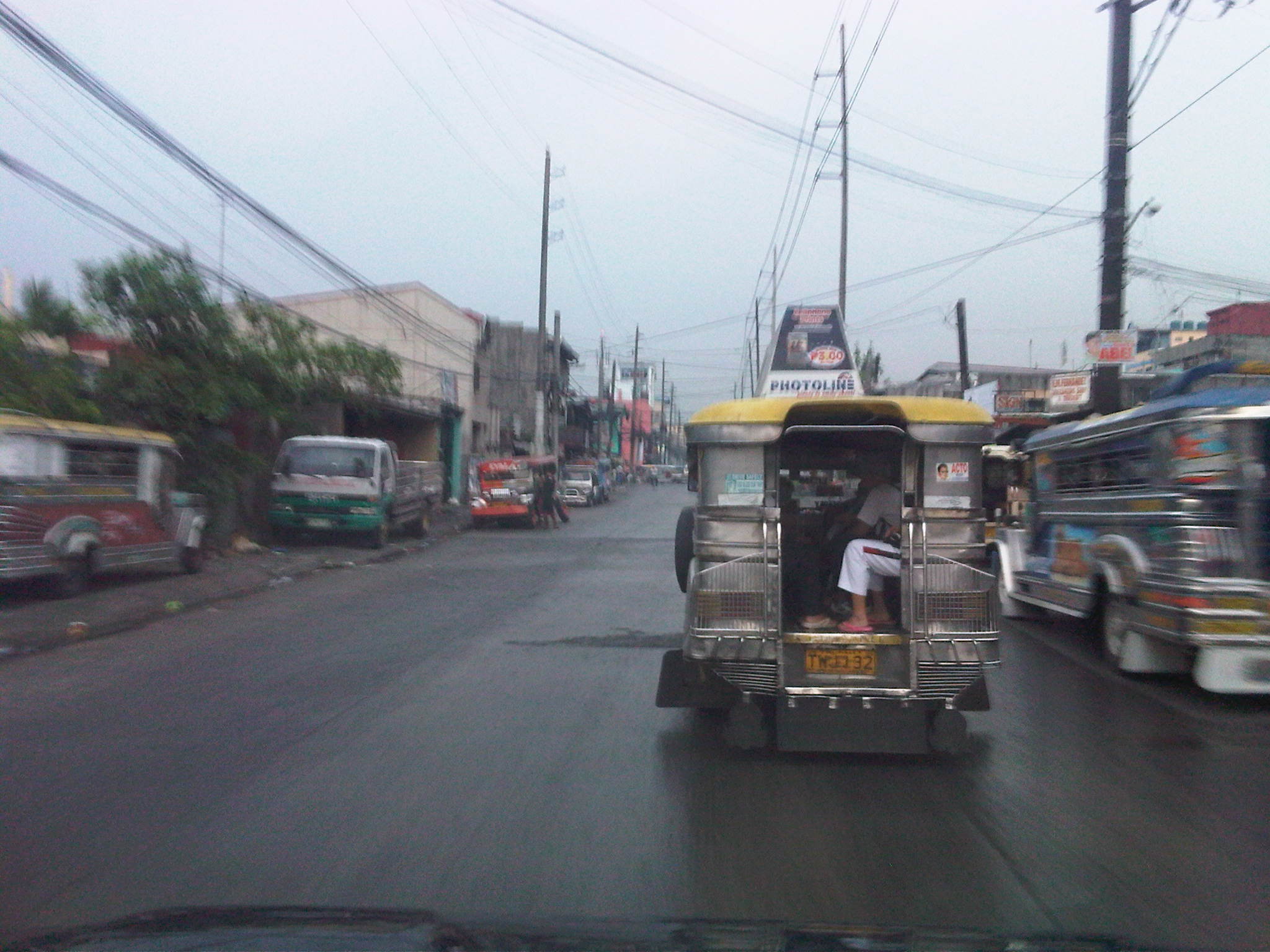 This is supposed to be a 4-lane section but it seems the roadside friction, driver behavior and the lack of pavement/lane markings contribute to the perception of limited space along C-4. Pedestrian sidewalks are also used as parking space by jeepneys and trucks as shown in the photo.
 Roadworks at the approach to the intersection with A. Mabini/M.H. Del Pilar from where C-4 is known as Samson Road.
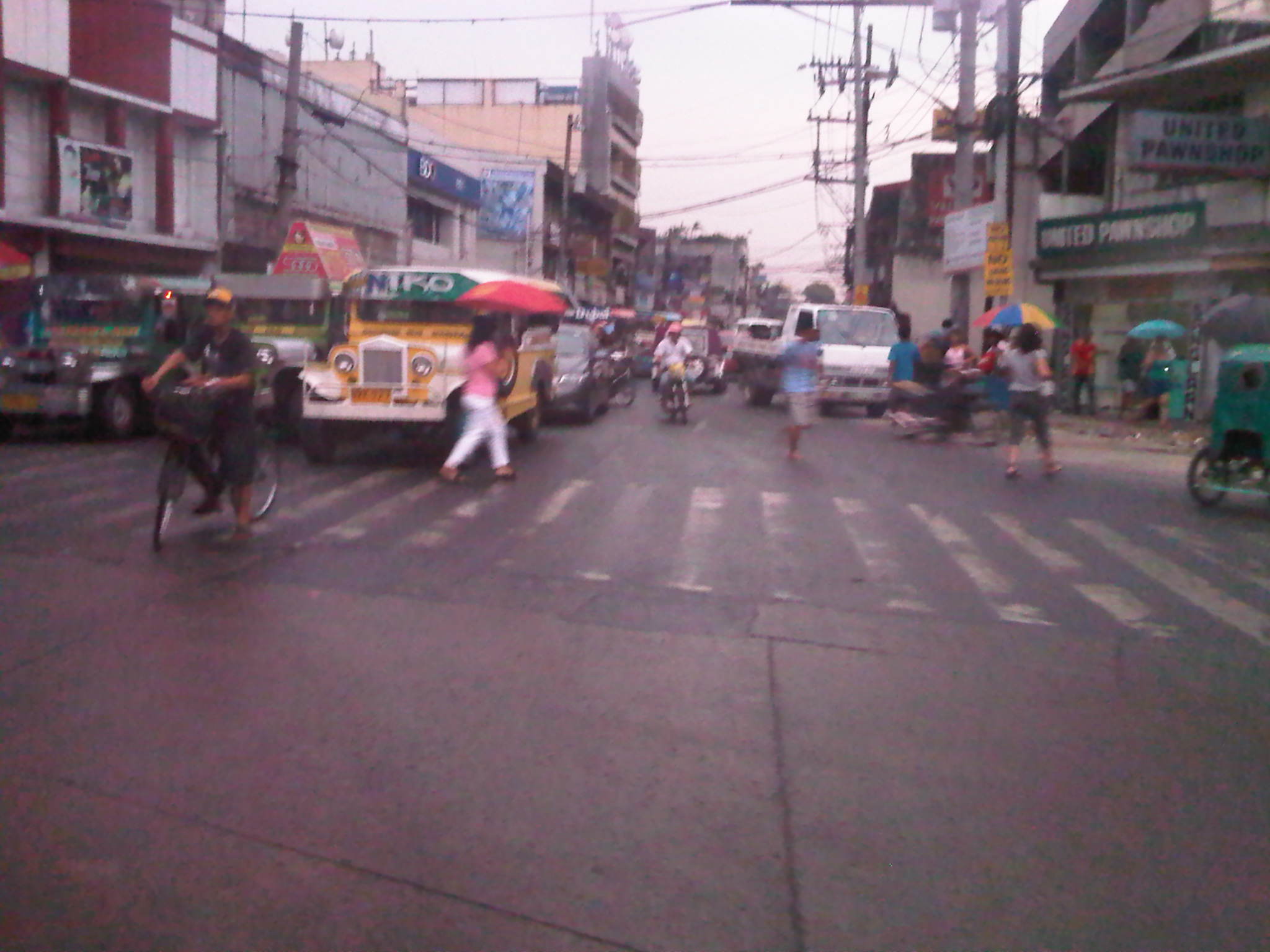 Intersection with Torres Bugallon – jeepneys crowd at the intersection and this often leads to congestion. Pedestrians cross anywhere and there are also pedicabs (non-motorized three-wheelers) roaming around that also contribute to the chaotic traffic.
 Roadworks along C-4 – also shown in the photo are shanties of informal settlers along the PNR right of way, which crosses C-4 at this point.
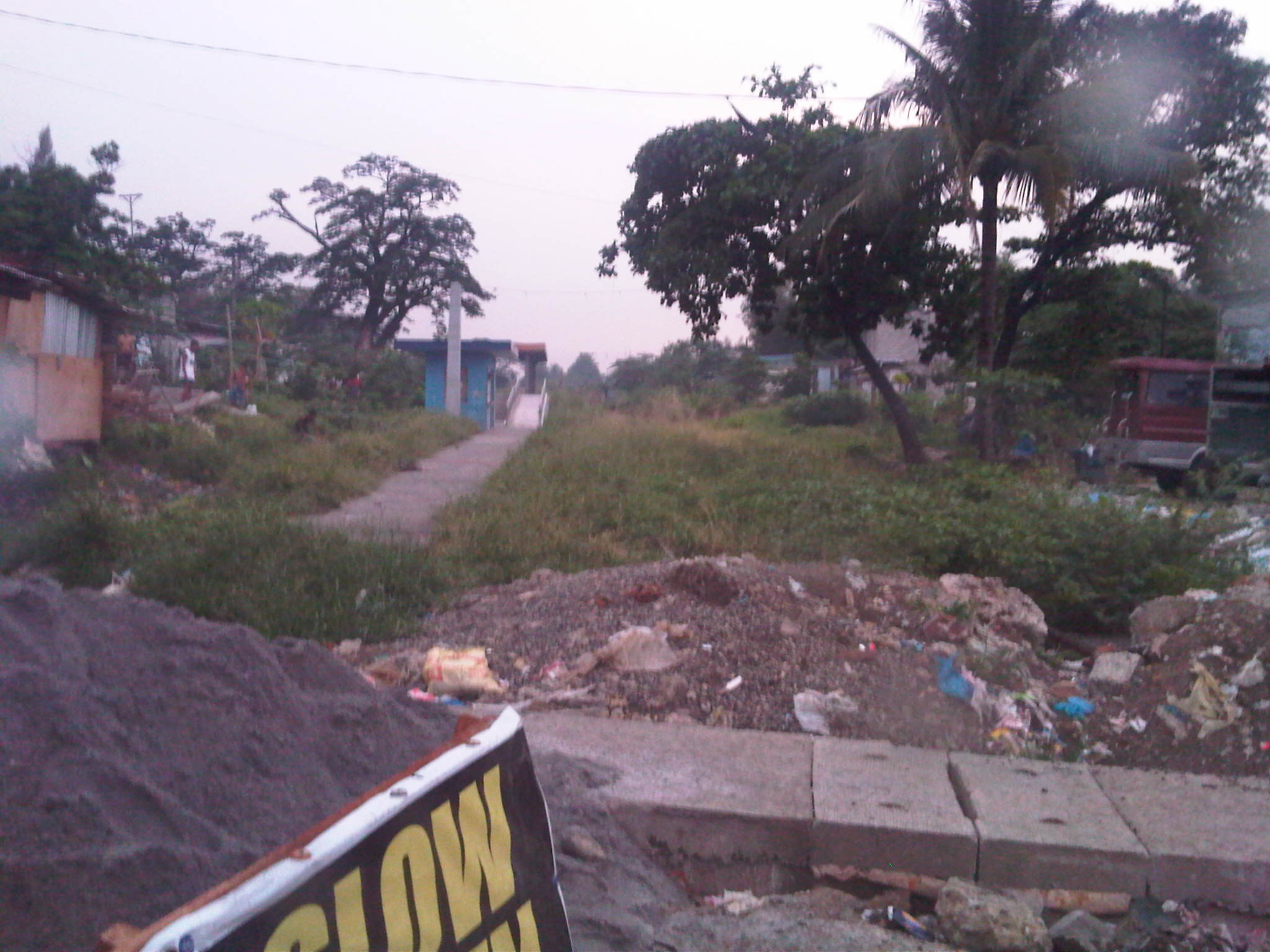 Remnants of the PNR’s Main Line North with a station a few meters from C-4. This should have been part of the proposed Northrail line connecting Metro Manila to Clark, Pampanga.
 Samson Road stretches along a very busy, much built-up district of Caloocan. Near Monumento, there are many big commercial centers including shopping malls around the rotonda known for a memorial for Andres Bonifacio, a national hero who led the revolution for independence from Spain in 1896.
 Samson Road is obviously a national road but tricycles are allowed to operate here; just one of the traffic/transport policies that accommodate such paratransit modes along roads where they are inappropriate.
 In order to address the vehicles counter-flowing or encroaching on the opposing traffic lanes and jaywalking problem, steel barriers were put up in the middle of the road. Overpasses like the one in the photo were constructed to enable people to cross the road. Notice the vehicles parked or standing along the road and on the sidewalks?
 Approach to Monumento with the obelisk at the center island of the rotonda visible at the center of the photo. Also shown in the photo at the roadside is a traffic sign informing travelers that they are approaching a rotonda.
–
Persistence of stubornness? Taking photos on the tarmac
I took this photo while waiting for our plane to complete boarding procedures at Changi’s budget terminal. Two passengers (not sure if they are OFWs or tourists) stopped on the tarmac and took photos of the plane before each posed to have their photo taken by the other. They were so obvious and took quite some time on the tarmac that I was already anticipating Changi security personnel to approach them and instruct them to go and board the aircraft. For some reason, the ground staff did not seem to notice them or perhaps just decided to just let it go as a harmless act. Harmlessness notwithstanding, such incidents are actually considered security issues, which are among those ticked off by people evaluating airports. And this is why for most cases at the Budget Terminal ground staff are strict about passengers loitering on the tarmac including taking photos like what is shown below. I can understand the value, possibly sentimental, of such souvenir photos especially if one is heading home after a long stay abroad as a worker. Still, the time spent should not be as if people were already holding photo-shoots on the tarmac.
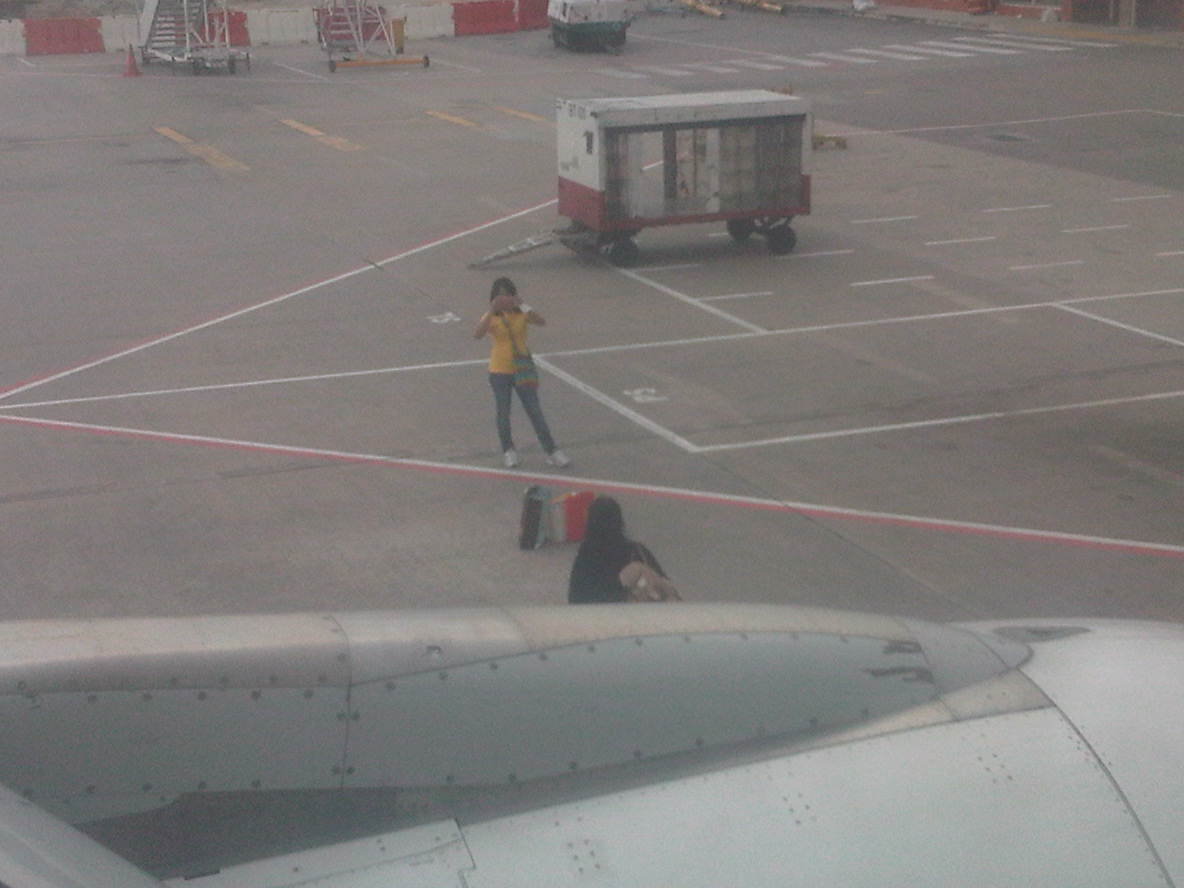 Passengers taking photos on the tarmac and near the restricted area with respect to the aircraft
Close-up of the same photo
–
But seriously…recognizing walking as a mode of transport
There is a general observation that urban planning in the Philippines, including planning and design for transport, revolves around motor vehicles. In fact, much of what we think are sound policies and guidelines, even rules of thumb, are car-oriented rather than people-oriented. Our love for the car is often traced to our being a colony of the United States and our orientation to cars have been reinforced over the years by policies, plans and projects that seem to be biased for car users while detrimental to commuters in general. In fact, we have been used to having roads built and widened that these types of projects seem automatic, no brainer solutions to the traffic problems we encounter everyday. Not that this is a bad thing, considering that we do have many missing links to complete and infrastructure to build where they are needed. Yet, for many of our highly urbanized cities, public transport infrastructure has been too slow to address the demand for movement.
Metro Manila is already choking in as far as traffic is concerned and our proposed solutions still are road widening and the call for elevated expressways. Meanwhile, we have poor road public transport services and a limited rail or mass transit network. It seems that most of the plans for trains and BRTs have never left the proverbial pipeline and as such, we continue to languish in I would like to think that a lot of people would want to take public transport if only the quality of service is similar to systems in Singapore, Hongkong, Kuala Lumpur or even Bangkok or Jakarta. We have to deliver on this end, which will also see our streets begin to become decongested as vehicles will naturally decrease with people choosing PT over their cars, especially in this period of increasing fuel prices.
Of course, these public transport infrastructure carry hefty price tags. And so to complete the picture and solve the puzzle of transport in cities like Metro Manila, Cebu and Davao, we would need to address what is perhaps the most basic for of transport that is often forgotten when talks center on highways and mass transit – walking. It is a fact that walking is the mode with the highest share for transport; dwarfing all other modes since we all walk at some point of our trips (e.g., Car users still have to walk to and from the parking spaces.) Unfortunately, we seem to have become lazy, preferring to ride than to walk and making so many excuses even when the facilities for walking are already provided and conditions favor walking over motorized transport. Of course, the main challenges for ensuring the safety and comfort of those who choose to walk remain and investments are required for more infrastructure to encourage walking. There are good practice examples like the walkways connecting buildings at the Makati CDB and the sidewalks of Quezon City. These are, however, more the exception than the rule and so there is still a need to actually “formalize” walking as a mode of transport and one that could probably save us a lot of fuel, reduce emissions and, most importantly, improve our health and well-being.
Following are excellent articles for reading, and for consideration when we re-think what we are doing to improve transport and mobility in our cities. A re-orientation is in order for us to address
(Note: the sources and links to the online articles are shown below and in the files. These are made downloadable here only to facilitate access to the articles. There is no intent for any copyright infringements.)
Why don’t Americans walk more? The crisis of pedestrianism:
What scientists know about how pedestrians really behave:
Walking_in_America__What_scientists_know_about_how_pedestrians_really_behave_
How walk score puts a number on walkability:
Walking_in_America__How_Walk_Score_puts_a_number_on_walkability_
With America and the rest of the world taking a second and perhaps critical look into how they are planning their transport systems and focusing on encouraging people to walk, we should perhaps take this as our cue to also re-think how we are planning and designing our systems. We should, and not be too dependent on the recommendations of studies past and present that seemingly try to simplify our plights as something that can be solved by roads and cars alone.
–
Learning from motorcycling in South East Asia
The scenes are very similar to what you would see along roads in many parts of the Philippines. Motorcycles and scooters zipping here and there, often with more than one rider. If one were not aware of the fact that the motorcycles and other vehicles were along the left side of the road. Motorcycles are very popular in most of Southeast Asia and is in fact the dominant mode in cities in countries like Vietnam, Cambodia and Thailand. It is also very popular in Indonesia and is rapidly on the rise in the Philippines. Despite the mayhem associated with motorcycles based on the various stories or anecdotes that eventually came with photo evidence, motorcycles are here to stay and there is a lot to learn from the experiences in our South East Asian neighbors for us to improve safety concerning motorcycles.
 Riders along a street in Bali – the scene is so familiar as if we were just traveling along a Philippine street
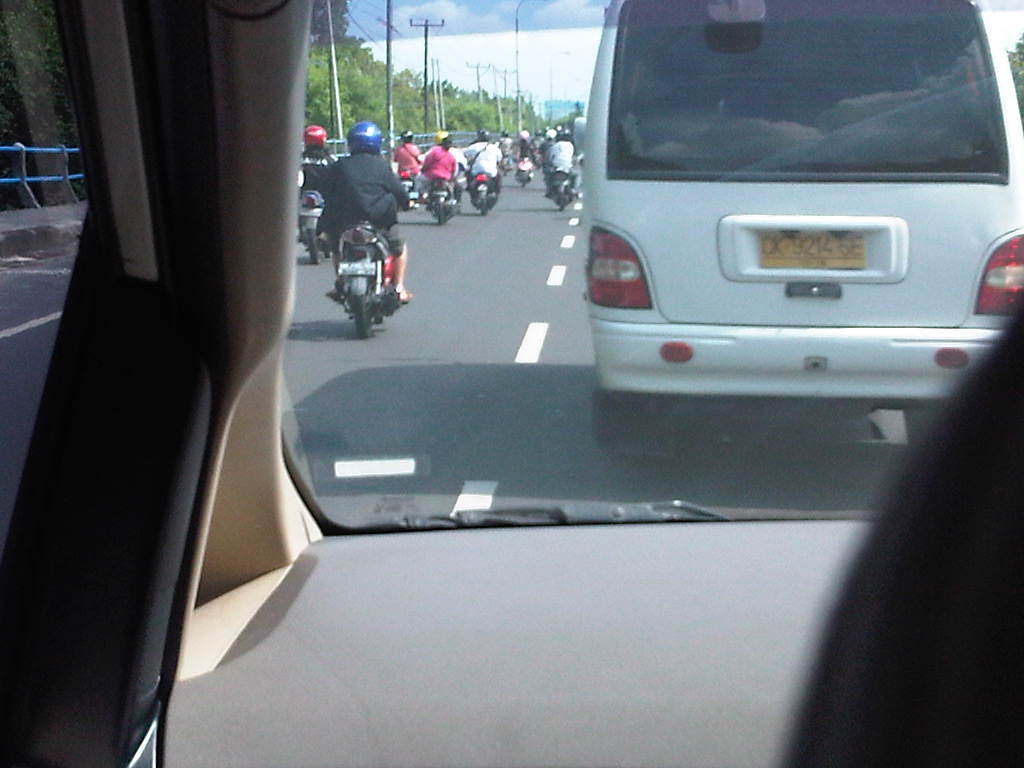 Motorcycles traveling along the left-most lane (the equivalent of our right-most or curbside lane) – that lane is also assigned to public transport. Along this road, the public transport happens to be a BRT variant.
The difference in motorcycling between Bali and Manila (or any Philippine city for that matter) seems to be that drivers of other motor vehicles in Bali are more respectful of the rights of motorcycle riders to road space. While lane splitting is also a common occurrence as well as riding along other motorcycles in the same lanes, the impression is that in the Philippines, riders have higher risks considering the likelihood that they will be sideswiped by other vehicles particularly public transport (buses, jeepneys and AUVs) and trucks. Philippine drivers have a tendency to assert their positions along the road often tailgating or shifting lanes (cutting) at the last moment, and often with the smallest of gaps available for such maneuvers. Such behaviors often have them in conflict with motorcycle riders who are brushed off as minor elements in traffic.
From a driver’s perspective, motorcycle riders in Bali seem to be more disciplined when in flowing traffic, seldom weaving when not required to do so, even while traveling at 2 or 3 motorcycle beside each other along a lane. This is not the case in the Philippines where riders tend to speed even when unnecessary and employ risky maneuvers while doing so. Such behavior increases the likelihood of crashes involving motorcycles, as there are increased interactions among vehicles.
With or without motorcycle lanes, riders (and their passengers) should be safer if other motorists would just respect their rights to the road. This works the other way around where motorcycle riders should, on their part practice lane discipline and refrain from unnecessary maneuvers like lane splitting and weaving in flowing traffic. Mutual respect and discipline, while perhaps difficult to achieve in the immediate term are something that should be encouraged with firm and fair enforcement of traffic rules and regulations. Otherwise, mayhem in our roads will continue and will exact more lives and limbs from motorists and pedestrians alike.
–
The “pasaways” on our roads
When the current President announced his disdain for wangwang or the illegal use of sirens by different people (usually the abusive ones), the LTO, the PNP and other authorities immediately cracked down on vehicles using wangwangs. It took just a few days to eliminate these irritants of our roads and the public was treated to government in action and serious about eliminating manifestations of corruption and abuse that we seem to have accepted as part of our society.
But what seemed like a good opening move eventually deteriorated somewhere in the middle game and others similar to the wangwang have not been addressed. It is a case of ningas cogon and it is a case where government failed to build on momentum (from the wangwang campaign). Two particularly serious matters that I would like to see the government address pertain to tailpipes and license plates. For tailpipes, there are just too many smoke belchers out there that it doesn’t take a genius to know that there are so many vehicles that should not be running along our roads. For license plates, I cite the examples of the abuse of commemorative plates and the use of covers to obscure the plates (i.e., tinted covers).
 Drive through smoke belcher
We see a lot of these vehicles that obviously didn’t or wouldn’t pass emission tests. You wonder why our air quality is still on the decline despite provisions of the Clean Air Act. The answer is quite simple – “non-appearance.” The term refers to those not really undergoing the emission tests required of vehicles prior to the renewal of their registrations. In fairness, the LTO seems to have tried so many ways to ensure that vehicles do undergo emission tests but these efforts have not translated into cleaner air and we see a lot of cars, jeepneys, buses and trucks belching smoke everywhere we go. No wonder road transport is the biggest contributor of air pollution in our cities.
 Potent mix – commemorative plate bearing the LTO and DOTC logos and something that suggests that the owner of the car is from media
It seems that commemorative plates are back and with a vengeance. License plates are replaced by commemorative ones so that the users can evade being accosted by MMDA and other enforcers for number coding violations. Among the most popular commemorative plates I’ve seen used to replace standard ones are those bearing the names of the NBI, PNP, LTO and DOTC. These are the agencies who are supposed to be enforcing against the improper use of commemoratives and yet they are the ones who seem to be promoting the abuse. Then there are those announcing the positions or offices of certain government officials like those bearing special plates (8, 16, “Councilor,” etc.). The other day there was even a news report where former congressmen continue to use special plates while no longer in office!
Such manifestations of abusive behavior continue along our roads and in plain sight of everyone and most especially people who are supposed to enforce traffic rules and regulations. While the attention of the public is on the big ticket and more controversial and sensational impeachment trials, the government seems to have forgotten that in order to achieve its “matuwid na daan” slogan, it has to grind out the even more challenging task of eradicating the rest of the wangwangs and effect behavior change in transport.
–
Transport and health
The University College London (UCL) recently released a publication with the title “Transport, Physical Activity and Health: Present Knowledge and the Way Ahead.” It is authored by Roger L Mackett and Belinda Brown of the Centre for Transport Studies, University College London. The material presents an excellent discussion relating travel behavior (like the preference for car use or taking public transport) to physical activity. It should be a good reference for those seeking to explore the link between healthy living and transport and a study that can be replicated in other countries. It should be of interest to cities looking at ways to promote public transport, walking and cycling (sustainable transport). Perhaps our own Department of Health (DOH) should collaborate with the Department of Transport and Communications (DOTC) to put in the local figures so we can determine how much our dependence on cars is affecting our health especially in our cities. The outcomes should further reinforce the need to put up infrastructure to encourage people to leave their cars. Perhaps the more progressive cities or the MMDA could also look into such studies so that we can have a firm foundation for appreciating the benefits of a good transport system and healthy cities.
–
Carlos P. Garcia Avenue
I really haven’t written much about the other segments of Circumferential Road 5 (C-5), choosing to write about the Katipunan Avenue stretch from Aurora Boulevard to Magsaysay Avenue (UP Diliman). C-5 is officially named Carlos P. Garcia Avenue or C.P. Garcia Avenue after the 8th President of the Philippines. C-5 though is more commonly known by its many names for at least 3 long stretches of the road: Katipunan, E. Rodriguez, Jr. Avenue (Boni Serrano Ave. in Quezon City to Pasig Boulevard, Pasig City), and C.P. Garcia Ave. (Pasig Blvd. to SLEX/East Service Road). Following are a few recent photos along C5 along C.P. Garcia Ave. in Taguig.
 U-turn flyover at C-5/Kalayaan is among the much maligned projects of a past MMDA administration. There is supposed to be 3 lanes between the columns but the pavement conditions and relatively narrow lanes would usually accommodate only 2 vehicles at a time especially when one is a truck. Should it be demolished to give way to the original scheme proposed by the DPWH for the intersection? The current grade separation project at Quezon Ave./Araneta Ave. will eventually show whether such a scheme could have been better for C5-Kalayaan.
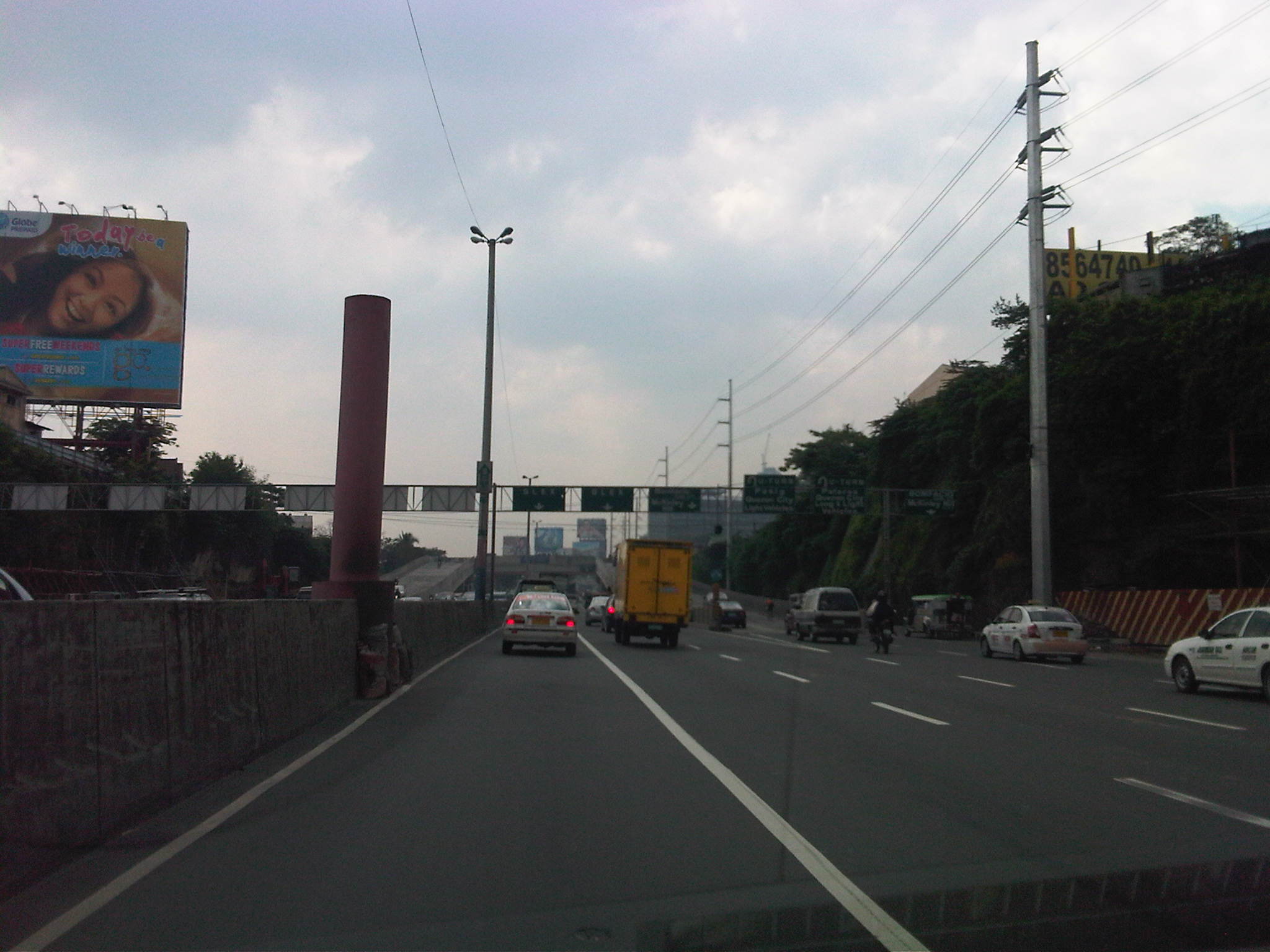 The pink column is a remnant of what used to be a pedestrian overpass at C-5/Kalayaan. There used to be a two span overpass in the area that has since been That’s the second elevated U-turn downstream that is utilized by traffic from Kalayaan (Makati) to Taguig (through traffic if the intersection was not closed to such) and to Pasig (left turn traffic).
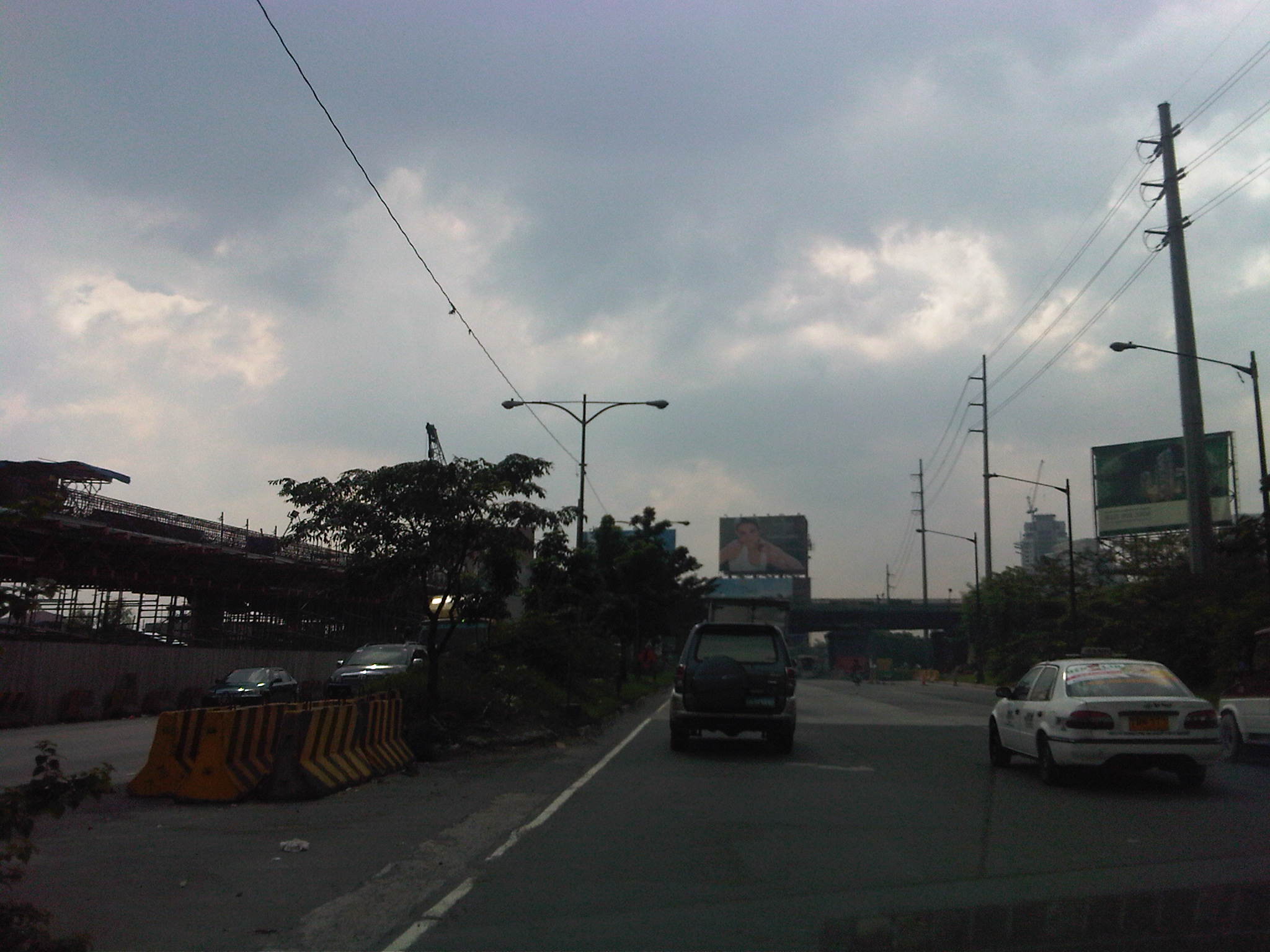 Approach to the construction site of an off-ramp/overpass from Bonifacio Global City. The flyover is supposed to ease traffic from BGC to C5-northbound currently concentrated along the overpass at 26th Street and Market! Market!
 Close-up of the flyover construction. The temporary columns and barriers in the middle of C5 can be quite tricky even during the day and the space is just enough for 2 cars to fit through the middle lanes. With trucks its again a different situation as they often require more space given the behavior of their drivers encroaching upon the adjacent lanes.
 Overpass from Market! Market! and along 26th Street. The pedestrians using the overpass and crossing to and from Target Street in old Taguig are undisciplined and do not follow traffic enforcers at the intersection with the service road. This leads to a high likelihood of pedestrian vs. vehicles collisions due to the conflicts in that area.
 The walls at the right side of the highway were constructed to separate C5 from the service roads on either side of the highway. These service roads are notorious for being used by residents of the areas along C5 for parking and jeepneys typically stop anywhere along the road to drop-off or pick-up passengers. Also, there are many incidences of people crossing C5 without care of their safety. Also, there have been cases where some vehicles have been reported to have been stoned by anonymous persons (probably from the informal settlements along the highway). The walls were interventions that are supposed to control such behavior and keep C5 as unimpeded as possible.
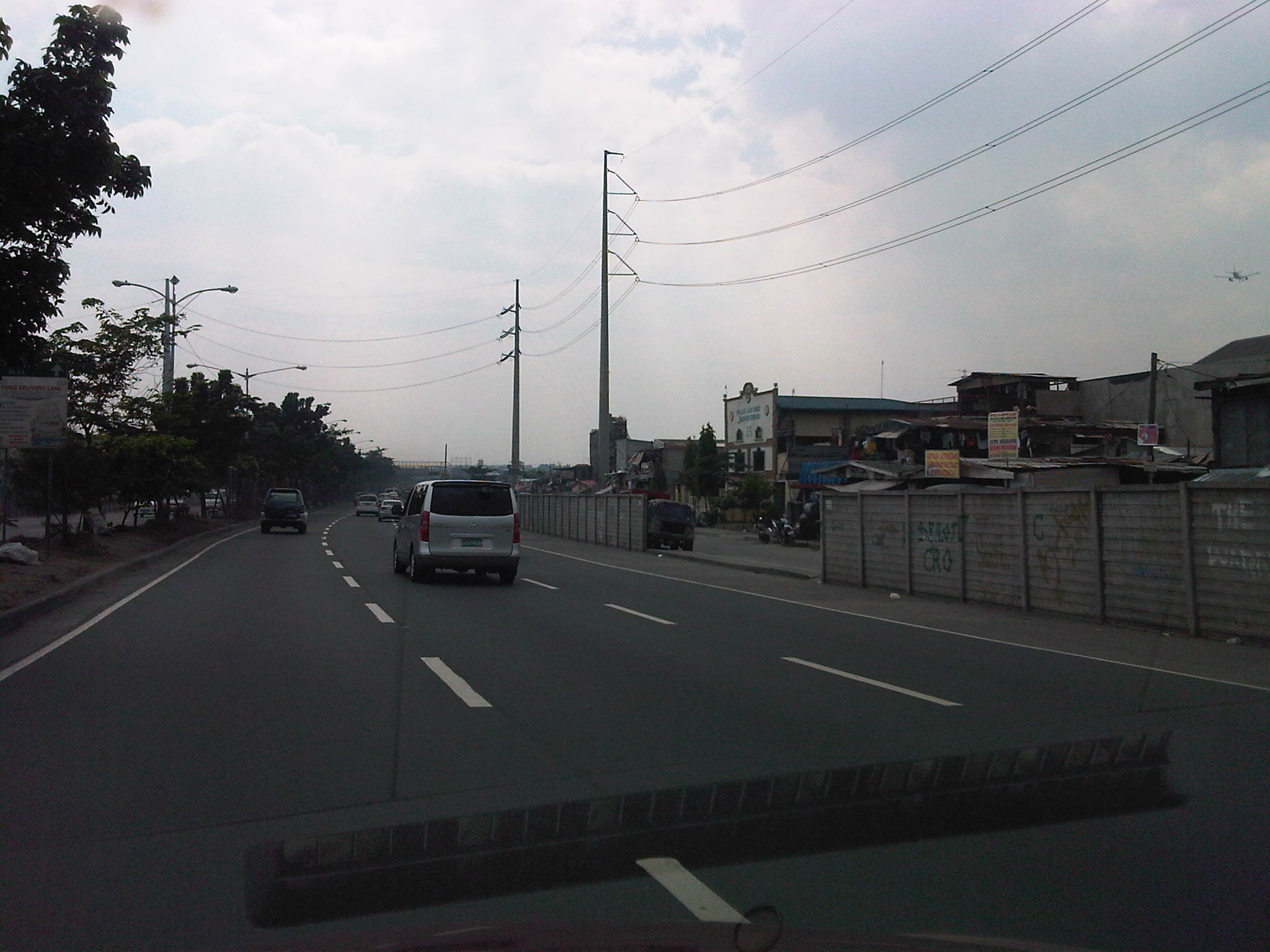 Despite objective for the walls, there are many breeches and these result in still a lot of jaywalking across C5 and jeepneys stopping to pick-up/drop-off passengers.
 A persistent issue along C5 pertains to the operations of jeepneys along the highway. There is a tendency to congregate at the designated loading/unloading areas that coincide with the pedestrian overpasses along the highway. Jeepneys typically occupy 2 lanes including the shoulder lane adjacent to the wall. The same behavior occurs at wall breeches often causing bottlenecks along the highway.
–
Passing the blame for our traffic mess
We like to bash and criticize public transport drivers for their behavior when we only need to look in the mirror to see who is part of the traffic problem in this country. A lot of private car drivers here and elsewhere in the country tend to attribute traffic congestion to buses, jeepneys, AUVs and taxis while practically washing their hands off the congestion and reckless driving habits that we see everyday along Philippine highways and streets. Many tend to think that only PUV drivers are to blame for our traffic mess when in reality and data-wise there are surely more private traffic on our roads compared with public. Such statistics including mode shares for both vehicular and person trips along major corridors in Metro Manila I will share in another post.
I drive from my home to the office and back almost everyday and I have observed driving behavior for much of my life including the times when I’m in cities in other countries. PUV drivers to me are more predictable than private car drivers in this country. In fact, we can know for sure that PUV drivers will weave their vehicles in traffic and we will always brace ourselves for the aggressive driving every time we encounter PUVs. Such errant behavior, of course, could have been addressed by a stricter and more reliable licensing system for drivers. But that’s another story altogether that’s worth an entire article.
Meanwhile, I share the observation of one friend that many SUV or high-end vehicle drivers “tend to drive like outlaws.” I had articulated in an interview before that many young drivers (and older ones as well) tend to imagine themselves as race car drivers – and proceed by trying to out-speed and/or out-maneuver other drivers the way stuntmen do in the movies. This you can observe whether along a congested street or a free flowing expressway. Evidence to this includes all the road crashes involving private vehicles (including motorcycles) that would certainly out-number those involving PUVs. One thing not going for the PUVsm, however, is that they happen to carry more passengers and therefore more responsibility as a requirement of their being issued franchises. Another proof to irresponsible behavior are postings of claims and photos on social media showing speedometers exceeding speed limits. And yes, there are those who routinely and consciously violate speed limits along expressways for them to be captured by speed cameras. The shots are then used as bragging rights attesting to the driver reaching a certain speed with his/her vehicle.
This morning, I almost got sideswiped by a car who cut my path to make an abrupt right turn to enter the gate of a major private university. I thought I had a clear path to change lanes as I estimated a good distance from the same vehicle who was trailing me on the other lane. Instead, the vehicle accelerated and with horns blaring asserted his right to the lane. I had to use my defensive driving skills to avert a collision. Seconds later, he was blocking my path as he made a right turn at the university’s gate. I could only shake my head in frustration with what happened while an MMDA enforcer looked helplessly as a witness to the incident. A few minutes later, a couple of SUVs coming from a posh subdivision along Katipunan cut our path to make an illegal left turn at a U-turn slot. Vehicles from this subdivision do so regularly and with impunity as if their passengers were more blessed and more important persons than the rest using this major highway.
The examples above are just some of what we usually encounter everyday while traveling or during our regular commutes. These are certainly being caught on video by the MMDA cameras spread out and observing traffic along major roads in Metro Manila. These same drivers might be the first to throw the proverbial stone to their fellow drivers whom they have judged to have committed sins of recklessness when the truth is that they themselves are guilty and only have to look in the mirror to see for themselves who are really to blame for our dangerous and congested roads. Truly, what’s wrong with traffic in this country may not necessarily be with the way we manage traffic or enforce rules and regulations. It might just be the nut behind the wheel that’s defective, after all.
–
Road crashes along Katipunan Avenue
Katipunan Avenue in Quezon City has claimed a lot of lives and injured a many more people over the past years particularly due to aggressive and often reckless driving or riding by motorists using the road. Especially dangerous is the section stretching from the flyover to the U-turn slot just after Ateneo’s Gate 2 since many vehicles tend to (over)speed from the wide overpass and unto the section fronting Ateneo De Manila University. On the other side of the road, motorists also tend to speed up towards the overpass, unmindful of vehicles shifting from the outer lanes of the road towards the U-turn slot. In many cases, some vehicles cross from the establishments along Katipunan towards the U-turn slot. These conditions significantly increase the likelihood of occurrence of road crashes.
This morning, I noticed during my drive to UP that the concrete barriers of the U-turn slot along Katipunan northbound were again witnesses to another crash. The driver was most likely speeding if not flying from the overpass and miscalculated on his/her maneuver upon discovering the barriers along his/her path as he/she descended the overpass. It was more especially dangerous this morning as I can imagine the pavement conditions as well as the visibility given the heavy rains pouring around Metro Manila since last night. I took a quick photo of the damaged vehicle just when a truck was maneuvering in preparation to towing the vehicle.
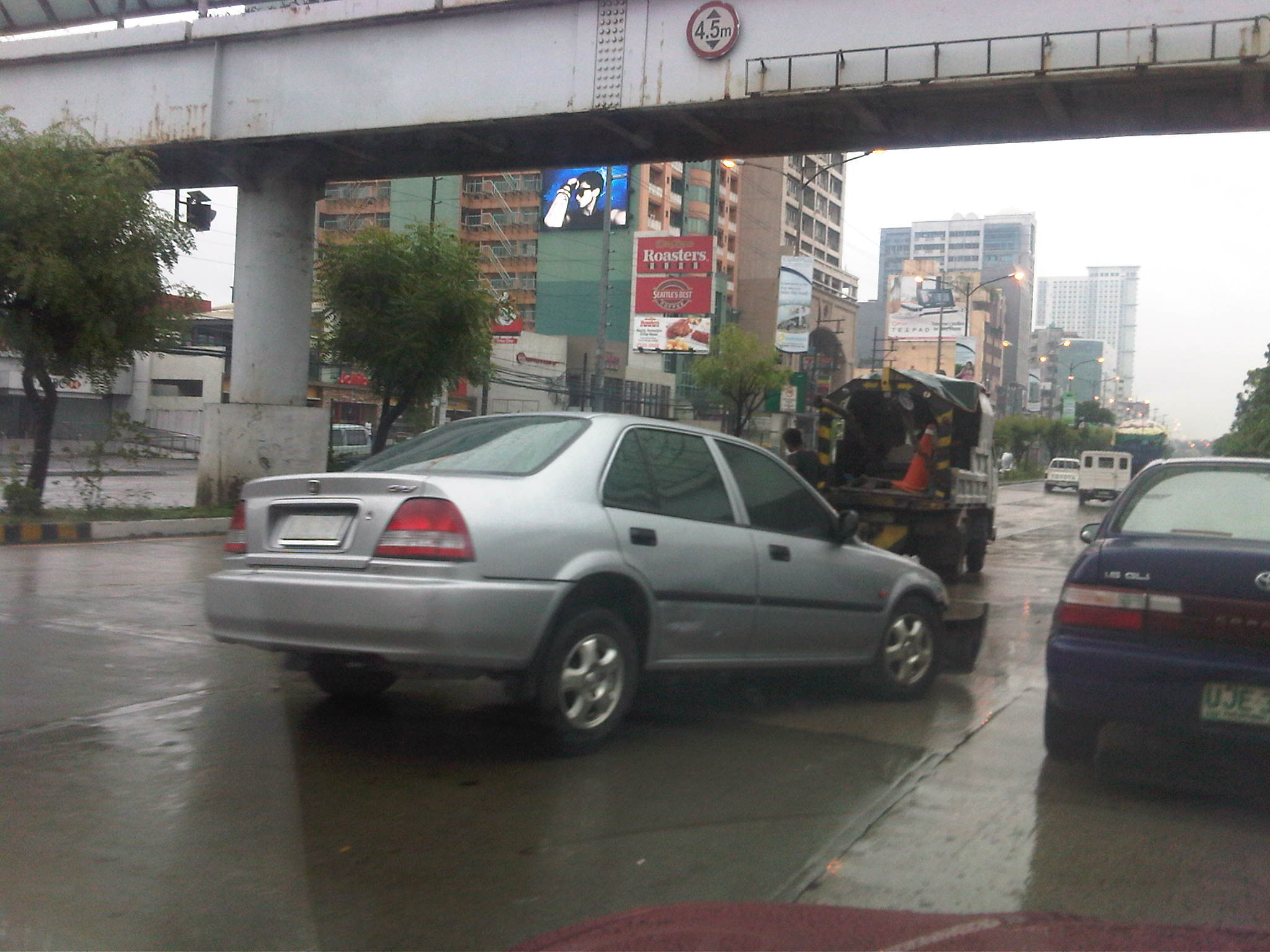 Honda City with damaged front bumper – the vehicle hit one of the concrete barriers of the U-turn slot with a trajectory indicating it apparently came from the direction of the overpass. After passing the vehicle, I saw that the left front wheel is already missing and apparently destroyed when the car hit the barrier. The damage to the car indicated tremendous impact and I just hope the driver and other occupants (if any) were wearing their seatbelts when the car hit the barrier. It would have helped also if the car had airbags. These safety devices are not standard issue in many if not most vehicles in the Philippines allowing dealers to make airbags optional and giving the buyer the false perception of getting the vehicle with a cheaper price.
When will motorists learn from such incidents? When and how will the MMDA or whoever is in-charge finally, effectively and decisively address this issue? Is it simply a case of speeding and something that can be addressed by enforcing speed limits? Or does the infrastructure and layout encourage such behavior among motorists? Perhaps we should rethink how we design and place U-turn slots and the barriers we use in the scheme. Otherwise, we will just see the same scene happening all over again at the cost of more lives and limbs.
–
 Caught (up) in traffic