
Home » Bridges (Page 6)
Category Archives: Bridges
Another look at the Muelle Del Rio
Got to pass by the Muelle Del Rio again en route to a meeting at the DPWH in the Port Area. We took this route as we wanted to avoid congestion in front of the Manila City Hall and along Padre Burgos. I made sure I took additional photos of the road including the approach from the Quezon Bridge to show the parked vehicles, mostly UV Express, parked along the road. Some maps already refer to the Muelle Del Rio as Riverside Drive. I think this is not appropriate especially from the perspective of heritage and the preservation of street names that are strongly linked with history. Such is an unnecessary simplification that should not be the case especially in the historic City of Manila and in the vicinity of Intramuros.
 Approach from the Quezon Bridge – UV Express (FX taxis) parked along the roadside
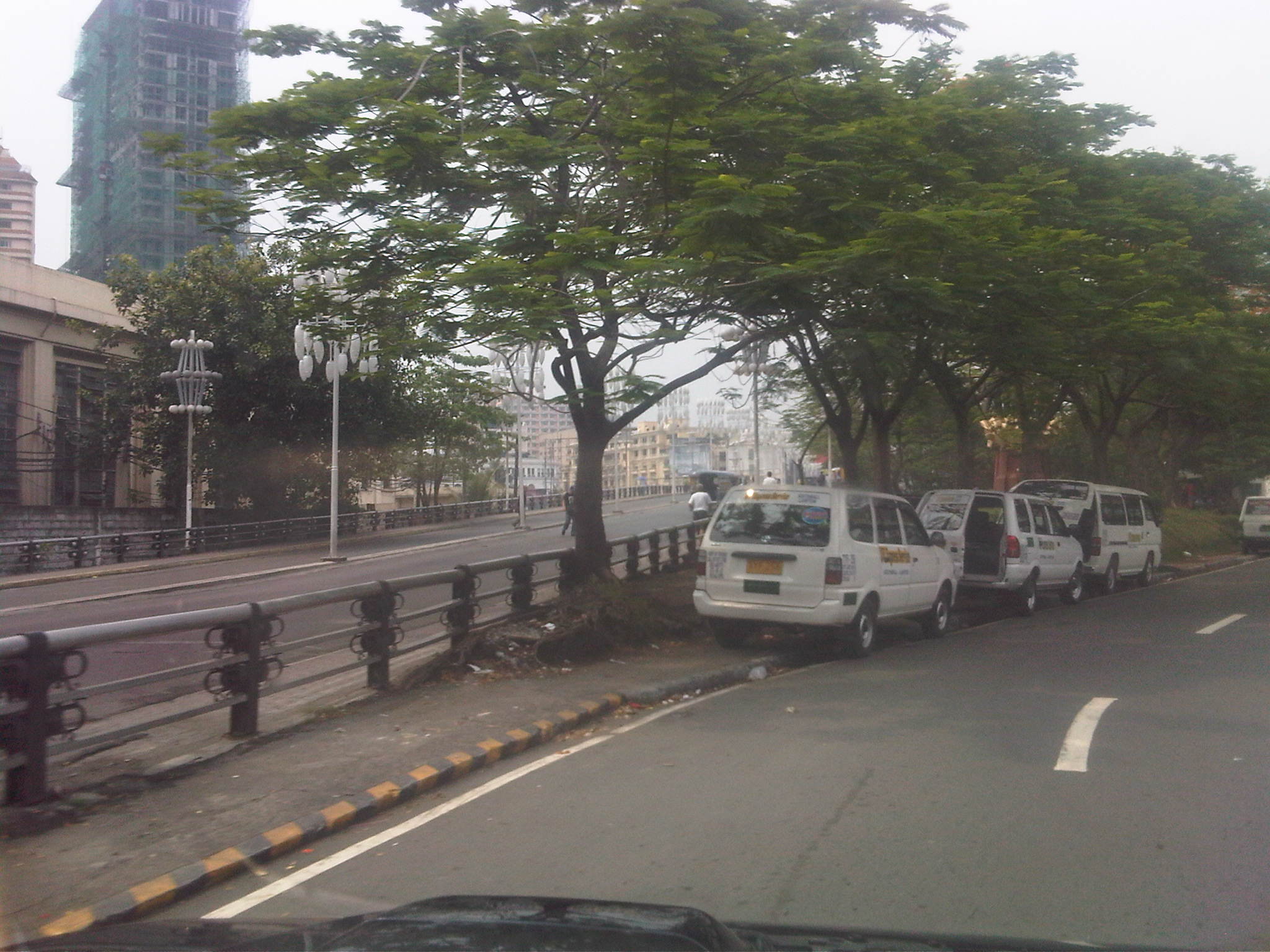 A bridge too close – the road comes quite close to the approach to MacArthur Bridge (the road on the other side of the barrier), which leads from Padre Burgos to Carriedo
 Taking a turn – turning from the approach towards the riverside portion of the Muelle del Rio, one can see the bridge for the LRT Line 1 and trees where homeless people usually take shelter. The driveway under the bridge is for a public transport terminal occupying the area under the bridge.
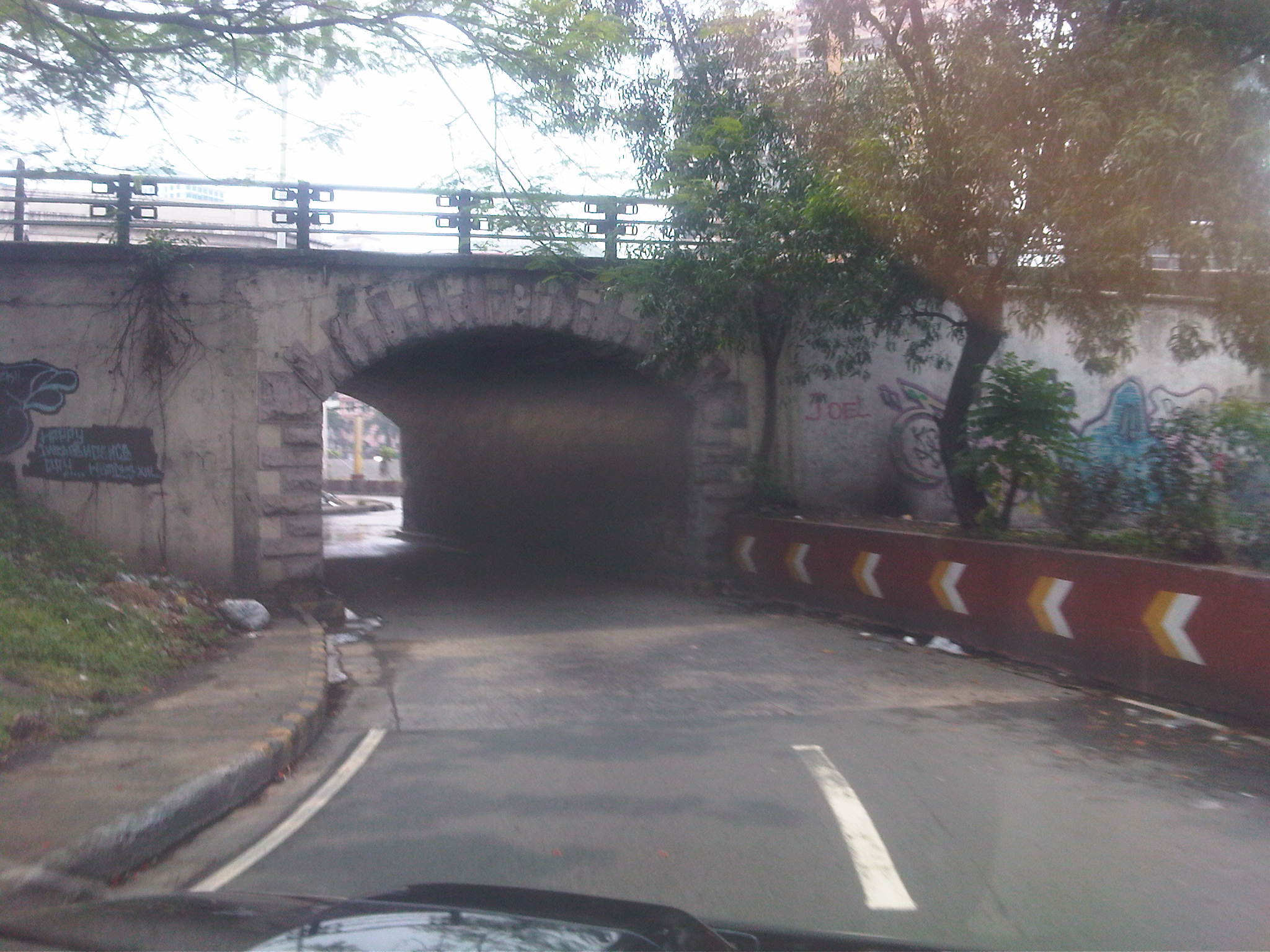 Underpass at MacArthur – the walls of the plant box are painted and seem to be well-maintained while that of the bridge are vandalized
 Behind the Post Office – the walls/fence of the post office is vandalized while there seems to be no one using the walkway along the Pasig River at the right of the photo. The yellow poles are light posts. There are no pavement markings along this stretch of the road.
 Pools – water from the mid-day rains accumulate along the gutters at either side of the road. The walls of the Manila Central Post Office look dirty from the combination of grime and vandalism.
 Sidestreet – approach to the junction to the sidestreet between the central post office and the building of the Philpost Bank before the underpass at the Jones Bridge
 Jones Bridge underpass – the underpass is obscured by the tree growing beside the wall. The stairs shown on the right of the photo is the pedestrian access to the bridge from the riverside walkway.
 After the bridge – there is significant traffic behind the National Press Club building
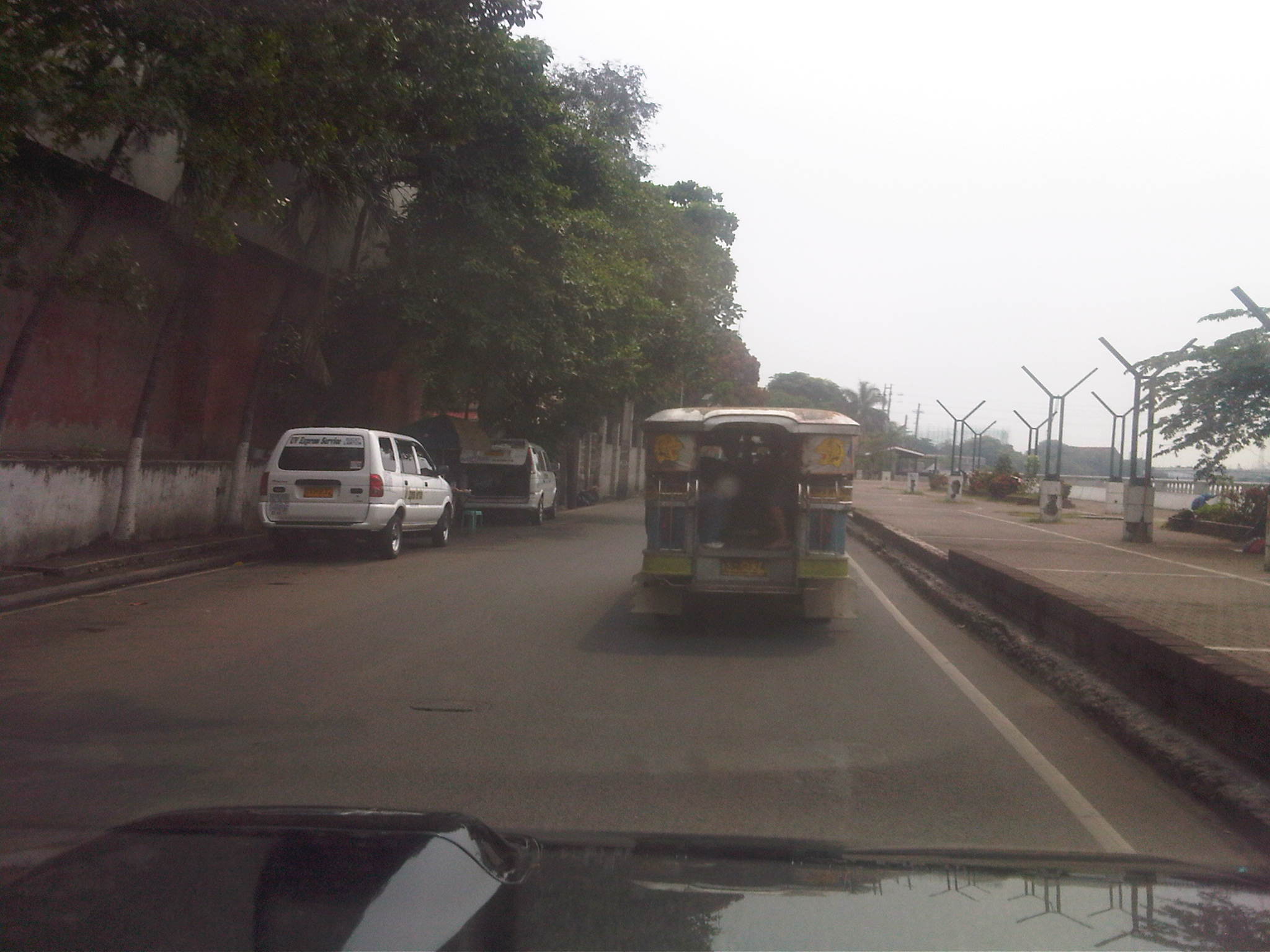 Bureau of Immigration – the BI complex is behind the wall shown on the left of the photo. There is a wide buffer zone along the Pasig River that’s been developed into a riverside park by the City of Manila. The curious Y-shaped structures are lamp posts that provide ample illumination at night time.
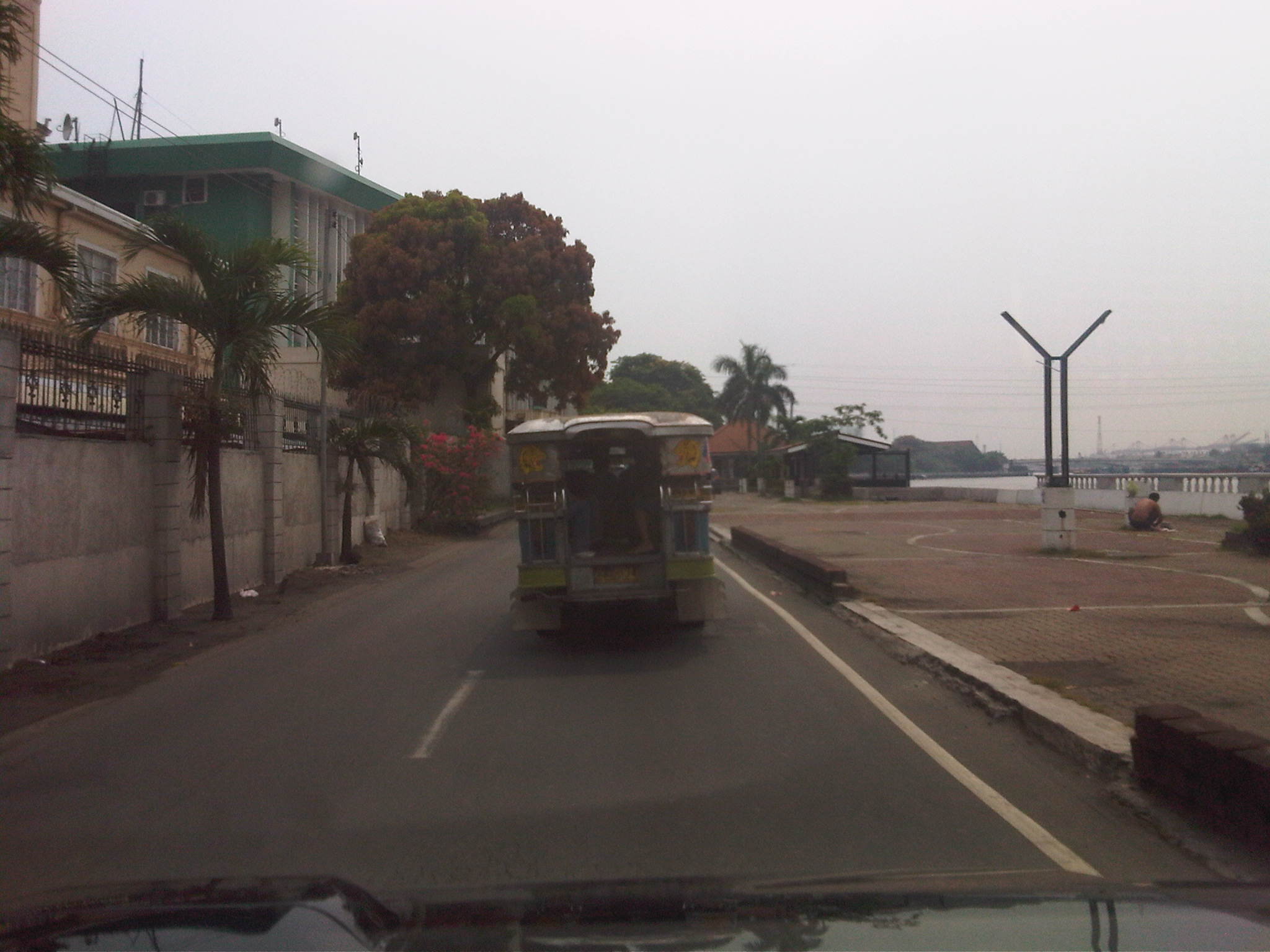 Approaching the terminal – the park area on the right is also used as parking space by visitors of the BI and those using the now non-operational Pasig River Ferry terminal at the mouth of the Pasig.
 Ferry terminal – parked vehicles along the terminal plaza are actually those of employees and visitors of the BI
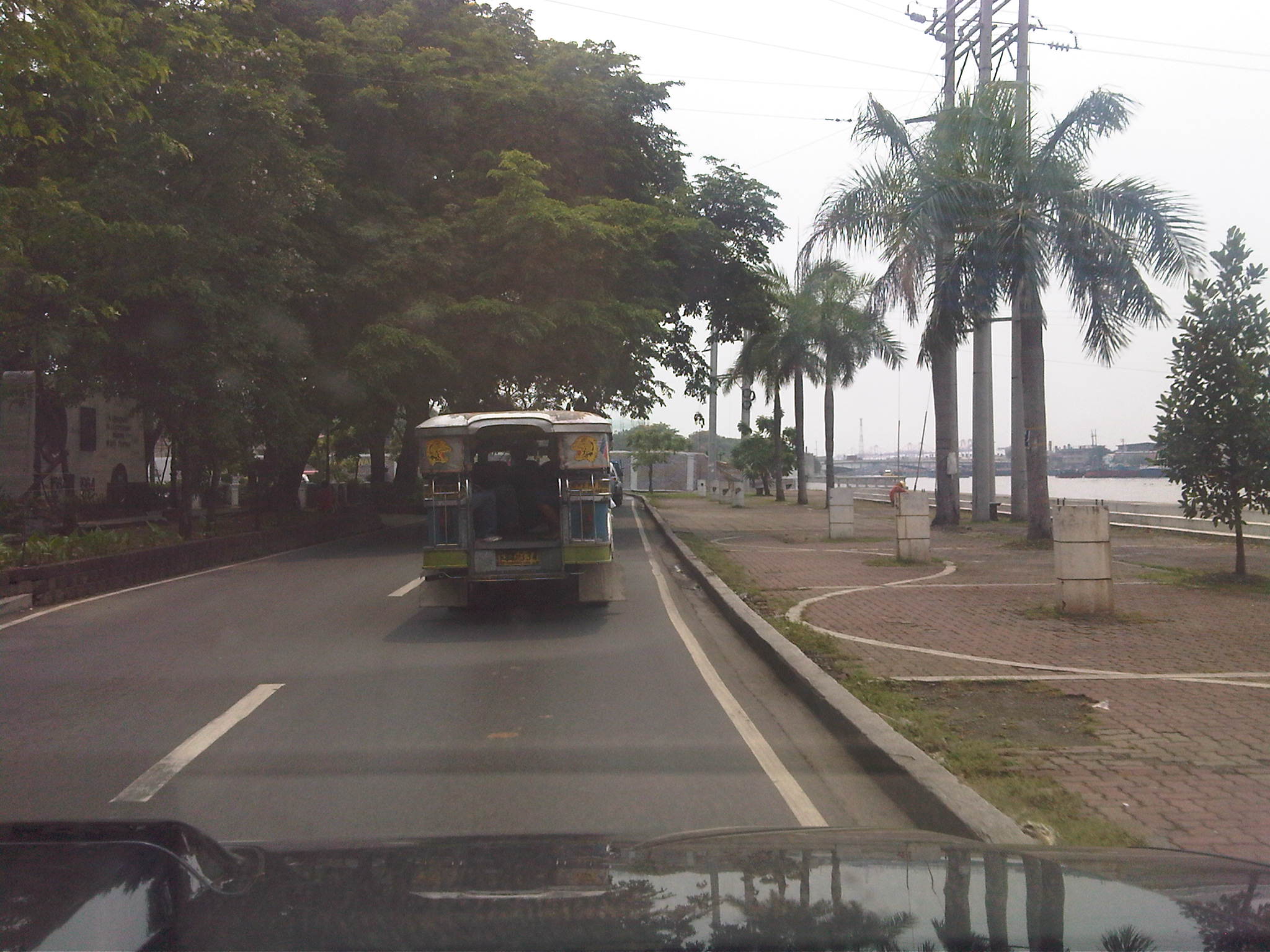 Post-terminal – the open area/riverside park continues after the ferry terminal and across the Plaza Mexico. Faintly visible on the left of the photo is the Acapulco Galleon Trade Monument that commemorated the trade route between the Philippines and Mexico during the Spanish Period. Across from the other side of Plaza Mexico are the ruins of the old Aduana (Customs) building.
 The dark side – the lamp posts seem to have been removed from their concrete bases. This was also shown in the preceding photo and I can just imagine how dark it is at night. The area has much potential as a park and the City of Manila should develop the place for it to attract people.
 Reconstruction – the Intramuros Administration and the Department of Tourism are already implementing some projects here and there but more would have to be done for Intramuros and the Muelle del Rio to be revived and become a major attraction if only for its heritage value. I certainly would like to see it developed like Melaka in Malaysia.
The Intramuros area including the Muelle del Rio may be considered for cycling and pedestrian facilities to encourage people to walk and cycle in the area. The stretch certainly has potential for walking and NMT, and should not be allowed to deteriorate further. Off-street parking facilities should also be considered and carefully planned such that on-street parking may be restricted and space be made available for pedestrian facilities. I am sure there are many planners and architects who would be up to this challenge.
–
Cagayan Valley Roads – Part 2
To continue with Part 1 of my feature on Cagayan Valley Roads, the following photos were taken along the national roads from Nueva Vizcaya to Cagayan (Tuguegarao).
 After Dalton Pass, motorists continue on winding mountain sections, often with little protection against flying off the road
 Community in a valley in the mountains as seen from the national highway
 The hills seem to be silent witnesses to intense logging in the past that has left us with a lot of barren hills and mountains. I could only imagine how these hills could have looked like if there were still trees.
 Entering Bambang, Nueva Vizcaya, I was a little disappointed that there was no grand arch like those marking boundaries in other cities or towns along national highways. Instead, there’s this sponsored sign on a gantry. Ahead, some of the chevron signs have been stolen, leaving only a few installed and empty posts.
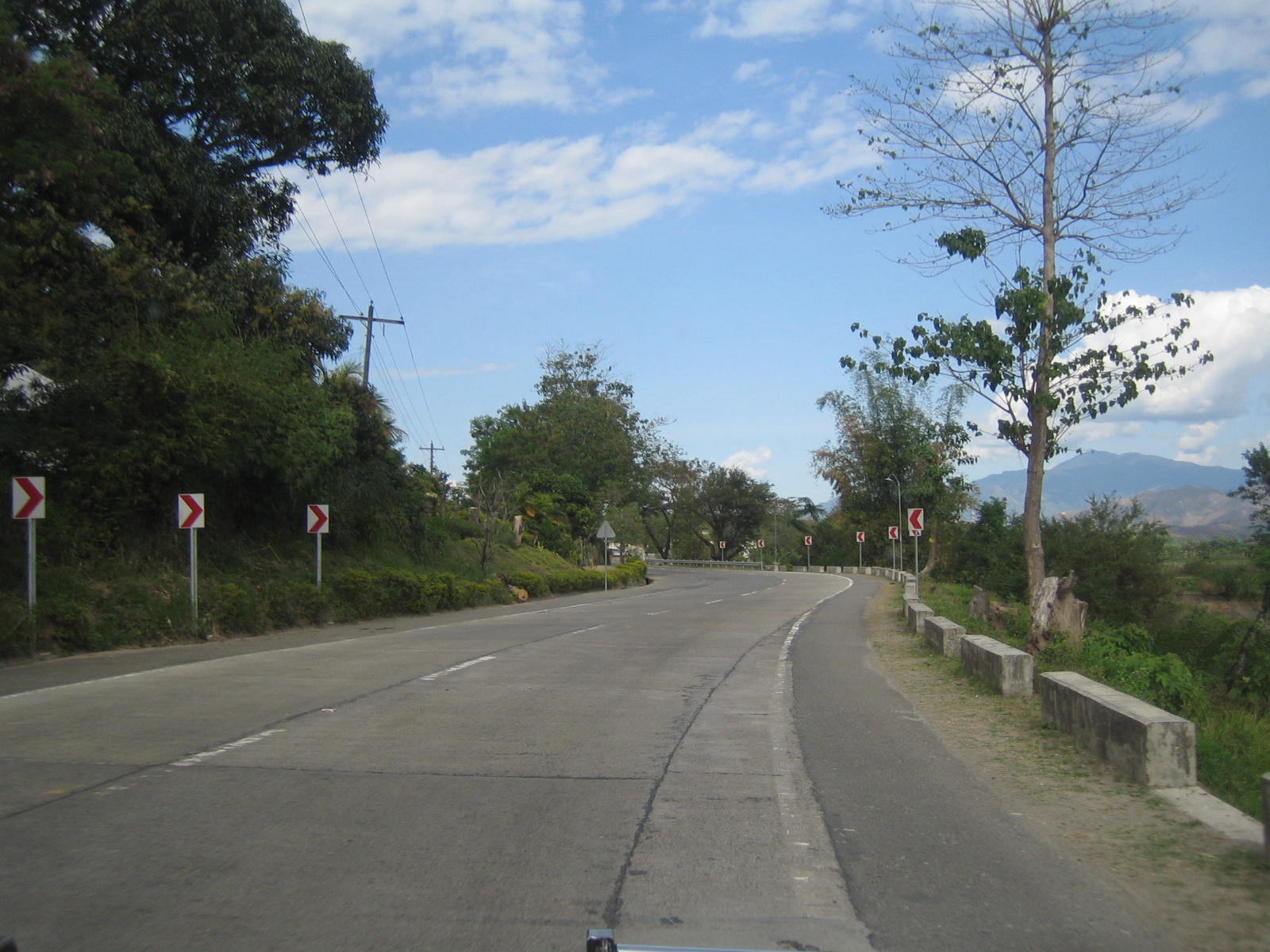 Reverse curve section with concrete barriers to keep cars from going off-road and into the ravine on the right. These barriers, however, will be unable to stop larger vehicles.
 I was both a bit surprised and delighted that tricycles used the shoulder (or is it parked?) and got out of the way of general traffic. I now forget the exact name of the place but this is somewhere in Bambang in Nueva Vizcaya and the tricycles here are not garapal users of the road.
 There are many trucks traveling along the Pan-Philippine Highway as this is a major route for a lot of goods. Isabela province, for example, produces rice that is transported mainly to Central Luzon and Metro Manila.
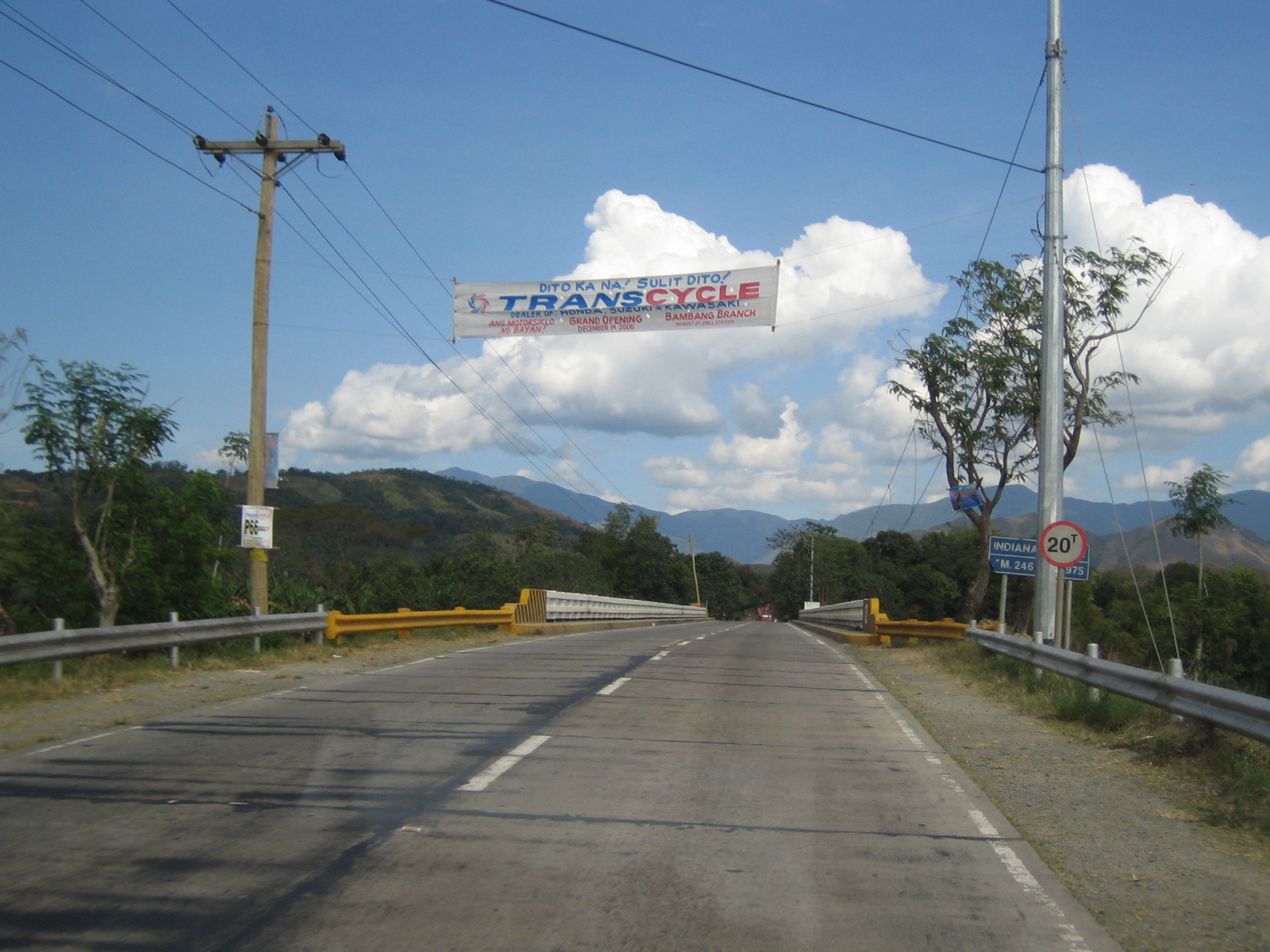 This typical 2-lane concrete bridge is relatively new judging from the 20-ton limit indicated in the sign. Older bridges would have 15-ton limits.
 The sign before the bridge allows motorists to assess distances to major towns along the highway: 8 km to Bayombong, Nueva Vizcaya, 13 km to Solano, Nueva Vizcaya, and 70 km to Santiago, Isabela. The two-lane bridge doesn’t have enough space for pedestrian use or breakdowns.
 There are many straight, long sections like this between Bayombong and Bagabag.
 I forget now but this section is also likely to be somewhere between Bagabag, Nueva Vizcaya and Cordon, Isabela. Bagabag is close to the provincial and regional boundary with Banaue Province (Cordillera Autonomous Region) and there are signs pointing travelers to roads going to Baguio City and Lagawe.
 I forget now but this section is also likely to be somewhere between Bagabag, Nueva Vizcaya and Cordon, Isabela.
 Calao Bridge in Santiago City, Isabela is an example of old school bridgework using steel trusses. It is similar to many other bridges including those still standing in the Visayas and Mindanao.
 From Santiago City, we decided to take the alternate route using the Santiago-Tuguegarao Road. Our assessment was that this would be less congested compared to using the Cagayan Valley Road, which passes through more populous towns like Cauayan and Ilagan.
 Arch announcing our arrival at Cabatuan, Isabela province along the Santiago-Tuguegarao Road.
 Typical two-lane bridge in Isabela along the alternate route to the Cagayan Valley road. Our decision to take this road seemed to be a good one as traffic was very light and we could travel without worrying too much about tricycles or pedestrians.
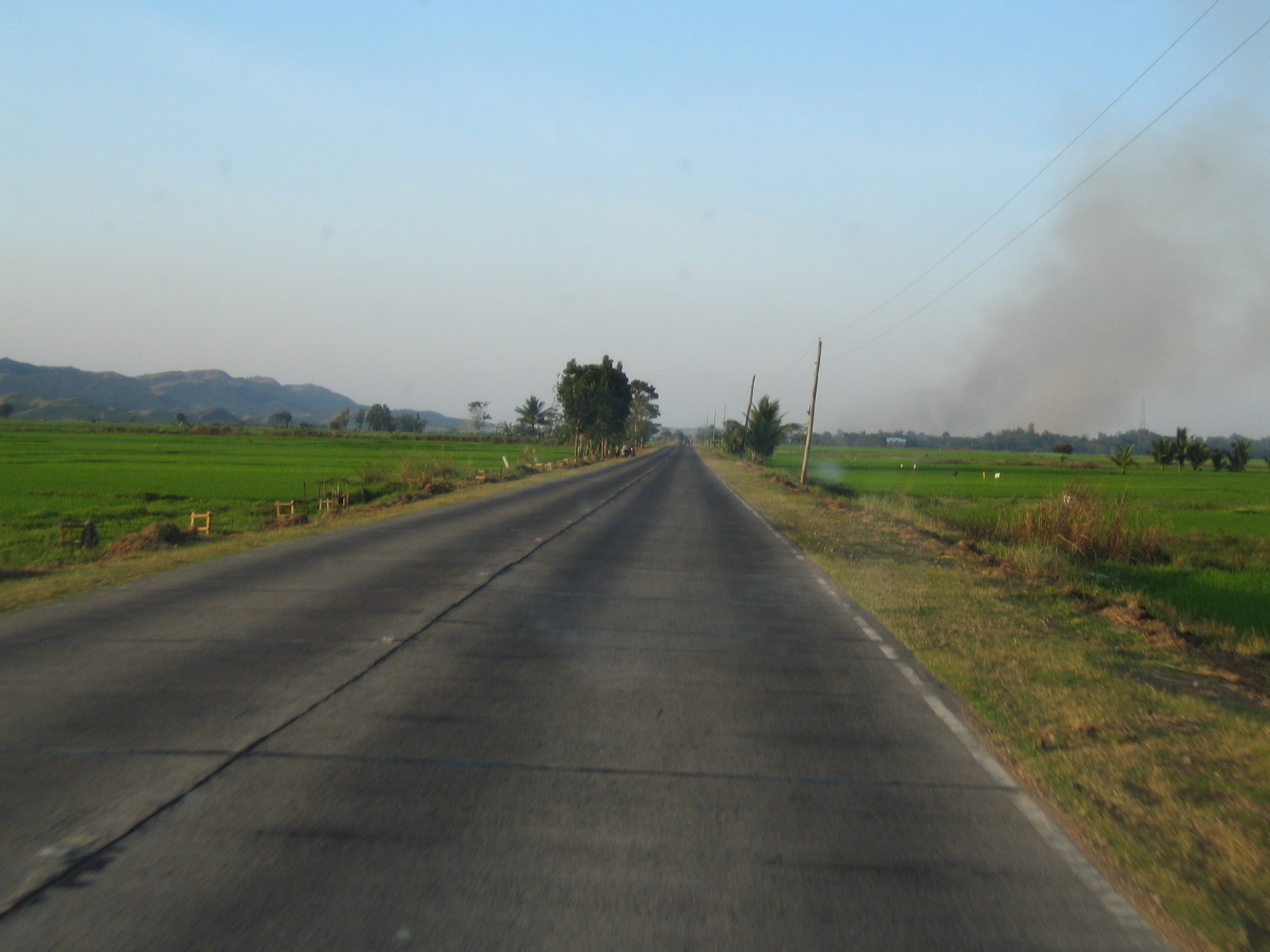 There were rice fields on both sides of the road. The concrete pavement was satisfactory and allowed us to travel at high speeds. Fortunately, there were few communities and people living along the highway at the time.
 I like seeing rice fields with the plants growing and the greenery indicating its is well-irrigated. This was taken in mid-February so I am pretty sure that since it was months before the wet season, the area had an abundant harvest.
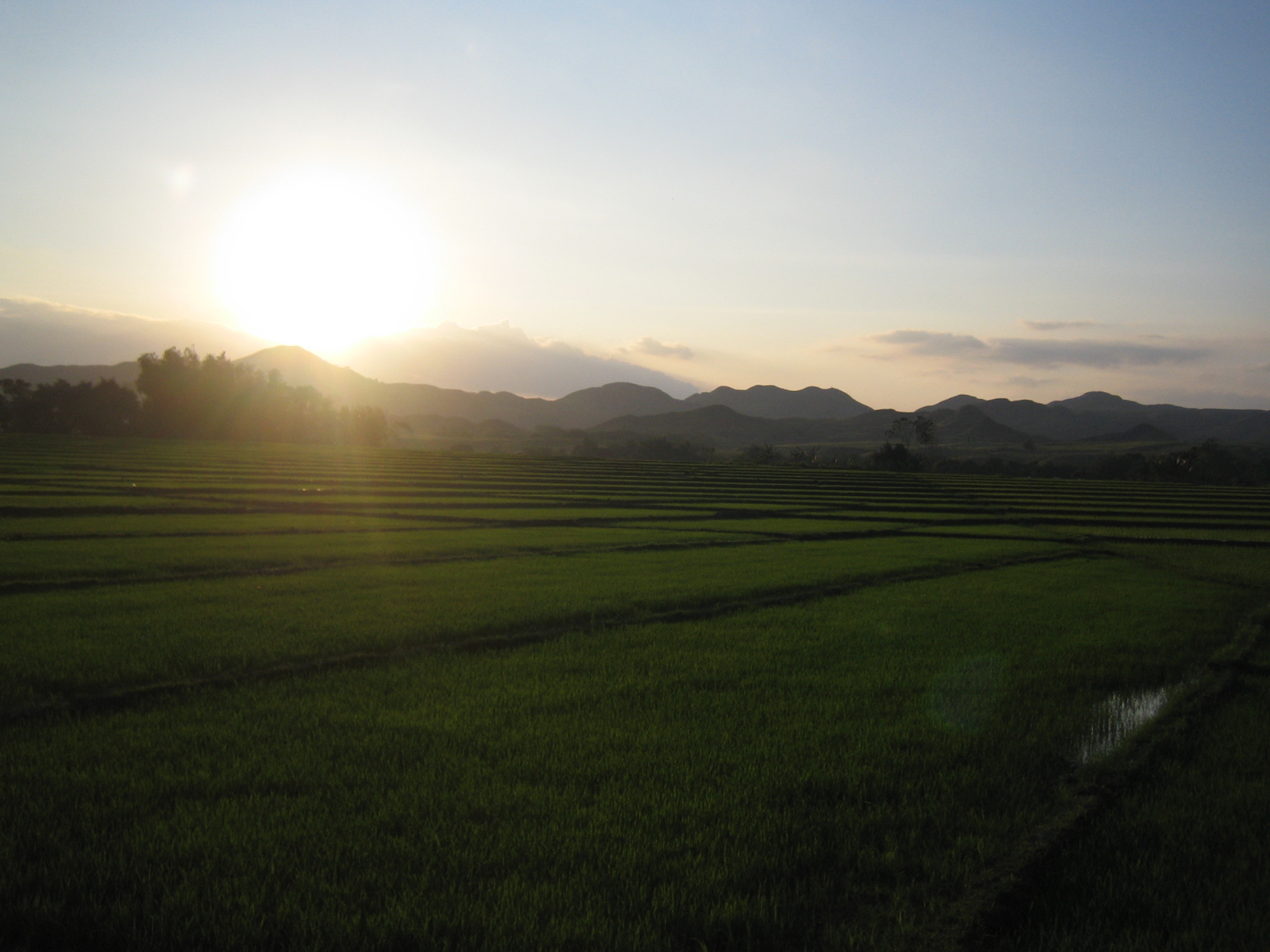 Sunset in the Cordilleras
 The light from the sunset presents travelers with surreal sights with the rice fields and the mountains often combining for picture-perfect moments. I took this with my Canon Ixy on-board a moving vehicle!
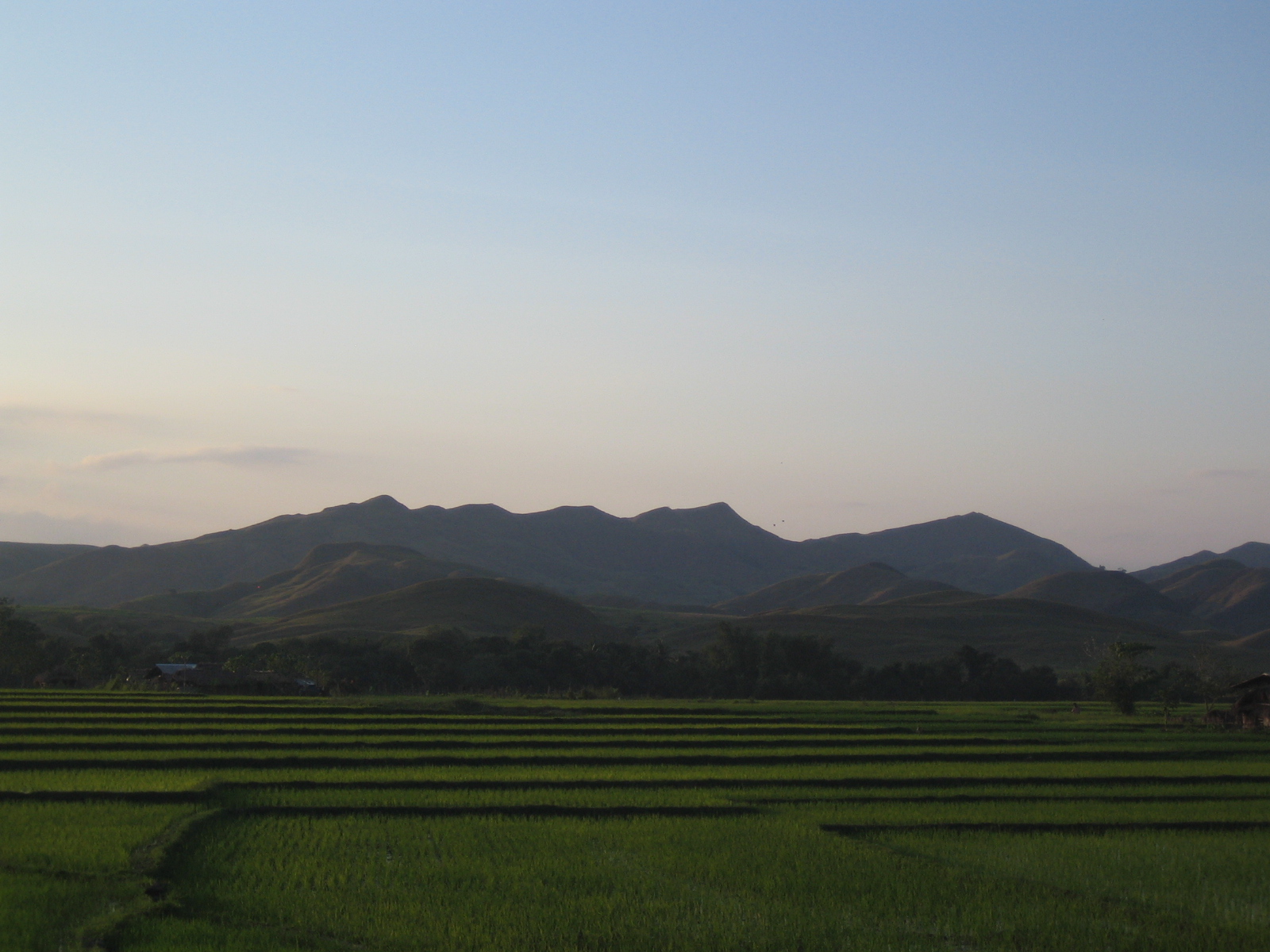 Another shot of the country side along the Santiago-Tuguegarao Road. This highway will actually pass through Kalinga province and there is a junction after Quezon town where travelers can turn left towards Tabuk, the capital town of Kalinga.
 Crossing the Buntun Bridge after Enrile town brings the traveler to Tuguegarao. The bridge spans the width of the Cagayan River, the longest and largest river in the Philippines, which deserves to be called by its name during the Spanish period – Rio Grande de Cagayan.
 Cagayan River is a wide body of water that is navigable and the source of fresh water for a lot of people in the Cagayan Valley. It stretches from Aparri to Dupax Del Sur, Nueva Vizcaya near the Nueva Ecija province and Pantabangan Dam. The river and its tributaries cover practically the entire valley of 4 provinces (Cagayan, Isabela, Quirino and Nueva Vizcaya).
Reviewing these photos and trying to remember the places is like reliving the journey. I am sure there has been a lot of changes since I took these photos in February 2007. Perhaps there have been substantial developments along the highways and there are more people living in those communities we passed by. Perhaps, too, there is more vehicular traffic along these roads, a definite sign of progress in these areas. I just hope that there would be more and not less trees in those hills we passed along the way.
–
The Panay-Guimaras-Negros bridge: nice to have but is it necessary now?
An article came out of the Philippine Daily Inquirer about 19 congressmen backing a proposed 53-Billion Peso bridge project. The bridge is supposed to connect the main islands comprising Western Visayas namely Panay (which has 4 provinces – Iloilo, Capiz, Aklan and Antique), Guimaras and Negros (divided into two provinces – Negros Occidental and Oriental). The claim is that the bridge will generate traffic between the islands, leading to more economic activity. While this preliminary assessment is generally true, it is the magnitude of the traffic and the resulting benefits that is difficult to determine. In fact, it is very difficult to establish a likelihood for what are expected to be tremendous benefits given also the tremendous cost of the bridge. The price tag will require quite a stretch should the usual economic analysis of NPV, IRR and B/C Ration be applied to justify the project, even factoring in employment opportunities (after the project, what then becomes of the workers?)
Meanwhile, it is interesting to make a reality check about the constituencies of these same congressmen. Do they have health centers to serve their people? If so, are there medicines and other essential equipment or staff in these centers? These are just examples of what needs much and immediate attention other than constructing what may likely become a monument to folly. First things first! There are many other things that need to be prioritized other than sinking funds into this project.
From a purely civil engineering or architectural viewpoint, the bridge would definitely be a great project. It could be a showcase project for an emerging economy, a statement for a country wanting to be recognized among its more progressive neighbors like Thailand and Malaysia. Yet, considering many other things like recovery from the disasters that visit the nation every year (think Ondoy and Sendong) it is another one of those projects that I believe is nice to have but is unnecessary at this time. In fact, the cities in the islands of Panay and Negros would probably benefit more if their traffic and public transport systems are upgraded. But that’s just one opinion…
The article is reproduced below:
19 solons back P53-B bridge project
By Nestor P. Burgos Jr.
Inquirer Visayas12:03 am | Sunday, March 25th, 2012ILOILO CITY—Crossing party lines, 19 Visayas congressmen have asked President Aquino to prioritize the construction of a bridge network linking the islands of Panay, Negros and Guimaras.
The legislators, in a resolution, called on Mr. Aquino, the Public-Private Partnership (PPP) Center, the Department of Public Works and Highways (DPWH) and the National Economic Development Authority to prioritize the construction of bridges connecting the islands in the government’s PPP program.
“The construction of trans-link bridges will open new economic opportunities, reduce transportation and business transaction costs, increase access to social services and boost tourism in the entire Western Visayas region,” according to the resolution.
The resolution was initiated by Iloilo City Rep. Jerry Treñas and was signed by 19 of the 21 legislators from Western Visayas and Negros Oriental.
Aside from Treñas, those who signed the resolution include Representatives Janette Garin (Iloilo), Augusto Syjuco (Iloilo), Arthur Defensor Jr. (Iloilo), Ferjenel Biron (Iloilo), Niel Tupas Jr. (Iloilo), Florencio Miraflores (Aklan), Paolo Javier (Antique) , Antonio Del Rosario (Capiz), Jane Castro (Capiz), JC Rahman Nava (Guimaras), Anthony Rolando Golez Jr. (Negros Occidental), Aflredo Marañon III (Negros Occidental), Alfredo Benitez (Negros Occidental), Jeffrey Ferrer (Negros Occidental), Mercedes Alvarez (Negros Occidental), Jocelyn Limkaichong (Negros Oriental), George Arnaiz (Negros Oriental) and Pryde Henry Teves (Negros Oriental).
Only the late Rep. Ignacio “Iggy” Arroyo and Rep. Julio Ledesma IV, both of Negros Occidental, were not among the resolution’s coauthors.
House Resolution No. 2018 was read on Jan. 16 and was referred to the House committee on public works and highways.
Steel bridges
There have been various proposals and studies to construct the bridges over the years but none has led to an actual project because of the high estimated cost. In the past, however, the government used modular steel bridges for its various projects. The bridges, unlike concrete ones, are easier to build and less expensive.
A study of Japan International Cooperation Agency conducted in 1999 pegged the cost of the project at P53.661 billion with a total span of 23.19 kilometers.
This includes P14.173 billion for the construction of the 2.59-km Panay-Guimaras bridge and P39.488 billion for a 20.6-km bridge linking Guimaras and Negros islands.
In a separate DPWH study in 2010, the project cost was estimated at P28.496 billion covering 13.16 kilometers. This include 3.6 km for the Panay-Guimaras bridge at P9.438 billion and a 9.56-km bridge to connect Guimaras and Negros costing P19.08 billion.
The 13.16-km span is the shortest among the target areas for bridge construction.
Based on this projected length, a bridge will be constructed to connect Leganes town in Iloilo to Buenavista town in Guimaras. Another bridge will link San Lorenzo town in Guimaras to Pulupandan town in Negros Occidental.
‘More realizable’
Treñas said the projected cost in the DPWH study “makes the dream more realizable.”
The Visayan legislators pointed out in the resolution that the promotion of the project under the PPP is an integral part of the President’s socioeconomic program.
They said infrastructure and economic development projects should also be implemented beyond the capital.
“The National Capital Region receives the lion’s share of the national budget despite the Visayas islands having a population greater than that of Metro Manila,” said the resolution.
They said the archipelagic nature of the country “requires the development of a unified well-integrated economy which allows people and goods to be transported swiftly and efficiently.”
Treñas said they hoped that the national government could release funds for a comprehensive feasibility study that would pave the way for the approval and implementation of the project.
–
Muelle del Rio
The Muelle del Rio is a riverside road that stretches from Quezon Blvd. (from the ramp of Quezon Bridge) to Plaza Mexico in Intramuros. The road passes under the McArthur and Jones Bridges that cross the Pasig River, and behind buildings such as the Manila Central Post Office, the National Press Club, the Philippine Chamber of Commerce and Industry, and the Bureau of Immigration.
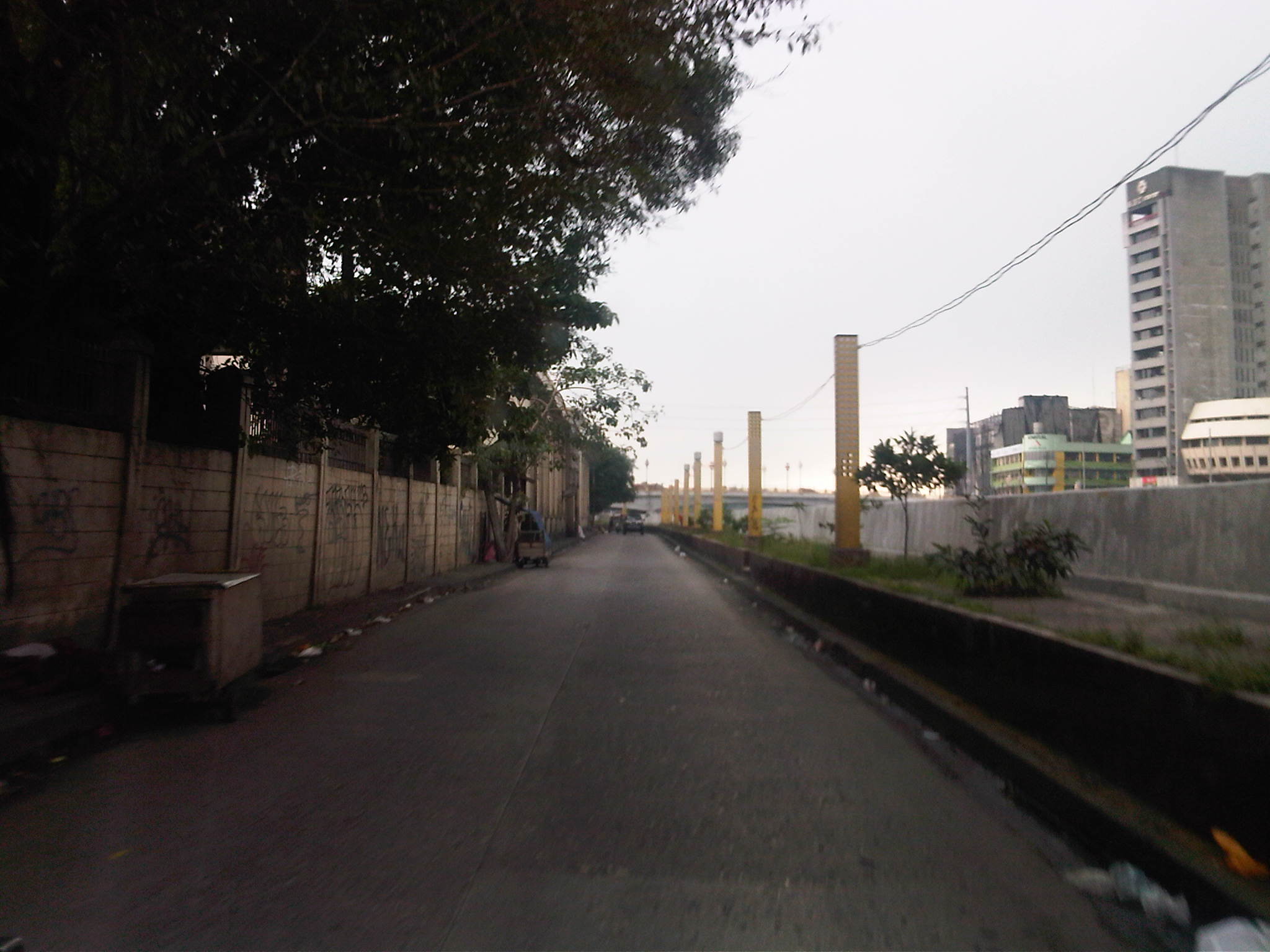 The stretch from McArthur Bridge behind the Manila Central Post Office is clear of squatters but there are many garbage, mainly plastics, strewn everywhere. There are people “residing” under McArthur Bridge and these homeless people have only their carts or cardboard boxes to protect them from the elements.
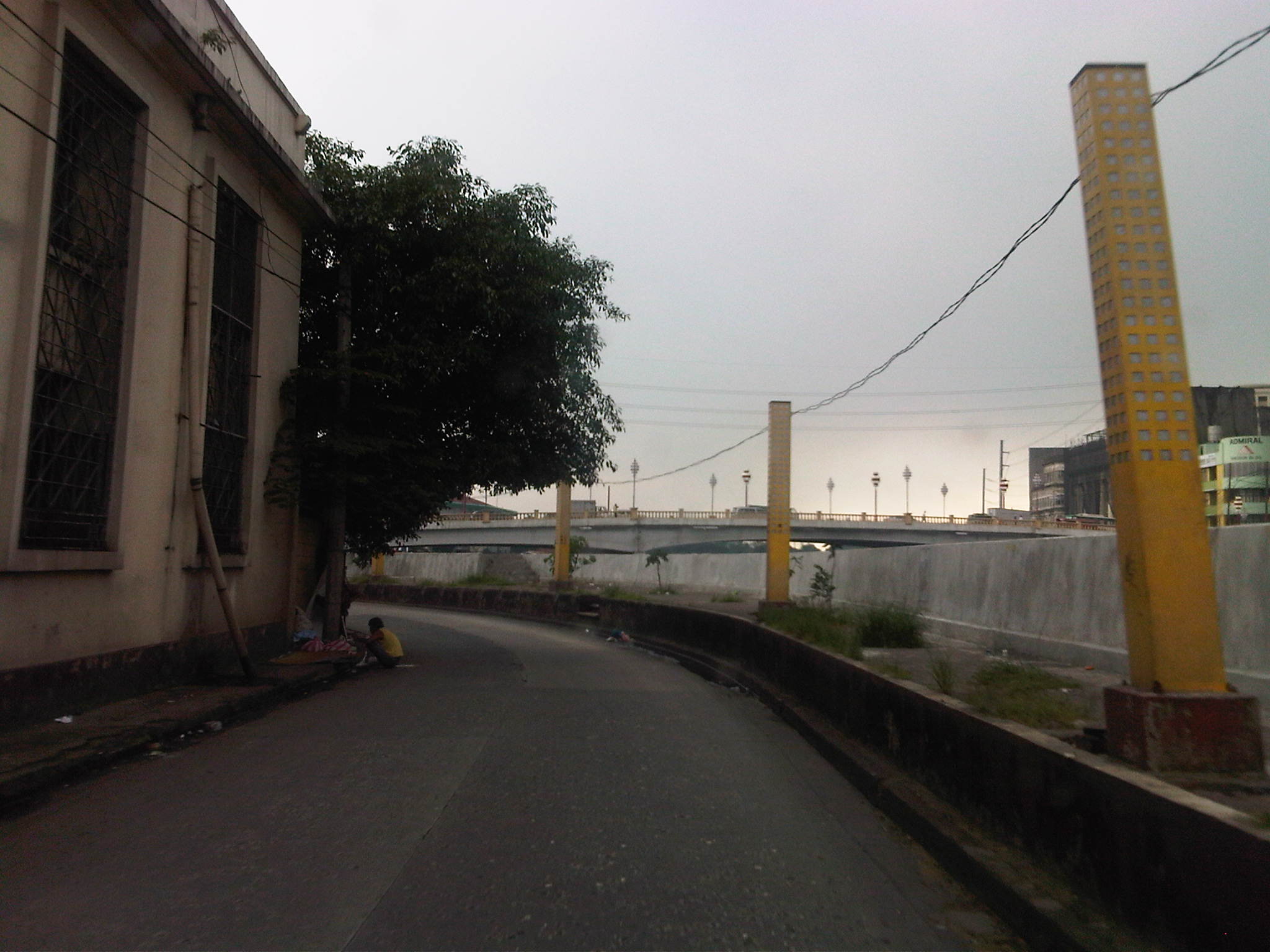 The lamp posts along the road look like they were inspired by the capiz windows of old houses. The homeless include the individual pictured here who was washing clothes using the flowing water from various sources including a leaking water pipe. This section is often flooded during the wet season due in part to its location and elevation with respect to the Pasig River.
 The underpass at Jones Bridge is another section that is usually flooded during the wet season. A staircase connects the bridge and the riverside walkway cum park. The bridge is currently mentioned in news reports regarding the film “The Bourne Legacy” that will be shot in Manila. The bridge is an old one and considered a landmark in Manila. It has been the subject of many old photos and has been romanticized in paintings.
 Vehicles parked along the linear park across the road from behind the Bureau of Immigration. The park is not supposed to be a parking facility but due to a lack of parking spaces for the Bureau and not too many people using the park anyways, parking was tolerated. Perhaps it is better than having such vehicles occupy precious road space. Further down the road, the red tile roof of a Pasig River Ferry terminal is visible.
 The Plaza Mexico Station of the Pasig River Ferry. the Ferry services were suspended last year due to many problems including the lack of passengers.
Plaza Mexico is only a stone’s throw away from the ferry terminal shown in the preceding photo and is already within the walls of Intramuros. Among the historical buildings in the vicinity are the Intendencia, Almacenes and the Aduana, which were buildings from the Spanish Period. Some are currently being restored as part of a heritage initiative in Manila spearheaded by the Intramuros Administration.
–
Roadway subject to flooding
The outbound approach to the bridge along Marcos Highway was quite congested this morning due to the closure of the underpass leading to C5 located just in front of SM City Marikina. The section was closed to traffic due to flooding caused by Typhoon Pedring (International name: Nesat). Pedring’s rains caused the Marikina River to swell up and inundate significant areas along its banks including what looked like the lower level parking area of the mall. Traffic bound for C5 from Marikina, Pasig and the towns of Rizal had to be diverted to the Riverbanks road via the service road after the bridge. The result was traffic congestion as 6 lanes of traffic tried to squeeze into what was effectively 4 lanes of bridge including the bypass structure fronting SM that eventually merges into 3 lanes of road on the other end.
Following are a few photos I took while en route to the office this morning:
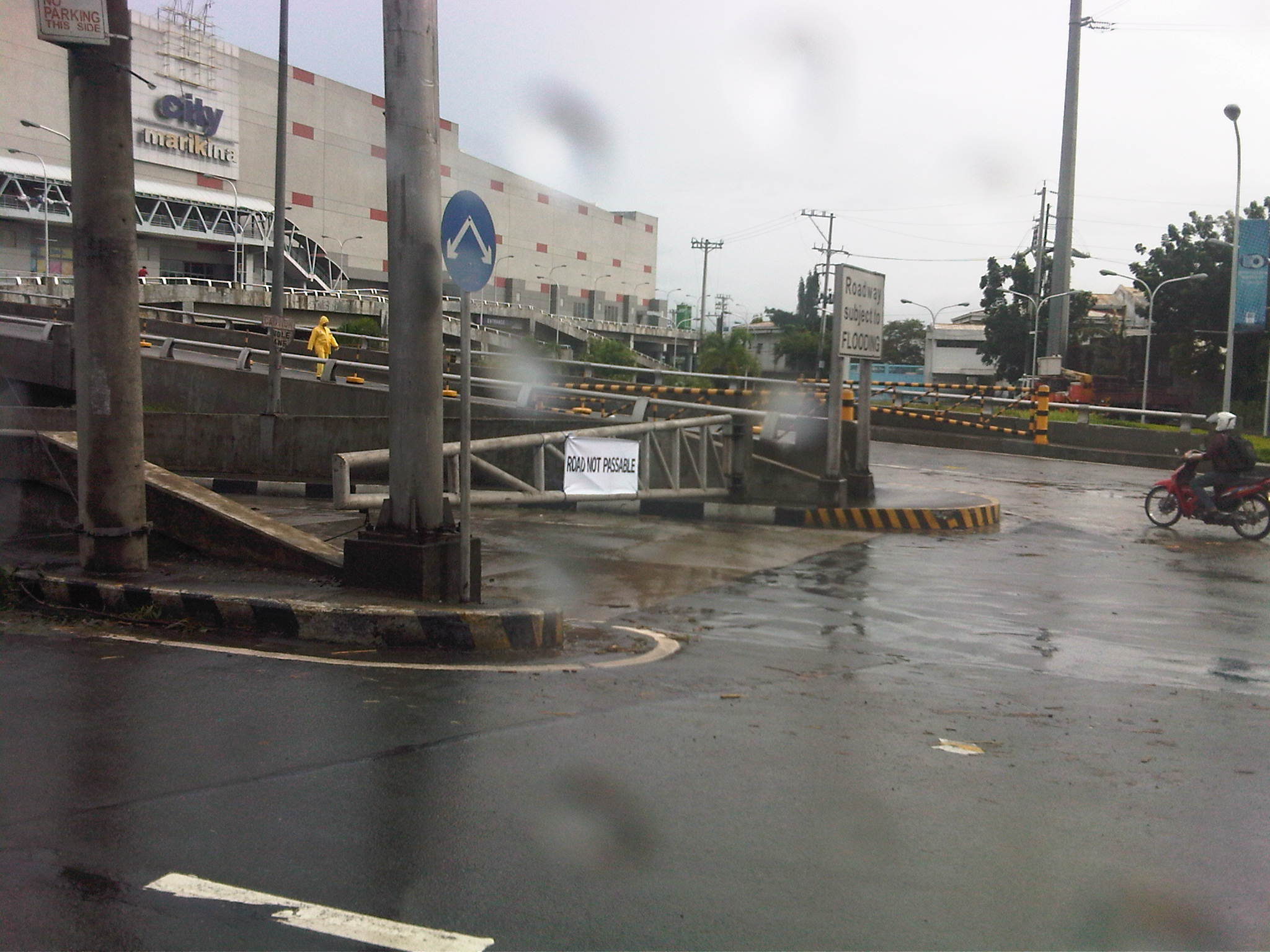
A gate bars access to the underpass connecting to a bridge leading to C5. The sign on the right states: “Roadway subject to FLOODING,” and is a permanent sign placed there to condition the mind of travelers about what may happen should there be inclement weather. This is supposed to be an example of a design where there’s no choice but to sacrifice according to the character of the area. Still, the question on many people’s minds probably is why were other designs that won’t be subject to flooding considered in the first place? Such would surely be worth it considering the frequency our climate and the probability of flooding?

Mud and muddy water on the underpass as seen from the bridge. Such is a scene reminiscent of the aftermath of Ondoy (International name: Ketsana) in 2009, exactly 2 years ago to the day.
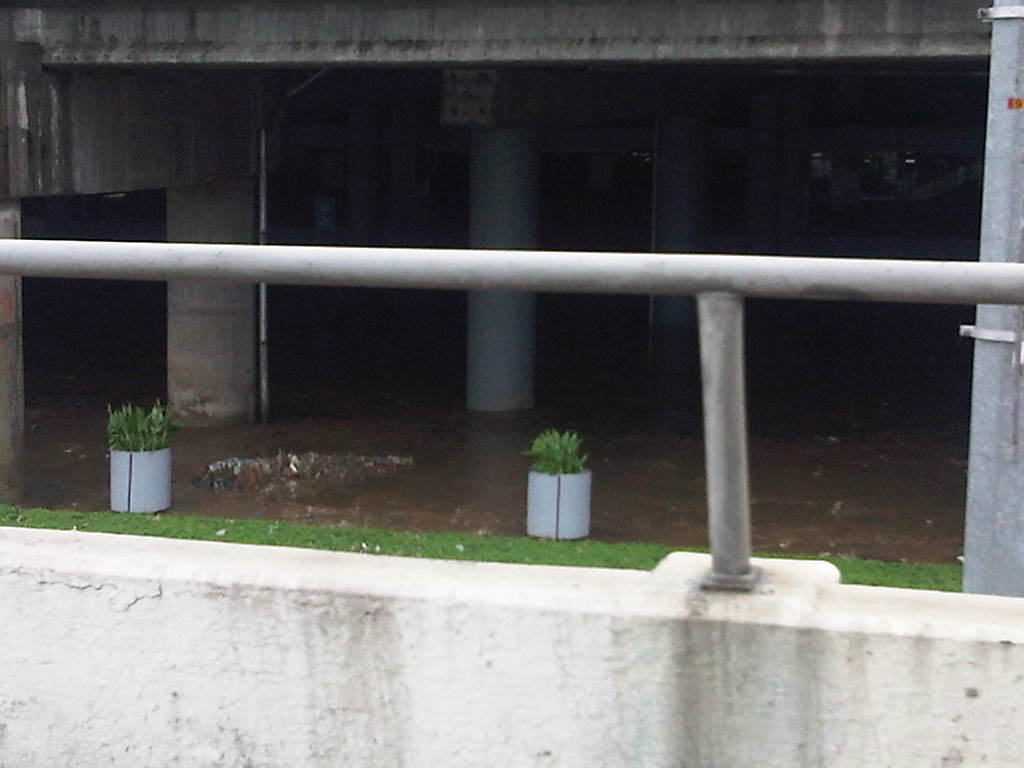 A peek into SM Marikina’s lower level environs show thick mud that settled on the service road and the mall’s lower parking area. The mall’s design already factored the anticipation of floods brought about by the swelling of the river during powerful typhoons such as Pedring and Ondoy. The mall was, after all, constructed on the flood plain, which is an unusual and uncommon location for such developments.
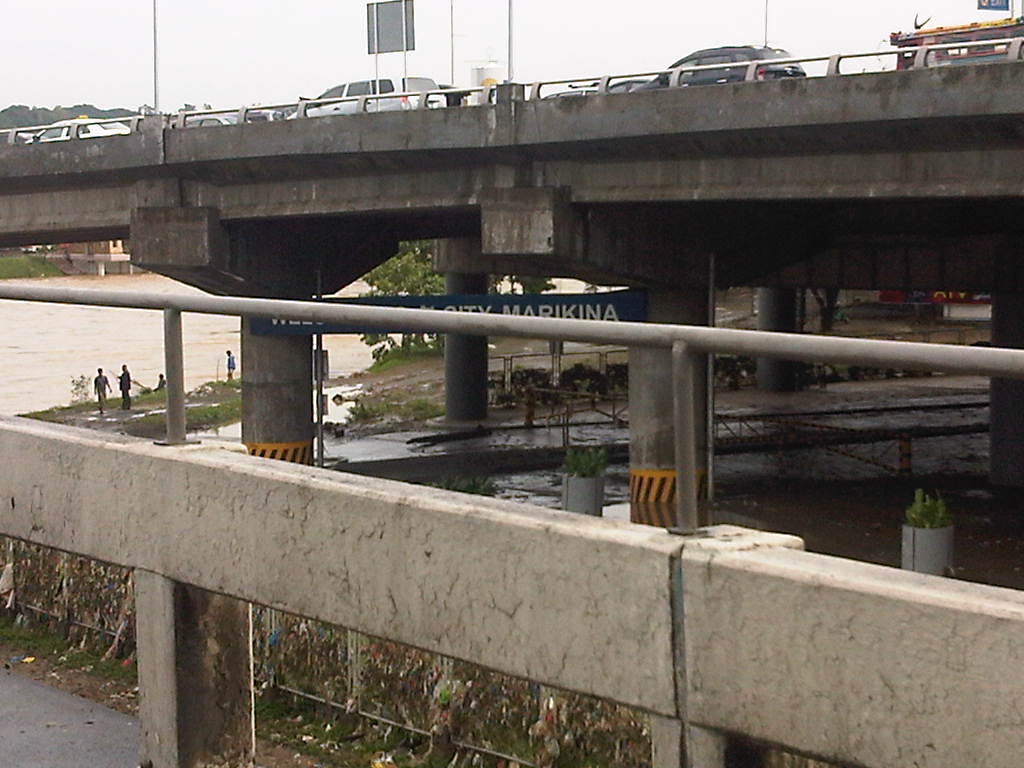
Garbage comprising mainly of plastic trapped on the SM screen fence. These were part of the flotsam and jetsam from the Marikina River. Such debris are evidence of the state of waste disposal and mismanagement in areas along the Marikina River. It is clear that people still have not learned from past experiences and government is partly to blame for this, particularly at the local level.

