
Home » Disaster
Category Archives: Disaster
How about a pop-up BRT along Commonwealth Avenue?
I posted this map on social media showing a possible route for a pop-up BRT (Bus Rapid Transit) along Commonwealth Avenue. This was inspired by the reports this week of the horrendous experience of commuters along this corridor due to the current fuel crisis. It seems that a lot of people have reduced their use of private vehicles in favor of what they thought was adequate public transportation only to find out how lacking the supply was.
While this route can be extended (all the way to Fairview via Regalado, for example), I think the one in the map below would be able to capture a majority of the commuters along the corridor with the end at Dona Carmen being a drop-off/pick-up area for those residing to the north. Quezon City Hall and the Elliptical Road is a no-brainer since the Quezon City Bus service terminates here and people can transfer to one of the other lines that will allow them to travel elsewhere covered by the bus network. Quezon City or DOTr can lease buses and come up with a service contracting scheme to sustain operations. The idea is to first run this pop-up BRT while the crisis in Iran is ongoing. Data collection and assessments should coincide with this to refine the service and perhaps, make recommendations for sustaining this service at least until MRT 7 gets online.
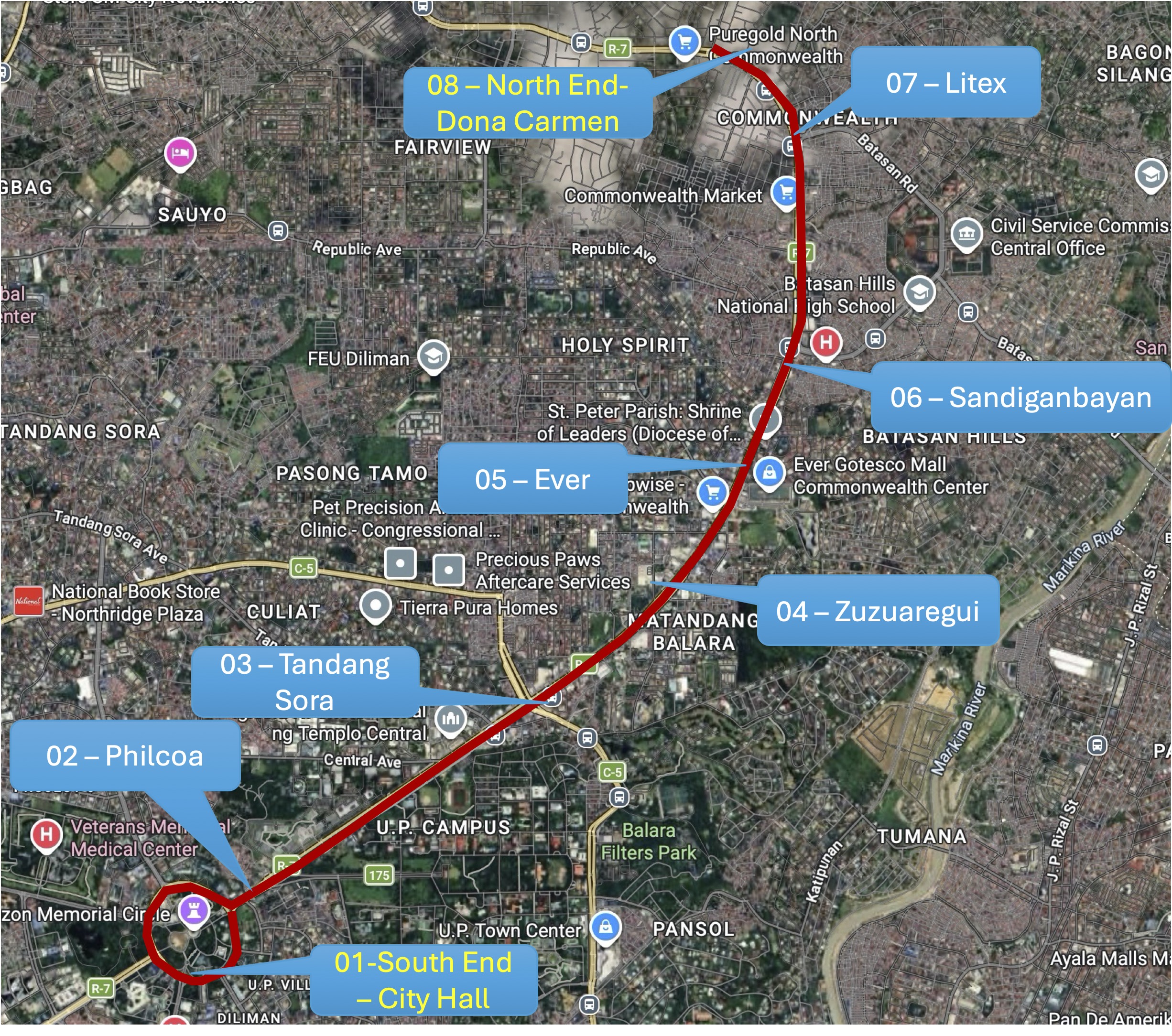
The idea of a pop-up BRT is not really new as there were “proof of concept” runs along Commonwealth and at BGC many years ago. Unfortunately, the BRTs never came to be in both cases; both now missed opportunities as we have come to realize. It’s still a long way before the MRT 7 is up and running. The recent announcement from the proponent that they will probably start operations next year is perceived by many as too late. Government, both national and local, need to be decisive if they want people to be able to go to their workplaces and schools. Maybe this is another opportunity for the more than 70% public transport users to be provided with the services they need while taking advantage of road space being freed up from car dominance?
–
Some thoughts and reflections on transport and the Middle East crisis
Much has been said and written about the ongoing crisis brought about by the US and Israel attacking Iran and the latter retaliating. The prices of fuel have risen rapidly over the past weeks. Consequently, the prices of commodities have also risen. The Philippines is still very much dependent of fossil fuels for transportation with most travel using road-based transport. Even public transportation relies heavily on fossil fuels as buses and jeepneys are mostly using diesel engines. Even paratransit such as trikes and motorcycle taxis use gasoline.
While the energy mix in the country has become more diversified with renewables now having a substantial share, majority of power is produces using coal and natural gas. And so e-powered vehicles are also ultimately dependent on these fuels. Could we have had better transport that could have made our cities more resilient in light of the conflict in the Middle East? Probably, and if we followed and implemented the plans for mass transit systems that were laid out decades ago. Of course, this is already moot and academic given the current situation. The counterfactuals though point to better commuting conditions if projects have not been delayed or shelved.
A colleague and I were just discussing about how MRT 7 could have contributed to the reduction of car use along the Commonwealth Avenue corridor if it was completed according to the original schedule. That was 2019. Even with delays including the impact of the pandemic, it could have been completed a few years ago. If it was operational in 2023, commuters could have already shifted to rail from both private and public road-based transport modes. There was also actually a proposal for a Bus Rapid Transit (BRT) line along Commonwealth about 2 decades ago. That could have been constructed and operational ahead of Line 7 and could have already disrupted commuting preferences along the corridor if it were operated as a true BRT.
There’s just a lot of opportunities already missed that could have alleviated the fuel crisis we have now. Maybe we are really heading towards a bigger crisis when all these price increases lead to a more sweeping increase in the prices of commodities? We hope it doesn’t come to that but we seem to be helpless in this situation where we are caught unprepared for a war we are have nothing to do with.
–
On reducing deaths due to road crashes
Following is a link to an article on the increase in road crash-related deaths in Singapore. The city state prides itself as one of the safest places in terms of transportation yet road crash deaths recently hit a 10-year high.
From the article:
“Cellphone-related driving violations surged 39.1% to 4,193 cases, the report showed. Motorcyclists, who make up just 15% of Singapore’s vehicle population, accounted for 54.8% of all traffic accidents and 53% of fatalities.
Speeding violations jumped 25.9% to 253,550 cases, equivalent to roughly 695 motorists caught daily. While speeding-related fatal accidents dipped from 46 to 41, red-light running accidents surged 27.1% to 122, resulting in seven deaths. Drink-driving accidents fell from 166 to 156, but the number of fatal drink-driving accidents held steady at 12 in both years…
…”Road safety requires a culture of mutual respect and graciousness among all road users,” the police force said. “Simple acts of courtesy, such as maintaining a safe following distance of at least three seconds, giving way to pedestrians, reducing speed near junctions and being patient during peak hours, can create a better road culture.” “
What can we learn from Singapore’s experience? Are we capable and equipped to improve road safety in the Philippines? Can we be more courteous, respectful and gracious in the way we drive or behave as road users?
–
On the dangers of drowsy driving
Here’s another quick share of an article on road safety. This one is about drowsy driving, which is said to be more dangerous than drunk driving. Drowsy here is equated to being sleepy – for whatever reasons may have led the driver to be drowsy. Perhaps lack of sleep, fatigue or being simply tired, or maybe due to food or medication he/she took before driving.
Here is the link to the article, which has a link to the report referred to in the article:
https://www.ghsa.org/news/drowsy-driving-new-data-analysis
From the article:
“…several strategies to combat this dangerous behavior:
-
Start with prevention: Promoting healthy sleep habits for everyone – especially for teens as they begin their driving journey – is essential. Drivers should practice good “sleep hygiene,” which includes sleeping in a quiet, cool, device-free environment and avoiding caffeine or alcohol before bed.
-
Vehicle technology that’s available now: Advanced Driver Assistance System (ADAS) features can monitor for telltale signs of drowsiness (like yawns or long blinks) and issue visual, auditory or haptic alerts to tell drivers to take a break. Notably, none of the current systems prevent a driver from ignoring them and continuing to drive, or from turning them off entirely.
-
Change the culture at work and school: Employers should implement responsible scheduling and travel policies to minimize fatigue. School districts can consider shifting high school start times later in the day to help teens get more rest. One study of high school student drivers found significantly lower crash rates with a later school start time.
-
Build more, smarter infrastructure: Infrastructure changes such as rest stops, rumble strips and cable median barriers can help prevent drowsy driving, wake drivers up or reduce the severity of a run-off-the-road crash.”
–
On parking for typhoons
The Metro Manila Development Authority (MMDA) recently issued a memo to shopping mall operators in Metro Manila in relation to the anticipated arrival and onslaught of a super typhoon. I reproduce the memo below:
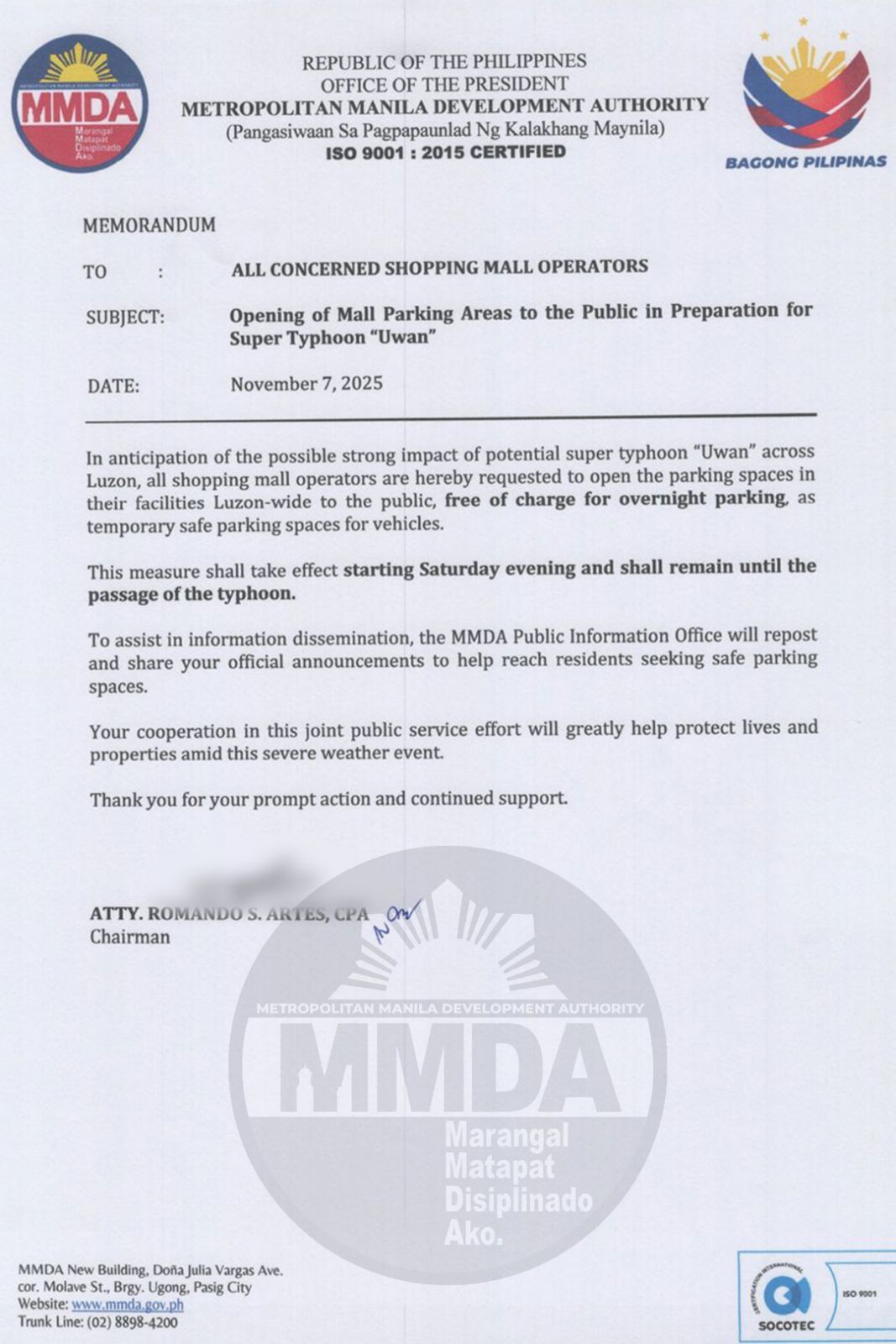
As of this morning, most if not all mall operators (at least all of the major ones – SM, Robinsons, Ayala and Megaworld) have responded positively. Some observations this morning though shows a lot of people already lining up their vehicles at the malls to take advantage of the free parking. It seems a lot of people have misunderstood the memo and responses (from the malls) to mean there’s free parking from today til Monday. Let’s assume that most of these people live in flood prone areas and that many of them probably don’t have garages in their homes. This somewhat shows us another angle of vehicle ownership and the lack of parking for many. It also somehow tells us something about our dependency on cars and how we really need to have a better transportation system.
–
Senseless road crashes
My staff shared the following cctv footage of a recent road crash along C.P. Garcia Avenue just across the College of Science Complex in UP Diliman. The videos show two vehicles colliding along the road at nighttime. This is usually a busy road with traffic to and from Katipunan, mostly comprised of travelers associated with the schools I the area.
https://www.facebook.com/share/v/17MPeJnrCk/
The black SUV appears to be speeding and suddenly veered towards the opposing lane where it collided with another vehicle. It is unclear if the driver lost control of the vehicle or was aware of what he was doing. That cost 2 lives as both drivers reportedly died from the crash.
This is among those crashes that can be regarded as senseless incidents. This could have been avoided if the driver was not speeding in the first place or perhaps was not influenced by any factor like alcohol or drugs. Perhaps it’s really about the behavior of certain motorists who shouldn’t have licenses to drive in the first place? We commonly refer to them as kamote drivers or riders. The LTO should do their part in ridding the roads of these menaces.
–
Vehicle refuge during floods
Passing Felix Avenue one early morning this week, I saw familiar scene. There were lots of vehicles parked along Felix Avenue (formerly Imelda Avenue) including the service roads along either side of this major road connecting Marcos Highway and Ortigas Avenue Extension.
These vehicles are owned by residents of subdivisions along the avenue whose areas are prone to flooding. These include Vista Verde, Metroville, Kasibulan, Karangalan and the two Green Parks. I didn’t see this along the stretch so the other flood prone villages like Village East and Country Homes. Perhaps they have been able to adapt better?
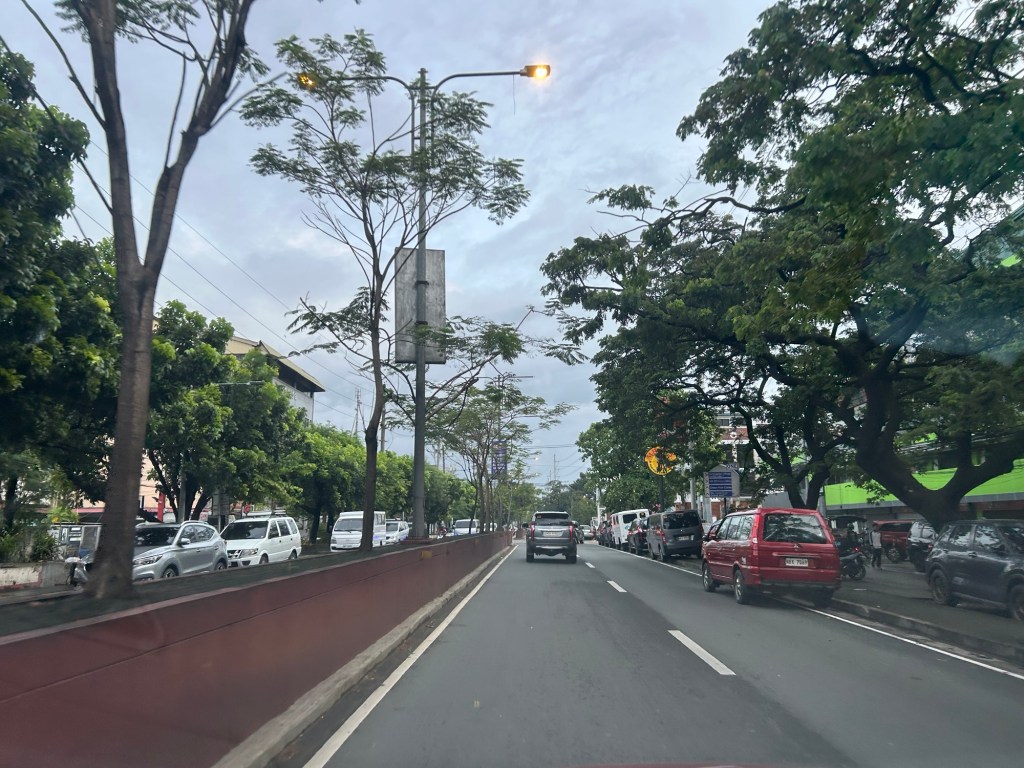
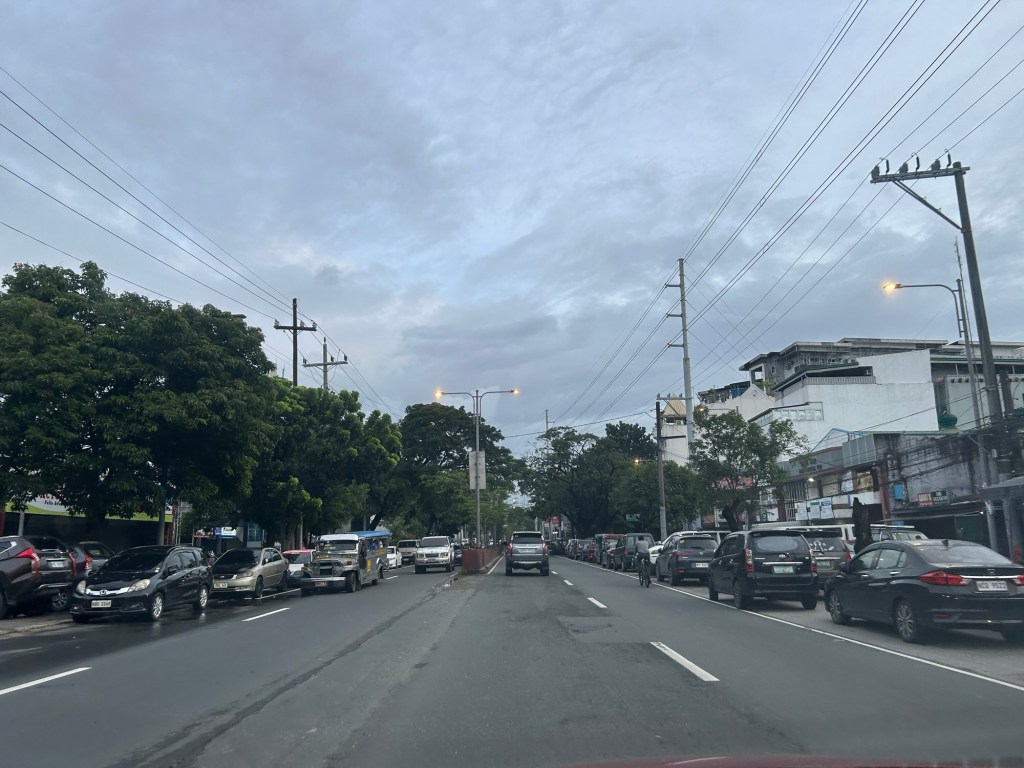
Car-centric discussions aside, when you go the ‘east’ you will notice a lot of people using SUVs. One reason probably is because many Rizal towns including Antipolo City, and Pasig and Marikina Cities are prone to flooding. Can you imagine over 50 years of flooding in these areas? And then with the current investigations concerning flood control projects, have you wondered if the ‘east’ really got their taxpayers’ money’s worth in terms of interventions?
–
Our clear and present problem with DPWH and certain contractors
I was going to write about the new taxi service and TNVS I used recently during this long weekend. Unfortunately, I lost focus and “gana” after reading about the collusion among DPWH officials and certain contractors about flood control projects. Here are my sentiments today that I shared on my social media account:
“Bakit walang pasok bukas? Kasi may nagbabadyang masamang panahon. Baka bumaha? Bakit babaha? Alam na siguro natin ang sagot sa tanong na ito? Damay-damay na yan. Resilience na lang ba ng mga taong nagbabayad ng buwis ang kasagutan? Di ba dapat may managot sa kung bakit patuloy tayong binabaha samantalang bilyones o trilyones ng kaban ng bayan ang ginagastos? Naiisip ba natin na yung pinagpaguran, pinagpapaguran at pagpapaguran natin ay napupunta sa mga nanlalamang? Wala nga siguro silang nararamdaman at napapansin habang nakasakay sa kabilang magagarang sasakyan. Tayo naman, hanggang tiis sa paglusong sa baha at mag ‘abangers’ sa anunsyo ng walang pasok.”
With the recent revelations of these contractors having the propensity to purchase luxury items like expensive vehicles, do we still wonder why these people cannot feel what ordinary people experience during these times of inclement weather? Hindi nga siguro maramdaman ang baha o ang mga lubak sa daan pag naka SUV ka. To be quite direct about this, I would like to personally drag them to experience the floods and maybe submerge their homes for a few days so we’re even. I am probably not alone with my sentiments.
Flood control is probably just the tip of the proverbial iceberg. There are just so many other projects including roads and bridges that also need to be investigated for anomalies. Will the current administration act on this? Or are we just being taken for a ride with all these lip service and grandstanding by politicians and government officials?
–
On the impact of more frequent lightning strikes on airports
We were waiting for our plane to arrive at the airport yesterday and can’t help but observe the heavy rains falling while a strong wind blows and causes the rains to fall at an angle. This renders umbrellas to be ineffective in keeping you dry if you’re outdoors. Such weather requires a long coat or even overalls to keep one dry on a very wet day. The rains and wind were brought about by a storm affecting the area. Though distant, the storm was able to influence the weather. Fortunately, there wasn’t any lightning and we wondered if lightning strikes have affected ground crew working in an open area that makes them vulnerable to lightning strikes. Here is an interesting article that describes the threat of lightning strikes particularly to people on the ground at airports.
King, R.E. (September 11, 2024) “Increasing Lightning Strikes from Stronger Storms Could Cripple Airports and Airbases,” Jalopnik, https://jalopnik.com/increasing-lightning-strikes-from-stronger-storms-could-1851645799 [Last accessed: 9/16/2024]
Quoting from the article:
“While flying planes are hardened to withstand lightning strikes, airports are typically a cluster of free-standing structures on a flat, open plot of land. The ongoing increase in lightning strikes caused by climate change is a direct danger to facilities and people on the ground.”
I wonder about similar data or statistics in the Philippines considering the long wet season we have that includes not just threats from typhoons but from seemingly small weather systems that may involve lightning strikes. I recall operations at NAIA were halted a few times when there were lightning storms. Is this phenomena. I wonder how many incidents at our airports have been reported and recorded pertaining to lightning.
–
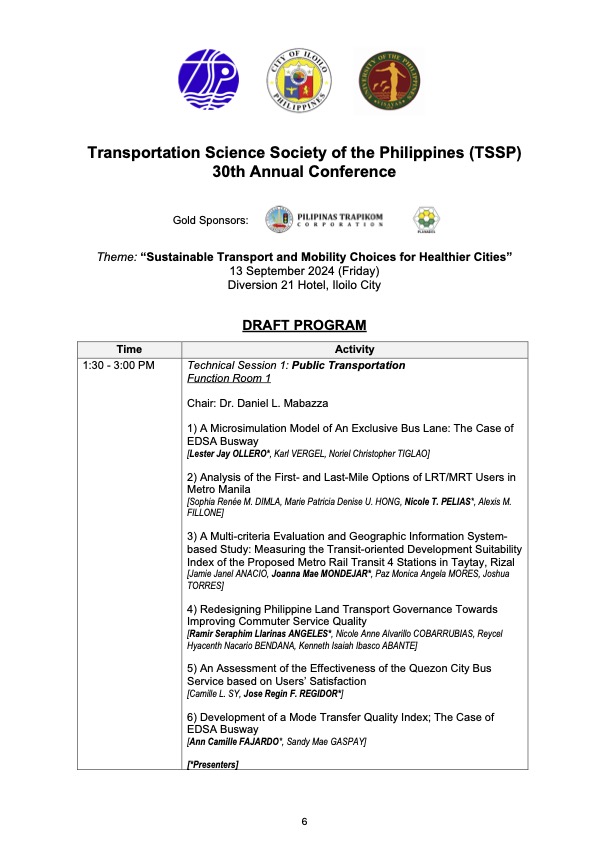
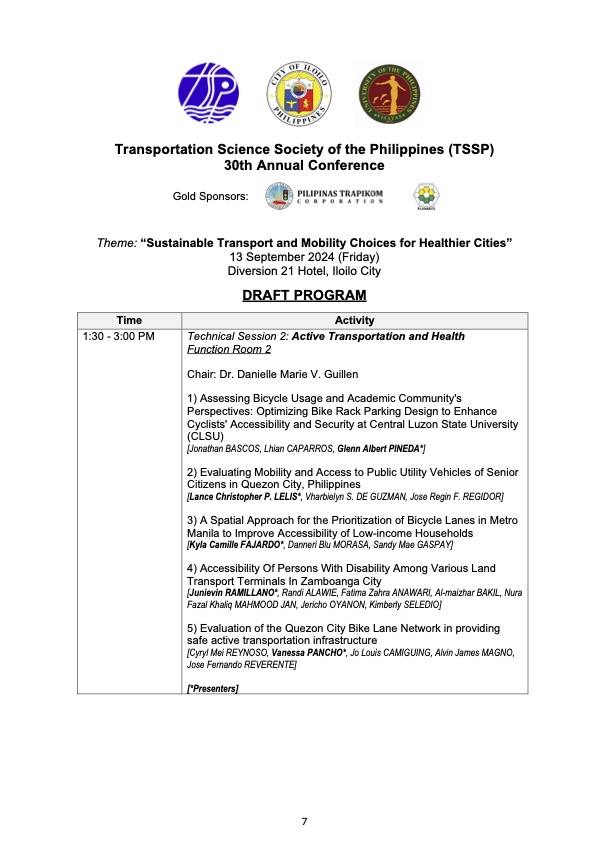
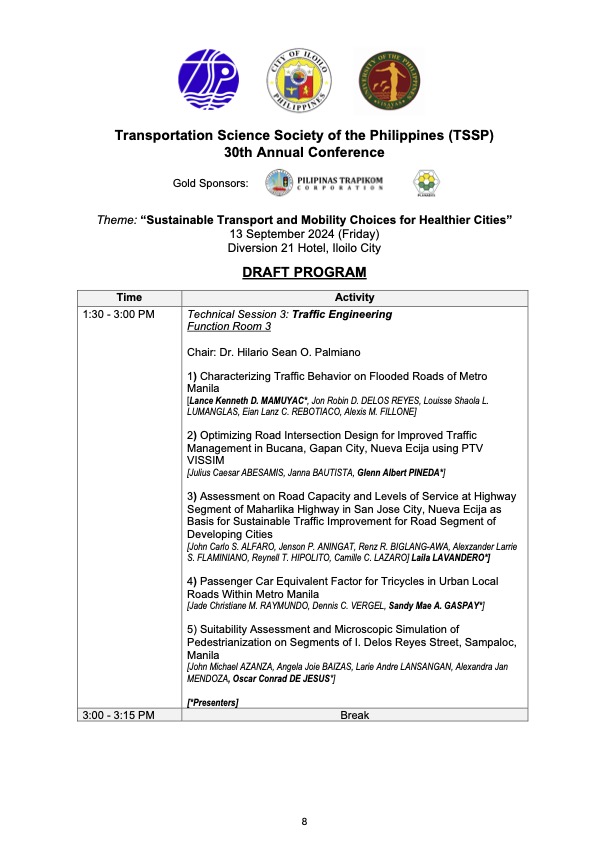
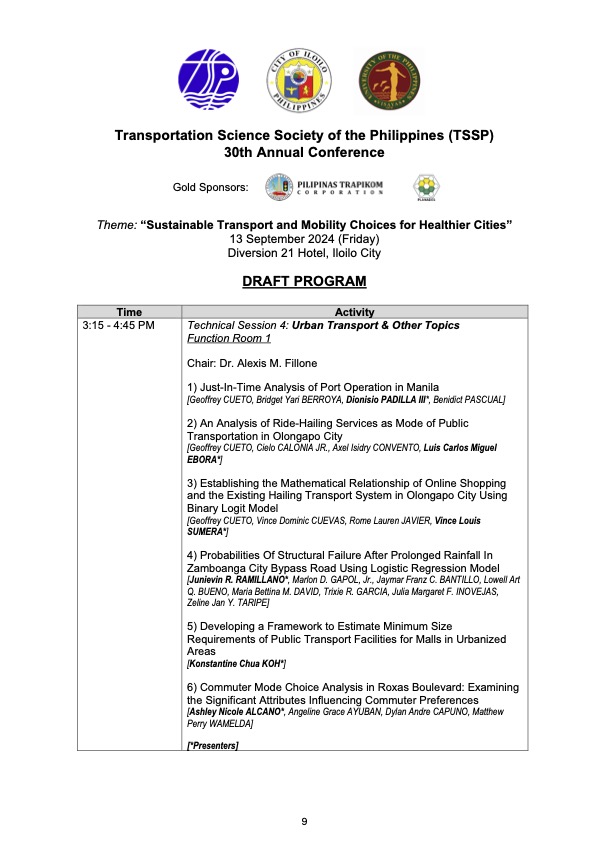
Technical sessions at the TSSP 2024 Conference
I am sharing here the latest draft of the technical sessions for the 30th Annual Conference of the Transportation Science Society of the Philippines (TSSP). The conference will be held in Iloilo City this coming September 13, 2024.
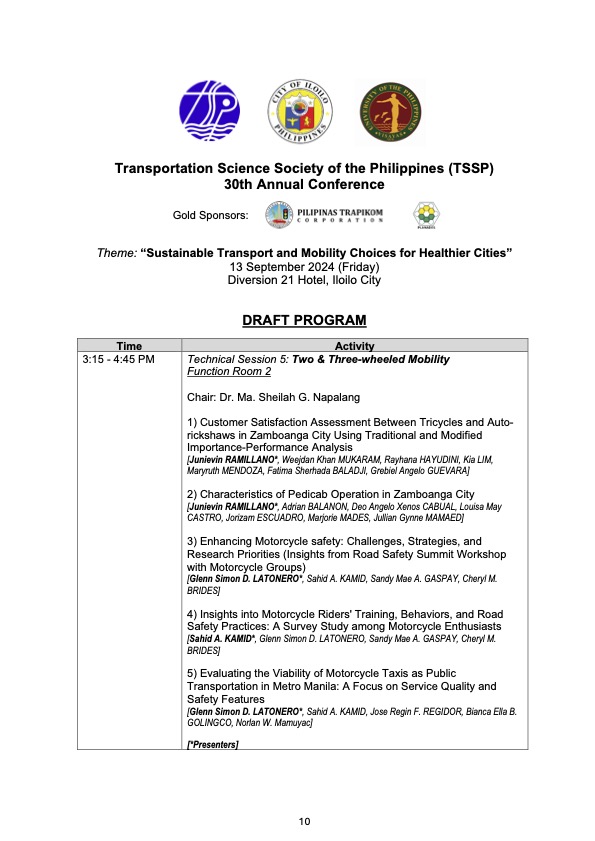
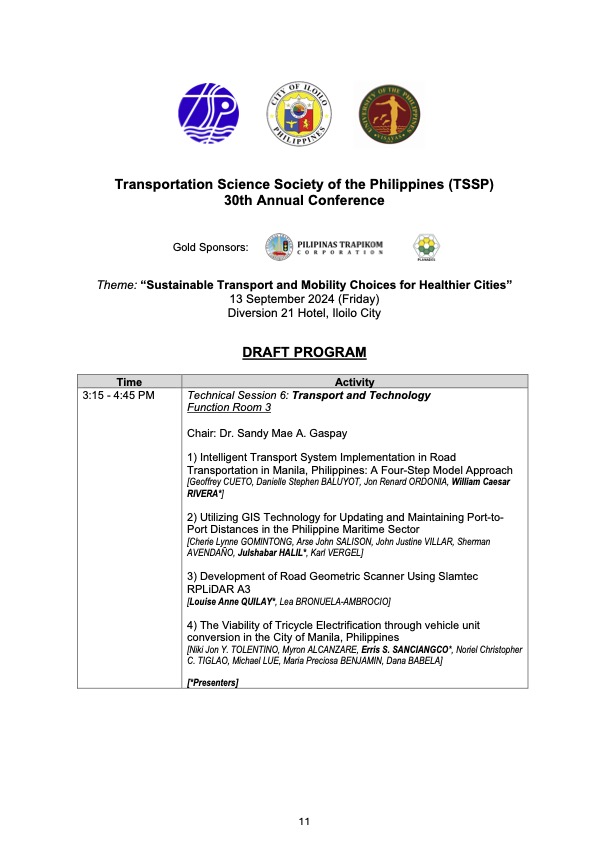
I will share the draft program for the morning plenary session in the next post.
–
 Caught (up) in traffic