
Home » Economics (Page 7)
Category Archives: Economics
On cultivating a culture of public transportation
There’s this recent article about cultivating a culture of transit (i.e., public transportation). We probably take this for granted despite most of us taking public transportation for our commutes. I would like to think such cultures exist with variations and uniqueness for various towns, cities, even countries. There is a uniqueness about the different paratransit modes that you might find around Southeast Asia, for example. These include Thailand’s Tuktuk and Songthaew, Indonesia’s Bajaj and Angkot, and the Philippines’ jeepney and tricycle.
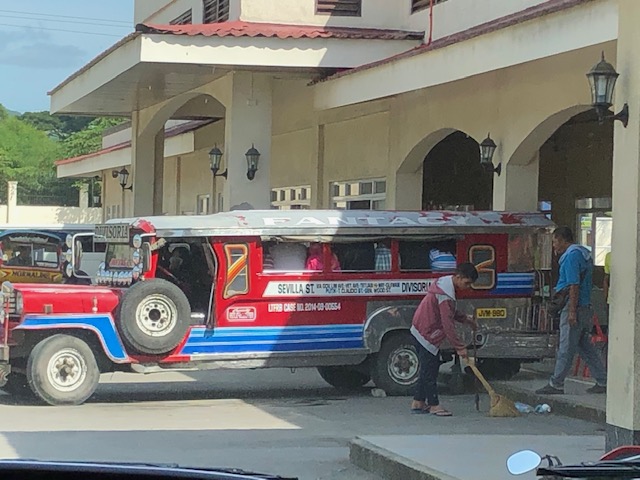 A Philippine jeepney waiting for passengers at a terminal
Here is the article via Planetizen:
Gifford, D. (February 23, 2021) “Cultivating a Culture of Transit,” Planetizen, https://www.planetizen.com/node/112361?utm_source=newswire&utm_medium=email&utm_campaign=news-02252021&mc_cid=c3b203ffe6&mc_eid=9ccfe464b1 [Last accessed: 2/26/2021]
Some takeaways from the article:
“What are the common factors for great transit? Well funded, frequent transit is one key to a successful transit system, and funding goes a long way to support transit culture. When a system is well funded, it is more frequent, more useful, more people use it, and it becomes part of the culture. Many of these systems are so popular they even have their own stores where riders and transit fans can purchase merchandise.”
and
“Improved service would cultivate a diverse culture of transit as more people rode. Just imagine a far reaching system with dedicated lanes that would not only be beneficial for commuters, when in office work resumes, but one that will improve life for daily riders who depend on it most.”
What is culture anyway? It refers to society, a way of life; including lifestyles, customs and traditions. Perhaps its worth mentioning that the jeepney and the tricycle (the conventional/older ones) are considered cultural icons. This did not happen overnight and probably involved romanticized concepts of anything about jeepneys and tricycles; including stories, true or fictional, about the people involved.
Questions: Can we develop and nurture a similar culture about bicycles? And can it happen immediately?
–
On leaders and decision-makers taking public transport or bikes to commute
There has been clamor for our leaders and decision-makers, especially those in the transport and highway agencies, to take public transportation. This is for them to experience how most commuters fare for their daily grinds. And no, having an entourage including bodyguards or reserving your own train car does not count. Dapat pumila o maghintay sa kalye. Makipagsisikan o makipag-habulan sa bus, jeepney o van para makasakay. Many if not most of these officials have their own vehicles or are even driven (may tsuper o driver) to and from work. One even had the gall to transfer his department to where he comfortably resides so he won’t commute but that’s another story.
You see articles and posts about Dutch politicians and even royalty riding the bicycle to work.
 The Dutch Prime Minister bikes to work
Then there are politicians regularly taking public transport while in office. Here is an article about the newly inaugurated POTUS, Joe Biden, who took the train for his regular commutes:
Igoe, K.J. (May 4,2020) “Where Did “Amtrak Joe,” Joe Biden’s Nickname, Come From?”, Marie Claire, https://www.marieclaire.com/politics/a32363173/joe-biden-amtrak-joe-meaning/ [Last accessed 2/14/2021]
Do we have someone close to such an example? Commuting by private plane between your home in the Southern Philippines and your office in Manila surely won’t let one have an appreciation of the commuting experiences of typical Filipinos.
–
It’s not that simple: the math on vehicle sales and registration
I read the statement of a government official about vehicle sales, and the subsequent responses it got. He cited math and seemingly joked about not being good at it while trying to make sense of the numbers. It is not as easy as he supposes. And I think that is partly why we fail to address the transport problems. For one, we think it is just about road capacities. For another, it may be about public transport supply. These are not mutually exclusive but rather intertwined along with so many other factors.
Housing, for one, (i.e., its availability, affordability and location) is among the most important factors that affect or influence how we commute. I have been asking the question about housing affordability in CBDs such as Makati, Ortigas and BGC. Lucky for those who already reside at or near those places but most people working there have to contend with expensive mortgages, leases or rents. How much is a condo unit in BGC, for example? If you have a family of 4, you certainly can’t and won’t opt for a studio unit just because its near your workplace. It’s obvious here that you also would have to consider where your children will be going to school as well as the workplace location of your partner if he or she is also working. No schools for now but imagine how it was and would be once our children go back to physical school. Such facts of life seem lost to many pundits commenting or offering opinions about transportation.
I think to be fair this should also be framed from various perspectives. For example, those vehicle purchases don’t necessarily mean additional vehicles on certain roads. like what one MMDA official claims. These will be distributed across the network of roads, and these will be operating during certain times of the day. Some of these vehicles were purchased by new car owners. Others as replacements to older or unserviceable units (e.g., upgrades). It would be nice to see, for example, the stats from 2008, 2009 & 2010. Thousands of vehicles were doomed by Ondoy in the greater Metro Manila in 2009 resulting in their replacements late that year until 2010. Then there was the boom in sales in the following years as people ventured into TNCs (Uber and Grab). The recent surge in private car use and what seems to be strong sales of these vehicles in the wake of the Covid-19 pandemic is more out of necessity (why do you think people aren’t taking to cycling for their commutes as much as is desired?)
The question why people still prefer to purchase and use their own vehicles has not been answered in the most honest way because different people with their own agenda tend to paint different pictures of the car owner. In some cases, car owners are being portrayed as ‘evil’ while those taking the more environment-friendly modes as ‘good’. Again, it should be obvious that this is not a ‘good’ vs. ‘evil’ discussion nor is it something that is black and white. We should pay (a lot of) attention to the grays, which can have so many different shades when it comes to transportation. No one really wins a “holier than thou” exercise where people on opposite sides tend to take hard line stances and close their minds to constructive ideas from either side.
–
Lessons on housing we need to talk about
There’s this recent article on housing that presents and discusses lessons from Singapore housing that
Fischer, R. (February 2, 2021) “Singapore Housing Lessons for the Biden Administration,” Planetizen, https://www.planetizen.com/node/112077?utm_source=newswire&utm_medium=email&utm_campaign=news-02082021&mc_cid=4fac9821d0&mc_eid=9ccfe464b1 [Last accessed: 2/15/2021]
 I’m not an expert on housing but I’ve experienced living in Singapore. Here’s a photo of the wife as she walked ahead of me on our way to the MRT station near our place back in 2012. One of the factors we considered when we chose this place for our residence was its proximity to the orange line station that meant only one ride (no transfers) between our home station and the station closest to the wife’s office. We could also take the train to the nearest mall if we didn’t feel like walking 15 minutes.
To quote from the article:
“…the secret to Singapore’s success is that their housing projects are carefully designed to support mixed-incomes, beautiful green spaces, and access to high-quality public transportation that conveniently links residents to education and community centers. And last but not least, couple all that with the famous Singapore hawker centers (food courts) where all income classes and ethnicities meet, socialize, and dine on Singapore’s famously delicious and affordable cuisine.”
–
On the burdens of car dependence
Here is a quick share today. This is another excellent article from Todd Litman who makes a great argument for why planning should move away from its being car-centric and contribute towards a significant reduction in society’s dependence on cars.
Litman, T. (December 15, 2020) “Automobile Dependency: An Unequal Burden,” Planetizen.com, https://www.planetizen.com/node/111535?utm_source=newswire&utm_medium=email&utm_campaign=news-12212020&mc_cid=e746a044a3&mc_eid=9ccfe464b1 .
Much have been said and written about this topic in many platforms including social media but in many of these, I noticed that the discussion often deteriorated into hating or shaming exercises rather than be convincing, constructive arguments for reforms in planning and behavior and preference changes in transport modes. Litman is always very fair and comprehensive and employs evidence or facts in his articles that should be clear for most people to understand. I say ‘most people’ here because there are still many who are among those considered as “fact-resistant”. Happy reading!
–
On transportation equity
Here’s another quick share of an article on transport equity:
McQuaid, H. (November 23, 2020) “Equitable Transportation Starts At Community Level,” CT News Junkie, https://www.ctnewsjunkie.com/archives/entry/20201123_equitable_transportation_starts_at_community_level/
How many times have I heard and read about people talking about the concept of “dignity of travel” or “dignity of transportation” referring to the quality of our commutes in terms of the quality of transport services available to us. The article also talks about societal exclusions and biases that sometimes we only attribute to America but in reality are also applicable here based on how we regard people from the rural areas or our being regionalistic.
–
On data on mobility trends
There are actually a lot of data available on mobility if you know how to look for them. One good source is Apple. Yes, Apple has access to thousands of smart phones that allow them to track individuals (oh you didn’t know that?) movements. Here is the link to Apple’s data:
https://www.apple.com/covid19/mobility
And here is a graph showing mobility trends in the Philippines from that resource:
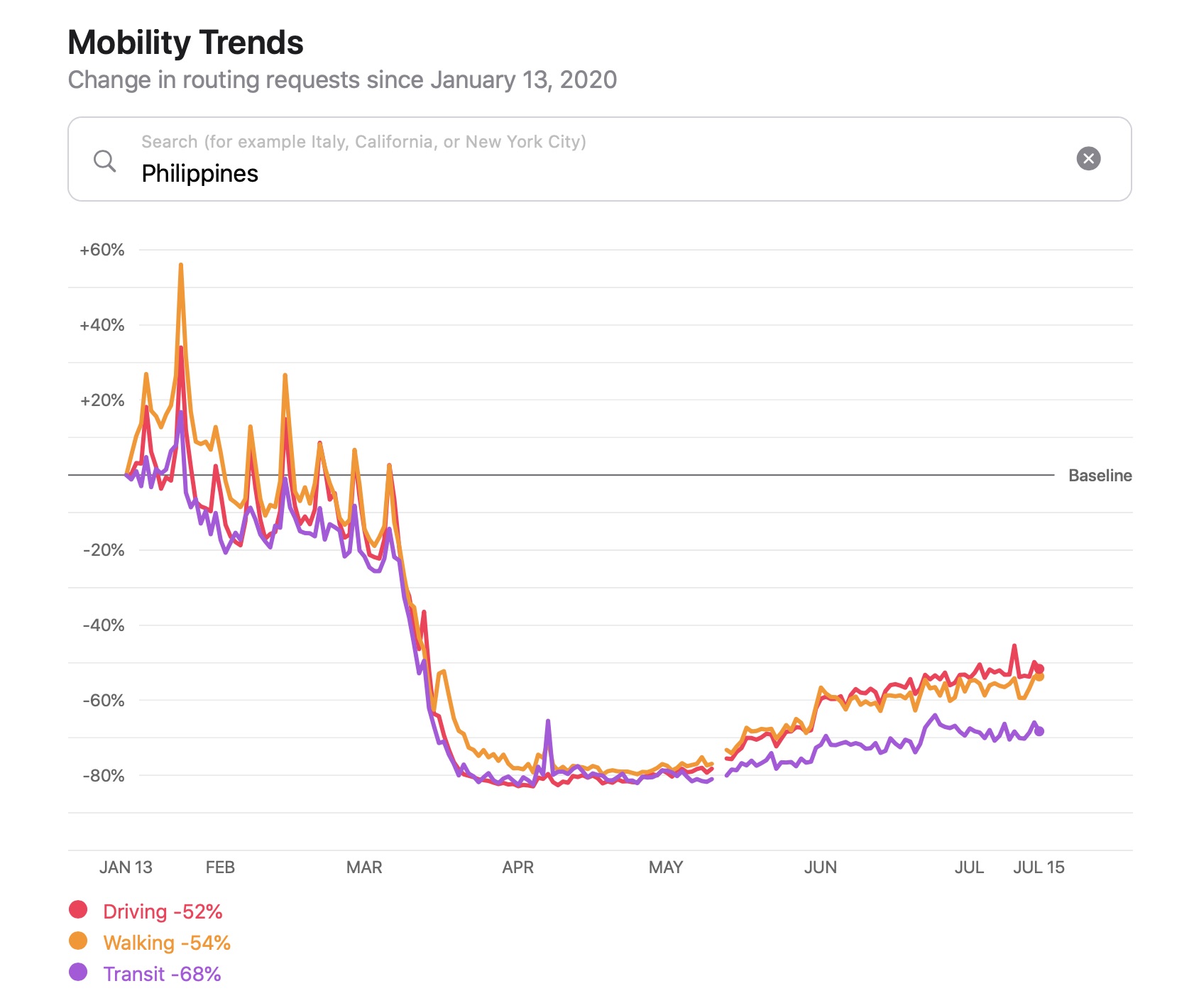
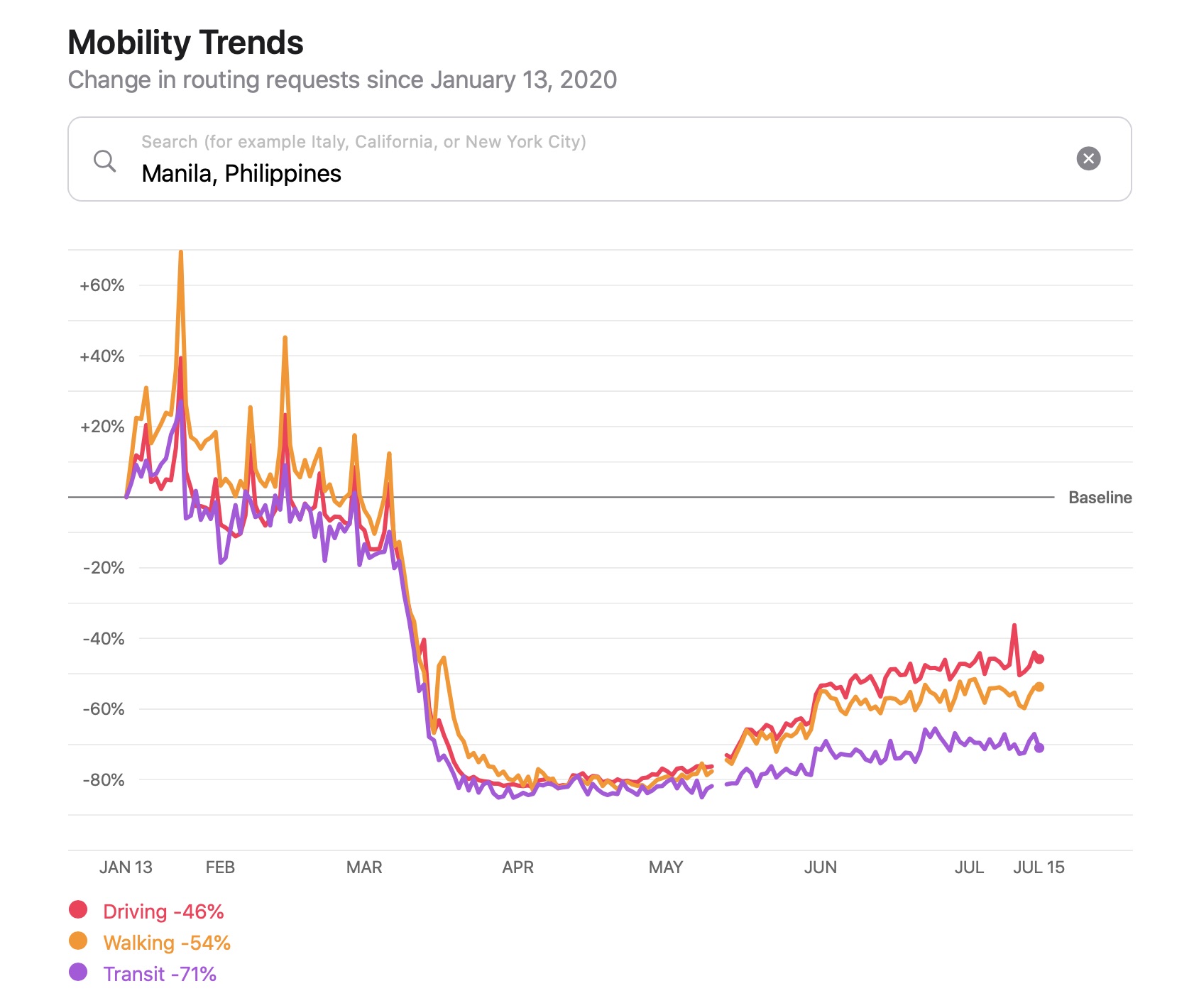
Some politicians and political appointees are now saying that we are in this predicament about COVID-19 because of a lack of discipline. That is bullshit. Many stayed home and/or reduced their movements. And then there’s that study showing 90% wore masks when they go out. No, it’s not lack of discipline that’s the problem but the lack of essential services and goods that are supposed to be delivered by those who are suppose to govern and the deficiencies from the start in addressing the spread of the virus especially from abroad. Perhaps these people criticizing Filipinos should look at their mirrors more closely and look left, right and across from they comfy seats to see what’s wrong with the way government has been handling the pandemic?
–
Alternatives for the delivery of public transport services in the new normal
No, this is not a dissenting opinion on service contracting as proposed by a coalition of transport advocates. Rather, I write about other options or alternatives that can be taken on by the government in collaboration with the different sectors or players involved in transportation. Other options have not been discusses as extensively as would have been desired and ultimately weighed for application.
Allow me to rattle off a few options stated in the position paper by the Transportation Science Society of the Philippines (TSSP):
- Service contracting – which some groups have proposed and lobbied Congress for Php110 billion funding. This implies a government selecting a few among hundreds of bus operators and thousands of jeepney operators – a process that is bound to be controversial; whilst needing the mobilization of a performance audit and monitoring unit in a government agency. Economic literature is replete with studies that subsidy to producer (i.e., operator) produce bad outcomes over direct subsidy to consumers (i.e., commuter). In this regime, financial risks are borne by the government or authority.
- Fuel subsidy – the government was already implementing the Pantawid Pasada Program before ECQ. It incurred Php2.372 billion subsidies in 2019, up by 243% from Php0.977 billion in 2018. At the pump, the fuel subsidy equates to Php1.00/liter discount. Now, the DoTr is proposing a 30% subsidy which it estimates to be Php1,152/PUB and Php366/PUJ. These amounts are NOT commensurate to the theoretical drop in revenues at 50% load limit. Worse, free fuel leads to bad outcomes, as it would encourage higher fuel use and siphoning off to other modes.
- Free Fare – this proposal is intertwined with the service contracting model and may be counterproductive to the objective of social distancing. It is a policy that encourages unnecessary travel and crowding – which the distancing rule seeks to minimize. The government needs only to look on ridership on LRT/MRT on free-fare days against regular working days.
- Direct Subsidy to Commuter – in this scheme, the operator is allowed to increase its tariff by an amount sufficient to compensate for the 50% volume cut. However, the passenger only pays the same fare level that he paid before ECQ. The government pays the difference. When paired with the Automated Fare Collection System (which LTFRB has required under MC-2020-019 dated 14-May 2020), it is the most efficient method, and is immediately implementable. Subsidy is targeted, rather than all-encompassing. It promotes the wider adoption of AFCS on all public transport, not just on MRT/LRT. Senate Bill No.1417 seeks to fund, among others, for transportation vouchers; this could be disbursed rapidly via the AFCS card
Another idea is the purchase of new model jitneys to replace old jeepneys – this is an idea that I have posted and have discussed with former and current officials of the DOTC/DOTr before (matagal na itong idea na ito). You purchase say 1 modern jitney at 1.6million pesos/vehicle (note: other models are more expensive, exceeding 2M per unit) and replace the old, conventional jeepneys. It will not be free but payment for the vehicle will be deferred until after the transport crisis brought about by the pandemic clears out. The old jeepneys would be part of the collateral and perhaps still have some utility in them to be used for other purposes (freight?). Think about it. How much pork does your typical congressman and senator have? They could probably use this to modernize public transport in their respective constituencies!
It is important to have a lot of ideas out there instead of just one that is being pushed as the only option. In truth, there should be a combinations of solutions as there will not a be single one applicable and effective to all cases and situations. At this time, I am not sure that these options are being considered by the DOTr. The agency and the LTFRB are proceeding with rationalization and modernization simultaneously, at their own pace and at their own terms, taking advantage of the conditions and situations brought about by the pandemic. While it seems to be the ‘perfect’ opportunity to do rationalization and modernization, it might be immoral and inappropriate given the circumstances that doomed a lot of families who depend on public transport operations for their livelihood.
–
Why cycling or bicycles are good for the economy?
You saw that meme shared in social media where they say “why bicycles are bad for the economy”? There’s some humor there but it doesn’t necessarily convince many people to support cycling or biking over motor vehicle use.
Here goes one and note the logic:
“Cycling or bicycles are good for the economy because…it helps reduce car use/dependence. That means less dependence and expenses to fossil fuels. That means more money available to the household for more important stuff like food, homes and education.”
Can you come up with something like that?
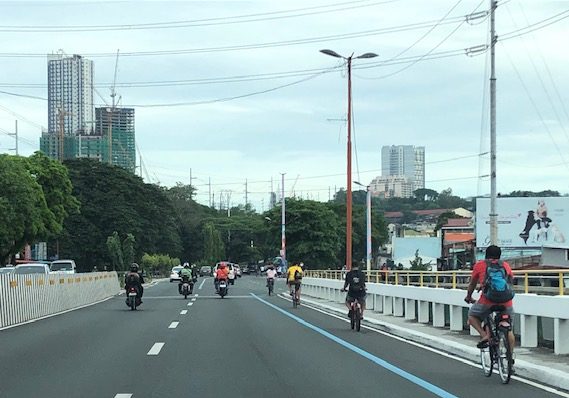 Workers on bicycles crossing the Marcos Highway bridge from Marikina towards Quezon City.
–
On public transport services during the pandemic
I’ve read a lot of discussions and recommendations pertaining to public transportation services (mainly its lack thereof) during the Enhanced Community Quarantine aka lockdown in most parts of the Philippines. Problem is, a lot of people had their mobility curtailed as most people did not have their own private vehicles (cars or motorcycles) to do essential trips (i.e., for groceries, market, drugstores, hospitals, etc.). These include so-called frontline workers, most especially those working in hospitals or clinics. Even the use of tricycles on a limited basis while adhering to physical distancing guideline was not allowed in many cities and municipalities. What do we really need to do now and in transition to address the lack of public transport services?
Here is a concise yet very informative article on transit:
Walker, J. (2020) “Cutting Transit Service During the Pandemic: Why? How? And What’s Next?”, Human Transit, https://humantransit.org/2020/04/cutting-transit-service-during-the-pandemic-why-how-and-whats-next.html [Last accessed: 4/23/2020]
Most of the points discussed and recommendations presented are applicable to our case in the Philippines. We should also accept the fact that we cannot go back to the situation prior to the ECQ, and that the new normal calls for a reduction in car use. Meanwhile, we still have to address the pressing issues and come up with a plan or maybe strategies for public transport that involved not just buses and trains but other modes as well like the jeepneys, vans and tricycles.
–

