
Home » Electric Vehicles (Page 2)
Category Archives: Electric Vehicles
Electric taxis anyone?
Finally saw one of the taxis operated by Green GSM, which is a Vietnamese company. This is supposed to be the first all-electric taxi service in the Philippines.
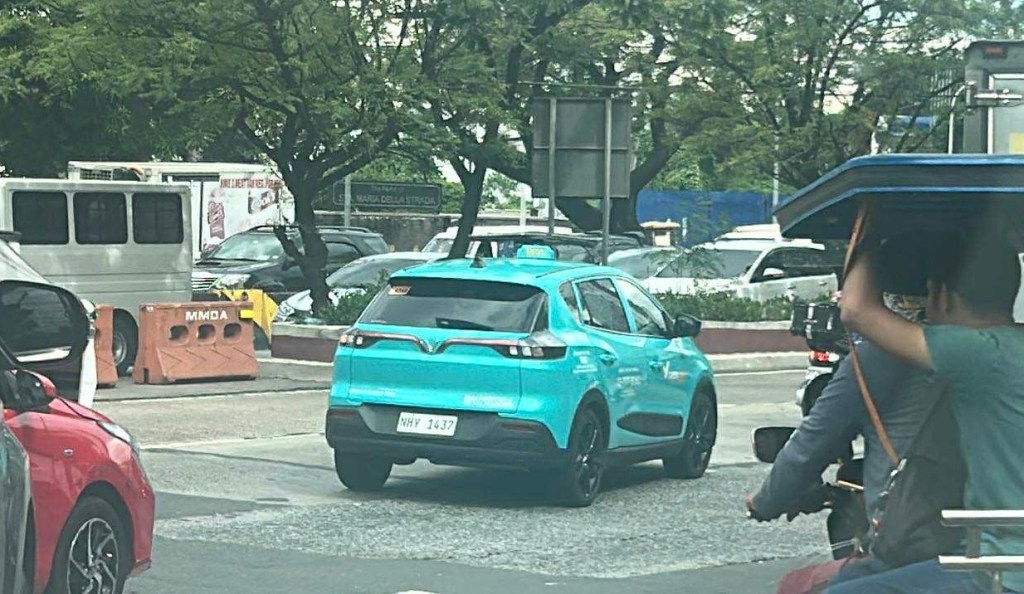
My colleagues and I were talking about this. Among other topics is whether these taxis will not encounter problems once the rains pour and many streets are flooded. We also wondered whether these vehicles will add to the congestion; slugging it out with the established competitors.
Another, more deeper and serious topic is whether these are really clean. While these are emission free as far as the proverbial tailpipe is concerned, the sources of power are not necessarily so.
While we do have renewables in the mix including hydro, geothermal, solar and wind, much of our power used to produce electricity uses fossil fuels.
–
Shared article on shared mobility
Here’s is a nice short read on a Sunday about shared mobility. The article is of particular interest to me because it tackles the needs of persons with disabilities, senior citizens and those in low income households.
Seruga, K. (April 14, 2025) “Shared mobility: Making travel easier for all,” Knowable Magazine, https://knowablemagazine.org/content/article/society/2025/increasing-access-to-shared-transportation [Last accessed: 27/04/2025]
“But if you’re disabled or elderly, living in a low-income area or — imagine! — without a smartphone or credit card, using these shared mobility services becomes a lot more difficult. They tend to cluster in more affluent urban areas, and are often inaccessible to people with reduced mobility or those traveling with young children needing child seats. In part because of these factors, users are disproportionately younger, wealthier, able-bodied, white and male.
Shared mobility could be a key part of a more sustainable transportation system. But to be most effective, it needs to include everyone. For-profit shared mobility providers have largely failed to deliver on this, but various initiatives and projects are finding creative solutions to reach underserved communities.
The potential benefits are large. On-demand shared mobility that feeds into well-developed public transportation systems could reduce the number of vehicles in some cities by 90 percent and cut transportation emissions by 50 percent — but only if it largely replaces private car use. “The car has to be a guest, not the main actor,” says Luis Martinez, lead modeler at the International Transport Forum, who coauthored a paper on shared mobility and sustainability in the 2024 Annual Review of Environment and Resources.”
There is a cautionary tale on ‘for-profit’ shared mobility here but a major difference in countries like the Philippines from those in western countries is the presence motorcycle taxis and the surge in the ownership of electric three-wheelers. These have changed the way people travel though their impacts are only now being assessed.
–
“Coding exempt” vehicles and the demise of the coding scheme
I saw this car ahead of me during my commute. I knew this was an electric vehicle and these as well as hybrid ones were given an incentive in Metro Manila. They are “coding exempt” meaning these vehicles can be driven any day and ay hour during the weekdays.
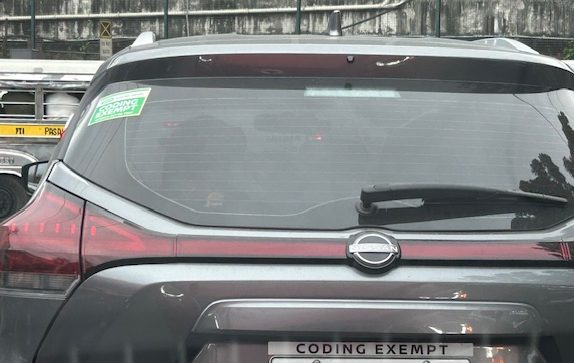 Are they selling these ‘coding exempt’ accessories or do these go free when you buy these cars?
People ask if the number coding scheme (UVVRP) in Metro Manila is still effective or relevant. Well, the answer is a ‘no’ and that is because over time, people have adjusted to it. Car owners have bought a second, even third vehicle that they call their ‘coding’ vehicle. Others opted to purchase motorcycles. And so that’s what we generally see along most roads in Metro Manila. It didn’t help that hybrid and electric vehicles are given exemption from the coding scheme. Those who can afford to buy yet another vehicle or perhaps replace their conventional ones are already buying these as evident from their increasing presence along our roads. While there is the perceived benefits with less emissions and air pollution, we still lose with congestion and its derivatives. Perhaps we should already have a congestion pricing scheme implemented for Metro Manila like the one in New York City. And proceeds should go to the improvement of public transportation to help arrest the erosion of its mode share in favor of private vehicles.
–
On a different kind of transport – electric suitcases
Here’s an interesting article for Sunday. I guess you’ve probably seen these at airports and even malls?
Unseen Japan (February 3, 2025) “Japan Warns Against Use of Electric Suitcases ,” Medium.com, https://unseenjapan.medium.com/japan-warns-chinese-travelers-against-use-of-electric-suitcases-d3eb946f2980 [Last accessed: 2/23/2025]
To quote from the article:
“Electric suitcases act as miniature people-movers, preventing people from having to walk from point A to point B in sprawling locations like airports. With a speed of 10 to 13kph, they’ve proven especially popular among tourists from China.
They’re also somewhat dangerous. On top of the danger of running into other passengers, people can lose their balance and take nasty spills.
The devices have proven a nuisance outside of airports, too. Last year, police in Osaka charged a woman for riding an electric suitcase on a sidewalk. Riding the device violates Japan’s motor vehicle laws, as it’s not legally classified as an e-scooter. It also violates the law around motorized vehicles on the sidewalk, which are only allowed for certain devices that restrict their top speed to 6kph.”
While these “act as people-movers”, I don’t think these could be regarded as transport under the category of micromobilities. If these are allowed to proliferate, then these will create new problems and come into conflict with active transport. What do you think?
–
Article share: On improving the Philippines’ transport system
I share this article on the desire for a sustainable transportation system for the country. This was written by a former Assistant Secretary of the Department of Transportation (on secondment) who has returned to teach at the School of Urban and Regional Planning of the University of the Philippines Diliman. Here is the article published by the Philippine Daily Inquirer:
To quote from the article:
“The present condition of the Philippine public transport system is indispensable to the desired transition from more sustainable, in this case, electric forms of transportation—to a better public transportation system. A good public transportation system is defined by reliability, accessibility, safety, and security…
The imperative to consolidate is clear and crucial. It is not just a technical necessity, but a pathway to inclusive growth where all stakeholders benefit from the transition, and where we can truly create an inclusive and sustainable system for public transportation.
Improving public transportation, by making it cleaner, safer, and more accessible, will directly enhance the quality of lives of Filipinos.”
–
Technical sessions at the TSSP 2024 Conference
I am sharing here the latest draft of the technical sessions for the 30th Annual Conference of the Transportation Science Society of the Philippines (TSSP). The conference will be held in Iloilo City this coming September 13, 2024.
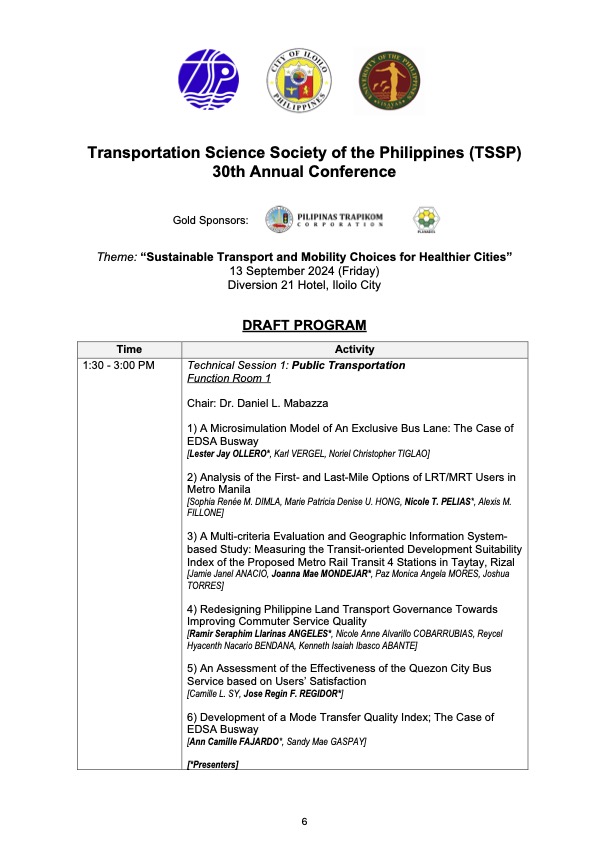
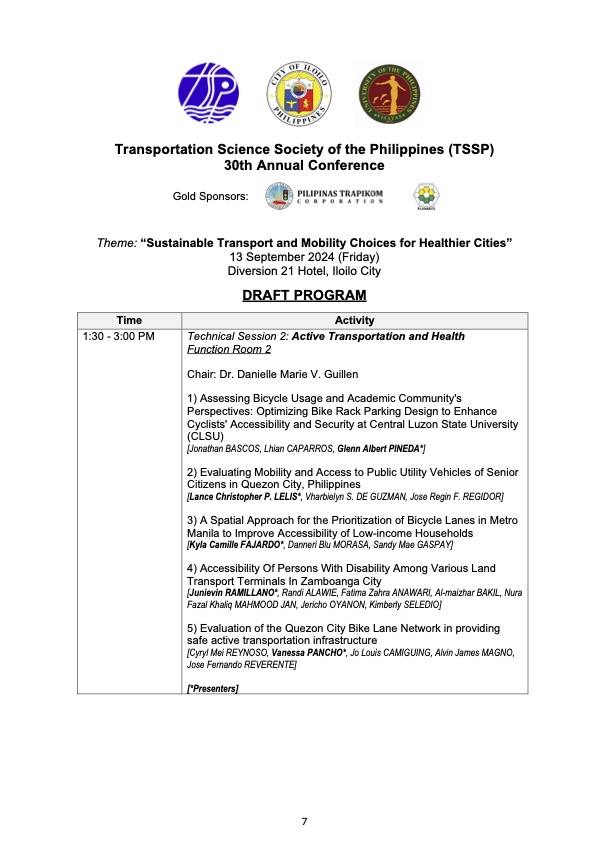
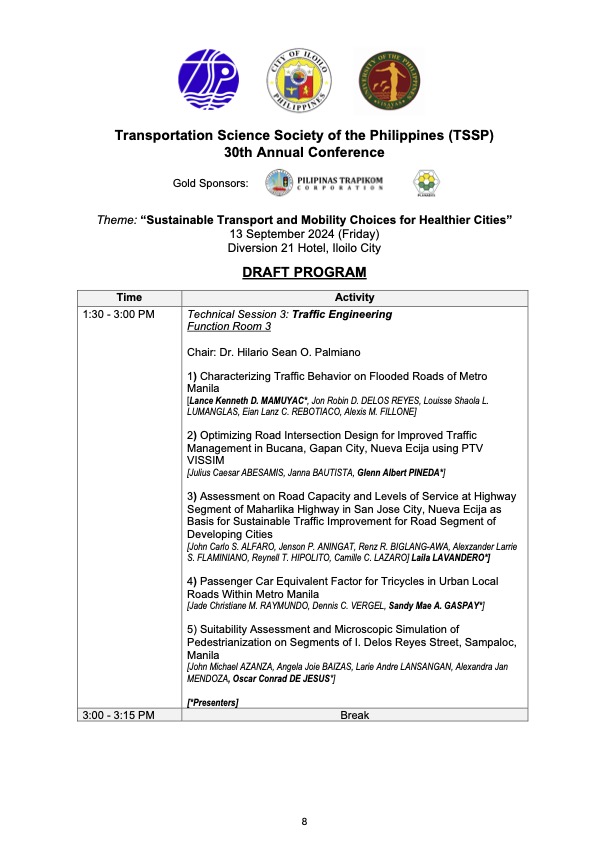
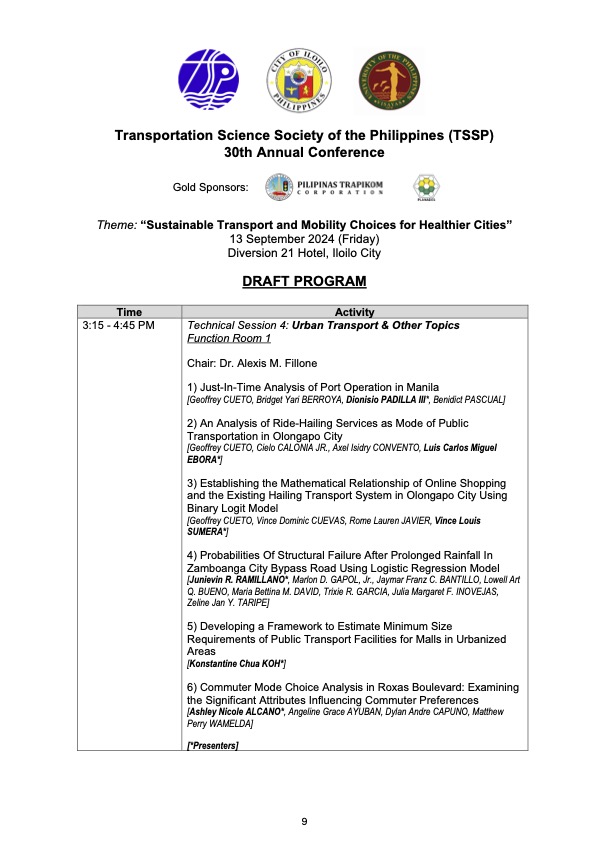
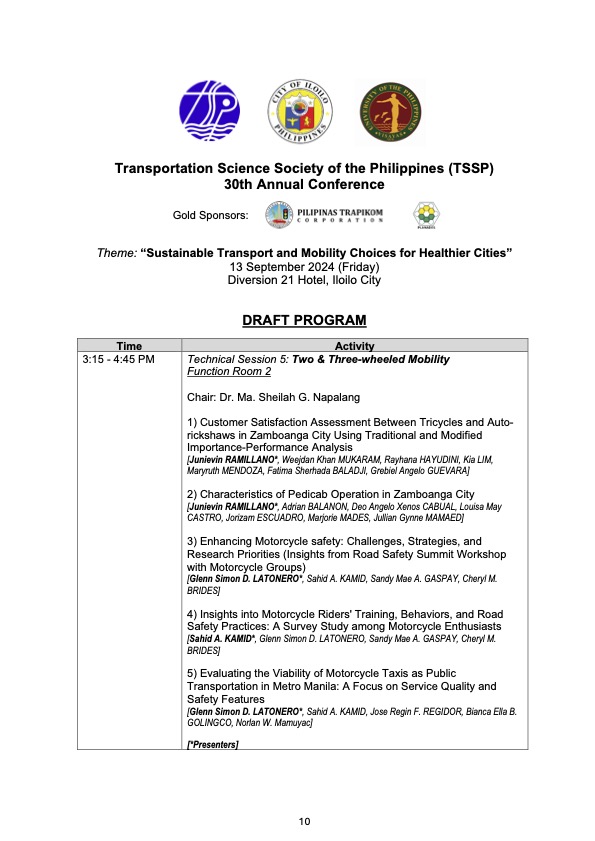
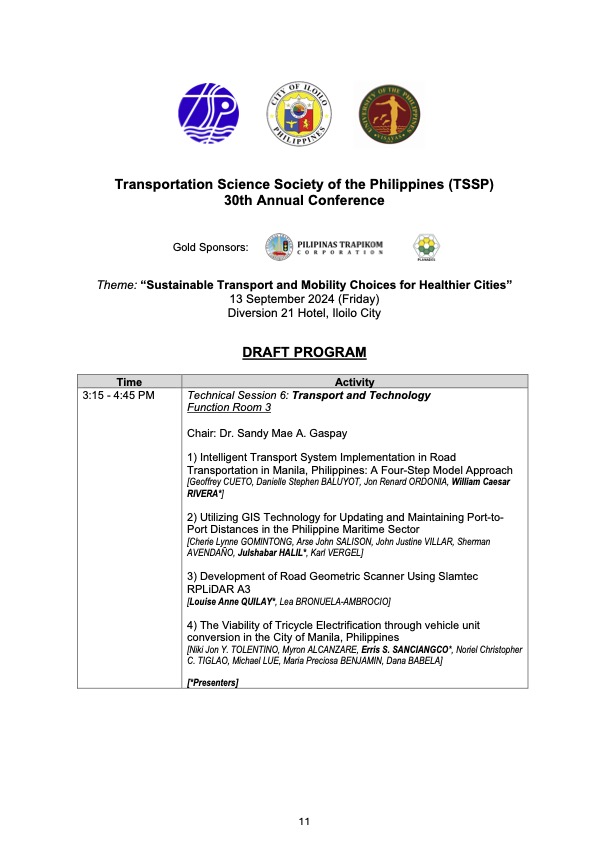
I will share the draft program for the morning plenary session in the next post.
–
On the current issue about 2 and 3-wheeled electric vehicles
Electric vehicles are again in the news due to the proposed policies regarding them that the government is planning to implement. These include banning them from national roads and requiring their registration as well as their drivers having licenses. While it seems simple enough to many, there are complexities involved here due to the provisions of a law incentivizing the e-vehicle adoption and use.
Most recently, the Electric Vehicle Association of the Philippines or eVAP released a statement regarding the proposed policies on electric vehicle use. Here is their press release, which is available from their official Facebook page:

I tend to agree with the eVAP statement more than the stand of other organizations or entities. Perhaps its because I know many people behind eVAP (at one time I was one of their advisers) and trust that their statement is based on informed discussions not just among themselves but their partners and cooperators among different sectors including the government.
–
29th Annual Conference of the TSSP
The Transportation Science Society of the Philippines (TSSP) held its 29th Annual Conference today, December 7, 2023. Following is the program for the conference, which featured a panel discussion in the morning and technical sessions in the afternoon.


This was the first mainly face-to-face or in-person conference for the society since 2019. Previously, the conferences were online. As reported in the concluding part of the program, there were 84 participants who showed up at the venue while there were 30+ participants who were online via Zoom.
There were a couple of awards at the conference. These were the Best Paper Award and the Best Presentation Award. The Best Paper Award, based on the scores garnered from the blind review of the papers went to:
Maria Belen Vasquez and Jun T. Castro of UP Diliman for their paper entitled “Exploring Travel Patterns of Mobility of Care in Guiuan, Eastern Samar: Assessment of Gender and Sociodemographic Factors Using Spatial Analysis”
There was a tie for the Best Presentation Award. The two were Ms. Vasquez for the presentation of the paper on the Mobility of Care in Eastern Samar, and Mr. Erris Sancianco for the presentation of a paper he co-authored with Noriel Christopher Tiglao, Niki Jon Tolentino, Gillian Kate Hidalgo, Mary Joy Leanda, and Lester Jay Ollero entitled “Evaluating the Fuel Efficiency and Eco-Driving Potential of the EDSA Carousel using On-Board Diagnostics (OBD) and Mobile Crowdsourcing“. These papers will likely find their way to the Philippine Transportation Journal’s next issue.
Though it was not announced, a likely venue for the next conference will be Vigan, Ilocos Sur in the Northern Philippines. The likely host will be the University of Northern Philippines, the premier state university in that province. Previously and most recently, the conference was held in Cebu City (hosted by the University of San Jose-Recoletos) in 2019 and before that in Cagayan De Oro City (hosted by Xavier University) in 2018. TSSP was already organizing the 2020 conference when the pandemic struck and the country went on a lockdown. That conference was supposed to have been held in Baguio City in Benguet, and to be hosted by St. Louis University.
More information on the conference may soon be found at the TSSP’s official website: https://ncts.upd.edu.ph/tssp/
–
The wrong message for electric and hybrid vehicles
There are two billboards along Katipunan Avenue, each displayed to face either the northbound or southbound traffic along the busy thoroughfare. The ad by a major Japanese automaker is a sales pitch for one of its electric vehicle models. The ad states one of the incentives or come-ons for electric and hybrid vehicles granted by government (in this case the Metro Manila Development Authority) to encourage people to buy electric or hybrid vehicles; ideally to replace their fossil fuel-powered vehicles.
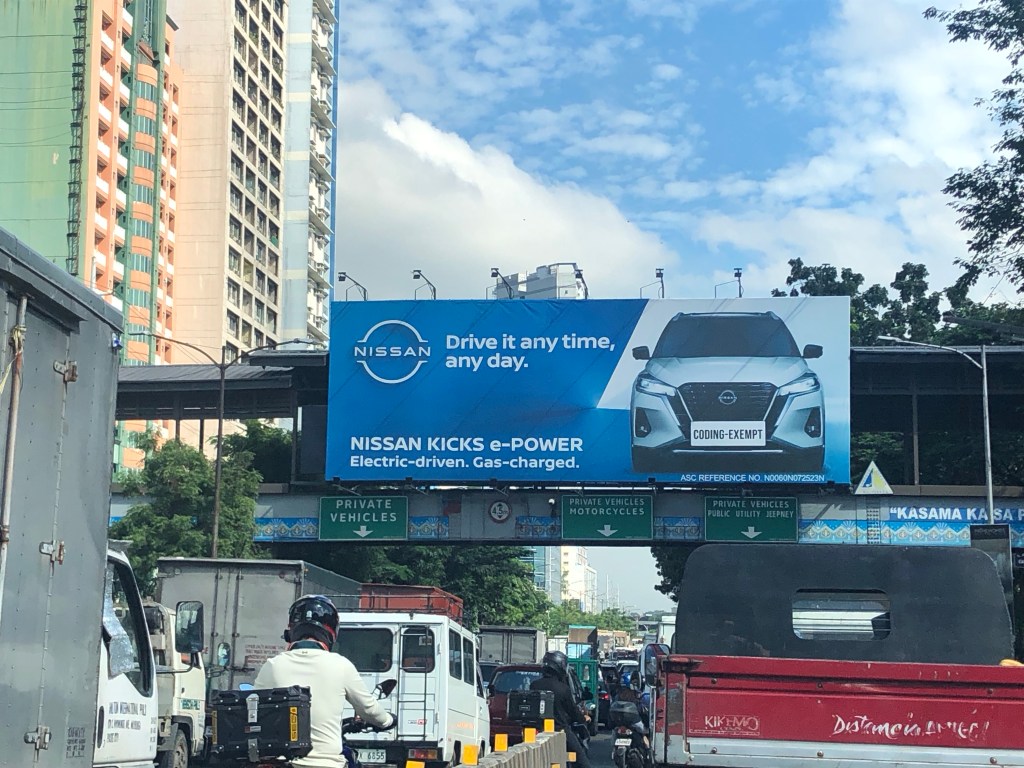 Electric and hybrid vehicles in Metro Manila are exempt from the MMDA’s number coding scheme. The ad is clear about that especially as a selling point for the vehicle featured.
At this point, more electric and hybrid vehicles would probably translate to more traffic congestion. They will just be replacing the conventional vehicles if not adding to them. The incentive will actually backfire vs. the MMDA since the number coding scheme will eventually be rendered ineffective (di pa ba?) with the addition of these coding-exempt vehicles.
–
Recent transport features of fast-food restaurants
We went to a McDonald’s drive thru a couple of weeks ago to get some food before picking up our daughter at her school. We decided to go a new branch along the way from the office and found a new feature at the fastfood chain’s parking area – electric vehicle charging stations. There were two slots where e-vehicles can re-charge while owners eat at the branch.
 Electric vehicle charging station at the new McDonald’s branch along Sumulong Highway (Mambugan, Antipolo)
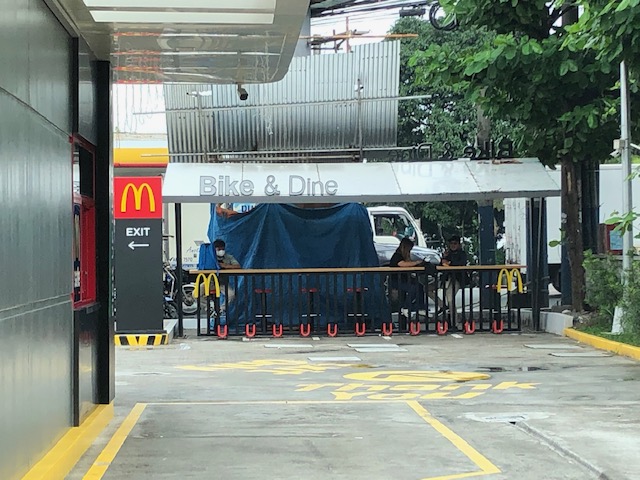 Bike dining station – you can park your bike at one side and have a comfy seat while eating and drinking on the other side
The bike and dine is not a new feature but one that McDo has installed in many of their new branches and retrofitted old one with during the pandemic. Still, we hope they have this in and the charging stations in most if not all their standalone branches. Of course, other chains should follow suit especially rival Jollibee, which has more branches and an even wider network of companies (e.g., Chowking, Greenwich, etc.) under it. This will help in promoting both cycling and e-vehicles.
–

