
Home » EST (Page 31)
Category Archives: EST
Quiapo traffic
Fridays in Manila are associated with Quiapo and the devotion to the Black Nazarene. People flock to Quiapo Church to hear Mass or pray at the Basilica, which is arguably among the most popular for Roman Catholics. Fridays are regarded as feast days dedicated to the Black Nazarene and since many people go to Quiapo Church throughout the day, there is almost always traffic congestion in the area. These days, however, any weekday is a congested day in that area what with more vehicles and more people coming to this area or just passing through.
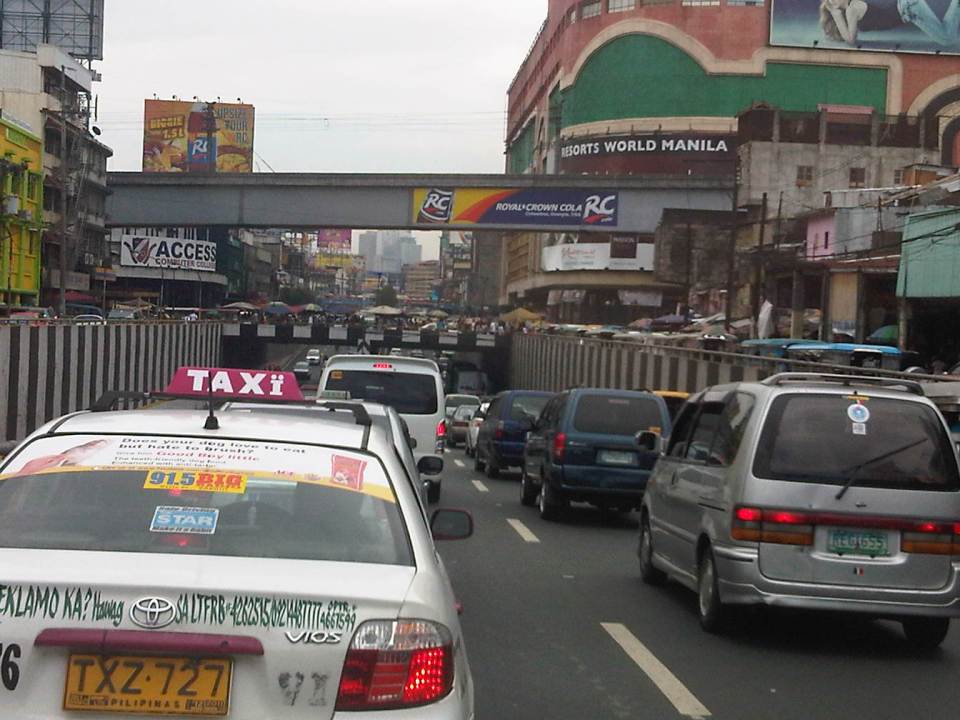 Espana Avenue ends at its junction with Quezon Boulevard and turning left leads the traveler to the Quiapo District. The photo shows heavy traffic along the underpass and the elevated LRT Line 2.
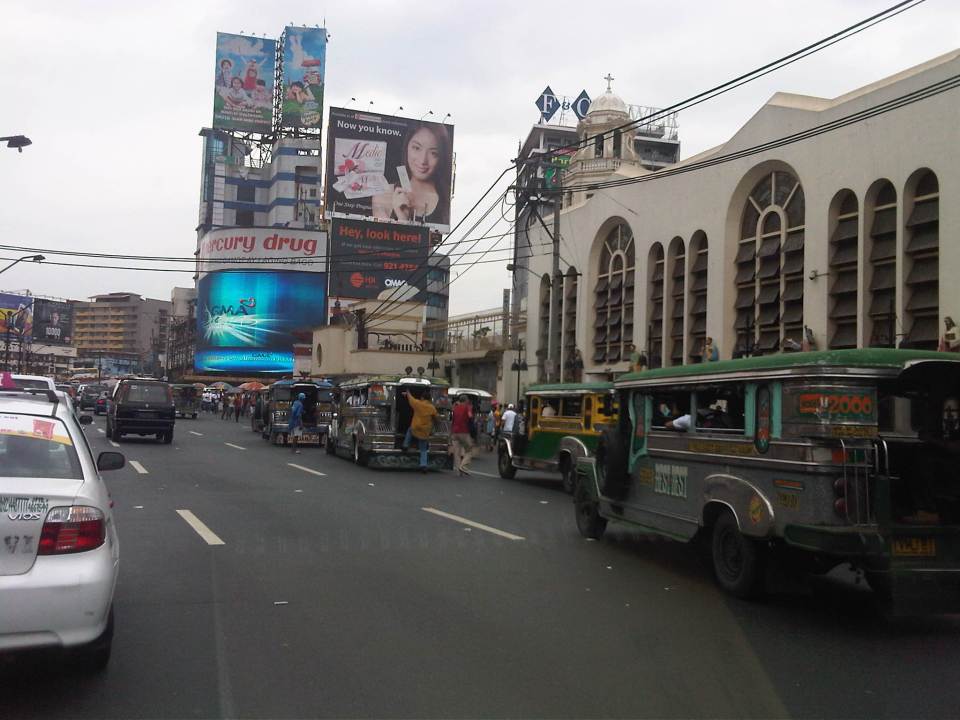 Quiapo Church is just beside Quezon Boulevard and jeepneys loading and unloading passengers occupy up to 3 lanes nearest to the church.
 There is a door at the side of the church along Quezon Boulevard and people seem to be everywhere even the middle of the road as they walk or wait to ride a jeepney.
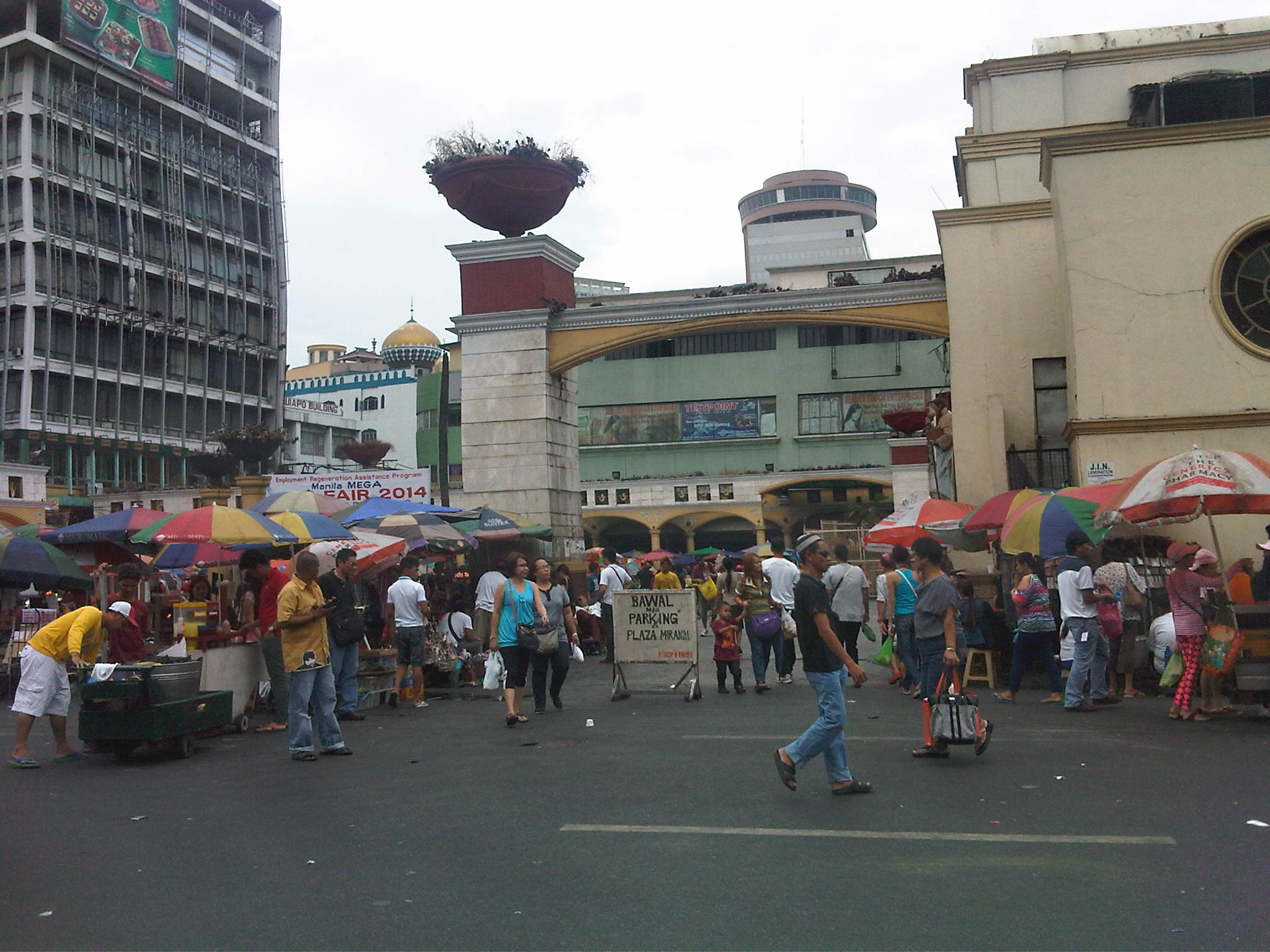 Historic Plaza Miranda in front of the church is witness not only to a lot of the frenzied processions during the feast day of the Black Nazarene every January. Plaza Miranda has also been a venue for many political rallies including the infamous one in the early 1970s that was among the triggers for Martial Law. On “normal” days, the plaza is home to vendors, fortune tellers and other denizens of this area.
There are other popular churches around Metro Manila that attract a lot of people throughout the year and not just during feast days. Among these are Baclaran in Pasay City (Our Lady of Perpetual Help), St. Jude in Manila, Sto. Domingo in Quezon City, San Agustin and the Manila Cathedral in Intramuros, Manila. Nearby in Antipolo is the Shrine to Our Lady of Peace and Good Voyage. These churches are among the busiest especially on certain days of the week (e.g., Wednesdays are for Baclaran, etc.) and with the coming Holy Week, a lot of people are again expected to flock to these churches for the Visita Iglesia tradition. Hopefully, these devotions are really a manifestation of faith rather than the pretentious kind where the road trip is more touristy than religious or prayerful.
–
On sustainability and inclusiveness of pedicabs
“Sustainable transport is inclusive but inclusive transport is not necessarily sustainable.” Is this statement true? If yes, why and to what extent? This is not a philosophical take at transport. There seems to be some conflict in that statement but there should really be no confusion once you delve into the essence of sustainability and define the limits of inclusiveness. The statement is true to the extent that all sustainable forms of transport can be inclusive. These are transport modes that are friendly to all genders, all ages, all economic classes, and regardless of physical ability. However, there are transport modes that are inclusive in the same context stated but are unsustainable from the perspectives of suitability, efficiency and energy.
For example, non-motorized transport (NMT) in the form of pedicabs (also called trisikad or padyak) are sustainable from the perspective of energy. They are most suitable for operation along minor roads, especially those in residential areas. However, if the same pedicabs operate along national roads and mixed with motorized traffic, these become a nuisance and contribute to traffic congestion. Such operations also put passengers at risk, exposing to potential crashes as pedicab drivers tend to violate road traffic rules (e.g., moving against traffic).
 Pedicabs along the Quezon Avenue Service Road near Agham Road.
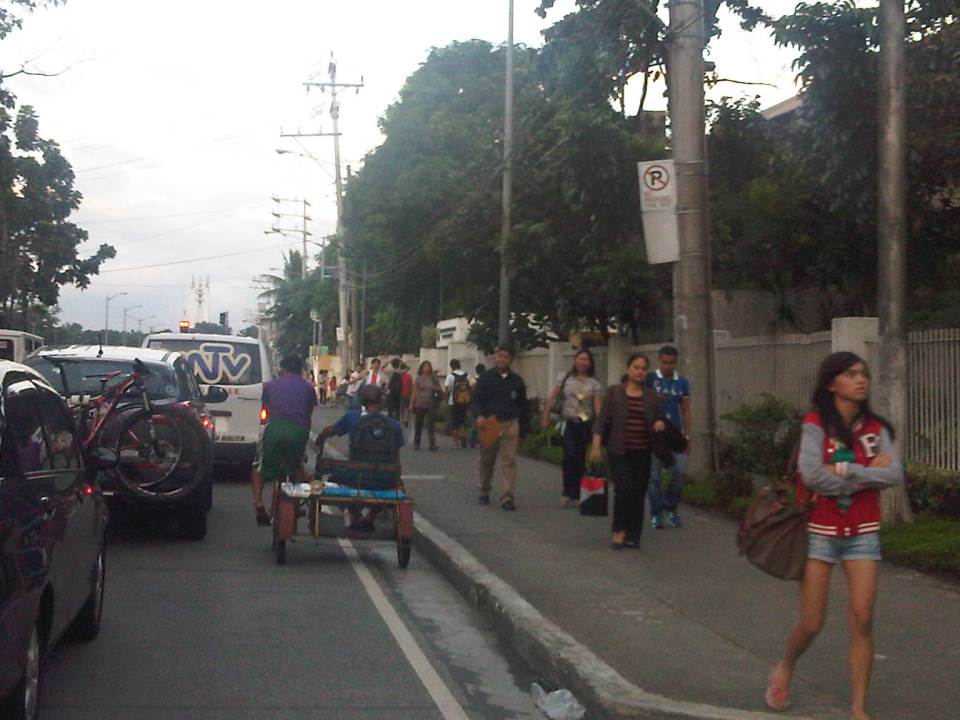 Pedicab ferrying passengers from the Quezon Ave. MRT-3 station to destinations along Agham Road.
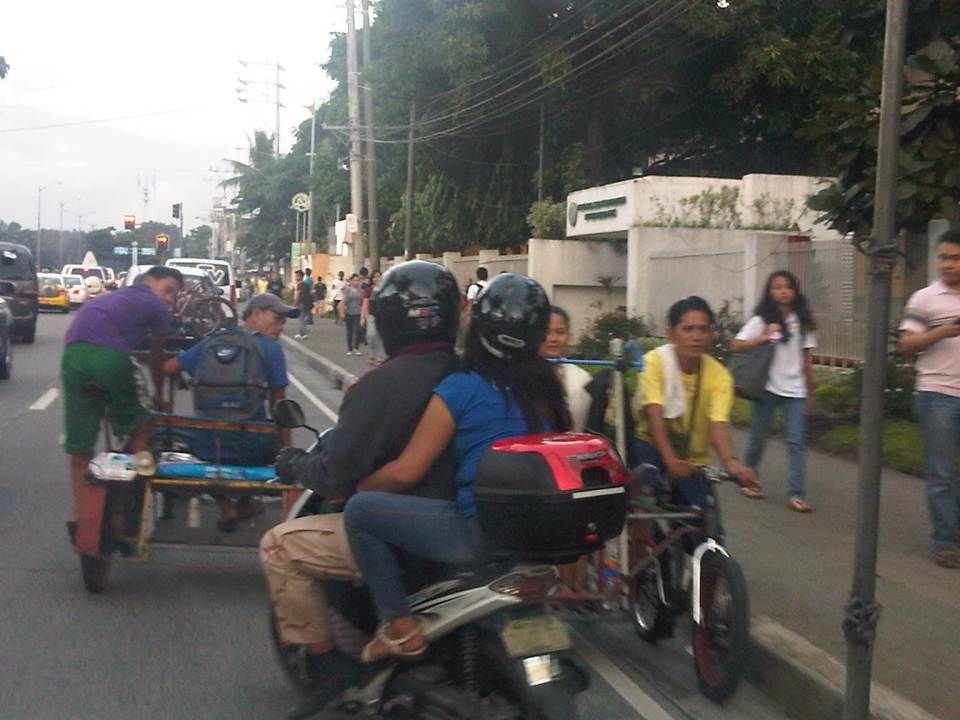 Counter-flowing pedicab along Quezon Ave. just outside the National Grid Corporation (formerly Napocor) office.
Pedicabs have another dimension, which is often cited as a reason for its very existence. It is a source of livelihood for many people. Whether this is something that needs to be encouraged is the subject of debates often involving discussions on poverty and governance. That is, pedicabs are often owned and/or operated by low income people and their numbers translate into votes for local officials who tolerate pedicabs and even encourage them as a form of livelihood. It is, after all, like the jeepneys and tricycles before it, supposed to be a simple investment that generates income for the owner/operator/driver. People have glorified or romanticized the pedicab as various designs have displayed the creativeness (or even artistry) of the Filipino. However, just like other modes of transport, the pedicab should function within a hierarchy based on its suitability with respect to other modes that are similarly appropriate for a certain range of conditions. Hopefully, such concepts are understood by stakeholders if only to effect the rationalization of transport services and correct certain notions pertaining to inclusiveness and sustainability for such modes.
–
Mobility for PWDs
Inclusive transport also covers persons with disabilities or PWDs as some people refer to them. Persons with disabilities include the blind, crippled, deaf, mute, and others who are physically challenged and therefore would have their movements limited or restricted. There are laws which provide for the needs of persons Republic Act 7277, which is the Magna Carta for Persons with Disabilities. Specifically, for accessibility, there is Batas Pambansa 344, “An Act that seeks to enhance the mobility of disabled persons” by requiring buildings, establishments and public utilities (e.g., transport) to install facilities or devices to enable use by PWDs. These include ramps at pedestrian sidewalks and at the entrance/exit of buildings. These should also include elevators and other devices to help “physically-challenged” or “differently-abled” persons up and down buildings including those elevated LRT/MRT stations. [Note: Quite frankly, I don’t really like all these supposedly politically correct terms but will nevertheless use them in this article.]
 A man on a wheelchair crosses the intersection at Katipunan-Aurora.
Unfortunately, most public transport vehicles are not PWD-friendly. Most buses and jeepneys do not have provisions for PWDs and, on most occasions, do not even bother to stop to accommodate PWDs, especially those on crutches or wheelchairs. The LRT and MRT are now just too crowded even for able bodied people to endure (especially on a daily basis) but access to the elevated stations have always been an issue as there are limited escalators and elevators either seem to be frequently out of commission or there are none at certain stations. A high profile public official even suggested at one point during his stint with Metro Manila that PWDs and the senior citizens should just stay home rather than travel; hinting that these people would just be a burden to others when they travel.
This is not the case in other countries. I have seen in Japan, for example, that city bus designs can readily accommodate PWDs and this includes low-floor buses for easy access between the vehicle and the sidewalk. Bus drivers fulfill their responsibilities of stopping and assisting persons on wheelchairs to board and alight from their buses even if it means they would have to compensate for their scheduled stops. Then there are those I’ve seen riding the BART in San Francisco wheeling themselves in and out of the trains and stations with ease.
Addressing the transport needs of PWDs is definitely an area that needs proper attention especially as groups advocate for inclusive transport. Persons with disabilities are an integral part of our communities and enabling them to travel is a big factor towards encouraging them to be productive despite their physical limitations. They are not asking us to pity them but instead empower them to be the best they could become given the opportunity to be productive, to contribute to society. As such, they deserve the facilities and services that will enable accessibility and mobility that is at the same time safe for them and everyone else.
–
A study on a long-term transport action plan for ASEAN
The National Center for Transportation Studies of the University of the Philippines Diliman participated in the project “Study on the Long-Term Action Plan for Low Carbon Transport in ASEAN.” The study was funded by the Nippon Foundation and implemented by the Institution for Transport Policy Studies (ITPS) and Clean Air Asia with experts coming from ASEAN countries including Indonesia, Malaysia, the Philippines, Thailand and Vietnam, and Mizuho of Japan, which led the development of the Backcasting and Visioning Tools employed in the study. Detailed case studies were performed for Indonesia through the Universitas Gadjah Mada and for the Philippines through the University of the Philippines Diliman.
The Final Symposium for the study was held last February 20, 2014 at the Hotel Okura in Tokyo, Japan. A link containing information on the study, the symposium program, information on speakers, and presentation files are hosted by the Japan International Transport Institute, which is affiliated with ITPS.
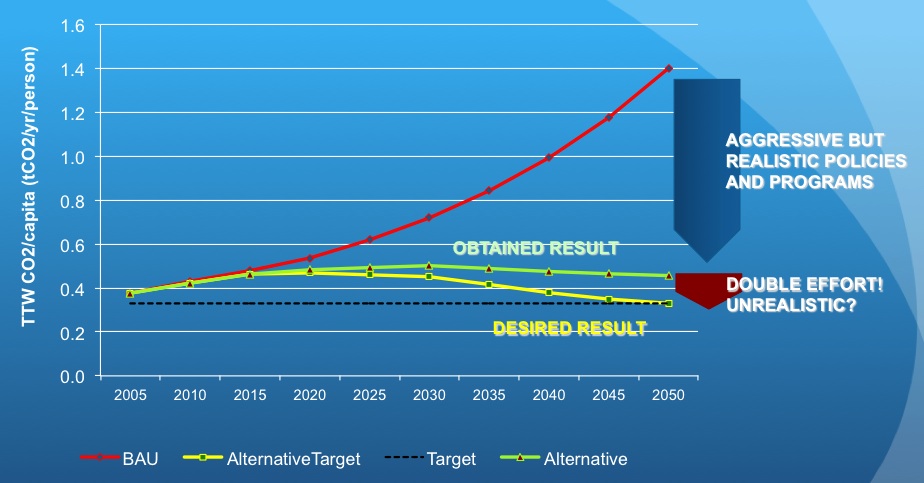 Graph of the result of backcasting for the Philippines using available transport data, policies and other information on various socio-economic and transport factors. (Image capture from the presentation by UP’s Dr. Regin Regidor)
–
Vehicles at the 3rd Electric Vehicle Summit
The 3rd Electric Vehicle Summit was held last February 27-28, 2014. It was hosted by Meralco and featured presentations and discussion on the many issues regarding electric vehicle promotion and deployment in the Philippines. Outside the venue of the more formal presentations was an exhibit of the various electric vehicles that are currently available and being promoted by various proponents and companies. These include 2, 3 and 4-wheelers that can be used for either private or public transport.
I observed that there are definitely a lot of improvements since the last exhibition in the previous EV Summit in 2012. Vehicle designs have evolved and for the better. Local manufacturers or companies have partnered with foreign companies who have more experience in EVs so its a good thing. They will definitely learn a lot from their partners and we cannot over-emphasize the importance of technology transfer particularly in areas or aspects where local manufacturers are weak like the controller and the motor.
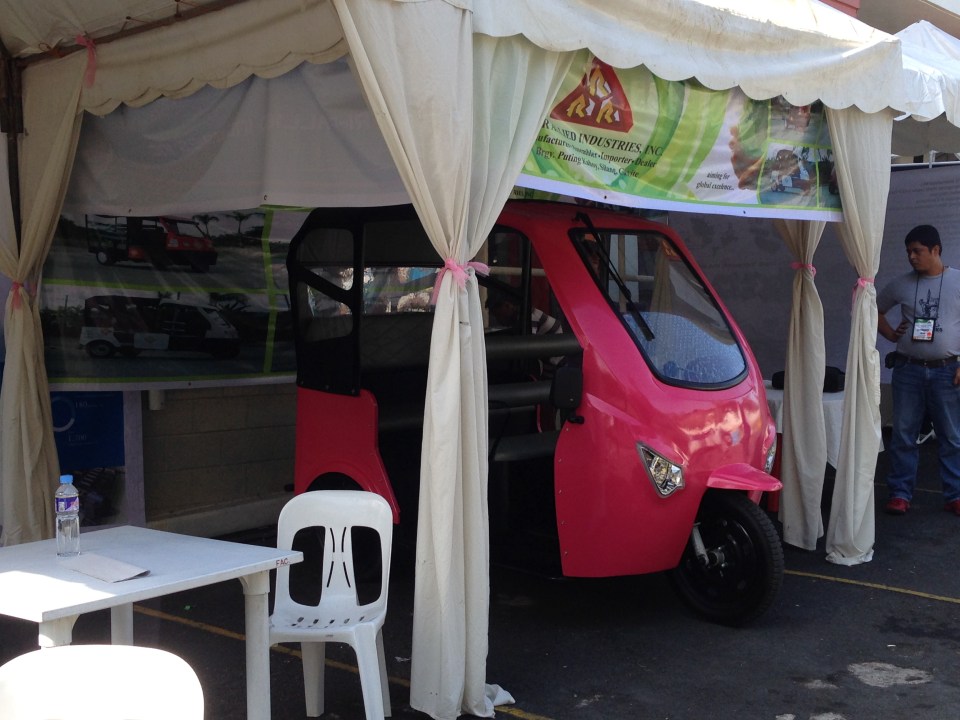 3-wheeler tuktuk design
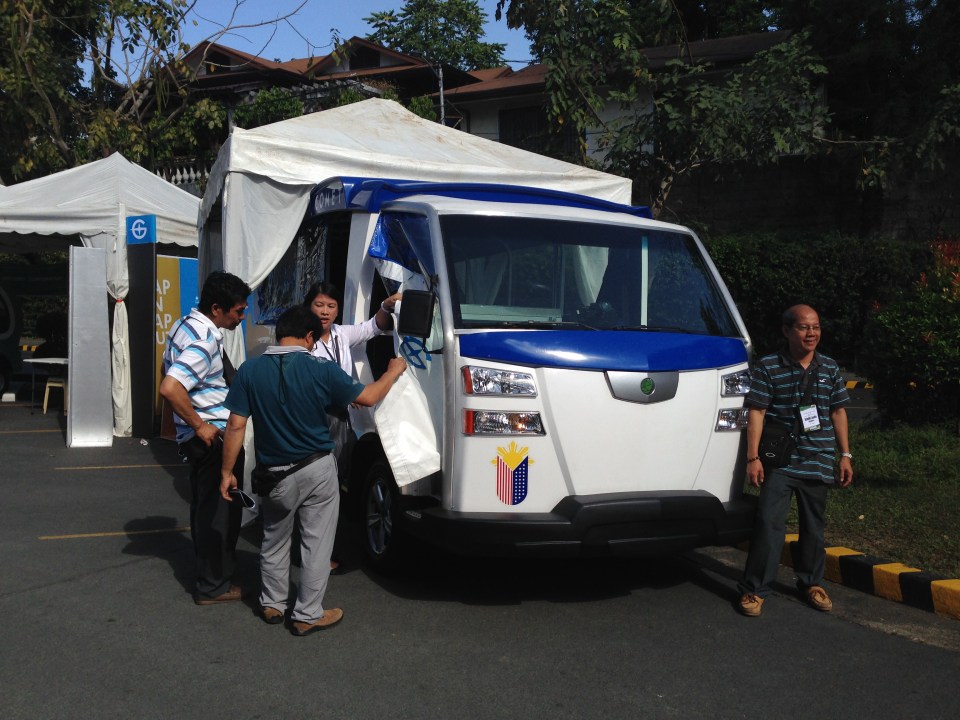 The COMET, which is being proposed as a replacement for the conventional jeepneys.
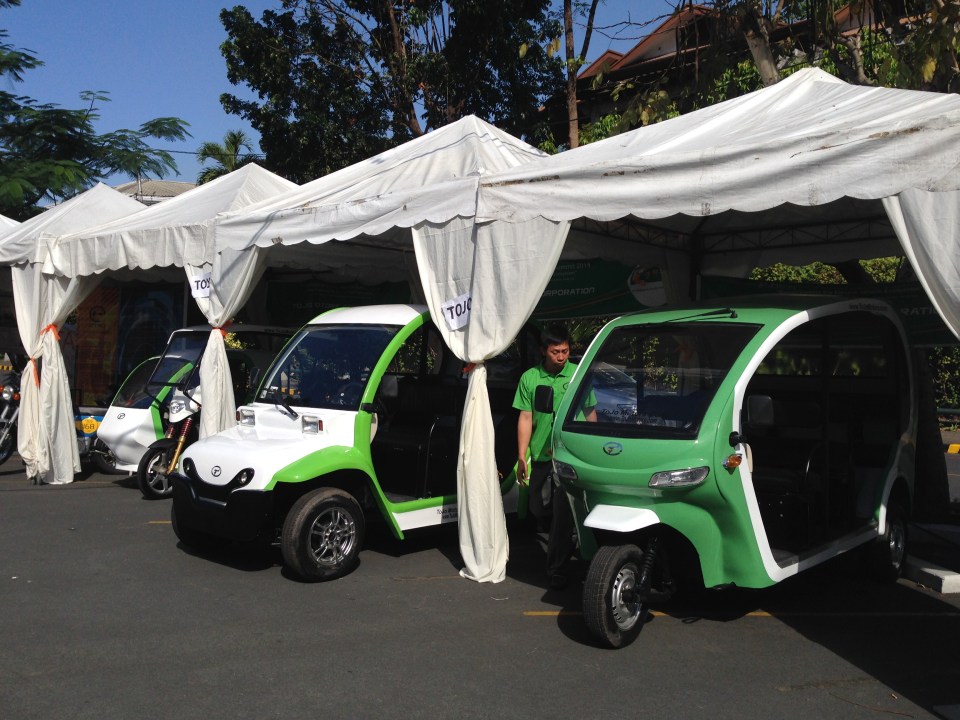 More 3-wheelers and an electric car from the same company that brought us the EVs at Bonifacio Global City that are nearing extinction.
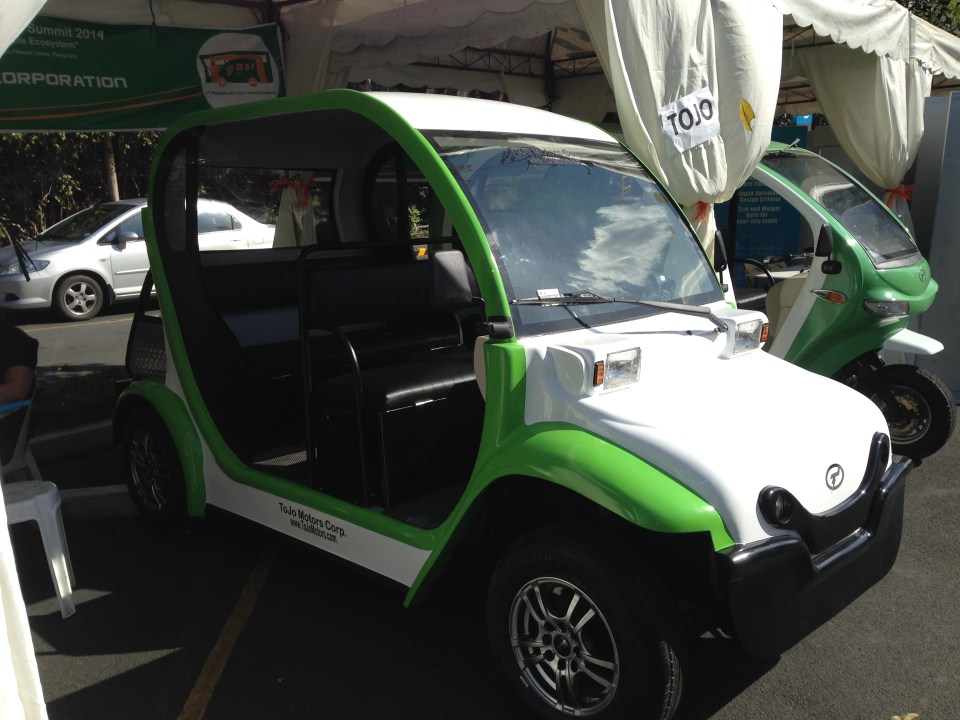 Electric mini car
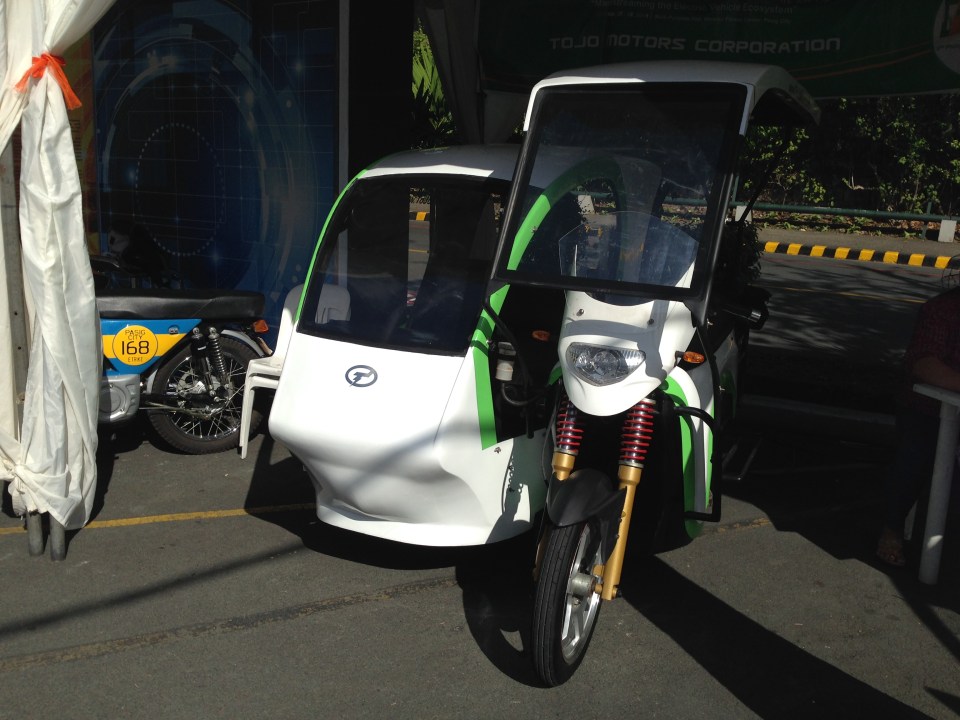 Traditional design of tricycle – electric motorcycle with side car
 Electric motorcycle with a more sporty design
 Same model electric motorcycle fitted with a conventional sidecar
 Another tuktuk design 3-wheeler – this one looks very much like the EVs in operation at BGC in Taguig.
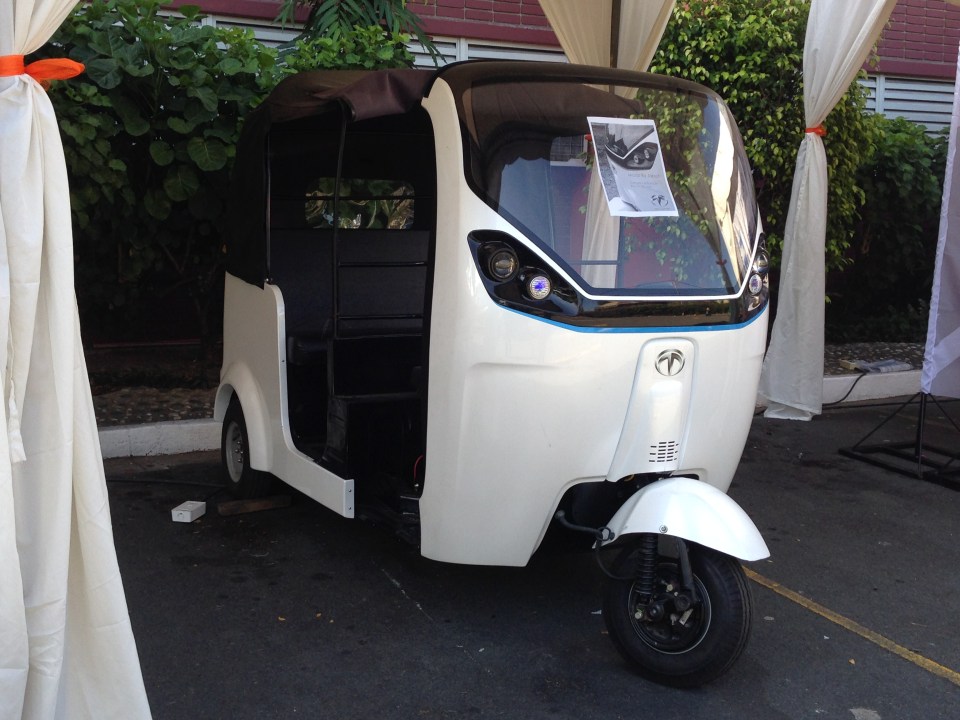 Many companies were supposed to have submitted bids to the DOE-ADB initiative to push for electric tricycles. There are still no assurances whether these e-trikes will replace conventional ones currently dominating transport in many cities and municipalities around the country.
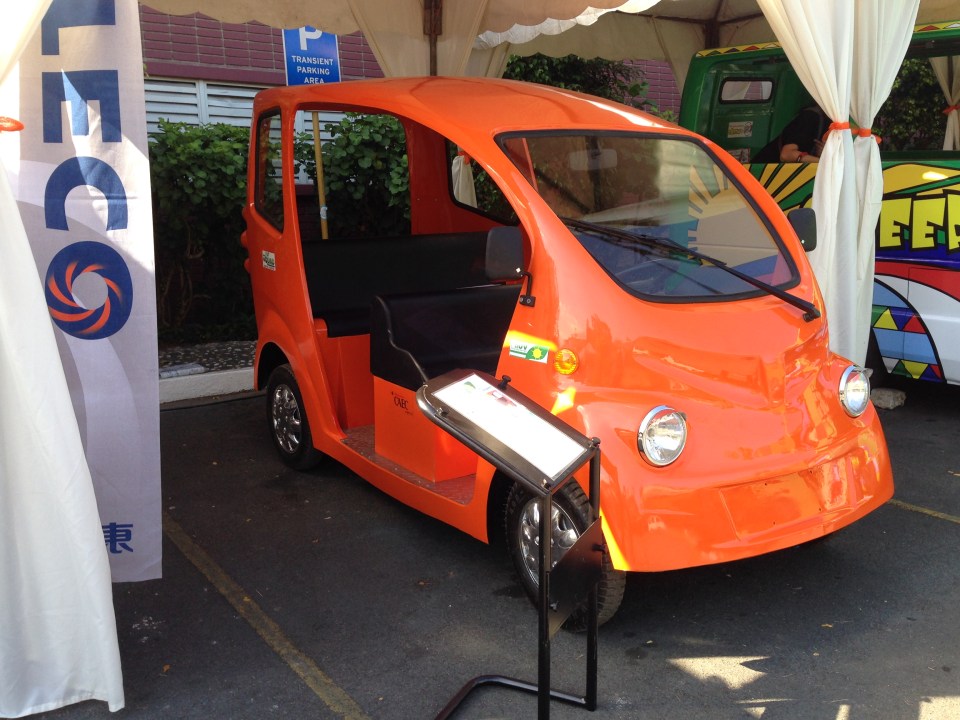 Another electric 4-wheeler. These still look more like glamorized golf carts than the sleek electric cars currently in the market that includes the popular but expensive Tesla.
 The newest model of the e-jeepney from PhUV, the first to manufacture local electric jeepneys including the models now running in Makati, Pasig and Quezon City. I learned that they have partnered with TECO, a Taiwanese company that has extensive experience in EVs. Notice the passenger door is already at the right side of the vehicle instead of the rear.
 Participants to the EV summit tried out the different EVs on display and for demo rides. The latest model e-jeepney was quite popular especially to foreign participants.
 3-wheeler and mini-bus designs from KEA Industrial
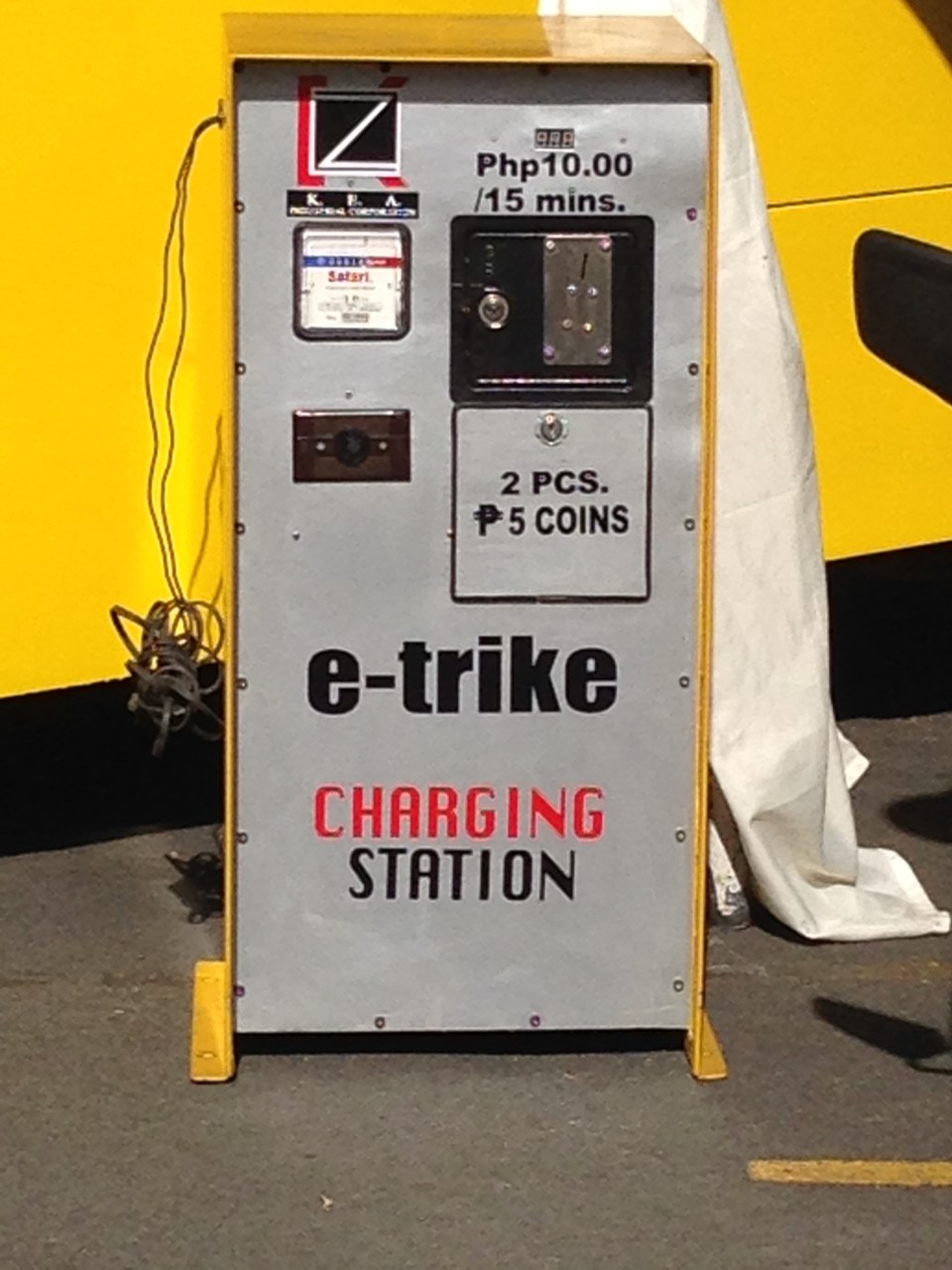 Charging station developed by the same company – I think they’re trying to appeal to the “tingi” mentality of Filipinos by indicating PhP 10/15 minutes of charge.
 Perhaps one of if not the best e-trike that was on display was this model by Japanese manufacturers. They were supposed to have been selected by DOE and ADB for the first phase of the e-trike project that will see the deployment of 5,000+ e-trikes in different Philippine cities.
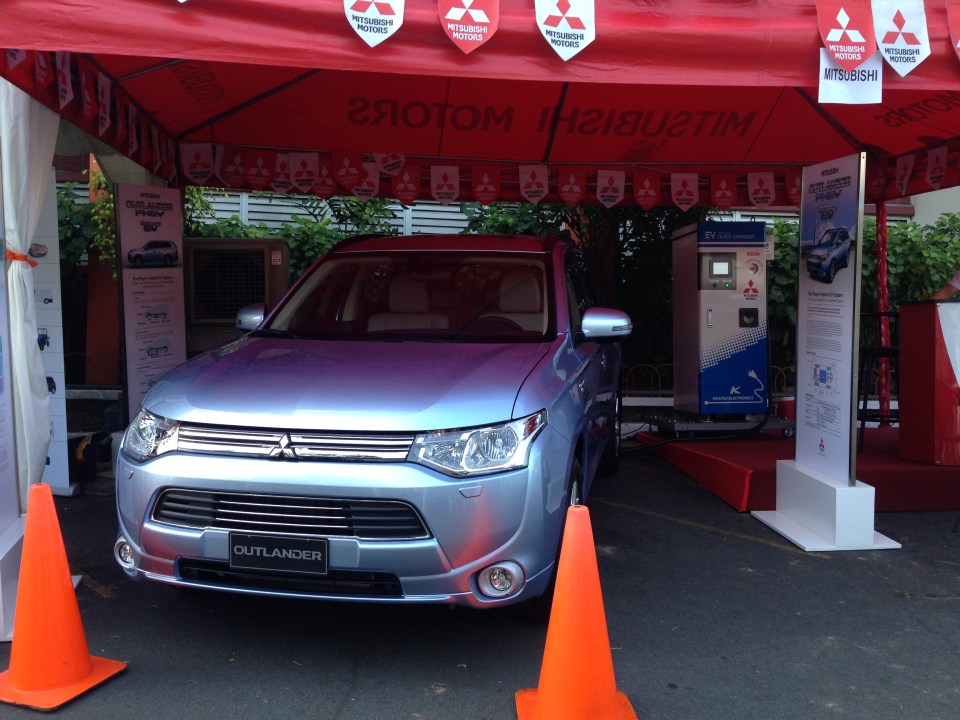 Mitsubishi featured its elective Outlander, which, I observed, got more attention from the well-heeled participants. Students on field trips for the exhibit were not into this example of the more refined EV models.
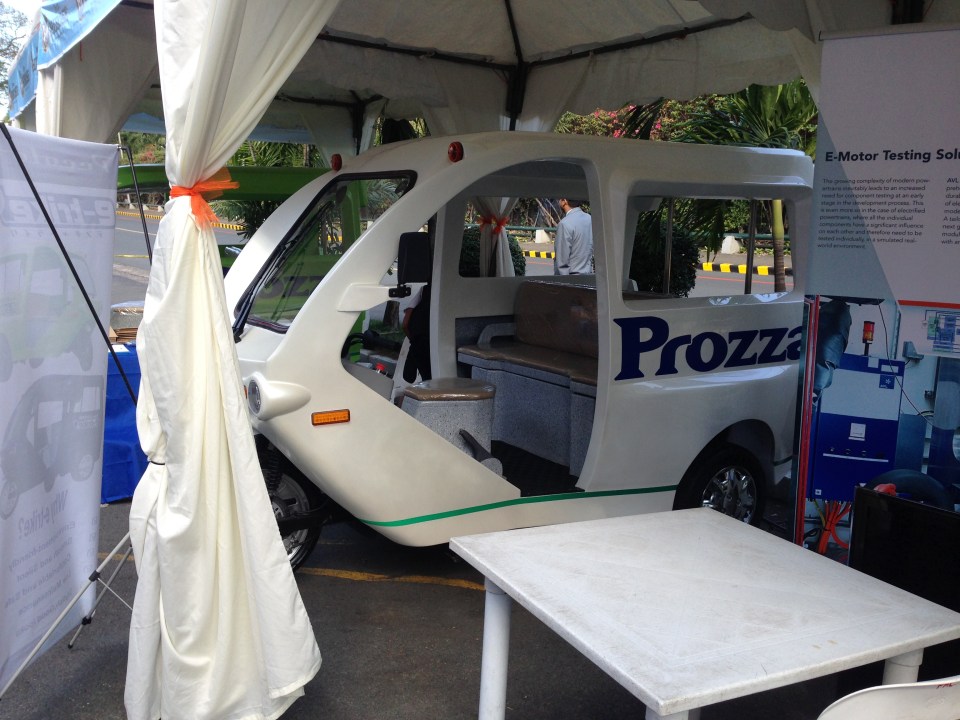 Another tuktuk 3-wheeler design from Prozza. I don’t really remember all the participating exhibitors but most of them bid for the e-trike project of the DOE-ADB.
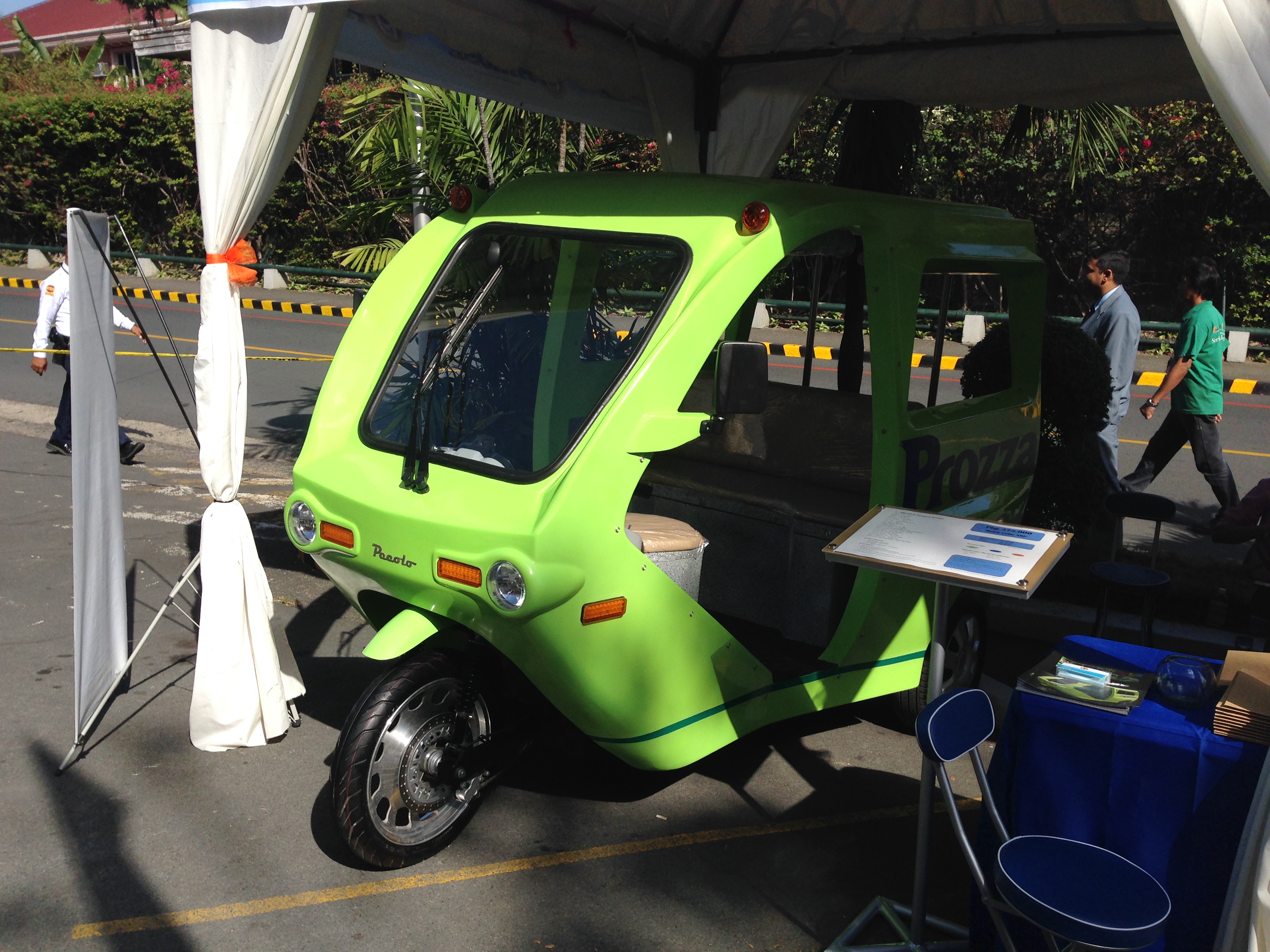 The same 6-seater e-trike from Prozza in green body color.
I would defer from a quick assessment of these EVs to another post. For now, I just like to show the models that were shown in the recent summit. Suffice it to say that I have high hopes for EVs in the Philippines but then we need to really look into the context for these vehicles as well as the sustainability given the challenges of power generation for many areas in the country.
–
Transport and traffic purgatory, paradise and inferno
A lot of people have been referring to the traffic congestion and other derivative issues that will be the result of the construction of several transport projects around Metro Manila as “traffic armageddon.” Some friend have appropriately (I think) referred to it more as “car-mageddon.” This seems to be the case since it is perceived to have the most impact on car users than public transport users, cyclists or pedestrians. This is far from the truth as there are more people taking public transport, cycling or walking than those driving their own cars. In fact, estimates for Metro Manila indicate that 70-80% of travelers take public transport while 20-30% take private vehicles. These mode splits do not include bicycles or walking, which obviously will further decrease private car shares.
I would rather refer to this period of construction as a sort of “purgatory” though it has nothing to do with the cleansing that’s associated with it. There is still the suffering involved while improvements are being implemented. But, most importantly, there is hope at the end of this process. This “hope” is not necessarily the “light at the end of a dark tunnel” kind of thing as surely population and the number of vehicles will surely increase over time even as the transport projects are being implemented. By the time these are completed, there are sure to be more people, more vehicles, as well as more of other developments that will put our transport system to a stress test. We can only hope that the designs of these infrastructure we are building now are based on honest to goodness trip or traffic forecasts. Otherwise, we’ll end up with congested or saturated systems by the time they start operating.
Unfortunately, most projects mentioned and those we know have the green light and would likely be proceeding with construction in the near future are basically road projects. It’s ironic considering that what Metro Manila urgently, and maybe desperately, needs now are public transport systems including the much delayed MRT 7, LRT 2 Extension and LRT 1 Extension. The proposals for Bus Rapid Transit (BRT) seem to be in a limbo, too, despite extensive studies and surveys to support BRT along corridors such as Ortigas Avenue and Circumferential Road 5. These are blamed on institutional and legal impediments including allegations of shortcomings among officials of agencies responsible for these infrastructure.
I am aware of an initiative led by an environmental lawyer seeking to effect the redistribution of road space in favor of public transport users, cyclists and pedestrians. I think such actions are useful from the perspective of getting the attention necessary to push government and private sector players to have a sense of urgency not just in words but also in actions in as far as transport infrastructure programs and projects are concerned. We are already lagging behind our ASEAN neighbors with regards to infrastructure and at this pace, it is likely that less developed countries like Cambodia and Myanmar might just overtake us in the foreseeable future. From another perspective, it is hard to push for sharing the road when people really don’t have better options for commuting. Walking and cycling are not for everyone and many people have turned to the motorcycle to solve their transport woes. In the latter case, motorcycles are perceived as a vehicle that’s fuel efficient and allows the users to zip through congested streets often at high risks of being involved in a crash or spill.
We can only achieve “paradise” in our highly urbanized cities if we build these mass transit systems along with the pedestrian and cycling facilities that will complement each other. Those for whom car travel is a necessity would also benefit from reduced road congestion so it will eventually (hopefully) play out well for most people. Meanwhile, we would have to endure transport and traffic hell (some more and longer than others) as the government and private sector embark on this round of infrastructure projects implementation. It helps to look back at our experiences with the last major batch of projects in the latter part of the 1990’s when the number coding scheme was first implemented. At the time, it was implemented as a temporary measure to alleviate congestion while projects where being implemented. What was a temporary measure is now still being implemented along with a truck ban that has also been evolving the past years with the latest being the one implemented by the City of Manila starting last February 24. Will these vehicle restraint schemes be modified to cope with the traffic congestion expected from projects like the Skyway connector? Will these be relaxed or removed after all these projects have been completed? Your guess is as good as mine.
–
Off-street parking along Tomas Morato
Not too long ago, the Quezon City government constructed off-street parking slots throughout the city. These included spaces along major roads such as Visayas Avenue, Mindanao Avenue, Quezon Avenue, West Avenue and Timog Avenue. Tomas Morato as well as the streets connecting to it were also included in the project, which benefited many people, whether they be car-users or taking public transport. I took a couple of photos last week as the wife picked up some food at a panciteria along Morato. It was early an early afternoon so traffic was free-flowing and many parking spaces are available along the avenue. Morato is well known for having many restaurants and cafes lined up along either side of the street and during their off-periods, Morato would usually be an easy drive.
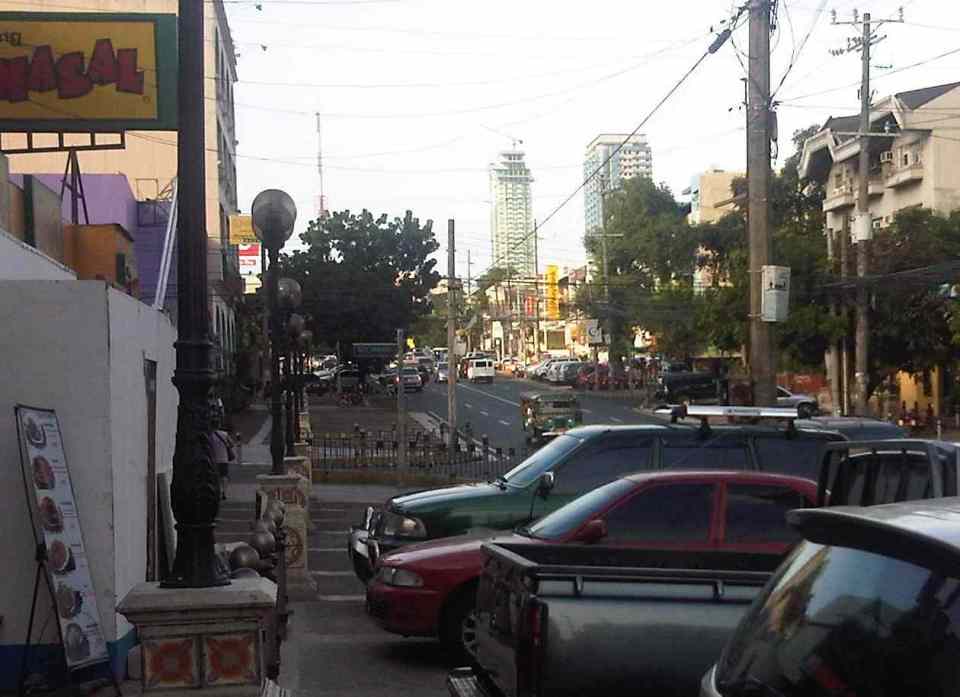 The off-street parking spaces along Tomas Morato are free and are not allocated for any specific establishment. In practice though, the spaces in front of certain restaurants, shops, banks, etc. are “reserved” by their staff for their customers/clients.
 Many newer establishments along Tomas Morato have no provisions for off-street parking for their clients. This means the burden for parking continues in being passed on to the local government and, likely, at the expense of taxpayers.
I still believe that establishments that are required under law to provide at least the minimum number of parking spaces as per national building code should be made to compensate for the city’s construction of parking spaces to solve on-street parking issues along streets like Morato. I understand that they pay local taxes but that is an entirely different requirement that is not related to their being required to provide parking spaces for their customers/clients. It’s really a matter of doing the right thing for both city and these establishments but such cases are often muddled and are not tackled as the general public is usually not interested in these somewhat unpopular topic of parking.
–
New parking rates at NAIA
Here’s something for those who are parking at any of the Ninoy Aquino International Airport’s parking facilities. Here are a few photos showing the new parking rates at NAIA, effective December 1, 2013. Gone are the flat rates of old for those picking-up relatives or friends so it actually discourages people from camping out at the parking lots. Gone, too, are the low overnight parking fees of PhP 50 per night that a lot of people enjoyed for short trips on business or as tourists in local destinations or abroad.
 Information on new parking rates at NAIA effective December 1, 2013 found along the left side of the approach to the parking lot entrance.
 Announcement on the new NAIA parking rates just before the entrance booths of the lot
 Information on the new parking rates at the exit of the lot and just before the payment booths.
It goes without saying that with the increased parking fees at the NAIA, people would expect more in terms of the quality of these facilities particularly pertaining to security and cleanliness. One cannot expect to pay for PhP 300 per night for an open parking space where one’s vehicle is exposed to the environment as well as to possible criminal elements lurking about. Of course, there is practically no competition for these parking facilities so there is a sizable captive market for NAIA parking. In my experience, and in fairness to airport management, I have not had any untoward incidents when I did leave our vehicle at the parking lots of Terminals 2 and 3. And I have done so many times before on trips to the Visayas and Mindanao, and a couple of times on trips abroad. I hope others, too, won’t have any problems with parking at the airport.
–
On the increase in overnight parking fees at NAIA
I’ve been reading some posts on social media complaining about the increase in the overnight parking rates at the Ninoy Aquino International Airport (NAIA). This seems to be a recent development considering the last time we used any of the parking facilities of NAIA was last November 23 when the wife parked to wait for my arrival at Terminal 2. It wasn’t overnight parking but then she said she doesn’t recall seeing any signs announcing changes in the parking rates. The posts I saw through Facebook are for overnight parking at Terminal 3 where the old charges were 50 PHP (about 1.14 USD) per day. This is actually very cheap even considering that parking is on an open lot with marginal security. Even parking lots in Makati, Taguig and Ortigas charge more for overnight parking on open lots.
The new rate is basically 300 PHP per day including taxes, which apparently surprised a lot of people after everybody got used to the 50 PHP/day rate of old. That meant that for a 3 night trip to Bangkok or Singapore, for example, where people left their cars at the airport, they had to fork over 900 PHP instead of the 150 PHP they used to pay for parking. Indeed, that’s a big jump in parking fees!
NAIA’s parking rates can be compared to the parking rates at the Los Angeles International Airport (LAX) is provided in their website. 30 USD (about 1,315 PHP) is charged for 24 hours for use of the multi-level/covered parking structures at the airport. Meanwhile, open lot parking charges 12 USD (about 526 PHP) per day. Suddenly, NAIA’s parking charges don’t seem to be expensive beside the 526 PHP/day charge at LAX. However, these rates are arguably in a country where there are higher wages and standards of living and so perhaps a fairer comparison would be for parking in a major airport in ASEAN. Doing a bit of research online, I found that Bangkok’s Suvarnabhumi International Airport charges the equivalent of about 341 PHP per day for parking. Singapore’s Changi charges the equivalent of around 701 PHP per day. And Kuala Lumpur International charges the equivalent of about 575 PHP per day for parking. [Note: Rates from the link may not be updated.] These are generally for multi-level parking buildings where vehicles are practically protected against the environment (e.g., rain, sun, etc.).
A comparison is also made for the nearby Park n’ Fly facility, which also publishes their parking rates in their website. The site of the private parking provider states a rate of 340 PHP + EVAT (taxes) per day. And this is for a multi-level, covered parking structure near NAIA Terminals 1 and 2. An argument can be made here for the location and proximity of NAIA parking spaces compared to Park n’ Fly but note that the fee for the private entity includes airport transfers with their own vehicle. Compared to this, the NAIA rates are quite expensive considering that it is for open lot parking and for what is perceived as marginal security. In fairness to airport parking security, I have not heard or read about incidents of burglary or stolen vehicles in relation to NAIA parking areas.
And so there are many questions that need to be answered in as far as the sudden and steep increase in parking rates at NAIA. The most important question here is what is the basis for the parking rate increase? It is assumed that the additional monies generated will cover certain expenses like security and maintenance. So there needs to be transparency in where the additional funds will go or how it will be allocated (e.g., repair works towards ultimately opening the multi level facility at T3). Also, perhaps the information dissemination for this rate increase was lacking and therefore ineffective in advising the public about the change. But then there was generally no major uproar over the increase so perhaps those complaining weren’t paying attention or were caught in the transition to the new parking rates. One can even say that certain posts in social media can be qualified as rants rather than objective takes on parking rates.
I would like to think that parking as an amenity should not generally be a revenue generating scheme for the airport. Collected fees should cover operating expenses and excesses can be used to build a trust fund, for example, for future expansion of the facility, but the latter should be clearly spelled out in a plan for the airport. After all, it is in the best interest of the public, the users of the airport, if improvements can justify what they are paying for and how much they are paying.
–
Motomachi
It’s December again and during this month I like to reminisce about favorite places I went to or still go to here and abroad. One of my favorite haunts during the time I called Yokohama my home city was the Yamate area. I went to Mass every Sunday at Yamate Catholic Church. After church, friends and I descend towards the Motomachi shopping street to take strolls, window shop or have lunch in one of the many restaurants along the street. I think it is a good example of a shopping street that’s also found in many other places particularly in Europe and the US. It provides a better environment compared to the large malls we often find in many cities including Metro Manila.
 On-street parking spaces are provided along one side of several sections of along the street. There are parking meters at these spaces.
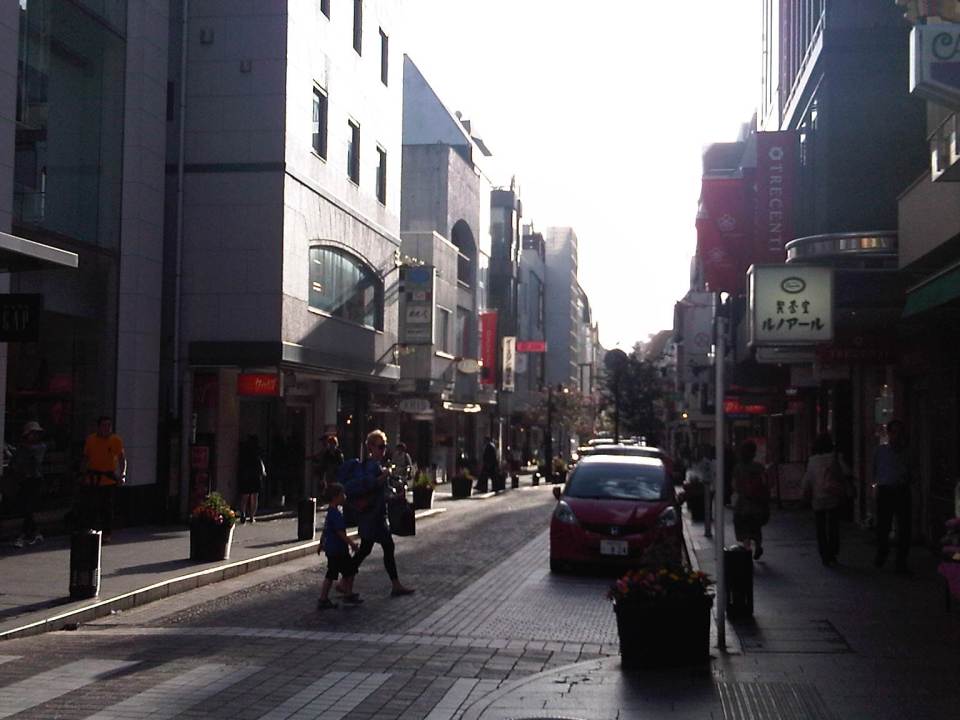 It is a nice place to take a walk whether doing actual shopping, window shopping or just a simple stroll to while away the time.
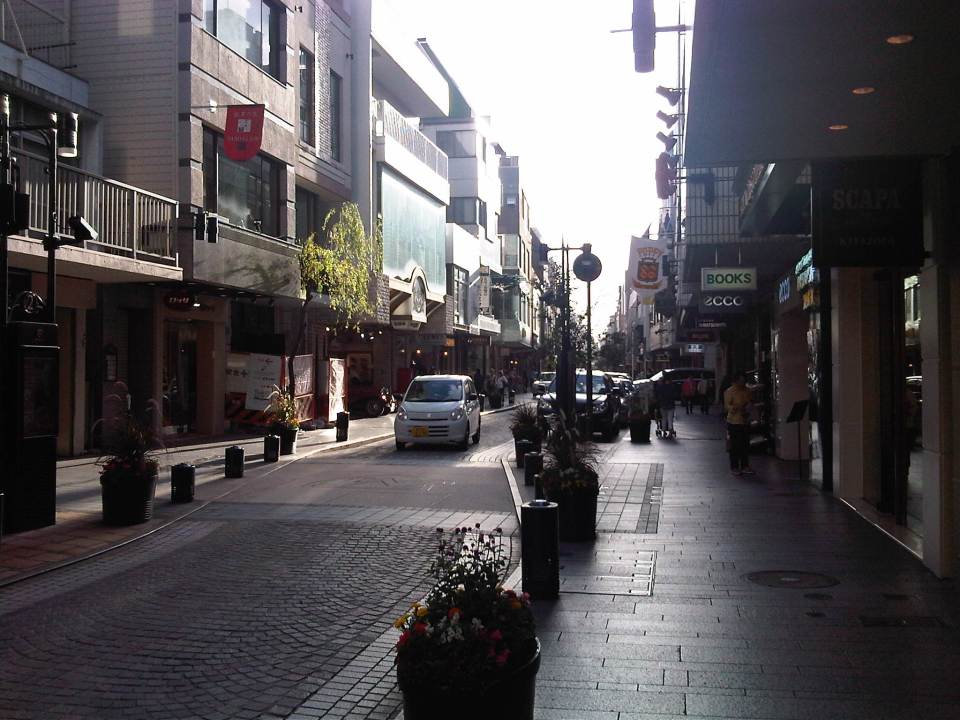 I like the brick road of Motomachi and the restaurants and shops lining the street.
 Benches where people can sit down, take a short rest or wait for their companions who are shopping at a nearby store.
 Motomachi Union where I used to do some groceries whenever I’m in the area (usually Sundays after Mass at Yamate Church).
 A look back to Motomachi as I approached the JR Ishikawacho Station.
There used to be a Indian restaurant at one of the side streets of Motomachi. The chef of the restaurant was a Sri Lankan Catholic who was a church mate at Yamate. We often went to eat there after Mass or on occasion. He would usually adjust the ingredients of our favorite curry and tandoori dishes so they weren’t too hot or spicy for our palates. I wonder where he is now with his family and hope they are doing very well.
There also used to be some clubs or pubs at the end of Motomachi. These included one that was operated by Filipinos that had the Philippine flag displayed. Those establishments are long gone, replaced by newer restaurants and shops as well as a building leading to the underground station of the Tokyu Minato Mirai Line. I know there are also a lot of new, still undiscovered shops and restaurants in the side streets to Motomachi. I look forward to going around the area again soon to check out these places.
–

