
Home » Governance (Page 10)
Category Archives: Governance
On urban noise
We open February with an article share. The article is about noise in urban areas. Not surprisingly, most noise comes from transportation and the solutions mentioned in the article not only addresses transportation noise but at the same time addresses other concerns about transportation, including safety.
Durand-Wood, E. (January 25, 2024) “Why Are Cities So Noisy? And Can We Do Anything About It?“ Strong Towns, https://www.strongtowns.org/journal/2024/1/25/why-are-cities-so-noisy-and-can-we-do-anything-about-it [Last accessed: 2/2/2024]
To quote from the article:
“In 2011, the WHO set recommendations for daytime and nighttime environmental noise levels, and found the maximum safe noise level for daytime is 55db (somewhere between moderate rain and normal conversation) and at night, 40db (about the level of a quiet library). Beyond these levels, prolonged exposure to environmental noise has been shown to cause health problems, and not just hearing-related ones.”In 2011, the WHO set recommendations for daytime and nighttime environmental noise levels, and found the maximum safe noise level for daytime is 55db (somewhere between moderate rain and normal conversation) and at night, 40db (about the level of a quiet library). Beyond these levels, prolonged exposure to environmental noise has been shown to cause health problems, and not just hearing-related ones.
Until recently, most analysis related to urban noise has focused on noise as an annoyance or disruptor to humans. But with these new guidelines, there was an acknowledgement that too much environmental noise can actually have grave health consequences, noting that “at least one million healthy life years are lost every year from traffic-related noise in the western part of Europe.”
We now know that higher levels of environmental noise raise heart rate and blood pressure, cause harmful sleep interruptions, and are linked to cardiovascular disease, dementia, and cognitive impairment in children, among others. And as with environmental pollution, there are racial and socioeconomic disparities with noise pollution.
In a 2022 report, the United Nations identified urban noise pollution as a top environmental risk.”
Have you noticed how noisy it is in our cities? Many actually choose to live in the suburbs as the perception is its quieter especially during the night. The health risks due to noise are well-established as presented also in the article. However, there are ways to address this and reduce the noise, particularly the type attributed to transportation and traffic.
–
On the Pasig River esplanade project
My news feed was full of articles on the Pasig River esplanade, or at least the recently completed section at the Manila Central Post Office building. This is a proof of concept type of project that hopes to be expanded or extended to cover both sides of the river much like the Iloilo River Esplanade project. If you are wondering what the section looked like before the project, here are two posts I wrote in 2012 that features a lot of photos of the Muelle del Rio:
These were way before the fire that damaged the Post Office building. However, even at that time, there were already calls for the renovation, even repurposing of the Post Office building. Such projects or proposal draw inspiration from Singapore where old buildings have been preserved and many repurposed (e.g., how about the Post Office building transformed into a hotel?). Perhaps such will breathe life and lead to a revival of this part of Manila?
–
Happy New Year and Safer roads for 2024!
We conclude 2023 and begin 2024 with hopeful greetings for everyone especially for the coming year!
Last December 18, 2023, an event was held in Quezon City for the launch of the Global Status Report on Road Safety 2023 by the World Health Organization (WHO) and the signing of a Memorandum of Understanding for Child Road Traffic Injury Prevention (CRTIP) by the UN Children’s Fund (UNICEF). Advocates of road safety were gathered for the launch and the MOU signing including top officials of the Department of Transportation, which is the lead agency for the initiative.

 Information and links to the WHO Road Safety Data app. The app is available on Google Play and the Apple App Store. You can also scan the QR code in the photo to get the app and install it on your gadget.
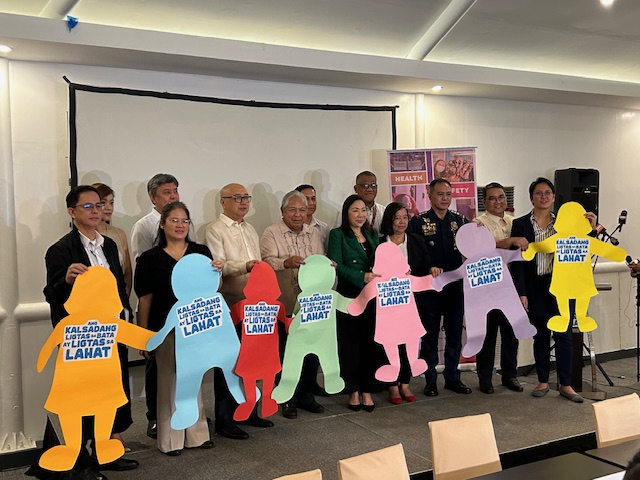 Representatives of the various agencies, offices and groups who signed the MOU for the National Coalition for Child Road Traffic Injury Prevention (NC-CRTIP).
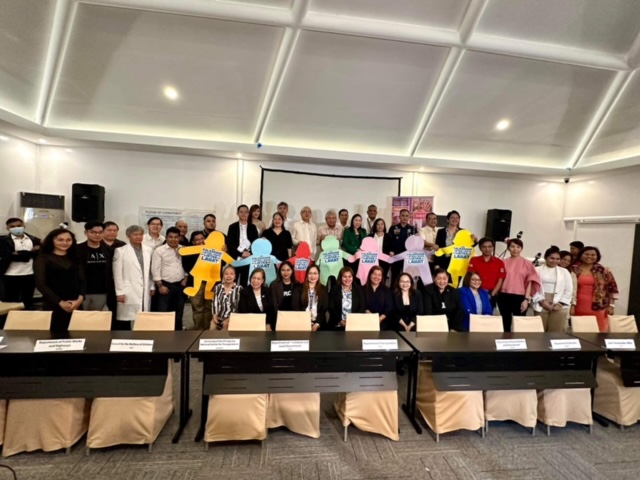 Participants to the MOU signing and Philippine launch of the WHO’s Global Status Report on Road Safety 2023
I learned there that the DOTr intends to reconstitute an inter agency committee on road safety. This is a throwback to the Road Safety Steering Committee and Technical Working Group during the time of then President Gloria Macapagal-Arroyo and then DOTC Secretary Leandro Mendoza that was co-chaired by the DOTC and DPWH. People were able to discuss road safety along various contexts and formulate programs and projects involving many if not most of the agencies and organizations at the time. These same agencies and organizations plus many others are still actively campaigning for safer roads or safer streets. Unfortunately, many are not talking with each other and there are those who seem to assume that there were no effort before to make transportation safer (sorry not sorry for pointing that out quite bluntly here). I am hopeful that this committee will be reconstituted this 2024 and that will lead to safer roads for everyone.
–
Speeding, road crashes and nuts behind the wheel
A recent road crash involving a car slamming into a truck along Marcos Highway in Antipolo City highlights one of the main concerns affecting road safety in the Philippines – speeding. Video from a CCTV camera installed at an establishment near the crash site showed a truck making a U-turn and doing it correctly (i.e., the maneuver) and safely. What followed was a car that was obviously speeding but seemingly not out of control. The car slammed the back of the truck in what was a fatal and tragic crash.
Are the roads to blame? While roads and bridges are static, design elements are the main culprits for why these facilities can be unsafe to users. Straight, level and wide sections of roads invite speeding among drivers and riders alike. The so-called ‘ideal’ sections of roads encourage drivers and riders to speed up, regardless of the speed limits. Thus, roads like Commonwealth Avenue in Quezon City and Marcos Highway in Antipolo, Cainta, Marikina and Pasig have many speeding vehicles. The design speeds for these roads are definitely above the speed limits. I still maintain though that it takes two to tango. That is, even with the above conditions, disciplined, experienced drivers and riders should not have been speeding or doing any other risky maneuver. That could have reduced the likelihood of such crashes. I think that’s pretty plain and common sense.
–
Want Less Traffic and More Parking? Start Charging for It!
Here’s a quick share of an article on parking:
Source: Want Less Traffic and More Parking? Start Charging for It!
From the article:
“like most urban issues, parking is not an isolated problem. If smart parking programs are implemented but road design and policies still encourage motor vehicle use, the efficiency of parking programs will be limited by the intrinsic political and physical nature of each location. Nevertheless, free parking is a nuisance and a massive cost to the public, especially lower-income individuals, causing congestion and ultimately reducing mobility. Research shows that charging for parking makes the most out of parking spaces in a given area, and makes the process of maintaining parking fairer by charging its users instead of everyone indiscriminately.”
–
On making intersections safe by ‘daylighting’
I came across this interesting article that introduced a somewhat new term to me – daylighting.
Abramson, B. (November 24, 2023) “How to Daylight Your City’s Intersections (and Why It Matters),” Strong Towns, https://www.strongtowns.org/journal/2023/11/24/how-to-daylight-your-citys-intersections-and-why-it-matters [Last accessed: 12/3/2023]
From the article:
“Daylighting is the technical term for a common-sense solution to traffic safety: By removing visual obstructions in approaching intersections, users can better see and more safely cross each other’s paths. “
There are certainly many intersections and even mid-block crossings in our cities and municipalities that could use ‘daylighting’ to improve safety. Many of these intersections and crossings are used by the most vulnerable road users like children, senior citizens and persons with disabilities. Interventions need not be expensive and may also involve the community. Examples are shown in the article, and these can easily be implemented formally or informally with the cooperation of stakeholders including the local government units and national agencies (i.e., DPWH) under whose jurisdiction many roads are.
–
On reimagining our streets
We start the last month of the year by sharing this article on complete streets:
Robertson, D. (November 15, 2023) “Safe streets are global—and it’s time for the U.S. to catch up,” Smart Growth America, https://smartgrowthamerica.org/safe-streets-are-global-and-its-time-for-the-u-s-to-catch-up/?eType=EmailBlastContent&eId=03b04320-4eeb-4bf5-9b12-71ec2a960421 [Last accessed: 12/1/2023]
To quote from the article:
“The examples mentioned here are exemplary cases, but demonstrate that the future of mobility need not follow the same dangerous status quo. They prove that with a combination of public and political will to the commitment of the prioritization of people over cars, we can produce the results we care all about.”
While the article is on complete streets, there is a very quotable section that referred to the situation in Japan:
“Anyone who wants to register a car in Japan today must prove that they have a private place to park it. This shifts the economic burden of providing parking from the public to drivers, and also ensures that supply of parking will not grossly outpace demand.”
There are many opportunities for the complete streets concept to be applied in the Philippines. A few have already been implemented but there should be more especially in light of the gains from the development of bike lanes networks in many LGUs that started during the COVID-19 pandemic. As for parking, perhaps the Japanese example should be adopted and implemented to curb car-dependence.
–
The wrong message for electric and hybrid vehicles
There are two billboards along Katipunan Avenue, each displayed to face either the northbound or southbound traffic along the busy thoroughfare. The ad by a major Japanese automaker is a sales pitch for one of its electric vehicle models. The ad states one of the incentives or come-ons for electric and hybrid vehicles granted by government (in this case the Metro Manila Development Authority) to encourage people to buy electric or hybrid vehicles; ideally to replace their fossil fuel-powered vehicles.
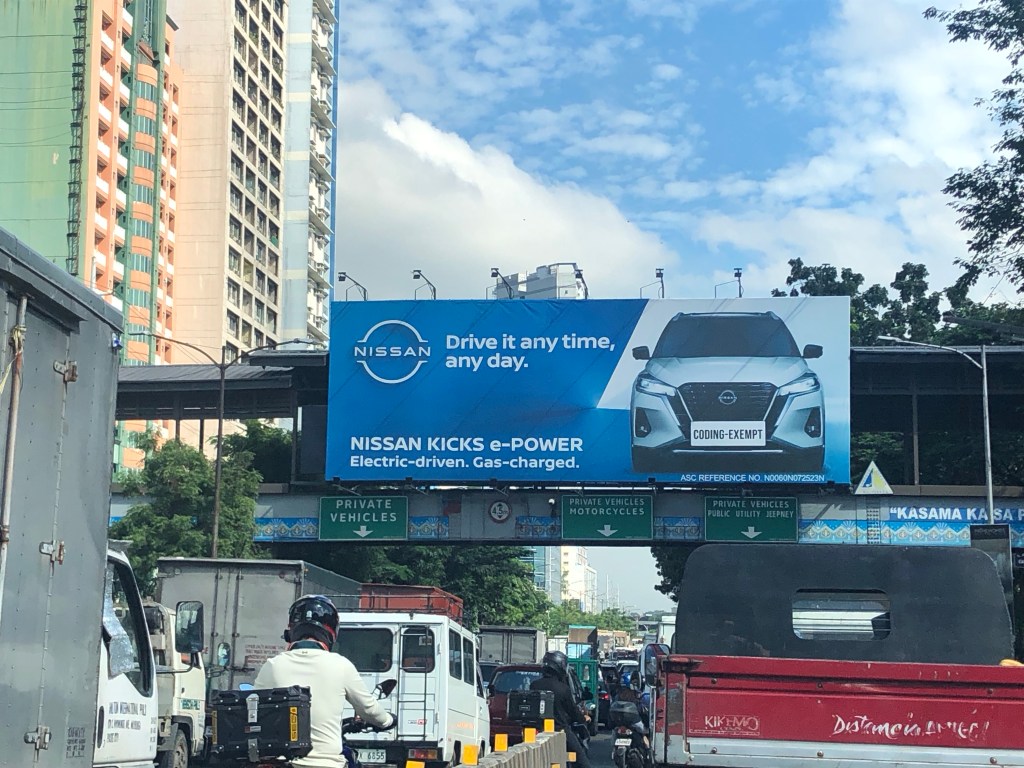 Electric and hybrid vehicles in Metro Manila are exempt from the MMDA’s number coding scheme. The ad is clear about that especially as a selling point for the vehicle featured.
At this point, more electric and hybrid vehicles would probably translate to more traffic congestion. They will just be replacing the conventional vehicles if not adding to them. The incentive will actually backfire vs. the MMDA since the number coding scheme will eventually be rendered ineffective (di pa ba?) with the addition of these coding-exempt vehicles.
–
Still on the Katipunan zipper lane
I’ve occasionally arrived at Katipunan with the experimental zipper lane still in use. I usually take Major Dizon from Marcos Highway in order to have a chance of using the zipper lane. That is, I take the left-most lane of C5 so I am in a good position in case the lane was available when I get to the Ateneo area. Perhaps it is already assumed that the right most lanes are already dedicated to vehicles bound for Ateneo or Miriam (mostly Ateneo I suppose).
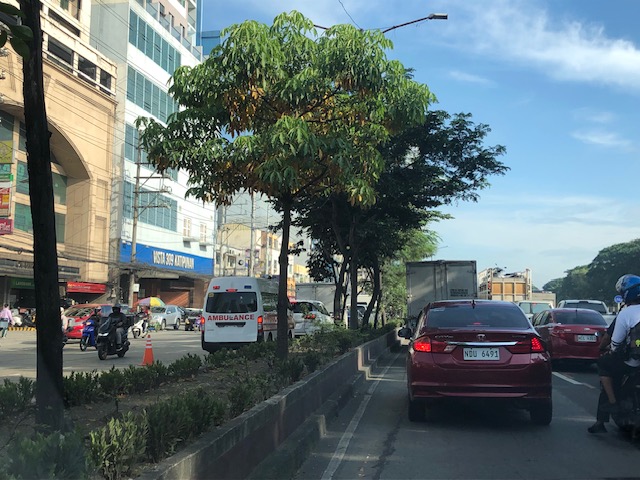
So far, I’ve been able to use the zipper lane only once. On the other times, I stay on the left-most lane (beside the island) of Katipunan/C5. The zipper is relatively short as vehicles return to the correct side of the road at Ateneo Gate 3. The merging there means slower movement of both the zipper lane and the median lane traffic. So is the zipper lane a success? I would say the experiment is just above “marginal success” (or pasang awa) given its limited application. It doesn’t hurt to implement the scheme as traffic along the southbound side of Katipunan is generally light anyway.
–
Opinion: The Arrogance of Social Media Urbanists
Here’s a quick share of an interesting article. It’s basically a reaction (I prefer not to call it a rant as the author refers to it.) and a fair one for those who are exasperated with the generalizations and criticisms often posted on social media that are thrown vs. planners. I would extend this observation about engineering as well. I suddenly remember discussing in one of my classes about how unreinforced concrete pavements are legit and not because a contractor or highway agency settled for inferior design or were corrupt that they decided not to use steel bars. It is very easy these days to post your opinion or criticism without understanding all the other (and probably essential) factors that come into play.
Source: Opinion: The Arrogance of Social Media Urbanists
Quoting from the article:
“What is the point of this rant, besides easing my frustration with my social media feed? It’s to hopefully educate those who think that changing close to a century of development patterns should happen overnight and that anyone who is not in lock-step agreement with the right way to develop is too ignorant to know better. No opinion has ever been changed by a snarky meme. Change happens through education, outreach, and time. Planners are not ‘afraid’ to build good things; they’re constrained by obsolete regulations and policies, deeply embedded political values, financial barriers, and the momentum of existing patterns of behavior. The goal should be to address those things and make it just as easy to build dense, mixed-use, walkable communities as it is currently to build single-use sprawl. If we get to that point, consumers will have equal access to the products they want, whether it be a single-family home on a cul-de-sac or a townhome with a coffee shop on the corner.
That is how we effect change. Arrogant and condescending posts on social media will not win converts to your cause, only harden their resistance.”
–

