
Home » Governance (Page 35)
Category Archives: Governance
Transport in times of rains and insensitive statements
How important is a good public transport system? Part of the definition of a good public transport system is that it should be an all-weather system. This means that even if there is inclement weather, the system would still be functioning and able to ferry people between their homes, workplaces, schools and other destinations. Of course, the exception here would be the times when there are extreme weather conditions like typhoons passing through cities. The rains today and past other days reminds us how difficult it is to commute even when you have your own vehicle. Those who opt to use their own cars now encounter severe traffic congestion with increasing frequencies while those with only public transport as their choice usually have difficulty getting a ride home.
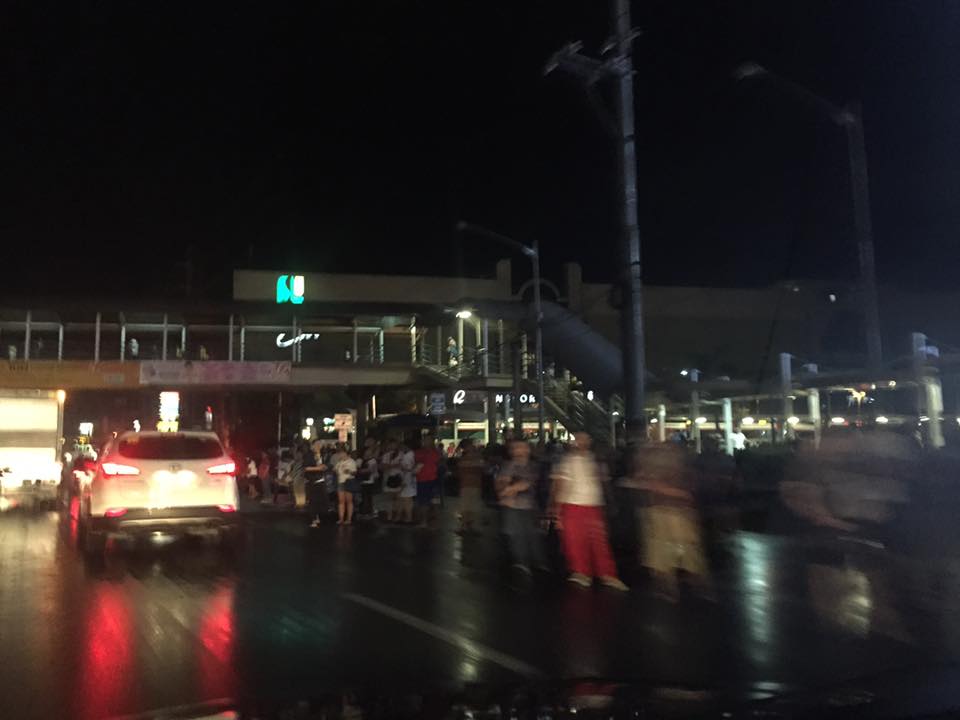 Commuters on the carriageway trying to get a ride home – many brave the strong rains to get ahead of others
It is not just unfortunate but rather depressing that Metro Manila and other major Philippine cities have no efficient public transport systems. The current modes of transport are road-based and dominated by paratransit including jeepneys, multicabs and tricycles. The state of disrepair of the PNR and MRT3, the much-delayed extensions of LRT1 and LRT2, and the much-delayed construction of MRT7 and BRT lines all contribute to the hellish commutes people experience everyday. Combine these with what experts regard as deficient station plaza designs that have led to inefficient transfers between the trains and road-based transport. It is no wonder that a person on bicycle can beat a commuter on a trip between Trinoma in Quezon City and a university in Manila considering the state of MRT3 and the poor transfer conditions between MRT3 and LRT1. This won’t likely be the case in Singapore or Tokyo where the proper hierarchies of transport are well established and with the necessary facilities to support their people-friendly systems.
What’s more depressing, frustrating and disappointing (if its possible to feel all three simultaneously) is how transport officials, including and especially the top official of the Department of Transportation and Communications (DOTC), apparently see our transport woes as “not fatal”. Is it really “not fatal”? Increases in the incidence of respiratory diseases due to the increased emissions are attributable to mobile sources (vehicles) and the long hours of road traffic congestion. The increase in the number of fatal road crashes as reported by the Metropolitan Manila Development Authority (MMDA) is also attributable to a significant increase in traffic volumes. One comment on social media was right on the dot on emergency cases ending up dying due to the ambulances being unable to make it to the hospitals in time for their passengers’ treatments.
And so, there were renewed calls for transport officials to get out of their chauffeured cars and take regular public transport between their homes and offices. The dares include riding the MRT3 during the peak periods and actually experiencing the queues and the crowded platforms and trains. It is no wonder that the image of the Dutch ambassador riding his bicycle to his office has been a popular share in social media because a lot of people feel that leaders should be examples themselves on how each one of us can pitch in to solve transport and traffic problems. Attempts by some government officials (including the top official of the transport department) to ride the MRT3, for example, are met with much criticism because they are given special treatment – they skip the lines and have bodyguards escorting them and clearing the way and space for them to ride comfortably. Clearly, this is not what the common commuter experiences everyday when he or she would have to use something short of MMA skills to get a ride.
Are we helpless against such insensitivity of our officials, many of whom are politicians and professionals associated with oligarchs? Not totally. And next year’s elections offer the commuting public a chance to express what they think about transport in this country and in their cities and municipalities by making transport and traffic urgent issues that need to be addressed and prioritized. Will you vote for candidates who had a hand in the continuing deterioration of transport in the Philippines and who consistently dismiss transport and traffic issues as secondary and just a by-product of non-inclusive economic growth? I surely won’t and will be very critical of candidates’ platforms and proposed programs should they win and become the leaders of this land. A big part of those programs should be how to address transport and traffic issues especially the deficiencies in infrastructure. Addressing these pressing issues on transport and traffic will go a long way in improving the quality of life of Filipinos and ensure a sustainable and inclusive growth for the country.
–
Good intentions and knee jerk reactions
Social media is again abuzz with stories about Uber and how Philippine government agencies like the Department of Transportation and Communications (DOTC) and the Land Transportation Franchising and Regulatory Board (LTFRB) are hassling Uber, Grab and similar companies into complying with government regulations covering their services. Is it really a hassle and are these “Transport Network Companies” or TNCs the real deal in terms of solving part of Metro Manila’s transport woes?
I believe Uber and other services like it have good intentions towards providing high quality, on-demand transport services. However, based on what I’ve read about the service in other countries (particularly in the US and Europe), the intention (original?) was to take advantage of surplus or excess capacity of vehicles being driven by “owner-drivers” between origins and destinations such as their homes and offices. That means an improvement of sorts for traffic as, instead of having one vehicle per person, two or more can share a single car. The main differences with conventional carpools is that the driver and his passengers practically do not know each other, and the passengers pay the driver a fee that is agreed upon at the start of the transaction. This works well in car-oriented cities as well as those with less than satisfactory public transport services especially when it comes to taxis.
The last sentence seems to be the right description for Metro Manila and other rapidly growing Philippine cities. And so, Uber, Grab Car and other shared service attracted many users who can afford them and providers willing to share their rides with total strangers. I stated “owner-drivers” in the previous paragraph as this was supposed to be an essential part of the set-up where Uber and others didn’t add to the cars already on the roads. Problem is, apparently and allegedly, some enterprising people who had the resources thought it would be a good idea to deploy all their vehicles (and even purchase additional ones) by hiring drivers they could register with Uber or Grab Car. That way, they thought they could bypass the typically bureaucratic process of getting a franchise for taxi or rental car franchises that also include all those business permits and, of course, taxes. The result of this would not be the utilization of excess capacity but the addition of more cars on the roads and therefore contribute to worsening congestion.
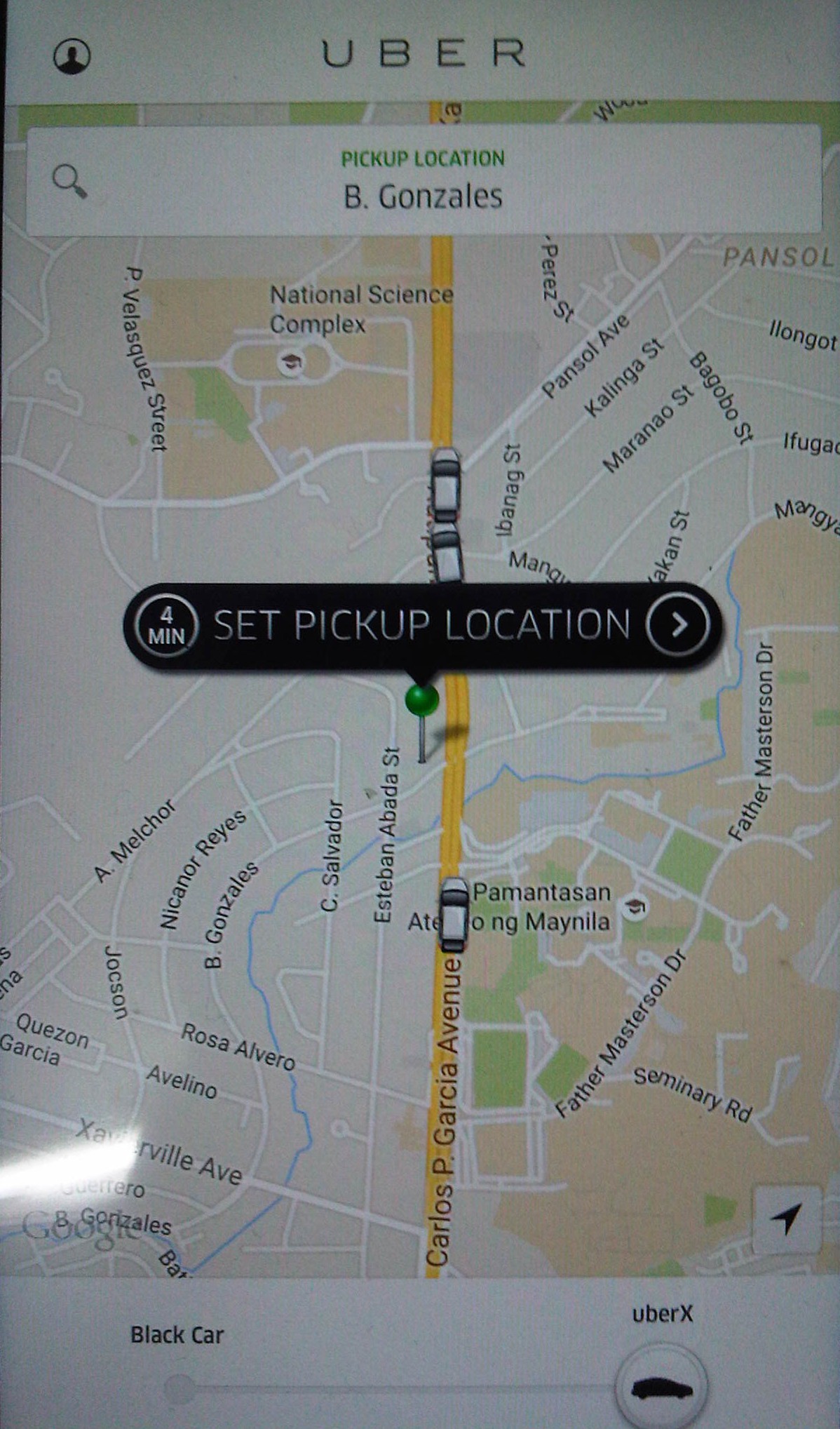
As far as the LTFRB is concerned, like it or not, they are just doing what they are mandated to do and are supposed to do with any transport service provider that is not purely private (i.e., services with a fee). It just so happens that the DOTC and LTFRB have been on the receiving end of a lot of flak from the public and especially in social media for what is perceived as the agencies’ ineptitude in dealing with major issues in public transportation. These include the continuing saga that is EDSA-MRT 3 and the perceived low quality services provided by buses and jeepneys in general that leave people at the mercy of taxis and UV express if they opt not or cannot afford to purchase their own vehicles.
The main issue is not whether DOTC and LTFRB should pay attention to Uber and others like it. The agencies should as per their mandates. However, there are a lot of other more serious and more urgent issues/problems including the much delayed mass transit projects and the low quality of service being provided by buses, jeepneys, UV express and conventional taxis that the DOTC and its attached agencies need to act on and now. I know it is a generalization (There are many good bus, jeepney, UV express and taxi drivers and operators out there who are also working their butts off to earn a living.) but then when you combine unsafe driving, with high fuel consumption and a lot of harmful emissions then you get a cocktail that’s definitely bad for all travelers.
How many people use Uber or Grab Car or taxis? Do they outnumber those taking the LRT/MRTs, buses, jeepneys and UV express? They don’t and therefore only represent a small percentage of the trips being taken everyday in Metro Manila and adjacent areas. And so the more pressing issues are really those pertaining to mass transit and the dire need to construct these systems once and for all in order to achieve a more sustainable and inclusive transport system for this still growing megalopolis.
–
Some thoughts on the EDSA MRT 3 problem
A lot of people reacted when the current Philippine President practically absolved the Department of Transportation and Communications (DOTC) from any fault regarding the issues on the EDSA MRT Line 3 during his recent State of the Nation Address (SONA). The main message in some articles appearing on mainstream and social media is that the President should blame DOTC for the mess. I have the opinion that both DOTC and the private entities involved (MRT Corporation, MRT Holdings) are responsible for the problem and its being continuously unresolved.
A week ago, I got the following question in my email:
Who is it that we could blame for the current state of the rail system? What do you suggest that the government or the private partner do in order for them to improve the line?
Quite frankly, I thought the first question was too direct and blunt as to ask who we can blame for the MRT3 mess. It is also very awkward to answer the second question because it assumes that I am an expert on the legal issues on this matter. I am NOT a legal expert nor would I want to pretend to be one. Here was my reply:
That’s actually a very tricky question. We can’t really blame a specific person or persons but perhaps entire organizations that are supposed to be responsible for the mess that is MRT3. The main or root issue seems to be legal and not at all technical. The technical problems experienced are manifestations of a contract that is a textbook case for how NOT to do a PPP. I am not privy to the details of the discussions between the government and the people involved and behind MRTC so it is awkward to make comments specific to this matter of the contract and all its complexities. Perhaps the DOTC wants to follow “Daang Matuwid” by not budging to the terms laid out by MRTC? Perhaps MRTC is aware of the stakes (plight of the riding public) and is using this to force DOTC into a deal that is not favorable to government? We can only speculate on this without firsthand knowledge of their discussions.
However, from the perspective of transport as a service and as a public good, I would say that MRTC indeed is aware of the public’s clamor for improvement. This is all over the news and social media in the form of commentaries, images and even videos of the undesirable experiences of those taking the MRT3. In the end, DOTC must decide whether it is all worth it to maintain the stalemate with MRTC considering that the public interest is at stake here and things will just become worse with inaction. Perhaps the government should move towards the best compromise they can live with considering the urgency of addressing the problem at hand.
I would like to think that my reply was quite cautious. There have been many allegations and claims from both sides of the table regarding how to resolve the impasse and the conflicts that seem to be interwoven with the contract on the MRT3. Perhaps such cases test the limits of “Daang Matuwid”? Much was and is expected from DOTC considering its battery of lawyers including top officials of the department. Aren’t they supposed to have been involved in discussions and negotiations aside from strategic planning for our transportation in this country? I guess the general public especially those who take the MRT3 for their commutes already know who to blame for their plight…
–
State of the nation’s transport – 2015
The National Center for Transportation Studies (NCTS) of the University of the Philippines Diliman received a few letters from media the past week or so asking for resource persons on transport for today’s State of the Nation Address (SONA) by the Philippines President. It is something like a routine for media to come up with commentaries or reports assessing the performance of the government. This year is a bit special because today’s is the final SONA to be delivered by the current administration. The presidential elections will be in May next year and the next SONA will be delivered by whoever wins in that election. There is already a long list of aspirants, declared or expressing interest, for the top government post in the country, and this includes many who are perceived to be critical if not hostile to the current administration.
I was invited to give an assessment by a major media network back in 2010 and I remember giving that previous administration a grade (using the UP grading system) of 2.0. I explained that I could not give a very high grade because a lot of transport infrastructure remained unimplemented. These included airports, ports, highways and bridges, and, most notably, mass transit systems. I had knowledge though that many of the infrastructure projects were at the end of the project development or already have their feasibility studies and were ready for implementation by the succeeding administration. These were the so-called “low hanging fruits” that were “ripe for the picking” the following years. Sadly, many of the notable low-hanging fruits remain unimplemented. These include the LRT 2 Extension to Masinag in Antipolo City, the expansion of Clark Airport, the rehabilitation of the PNR, and the BRT in Cebu City.
 Traffic congestion along Commonwealth Avenue – whatever happened to the proposed MRT 7? [Photo courtesy of Rodel Velasco]
I recall a short exchange in social media with a government official whose favourite tagline was something like “We can do it!” He is fond of applying the tagline to a lot of things but especially with certain advocacies and politicians that he wanted to promote. When I asked him about transport and traffic at a CBD his office was involved in developing, the tagline immediately vanished in mention. He was quick to express what seemed to be his resignation that transport and traffic could not be improved in that rapidly developing CBD. This may be partly because they could not influence certain government agencies to expedite the implementation of urgent transport projects that would benefit the CBD. Clearly, to me, the tagline had a limit in terms of its applicability.
It seems the more appropriate tagline should be “Just do it!” as the Nike commercial goes and as adopted by a great senator who recently passed away (one who could have been a good president). It took the current administration a long time to evaluate projects and much of the delay appears to be related to the government’s fascination for PPP (Public Private Partnerships) to the point that their mention of projects being planned for implementation became another type of PPP – PowerPoint Presentation. It has been a frustrating last 5 years for transport infrastructure development especially public transportation and it is partly due t the insistence of the government to almost exclusively depend on the private sector for mass transport infrastructure. One opinion by a colleague that I also share in is for government to put its money (actually the people’s money) where its mouth is (in a manner of speaking) and invest in the construction of mass transit systems for major cities and then look to the private sector to operate/manage these systems. The government doesn’t have a good track record for managing transit systems (e.g., Metro Manila Transit Corporation, Pasig River Ferry Ferry, LRT Lines 1 and 2, etc.) but it has shown that it can build these (again LRT 1 and 2) and others (SCTEX, Iloilo and Bacolod Airports, etc.) if it wanted to. Perhaps we should again reflect on the real state of the nation’s transport come 2016 but do this very quickly so that we could finally alleviate the daily suffering experienced by most commuters.
Another example of mismatched plates
My most recent post was on the inappropriateness of the new license plates issued by the LTO to public utility vehicles. New taxis, UV express and jeepneys suddenly had the back and white license that’s supposed to be issued only to private vehicles. This meant that it would be difficult to distinguish the legitimate PUVs from colorum or illegally operating ones. In the last post, I was able to show an example each for these license plates on a taxi and a UV Express van. Yesterday, I was able to get a photo of a jeepney bearing this “anomalous” plate as I was caught in an unexpected traffic jam along an otherwise free-flowing road in Rizal.
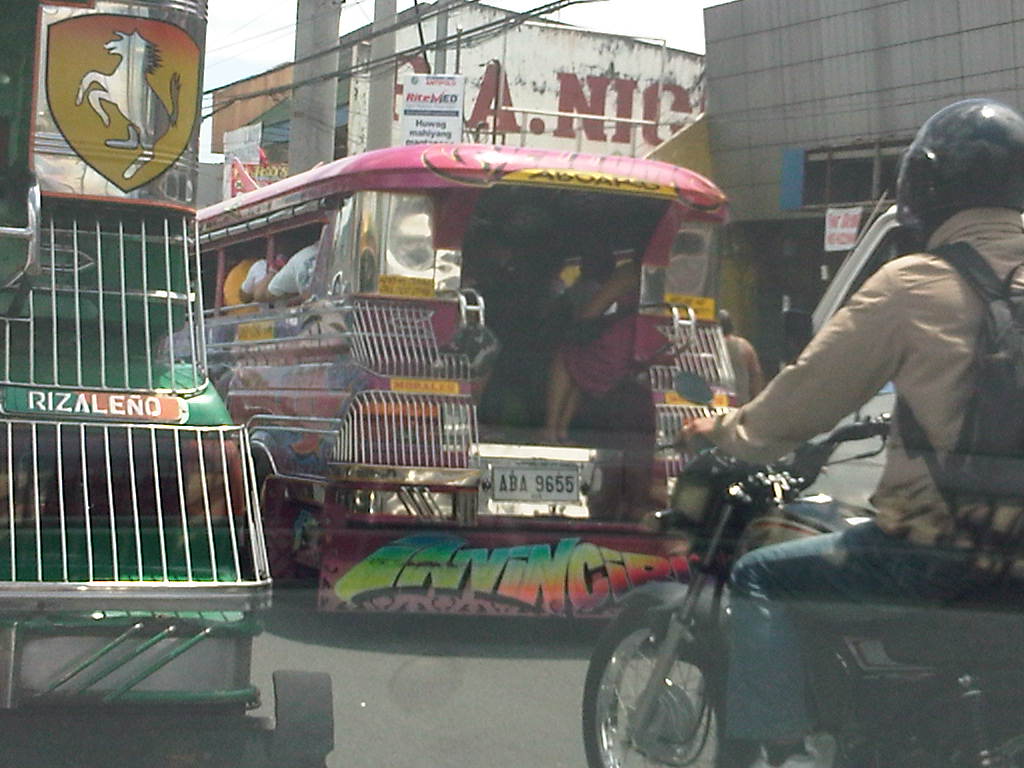 Jeepney bearing the black and white license plate issued to private vehicles
–
On the uncommon sense on license plates
The issuance of new license plates has been a very “painful” process and experience to a lot of people and it is not without serious issues. For one, there is still a backlog in license plates as evident from Strictly speaking, these vehicles shouldn’t be operating or not allowed to be driven even considering they are technically registered with the Land Transportation Office (LTO). The proliferation of vehicles without license plates allows for the abuse of such by owners of relatively new vehicles who can remove their plates in order to be able to take their cars on their coding days. It is also possible to be involved in a road crash or incident where the driver of a vehicle without a license plate can make an escape (the details on the conduction sticker are not easy to spot and memorize) or evade apprehension.
Among the most problematic is the issuance of plates of the same design as that used by private vehicles to public utility vehicles like UV Express and taxis. This creates a lot of opportunities for abuse especially private vehicles masquerading as PUVs. These are without the proper franchises and are illegal (i.e., colorum). What the LTO claims as security features on the plate are meaningless as the uniform color of the plates defy the simple logic behind the old policy of having a specific color to quickly distinguish among vehicles bearing different color plates. This makes it easier for traffic officers including the Philippine National Police (PNP) to spot vehicles with mismatched or inappropriate license plates.
 Taxi cab bearing plate with the same design as that used by private vehicles.
 UV Express van bearing license plate for private vehicles
The purpose of having plates with different colors is for quick identification and distinction of vehicles. A plate with yellow background has always been associated with public utility vehicles. Those with blue lettering or background are those for diplomatic plates. Those with red lettering or background are for government plates. Fortunately, the LTO has reverted to the original policy pertaining to the license plate colors and new plates to be issued to PUVs will once again be a distinctive yellow. Perhaps corrections are due for those legitimate PUVs that were issued inappropriate design (i.e., color) plates.
–
End game: flyover frenzy
The Manila Bulletin featured news on the Japanese government extending a loan to the Philippines for road projects in Metro Manila that include the construction of several major interchanges. An excerpt from the article is as follows:
The Japanese government will be providing some P4 billion to the Philippines for road projects aimed at decongesting monstrous traffic jams in Metro Manila.
Noriaki Niwa, chief representative of the Japan International Cooperation Agency (JICA), said the loan will cover major interchanges to address traffic congestion in Metro Manila, including flyovers, and road links.
Among them are the interchanges on EDSA/Roosevelt/Congressional, EDSA/West/North, and C-5/Green Meadows and North/Mindanao Avenue.
“This is to help Metro Manila sustain growth and develop it as an attractive investment destination,” said Niwa.
While these interchanges have been recommended many years ago and are also reiterated in the recent transport roadmap for Mega Manila, one cannot help but make the observation that these projects will not alleviate congestion over the long term. Instead, it will likely encourage more vehicle traffic (with the availability of more road space – part of a vicious cycle).
Other major projects that are ongoing in Metro Manila include the NAIA Expressway, which is an elevated tollway connecting to the Skyway. A friend commented that this is basically a glorified flyover project as I will explain later in this post.
 NAIA Expressway construction in full swing – a column rises near NAIA Terminal 3
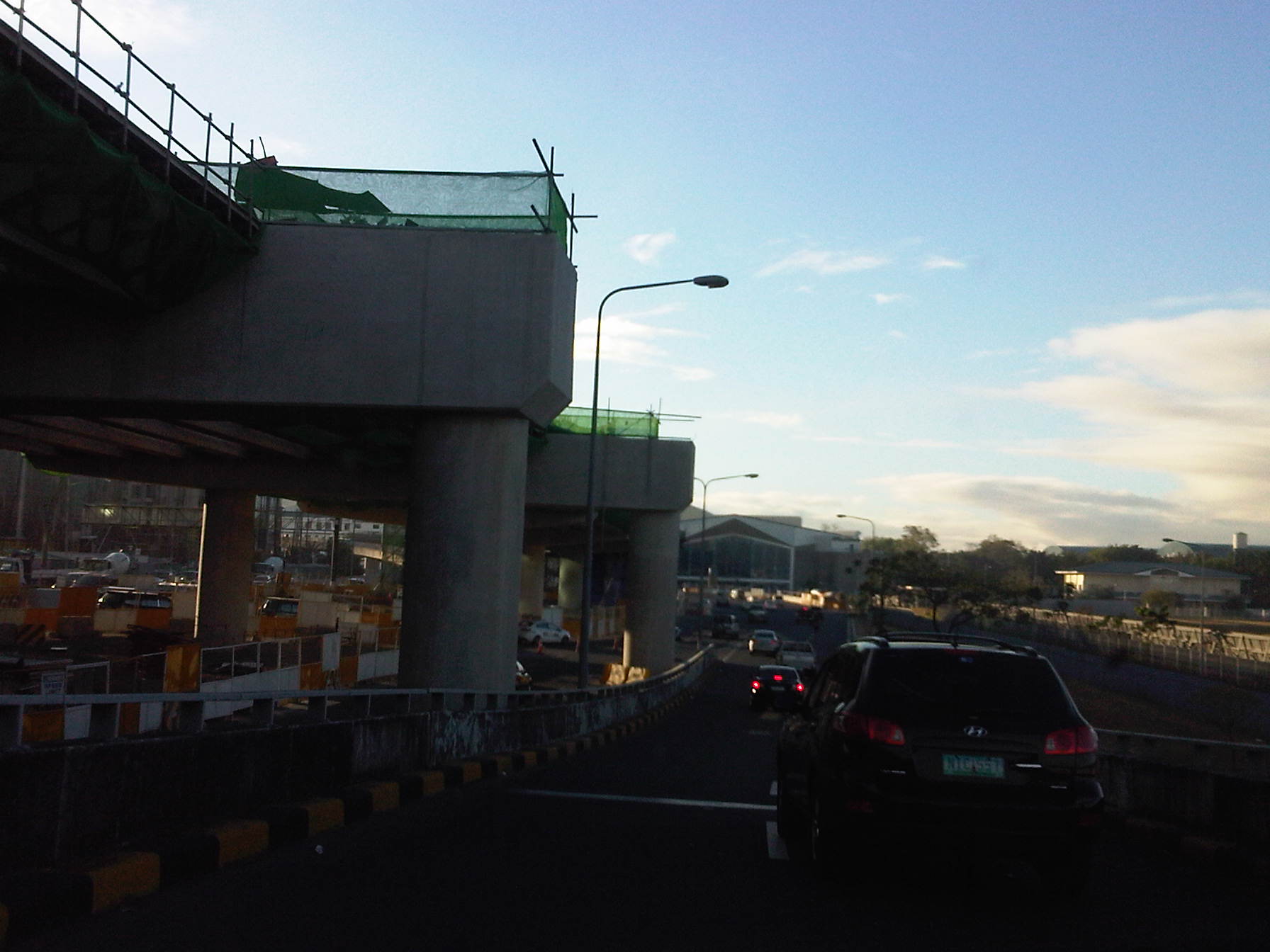 NAIA Expressway elevated sections nearing completion across from Terminal 3
The term of the current administration concludes next year (2016) and so we are almost in the endgame, to borrow a term from chess. What seems to be a frantic move for the government to build all these flyovers (and elevated tollways) can be interpreted as a way to compensate for the underspending and underachieving ways of the government in putting up the necessary infrastructure to address transport and traffic problems in urban areas. Unfortunately, all the funding (public and private) seems to be going to road projects instead of to mass public transport systems like rail and BRT that should be the priority because these could provide the positive impacts over a longer term than what road projects could deliver in terms of mobility and sustainability.
A friend reminded me of a similar situation back in 1991/92 when government embarked on a slew of flyover projects in an effort to leave a legacy in transport. That administration’s excuse for failing to deliver any mass transit project was that it was transitioning from a dictatorship. However, it also failed to deliver on power projects, which led to the energy crisis that had to be solved quickly (but with costly PPP power plant projects). There is a looming energy crisis now but more worrying is a transport crisis as we continue to procrastinate about public transport infrastructure. Should we be hopeful of transport with the next administration? That is still a big question as of now.
–
“Gatong” comments by traffic enforcers
Friends who have been involved in a road crash have noted that traffic enforcers seem to have the propensity for making unnecessary remarks while attending to a crash scene. I have experienced this first hand. Some of the more common comments that enforcers make include:
– How crash or accident-prone an area is (citing issues in the area);
– How certain motorists are more likely to be involved in crashes (often referring to one of the parties involved); and
– How one party’s behavior leads or led to a crash (essentially blaming one party for the incident).
[You’re free to add a comment you heard yourself or someone else got from a crash scene.]
Traffic enforcers or police should not make such comments at the scene of a crash especially in front of the parties involved. It is not about whether they have the right to do so but whether it is appropriate coming from a person of authority who should first and foremost be neutral in such circumstances. For one, such unnecessary comments could affect how people involved in a crash could behave. Generalized statements could wrongly favor one party over the other simply because a person of authority made a comment to the contrary of how things really happened. Enforcers should be neutral and go about their business in getting the facts about an incident and proceed in making the formal report for the crash. Even the investigator assigned to the scene should be as objective as possible in order to have a fair assessment of the incident.
–
Legit or kabit? Follow-up
I wrote about the “kabit” system last February. I mentioned that the EMBC bus I saw was actually operated by another company (RRCG) that seems to have also engaged another company (Jasper Jean) to provide bus units operating the EMBC routes. Unfortunately, I was not able to get a photo showing information on the original operator of this bus company and its lines to Rizal and Laguna via the eastern route through Antipolo. I was finally able to get a photo of an EMBC bus bearing information on the original operator/company for comparison with the information on the bus in the previous post. It clearly states here that EMBC is the operator of this bus.
 Information printed on the bus as required by law
–
The Philippines Anti-Drunk Driving Law
It’s a Friday and another weekend is here. It’s also payday weekend and so it’s expected that restaurants, cafes and bars will be full tonight and the weekends with people dining, lunching, having coffee, and likely for many – drinking. For many years, the latter has resulted in too many road crashes, a significant number of which have had fatal outcomes – usually cars or motorcycles crashing into one another or by themselves. It’s even more dangerous (and highly likely to be fatal) for motorcycle riders who need to balance themselves on two wheels after getting inebriated. Meanwhile, a lot of driving under the influence (DUI) that in many other countries including the US and Japan don’t get apprehended primarily due to the absence of laws and guidelines for their capture and evaluation. There was no way to test their blood alcohol content (BAC) in the field and traffic personnel couldn’t force people to go to hospitals to be tested.
There’s good new, however, especially for road safety advocates. The Philippines is finally implementing Republic Act No. 10586 – An Act Penalizing Persons Driving Under the Influence of Alcohol, Dangerous Drugs, and Similar Substances, and for other Purposes, which was signed into law in May 27, 2013. Under the law, private vehicle drivers can be arrested and penalized for BAC of more than 0.05% while truck and public transport drivers and motorcycle riders can be apprehended for a BAC of more than 0.0%. For comparison, Japan requires a BAC of 0.0% for ALL motorists.
The Implementing Rules and Regulations for the law may be found here: PH Anti Drunk Driving Law2013 Rules. The Land Transportation Office (LTO) and the Metro Manila Development Authority (MMDA) have already acquired equipment to help them evaluate apprehended persons. These include breath analyzers and staffs of both agencies have already undergone training to be able to implement the law. Unfortunately, traffic enforcers cannot randomly test people on the road but would have to apprehend them first for violating other traffic rules and regulations. But I am sure our traffic law enforcers can be quite creative in how to catch these people who pose dangers to all other road users by their being irresponsible for driving or riding under the influence of alcohol or dangerous drugs. And with the national elections coming up next year, there will be a lot of checkpoints sprouting up along major roads that will also open opportunities for testing and apprehensions.
–
 Caught (up) in traffic