
Home » Infrastructure (Page 5)
Category Archives: Infrastructure
Lagusnilad now
The underpass across from the Manila City Hall is called Lagusnilad. The underpass is prone to flooding and had been neglected for a long time under several administrations spanning several Presidents, DPWH Secretaries and Manila Mayors. Kudos to the recent Mayor and DPWH officials who finally addressed the flooding problem as well as improved the pavement and lighting for Lagusnilad.
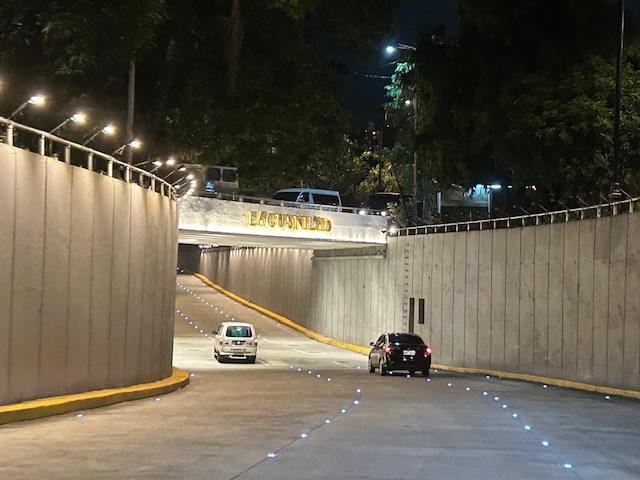 Approach to the lowest point of the underpass from Padre Burgos Avenue, one notes the now well-lit underpass and the solar studs marking the lanes.
 The lowest section of the underpass is prone to flooding but major rehab works to the drainage plus new pumps appear to have addressed the problem.
 Emerging from the underpass towards Taft Avenue
I have memories of when this underpass was often flooded back in the 1990s including a time when vehicles braved the waters and got stuck after drivers discovered just how deep the waters can be. The joke then was that the underpass would be renamed ‘Langoynilad’, alluding to people and vehicles having to swim to traverse this section.
There is also a pedestrian underpass that is called Lagusnilad. This connects City Hall with Intramuros and used to be so dirty and stinky. Again, credit is due to recent officials who rehabilitated the underpass to what is now a tourist attraction but more importantly a good practice example for pedestrian facilities.
–
Quezon City’s bike lane barriers
Here’s a first look at Quezon City’s new bike lane barriers along Katipunan Avenue (C-5). I took these photos while crawling towards Ateneo Gate 3 on my way to the office.


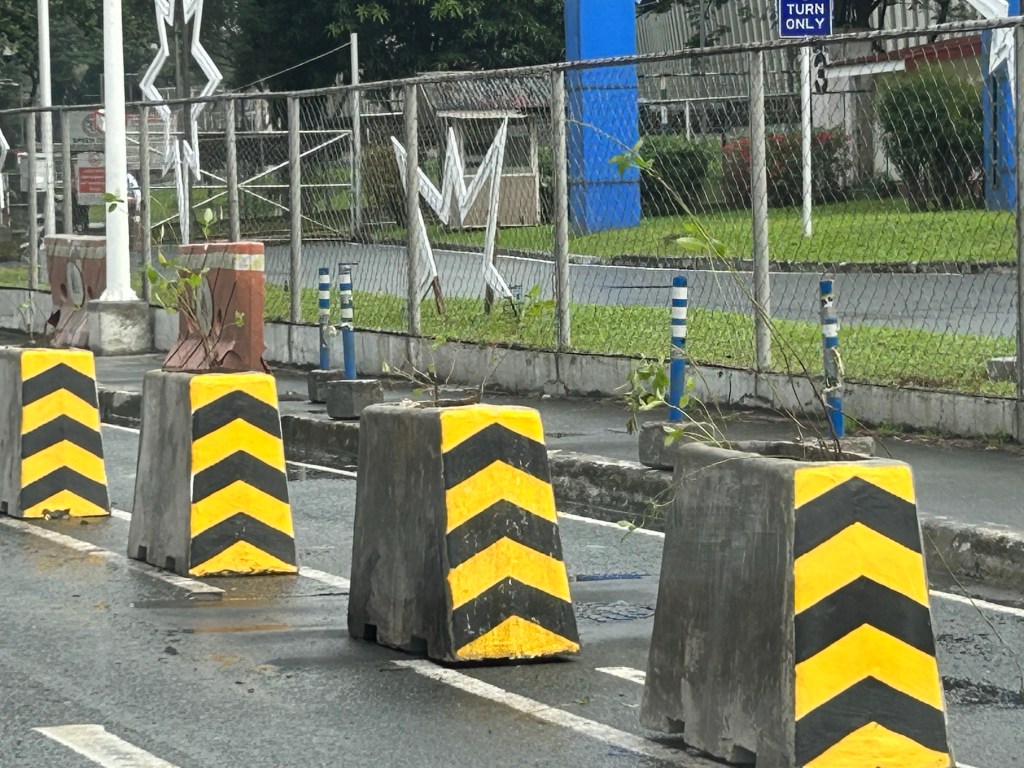

The same or similar barriers/planters have been installed along other major roads including Commonwealth Avenue. This is part of Quezon City’s commitment to building a bikeway/bike lane network and a worthy investment to encourage more people to take up cycling especially for work and school trips. The barriers serve to protect cyclists from motor vehicles thereby enhancing safety along these roads. Hopefully, other LGUs will follow suit and invest in active transport facilities.
–
Article share: Drought and the Panama Canal
Here’s a quick share of an article on how a drought is affecting operations of the Panama Canal:
Eavis, P. (November 1, 2023) “Drought Saps the Panama Canal, Disrupting Global Trade,” Wired, https://www.nytimes.com/2023/11/01/business/economy/panama-canal-drought-shipping.html?unlocked_article_code=1.7kw.9CNJ.NKhQS8RCMh9h&smid=url-share [Last accessed: 11/3/2023]
From the article:
“But a drought has left the canal without enough water, which is used to raise and lower ships, forcing officials to slash the number of vessels they allow through. That has created expensive headaches for shipping companies and raised difficult questions about water use in Panama. The passage of one ship is estimated to consume as much water as half a million Panamanians use in one day…
Without a new water source, the canal could lose significant amounts of business. Other ocean routes are, of course, longer and more expensive, but they are less likely to have unpredictable delays. One alternative is to transport goods between Asia and United States through the Suez Canal to the East Coast and Gulf Coast. Another is to ship goods from Asia to the West Coast ports — and then transport them overland by train or truck…”
I suddenly remembered the current work along the Marikina River. The government is supposed to be working towards making the river navigable for the Pasig River Ferry to extend operations there. However, the depth of the river prevents regular, reliable operations. I wonder if the current project that includes flood control, riverside roads and erosion control components also will lead to a navigable depth for the river for most if not the whole year.
–
Article share: On the benefits of sidewalk networks
Here is another quick share of an article by Todd Litman on Planetizen. The article contains a lot of information or data about why we should be investing in sidewalks or pedestrian facilities (i.e., for walking).
Litman, T. (August 6, 2023) “Completing Sidewalk Networks: Benefits and Costs,” Planetizen, https://www.planetizen.com/blogs/124999-completing-sidewalk-networks-benefits-and-costs?utm_source=newswire&utm_medium=email&utm_campaign=news-08142023&mc_cid=cd3b2e2ba5&mc_eid=9ccfe464b1 [Last accessed: 9/23/2023]
To quote from the article:
“Walking is the most basic and universal travel mode, and sidewalks are the most basic walking infrastructure, but they are often overlooked and undervalued in transportation planning. Completing and improving sidewalk networks can help achieve many economic, social and environmental goals.
Recent case studies indicate that typical North American communities spend $30 to $60 annually per capita on sidewalks, and would need to double or triple these spending levels to complete their networks. This is a large increase compared with current pedestrian spending but small compared with what governments and businesses spend on roads and parking facilities, and what motorists spend on their vehicles. Sidewalk funding increases are justified to satisfy ethical and legal requirements, and to achieve various economic, social and environmental goals. There are several possible ways to finance sidewalk improvements. These usually repay their costs thorough savings and benefits.”
–
Another look at the Mactan Cebu International Airport Terminal 1 – Part 3
This is the conclusion to the series on MCIA Terminal 1. Here I am sharing more photos of the shops and also include photos of what used to be the old terminal 1 boarding gates areas that have now been completely renovated.
 Electronics shop at the MCIA Terminal 1
 There’s a sports bar at Terminal 1
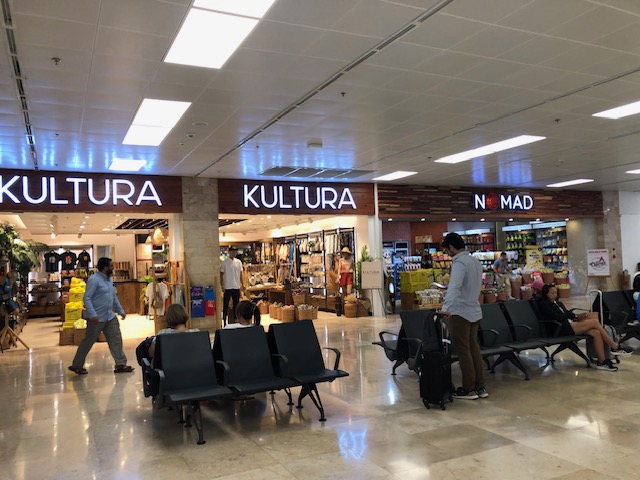 There’s a Kultura shop at the Terminal 1. Kultura is SM’s
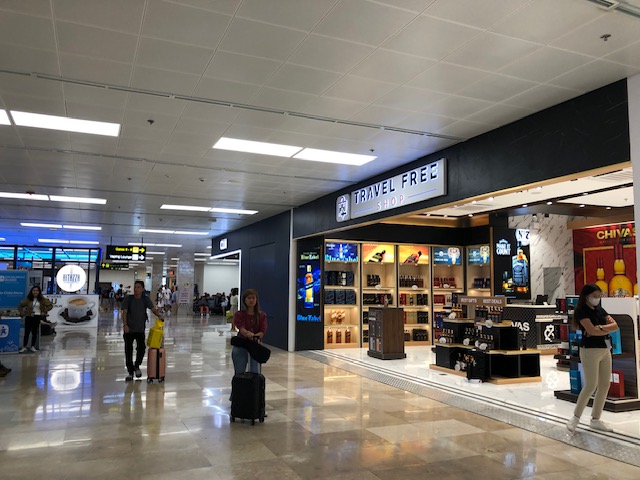 Liquors and wines store at the terminal – I was not able to inquire if these can be duty free considering the people including foreign tourists who may avail of this.
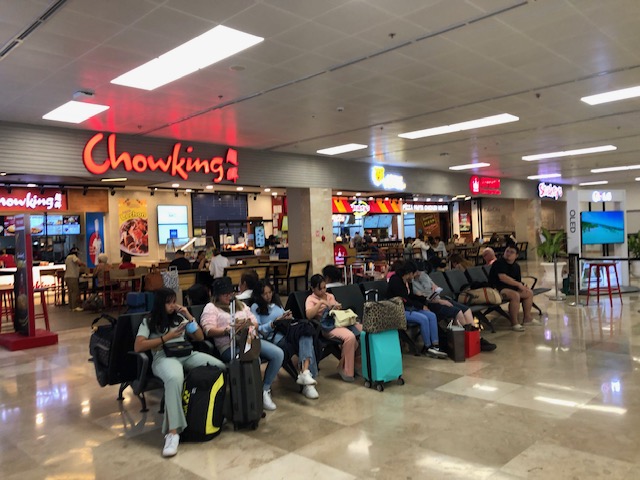 Passengers seated along a row of restaurants at the old Terminal 1 domestic wing. This area used to be crowded with so many chairs that they tried to fit in the area.
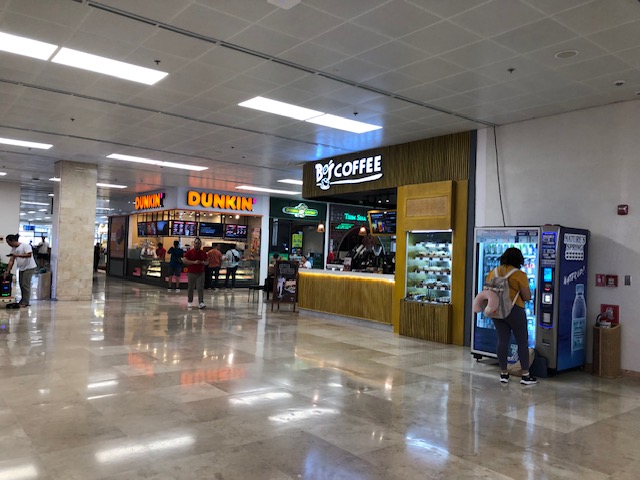 Familiar brands Dunkin’ Donuts and Bo’s Coffee are there. There are also vending machines for drinks for the more straightforward purchases.
 The pre-departure area of the old T1 domestic wing now appears more spacious.
 Corridor to the old T1 domestic wing now full of shops
More on airports soon!
–
Another look at the refurbished Mactan International Airport Terminal 1 – Part 2
In this part of the series, I am sharing photos of the various shops and eating options at the MCIA Terminal 1.
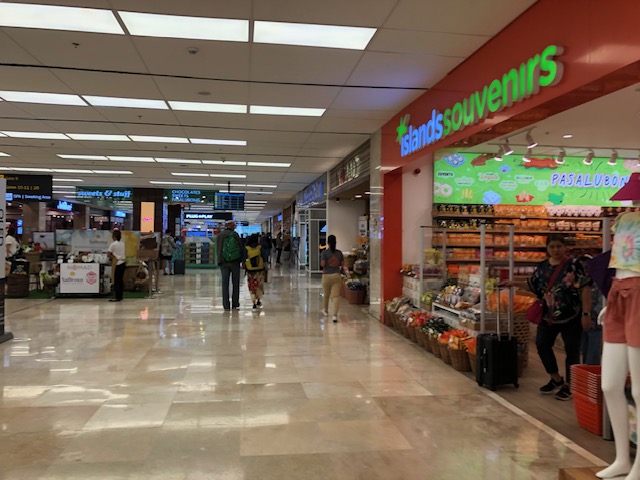 A familiar store at airports is Islands Souvenirs. I think I have an Island Souvenir shirt for most of the cities I’ve traveled to in the country. It is a go-to store for souvenir items, especially shirts.
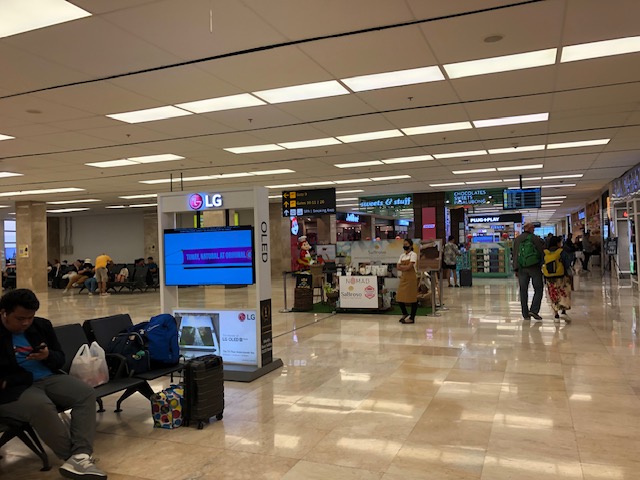 There are many kiosks along the corridors leading to the gates. Some sell souvenir items. Others gadgets and accessories. There are even a couple marketing real estate in Cebu.
 A look inside the Islands Souvenirs shop shows many items to choose from including shirts, bags, caps, mugs and magnets.
 I think this store was what used to be a Cocoa Tree store at the terminal. It still sells pretty much the same products (mainly chocolates).
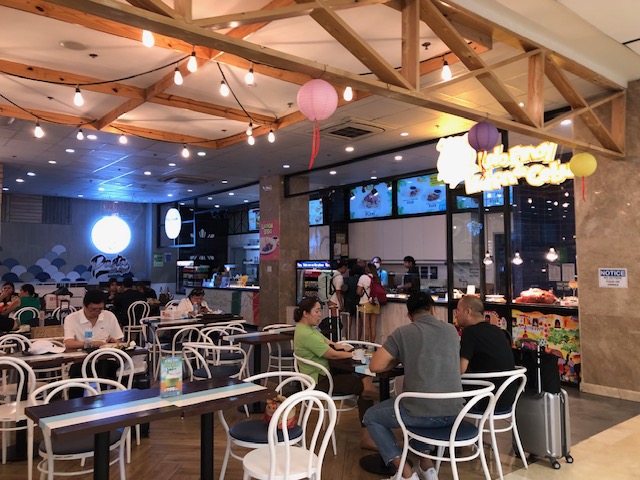 There is a nice food court at Terminal 1. You have many choices for eating or drinking. And I noticed the prices are also not as expensive as perceived of Philippine airport food and drinks.
 The food court is spacious and people can just stay here for refreshments while waiting for their flights to board.
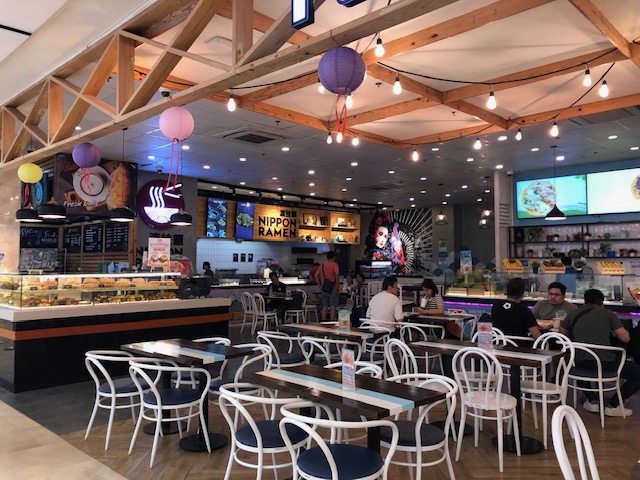 Aside from Filipino food, there’s Italian and Japanese themed stalls at the food court.
 I think my favorite there is The Bakery, which offers sandwiches, pastries and various breads. They also have pasta for those wanting a heavier meal before their flights.
 There’s a WHSmith store at Terminal 1. The photo also shows massage chairs and a local souvenir shop, District Fiesta.
 District Fiesta offers local products including handicrafts like bags, purses, decors, etc.
More in Part 3, coming soon!
–
Another look at the refurbished Mactan Cebu International Airport Terminal 1 – Part 1
We were recently in Cebu City and I just had to take some new photos; this time to feature Terminal 1 of Mactan Cebu International Airport. Here are some photos taken at the departure area.
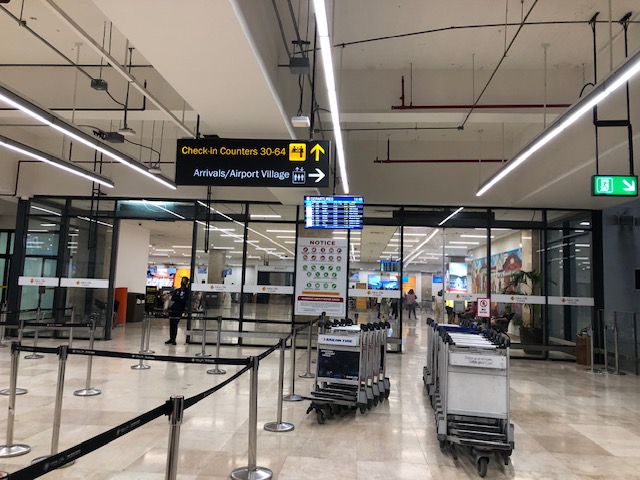 Entrance towards the check-in counters. There is no security machine here and but there is a routine check of travel documents of passengers. There are weighing scales for luggage so passengers can check if they are over their limits and still have an opportunity (and the space) to reconfigure.
 PAL’s check-in counters at MCIA Terminal 1
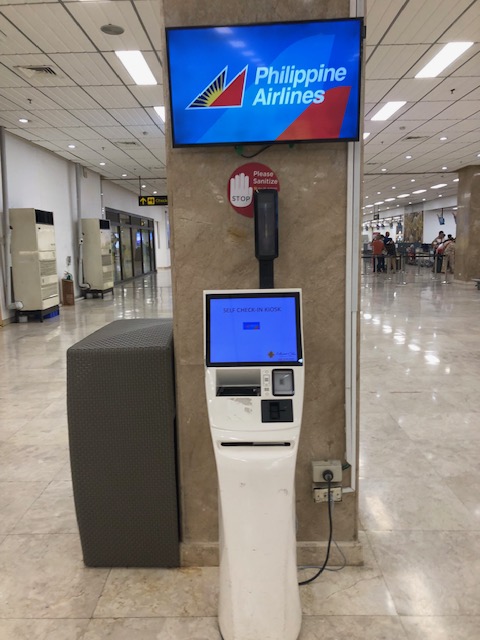 PAL also now has online check-in machines at the airport. Previously, only Cebu Pacific had these machines. There is only one though unlike Ceb Pac’s multiple machines.
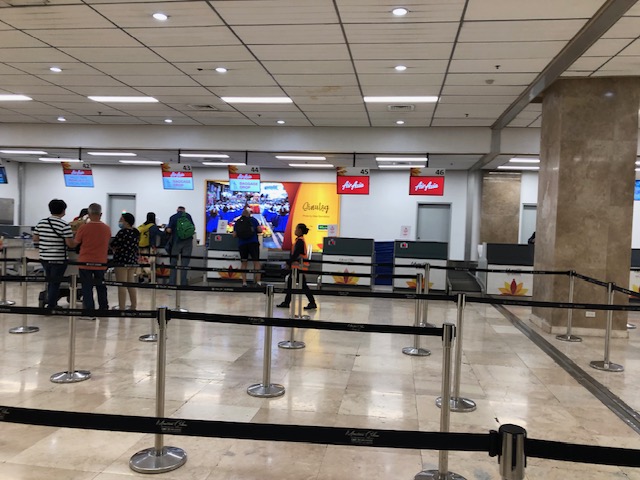 Check-in counters for Air Asia Philippines
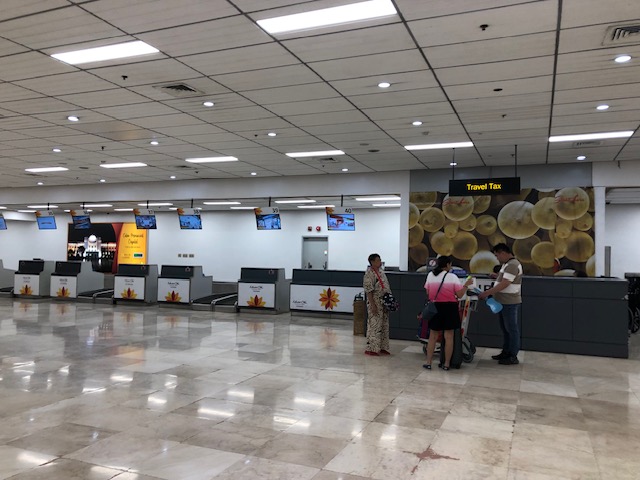 Travel tax counter at the terminal
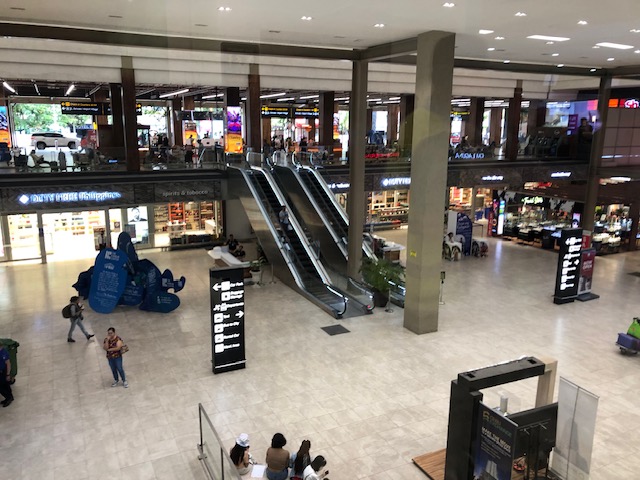 A view of the terminal lobby from the corridor leading to our gate at the other end of Terminal 1.
 Final security check before the pre-departure areas. MCIA now uses modern scanners for screening both bags and passengers. Shoes and belts are among the items they require you to remove from yourself. They also ask you to remove notebook computers to place them on your tray that goes through the machines. You may not remove your watch from your wrist.
More photos in Part 2 coming soon!
–
Back at Laguindingan Airport – departure
This is a very late post as I traveled to Cagayan de Oro months ago. I’m posting it here for reference.
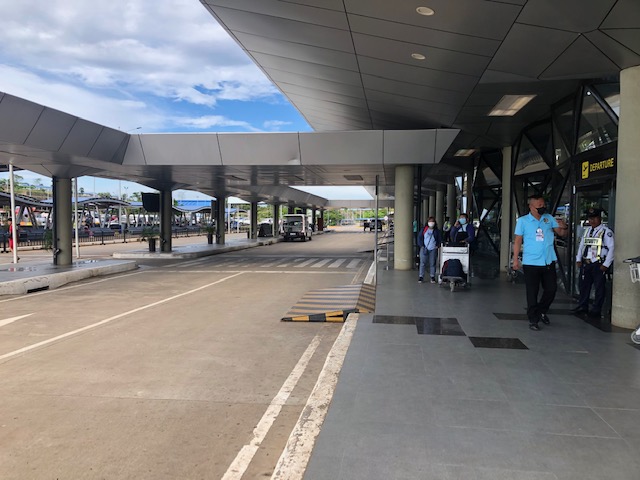 The main driveway at the terminal is reserved for VIPs’. I thought this practice in many airports in the country though claimed to be security-related is a waste of space and gives the impression that passengers are not the priority in these terminals.
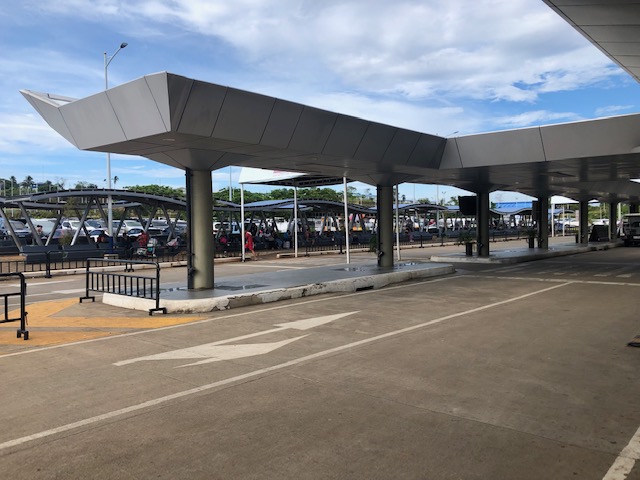 Another look at the airport’s spacious but underutilized driveways.
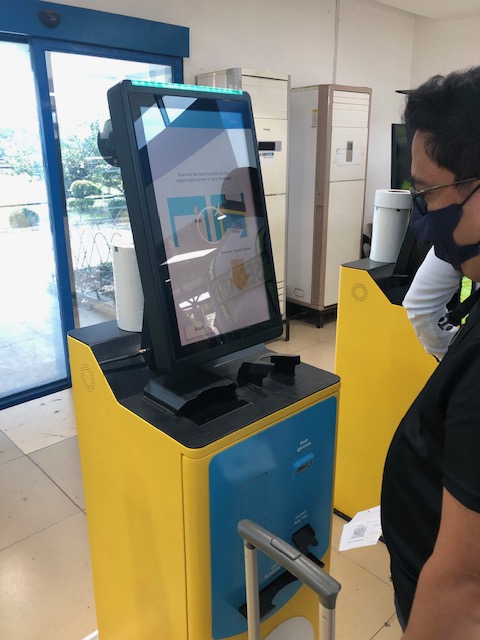 Check-in baggage terminal at the airport – you can now get your luggage tags for items you’re checking-in and tag your bags or boxes yourself. This is supposed to reduce the transaction times at the check-in counters but I wonder if someone’s measuring or evaluating the process.
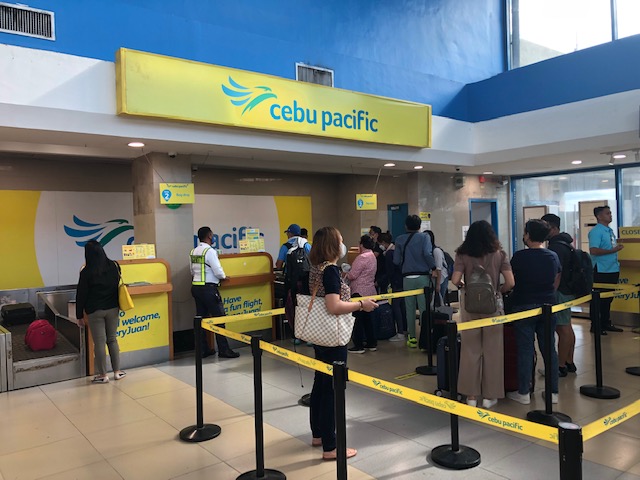 Check-in counters for Cebu Pacific – they have 4 counters.
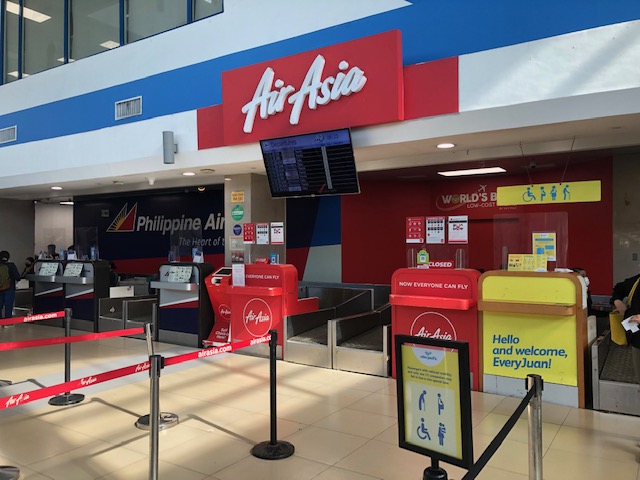 Air Asia only had two counters at the airport. Meanwhile PAL had the more spacious area among the three airlines.
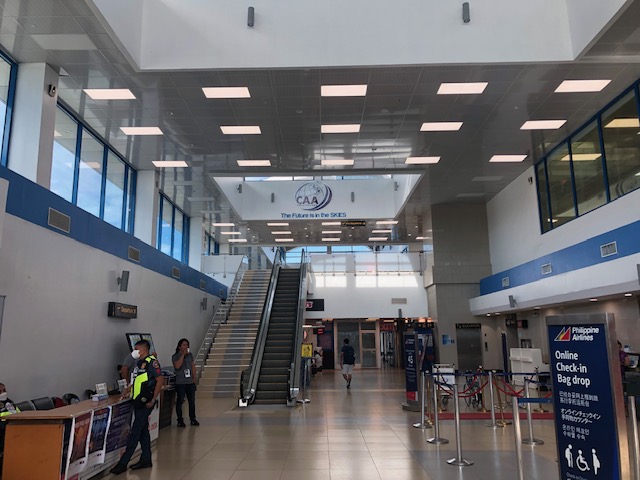 The design is similar to Iloilo’s and Bacolod-Silay’s where passengers ascend to the departure level after checking in. There are a couple of shops under the stairs and escalator for last minute pasalubong purchases.
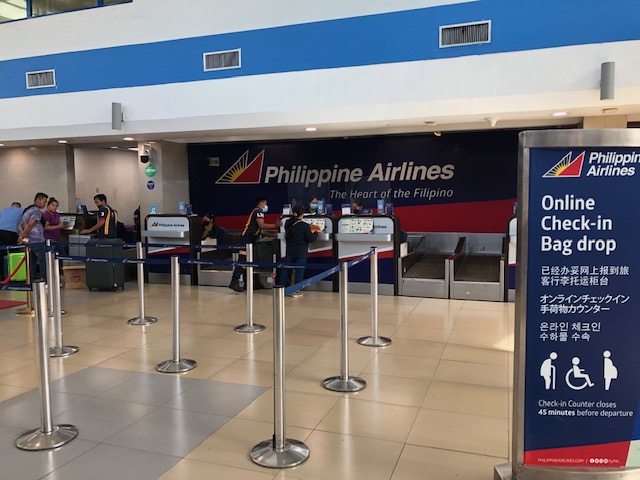 PAL had the most check-in counters at 5. They had a separate counter for Mabuhay Class passengers that they also use for senior citizens and persons with disabilities.
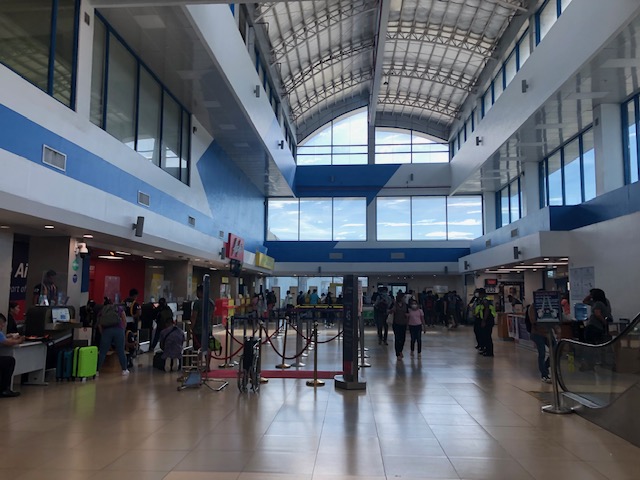 A look back at the check-in lobby
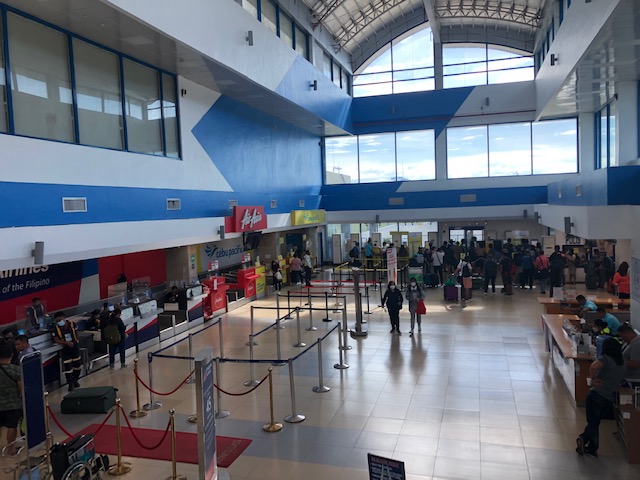 Here’s what it looks like as we ascend to the departure level.
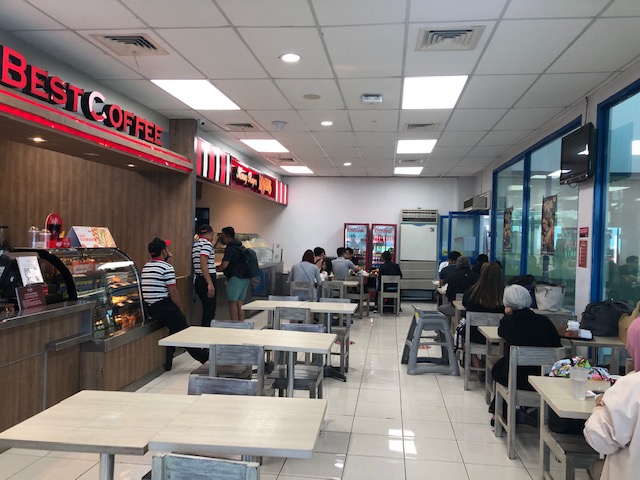 After the final security check and entering the pre-departure lounge, you can proceed to the food court where you have a choice between Seattle’s Best Coffee and Kenny Rogers.
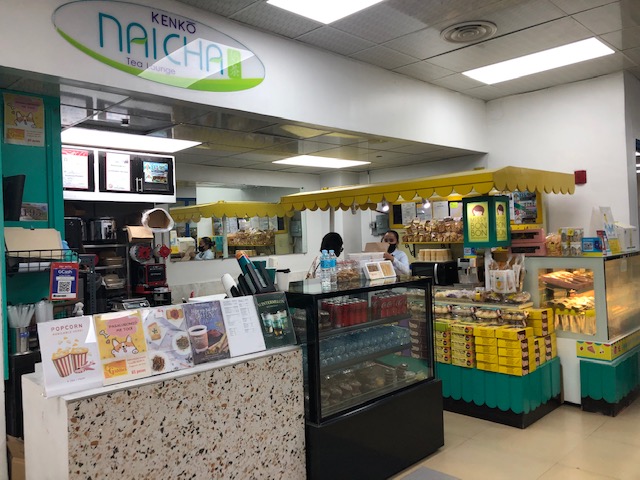 Shops offer refreshments, snacks and pasalubong items.
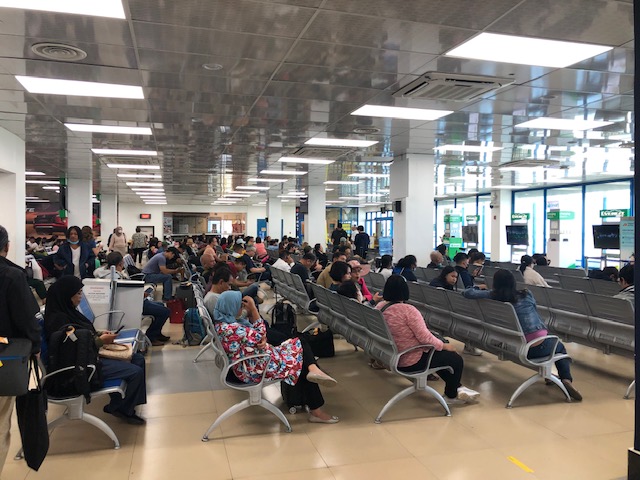 The passenger lounge appears to be spacious but can become crowded when there are flight delays.
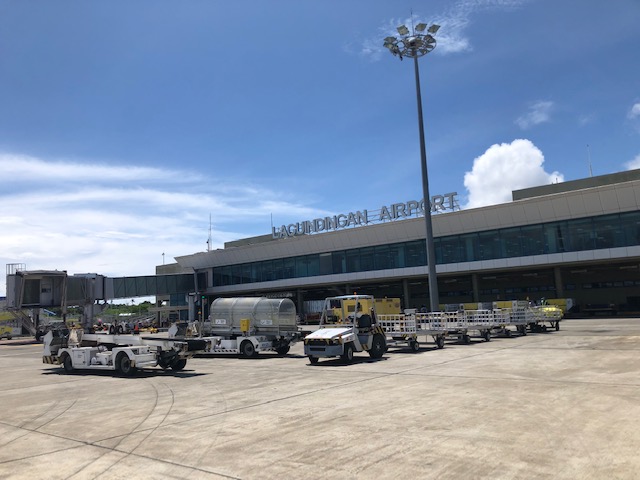 View of the various vehicles used in providing support services to the aircraft at the apron.
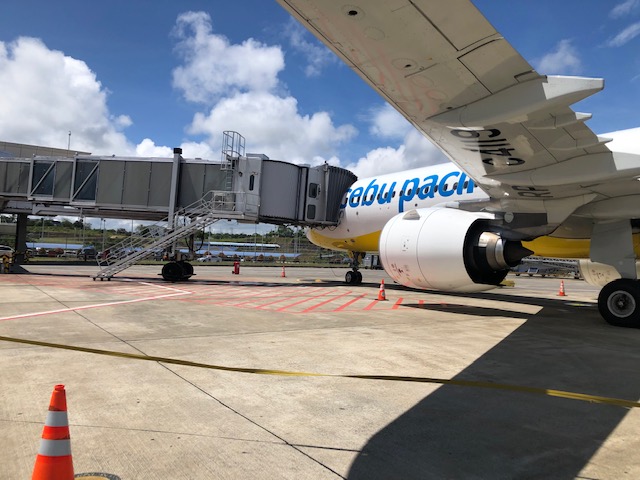 The view of our aircraft as we approach the stairs to the aft of the plane. Passengers seated from the middle to the rear of the plane are instructed to board the plane from the rear. Those seated from the front rows to the middle are instructed to board via the bridge or tube shown in the photo.
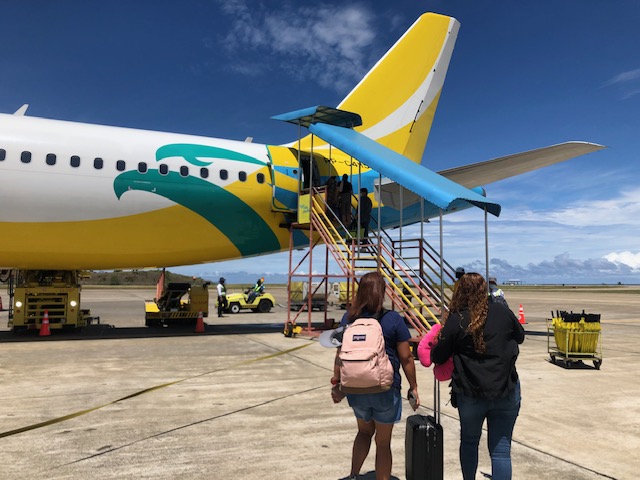 Passengers boarding
I will be posting more photos of airports soon as I am traveling to Cebu and Kuala Lumpur in the next few weeks. It will be my first time to travel to KL (can you believe that) though it’s not my first time to Malaysia so that trip is something I look forward to and one that will definitely yield a lot of photos.
–
Footbridges along Sumulong Highway – Part 1
There are several new pedestrian footbridges along Sumulong Highway. The intent is simple – provide a safe crossing for people considering the high volume of traffic along the highway and the high risk of being hit by vehicles. Speed is an issue here considering the highway’s slopes and curves. Footbridges present a quick solution. However, it is not necessarily the most appropriate given the objective of improving safety. Perhaps slowing down or ‘calming’ traffic is a better approach?
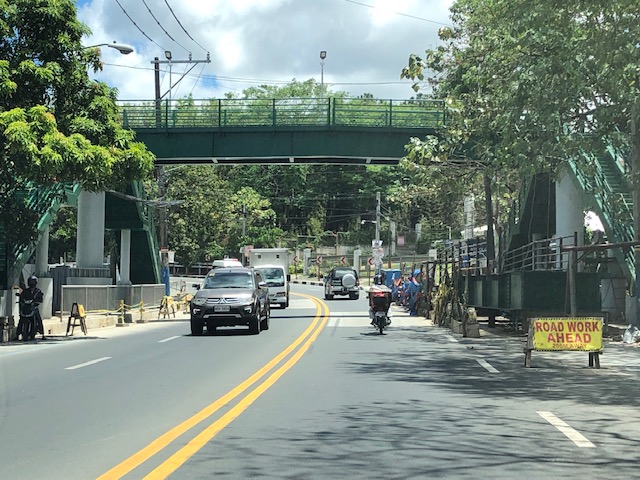 A new pedestrian footbridge near the San Pedro Calungsod Church. The intention is for people to use this footbridge to cross to or from the church. Considering the relatively narrow carriageway, crossing on road level is actually the shortest and most efficient way. However, the volume and speed of traffic is a major consideration here and elsewhere along Sumulong Highway.
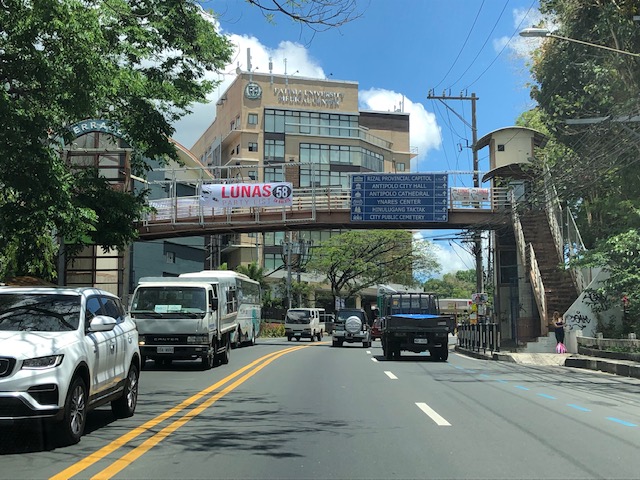 This pedestrian overpass or footbridge near Fatima University Hospital is intended for students and staff of the university and hospital. While many, even most, use the overpass, there are a significant number of people who prefer crossing directly on the highway. Before, there were school personnel, usually a guard, who helps people cross. I don’t see them anymore. Even Antipolo does not have traffic enforcers or aides in the area.
More on these pedestrian footbridges.
–
Article on “Fair Share Transportation Planning”
I am sharing this new article from Todd Litman on fair share transportation planning. The content is relevant and very timely in the Philippines considering many people including and especially transport officials are struggling with the thought of allocating resources to provide or improve facilities geared towards more equitable transport systems (e.g., more facilities for active transport).
Here’s the summary as quoted from the article:
“To be efficient and equitable, a transportation system must serve diverse demands. A diverse transportation system allows travelers to use the most efficient option for each trip—safe walking and bicycling for local errands, efficient public transit when traveling on busy travel corridors, and automobiles when they are truly the most cost-effective mode considering all impact—and it ensures that people who cannot, should not, or prefer not to drive receive their fair share of public investments.
Current transportation planning practices are biased in various ways that overinvest in automobile infrastructure and underinvest in more affordable, inclusive, and efficient modes. It is time for planners to reconsider our analysis methods and funding practices to ensure that non-auto modes, and therefore non-drivers, receive their fair share of transportation resources.
This is not anti-car. Motorists have good reasons to support more investments in non-auto modes that reduce their traffic and parking congestion, reduce their chauffeuring burdens and crash risk, and provide better options when their vehicles are unavailable. Everybody wins from a more diverse and efficient transportation system.”
 Caught (up) in traffic