
Home » Land use
Category Archives: Land use
A cityscape revisited
I was posting photos of a familiar sight along one of my walking routes in our neighborhood. Somehow, that route became less frequented as houses were constructed in what old timers here referred to as the second floor. What offered a 360 view of areas surrounding our place was now mostly inaccessible, depriving people of spectacular views.
Last Sunday, we chanced upon the sight below along another of my routes that we now seldom passed.
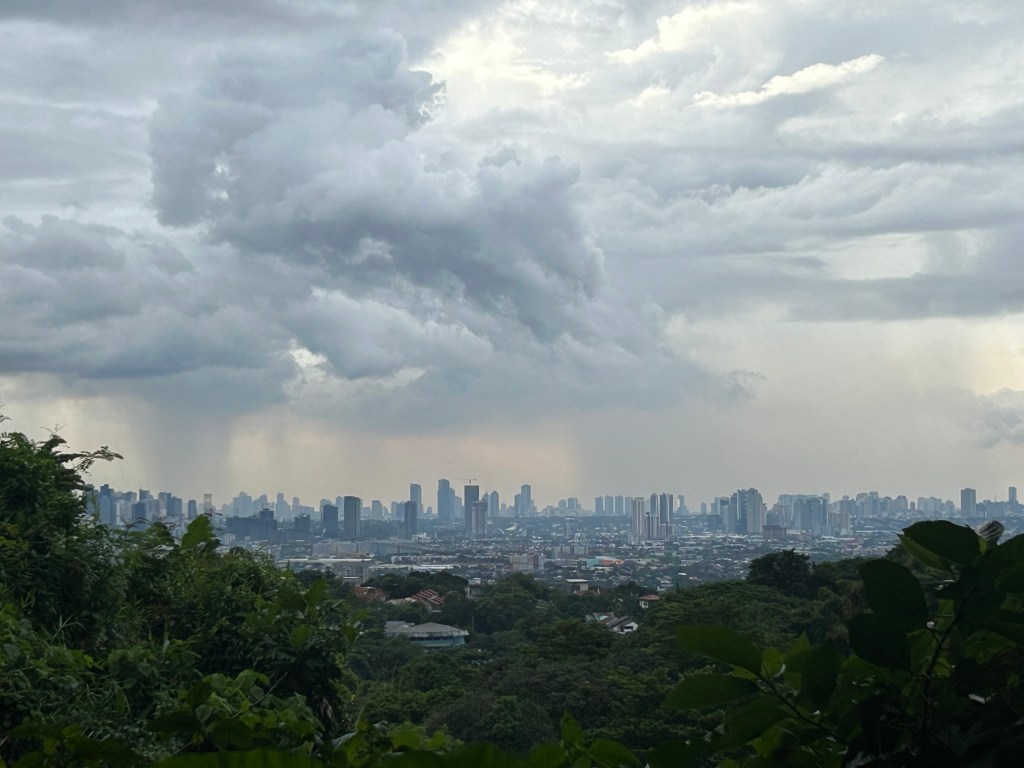
The place where I took the photo will probably also be inaccessible soon as we saw the lots being cleared for construction. We missed the views and soon they’ll be just memories or photos stored in our gadgets.
–
Aerial photos – reclamation projects in Manila Bay
Last week’s travel allowed me to take aerial photos of the reclamation projects in Manila Bay. Here are the photos:
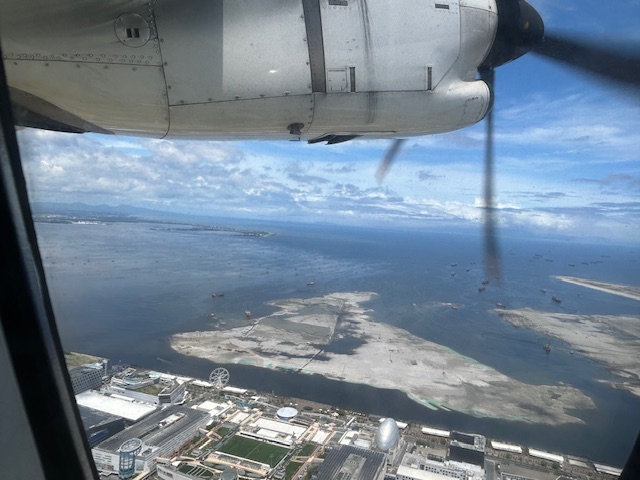 The view as we lifted off from NAIA shows SM’s reclamation project across from the MOA complex.
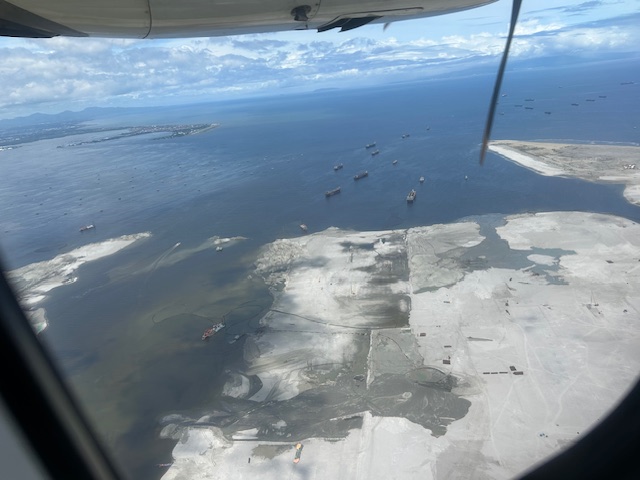 Our plane then climbed and afforded this close-up of sorts of the reclamation across from the now closed Sofitel Hotel.
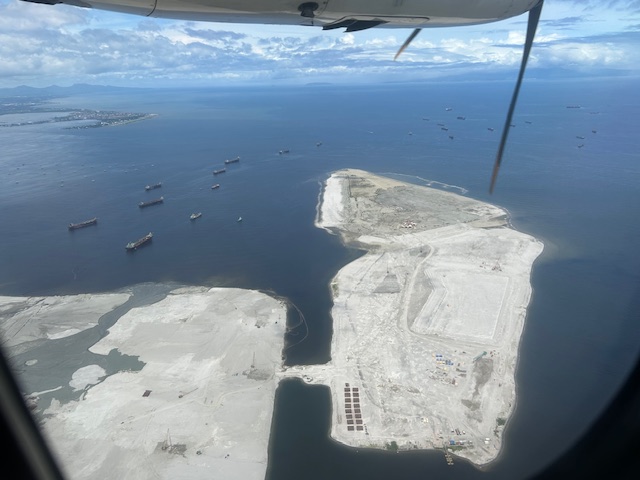 Past the largest of the three reclaimed lands is another man-made island.
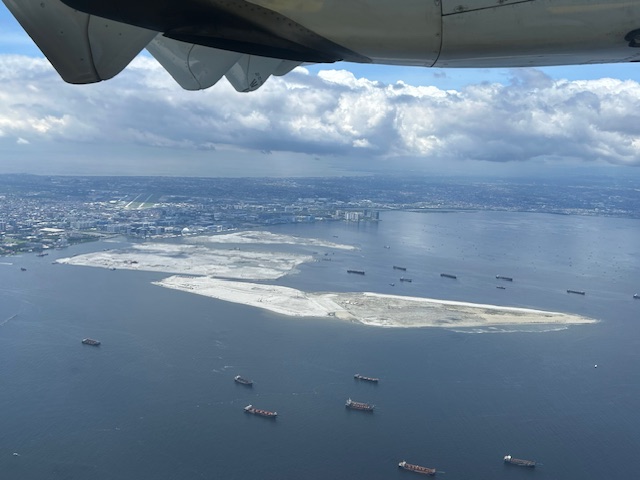 As our plane turned left, we were able to see all three reclamation projects
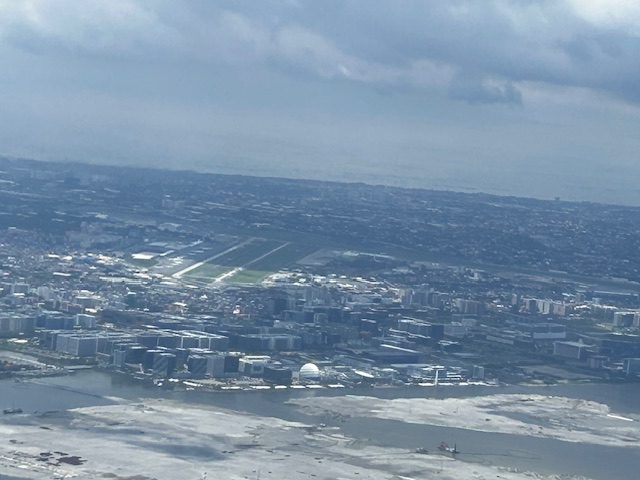 A close-up of the reclamation across the MOA complex. Also in the photo is NAIA.
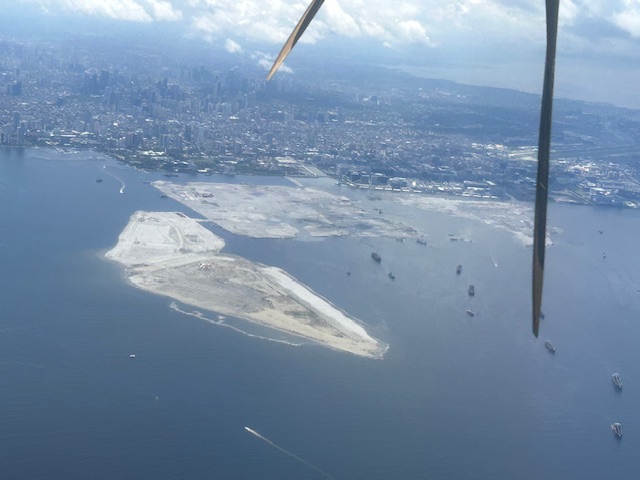 All three reclamations in one photo as we continued to turn towards the south and southeast (towards Bicol).
More aerial photos soon!
–
Article share: on improving road safety in the midst of automobile dependency and sprawl
I am sharing another very informative article on road safety. While it is written for North American cities, most concepts and principles presented are applicable elsewhere and especially in cities and municipalities that tend to model their development after America. Increasing dependence on private vehicles (not just automobiles but including motorized two and three-wheelers) have resulted in increasing incidence of road crashes and though we have limited space, we tend to develop land as if we can afford sprawl and its consequences. Here is the article:
Litman, T. (April 25, 2025) “End Human Sacrifices to the Demanding Gods of Automobile Dependency and Sprawl,” Planetizen, https://www.planetizen.com/blogs/134838-end-human-sacrifices-demanding-gods-automobile-dependency-and-sprawl?utm_source=Planetizen+Updates&utm_campaign=d3fcb4d16b-newswire_05_05_25&utm_medium=email&utm_term=0_-6cce27a957-89144212&mc_cid=d3fcb4d16b&mc_eid=9ccfe464b1 [Last accessed: 16/05/2025]
To quote from the article:
“North American transportation agencies currently apply various older strategies, which should not be ignored, but to achieve additional crash reductions they need new strategies, such as those listed in the following table. The older strategies are targeted programs applied after most major transportation and land use planning decisions are made. New strategies include structural reforms involving more multimodal transportation planning, more compact development, transportation demand management incentives and parking policy reforms. This recognizes that all types of planning decisions affect transportation safety, and that many policies can increase safety in addition to other economic, social and environmental benefits.
The new paradigm expands traffic safety strategies to include structural reforms that increase transport system diversity and efficiency. They tend to provide many economic, social and environmental benefits in addition to safety.”
–
On walkable spaces for senior citizens
Here is a quick share of an article on walking and walkability, and the relation with dementia:
Steuteville, R. (March 10, 2025) “Living in a walkable place reduces dementia,” , https://www.cnu.org/publicsquare/2025/03/10/living-walkable-place-reduces-dementia [Last accessed: 3/29/2025]
To quote from the article:
“When we live in a walkable place, we move more, naturally. Unsurprisingly, exercise is linked to better cognitive health. Regular exercise increases memory, and boosts hippocampal volume by 2 percent.
Also, walkable neighborhoods are more stimulating. They are built on connected street networks, which give individuals more choices on how to get around and reward those choices with diverse physical paths linked to spatial memories. And they are mixed-use.
“Street layouts with better connectivity and walkability are associated with a reduced risk of cognitive impairment. Access to local amenities, such as food stores, community centers, and healthcare amenities, supports cognitive health,” the authors note.
Social connections also probably help. When you walk to a destination, you are more likely to have friendly interactions, which have been shown to reduce the risk of depression, and walkable places also boost the sense of community.”
As there are many senior citizens in our village, the topic is quite relevant. Most seniors probably won’t take a walk if they felt it was dangerous or risky even inside residential subdivisions. In our neighborhood, there are a few of them going around using their motorcycles or scooters. Most I see walking around perhaps for exercise or leisure rather than to go to a store or restaurant in the area. But increased traffic due to customers of restaurants that sprouted around the village has increased the risk for those who walk. Hopefully, the induced motor vehicle traffic generated by these establishments can be managed and regulated for the overall welfare of residents.
–
On C-6 and the proposal for another expressway, Part 2
The recent announcement and launch of the Southeast Metro Manila Expressway (SEMME) included this map showing the (very) rough alignment for the proposed tollway. The map also shows the proposed locations of interchanges including one in Tikling and another in Masinag. There is also another in Tumana. From the looks of this, the SEMME will be a skyway or elevated expressway/tollway.
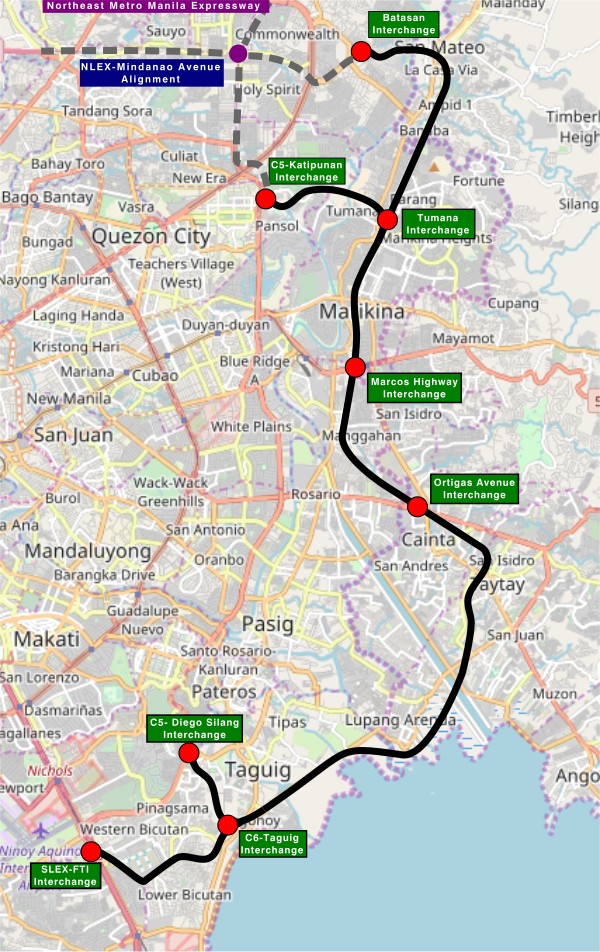
My first impression is that this elevated tollway will pass through predominantly residential areas with columns rising from private subdivisions. It doesn’t help that the topography also means the columns will be built along hilly or mountainous terrain, thereby making construction more challenging than the elevated tollways in Metro Manila.
Do we really need another circumferential road and particularly another tollway? I think that is a very important question that not only needs to be asked but also answered the right way. I, for my part, don’t believe we need another tollway, elevated or not, as this will not solve the so-called traffic problem. In fact, it creates more problems than what is supposed to be solved with the induced traffic this will generate and its promotion of car-centricity. For the price and effort of such an infrastructure, you will get more bang for your buck with a mass transit line or lines. Road congestion can only be solved by constructing the public transport system we needed decades ago.
–
On affordable housing
I’ve written about the relationship between transportation and housing in many of my previous posts. Here is an article defining affordable housing from the US context:
Axel-Lute, M. (January 23, 2025) “What is ‘affordable housing’?” Shelterforce, https://shelterforce.org/2025/01/23/what-is-affordable-housing/ [Last accessed: 2/4/2025]
To quote from the article:
“With no other qualifications, “affordable housing” in the United States typically refers to housing whose cost is affordable to households that make somewhere between 40 and 80 percent of the area median income.
Below 80 percent of AMI is how the U.S. Department of Housing and Urban Development officially defines “low income”—but be careful about making assumptions. Area median incomes are calculated at the metropolitan level, so for many areas they can be quite high. In those cases, “affordable housing” might be targeted to people who wouldn’t have considered themselves low income.
On the other hand, in some less affluent neighborhoods, official “affordable housing” might be too expensive for most of the people who already live there. And in metropolitan areas with lower housing costs overall, official “affordable housing” might not be much cheaper than market rate!”
How do we define affordable housing in the Philippines? Is our definition of “low income” similar to how they define it in the US or elsewhere? Or are our definitions flawed and therefore affect how we provide (or not) housing to those who need them the most?
–
On unwanted traffic
I just want to end this first month of 2025 with a commentary on unwanted or undesirable traffic. Last year, one of our neighbors leased their property to a trucking company. This was without information to the homeowners’ association and certainly without the knowledge or notice to neighbors, particularly those near their property and along the routes the trucks use. The result was unwanted truck traffic along roads that we usually used for our daily walks. Truck drivers’s usually drove the vehicles as if they were not in a residential area. That is, they were usually fast and belching smoke. Add to this the drivers hanging around and even loitering around the village. Many neighbors complained about this but the resident did not respond favorably or in a neighborly manner. And so each one of us had to confront the drivers ourselves and reminded them to drive carefully and slowly as they were in a residential subdivision. The village security was also told about them and the roving guards also reminded the drivers about safe driving.
And so I was pleasantly surprised when during my first walk of the year, I found that there were no more trucks along the road and parked in their property. I thought this was a nice New Year’s gift and ended what is generally regarded as an external cost to society.
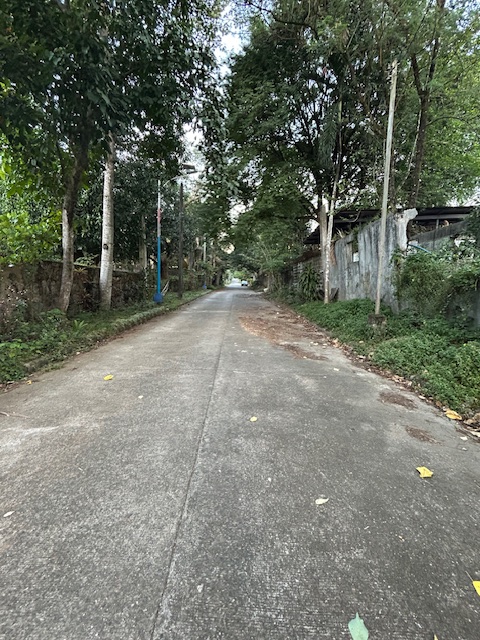
The now clear street in our neighborhood used to be lined with trucks. This street was quite busy, noisy and smelled of emissions from idling trucks. It’s good to recover the road space for walking again. Do you have something similar happen in your neighborhood?
–
Planning for True Transportation Affordability: Beyond Common Misconceptions
How much do we spend on transportation as part of our budgets? Is it 5% of your monthly budget? Is it 10%? Or is it eating up a substantial part of what you’re earning?
Source: Planning for True Transportation Affordability: Beyond Common Misconceptions
To quote from the article:
“This research indicates that many common policies favor expensive transportation and housing over lower-cost alternatives, which drives the cost of living beyond what is affordable, leaving too little money to purchase other necessities. The result is immiseration: growing stress, unhappiness, and discontent.
The solution is simple: planning should favor affordable over expensive modes and compact development over sprawl. This is not to suggest that automobile travel is bad and should be eliminated. Many people are justifiably proud of being able to afford a nice car, and automobiles are the most efficient option for some trips. However, automobile travel requires far more resources and is far more expensive than other modes, typically by an order of magnitude, so true affordability requires an efficient, multimodal transportation system that allows travelers to choose the options that truly reflect their needs and preferences.
Affordability requires a new economic paradigm; rather than trying to increase incomes or subsidies we need to increase affordability and efficiency so households can satisfy their basic needs consuming fewer resources and spending less money. Our planning should be guided by a new goal: how can we help families be poor but happy.”
I share this article because it provides a more complete narrative and assessment than those just focusing on transport. Home choice locations and affordable housing are part of the equation. Looking at transport alone can be myopic and leads us to think it is the only problem to solve.
–
Back in Iloilo (again) and a note on landmarks
One landmark that I have been familiar with since I was a child is the Jaro Cathedral belfry. The building is located at the plaza across from the church. The area has been neglected for a long time and I am glad to see the city developing the area to become more attractive and useful as a park for the benefit of its citizens and visitors.
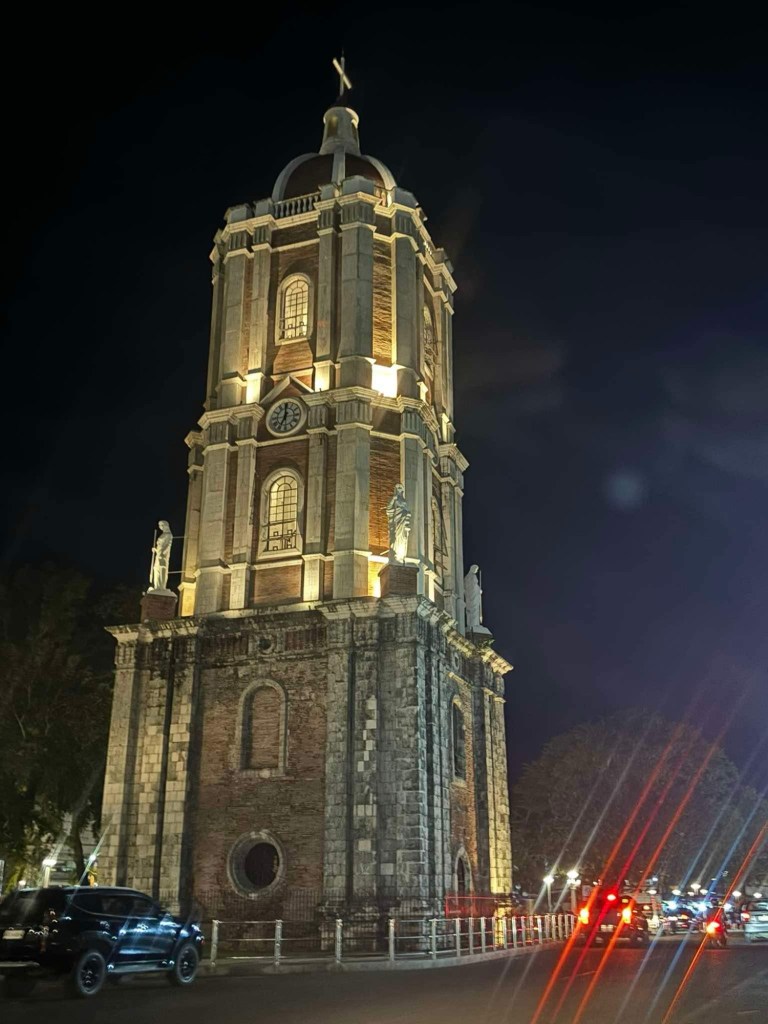
The area, I’ve been told, is being developed as part of a program towards coming up with more open spaces like parks particularly where there are already plazas around the city. I have memories of getting a ride back to my father’s hometown whenever we went to the city usually to eat or shop. The informal jeepney terminals used be around the plaza. Other jeepneys rounded the streets for their return trips instead of stopping at a terminal. Now you have to travel to the provincial jeepney terminals at the outskirts of the city to get a ride to the other towns.
–
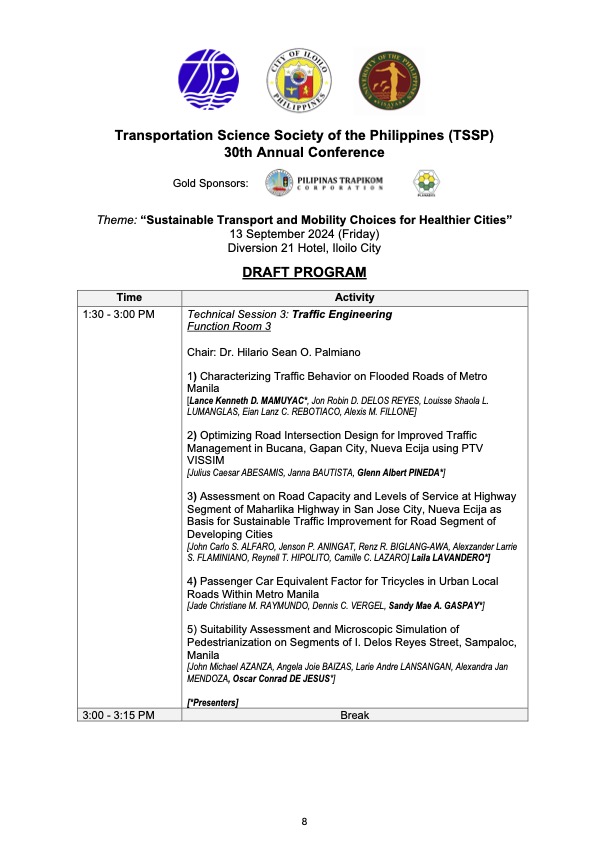
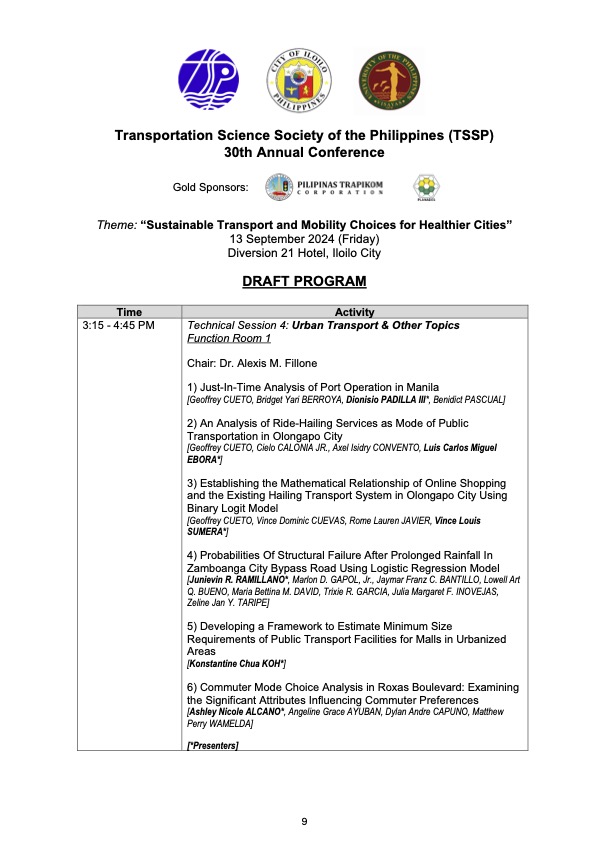
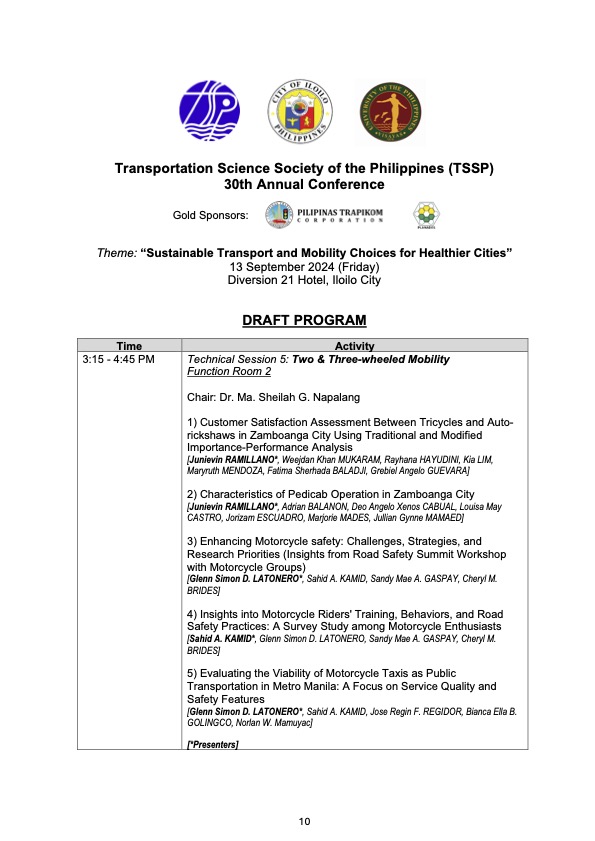
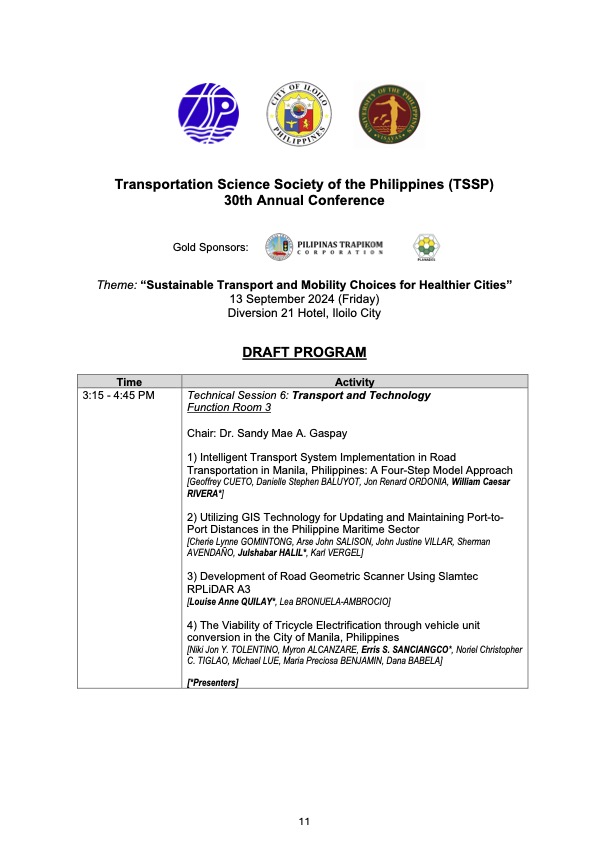
Technical sessions at the TSSP 2024 Conference
I am sharing here the latest draft of the technical sessions for the 30th Annual Conference of the Transportation Science Society of the Philippines (TSSP). The conference will be held in Iloilo City this coming September 13, 2024.
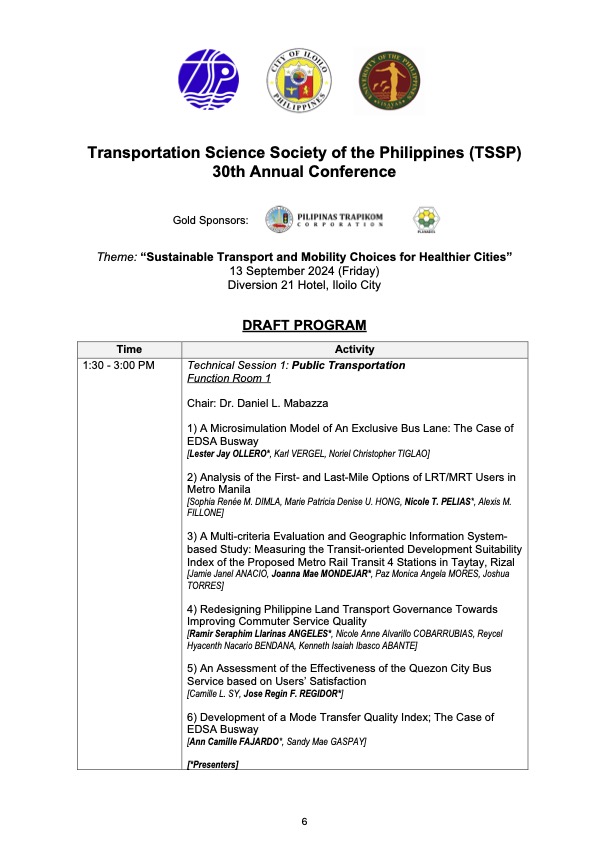
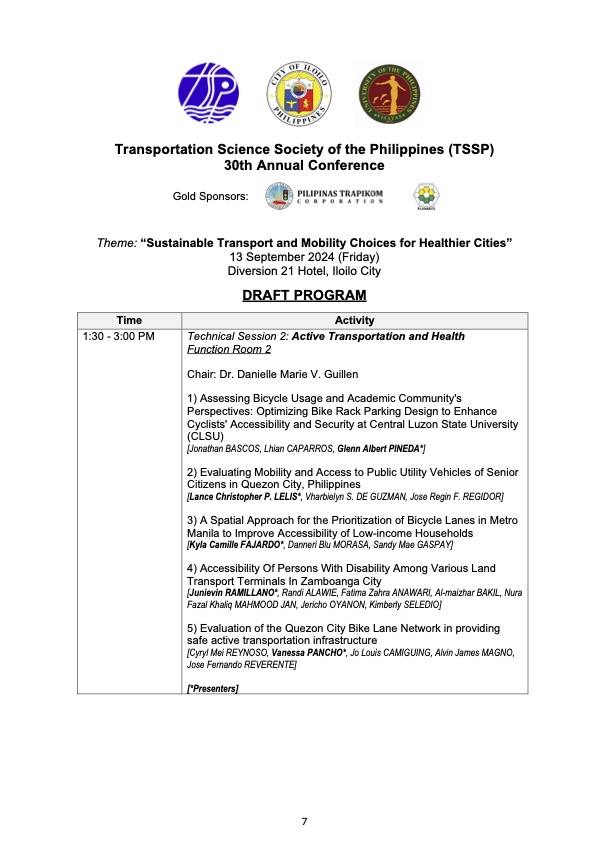
I will share the draft program for the morning plenary session in the next post.
–
 Caught (up) in traffic