
Home » Maritime transport
Category Archives: Maritime transport
Technical sessions at the TSSP 2024 Conference
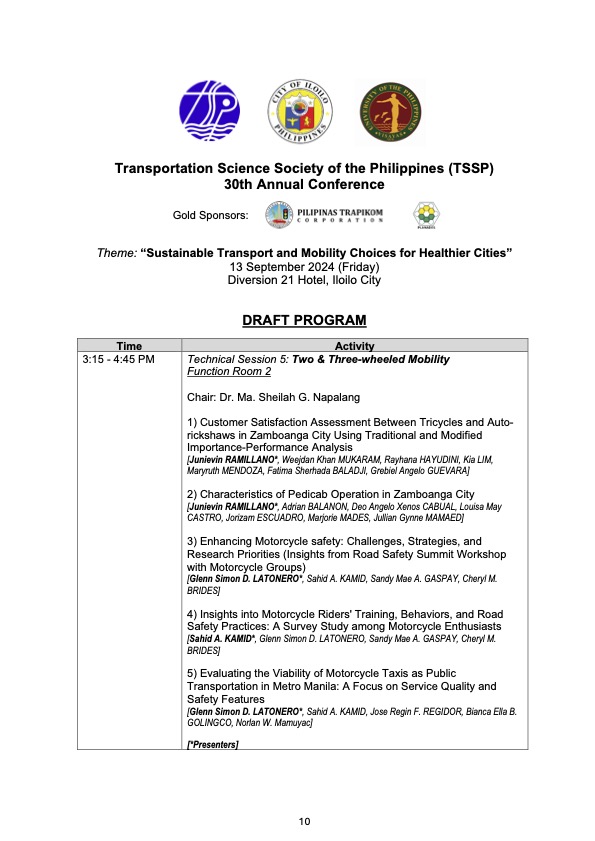
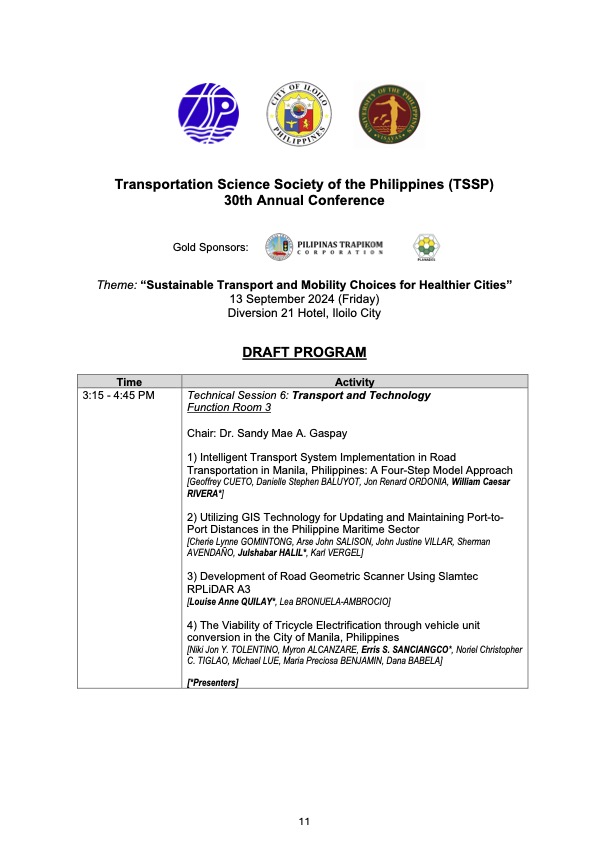
I am sharing here the latest draft of the technical sessions for the 30th Annual Conference of the Transportation Science Society of the Philippines (TSSP). The conference will be held in Iloilo City this coming September 13, 2024.
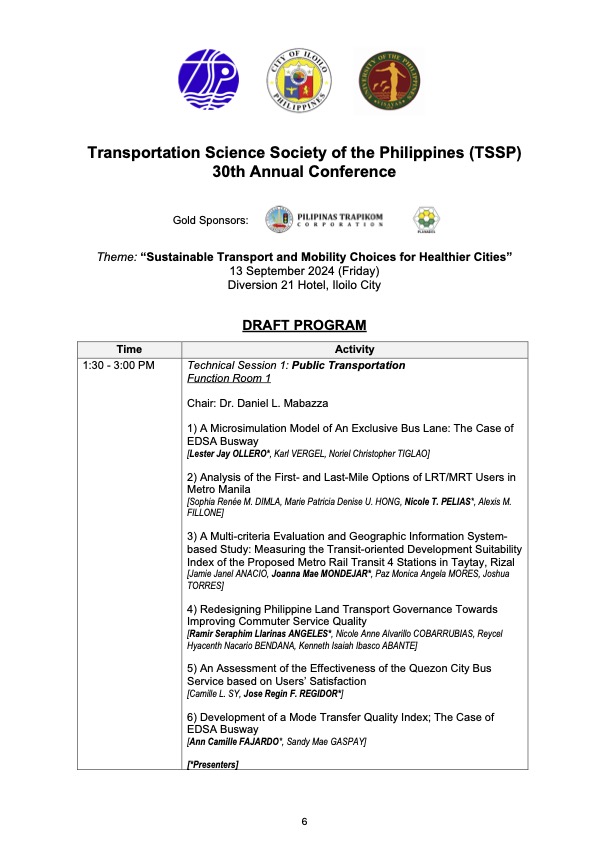
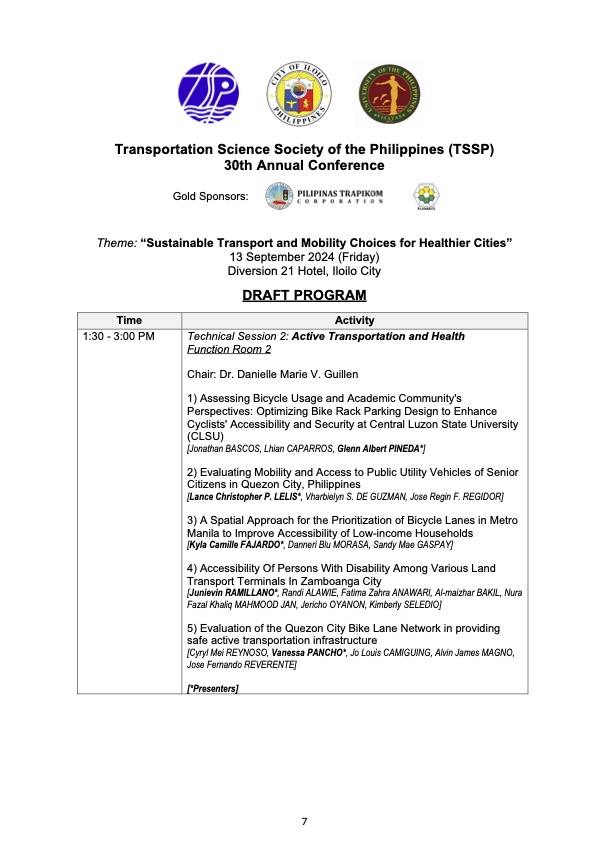
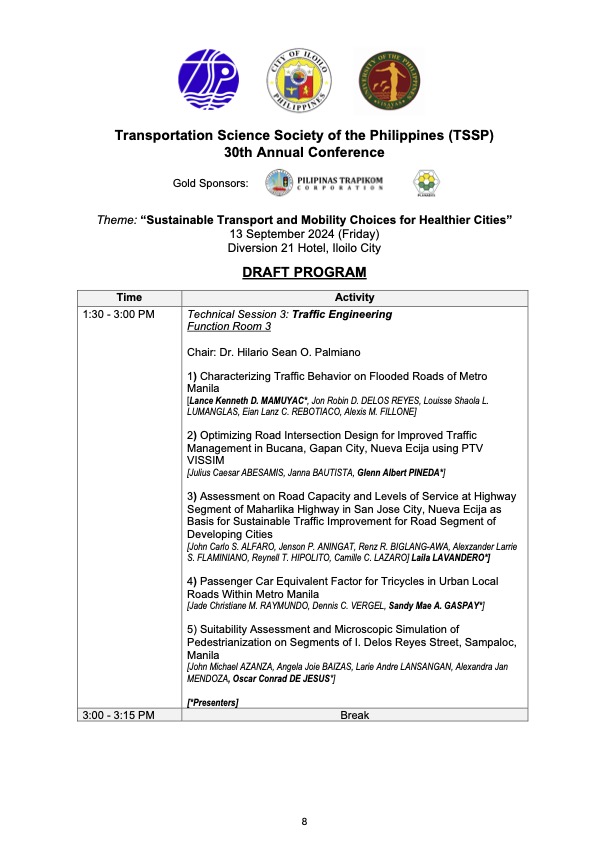
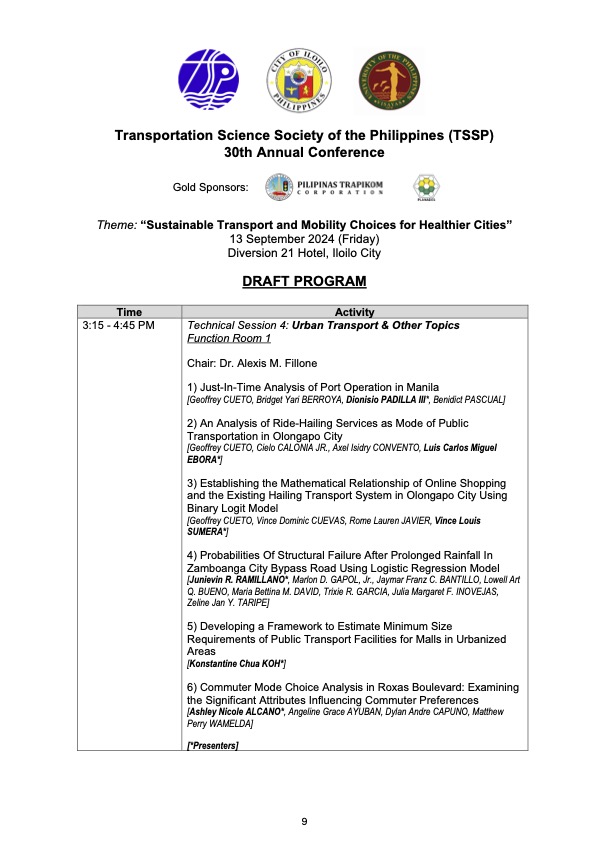
I will share the draft program for the morning plenary session in the next post.
–
Article share: on the collapse of a bridge in Baltimore
The recent incident of a container ship colliding with the bridge in Baltimore in the US has been trending and gone viral. There are also many articles now putting out their assessments of what happened, how the bridge collapsed, what troubled the ship, etc. There are also now articles discussing the implications or the impacts of this incident on logistics considering the collapsed bridge lies along a busy maritime route in the US. Here is an article that focuses on the former, providing analysis on how the ship caused the collapse of a major bridge.
Laris, M. Hassan, J. and Achenbach, J. (March 26, 2024) “How a cargo ship took down Baltimore’s Key Bridge,” The Washington Post, https://www.washingtonpost.com/dc-md-va/2024/03/26/how-key-bridge-collapsed-baltimore/ [Last accessed: 3/27/2024]
What also came to mind as I read reports about this incident is something similar that could happen to the CCLEX bridge connecting Cebu and Mactan Islands. Apparently, something similar already happened decades ago when a bulk carrier, Sanko Elegance, collided with the pier of the first Mactan Bridge. While the bridge did not collapse, it sustained damage that required it to be repaired and severely affected traffic between the two islands considering it was the only bridge at the time. It is important to note that the airport was on Mactan Island so it affected both passenger and freight flow for the province and others that connect and trade with it. While a former student who was much involved in the construction of the CCLEX bridge assured us in a briefing before that the bridge pier can withstand the collision of large vessels (perhaps the largest currently calling on Cebu ports), there may be larger and heavier ships in the future. The Key Bridge, after all, was hit by a container carrier that was larger than the ships transiting in the area when the bridge was designed and constructed.
–
Article share: Drought and the Panama Canal
Here’s a quick share of an article on how a drought is affecting operations of the Panama Canal:
Eavis, P. (November 1, 2023) “Drought Saps the Panama Canal, Disrupting Global Trade,” Wired, https://www.nytimes.com/2023/11/01/business/economy/panama-canal-drought-shipping.html?unlocked_article_code=1.7kw.9CNJ.NKhQS8RCMh9h&smid=url-share [Last accessed: 11/3/2023]
From the article:
“But a drought has left the canal without enough water, which is used to raise and lower ships, forcing officials to slash the number of vessels they allow through. That has created expensive headaches for shipping companies and raised difficult questions about water use in Panama. The passage of one ship is estimated to consume as much water as half a million Panamanians use in one day…
Without a new water source, the canal could lose significant amounts of business. Other ocean routes are, of course, longer and more expensive, but they are less likely to have unpredictable delays. One alternative is to transport goods between Asia and United States through the Suez Canal to the East Coast and Gulf Coast. Another is to ship goods from Asia to the West Coast ports — and then transport them overland by train or truck…”
I suddenly remembered the current work along the Marikina River. The government is supposed to be working towards making the river navigable for the Pasig River Ferry to extend operations there. However, the depth of the river prevents regular, reliable operations. I wonder if the current project that includes flood control, riverside roads and erosion control components also will lead to a navigable depth for the river for most if not the whole year.
–
Article share: On the busiest shipping routes
Here is an article on maritime transportation. I don’t get to feature similar topics here as mostly I have written about land and air transport. I thought this article is interesting because it describes maritime transport traffic volume. Statistics like these appear to be trivial but are important especially from the perspective of logistics as well as, if you delve in to it, maritime security.
Piper, G. (July 11, 2023) “The busiest shipping routes in the world by the numbers,” Medium, https://grantpiperwriting.medium.com/the-busiest-shipping-routes-in-the-world-by-the-numbers-c09571ad5af6 [Last accessed: 8/2/2023]
To quote from the article:
“The vast majority of world trade sees Asia as the focal point. Both Europe and North America do heavy volumes of trade with Asia, mostly imports. But three of the five busiest shipping routes in the world are all internal routes. Europe-Europe, North America-North America, and Asia-Asia. That means that vast amounts of global trade are still relatively local.
Large importers like the United States and England drive massive amounts of trade. Large exporters, like China, Korea, and Japan, also drive massive amounts of trade. The areas where these terminuses link up are the busiest hotspots for global trade.”
A while back in 2004-2005, I was involved in an inter-regional passenger and freight flow study in the Philippines. We gathered data on maritime transport and were able to derive the OD tables for inter-regional and inter-island passenger and freight flow. Unfortunately, those studies and surveys had no follow-up or updating afterwards. There is a saying that “you can’t manage what you can’t measure.” This applies to transport as well so perhaps there are data somewhere and someone’s using them. We hope government agencies are able to collect the data required to analyze and improve maritime transport in the country.
–
Flashback: Transport Infrastructure Framework Plan for the Philippines
I was reading an article yesterday about the outgoing NEDA Director General stating that Philippines needing a long term strategy for infrastructure development that will address the shortcomings or gaps due to unsolicited proposals. There was already something like this drafted almost a decade ago and under the auspices of the returning NEDA DG. Unfortunately, while NEDA accepted the Final Report of the study, they never adopted it as a policy that could also be imposed on agencies like the DOTr (still DOTC back then) and the DPWH. So for a sort of Throwback Thursday and on the last day of the Duterte Administration, I am sharing the promotional video produced for the framework plan that was supported by The World Bank.
The study was conducted by Cambridge Systematics (not related to Cambridge Analytics as far as I know) and was implemented at the same time as the JICA Dream Plan study for Mega Manila. I recall there is also a video on the latter and it listed all the infrastructure projects needed to address the transport problems of the Greater Capital Region. The Infra Framework Plan for the country mentions the various infrastructure projects ongoing and proposed for the Philippines but focuses on the soft side (i.e., strategies) including the reforms and institutional set-up that need to be in place for everything to come together and produce the desired outcomes in the long term. Sadly, strategies and plans are not well appreciated despite their being essential as foundations. While the Build, Build, Build mantra of the outgoing administration is worth praising for attempting to do the catch-up needed in as far as certain transport infrastructure is concerned, it falls short of what are necessary and to be prioritized. Instead, it ended up accommodating projects that are “nice to have” but should not be prioritized considering our limited resources and the undesirable foreign debt racked up by government. Hopefully, the returning NEDA DG and other officials will be able to steer the country clear of the current and future crises that may end up bringing more hardships on Filipinos.
–
Island hopping again
It’s been more than two years since we last traveled by plane and 10 years since our visit to Panglao in Bohol. So its really something we looked forward to considering we now travel with our daughter and there’s a lot to write about on the experiences.

And there’s a lot about transport to write about and share in this blog. There’s a new airport, the nice roads and the journey between Panglao and Balicasag, among others that I will be writing about soon.
Abangan!
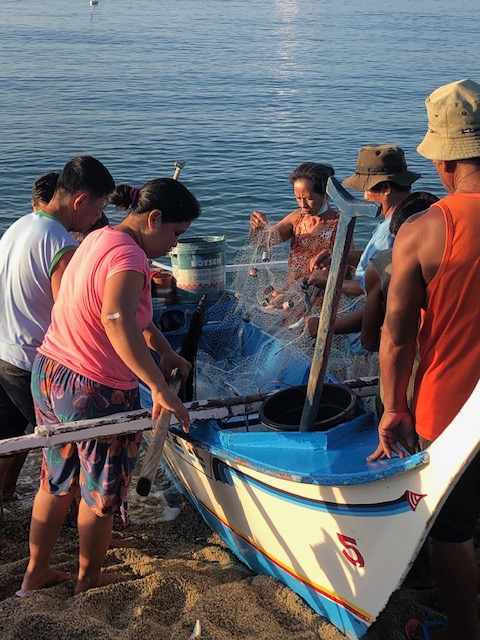
A night’s catch
I like going out early and taking a walk along the beach. Aside from the glorious sunrises and the views and sound of the waves, there are always other scenes and experiences that you only get to observe seaside. Among those is witnessing the arrival of fishing boats laden with the night’s catch. The boats are met by the families of the fishermen who help bring in and sort the fish. Here are a few photos from Laiya, Batangas.



–
On local maritime transport
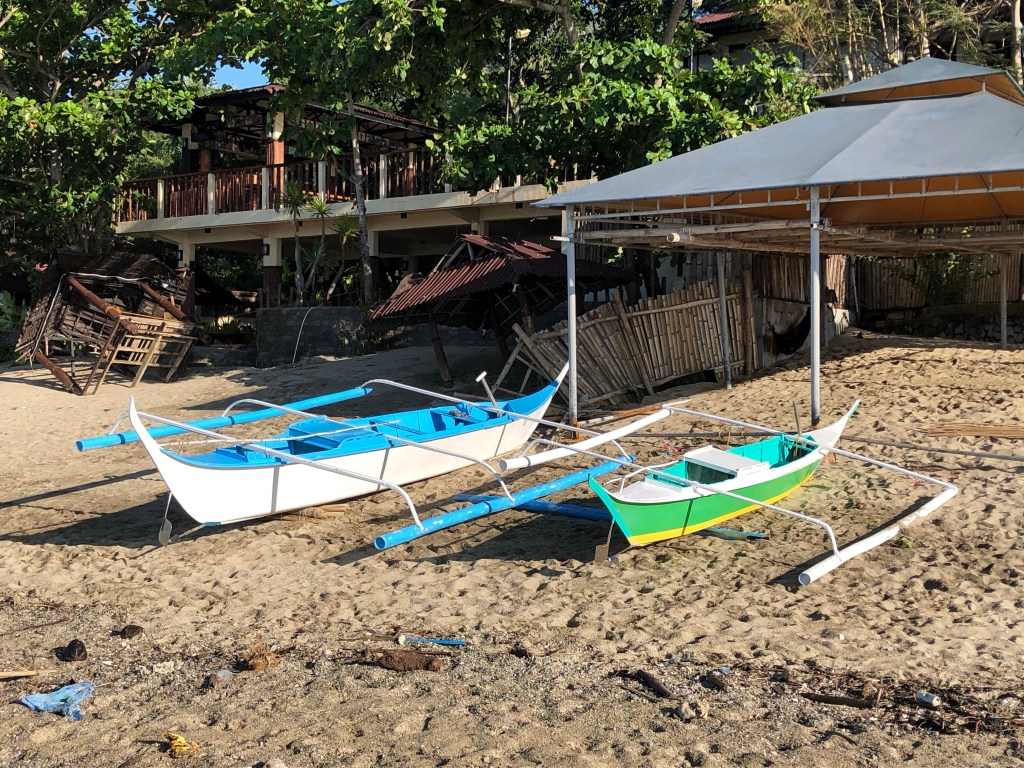
I rarely write about maritime transport so I took this opportunity to take photos of the typical boats used for fishing and transport in the Philippines. Here are a few photos I took one morning in Laiya, Batangas.

More on these bancas soon!
COVID-19 Infection Risk Assessment of Transport Modes
I posted about the work we have been doing to assess the infection risk (i.e., spread of COVID-19) for various modes of transport considering the transition of many areas including the National Capital Region (NCR) to the General Community Quarantine (GCQ). The work was undertaken through the Transportation Science Society of the Philippines (TSSP), which is under the umbrella of the Eastern Asia Society for Transportation Studies (EASTS). Here is the outcome in the form of an “Infection Risk Classification of Transport Modes or Vehicle Types” developed by a core group of public transportation and road safety specialists among its members:


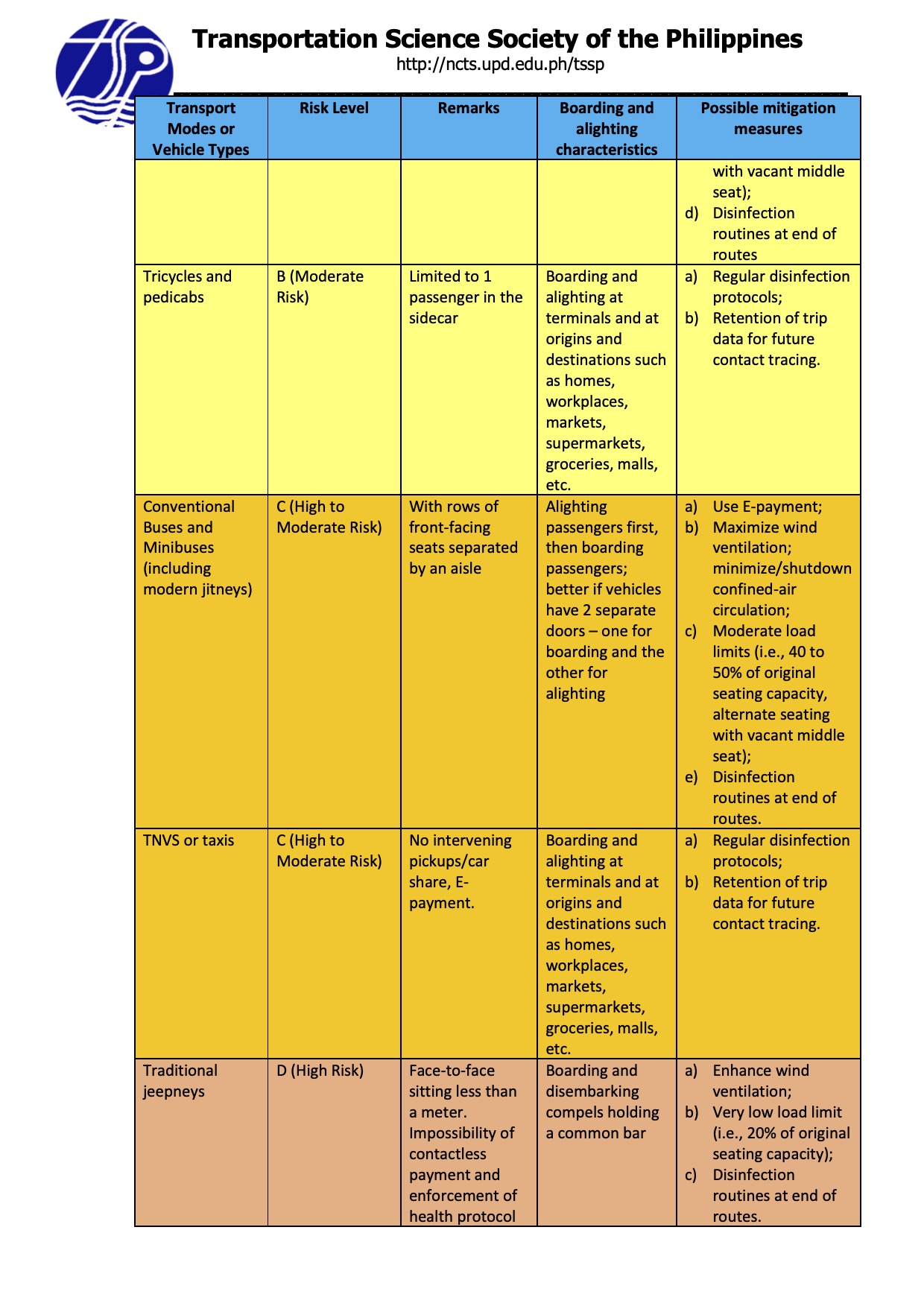

Note again that this is the product of a rapid assessment using the mentioned criteria and factors. It is a qualitative assessment and a quantitative one, given the data, would obviously been preferred. Moreover, this is an assessment for risk of infection rather than for road safety. In the “old normal”, for example, cycling and motorcycle use may have a higher risk in traffic given traffic mix, human behavior and lack of facilities to make these modes safe.
–
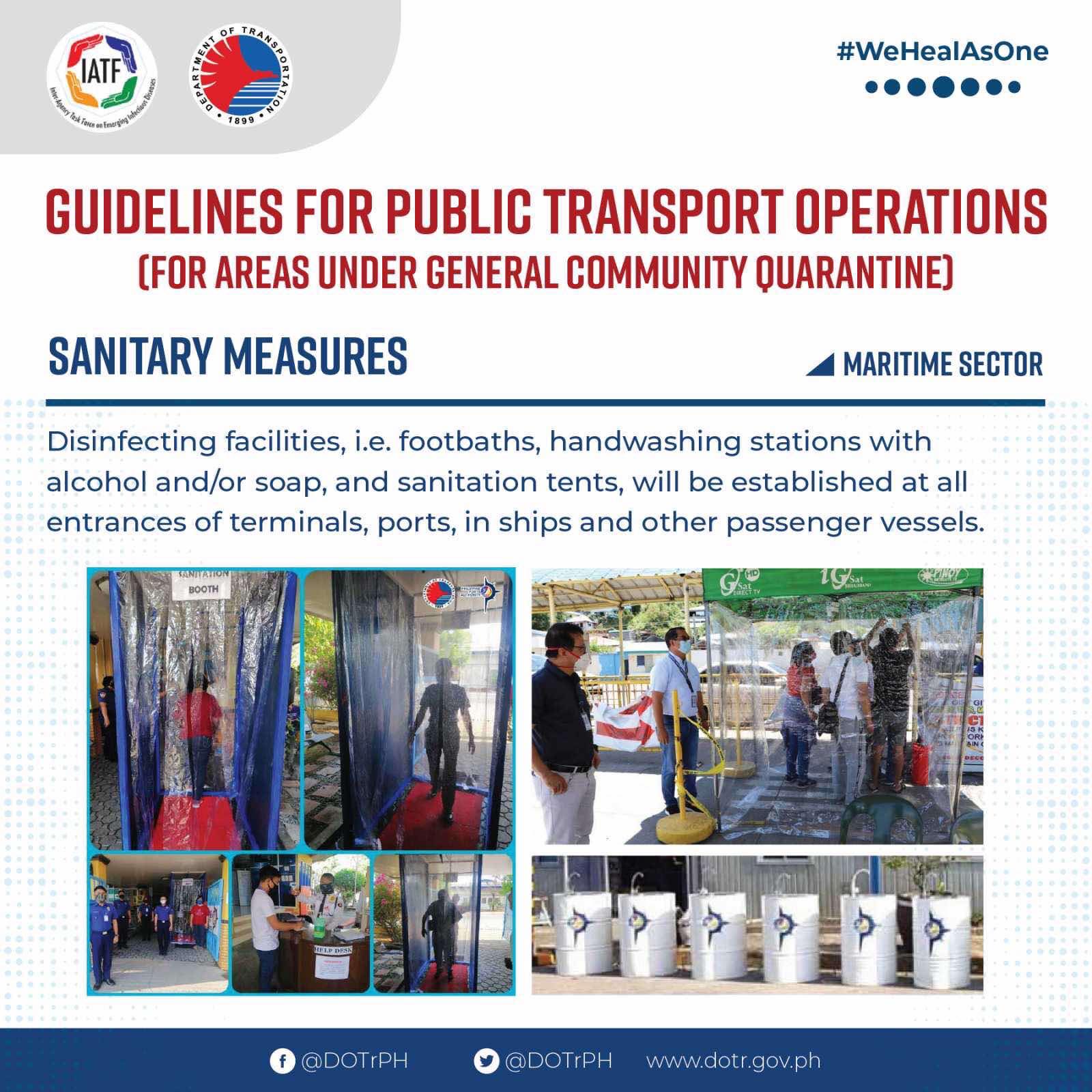
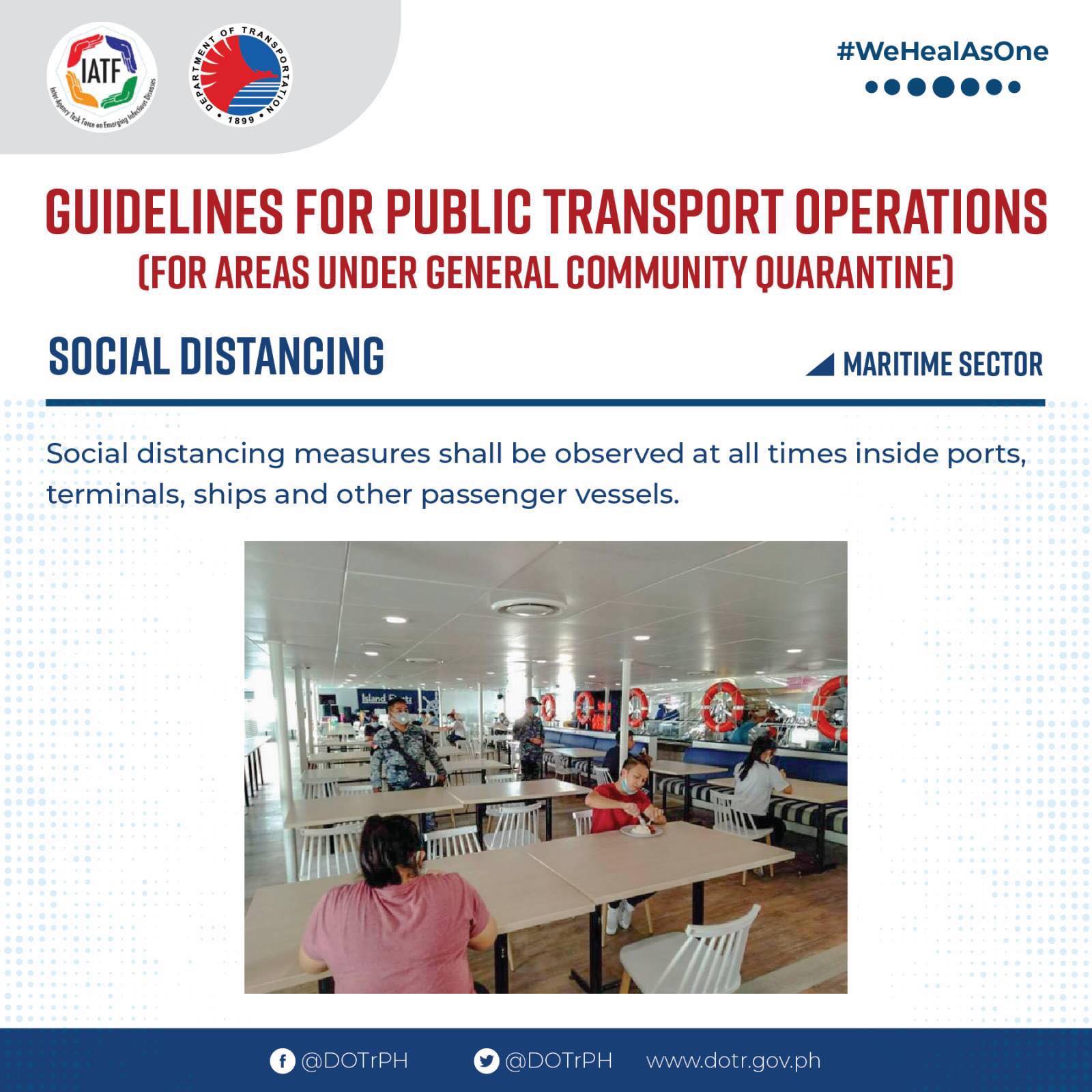
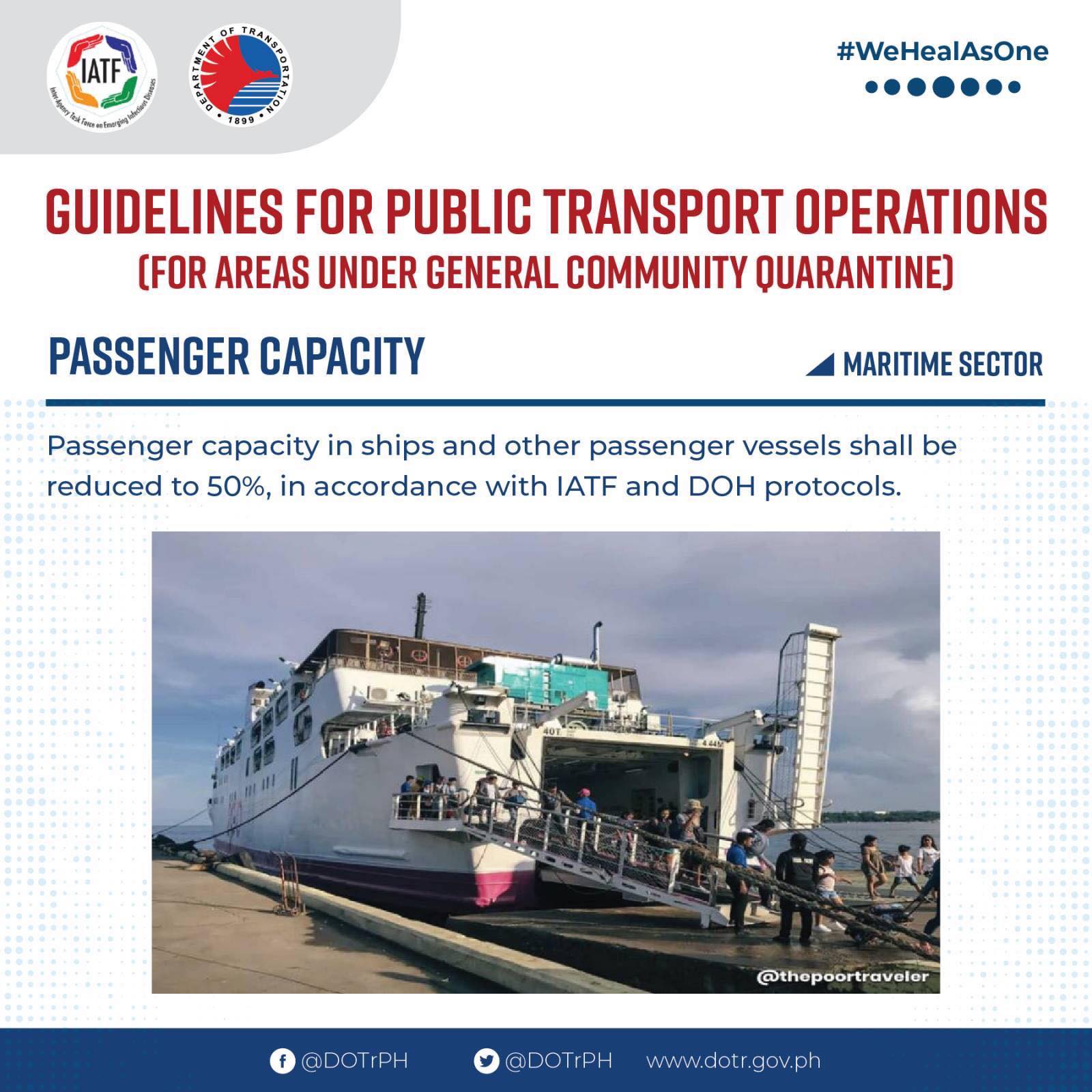
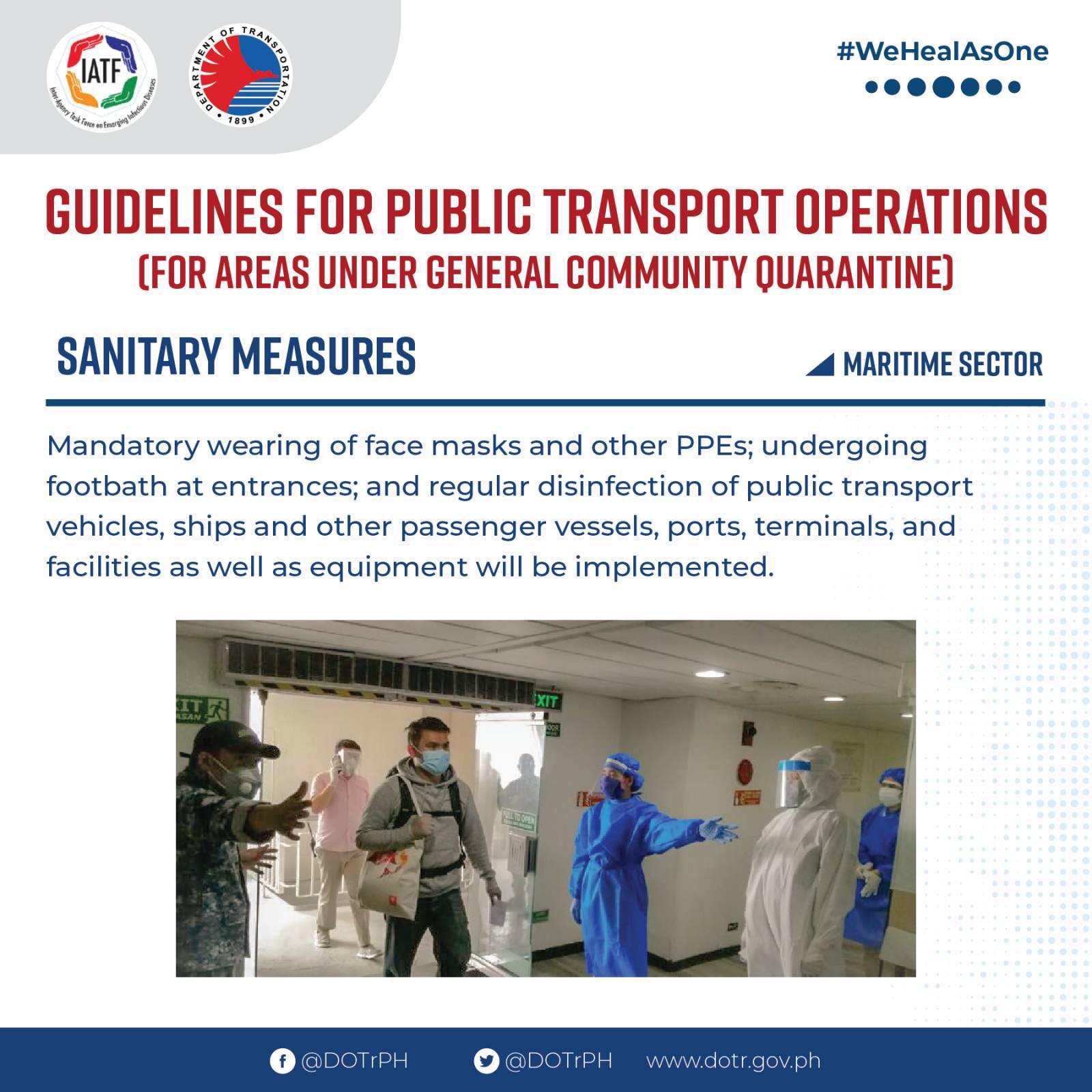
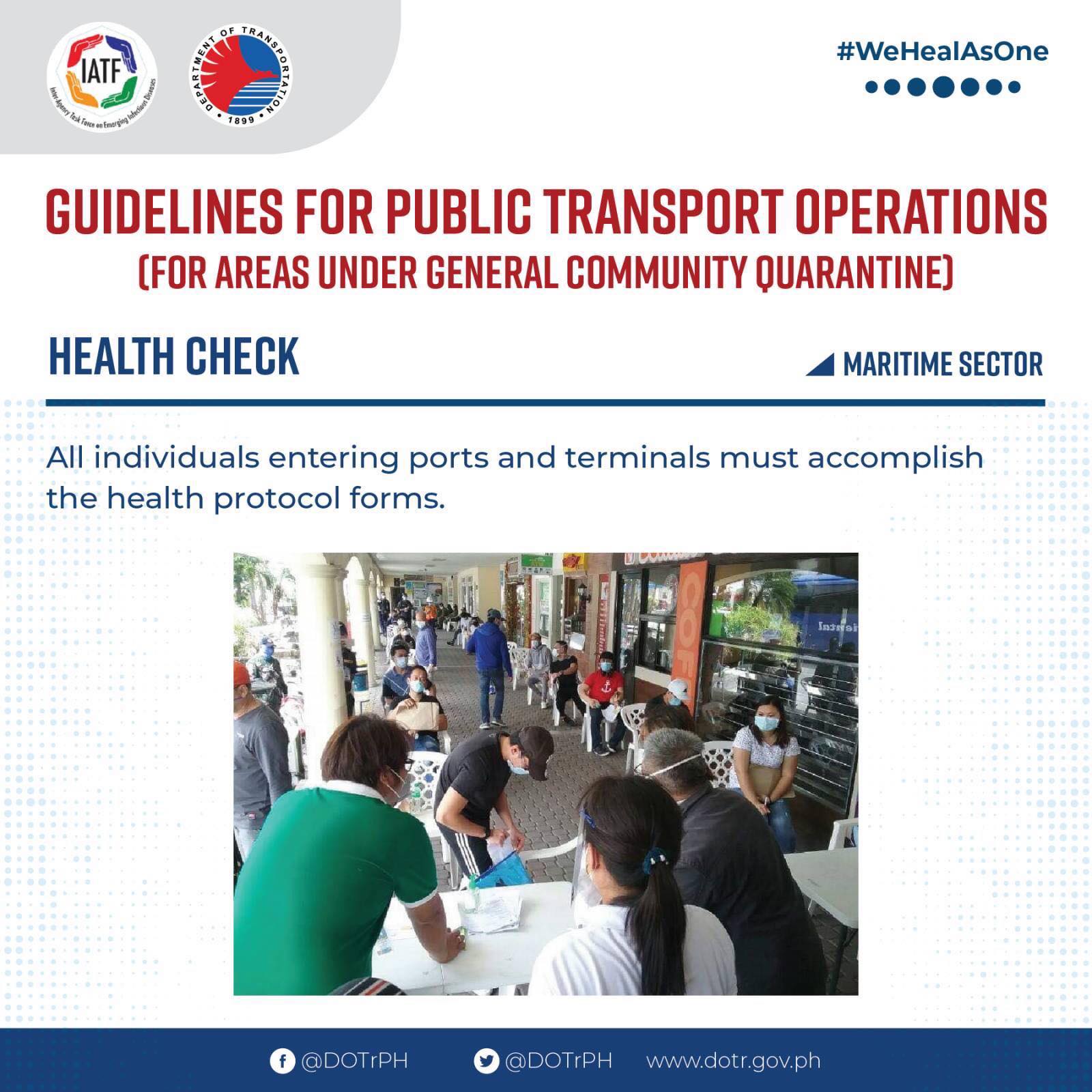
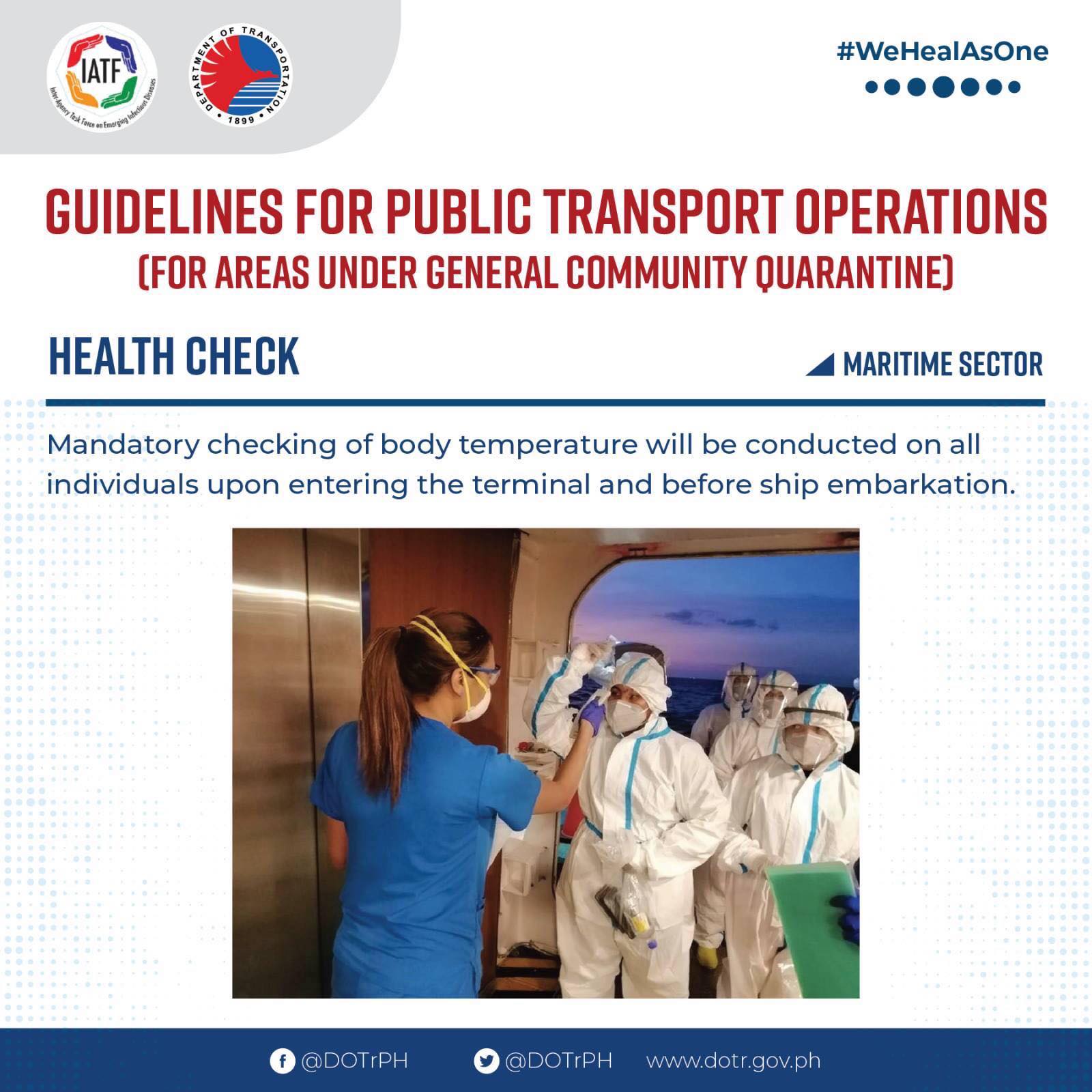
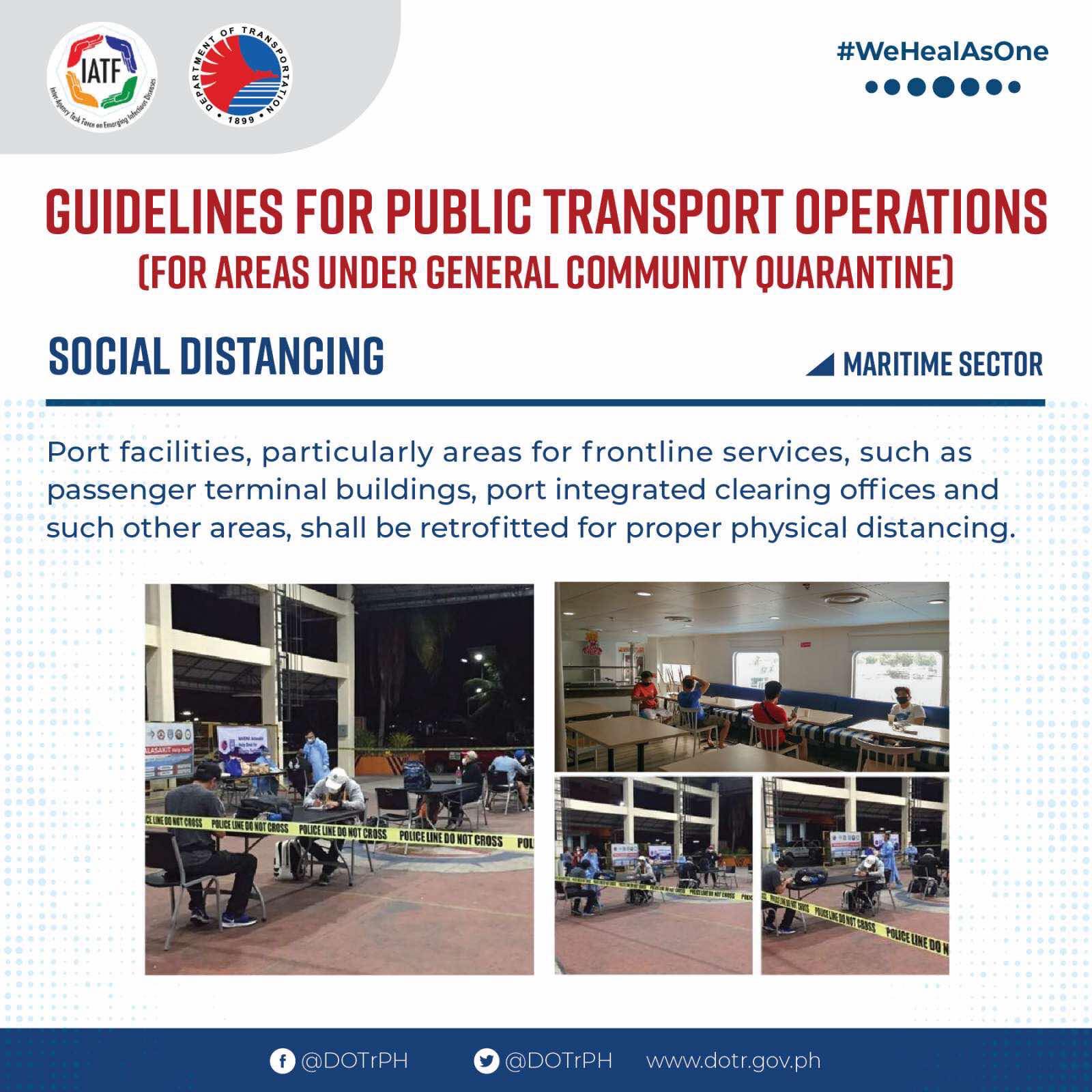
On the DOTr for Public Transport – Maritime Sector
Here’s a continuation of the set of guidelines issued by the Department of Transportation for transport operations for areas that are or will be under the General Community Quarantine (GCQ). Again, I try to refrain from making any critiques or comments, and post this for information and reference.

–
 Caught (up) in traffic