
Home » Maritime transport (Page 3)
Category Archives: Maritime transport
SuperCat trip from Calapan to Batangas
We were glad that we were able to get on either the SuperCat or FastCat for our return trip to Batangas after a meeting in Calapan. For one, this meant that our travel will only be an hour, 1.5 hours less than a trip on a regular RORO ferry. The RORO ferry schedule also didn’t favor an early arrival in Batangas considering we also had to travel back to Metro Manila. The SuperCat staff earlier didn’t sell us tickets because they were not sure there would be SuperCat trip in the afternoon given the conditions at sea.
 SuperCat staff had to assist passengers as they boarded the vessel due to the rough waters that frequently lifted the vessel and make one lose his/her balance.
 Another photo showing staff assisting boarding passengers. Each passenger had to go one at a time and at intervals due to the movements of the docked vessel.
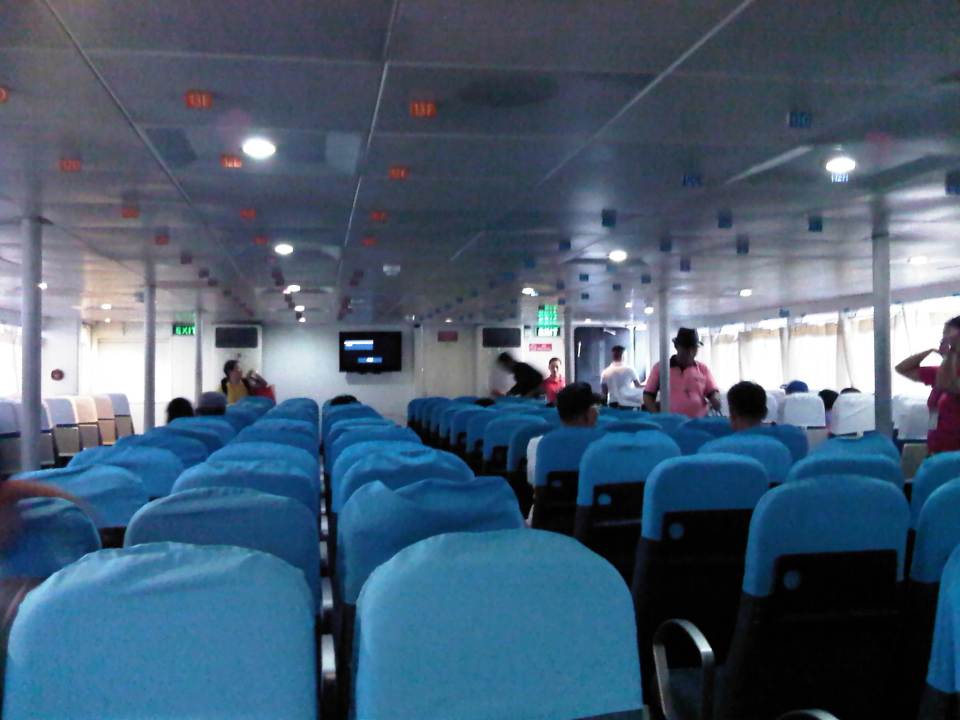 Inside the craft, it was obvious that this was a much better vessel than the regular RORO ferries plying the same Calapan-Batangas route. The seats were more comfy and the interior was clean and obviously well-maintained, and that includes the toilets on the vessel. There was airconditioning and staff were more professional and attentive to passengers (probably taking after airline flight attendants). There were few passengers so some people had entire rows to themselves.
 Passengers may place their bags or things under their seats or in front of them as there were no overhead compartments or space for stowing luggage and other items. Passengers with no one beside them put their bags on the empty seats instead.
 The crew served us some simple snack comprising of peanuts, a cupcake and a fruit drink. There were items like sandwiches, junk food and other drinks available at the bar inside the SuperCat but choices were limited and I learned their stocks were already depleted as this was the last trip for the day for the SuperCat. There were no night time fast craft trips.
 I tried to get photo of what was showing on the television screen but the choppy waters combined with the dim lighting didn’t favor my BlackBerry’s camera. There was only one screen and it’s size is obviously not suitable for passengers seated farther from the front. It didn’t really matter because it was only a 1-hour trip between Calapan and Batangas when using the SuperCat.
 Dim lights as passengers disembark from the fast craft. Outside, crewmen assisted passengers who might lose their balance due to the instability of the vessel due to the rough waters.
It was already drizzling when we got out of the terminal and rain was pouring as we drove out of Batangas and unto the STAR tollway.
–
Calapan Port Passenger Terminal
Calapan City port’s passenger terminal is a nice, modern facility though I think it is insufficient for the number of people that are now using the terminal on a daily basis. I can imagine that the terminal can be congested during the peak seasons of travel. I took a few photos inside and outside the terminal during a recent trip between Batangas and Calapan.
 Pre-departure area at the Calapan port passenger terminal. I was impressed with the terminal that seems better than some airport passenger terminal I’ve seen in the country.
 Fellow SuperCat passengers waiting for our boarding call. One needs to approach the staff at the booth near the gate in order to get a seat number. Seats on board the fast craft are designated even with few passengers making the trip.
 Exiting the terminal to board our vessel, we proceed along a covered pier where our SuperCat and a FastCat ferry (shown at center) are moored.
 The Calapan port passenger terminal as seen from the pier.
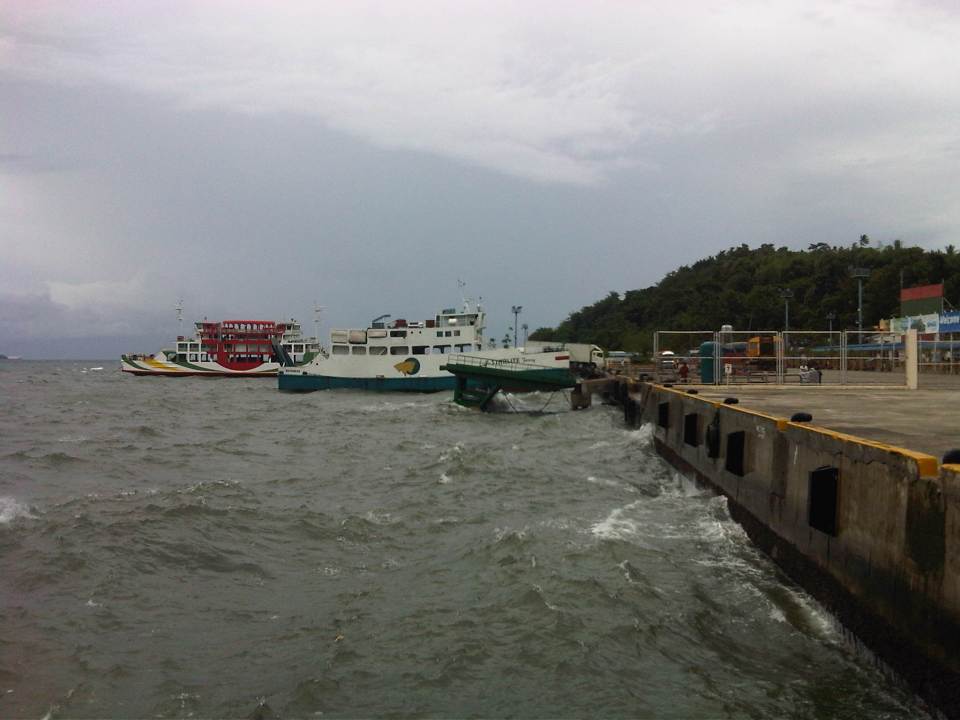 Rough waters hitting the port. Shown in the photo are RORO ferries docked at the port. We rode one of these on our trip from Batangas to Calapan.
 The FastCat is a relatively new service between Batangas and Calapan. It can carry a few vehicles much like the conventional RORO ferries but its twin-hulled design provides stability with speed over rough waters.
 Rear of the SuperCat
 A friend walking along the pier between a SuperCat and a FastCat. The SuperCat is purely a passenger vessel while the FastCat can carry a few vehicles with stability provided by its twin-hulled design.
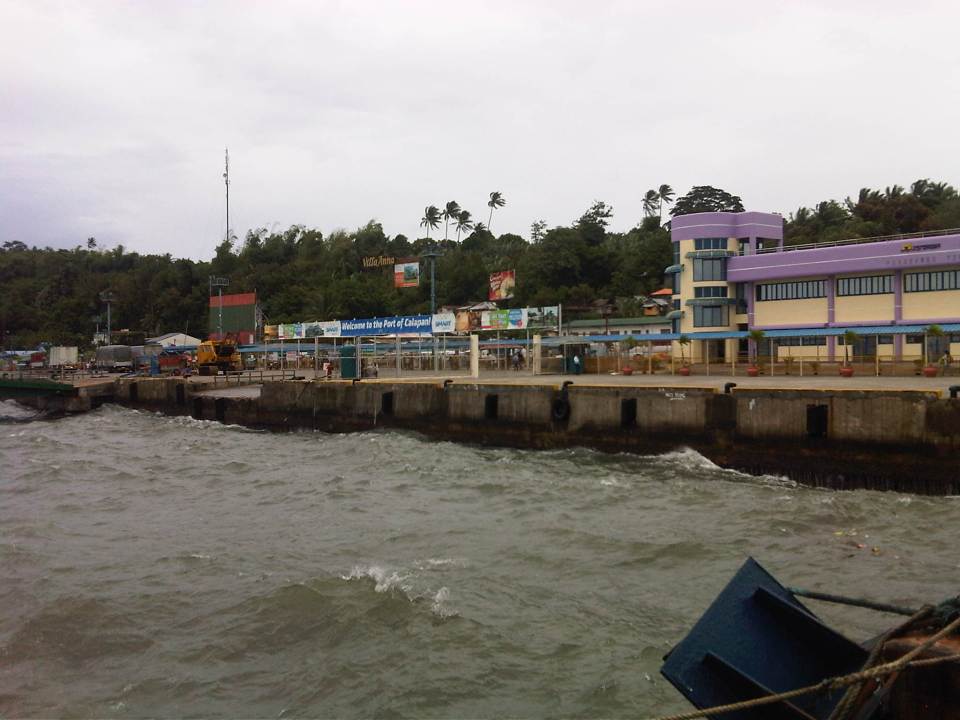 Rough waters in the late afternoon – similar conditions in the morning prevented us from taking a SuperCat to Calapan as fast craft trips were suspended.
–
RORO Ferry trip from Batangas to Calapan
[This post has generated a lot of inquiries about fares and schedules for RORO services between Batangas and Mindoro. I would like to clarify that what I wrote about is on one experience we had on a trip about 2 years ago. I am not connected with any of the ferry companies nor am I connected with the port authorities. For more info/details, here as some useful links:
SuperCat: http://www.supercat.com.ph/Fares/fares.asp
Montenegro Lines: http://www.montenegrolines.com.ph/index.php?nav=4
Port of Batangas: http://www.ppa.com.ph/batangas/about.html
Port of Calapan: http://www.ppa.com.ph/Calapan/cal_about.htm
Safe trips!]
—
Following is the original post:
Due to rough seas, there were no SuperCat trips between Batangas and Mindoro when we arrived at Batangas Port one Thursday morning. It seemed that there was only one fast ferry under the banner of SuperCat that plies the Batangas-Calapan route and it was on hold in Calapan due to rough waters. Later in the day though I would theorize that there might not have been enough passengers that morning between the cities and a decision had to be made not to make the trip, with the convenient and irrefutable reason of rough seas.
 RORO Ferry ticket (left) and passenger terminal fee ticket
 A view of two RORO ferries docked at the Batangas Port. One was operated by Montenegro Lines’ Marina Ferries and the other by Starlight Ferries.
 Passengers boarding the ferry Reina Hosanna. Some vehicles, mostly trucks were already loaded on the ferry. Others would have to wait until passengers have boarded the vessel.
 A view inside the ferry where vehicle and freight are positioned and secured for the voyage. People form a line before the narrow stairway to the passenger level.
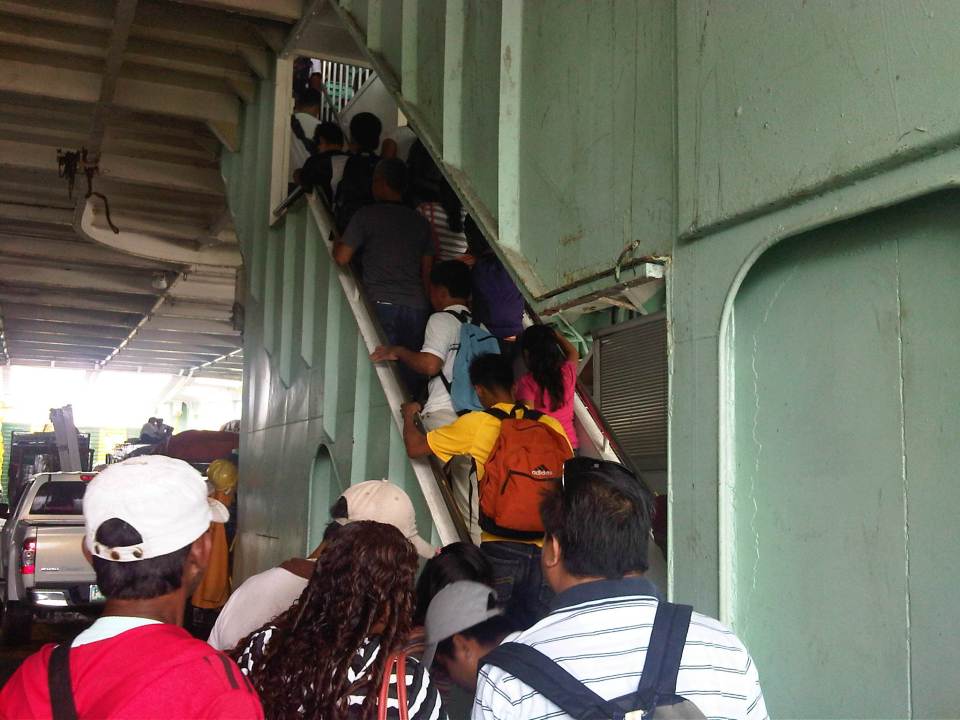 Passengers climbing the narrow stairway to the passenger deck of the Reina Hosanna.
 A view of the Batangas Port from the upper (view) deck of the ferry right above the passenger deck. Trucks can be seen boarding (rolling on) the ferry. The orange things are lifeboats lined along the rear of the passenger deck.
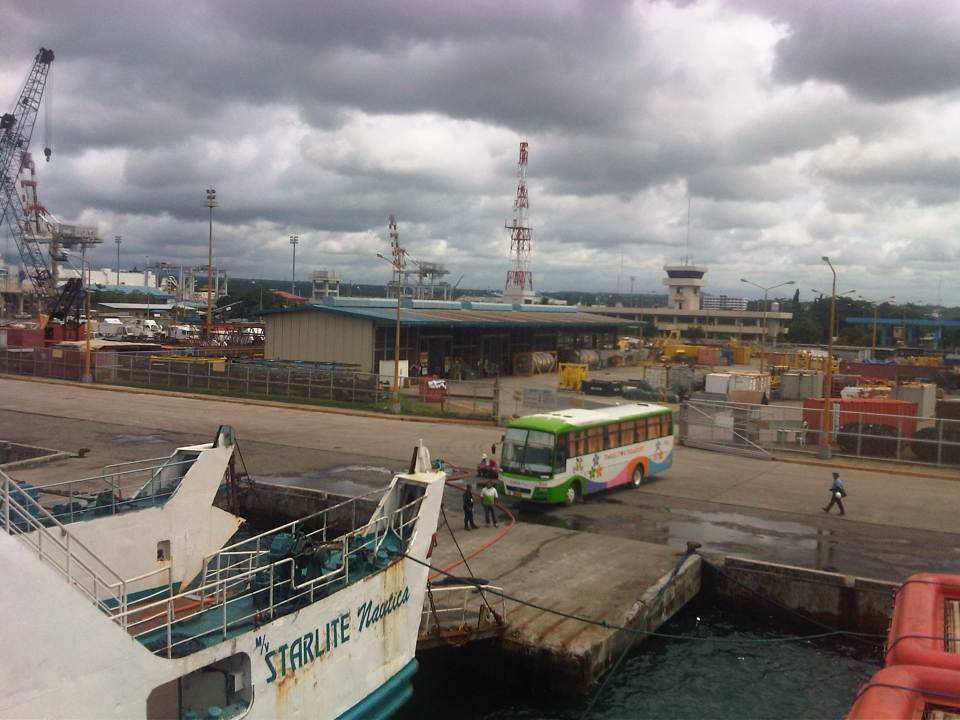 A provincial bus arrives to board another RORO ferry, the Starlight Nautica, which was scheduled to leave an hour after our scheduled departure. There are many bus companies plying the western nautical highway route , which can take the traveler to Caticlan, the jump off point for Boracay Island.
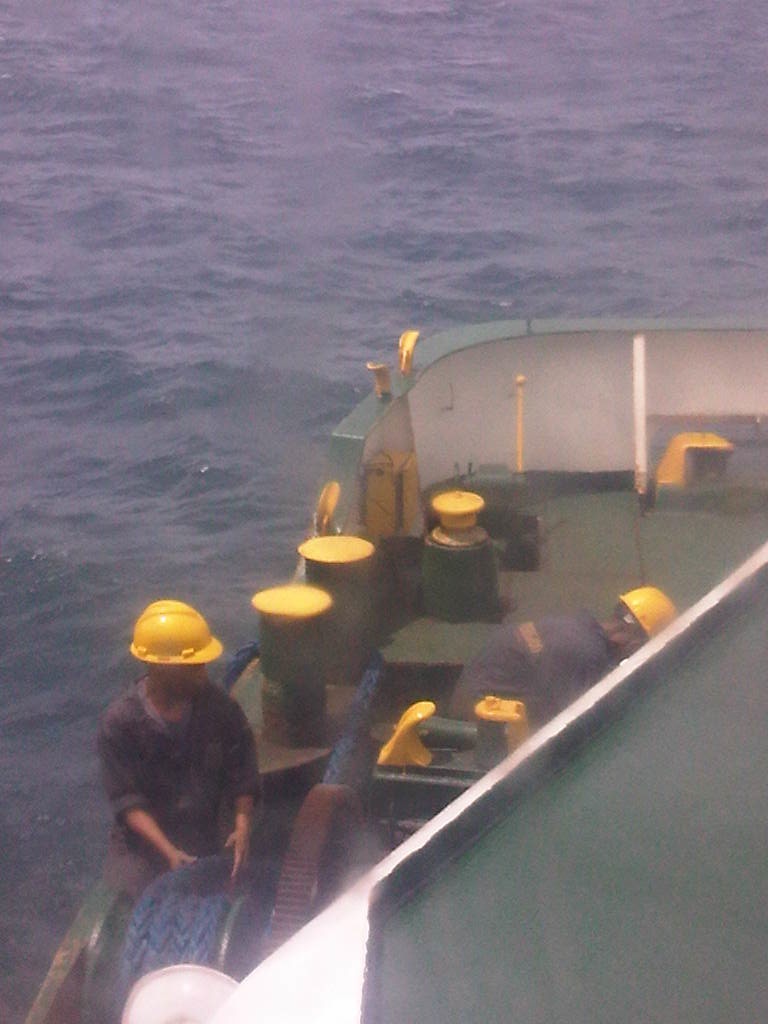 Reina Hosanna crewmen raise anchor.
 A view inside the passenger deck – seats were cushioned but mostly dilapidated and obviously requiring re-upholstery. The cabin seemed to be originally air-conditioned and we were lucky that the weather was fine and not so hot that day. Some passengers went to the upper deck to get some air.
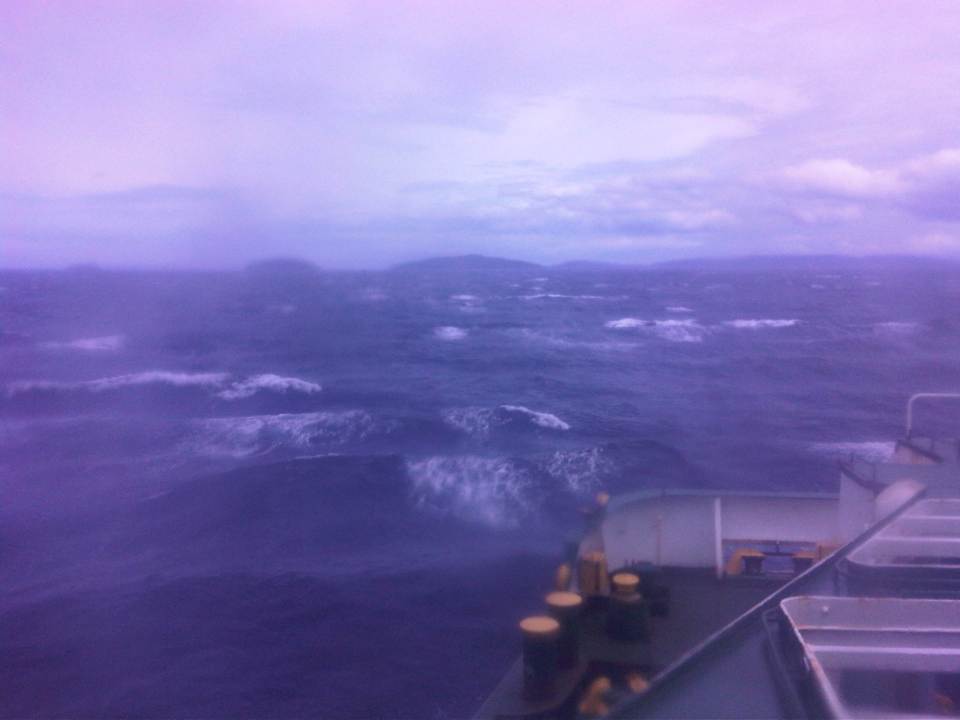 Rough seas along the Verde Island passage to Calapan. We actually saw two fast craft going the opposite direction during our almost 3-hour voyage to Mindoro. One was a SuperCat and another was a FastCat, and they were traveling despite the same rough waters shown in the photo!
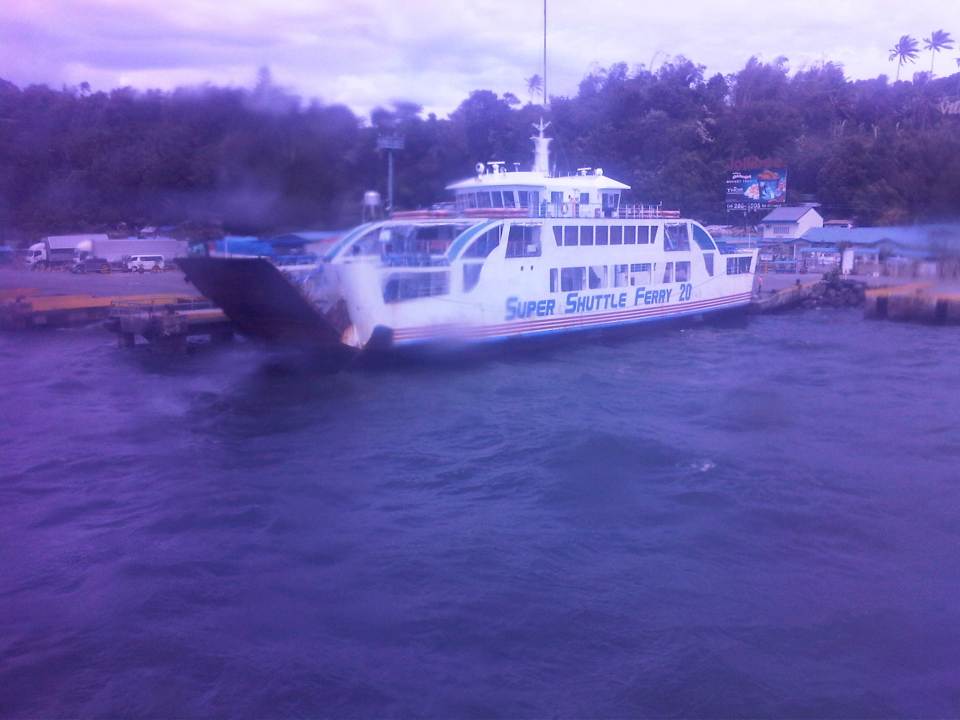 Another ferry preparing to leave Calapan Port.
 Crew throwing a line to the port as our ferry docked at Calapan.
 Passengers disembarking from the ferry.
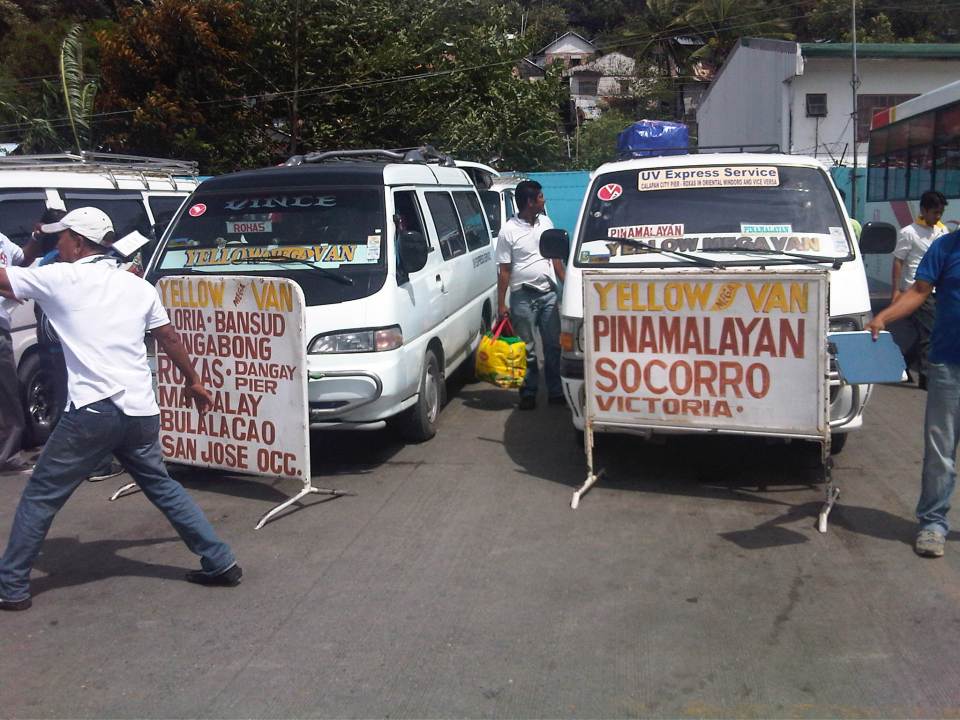 Vans waiting for passengers bound for various destinations in Mindoro including those in Mindoro Occidental on the other side of the island.
It was my first ferry ride in a long time. The last one was a fast ferry trip using the SuperCat service from Cebu to Tagbilaran, Bohol. That was in the afternoon and was quite a rough ride, too. I think shipping lines should not balk on the safety and comfort of passengers. People would be willing to pay a higher fare if the vessels are in better condition and facilities such as seats are well-maintained. I can only imagine the traveling conditions during the peak periods when a lot of people would take these RORO ferries as they are usually the cheaper and practical option between islands. –
Batangas Port RORO Passenger Terminal
In a previous post on the Batangas Port, I featured the newer passenger terminal for fast crafts or fast ferries and large outriggers (katig). This time, I am writing about the Roll-On, Roll-Off (RORO) passenger terminal just across the road from the fast ferry terminal. Heading to Calapan for a meeting there, we were disappointed that we could not take a fast ferry (i.e., SuperCat) to Mindoro. SuperCat ticketing staff informed us that fast ferry services were suspended due to rough seas between Batangas and Calapan. And so to be able to make our appointment, we had to take the slow ferry, which is actually a RORO ferry to Mindoro.
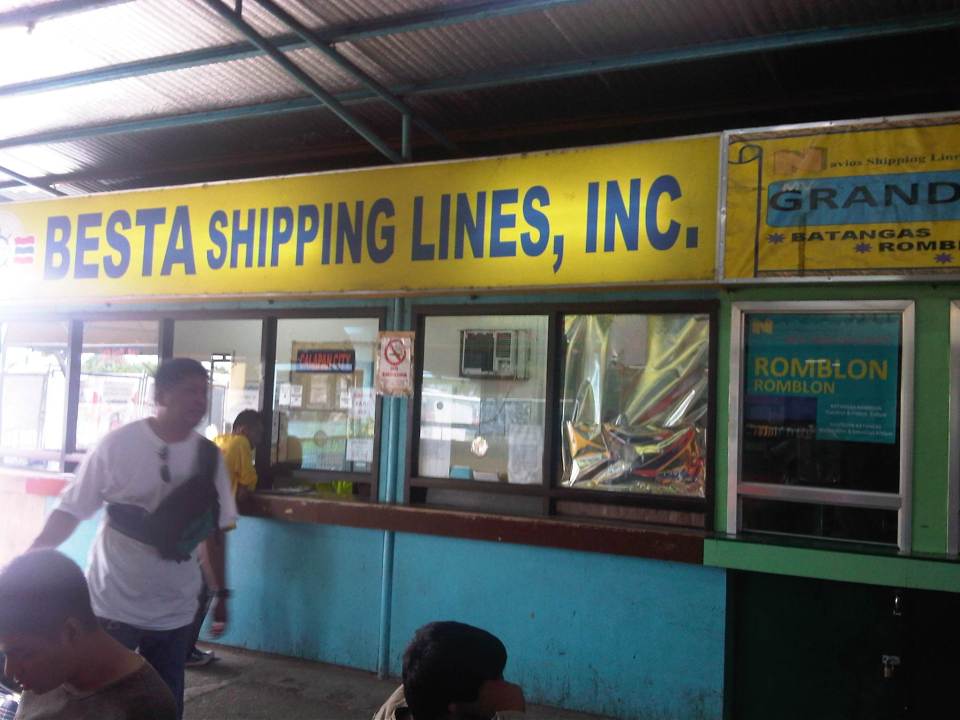 Passengers can purchase their tickets from one of the booths just beside the terminal. Various shipping lines provide services between Batangas and the islands of Mindoro and Romblon.
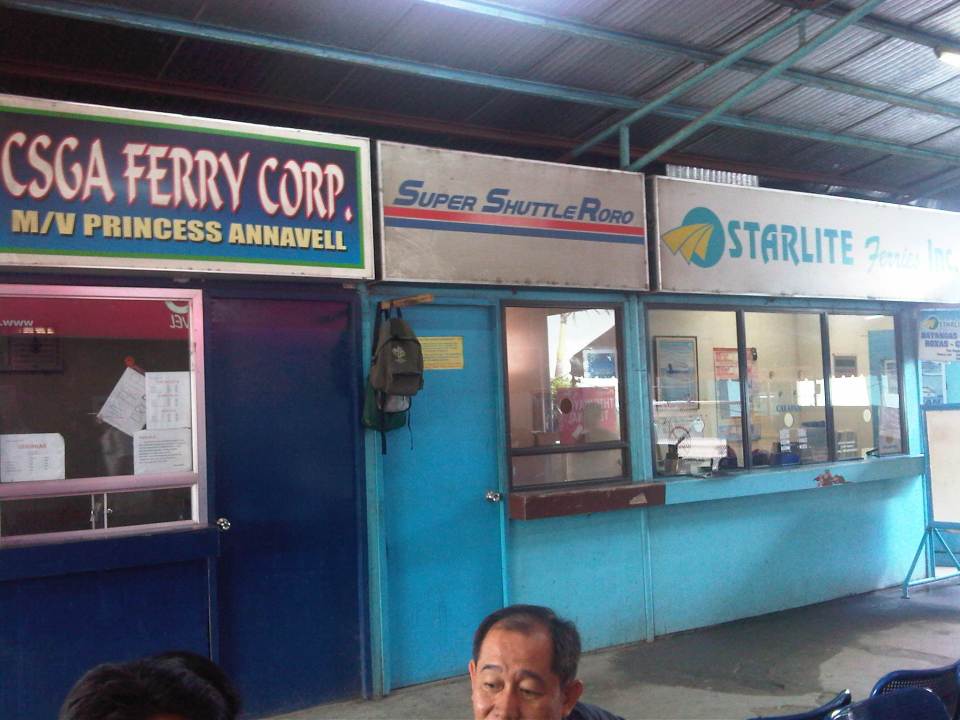 Schedules and fares of ferry services are posted on the windows of each shipping lines’ booth.
 Montenegro Lines operates the most frequent RORO ferry trips between Batangas and Mindoro. RORO ferries leave Batangas every hour for destinations in Mindoro and there is a 24-hour service between Batangas and Calapan. We paid PhP195.00 for a one-way trip to Calapan, Oriental Mindoro.
 Waiting area outside the terminal, which can become very crowded during holidays. One passes by this area right after paying the terminal fee (PhP 30.00) prior to entering the terminal building.
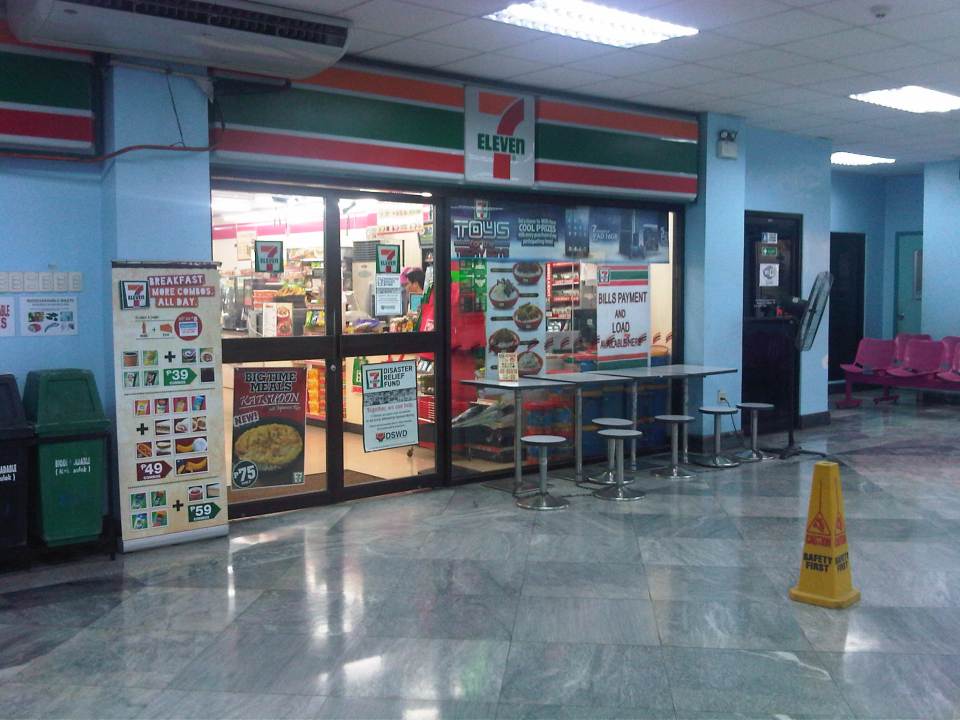 Convenience store at the ground floor inside the passenger terminal. At the ground floor are several other eateries where passengers can purchase and eat meals before boarding a vessel.
 The passenger terminal had clean restrooms at the time we were there. I just hope these restrooms are of similar conditions during the peak periods of travel.
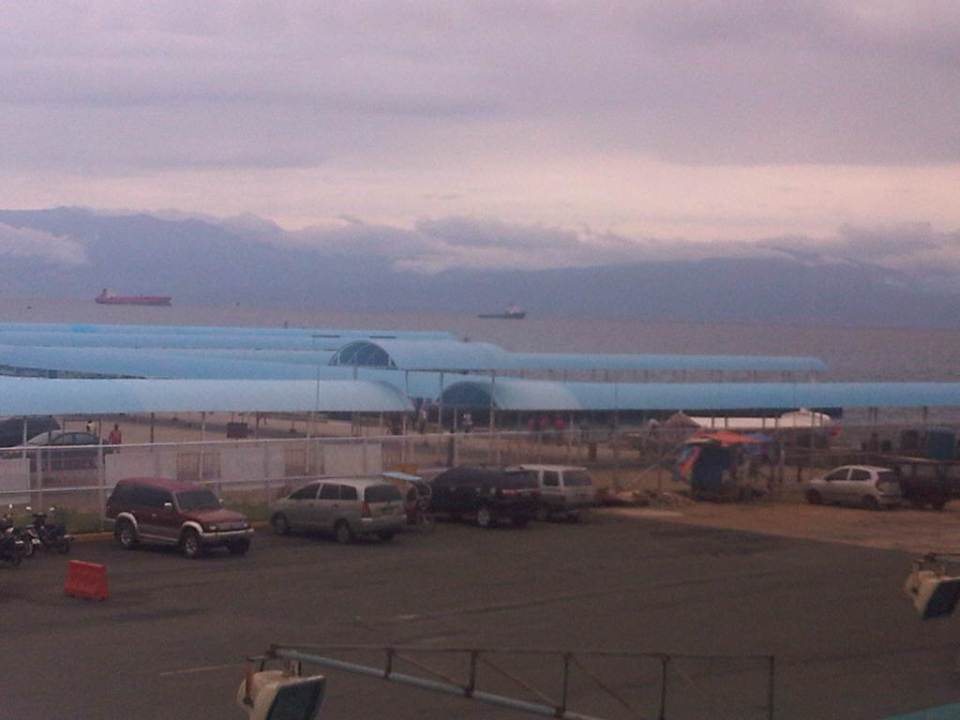 View from across the passenger terminal showing berths for large outriggers (katig) that people can opt to take between Batangas and Mindoro. These are popular for people heading to the resort town of Puerto Galera. These rides can be quite bumpy (and dangerous) so there are concerns regarding safety.
 Seats and shops inside the passenger terminal. On the right is a passenger having a pedicure inside the terminal. My companion was asking me about the women who were carrying small chairs around. Upon observation, we found that the answer was that these chairs were used by women offering manicures and pedicures to waiting passengers.
 The waiting area is located at the second level of the terminal.
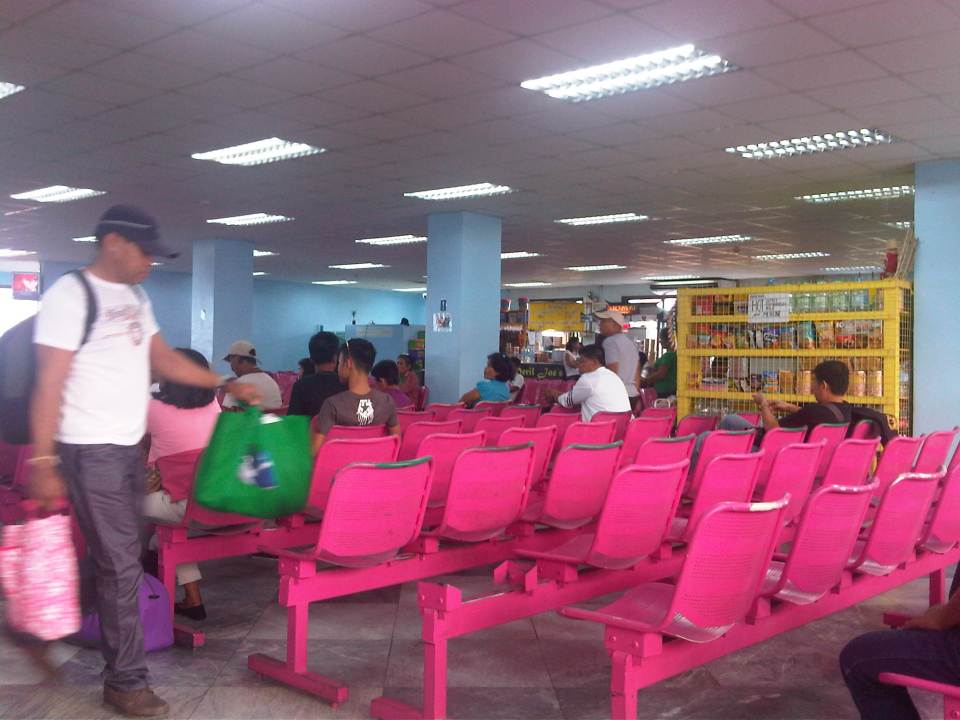 Passengers can get snacks and souvenirs from the small shops at the terminal waiting area.
 When boarding was announced, people filed out of the waiting area to walk across towards the pier. There is a walkway connecting the terminal to the pier.
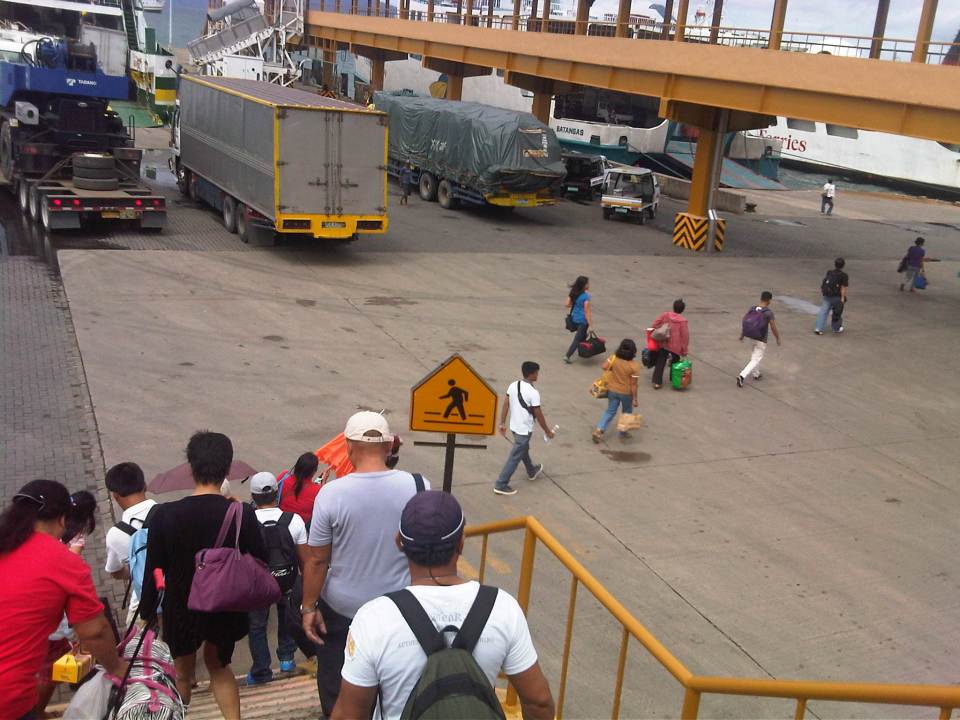 Passengers descend the walkway towards the ferry we were to board. Shown in the photo are people walking past trucks waiting to board the RORO ferries.
 While many passengers travel light, there are some who probably had a lot of luggage because they were coming from longer trips (e.g., flew in from abroad) or maybe taking a long vacation.
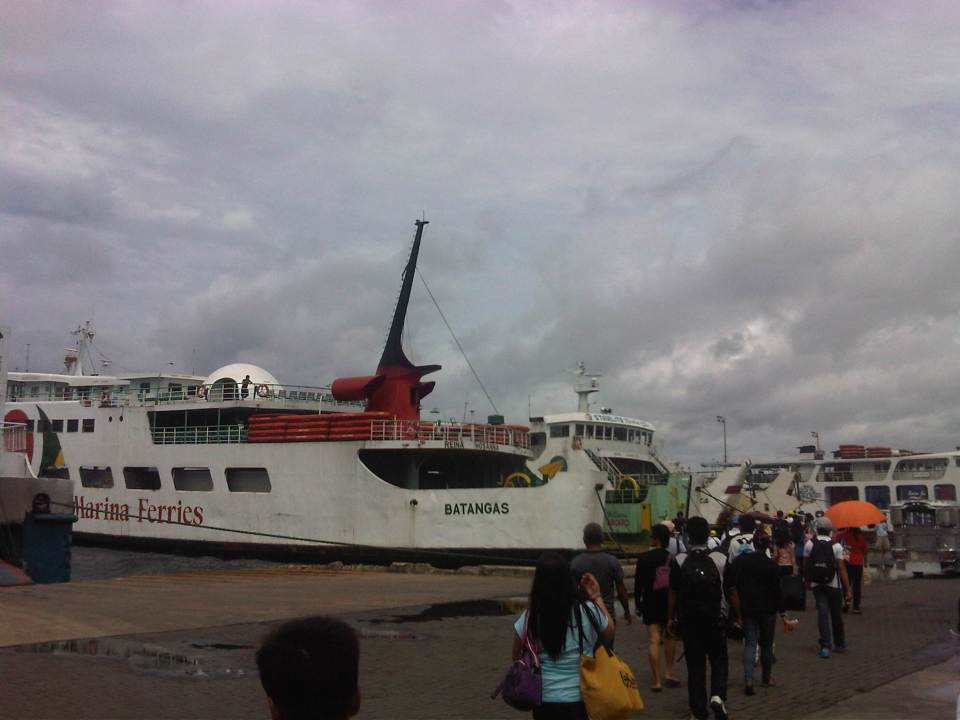 Fellow passengers walking towards our ferry to Calapan.
–
Batangas port passenger terminal
The center I am affiliated with recently held its planning workshop off-campus in a venue on the island of Mindoro. To get there, they had to travel from Quezon City to the province of Batangas where ferries and other vessels provide the transport link between Luzon (where Batangas was located) and Mindoro. A colleague snapped a few photos of the passenger terminal in Batangas, which are shown below.
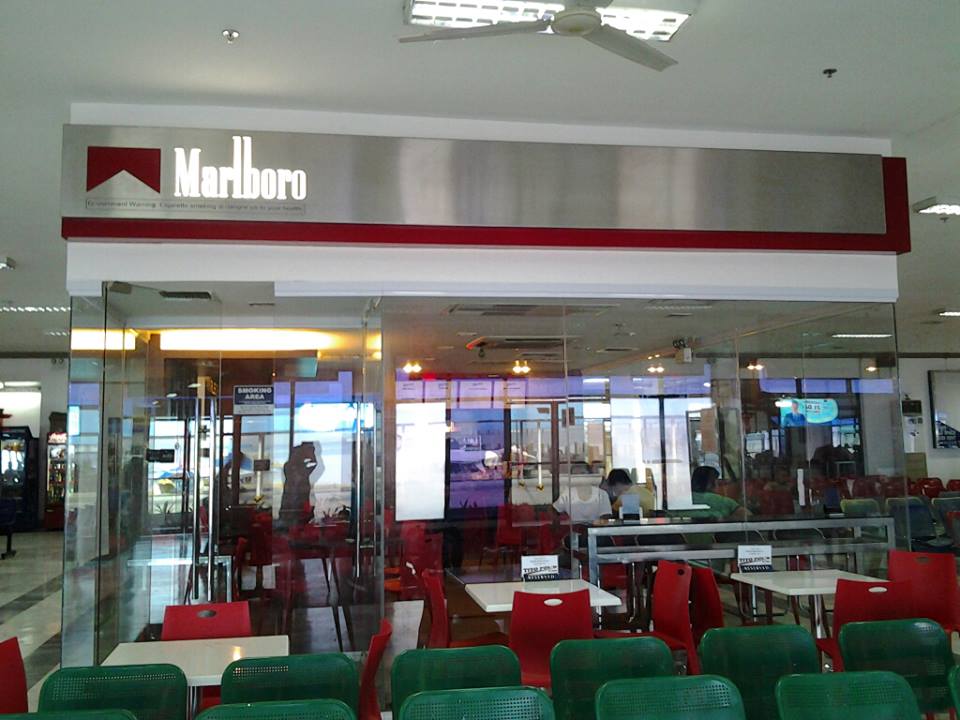 Smoking room in the passenger terminal (Photo credit: Sheilah Napalang)
 Colleagues pose for a souvenir photo at the passenger terminal (Photo credit: Sheilah Napalang)
The Batangas port passenger terminal is a good example of a modern seaport facility in the Philippines. I think it is a better facility compared to the terminals in Cebu and Tagbilaran, as well as the Eva Macapagal Terminal in Manila. Of course, my opinion is limited by the terminals I’ve seen so far and I would like to see the ferry terminals in Sorsogon, Samar, Leyte and Surigao , which are part of the Eastern Nautical Highway and has been the main land-sea route between Luzon, Visayas and Mindanao. Here’s looking forward to more posts on maritime transport and terminals in the future!
–
Ferry to Marinduque
A friend, Dr. Jonathan Salvacion, posted some photos of a trip he made to Marinduque. I noticed a couple of photos showing the ferry their group took between the Port of Lucena and Marinduque Island. After getting his permission to use the photos, I am post both here to show the typical ferry used in inter-island, roll-on roll-off (RORO) transport in the Philippines. Being an archipelago, providing safe and efficient inter-island transport is a continuing challenge for the country. A lot of progress, though, has been made regarding infrastructure and services. The improvements include the nautical highway system comprised of highways and seaports where the past and present administrations have invested heavily during the past decade.
 Passengers boarding the ferry to Marinduque – the port is designed with a ramp for vehicles to easily “roll-on/roll-off” the vessel [Photo credit: Jonathan Salvacion]
 Inside the ferry, vehicles are parked while passengers are seated above on deck. [Photo credit: Jonathan Salvacion]
–
Reviving the Pasig River Ferry, again
The Pasig River Ferry is in the news again as a major corporation considers reviving the ferry. I’m just not so sure about their motivation for this as what I’ve read on news media seems to say that their plan for reviving the ferry service is linked with their real estate projects, especially one in Manila that’s shaping into Circuit Manila, on land that used to be the Sta. Ana race track. The nearest ferry terminal or station would be the Valenzuela ferry terminal, which is accessible via S. Osmena St. The same street connects to Makati City Hall. Public transport should be service oriented, which the main reason why many public transport systems, particularly rail transit, losing financial ventures and have to be subsidized by governments around the world. But note that I mentioned “financial” in the previous statement because there are definite and established benefits from economic perspective. I’m giving the benefit of the doubt, however, in so far as the track record of the company gives us hope that their entry would be good from the management and marketing perspective of the ferry system. A successful venture here would prove the viability of a water-based system that has so much potential considering it could connect Manila, Makati, Mandaluyong and Pasig directly with other towns of the provinces of Rizal and Laguna around the Laguna De Bay.
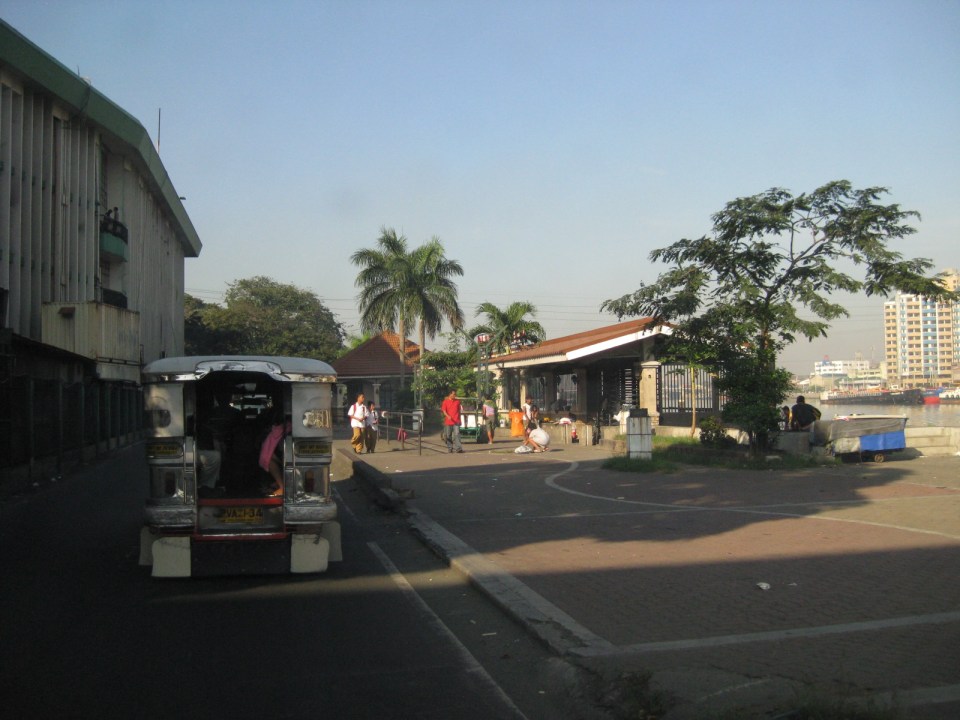 There are many informal settlers along the stretch of the Muelle del Rio (now also known as Riverside Drive) from MacArthur Bridge to Plaza Mexico in Intramuros. Several families can be seen living under the bridges or with their carts along the linear park.
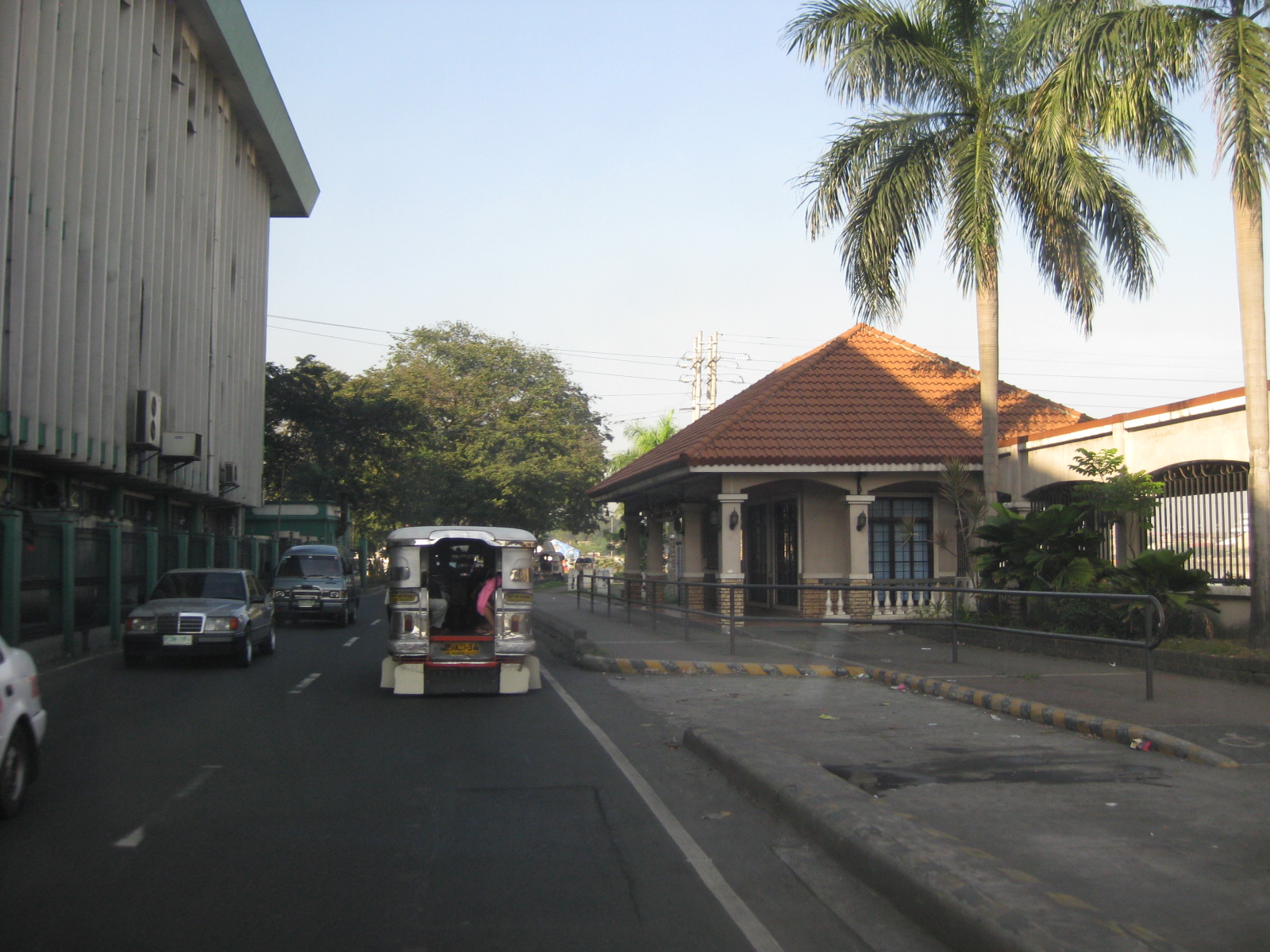 The Plaza Mexico Station of the Pasig River Ferry
Reviving the Pasig River Ferry would take a lot of effort and that effort does not yet include the marketing required to attract passengers for the ferry. Of course, one way to promote the use of the ferry is if people can be convinced that using it could cut down their travel times between origins and destinations. While the ferry may provide a more direct route along the river, connectivity with other modes of transport (e.g., road public transport) and pedestrian facilities should increase ridership. Needless to say, affordability (i.e., fare rates) and safety/security are essential components for an attractive mode for commuting. The tourism aspect would just be a bonus in terms of users.
–
Fast ferries in the Philippines
The Philippines is an archipelago, meaning it is comprised of islands, some 7,107 of them. As it is impractical (read: too expensive) to connect the larger islands by bridges or tunnels, the connections would have to be made via either maritime or air transport. In previous postings, I have already written about some of the more modern airports in the country like the Bacolod/Silay, Iloilo and Davao airports. What I have not written about in this blog is something in maritime transport.
To get a feel of the current state of commercial maritime inter-island transport (i.e., not including those using motorized or human-powered boats or bancas), I thought it most appropriate to feature fast ferry/fast craft services that are quite popular in the Visayas and Mindanao. I will write on roll-on, roll-off (RORO) services and the nautical highway in the future.
There have been much progress in the upgrading of maritime transport services between islands in the Visayas and Mindanao. This was made possible with the introduction in the 1990’s of fast craft or fast ferries popularly called Supercat with the cat in reference to the catamaran-type vessels plying routes like Bacolod-Iloilo, Cebu-Tagbilaran and Cebu-Dumaguete. These fast crafts effectively cut down travel times by half with the Bacolod-Iloilo run trimmed down from 2-2.5 hours to 1 hour. Following are a few photos of fast crafts and terminal facilities in Cebu City.
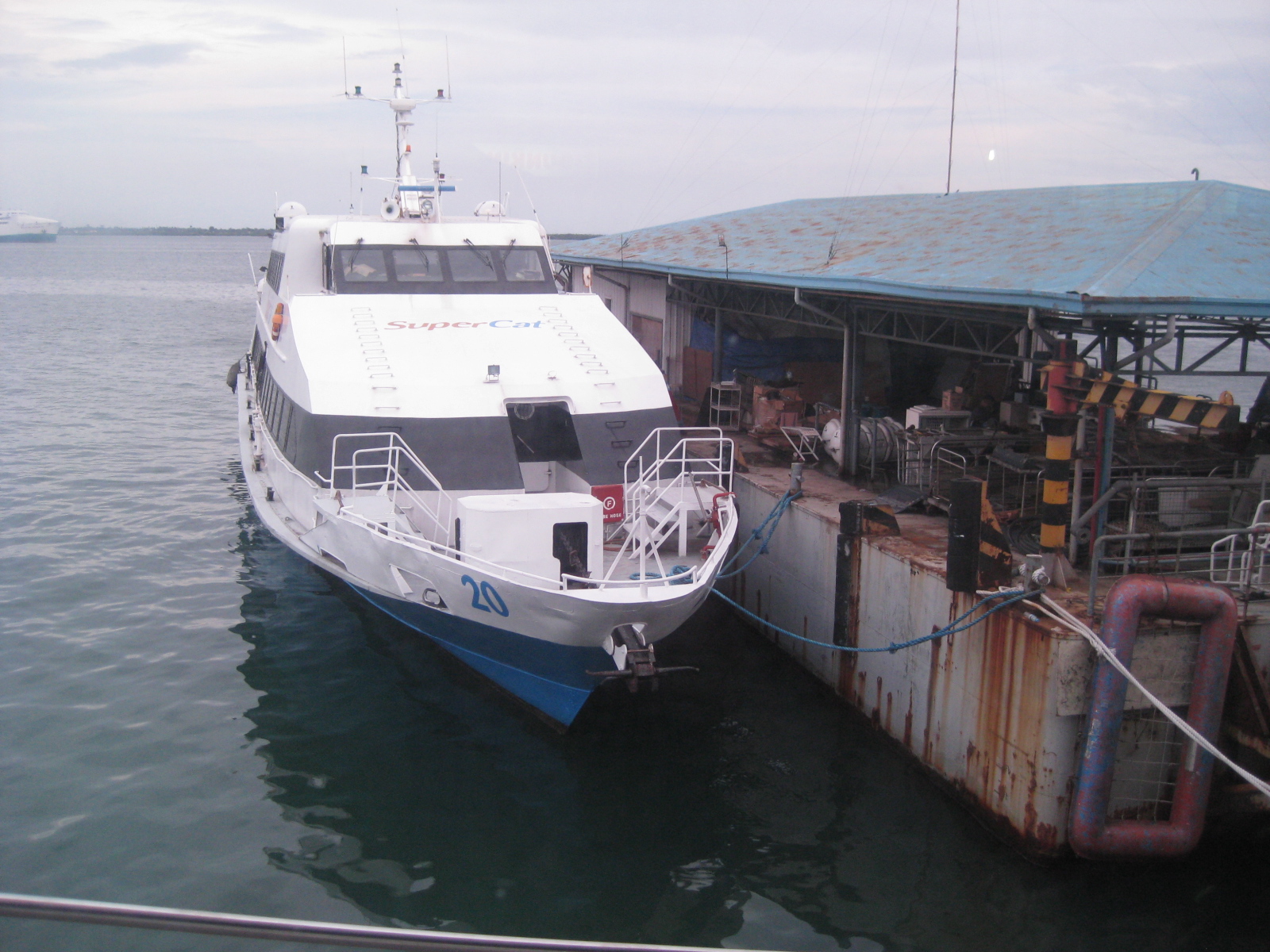 Typical fast ferry docked at the Cebu terminal of the Aboitiz Co.
 Twin-hulled SuperCat approaching the Cebu port
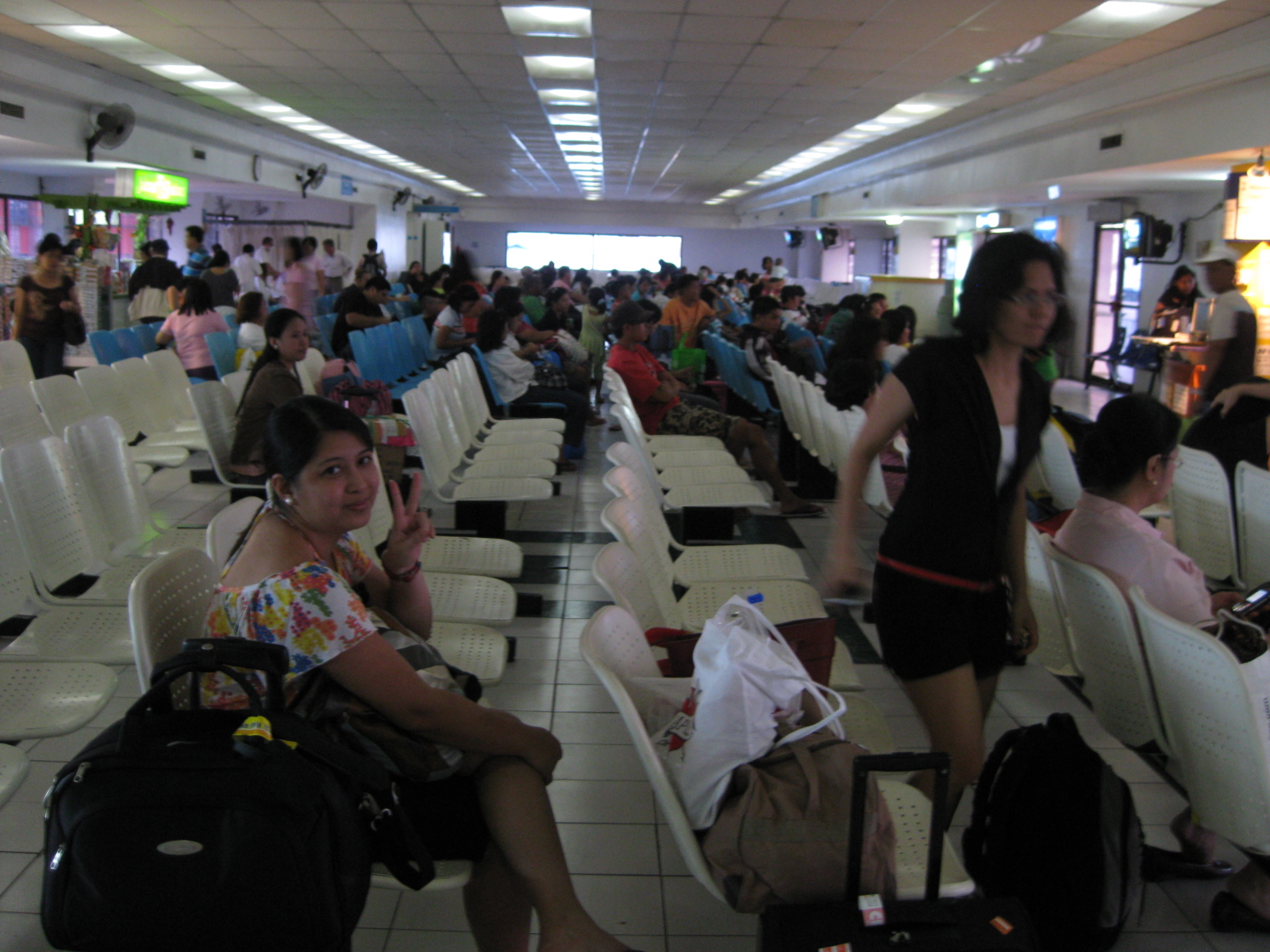 Inside the fast ferry terminal, there are plenty of space and seats for waiting passengers. There are also concessionaires selling food, drinks and souvenir items.
 Floating piers serve as the port’s extensions to accommodate fast craft operations
 Passengers boarding the fast craft via bridge connecting the terminal to the floating piers
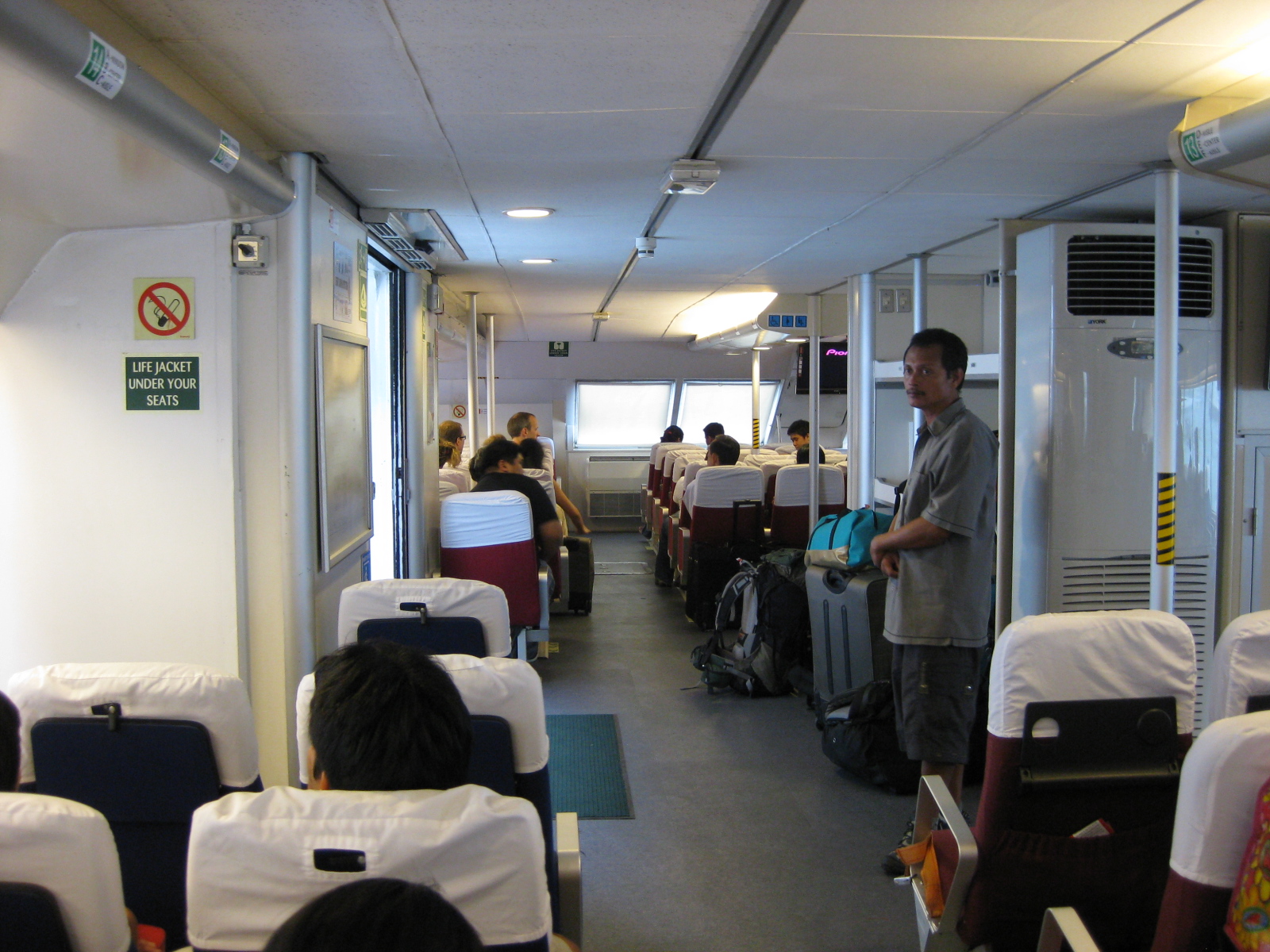 On-board the SuperCat, seats appear like those for long-distance buses complete with head rests for the comfort of passengers. The vessel cabin is fully air-conditioned.
 Another view of the seats inside the vessel show comfortable seating for passengers as well as wide windows for those wanting to have a view of the islands. There is also a snack bar inside the vessel serving food and drinks to hungry or thirsty passengers.
Fast ferry/fast craft services are quite popular in the Visayas and Mindanao and provide a less expensive option to air travel. These complement the RORO services that are more about long-distance travels between cities in different parts of the Philippines, like for example Manila to Iloilo. Such services offered by fast craft are essential for both commerce and tourism and should be encouraged for further development or upgrading, especially in terms of terminal facilities that are still wanting or deficient in many ports in the Philippines.
–
 Caught (up) in traffic