
Home » Mode Share (Page 6)
Category Archives: Mode Share
Another look at home location choices
I recently shared an article showing the results of a survey conducted in the US. That survey appears to show that Americans prefer sprawl. But that may be due to many factors including political leanings that are actually mentioned in the article. I share another article that appears to be a reaction to the first one.
Lewyn, M. (August 14, 2023) “Do Americans Really Prefer Sprawl?” Planetizen, https://www.planetizen.com/blogs/125112-do-americans-really-prefer-sprawl?utm_source=newswire&utm_medium=email&utm_campaign=news-08142023&mc_cid=cd3b2e2ba5&mc_eid=9ccfe464b1 [Last accessed: 8/16/2023]
To quote from the article:
“Why do these surveys yield such drastically different results? The Pew survey notes that 3/4 of rural respondents favor the less walkable alternative; thus, that survey was apparently designed to include a representative sample of Americans, including rural Americans who typically do live in very spread-out environments. It seems to me quite natural that rural Americans would prefer rural lifestyles.
But once rural respondents are excluded, the balance between sprawl and walkable communities in the Pew survey becomes almost a toss-up. 57 percent of urban respondents refer houses with smaller yards and more walkability, and an almost-equal percentage of suburban respondents prefer the opposite.”
Again, I wonder what would be the outcomes if a similar survey were done in the Philippines. Will it reveal preferences for single detached homes rather than condos? Who will prefer the latter or the former? What could be the factors affecting home location choices in the Philippines? Cost is definitely a major factor. Commuting times perhaps and even commuting costs? But how do people weigh these factors? And what other influences are there to the decisions to purchase homes?
–
Bike lane master plan for Metro Manila, Metro Cebu and Metro Davao
The Department of Transportation (DOTr) with support from the United Nations Development Program (UNDP) yesterday formally launched the Bike Lane Master Plan for Metro Manila, Metro Cebu and Metro Davao. Yesterday’s event was actually the third and last leg of presentations, which were also made in Cebu and Davao. Here are a few photos I got from the DOTr Facebook page (these are public):
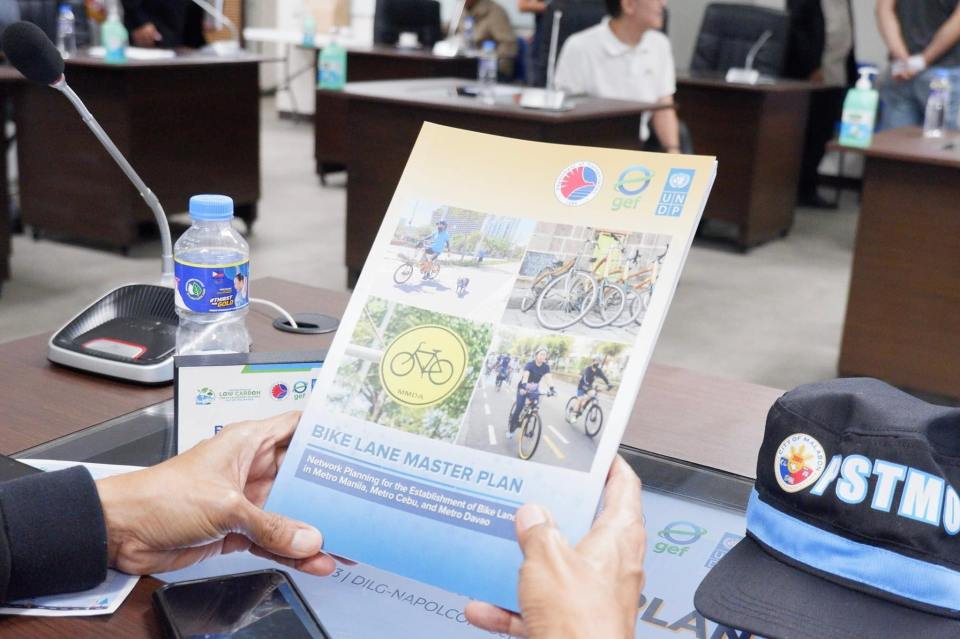 Printed copies of the master plan were distributed to attendees (Photo: DOTr Facebook page)
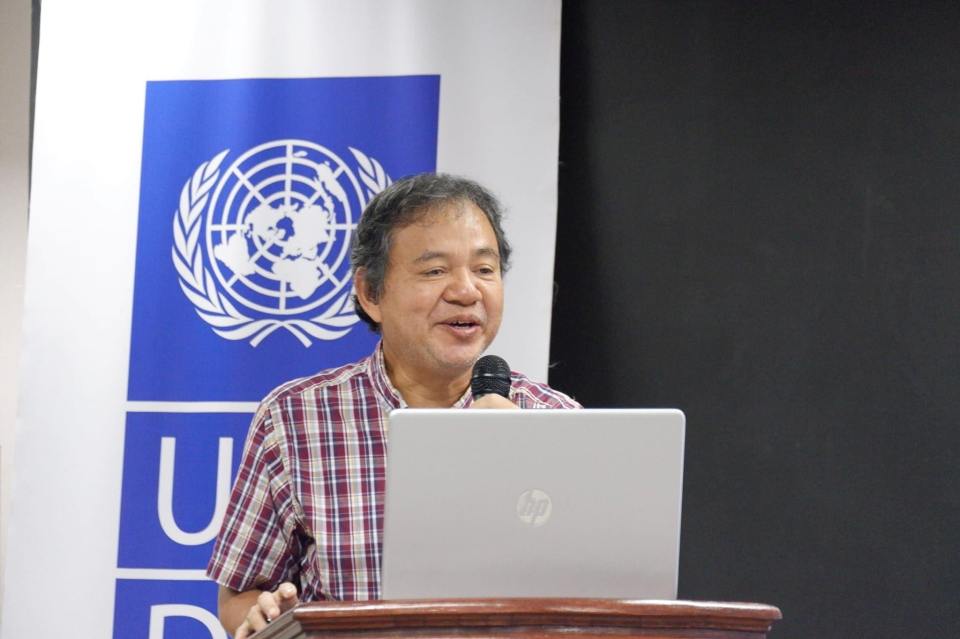 Dr. Ricardo Sigua of the National Center for Transportation Studies presented the highlights or key features of the master plan. The UNDP engaged NCTS to conduct the master planning project for DOTr. (Photo: DOTr Facebook page)
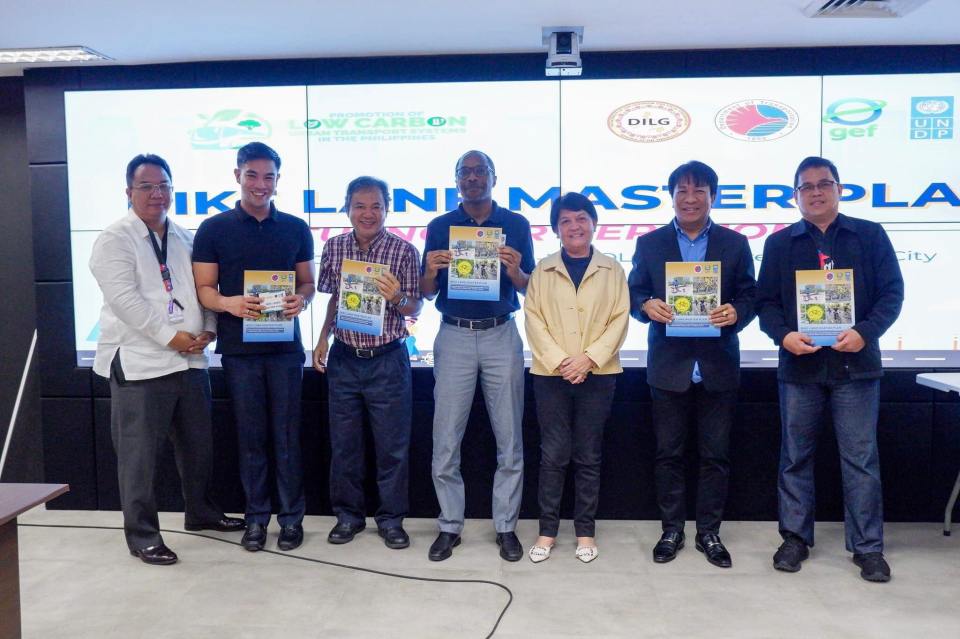 Photo op with participants from the MMDA (Photo: DOTr Facebook page)
While the master plan is most welcome as the country continues to build infrastructure for active transport (mainly walking and cycling), the launch is actually one year late. The project was actually completed last year and though most of the recommendations have yet to be carried out, many items including the inventories are already dated. These master plans though should not be static documents but dynamic in these sense that it would have to be updated regularly. For one, updates would provide the opportunity to reinforce or improve certain aspects of the plan. Updates also provide an opportunity to check whether progress is being made on the targets set in the plan. Also, since the master plan is for three metropolitan areas perhaps it can be part of the foundation for a nationwide plan. However, many plans fail if there is not support or scarce resources allocated for the implementation. Thus, there is a need for resources or allotments especially coming from government to support the realization of the plan.
–
Article on “Fair Share Transportation Planning”
I am sharing this new article from Todd Litman on fair share transportation planning. The content is relevant and very timely in the Philippines considering many people including and especially transport officials are struggling with the thought of allocating resources to provide or improve facilities geared towards more equitable transport systems (e.g., more facilities for active transport).
Here’s the summary as quoted from the article:
“To be efficient and equitable, a transportation system must serve diverse demands. A diverse transportation system allows travelers to use the most efficient option for each trip—safe walking and bicycling for local errands, efficient public transit when traveling on busy travel corridors, and automobiles when they are truly the most cost-effective mode considering all impact—and it ensures that people who cannot, should not, or prefer not to drive receive their fair share of public investments.
Current transportation planning practices are biased in various ways that overinvest in automobile infrastructure and underinvest in more affordable, inclusive, and efficient modes. It is time for planners to reconsider our analysis methods and funding practices to ensure that non-auto modes, and therefore non-drivers, receive their fair share of transportation resources.
This is not anti-car. Motorists have good reasons to support more investments in non-auto modes that reduce their traffic and parking congestion, reduce their chauffeuring burdens and crash risk, and provide better options when their vehicles are unavailable. Everybody wins from a more diverse and efficient transportation system.”
Shared rides, anyone?
Would you share your ride with other people? This is not the conventional ride-sharing where you drive for someone else (i.e., Grab, Uber, etc.) but refers to a passenger sharing the vehicle he/she booked with another passenger or passengers. This is supposed to reduce the cost of the ride but can lead to more distance traveled as the matching of passengers has not been perfected. That is, it is likely to share a ride with a person heading to a destination that is out of the way of the passenger (in as far as typical routes are concerned).
Walker, J. (May 26, 2023) “Lyft: The End of Shared Rides,” Human Transit, https://humantransit.org/2023/05/lyft-the-end-of-shared-rides.html [Last accessed: 6/12/2023]
To quote from the article:
“I used this service once. On a departure from the airport, it paired my trip with one in a substantially different direction. The other trip was to a point further from the airport than my destination, and yet it served that trip first. I ended up with a travel time about twice what my direct travel time would have been, and much more than the app had estimated. I never used this option again. My impression was that they were overselling the product in contexts where it wasn’t appropriate, and they were offering the same discount to the person dropped off first — whose trip is exactly what it would have been if traveling alone — as to the person whose trip was being made much longer.”
We actually already have shared rides in the Philippines. This is in the form of UV Express (formerly and popularly referred to as FX after the Toyota vehicle model that became popular from the 1990s), which continue to be a popular mode of public transport. Shared rides evolved from a group of people negotiating with FX taxi drivers to take them to a common point or destination (not to their final destinations). At the common destination, the passengers will eventually part ways for their last mile trips. Here is the article on a taxi service that eventually became a shared service I wrote a while back:
That was before there were apps to facilitate the sharing. I think this also showed how people will find ways to overcome problems like a lack of public transportation for their commutes.
–
On bicycles as a preferred mode of transport
Sharing this article on bicycles being the perfect mode of transportation. It is framed with respect to the concept of the 15-minute city. Here is the article:
Johnson, R. (April 19, 2023) “Embracing the 15-Minute City: 7 Reasons why Bicycles Are the Perfect Mode of Transportation,” Momentum Mag, https://momentummag.com/embracing-the-15-minute-city-7-reasons-why-bicycles-are-the-perfect-mode-of-transportation/ [Last accessed: 4/29/2023]
To quote from the article:
“Bicycles are aligned with the goals of sustainability and climate action, as they contribute to reducing greenhouse gas emissions, air pollution, and congestion. In a 15-Minute City, where the focus is on creating sustainable and climate-friendly communities, bicycles can be a powerful tool to achieve these objectives. By promoting cycling as a viable transportation option, cities can reduce their carbon footprint, mitigate climate change impacts, and promote a greener and healthier way of living.”
–
A brief history of transport strikes – Part 4: impacts and implications
What was supposed to be a week-long transport strike by jeepney drivers and operators was called off yesterday. Frontpage news showed a photo of representatives of protestors with government officials. Government official statements also declare that the government will be talking with the transport sector to sort out issues and to try to address these in relation to the PUV Modernization Program (PUVMP). One day earlier, government was quick to state that the strike had no impact on transport. Were there really no impacts?
I think the fact that schools went back to online mode and offices allowed employees to work from home show the impacts of the transport strike. If you haven’t noticed, the government has been using the tactic of cancellation of classes for quite some time now. To reduce the impacts of transport strikes on commuters, classes on all levels were canceled, thereby reducing transport demand. The only difference now is that there is capacity for online classes due to adjustments made during the height of the pandemic. So instead of cancelling classes altogether, schools reverted to online mode. Meanwhile, for those who needed to go to their workplaces and did not have their own vehicles, there were various free rides (libreng sakay) services provided by national and local government agencies. Cities like Quezon City already operated their own bus services so people could take these instead of their usual PUV modes for commuting.
What are the implications of the shortened strike? The shortened strike has various implications. One is that it showed the protesters did not have enough resources to sustain the strike. It also showed that transport leaders appear to just want some attention from government. A colleague commented about this being something like a show or the strike being part of a game of “bad cop, good cop” among government officials and agencies. If you haven’t noticed, this has been going on for some time now. Government already knows how to reduce the potential impacts of protests like this. Suspending classes in schools significantly reduces the travel demand on a typical weekday. Offices giving their employees the option to work from home during the strike also adds to the reduction in travel demand. And libreng sakay vehicles are easier to deploy as agencies and LGUs have vehicles for this purpose. Meanwhile, the continuing rise in motorcycle ownership also contributed to people being able to still commute (i.e., having the motorcycle taxi option). At least for Metro Manila, once the railway projects are completed, there will be a railway option for commutes. Barring a simultaneous strike with buses and vans, protests from the jeepney sector will surely be diminished.
–
Article share: On a future with fewer cars
Advocates of sustainable transport including those pushing for more efficient public transport and more bike lanes often cite what is supposed to be car ownership data from past studies like the one conducted by JICA for Mega Manila. Most recently, I read an article that mentions only 5% of Filipinos own a car so they shouldn’t be hogging the road space against the rest. It seems so simple yet does not take into consideration geographic and demographic factors. It seems to underestimate vehicle ownership across the country and especially in cities. Also, do we equate vehicle ownership with just car ownership? Many may not have cars per se but own and operate motorcycles or tricycles.
I share the following article from the Washington Post as it presents on initiatives and studies from the Institute of Transportation Engineers concerning car ownership in the US. The data is presented in a way that we can clearly understand car ownership from various perspective including income level, household size, age and disability, among others.
Aratani, L. (February 18, 2023) “How a future with fewer cars may change how communities are designed,” Washington Post, https://www.washingtonpost.com/transportation/2023/02/18/automobile-ownership-street-design/ [Last accessed: 2/27/2023]
Here is an excerpt from the article: “There are people who are car-free and those who are carless. The car-free are the people who are choosing not to have a vehicle because they have access to other means of transportation or they work from home. The carless are people who either can’t afford or don’t have access to a car for other reasons.”
It would be nice to have a similar data set and analysis for the Philippines so we can really understand mode choice or preferences with respect to various factors including household income. Among the data sets we can probably use are the census data and the Family Income and Expenditure Survey (FIES) that are regularly collected and from which we can ascertain vehicle ownership vs. various parameters.
–
Early risers and commuters
I was half surprised the other day when I went out to go to our office at 5:00 AM. I am no stranger to early morning or very late night travels including driving myself. I’ve done so under various circumstances before including going to the airport for an early flight or driving to a hospital due to an emergency. You don’t see many people waiting for rides at 11:00 PM or perhaps 3:00 AM. These are basically what people refer to as ‘unholy’ hours. People are asleep during these times. If not, they probably are working the so-called graveyard shift. The latter used to be for workers employed in facilities like factories that usually operate 24/7. Nowadays, these include business process outsourcing (BPO) workers who are active in part due to their employers being in countries in different time zones (e.g., US and Europe).
At one point before the pandemic, transport and traffic had become so bad that people had to leave their homes earlier than when they had. For example, instead of leaving at 7:00 AM, employees had to leave at 6:00 AM in order to reach their workplaces at 8:00 AM. Students have to leave at 5:30 AM to reach their schools at 7:00 AM. Now that we are still in a pandemic but returning to the ‘old normal’ it seems to have become worse than before.
At one point during the pandemic, a senior transport official stated that people will just have to wake up earlier if they want to get to their destinations on time. Whether this was serious or in a joking manners, to tell people to wake up early (or earlier) if they want to get a comfortable ride or just even to get a ride is insensitive. It only shows officials to be uncaring. But that probably is linked to their being elitist or privileged that they cannot even empathize with the regular commuters. With a new administration in place, we seem to have more of the same kinds of officials in our transport agencies but hopefully, the younger staff can convince their bosses to be otherwise and really work towards improving commutes.
–
On the need to change mindsets about bike lanes
Public acceptance of bike lanes has grown during the pandemic. Prior to the pandemic, there were few supporters especially among local government units and national agencies that seem to be comfortable with the status quo. Few like Iloilo and Marikina had any bike facilities worth mentioning. The pandemic was supposed to change that and it did for many. However, the acceptance and the gains seem to be eroding as we return to face-to-face activities and the ‘old’ normal situation.
I’m sharing below an article on the need to change mindsets about bike lanes and cycling in general:
Thompson, C. (January 24, 2023) “The Battle Over Bike Lanes Needs a Mindset Shift,” Wired, https://www.wired.com/story/the-battle-over-bike-lanes-needs-a-mindset-shift/ [Last accessed: 1/27/2023]
To quote from the article:
“Maybe bike lanes will always be fraught, until enough of the public is finally in a true lather about climate change—and it seems reckless to not have them.
Crises, after all, have a way of opening people’s eyes to possibilities. During Covid, restaurants and cafés lost so much business that cities nationwide began allowing them to build curbside seating areas where people could sit, safely, in the open air. It greatly reduced parking—but because, well, crisis, shop owners didn’t see any way around it. Patrons loved the outdoor seating so much that cities are making it permanent: A New York City study of several streets closed during Covid found storeowners making more than before, and diners digging the al fresco lifestyle. If data won’t change minds, customers might.”
There are two opposing sides on this matter. On one side are advocates who naturally will push for bike lanes and will promote them as The solution (emphasis mine) rather than one of a cocktail to address the transport mess we are in. On the other side are conservative, status quo types (or car-lovers as bike advocates will call them) who believe cars should have the roads to themselves. Unfortunately, many in government and particularly in transport agencies are with the latter. Perhaps they should be the first ones that need to be converted to favor active transport?
–
On getting started on bike commuting
Here is another article on bike commuting. It really is a challenge to get people into bike commuting even if their workplaces or schools are close to their homes. What more for people who have to travel longer distances between their homes and workplaces or schools?
Bassett, E. (December 1, 2022) “The No B.S. Guide to Getting Started Bike Commuting,” Medium, https://erikbassett.medium.com/the-no-b-s-guide-to-getting-started-bike-commuting-5dd0cbb87e5b [Last accessed:
To quote from the article:
“Assume you’re invisible until proven otherwise.
Like every city I’ve lived or ridden in, yours probably paints pictures on the ground and calls them “bicycle infrastructure.” Road designs encourage excess speed; vehicles aren’t meaningfully separated from cyclists and pedestrians; there are conflicting rights-of-way at intersections, driveways, and so forth.
And that is not right. It’s a sad commentary on urban “planning” in most places that anything but car use requires this degree of paranoia. It points to a profound dysfunction that few (with any serious influence) are willing or even interested to change…yet.
But unless or until it improves, the only viable response is to assume you don’t exist in the eyes of whoever’s driving nearby. “If I weren’t here, would they gun it to make a right turn on red?” Well, assume they will. “If I weren’t here, would they merge up there?” You guessed it: assume they will.
This is unquestionably the worst aspect of bike commuting, and if it’s too stressful in your situation, that’s perfectly fine. But in the spirit of a “no-B.S.” guide, I’d be remiss not to drive home a life-saving lesson that all these years of cycling have so deeply ingrained in me.”
The author also states the difference between bike commuting and sports biking including noting the differences in the objectives or goals for each.
–
 Caught (up) in traffic