
Home » Policy (Page 51)
Category Archives: Policy
Fine-tuning the motorcycle lanes
I tried following the motorcycle lanes along Commonwealth Avenue one weekend to see if the MMDA has been able to mark the designated lane (4th lane from the roadside) throughout the entire stretch of the highway. I was optimistic considering all the hype about the lanes but still crossed my fingers given past experiences on such schemes’ implementation in Metro Manila and other Philippine cities. I wasn’t happy with what I saw while traveling along Commonwealth, particularly at points where public utility vehicles stop to drop-off or pick-up passengers. In a previous post, I already explained that where buses, jeepneys and AUVs tend to congregate, they occupy several lanes and effectively block through traffic. Among the lanes occupied are the ones designated for motorcycles. In all my observations, traffic enforcers seem always helpless and inutile against errant motorists occupying the motorcycle lane and posing danger through their maneuvers.
Following are a few photos I took along Commonwealth to “survey” the motorcycle lanes.
 Motorcycle lane along section past Toyota Commonwealth – note the “Motorsiklo” sign on the overpass indicating the lane designated for motorcycles
 Motorcycle lane along section in vicinity of Diliman Prep School – the lane is identifiable by the alternating blue and white lines, as well as the sign (“Motorsiklo”) on the overpass. While motorcycles are required to use only this lane while traversing the highway, other vehicles like the taxi shown in the photo are allowed use of the lane. I believe this is something that should be discouraged as they create situations where there is a high probability of crashes occurring.
The lane disappears after the St. Peter church and there are no markings or signs that would help guide motorcyclists to stay on the lane and perhaps also guide other motorists as well against using the lane. Many motorists, especially private vehicles, seem to respect the “blue lane,” usually and consciously leaving this lane for motorcyclists. We need more of that respect and much of courtesy in our streets and highways!
 Section past Sandiganbayan and approaching the Commonwealth and Fairview Markets – while some motorcycle riders can be observed as trying hard to follow the scheme, there are no markings to help guide them nor are there signs on the overpasses along the rest of the way. Perhaps the MMDA and the DPWH have not yet painted the markings or installed the signs along these sections? But then perhaps the implementation of the scheme is premature considering the lack of pertinent signs and markings?
 A bit of mayhem along Commonwealth and Fairview Markets – buses and jeepneys are practically everywhere here and occupy around 4 lanes as they load/unload passengers at this very crowded area. Motorcycle riders understandably veer away from the outer lanes of Commonwealth
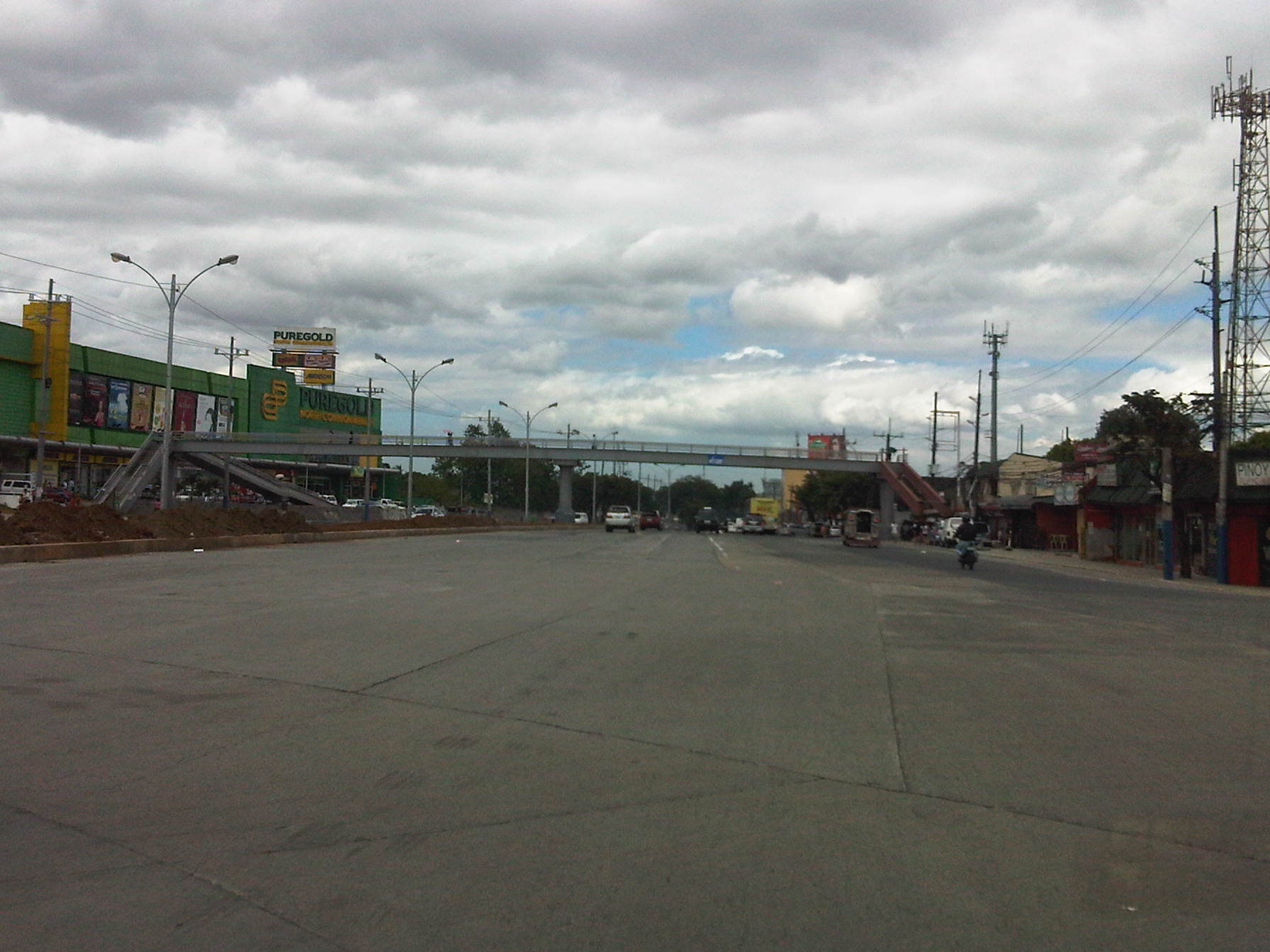 Section past the new rotonda along Commonwealth just before the overpass across the new Puregold branch – the highway was widened along this stretch and narrows to 3 lanes per direction after the overpass. There are no pavement markings yet for the newly added lanes and most of those for the previous lanes are already faded.
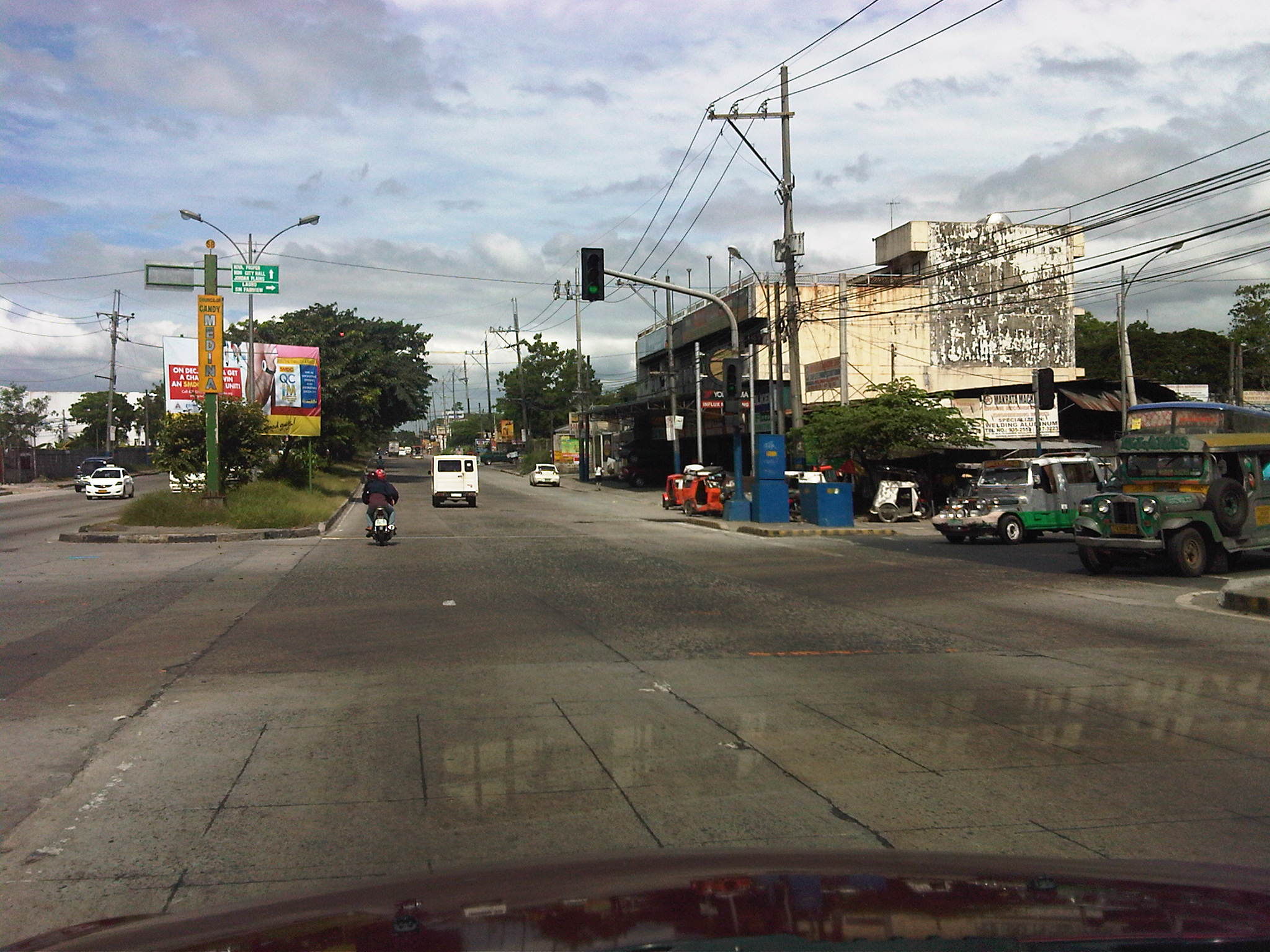 Junction of Commonwealth and Regalado – pavement markings are practically weathered and there are no indications of motorcycle lanes along these sections of Commonwealth
The formulation and implementation of motorcycle lanes along Commonwealth (and Macapagal Boulevard) are based on very good intentions (i.e., to reduce the incidence of road crashes involving motorcycles). However, the absence of pavement markings and signs to guide motorists and especially motorcyclists send the wrong signals in as far as enforcement is concerned. Add to this the serious matter of traffic management along PUV loading/unloading areas that is required to ensure that PUVs will not occupy motorcycle lanes and forcing riders to take to other lanes, thereby coming into conflict with private vehicle traveling along the inner lanes. These two issues clearly need to be addressed and fast so that the scheme can be effectively implemented throughout the entire length of Commonwealth Avenue.
The current situation pertaining to the implementation of motorcycle lanes in Metro Manila is perhaps another case where the agency implementing the scheme again “bit off more than it could chew.” As in the case of the 60 kph speed limit, effective enforcement throughout Commonwealth is limited by the availability and deployment of speed measurement equipment. As such, many vehicle still exceed 60 kph at sections where there obviously are no speed guns or radars. These situations and conditions are highly likely to lead ultimately to a ningas cogon outcome for such traffic management schemes. Such is undesirable since motorists will only become jaded (if they are not yet at this point) about traffic management in Metro Manila and elsewhere. And yet there are already indications that, like the PUV lanes, the MMDA would eventually slack on the enforcement side after realizing it needs to employ and deploy much more trained/skilled enforcers to implement all these schemes at the same time.
Memorandum Order No. 25, Series 2011
MALACAÑAN PALACE
MANILA
BY THE PRESIDENT OF THE PHILIPPINES
MEMORANDUM ORDER NO. 25
RECONSTITUTING THE INTER-AGENCY TECHNICAL COMMITTEE ON TRANSPORT PLANNING (IATCTP)
WHEREAS, transportation infrastructure has the biggest share in the country’s infrastructure investment program and will continue to be among the critical drivers of the country’s economic growth;
WHEREAS, a number of government agencies are involved in transport planning activities within their respective areas of jurisdiction;
WHEREAS, the Department of Transportation and Communications (DOTC) is the primary policy, planning, programming, coordinating, implementing, regulating and administrative entity of the government in the promotion, development and regulation of dependable and coordinated transportation network in the country;
WHEREAS, the Department of Public Works and Highways (DPWH) is the lead agency for the planning, design, construction and maintenance of the national road network, which continues to dominate the country’s transport system;
WHEREAS, the Philippine Ports Authority (PPA) is mandated to facilitate the implementation of an integrated program for the planning, development, financing, operation and maintenance of ports or port districts in the country;
WHEREAS, the Maritime Industry Authority (MARINA) is tasked to integrate the development, promotion and regulation of the maritime industry in the country;
WHEREAS, the Philippine National Railways (PNR) is the first instrumentality of the government mandated to provide railway system and services within the integrated national transport system;
WHEREAS, the Light Rail Transit Authority (LRTA), by virtue of Executive Order (EO) 603, is responsible for the construction, operation, maintenance and/or lease of light rail transit systems in the country, which are recommended and envisioned to alleviate traffic and transportation situation in a congested metropolitan area within the context of rational land use planning;
WHEREAS, the Metropolitan Manila Development Authority (MMDA) is tasked, among others, to coordinate development planning, transportation and traffic management, urban renewal and land use planning, urban protection, pollution control and public safety in Metro Manila which is the country’s premier economic and financial capital;
WHEREAS, the Civil Aviation Authority of the Philippines (CAAP), created on 04 March 2008 by virtue of Republic Act (RA) 9497, is mandated to be the technical regulator of air transport;
WHEREAS, the University of the Philippines-National Center for Transportation Studies (UP-NCTS) aims to, among others, conduct research activities on transportation, provide extension services to various government agencies and the private sector, and provide information services on transportation; and,
WHEREAS, transportation affects the country’s economic development and therefore there is a need to effectively coordinate its planning and policy formulation process led by the National Economic and Development Authority (NEDA) in order to achieve the objectives of sustainable economic growth in the country.
NOW, THEREFORE, in consideration of the foregoing premises, the IATCTP is hereby reconstituted in view of the important roles of the other transport agencies in achieving a comprehensive and integrated coordination function in transport planning. The Committee shall now be composed of the following:
| Deputy Director-General, NEDA-National Development Office | – Chairperson |
| Assistant Director-General, NEDA-National Development Office | – Member |
| Director, NEDA-Infrastructure Staff | – Member |
| Director, NEDA-National Planning and Policy Staff | – Member |
| Director, NEDA-Project Monitoring Staff | – Member |
| Director, UP-NCTS | – Member |
| Head of Planning Service/Unit, DOTC | – Member |
| Head of Planning Service/Unit, DPWH | – Member |
| Head of Planning Service/Unit, PPA | – Member |
| Head of Planning Service/Unit, MARINA | – Member |
| Head of Planning Service/Unit, PNR | – Member |
| Head of Planning Service/Unit, LRTA | – Member |
| Head of Planning Service/Unit, MMDA | – Member |
| Head of Planning Service/Unit, CAAP | – Member |
The Committee shall continue to perform the following duties and functions:
a. Formulate and recommend to the NEDA Board Committee on Infrastructure (INFRACOM) comprehensive and integrated transport plans;
b. Formulate standards and guidelines for the preparation of agency plans for transport development;
c. Develop a transport information system that shall serve the information needs of all transport planning and other relevant agencies;
d. Coordinate the conduct of studies, researches and data-gathering on various aspects of the transport sector;
e. Formulate areas of cooperation and coordination among the various agencies and instrumentalities of the government involved in transport programs and projects to avoid duplication of efforts;
f. Provide the NEDA Board with up-to-date information needed in the review and evaluation of transport plans and projects; and
g. Serve as a forum for the resolution of operational problems of transport agencies.
The Committee shall submit to the NEDA Board INFRACOM any issues/concerns that require adoption/resolution by the latter.
The Committee shall meet for the purpose of discharging its functions and may create sub-committees as may be necessary. Other relevant transport agencies and organizations may also be invited to attend meetings when warranted.
The NEDA Infrastructure Staff shall provide secretariat services to the Committee.
All heads of departments, bureaus, offices and instrumentalities of the government are hereby requested to extend full cooperation and assistance to the Committee to ensure the successful execution of its tasks.
This Memorandum Order (MO) shall take effect immediately and shall supersede MO 473 (1974).
DONE, in the City of Manila, this 26th day of October in the year of our Lord Two Thousand and Eleven.
(Sgd.) BENIGNO S. AQUINO III
By the President:
(Sgd.) PAQUITO N. OCHOA, JR.
Executive Secretary
Conflicting flows – driver and rider behavior in the vicinity of flyovers
Typical issues concerning traffic flow along sections approaching or departing from the ramps of vehicular overpasses or flyovers include weaving. Simple observations will reveal that a significant number of vehicles, regardless of whether private or public, passenger or freight, big or small, have a propensity to change lanes before and after a flyover. Such weaving behavior is a consequence of driving behavior in this country where many drivers and riders often are unmindful of planning their trips as well as the proper positioning of their vehicles while using the road. Many drivers and riders seem intent only in bypassing points of congestion and do not have any respect at all for the rights of other road users as well as for the rule of law along highways and streets.
I took the opportunity of taking a few photos after an interview conducted atop the pedestrian overpass along Commonwealth across from Puregold and near the Tandang Sora flyover. Below are a few photos taken during nightfall on Monday showing typical behavior of drivers and riders in the vicinity of the foot of the Tandang Sora flyover.
 Jeepneys occupying five (5) northbound lanes of Commonwealth Avenue, including the lane designated for motorcycles (delineated by the blue lines) – Most public utility vehicle drivers in the Philippines seem to abhor queuing and the prevailing practice is for most of them to try to bypass others by encroaching along the middle lanes. Instead of a First In First Out (FIFO) discipline that is desirable for conventional public transport operations, its more like a Last In First Out (LIFO) state along loading/unloading areas.
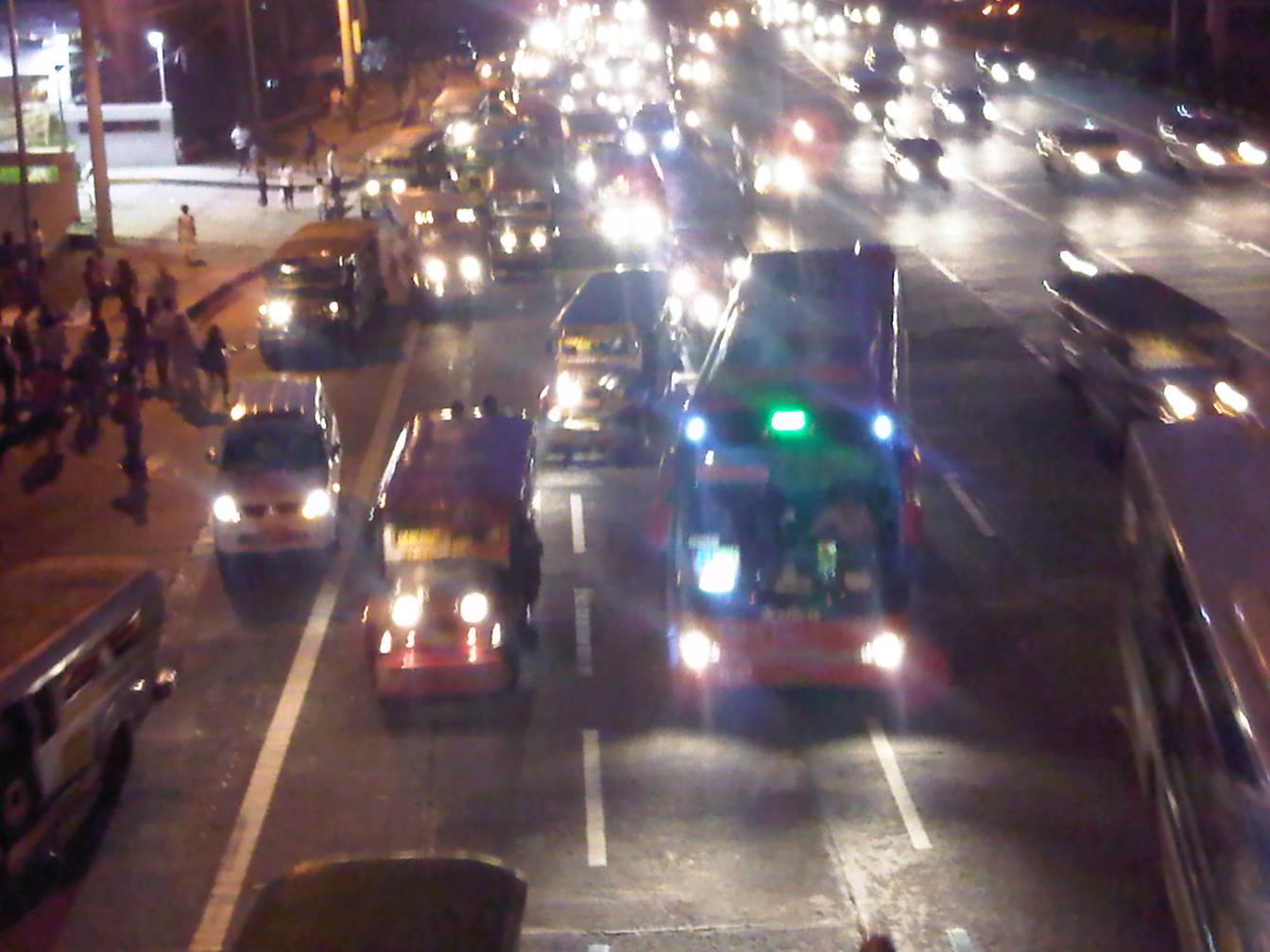 Buses joining the fray of vehicles in the same area – Note that practically 4 to 5 lanes of Commonwealth are occupied by buses, jeepneys and AUVs, effectively blocking motorcycles from using the lane designated for them. Such behavior in the vicinity of the foot of the Tandang Sora flyover also influences private vehicles to shift towards the inner lanes of the highway and unto the path of vehicles descending the flyover.
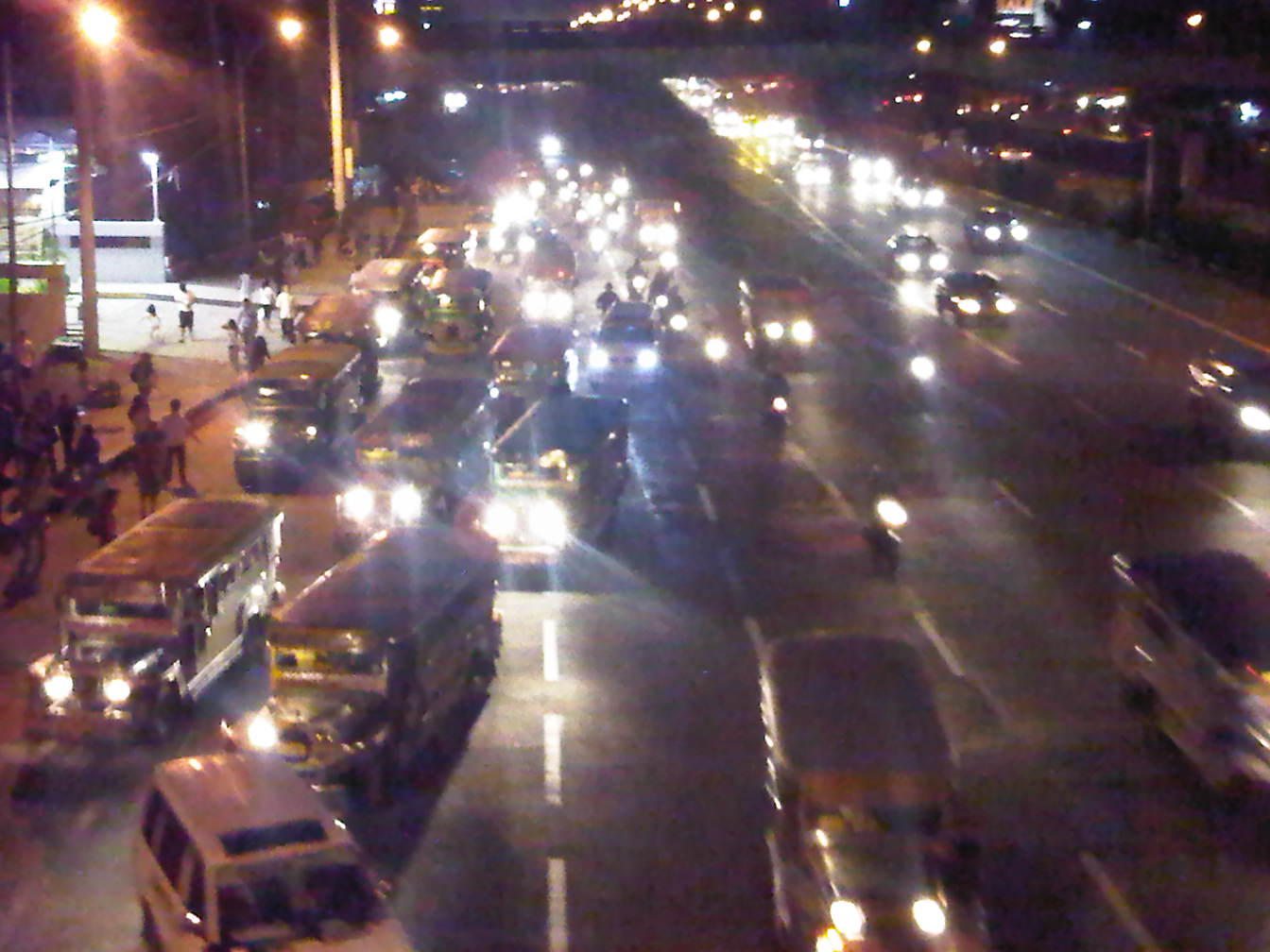 Motorcycles (they with the single headlights) using the 5th and 6th lanes of Commonwealth – riders have no choice in this situation where PUVs have occupied the motorcycle lane and behave as if they are the the only road users in the area. PUVs are observed as generally oblivious of the fact that road space is to be shared and basic courtesy is a requirement for smooth and safe flow to occur.
 As the traffic flow decreases, partly due to the control imposed by the traffic signal upstream at the Tandang Sora intersection, lanes become less congested – motorcycles are then able to return to their designated lane.
The chaotic situation shown in the photos could have been prevented or corrected if enforcers were in the area to manage traffic. There were none in the area, and I only found a few of them a couple of hundred meters downstream apprehending riders where traffic is already free-flowing. I thought perhaps that instead of focusing on apprehending riders, these enforcers were better off trying to address the mess upstream of their position. It is always both frustrating and disappointing to see enforcers diligently doing their jobs in the wrong locations along our highways. And all too often, the drivers and riders they apprehend are not the ones guilty of constricting traffic or posing dangers upon other motorists.
Car crazy: remembering an acquaintance
I met Prof. Lee Schipper for the first time when I attended the WCTR Conference held in UC Berkeley in 2007. I was presenting a paper on traffic schemes in Metro Manila at the time while a student was presenting our paper on bus operations. We had a sizable delegation from the Philippines at the conference considering Filipino students who were studying in Japan, Australia and Canada were also participating in the conference. Prior to the conference, my student was already communicating with Prof. Schipper who was reviewing our paper and he was very helpful with his comments to improve the material during the refereeing process.
I had the pleasure of meeting him a few more times in Manila at one ADB Transport Forum and at meetings organized by Cornie Huizenga’s Partnership for Sustainable Low Carbon Transport (SLoCaT). He always had a unique opinion on transport and I found his ideas quite useful for as an alternative take on a lot of things about transport that we often take for granted and orthodox.
As a tribute, here is an article by Lee Schipper published online by World Streets:
Car Crazy: Lee Schipper on the Perils of Asia’s Hyper-Motorization
Prof. Schipper was quite passionate about transport in Asia as he probably realized that motorization in Asia would have tremendous impacts on the environment (mainly on air quality and energy) and not just on the local or national levels. Perhaps the battle has been on the losing side in many industrialized countries and the huge Asian market is where efforts should be exerted in order to prevent or mitigate experiences similar to those in the US and other countries.
Prof. Schipper will be missed.
Buses tagged…now what?
The MMDA issued a memo requiring all Metro Manila buses to paint their license plates at strategic areas of the bus exterior. These include standard sizes for “tags” to be placed on the roof, front, sides and back of the bus that are supposed to clearly show consistency with the license plate. Needless to say, if the license plate and the painted tags do not match, then the bus will be labeled colorum or illegally operating. Tags are also colored according to the general routes of the buses, with the yellow background applicable to buses plying routes along EDSA while an orange background applies to non-EDSA routes like those along Ortigas Ave. and Quezon Ave.
The tagging seems to be the latest in a long list of schemes that have been implemented to address the issue of colorum public transportation. While this is generally a matter for the LTFRB, the agency with the mandate to regulate road public transportation, the enforcement aspect is really quite demanding for an agency with few personnel to do this. As such, the LTFRB is usually assisted by other agencies like the MMDA or local government units. Franchise enforcement, however, is generally not the province of the MMDA or LGUs unlike their being deputized by the LTO in enforcing traffic rules and regulations (thus allowing the MMDA and LGUs to issue traffic tickets). The deputized MMDA and LGU enforcers may apprehend public utility vehicle drivers for traffic violations and in an ideal set-up, such violations should be considered when evaluating franchises for renewals. The propensity for violating traffic rules and regulations is a manifestation of poor driving habits and unsafe behavior on the road. Again ideally, such should be taken against operators who have the responsibility for hiring and training their staff. Operators should be held accountable should there be a high incidence of traffic violations and especially when there are incidences of crashes.
I am curious as to how the MMDA will be taking advantage of the bus tags in managing not only public transport but overall traffic as well. The tags present an opportunity where data collection may be facilitated and for various purposes. Such include a variation of the license plate surveys that are usually conducted to trace the movement of vehicles and determine whether they are speeding or travelling too slowly. An application of the outcomes of such surveys is the estimation of travel time along particular routes. For enforcement purposes, one can determine the reasonable turnaround time for public transport vehicles and allow for the checking of trip-cutting and the verification of the incidence of multiple plates. With the video cameras located at strategic points along Metro Manila’s major thoroughfares, sophisticated software employing image processing may be able to expedite the process, an example of an intelligent transport systems (ITS) as applied to public transportation.
The MMDA could even go further by consolidating travel time/speed data from public transport vehicles in order to derive real-time road network statistics. These could easily be visualized using digital maps that can be made online and shared to motorists and commuters alike to allow for better travel planning around the metropolis. Travel time/speed data have been used by researchers and agencies in other countries to estimate road traffic performance throughout the day and may be employed in modeling traffic in order to predict travel characteristics given typical factors affecting the traffic stream. Private vehicle characteristics are approximated by taxis that operate pretty much like private vehicles given that they do not have fixed routes and are not confined to lanes normally assigned to buses and jeepneys.
Such a comprehensive and sophisticated system for traffic management would require that all public transport vehicles be tagged including jeepneys and taxis. This also requires both hardware and software, and most importantly, capacity and on the part of Perhaps this is an alternative to requiring all to have GPS or RFID installed. Of course, the latter devices have more applications due to their potential for data storage (e.g., vehicle registration, franchise, location, etc.) but unfortunately, there are issues that still need to be addressed and questions left unanswered that are associated with these devices. Sayang! But even so, the bus tags (and maybe jeepney and taxi tags in the future) already present a lot of opportunities for monitoring, evaluation and improvement of traffic in Metro Manila. If only such potential can be realized and maximized by the MMDA and other agencies…
Experiences and lessons on land use and zoning along Katipunan
Last Friday, a rally was held just outside the Ateneo De Manila University along Katipunan Avenue to protest the construction of Blue Residences, one of the SM group’s high-rise condominium projects that is located near the corner of Katipunan Ave.-Aurora Blvd. where a mini golf course and a few small shops used to be. The protesters wielded placards stating what could have been applicable to many of the developments now standing along Katipunan and just across from Ateneo and Miriam College. This is not really a new issue the protesters were dealing with but something that, dare I say, has festered for quite some time now.
The issue of land use and zoning along Katipunan is a continuing struggle against what the Quezon City government has maintained as its policy for “spot” zoning to accommodate high density residential and commercial development along a stretch of Circumferential Road 5 that used to be predominantly low density with small shops and restaurants lining the west side of the road and separated from the main highway by an island and a two-way service road where local traffic including tricycles flowed. This was the Katipunan I first started to be familiar with in the late 80’s when I entered UP as a freshman. Miriam was still known as Maryknoll at the time and was run nuns prior to it becoming the secular but still Catholic institution that it is today.
Traffic was more manageable along Katipunan then and a fleet of blue school buses served the Ateneans. It was a case of high occupancy transport that sadly has digressed to high vehicular volume, low occupancy traffic that Ateneo and Miriam are associated with today. Tricycles then were confined to the west service road and crossed Katipunan only at the intersections, which were strategically located just across from the main gates of Ateneo and Miriam. These intersections used to be signalized but the settings were often manipulated to favor Ateneo and Miriam traffic during the peak periods, much to the frustration of through traffic.
Fast forward to the present when the service road was removed along with the island to given way to what the previous MMDA dispensation referred to as a clearway policy to encourage faster traffic speeds combined with the much maligned U-turn scheme as applied to Katipunan. The smaller shops and restaurants have been replaced by condominiums and other establishments that have generated much traffic (not that Ateneo and Miriam have not been responsible for congestion) and which obviously do not have enough parking resulting in cars parked all over along the avenue and effectively reducing road capacity.
An article written by Randy David through his regular column at the Philippine Daily Inquirer came out today to speak about the Professor’s personal experience about Katipunan and his granddaughter’s views on development. Entitled “Katipunan Blues,” it presents a very honest and a very common observation of what Katipunan has become through the years and what different generations think about the development (or degeneration) along the particular stretch of the avenue. Its conclusion is something to ponder about and applicable not only for Quezon City and the rest of Metro Manila but for other cities across the country as well.
Is it too late for Katipunan given all the developments that have been permitted along this road? Did the universities do their part to prevent this in the first place? Or were they part of what Katipunan is today? Does Quezon City (or other local governments for that matter) even know what land use planning is about and what its policies on accommodating development have brought about in many other place? Could the DENR through its EIA process or the HLURB through its own instruments have prevented the deterioration of communities? There seems to be too many questions and we’re running out of answers for these.
Perhaps the answers were there but authorities and officials responsible refused to take heed of these or turned a blind eye to the issues. Perhaps the various developments and SM Blue were allowed because local governments became too eager for developments that also have been equated with revenues for the cities. Still, established systems and processes like the DENR-EMB’s and the HLURB’s are supposed to be there to ensure responsible and appropriate development.
We are often dumbfounded at what has actually happened and the outcomes clearly show our failures. Perhaps we are too blinded with the notion of development that we forget that it is also our responsibility to guide proponents. A lot of soul-searching should be undertaken to rethink how we plan and develop our cities. Such should properly incorporate principles of sustainability including those that address issues pertaining to transport and land use. We have a long way to go towards sustainable development as applied to city planning and development. But we need to start now if we are to even achieve a fraction of what we’d like our cities, our communities to become. We also need for champions to come forward among our current leaders and officials if only to bring order to what is perceived as chaotic development.
Enforceable?
Whenever laws and regulations are crafted, one basic question that needs to be considered pertains to whether there is capacity to enforce such laws or regulations. This is quite logical and appeals to common sense since laws and regulations are practically prints on paper that will not have any impacts if not enforced properly and fairly. I mention “fairly” here because laws and regulation may also be the subject of abusive enforcement. That is, there have been cases where motorists are flagged down and charged with violations that are taken out of the context given the traffic conditions, and where the number of apprehensions are related to quotas set by authorities.
Take the case of the unwarranted or illegal use of sirens (wangwang) in the past. There were laws and regulations for its use but for a long time these laws and regulations were not enforced properly, leading to the wangwang’s abuse by many unscrupulous people. Almost everyone have practically given up on this abuse of the siren when a newly elected President expressed his dismay and ordered the eradication of illegal sirens. Almost overnight, “wangwangs” were confiscated by authorities inspired by the Commander-in-Chief’s orders or removed by owners themselves for fear of the law bearing down on them. This was enforcement at its best. Unfortunately, it was not replicated for other traffic laws and regulations, wasting valuable momentum and the opportunity to make things right along our streets and highways.
Quezon City’s Green Building Ordinance is quite good and well-meaning. It is very timely and relevant, and even includes provisions for upgrading transport in that city. Among others, it requires that tricycles be transformed into cleaner vehicles by stipulating the replacement of 2-stroke and even 4-stroke motorcycles with LPG or electric models. To date, nothing significant has been achieved to address issues pertaining to the tens of thousands of tricycles in Quezon City. The construction of green buildings in Quezon City cannot be mainly attributed to the ordinance but rather to owners and designers who are now much more aware of climate change and its impacts, and are progressive enough to design buildings that are environment-friendly. Of course, there are those who take to the “green” bandwagon but do nothing towards this end. Are these subject to evaluations and inspections that are the equivalent of enforcement?
Now comes a bicycle ordinance from Pasig City that is formally the “Bicycle Transportation Promotion Ordinance of 2011.” It is also good and well-meaning but the jury will definitely be out there if this initiative will be a successful and sustainable one. I am quite hopeful that it would be and not just end up as an example of coming up with laws because anything about the environment is in these days. The provision in the ordinance designating bicycle lanes and requiring establishments to provide bicycle racks for parking are all good but we have seen this before in an even bigger scale in the City of Marikina. There they constructed bikeways practically connecting all parts of the city and they were quite aggressive even after foreign support had ended. Politics and shortcomings (I wouldn’t say failure.) in encouraging people to cycle have made much of the on-street bicycle lanes practically taken over by motorized transport. Bicycle racks there are also being used by motorcycles and scooters. Pasig should learn from these experiences and it is hoped that the city succeed and become another example of EST to be replicated in other Philippine cities.
Traffic Congestion in Metro Manila: Is the UVVRP Still Effective? -Conclusion
The MMDA always reports what it claims as improvements of travel speeds along EDSA that past years. They have pointed to this as evidence that traffic congestion is being addressed and that programs like the UVVRP are effective in curbing congestion. However, many traffic experts have cautioned against making sweeping generalizations pertaining to the effectiveness of schemes especially if the evidence put forward is limited and where data seems to have been collected under undesirable (read: unscientific) circumstances.
The MMDA also has been using and to some extent overextending its use of a micro-simulation software that is employs to demonstrate the potential effectiveness of its proposed traffic schemes. The software has an excellent animation feature that can make the untrained eye believe in what is being shown as The problem here is when one realizes that computer software will only show what the programmer/operator wants, and is perhaps an example where the term “garbage in, garbage out” is very much applicable. And this is especially true should the computer model be uncalibrated and unvalidated according to guidelines that are well established, and extensively discussed and deliberated in a wealth of academic references. The fallacy of employing advanced tools to demonstrate how one’s proposal is better than another was highlighted when the DPWH acquired the same tool and came up with an entirely different result for an analysis being made for the same project by that agency and the MMDA. Surely this resulted in confusion as the outcomes of the simulation efforts of both agencies practically negated each other.
It should be pointed out that such micro-simulation software is unsuitable for the task of determining whether metro-wide schemes such as the UVVRP is still effective given the actions of those affected by the scheme. What is required is a macroscopic model that would take into account the travel characteristics of populations in Metro Manila and its surrounding areas (cities and towns in the provinces of Rizal, Bulacan, Cavite, Laguna). There are quite a few of these models available but most if not all were derived from the one developed under the Metro Manila Urban Transport Integration Study (MMUTIS) that was completed in 1999. The main beneficiary from the outcomes of MMUTIS happens to be the MMDA but for some reason, that agency failed to build capacity for maintaining and updating/upgrading the model. As such, the agency missed a great opportunity to invest in something that they could have used to develop and evaluate traffic schemes to address congestion and other traffic issues in Metro Manila, as well as to assess the impacts of new developments.
Metro Manila has come to a point where its options for alleviating congestion are becoming more and more limited. The combination of a still increasing rate of motorization and private vehicle use have definitely contributed to congestion while there are also perceptions of a decline in public transport use in the metropolis. The share of public transport users in most Philippine cities and municipalities range from 80 – 90 %, while in many highly urbanized cities the tendency seems to be a decline for this share as more people are choosing to purchase motorcycles to enhance their mobility and as a substitute to cars. This trend towards motorcycle use cannot be denied based on the steep increase in ownership and the sheer number of motorcycles we observe in traffic everyday.
Metro Manila needs to retain the substantial public transport share while accepting that motorcycle ownership will continue to chip off commuters. The latter phenomenon can be slowed down should authorities strictly enforce traffic rules and regulations on motorcyclists, effectively erasing the notion that the latter group is “exempted” from such. The bigger and more urgent issue is how to put up long overdue mass transport infrastructure that is direly needed in order to create another opportunity for rationalization transport services. We seem to like that word “rationalization” without really understanding and acting on what is required to once and for all address transport problems in the metropolis. We are not lacking for examples of good practices that are both effective and sustainable including those in the capital cities of our ASEAN neighbors. However, we seem to be unable to deliver on the infrastructure part that we have tended to over-rely on a TDM scheme that has long lost much of its effectiveness. The evidence is quite strong for this conclusion and perhaps we should stop being in denial in as far as the UVVRP’s effectiveness is concerned. Efforts should be turned towards building the necessary infrastructure and making public transport attractive so that private car and motorcycle users will be left with no excuse to shift to public transport use. It is inevitable that at some time they will understand the cost of congestion and that they will have to pay for their part in congestion like what is being done along tollways or, in the more sophisticated and mature example, Singapore. But this cannot be realized if we continue to fail in putting up the infrastructure Metro Manila so direly requires.
Traffic congestion in Metro Manila: Is the UVVRP still effective? – Part 2
In the past decade, there has been a sharp rise in the motorcycle ownership around the country and especially in Metro Manila. From about 1 million motorcycles registered in 2000, the number has increased to 3.2 million in 2009, a 320% increase over a period of 10 years. Motorcycles have become associated with mobility, in this case the motorized kind, and have become the mode of choice for many who choose to have their own vehicles but cannot afford a four-wheeler. These people also choose not to take public transport for a variety of reasons but mainly as they perceive their mobility to be limited should they use public transport services that are available to them. This rise of the motorcycle is also a response to the restrictions brought about by UVVRP with the scheme not covering motorcycles. In fact, should motorcycles be included in the UVVRP, it would be a nightmare for traffic enforcers to apprehend riders considering how they maneuver in traffic. Add to this the perception and attitude of riders that motorcycles are practically exempt from traffic rules and regulations (and traffic schemes!). One only needs to observe their behavior to validate the argument.
To understand UVVRP, it must also be assessed in the context of its original implementation when Metro Manila had to contend with congestion due to infrastructure projects being constructed everywhere during the 1990’s. EDSA MRT was being constructed, interchanges were also being put up, and a number of bridges were being widened to accommodate the increasing travel demand. Road widening projects generally benefit private vehicle users more than public transport users. In the case of Metro Manila, many areas are already built-up and acquisition of right of way for widening is quite difficult for existing roads. As such, it is very difficult to increase road capacities to accommodate the steady increase in the number of vehicles.
In transportation engineering, when traffic/transport systems management (TEM) techniques are no longer effective or yield marginal improvements we turn to travel demand management (TDM) schemes to alleviate congestion. In the former, we try to address congestion by tweaking the system (i.e., infrastructure) through road widening, adjustment of traffic signal settings, etc. while in the latter, we go to the root of the problem and try to manage the trips emanating from the trip generation characteristics of various land uses interacting with each other. By addressing the trip generation characteristics through restrictions, we influence travel demand and hopefully lessen traffic during the peak periods while distributing these to others.
This is the essence of UVVRP where the coding scheme targets particular groups of private cars (according to the end number on the license plate) each weekday. Meanwhile, the scheme is not implemented during weekends due to the perception that, perhaps, travel demand is less or more spread out during Saturdays and Sundays. However, there is a problem with this approach as the traffic taken away from the peak hours are transferred to other times of the day, thereby causing in some cases the extension of what was originally a peak hour unto a longer period. What was before a morning peak of say 7:30 – 8:30 AM becomes spread out into a peak period of 7:00 – 9:00 AM. The problem here is when you have major traffic generators like central business districts (e.g., Makati and Ortigas) where congestion is experience for more than 2 hours (e.g., 7:00 – 10:00 AM or 4:00 – 7:00 PM).
The UVVRP is not implemented in all of Metro Manila. Several LGUs, particularly those in the outer areas like Marikina City and Pateros. This is simply due to the information and observations of these cities that their roads are not affected by the build-up of traffic since most traffic is bound for the CBDs located in Makati, Pasig, Mandaluyong, Quezon City and Manila. This is the case also for LGUs in the periphery of Metro Manila like the towns in the province of Rizal, which is to the east of the metropolis, where the typical behavior of traffic is outbound in the morning and inbound in the afternoon. The great disparity between inbound and outbound traffic is evident in the traffic along Ortigas Avenue where authorities have even implemented a counterflow scheme to increase westbound road capacity.
There have also been observations of traffic easing up during the mid-day. As such, the MMDA introduced a window from 10:00 AM to 3:00 PM to allow all vehicles to travel during that period while retaining the restrictions of the number coding scheme from 7:00 – 10:00 AM and 3:00 – 7:00 PM. However, while many LGUs applied the window, some and particularly those found in central part of the Metropolis like Makati, retained the 7:00 AM – 7:00 PM ban. This stems from their perspective that traffic does not ease up at all (e.g., try driving along Gil Puyat Ave. during lunchtime) along their streets during the window period.
Nowadays, there seems to be the general perception that one can no longer distinguish between traffic during the coding period and the window. Traffic congestion is everywhere and there are few opportunities for road widening. Traffic signal control adjustments are limited to those intersections where signals have been retained (mostly in Makati) since the MMDA replaced signalized intersections with U-turn slots during a past administration where the U-turn was hailed as the solution to the traffic mess.
Traffic congestion in Metro Manila: Is the UVVRP still effective? – Part 1
I was interviewed last week about the traffic congestion generally experienced along major roads in Metro Manila. I was asked whether I thought the Unified Vehicular Volume Reduction Program (UVVRP) more popularly known as the number coding scheme was still effective, and I replied that based on what we are experiencing it is obviously not effective anymore. The reasoning here can be traced from the fact that when the scheme was first formulated and implemented, the main assumption was that if the number of license plates on registered vehicles were equally distributed among the 10 digits (1 to 0), then by restricting 2 digits indicated as the end/last number on a plate we could automatically have a 20% reduction in the number vehicles. This rather simplistic assumption was sound at the time but apparently did not take into consideration that eventually, people owning vehicles will be able to adjust to the scheme one way or another.
One way to adjust when the number coding scheme was implemented was to change traveling times. Everyone knew that the scheme was enforced from 7:00 AM to 7:00 PM (i.e., there was no 10:00 AM to 3:00 PM window at the time) and so people only had to travel from the origins to their destinations before 7:00 AM. Similarly, they would travel back after 7:00 PM, which partly explains why after 7:00 PM there is usually traffic congestion due to “coding” vehicles coming out to travel. In effect, the “coding” vehicle is not absent from the streets that day. Instead, it is only used during the time outside of the “coding” or restricted period.
Another way that was actually a desired impact of the coding scheme was for people to shift to public transport, at least for the day when their vehicle was “coding.” That way, the vehicle is left at home and there is one less vehicle for every person who opted to take public transport. This, however, was not to be and people did not shift to public transport. Perhaps the quality of services available or provided to them were just not acceptable to most people and so they didn’t take public transport and a significant number instead opted for a third way.
That third way to adjust was one that was the least desirable of the consequences of number coding – people who could afford it bought another vehicle. This was actually a result that could have been expected or foreseen given the trends and direct relationship between increases in income associated with economic growth where people would eventually be able to afford to buy a vehicle. Actually, there is no problem with owning a car. The concern is when one uses it and when he opts to travel. Of course, this does not necessarily mean that people started buying new cars outright, making this something like an overnight phenomenon. It happened over several years and involved a cycle that starts when the wealthier people decide to purchase a new vehicle and discards their old ones. These used vehicles become available on the “second hand” market and are purchased by those with smaller budgets. Some of these may have even older vehicles that they will in turn discard, and eventually be owned by other people with even less budget. Note that in this cycle, very few vehicles are actually retired, if at all considering this country has no retirement policy for old vehicles. The end result? More cars on the roads and consequently, more severe and more frequent congestion.
Below is an excerpt from the news report on News TV Channel 11:

