
Home » Public Transport (Page 2)
Category Archives: Public Transport
Bus service between UPLB and UP Diliman
Last December, I was supposed to take the bus directly connecting the UP Diliman and Los Banos campuses. I was supposed to attend the annual conference of the Transportation Science Society of the Philippines (TSSP) hosted by the UPLB Department of Civil Engineering. I was looking forward to riding the bus being somewhat nostalgic to the Tritran buses I used to ride between the two campuses back in the 1980s and 1990s.
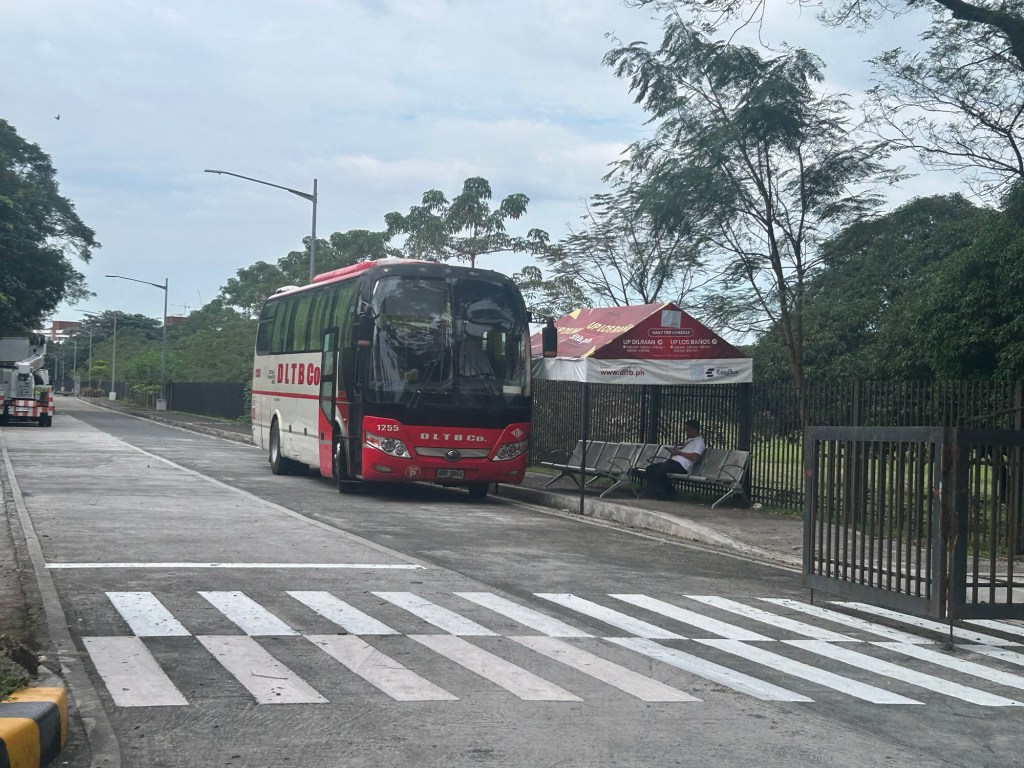
Unfortunately, I was not able to attend the conference due to an emergency. So, I will have to wait for the next opportunity to take the bus to Los Banos and back.
–
Good Transit is Fun
Here’s a nice read on how transit or public transportation should be fun. People won’t really use public transportation unless they find utility or value in using it.
Source: Good Transit is Fun
I won’t be quoting from the article this time. I’ll let you read it yourself and digest the content.
Happy Sunday!
After getting engrossed with EDSA, is Marcos Highway next?
If you monitored the news articles and social media post over the past two decades, there seems to be an obsession for EDSA. Circumferential Road 4 is the busiest corridor in Metro Manila, stretching across several jurisdictions including Caloocan, Quezon City, Mandaluyong, Makati and Pasay City. Aside from the MMDA, national agencies like the DPWH and DOTr have been heavily involved in traffic schemes and transportation infrastructure development along the corridor. These include variants of the travel demand management (TDM) scheme commonly called number coding. Since the 1990s, there’s the Line 3 and several overpasses/flyovers and underpass that have been constructed along major intersections (e.g., EDSA-Shaw, EDSA-Ortigas, EDSA-Kamuning, EDSA-Quezon Avenue, etc.). Nowadays, people are more into the EDSA carousel and most recently the pavement rehabilitation for EDSA. It seems we failed to realize that EDSA is just one corridor. There are others that also demand attention including those in other parts of the country.
Recently, a “carmaggedon” along Marcos Highway was in the headlines or shall I say was trending in social media. There was a lot of excitement for what has been a recurring nightmare to those residing along the corridor. I recall something worse occurred more than 15 years ago (pre-Ondoy), before social media and influencers and digital creators. At the time, Line 2 terminated at Santolan Station. And even back then, the MMDA insisted on playing with their U-turn scheme. I don’t recall a more in-depth study that could have involved micro-simulation modeling being done for the corridor. And since then, populations and traffic have grown steadily and as I’ve written about previously, the extension of Line 2 to Masinag seems to have had little impact on traffic. And so here we are with the MMDA still insisting on tweaking their U-turn schemes and relying mainly on gut-feel instead of a more scientific approach that may actually lead to more sound solutions for the corridor.
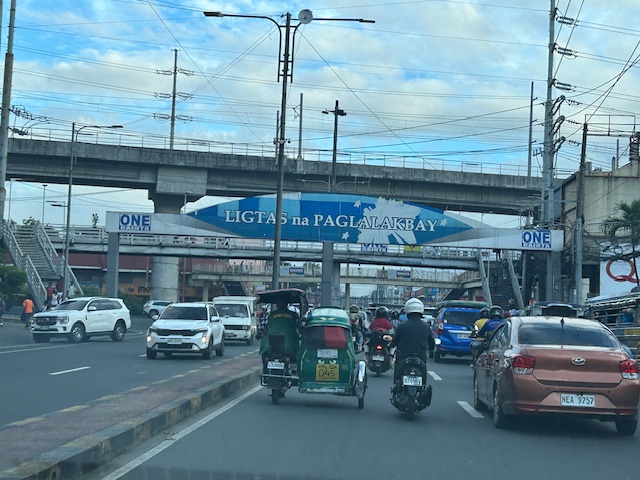 Approach to Marcos Highway from Felix Avenue – that’s the elevated Line 2 superstructure behind the Cainta arch.
 Intersection of Marcos Highway, Felix Avenue and Gil Fernando Avenue – there’s a major foot bridge installed here so people can cross at the intersection, which used to be a signalized junction before the MMDA opted for U-turns for Marcos Highway sections under its jurisdiction.
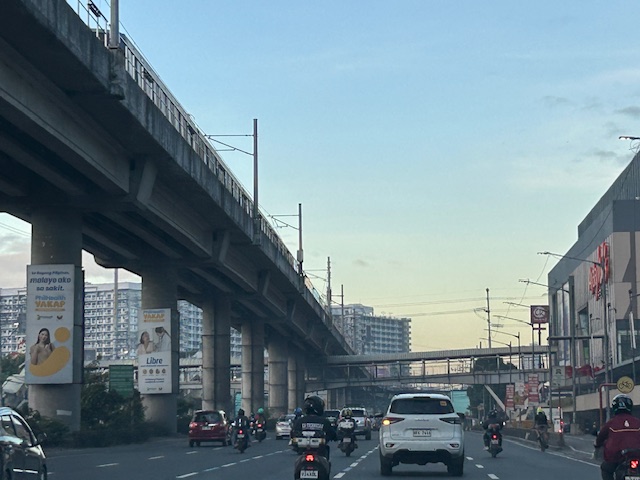 Marcos Highway section fronting the Ayala Feliz Mall – the MMDA has played with the location of the U-turn slots in the vicinity of the Marcos Highway-Amang Rodriguez-J.P. Rizal intersection as they tried to determine the “optimum” locations of these slots.
Of course, there is also the case of Commonwealth Avenue. How many carmaggedons have occurred along that corridor? Isn’t it an everyday thing there? And there’s also Ortigas Avenue Extension and many other roads and streets where congestion seems to have been accepted as the norm. How do we make travel easier for most people? How do we improve commutes given the constraints and realities concerning behavior and choices?
–
Reviving an old public transport option
There is some nostalgia about the first air-conditioned public transport mode in the Philippines (correct me if I’m wrong). The Love Bus, as it was called, was operated by the Metro Manila Transit Corporation (MMTC), which is a government owned and controlled corporation. There’s a lot about the MMTC that could be the subject of a series of articles but those are for other days. Suffice it to say here that MMTC provided several types of bus services using different bus models including double deckers. Their most popular though more expensive service is the air-conditioned Love Bus. I was able to take the Love Bus from Cubao to UP Diliman during its waning period of operations in the late 1980s. At the time, the buses entered the campus and I could get off at the nearest stop to Melchor Hall. Those buses terminated at Ateneo near the Blue Eagle Gym. Also, at the time, there were already smaller aircon buses but these were not branded as Love Bus.
I spotted the current incarnation of the Love Bus in the form of a “modernized jeepney.” Like other “modernized jeepneys,” the vehicle is actually a mini-bus. The vehicles are electric and run by Get COMET, a company that used to run an electric jeepney service along Katipunan Avenue. Sometime before the pandemic, they ceased operations. And so this is somewhat a shot at redemption. A comeback given the proliferation of “modernized jeepneys” of various models (many of which are not electric of hybrid).
 This revival of the Love Bus is an electric vehicle operated by GET, which is the company behind the COMET.
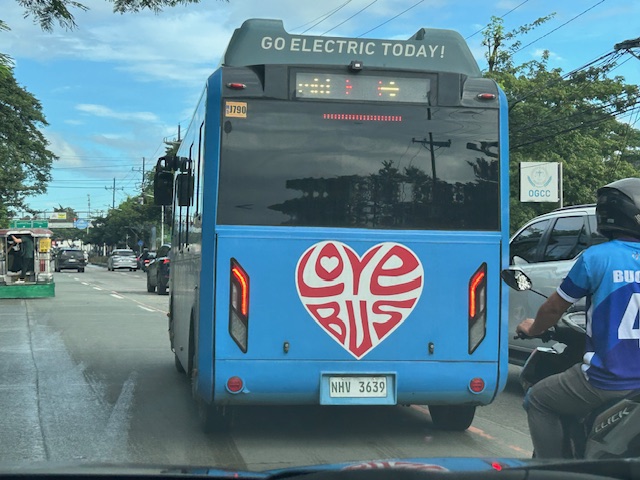 The livery is a throwback to the original Love Bus. They should have also included the “Save Gas” slogan that were in the original buses.
Will these buses stay in business? Will they help popularize public transport? The jury is still out there as currently they are few and there are many competing options along their route. Their presence though is very welcome and perhaps the nostalgia will translate into encouraging more people to take public transportation.
–
Green GSM taxi first impressions
These past months, I have been alternately using Grab and In Drive vehicles for my commutes. If I had another choice, it would have been Green GSM taxi. I have used their taxis traveling between Quezon City Pasig City and within Quezon City. So far, it’s been a good experience including in terms of the fares I’ve paid. Green GSM boasts of an all electric vehicle fleet. They are also a big company compared to the current taxi operators in Metro Manila. I think what may be comparable in terms of fleet size would be the taxi companies in Cebu, Iloilo and Davao. The difference, however, is in terms of their business models. The usual taxis are still basically rental vehicles for the drivers. The latter pay the owners/operators a fee (i.e., boundary) and usually the drivers have to cover fuel and other operating and maintenance costs.
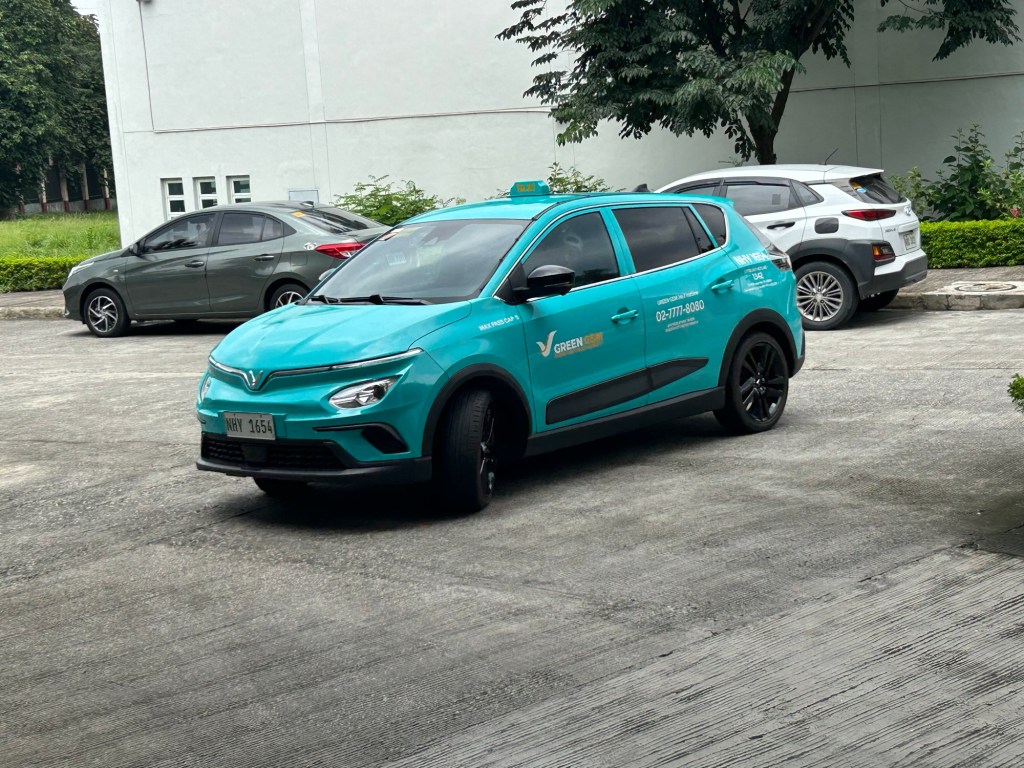
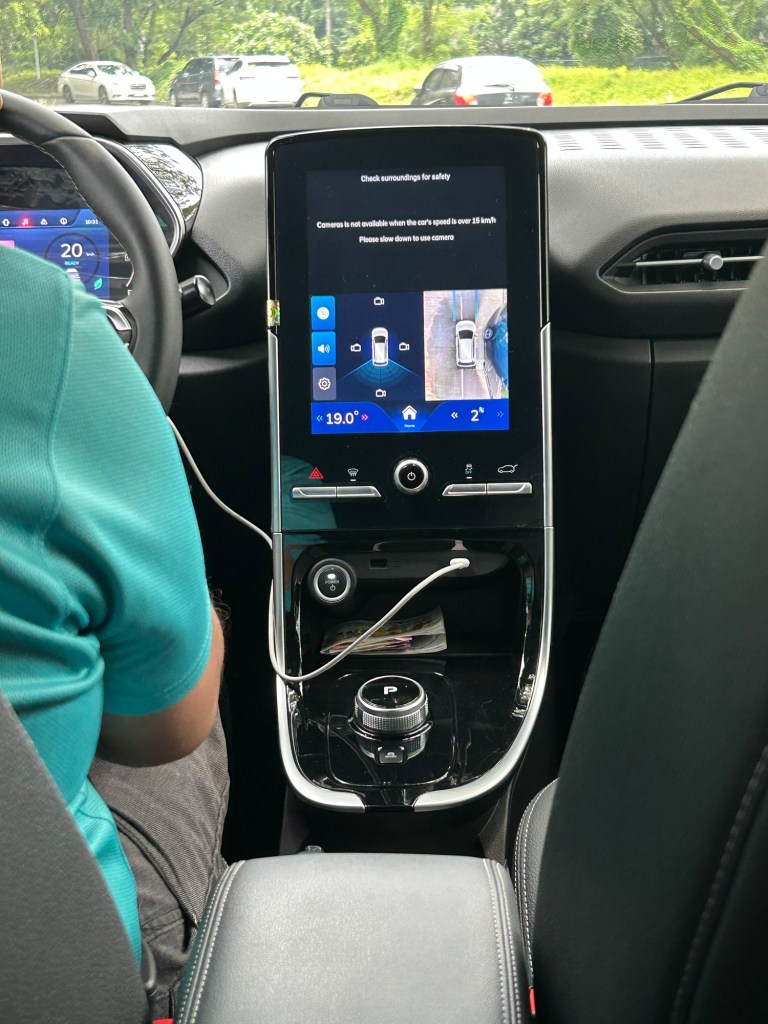
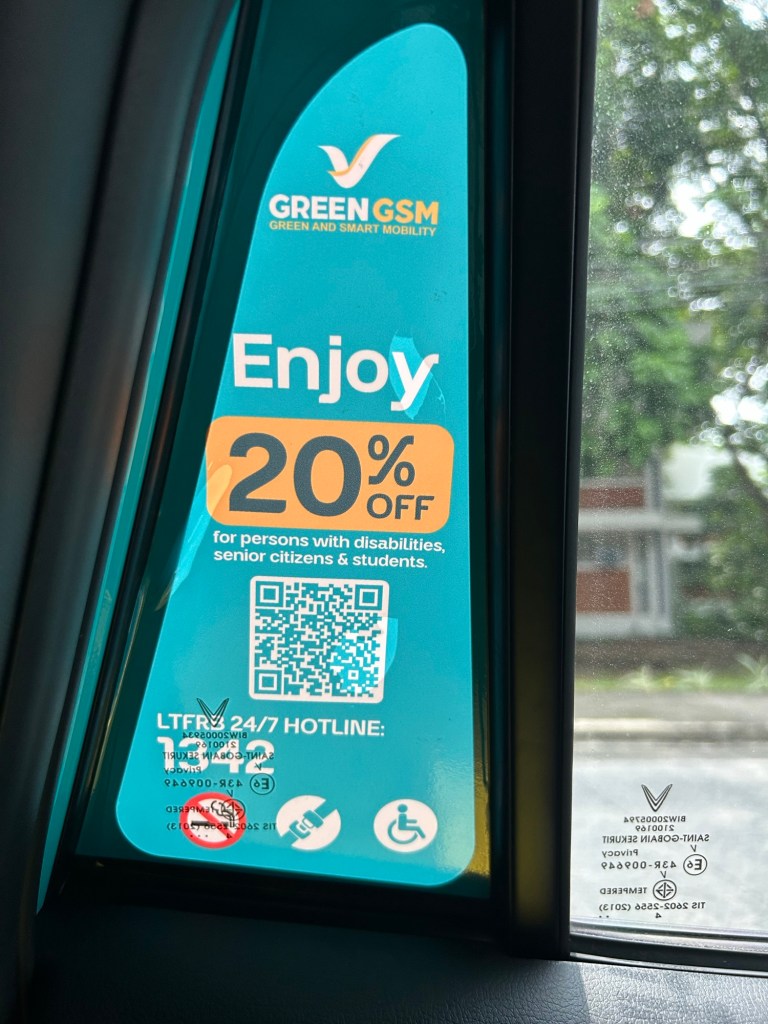
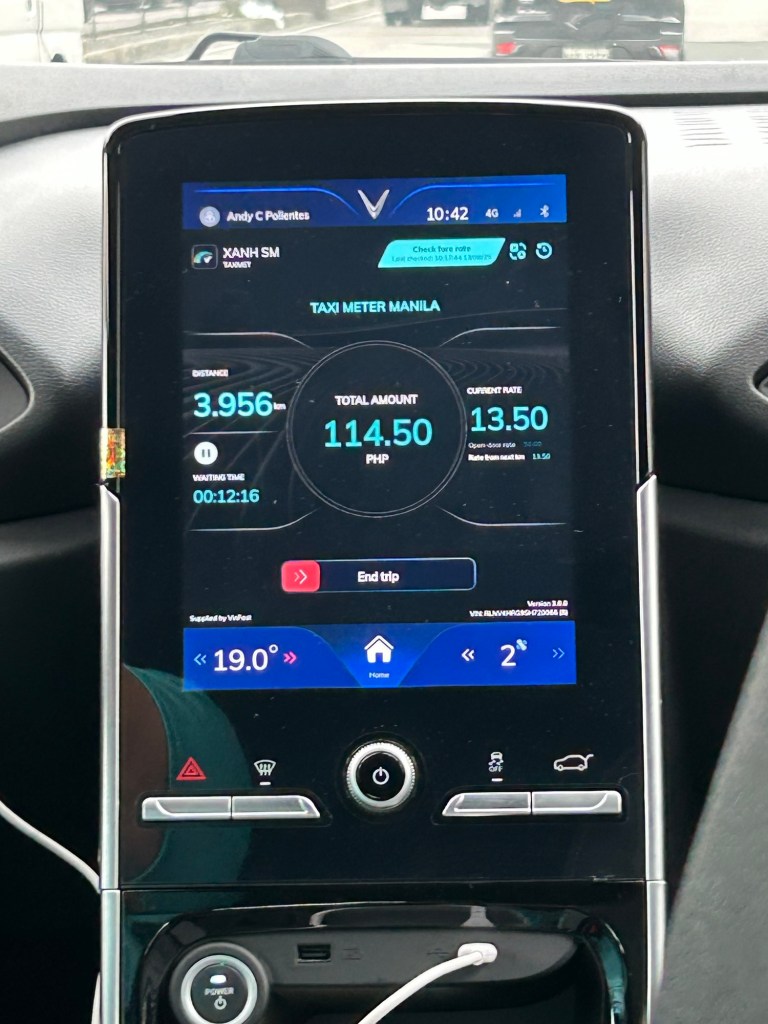
The Green GSM taxi drivers I’ve talked to say they receive a regular salary and have benefits very much like regular employees. They also had accredited stations where they can charge their vehicles or conduct maintenance such as change tires. You can also hail them on the street much like the conventional taxis. You don’t need an app to book a ride but it is more convenient to use their app. The limitation though is that currently you can only book a ride using their app for trips within Metro Manila. If you’re heading out like to Antipolo City, the app will display an error in terms of coverage area. If you happen to hail one of their taxis though, you can use them to go outside Metro Manila. I’ve seen them in Antipolo, Cainta and Taytay so I guess you can also hail them instead of being dependent on the app.
I have a couple of students whose research topic is on Green GSM Taxis characteristics. We’ll soon find out more of their operating characteristics and how their attributes compare with those of TNVS or ride-hailing services like Grab and In Drive.
–
Good Transit Is Simple: Lessons in Good Route Design
Here is a quick share of an article on good route design:
Source: Good Transit Is Simple: Lessons in Good Route Design
I won’t be posting a quote from the article as there is really no summary to it. The article identifies the characteristics of a good transit route as well as the “don’t’s” or “no – no’s”.
Public transport in Iloilo
I took some snapshots of public transportation on my recent travel to Iloilo. These are typical PUVs you would find in most towns across the country. Iloilo’s have some distinct features that they also share with other towns in other provinces.
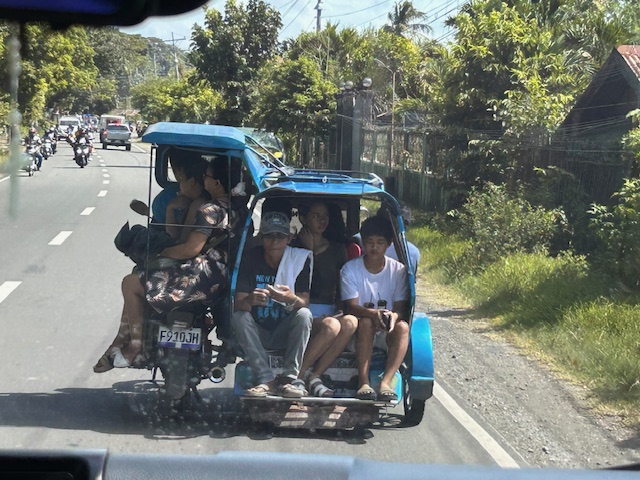 A typical tricycle along the Iloilo-Antique road seats 8 to 9 passengers. Sometimes passengers even sit on top of the sidecar. Sidecars here and other provinces often have roofs designed to carry heavy loads including agricultural products. Usual trike sidecar seating have passengers facing front. This one has them “talikuran” or “back to back” with some passengers facing back – not really a nice view when traveling along a highway and vehicles tailing or bearing down on the trike.
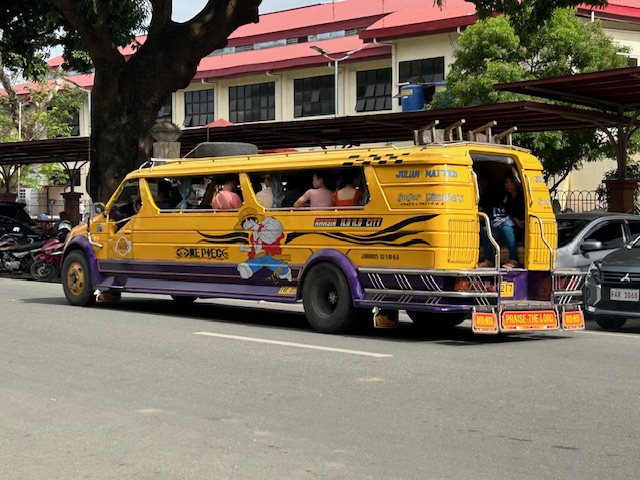 The typical jeepney in Iloilo is stretched whether it’s for inter-town or city operations. Instead of having the ‘face’ of the jeep (from which jeepneys evolved from), they use the front of the Toyota Fortuner or Mitsubishi Montero. These seat 20 to 24 passengers not counting those who are seated on the bench along the aisle. I wonder what engines they now use for these vehicles.
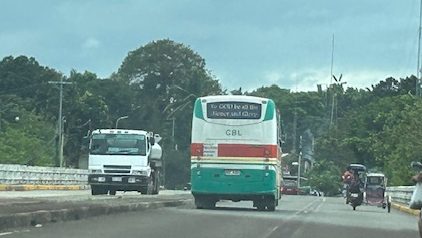 I took this fleeting photo of a bus. For me it wasn’t just a regular bus like the Ceres buses that now dominate the inter-provincial routes. This was a Calinog Bus Line (CBL) bus. We used to take their buses whenever we traveled from Cabatuan town proper to Tigbauan Road. One of my aunts also rode on these buses going to work as a teacher in another town along its route.
–
More Buses, Fewer Riders? Thoughts on the Ridership vs Coverage Tradeoff
Here is a quick share of an article on ridership vs. coverage:
Source: More Buses, Fewer Riders? Thoughts on the Ridership vs Coverage Tradeoff
Basically, there is that question of whether planners or decision makers should prioritize ridership over coverage? Or should it be the other way around? The article provides a detailed discussion of the trade-offs. Perhaps this is again a case of determining which is more suitable for your city?
–
Is there a future for the Philippine made AGT?
I am writing this after reading posts on social media about how they are hopeful about the Philippine-made Automated Guideway Transit (AGT) being finally operational. For one, both AGT models (60 passenger capacity train and 120-passenger capacity train) have not been technically certified. And then there are really no plans for lines to be constructed anywhere.
The closest to plans that we have are the feasibility studies conducted many years ago that did not materialize into an operating line. One of those were supposed to be along Gen. Santos Avenue in Taguig, which could have extended to C6. Another is a line that could have run along C.P. Garcia Avenue and Katipunan Avenue, connecting Line 7 at Commonwealth Ave. with Line 2 at Aurora Blvd.
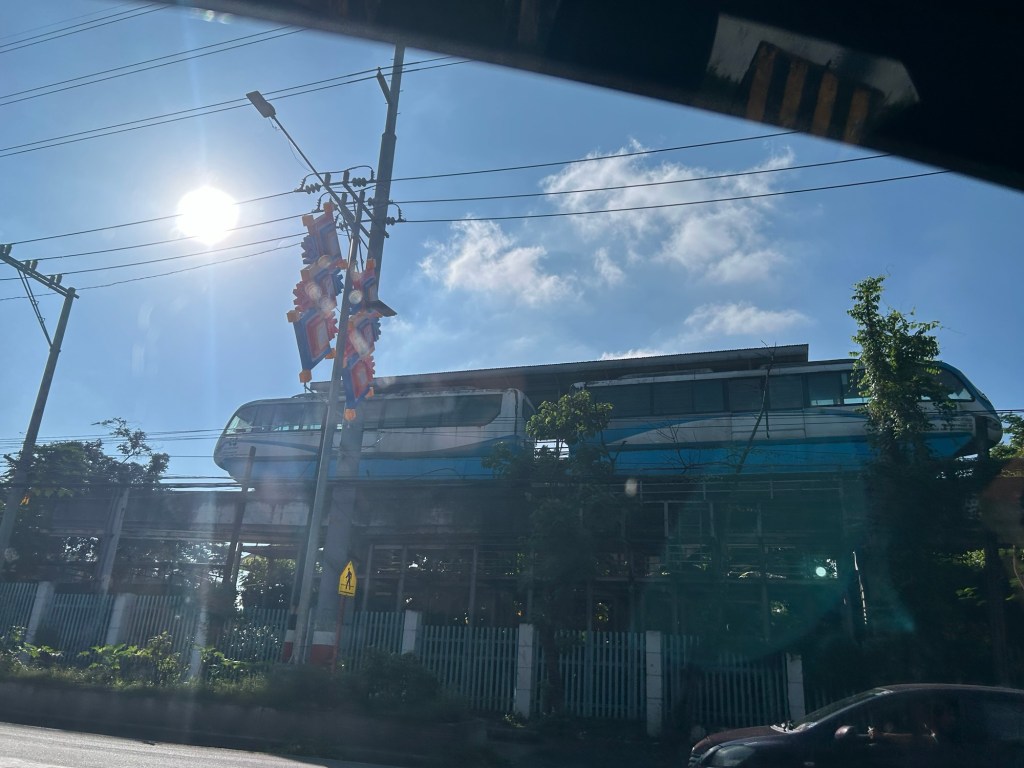
There’s still something worth studying and refining here as the AGT is a product of local R&D. However, there must be a commitment among researchers and the DOST on the way forward. There should also be some kind of buy-in from government agencies especially DOTr to support this development.
–
Still towards a car-oriented future?
Saw this photo being circulated on social media.
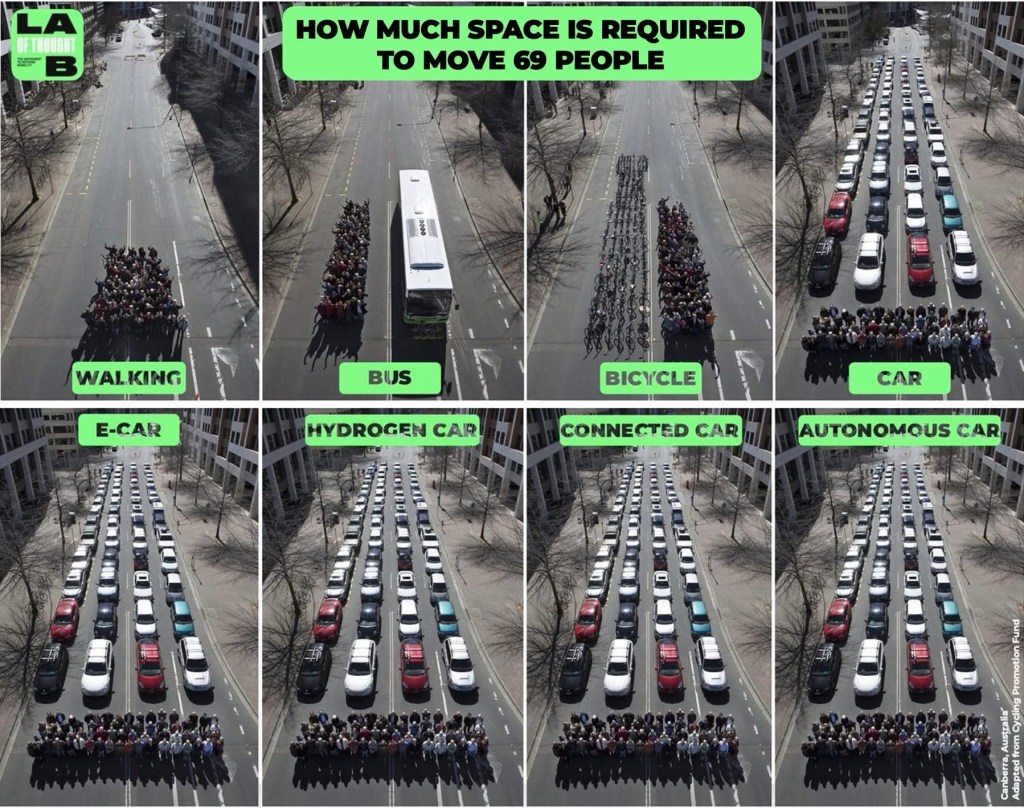
Again, there are many versions of this including the original from a town in Germany that compared 50 people on cars, a bus and on bicycles. The bottom line in the latest images (do these qualify as memes?) is that all these efforts in developing the car, whether regarding the engine or fuel, or perhaps autonomy or connectivity related, ends up being still car-oriented or car-centric. I
t doesn’t really solve our transport problems despite what is being packaged as environmentally friendly. The discussions about this is timely and relevant as electric and hybrid cars are now quickly replacing conventional ones. And there’s a kicker for those driving in Metro Manila, hybrid and electric vehicles are exempted from the travel demand management scheme that is number coding.
How do we veer away from this temptation from technology? How do we keep mode shares in favor of active and public transportation? How do we influence mode choice for the latter options?
–
 Caught (up) in traffic