
Home » Public Transport (Page 30)
Category Archives: Public Transport
On P2P bus services
We decided to take a Point-to-point (P2P) bus from Quezon City to the Ortigas Center to attend a meeting there. The venue was close to SM Megamall so we thought it best to just take the bus service from SM North EDSA. It was my first time to take a P2P bus but was familiar enough with the service from the research our students have been doing on public transport. Here are some photos from the experience.
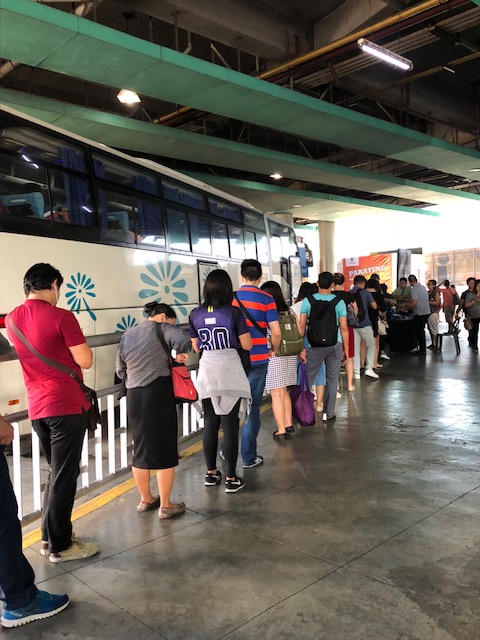 There’s a line for passengers riding the P2P bus from SM North to SM Megamall. It appears to be long but it moves pretty quickly because of the frequent bus arrivals that time in the morning (around 9:00 AM).
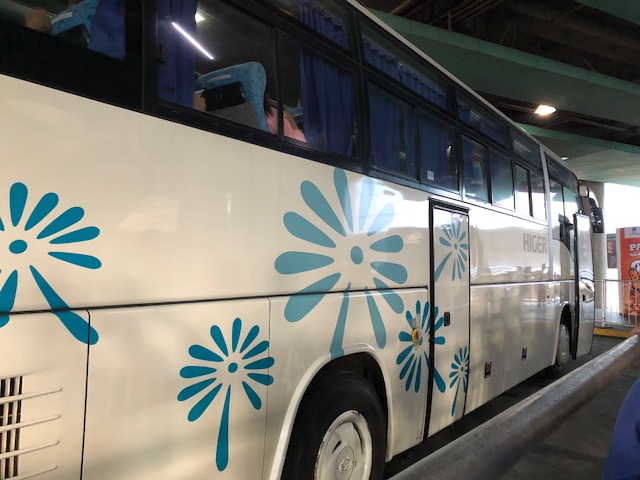 The bus before ours was quickly filled with passengers. There is a “no standing” policy for this service so when all seats are taken, people in queue would have to wait for the next bus.
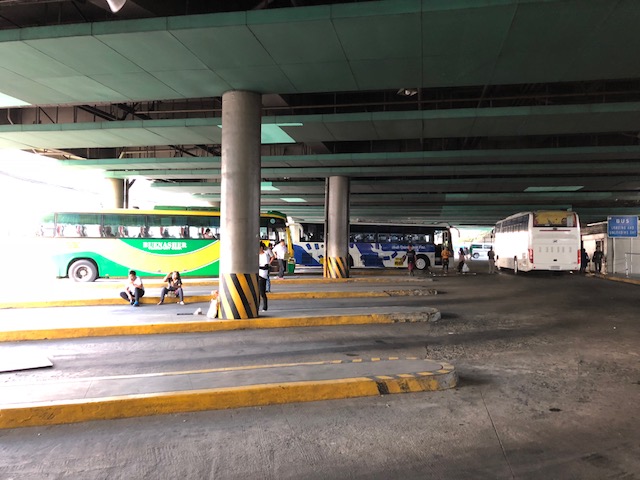 Here’s a view of the bus bays at SM North EDSA. The white bus at the right is the P2P bus that just departed.
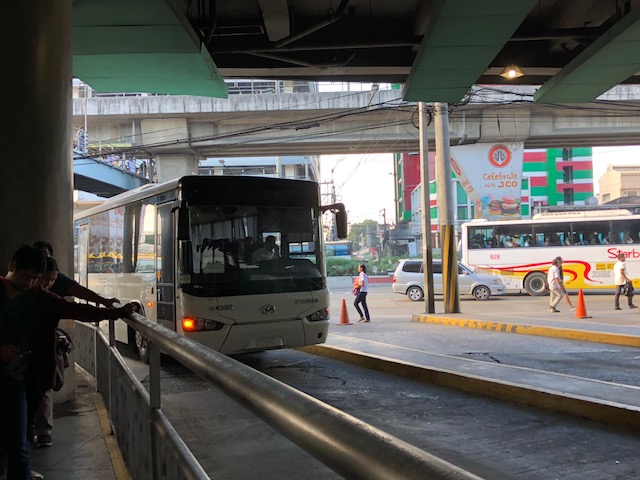 Our bus arrives at the terminal.
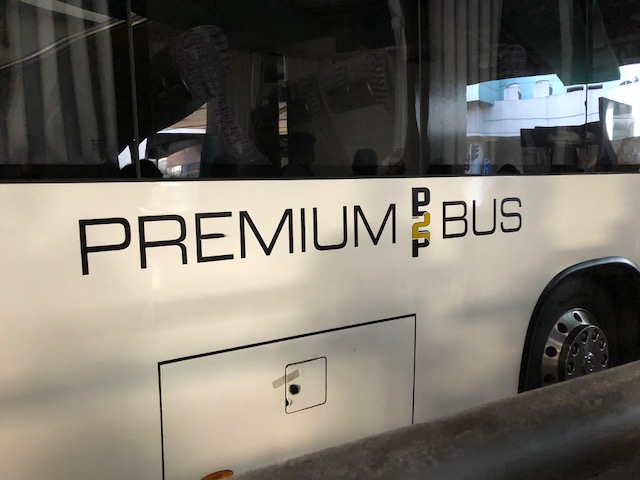 Unlike the first bus that had generic signs/markings on it and only had a signboard on the windshield identifying it as a P2P bus, this one had the service on its livery. The rapid increase in the number of P2P bus routes and buses serving those routes meant that bus companies had little time to properly change the livery of their buses to clearly show these were for P2P services.
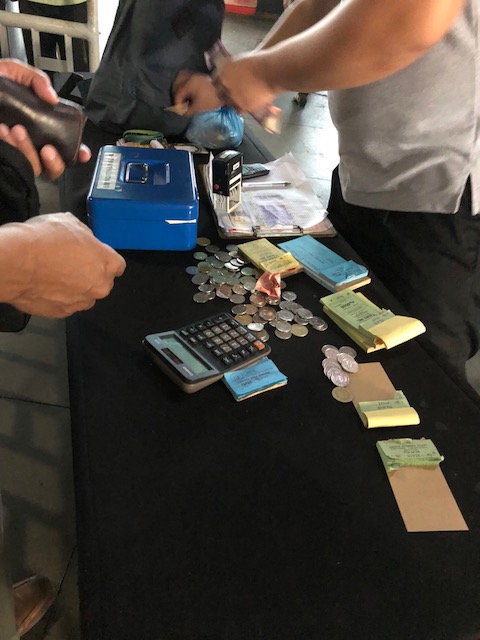 Passengers pay at the head of the line and just before boarding the bus.
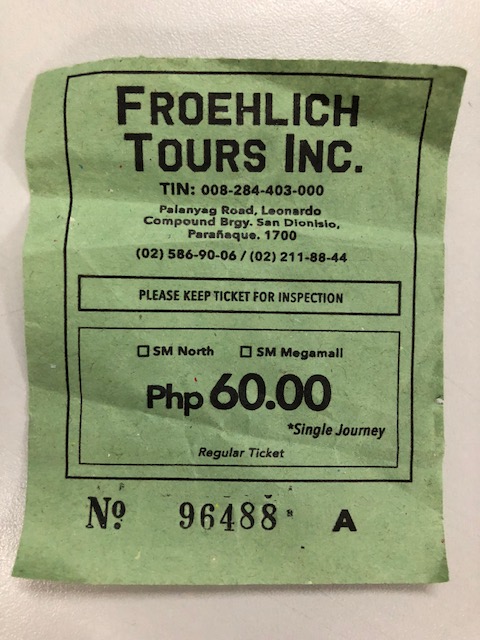 Our ticket showing the fare paid and the name and contact details of the operator of this service between SM North and SM Megamall. Froehlich is one of the first companies granted a permit to provide P2P services by the government. They actually started the service during the previous administration when DOTr was still DOTC.
The P2P bus services present an attractive option for commuters who are not satisfied with their usual public transport options (e.g., bus, jeepney or UV express) and cannot afford to frequently take taxis or ridesharing (Uber, Grab). They may or may not be car-owners but have longed for better public transport services especially in terms of comfort and convenience. Many are likely able to afford higher fares and will pay such if the services are worth it.
In Antipolo, for example, I have noticed that the parking lot near the P2P bus terminal at Robinsons already have many cars parked (parking is free so far), which I assumed are owned by people opting to take the bus instead to go to Ortigas Center. They have the jeepney and regular bus options (G-Liner and RRCG) but are turned off by the frequent stops and the cramped conditions during the rush hours.
My only other critique of the P2P buses aside from their drivers apparently being just the same as other buses in the way they drive (i.e., I’ve observed many of them are as aggressive if not as reckless as regular bus drivers.) is that these services are actually the higher capacity versions of UV Express. Note that UV Express (previously called Garage to Terminal Express or GT Express and generically the FX taxis of the 1990s) basically operated under the same conditions before with fixed routes and with supposedly only 2 stops (i.e., “point to point”). Hopefully, they won’t be but I also wonder how these services will continue once the new rail transit lines come into operation.
–
Updates on the MRT Line 7 construction
I recently posted some photos showing the progress of work on the Line 2 Extension. This time, I wanted to show photos on the progress of the Line 7 construction along Commonwealth Avenue. Following are some photos my companion took this morning as we headed for Novaliches. Work continues along this major corridor even on Sundays. While it has caused much congestions and therefore inconvenience, the continuous work offers hope to those who will benefit from this mass transit line once it becomes operational.
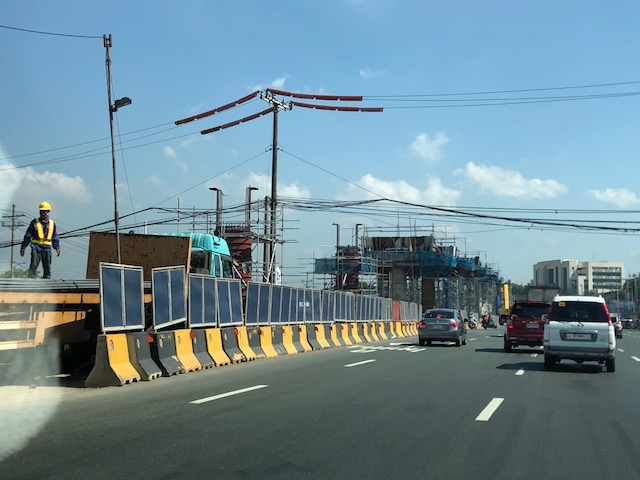 Columns rise along Commonwealth Avenue just across from the Ever mall and St. Peter’s church.
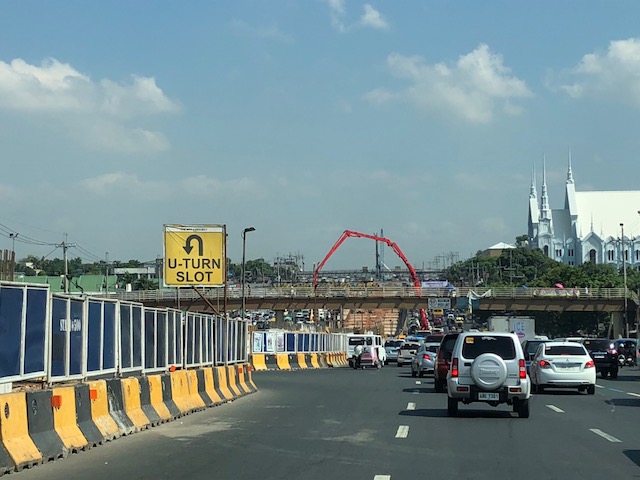 Here’s a traveler’s view of the ongoing construction along Commonwealth Avenue.
 Concreting even on Sundays – it was quite congested today near the Fairview Market due to lanes occupied by heavy equipment including several concrete mixers lined up along one lane to supply the mix.
I have several former students who are now working on the Line 7 construction in various capacities. I usually get my updates from them. I am happy for them to be involved in such a major infrastructure undertaking. Hopefully, their experiences will be useful for other future railway lines in the country.
–
Some updates on the Line 2 Extension
I just wanted to post a couple of photos showing the progress of the Line 2 Extension construction work. There are two stations along the extension including the future end station before the Masinag Junction (intersection of Marcos Highway and Sumulong Highway).
 Ongoing construction of the Line 2 Masinag Station just across from SM City Masinag in Antipolo City, Rizal – there are actually 3 usable lanes with only the middle being a full lane, the other two have concrete barriers encroaching along the site as shown in the photo.
 Ongoing construction of the Emerald Station across from both the Sta. Lucia and Robinsons Metro East malls at the boundaries of Pasig City, Marikina City and Cainta – the construction site here is longer than the one for Masinag but has wider spaces for traffic. Volumes, however, are significantly heavier than at Masinag so this area can easily become congested with traffic often stretching past the PLDT office along the westbound side and Ligaya along the eastbound side.
I will post more about the progress of construction for these stations in the future especially as it would be interesting to see the actual forms of the stations.
–
Lazarus franchises?
I was recently asked about my views on Lazarus franchises. At first the term didn’t catch on to me but “Lazarus” is a name that’s associated with coming back from the dead. “Lazarus”, after all, is the Biblical person Brought back to life by Jesus after the latter arrived to find his dear friend had passed away due to illness. It is now being used to refer to a dead public transport franchise that is to be resurrected but under new ownership. I recall I have written about the topic some time ago (many years ago) when I spotted what I thought was a BLTB Co. bus that turned out to be a DLTB Co. Bus. The logo and livery for their buses were the same as are the destinations in Southern Luzon. Then there were the EMBC buses I spotted along my commute that turned out to be operated by RRCG. These obviously are revived franchises and in both cases take advantage of what name recall the brands still have.
 DLTB Co. used to be BLTB Co., which stood for Batangas, Laguna, Tayabas Bus Co. Tayabas is the old name of Quezon Province. This is the current company’s terminal along EDSA in Cubao. The old terminal is also along EDSA near Tramo in Pasay City.
I opined “that brands associated with these franchises can be revived but there are prerequisites. These include an inventory of units currently operating in relation to the demand. The rule is to determine first if existing operators/companies can cover the increasing demand. If not, then the LTFRB may decide to open routes for new players including issuance of new franchises. “New” here probably includes “resurrected” franchises that have name recall among people.” To be clear, there is a process by which franchises are granted by the government and this should be followed in order to be fair with current, active franchise holders.
I wonder if the Antipolo Bus franchise can be revived to serve the old Antipolo – Divisoria route?
–
On the Pasig HOV lane experiment, again
I recently wrote about some thoughts on Pasig City’s HOV lane experiment along Julia Vargas Avenue. Here are a few more considering the experiment didn’t push through last February 28.
 Screen cap (courtesy of ABS CBN) showing the starting date for the HOV lane experiment. I think ‘HOV’ is more appropriate than ‘carpool’ since the requirement is for vehicles using the lane to have 4 or more passengers. Having only 2 passengers still qualify as a carpool.
I learned recently that the experiment has been put off to March 26, 2018:
 [Photo courtesy of Dulce Justiniani]
The current set-up has 2 lanes for motorised vehicles including a wide lane for HOV’s (including public utility vehicles like buses and vans). HOV’s here also include cars but those with at least 4 occupants. Here are a couple of photos showing us what could possibly happen should enforcement be weak given the configuration of the lanes along Julia Vargas:
 Private van running along the lane designated for HOV’s alongside a solitary cyclist on the bike lane.
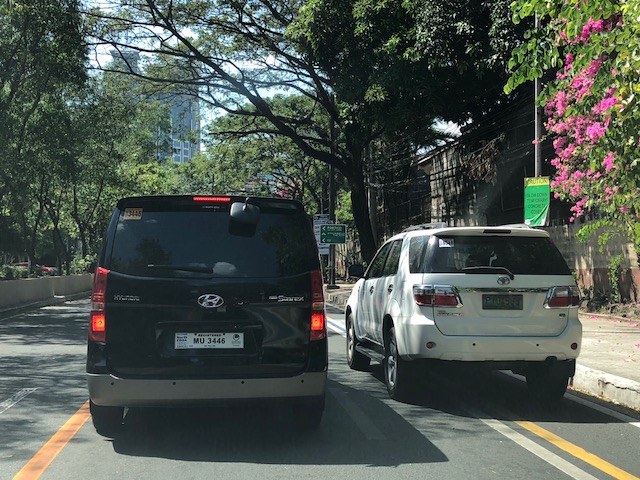 An SUV overtaking the van via the bike lane and the extra space of the HOV lane.
Wide lanes generally encourage higher speeds. I believe the way to go would be to have narrower lanes. And should these be considered, it would be possible to have 3 lanes for motorised traffic with one assigned for HOV’s and another for motorcycles. These are aside from the bicycle lane that I think should also be a protected lane. Protection here may be through the provision of “forgiving” physical dividers in the form of, say, rubber bollards.
Here’s how the Julia Vargas carriageway could be laid out:

Again, these are just suggestions for whoever are in-charge of the experiment-to-be along Julia Vargas Avenue. I hope that they are able to make some assessments even prior to the experiment. Such can be done using simulation software in order to have a handle on traffic related issues that may crop up during the implementation. Still, a big factor would be the enforcement aspects of the proposed policy for motor vehicles. Strict, firm and sustained enforcement would be necessary in order for this to succeed.
–
On learning from the experiences of others about transit ridership
I again share an article; this time on transit ridership (or on the passengers using public transportation).
Buchanan, M. (2018) Lessons on Ridership, from the National Literature, transitcenter.org, http://transitcenter.org/2018/01/29/lessons-on-ridership-from-the-national-literature/ [Last accessed 2/21/2018]
Perhaps we can learn from the experiences of other cities in as far as public transport use is concerned? For example, what impacts emerging technologies and the sharing economy (e.g., ridesharing) have on public transport ridership and how to meet these challenges to retain a majority of public transport users over low capacity modes.
–
On the PUV modernisation program – Part 1
Much has been written about the government’s PUV (or jeepney?) modernization program so I wouldn’t really be reposting about these. Instead, I will be featuring some opinions, insights and observations about its implementation.
Following are photos of one e-jeepney model that the government appears to be promoting. This is the e-jeepney produced by Star8 that they claim to be have solar panels for charging while they are on the road. Of course, we know they are not wholly dependent on solar power and have to be charged the conventional way through an adaptor that’s plugged into a regular outlet. These e-jeepneys were supposed to supplement the reduced supply of public transport to mainly UP students, staff and faculty members when the i-ACT (Inter-Agency Committee on Traffic) conducted their “Tanggal Bulok, Tanggal Usok” campaign in the UP Diliman area. First-hand reports revealed otherwise as the e-jeepneys spent more time on stand-by and just charging at one of the buildings on campus.

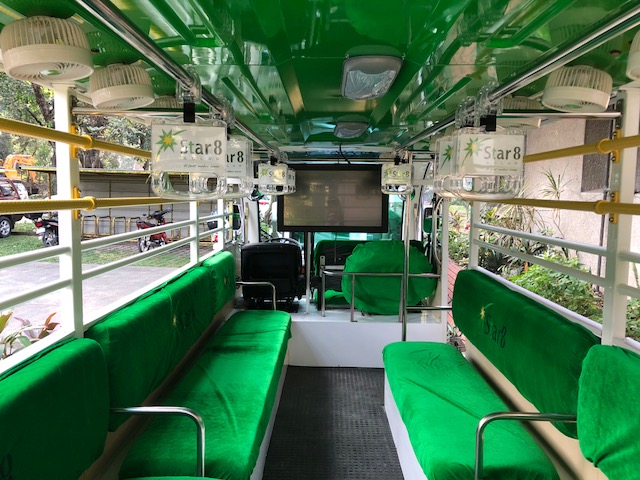


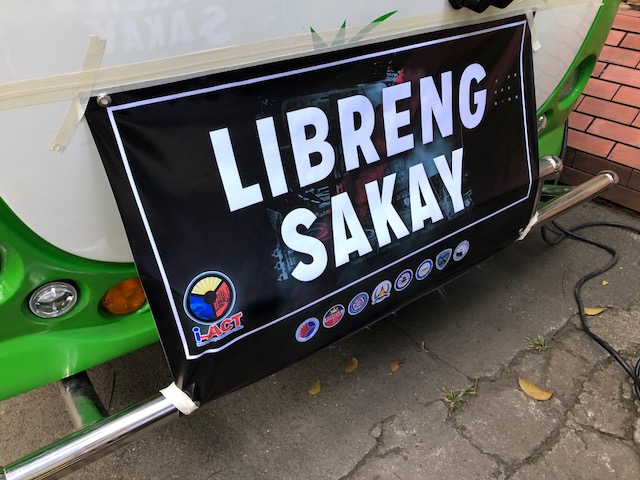
These are the same e-jeepneys that have been deployed and currently roaming around Tacloban City (promoting themselves?). The intent was for these to be the vehicles plying the new routes approved by the LTFRB/DOTr, which they claim was in response to the request made by Tacloban. The new routes though overlapped with many existing jeepney routes, clearly in violation of the general rule regarding overlapping routes, but allowed nonetheless by the regulating authority.
There are many allegations going around about e-jeepneys being forced upon operators and drivers given what has been regarded by progressive groups as unrealistic (read: unaffordable) financing schemes for the new vehicles. These are certainly not cheap, and double to triple the price of a ‘newer’ conventional jeepney. There are also suspicions about the strong motivation for the phaseout in favour of what are peddled as the successor (or replacement) to the jeepney. That includes a possible collusion among officials and the companies behind these vehicles and allegations (again) of some people likely gaining financially from the set-up. The DOTr and LTFRB PR machine, however, deny this and will gang up on anyone posting about this in their social media page.
–
A quick look at the BFCT in Marikina
I went to SM Marikina recently and had my companion take some quick photos of the transport terminal project of former Marikina Mayor and MMDA Chair, now Congressman Bayani Fernando (BF). Following are some of the clearer shots as we were moving when these were taken.
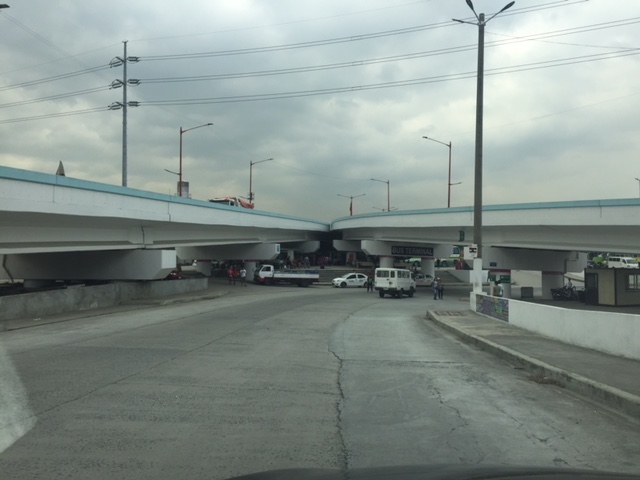 A look at the terminal located just beneath the two overpasses connecting Marcos Highway to C-5.
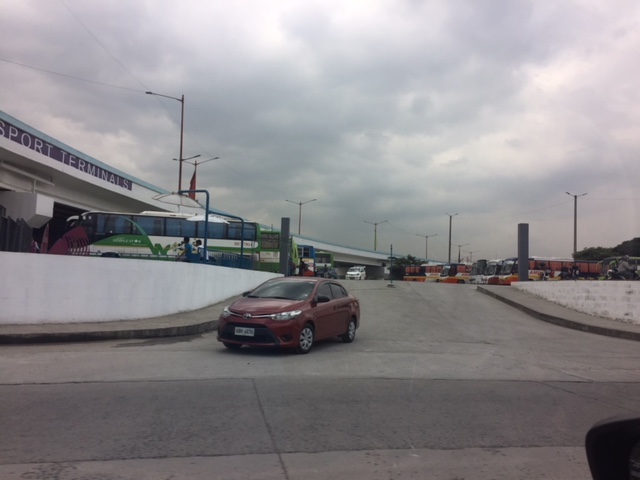 The driveway to and from the terminal lot.
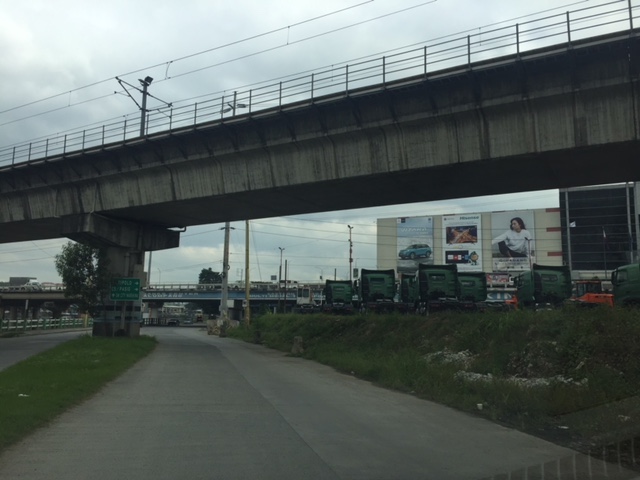 Moving towards SM Marikina under the LRT Line 2 structure, you see rows upon rows of trucks. I assume these are for sale and are there for display to prospective buyers.
 Leaving SM Marikina, this is the view of the trucks parked at the lot beneath the Marcos Highway and Line 2 bridges.
 Approach to the driveway of the terminal showing the buses currently at the BFCT.
 A closer look at the buses parked at the terminal. The green buses are RORO buses that the serve the West Philippine Nautical Highway route.
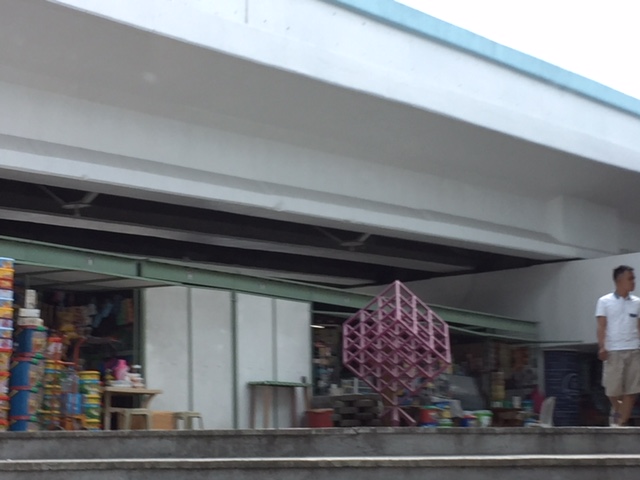 A quick look at some of the stores at the terminal. These are mostly the sari-sari/carinderia types you see in most provincial terminals. Among the merchandise are biscuits and cookies in containers of different sizes. These are popular pasalubong for travellers to relatives and friends in their destinations.
 The sign on the right is intended for vehicles coming from C-5 that are allowed to make a U-turn near the junction with Marcos Highway to get to the terminal. This, however, takes them into direct crossing conflict with vehicles coming up from the riverbanks heading to Marcos Highway.
It would be nice to see some statistics about the number of passengers using the terminal as well as their characteristics such as origins and destinations, including transfers (e.g., how do they get to or from the terminal and what modes do they use). I suspect that there are not so many people using this terminal and the numbers will not significantly improve once the Line 2 extension is completed and the new end terminal and its environs are developed in Masinag, Antipolo City.
–
Transport safety during the holidays
I was having a late morning haircut when I overheard from the TV news reports of many road crashes occurring over the last 3 days including Christmas Day. One incident involved a jeepney that apparently veered away from its lane and crashed head-on to a provincial bus. It was ironic that the passengers of the jeepney were bound for the town of Manaoag in Pangasinan province, likely to give thanks for blessings they received in 2017 and pay homage to the Blessed Virgin whose image in Manaoag is regarded as miraculous. Not reported were the many other crashes that probably occurred all over the country over the same period but were considered minor incidents as no one perished and likely only involved property damage.
There was also an incident a few days ago involving a ferry traveling between Infanta, Quezon and Polilio Island.The ferry was carrying 251 passengers, of whom at least 5 reportedly perished. The incident again raised old but lingering issues on maritime safety including those pertaining to seaworthiness of vessels especially those plying the regular, frequent routes connecting the many islands in the country.
A lot of people travel during this season in the Philippines. Many travel to their hometowns for the typical homecomings, reunions people have during Christmas and New Year. Most trips are on the road (the mode share is dominant even considering the popularity of air travel and the sizeable number of trips on maritime transport) and the combination of road conditions, driver behaviour and other factors often lead to situations that may result in road crashes. We cannot overemphasise the importance of taking extra care when we travel, whether as a driver, a passenger or even a pedestrian walking along the road. A friend who is also an official of the transport department once gave passengers of buses advice to tell their drivers to slow down and drive more safely if and when they feel they are driving recklessly. You don’t lose lives by slowing down and driving more carefully (probably with the exception of drivers of emergency vehicles like ambulances), and this applies, too, to passengers of private vehicles who need to tell their drivers (likely relatives) to slow down or drive more safely. One does not want some joyride transform almost immediately into a nightmare much less a last trip for everyone.
Keep safe everyone!
–
A new transport planning process?
December’s already “Chrismassy” in our part of the world and so in keeping with the spirit of Christmas, here is another article I am sharing:
Polzin, S. (2017) “All I Want for Christmas is a New Transport Planning Process,” Planetizen.com, https://www.planetizen.com/node/96036?utm_source=newswire&utm_medium=email&utm_campaign=news-12042017&mc_cid=e64f0c0c60&mc_eid=9ccfe464b1 (Last accessed: 12/6/2017)
In school, we’ve been taught and are still teaching many of the old concepts of transportation planning. I believe these are still important and relevant especially since the fundamentals, or the basics if I may say, are still needed in many situations around the country (i.e., the Philippines). The article above is relevant to our case because it helps build awareness of what is now being discussed and what the future will bring to us. That future for transport is not necessarily immediate although there are already pressures coming from various sectors and technology has been key to the disruptions and the leapfrogging we are experiencing. I like what a friend opines overtime he gets the chance. That is, that the technology-push is not the solution to a lot of our problems because we cannot ignore the basic deficiencies in our transportation system that technology alone cannot overcome.
–
 Caught (up) in traffic