
Home » Public Transport (Page 31)
Category Archives: Public Transport
Transport safety during the holidays
I was having a late morning haircut when I overheard from the TV news reports of many road crashes occurring over the last 3 days including Christmas Day. One incident involved a jeepney that apparently veered away from its lane and crashed head-on to a provincial bus. It was ironic that the passengers of the jeepney were bound for the town of Manaoag in Pangasinan province, likely to give thanks for blessings they received in 2017 and pay homage to the Blessed Virgin whose image in Manaoag is regarded as miraculous. Not reported were the many other crashes that probably occurred all over the country over the same period but were considered minor incidents as no one perished and likely only involved property damage.
There was also an incident a few days ago involving a ferry traveling between Infanta, Quezon and Polilio Island.The ferry was carrying 251 passengers, of whom at least 5 reportedly perished. The incident again raised old but lingering issues on maritime safety including those pertaining to seaworthiness of vessels especially those plying the regular, frequent routes connecting the many islands in the country.
A lot of people travel during this season in the Philippines. Many travel to their hometowns for the typical homecomings, reunions people have during Christmas and New Year. Most trips are on the road (the mode share is dominant even considering the popularity of air travel and the sizeable number of trips on maritime transport) and the combination of road conditions, driver behaviour and other factors often lead to situations that may result in road crashes. We cannot overemphasise the importance of taking extra care when we travel, whether as a driver, a passenger or even a pedestrian walking along the road. A friend who is also an official of the transport department once gave passengers of buses advice to tell their drivers to slow down and drive more safely if and when they feel they are driving recklessly. You don’t lose lives by slowing down and driving more carefully (probably with the exception of drivers of emergency vehicles like ambulances), and this applies, too, to passengers of private vehicles who need to tell their drivers (likely relatives) to slow down or drive more safely. One does not want some joyride transform almost immediately into a nightmare much less a last trip for everyone.
Keep safe everyone!
–
A new transport planning process?
December’s already “Chrismassy” in our part of the world and so in keeping with the spirit of Christmas, here is another article I am sharing:
Polzin, S. (2017) “All I Want for Christmas is a New Transport Planning Process,” Planetizen.com, https://www.planetizen.com/node/96036?utm_source=newswire&utm_medium=email&utm_campaign=news-12042017&mc_cid=e64f0c0c60&mc_eid=9ccfe464b1 (Last accessed: 12/6/2017)
In school, we’ve been taught and are still teaching many of the old concepts of transportation planning. I believe these are still important and relevant especially since the fundamentals, or the basics if I may say, are still needed in many situations around the country (i.e., the Philippines). The article above is relevant to our case because it helps build awareness of what is now being discussed and what the future will bring to us. That future for transport is not necessarily immediate although there are already pressures coming from various sectors and technology has been key to the disruptions and the leapfrogging we are experiencing. I like what a friend opines overtime he gets the chance. That is, that the technology-push is not the solution to a lot of our problems because we cannot ignore the basic deficiencies in our transportation system that technology alone cannot overcome.
–
How about simulating the BRT along EDSA?
History seems to be repeating itself as the situation along EDSA for the upcoming ASEAN meetings is practically the same with that about 2 years ago when the APEC meetings were held in Metro Manila. We have a different administration now with a lot of new people at the Department of Transportation. You would think that they see an opportunity here, to have another chance to simulate Bus Rapid Transit (BRT) along EDSA. They did recently deploy P2P bus services to augment the failing MRT Line 3 but perhaps it is more likely for that purpose and nothing else. There is no indication that the now exclusive lanes along either side of EDSA will be used for a mass transportation experiment during or after the ASEAN meetings. I guess this will be another missed opportunity for a proof of concept?
–
Origins of ridesharing/ride-hailing?
Here is a very interesting article on the beginning of Uber:
Campbell, G. (2017) “The Beginning of Uber,” Medium, August 23, 2017, https://medium.com/@gc/the-beginning-of-uber-7fb17e544851 (Last accessed 11/10/2017).
The article contains the company’s first pitch and should be of interest to researchers (that includes my students) who may want to know about and from the Uber’s origins. It might be useful to taxi operators and drivers as well since the slides show their characterization and what (good) features distinguished Uber from the conventional taxis at the time.
–
Eastern Metro Manila transport depot?
The eastern transport terminal that had been under development along the Marikina riverbanks and across from SM City Marikina does not seem to be progressing in terms of the public utility vehicles it is supposed to be attracting and dispatching. Not even the heavy promotion of a tiangge or goods market in the area could attract people.
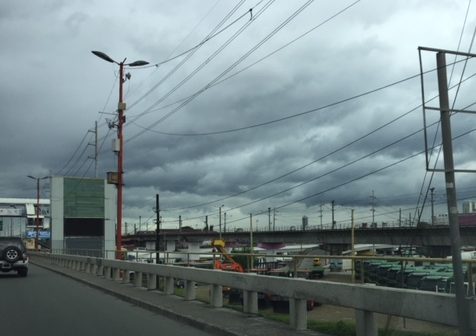
Passing the area, one can see trucks and other heavy equipment parked and occupying much of the terminal’s space. It seems to have become more of a depot than a working public transport terminal. I think this is to be expected as the designation and development of this area as a terminal for the east seems to have been undertaken haphazardly. For one, the connection to the Line 2 Station at Santolan is not that good and requires a lot of walking in a not so comfortable or convenient environment. Meanwhile provincial buses terminating at the terminal would have to be routed via C-5 with those from the north passing through the very congested Katipunan and those from the south also deliberately modifying their routes for this terminal. Connections with other modes is also quite problematic. The location just isn’t as strategic as Cubao or Crossing for this terminal to succeed in the natural sense. While I am still hoping I am wrong here, the gut feel and the observations every time I pass by the area says otherwise.
–
Vested interests, Part 1
An old friend and I met up some time ago and he casually mentioned the ongoing transit projects, particularly one that has affected him along his commute via Commonwealth Avenue. He said he can’t wait until Line 7 was completed and running. Perhaps then, there will be less vehicles along Commonwealth and he can have a shorter (travel time) drive from his home to his office in Ortigas. This type of comment did not surprise me as it is a reality that many would still likely prefer to take their cars or perhaps opt for car-share services rather than take public transportation, even with a new and note efficient option like the Line 7 available.
I have read or browsed articles, both technical and anecdotal, about many drivers wanting (and even encouraging) others to shift to public transport in order to lessen the cars on the road. This is so they can benefit from the reduction in vehicular traffic (i.e., less congestion equals faster travel by car). One article in the US even went as far as saying that if you didn’t drive 60,000 miles per year then you probably didn’t need a car. This is understandable for those who probably are, by default, dependent on their cars. It is frustrating, if not ironic, for those who don’t have to drive or take their cars but opt to do so. The latter includes people who have shorter commuting distances and with less transfers (less inconvenience) in case they do take public transport.
Next: Ridesharing as sustainable transport?
–
Some recommended references for sustainable transportation design
We conclude the month of October with the following recommended readings:
- Designing Walkable Urban Thoroughfares: A Context Sensitive Approach, An ITE Recommended Practice, 2010
- Model Design Manual for Living Streets, 2011
- Smart Transportation Guidebook, Planning and Designing Highways and Streets that Support Sustainable and Livable Communities, 2008
While these are guidelines and manuals developed and published in the United States, the principles and much of the content and context are very much applicable here.
As an additional reference, here is the latest version of functional classifications for streets that is supposed to be context-sensitive:
- Stamatiadis, N., A. Kirk, D. Hartman, J. Jasper, S. Wright, M. King, and R. Chellman. 2017. An Expanded Functional Classification System for Highways and Streets. Pre- publication draft of NCHRP Research Report 855. Transportation Research Board, Washington, D.C.
–
Local Public Transport Route Plan Manual – Philippines
The Department of Transportation (DOTr) recently shared the Local Public Transport Route Plan (LPTRP) Manual that was the product of the collaboration among government and the academe. While the date appearing on the cover is October 2017, this manual was actually completed in April 2017. [Click the image of the cover below for the link where you can download the manual.]

I don’t know exactly why the DOTr and Land Transportation Franchising and Regulatory Board (LTFRB) were hesitant in releasing this manual. Perhaps they wanted to pilot test it first on a city? Yup, this manual has never been tested yet so we don’t really know whether it will work as a tool for planning public transportation.
With all the opposition to the government’s PUV Modernization Program, the DOTr and the LTFRB should be piloting the program first and show a proof of concept to dispel doubts about the program. The same essentially applies to this transport route plan manual. Only once these are piloted would we know first hand its flaws and allow us to revise or fine tune them. I would suggest that both the modernization program and the manual be piloted in cities that are perceived or claim to have strong local governance. Davao City comes to mind and perhaps Iloilo City. Can you think about other cities where the program and/or manual can be piloted?
–
New study on ride-hailing
Here’s a nice article that has a link to a study conducted at the University of California-Davis written by one of the authors of the study:
Clewlow, R.R. (2017) “New Research on How Ride-Hailing Impacts Travel Behavior” in Planetizen, October 11, 2017.
And here’s an article about that same study:
Bliss, L. (2017) “The Ride-Hailing Effect: More Cars, More Trips, More Miles ” in Citylab, October 12, 2017.
As usual, I am posting this for reference not just for my readers but for myself and my students who are currently doing research on ridesharing/ride-hailing in the Philippines.
–
Misinformation on the PUV modernization project
There was a transport strike today mainly involving jeepney drivers and operators who are protesting the proposed Public Utility Vehicle (PUV) Modernization project of the Philippine government. In this age of fake news, there’s also a lot of misinformation going around that gets shared even by well meaning people who probably just wanted to have it represent their opinion about the matter. Unfortunately, this only spreads more misinformation. Nagagatungan pa ng mga alanganing komento.

Following is the reply of the DOTr from their Facebook account:
“PAUNAWA | Isa-isahin natin para malinaw:
1. Hindi tataas sa P20 ang pasahe. Saan nakuha ng PISTON ang numerong ito?
2. Hindi lugi ang driver/operator. Kikita pa nga sila. Bakit?
– May 43% fuel savings ang mga Euro-4 compliant na sasakyan
– Mas maraming pasahero ang maisasakay dahil mula sa 16 persons seating capacity, magiging 22 na.
– Low to zero maintenance cost dahil bago ang unit
3. Hindi rin totoo na hindi kami nagsagawa ng mga konsultasyon.
Ang DOTr at LTFRB ay nagsagawa ng serye ng konsultasyon at dayalogo kasama ang mga PUV operaytor at mga tsuper sa buong bansa, kabilang dito ang mga organisadong grupo ng transportasyon at ang mga lokal na pamahalaaan.
Ang mga konsultasyong iyon ay isinagawa bago, habang, at pagkatapos malagdaan ang DO 2017-011. Sa katunayan, ang konsultasyon para sa paggawa ng mga local public transport route plan ng mga lokal na pamahalaan at ng mga kooperatiba sa transportasyon ay isinasagawa hanggang ngayon sa buong bansa. Maliban sa sector ng PUJ, nagsasagawa rin ang gobyerno ng konsultasyon sa mga operaytor at grupo ng Trucks for Hire (TH).
4. Hindi korporasyon ang makikinabang kundi mga:
– Local manufacturers na mag-didisenyo ng units
– Pilipinong manggagawa na magkakaroon ng trabaho at gagawa ng mga sasakyan
– Drivers at operators na lalaki na ang kita, uunlad pa ang industriya
– COMMUTERS na matagal nang nagtiis sa luma, hindi ligtas, at hindi komportableng public transportation units
5. Hindi anti-poor ang #PUVModernization Program.
Malaking bahagi ng Modernization Program ang Financial Scheme para sa drivers at operators. Sa tulong ng gobyerno, nasa 6% lamang ang interest rate, 5% naman ang equity, at aabot sa 7 taon ang repayment period. Magbibigay rin ng hanggang PHP80,000 na subsidy ang gobyerno sa kada unit para makatulong sa down payment.
Bukod dito, tandaan natin na ginhawa at kaligtasan ng mahihirap ding commuters ang hangad ng programa.
6. Walang phase out. Mananatili ang mga jeep sa kalsada. Pero sa pagkakataong ito, bago at modern na.
ANO ANG TOTOO?
Hindi na ligtas ang mga lumang PUVs sa Pilipinas. Takaw-aksidente na, polusyon pa ang dala. Hindi komportable at hassle sa mga commuters. Ang totoo, matagal na dapat itong ipinatupad. PANAHON NA PARA SA PAGBABAGO SA KALSADA.”
–
 Caught (up) in traffic