
Home » Public Transport » Terminals (Page 5)
Category Archives: Terminals
Getting reacquainted with the JR lines in Tokyo
My recent trip to Tokyo allowed me to re-charge the wife’s and my Suica cards. We got these when we were in Japan in 2008 and rode mainly Japan Railways (JR) trains between our hotels and various destinations in Tokyo, Yokohama and Kamakura. I also used the JR Keihin Tohoku Line for trips between Saitama and Yokohama during the weekends when I would hear Mass at Yamate and then go around Minato Mirai, Shibuya, Ueno or Akihabara. It was easy for me to get reacquainted with commuting with the JR trains. It’s probably because it was so easy commuting in Japan and nothing much has changed in terms of the transport system. This is proof of an efficient public transport system and one which I have also used in Singapore and Hong Kong. Hopefully, we can have at least a bit of this efficiency in public transport and commuting in Metro Manila.
 JR East railway map for Tokyo Metropolitan area and environs (available for download in the internet)
 I found an improved/renovated JR Akihabara Station when I was in Tokyo in July.
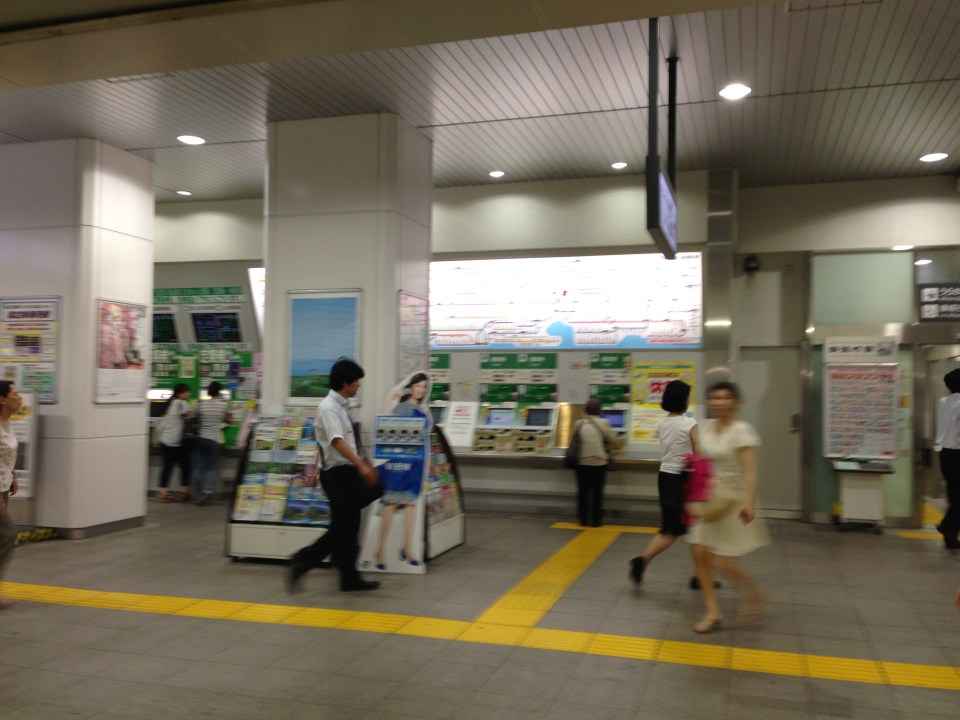 Ticket machines at the JR Okachimachi Station are bilingual. One just has to press the button for English translation/option.
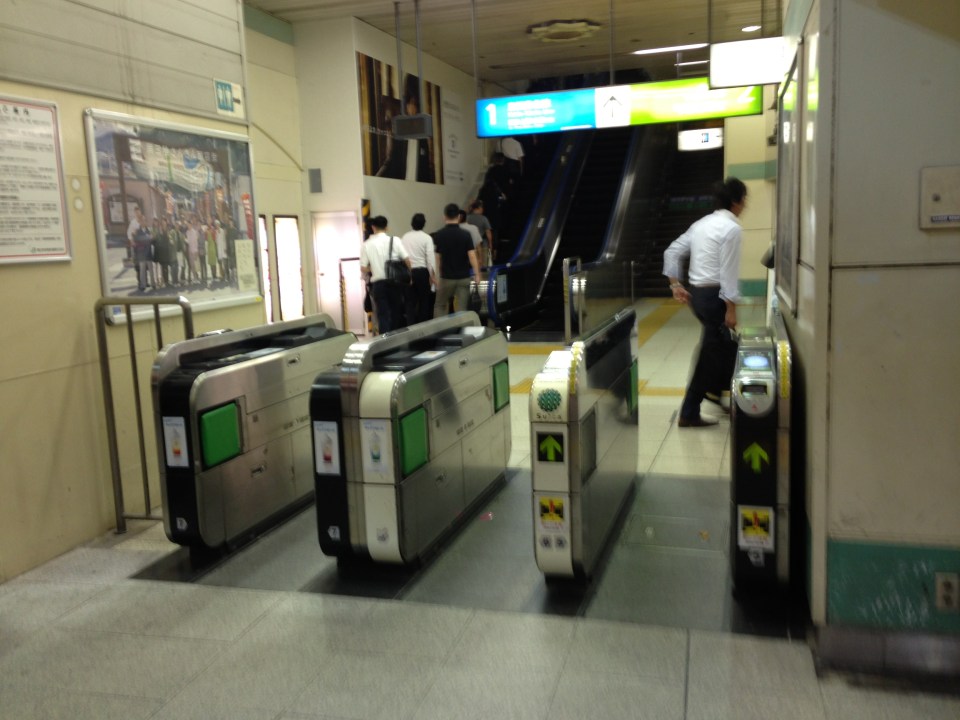 Turnstiles at a JR station
 Coin lockers at a JR station allows travelers/commuters to leave their things while going around for business, shopping or other purposes. A traveler heading to the airport, for example, who wants to do some last minute shopping may want to leave luggage using the larger lockers so he/she won’t have difficulty moving about.
 There are small restaurants and shops around JR stations. This one is a ramen shop frequented by commuters with a ticket dispensing machine to expedite orders. One purchases tickets for meals and drinks using the machine and presents the tickets to the staff inside the restaurant.
I hope to be able to go around my old haunts in Yokohama the next time I’m in Japan. Perhaps I can take a few photos then about transport in a country where I spent some significant time over the past years.
–
Some thoughts on the issues on bus bans and terminals in Metro Manila
I had originally wanted to use “Clarifying issues on bus bans and terminals in Metro Manila” as the title for this post. However, I felt it was too strong a title, and one that would be more appropriate for a government agency like the MMDA or DOTC, or an LGU like Manila. More than fault-finding and criticizing government agencies and local governments, I believe we should take a closer and more objective look at the issues (or non issues?) pertaining to the Manila bus ban and the opening of the southwest provincial bus terminal for Cavite-bound buses. Following are my comments on issues raised the past weeks about the two initiatives.
Issue 1: There were no or few announcements about the implementation of the bus ban in Manila and the southwest terminal in Cavite.
Comments: While the bus ban in Manila came as a surprise to many, the move was actually a consequence of a Manila City Council resolution. Normally, such resolutions would take time to implement and would entail announcements for stakeholders. Though we will probably never know the truth or who is saying the truth about the resolution and its implementation, it is likely that bus operators already knew about the implications but decided to call Manila’s bluff and play the media and public appeal cards rather than comply with Manila’s requirements for franchised buses and terminals as they have done before in other issues like fuel prices and fare hikes.
I find it difficult to believe that the MMDA did not do its part in announcing the opening of the southwest terminal. Perhaps people thought the announcement was over a very short period? Or maybe people didn’t mind the announcement and are also at fault for paying no or little attention to the announcement? If so, then the public is also partly to blame for disregarding the announcement from the MMDA, assuming the agency won’t push through with its initiatives to implement central terminals for buses. Next up will be another southern terminal at Alabang and a northern one near Trinoma.
Issue 2: Poor transfer facilities and services including a lack of pedestrian facilities between the bus terminal and transfer point, and lack of public transport like jeepneys to ferry passengers to their destinations.
Comments: I think it’s quite clear that the MMDA and LGUs are at fault here. Despite the construction and scheduled opening of the southwest terminal, there have been limited effort in improving pedestrian facilities. Such facilities needed to be in place prior to or upon the opening of the southwest terminal and requiring all provincial buses to terminate at the facility instead of continuing to Metro Manila. People-friendly facilities could have helped people in adjusting to the new policy though walking from 100 to 200 meters is certainly not for all, especially during this rainy season. Senior citizens and persons with disabilities (PWDs) would have specific needs that could have been addressed from day one of operation of the terminal. One approach to “bridge the gap” between the terminal and where people could take city bus and jeepney rides could have been to modify some city bus and jeepney routes to make these closer to the terminal. Ideally, the terminal could have been an intermodal facility providing efficient, seamless transfers between modes of transport.
In the case of Manila, the jeepneys were already there with routes overlapping with buses but their numbers and capacity could not cope with the demand from the buses. Since the main objective of Manila was to weed out colorum buses, it could have coordinated with the LTFRB to check the registration and franchises of buses rather than generalizing among all buses. Perhaps Manila just wanted to make a big statement? But then this was at the expense of the riding public, which obviously got the attention of many including the media. Coordination among agencies and LGUs, however, has not been a strong suit for these agencies, and this thought leads us to the next issue.
Issue 3: Lack of coordination among LGUs and agencies in implementing transport schemes.
Comments: This issue is an enduring one and has been the topic of discussions, arguments and various fora for as long as we can remember. On one hand, the DOTC and the LTFRB should provide guidelines and guidance to local governments on transport planning and services. The agencies should be proactive in their engagement of LGUs in order to optimize transport services under the jurisdiction of national agencies and local governments. On the other hand, LGUs must accept the fact that most if not all of them are ill equipped or do not have the capacity nor capability to do transport planning much less addressing issues regarding public transport. Citing the Local Government Code and its devolution of local transport to LGUs everytime there’s a transport issue certainly won’t help LGUs solve their problems.
Issue 4: Terminals required for city buses in Manila.
Comments: There should be a terminal for city buses in Manila but not a terminal for each company. There should only be one or maybe two terminals where buses can make stops prior to making the turnaround for the return trip. There is actually a terminal in Manila, which the city can start with for city buses. This is the one just beside the Metropolitan Theater and near City Hall, which can be utilized by city buses. It is also close to the LRT Line 1 Central Station so the facility can be developed as a good intermodal terminal for land transport.
Issue 5: Colorum or illegal public transport vehicles in Manila
Comments: This is actually a problem not just for Manila but for the rest of Metropolitan Manila and the rest of the country. The colorum problem is there for both conventional and paratransit services as there are illegal buses, jeepneys, UV express, multicabs, taxis, tricycles and pedicabs everywhere. Many of these are allegedly being tolerated by national agencies and local governments with many allegedly being fielded or owned by public transport operators themselves.
–
In most cases, the best time to evaluate a traffic policy or scheme is NOT during its first days or weeks of implementation but after a significant time, say at least a month, after it was implemented. This is because the stakeholders, the people involved would take some time to adjust to any scheme or policy being implemented. This adjustment period will vary according to the magnitude or scope of the scheme/policy and can be quite “painful” to many who have gotten used to the old ways. Usually, a lot of comments and criticisms are quite emotional but it is clear that the collective sentiment is the result years or decades of poor transport services and fumbling by government agencies. Transport in Metro Manila is already quite complicated with routes overlapping and services competing with each other for the same passengers. Perhaps it is time to simplify transport while also in the process of optimizing and rationalizing services. I have written about this in this previous post.
More transport issues in Manila will come about should the city train its attention on other modes of transport including jeepneys, UV express vehicles, tricycles, pedicabs and kuligligs. If the city is really intent on reforming transport services within its jurisdiction, it should consider the needs of all stakeholders and especially and particularly the riding public. Transport should be inclusive, people-friendly as well as environment-friendly and there are many good practices in other cities that Manila could refer to and study for adaption and adoption for the city. If it is successful in improving transport, then perhaps Manila could be the country’s model for transformation from being the “Gates of Hell” to being a “Portal to Heaven” to residents and visitors alike.
–
Reviving the Pasig River Ferry, again
The Pasig River Ferry is in the news again as a major corporation considers reviving the ferry. I’m just not so sure about their motivation for this as what I’ve read on news media seems to say that their plan for reviving the ferry service is linked with their real estate projects, especially one in Manila that’s shaping into Circuit Manila, on land that used to be the Sta. Ana race track. The nearest ferry terminal or station would be the Valenzuela ferry terminal, which is accessible via S. Osmena St. The same street connects to Makati City Hall. Public transport should be service oriented, which the main reason why many public transport systems, particularly rail transit, losing financial ventures and have to be subsidized by governments around the world. But note that I mentioned “financial” in the previous statement because there are definite and established benefits from economic perspective. I’m giving the benefit of the doubt, however, in so far as the track record of the company gives us hope that their entry would be good from the management and marketing perspective of the ferry system. A successful venture here would prove the viability of a water-based system that has so much potential considering it could connect Manila, Makati, Mandaluyong and Pasig directly with other towns of the provinces of Rizal and Laguna around the Laguna De Bay.
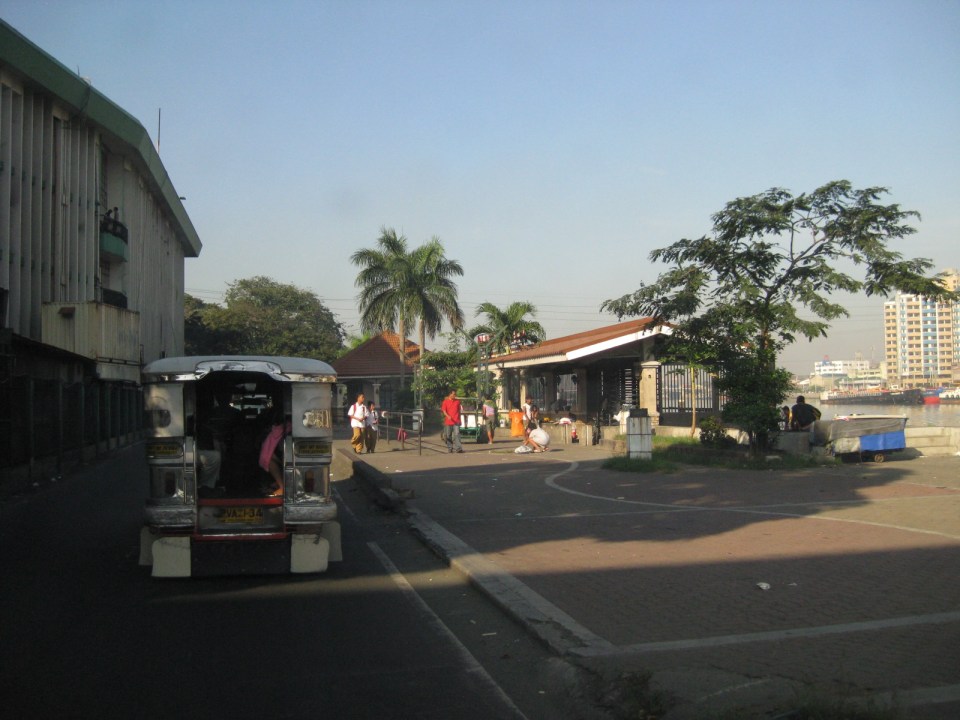 There are many informal settlers along the stretch of the Muelle del Rio (now also known as Riverside Drive) from MacArthur Bridge to Plaza Mexico in Intramuros. Several families can be seen living under the bridges or with their carts along the linear park.
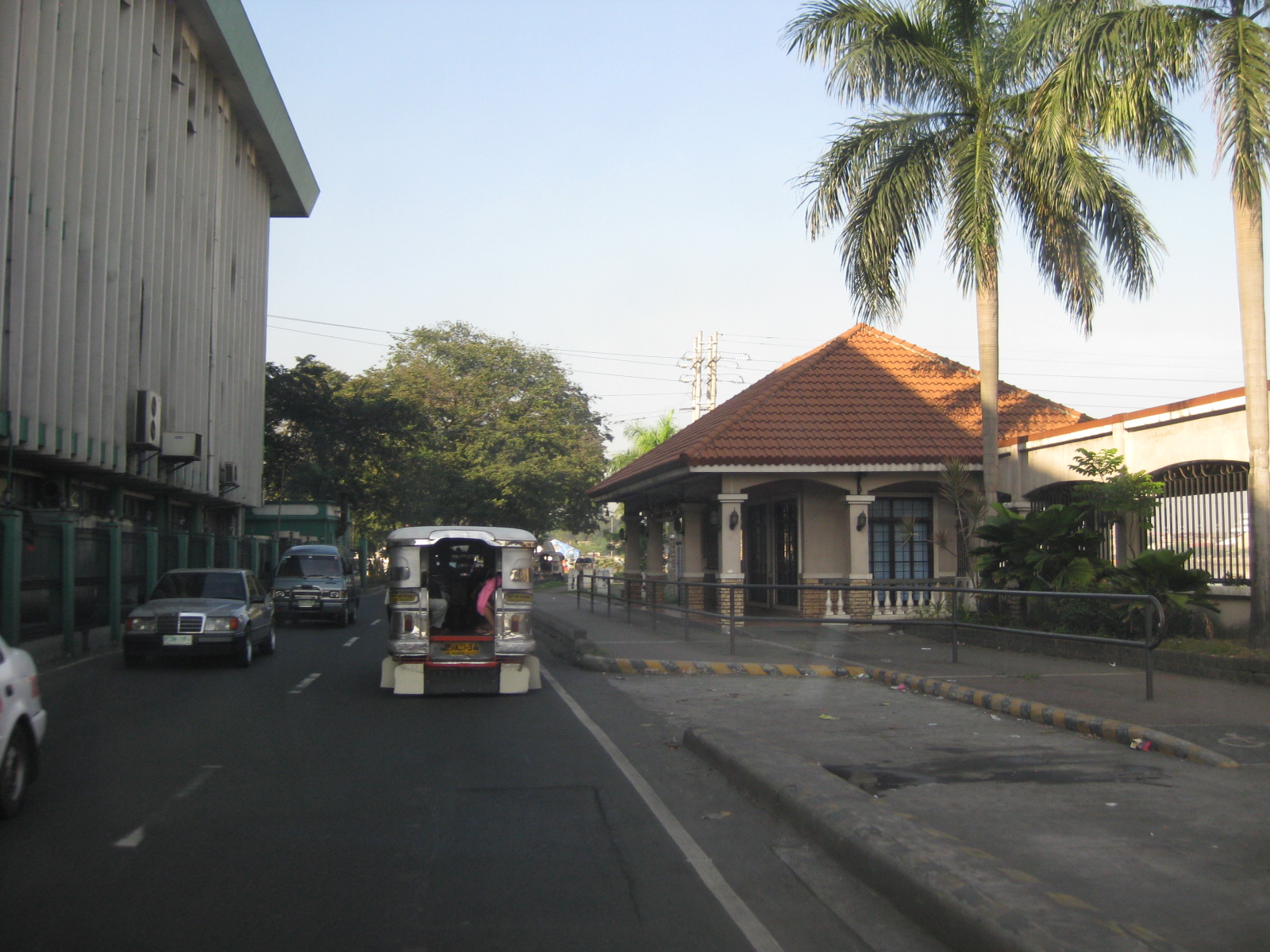 The Plaza Mexico Station of the Pasig River Ferry
Reviving the Pasig River Ferry would take a lot of effort and that effort does not yet include the marketing required to attract passengers for the ferry. Of course, one way to promote the use of the ferry is if people can be convinced that using it could cut down their travel times between origins and destinations. While the ferry may provide a more direct route along the river, connectivity with other modes of transport (e.g., road public transport) and pedestrian facilities should increase ridership. Needless to say, affordability (i.e., fare rates) and safety/security are essential components for an attractive mode for commuting. The tourism aspect would just be a bonus in terms of users.
–
Araneta bus terminal
Cubao in Quezon City has always been a point of convergence for a lot of people and, like Pasay City, is a gateway for people coming from all over the country. Cubao is one of the larger commercial districts in Metro Manila and its Araneta Center is host to a large bus terminal catering mainly to southbound bus companies. The terminal is larger than any of the individual, private terminals around Cubao and nearby along EDSA or Aurora Boulevard. Most of these private terminals are for northbound buses. Southbound refers to buses connecting Metro Manila with Southern Tagalog and the Bicol Region in Luzon Island and those taking the western nautical highway and the Roll-On, Roll-Off (RORO) system to the Visayas and Mindanao provinces via the Port of Batangas and Mindoro. In fact, it is possible to take the bus to Caticlan, the jump off point for the immensely popular Boracay Island.
The Araneta Bus Terminal is located a block away from the Araneta Coliseum, housed in a building that was formerly the Rustan’s Department Store (to those who remember the old store) just across from the Ali Mall. It used to be located at an open lot across to the east of Ali Mall but had to be moved to its present (and perhaps better location) after the lot was committed to a new condominium development. Bus companies have their ticketing services inside the building and one can reserve tickets for future trips or, if seats are still available, can purchase tickets outright for buses scheduled to leave around that time.
 Passengers waiting or purchasing tickets at the Araneta bus terminal. There are clean rest rooms inside the terminal.
 Another look at the ticket booths and waiting area at the terminal. There are also stores selling food, snacks, drinks and even souvenir items. Popular pasalubong are assorted biscuits and other food stuffs. Located at the second level are terminal offices and a BPO, which shares tenancy with the terminal.
The terminal is usually very crowded during Christmas, Holy Week, and All Saints’ Day when people flock to the provinces (i.e., their hometowns). Many bus companies sell seats ahead of these holidays and people are encouraged to purchase tickets ahead of their trips to make sure they do get seats.
–
Melaka central bus terminal
Trips between Singapore and Malaysia are quite frequent given the proximity between the two countries (Singapore used to be part of Malaysia.) with a lot of people employed just across the borders and Malaysia being a popular destination for shopping and recreation. In fact, the first Premium Outlet in Asia is located in Johor, Malaysia, which is just across the border from Singapore. On a weekend trip to Melaka (Malacca), we took an express bus that made only 3 stopovers including one each for immigration control/processing in Singapore (exit) and Malaysia (entry). On the way back, we only had an extra stopover due to a fellow passenger requesting for a toilet break.
Arriving at Melaka, I was impressed with the central bus terminal, a sprawling complex that connected with commercial establishments around it. Inside the terminal, there are many shops and restaurants so one doesn’t need to leave the terminal to eat or to make some last minute shopping. Good buys are rubber sandals much like those being sold under Brazilian brands. Malaysia is a major producer of rubber and the sandals made in Malaysia are of high quality but less expensive than the Brazilian and perhaps Chinese counterparts.
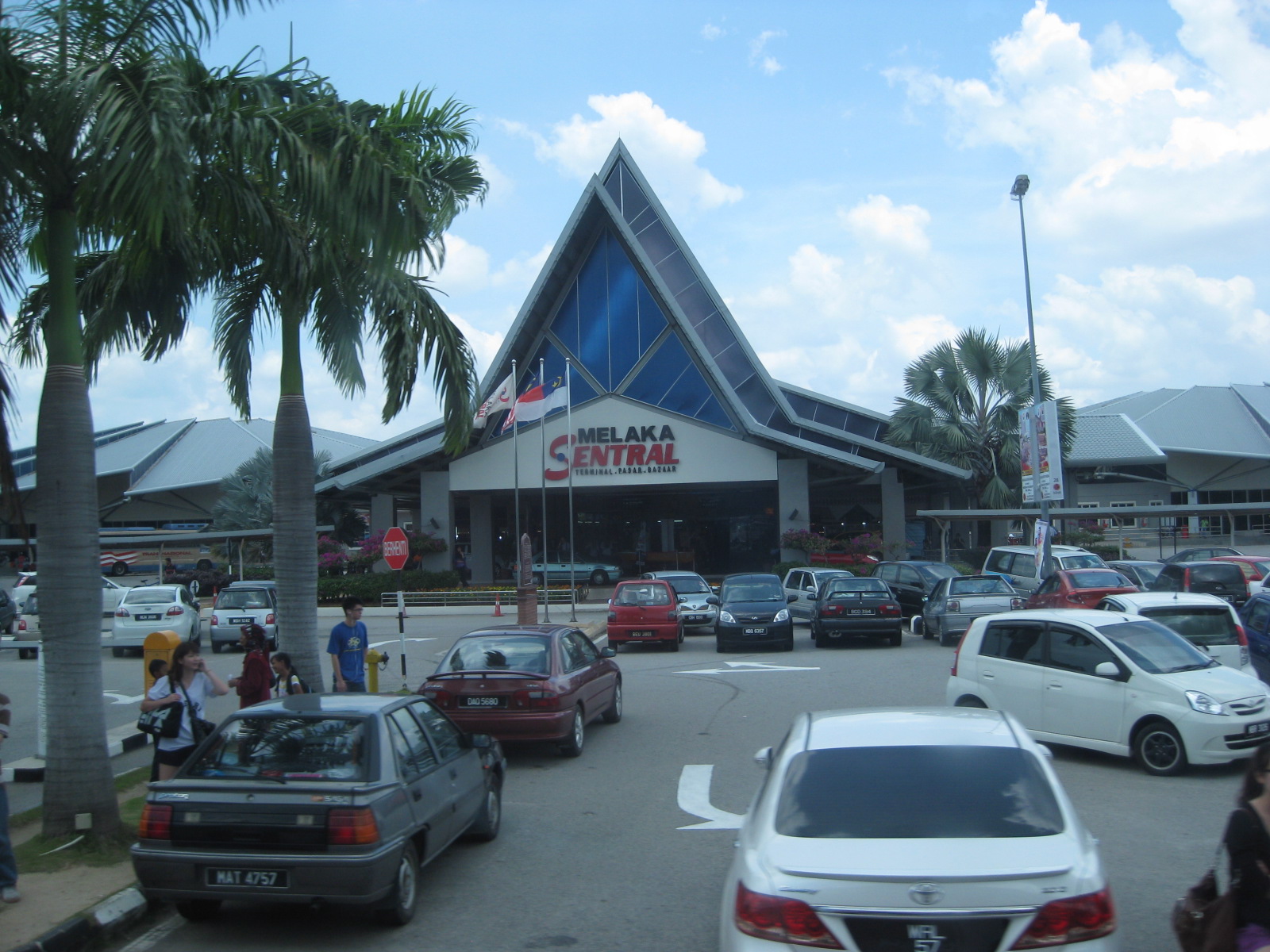 Terminal building and parking
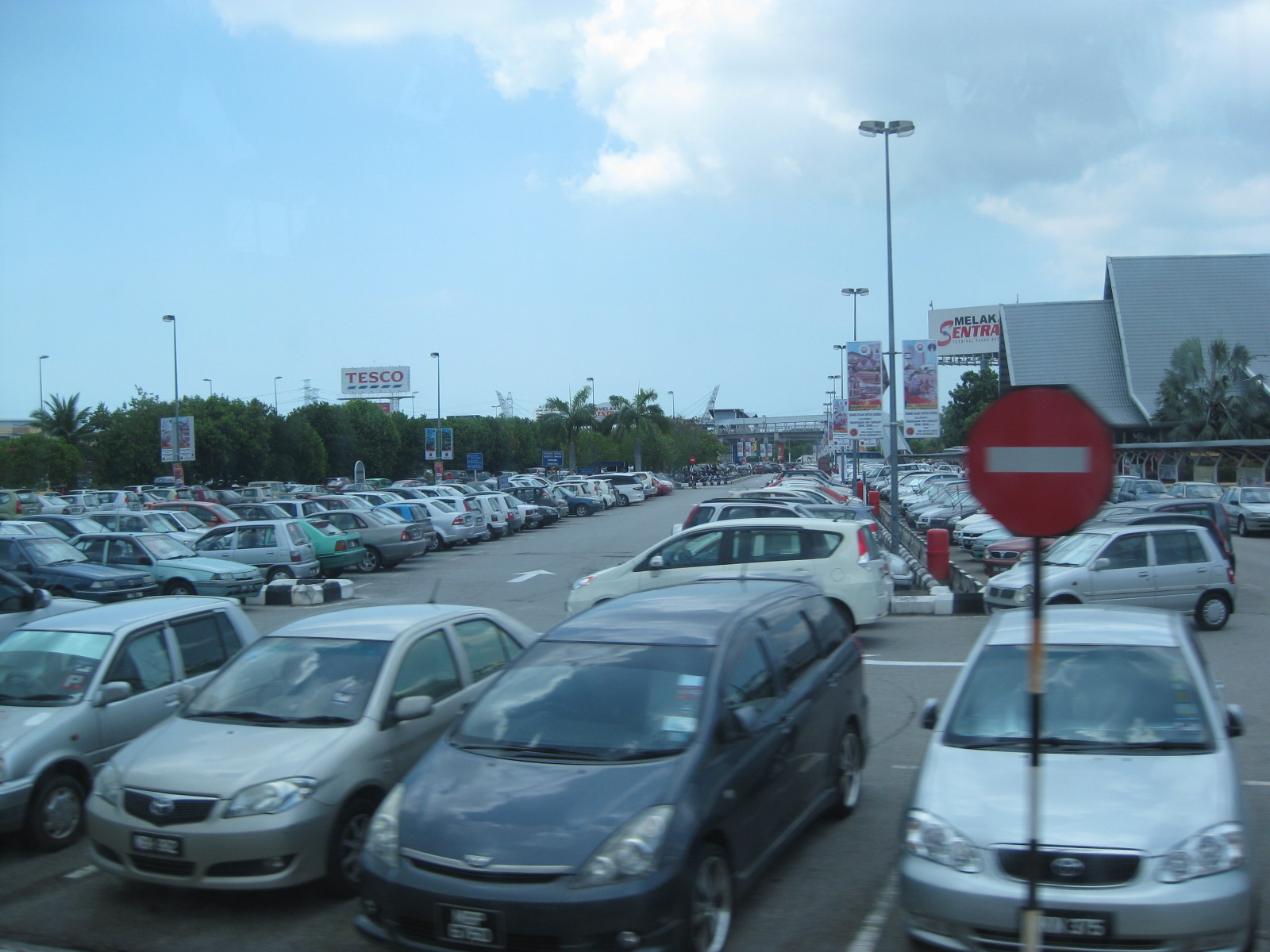 A look at the spacious parking area around the terminal.
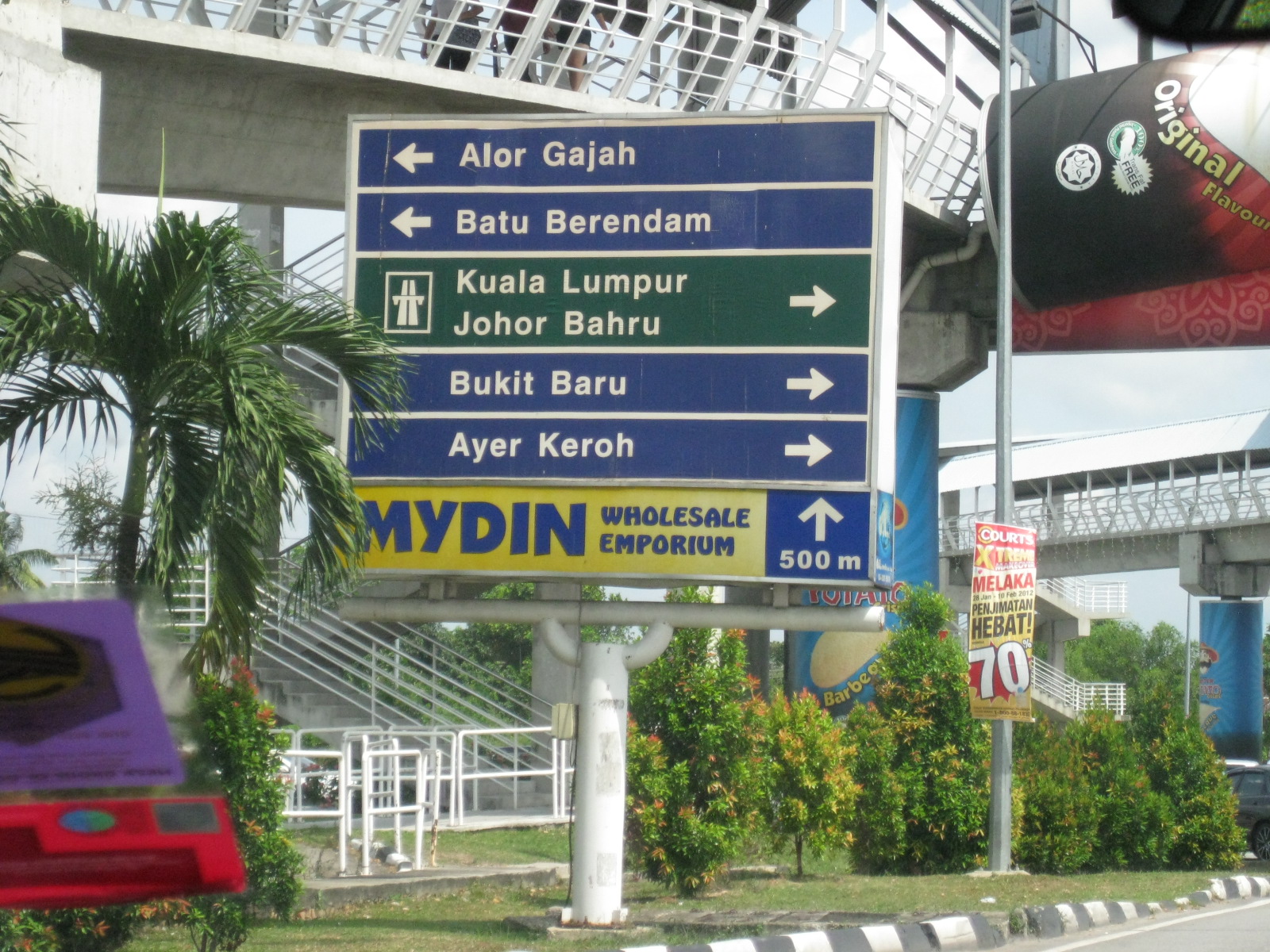 Directional sign to guide visitors (probably sponsored by the emporium indicated at the bottom).
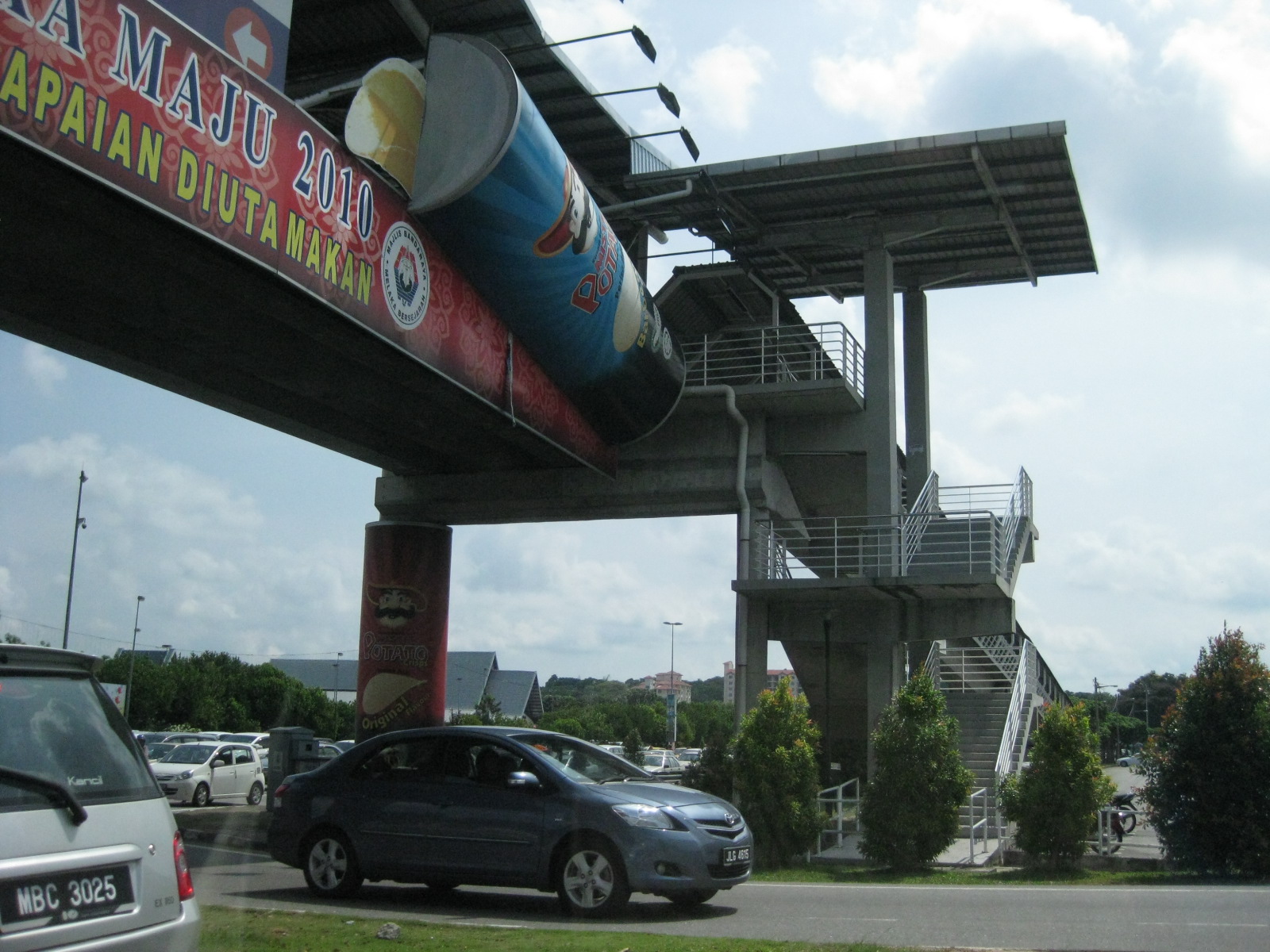 Pedestrian overpass for people crossing the busy highway in front of the terminal.
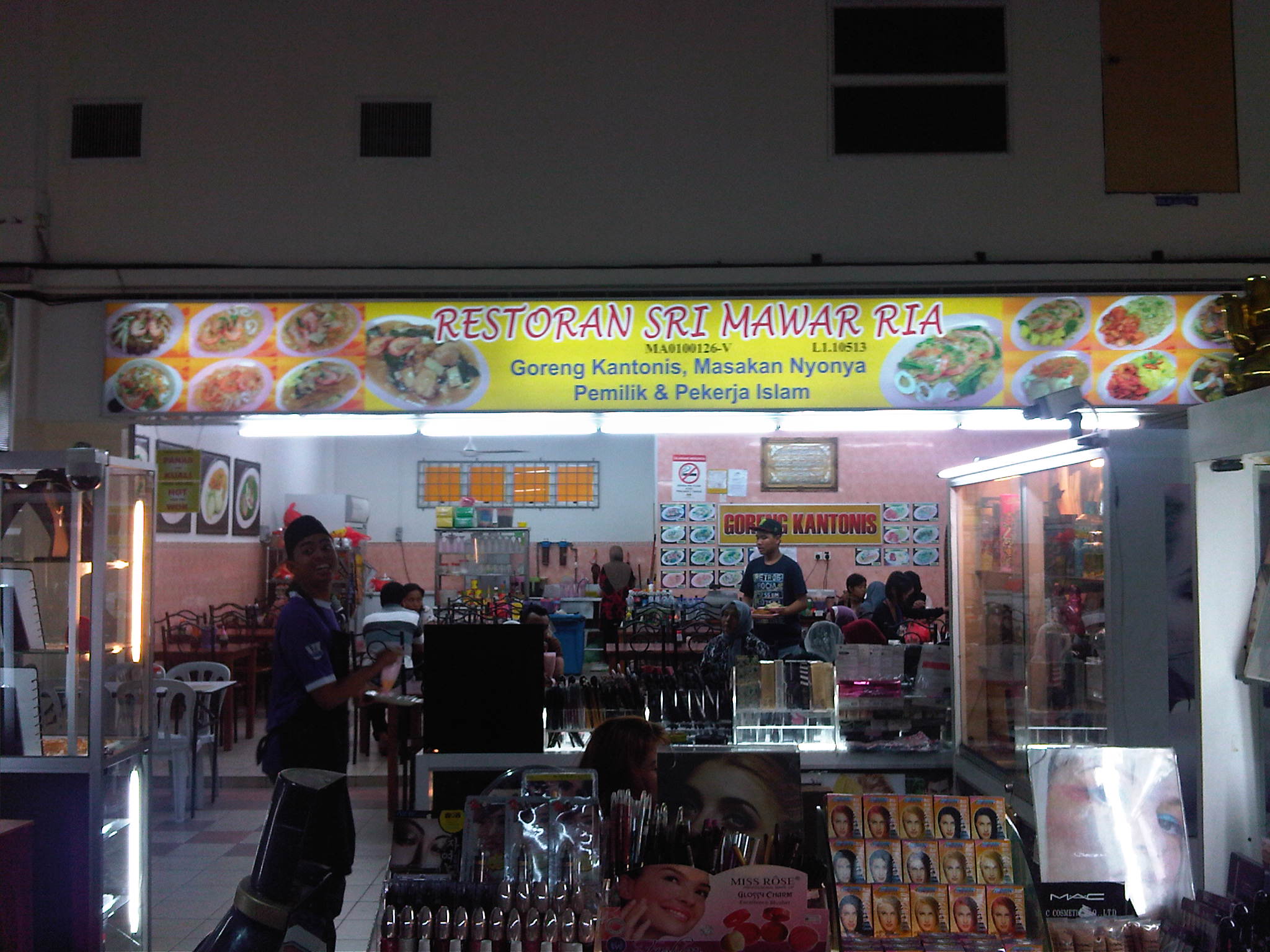 There are many restaurants and shops inside the terminal, which is by itself a commercial establishment.
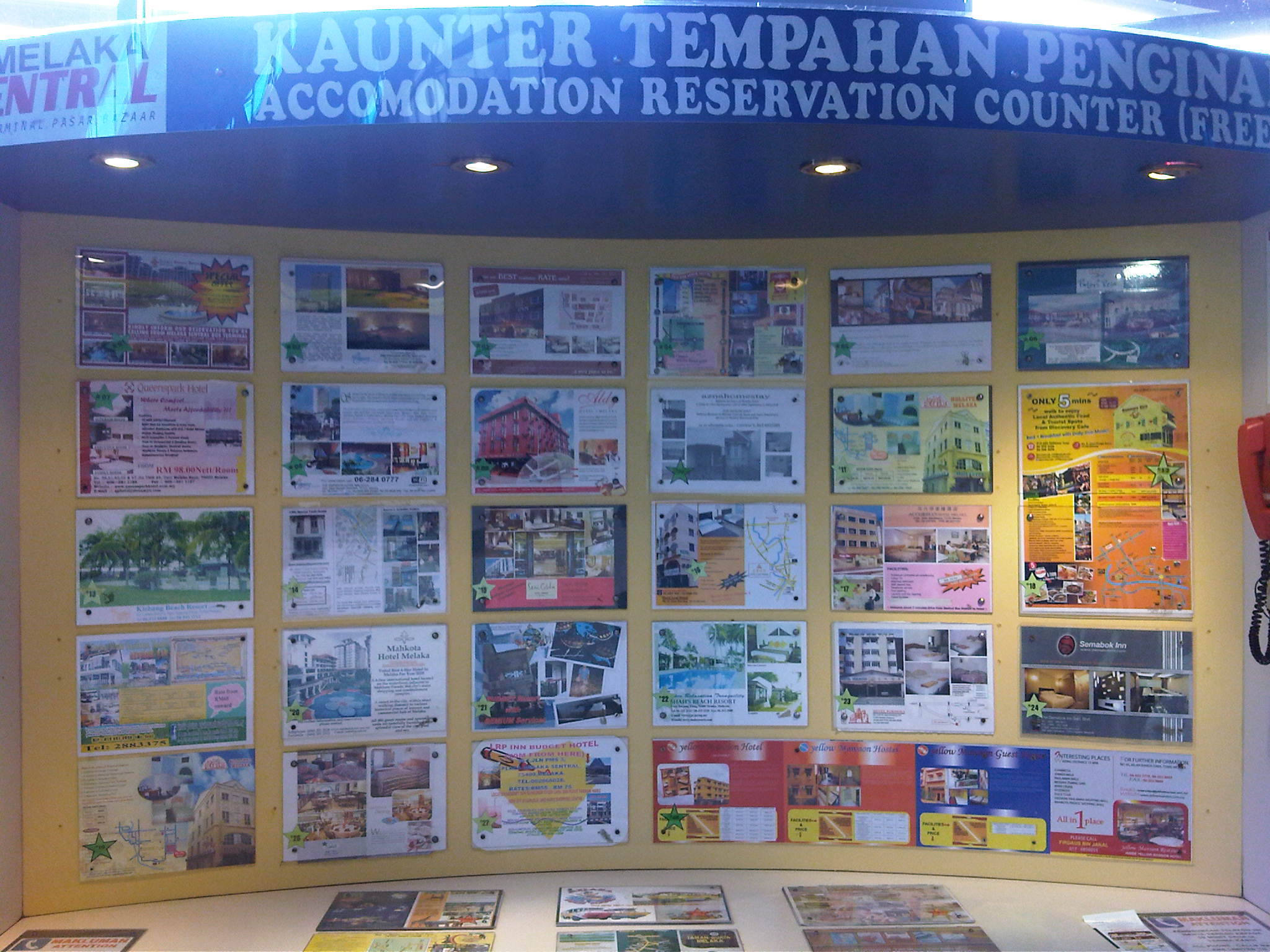 Hotel/accommodations information for travelers are posted at the terminal.
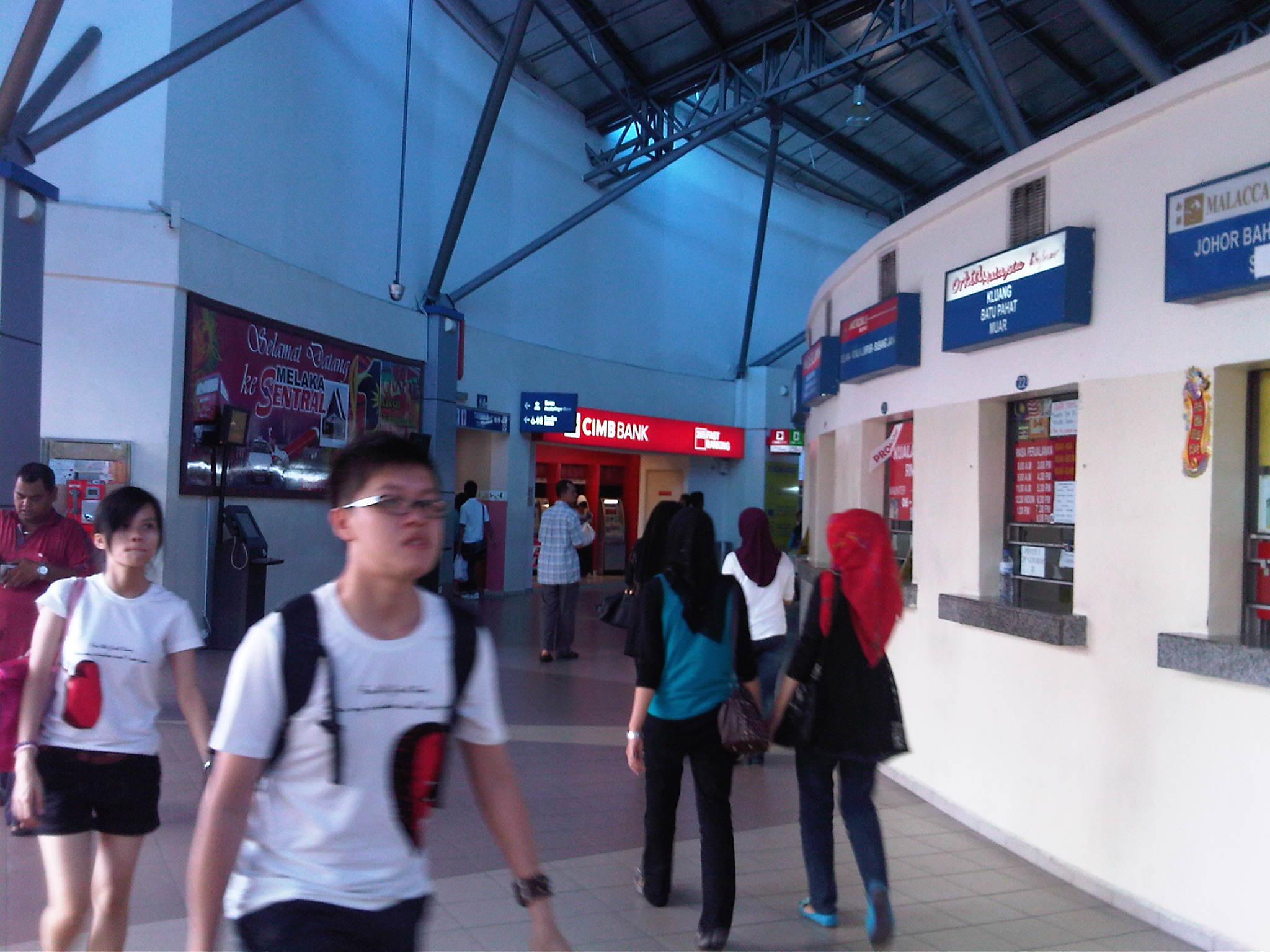 The different bus companies operating out of the terminal have their booths were travelers may buy/reserve tickets.
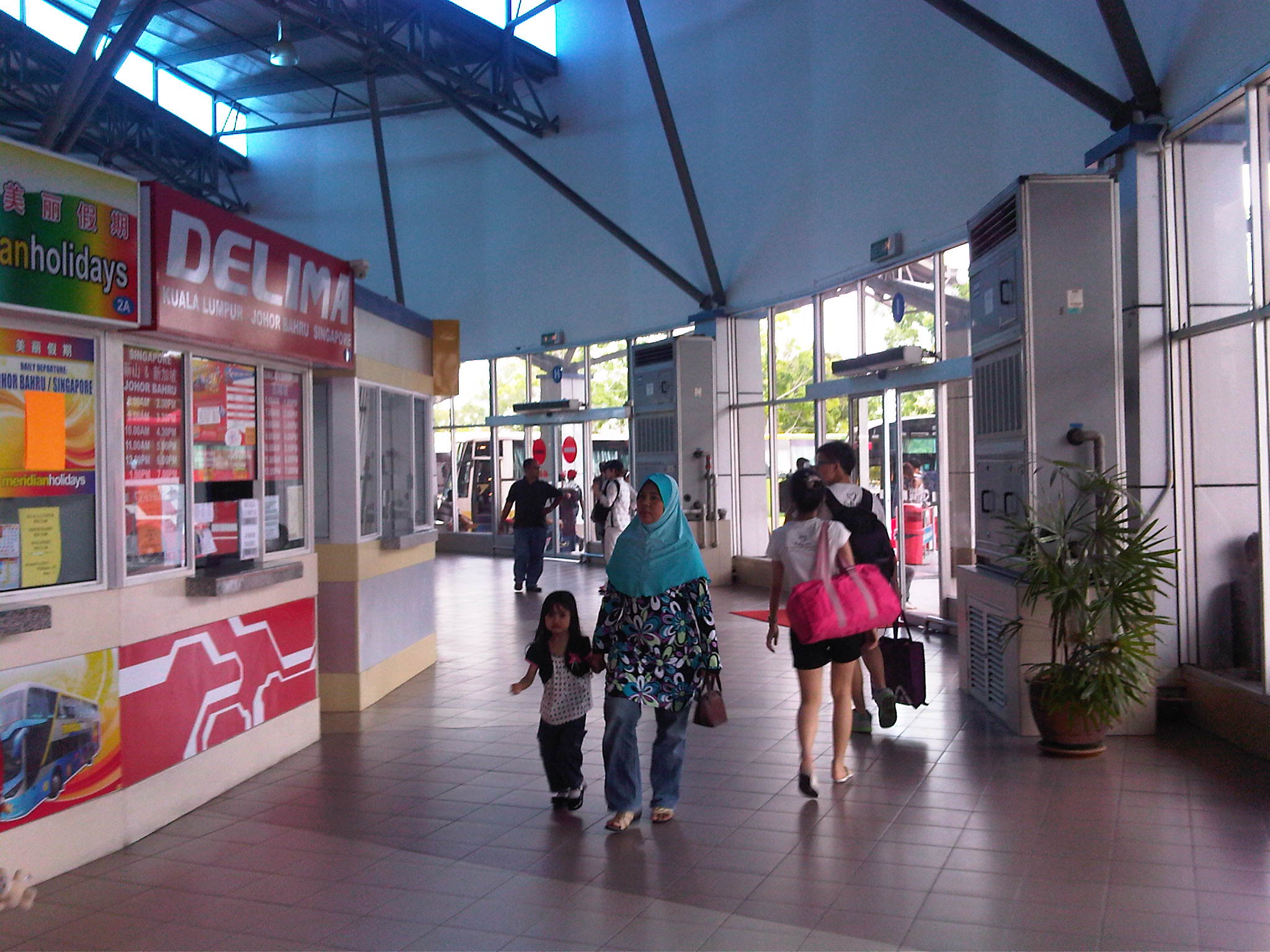 The ticketing area is spacious and there were no long lines, in part due to the availability of online (internet) ticket purchases. Seating is not free for all so travelers need to reserve or purchase tickets ahead of travel in order to get good schedules and seats.
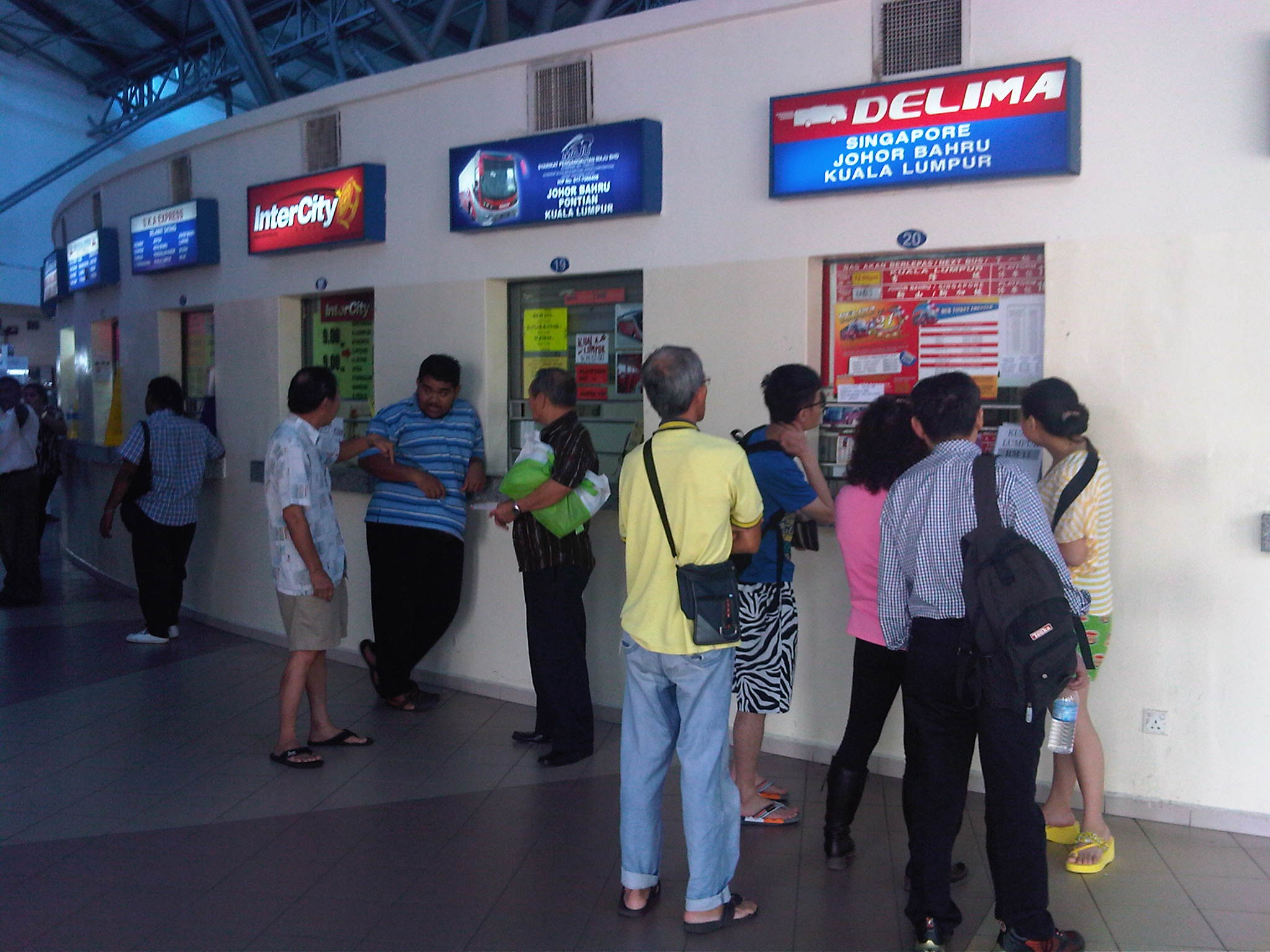 One can purchase tickets to any point in Malaysia (local long distance trips) and Singapore (another country) is among the most popular destinations. Schedules and fares are posted for information of travelers.
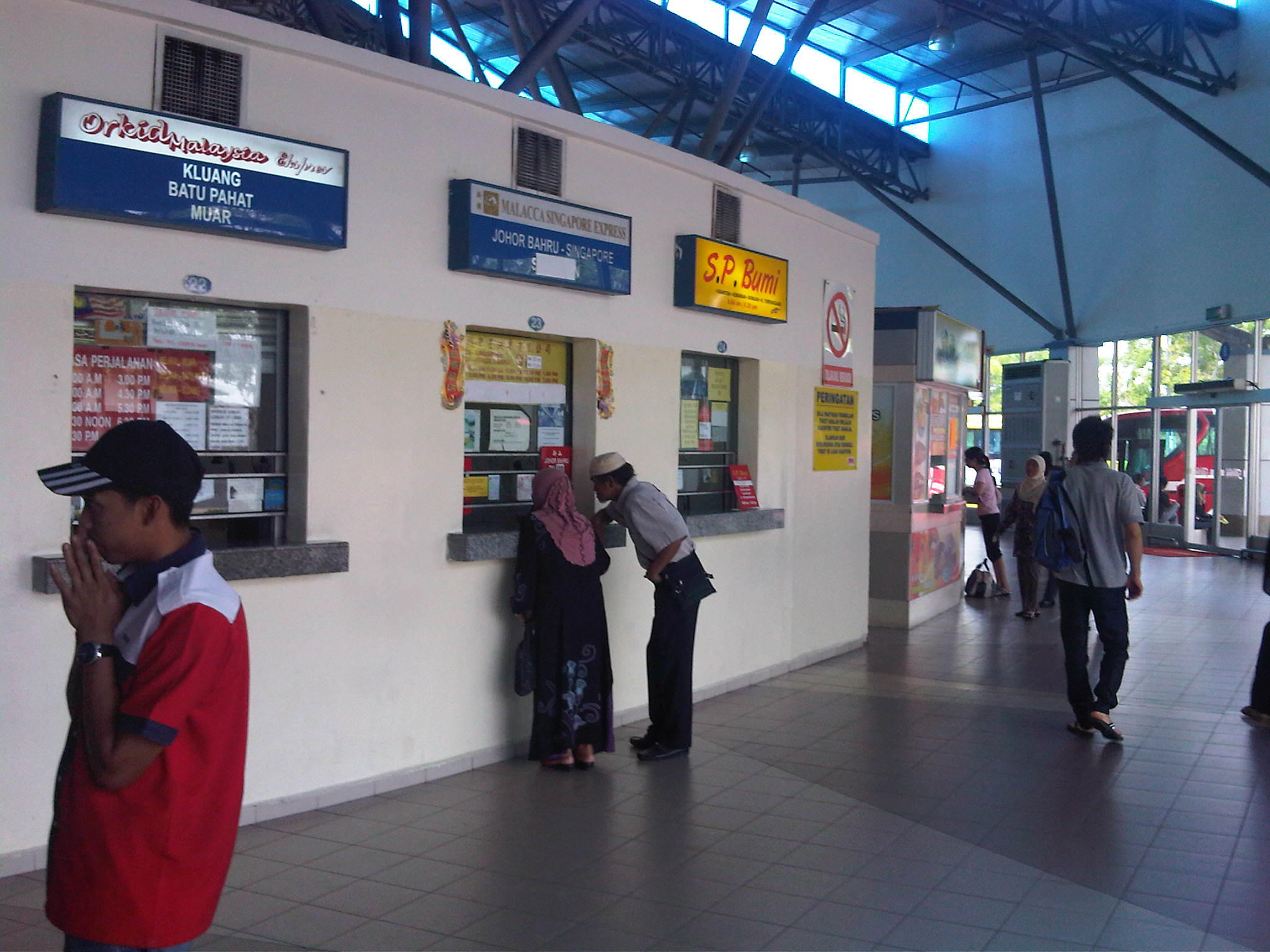 There are many choices among the bus companies but I would strongly recommend Starmart Express buses when traveling between Singapore and Malaysia. They provide excellent service and have well-maintained buses. One can purchase tickets online and claim these at their booths/stations.
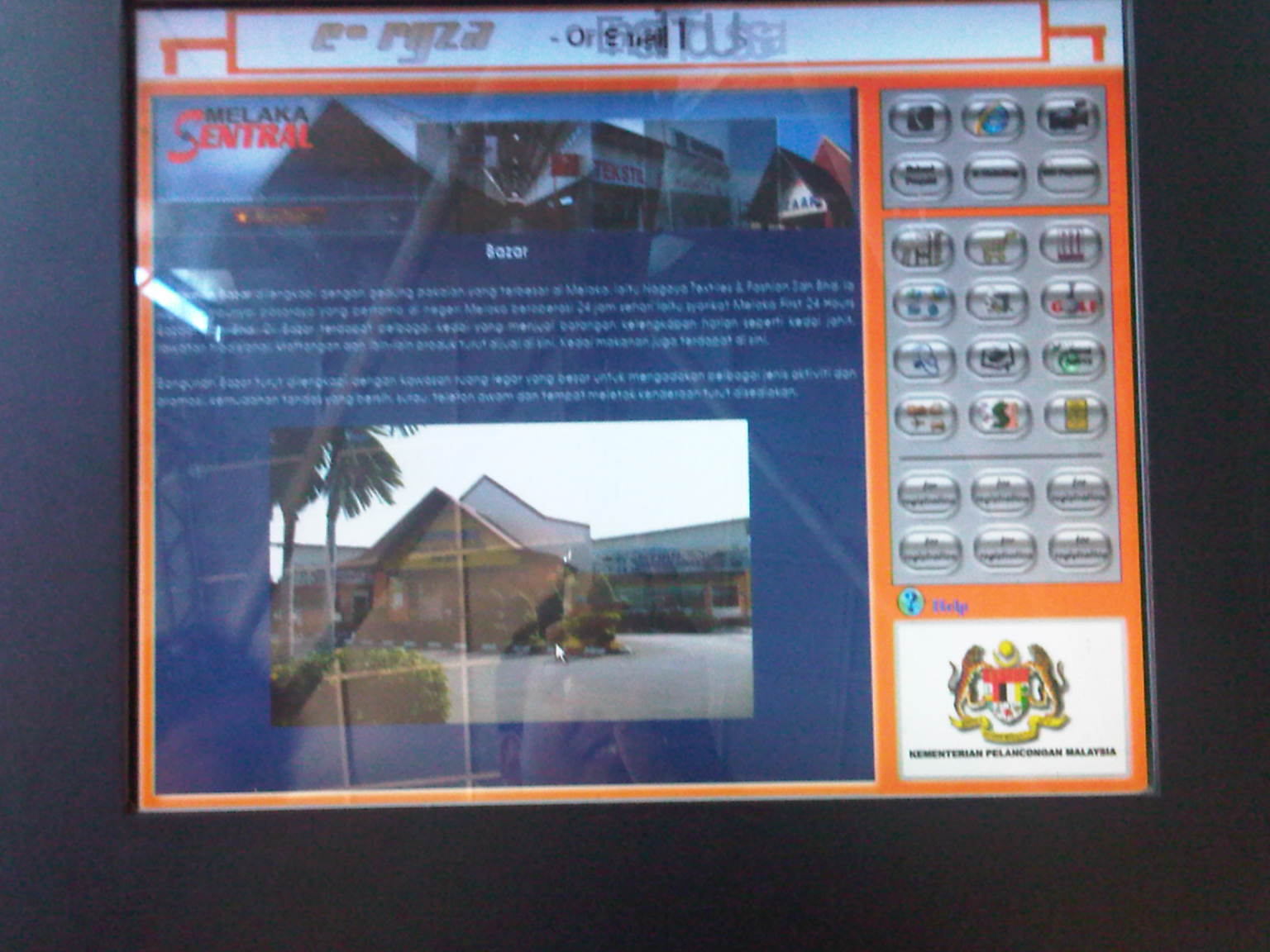
Interactive information screen at the terminal
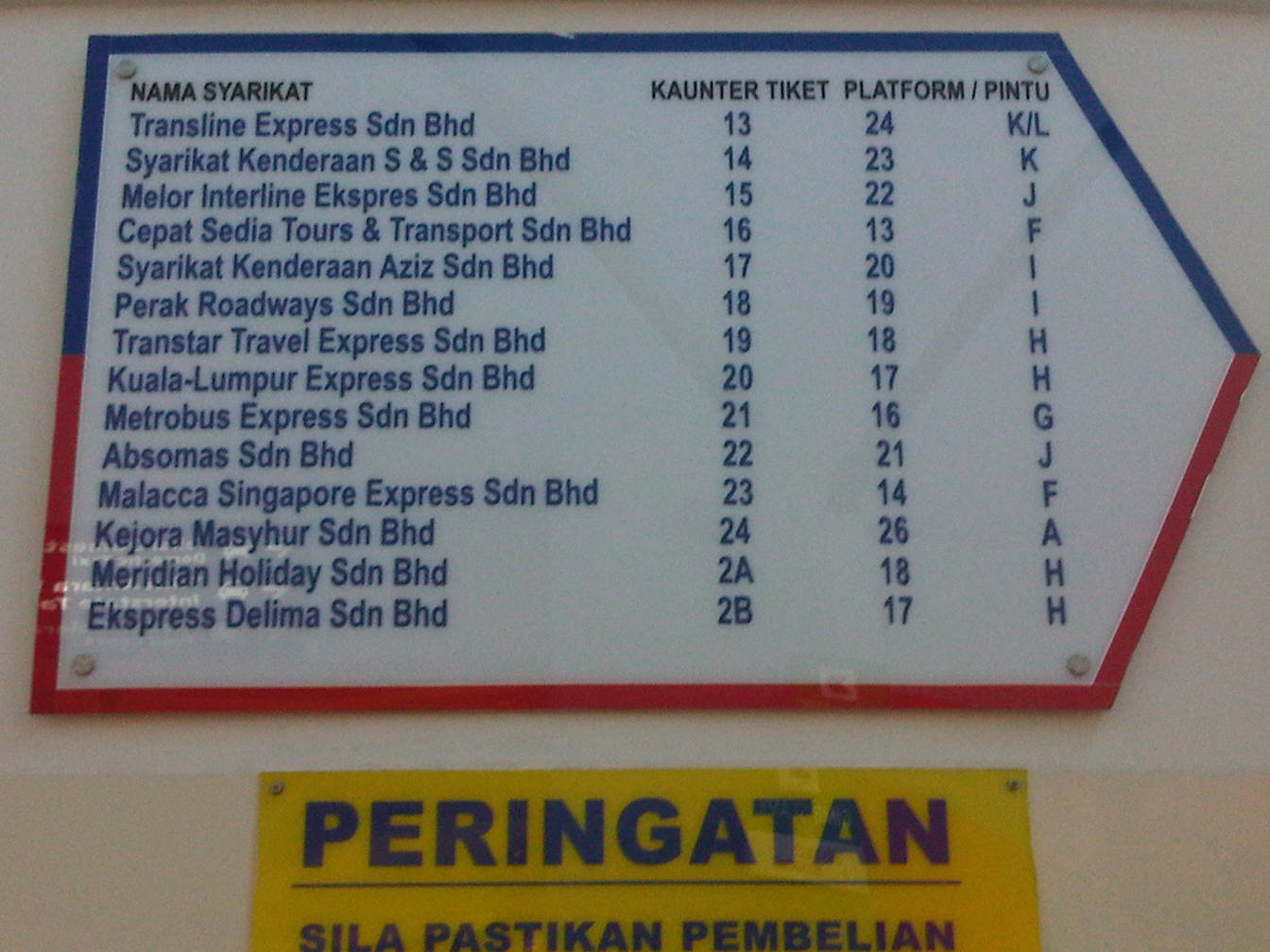 Static information board for the locations of bus company booths at the terminal
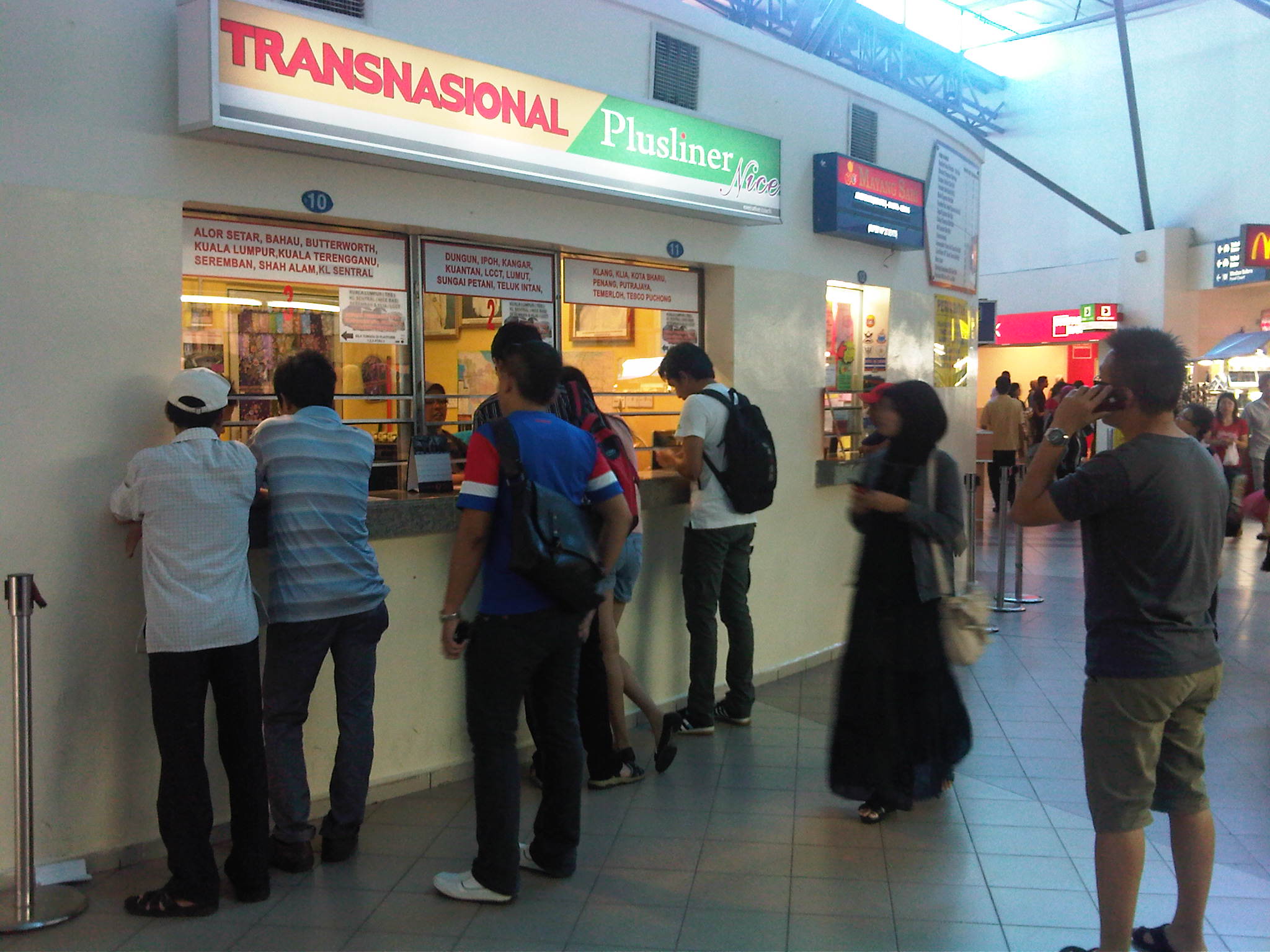 Travelers lining up before a booth to purchase tickets
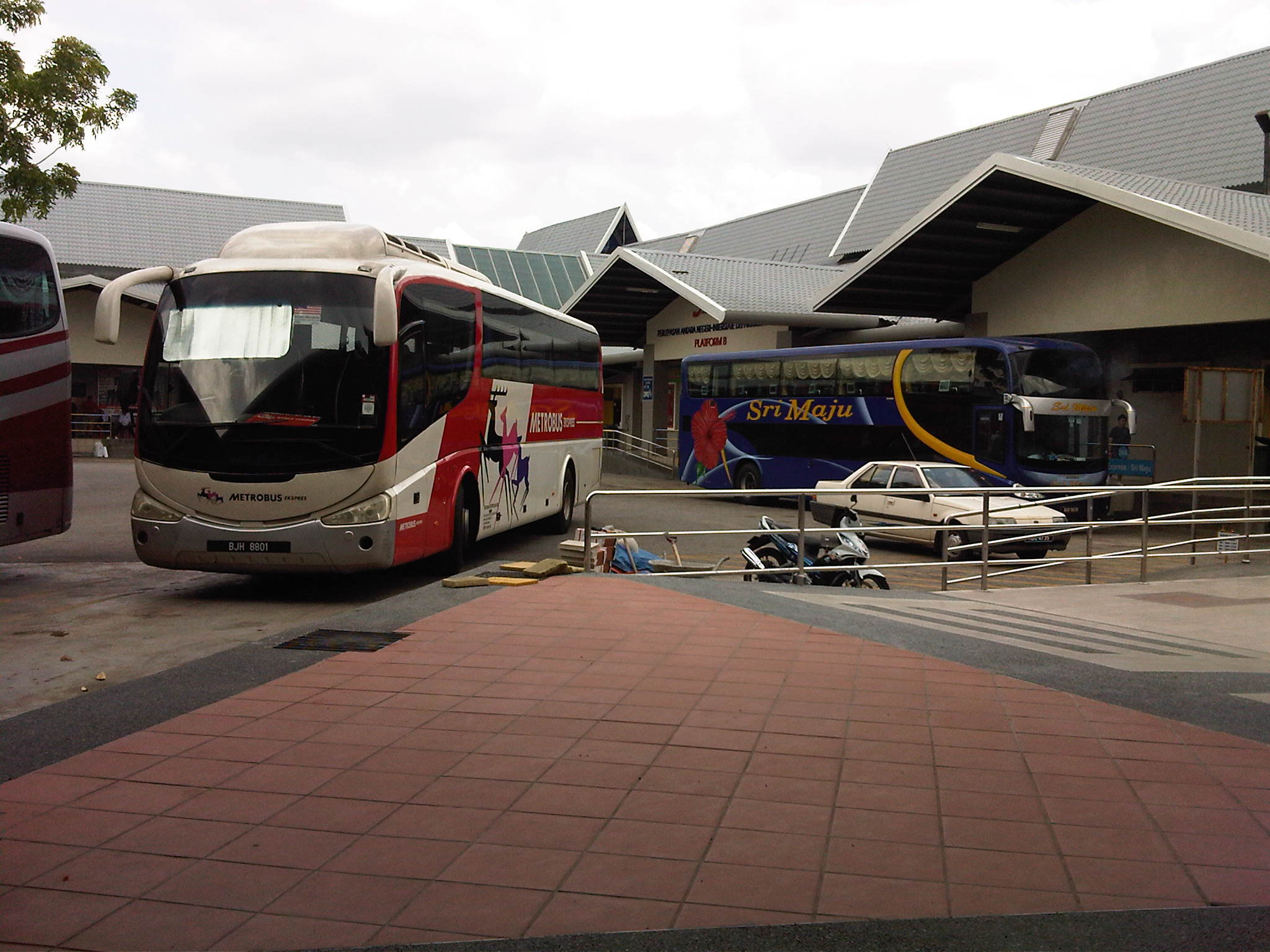 Buses berthed at the terminal departure area
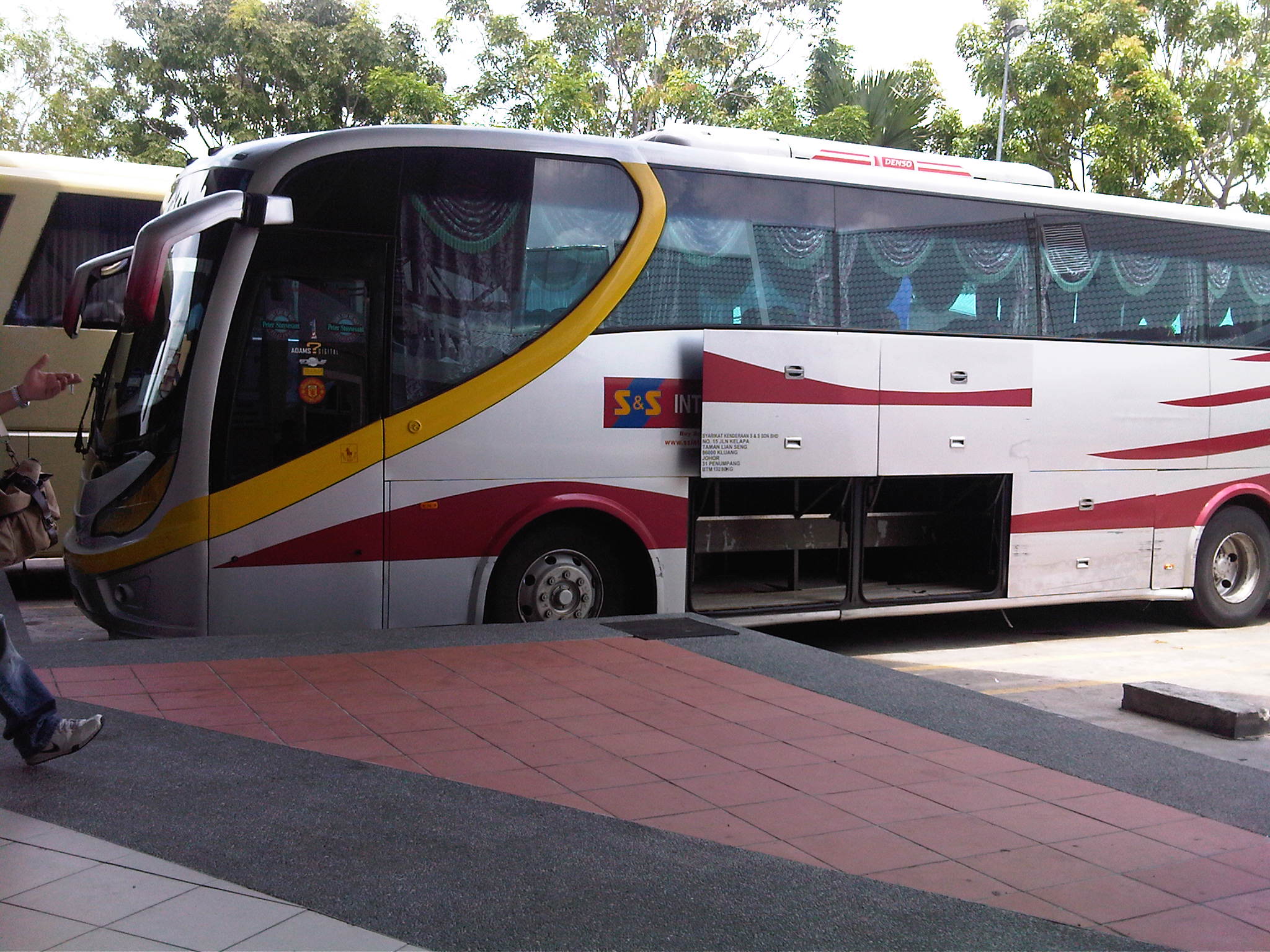 Typical long distance limousine bus plying routes between Malaysia and Singapore
The central bus terminal at Melaka is a good example of terminal design for long distance buses. Such concepts are also found in the Philippines but with some significant variations in the design. Among the notables are the terminals in Mabalacat (Pampanga), Lucena (Quezon) and Legazpi City (Albay) in Luzon. Other terminals in the Philippines are not good examples in the sense that many are not developed or well-planned, many without the amenities or features of a modern terminal. Perhaps local and international examples of terminals should serve as templates for central terminal development in the Philippines including those being conceptualized for Metro Manila.
–
Roads to Naga City – Lucena and its bus terminal
The national highway to and from Lucena are generally in good condition and appear to be quite wide, wider than you usual national roads even within the city proper. This is perhaps due to the provision of paved shoulders usually with widths the same as the carriageway lanes. I was also quite surprised that even in populated areas, there are few encroachments along most segments. There are also fewer parked vehicles taking advantage of the availability of space along the roadside. In the city itself, most city roads are also narrow but most
Upon reaching Lucena, we decided to make a stopover at the city’s central public transport terminal. The terminal, the largest in the province, is a very practical example of a centra facility that would allow for efficient services for travelers using various modes of transport including transfers among these modes. The terminal is located conveniently away from the city center and access roads are generous thereby minimizing the chance for congestion caused by public transport operations.

Typical highway section leading to Lucena from Tayabas – sections appear wide and there is generally little roadside friction due to few encroachments and parking.
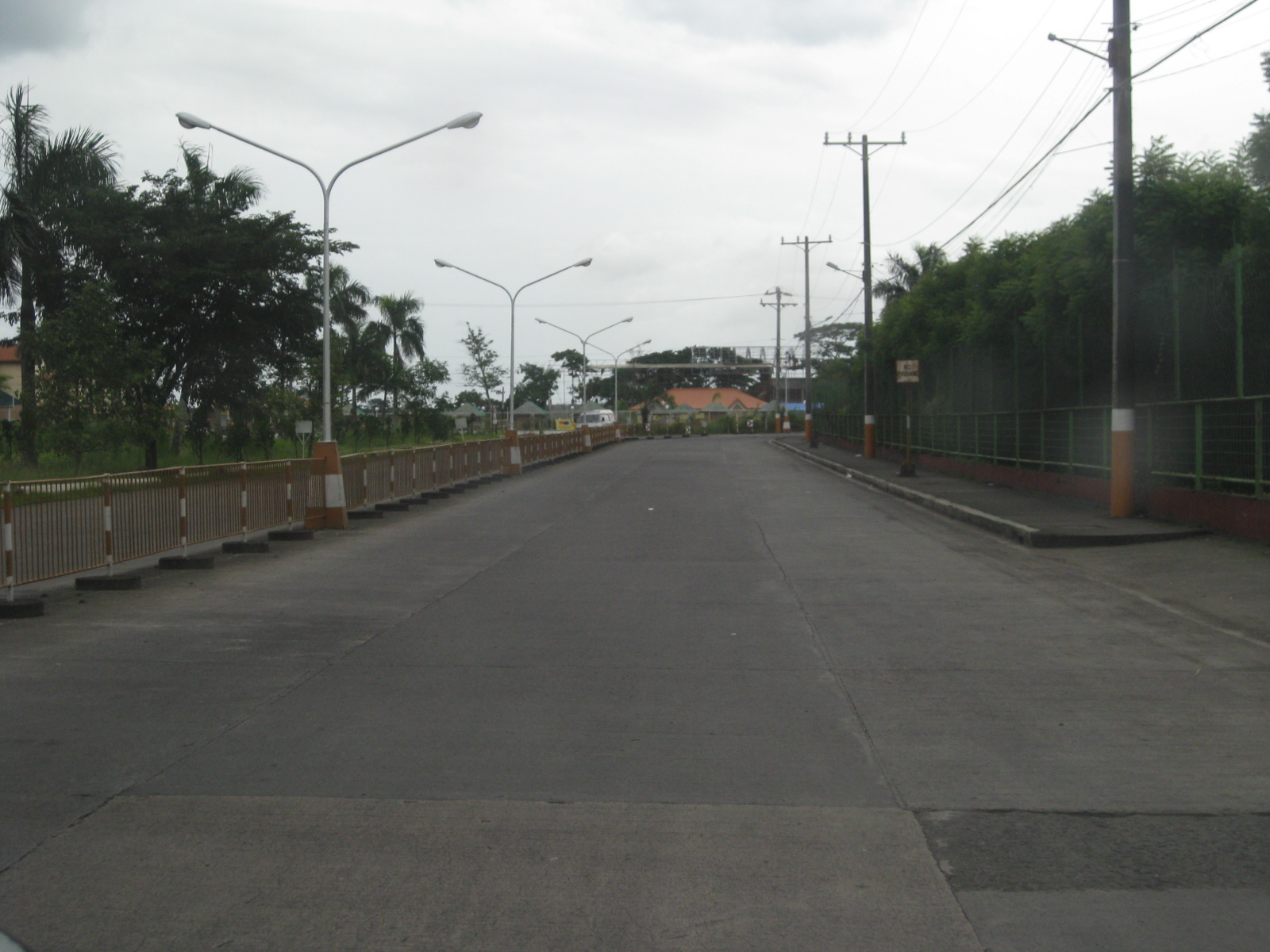
Access roads to the public transport terminal are wide and there is low traffic even during peak periods. Mostly, traffic is comprised of buses, jeepneys and vans that also call on the terminal.
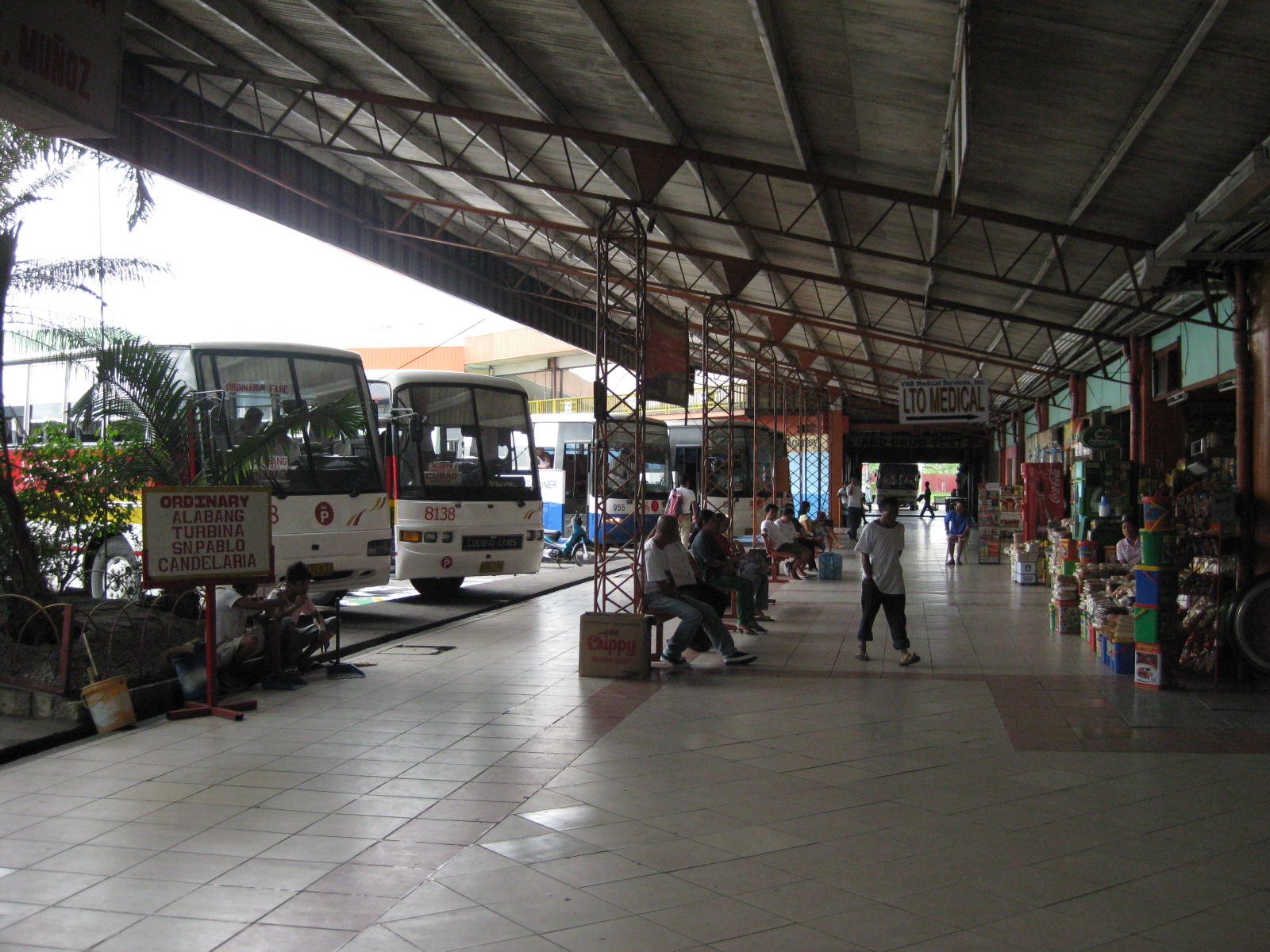
The terminal serves as a major stop for buses bound for Manila, towns in Quezon, the Bicol Region, and even those going to Mindanao via the eastern nautical highway. There is generous space for passengers and bus crews, including amenities such as toilets, stores, clinics, and eateries including some popular fast food restaurants.
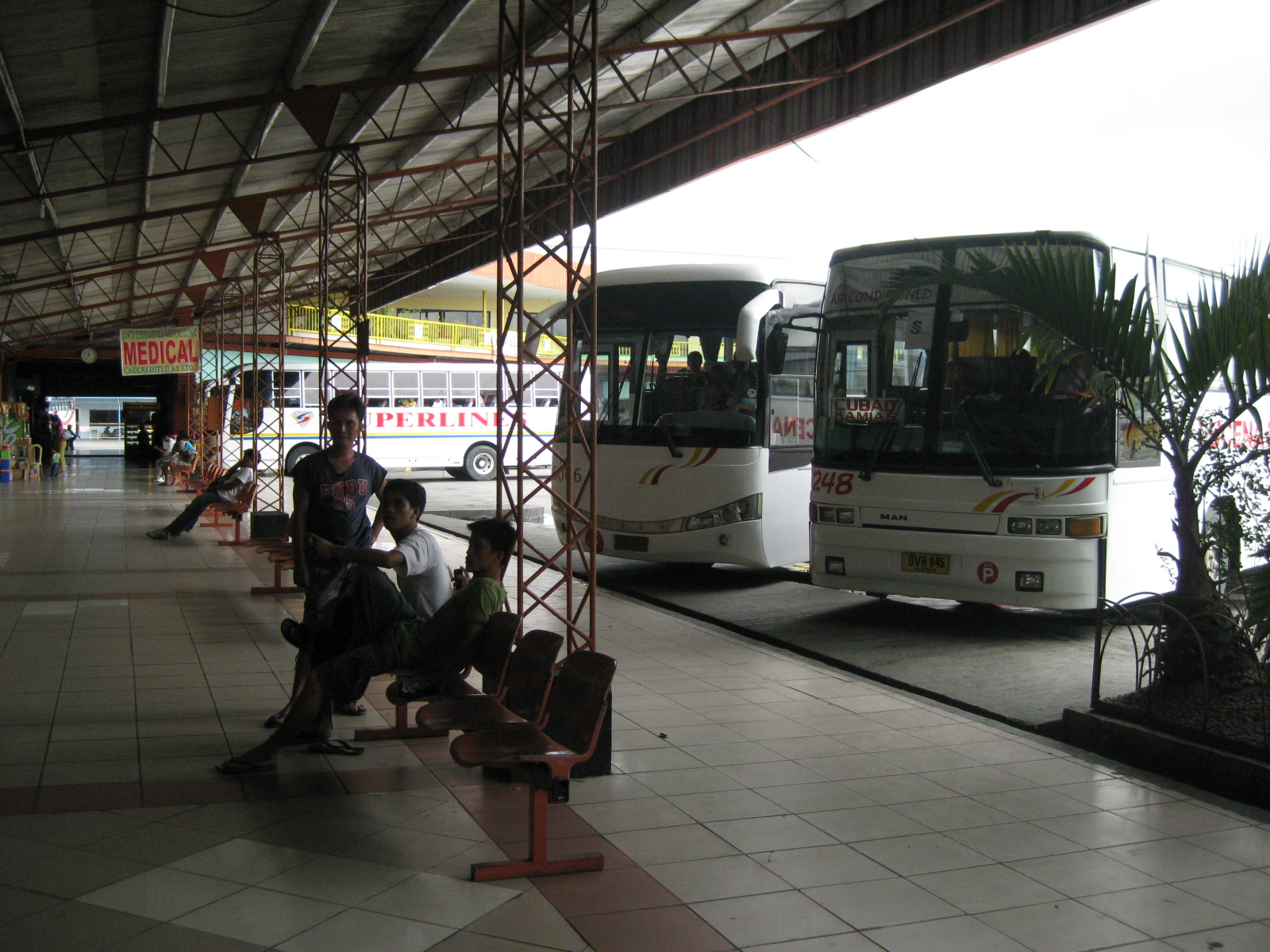
Passengers and bus crews may wait at the benches or designated areas maintained by bus companies. The ample space can be perfect for some stretching after long rides.

Another view of the terminal with passengers loitering around.

The terminal serves jeepneys and vans that provide both local and long distance transport services. The photo above shows berths for jeepneys bound for Lucena city proper (left), and Pagbilao town (center). Travelers may also take vans bound for destinations in Laguna and Bicol.
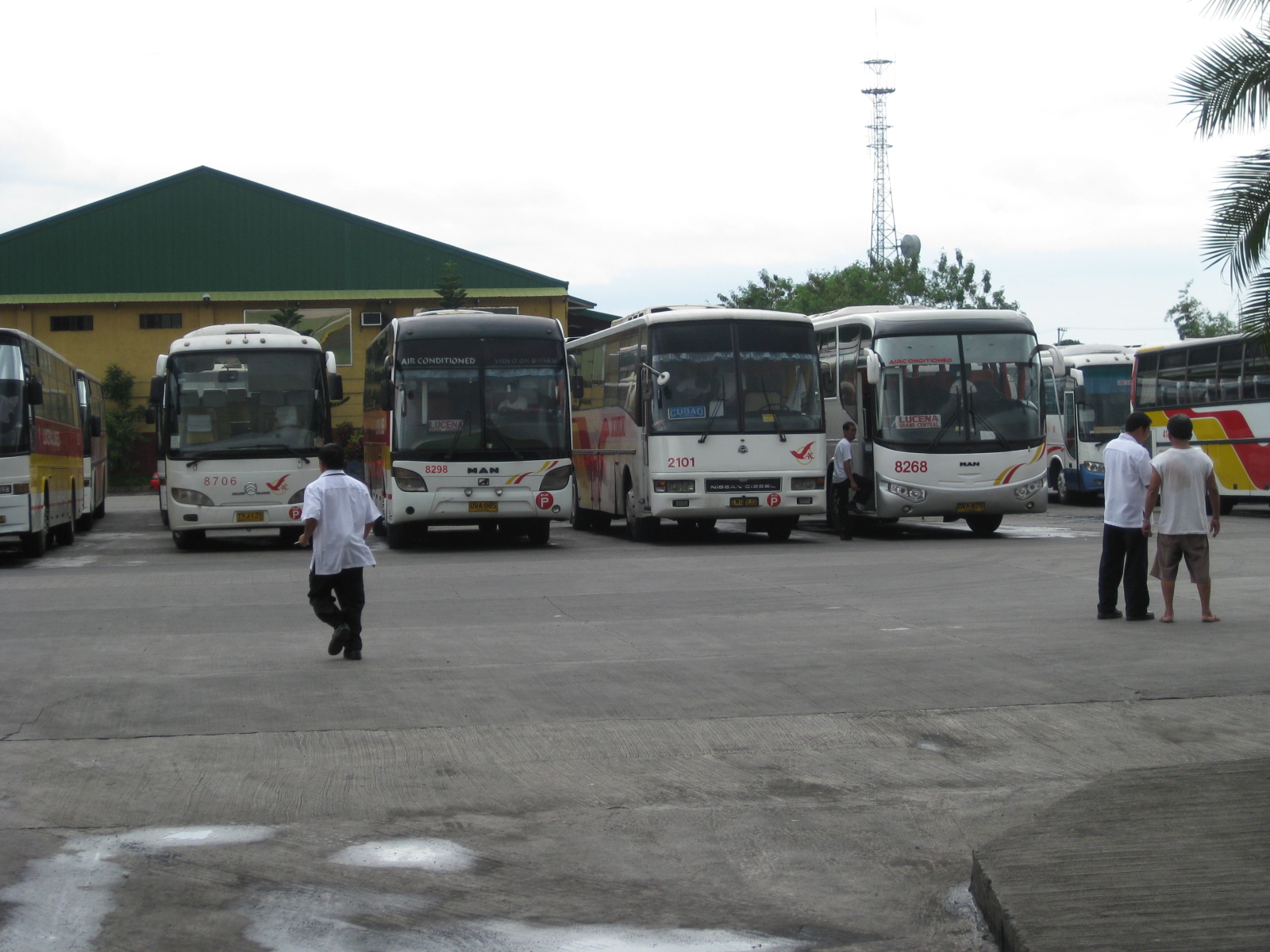
The large terminal area also has more than enough space to serve as a general depot for many bus companies from where they can deploy their buses or where they can conduct maintenance checks or repairs.

Some internal roads are not maintained well and there are potholes on asphalt sections. Most internal roads are generally of good condition though there is a dearth in pavement markings and road signs.
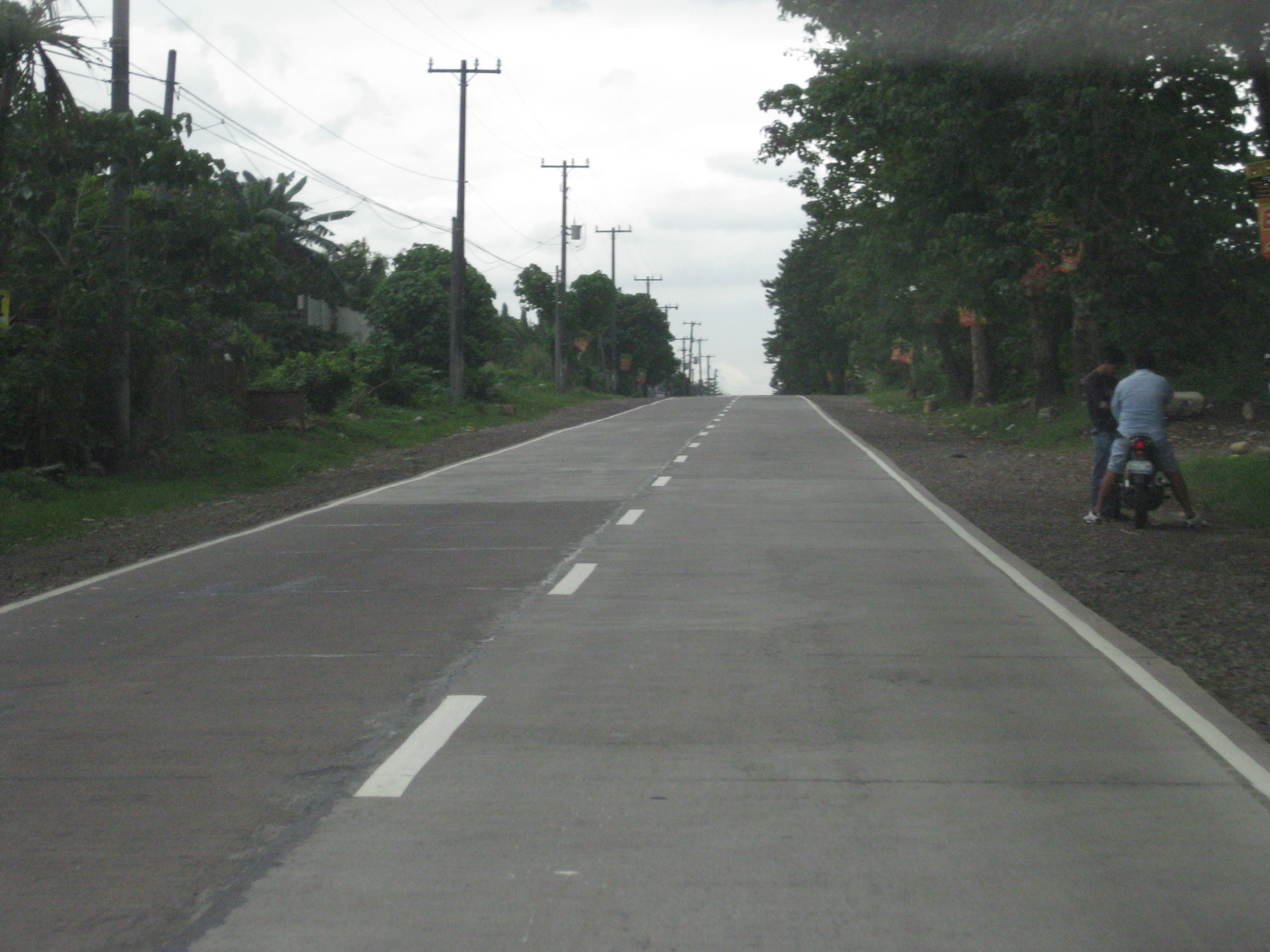
Leaving Lucena, one is again greeted by generally good highways. My impression though, is that the quality of the road generally deteriorates as we travel further from the capital city. This, of course, is something that can be attributed to the DPWH district office in-charge of particular highway sections as well as the respective local governments (including the province) and especially congressmen who also have a say in the allocation and actual use of road funds.

