
Home » Research (Page 15)
Category Archives: Research
The Transport Training Center
Today marks the 36th anniversary of the founding of an institution that since 1976 has been dedicated towards providing capacity on transportation engineering and planning mainly for the government of the Philippines. The National Center for Transportation Studies (NCTS) of the University of the Philippines was founded as the Transport Training Center (TTC) in July 12, 1976 by virtue of Letter of Instructions No. 428 by then Pres. Ferdinand E. Marcos. The center was established at the UP Diliman campus with assistance from the Government of Japan through the Japan International Cooperation Agency (JICA).
LETTER OF INSTRUCTIONS NO. 428
TO : The Secretary of Public Highways
The President, University of the Philippines System
The Director-General, National Economic and
Development Authority
The Secretary of Public Works,
Transportation and Communications
The Commander, Constabulary Highway Patrol Group
WHEREAS, the present accelerated development program of the country coupled with rapid urbanization growth due to migration and population increase, has further aggravated the already complex traffic problems;
WHEREAS, there is an urgent need for trained personnel with adequate background and skill in transport planning, more specifically in the fields of traffic engineering and management;
WHEREAS, such need cannot be fully met by limited programs for technical training here and abroad;
WHEREAS, a Transport Training Center geared to provide intensive and practical training in the fields of traffic engineering, planning and management can provide the means for upgrading the capability and potential of a significant number of personnel in government agencies concerned with transportation; and
WHEREAS, the Japan International Cooperation Agency (JICA) has offered to donate equipment needed for such training and to provide, for a period of three (3) years, several experts who shall, together with local Instructors, conduct the training course;
NOW, THEREFORE, I, FERDINAND E. MARCOS, President of the Philippines, in order to establish an efficient transport system that will provide a fast, safe and convenient movement of people and goods on all streets and highways do hereby direct:
1. The Secretary of the Department of Public Highways and the President of the University of the Philippines System to jointly establish, manage and operate a Transport Training Center within the campus of the University of the Philippines System;
2. The Secretary of the Department of Public Highways to include in its budget the yearly operational expenses of the Transport Training Center, starting from Calendar Year 1976, and for the succeeding years;
3. The Secretary of the Department of Public Works, Transportation and Communications to include in its budget (C.Y. 1976) an amount to cover the construction of the Transport Training Center building at UP;
4. The Director-General of the National Economic and Development Authority to create a Steering Committee to be chaired by the representative from the Department of Public Highways, being the lead agency, and to draw one member each from all the concerned agencies. This Committee shall promulgate rules and regulations as guide to management, and such other policies deemed necessary for the effective and successful operation of the Training Center;
5. That all agencies concerned shall assist in every way possible, and to closely coordinate and take such measures as may be necessary or appropriate to carry out the purpose and intent of these instructions.
Done in the City of Manila, this 12th day of July, in the year of Our Lord, nineteen hundred and seventy-six.
Future of road assessments in the Philippines
The field surveys conducted under the International Road Assessment Program (iRAP) in cooperation with the Department of Public Works and Highways (DPWH) employed a van fitted with cameras taking video of the road environment. The surveys were mobile and covered more than 2,000 kilometers of national roads in Luzon and Visayas. The video is then processed prior to evaluation by a team trained to rate road sections according to a criteria established by iRAP and applied in many other countries including Malaysia and Australia. I haven’t had the chance to explain the project to a close friend of ours with the Geodetic Engineering Department of the University of the Philippines Diliman when he explained to me his proposal for a mobile mapping system that we included in the Intelligent Transport System (ITS) program for consideration by the Department of Science and Technology (DOST) with their Engineering Research and Development for Technology (ERDT) program.
The GE Department recently acquired state of the art equipment for mobile mapping under another project. I presume this will eventually be used for the road environment and the equipment includes a 3D Laser scanner installed on top of a survey vehicle. The scanner will enable the construction of 3D images of the road environment with an accuracy that will allow for a more automated (and objective) assessments of road safety.
They also installed an inertial measurement unit (IMU) on the vehicle. This device will be able to measure horizontal and vertical movement of the vehicle, enabling it to measure displacement that can be used to determine road roughness. The latter may be used to determine the international roughness index (IRI), which is a measure of quality of road pavements.
 State of the art equipment being installed on an AUV
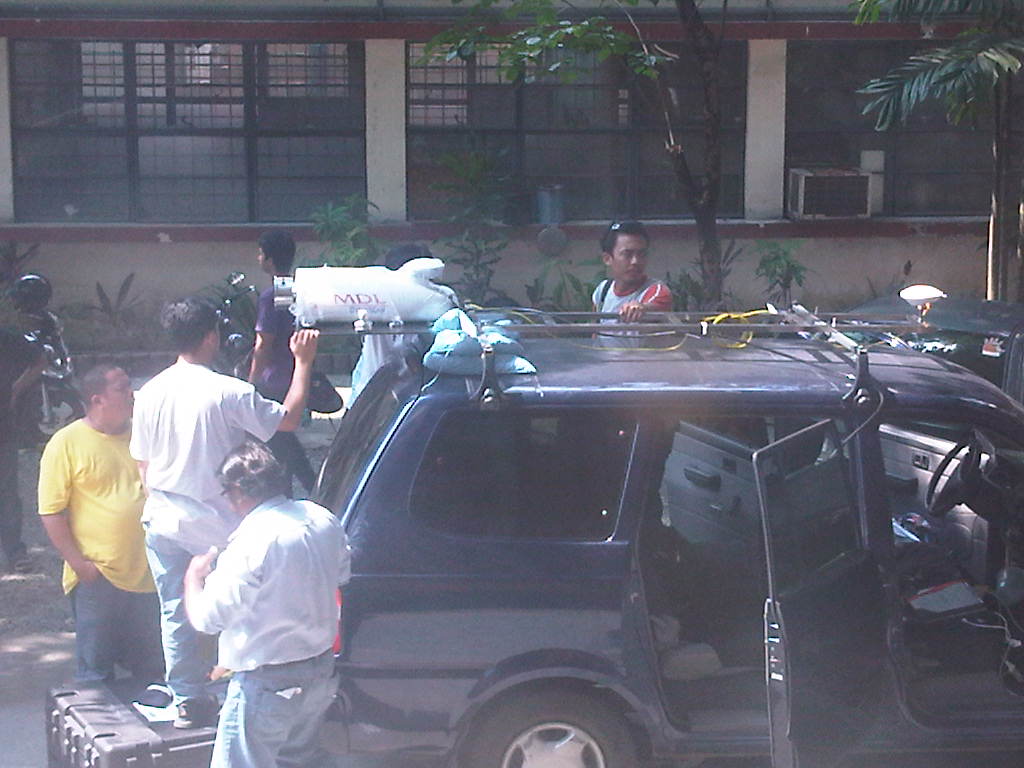 Close-up of installation work
 UP College of Engineering Staff posing after completing installation of the 3D scanner
The Road Safety Research Laboratory (RSRL) of the National Center for Transportation Studies (NCTS) look forward to working with the GE Department on applications of their hardware and software for evaluating road safety in the country. Hopefully, we can get support from the pertinent agencies for this endeavor.
–
Final presentations of undergraduate researches and proposals – March 2012
Undergraduate students under the Transportation Engineering Group of the Institute of Civil Engineering of the University of the Philippines Diliman presented last March 26, 2012. A total of 17 presentation were made including 12 for completed studies and 5 research proposals. One presentation was deferred as the group was still analyzing their data and could not make the deadline for draft manuscripts.
The final presentations of completed undergraduate researches were as follows:
- Travel Time Estimation of Jeepneys: The Case of UP Diliman, Quezon City (Arlish M. Carpio and Joseph Rei Mark Co)
- Assessment of the Philippine National Railway Commuter Line Services (Lara Kriselle B. Paragas and Ma. Katrina Q. Rañeses)
- Applicability of Unconventional Transit Systems in Selected Metropolitan Areas in the Philippines (Joselle Patricia E. Civil and Maiko G. Tenorio)
- Estimation of Traffic Signal Setting for the University Avenue-Commonwealth Avenue Intersection (Aimah C. Busok and Chrislene D. Calivo)
- A Road Safety Assessment Toolkit for Metro Manila (Neil Kendrick L. Sy)
- Analysis of Operation of Electric Tricycles (Demi Anne C. Obediencia and Ruth Noemi F. Sloot)
- Accident Risk by Mode of Public Road-Based Passenger Transport in Metro Manila (Walter T. Crisologo)
- Measuring Delay Caused by U-turn as a Traffic Control Facility (Neil Angelo G. Luzano and Mark Anthony G.Tolentino)
- Comparative Analysis of Male and Female Public Transport Bus Drivers in Metro Manila (Benilda M. Fonseca)
- Effects of Road Features in the Vulnerability of Child Pedestrians (Jordan A. Villanueva)
- Investigation of Factors Affecting PUV-related Accidents Involving Pedestrians along Commonwealth Avenue (Mark Alain C. Norombaba)
- Assessment on Parking Management System in Shopping Malls (Denryl Caesar S. Cortuna)
Deferred final presentation:
- Estimating Ridership for a Proposed Transit System for UP Diliman (Jessica Mae J. Anaque and Kylie Dianne Erika M. Landingin)
The final presentations of research proposals for implementation in the next semester were as follows:
- Perception of Traffic Noise Inside UP Campus (Michelle Monelle S. Quilatan and John Carlo D. Villar)
- Traffic Characteristics and Level of Service of Pedestrian Routes along Velasquez – Roces Street of UP Diliman (Angel U. Gacutan and Maria Jenna M. Tan)
- Determining the Effectiveness of Imposed Speed Reduction Programs Along Commonwealth Avenue (Hessen Noreen Z. Castillo and Hazel E. Maata)
- Analysis of the Presence of Urban Air Pollutants from Road Vehicles Within UP Diliman (Joshua Carlo S. Padilla and Tsuyoshi A. Sakurai)
- Determination of the Walkability Index of UP Diliman (Niki Jon Tolentino)
Following are a few photos taken during the final presentations:
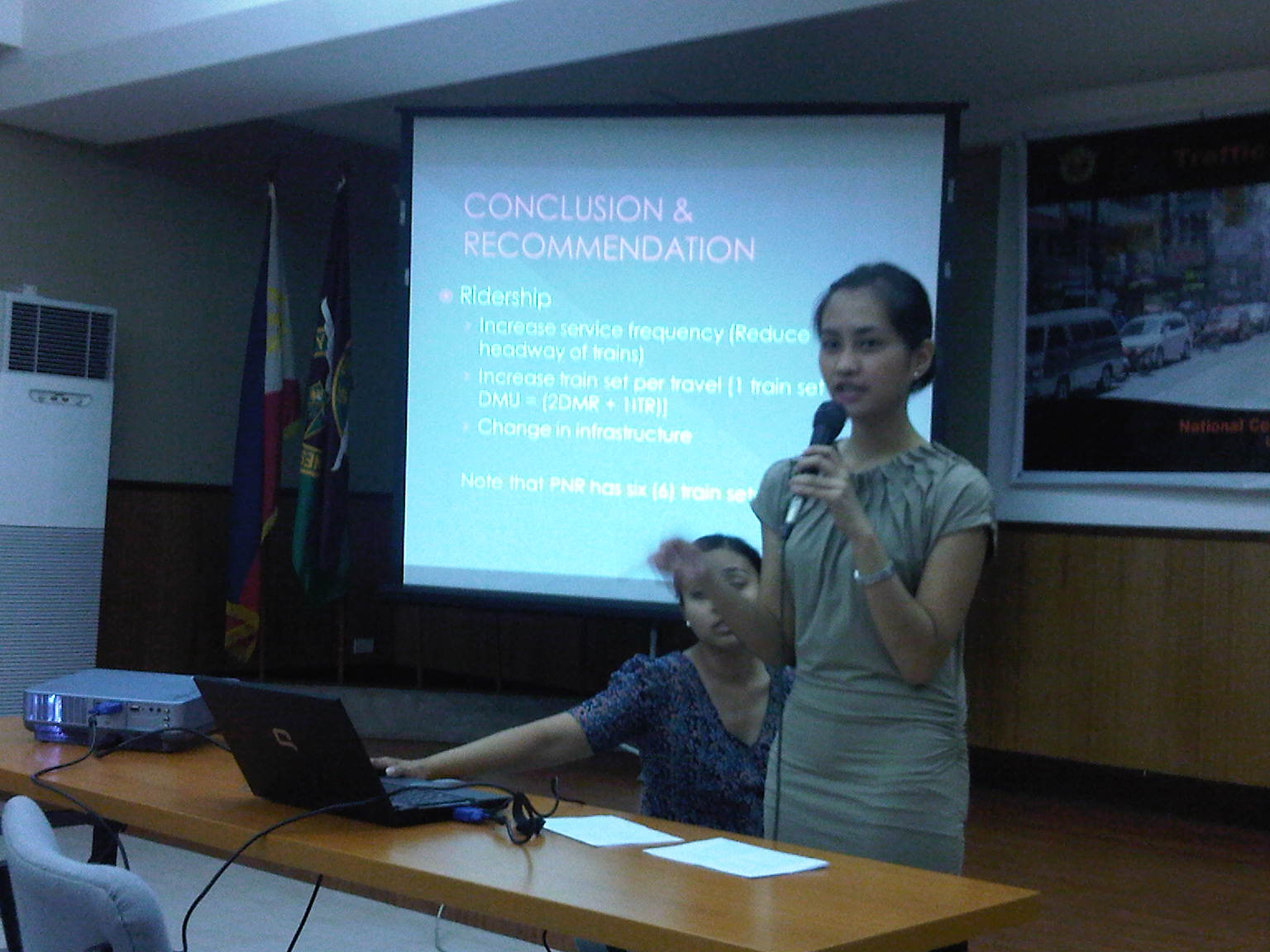 Paragas and Raneses presenting on their study on the PNR operations
 Civil and Tenorio presenting on their study on unconventional transit systems
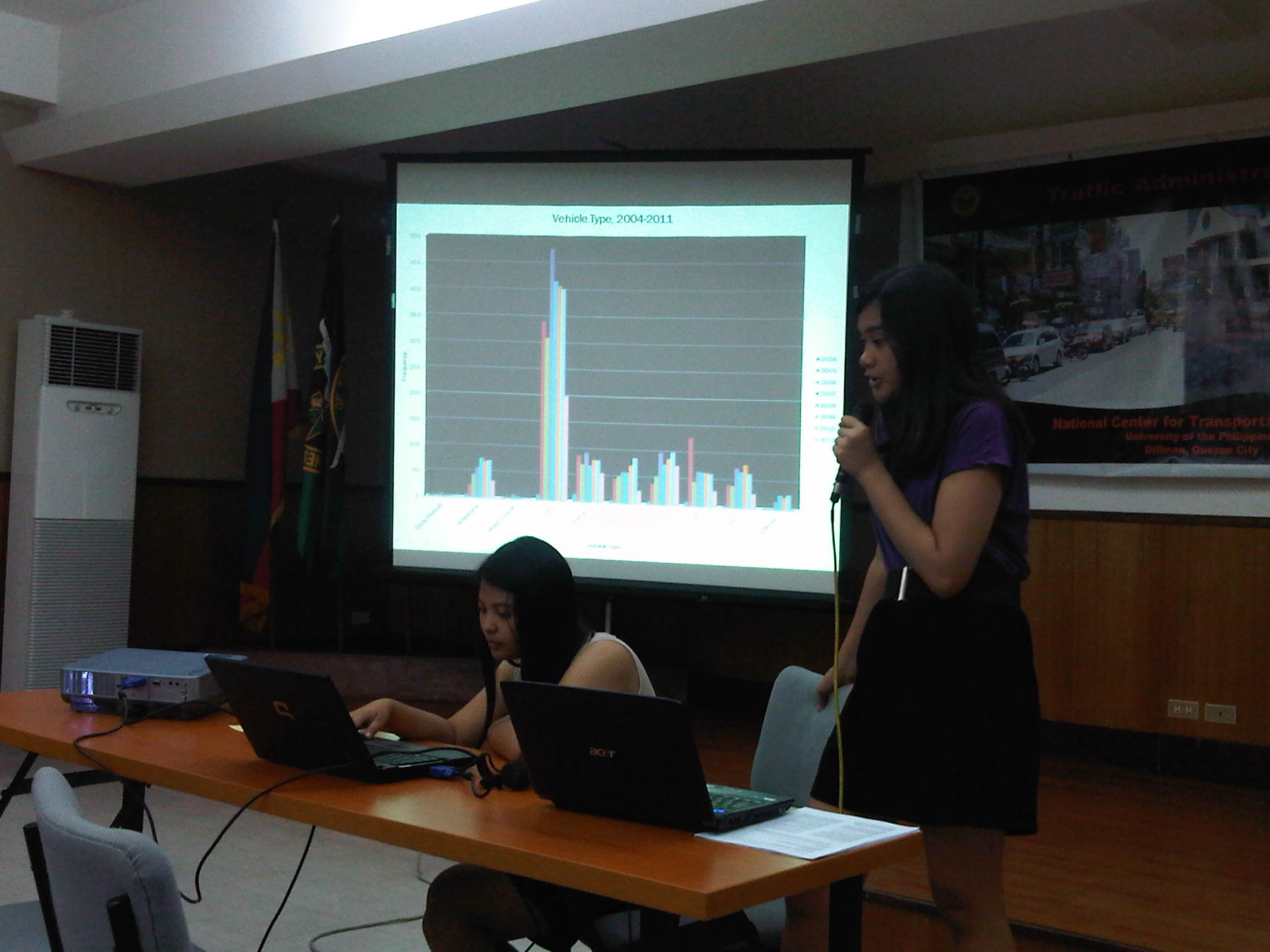 Busok and Calivo presenting on their study on the Commonwealth Ave.-University Ave. intersection
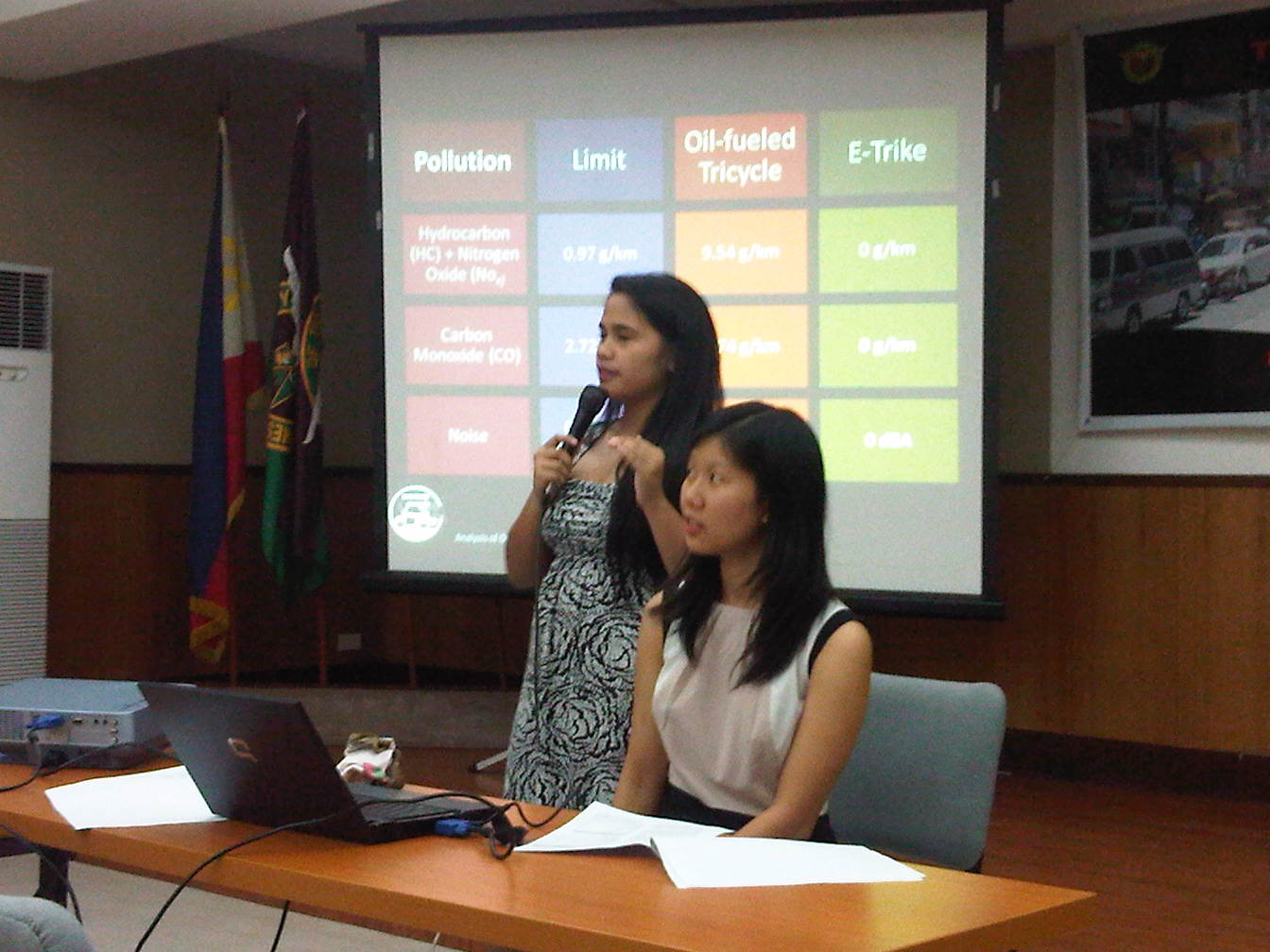 Obediencia and Sloot presenting on their study on electric tricycles
We are already looking forward to the implementation of the researches proposed this semester and those that will be proposed in the next semester of a new academic year (starting June 2012). This academic year has been a very fruitful one with many excellent students taking a renewed interest in Transportation Engineering and Planning. I hope there will be more in the next batch of students.
–
Transport and health
The University College London (UCL) recently released a publication with the title “Transport, Physical Activity and Health: Present Knowledge and the Way Ahead.” It is authored by Roger L Mackett and Belinda Brown of the Centre for Transport Studies, University College London. The material presents an excellent discussion relating travel behavior (like the preference for car use or taking public transport) to physical activity. It should be a good reference for those seeking to explore the link between healthy living and transport and a study that can be replicated in other countries. It should be of interest to cities looking at ways to promote public transport, walking and cycling (sustainable transport). Perhaps our own Department of Health (DOH) should collaborate with the Department of Transport and Communications (DOTC) to put in the local figures so we can determine how much our dependence on cars is affecting our health especially in our cities. The outcomes should further reinforce the need to put up infrastructure to encourage people to leave their cars. Perhaps the more progressive cities or the MMDA could also look into such studies so that we can have a firm foundation for appreciating the benefits of a good transport system and healthy cities.
–
Graduate student seminar – December 2011
Graduate students majoring in Transportation Engineering at the University of the Philippines Institute of Civil Engineering (UP-ICE)currently conducting their research through the NCTS presented during the graduate seminar held last December 15, 2011. There were 4 presentations made during the seminar, which was attended by 3 faculty members of the UP-ICE: Dr. Karl Vergel, Dr. Sean Palmiano and Dr. Regin Regidor. Following are a few snapshots from the seminar, which was facilitated by Mr. Ernesto Abaya, D3 student under Dr. Vergel, who is also a technical staff of the NCTS.

Mr. Nirman Pokharel, a Nepalese student presented on the progress of his research on the public utility jeepney (PUJ) application of Auto LPG. Mr. Nirman is also working with researchers of the Vehicle Research Testing Laboratory (VRTL) of UP Mechanical Engineering.
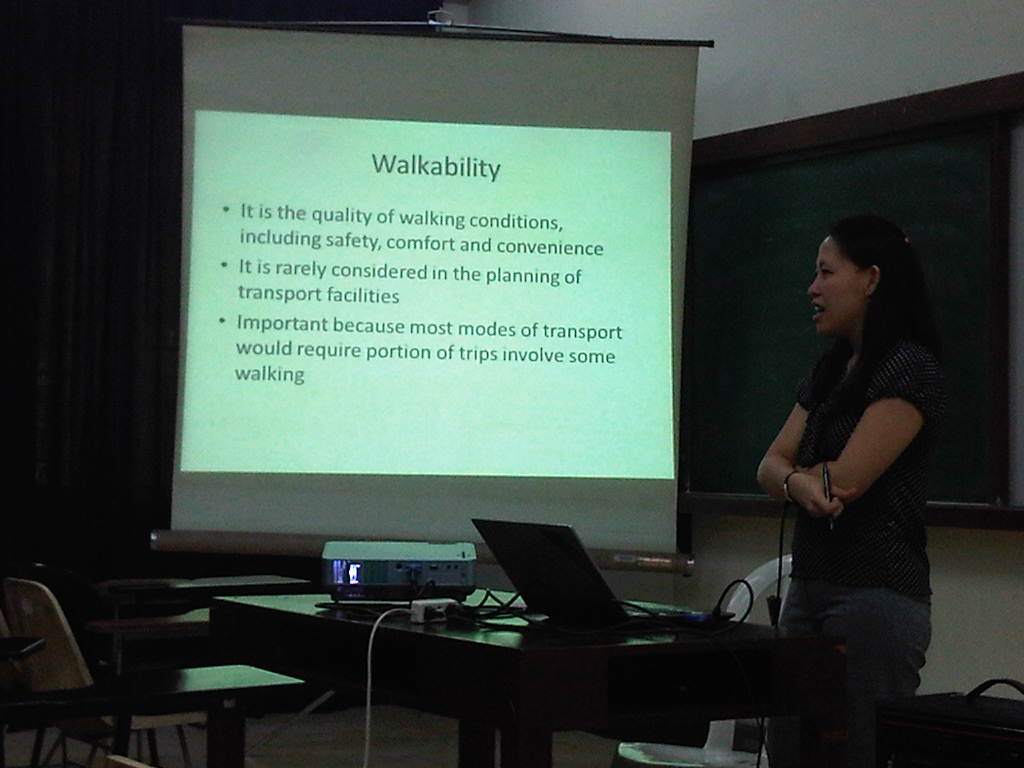
Ms. Anna Tiamzon presented her preliminary research proposal on walkability. She is a faculty member of the University of Sto. Tomas (UST) in Manila.
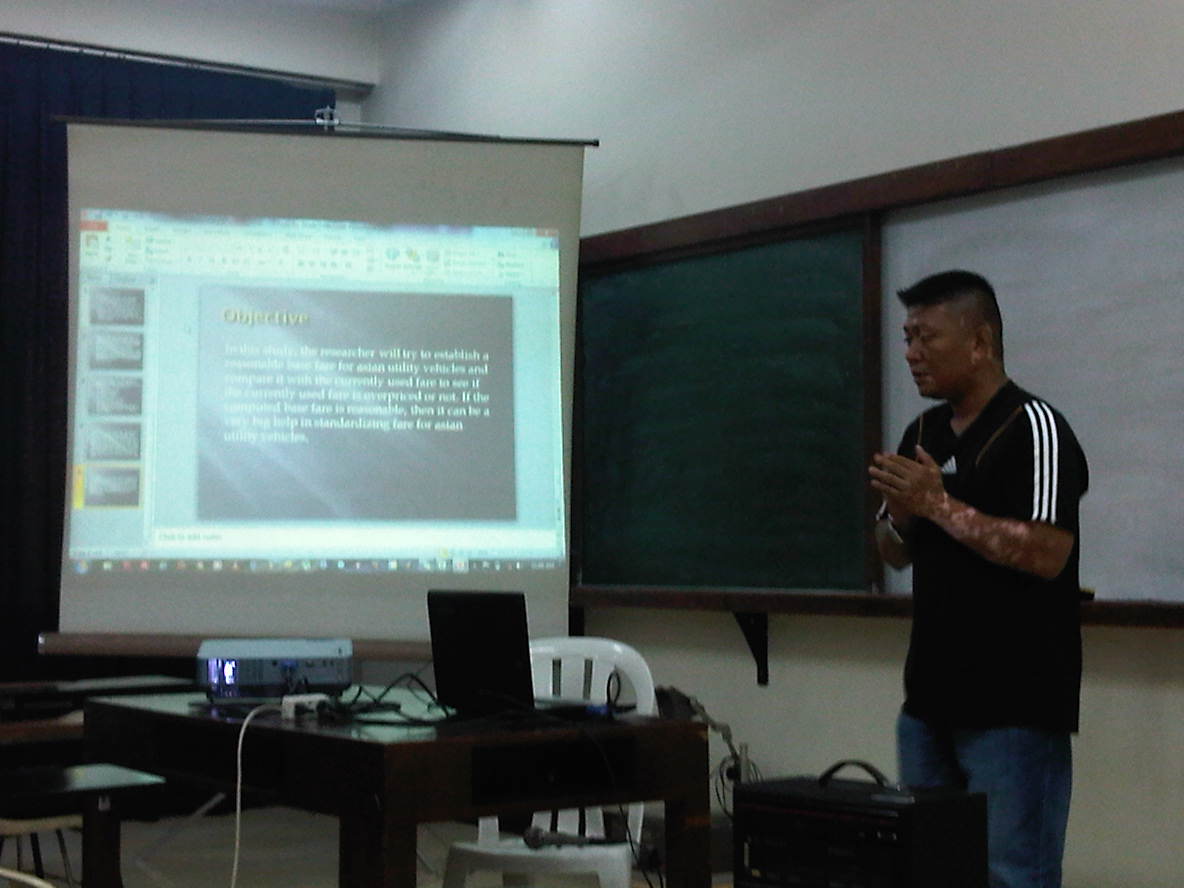
Mr. Edmon Favila presented his preliminary proposal on fare setting for UV Express services (van-type service) in Metro Manila.

Mr. Ali, an Iranian student, also presented a preliminary topic on the determination of bus terminal locations for Metro Manila.
Other graduate students who were not able to present in the December seminar will be making their presentations in January 2012 including two PhD program students and 3 MSCE students. The undergraduate students of the Transportation Engineering Group (TEG) of UP-ICE made progress presentations earlier last December 7, 2011 and are on-track to complete their researches by March 2012.
Undergraduate research topics on transportation 2011-2012
The Institute of Civil Engineering of the University of the Philippines Diliman is conducting its undergraduate research colloquium today. Expected to present are students who are either at the proposal stage or completing their research. Topics being completed are the following:
- Analysis of Road Accidents Involving Children Below 15 Years Old
- Analysis of the Impact of Billboards on Road Accidents Along EDSA
- Assessment of the Parking Management System in Shopping Malls
- In-Depth Comparative Analysis of Female and Male Bus Drivers for Public Transport in Metro Manila
Meanwhile, topics being proposed are the following:
- Accident Risk by Mode of Public Road-Based Passenger Transport in Metro Manila
- Analysis of Operations of Electric Tricycles
- Applicability of Unconventional Transit Systems in Selected Metropolitan Areas in the Philippines
- Assessment of the Philippine National Railways Commuter Line Services
- Assessment of the Re-Introduction of Traffic Signal at the University Avenue-Commonwealth Avenue Intersection
- Development of a Public Transport Information System for the UP Diliman Campus
- Estimating Ridership for a Proposed Public Transport System for UP Diliman
- Measuring Delay Caused by U-turn as Traffic Control Facility
- Quantitative Assessment of Road Safety Initiatives Along EDSA
- Travel Time Estimation of Jeepneys: The Case of University of the Philippines Diliman, Quezon City
The coverage of undergraduate research this year concerns mainly public transportation and road traffic safety but with one topic dealing primarily with traffic engineering. It is hoped that these researches would be able to answer certain nagging questions pertaining to transport and traffic particularly where safety and efficiency are concerned. In the case of topics on mass transport such as those on the PNR commuter services and the applicability of unconventional systems such as the automated guideway transit (AGT) and the monorail, the potential outcomes may actually be able to address questions that concern alternatives or options to road-based transport. This is essential and presently a very relevant issue given the shortcomings in transport infrastructure in many Philippine cities and the current efforts exploring the possibility and feasibility of systems that will alleviate congestion and address travel demand. Overall, such researches are targeted towards contributing to the body of knowledge that should serve as inputs to the formulation of solutions suitable for the Philippine setting.
Locally made AGT
I got my first look at the vehicle currently being developed by the DOST-MIRDC at the DOST complex in Bicutan. This was the same vehicle that was shown on some news programs a couple of days ago when there was some buzz about a MOA being signed between UP and DOST for the development of an automated guideway transit (AGT) prototype and test track at UP Diliman. The DOST Secretary was supposed to have said that it would cost somewhere between a fourth or a fifth of those developed elsewhere (read: other cities abroad) and that it would have a capacity of 60 passengers. The Secretary also was reported to have said that the AGT would eventually be travelling at 100 – 120 kilometers per hour! That’s quite fast for something that’s being packaged as an urban mass transit system.
Together with the reports, both on TV and print (I haven’t heard anything from radio.), were images of a transit vehicle used by DOST in publicizing the project. What appeared was an artist’s impression (or so it seems) of what looked more like a monorail than an AGT. But coming to Taguig for a meeting, I made it a point to ask our friends at DOST to give us a brief tour of the test track they constructed at the complex where the MIRDC with a little help from another agency involved in rail transit was testing a prototype vehicle that was shown on TV. I wasn’t able to catch those news reports so I was a little excited to see the vehicle being developed and by local engineers and scientists. Below are a few of photos of the vehicle together with the test track.
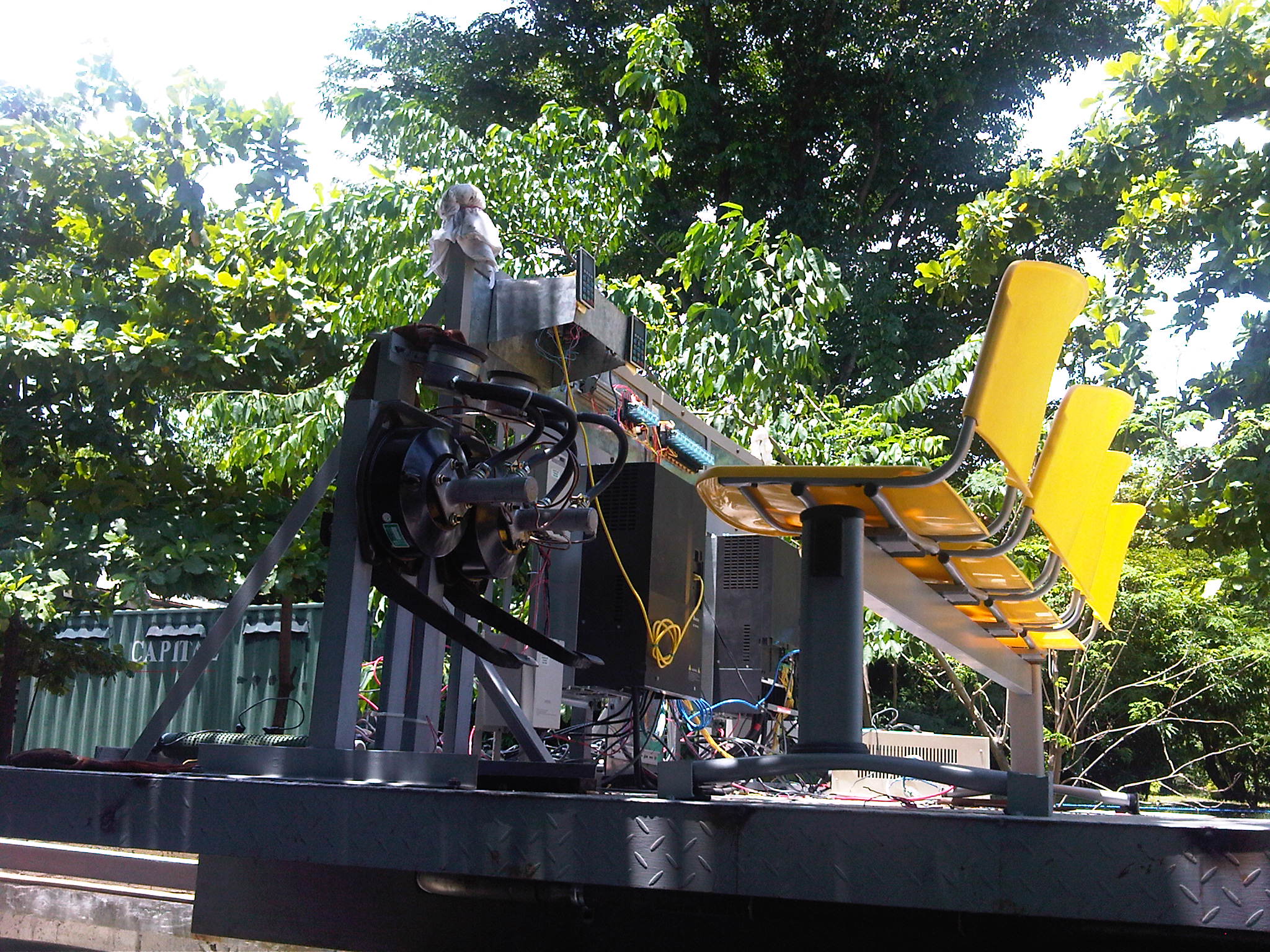
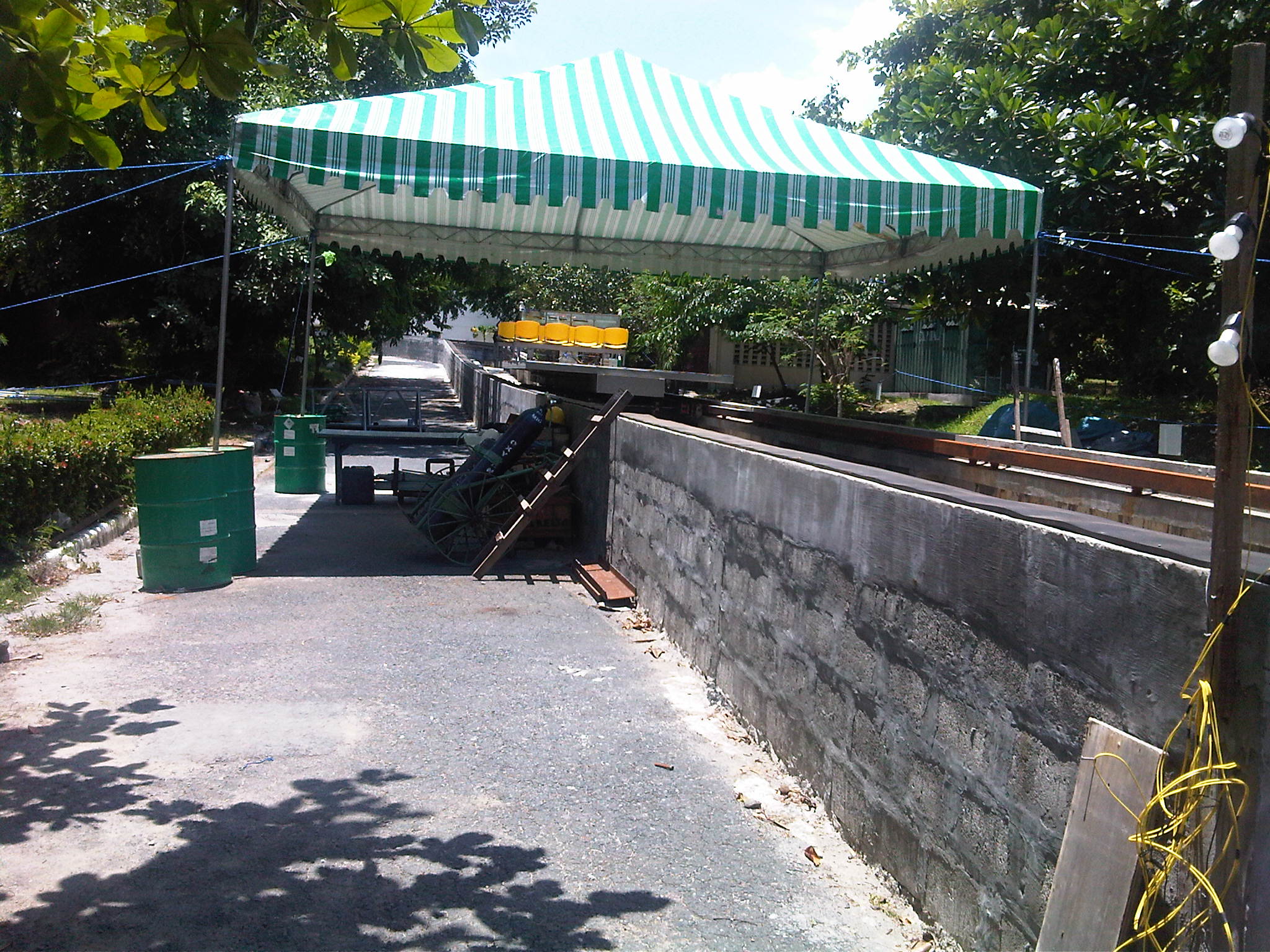
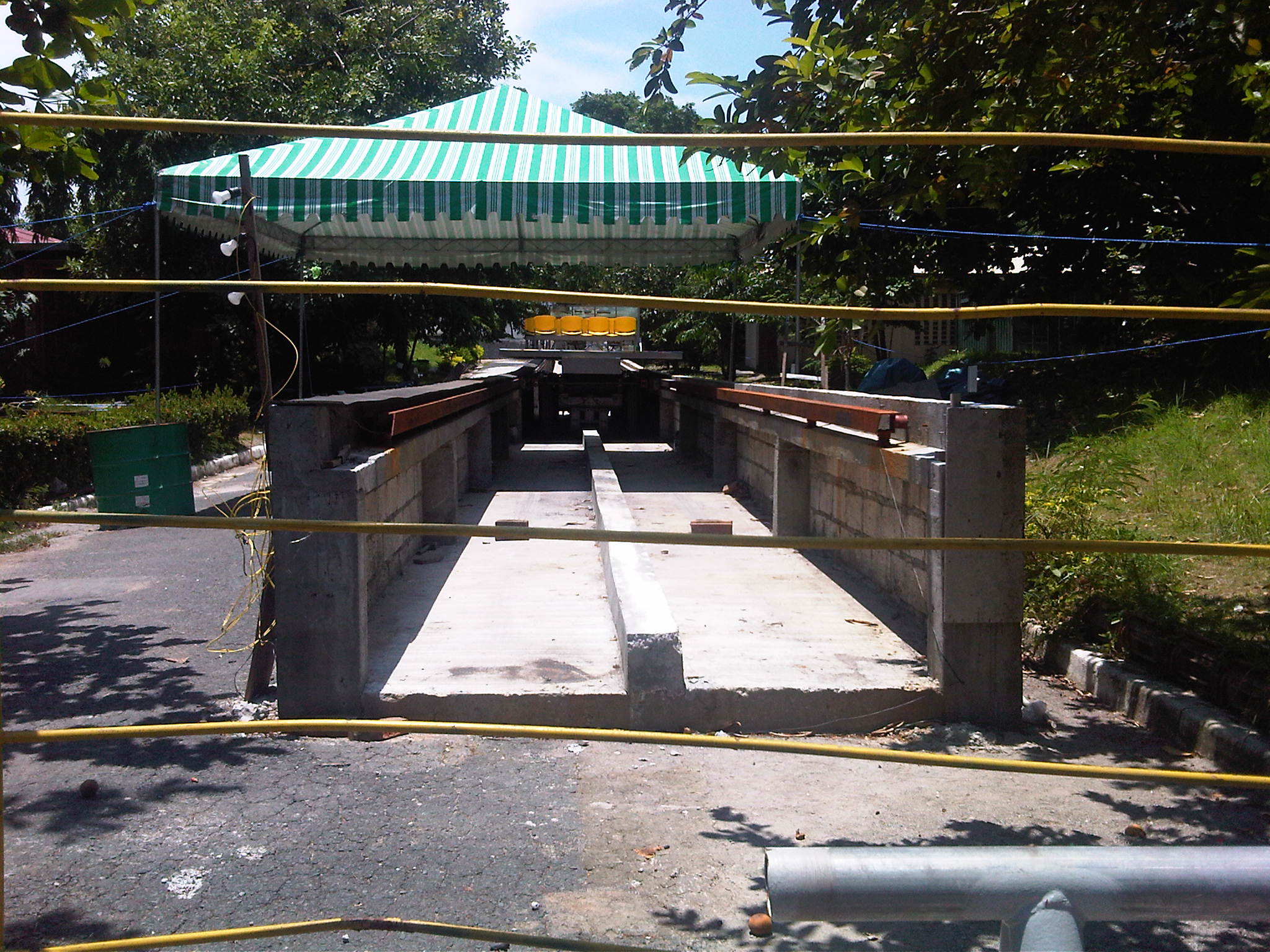
I’m sure a lot of pundits out there were disappointed with what they saw after getting all the hype about the UP AGT. However, it turns out that this won’t even be what will run along the test track to be constructed at UP Diliman. Our friends at the DOST say that this was just a practice vehicle of sorts that DOST staff experimented on just to prove that we (Filipinos) are capable of developing a transit vehicle and the track that will carry it. Of course, the future track and the proposed loop in UP Diliman will be overhead. Also, there will be other challenges pertaining to the superstructure (foundations, columns, girders, stations, etc.). Then there is the vehicle itself that should be safe and comfortable with designs adhering to ergonomic standards, an efficient motor and controller (it will be electric), and a suspension system that should give a smooth ride. Needless to say, the vehicle should also look good to be able to attract people and for it to be marketable. These are tremendous expectations indeed and it could really use all-out support from the government and maybe the private sector. I would not be talking about the funds and other resources required for this undertaking. Info on these are already available from the DOST and UP, and there are already initiatives to attract the private sector into having a look at the project and perhaps provide support in whatever way they can.
I can’t help but be proud of what has been accomplished and what is still to come in as far as the project is concerned. I believe we should be eager to pitch in what we can in order to ensure the success of this collaboration between UP and DOST. Who would not want to be involved in a project where Filipino engineers and scientists will come together to come up with a product we can not only showcase as home-grown but something that would have a significant impact on public transportation in this country.
Meanwhile, it would be better for DOST and UP to temper expectations so as not to put undue pressure on those who will be involved in the project. Pronouncements claiming that the system will replace the IKOT jeepneys are at this stage premature and only raises flags that would not be in the interest of the project. Claims, too, that the vehicle will run at 100 kph is unfounded and unnecessary considering, for one, that the average running speeds of such systems would be between 30 and 40 kph and probably top at 60 kph if there were sufficient distance between stations. I understand that the statements made were probably words of encouragement but I guess we have our work cut out before us and the challenges have been revealed on the way to the development of a home-grown AGT.
Transport topics in the 2011 Professorial Chair Colloquium
The 2011 Professorial Chair Colloquium of the College of Engineering of the University of the Philippines on July 4 will feature a number of lectures with transportation themes. These are the following:
– Development of a Diesel Hybrid Vehicle Prototype [Gerald Jo. C. Denoga, Emerson Professorial Chair in Mechanical Engineering]
– Survival Versus Sustainability: Challenges to Environmentally Sustainable Transport [Hilario Sean O. Palmiano, Transport Training Center Professorial Chair]
– LPG in Dual-Fuel SI and CI Engine Applications – Effects on Maximum Power and Fuel Consumption [Edwin N. Quiros, Emerson Professorial Chair in Mechanical Engineering]
– Traffic Congestion in Metro Manila: Is the UVVRP Still Effective? [Jose Regin F. Regidor, Pozzolanic Philippines Inc. Professorial Chair]
– Design and Production of a Vehicle Run by Cordless Drills [Joseph Gerard T. Reyes, Emerson Professorial Chair in Mechanical Engineering]
– Towards a Safer Intersection Design [Ricardo G. Sigua, Prof. Emeritus Norbert S. Vila Professorial Chair]
– Estimation of Emissions and Fuel Consumption of Sustainable Transport Measures in Metro Manila [Karl B.N. Vergel, Maynilad Professorial Chair]
The lectures are to be delivered mainly by Civil Engineering and Mechanical Engineering faculty and it is quite obvious from the titles that the ME’s have focused on vehicle technologies while the CEs are into sustainable transport and design. These topics also reflect on the researches currently being implemented at the college although it is also known that IEs and EEs are doing transport-related researches including those on Intelligent Transport Systems (ITS) and logistics. Hopefully, the outputs of these researches will be beneficial to the country considering their applications to local problems.
Philippine participation in EASTS 2011
The 9th International Conference of the Eastern Asia Society for Transportation Studies (EASTS) was recently held in Jeju, Korea. The conference was well attended with over 700 participants from at least 12 countries including those from member societies in eastern Asia. The Philippines was represented by academics and researchers coming mainly from the UP Diliman, Mapua Institute of Technology and St. Louis University (Baguio City).
Following is a photo taken during the Welcome Dinner last June 20, 2011 held at the Jeju International Convention Center.
 Seated [L-R]: Grace Padayhag (ITPS), Regin Regidor (UP); Standing [L-R]: Mark De Guzman (SLU, partially obscured), Riches Bacero, Aldrine Uy (Mapua), Francis Villareal, Dr Shigeru Morichi (ITPS), Jun Castro (UP), Ric Sigua (UP) and Ernie Abaya (UP)
The next photo shows Philippine participants taking a break at a cafeteria at the Jeju ICC:
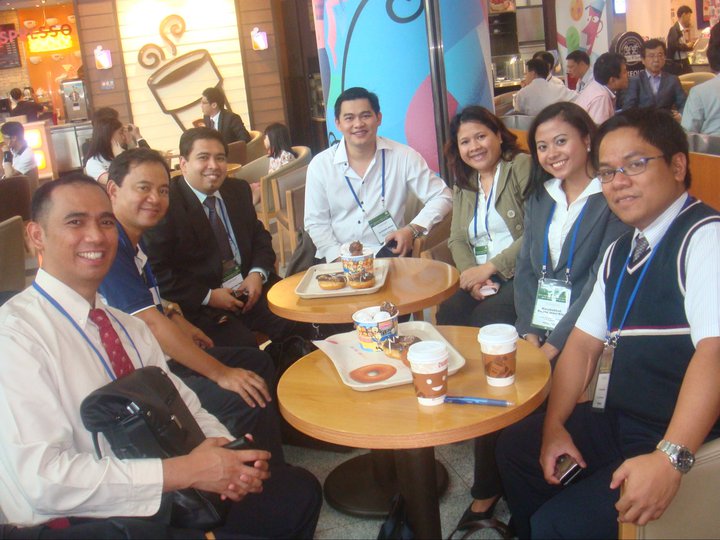 [L-R]: Riches Bacero, Ric Sigua, Regin Regidor, Aldrine Uy, Grace Padayhag, Reigna Macabbabad, and Mark De Guzman
Vehicle development and safety
As I drove to work this morning, I chanced upon a new model Korean-brand SUV along the highway. I couldn’t help but notice the sleek exteriors and was again impressed by what seemed to me, at least from where I was sitting, was a nicely performing vehicle along a road that was already starting to congest with morning traffic and with pavements still under rehabilitation. As I pulled ahead of the vehicle, I was able to appreciate its front design (the snout in particular) and noticed its lights that were very much similar to those already being used by late model German cars. Of course, the initial reaction would be that perhaps the Korean vehicle was a copy of the original European one. However, I was also aware that Korea already had strong partnerships with leading German automakers and routinely benchmarked their vehicles with their German counterparts. In fact, there are models of German vehicles that were and are developed and tested in Korea, which
I believe that much of the Korean vehicle manufacturers’ success in the design and development of vehicles that are at par if not better than its European counterparts may be attributed to Korea’s testing and research facilities. At the head of the effort for vehicle development and testing is the Korea Transportation Safety Authority or TS, and they work closely with other institutions including the very influential Korea Transport Institute (KOTI). It is a good example of a successful working relationship between government, the private sector and the academe.
I was fortunate to have been able to visit the Korean testing and research facilities back in 2009. At that time, I was part of a small party from the Philippines attending the Regional Environmentally Sustainable Transport (EST) Forum in Seoul, and was among those invited by Korean Transportation Safety Authority (TS) to visit the Korea Automobile Testing & Research Institute. We were very impressed with their facilities and perhaps could only dream of having a similar one in the Philippines. We were toured around the different areas where various tests were being conducted and I was particularly interested in the proving grounds where new models were being tested for various operating conditions. I have some photos taken of the research and testing facilities but I defer from posting these here as there might be some restrictions applicable. Also, I’m afraid my photos won’t do justice to the impressive facilities at KATRI. Nevertheless, I have provided the links to the websites of the institutions I mentioned above for easy reference for anyone interested in their activities. The details may be found there and there are many photos and illustrations that would allow anyone who would at least browse their website to have an idea of just how far Korea has made progress in vehicle development and how much effort they put in to ensure safety on the part of the vehicle.
 Caught (up) in traffic