
Home » Research (Page 9)
Category Archives: Research
What happens now to the DOST’s AGTs?
The Automated Guideway Transit (AGT) vehicles that were used in the research and proof of concept at the previous test site in UP Diliman are scheduled to be transported back to DOST’s MIRDC soon. The vehicles are still in UP Diliman and are usable for R&D if someone decides to come up with a viable proposal for these. Unlike the hybrid electric train that is the AGT’s contemporary in terms of them being parallel projects, the future is unclear for both AGT models (i.e., there is another, higher capacity AGT already at MIRDC and tested using the test tracks there).
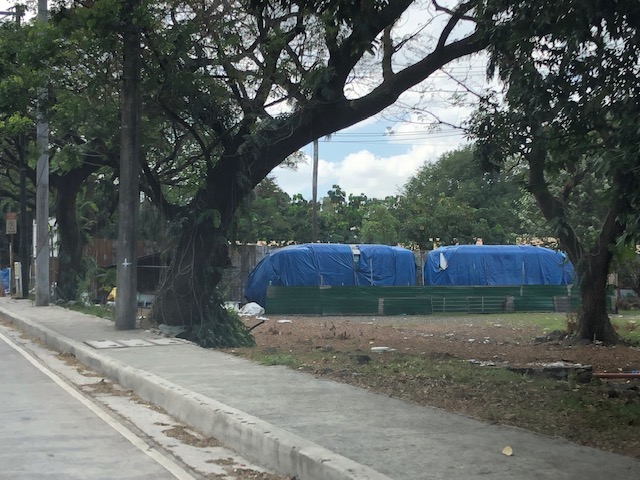 The two AGT vehicles are wrapped to protect them from the elements. These are functional and should still have value in case someone proposed to continue in their testing and refinement. It doesn’t need to be an elevated guideway for development to continue.
 Here’s a closer look a colleague managed to take before we turned at the intersection.
What’s next for the AGT? Is there a future for these vehicles? Will the DOST initiate something with the DOTr or maybe with an LGU (Taguig?) to come up with a project that will employ these vehicles in what can be a full system instead of one on test tracks? Let’s hope these assets can still be utilised and not be wasted.
–
The AGT test site at UP Diliman is no more
This is actually a late post considering what has transpired last year that led to the demolition of the AGT test facilities at the University of the Philippines Diliman campus. For one, UP (or at least Diliman) didn’t want it. That was to be expected as Diliman’s Executive Council comprised of the constituent university’s deans and executive staff (Chancellor and Vice Chancellors) already stated that they don’t want an AGT in the campus many years ago and during the last administration when the main proponent, then DOST Secretary Montejo, was still very much in-charge of that department. Here are photos taken by a colleague last year showing the demolition work on the elevated guideway and stations. These were taken as they traveled along C.P. Garcia Avenue towards the University Avenue.
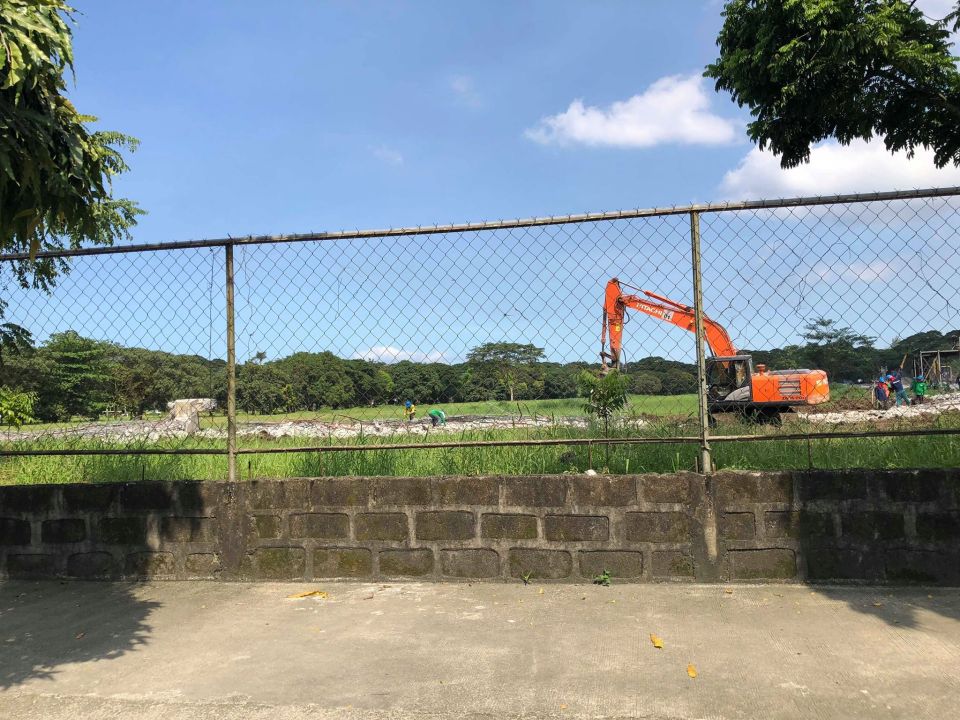
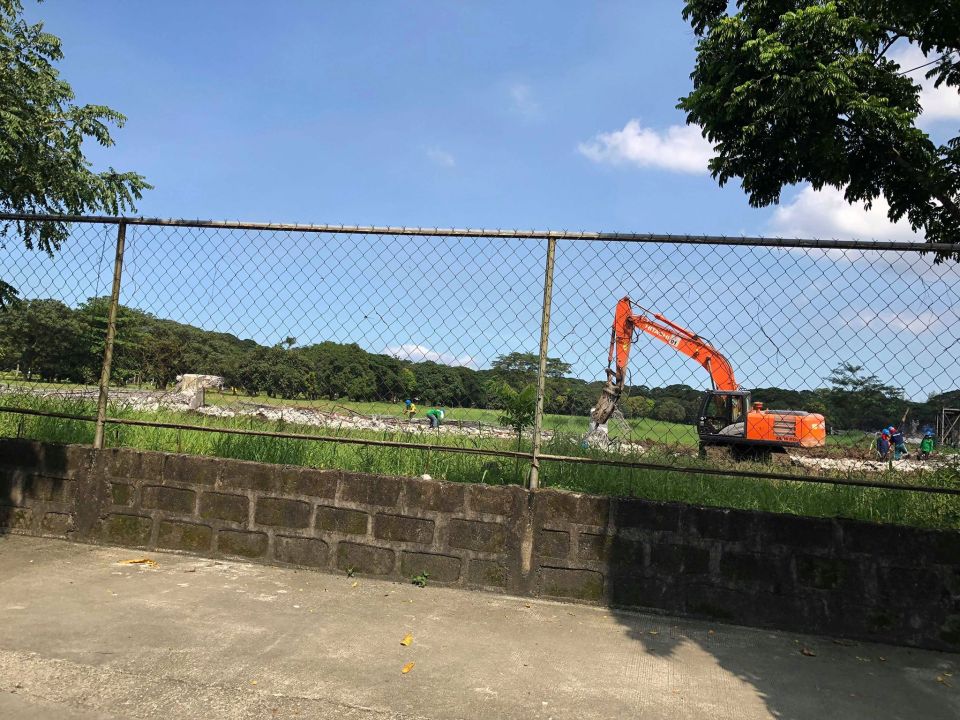
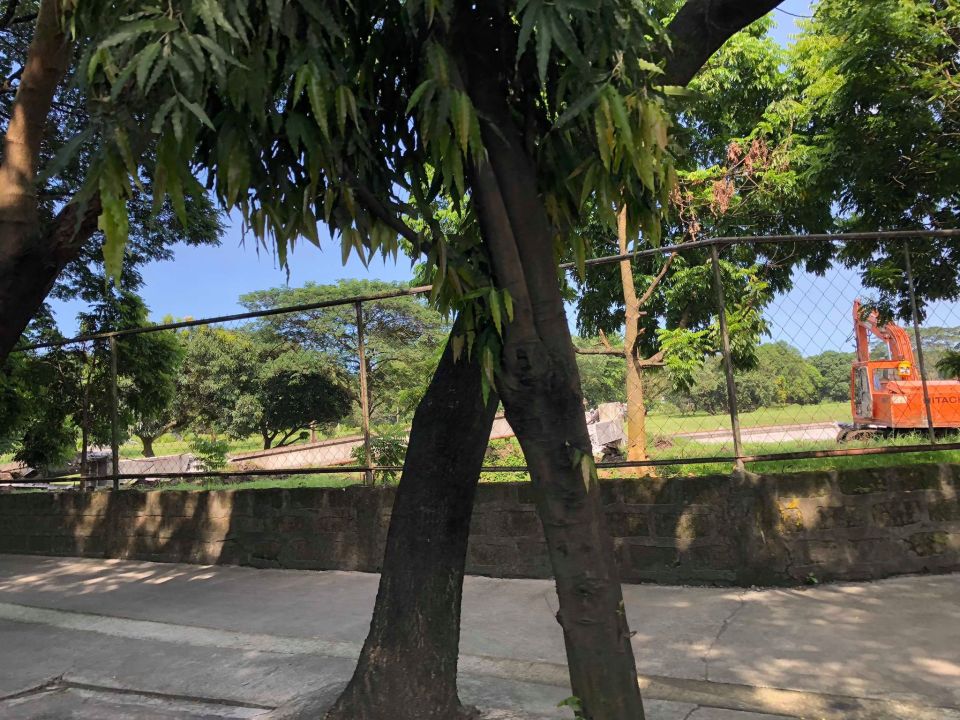
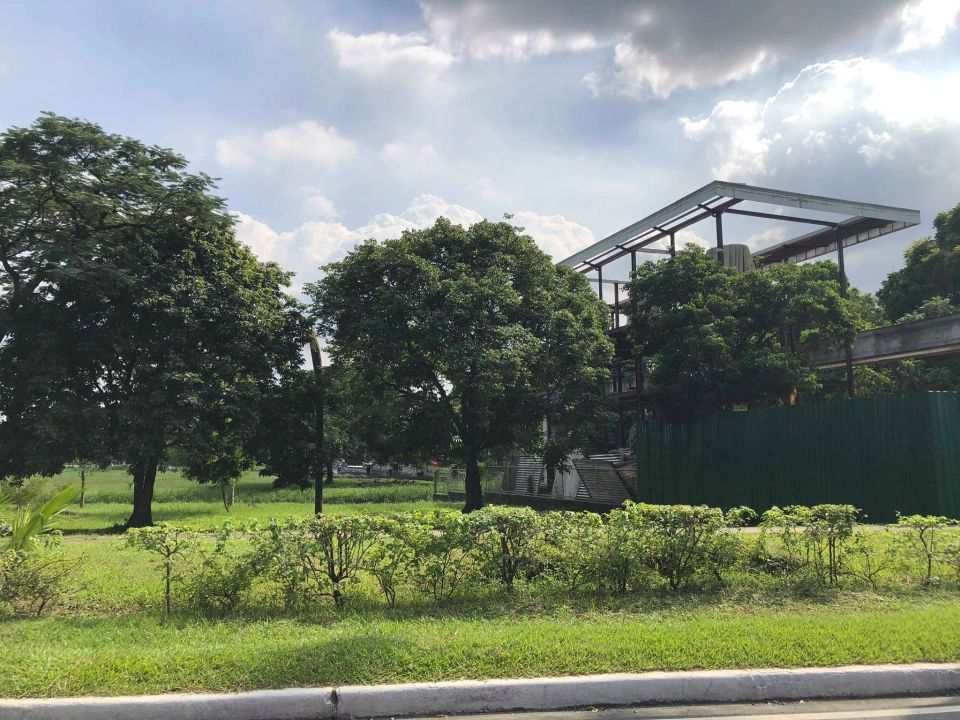
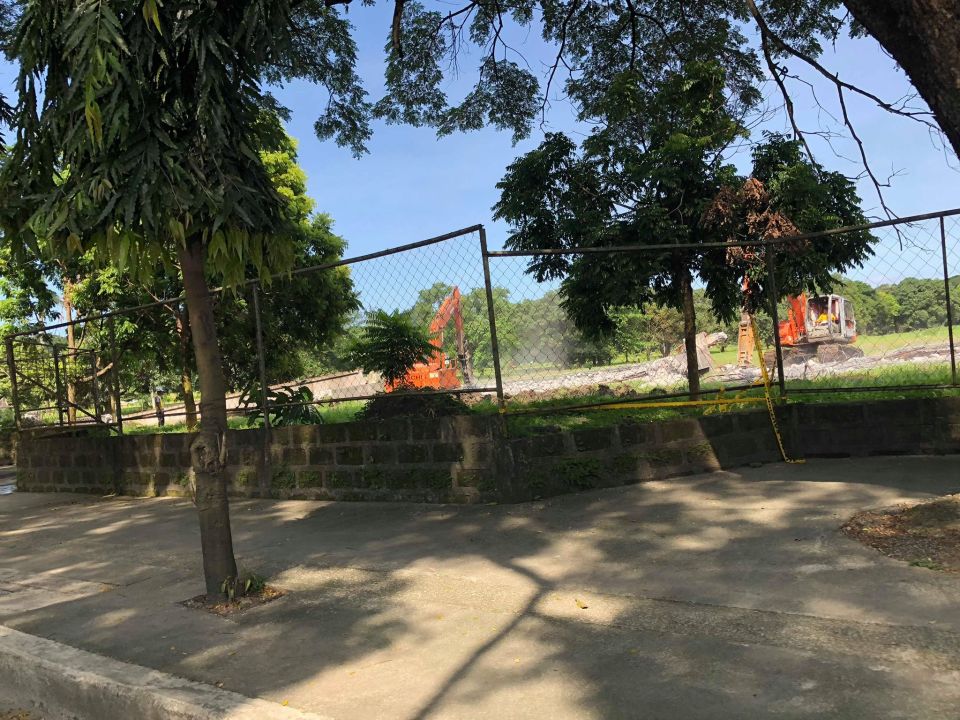
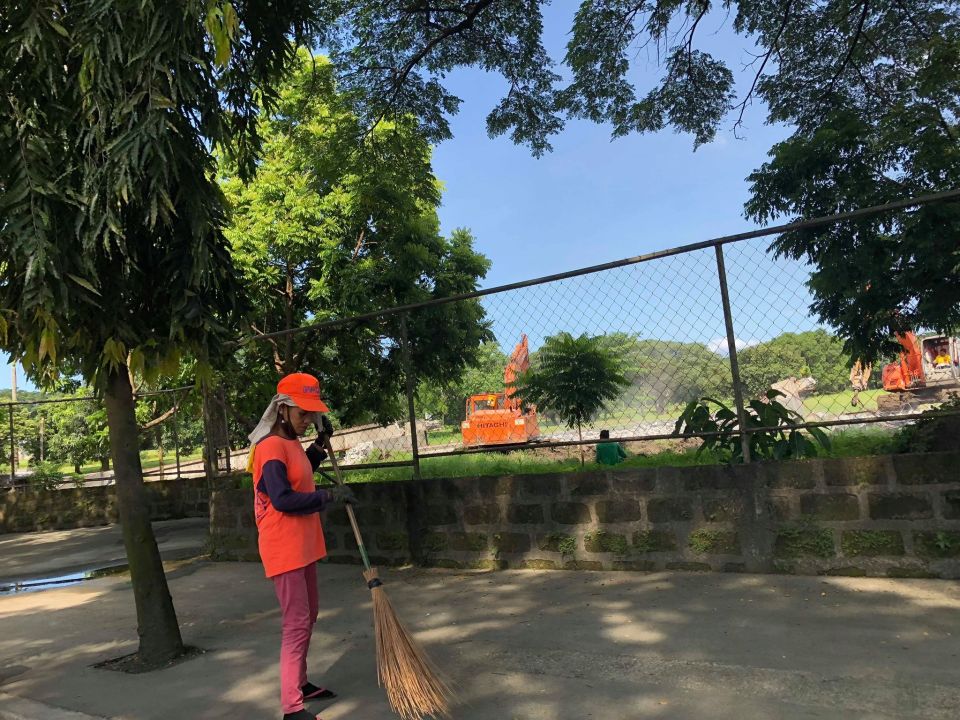
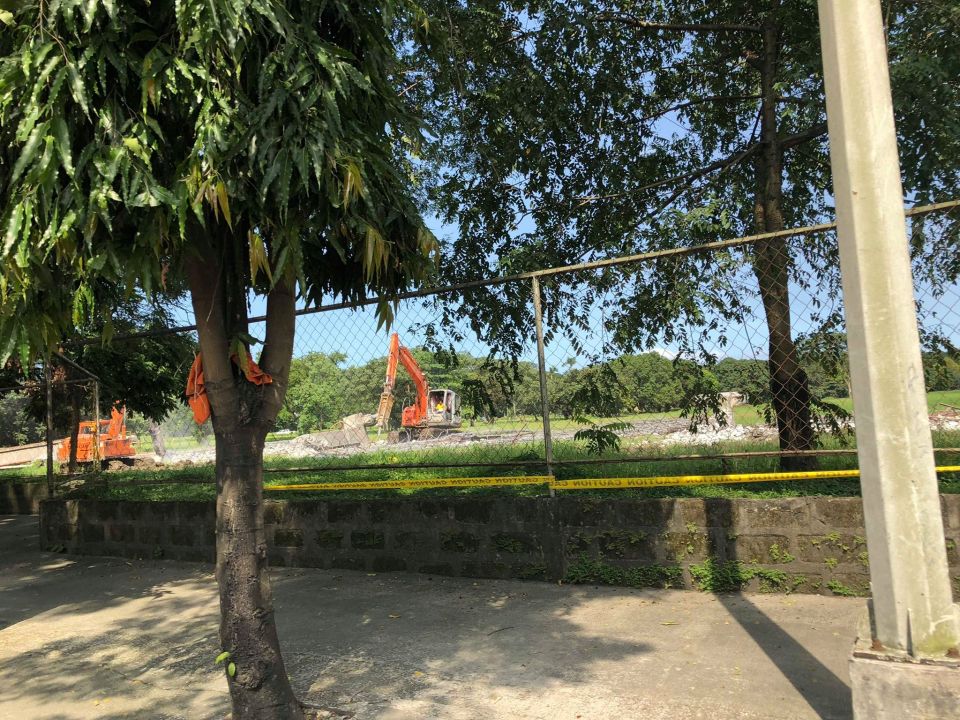
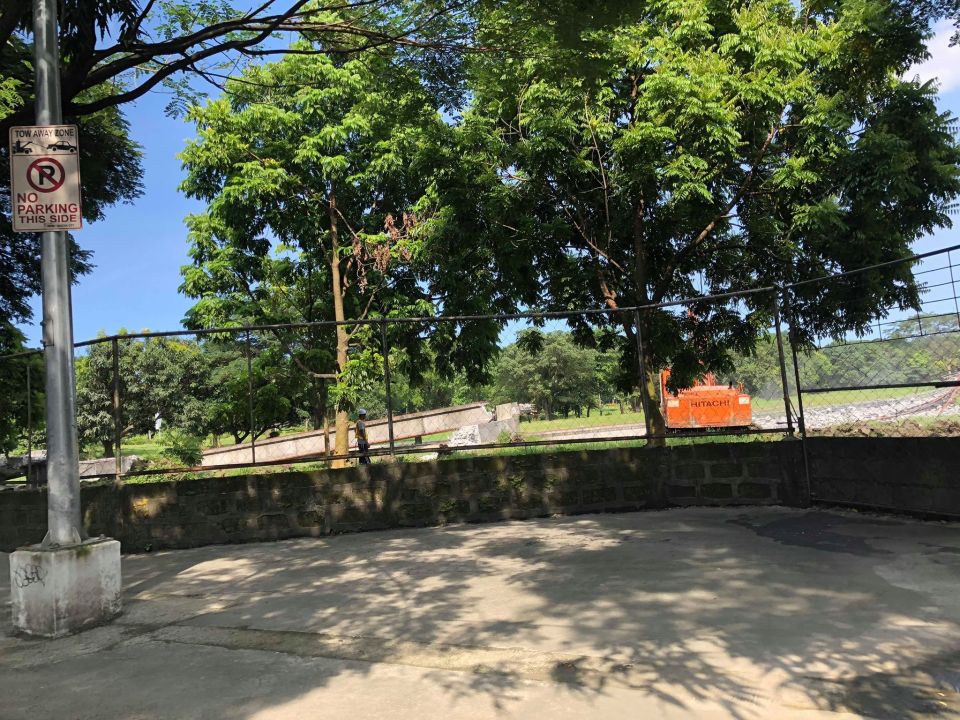
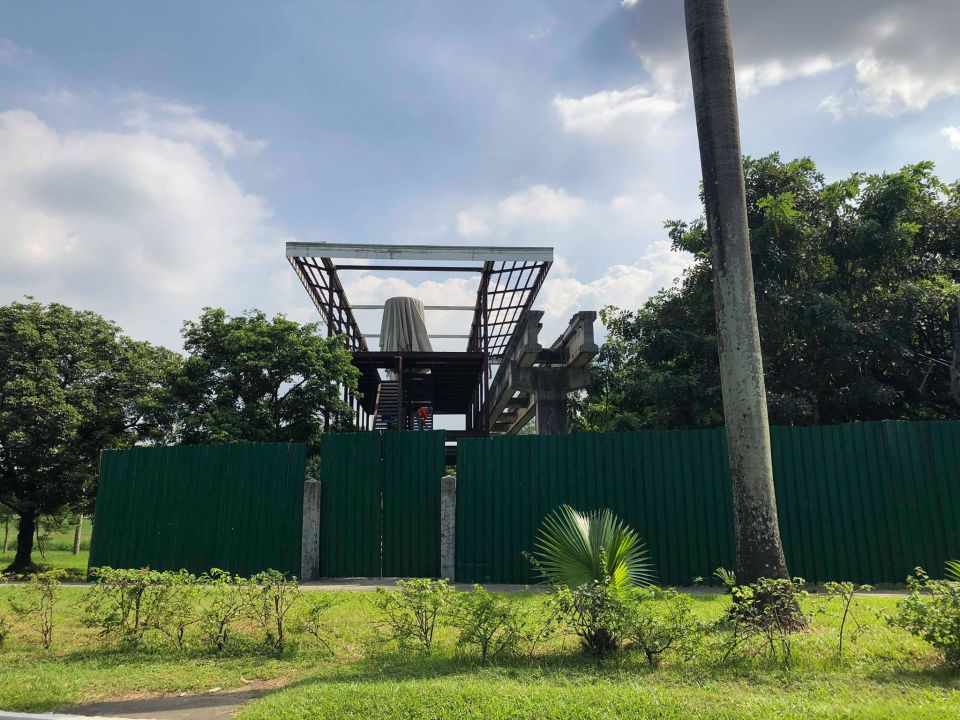
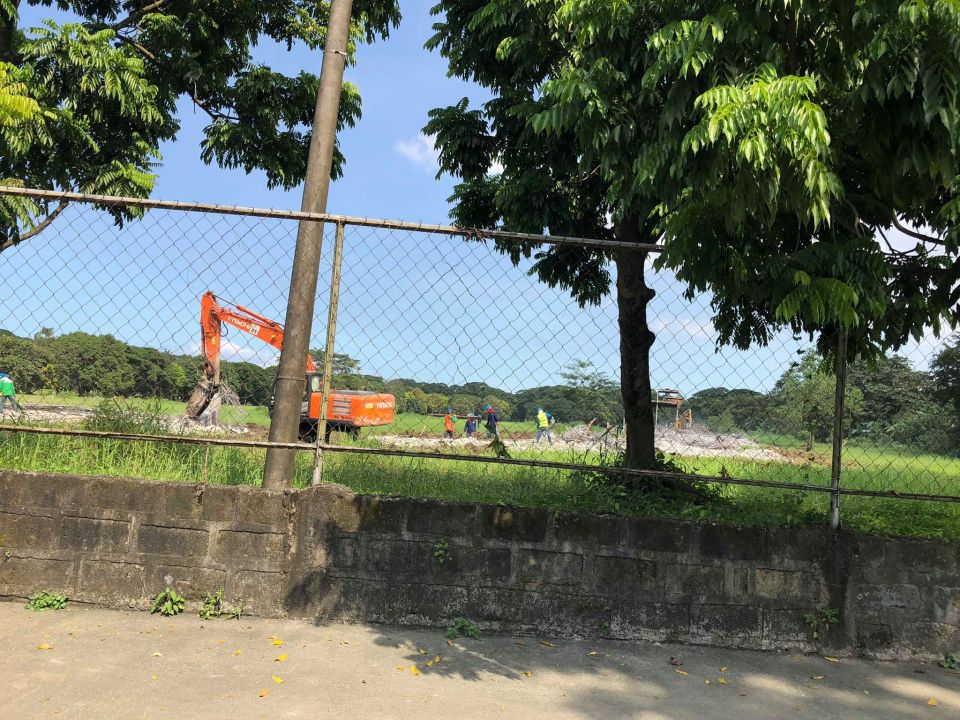
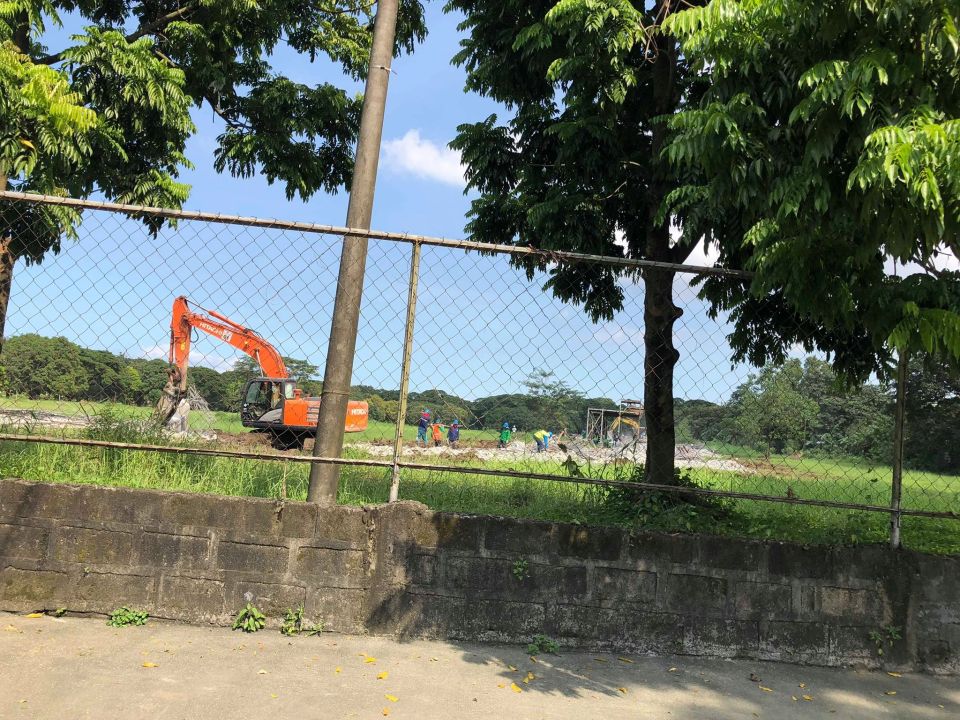
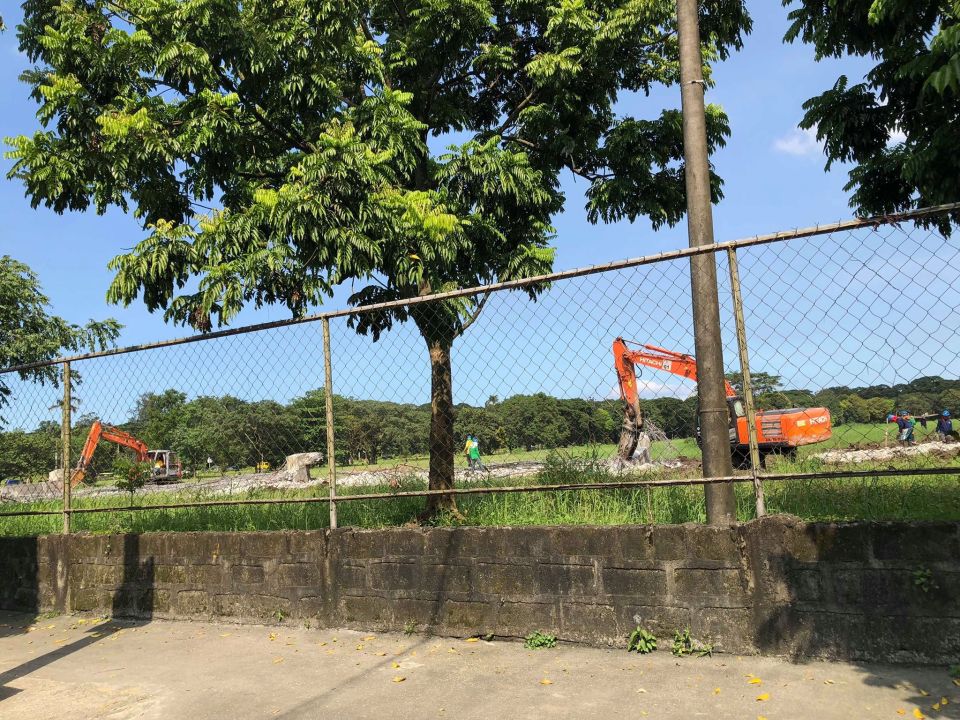
The demo was completed late last year and the AGT vehicle has been transferred to the MIRDC compound in Bicutan. The two prototypes are now there and there is an uncertainty about their futures. One colleague recalled “if only they had listened and had the AGT tested the proper way”. He was referring to the proposal to have an independent evaluation of the vehicle in order to ensure that its technical specifications and capabilities were up to international standards. The AGT proponents didn’t agree and proceeded according to what they wanted despite what we heard was a similar recommendation from then DOTC officials to have the vehicle certified as safe for public use.
I am happy to know that at least one project from that ambitious program during the last administration will finally be operational. A different approach seems to have been undertaken for the hybrid train that was produced for the PNR. Recent news stated that the train has undergone a series of tests and needs to hurdle a few more before going into operation along the PNR’s commuter line. Hopefully, it succeeds and encourage production of more like it and lead to an evolution of Philippine-made trains.
–
Article on induced demand and why more roads mean more traffic
Here is a nice article about induced demand, which is simply the additional traffic you get on top of the current and estimated traffic from “normal” growth based on the current transportation system and infrastructure once you introduce additional services and/or infrastructure. That is, there is additional trips/traffic generated for when you widen roads or construct a new transit system.
VannPashak, J. (2018) “More roads, same congestion,” http://www.medium.com, https://medium.com/@jvannpashak/more-roads-same-congestion-b2b437ecaa94 [Last accessed: 11/22/2018]
I think the more interesting part of the article is its mention of the work of Redmond and Mokhtarian, which the author provides in a link. Clicking this link brings you to a wealth of articles attributed to the two that are definitely worth reading especially for people seeking understanding for issues related to commuting. Many of the researches and the methodologies in the articles may be replicated for application in the Philippines, and should be taken on as research topics in what can be inter-disciplinary programs or projects.
–
Professorial Chair Colloquium of UP’s Institute of Civil Engineering
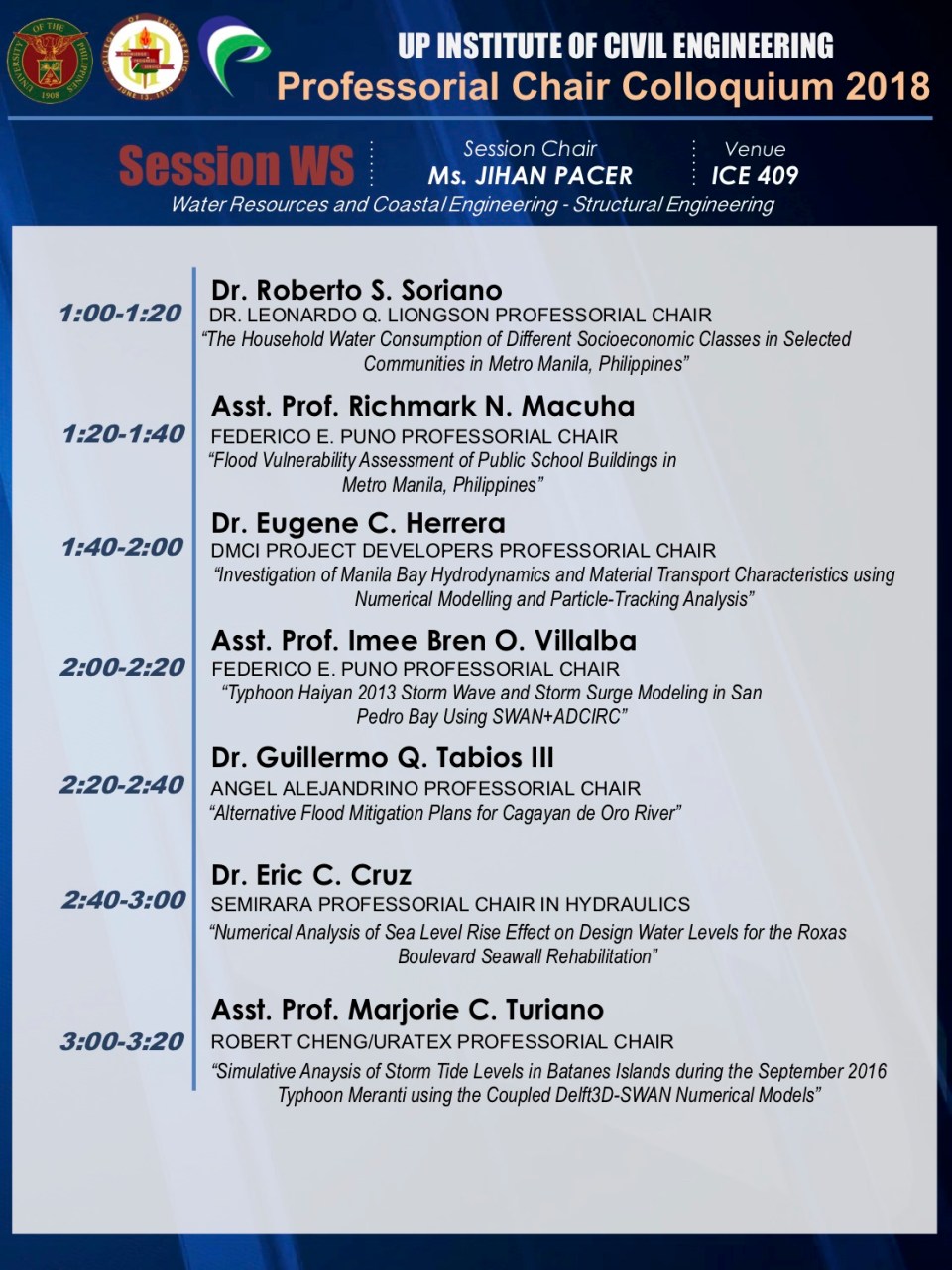
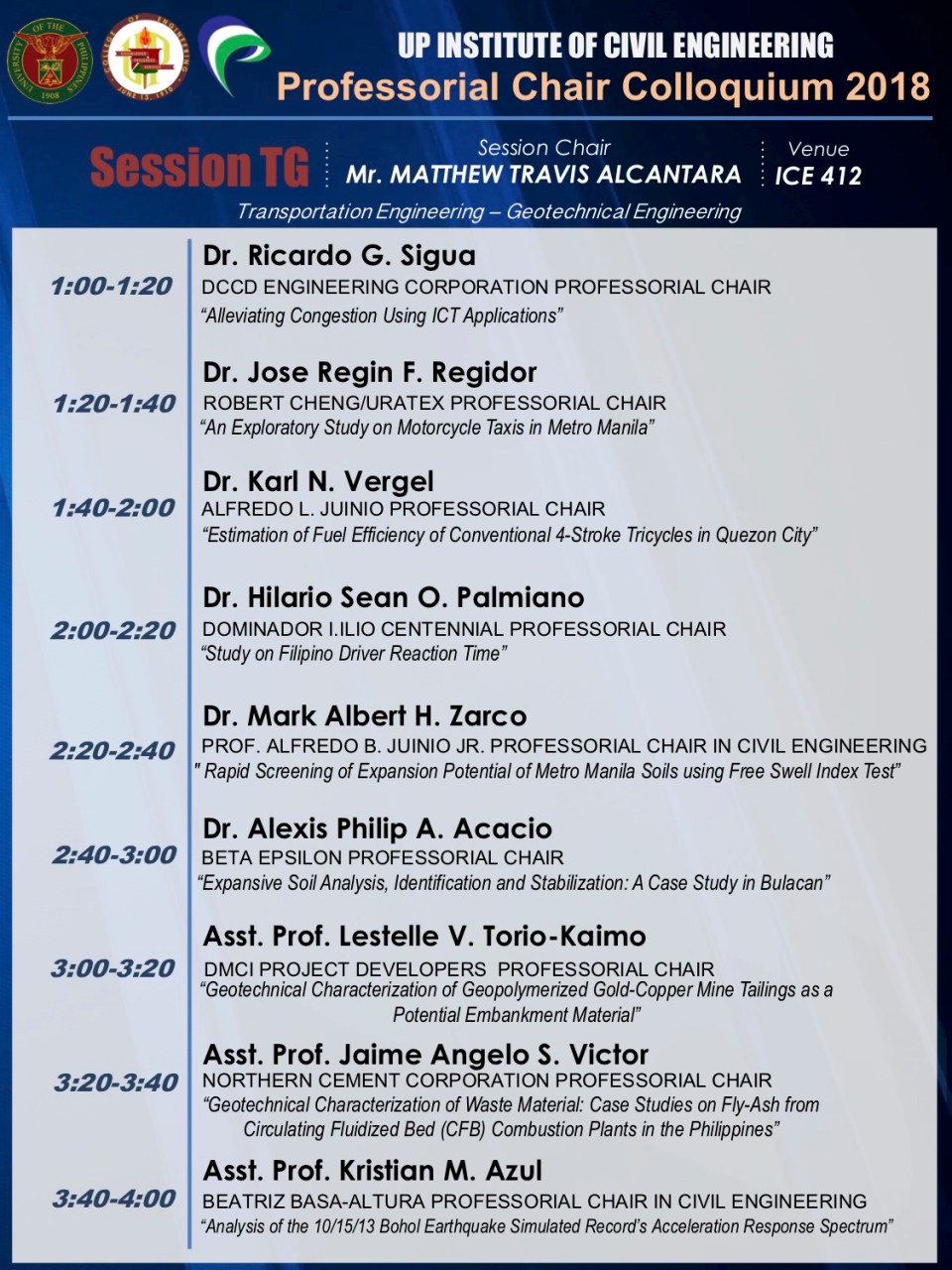
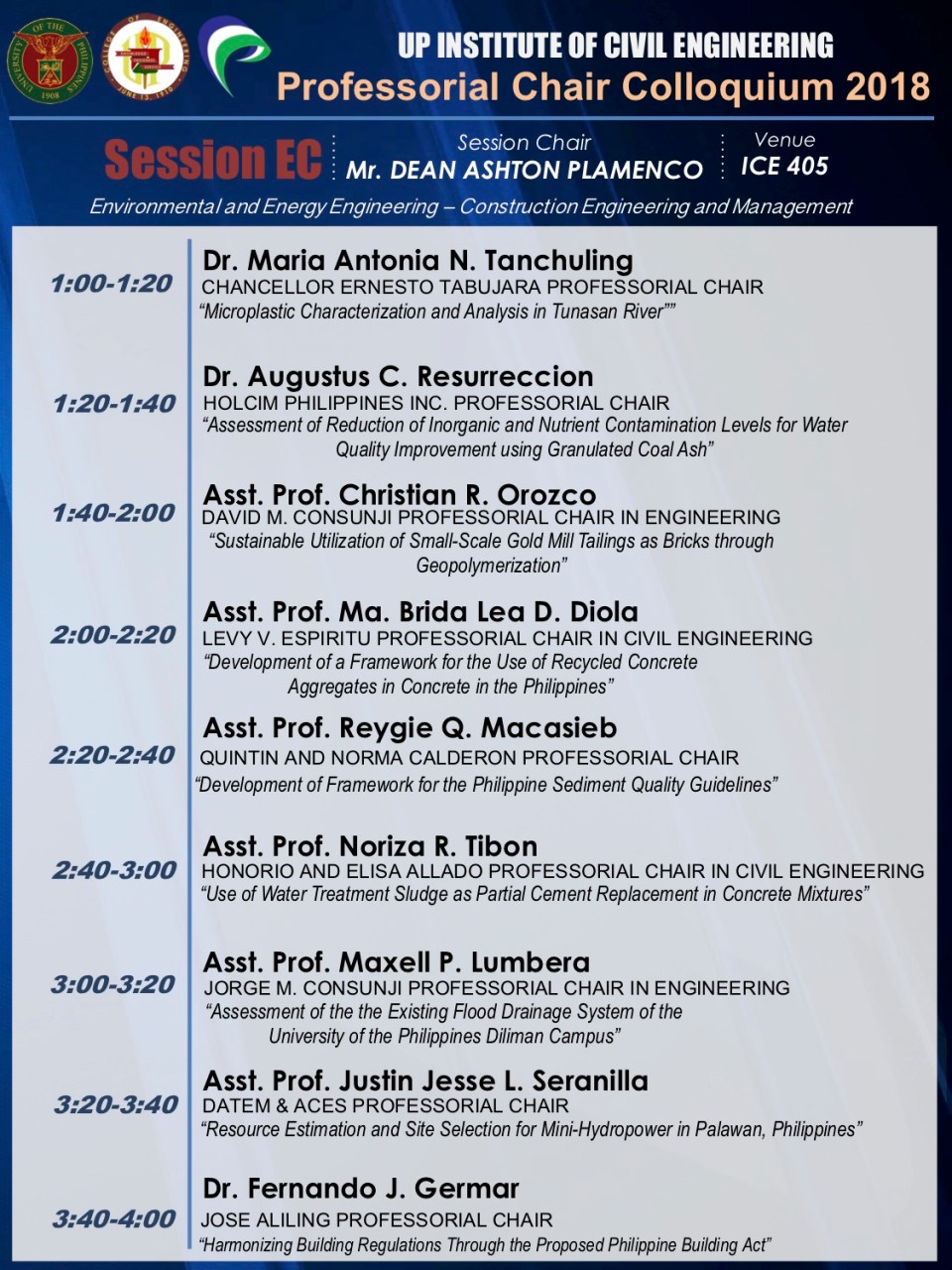
We start the month of November with an announcement. This is for the Professorial Chair Colloquium of the Institute of Civil Engineering of the University of the Philippines Diliman, which will be held on November 16, 2018 (Friday). The sessions are open to the public and surely there will be interesting topics not just regarding transportation but on the other fields as well. Following are information on the lecture topics:


–
On the need to increase NMT and public transport use
A recent report reinforces what many of us already probably know or are aware of – that we need to shift away from dependence on car use to more sustainable modes of transport in the form of non-motorised transport (NMT) and public transportation. Here is the article from the AASHTO Journal:
Global Climate Report Calls For Expansion Of ‘Non-Motorized’ Transport And Public Transit (2018)
There is a link to the report in the journal article. The report is conveniently available in PDF form and is very readable (i.e., not overly technical).
Incidentally, I was involved some time ago in a project led by the group Clean Air Asia (CAA), which involved several experts from across ASEAN as well as Japan that attempted to determine the necessary transport programs and projects in the region to stave off the projected increase in global temperatures. In all the scenarios evaluated, non-motorised transport (NMT) and a rationalised public transportation system By the term ‘rationalised’ I am referring to the use of higher capacity vehicles as against the taxis and tricycles that typically carry few if not one passenger. Here is a link to the final symposium for that study that has links to the materials presented:
The Final Symposium on the “Study on Long Term Transport Action Plan for ASEAN”
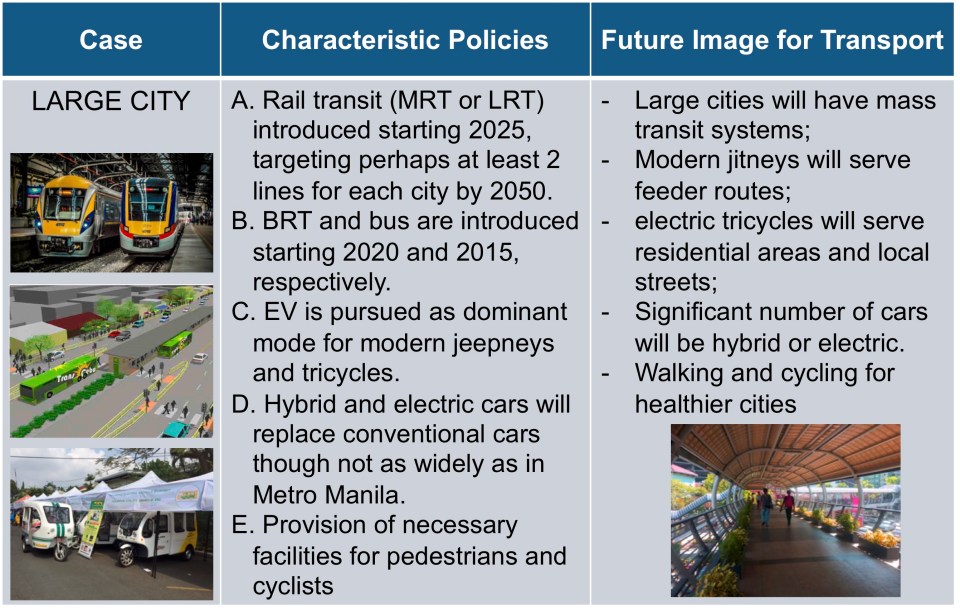
Here’s a slightly updated slide on the future image for a large city in the Philippines:
–
25th Annual Conference of the Transportation Science Society of the Philippines
The Transportation Science Society of the Philippines (TSSP) will be holding its 25th Annual Conference in Cagayan De Oro City next week. Here is the program and you can get more details about the conference and the society from its homepage and Facebook page.


–
A compilation of studies on walkability in the Philippines
My students have been engaged in studies on walkability (and related topics) the past few years. These have been a mix of published and unpublished work that I have compiled at list below:
Unpublished works:
- Capalar, M.A.M. and Garma, F.A.A. (2018) Assessment of Walkability Along Taft Avenue, Unpublished Research Report, Institute of Civil Engineering, University of the Philippines, Diliman
- Pajarin, J.B., Soriano, C.M. and Regidor, J.R.F. (2017) Assessment of Mobility of Persons with Disabilities (PWDs) in Cainta, Rizal, Unpublished Research Report, Institute of Civil Engineering, University of the Philippines, Diliman.
- Cortez, E.H.D. and Razon, J.V.DV. (2017) Assessment of Walkability Along Katipunan Avenue, Unpublished Research Report, Institute of Civil Engineering, University of the Philippines, Diliman.
- Marcelo, K.R.S. and Salvador, J.P.B. (2015) Assessment of Pedestrian Facilities Along Marcos Highway, Unpublished Research Report, Institute of Civil Engineering, University of the Philippines, Diliman.
Published works:
• Pajarin, J.B., Soriano, C.M. and Regidor, J.R.F. (2018) “Assessment of Mobility of Persons with Disabilities (PWDs) in Cainta, Rizal,” Philippines Transportation Journal, Vol. 1, No. 1, pp. 60-80.
• Pajarin, J.B., Soriano, C.M. and Regidor, J.R.F. (2017) “Assessment of Mobility of Persons with Disabilities (PWDs) in Cainta, Rizal,” Proceedings of the 24th Annual Conference of the Transportation Science Society of the Philippines, Quezon City, July 21, 2017.
• Regidor, J.R.F., Marcelo, K.R.S. and Salvador, J.P.B. (2016) “Assessment of Pedestrian Facilities Along Marcos Highway,” Proceedings of the DPWH Research Symposium 2016, Quezon City, September 2016.
Here’s a paper based on a comprehensive study our centre conducted for the City of Olongapo in the Province of Zambales:
• Palmiano, H.S.O., Javier, S.F.D. and Regidor, J.R.F. (2015) “An Assessment of Walkability in a Medium-Sized Philippine City,” Proceedings of the Eastern Asia Society for Transportation Studies, Vol. 10, December 2015.
We hope to continue such studies with future advisees who perhaps can tackle other corridors or even areas. Among those on my Wishlist would be Espana Avenue, Ortigas Avenue, Intramuros, Recto Avenue, and even EDSA or Circumferential Road 5.
–
Failed experiments? On the DOST’s hybrid train and AGT
Our staff were implementing surveys in relation to the proposed railway projects supported by the Government of Japan. They came across this scene showing the DOST’s (through its MIRDC) hybrid electric train.
 The hybrid electric train at the PNR Calamba Station. It looks like its being maintained or checked although I’m not sure the crude set-up is appropriate for such undertaking.
The DOST had a much hyped program during the last administration about the development of Philippine-made transport. Among these were the two Automated Guideway Transport (AGT) train sets that were developed by the MIRDC – one with two 60-passenger (seated and standing) cars and a test track in UP Diliman, and another with two 120-passenger cars with test track at the MIRD compound in Bicutan. While both had what were claimed as extensive tests, these were mainly done by DOST/MIRDC personnel with no independent inspections or validations. At one time, I recall that we at UP had discussions with representatives of Mitsubishi Heavy Industries who offered to explore arranging for a technical cooperation project to have a full-scale testing of the AGT’s using their facilities in Japan. We referred them to MIRDC and that didn’t turn out well as the agency (or perhaps under the the instructions of a higher official?) was supposed to have rejected the offer preferring it to be tested locally. That was a major problem because there were no suitable testing facilities or qualified persons or institutions to grant certification for the AGT to be used as public transport.
The last time I checked with folks at DOST and UP, the AGT prototype set-up in Diliman was already being scheduled for dismantling. This probably comes as a welcome development for those who opposed the project from the start. However, there is potential here for continuing research if only funding could be secured and proponents kept open minds and objectivity in the way researches could be done. There was the perception before that the people behind the AGT projects were so engrossed with what they thought were their babies that they blocked critical but objective comments and recommendations about the prototypes and their applications.
As for the hybrid electric train, there is now supposed to be a cooperative project between the MIRDC and PNR. I recall a few months ago that they even had some test runs to show the hybrid train to be running on PNR tracks; even hyping that this could be part of the future of a rehabilitated PNR. Is this true or just PR? Hopefully, the DOST could get the context right, and the DOTr and PNR can support such initiatives for Philippine-made transport. This is especially as the current administration continues to pursue its Build, Build, Build program that has as major features several railway projects.
–
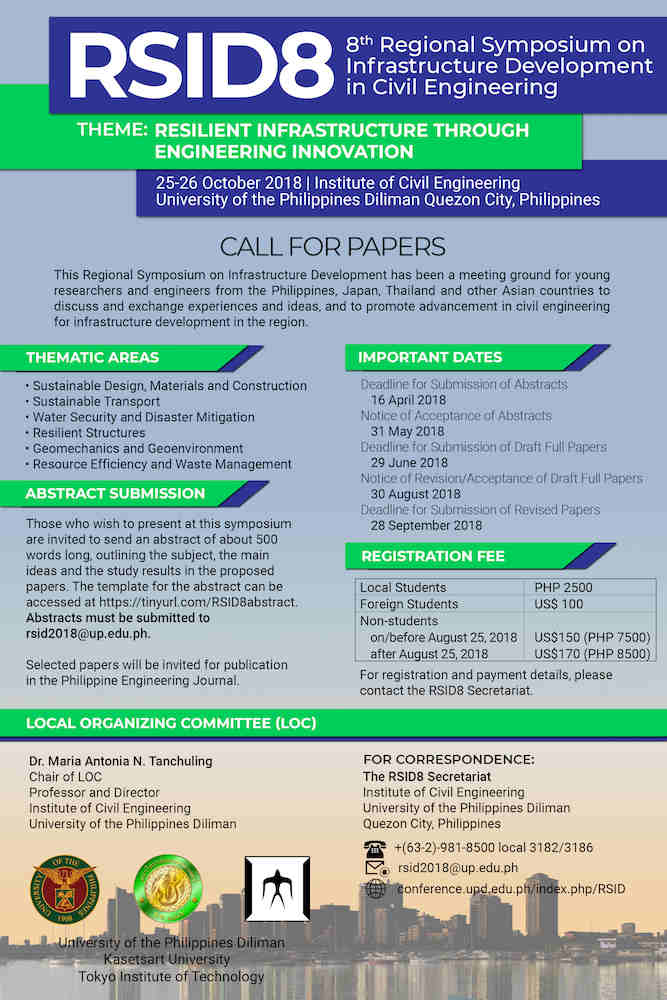
8th Regional Symposium on Infrastructure Development (RSID)
I would like to promote a symposium that our Institute of Civil Engineering (ICE) at the University of the Philippines Diliman will be hosting this year.
The Institute of Civil Engineering, University of the Philippines Diliman together with Kasetsart University (Thailand) and Tokyo Institute of Technology (Japan) is pleased to invite you to participate in the:
8th Regional Symposium on Infrastructure Development
in Civil Engineering (RSID8)
Theme: Resilient Infrastructure Through Engineering Innovation
Date & Venue: October 25-26, 2018 Institute of Civil Engineering,
University of the Philippines Diliman, Quezon City Philippines
Abstract Submission:
Those who wish to present in this symposium are invited to submit and abstract of about 500 words under the following themes:
Sustainable Design, Materials and Construction
Sustainable Transport
Water Security and Disaster Mitigation
Resilient Strudtures
Geomechanics and Geoenvironment
Resource Efficiency and Waste Management
Deadline for Abstract Submission: April 16, 2018
Template: tinyurl.com/RSID8abstract
Please see attached poster of call for papers for more details.
Kindly disseminate to your colleagues who may be interested.
For more information of the conference please contact:
Christian R. Orozco
RSID8 Secretariat
Institute of Civil Engineering
University of the Philippines Diliman
Email: rsid2018@up.edu.ph
Website: conference.upd.edu.ph/index.php/RSID
–
On the other uses of ridesharing/ ridehailing services
We start 2018 with another article that I found this interesting. The article is on the other uses of ridesharing, particularly for medical emergencies:
Seipel, T. (2017) “Uber reduces ambulance usage across the country, study says”. mercurynews.com. https://www.mercurynews.com/2017/12/13/uber-reduces-ambulance-useage-in-major-u-s-cities-study-says/ (Last accessed: 12/22/2017).
This article was particularly interesting to me because we are currently doing research on ridesharing. This should be a good topic for students who are looking for something current and relevant, and should fit well in the bigger scheme of things in as far as our research agenda is concerned. There is a link to the study report in the article for those wanting to get the details on the outcomes.
–

