
Home » Road Safety (Page 34)
Category Archives: Road Safety
Road crashes: disasters waiting to happen
While I’m very appreciative of the efforts of the MMDA particularly on traffic management, there is still much to be desired regarding enforcement around Metro Manila. These include the need for consistent and firm enforcement of traffic rules and regulations along major roads such as Commonwealth, EDSA, and C5. There are still many instances of speeding along Commonwealth as many drivers (cars and buses) and riders (motorcycles) are already aware of the usual positions of MMDA enforcers measuring speed along the highway.
In the vicinity of current and former U-turn slots, there are also many violations especially where motorcycles can squeeze into openings to conveniently (though dangerously) make turns. Some U-turn slots are positioned across side streets of major roads and are used by motorists for making left turns. Often, one will find vehicles inching their way to cross the major road, effectively blocking through traffic. This is particularly the case along Katipunan just across from the gate of an exclusive subdivision well-known for its politician residents. While the Katipunan – C.P. Garcia intersection is only a few meters away for those intending to travel along the southbound side of C5, many vehicles (conspicuously those which are expensive and of the luxury type) cross C5 northbound to make left turns at the U-turn slot/median opening. A few meters away, MMDA enforcers and QC Police turn blind eyes to the practice, leaving motorists to fend for themselves in trying to avoid each others’ vehicles while also trying not to constrict traffic.
Such situations increase the likelihood for road crashes in the area, exposing people to unnecessary risks. These also exacerbate traffic congestion as crossing vehicles interrupt the otherwise smooth (and continuous) flow of traffic towards C.P. Garcia. Such situations are also perfect examples for cases where there may not be crashes occurring but there is a high likelihood for incidents to happen. Crashes waiting to happen seem too theoretical that the MMDA and the PNP apparently have difficulties understanding the concept, which is the basis for assessments of road safety including the star ratings given out by iRAP. It is not necessarily only the actual number of crashes (or accidents) occurring that is evaluated but the likelihood for them to happen given the conditions at any particular area. Perhaps this is why many of our roads remain unsafe because many of our administrators, planners, engineers and enforcers continue to fail to understand this concept for the potential for crash occurrence. And this is where we should work on to address – very hard!
The following photo was taken one early morning along Katipunan prior to the peak period that typically starts around 6:30AM during times when there are classes at the schools along this stretch of C5.
 Early morning road crash near the La Vista gate along Katipunan (C5) involving vehicles encroaching towards the U-turn slot to make a left turn at the median opening.
Perhaps we should also extend our appreciation of the concept of disaster risk prevention and mitigation to our streets. After all, road crashes may also be treated as disasters. They result in deaths, injuries and damages to property. The only difference and probably more frightening aspect of these disasters on the road is that they do occur on a much more frequent basis than you major earthquakes and typhoons.
–
Lane separators along Commonwealth
The MMDA and the DPWH are currently constructing what they term as lane separators along Commonwealth Avenue. These are concrete islands very similar in form to curbs, whose function is to delineate the outer lanes of Commonwealth. These will physically separate public utility vehicles from motorcycles and most private vehicles who generally use the middle and inner lanes. There are, however, early criticisms due to what is perceived as an increased risk for crashes due to the separators themselves. Some motorcycle groups have already expressed their apprehensions about the facilities that were supposed to protect them from aggressive PUVs. Meanwhile, one DPWH official was interviewed and proudly claimed the safety features of the separators including their being unmountable by large vehicles. From the height of the separators shown in the following photos, I am not so sure that these devices can stop trucks or buses, even jeepneys or cars from going over the other side.
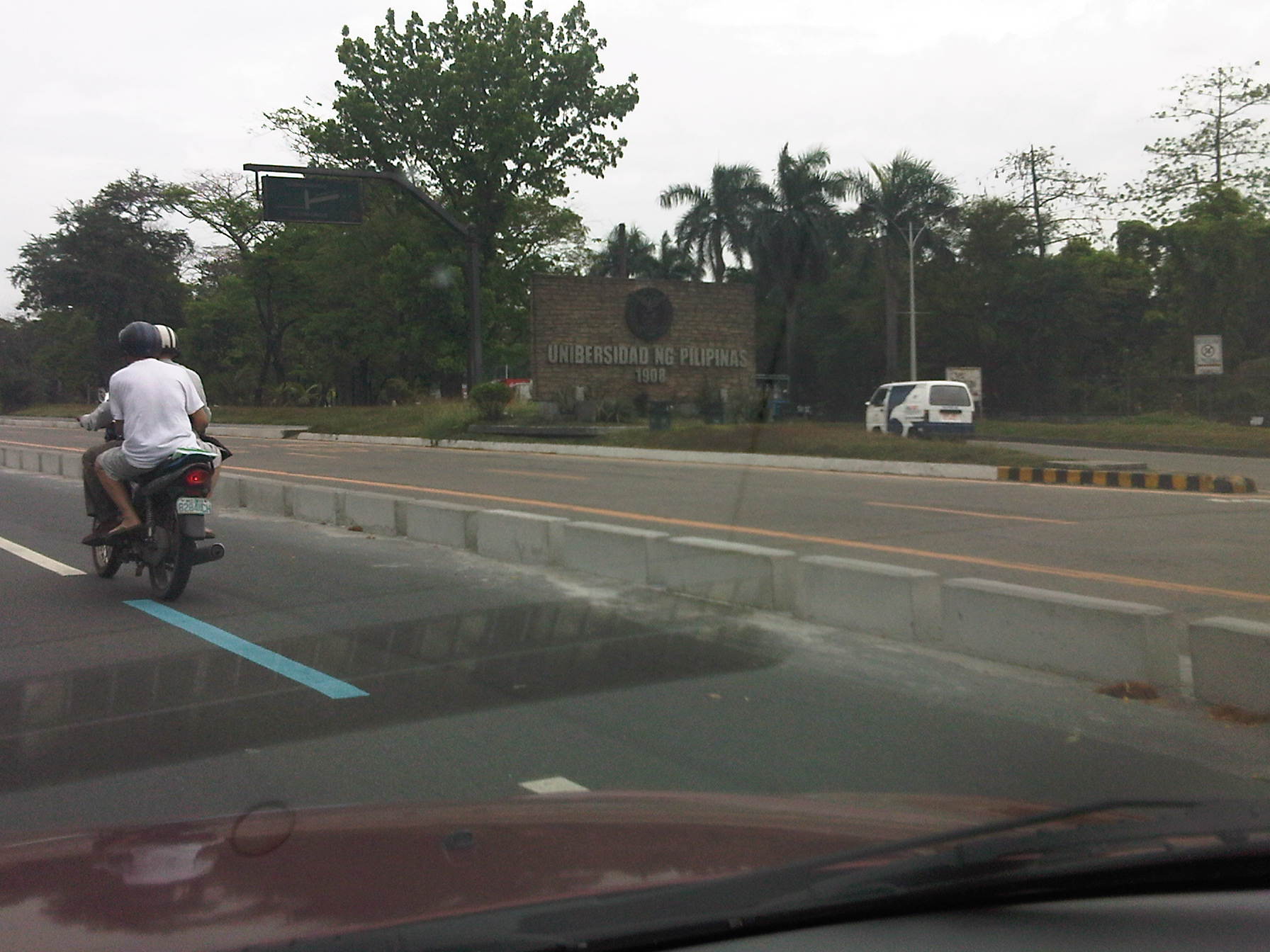 Separation device – the lane separators are basically barriers separating the 3 outermost lanes of Commonwealth from the rest. Of these 3 lanes, 2 are designated for public transport (yellow lanes) and one for private vehicles. The lane immediately to the left of the separator is the motorcycle lane. Note the blue lane marking denoting the MC lane.
 Service road – the separators practically create a service road along Commonwealth where PUVs and some private vehicles will travel along. Drivers and riders who intend to make right turns should shift towards the inner lanes through one of the relatively narrow slots along the separator line.
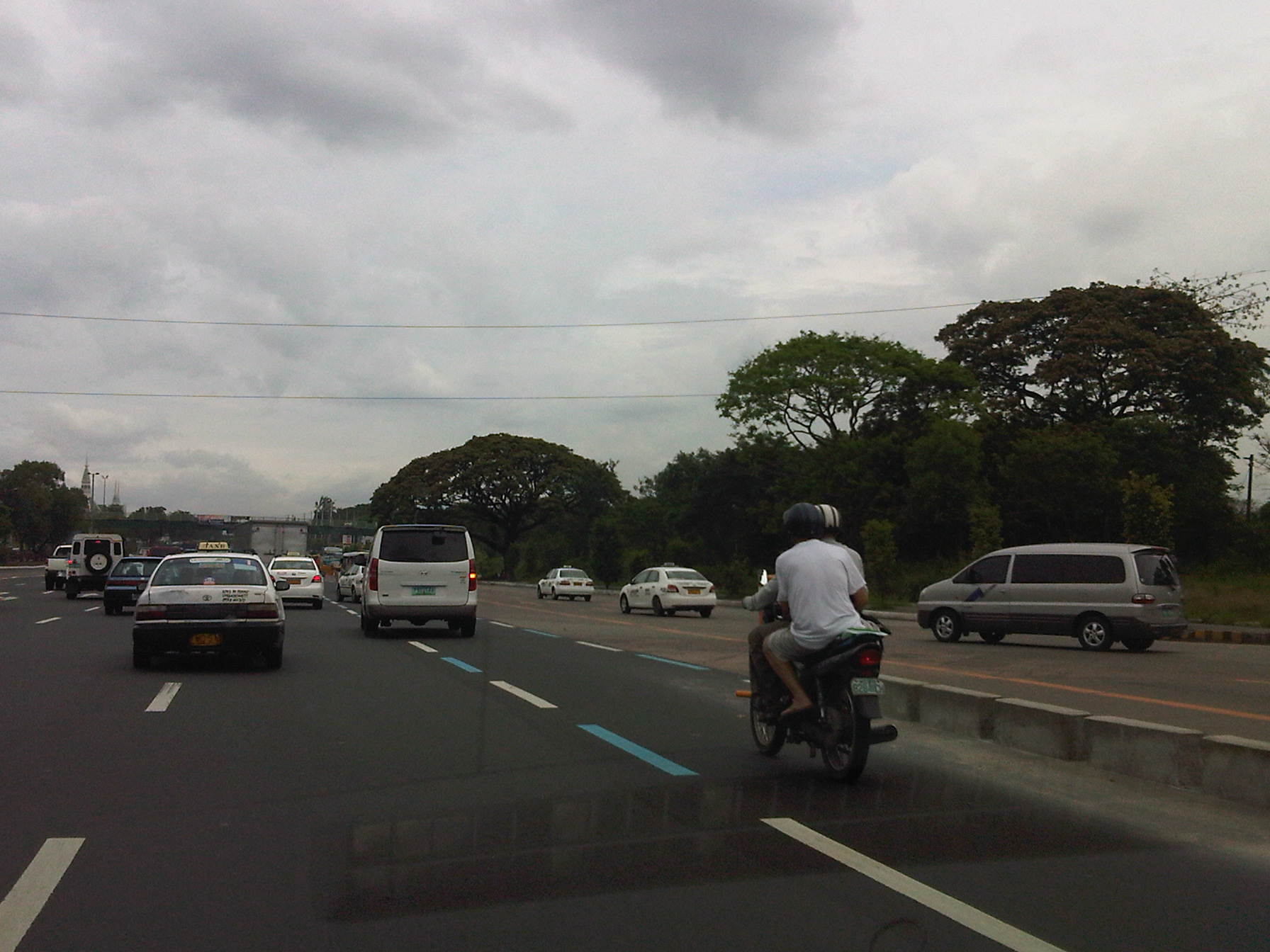 Small window of opportunity – vehicles turning from the University Avenue to Commonwealth must weave in traffic as many shift towards the nearest U-turn slot. The separators add another constraint to their movements. There is a similar narrow opening for vehicle turning towards the University Avenue from Philcoa but this can be quite tricky with the speeds of vehicles as well as the trajectories of those coming from the outer lanes of the mall to merge with the main flow along Commonwealth.
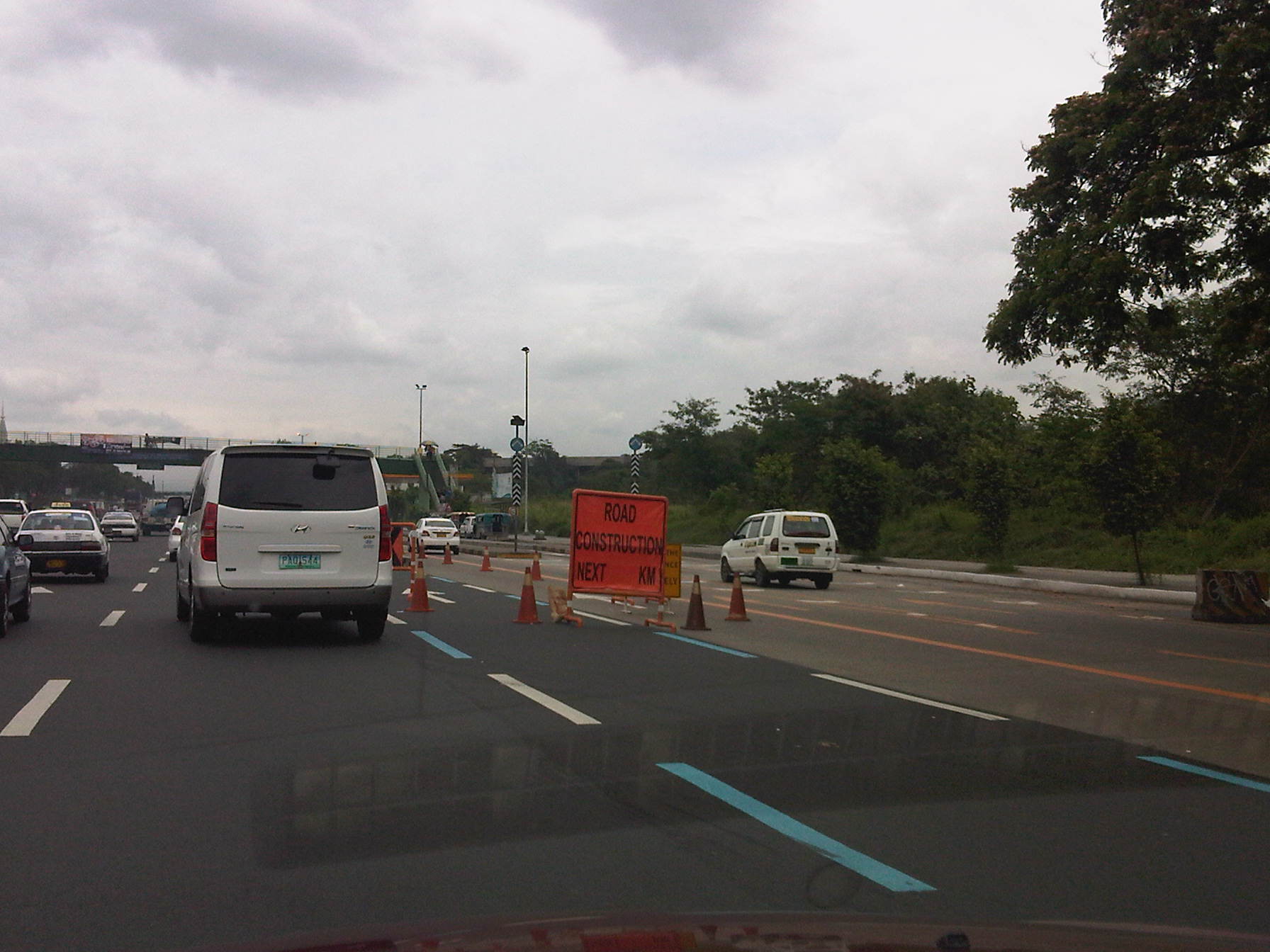 Under construction – tarpaulin sign and traffic cones mark the beginning of an area cordoned for the construction of the lane separators. The separators are supposed to be built along both directions of Commonwealth and may stretch all the way to Fairview. These should also aid traffic enforcers in apprehending PUVs traveling outside their designated lanes.
 Temporary displacement – motorcycles use the another lane as the construction of the separators use up the space of the motorcycle lane. Riders have become accustomed to using the lane from the time they were first implemented along Commonwealth.
 Now you see it, now you don’t – the motorcycle lane along Commonwealth northbound leads into the stairs of a pedestrian overpass. This necessitates motorcycles to shift towards the lane to their left. The rightmost lanes are for public transport.
 Respect and discipline – Motorcycles now typically use the lane designated for them and fewer vehicles encroach along these lanes for most part of Commonwealth where there are no weaving due to the U-turn slots. The separator will further lessen vehicle intrusions (and lane changing) as PUVs will be confined within the outer lanes courtesy of the separators.
The jury will definitely be out for the concrete lane separators currently being constructed along Commonwealth. It is still early for a fair assessment but many motorists are already pointing out the separators as increasing the risks for crashes. Surely, the MMDA and the DPWH carefully thought this out before its implementation and have the best intentions in favor of road safety. However, even the best intentions can still result in unintended consequences. Hopefully, this is not another case of the latter.
–
Why is Commonwealth still unsafe?
After being branded as a “killer highway” and regarded as the most dangerous road in the Philippines, authorities have scrambled every now and again to come up with various schemes to reduce the incidence of road crashes along Commonwealth Avenue in Quezon City. The highway has been designated as a traffic discipline zone, pedestrian overpasses have been constructed, the speed limit has been set at 60 kph, and a lane has been assigned for motorcycles. All this and still Commonwealth has been assessed to be unsafe.

Why is Commonwealth Avenue unsafe after all the initiatives, all the programs and projects implemented along the corridor? There are many reasons both general and specific. However, let us list only four:
1) Driver behavior – despite all the safety programs, driver behavior (both for private and public transport) has not generally improved. There are still many aggressive and reckless drivers weaving in traffic. PUB and PUJ drivers often exit the lanes designated for them. Private vehicle driver continue to speed above the speed limit, knowing that there is only 1 speed radar deployed along the highway. And drivers continue to use median openings to cross the highway, creating situations with high likelihoods of crashes. Gap acceptance is typically aggressive and driver and riders seem to travel thinking others will just avoid them should there be conflicts along the way.
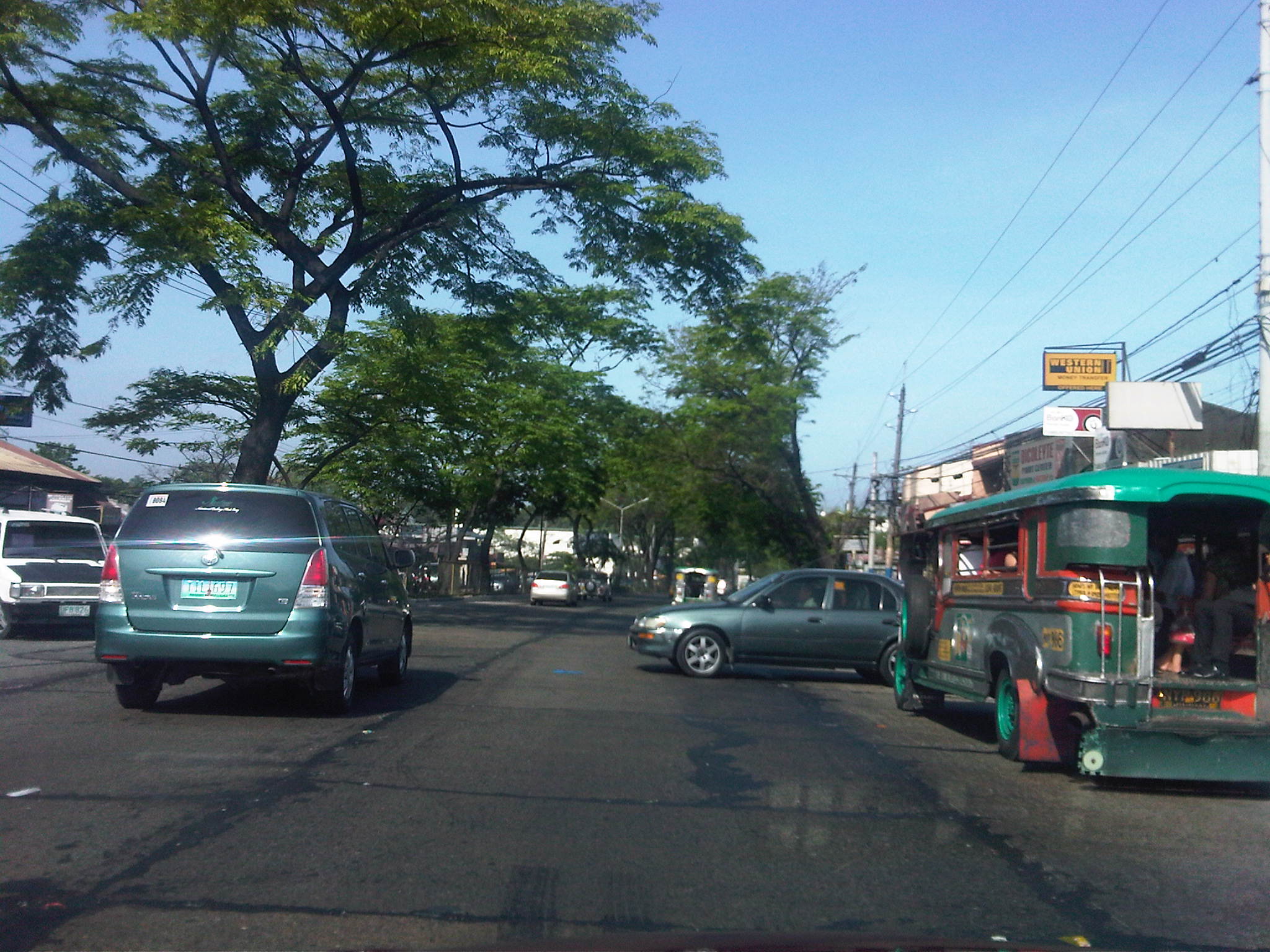
2) Pedestrian behavior – even with overpasses constructed, This is particularly the situation along the section from Fairview Market to Litex where people of all ages continue to cross at various points along the highway, seemingly oblivious to the dangers posed by motor vehicles along the highways many lanes. People seem to be generally unaware or do not care about the risks as shown by the pedestrians below including parents crossing while carrying their child. Jaywalking (or if there is an equivalent running and dodging vehicles) is quite prevalent along Commonwealth despite the construction of several overpasses. One problem, it seems, is the fact that many overpasses are not used because of some design flaws (stairs too steep or have limited capacity) and the propensity for setting up shop right on the overpasses themselves, thereby limiting its capacity for pedestrian traffic.
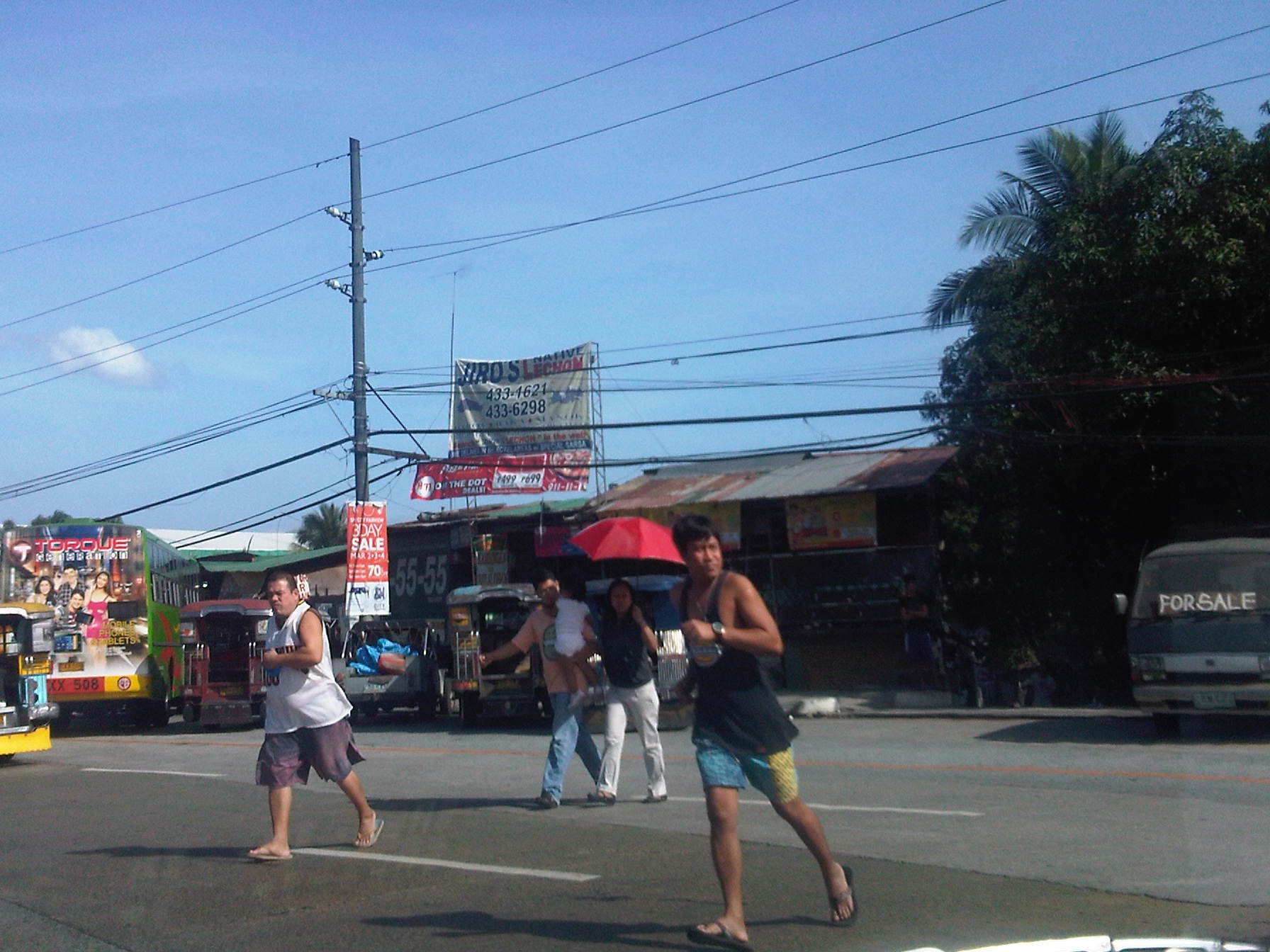
3) Enforcement – let’s be honest and accept the fact that enforcement along Commonwealth is patchy at best. It’s strict only during the initial days of a new program but eventually relaxes. We have a term for this – “ningas cogon.” This applies to both enforcers of the MMDA and Quezon City DPOS and the Philippine National Police. In fact, there are many violations that are taken for granted perhaps for the sheer difficulty of sustaining enforcement efforts. It was mentioned previously that there is still a problem pertaining to pedestrians and such problems that include jaywalking and illegal vendors on overpasses are among those that need constant attention from enforcers. There is also the persistent challenge from public transport that includes racing and the non-usage of lanes designated for them. In the photo below, for example, jeepneys take up the outer lane of the highway, which also happens to be part of the public transport lanes where PUB’s and PUJ’s are supposed to be confined while traveling along Commonwealth.

4) Geometry – the highway is not only too wide but also generally straight and level for long sections. These conditions are perfect for high speed travel and without enforced speed limits will normally tempt a lot of drivers and riders to speed up. This is something that has been well established abroad and can easily be observed along our expressways and national roads where the formula of availability of space (wide roads) plus excellent sight distance combine with aggressive, risk taking driver/rider behavior to result in high vehicle speeds.
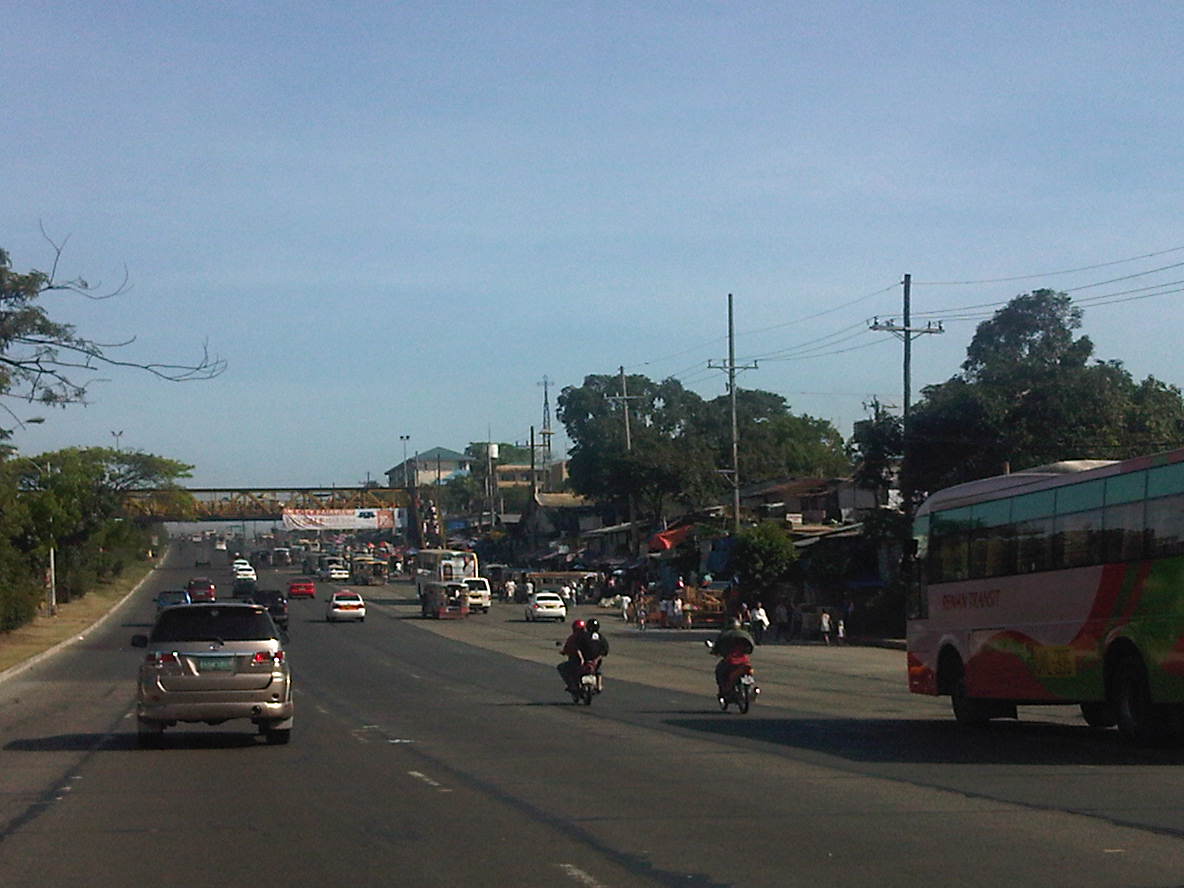
There are also the unusual designs of median openings (U-turns) that were claimed to have taken into consideration vehicle turning radii as well as trajectories along the the highway. Yet, there is the persistent observation that the median islands appear to be “nabubuntis” or getting pregnant based on the bulging island where the U-turn slots are located. U-turns also encourage weaving and aggressive behavior in order to cover the distance and width to a median opening. The non-occurrence of crashes now do not mean they will not occur in the future. These are examples of disasters waiting to happen just like the conditions at the huge roundabout that was constructed along Commonwealth in the Fairview area (photo below) where vehicle movements show motorists generally do not know how to use roundabouts. Thus, you get buses making U-turns and jeepneys and cars doing left turns in this portion of the highway.
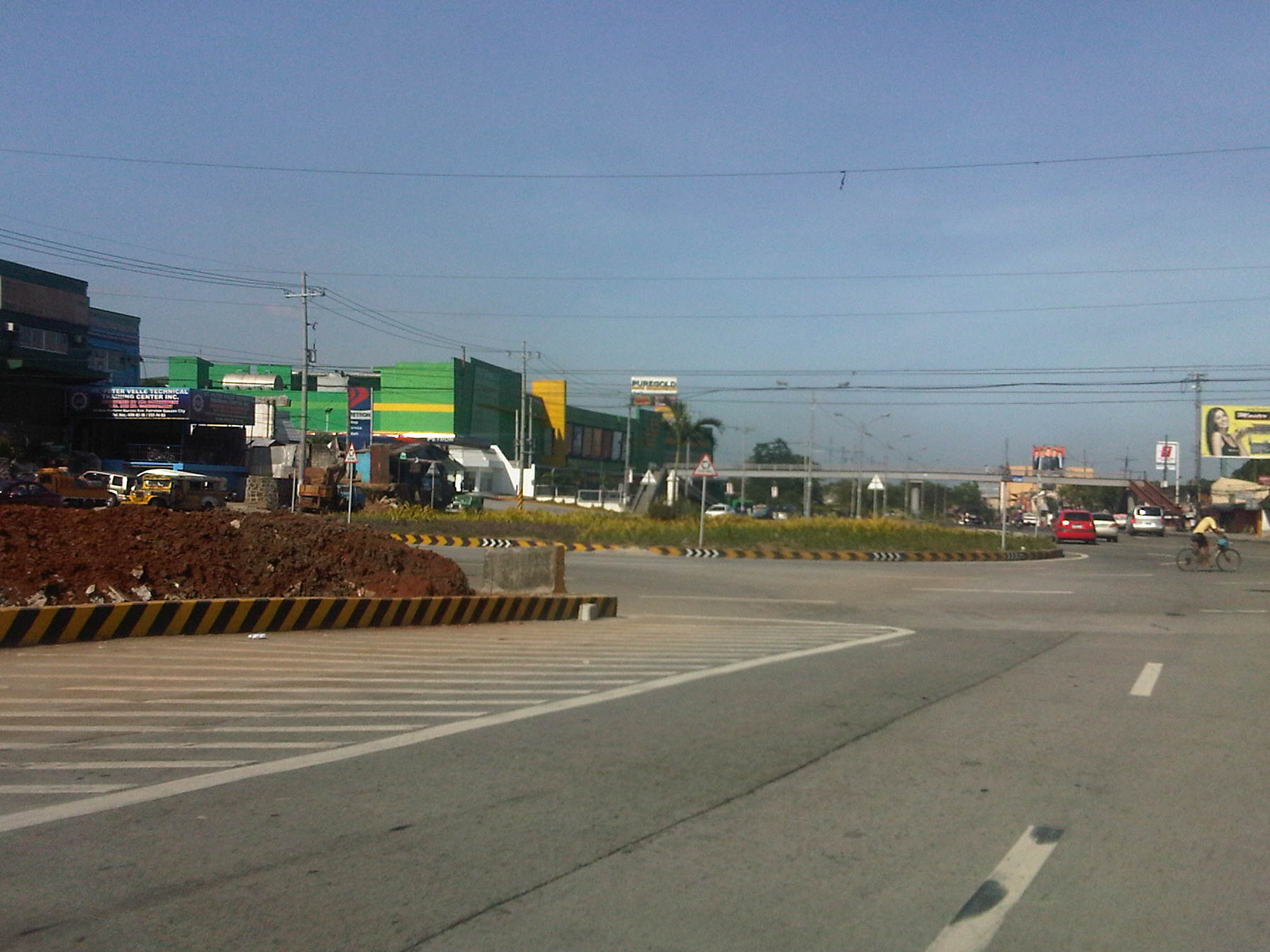
Let me emphasize a main point I made in the previous paragraphs: It is not because there are few road crashes occurring (compared with the potential often cited by various parties criticizing the U-turn scheme) that Commonwealth is deemed safe. The fact is that any assessment of the highway will be based on the likelihood of crashes occurring due to the conditions along the road. It is probably by sheer luck that the incidence of fatal accidents is not that high. It is still a case of a disaster just waiting to happen.
There is still much to hope for since the MMDA and others involved continue in their efforts along Commonwealth including the designation of motorcycle lanes and the enforcement of speed limits (despite their limited hardware). These have obviously influenced motorists’ behavior in a positive way along the highway. Behavior change is a very good thing that needs to be reinforced further in order to improve safety along Commonwealth. But constructive and more permanent behavior change with respect to transport and traffic will take time, and efforts need to be consistent, firm and sustained to condition the minds of travelers for this change.
The case for Commonwealth might as well be applied to other roads not just in Metro Manila but throughout the country as well. Much is required in terms of resources and commitment to effect significant changes that will lead to the improvement of transport and traffic conditions. And yet the treatments are often generally varied, each city going about its own ways despite good practices available for adoption or adaptation. Perhaps the lessons from Commonwealth will be applied elsewhere, or perhaps not. Let us just hope that it won’t go the way officials in other cities jokingly say about traffic schemes in Metro Manila – “We observe what they do in Metro Manila and then we don’t do it here.”
–
Learning from motorcycling in South East Asia
The scenes are very similar to what you would see along roads in many parts of the Philippines. Motorcycles and scooters zipping here and there, often with more than one rider. If one were not aware of the fact that the motorcycles and other vehicles were along the left side of the road. Motorcycles are very popular in most of Southeast Asia and is in fact the dominant mode in cities in countries like Vietnam, Cambodia and Thailand. It is also very popular in Indonesia and is rapidly on the rise in the Philippines. Despite the mayhem associated with motorcycles based on the various stories or anecdotes that eventually came with photo evidence, motorcycles are here to stay and there is a lot to learn from the experiences in our South East Asian neighbors for us to improve safety concerning motorcycles.
 Riders along a street in Bali – the scene is so familiar as if we were just traveling along a Philippine street
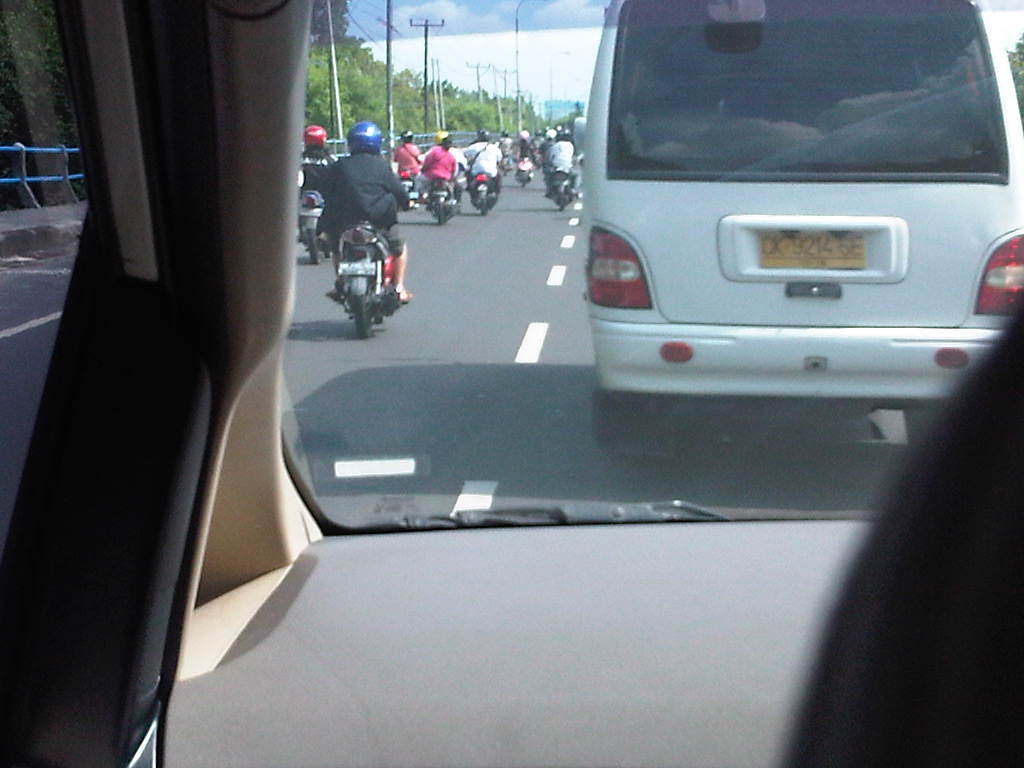 Motorcycles traveling along the left-most lane (the equivalent of our right-most or curbside lane) – that lane is also assigned to public transport. Along this road, the public transport happens to be a BRT variant.
The difference in motorcycling between Bali and Manila (or any Philippine city for that matter) seems to be that drivers of other motor vehicles in Bali are more respectful of the rights of motorcycle riders to road space. While lane splitting is also a common occurrence as well as riding along other motorcycles in the same lanes, the impression is that in the Philippines, riders have higher risks considering the likelihood that they will be sideswiped by other vehicles particularly public transport (buses, jeepneys and AUVs) and trucks. Philippine drivers have a tendency to assert their positions along the road often tailgating or shifting lanes (cutting) at the last moment, and often with the smallest of gaps available for such maneuvers. Such behaviors often have them in conflict with motorcycle riders who are brushed off as minor elements in traffic.
From a driver’s perspective, motorcycle riders in Bali seem to be more disciplined when in flowing traffic, seldom weaving when not required to do so, even while traveling at 2 or 3 motorcycle beside each other along a lane. This is not the case in the Philippines where riders tend to speed even when unnecessary and employ risky maneuvers while doing so. Such behavior increases the likelihood of crashes involving motorcycles, as there are increased interactions among vehicles.
With or without motorcycle lanes, riders (and their passengers) should be safer if other motorists would just respect their rights to the road. This works the other way around where motorcycle riders should, on their part practice lane discipline and refrain from unnecessary maneuvers like lane splitting and weaving in flowing traffic. Mutual respect and discipline, while perhaps difficult to achieve in the immediate term are something that should be encouraged with firm and fair enforcement of traffic rules and regulations. Otherwise, mayhem in our roads will continue and will exact more lives and limbs from motorists and pedestrians alike.
–
Motorcycle lanes along EDSA?
The MMDA is implementing a one-week dry run of its motorcycle lane scheme along EDSA starting today, February 14. The scheme is the same as that implemented along Commonwealth Avenue where motorcycles are assigned to use only one lane of a road – in the case of EDSA the 4th lane from the curbside. To guide riders and drivers of other motor vehicles, the MMDA used alternating white and line blue pavement markings for the motorcycle lane similar to what was done along Commonwealth.
Following are photos taken last week along EDSA and a few observations on the traffic conditions with respect to the motorcycle lane scheme.
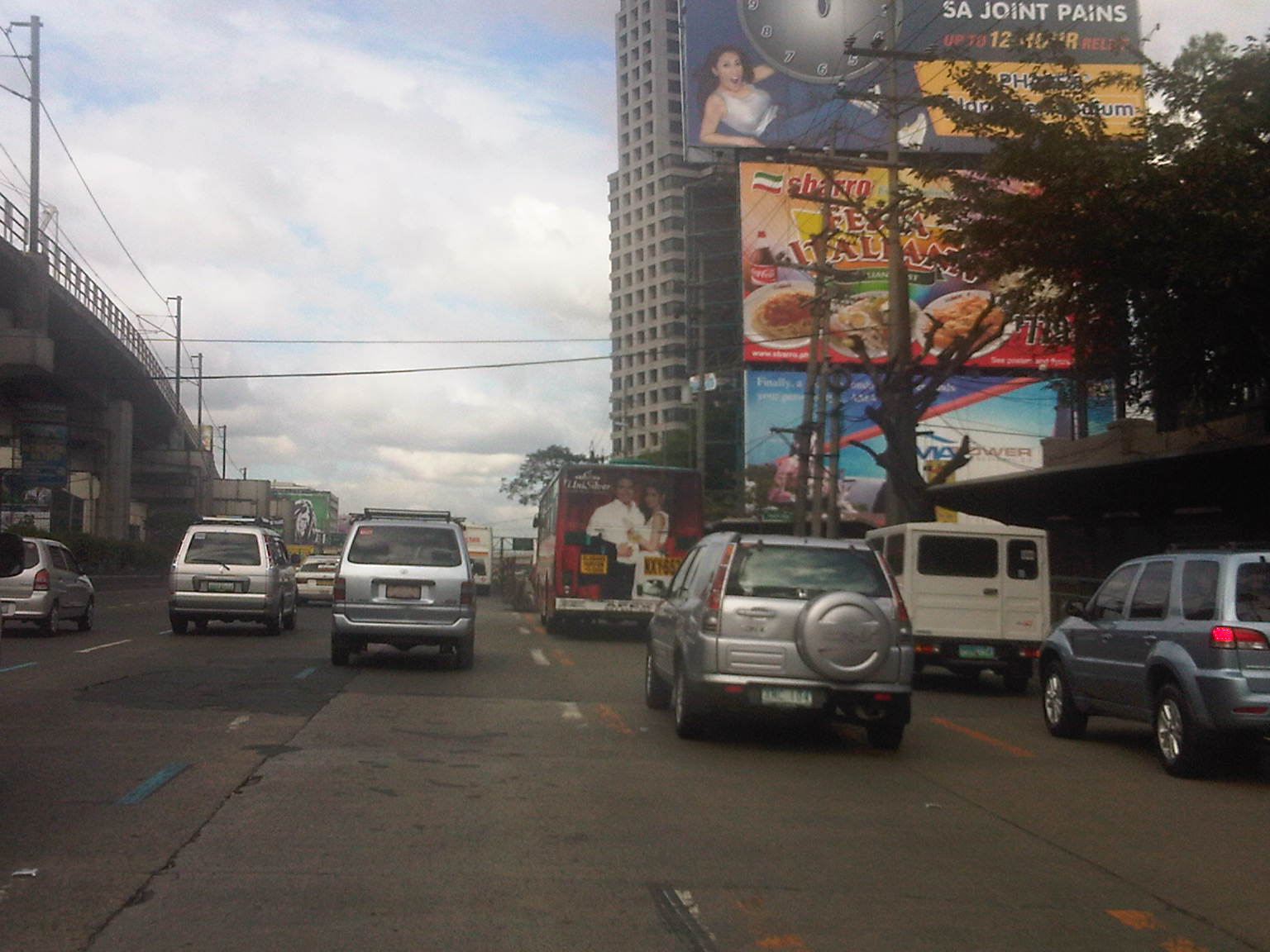 Light blue lane markings can be seen designating the 4th lane from the curbside for motorcycles. The yellow markings are for the two outermost lanes that are designated as bus lanes. While bus lanes are supposed to be for the exclusive use of buses, many private vehicles use the lanes throughout the day and are not apprehended by traffic enforcers for this encroachment.
 Sign for the motorcycle lane already installed along EDSA before the MRT Santolan Station as of February 9 – this photo was taken around 3 PM (not yet the afternoon peak period).
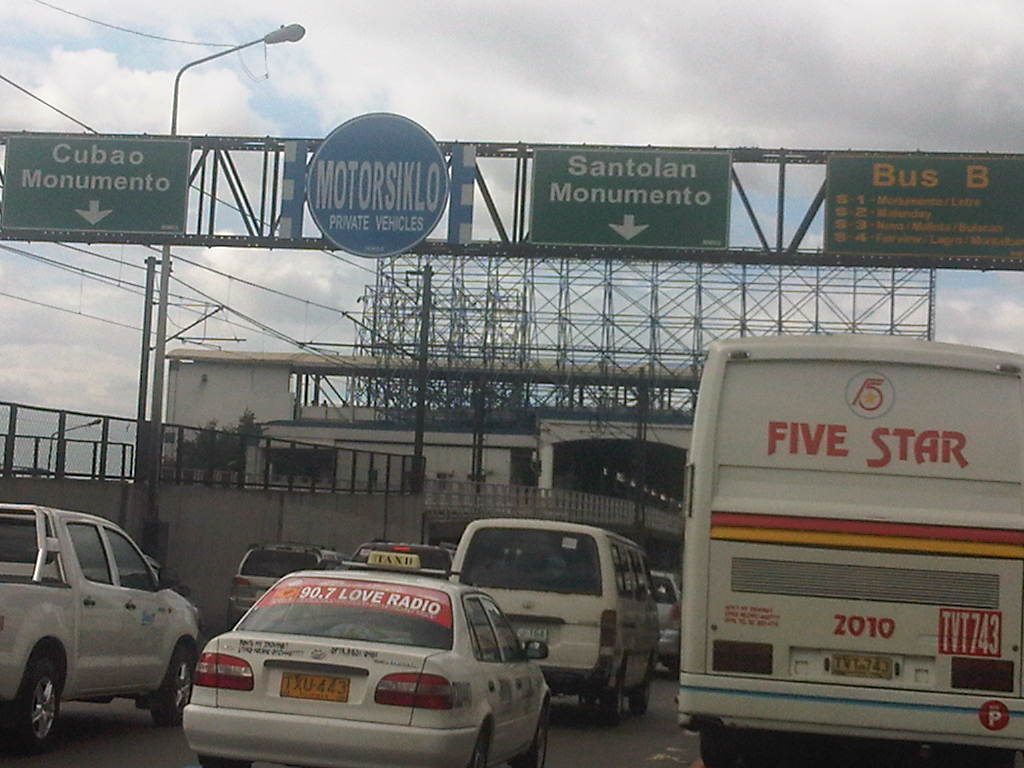 Close-up of sign for the motorcycle lane but with “fine print” indicating that the same lane may be used by private vehicles – herein lies the problem as private vehicles are sure to mix it up with motorcycles, with the high likelihood that riders will revert to lane splitting or using other lanes. This will be an enforcement nightmare.
 Motorcycle lane sign installed on pedestrian overpass between Aurora Blvd. and Kamias. Notice the provincial bus encroaching upon the adjacent lane designated for private vehicles.
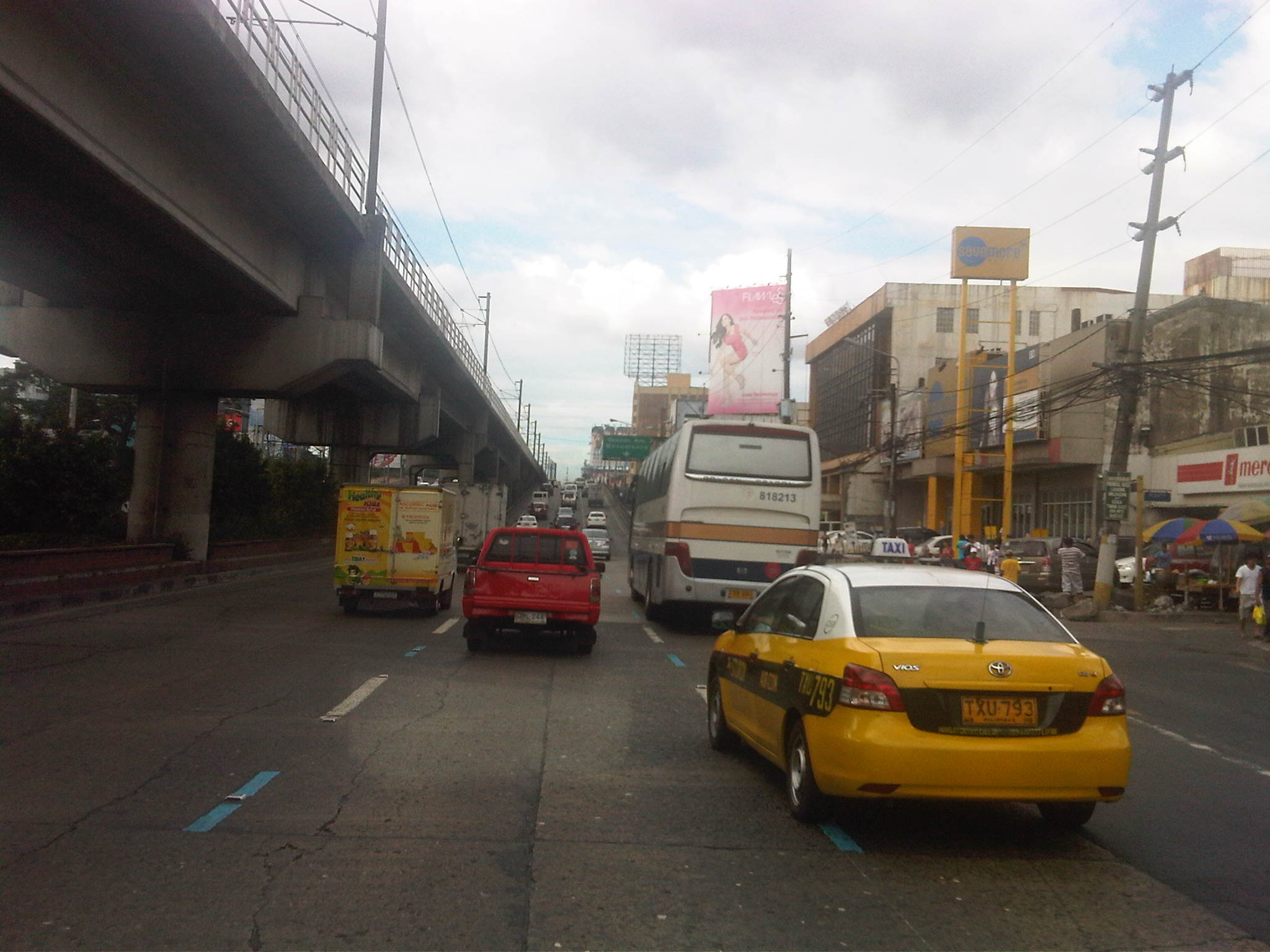 Motorcycle lane prior to the Kamias-East Avenue overpass along EDSA.
 The middle lane is designated as the motorcycle lane along the overpass
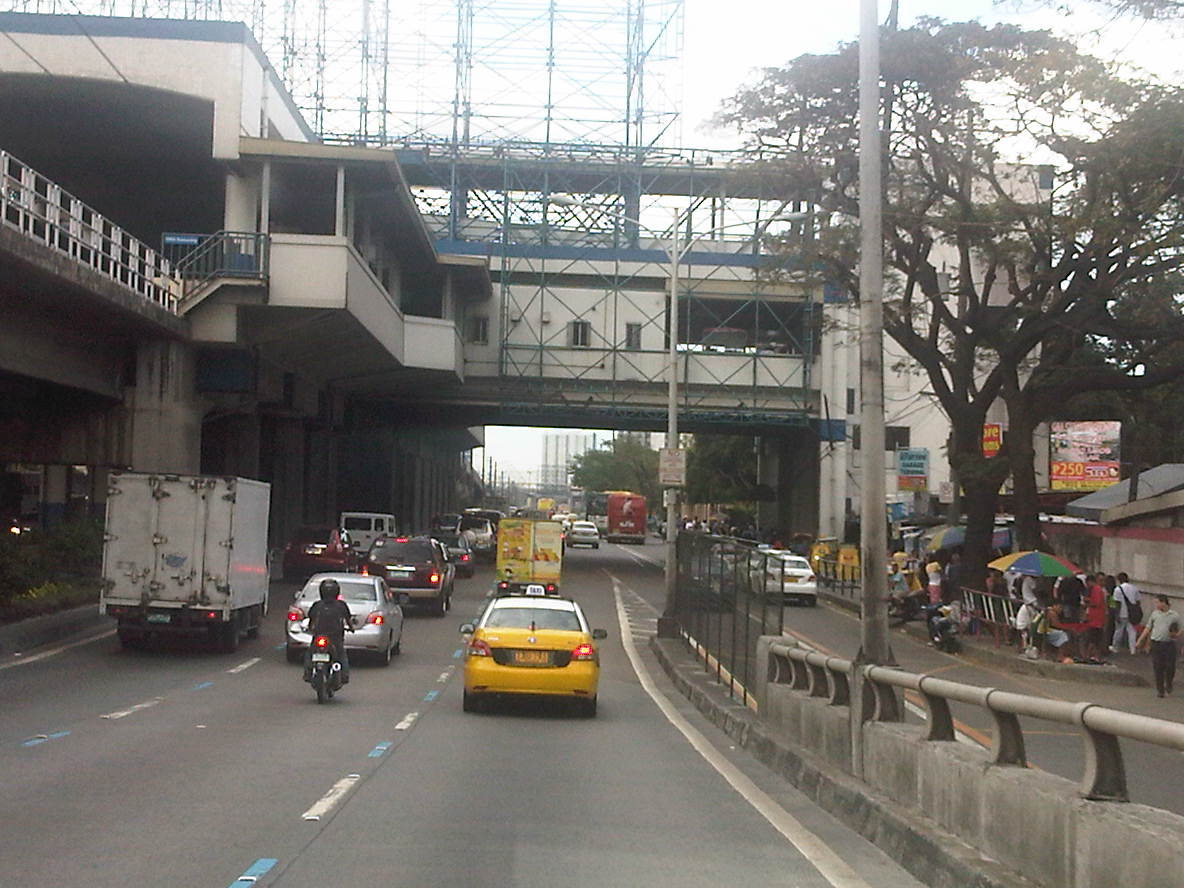 Motorcycle lane along EDSA beneath the EDSA-MRT GMA Station
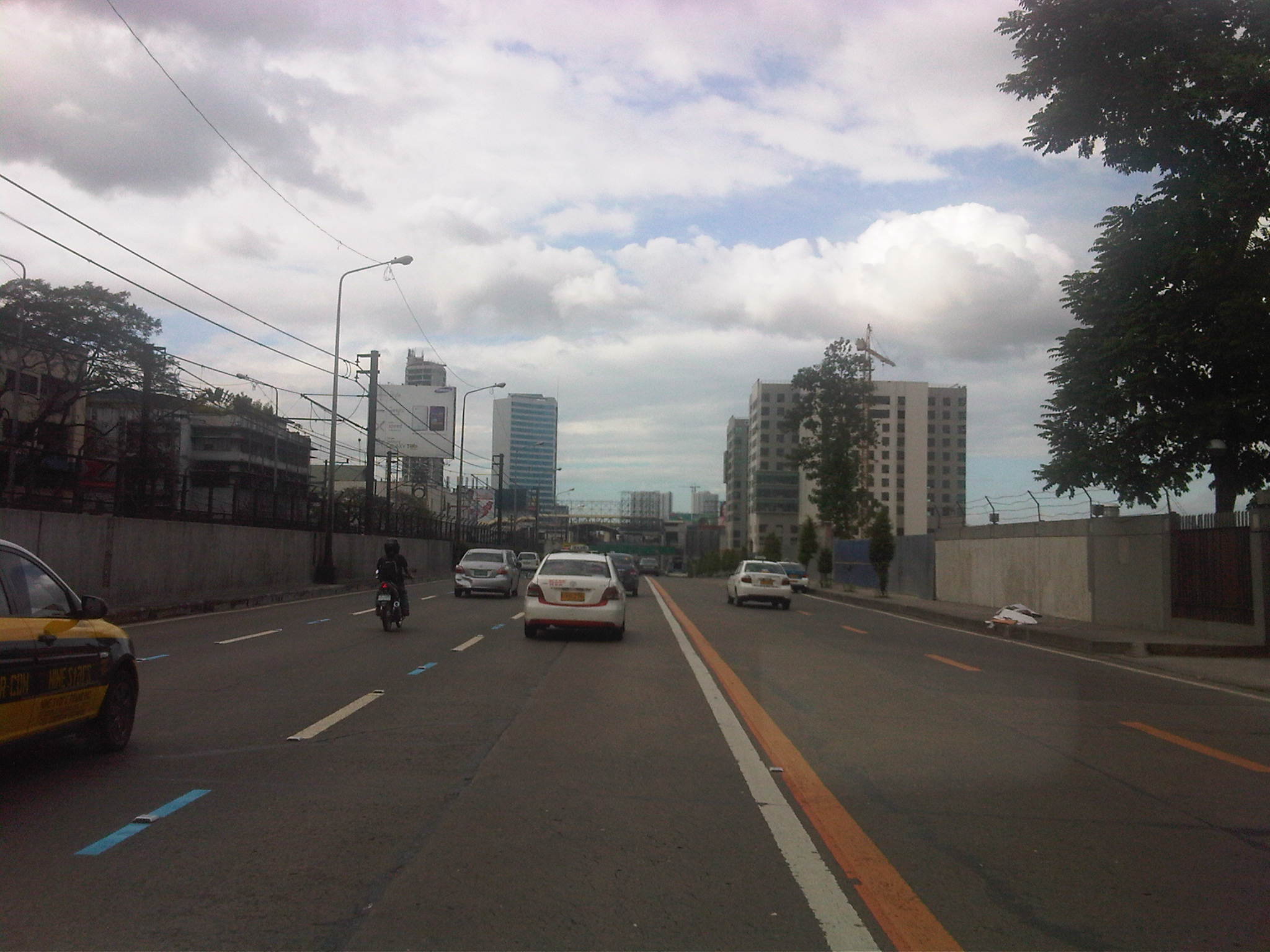 Bus and motorcycle lanes along EDSA past the the MRT GMA Station. Traffic is typically light along this stretch as many vehicles turn towards East Avenue or Timog Avenue.
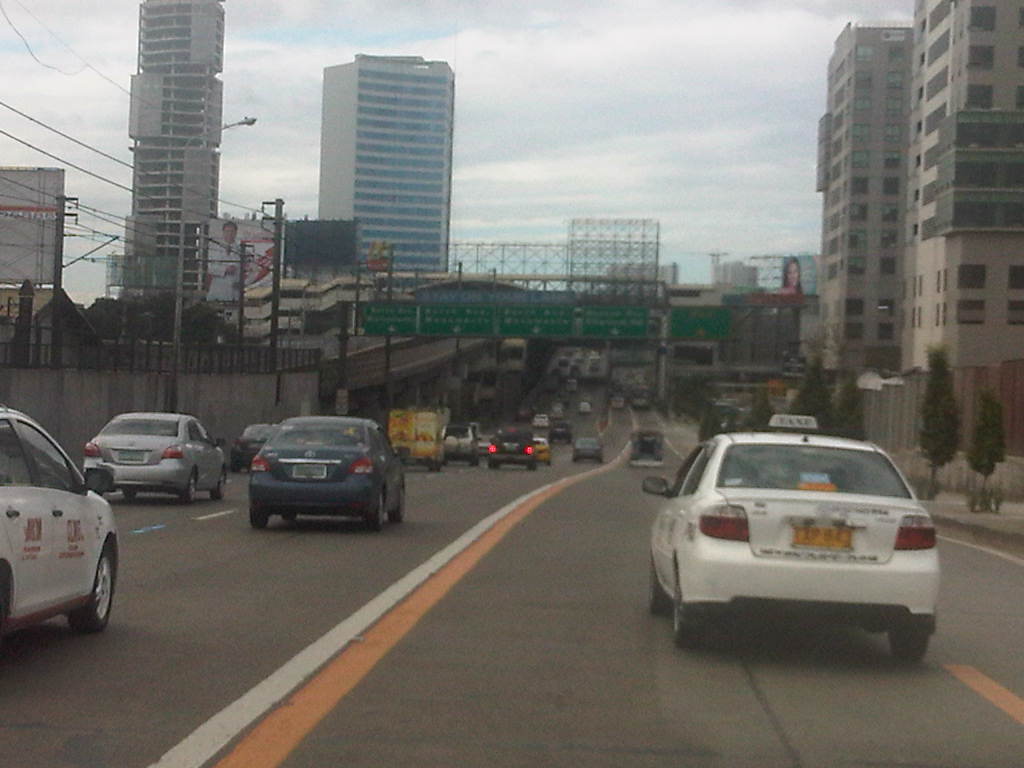 Typical light traffic between East Ave. and Quezon Ave. along EDSA northbound
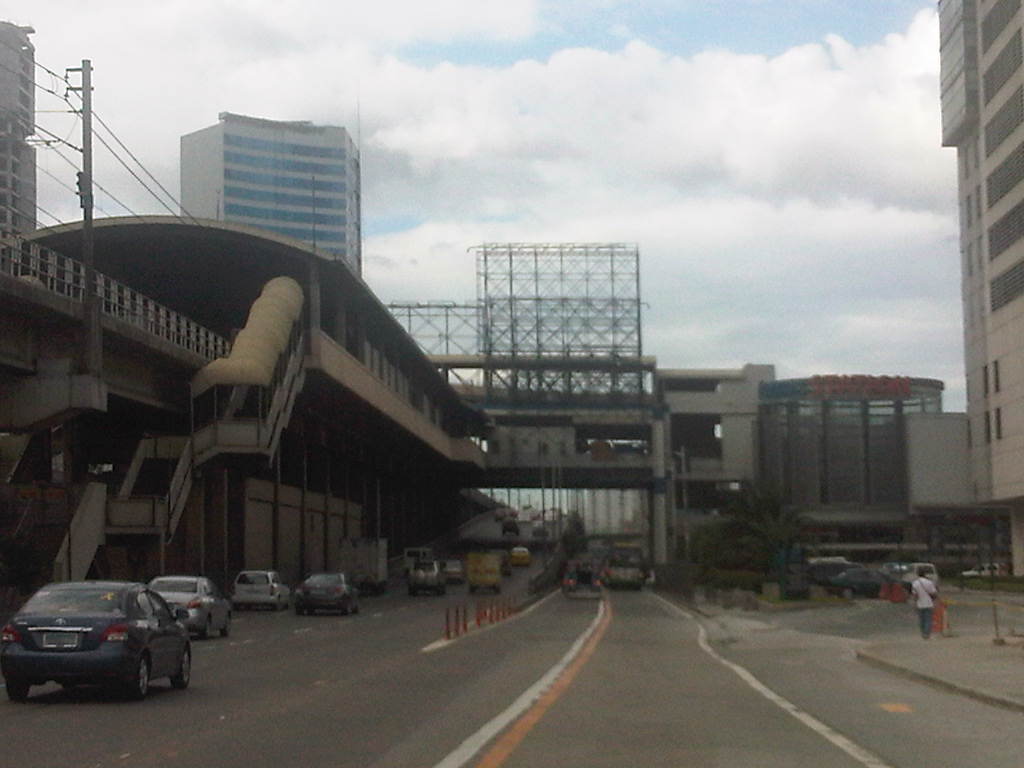 Motorcycle lane ascends the flyover crossing the junction with Quezon Avenue – the lane is again the middle of three lanes. That’s the EDSA-MRT Quezon Avenue station on the left and downstream in the photo and the Centris mall on the right.
If the implementation of the motorcycle lane scheme along Commonwealth is to be the basis for assessing the likelihood for success along EDSA, I believe that we can be expect significant behavioral changes along EDSA. For one, motorcycle riders along Commonwealth have been generally diligent in following the scheme. This can also be expected for most riders using EDSA should the MMDA be strict, firm and fair with their enforcement duties. Meanwhile, drivers of private vehicles have been becoming more aware and respectful of motorcyclists rights of way along Commonwealth and we are hopeful that such will eventually be the case along EDSA, although both enforcement and management will be much more challenging due to the sheer volume of vehicles involved and the more restricted space for traffic flow. It is to be expected that there will be many stubborn private vehicle drivers who even without the motorcycle lane are already encroaching on the bus lanes. Even more challenging will be the behavioral change required of buses given their propensity for reckless driving. I wanted to emphasize behavioral change here because I strongly believe that this is a critical factor for the improvement of traffic and transport in Metro Manila where many issues have roots on driver, rider and pedestrian behavior.
–
Passing the blame for our traffic mess
We like to bash and criticize public transport drivers for their behavior when we only need to look in the mirror to see who is part of the traffic problem in this country. A lot of private car drivers here and elsewhere in the country tend to attribute traffic congestion to buses, jeepneys, AUVs and taxis while practically washing their hands off the congestion and reckless driving habits that we see everyday along Philippine highways and streets. Many tend to think that only PUV drivers are to blame for our traffic mess when in reality and data-wise there are surely more private traffic on our roads compared with public. Such statistics including mode shares for both vehicular and person trips along major corridors in Metro Manila I will share in another post.
I drive from my home to the office and back almost everyday and I have observed driving behavior for much of my life including the times when I’m in cities in other countries. PUV drivers to me are more predictable than private car drivers in this country. In fact, we can know for sure that PUV drivers will weave their vehicles in traffic and we will always brace ourselves for the aggressive driving every time we encounter PUVs. Such errant behavior, of course, could have been addressed by a stricter and more reliable licensing system for drivers. But that’s another story altogether that’s worth an entire article.
Meanwhile, I share the observation of one friend that many SUV or high-end vehicle drivers “tend to drive like outlaws.” I had articulated in an interview before that many young drivers (and older ones as well) tend to imagine themselves as race car drivers – and proceed by trying to out-speed and/or out-maneuver other drivers the way stuntmen do in the movies. This you can observe whether along a congested street or a free flowing expressway. Evidence to this includes all the road crashes involving private vehicles (including motorcycles) that would certainly out-number those involving PUVs. One thing not going for the PUVsm, however, is that they happen to carry more passengers and therefore more responsibility as a requirement of their being issued franchises. Another proof to irresponsible behavior are postings of claims and photos on social media showing speedometers exceeding speed limits. And yes, there are those who routinely and consciously violate speed limits along expressways for them to be captured by speed cameras. The shots are then used as bragging rights attesting to the driver reaching a certain speed with his/her vehicle.
This morning, I almost got sideswiped by a car who cut my path to make an abrupt right turn to enter the gate of a major private university. I thought I had a clear path to change lanes as I estimated a good distance from the same vehicle who was trailing me on the other lane. Instead, the vehicle accelerated and with horns blaring asserted his right to the lane. I had to use my defensive driving skills to avert a collision. Seconds later, he was blocking my path as he made a right turn at the university’s gate. I could only shake my head in frustration with what happened while an MMDA enforcer looked helplessly as a witness to the incident. A few minutes later, a couple of SUVs coming from a posh subdivision along Katipunan cut our path to make an illegal left turn at a U-turn slot. Vehicles from this subdivision do so regularly and with impunity as if their passengers were more blessed and more important persons than the rest using this major highway.
The examples above are just some of what we usually encounter everyday while traveling or during our regular commutes. These are certainly being caught on video by the MMDA cameras spread out and observing traffic along major roads in Metro Manila. These same drivers might be the first to throw the proverbial stone to their fellow drivers whom they have judged to have committed sins of recklessness when the truth is that they themselves are guilty and only have to look in the mirror to see for themselves who are really to blame for our dangerous and congested roads. Truly, what’s wrong with traffic in this country may not necessarily be with the way we manage traffic or enforce rules and regulations. It might just be the nut behind the wheel that’s defective, after all.
–
Road crashes along Katipunan Avenue
Katipunan Avenue in Quezon City has claimed a lot of lives and injured a many more people over the past years particularly due to aggressive and often reckless driving or riding by motorists using the road. Especially dangerous is the section stretching from the flyover to the U-turn slot just after Ateneo’s Gate 2 since many vehicles tend to (over)speed from the wide overpass and unto the section fronting Ateneo De Manila University. On the other side of the road, motorists also tend to speed up towards the overpass, unmindful of vehicles shifting from the outer lanes of the road towards the U-turn slot. In many cases, some vehicles cross from the establishments along Katipunan towards the U-turn slot. These conditions significantly increase the likelihood of occurrence of road crashes.
This morning, I noticed during my drive to UP that the concrete barriers of the U-turn slot along Katipunan northbound were again witnesses to another crash. The driver was most likely speeding if not flying from the overpass and miscalculated on his/her maneuver upon discovering the barriers along his/her path as he/she descended the overpass. It was more especially dangerous this morning as I can imagine the pavement conditions as well as the visibility given the heavy rains pouring around Metro Manila since last night. I took a quick photo of the damaged vehicle just when a truck was maneuvering in preparation to towing the vehicle.
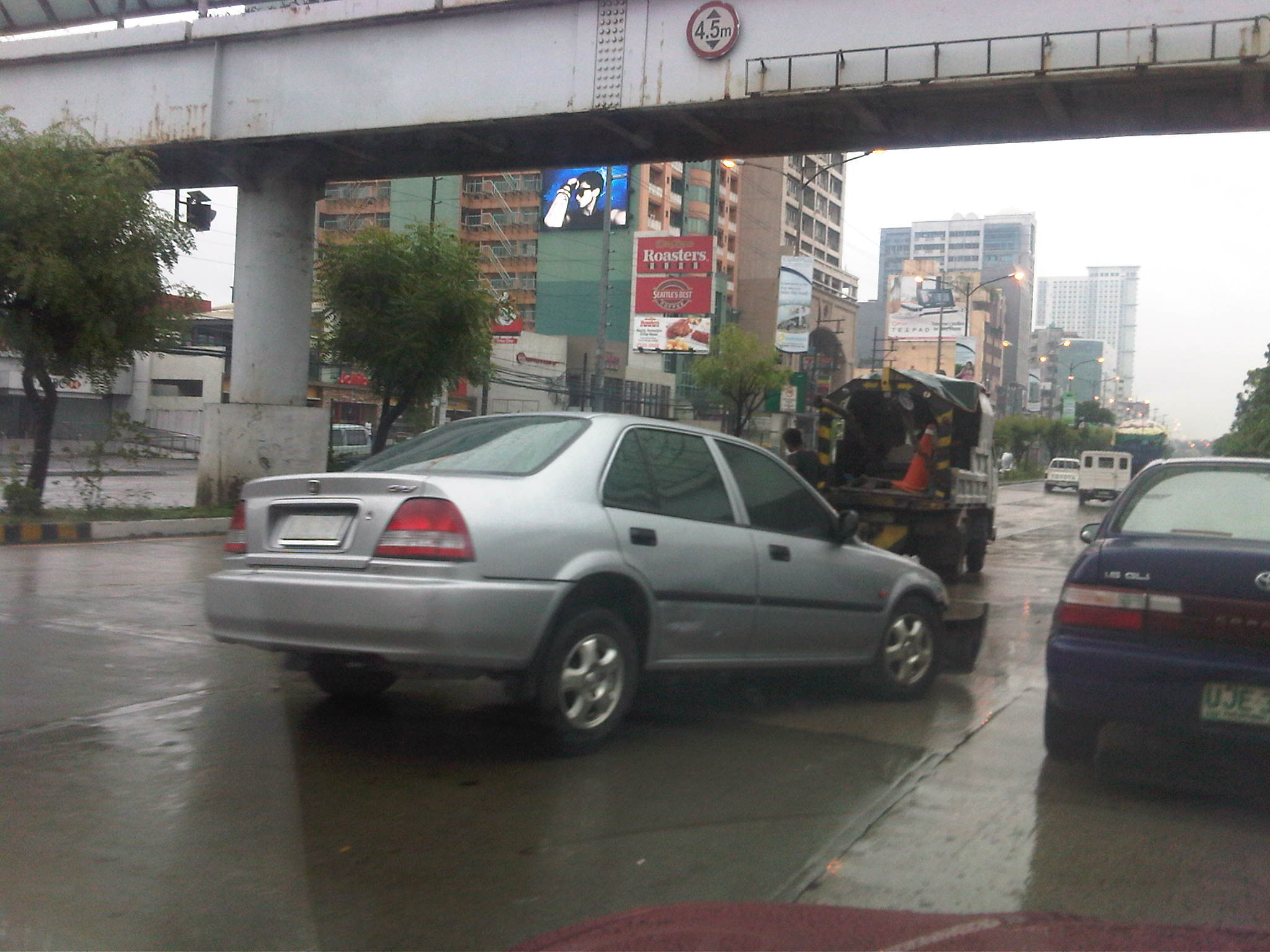 Honda City with damaged front bumper – the vehicle hit one of the concrete barriers of the U-turn slot with a trajectory indicating it apparently came from the direction of the overpass. After passing the vehicle, I saw that the left front wheel is already missing and apparently destroyed when the car hit the barrier. The damage to the car indicated tremendous impact and I just hope the driver and other occupants (if any) were wearing their seatbelts when the car hit the barrier. It would have helped also if the car had airbags. These safety devices are not standard issue in many if not most vehicles in the Philippines allowing dealers to make airbags optional and giving the buyer the false perception of getting the vehicle with a cheaper price.
When will motorists learn from such incidents? When and how will the MMDA or whoever is in-charge finally, effectively and decisively address this issue? Is it simply a case of speeding and something that can be addressed by enforcing speed limits? Or does the infrastructure and layout encourage such behavior among motorists? Perhaps we should rethink how we design and place U-turn slots and the barriers we use in the scheme. Otherwise, we will just see the same scene happening all over again at the cost of more lives and limbs.
–
Motorcycle lanes – a few comments
The Metropolitan Manila Development Authority (MMDA) recently established motorcycle lanes along Commonwealth Avenue in Quezon City and Macapagal Boulevard in Pasay City. The main intention is to reduce crashes involving motorcycles by attempting to segregate them from other vehicles in traffic. Following are a few photos I took this afternoon along Commonwealth where I observed the MMDA painting blue lines to mark the motorcycle lane. In this case, the lane is the 4th from the outer edge (shoulder) of the highway.
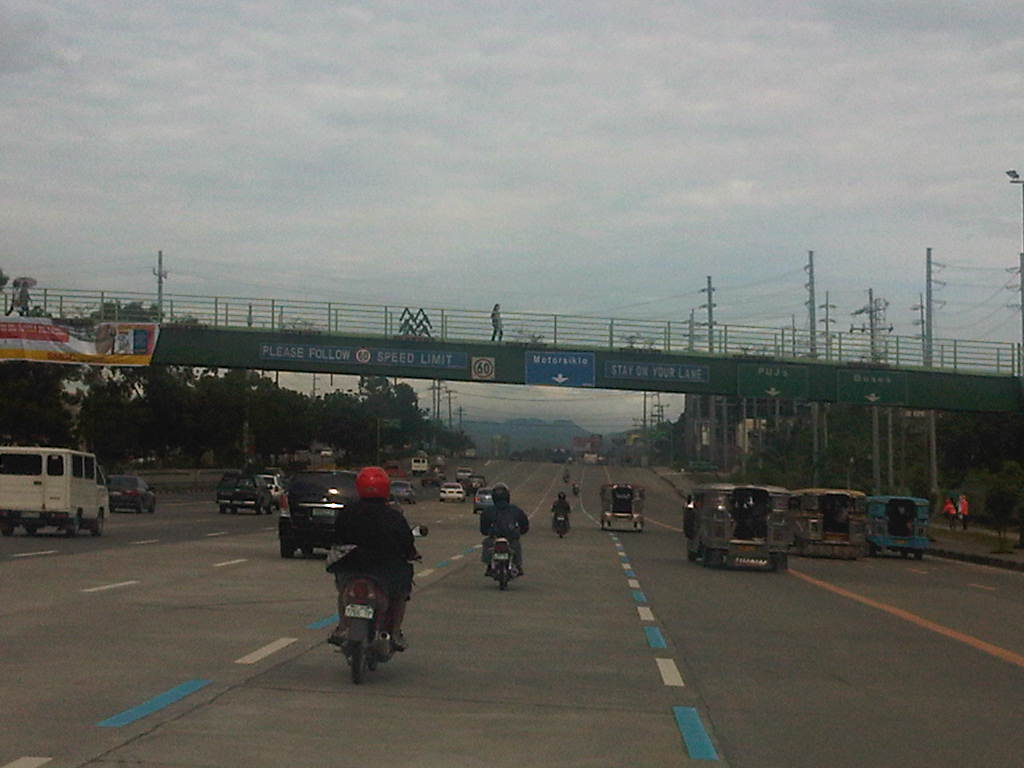 Newly painted blue lines mark the motorcycle lanes. Photo shows riders following the new policy, probably knowing that getting apprehended will lead to a 15-minute lecture on motorcycle safety. Such a penalty will only be applicable this week when the MMDA is implementing a dry-run of the policy. From Monday next week, the penalty would be a 500-peso fine for every apprehension.
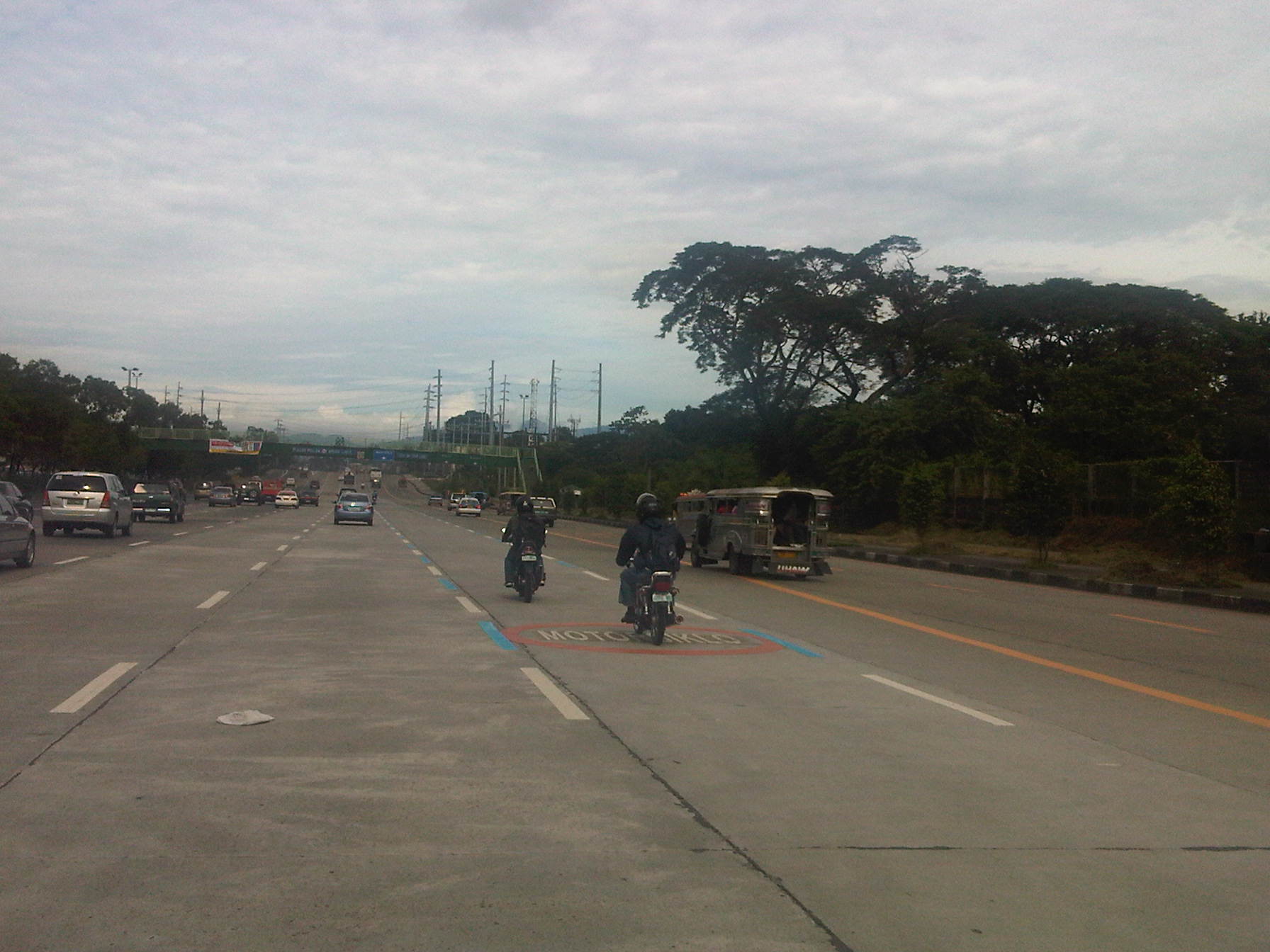 Pavement markings for the motorcycle lane along Commonwealth. Note that the lane is quite close to the lanes designated for public utility vehicles like jeepneys and buses. This situation creates a high potential for the occurrence of crashes involving motorcycles and PUVs. Of particular concern is the behavior of PUVs, especially buses that tend to encroach upon the lanes to the left of the PUV lanes including the motorcycle lane. Another issue is the fact that private vehicles are allowed along the motorcycle lanes and not just for maneuvering. I share the opinion of riders that motorcycle lanes should be for motorcycles only.
Undergraduate research topics on transportation 2011-2012
The Institute of Civil Engineering of the University of the Philippines Diliman is conducting its undergraduate research colloquium today. Expected to present are students who are either at the proposal stage or completing their research. Topics being completed are the following:
- Analysis of Road Accidents Involving Children Below 15 Years Old
- Analysis of the Impact of Billboards on Road Accidents Along EDSA
- Assessment of the Parking Management System in Shopping Malls
- In-Depth Comparative Analysis of Female and Male Bus Drivers for Public Transport in Metro Manila
Meanwhile, topics being proposed are the following:
- Accident Risk by Mode of Public Road-Based Passenger Transport in Metro Manila
- Analysis of Operations of Electric Tricycles
- Applicability of Unconventional Transit Systems in Selected Metropolitan Areas in the Philippines
- Assessment of the Philippine National Railways Commuter Line Services
- Assessment of the Re-Introduction of Traffic Signal at the University Avenue-Commonwealth Avenue Intersection
- Development of a Public Transport Information System for the UP Diliman Campus
- Estimating Ridership for a Proposed Public Transport System for UP Diliman
- Measuring Delay Caused by U-turn as Traffic Control Facility
- Quantitative Assessment of Road Safety Initiatives Along EDSA
- Travel Time Estimation of Jeepneys: The Case of University of the Philippines Diliman, Quezon City
The coverage of undergraduate research this year concerns mainly public transportation and road traffic safety but with one topic dealing primarily with traffic engineering. It is hoped that these researches would be able to answer certain nagging questions pertaining to transport and traffic particularly where safety and efficiency are concerned. In the case of topics on mass transport such as those on the PNR commuter services and the applicability of unconventional systems such as the automated guideway transit (AGT) and the monorail, the potential outcomes may actually be able to address questions that concern alternatives or options to road-based transport. This is essential and presently a very relevant issue given the shortcomings in transport infrastructure in many Philippine cities and the current efforts exploring the possibility and feasibility of systems that will alleviate congestion and address travel demand. Overall, such researches are targeted towards contributing to the body of knowledge that should serve as inputs to the formulation of solutions suitable for the Philippine setting.
Bus involvement in road crashes
The LTFRB recently release lists of bus companies that are in the top ten . Versions of the list may be found in this article from the Philippine Daily Inquirer, The Manila Times, and The Philippine Star.
From the Inquirer:
“…The list is broken down into three categories—number of deaths, injuries and property damage—and is based on accident reports submitted by all public utility buses to the LTFRB. The lists published by the LTFRB cover the whole of 2010 and the first half of 2011.
Lists of the 10 most dangerous bus operators in Metro Manila:
Based on the number of deaths (passengers and bus personnel)
1. Admiral Transport
2. Nova Auto Transport
3. JAM Liner
4. Gassat Express
5. Joyselle Express
6. Philippine Corinthian Liner
7. Rainbow Express Inc.
8. Alberto Garating
9. Alps the Bus
10. EM Transit ServiceBased on the number of injured (passengers and bus personnel)
1. Admiral Transport
2. Nova Auto Transport
3. AM Liner
4. Gassat Express
5. Joyselle Express
6. Miami Transport
7. Pascual Liner
8. Philippine Corinthian Liner
9. Rainbow Express Inc.
10. CEM Transit ServiceBased on damage to property
1. Don Mariano Transit
2. Nova Auto Transport
3. Gassat Express
4. Miami Transport
5. Pascual Liner
6. Rainbow Express Inc.
7. Ropal Transport
8. A&B Liner
9. GELL Transport
10. CEM Transit Service”
The above are generally companies plying routes in Metro Manila. Meanwhile, the list mentioned in another article, this time from the Manila Times, identifies provincial bus companies that frequently got involved in road crashes:
“…Topping the LTFRB list is the Victory Liner, Inc. plying routes from Manila to Isabela, Bataan, Zambales and Benguet with 31 accidents from 2009 to 2011; 15 drivers died from these accidents.
Second-placing Vallacar Transit Corporation had 26 accidents resulting in the death of six of its drivers. Silver Shuttle and Tours, Inc. is third with 24 accidents and 5 driver deaths
Fourth in the list, United Land Transit and Bus Company has routes from Quezon, Leyte and Samar with 18 cases of accidents killing four of its drivers.
Philtranco came in fifth with routes from Luzon and Visayas with 15 accidents and three driver deaths followed by the Five Star Bus Company Inc. and Valisno Express that has 14 road accidents each…”
While the reports above mention few statistics, there are actually more detailed information with the LTFRB. Such data have been demanded from them by Congressional committees “investigating” public transport franchising. In one meeting the LTFRB mentioned that it is coordinating with the MMDA in compiling the number of traffic violations for each bus company based on the MMDA’s records. Their preliminary results have shown that bus companies have been involved in thousands of violations! Perhaps these should be proof of the aggressiveness or recklessness of drivers in general? And I dare ask if these can be used to weed out public transport drivers who should have no right conveying the general public?
I just wonder what would be the statistics for PUJs, tricycles, trucks and private vehicles. These would be interesting to analyze in order for us to formulate better strategies and tactics for curbing road crash incidence, fatalities and injuries.
 Caught (up) in traffic