
Home » Transport Planning (Page 12)
Category Archives: Transport Planning
On urban planning resources or references for the pandemic
I am posting for reference this article compiling helpful references for urban planning in the context of the COVID-19 pandemic. Most of the references listed are based on the US experience and I am sure there is already a wealth of information coming from other countries as well including those that have been successful in mitigating the effects of the pandemic.
Brasuell, J. (2020) “Urban Planning Resources for COVID-19”, Planetizen, https://www.planetizen.com/node/109238?utm_source=newswire&utm_medium=email&utm_campaign=news-05142020&mc_cid=2e155996b6&mc_eid=9ccfe464b1 [Last accessed: 5/16/2020]
–
On the proposed single bus route along EDSA
A friend posted this on social media as news came out about the government’s statement on its considering a single bus route for EDSA. EDSA, of course, is Circumferential Road 4 and perhaps the busiest road in Metropolitan Manila in terms of volumes of people and vehicles traversing this road. Public transportation along EDSA is mainly by buses and the MRT Line 3. Line 3’s capacity is already diminished despite the high demand for it mainly because of the number of train sets that are currently in operation. Buses, meanwhile, are split among the many routes converging along much of EDSA. These routes are shown in the map on the left where you can see the overlapping routes that have various end points.


Of course, it is best to read the Final Report of this study. That way, one is able to see the overall context for this section that is part of the concluding part of the report. I recall that the consulting team from UP was able to map the routes of other public utility vehicles like jeepneys and UV Express from that time. Perhaps the DOTr still has a copy somewhere? The NCTS Library in UP Diliman is currently closed so one may have to search the internet first for a copy of the study or perhaps snippets of it here and there. Perhaps related to this is a proposal to revive (or maybe the right word is ‘resurrect’?) the now defunct Metro Manila Transit Corporation or MMTC that used to dominate EDSA and other major roads in direct competition with the few private bus companies during its heydays as well as the jeepneys.
–
On the DOTr GCQ Guidelines for Public Transportation – Road Sector
I just wanted to post, share and document here the DOTr’s Guidelines for Public Transport Operations for areas under General Community Quarantine (GCQ). The images are self explanatory so I will not discuss these nor will I offer a critique at this point. The following are public and posted on DOTr’s social media pages (i.e., Facebook) and have been shared and circulating among the public. I also post it here for future reference as I do to many other references like articles and infographics.

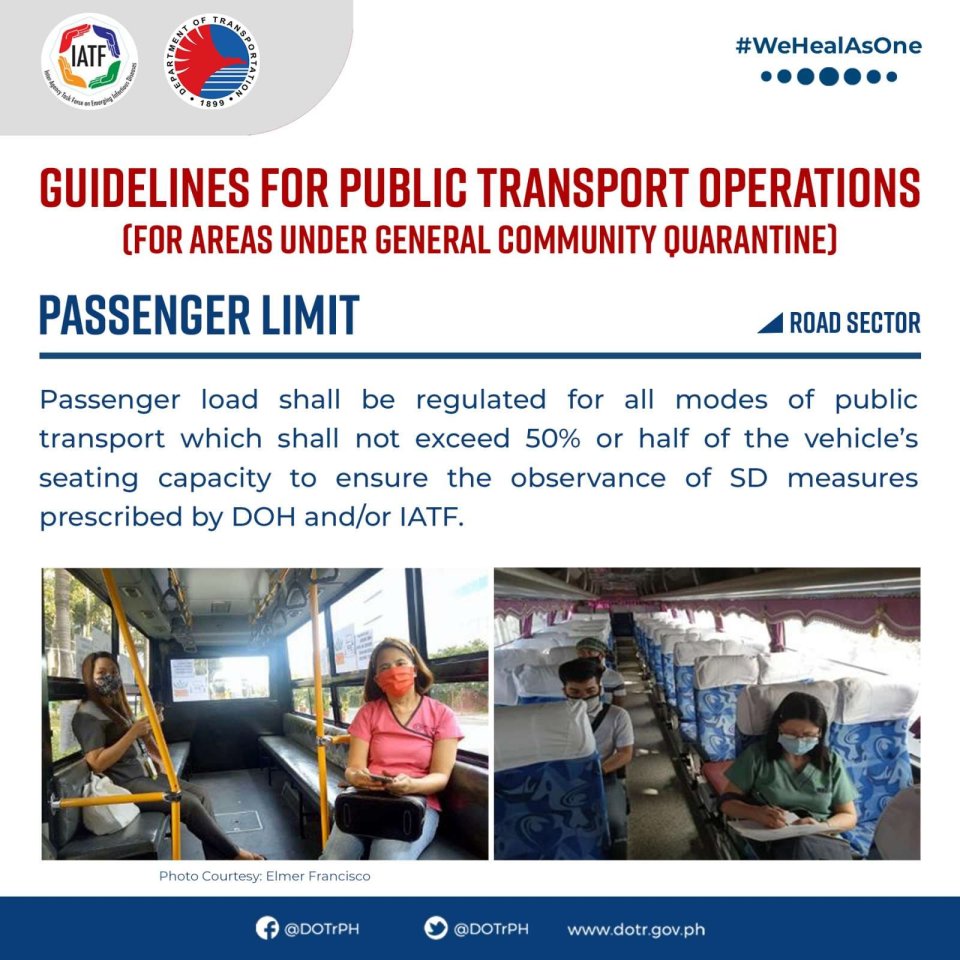


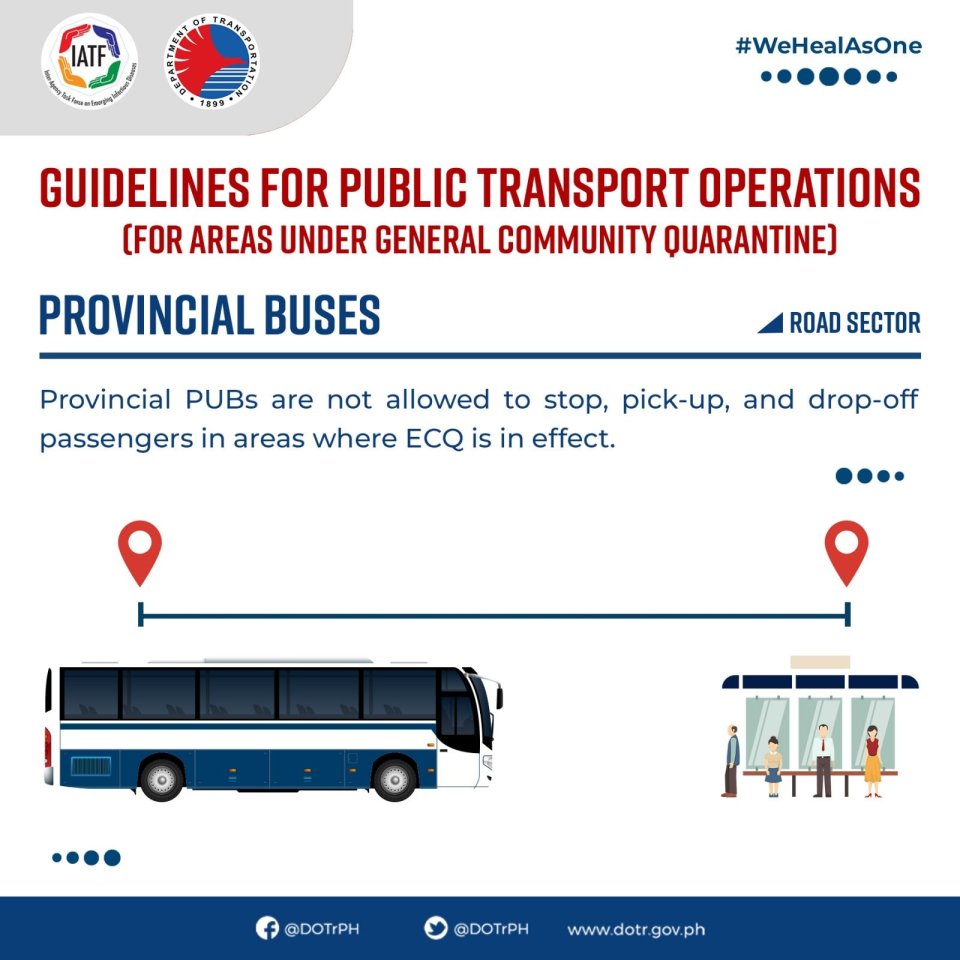
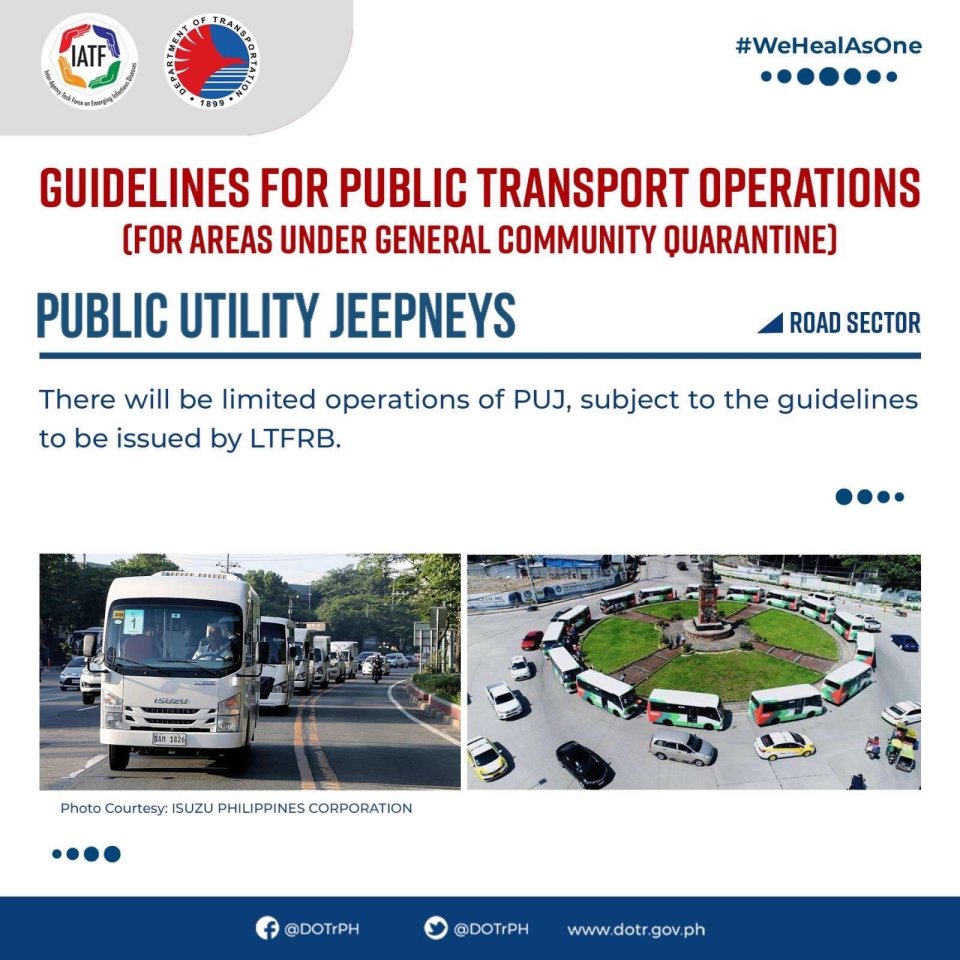
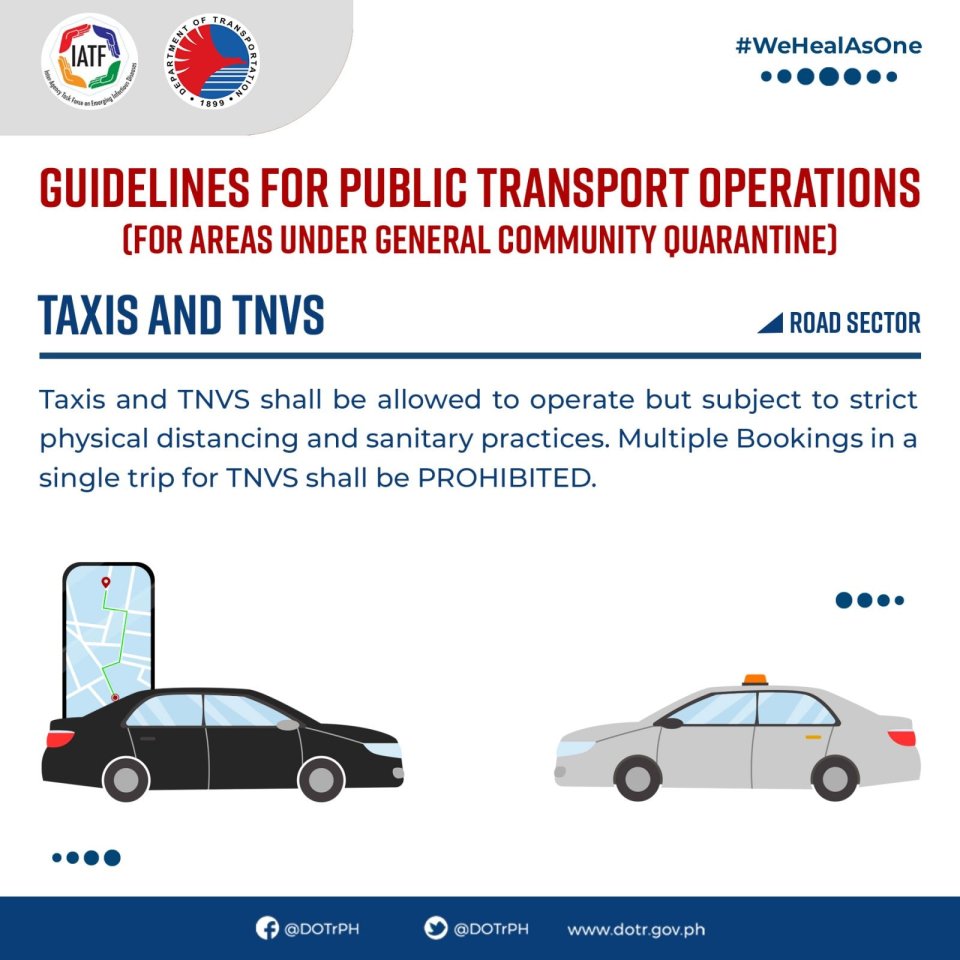

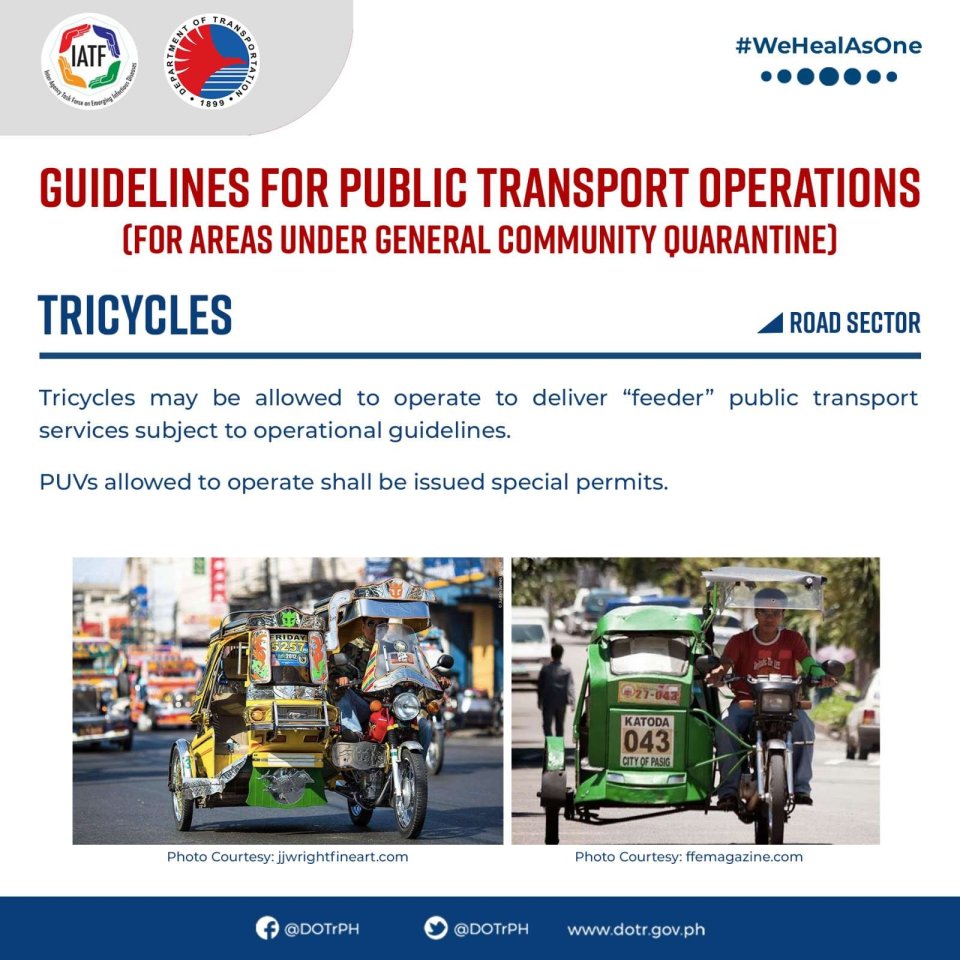


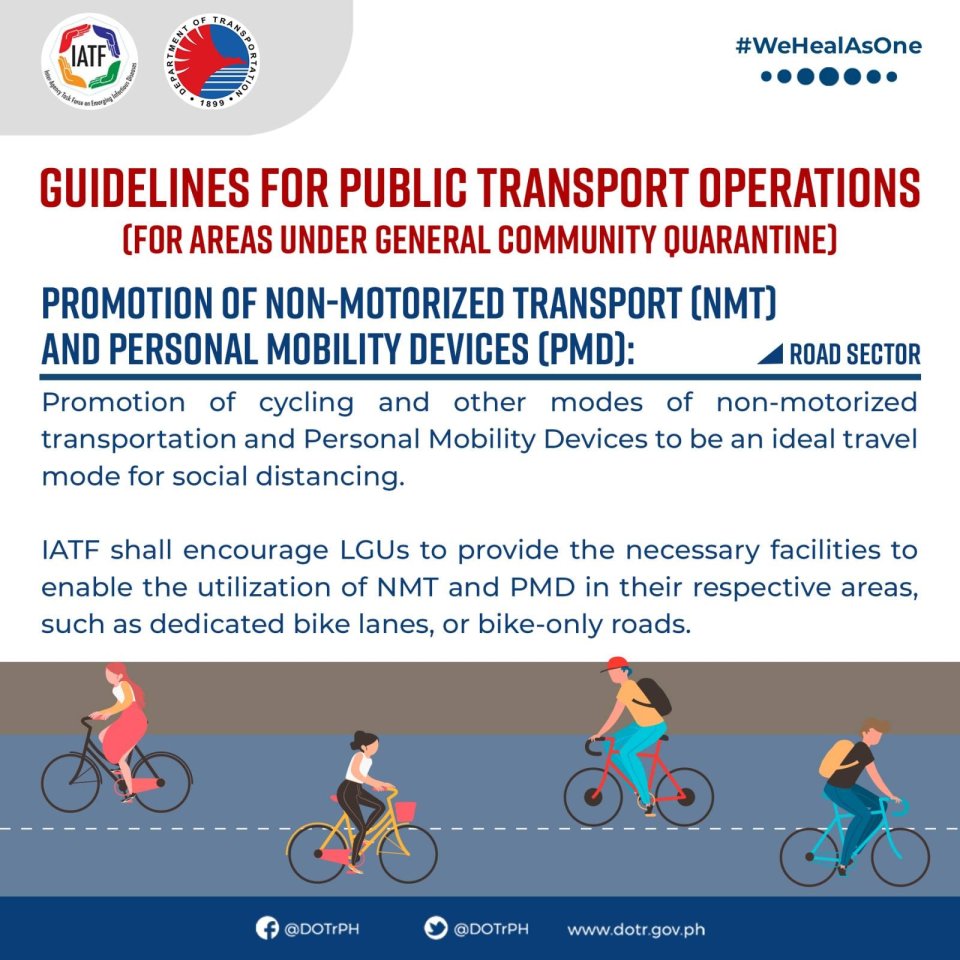
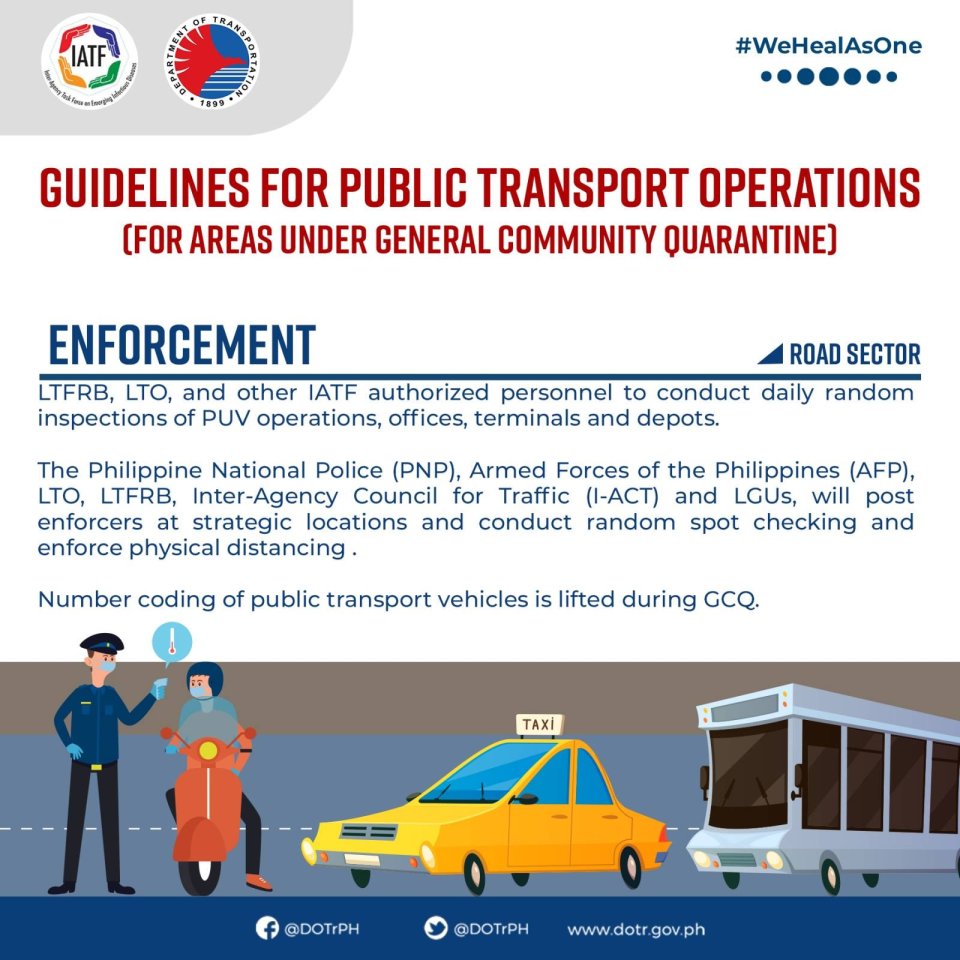
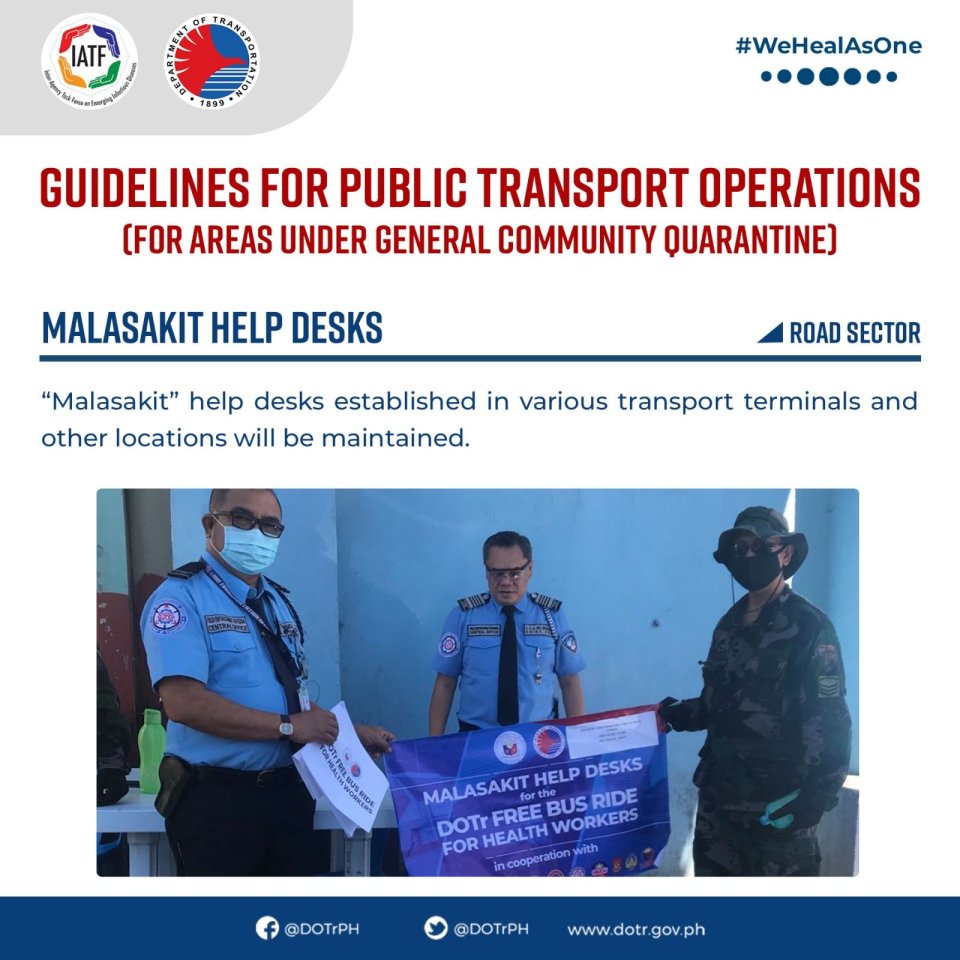
–
Reference on Bicycle Facility Preferences and Increasing Bicycle Trips
There are many references that are free for downloading. These include the latest publications from the National Academies Press that includes outputs from the National Academies of Sciences, Engineering and Medicine. I am sharing here and posting also as a reference for me to return to a new publication from the National Cooperative Highway Research Program:
NCHRP Research Report 941: Bicyclist Facility Preferences and Effects on Increasing Bicycle Trips by Watkins, Clark, Mokhtarian, Circella, Handy and Kendall.
The research was supported by the American Association of State Highway and Transportation Officials (AASHTO) in cooperation with the Federal Highway Administration (FHWA).
–
On car-shaming and reducing car use
Here is another article I am sharing (re-sharing?). I have seen or read a lot of posts on social media about how we should not go back to the car-centric traffic before the Enhanced Community Quarantine (ECQ) and its variations. I do agree with this point. However, I take reservation about how some people seem to be resorting to car-shaming rather than be more proactive and progressive about coming up with strategies and/or plans that I hope would be evidence-based or supported by valid data. As the article states, “it takes more than car-shaming to change car use”:
Jaffe, E. (2020) “It takes more than car-shaming to change car use”, Medium, https://medium.com/sidewalk-talk/it-takes-more-than-car-shaming-to-change-car-use-107e28ccb2cf [Last accessed: 4/29/2020]
A key message from the article: “People are most open to changing their travel habits during major life events, such as a move. But even a well-timed message isn’t enough.” Perhaps the opportunity is here now to reform our transportation system. But that will take a lot of will or effort from all sectors most especially the national agencies (e.g., DOTr, DPWH) and local governments who have the authority and responsibility to implement changes. These changes include the assignment of exclusive lanes for bicycles, public transport and logistics while restricting car use. There are also other elements that need to be in place as we transition into the so-called “new normal” and so there will be a lot going on among the sectors or parties collaborating or interacting for transportation. Hopefully, there are context-sensitive strategies that will be adopted and implemented in order for everyone to transition more efficiently and effectively. And as they say…life goes on.
–
Public Transport Recommendations of the UP COVID-19 Pandemic Response Team
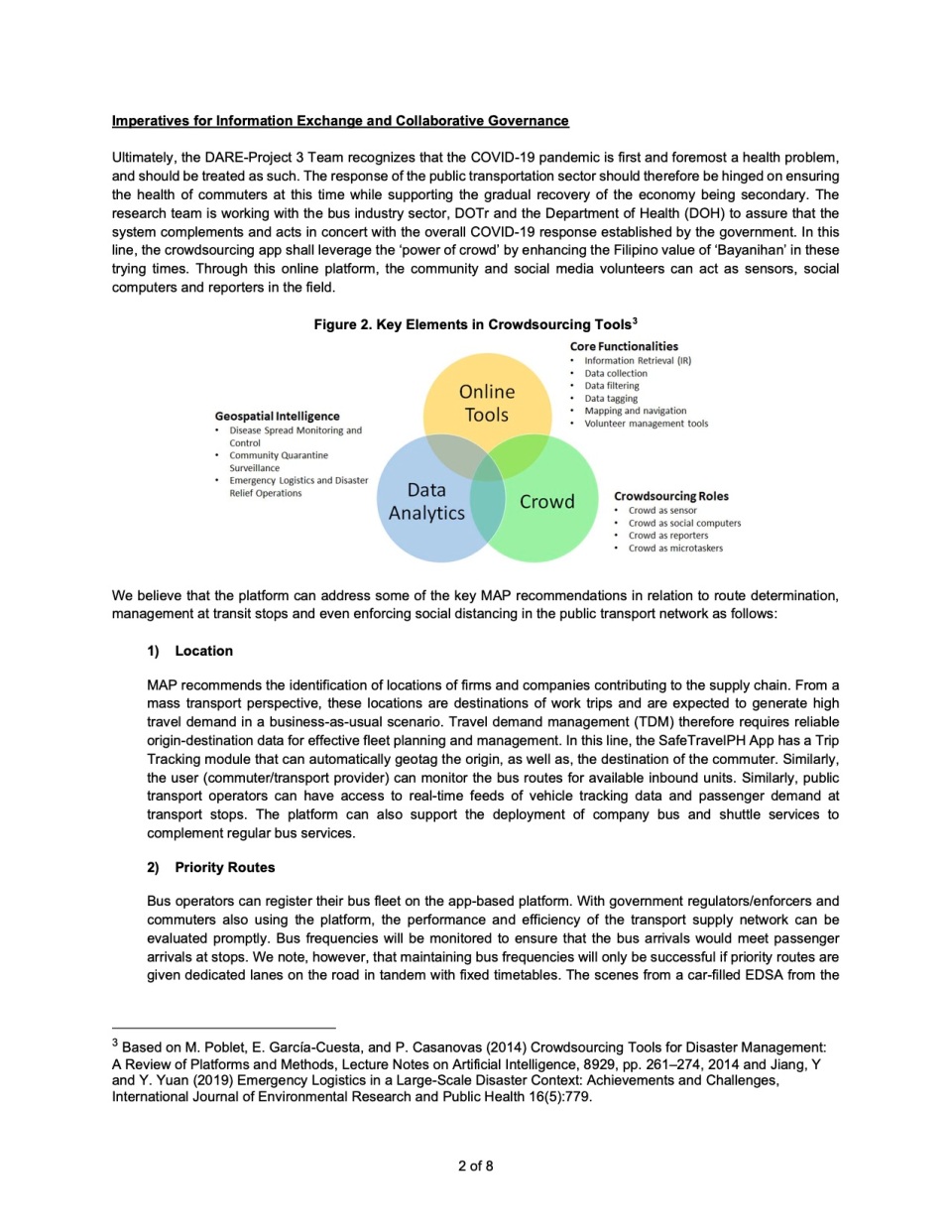
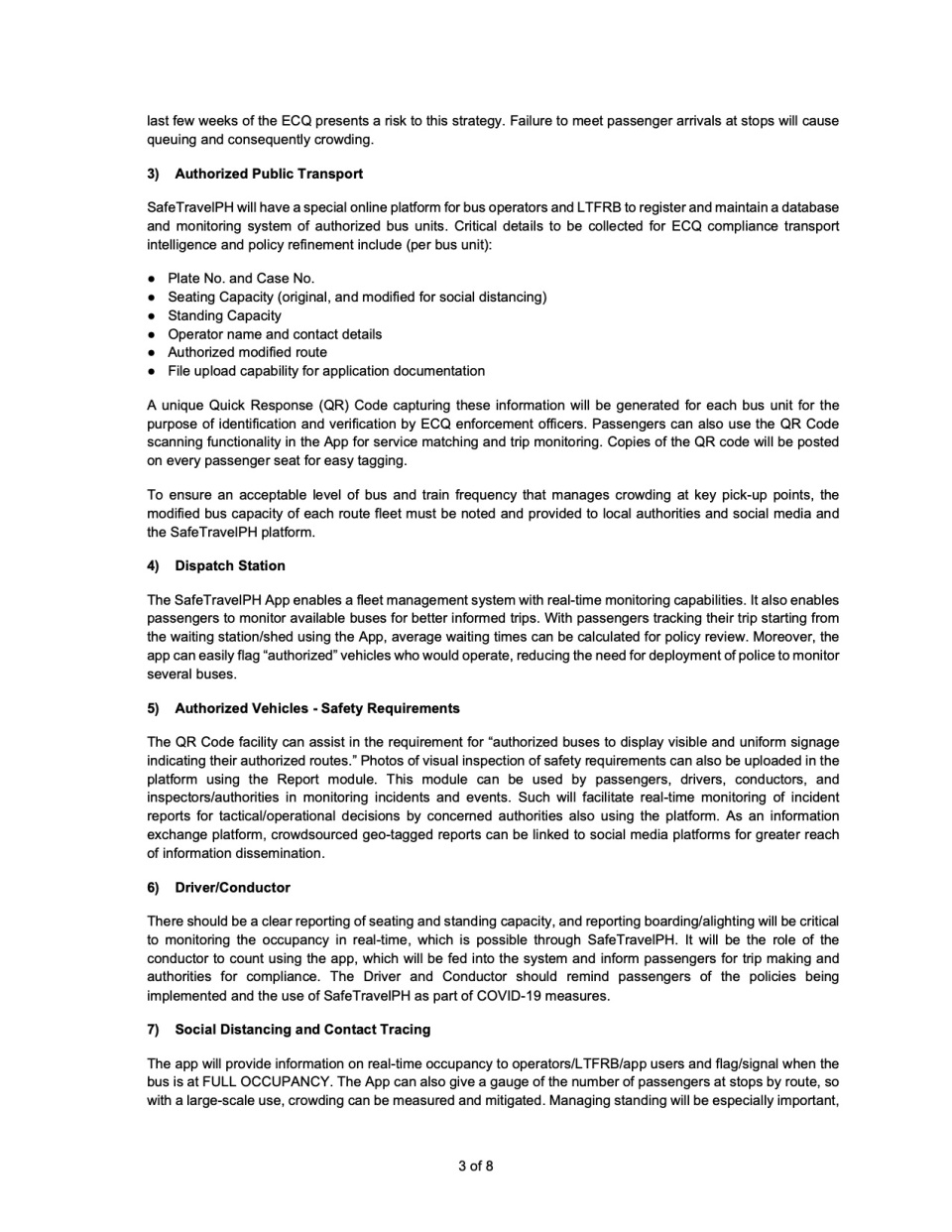
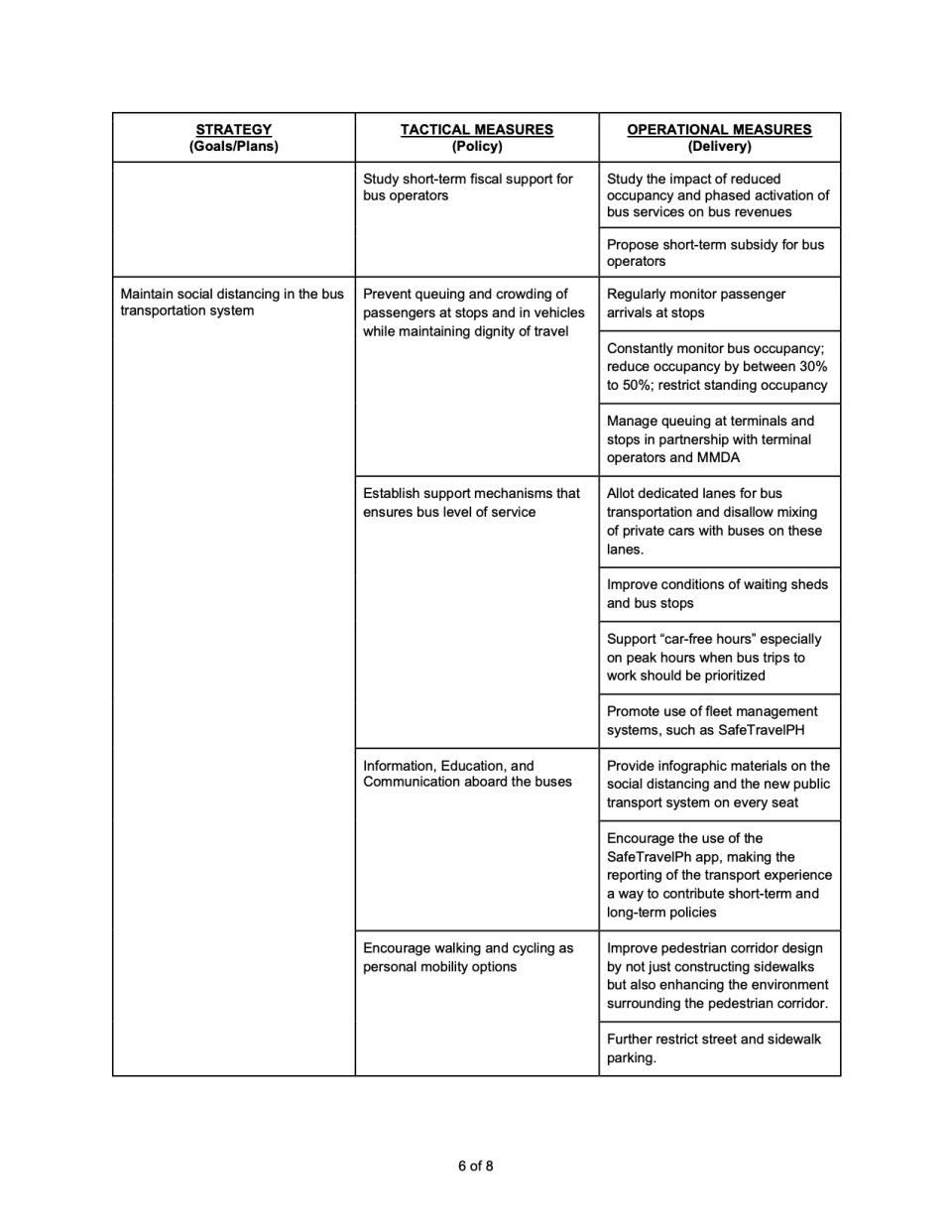
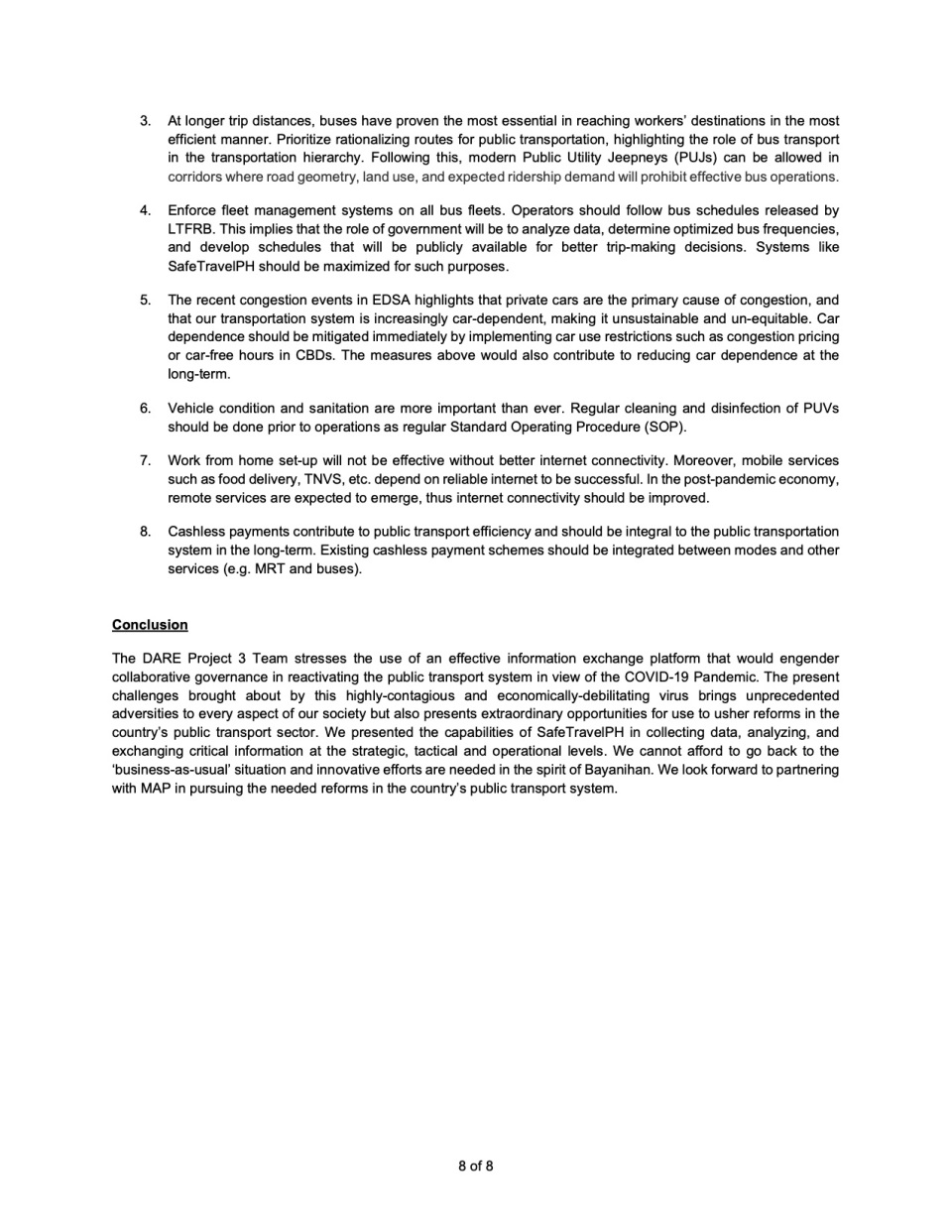
Here are the recommendations of UP COVID-19 Pandemic Response Team: “Effective Reactivation of Public Transport Operations for the New Normal through an Information Exchange Platform for Collaborative Governance”




–
On public transport services during the pandemic
I’ve read a lot of discussions and recommendations pertaining to public transportation services (mainly its lack thereof) during the Enhanced Community Quarantine aka lockdown in most parts of the Philippines. Problem is, a lot of people had their mobility curtailed as most people did not have their own private vehicles (cars or motorcycles) to do essential trips (i.e., for groceries, market, drugstores, hospitals, etc.). These include so-called frontline workers, most especially those working in hospitals or clinics. Even the use of tricycles on a limited basis while adhering to physical distancing guideline was not allowed in many cities and municipalities. What do we really need to do now and in transition to address the lack of public transport services?
Here is a concise yet very informative article on transit:
Walker, J. (2020) “Cutting Transit Service During the Pandemic: Why? How? And What’s Next?”, Human Transit, https://humantransit.org/2020/04/cutting-transit-service-during-the-pandemic-why-how-and-whats-next.html [Last accessed: 4/23/2020]
Most of the points discussed and recommendations presented are applicable to our case in the Philippines. We should also accept the fact that we cannot go back to the situation prior to the ECQ, and that the new normal calls for a reduction in car use. Meanwhile, we still have to address the pressing issues and come up with a plan or maybe strategies for public transport that involved not just buses and trains but other modes as well like the jeepneys, vans and tricycles.
–
On Pasig’s ordinance promoting and supporting the use of bicycles
I am posting a couple of LGU issuances that would be good references to other LGUs as we all tread along through these quarantines, curfews and lockdowns (or whatever it is they call it these days). First off is the Ordinance from Pasig City. The city has been in the news quite frequently for the very progressive, responsible and active handling of the situation led by its popular mayor Vico Sotto. His policies and programs are claimed to be based on data or information on his constituents that his team is using with much efficiency. This shows us how data analytics can prove useful in times of crisis such as the Covid-19 pandemic. The ordinance also shows a grasp of realities for transport and the so-called “new normal” that people have been talking about once we transition out of the quarantines and lockdowns.


I guess it begs the question if Pasig is also coming out with a formal policy or statement regarding other modes of transport such as tricycles, jeepneys and buses. They did allow tricycles for a while until national government told them to cease tricycle operations citing health issues while not really delving into details to find a way to improve people’s mobility during these times. Meanwhile, other LGUs specifically one that is close to the President’s heart has defied the very same orders from national agencies to restrict tricycle operations as public transport. I will post that issuance next…
–
Is traffic congestion like a virus?
An article came up where the author explains the similarities of the coronavirus spread to the spread of traffic congestion. It is basically about modeling (and simulating) the spread while considering factors like the characteristics of the virus that are similar to traffic. I’m posting/sharing it here for future reference/reading:
Simon, M. (2020) “Turns Out, Traffic Spreads Like the Coronavirus”, wired.com, https://www.wired.com/story/traffic-spreads-like-disease/?bxid=5bd6761b3f92a41245dde413&cndid=37243643&esrc=AUTO_OTHER&source=EDT_WIR_NEWSLETTER_0_DAILY_ZZ&utm_brand=wired&utm_campaign=aud-dev&utm_mailing=WIR_Daily_040720&utm_medium=email&utm_source=nl&utm_term=list1_p2 %5BLast accessed: 4/8/2020]
–
Transport route maps for Greater Metro Manila/ NCR during the quarantine period
I am sharing the following maps produced by the Department of Transportation (visit the DOTr Facebook page) and the Office of the Vice President. The details of operations are in their respective social media accounts that are being shared/circulated.
Here are the maps for 16 routes from the DOTr:
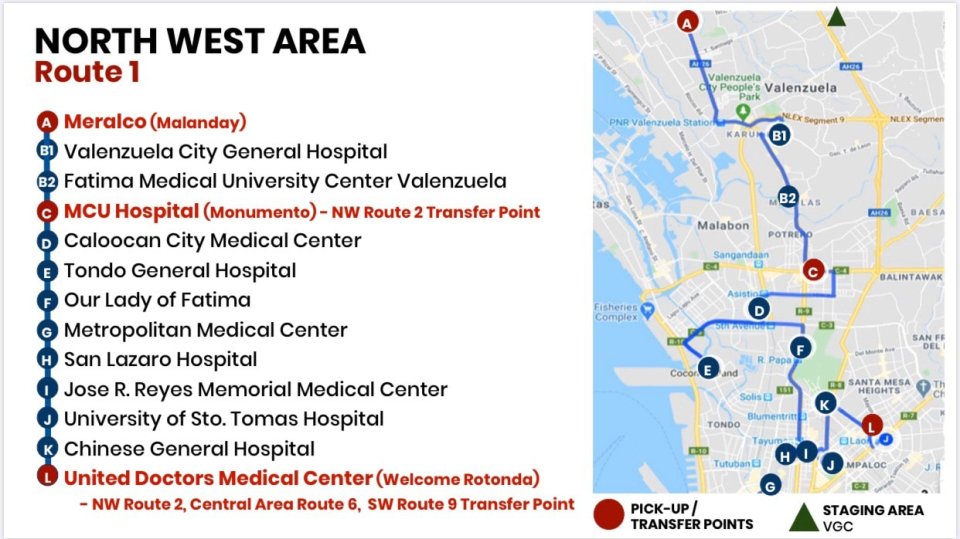
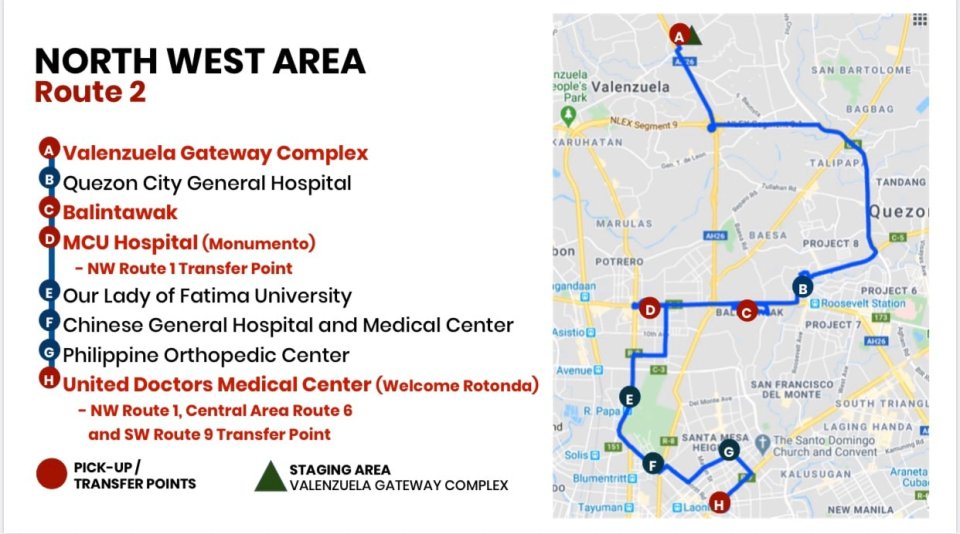
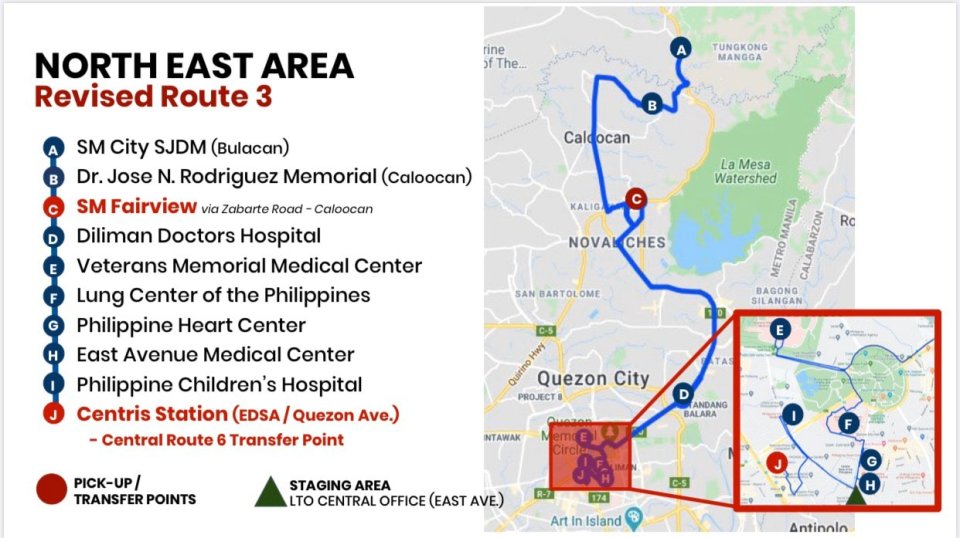


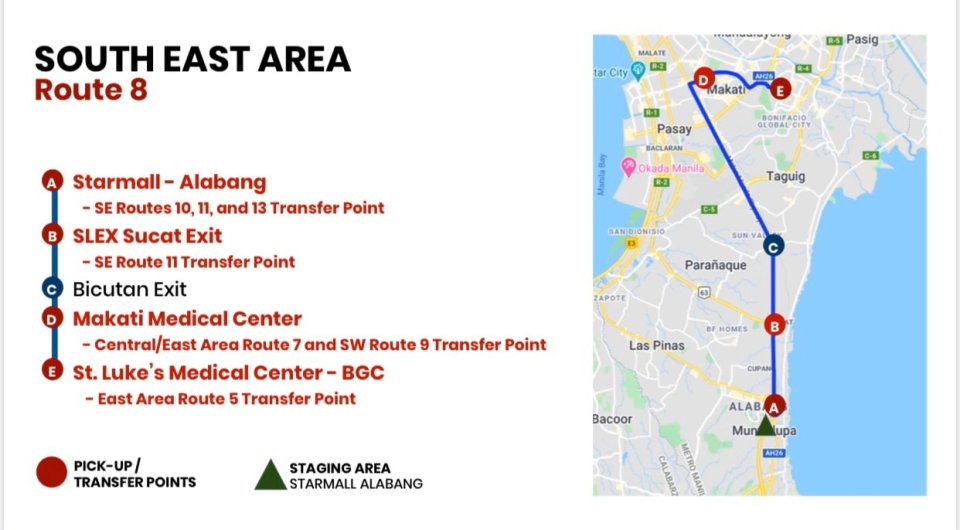


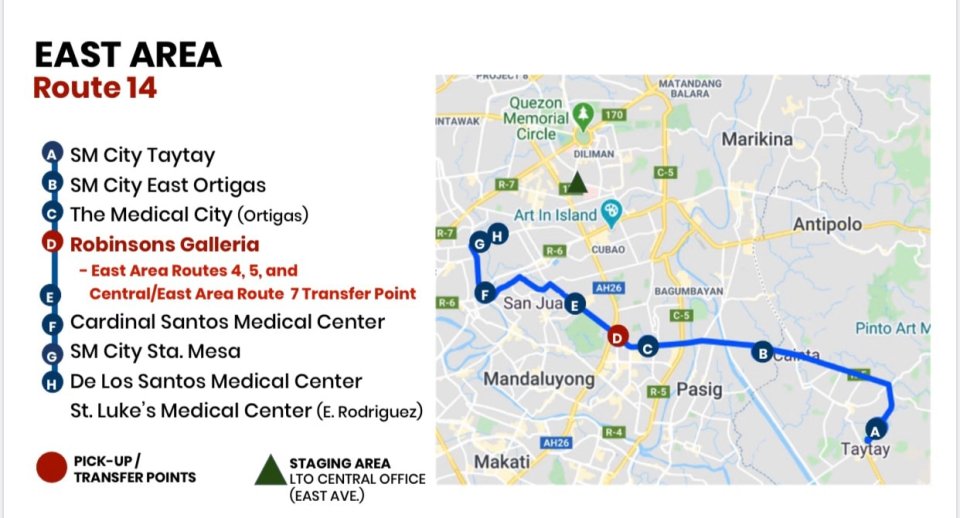
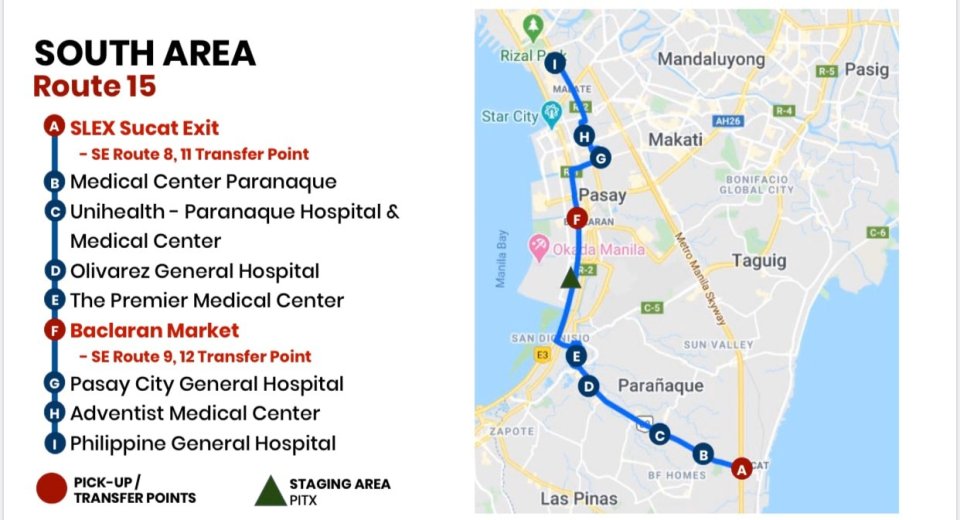

Here is a map from the OVP as well as a detailed itinerary for one of the routes they operate:


–
 Caught (up) in traffic