
Home » Transportation (Page 5)
Category Archives: Transportation
Article on housing and transportation
Here’s another excellent piece from Todd Litman about the dynamics of housing and transportation. This is a very relevant topic in many cities today and especially so for those like Metro Manila, which is struggling with issues pertaining to affordable housing and transportation infrastructure and services. Arguably, a lot of households are spending more than the 45% threshold of incomes mentioned in the article but people continue to get homes away from the city as these are relatively cheaper than those closer to their workplaces and schools. Unfortunately, transportation costs are on the rise and congestion and a lack of an efficient transport system are among the culprits for what many have already labelled as undignified and atrocious costs of commuting.
Litman, T. (2018) “Affordability Trade-Offs,” planetizen.com, https://www.planetizen.com/node/99920?utm_source=newswire&utm_medium=email&utm_campaign=news-08092018&mc_cid=e2a69b6eb4&mc_eid=9ccfe464b1 [Last accessed: 8/9/2018]
I envy the guy for being able to present these topics clearly. It is a complex subject and one that isn’t understood by many in government who are supposed to be responsible for crafting and implementing policies and programs to address issues pertaining to affordable housing and commutes. I wonder if Todd is coming over for the ADB Transport Forum. He’s make for a good resource person in some of the sessions there and perhaps can also be invited to speak about this and other relevant and urgent topics in a separate forum. Anyone out there care to sponsor him?
–
Why does it seem to be congested on the way out of BGC?
Why does it seem like its more congested in BGC nowadays especially during the afternoon peak hours when people are heading home from work? The simple answer to the question may be found in the set-up of barriers from the exit ramp of the flyover from Market! Market! I took some photos of the situation the wife related to me. This was along her regular commute and now she avoid the area; taking the Kalayaan route instead and using the U-turn flyover to get to the northbound side of C5.
 Familiar scene along C-5? What’s new here is that authorities have extended the barriers from the foot of the flyover from BGC and effectively blocked vehicles from merging early with C-5 through traffic.
 It doesn’t seem obvious but 2 lanes of vehicular traffic merge into 1 lane in order to merge left.
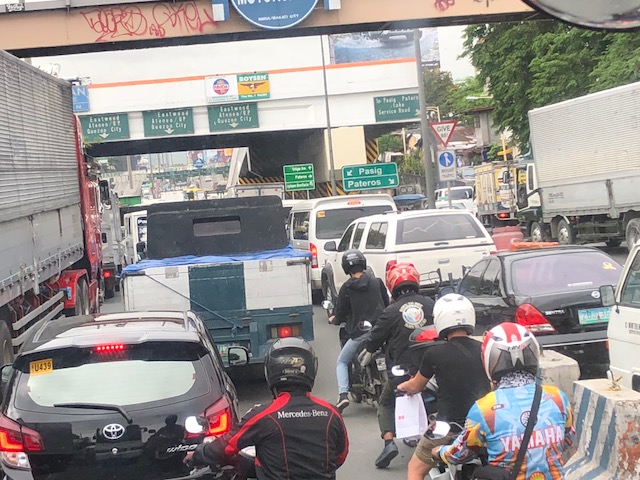 Most vehicles are northbound. The sign in the photo points to which lanes to take if you are northbound (Pasig) or turning towards Pateros. The U-turn flyover effectively blocks traffic from the rightmost lane (including those along the service road) from merging with northbound traffic in the inner lanes.
 Note the the barriers segregating northbound traffic from Pateros-bound traffic.
I think this is a simple case where the barriers shouldn’t have been extended the way they are now and restricting space for merging. The effect on C-5 traffic is minimal while causing unnecessary congestion along the flyover and into BGC. What seems like a solution to some (i.e., certain people in authority) clearly leads to more problems – in this case more congestion.
–
The vehicle of the future is the bicycle!
I’m sharing yet another article I found interesting and agreeing with.
Thomson, C. (2018) “The Vehicle of the Future has Two Wheels, Handlebars, and is a Bike,” wired.com, https://www.wired.com/story/vehicle-future-bike?mbid=social_fb [Last accessed: 5/14/2018].
With all the hype the hi-tech transport modes are getting, it is as if these are indeed what most people will be riding many, many years from now. Well, walking should still be there and remains as the most basic among mobility options. But then bicycles should also be a major mode, and perhaps with some innovations to boot in both the bike and the infrastructure necessary to promote its use.
–
On the Grab – Uber merger
A couple of weeks ago, I received a message from Uber confirming what was in the news for some time then, and what was rumoured a longer while back. Uber Philippines was closing shop after merging with main competitor Grab, while the mother company also acquiring a stake in Grab. Later, I also received a message from Grab (I use either depending on availability and cost.) welcoming Uber users to Grab.
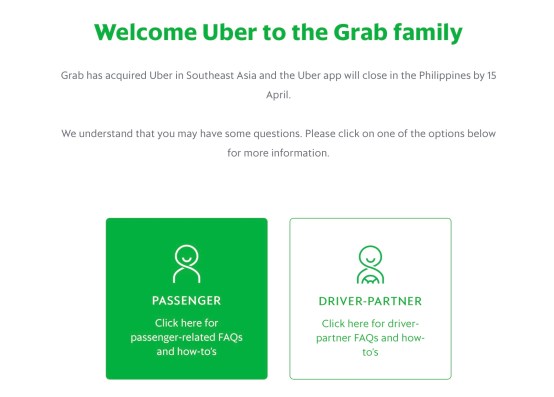
The result so far has been frustrating if not disappointing to many who have relied on Uber for commuting and the typical trips that you usually associate with taking a taxi.
Recent news revealed that Grab is using an even more punitive pricing scheme compared to Uber’s surge pricing. While the LTFRB moved to scrap this, Grab has been apprehensive, stating that this was an incentive for their drivers. There is actually another side to the concept of surge pricing that LTFRB does not or seems to refuse to understand. That is, that dynamic and more expensive fares related to congestion (or road conditions) is something that’s actually related to the concept of congestion pricing. This actually penalises the use of vehicles like private cars or taxis in favour of higher capacity transport like buses or, if available, trains.
Even more recent is the news that Grab is suspending about 500 of its drivers for excessive cancellation and/or rejection of trips. Unlike Uber before, Grab drivers have the “luxury” of knowing where a potential passenger is heading. That gives the driver the option to accept or reject a proposed fare. Uber drivers didn’t know where the potential passenger was heading and to my knowledge, was stricter with penalising their drivers. The only caveat I know is that passengers can also be penalised if the driver requests for a cancellation and the passenger obliges out of good faith (e.g., An Uber driver in Cebu requested me to cancel the request as he claimed he was caught in traffic and would be penalised if he canceled. I ended up protesting Uber penalising me 100 pesos for my cancellation. Uber did not act on it in my favour.).
The issues surrounding the Grab/Uber merger though should not be there in the first place if we had good taxi services. When I say good I am referring to the quality of service provided by taxis in Singapore and Japan. Of course, they also have good public transportation there so there’s also a case for what most people will likely be taking instead of cars and taxis (which operate similarly as cars). One wonders how and why LTFRB seems to be so strict vs TNCs while being lax with taxis. Meanwhile, DOTr is scrambling on the desperate catch-up work it has to do about mass transit lines and public transport rationalisation. Good luck to us commuters!
–
On old maps
I have a fascination for old maps. These include the stylised ones and even those that are considered mythical like the Piri Reis map. Here is something that’s real and old that the map enthusiasts among my readers maybe interested in:
You can download versions of the map though the good ones are quite big and slow to obtain if your internet connection’s not good.
–
On parking issues
I am sharing this article on parking issues written by an acquaintance:
Litman, T. (2018) “Fun Parking Facts,” Planetizen.com, https://www.planetizen.com/node/96957?utm_source=newswire&utm_medium=email&utm_campaign=news-01292018&mc_cid=9256109649&mc_eid=9ccfe464b1 [Last accessed 1/31/2018].
Todd talks about parking in general and then goes into the details of issues including the costs of parking and how the allocation of land to provide for parking spaces has practically robbed us of more efficient and valuable use of such spaces. Of course, the article is about the experiences in the US and Canada but the issues are very much relevant to highly urbanised cities in the Philippines as well. Then, there are also the deficiencies of our National Building Code and its implementation, as well as local governments issuing ordinances or executive orders that may or may not improve the parking situation in their constituencies. How is parking in your area?
–
C-6 expansion and upgrading on the way…
The opening of the second Barkadahan Bridge prodded me to post something about C-6. It is a work in progress but currently you can see the progress that is quite noticeable unlike before. Here are a couple of photos we took while en route to BGC last weekend.
 Ongoing paving along C-6 for the westbound side of the highway. The photo shows recently completed PCCP slabs for 2 lanes. Forms are visible in the photo.
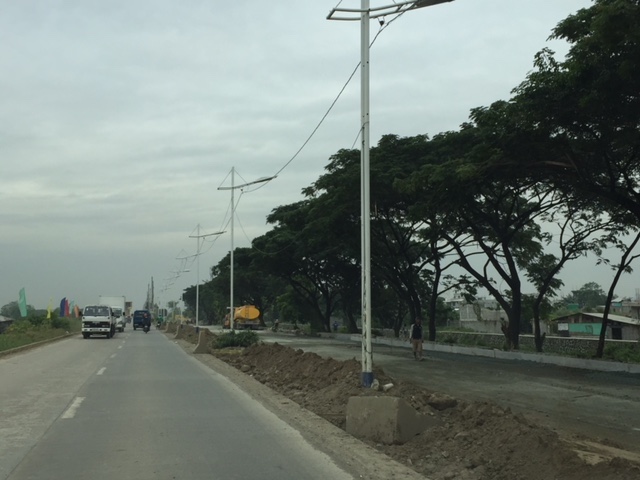 Other sections have had their base compacted and ready for concrete pouring.
As a regular user of C-6 since 2014, I am one of those who look forward to the completion of its expansion and upgrading. There is also something to look forward to for cyclists and pedestrians/joggers/runners as there is a wide bikeway and segregated walkway being constructed along the side of right side of the future eastbound side of the highway. This should encourage non-motorised traffic along this corridor that directly connects Taguig, Pateros, Pasig and Taytay and extends to serve the southern part of Metro Manila, Makati City and the province of Rizal.
–
Everyone’s an expert?
I wrote before about some frustrations among transport professionals who are getting smart-shamed on social media. Everybody seems to be an expert these days. And who can blame people who are quite familiar, aware or knowledgeable about transport and traffic issues, particularly along their commuting routes or where they reside or work. But then what distinguishes an enthusiast from a trained professional? What distinguishes a well-read, observant person from another who has formal training (i.e., one with a professional degree or advanced degree) and work experience? In some cases, it can simply be in terms of how articulate people are. Many engineers and planners are not so articulate (or telegenic) as certain personalities like one so-called road safety enthusiast/motoring journalist or as good a writer as one prominent and progressive landscape architect. Many probably are more into technical writing and that doesn’t translate all too well into something easily understandable or “publishable”. They may also get “lost in translation”, so to speak, should they be interviewed, preferring to sound technical rather than attempt to simplify their explanations a the “pedestrian” level.
A couple of senior transport professionals, one who was in academe but served as a government official before, and another who is a sought after consultant here and abroad, however, are pretty cool about this and just brush off the comments they get from articles where they are cited. They are established and secure about themselves and their current roles as ‘elders’ in the transportation field. They are often invited to congressional or senate hearings about transport and traffic for them to share their wisdom about current issues and proposed solutions. Others are simply not into social media and so are quite insulated from the seeming brouhaha of every other person suddenly becoming transport or traffic experts if not pundits. We all continue with our work, knowing we have a lot to do and hopefully leading to improving transport and traffic in the country.
–
Differences in opinions about safer roads?
I posted on a road safety-related page and suddenly there’s this guy who pounces on the post and delivers what he probably thought was an amusing commentary. From his posts, it was clear that he was one of those hard-core cyclists. I don’t want to use the word ‘fanatic’ but that is how many people would probably see him given his posts, comments and stand regarding cycling and safety. He also seems to revel in his claim to be a victim but the way he states this won’t really give him as much sympathy as he probably hopes to get. You have be more engaging and diplomatic if you want to be taken seriously whether as a stakeholder, a government official or an expert.
Everybody is certainly entitled to their own opinion (but not their own facts and that’s another story for another article that’s transport-related) about how roads can become safer for all. I say all because it is not only a concern of cyclists and motorists but pedestrians as well. Everyone, regardless of age, gender, economic status, etc. is vulnerable. And the only way we can succeed is if there is a collective effort that is fact/evidence-based and structured or organized. Cooperation is vital among various sectors and we must accept that there are many approaches, ways by which we can achieve the objective of safer roads and transport. Going hardline on one’s stand and trying to impose this on others will not get us anywhere.
–
Misinformation on the PUV modernization project
There was a transport strike today mainly involving jeepney drivers and operators who are protesting the proposed Public Utility Vehicle (PUV) Modernization project of the Philippine government. In this age of fake news, there’s also a lot of misinformation going around that gets shared even by well meaning people who probably just wanted to have it represent their opinion about the matter. Unfortunately, this only spreads more misinformation. Nagagatungan pa ng mga alanganing komento.

Following is the reply of the DOTr from their Facebook account:
“PAUNAWA | Isa-isahin natin para malinaw:
1. Hindi tataas sa P20 ang pasahe. Saan nakuha ng PISTON ang numerong ito?
2. Hindi lugi ang driver/operator. Kikita pa nga sila. Bakit?
– May 43% fuel savings ang mga Euro-4 compliant na sasakyan
– Mas maraming pasahero ang maisasakay dahil mula sa 16 persons seating capacity, magiging 22 na.
– Low to zero maintenance cost dahil bago ang unit
3. Hindi rin totoo na hindi kami nagsagawa ng mga konsultasyon.
Ang DOTr at LTFRB ay nagsagawa ng serye ng konsultasyon at dayalogo kasama ang mga PUV operaytor at mga tsuper sa buong bansa, kabilang dito ang mga organisadong grupo ng transportasyon at ang mga lokal na pamahalaaan.
Ang mga konsultasyong iyon ay isinagawa bago, habang, at pagkatapos malagdaan ang DO 2017-011. Sa katunayan, ang konsultasyon para sa paggawa ng mga local public transport route plan ng mga lokal na pamahalaan at ng mga kooperatiba sa transportasyon ay isinasagawa hanggang ngayon sa buong bansa. Maliban sa sector ng PUJ, nagsasagawa rin ang gobyerno ng konsultasyon sa mga operaytor at grupo ng Trucks for Hire (TH).
4. Hindi korporasyon ang makikinabang kundi mga:
– Local manufacturers na mag-didisenyo ng units
– Pilipinong manggagawa na magkakaroon ng trabaho at gagawa ng mga sasakyan
– Drivers at operators na lalaki na ang kita, uunlad pa ang industriya
– COMMUTERS na matagal nang nagtiis sa luma, hindi ligtas, at hindi komportableng public transportation units
5. Hindi anti-poor ang #PUVModernization Program.
Malaking bahagi ng Modernization Program ang Financial Scheme para sa drivers at operators. Sa tulong ng gobyerno, nasa 6% lamang ang interest rate, 5% naman ang equity, at aabot sa 7 taon ang repayment period. Magbibigay rin ng hanggang PHP80,000 na subsidy ang gobyerno sa kada unit para makatulong sa down payment.
Bukod dito, tandaan natin na ginhawa at kaligtasan ng mahihirap ding commuters ang hangad ng programa.
6. Walang phase out. Mananatili ang mga jeep sa kalsada. Pero sa pagkakataong ito, bago at modern na.
ANO ANG TOTOO?
Hindi na ligtas ang mga lumang PUVs sa Pilipinas. Takaw-aksidente na, polusyon pa ang dala. Hindi komportable at hassle sa mga commuters. Ang totoo, matagal na dapat itong ipinatupad. PANAHON NA PARA SA PAGBABAGO SA KALSADA.”
–
 Caught (up) in traffic