
Home » Transportation (Page 6)
Category Archives: Transportation
Everyone’s an expert?
I wrote before about some frustrations among transport professionals who are getting smart-shamed on social media. Everybody seems to be an expert these days. And who can blame people who are quite familiar, aware or knowledgeable about transport and traffic issues, particularly along their commuting routes or where they reside or work. But then what distinguishes an enthusiast from a trained professional? What distinguishes a well-read, observant person from another who has formal training (i.e., one with a professional degree or advanced degree) and work experience? In some cases, it can simply be in terms of how articulate people are. Many engineers and planners are not so articulate (or telegenic) as certain personalities like one so-called road safety enthusiast/motoring journalist or as good a writer as one prominent and progressive landscape architect. Many probably are more into technical writing and that doesn’t translate all too well into something easily understandable or “publishable”. They may also get “lost in translation”, so to speak, should they be interviewed, preferring to sound technical rather than attempt to simplify their explanations a the “pedestrian” level.
A couple of senior transport professionals, one who was in academe but served as a government official before, and another who is a sought after consultant here and abroad, however, are pretty cool about this and just brush off the comments they get from articles where they are cited. They are established and secure about themselves and their current roles as ‘elders’ in the transportation field. They are often invited to congressional or senate hearings about transport and traffic for them to share their wisdom about current issues and proposed solutions. Others are simply not into social media and so are quite insulated from the seeming brouhaha of every other person suddenly becoming transport or traffic experts if not pundits. We all continue with our work, knowing we have a lot to do and hopefully leading to improving transport and traffic in the country.
–
Differences in opinions about safer roads?
I posted on a road safety-related page and suddenly there’s this guy who pounces on the post and delivers what he probably thought was an amusing commentary. From his posts, it was clear that he was one of those hard-core cyclists. I don’t want to use the word ‘fanatic’ but that is how many people would probably see him given his posts, comments and stand regarding cycling and safety. He also seems to revel in his claim to be a victim but the way he states this won’t really give him as much sympathy as he probably hopes to get. You have be more engaging and diplomatic if you want to be taken seriously whether as a stakeholder, a government official or an expert.
Everybody is certainly entitled to their own opinion (but not their own facts and that’s another story for another article that’s transport-related) about how roads can become safer for all. I say all because it is not only a concern of cyclists and motorists but pedestrians as well. Everyone, regardless of age, gender, economic status, etc. is vulnerable. And the only way we can succeed is if there is a collective effort that is fact/evidence-based and structured or organized. Cooperation is vital among various sectors and we must accept that there are many approaches, ways by which we can achieve the objective of safer roads and transport. Going hardline on one’s stand and trying to impose this on others will not get us anywhere.
–
Misinformation on the PUV modernization project
There was a transport strike today mainly involving jeepney drivers and operators who are protesting the proposed Public Utility Vehicle (PUV) Modernization project of the Philippine government. In this age of fake news, there’s also a lot of misinformation going around that gets shared even by well meaning people who probably just wanted to have it represent their opinion about the matter. Unfortunately, this only spreads more misinformation. Nagagatungan pa ng mga alanganing komento.

Following is the reply of the DOTr from their Facebook account:
“PAUNAWA | Isa-isahin natin para malinaw:
1. Hindi tataas sa P20 ang pasahe. Saan nakuha ng PISTON ang numerong ito?
2. Hindi lugi ang driver/operator. Kikita pa nga sila. Bakit?
– May 43% fuel savings ang mga Euro-4 compliant na sasakyan
– Mas maraming pasahero ang maisasakay dahil mula sa 16 persons seating capacity, magiging 22 na.
– Low to zero maintenance cost dahil bago ang unit
3. Hindi rin totoo na hindi kami nagsagawa ng mga konsultasyon.
Ang DOTr at LTFRB ay nagsagawa ng serye ng konsultasyon at dayalogo kasama ang mga PUV operaytor at mga tsuper sa buong bansa, kabilang dito ang mga organisadong grupo ng transportasyon at ang mga lokal na pamahalaaan.
Ang mga konsultasyong iyon ay isinagawa bago, habang, at pagkatapos malagdaan ang DO 2017-011. Sa katunayan, ang konsultasyon para sa paggawa ng mga local public transport route plan ng mga lokal na pamahalaan at ng mga kooperatiba sa transportasyon ay isinasagawa hanggang ngayon sa buong bansa. Maliban sa sector ng PUJ, nagsasagawa rin ang gobyerno ng konsultasyon sa mga operaytor at grupo ng Trucks for Hire (TH).
4. Hindi korporasyon ang makikinabang kundi mga:
– Local manufacturers na mag-didisenyo ng units
– Pilipinong manggagawa na magkakaroon ng trabaho at gagawa ng mga sasakyan
– Drivers at operators na lalaki na ang kita, uunlad pa ang industriya
– COMMUTERS na matagal nang nagtiis sa luma, hindi ligtas, at hindi komportableng public transportation units
5. Hindi anti-poor ang #PUVModernization Program.
Malaking bahagi ng Modernization Program ang Financial Scheme para sa drivers at operators. Sa tulong ng gobyerno, nasa 6% lamang ang interest rate, 5% naman ang equity, at aabot sa 7 taon ang repayment period. Magbibigay rin ng hanggang PHP80,000 na subsidy ang gobyerno sa kada unit para makatulong sa down payment.
Bukod dito, tandaan natin na ginhawa at kaligtasan ng mahihirap ding commuters ang hangad ng programa.
6. Walang phase out. Mananatili ang mga jeep sa kalsada. Pero sa pagkakataong ito, bago at modern na.
ANO ANG TOTOO?
Hindi na ligtas ang mga lumang PUVs sa Pilipinas. Takaw-aksidente na, polusyon pa ang dala. Hindi komportable at hassle sa mga commuters. Ang totoo, matagal na dapat itong ipinatupad. PANAHON NA PARA SA PAGBABAGO SA KALSADA.”
–
Some nice articles on innovation in transport
Following are a couple of articles on innovation as applied to transport. Uber is often seen merely as a transport option much like the taxi but there’s more than meets the eye in terms of its operations never mind its surge pricing schemes. It has succeeded in much part because it is an innovative company with innovative people. They were not afraid to take on the challenges against what the establishment had regarded as an upstart in a sector that was seen as having fewer opportunities for thinking out of the box.
Today is my first day at Uber [by Chris Messina in Medium, January 5, 2016]
Today is my last day at Uber [by Chris Messina in Medium, January 7, 2017]
–
Challenges for Uber, and ridesharing in general
Uber was in a crises of sorts after several leading to its controversial head stepping down a few days ago. Several articles came out including one from Wired that provided some details to some of the significant stumbling blocks or obstacles Uber had to go through the past years (even recent months). There’s an even better article by one of Uber’s co-founders, which I found and regard as “even better” because it appears to be a self assessment, a reflection of how the company should move forward.
Following are the two articles, one from Wired and another from Uber (via Medium):
- A Short History of the Many, Many Ways Uber Screwed Up [by Davey Alba in Wired, June 21, 2017]
- Uber’s path forward [by Garrett Camp in Medium, June 21, 2017]
These are important to us who are doing studies on ridesharing/ridesourcing. I believe Uber and its kind including Grab has revolutionized transport and contributed in significantly improving mobility among a lot of people who have been marginalized by what we have termed as conventional transport. Senior citizens and persons with disabilities, for example, who have had difficulties getting rides can (if they can afford it) get Uber or Grab vehicles to take them where they need to be. There are indeed issues but as the article by Camp states, these can be resolved or addressed to improve the services provided by ridesharing/ridesourcing companies.
–
ITS Forum 2017 at DLSU
We are holding a forum on Intelligent Transport Systems (ITS) today at the De La Salle University (DLSU) along Taft Avenue, Manila. Following is the banner and the program as of February 16:

 In the workshops scheduled in the afternoon, the plan is to review the DOST roadmap and the ITS Master Plan. The DOST roadmap is basically on the research and development agenda of the agency. In the past, this has been associated mainly with the Engineering Research and Development for Technology (ERDT) program of which several major universities are a part of including UP Diliman, DLSU, Ateneo and Mapua Institute of Technology. Eventually, ITS became the theme for other R&D including those that were packaged as ITS but not necessarily falls under the category (i.e., projects like the AGT, hybrid bus and bike share are more sustainable transport than ITS).
The ITS Master Plan is actually something developed under a project implemented through the Department of Public Works and Highways (DPWH) more than 6 years ago and originally only for Metro Manila. This plan is being eyed as the foundation for a bigger one that hopefully would apply to the rest of the country.
–
Grab vs Uber: the ridesharing services battle for supremacy?
I have made it a custom to share articles here on my blog. One reason for me to do this is so I have an archive of sorts for articles that caught my attention that I have either read or not that I want to get back to. Here is another article on ridesharing, this time from a popular magazine:
Grab vs Uber: Who’s getting the riders and making money?
This is relevant material for ongoing studies we are doing about ridesharing. I am also writing a couple of papers on this topic that we intend to present and publish next year.
–
NAIA airport buses
Among the things I liked when traveling to countries like the US, Japan, Singapore and Thailand is that I have many options to travel between their airports and the city. In Narita, for example, I had the option to take a bus (Airport Limousine Bus, etc.) or train (JR Narita Express, JR Yokosuka-Sobu Line Airport Narita, Keisei Skyliner, etc.) to and from the airport to Tokyo, Yokohama or Saitama where I’ve stayed before. Now, I am glad that there already an airport express bus serving the international airport in Manila.
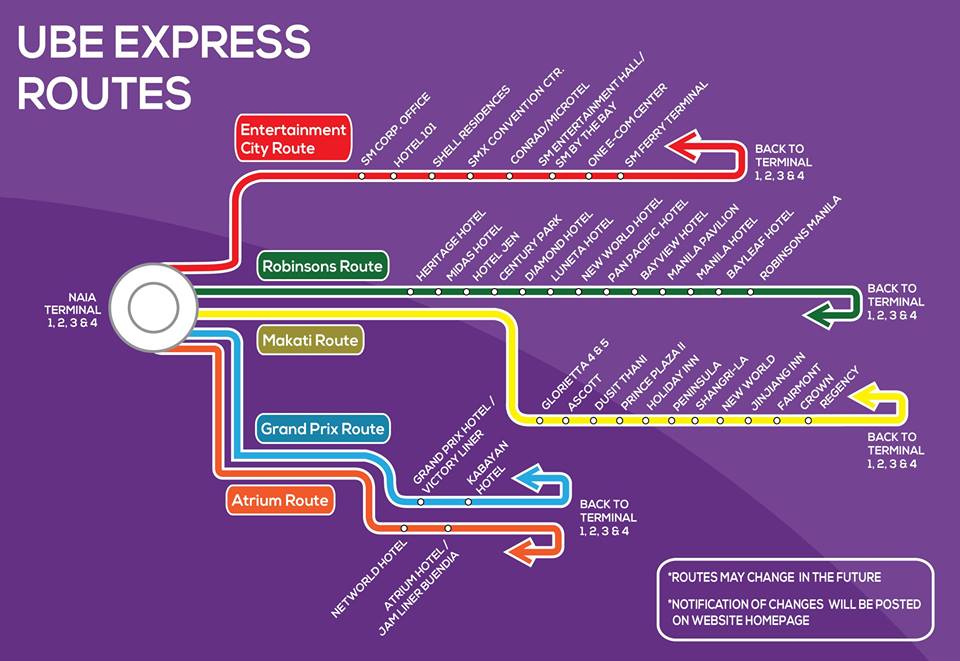
UBE Express is a recently introduced airport bus service for people traveling to and from the passenger terminals of the Ninoy Aquino International Airport (NAIA). Here are a couple of images describing the service that was shared by the Department of Transportation (DoTr) FB page:

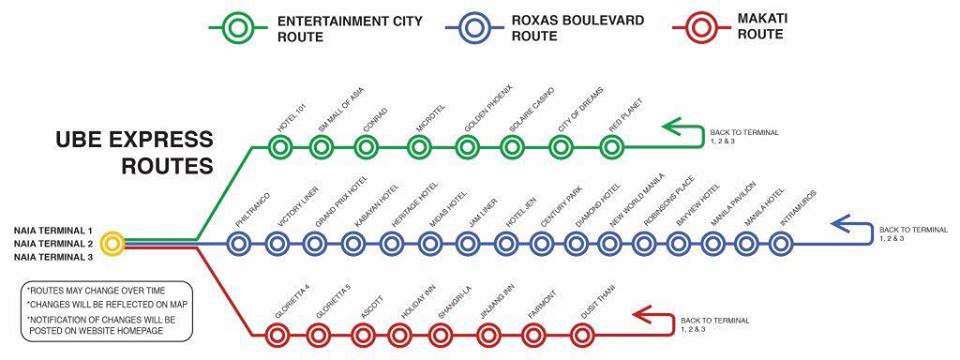
Their Facebook page states that they still charge a promotional fare of 150 Pesos (about 3 US Dollars) for a trip for this Christmas season. More information are available from their FB page and interested people can send them a message using this medium. It seems they reply immediately to comments and queries so that’s good for those who have questions about the service. Here are a couple more images from their FB page:

–
Skylab – motorcycle taxi
We are currently doing research on motorcycles and a major part of the research is on motorcycle taxis. Motorcycle taxis are popular in many areas in the Philippines despite national and local government agencies have not sanctioned or legalized their operations. There are two popular versions of the motorcycle taxis – the habal-habal and the Skylab. Both are basically motorcycles with some add-ons to increase passenger capacity or to be able to carry more goods or cargo.
The habal-habal is carries all passengers or cargo on the motorcycle with some variants having a plank for extension to the back or a customized seat over the gas tank that is usually for children. The Skylab owes its name from the US satellite that fell to the earth in the 1970s. The shape of the satellite inspired innovative extensions along each side of the motorcycle. This enabled riders to take in triple the number of passengers they could with the habal-habal set-up. Both have variants with roofs.
The following video shows a Skylab in Surigao Del Sur care of a very good friend, Dr. Alex Ladaga of Surigao Del Sur State University, whom we are collaborating with in this research:
More on these motorcycle taxis soon!
–
TSSP 2016 Conference: Tentative Program
I am sharing below the tentative program for the 23rd Annual Conference of the Transportation Science Society of the Philippines (TSSP):

Soon, I will post on the list of papers to be presented for the Technical Sessions to be held in the afternoon part of the one-day conference.
–

