
Home » Posts tagged 'bike facilities'
Tag Archives: bike facilities
On the impact of bike lanes on motor vehicle traffic
With the news that bike lanes will be removed along major roads including, most recently, I share some findings from the US about a decrease in traffic speeds when there are protected bike lanes. The decrease in speeds are associated with a reduction in road crashes, ergo safer streets.
McPherson, K. (June 3, 2024) “Traffic Speeds Decrease When Bike Lane is Present,” Rutgers.edu, https://www.rutgers.edu/news/traffic-speeds-decrease-when-bike-lane-present [Last accessed: 6/8/2024]
To quote from the article:
“They found that the presence of the delineated bike lane made a difference: a 28 percent reduction in average maximum speeds and a 21 percent decrease in average speeds for vehicles turning right. For those heading straight and not turning, a smaller speed reduction of 8 percent was observed. In addition, drivers moving at a perpendicular angle to the bike lane did not slow down.
Marking the bike lanes with cones as a clearly delineated space was more effective at reducing speed than a painted-only bike lane. The painted-only bike lane was associated with a smaller speed reduction of between 11 percent and 15 percent, but only for drivers turning right.
Younes hypothesized that drivers slow down when they see a bike lane marked with the cones because the driving lane is narrower and requires more concentration, and it’s easier to notice cones or planters or some other space delineator than it is to spot painted lines on the road surface.”
Of course, one major element that was probably not considered in their studies is the presence and behavior of motorcycle riders. Motorcycles here frequently enter and use bike lanes whether protected or not. Often they crowd out bicycle users leading to situations where riders of motorized and non-motorized 2-wheelers come into conflict. Still, it would be nice to have a study to determine not just whether there are similar outcomes here but to what extent as well as how motorcycles figure in the study.
–
More than just painted lines – good practice examples of bike lanes
I’m sharing this article on the best bike lanes in the United States:
Holbrook, A. (February 12, 2024) “The 5 Principles That Make America’s Best Bike Lanes: A Lot More Than Painted Lines,” Velo, https://velo.outsideonline.com/urban/urban-gear/five-principles-the-best-bike-lanes/ [Last accessed: 2/15/2024]
This is a follow-up on an article on the best new bike lanes or bikeways that I shared earlier. This article features an interview of the author of the previous article about what features distinguish these bike lanes over others that have been implemented. Definitely, bike lanes should be designed beyond the usually painted lines that offer little protection to cyclists.
Here are examples of bike lanes in the Philippines:
 Painted bike lanes along Ortigas Avenue Extension, Cainta, Rizal
 Protected bike lane along Katipunan Avenue (C-5), Quezon City
–
Bike racks at SM City Taytay
I have written before about the bike facilities at SM malls. Their new malls and expansion projects already have provisions for bike parking in addition to motorcycle parking despite the building code not having provisions for these. I write about another example, this time in Rizal province. SM City Taytay has bike racks installed at the basement parking. I am sharing the following photos for reference.
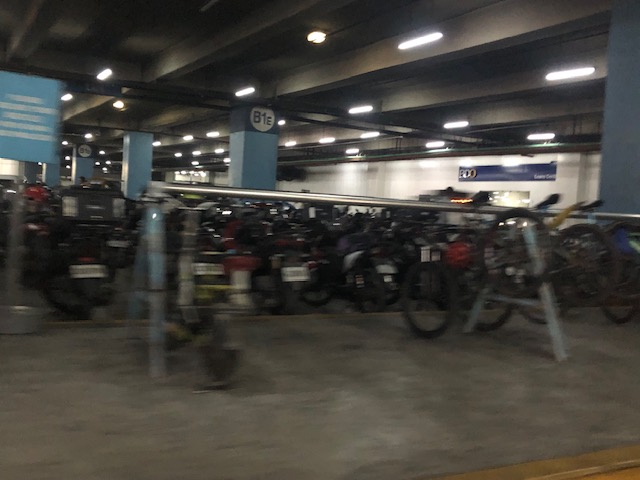 Hand rail/hanger type racks
 Bollard style racks
 Grid style racks
I’m not sure what went into the decision, if there was any, to provide different types or styles of racks for bicycle parking. To some, it looks like an afterthought rather than a planned approach to bike parking. Still, the facilities appeared to be highly utilized so that means people are taking their bikes to the the mall and it appears that most of these are customers rather than mall personnel. SM has been quite vocal and active in promoting their involvement in active transport (i.e., mostly about cycling) and their malls have included bike parking as an integral part of their facilities. Hopefully, they will continue to support cycling and develop better facilities to encourage bike use.
–
Bike lane master plan for Metro Manila, Metro Cebu and Metro Davao
The Department of Transportation (DOTr) with support from the United Nations Development Program (UNDP) yesterday formally launched the Bike Lane Master Plan for Metro Manila, Metro Cebu and Metro Davao. Yesterday’s event was actually the third and last leg of presentations, which were also made in Cebu and Davao. Here are a few photos I got from the DOTr Facebook page (these are public):
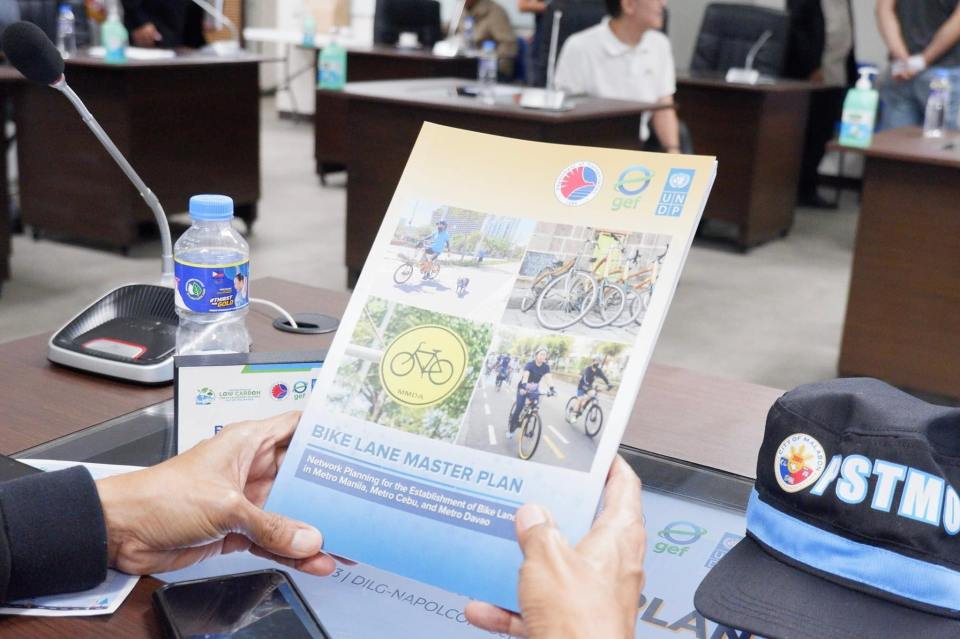 Printed copies of the master plan were distributed to attendees (Photo: DOTr Facebook page)
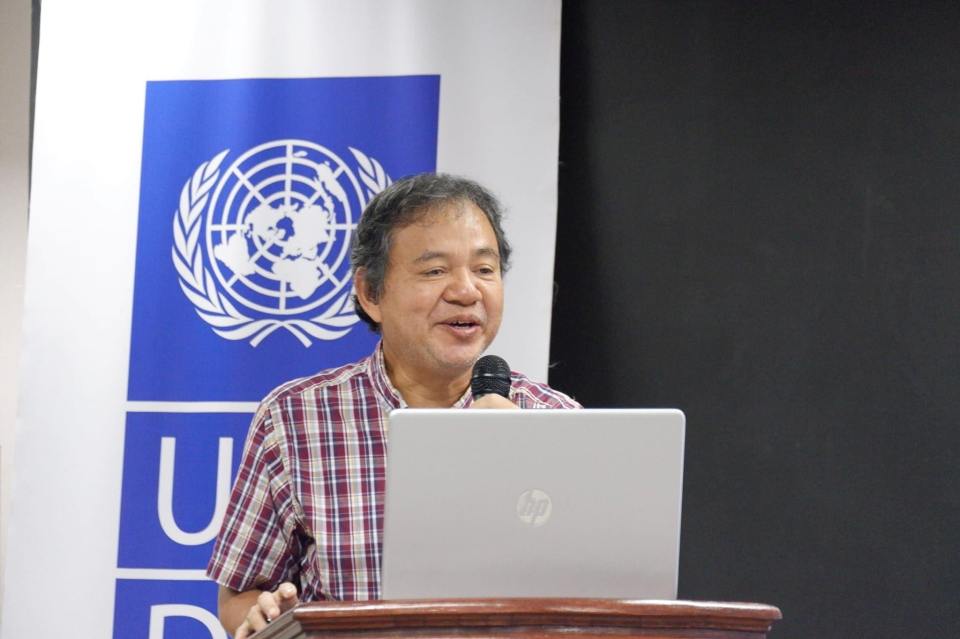 Dr. Ricardo Sigua of the National Center for Transportation Studies presented the highlights or key features of the master plan. The UNDP engaged NCTS to conduct the master planning project for DOTr. (Photo: DOTr Facebook page)
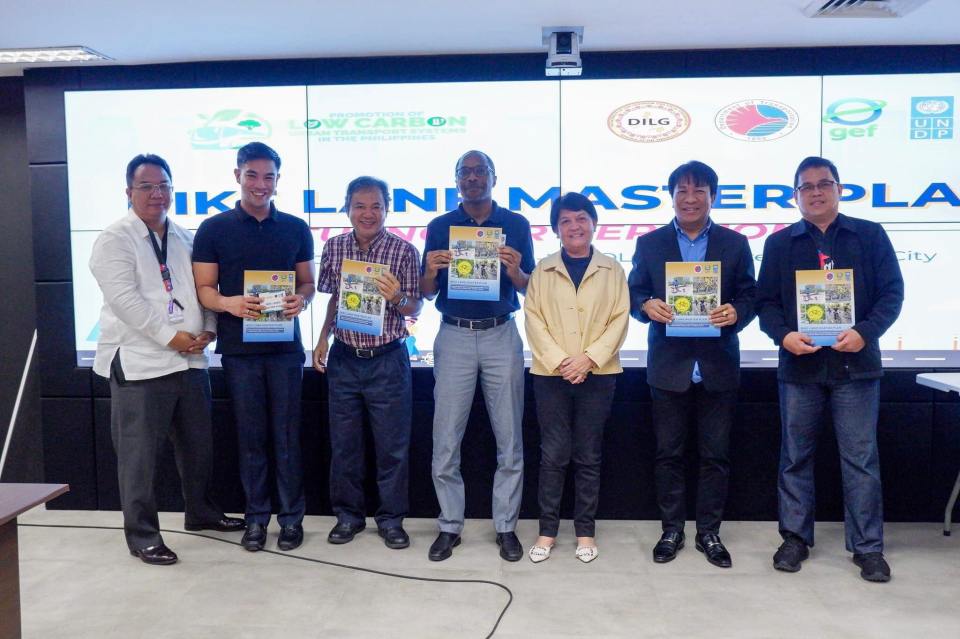 Photo op with participants from the MMDA (Photo: DOTr Facebook page)
While the master plan is most welcome as the country continues to build infrastructure for active transport (mainly walking and cycling), the launch is actually one year late. The project was actually completed last year and though most of the recommendations have yet to be carried out, many items including the inventories are already dated. These master plans though should not be static documents but dynamic in these sense that it would have to be updated regularly. For one, updates would provide the opportunity to reinforce or improve certain aspects of the plan. Updates also provide an opportunity to check whether progress is being made on the targets set in the plan. Also, since the master plan is for three metropolitan areas perhaps it can be part of the foundation for a nationwide plan. However, many plans fail if there is not support or scarce resources allocated for the implementation. Thus, there is a need for resources or allotments especially coming from government to support the realization of the plan.
–
Quezon City’s bike ramps
This is a very late post on bicycle facilities. I took a few photos of the bike ramps Quezon City installed on the stairs of pedestrian footbridges in the city. I am sharing a couple of these photos here for reference.
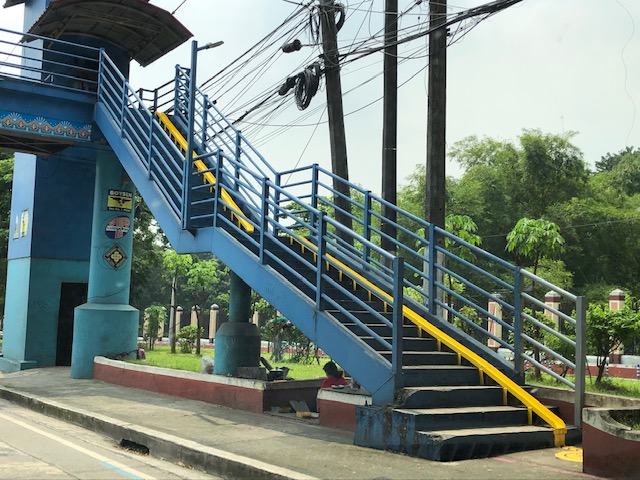 The bike ramp allows one to roll his/her bicycle with relative ease up and down the footbridge. Otherwise or without the ramps, cyclists would have to carry their bikes up and down the stairs.
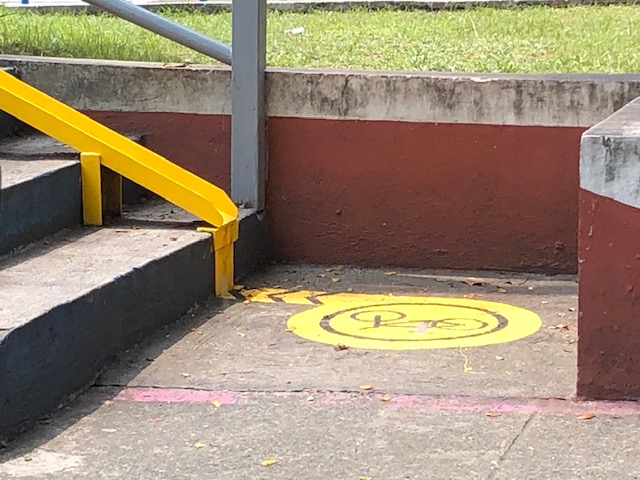 The landing for the the bike ramp at the foot of the stairs.
It’s quite obvious in the photos that the space along the stairs is quite constrained. Ideally, perhaps there should be two ramps – one for going up and another for going down. One ramp means one cyclist will have to wait for another or others to go up or down before proceeding to use the ramp. Perhaps this highlights the need to re-imagine the designs of footbridges. The current designs are not inclusive or equitable for all users. But whether footbridges are required in the first place is another matter.
–
Recent transport features of fast-food restaurants
We went to a McDonald’s drive thru a couple of weeks ago to get some food before picking up our daughter at her school. We decided to go a new branch along the way from the office and found a new feature at the fastfood chain’s parking area – electric vehicle charging stations. There were two slots where e-vehicles can re-charge while owners eat at the branch.
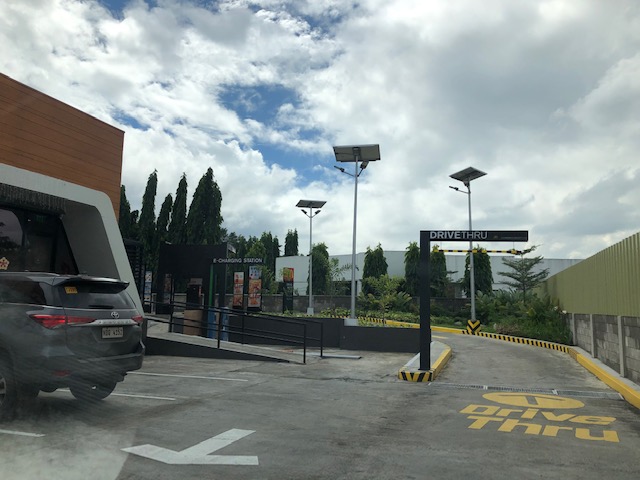 Electric vehicle charging station at the new McDonald’s branch along Sumulong Highway (Mambugan, Antipolo)
 Bike dining station – you can park your bike at one side and have a comfy seat while eating and drinking on the other side
The bike and dine is not a new feature but one that McDo has installed in many of their new branches and retrofitted old one with during the pandemic. Still, we hope they have this in and the charging stations in most if not all their standalone branches. Of course, other chains should follow suit especially rival Jollibee, which has more branches and an even wider network of companies (e.g., Chowking, Greenwich, etc.) under it. This will help in promoting both cycling and e-vehicles.
–
Who can design bikeways?
I have read many comments about how bike lanes and other bike facilities are sub-standard or unacceptable because they were designed by non-cyclists. From an academic perspective and perhaps also from a point of view of someone who values empathy, the planning and design of bicycle facilities should not be so limited. The objective of education, and particularly for schools whose graduates become professionals like engineers, architects and planners, should be to have the latter be able to plan and design the most suitable infrastructure and facilities for all users. Suitability here should include equity considering the many elements involved for people of different gender, physical ability or disability, age, health conditions, etc. That said, it is the responsibility of agencies such as the Department of Public Works and Highways (DPWH) to revise and update their design manuals and guidelines to ensure that these are according to International standards and mindful of the best practices in various cities and countries that are now very well documented.
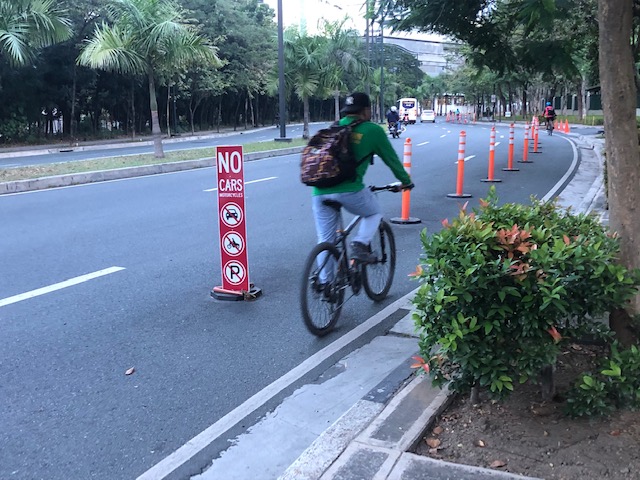 Bike lane in BGC,Taguig City
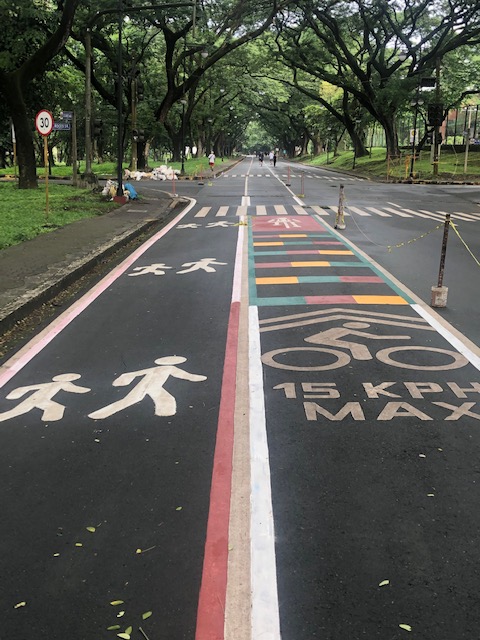 Bike lane and jogging/walking lane in UP Diliman
–
Bike lanes at the UP Diliman campus – Part 2
The bike lanes in UP Diliman are not limited to the Academic Oval. There are now also bike lanes along other major roads including Magsaysay Avenue, which is road immediately after the portal at the Asian Center and allowing direct entrance and exit via Katipunan Avenue (C-5). The bike lanes are along either side of Magsaysay Avenue and are of Class II – Type B (separated bike lanes) but there are no LED markers that are ideally placed along the delineation for the bike lanes.
 Painted bike lanes along Magsaysay Avenue, which is the road behind Malcolm and Melchor Halls. To the left is the Department of Mechanical Engineering Building and the Computer Center. To the right is the Resilience Institute.
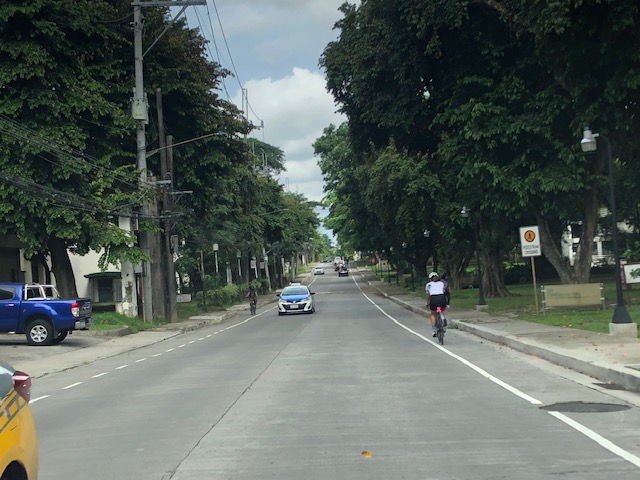 To the right is what used to be the Chemical Engineering Lab behind Melchor Hall. To the right is the Ipil and Yakal Dormitories.
–
Bike-friendly fast food
While doing field work early this week, we decided to do a quick drive through for refreshments. As we queued for the drive through window, we came upon this recent addition to many fast food restaurants in light of the increasing popularity of cycling amidst the Covid-19 pandemic. Here are a few photos of the Bike & Dine at McDonald’s along Rodeo Drive in Alabang.
 Our first close look at the bike & dine section of a fast-food restaurant ironically was via the drive through of a restaurant.
 McDonald’s bike & dine facility – many if not most of their newer branches have allocated space for bikers. These clearly show that such facilities or features can be included in the space layout and design of such restaurants.
 Cyclists may park and secure their bikes on one side (left with a slot for a wheel) and sit to eat and/or drink on the other side of the table.
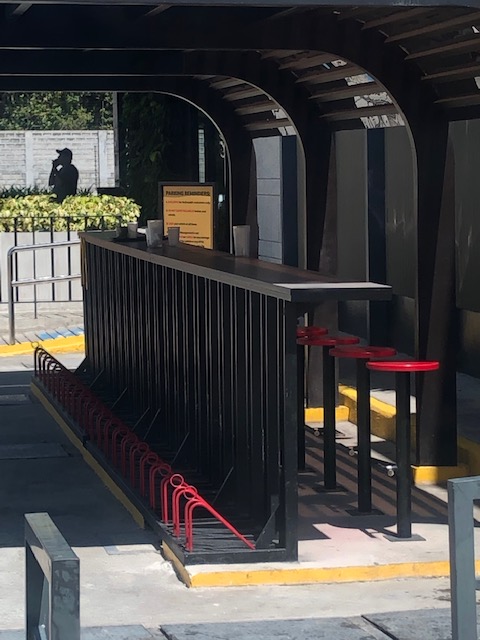 A close-up of the table, seats and bike slots
More and more establishments are now putting up bike facilities such as parking and bike & dine. We hope that these will help encourage more people to cycle while also proving that active transport is good for business.
–
 Caught (up) in traffic