
Home » Posts tagged 'buses' (Page 4)
Tag Archives: buses
A quick look at the BFCT in Marikina
I went to SM Marikina recently and had my companion take some quick photos of the transport terminal project of former Marikina Mayor and MMDA Chair, now Congressman Bayani Fernando (BF). Following are some of the clearer shots as we were moving when these were taken.
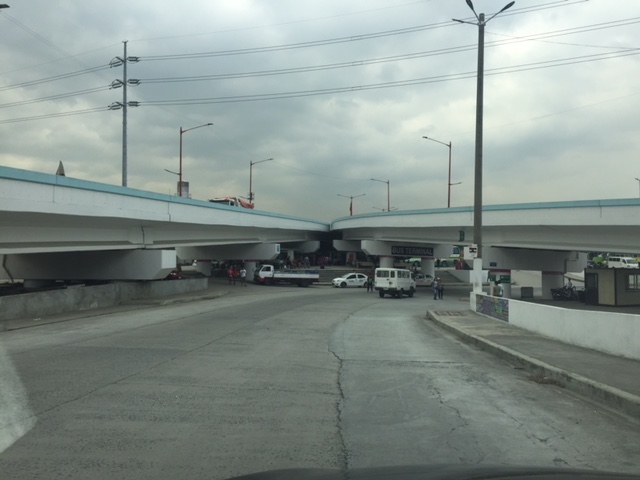 A look at the terminal located just beneath the two overpasses connecting Marcos Highway to C-5.
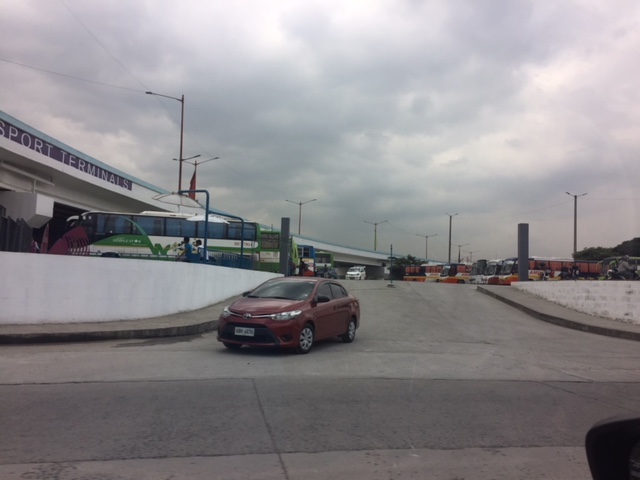 The driveway to and from the terminal lot.
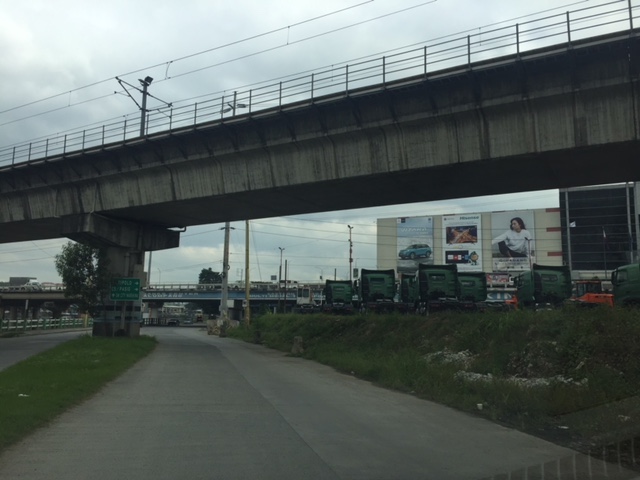 Moving towards SM Marikina under the LRT Line 2 structure, you see rows upon rows of trucks. I assume these are for sale and are there for display to prospective buyers.
 Leaving SM Marikina, this is the view of the trucks parked at the lot beneath the Marcos Highway and Line 2 bridges.
 Approach to the driveway of the terminal showing the buses currently at the BFCT.
 A closer look at the buses parked at the terminal. The green buses are RORO buses that the serve the West Philippine Nautical Highway route.
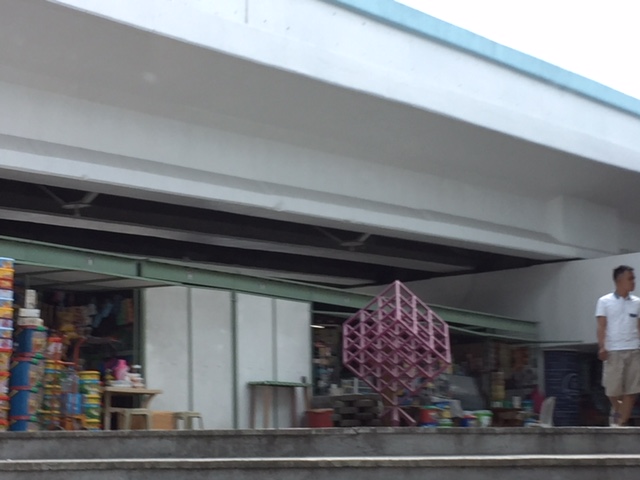 A quick look at some of the stores at the terminal. These are mostly the sari-sari/carinderia types you see in most provincial terminals. Among the merchandise are biscuits and cookies in containers of different sizes. These are popular pasalubong for travellers to relatives and friends in their destinations.
 The sign on the right is intended for vehicles coming from C-5 that are allowed to make a U-turn near the junction with Marcos Highway to get to the terminal. This, however, takes them into direct crossing conflict with vehicles coming up from the riverbanks heading to Marcos Highway.
It would be nice to see some statistics about the number of passengers using the terminal as well as their characteristics such as origins and destinations, including transfers (e.g., how do they get to or from the terminal and what modes do they use). I suspect that there are not so many people using this terminal and the numbers will not significantly improve once the Line 2 extension is completed and the new end terminal and its environs are developed in Masinag, Antipolo City.
–
Local Public Transport Route Plan Manual – Philippines
The Department of Transportation (DOTr) recently shared the Local Public Transport Route Plan (LPTRP) Manual that was the product of the collaboration among government and the academe. While the date appearing on the cover is October 2017, this manual was actually completed in April 2017. [Click the image of the cover below for the link where you can download the manual.]

I don’t know exactly why the DOTr and Land Transportation Franchising and Regulatory Board (LTFRB) were hesitant in releasing this manual. Perhaps they wanted to pilot test it first on a city? Yup, this manual has never been tested yet so we don’t really know whether it will work as a tool for planning public transportation.
With all the opposition to the government’s PUV Modernization Program, the DOTr and the LTFRB should be piloting the program first and show a proof of concept to dispel doubts about the program. The same essentially applies to this transport route plan manual. Only once these are piloted would we know first hand its flaws and allow us to revise or fine tune them. I would suggest that both the modernization program and the manual be piloted in cities that are perceived or claim to have strong local governance. Davao City comes to mind and perhaps Iloilo City. Can you think about other cities where the program and/or manual can be piloted?
–
Line 2 to be transformed into a BRT? Definitely not a good idea!
There are news reports stating that the Department of Transportation (DoTr) is considering replacing the LRT Line 2 with a BRT instead. I think this is not something worth considering at this point since the construction of the Line 2 extension from Santolan to Masinag is already underway. Also, there is the fact that Line 2 is the only heavy rail system among the three LRT/MRT lines in Metro Manila. It has the potential to have the highest capacity among the three as well as the potential to have the highest ridership especially after the extension is complete and the two additional stations are operational.
With lots of people requiring public transport beyond Masinag, the question is not whether to convert Line 2 into a BRT but instead what services can be provided for a more efficient system for Rizal and Marikina. I took the following photos along my commute from Antipolo to Quezon City. Note the number of people waiting for public transport along Marcos Highway.

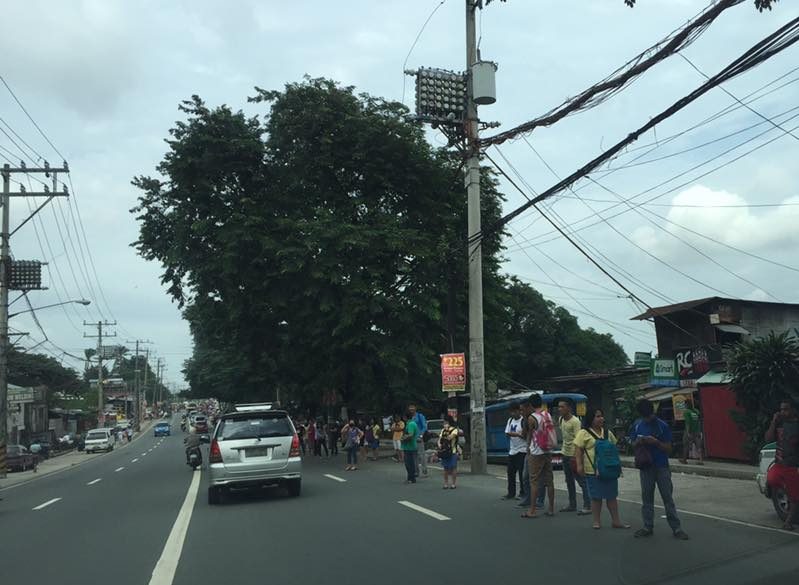
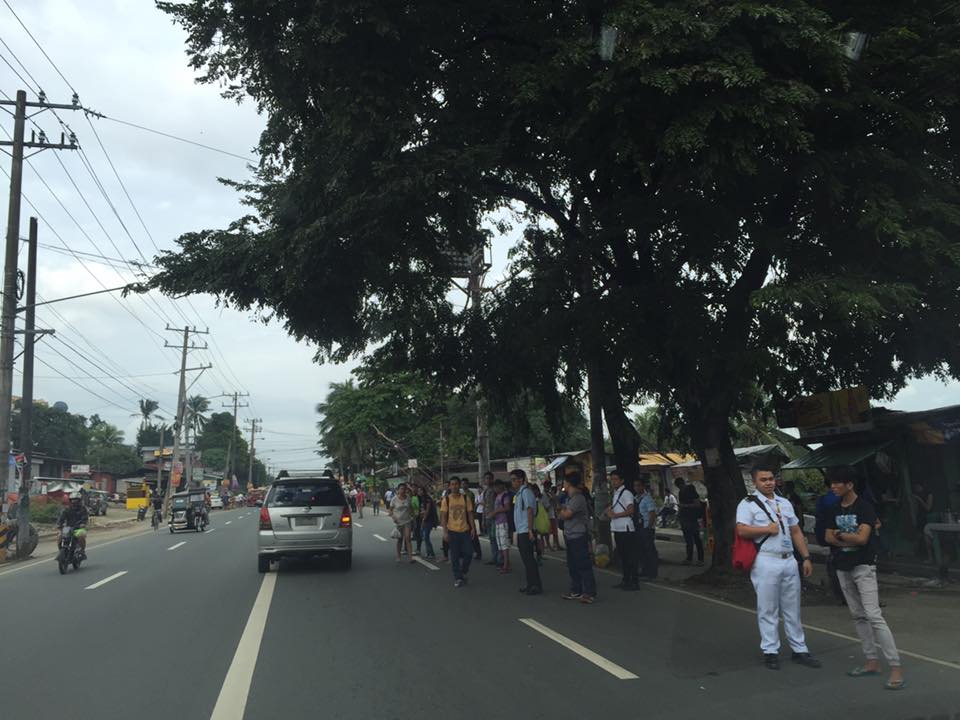

These are people who would typically take jeepneys or UV Express for their commutes. It is obvious from my regular observations that jeepneys and UV Express cannot cover the demand for public transportation and my opinion is that it is high time to introduce a higher capacity and more efficient mode in order to encourage people to keep taking public transport and to encourage those taking private transport to shift to PT.
A BRT service can be connected to Line 2. Since the Line 2 extension to Masinag is scheduled to be completed next year and be operational by third quarter of 2017, a bus service can already be piloted between Santolan and several end points. Four for consideration would be Cogeo, Antipolo Simbahan, Marikina and Cainta.
- Cogeo should be a no-brainer given that there is already demand there and this is growing rapidly with all the subdivisions being developed in this area.
- For Antipolo Simbahan, perhaps the final stop need not be at the shrine but at Robinsons Antipolo.
- For Marikina, there can be three lines – one branching from Ligaya where there is a major Ayala development, a second at Gil Fernando and another at Masinag. These may terminate at the city center, perhaps in the vicinity of the Rodriguez Sports Complex, which is near the Marikina City Hall and public market.
- The last line could traverse Felix Avenue (Imelda Avenue) and may terminate at Cainta Junction where commuters can transfer to transport along Ortigas Avenue Extension.
Surely, pilot services can be provided where limited stops or express services can be experimented on to see what clicks in terms of ridership. It would be nice to get feedback about such services and hopefully there will be champions for these bus services. Note that such services terminating at Santolan means that there should be terminal facilities in that area. Former MMDA Chair and now Marikina Congressman Bayani Fernando has developed an area precisely for an eastern transport terminal and so bus services present a good opportunity for this terminal to be a busy one. Maybe BF can champion these bus services? And perhaps the Antipolo and Cainta (paging Mayors Ynares and Nieto!) can also push for these services as commuters from these would stand to benefit the most from a good transport system.
–
Bus fixation and quick fixes
The mainstream news and social media have featured a lot about buses recently. These were mostly government initiatives:
- P2P bus services – are operated by a tourist transport company (and now also by a large bus company that operates some routes for Bonifacio Global City). P2P stands for ‘point-to-point’, referring to the end points of a fixed route. For example, buses run non-stop between Trinoma in Quezon City and Glorietta in Makati. These are express buses that offering services that regular bus companies should be providing their passengers in the first place. Since these are non-stop (no pick-ups or drop-offs in between origin and destination, the main advantage is of course reduced travel times. They still operate in mixed traffic so travel times can still be reduced significantly if they had their exclusive ROW. That would make them operate like a BRT.
- Airport premium bus services – are offered by a logistics company owned by a controversial government official heading a sensitive post. At 300 PhP per passenger, a close friend made the observation that you can get a decent enough taxi for that price. And if you were part of a group, then you can probably pool your money to get Uber instead.
There is also the Department of Science and Technology’s (DOST) Road Train, which is an exaggeration of sorts for a multi-articulated vehicle. Typical ‘stretched’ vehicles are the articulated and bi-articulated buses commonly used in BRT systems. The DOST’s Road Train prototype seems to be a combination of 5 buses. Thus, there is the allusion to a train.
The fixation on special buses seems like a stop gap measure (and some state they are), an attempt to address problems due to the government’s failure to deliver any major mass transit projects during its 6-year term. The LRT Line 2 extension doesn’t count as it only began construction a few months ago and won’t be operational until more than a year from now when there is already a new administration in power. The MRT-7 also doesn’t count as an accomplishment of this administration as it is a project that’s been in limbo for over a decade and only has also started work the past two weeks. Actually, these two rail projects were part of the list of low hanging fruits transport consultants and development agencies have identified at the start of the current administration. Hopefully, there are no major snags towards their completion in the next 2 years or so in order to open up opportunities to rationalize road public transport especially along Commonwealth Avenue and Marcos Highway where the impact of high capacity, quality mass transport will be felt once the Line 2 Extension and Line 7 are operational.
–
Curiosities of transport services in Metro Manila
There are a few interesting observations we can make out of transport services in Metro Manila and chief among them is the poor quality of service that we can generalize among most if not all modes of public transport available to commuters. This poor quality of service of public transport is what drives many people to aspire to own and drive or ride their own vehicle. Already there has been a surge in motorcycle ownership in Metro Manila and its neighboring towns and cities (collectively Mega Manila) and car ownership is also on the rise. These trends have led to increased congestion along many roads. And we will probably not see a significant improvement until the mass transit projects have all been completed. These include the Line 2 Extension to Masinag, the MRT 7 along Commonwealth, the Line 1 Extension to Cavite, and yes, the capacity improvement of MRT 3. Hopefully, there will also be BRT lines along C-5 and Quezon Avenue to complement the rail transport projects.
The UV Express is actually a response to poor public transport services as it evolved out of the FX taxi services of the 1990s that later mixed with informal van and AUV services. These are actually a precursor of today’s ride sharing modes. Only, in those days when the FX service was born, you didn’t have tools like apps to facilitate your ride. People had to agree about the fares and the destinations from terminals like those in Cubao (Quezon City) and Crossing (Pasig/Mandaluyong).
But let us focus on three services that would not have been attractive if only services by their conventional counterparts were (very) satisfactory and if there was a comprehensive and efficient mass transit network in the metropolis. These are Uber, P2P buses and airport express buses.
Uber offers services much like that of the conventional taxi. Its advantages are mainly having recent model vehicles (not dilapidated ones), a better driver (this attribute is quite subjective), and an app-based system for availing services. Fares are generally more expensive than those for regular taxis. And there is a surge pricing for when congestion is really bad. It has a very good feedback mechanism that allows passengers to evaluate their drivers. However, this wouldn’t have been necessary if taxi drivers in general were more disciplined and courteous to their passengers.
P2P buses operated by Froehlich Tours offers services much like that of conventional buses. Its current advantages over conventional buses are that it operates express services, buses are new, well-maintained, and with drivers that appear to be more disciplined than the typical public utility bus driver. A friend’s take is that P2P’s are the bus equivalent of UV Express. It is not at all necessary if the quality of service of regular buses were much better than it is right now. And I am referring to the practically stop anywhere, recklessly driven and poorly maintained regular buses.
Premium airport buses have recently been introduced and these are operated by Air21, which is a freight forwarding company. It is a service that’s long overdue given the many difficult experiences of people to and from NAIA’s passenger terminals. While an airport limousine bus service should have been provided many, many years ago it also is a reflection of the poor quality of airport taxi services. Airport taxis are expensive and according to many stories circulating can be predatory.
What I am driving at, if it is not yet so obvious, is that many ‘new’ services are actually borne out of crappy services of conventional modes. There are many lessons to be learned here in and lest I be accused of neglecting other Philippine cities, I should mention that Metro Manila presents so many lessons to be learned by other rapidly growing and urbanizing areas in the country. At this time we can mention Cebu, Davao, Iloilo, Cagayan de Oro and perhaps Clark/Angeles as metropolitan areas to watch in terms of transport system development. Hopefully, there’s a kind of reverse psychology in their approaches to address their transport needs in that they avoid what has been done in Metro Manila. Surely, transport services in these other cities can do better than Metro Manila’s.
–
Misleading information on comparing modes of transport
A major media network sponsored an experiment pitting a bicycle, bus and rail in a race from Trinoma to De La Salle University along Taft Avenue. The bicycle won but under conditions that are favorable to the cyclist even considering Metro Manila’s road conditions that are not bike-friendly (and not pedestrian friendly, too, in many areas).
Would the bicycle have won against a motorcycle where both riders were of similar skills and experiences? Probably not considering the speed of a motorised vehicle even given congested roads.
Would a lot of people consider cycling between, say, Trinoma and DLSU? Most likely not, even if you provide the necessary infrastructure and facilities like bike racks, showers, etc., short of building exclusive bikeways (e.g., elevated).
I have nothing against bicycles and cycling. I have a bicycle myself and I have cycled between my home and the universities when I was studying and a visiting scientist in Japan. However, I have to caution people into thinking and oversimplifying that one mode is better than all others. If we pursue this line of thinking, then perhaps we should include walking in the discussion. I would like to think that there will also be a lot of people who would state that walking (and even running) is better than other modes including cycling. When comparing these two non-motorized modes, however, the advantages of one over the other become obvious – cycling is faster and requires less energy per person traveling using the mode. Such would extend to the motorized modes and comparisons should clearly show the suitability of certain modes of transport over others once distance and capacity are factored into the equation. Thus, we have rail systems as more appropriate over longer distances and are able to carry much more passengers per hour compared to, say, jeepneys. These are even more efficient in terms of energy on a per passenger basis. Further, we have to appreciate that we have to establish a clear hierarchy of transport systems and provide the necessary infrastructure to enable people to have all the options for traveling and especially for commuting.
–
San Diego Buses
I took a lot of photos of transport in San Diego and among these are of buses. The San Diego Metropolitan Transit System operates a variety of buses that included articulated ones. These have fixed routes and designated stops. At each stop, there is information on what buses (i.e., routes/route numbers) stop there. Here are a few photos of buses in San Diego.
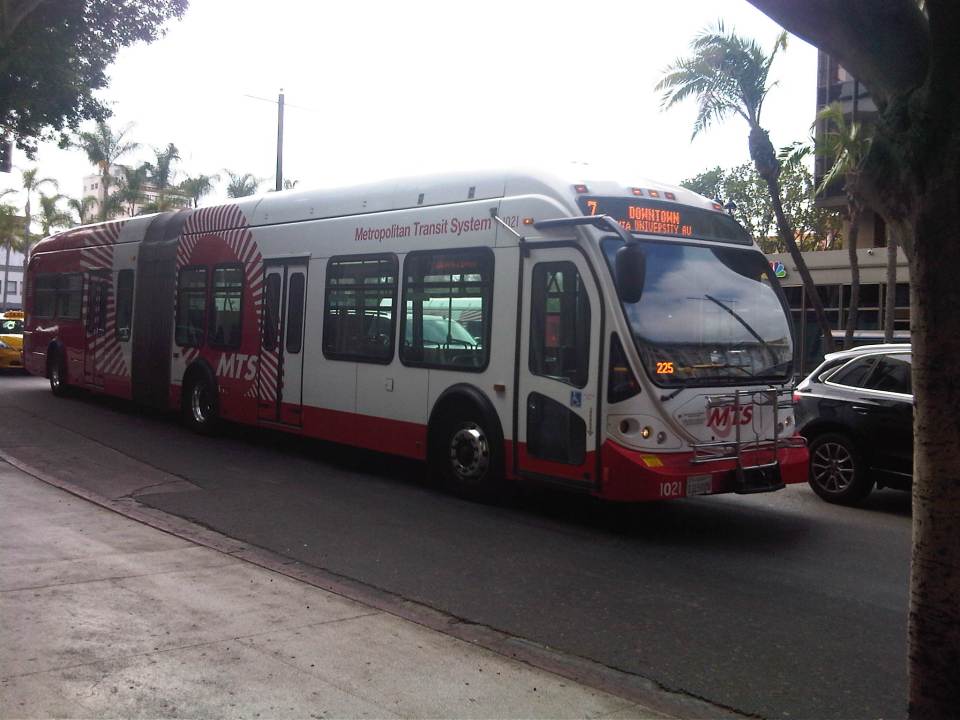 Articulated bus in downtown San Diego
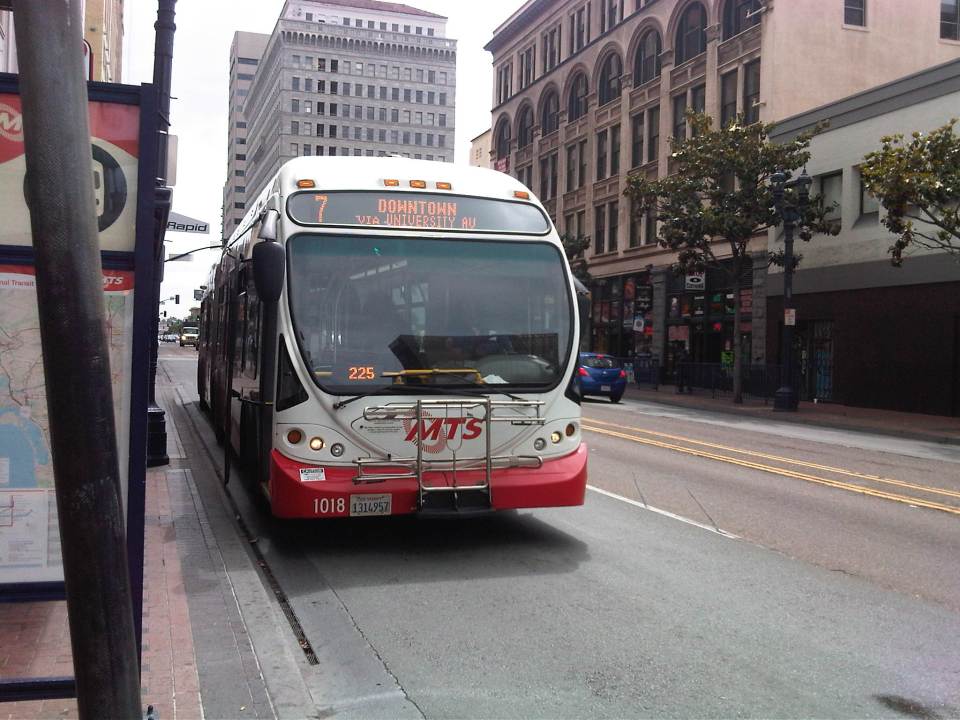 The contraption in front of buses are racks for bicycles
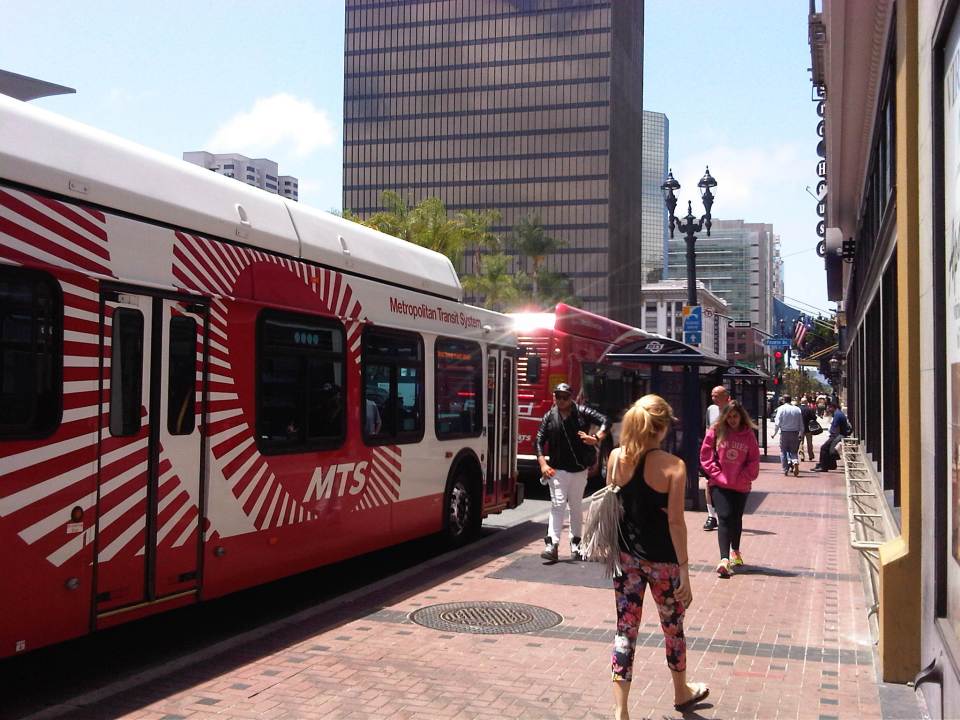 Bus stop in downtown San Diego
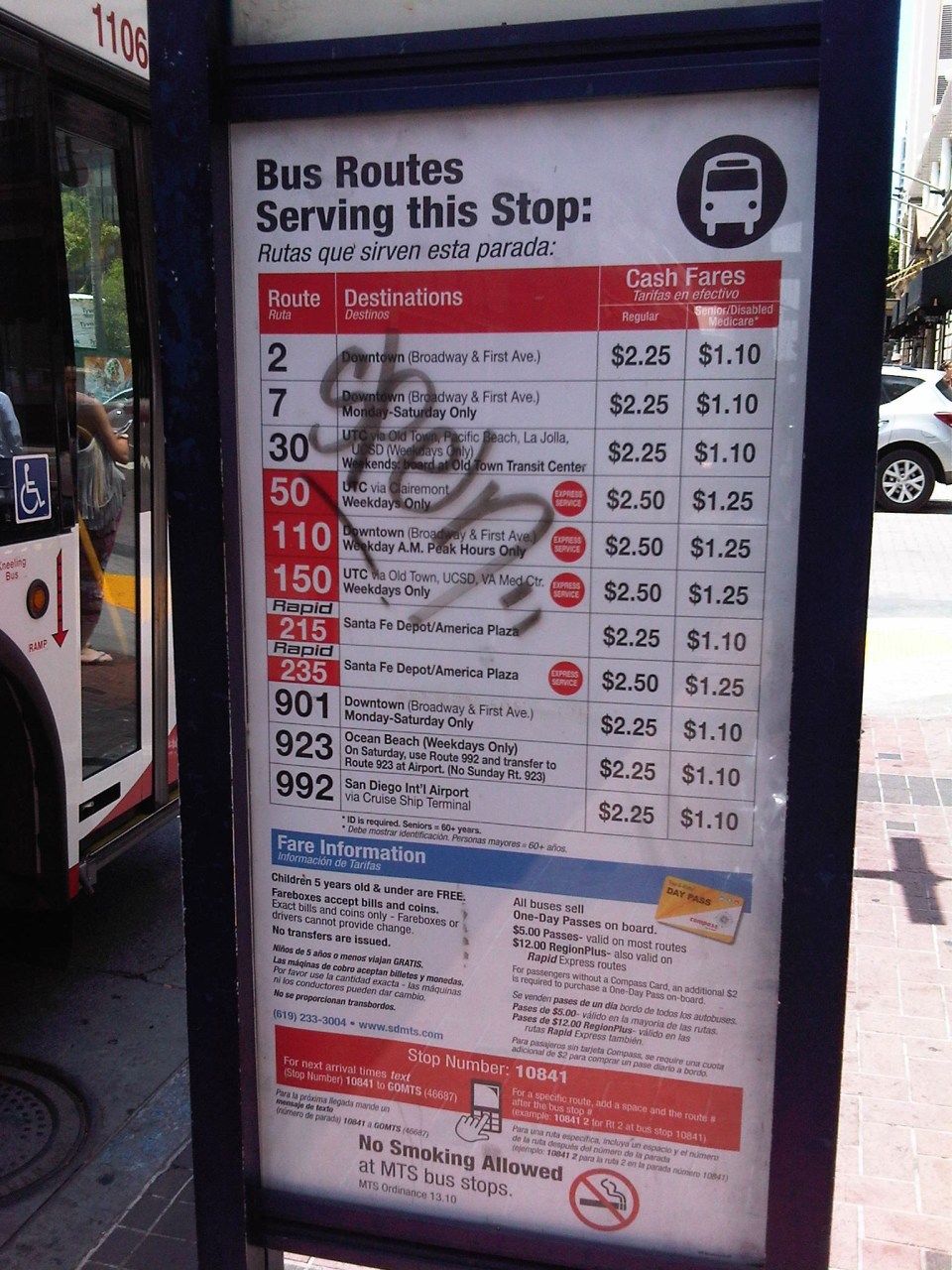 Information on bus routes, destinations and fares at bus stops – you can pay as you board the bus or purchase a ticket, pass or compass card in advance.
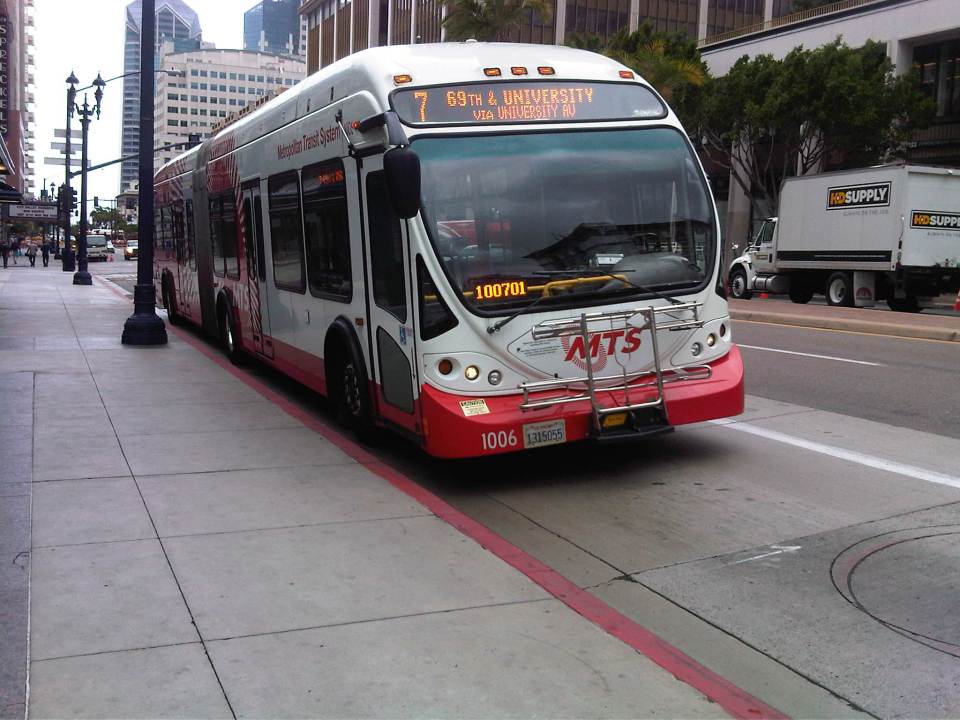 A bus serving the La Mesa-Downtown route via University Ave. – this is the bus you take from downtown San Diego to San Diego Zoo
 Bus interior shows few seats and much spaces for standees – enabling the vehicle to maximize its passengers
 The interior on the rear half of the articulated bus
San Diego is a city of just under 1.4 million people with a transport system that’s able to serve the demand for transport over the distances covered by its buses and trolleys. Compared to Philippine cities, San Diego’s transit system is one well oiled machine. Of course, it is more expensive if you convert dollars to pesos but then if you account for the standard of living (including living costs and salaries) and the quality of service provided by the trolleys and buses, then you have something Manila and other major cities in the Philippines would be envious of. Can we have something like San Diego’s transit system in the Philippines? We can but (and that’s a big ‘but’) it needs a lot of work and commitment to set-up and make something like this work.
–
Some setbacks for sustainable transport
There have been a few setbacks for sustainable transport in the news recently and not so recently. One is the burning of an electric vehicle, a COMET to be precise, that saw one unit burn to the ground near the UP Town Center along Katipunan Avenue. I am not aware of any official or formal findings being released as to what really happened to the vehicle but that is basically a big PR problem now as detractors of e-vehicles will point to the incident as proof that e-vehicles still have a long way to becoming a viable and safe option as public utility vehicles. E-vehicles have a lot to prove especially as an option for public transport and such setbacks only strengthen the argument against them and leaves us with the current conventional options.
Another is the discontinuance of service inside the Bonifacio Global City (BGC) of hybrid buses operated by Green Frog Transport. This one is due to what Green Frog described as exorbitant fees being charged by Bonifacio Estates Services Corp (BESC) for their buses to enter BGC. This is making the rounds of social media but there seems to be no response from BESC nor from the Bases Conversion and Development Authority (BCDA), which is supposed to also have a say with policies in BGC. Perhaps BESC thought it best to just give Green Frog the silent treatment for what appears as a trial by publicity approach by Green Frog. One commuter commented that maybe BGC authorities should push for their Fort Buses to be hybrid and phase out the jeepneys in favour of higher capacity transit inside BGC.
There have also been issue on road safety including many incidents of pedestrians getting run over by vehicles. Many of these have been captured on video particularly by the Metropolitan Manila Development Authority (MMDA), which has set-up a network of cameras in many intersections along major roads. Many show vehicles Given that many cases feature jaywalking, it is still the responsibility of any motorist to exercise caution when manoeuvring, especially when turning at intersections. Drivers will always have blind sides or weak sides when they manoeuvre so they should be very careful when in doubt and not immediately proceed when it is not clear that they have a clear path. At BGC (again) one will notice that many motorists do not give way to pedestrians even when the latter are crossing at the right locations and according to the sign clearing them to cross the street. In one case involving two speeding SUVs, one lost control and hit a pregnant woman crossing the street. While a significant number of vehicles in BGC are through traffic, it is still the responsibility of BGC’s traffic enforcers to ensure motorists follow traffic rules and regulations including prioritising safety over haste. Simply attributing such safety issues to through traffic is no excuse for traffic enforcement being as lax as or par with the rest of Metro Manila, especially for a CBD that packages itself as better than the rest of Metro Manila.
Dau, Mabalacat Bus Terminal – Part 2
The first part of this feature on the Dau Bus Terminal in Mabalacat, Pampanga showed the city’s PUV Common Terminal, the bus berths from the entrance of the terminal and the many stalls lined along the terminal. This second part features more photos including some showing a tricycle terminal and an airport shuttle lounge inside the huge bus terminal.
 The interior shows an even more expansive bus terminal with more berths, a tricycle terminal and the Clark Airport shuttle station.
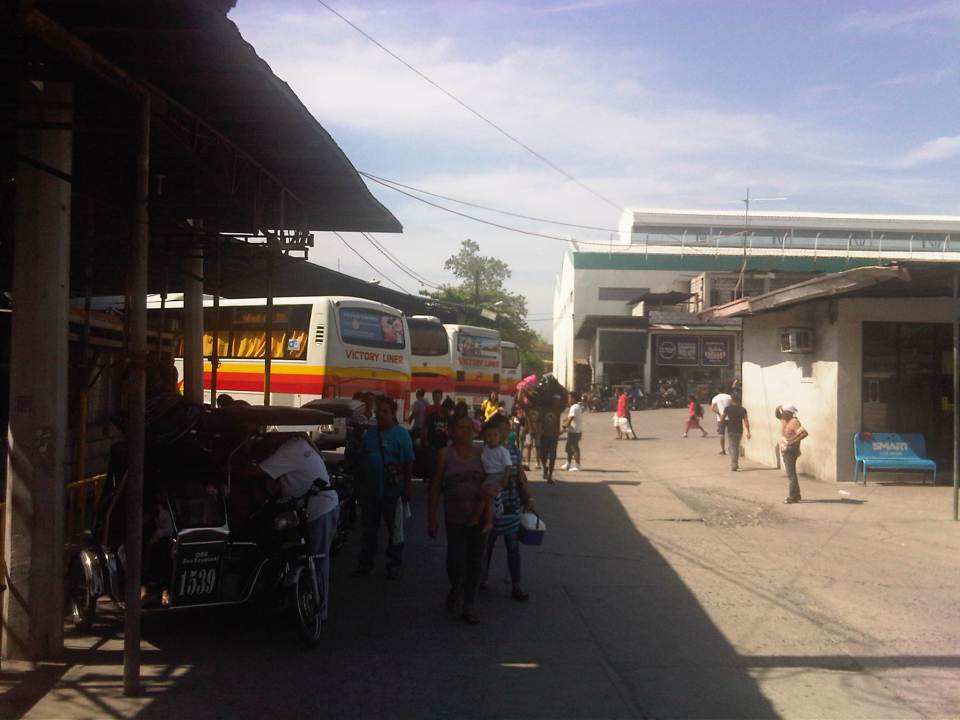 Victory Liner buses berthed just after the tricycle terminal within the bus terminal
 Clark Airport Lounge in the middle of the bus terminal
 An add for a popular cracker brand states “the journey is long”
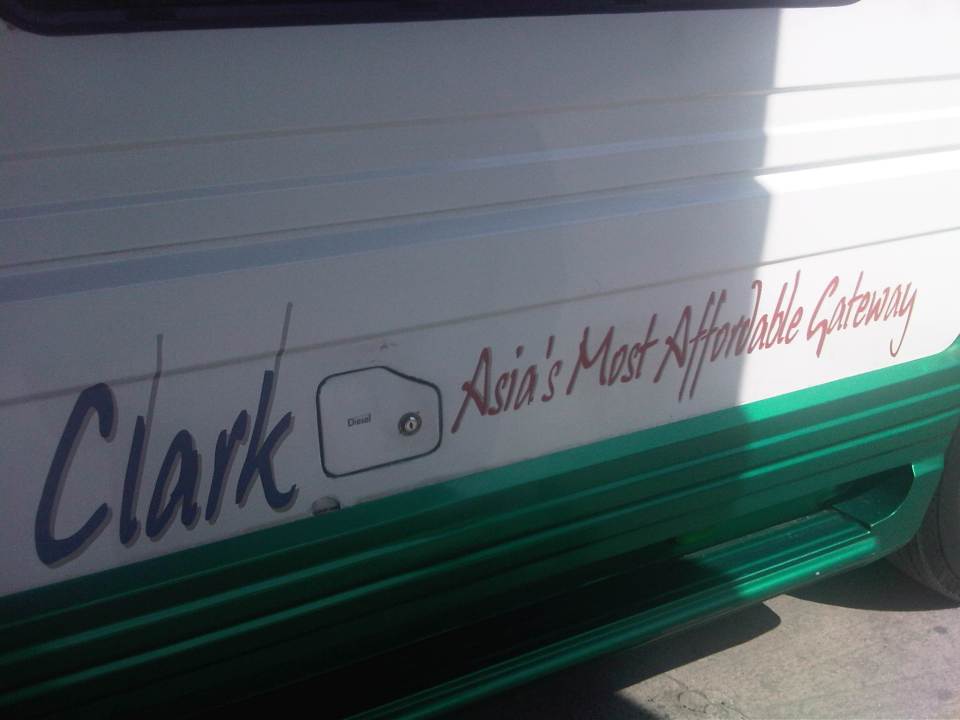 Sign on the Clark shuttle jitney
 The Clark Airport shuttle jitney is an extended or stretched Asian Utility Vehicle (AUV) that typically seats 27 people including the driver.
 The tricycle terminal at the bus terminal allows for a more direct transfer between modes (i.e., long distance, inter-provincial or inter-city transport to local transport).
 Passengers from the lounge board the airport shuttle. Luggage are also taken inside the vehicle so it can only accommodate a limited number of people rather than the 27 I mentioned earlier.
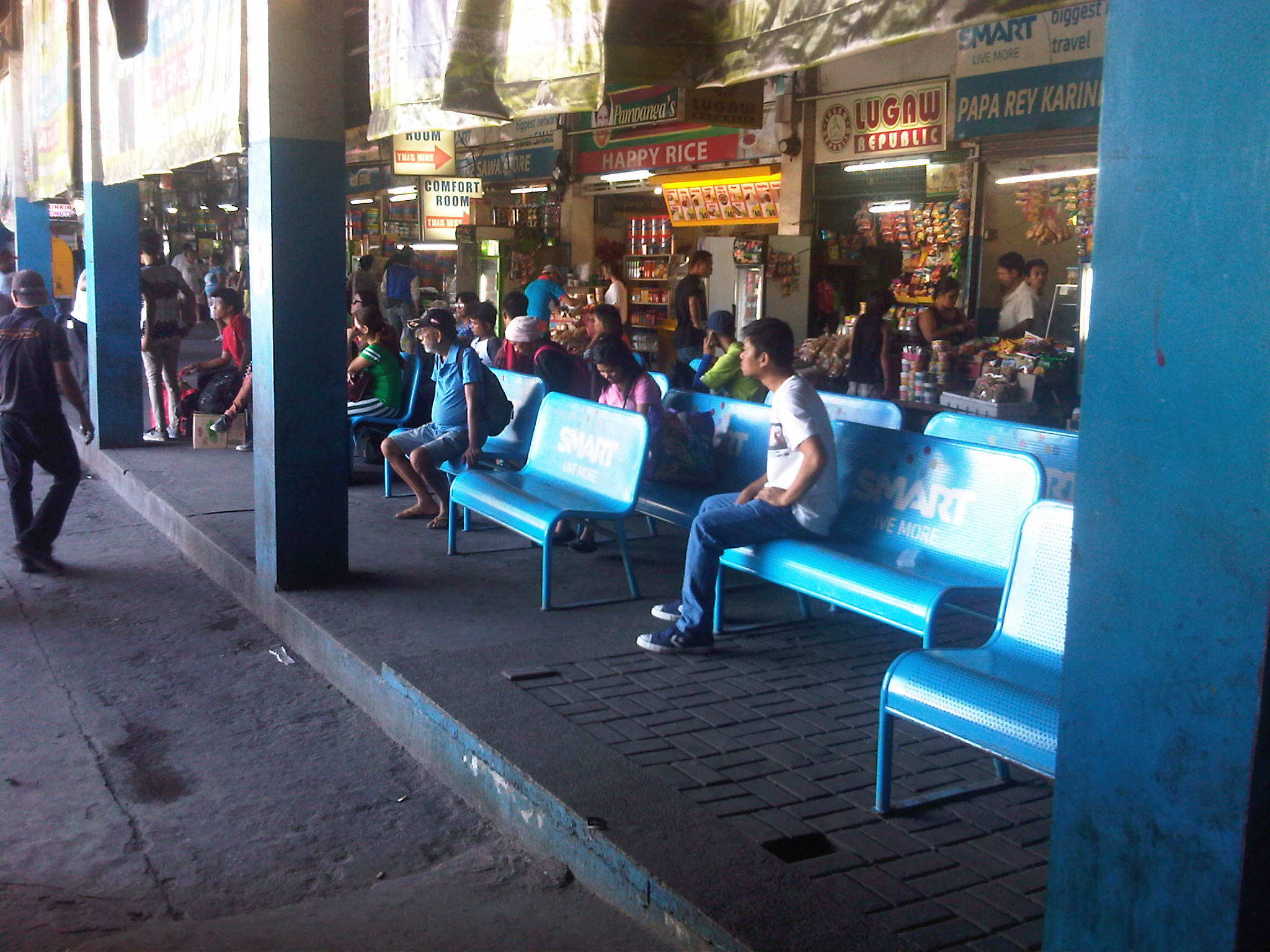 Another look at passengers waiting for their buses at the available (and limited) benches at the terminal. The benches shown seem to be ‘sponsored’ by a leading Telecom company.
 Beverage dispenser at the terminal
 Low batt? Cellular phone chargers are quite popular with passengers needing a quick battery charge while waiting for their buses to arrive at the terminal.
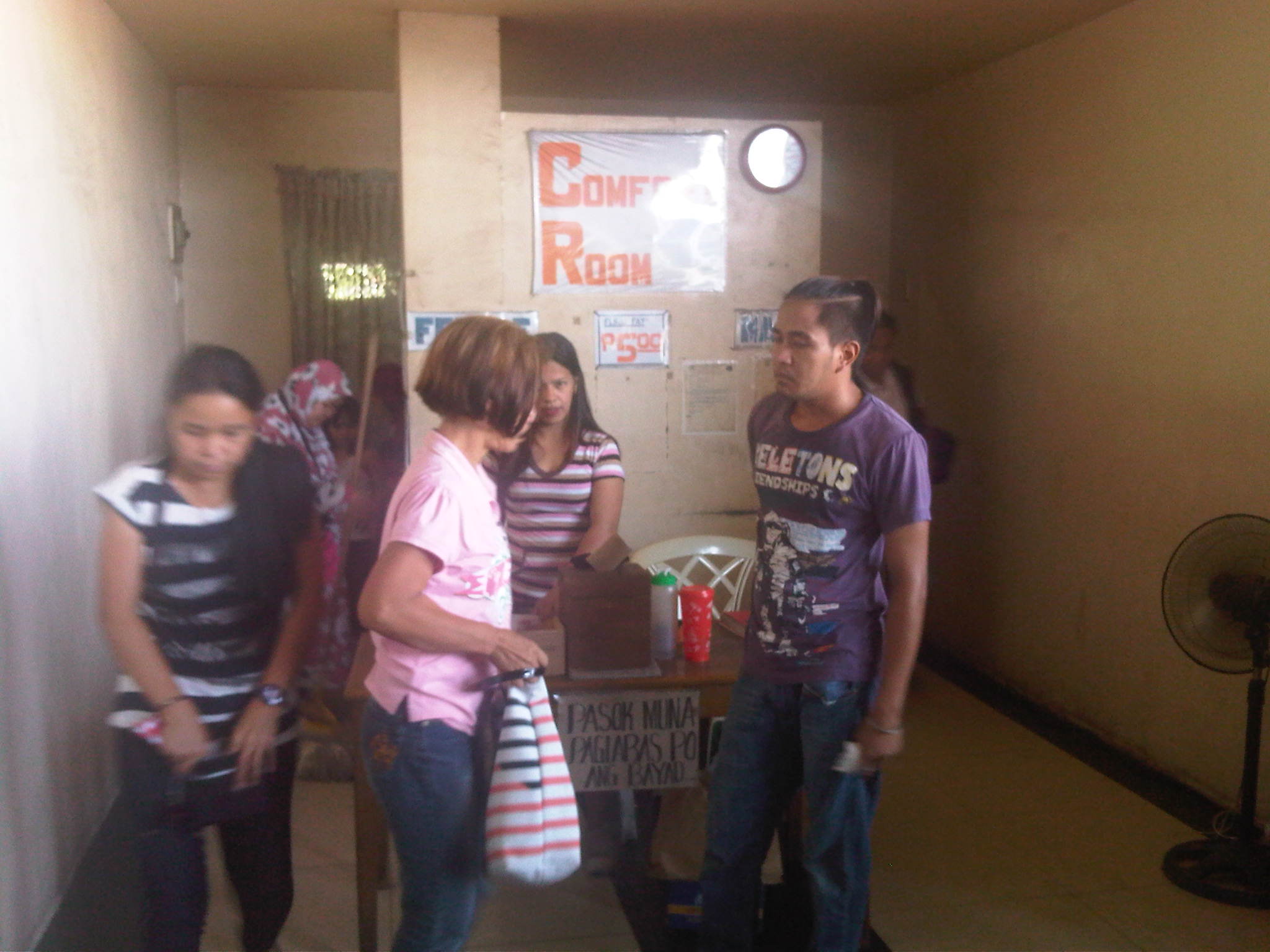 Public comfort rooms or toilets at the terminal charge 5 pesos (about 12 US cents) for each use. There’s a sign that says payments are made after use. The fees are supposed to cover maintenance of the toilets but don’t expect much in terms of cleanliness or smell.
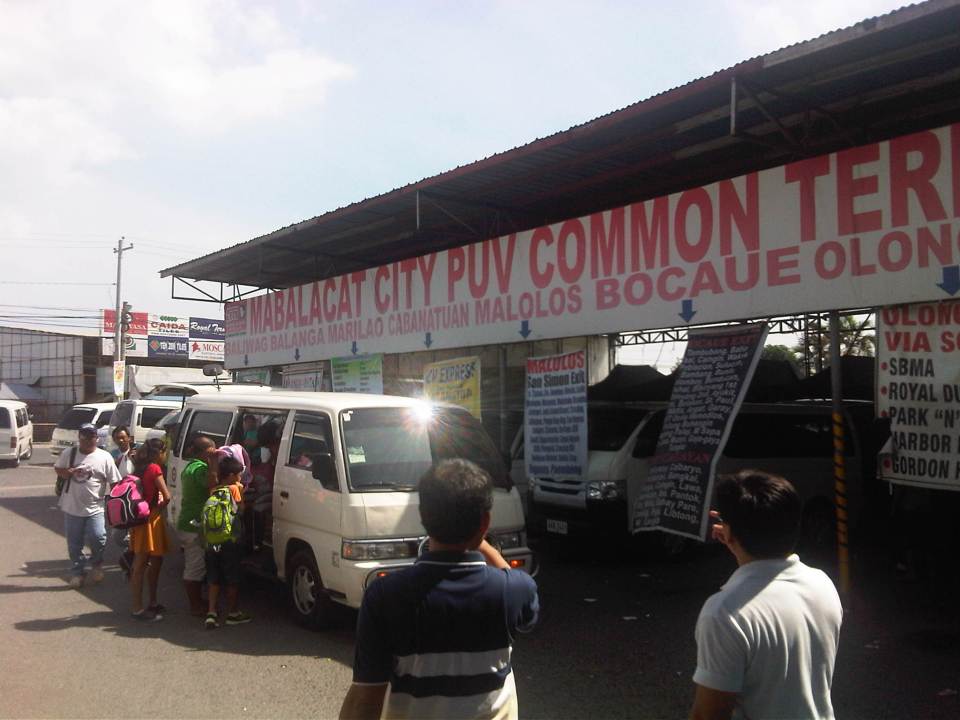 Passengers board a van at the Mabalacat City PUV Common Terminal. PUV stands for Public Utility Vehicle and basically stands for the vans running long distance express routes that are supposed to be non-stop or limited stop.
 Huge signboard at the entrance to the terminal
The huge bus terminal is a good example of a regional bus terminal in the Philippines and one that is also a multi-modal facility at least for road transport. It is relatively well-run and is a major transfer point for people traveling between much of Luzon Island including Metro Manila. There is definitely room for improvement including amenities for passengers and perhaps a more modern airport shuttle lounge. Perhaps there should be more investments to further improve this terminal used by so many passengers traveling mainly on the provincial buses calling on the terminal.
–
Dau, Mabalacat Bus Terminal – Part 1
We recently went to Mabalacat, Pampanga, which is north of Metro Manila and at the end of the North Luzon Expressway. The objectives of my colleagues were to inspect the Dau Bus Terminal and to look at the airport shuttle whose terminal is co-located and within the large bus terminal. Following is a first batch of photos I took at what is the largest bus (and intermodal) terminal in Central Luzon. There are others like it around the country like the one in Lucena City in Quezon Province (Southern Luzon) but few are as large and serve as many buses.
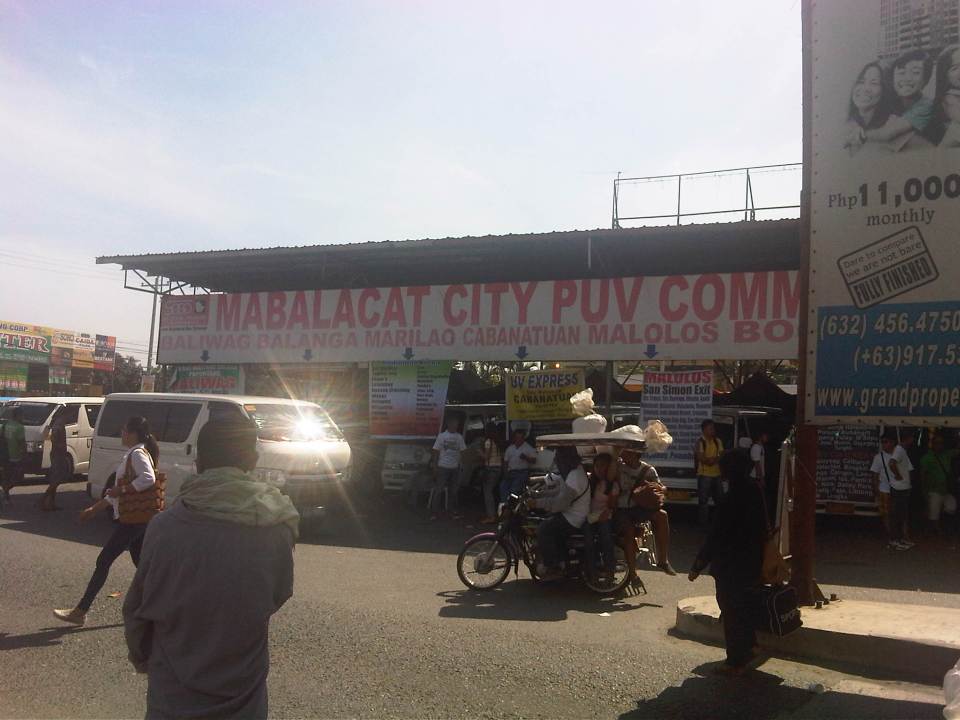 The city’s PUV terminal is adjacent to the bus terminal
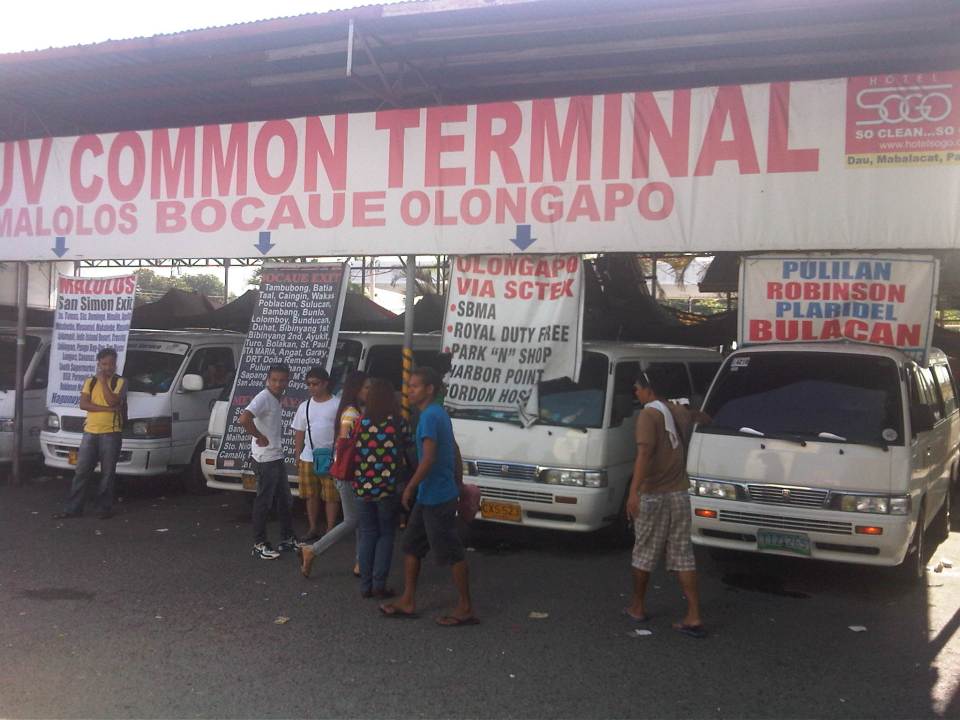 Vans bound for various provincial destinations await their passengers at the PUV terminal. These usually seat 10 passengers and directly compete with buses for the destinations indicated in the signs.
 Passengers walk towards the terminal and the berth assigned to their buses.
 People line up to congregate at the berth assigned to specific bus companies and according to their destinations
 Passengers, well-wishers, hawkers and shopkeepers mingle in what is probably the busiest terminal in Central Luzon. I am not aware of any similar terminals in other provinces in Region 3 including Bulacan, Tarlac and Nueva Ecija.
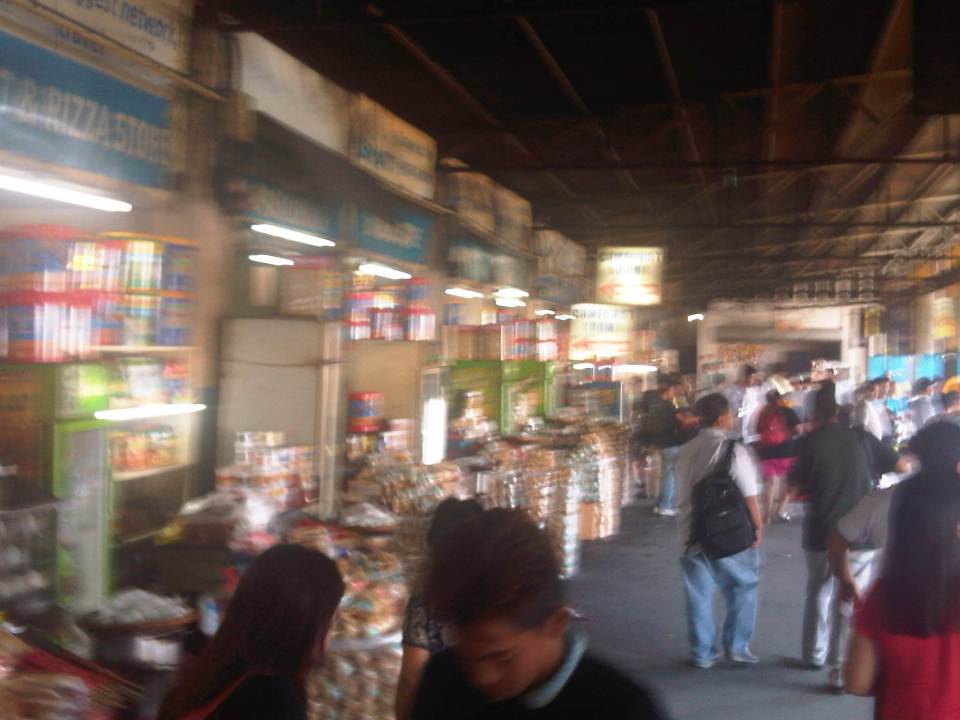 Stalls at the terminal sell mostly food and drinks including large containers of biscuits that are still popular pasalubong.
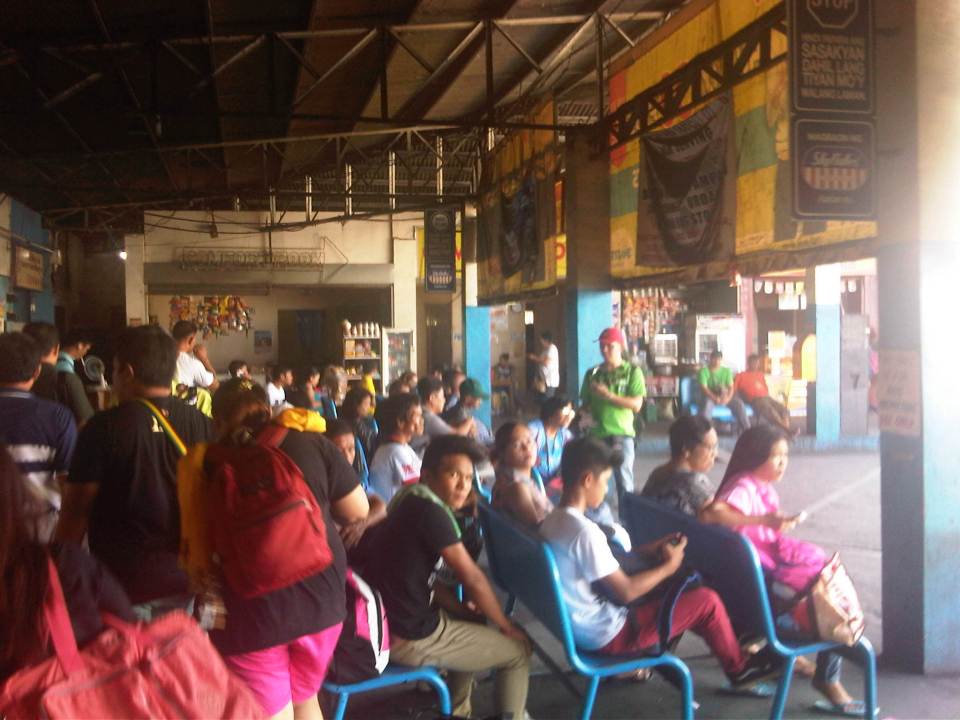 Some areas of the terminal can be quite crowded as some bus companies are more popular than others.
 Not all bus companies provide benches for their passengers. Some seats are actually provided by stores and eateries but only for their customers.
 Empty berths at the bus terminal
 Passengers wait for their buses on the benches or while standing and having a quick snack or smoke at one of the stores at the terminal. The guy in the photo is actually violating a national law and local ordinance banning smoking in public areas.
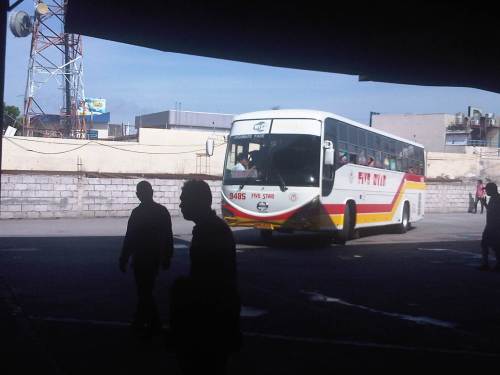 A Five Star bus arrives at the terminal. Bus companies have their assigned berths at the terminal and drivers and conductors presumably have their suki eateries or stores.
More on the Dau bus terminal in a future post.
–
 Caught (up) in traffic