
Home » Posts tagged 'mass transit' (Page 4)
Tag Archives: mass transit
Transport in times of rains and insensitive statements
How important is a good public transport system? Part of the definition of a good public transport system is that it should be an all-weather system. This means that even if there is inclement weather, the system would still be functioning and able to ferry people between their homes, workplaces, schools and other destinations. Of course, the exception here would be the times when there are extreme weather conditions like typhoons passing through cities. The rains today and past other days reminds us how difficult it is to commute even when you have your own vehicle. Those who opt to use their own cars now encounter severe traffic congestion with increasing frequencies while those with only public transport as their choice usually have difficulty getting a ride home.
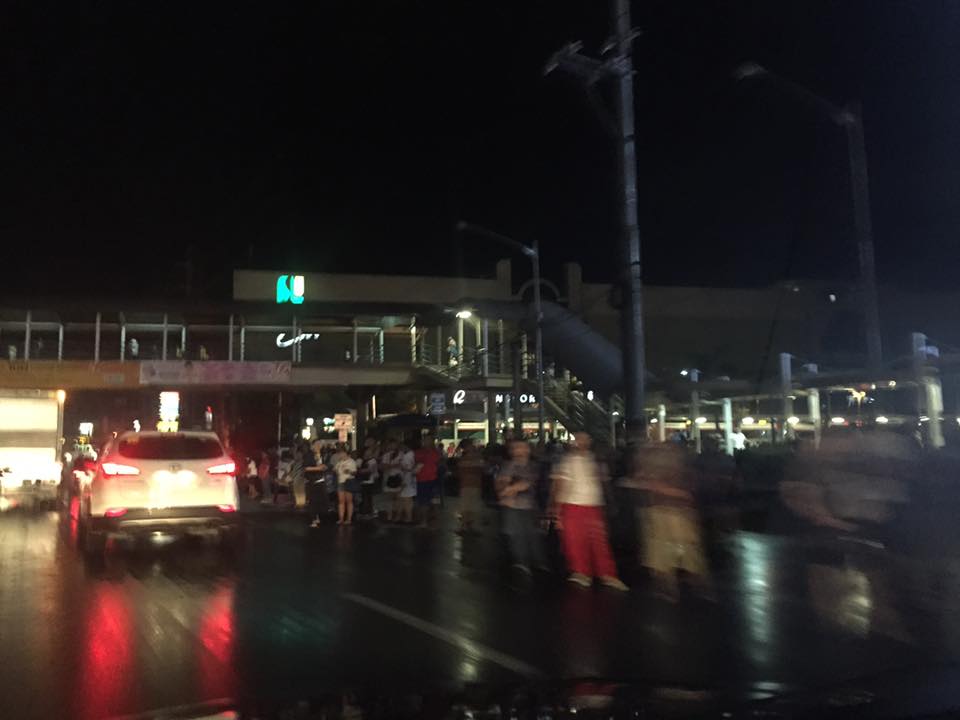 Commuters on the carriageway trying to get a ride home – many brave the strong rains to get ahead of others
It is not just unfortunate but rather depressing that Metro Manila and other major Philippine cities have no efficient public transport systems. The current modes of transport are road-based and dominated by paratransit including jeepneys, multicabs and tricycles. The state of disrepair of the PNR and MRT3, the much-delayed extensions of LRT1 and LRT2, and the much-delayed construction of MRT7 and BRT lines all contribute to the hellish commutes people experience everyday. Combine these with what experts regard as deficient station plaza designs that have led to inefficient transfers between the trains and road-based transport. It is no wonder that a person on bicycle can beat a commuter on a trip between Trinoma in Quezon City and a university in Manila considering the state of MRT3 and the poor transfer conditions between MRT3 and LRT1. This won’t likely be the case in Singapore or Tokyo where the proper hierarchies of transport are well established and with the necessary facilities to support their people-friendly systems.
What’s more depressing, frustrating and disappointing (if its possible to feel all three simultaneously) is how transport officials, including and especially the top official of the Department of Transportation and Communications (DOTC), apparently see our transport woes as “not fatal”. Is it really “not fatal”? Increases in the incidence of respiratory diseases due to the increased emissions are attributable to mobile sources (vehicles) and the long hours of road traffic congestion. The increase in the number of fatal road crashes as reported by the Metropolitan Manila Development Authority (MMDA) is also attributable to a significant increase in traffic volumes. One comment on social media was right on the dot on emergency cases ending up dying due to the ambulances being unable to make it to the hospitals in time for their passengers’ treatments.
And so, there were renewed calls for transport officials to get out of their chauffeured cars and take regular public transport between their homes and offices. The dares include riding the MRT3 during the peak periods and actually experiencing the queues and the crowded platforms and trains. It is no wonder that the image of the Dutch ambassador riding his bicycle to his office has been a popular share in social media because a lot of people feel that leaders should be examples themselves on how each one of us can pitch in to solve transport and traffic problems. Attempts by some government officials (including the top official of the transport department) to ride the MRT3, for example, are met with much criticism because they are given special treatment – they skip the lines and have bodyguards escorting them and clearing the way and space for them to ride comfortably. Clearly, this is not what the common commuter experiences everyday when he or she would have to use something short of MMA skills to get a ride.
Are we helpless against such insensitivity of our officials, many of whom are politicians and professionals associated with oligarchs? Not totally. And next year’s elections offer the commuting public a chance to express what they think about transport in this country and in their cities and municipalities by making transport and traffic urgent issues that need to be addressed and prioritized. Will you vote for candidates who had a hand in the continuing deterioration of transport in the Philippines and who consistently dismiss transport and traffic issues as secondary and just a by-product of non-inclusive economic growth? I surely won’t and will be very critical of candidates’ platforms and proposed programs should they win and become the leaders of this land. A big part of those programs should be how to address transport and traffic issues especially the deficiencies in infrastructure. Addressing these pressing issues on transport and traffic will go a long way in improving the quality of life of Filipinos and ensure a sustainable and inclusive growth for the country.
–
The LRT Line 2 Extension gets underway
A lot of people have been waiting to see the construction of the LRT Line 2 extension from Santolan in Pasig City to Masinag in Antipolo City. Right after the groundbreaking ceremony last June, there seemed to be no activity along the alingment that was the center of Marcos Highway. Actually, there were already activities as the contractor already deployed personnel to do some surveys including marking the locations of the columns that will support the elevated tracks.
The past week saw the contractor setting up a work zone in the middle of Marcos Highway and stretching from across Robinsons Metro East and McDonalds. The work area included what was the opening for the Felix Avenue-Marcos Highway intersection. This is probably one of the busiest if not the busiest stretches of Marcos Highway so the reduction by one lane for either direction of the highway immediately had a negative impact on traffic. Added to the highway capacity reduction in terms of the remaining available lanes is the further reduction due to the ‘usyoso’ behavor of motorists ‘inspecting’ the work zone as they pass by.
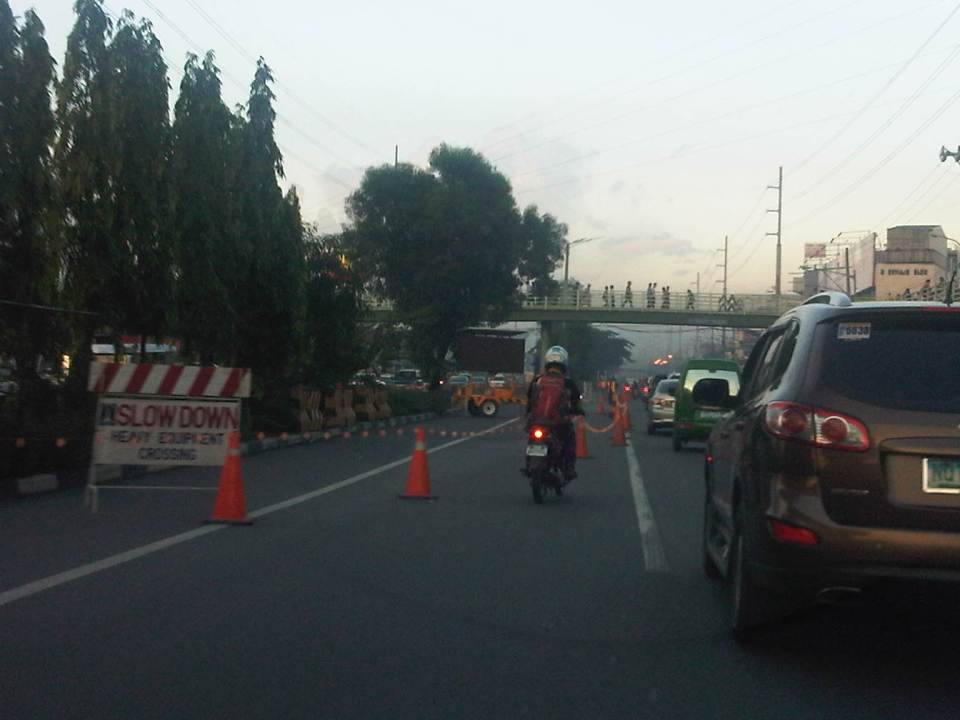 Work zone across from Robinsons Metro East – direction of traffic to Masinag (eastbound)
 Work zone at the junction of Imelda Ave. (formerly Felix Avenue formerly Imelda Ave.), Gil Fernando Ave. (formerly A. Tuazon Ave.) and Marcos Highway
 Work zone near McDonald’s (on the other side -westbound – of Marcos Highway) and also near a major U-turn slot used by vehicles coming from Imelda Ave that are westbound
Traffic will definitely be heavy along this section and the rest of Marcos Highway once construction is at full swing. I am tempted to say that it might be worse than the NAIA expressway construction site of which the contractor is the same. I just hope the appropriate traffic management measures are implemented and that road users will be cooperative. This will likely be a couple of years’ sacrifice for anyone living along this corridor and the major roads connecting to it. Will there be a light at the end of the proverbial tunnel? There should be as LRT Line 2 will finally be able to serve an area wanting of efficient and reliable public transport.
–
 Caught (up) in traffic