
Home » Posts tagged 'NAIA Terminal 3' (Page 4)
Tag Archives: NAIA Terminal 3
Full airport operations at NAIA 3?
Articles came out over the last two weeks about Ninoy Aquino International Airport’s Terminal 3 finally going on full airport operations with the transfer there of five international airlines from Terminal 1. These airlines are (in alphabetical order) Cathay Pacific, Delta, Emirates, KLM and Singapore Airlines. I’m not really sure about the terminology or how DOTC and NAIA wanted to package their press release but wasn’t Terminal 3 already operational and does “full” really mean it being maximized or optimized?
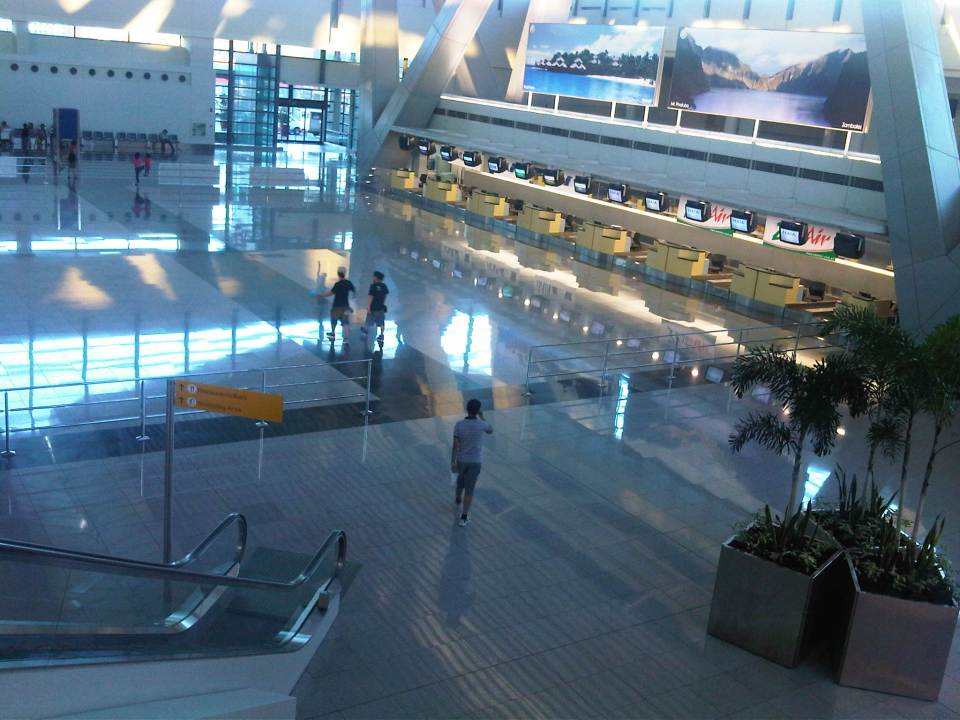 This area will be full of people as five major international carriers transfer to Terminal 3
Prior to the transfer of the 5 airlines this August, T3 was already hosting international flights, mostly by local carrier Cebu Pacific, which is classified as a low cost carrier (budget airlines). The other major international carrier operating out of T3 was All Nippon Airways (ANA) but the latter had far fewer flights compared to CebPac.
However, my interest in this “full operations” pitch is more on the other facilities of the airport and not really about the check-in and immigration operations that I am sure have enough capacities to deal with the additional airlines, flights and passengers that will be served by T3 (most booths were not utilized considering the airport served significantly fewer international flights and passengers than T1). I am also not concerned about the other features of the airport like its shops and restaurants (a regular user of T3 would make the observation that shops and restaurants have been increasing over the past years). My worry is that the airport will not have enough parking spaces for airport users.
There is already a parking problem at T3, no thanks to poor public transport services (taxi anyone?) and the absence of anything resembling an airport shuttle or express services (e.g., Airport Limousine buses). I have written in the past about the multilevel parking facility at T3 that has not been opened for public use since the terminal became operational years ago. Granted that there might have been issues with the structure itself, authorities should have also addressed the issues while they were at it fixing the myriad problems of the terminal over the past years. Much of T3’s open parking spaces have been occupied by exclusive airport taxis (coupon taxis) and there are people who have made the observation that many of the parked cars are actually those of people gambling in the casinos of a nearby resort hotel complex. The latter story might be a bit difficult to prove unless there is deliberate data collection of some sort but can be true for some vehicles given the cheaper parking rates at the airport.
Until NAIA becomes public transport-friendly and perhaps a airport shuttle services can be provided for the convenience of travelers, parking will remain as an issue for many especially during the peak periods or seasons. And with the NAIA Expressway currently under construction, I would expect the airport terminals to be more accessible to private vehicles in the future via the elevated system, thereby generating more demand for parking. Are there already proposals for the solution to this problem or are authorities again going to be dependent on the private sector for solutions?
–
NAIA Terminal 3 revisited
I was back at NAIA Terminal 3 to fetch someone who was flying in from Bacolod last Palm Sunday. Going around while waiting for the plane to arrive, I took some photos of the newer shops and restaurants in the terminal. Here they are with a few photos at the waiting area and outside the terminal.
 The overnight parking spaces were not yet full. It was a Palm Sunday so I guess many people haven’t taken their vacations yet. I remember fetching the wife one Maundy Thursday morning and the parking lot was just full of vehicles. I had to park at a slot that required some walking to get to the terminal building.
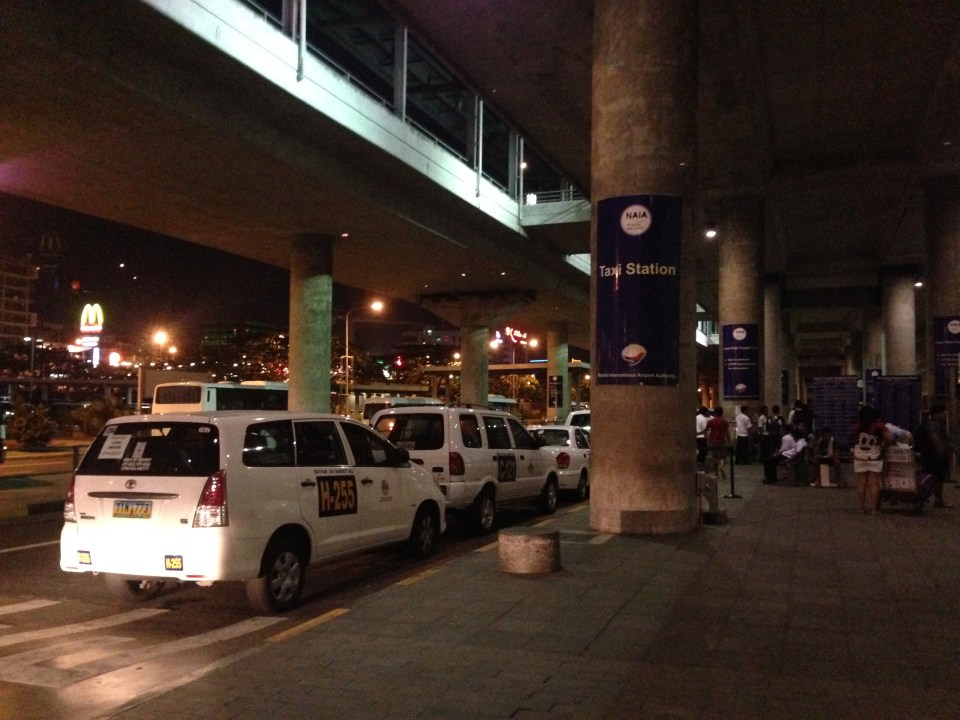 Taxi station at the arrival level of NAIA – only airport accredited taxis are allowed at this station and many, if not most, are not metered (i.e., do not have or use taxi meters). There is a dispatcher at the station and rates are basically higher than regular metered taxis.
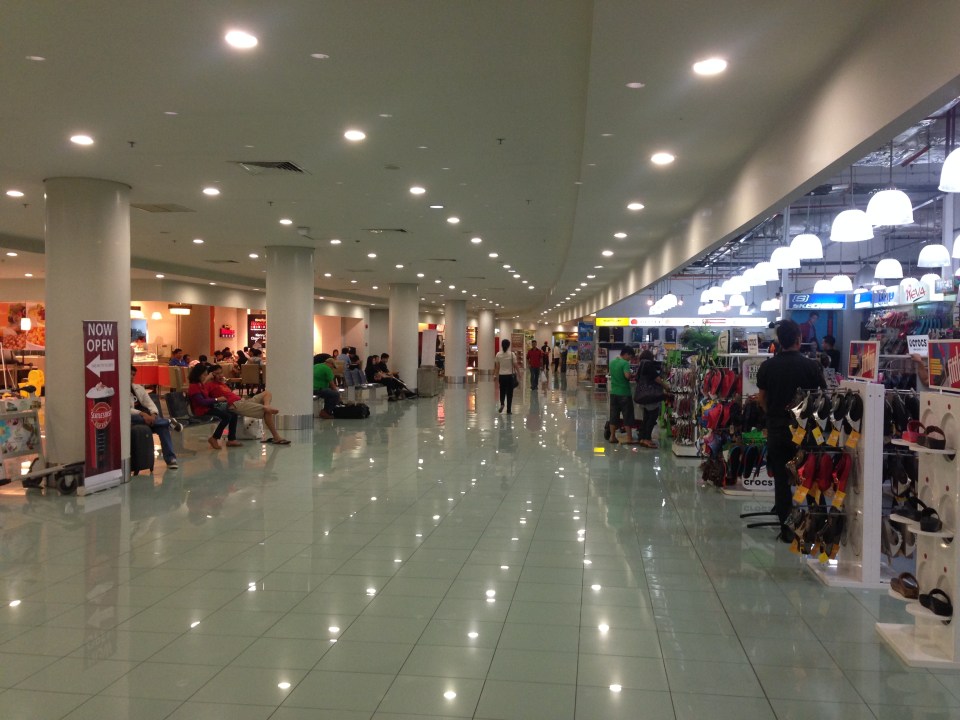 There are more shops, restaurants and cafes at Terminal 3. The old ones are still there but noticeable are the newer shops and restaurants when you explore the 3rd level of the terminal.
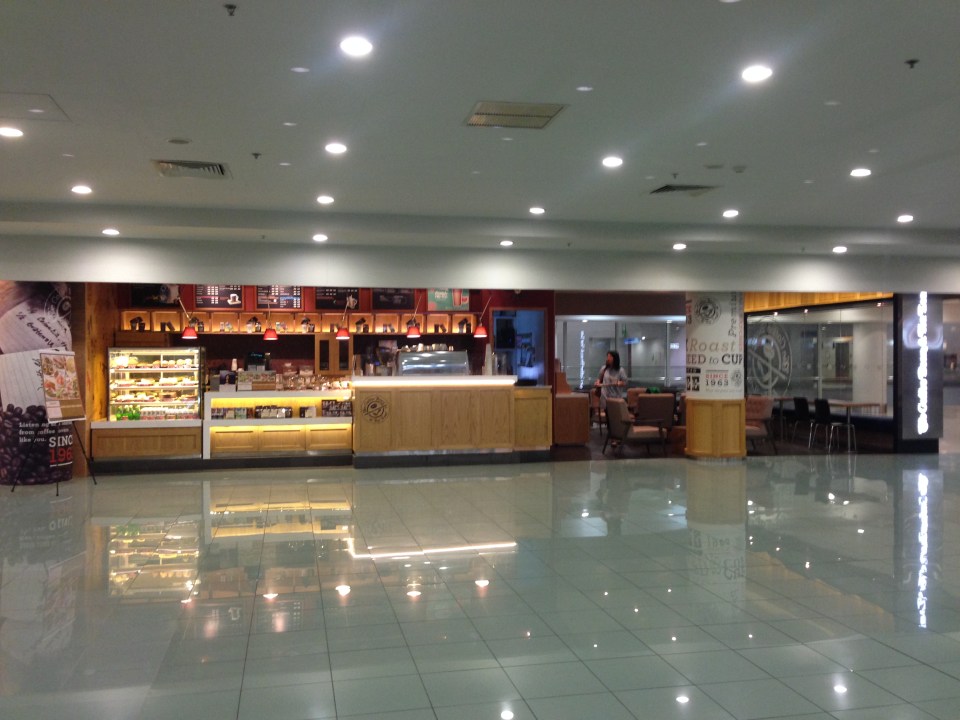 The Coffee Bean & Tea Leaf branch at Terminal 3.
 Wendy’s fastfood restaurant.
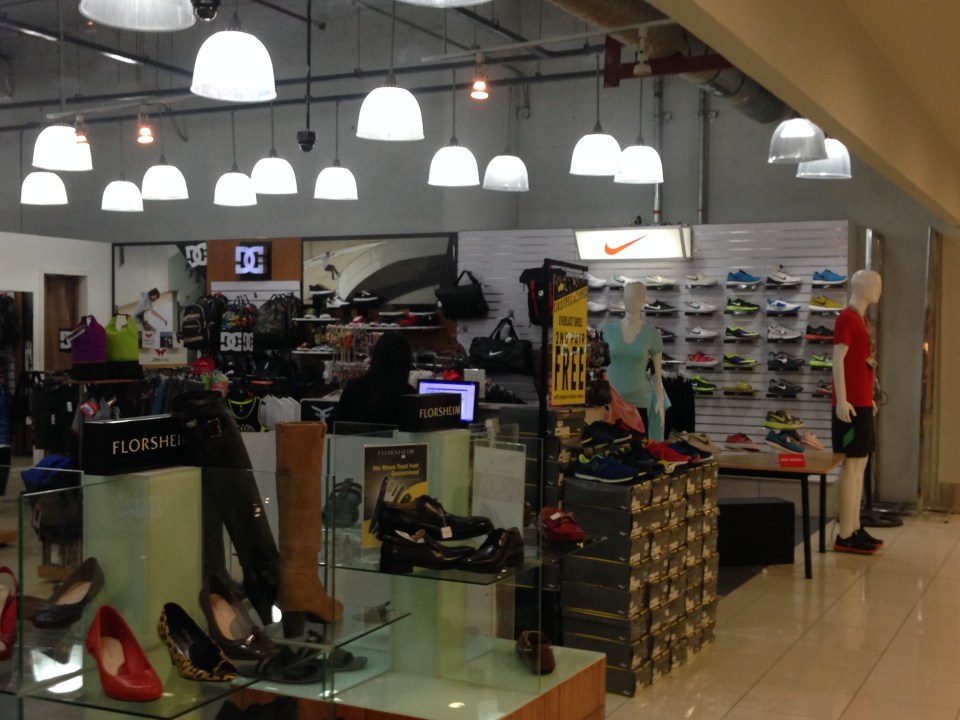 Shoes on display at one of the older shops at the terminal that offers a lot of different merchandise like luggage and apparel and accessories.
 Victoria’s Secret shop opening soon and likely before other international airlines move to Terminal 3 when renovations for Terminal 1 move to full gear.
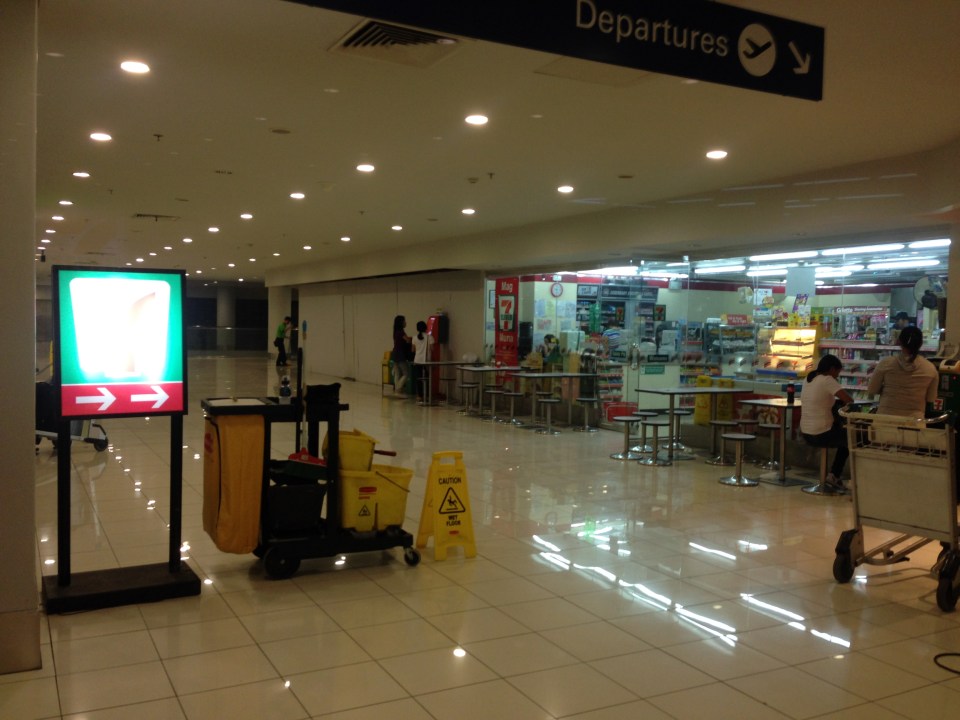 This Seven Eleven store is relatively new. There’s a Mini Stop store near the escalator to the 3rd level of the terminal.
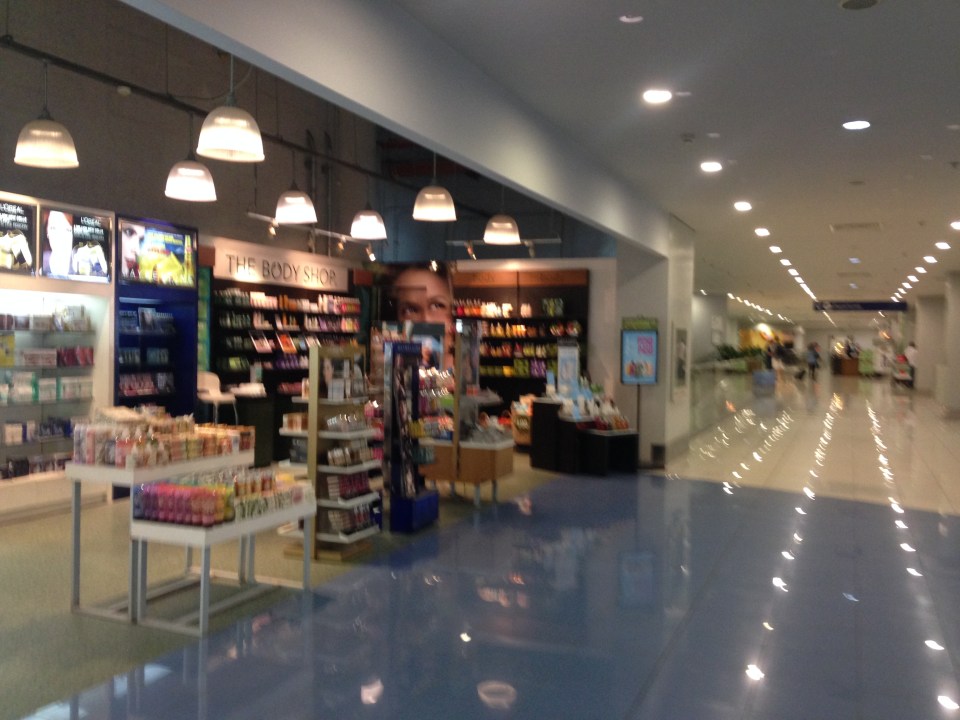 The Body Shop store.
 Not so many people at the Cebu Pacific domestic check-in counters around 8 PM. At this time, most domestic airports in the country are already closed as they are not equipped for night time operations. Thus, there are few flights at this time likely from the handful of modern airports – Cebu, Davao, Iloilo and Bacolod.
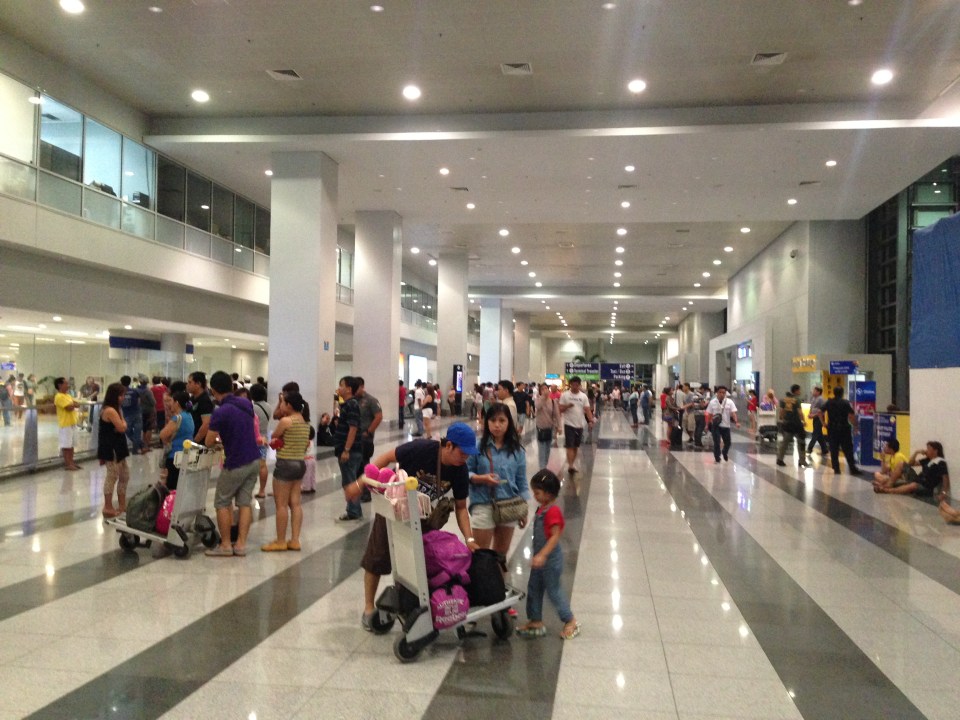 Well-wishers meeting arriving passengers at the spacious arrival area concourse.
 Signs provide directions to passengers and well-wishers.
 Crowds form at the exits to check passengers filing out of the arrival area. International passengers come out from the left while domestic passengers from the right.
 There are more foreign exchange counters now at Terminal 3 and this is likely due to the increased number of international flights served by the terminal.
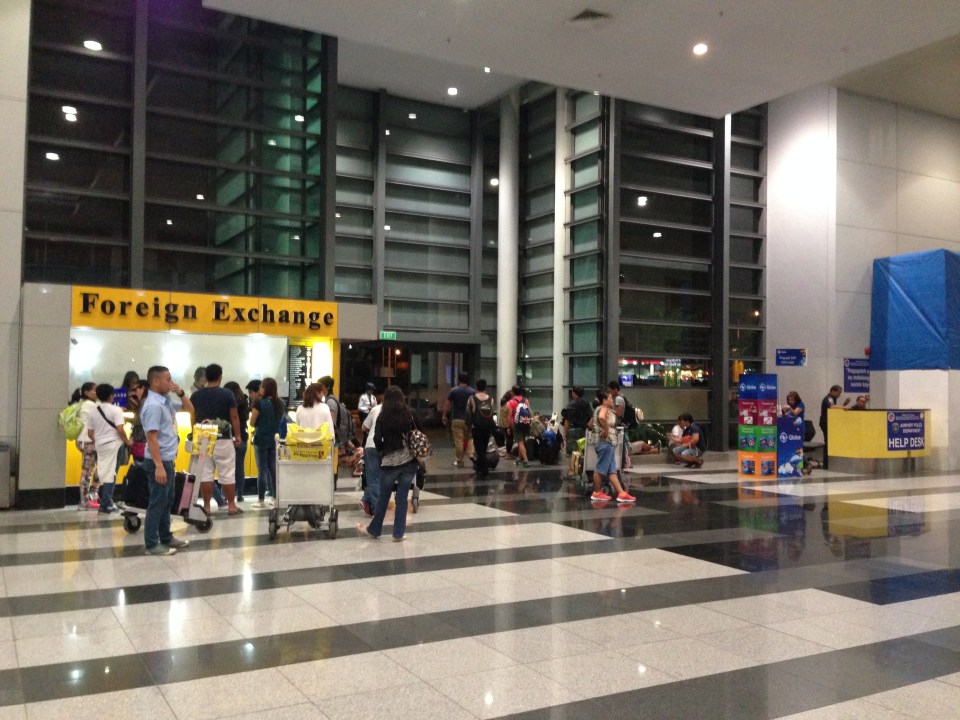 People go out of the terminal at one of the many exits at ground level. However, there are only two entrances to the terminal at the arrival level where security checks are made.
–
On the increase in overnight parking fees at NAIA
I’ve been reading some posts on social media complaining about the increase in the overnight parking rates at the Ninoy Aquino International Airport (NAIA). This seems to be a recent development considering the last time we used any of the parking facilities of NAIA was last November 23 when the wife parked to wait for my arrival at Terminal 2. It wasn’t overnight parking but then she said she doesn’t recall seeing any signs announcing changes in the parking rates. The posts I saw through Facebook are for overnight parking at Terminal 3 where the old charges were 50 PHP (about 1.14 USD) per day. This is actually very cheap even considering that parking is on an open lot with marginal security. Even parking lots in Makati, Taguig and Ortigas charge more for overnight parking on open lots.
The new rate is basically 300 PHP per day including taxes, which apparently surprised a lot of people after everybody got used to the 50 PHP/day rate of old. That meant that for a 3 night trip to Bangkok or Singapore, for example, where people left their cars at the airport, they had to fork over 900 PHP instead of the 150 PHP they used to pay for parking. Indeed, that’s a big jump in parking fees!
NAIA’s parking rates can be compared to the parking rates at the Los Angeles International Airport (LAX) is provided in their website. 30 USD (about 1,315 PHP) is charged for 24 hours for use of the multi-level/covered parking structures at the airport. Meanwhile, open lot parking charges 12 USD (about 526 PHP) per day. Suddenly, NAIA’s parking charges don’t seem to be expensive beside the 526 PHP/day charge at LAX. However, these rates are arguably in a country where there are higher wages and standards of living and so perhaps a fairer comparison would be for parking in a major airport in ASEAN. Doing a bit of research online, I found that Bangkok’s Suvarnabhumi International Airport charges the equivalent of about 341 PHP per day for parking. Singapore’s Changi charges the equivalent of around 701 PHP per day. And Kuala Lumpur International charges the equivalent of about 575 PHP per day for parking. [Note: Rates from the link may not be updated.] These are generally for multi-level parking buildings where vehicles are practically protected against the environment (e.g., rain, sun, etc.).
A comparison is also made for the nearby Park n’ Fly facility, which also publishes their parking rates in their website. The site of the private parking provider states a rate of 340 PHP + EVAT (taxes) per day. And this is for a multi-level, covered parking structure near NAIA Terminals 1 and 2. An argument can be made here for the location and proximity of NAIA parking spaces compared to Park n’ Fly but note that the fee for the private entity includes airport transfers with their own vehicle. Compared to this, the NAIA rates are quite expensive considering that it is for open lot parking and for what is perceived as marginal security. In fairness to airport parking security, I have not heard or read about incidents of burglary or stolen vehicles in relation to NAIA parking areas.
And so there are many questions that need to be answered in as far as the sudden and steep increase in parking rates at NAIA. The most important question here is what is the basis for the parking rate increase? It is assumed that the additional monies generated will cover certain expenses like security and maintenance. So there needs to be transparency in where the additional funds will go or how it will be allocated (e.g., repair works towards ultimately opening the multi level facility at T3). Also, perhaps the information dissemination for this rate increase was lacking and therefore ineffective in advising the public about the change. But then there was generally no major uproar over the increase so perhaps those complaining weren’t paying attention or were caught in the transition to the new parking rates. One can even say that certain posts in social media can be qualified as rants rather than objective takes on parking rates.
I would like to think that parking as an amenity should not generally be a revenue generating scheme for the airport. Collected fees should cover operating expenses and excesses can be used to build a trust fund, for example, for future expansion of the facility, but the latter should be clearly spelled out in a plan for the airport. After all, it is in the best interest of the public, the users of the airport, if improvements can justify what they are paying for and how much they are paying.
–
NAIA T3 shops and eats
I had wanted to post about airports again but the aftermath of Typhoon Haiyan and the continuing efforts for relief in places affected by the typhoon made me hesitate a bit from doing “business as usual” writing. The past few days though I have seen a demand for information on NAIA Terminal 3 and so I decided to complete an unfinished draft on T3 to add on the information out there on shopping and eating/drinking at T3 once the passengers have passed through the final security check and proceeded towards their respective gates for pre-boarding.
We were at Ninoy Aquino International Airport’s Terminal 3 last month for a flight to Iloilo. I took some new photos to come up with an update to the pictures I’ve posted in the past on T3.
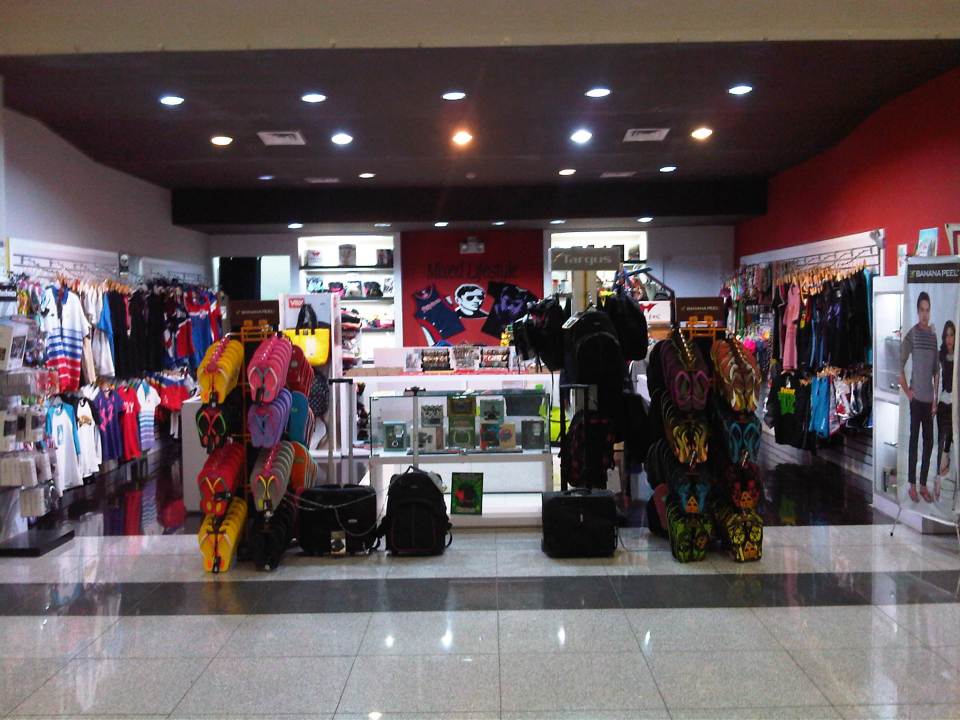 There are many souvenir shops at NAIA T3 including those selling flip flop sandals, shirts, swimwear, electronics, luggage and various accessories.
 There seems to be a lot more options for eating or perhaps sipping a hot cup of coffee or tea while waiting for your boarding call.
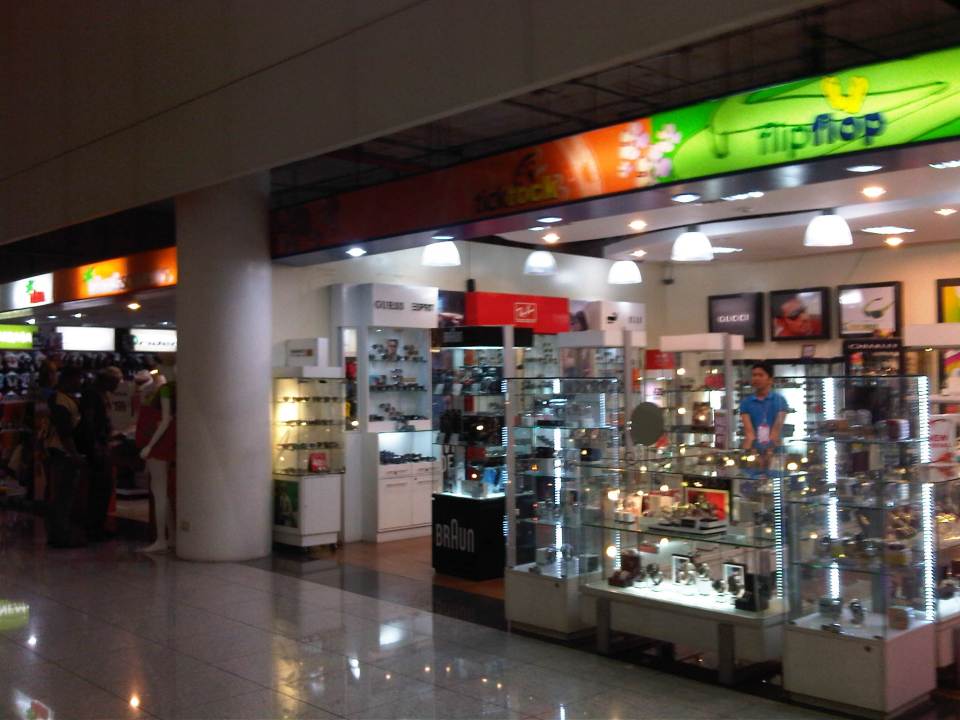 There’s a shop selling eye wear (sunglasses anyone?), electric razors and watches.
 A popular souvenir shop for shirts is Islands Souvenirs. They have shops or stalls all around the country with each basically selling only designs attributed to the city or island where the shop is set-up. That means Cebu shops/stalls basically sell Cebu-themed shirts, Iloilo shops/stalls sell Iloilo-themed merchandise, and so on. The shirts they sell are of very good quality and don’t shrink after you wash them. I have quite a number of shirts (I used to collect them from my travels.) so I can attest to the quality of their products.
 “Pondohan” translates into neighborhood “store” or “shop.” It is also more commonly called “sari-sari” store with the term “sari-sari” meaning “variety” and referring to the merchandise being sold at the store.
 This stall offers quick meals as well as pasalubong in the form of their take on popular kakanin or rice cakes or puddings. Friends say they also have good coffee.
 Colleagues of mine having a quick meal before our morning flight to Iloilo. Beside them are directional and information signs of PAL and Ceb Pac.
 We found that there were already other shops and cafes/eateries along the way to the boarding gates at one end of the terminal. I guess with more passengers now using T3, there is also more demand for shops and options for eating at the airport’s pre-boarding areas (i.e., near the gates of this linear terminal building).
–
NAIA Terminal 3 check-in
I was again at NAIA Terminal 3 for a very early flight. I always enter Terminal 3 from the ground (arrival) level, whether I am coming from the open parking lot or am driven to the airport by a driver. There are less people lining up to enter the terminal at the arrival level so its usually faster compared to the departure level, which seem to be always crowded. It’s only logical because it is the departure level and most people would automatically proceed there. The layout of Terminal 3, though, allows for the passengers and well-wishers to circulate within the arrival and departure areas that are open to the public, including the restaurants and shops located at the third level of the terminal.
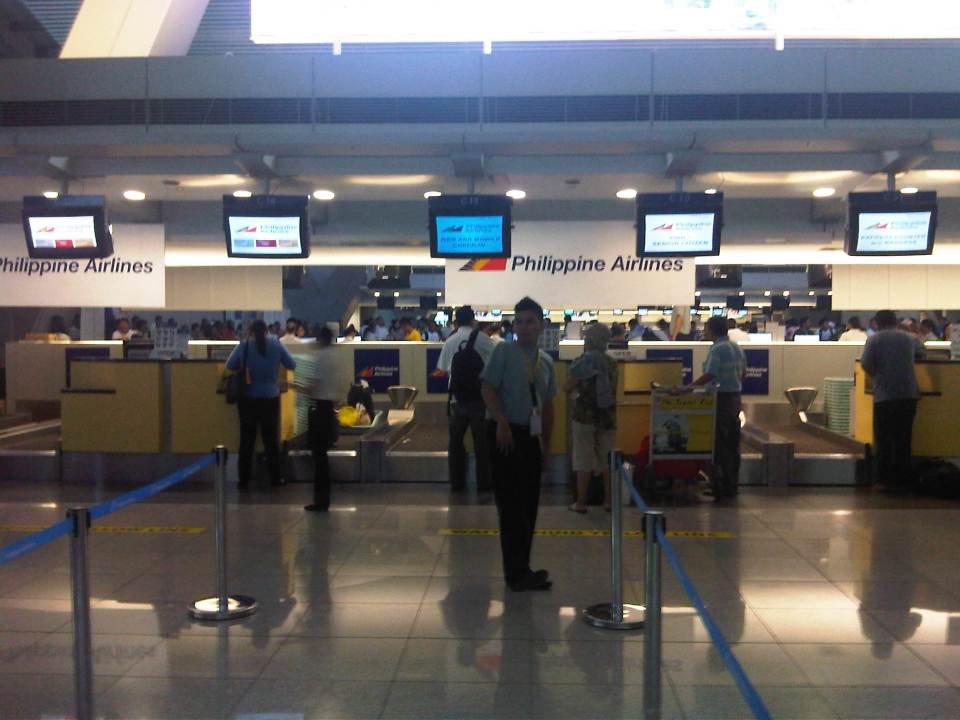 Check-in counters for PAL and PAL Express flights
 Important information for passengers of PAL and PAL Express includes info for counters for senior citizens, persons with disabilities (PWD), and persons who have checked-in using the internet.
 Crowded Cebu Pacific check-in counters for domestic flights – Terminal 3 is the home terminal or hub for Ceb Pac in Manila. As the country’s largest airline in terms of both aircraft and passengers, their international and domestic flight counters are are almost always crowded.
–
NAIA Terminal 3 domestic departure
NAIA Terminal 3 hosts the domestic flights of Cebu Pacific and PAL Express (formerly Air Philippines and Air Phil Express). PAL now also flies out of T3 for major cities like Cagayan De Oro, Legazpi, Puerto Princesa and Tacloban, where PAL and PAL Express flights seem to have merged and are quite difficult to tell by the aircraft. The difference becomes clear when one boards the plane and sees no Mabuhay Class seats for PAL Express and seats have the leatherette covers (similar to Ceb Pac’s) instead of the more classy fabric in PAL planes.
 Hallway to the boarding gates – there are many shops and restaurants to choose from where one can have a meal or drink before a flight.
 This shop is packaged like the higher end duty free shops on international terminals. There’s a Krispy Kreme donut stall that’s quite popular as pasalubong.
 A typical cafe at NAIA T3
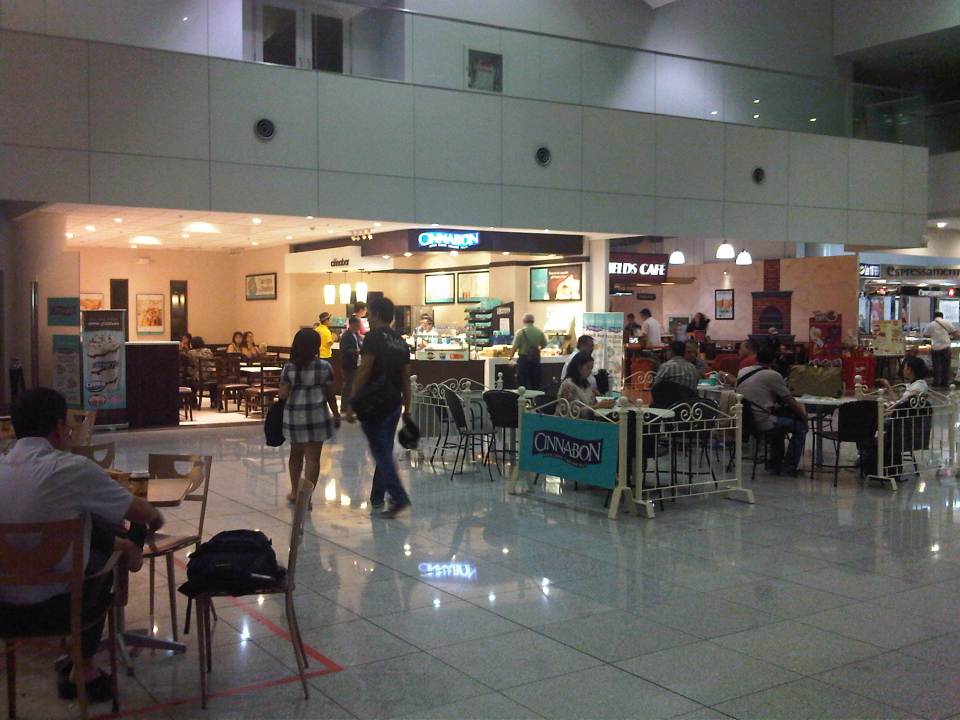 More cafes give passengers a lot of choices for where they might want to get their beverage, meal or snack.
 And still more cafes…
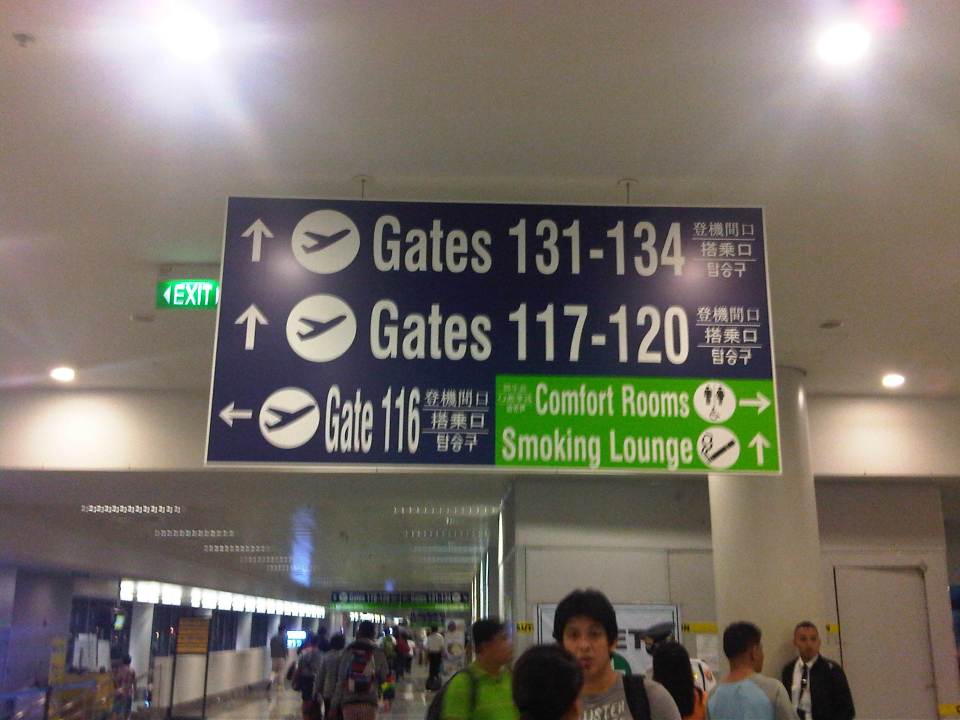 Large signs provide adequate guidance for passengers.
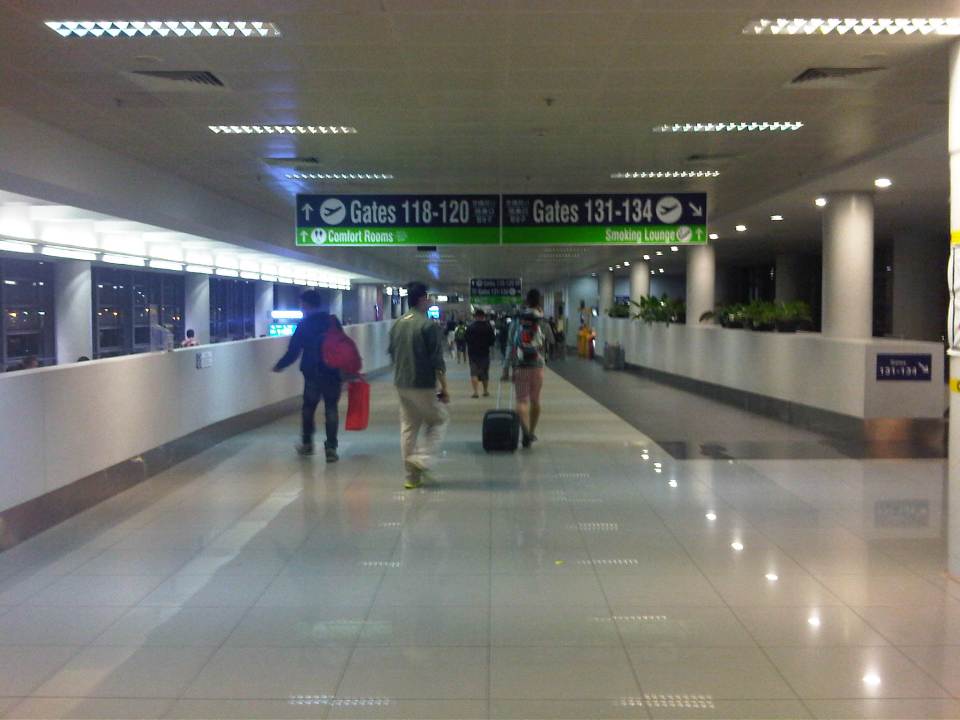 The long walk – T3 is a linear terminal with gates spread along either wing of the building, which means passengers would have to walk some distance to and from their gates for departures and arrivals.
 It’s summer in the Philippines, so there are more flights and passengers than usual. I was at the terminal for a 0440 flight to Tacloban and there were already a lot of people waiting for their respective flights to destinations such as Cebu, Iloilo, Bacolod, Dumaguete and Davao.
 Passengers at Gate 118 seated along a corridor that also features a non-functioning “walkalator” or moving walkway. Such walkways should help passengers move more conveniently and swiftly to and from their gates but all are currently not operating (for one reason or another).
 Fellow passengers at Gate 119 waiting for our boarding call
 There are many television sets at T3 where passengers can catch the latest news on cable or, in this case, a replay of an NBA Playoff game.
–
Airport terminals and transfers at NAIA in Manila
Ninoy Aquino International Airport (NAIA) has four (4) terminals:
- Terminal 1 – is the international terminal for ALL foreign airlines except All Nippon Airways (ANA), which uses Terminal 3. It is located along the Ninoy Aquino Avenue from the NAIA Road.
- Terminal 2 – also called the Centennial Terminal because it opened in the year the Philippines celebrated 100 years of proclamation of independence from Spain (1998). It is used exclusively by Philippine Airlines (PAL) for both international and domestic flights. International flights use the north wing while domestic ones use the south wing. Recently, PAL transferred several domestic flights to Terminal 3, retaining only major domestic destinations at Terminal 2 (e.g., Cebu, Davao, Iloilo, Bacolod, etc.). For a complete list on which domestic flights are on T2 or T3, one can consult the PAL website. Terminal 2 is located at the end of NAIA Road.
- Terminal 3 – the newest of the three main terminals, it is located beside Villamor Air Base (actually part of it was carved out of the base) and across from the Resorts World Manila complex. It is used mainly by Cebu Pacific (Ceb Pac), currently the country’s largest airline, for both international and domestic flights. Other airlines using Terminal 3 are ANA and Airphil Express, which is a budget subsidiary of PAL. The terminal is located along Andrews Avenue at the end of Sales Road (from Fort Bonifacio).
- Domestic Terminal – now also called Terminal 4, it is the old terminal along the Domestic Road that used to be called the Manila Domestic Terminal where PAL, Cebu Pacific and other airlines used to operate domestic flights. At present, it is used by Zest Air and Seair.
More detailed information on these terminals may be found at the website of the Manila International Airport Authority (MIAA).
It is quite easy to transfer between domestic and international flights if you happen to fly Ceb Pac since all flights operate out of Terminal 3 and the airline provides assistance through its transfer desk. The same used to be the case for PAL when all flights were out of Terminal 2. But then after PAL transferred flights to Terminal 3, many passengers would now have to travel between Terminals 2 and 3. The most inconvenient cases are for travelers transferring to or from international flights at Terminal 1. Terminal 2 is quite near and can easily be reached via shuttle bus. The more challenging transfer is between Terminals 1 or 2 and Terminal 3. Shuttle buses would have to go through the NAIA Road, the Domestic Road the Airport Road
There are no internal connections between the 4 terminals operating within the NAIA complex such as AGTs, monorails. There are shuttle buses that travel between these terminals but they use the public roads rather than an internal road exclusive for the airport. As such, these shuttles are subject to traffic congestion and possible delays. The MIAA website states that using the shuttle buses are free but I saw a sign at Terminal 3 showing that there is a flat rate of PhP 20. While the fare would probably cover fuel, maintenance and other costs, it can also be argued that this service should be free at least for passengers and covered by airport authorities as part of the services they provide to travelers. Perhaps passengers can present their tickets before boarding the bus. Others may be required to pay the PhP 20 fare.
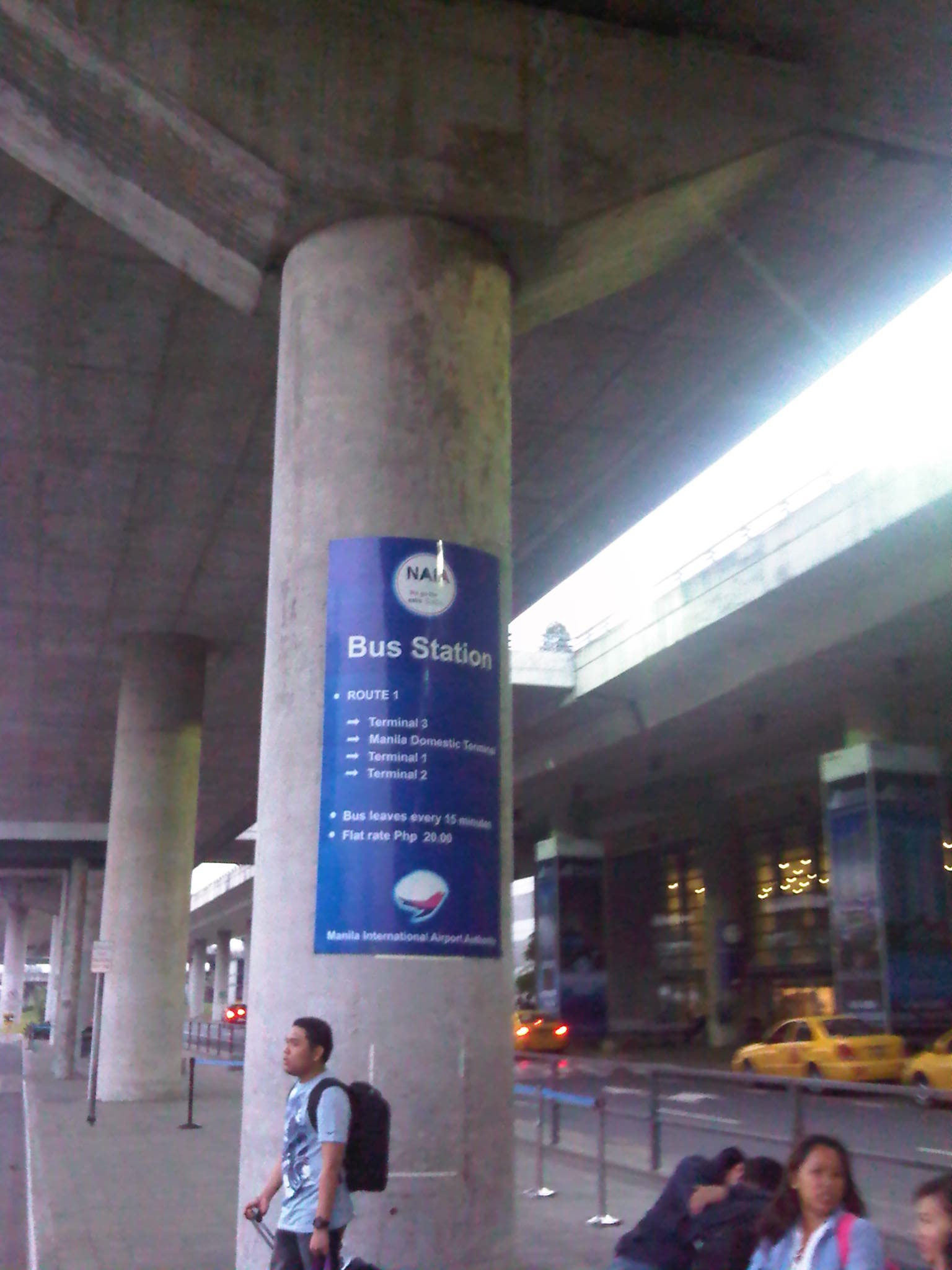 Bus station/stop at the NAIA Terminal 3 – the station is located at ground level (arrivals) beneath one of the overpasses (departure level) and across from the airport taxi stand (shown in the photo). Shuttle buses are scheduled to depart every 15 minutes according to the sign.
–
NAIA Terminal 3 multi-level parking building
I finally had the opportunity to take some quick photos as we drove through the departure level of NAIA’s Terminal 3. The objective was to take a few photos of the still closed multi-level parking facility adjacent to the terminal building, which could be accessed both from the ground and upper level driveways. It was late afternoon and it looked like it was going to rain so the photos were not as good as I would have liked them to be. Still, they clearly show the unused parking facility of T3 that could have been quite helpful to a lot of travelers especially those who wanted to leave their vehicles at the airport a few days or nights for short trips.
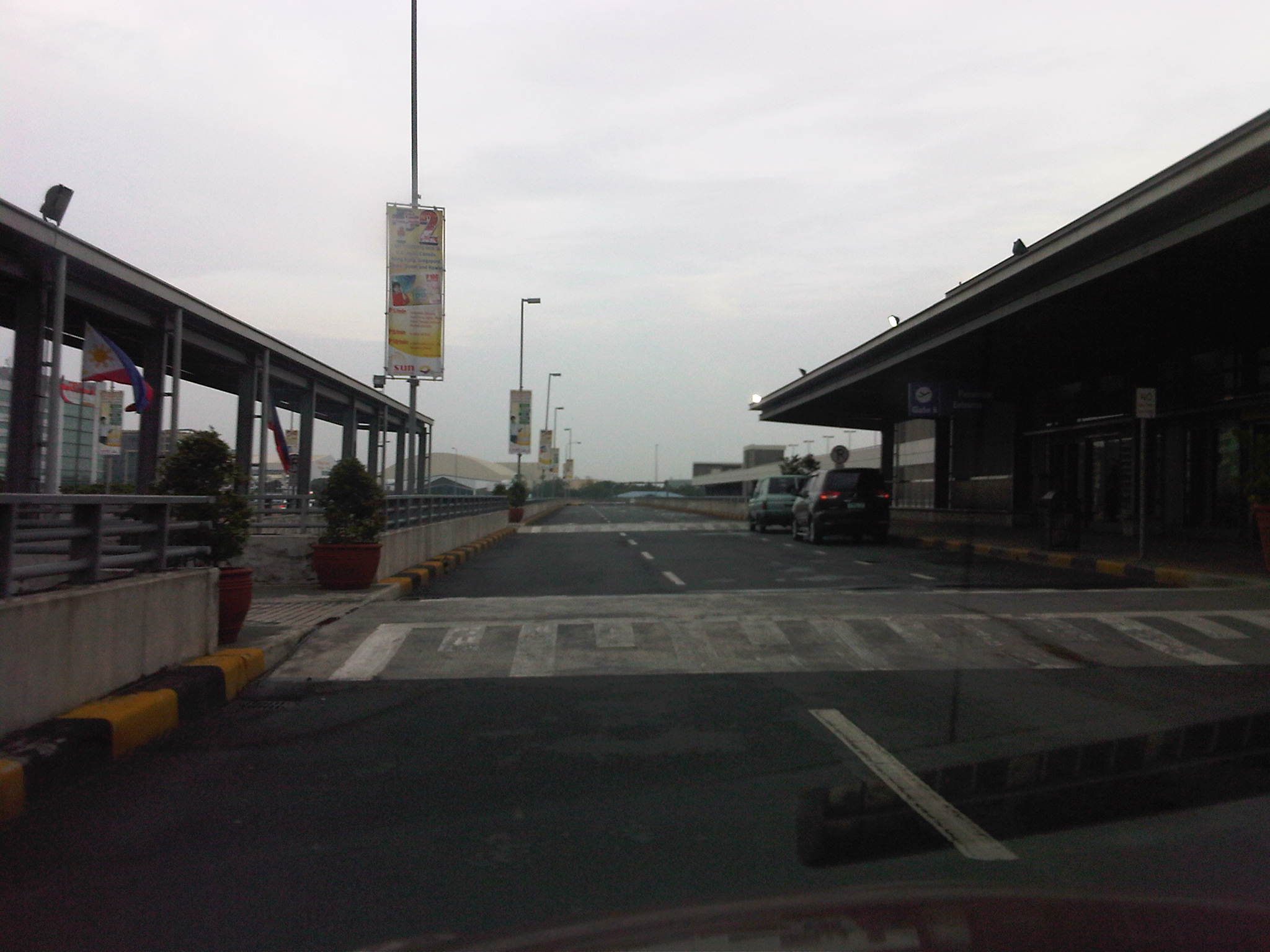 Driveway along the departure level of NAIA Terminal 3
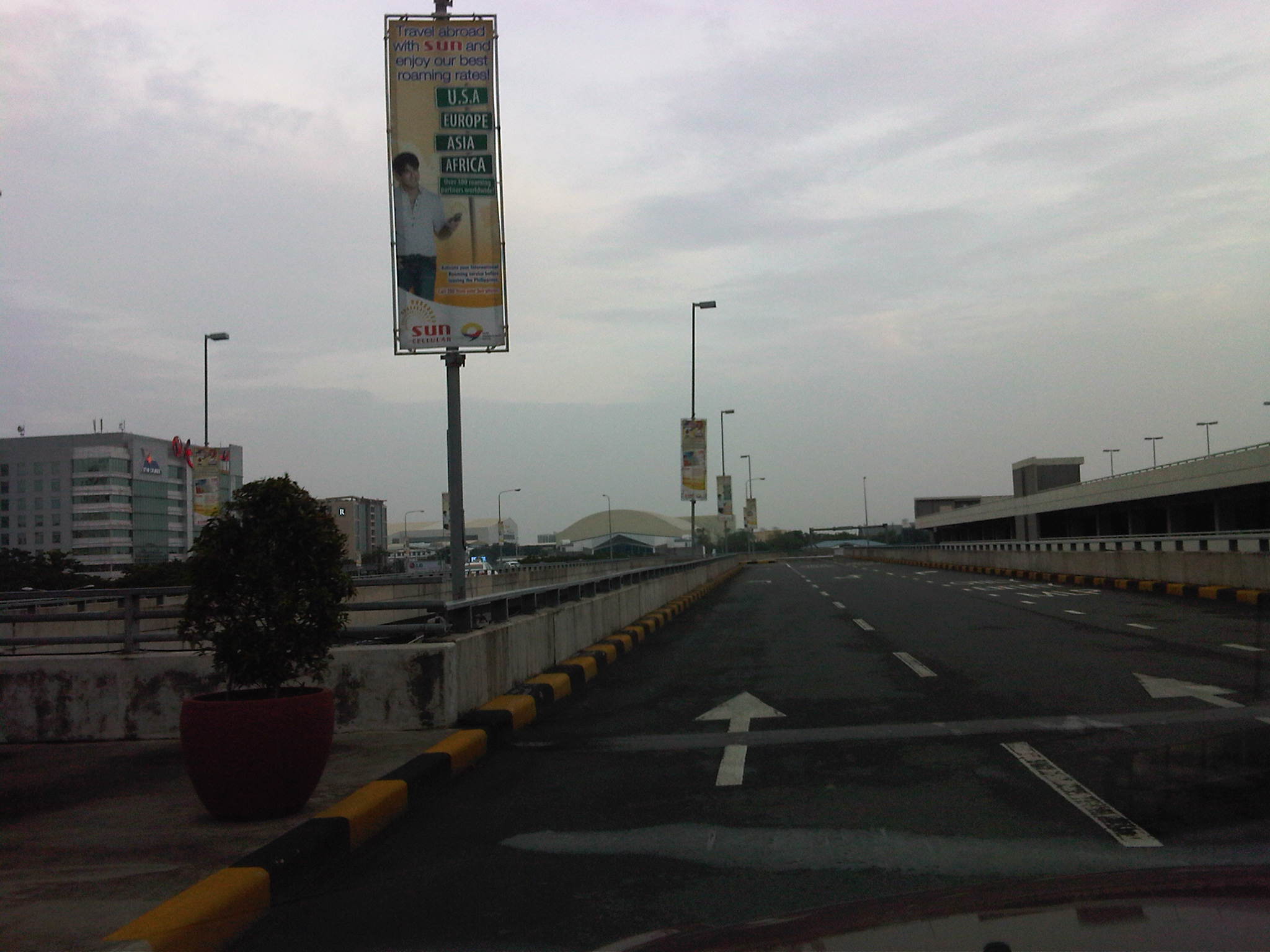 Motor vehicle exit ramp from the departure level – the parking building is seen on the right
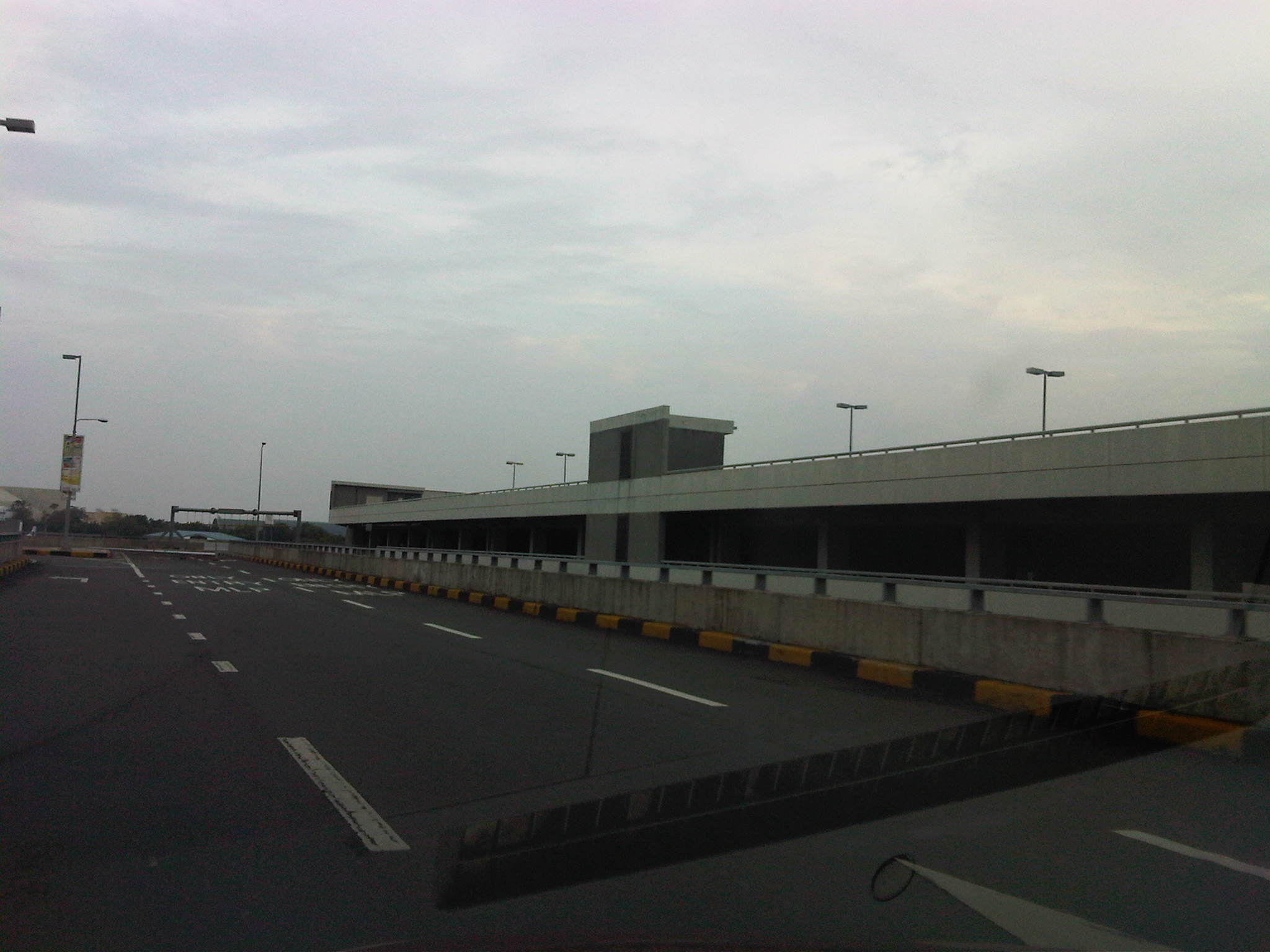 The parking building is seen immediately after the passenger terminal gates for departures
 After unloading passengers and well-wishers, drivers could have proceeded to the parking building via the ramp from the second level driveway (shown at the right in the photo).
 Ramp to Andrews Avenue – the Newport City development that contains several hotels including a Marriott Hotel and Resorts World Manila is located in the complex.
–
Overnight parking at NAIA
The main terminals of Manila’s Ninoy Aquino International Airport (NAIA) each have overnight parking facilities. These are all open lots located near the terminals and have roving personnel on motorcycles for security. The overnight parking spaces for Terminals 1 and 2 are located a bit of a walk away from the terminal buildings but are generally spacious and do not reach their full capacities.
Terminal 1’s overnight parking is located on the lot to the right as travelers drive through the security check for vehicles. Terminal 2’s overnight facility is near the old Nayong Pilipino gate and appears to be the combined parking lots of the now-closed theme park and the also closed Philippine Village Hotel. Terminal 3’s overnight parking spaces are generally spread out with most along the service road or driveway that leads to its still closed multi-level parking facility. Other spaces made available for overnight parking are those near the entrance to Terminal 3.
I haven’t tried overnight parking at T1 and T2 but I recently availed of overnight parking at T3. Following are a couple of photos to describe overnight parking at T3, followed by a few tips on how to get a slot in what is always a full area.
 Overnight parking spaces are along the service road on the right that ultimately leads to a ramp access to the still closed multi-level parking facility at Terminal 3. There is a sign that states overnight parking is full. Ask for assistance from the security staff to find a slot.
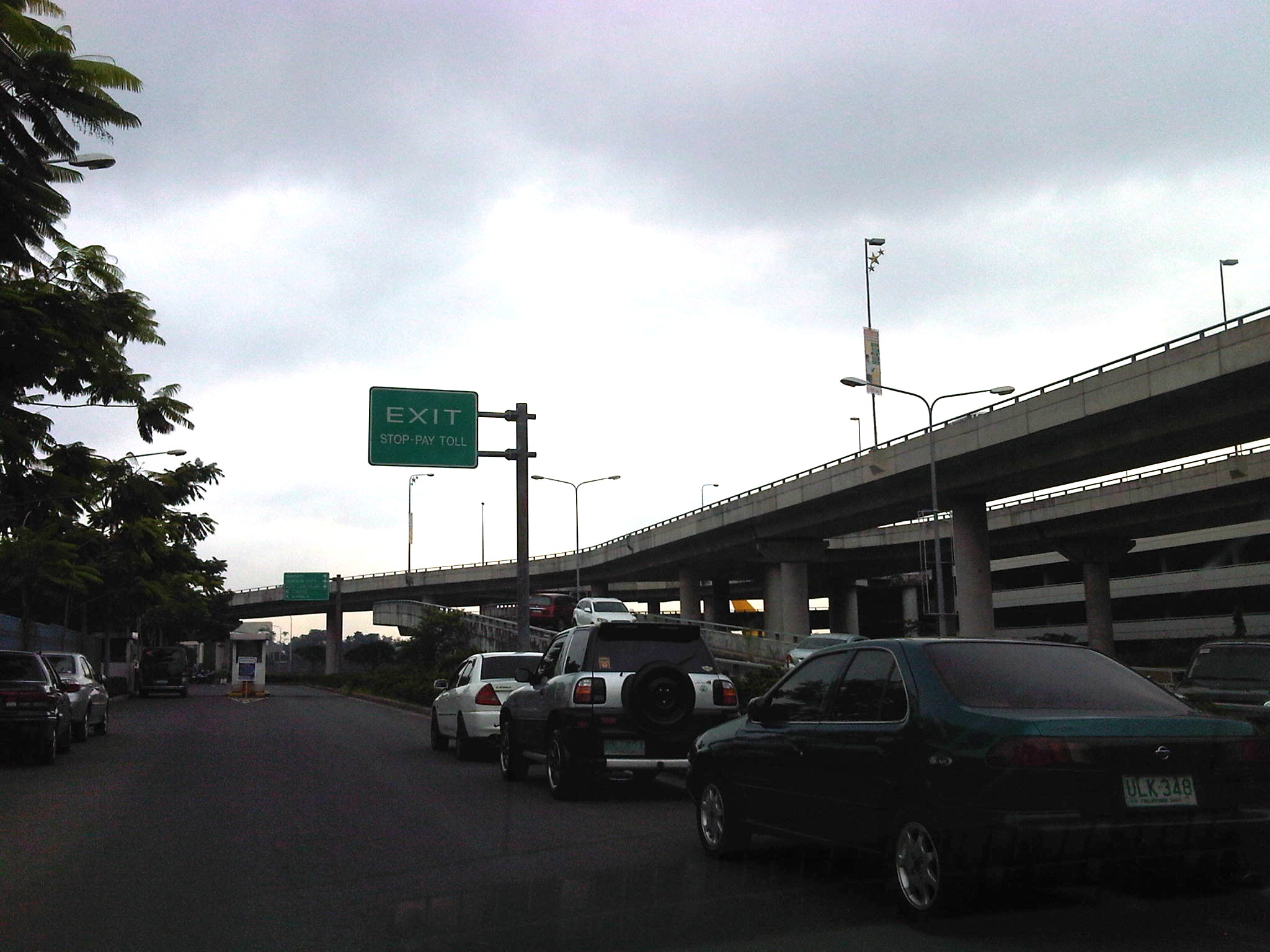 The service road leads to a ramp (visible at the center of the photo) to the closed multi-level parking (also visible on the right of the photo) of Terminal 3.
A tip for those wanting to park their cars for a night or more at Terminal 3: ask nicely for assistance from the security guard at the entrance to the parking lot. They will help you find an open space somewhere (trust me, it’s quite a challenge) in what is always a full overnight parking area. Show your gratitude by tipping. It’s definitely worth it and they’ll probably even check your car to return the favor. And yes… overnight parking fees are quite cheap at 50 pesos (about 1.15 USD) per night.
–
Walking around in NAIA Terminal 3
I had another opportunity to explore NAIA’s Terminal 3 last weekend. The following photos were taken while walking around to kill time while I waited for the arrival of a friend I was fetching at the airport. I arrived early at the terminal assuming it would be difficult to get a parking slot and that the flight would be arriving on time. I ended up eating dinner and having a nice stroll around the terminal building.
 Check-in counters for ANA and Zest Air
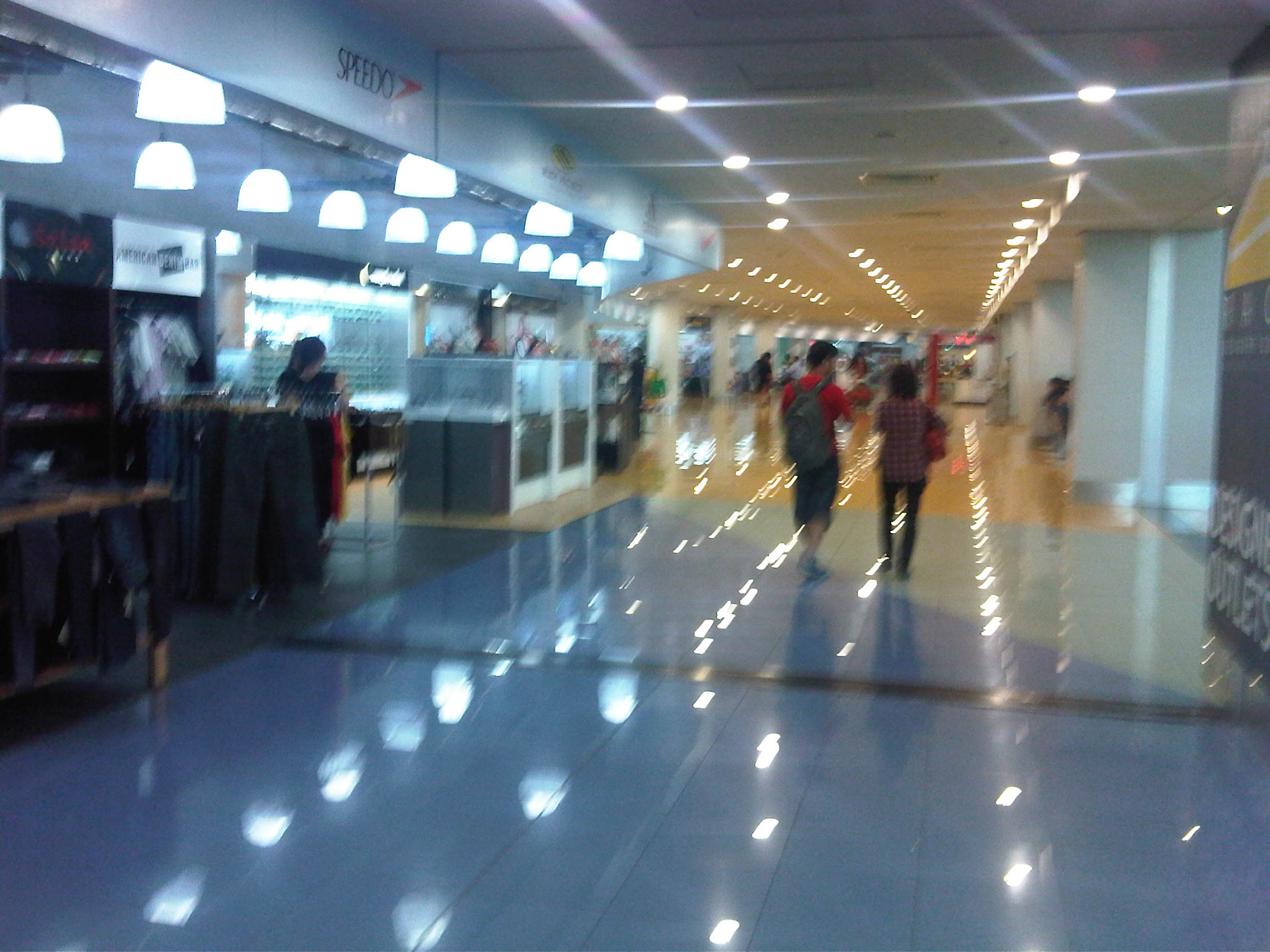 Shops at the third level of the air terminal (2nd level of the departure area) – there’s also a Mini Stop and 7-Eleven at the terminal.
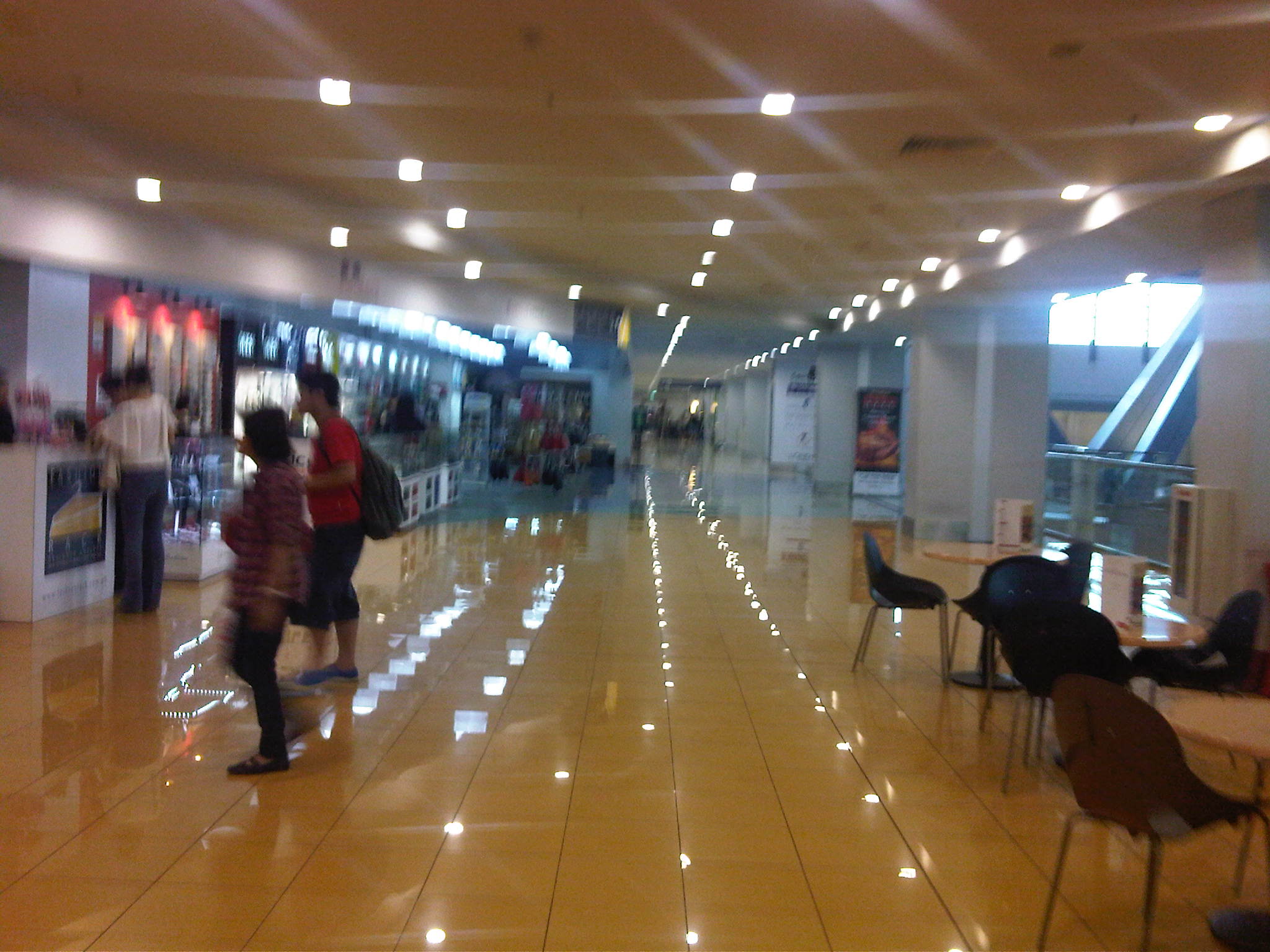 Most of the shops appear to be outlets for popular brands like Nike, Adidas, Oakley, Delsey, etc.
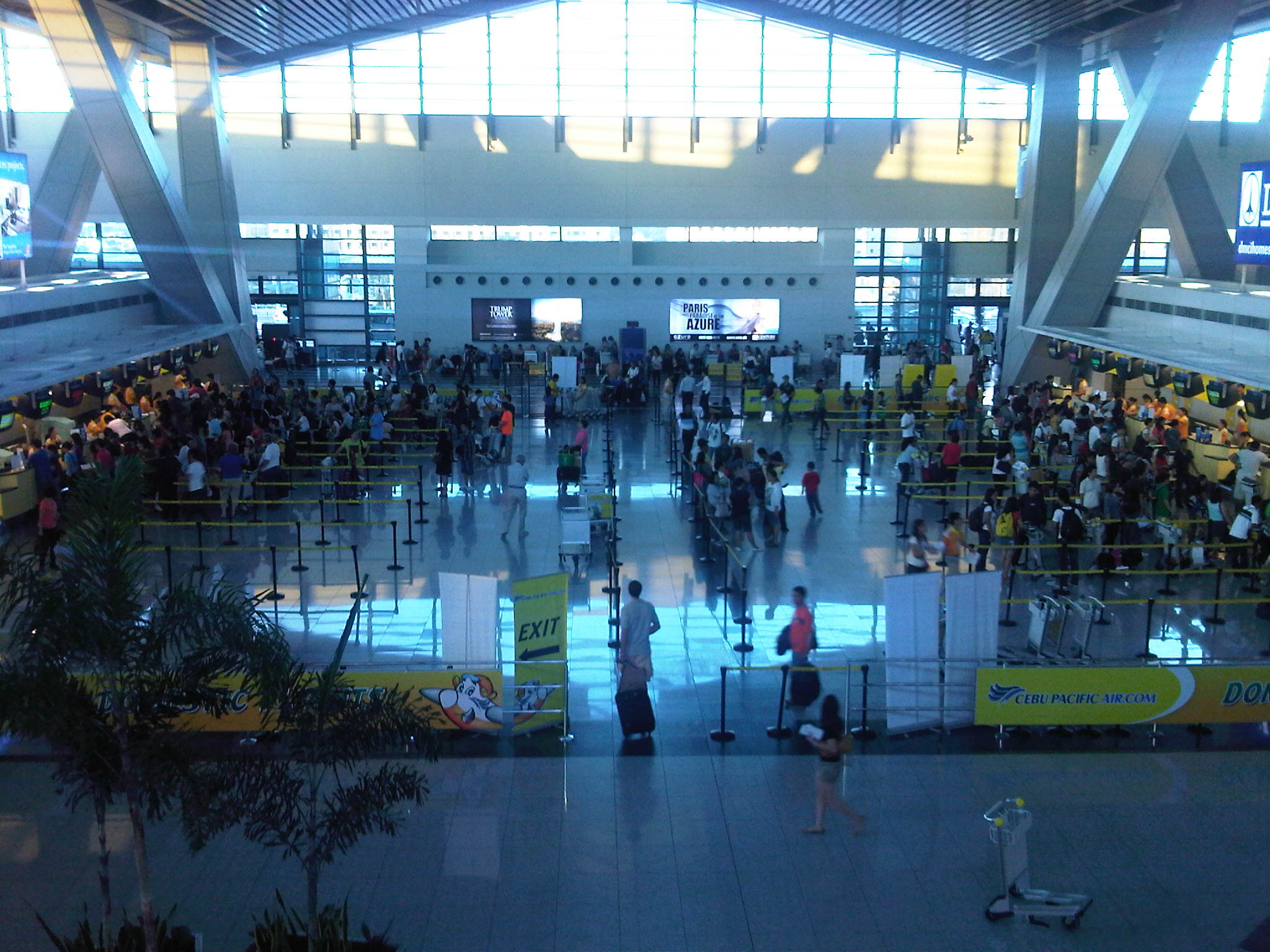 Queues before the Cebu Pacific counters for domestic flights.
 There are many restaurants including the recognizable ones like Shakey’s Pizza, Pancake House, Kenny Rogers, Yellow Cab Pizza and Jollibee.
 Screens showing flights scheduled for departure and arrival via NAIA Terminal 3.
 Spacious halls of the arrival area of Terminal 3 – surprisingly, the area was not crowded at the time (it was around 6:30 PM when the photo was taken)
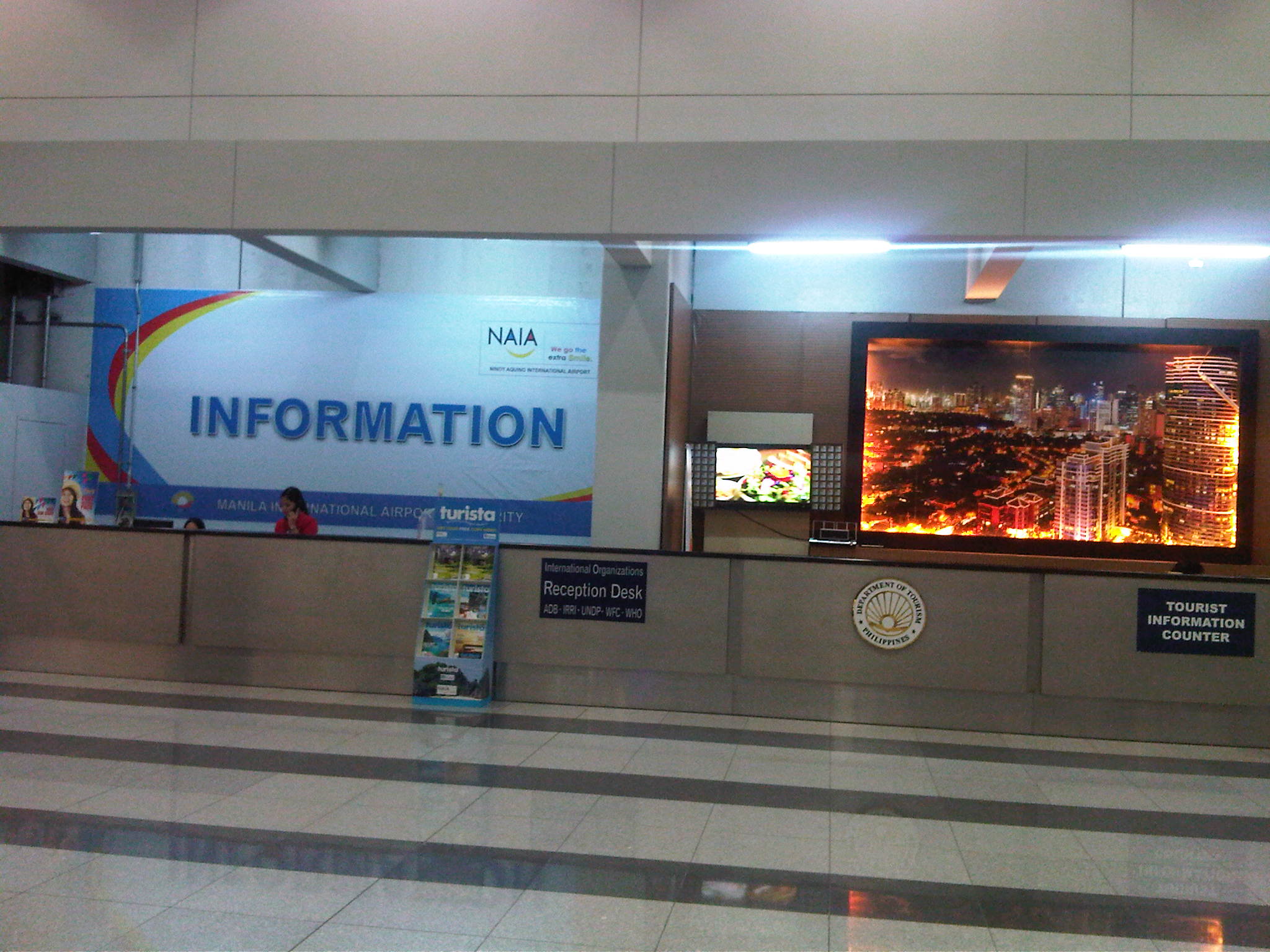 Information counters for visitors
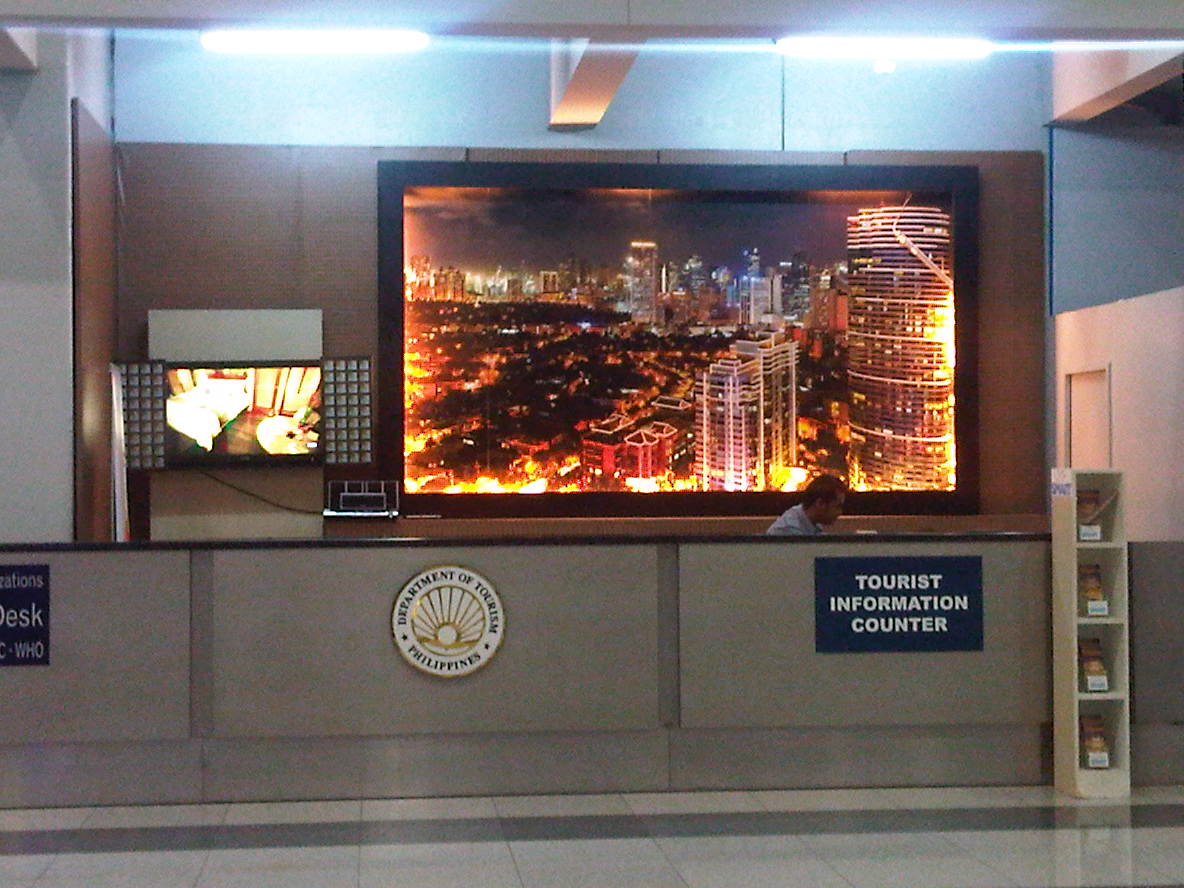 Tourist information counter of the Department of Tourism
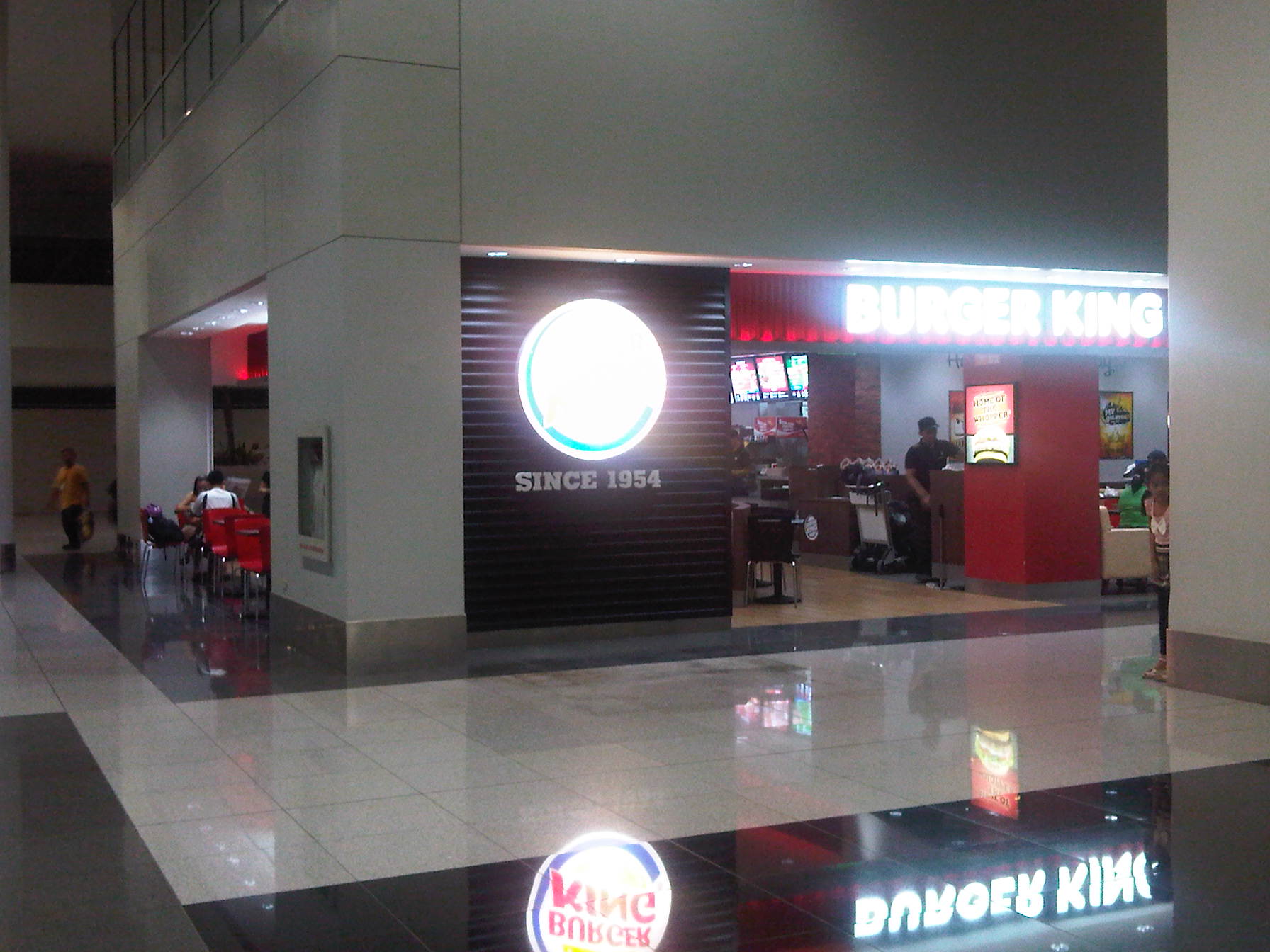 Newly opened Burger King at the ground level / arrival area of Terminal 3
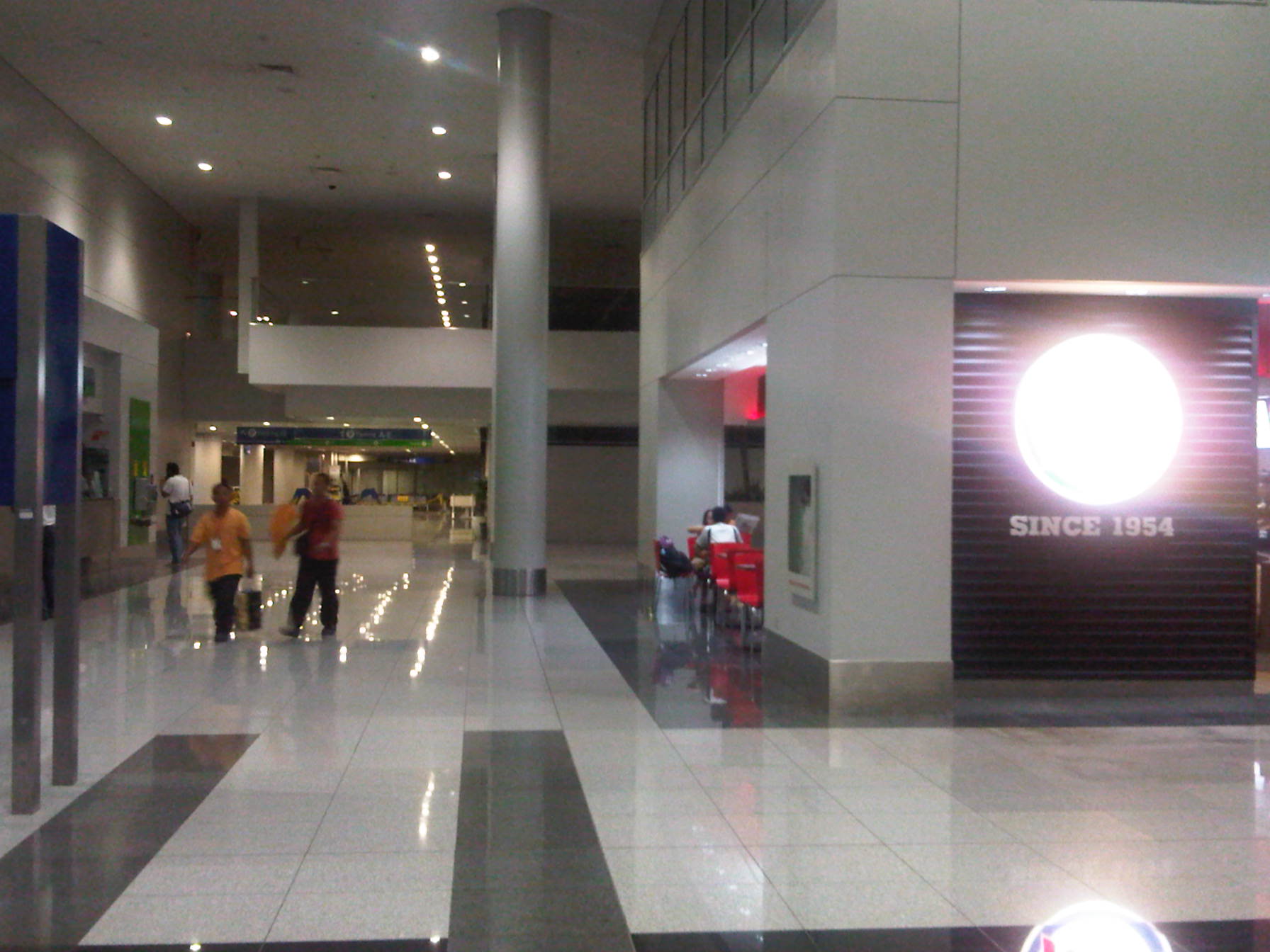 This way leads to the unopened area of the terminal, which includes space for more shops and the multi-level parking building. On the left side across Burger King are ATMs and counters of banks for currency exchange.
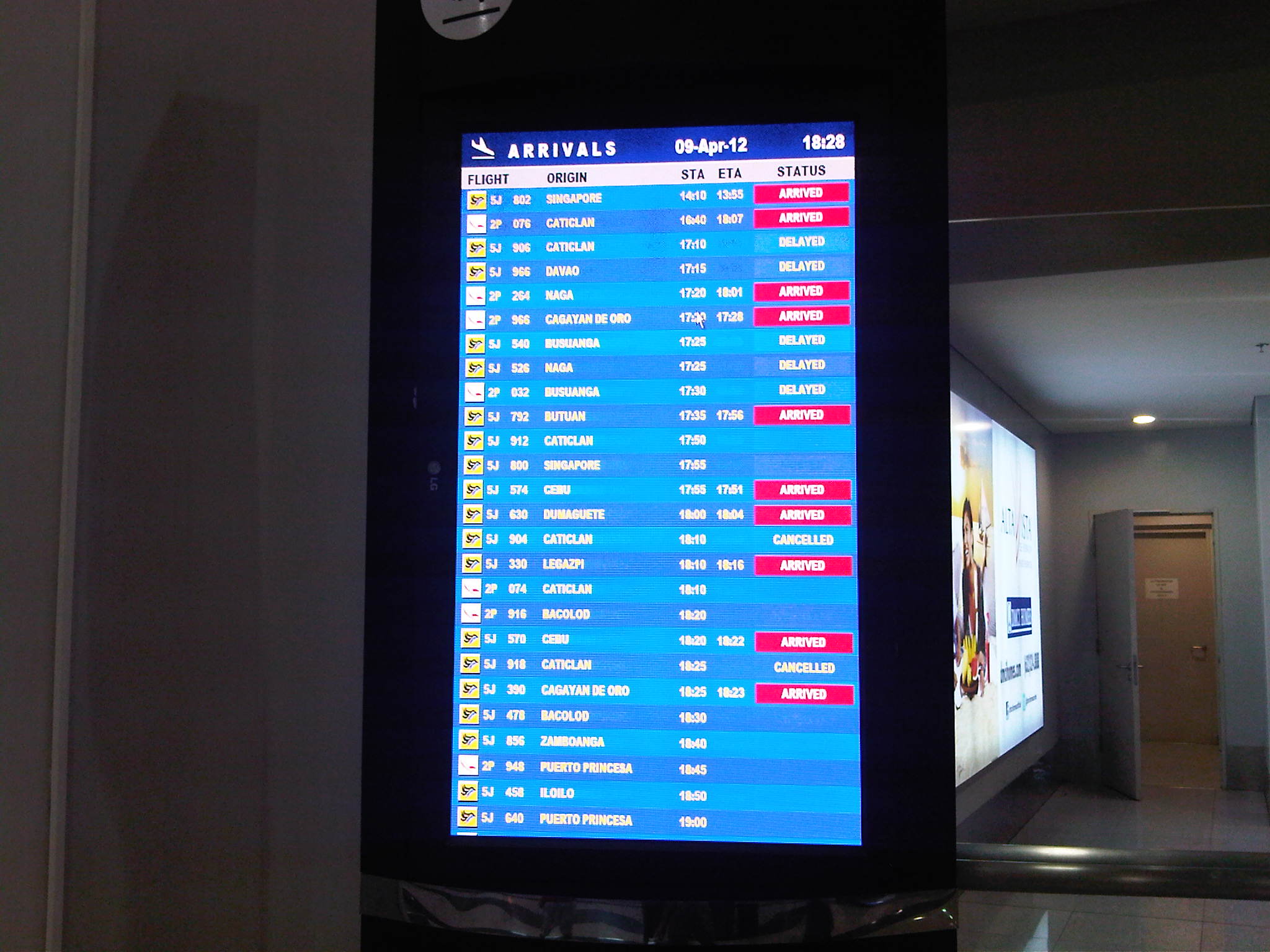 Arrival information just before the exit from baggage claim and customs
 Well-wishers view of passengers coming from the baggage claim area for domestic arrivals
–
 Caught (up) in traffic