
Home » Posts tagged 'PNR'
Tag Archives: PNR
PNR Naga – Lupi Timetable
We went to the PNR Naga Station last Friday morning and got an updated timetable for the PNR trains. We also were informed that the Naga-Legazpi train service is currently suspended due to damages along the line sustained during the recent typhoon. Hopefully, that section will be repaired immediately and the service resumed.
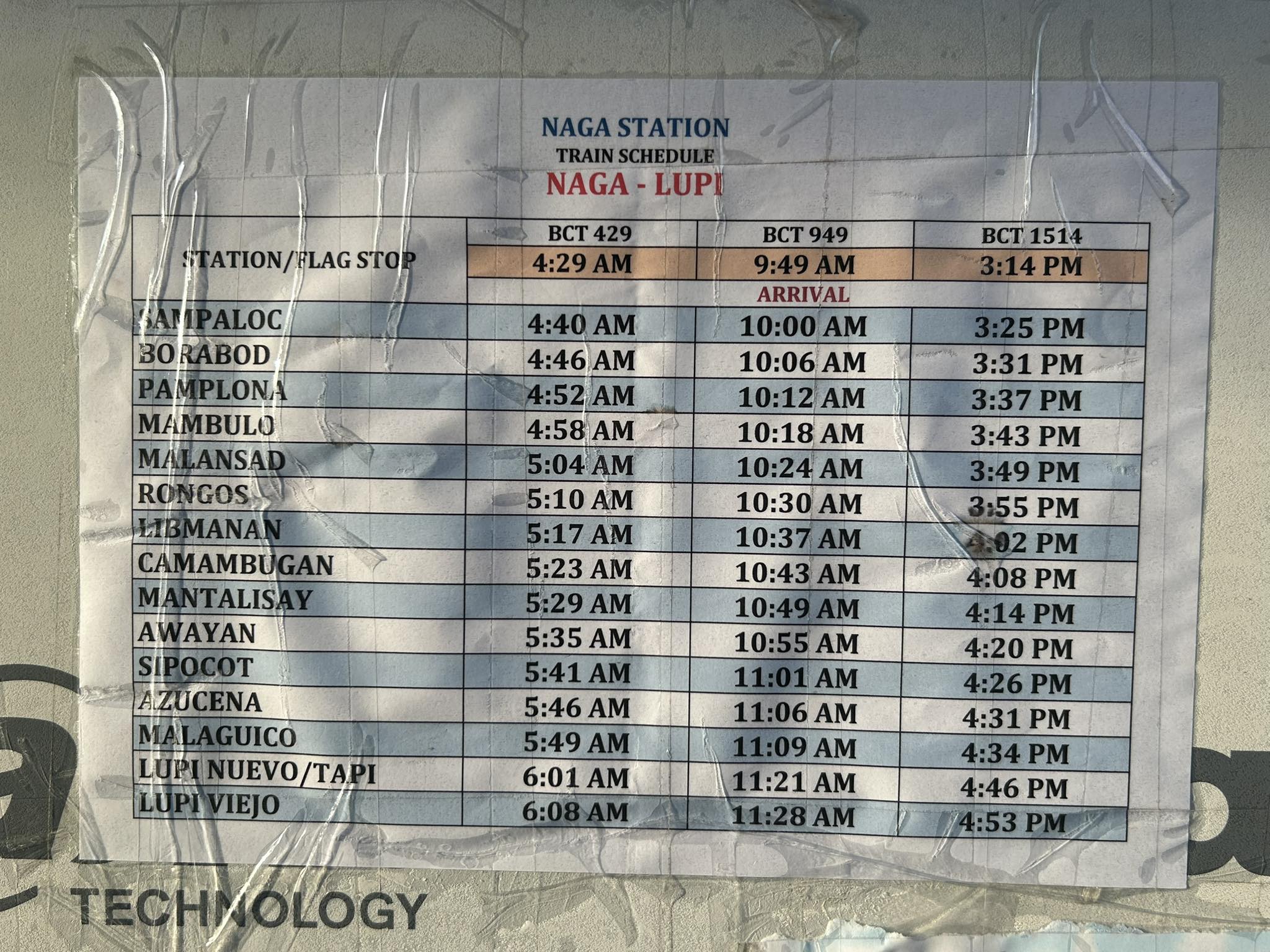 Naga to Lupi timetable showing the first train leaving Naga at 4:29 AM and the last at 3:14 PM. There are only 3 trips.
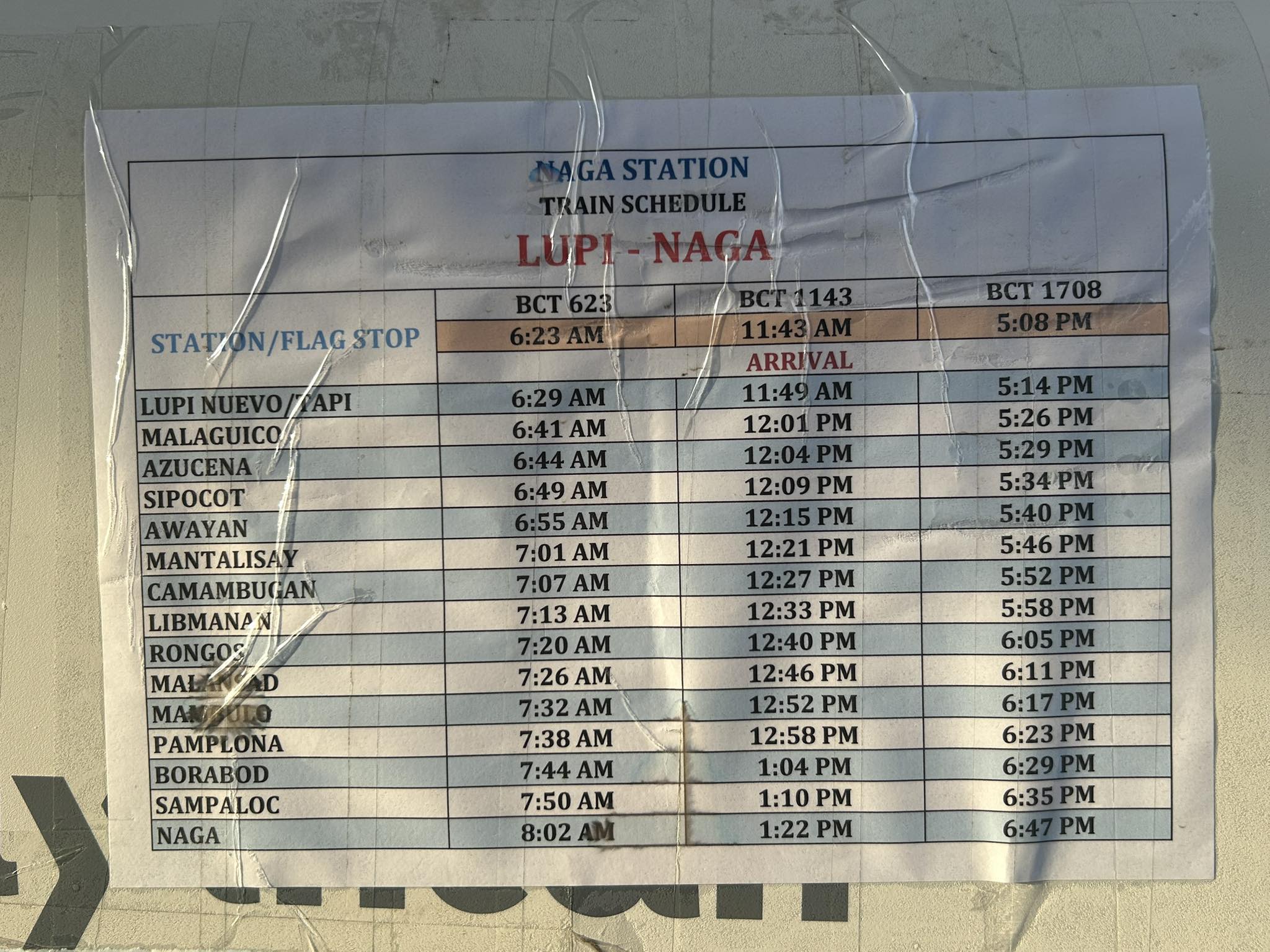 Lupi-Naga timetable showing the first train leaving Lupi at 6:23 AM and the last one at 5:08 PM. Again, there are only 3 trips from Lupi to Naga. The first train arrives in Naga at 8:02AM. This is actually attractive to commuters as the LGU reports the train to be full. Unfortunately, the return trip in the afternoon doesn’t have a favorable schedule for those heading home from work or school.
There is potential here for people to shift to rail for the major part of their commutes. Unfortunately, the frequencies of service is too low at present. People will shift to rail if the service is frequent and more reliable. Cost-wise, there is a significant difference between road-based and rail-based transport especially over long distances. Fares via express vans between Naga and Legazpi cost 300 to 400 pesos while private vehicle may cost between 3,000 to 5,000 pesos depending on the model and arrangements. Compare those with the 155 peso fare for the PNR train.
We are also hopeful that the rehabilitation and upgrading of train services will eventually be realized. The NSCR project is currently underway with the northern line connecting Metro Manila to Pampanga and the southern line currently until Laguna. The work needs to be accelerated and that entails much resources (i.e., funding) for railways to make comeback and perhaps experience another “Golden Age.”
–
An aerial view of the PNR’s rail revival
I would just like to share a few photos I took while our plane was turning towards our Bicol destination upon take off from NAIA.
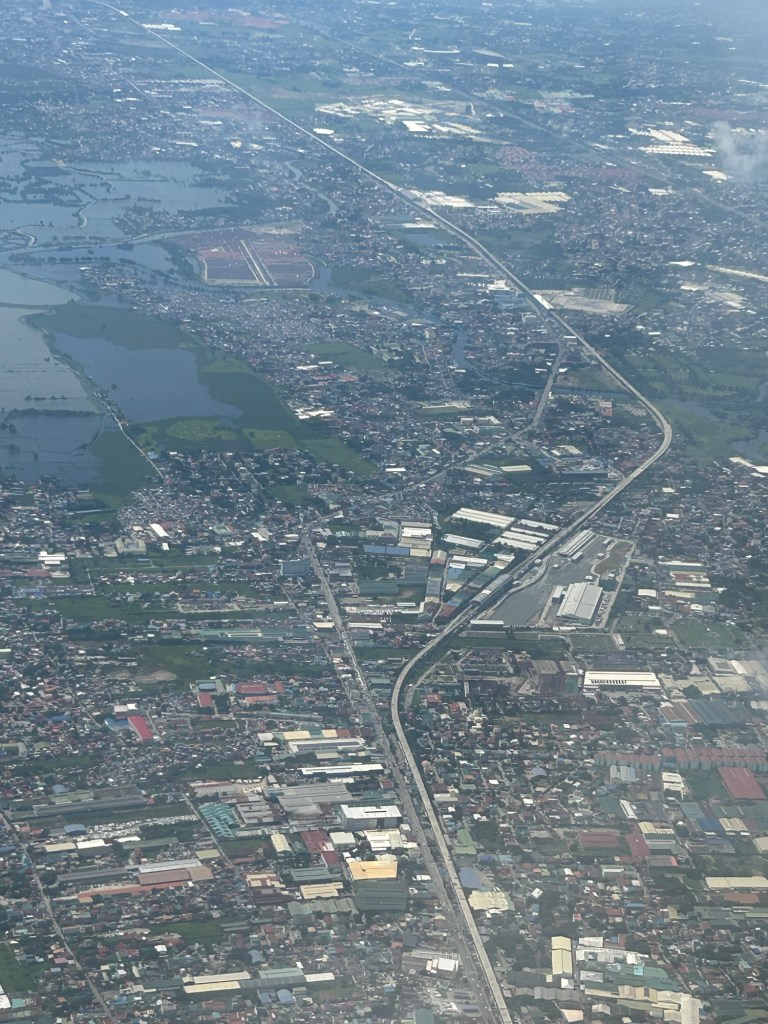
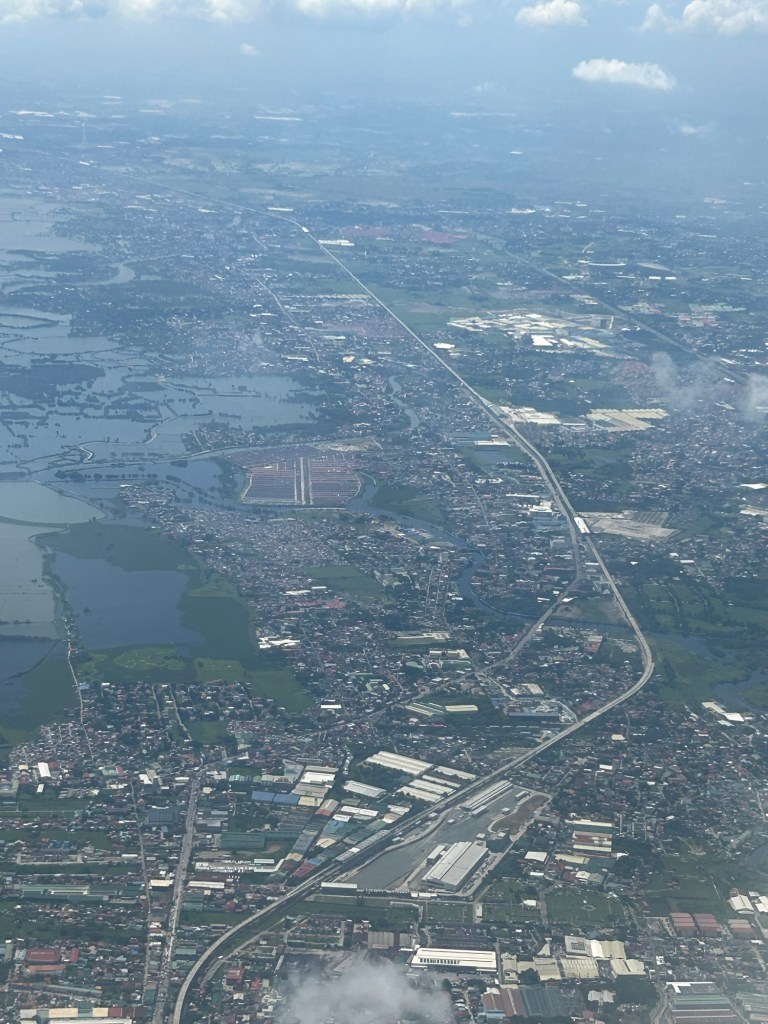
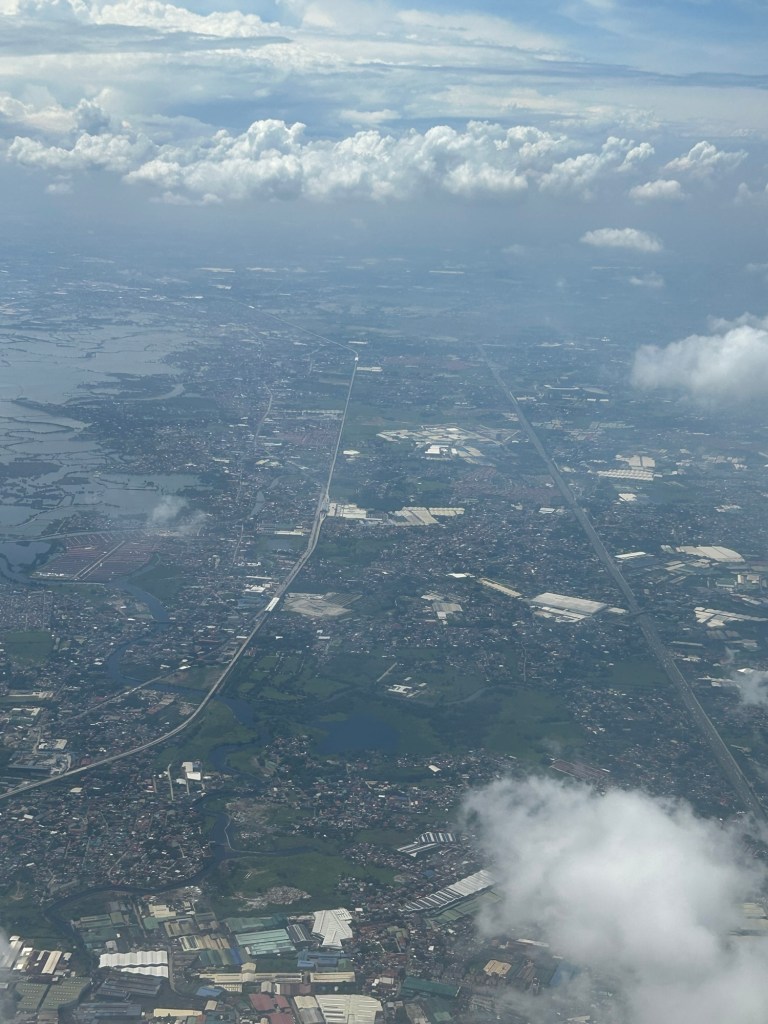
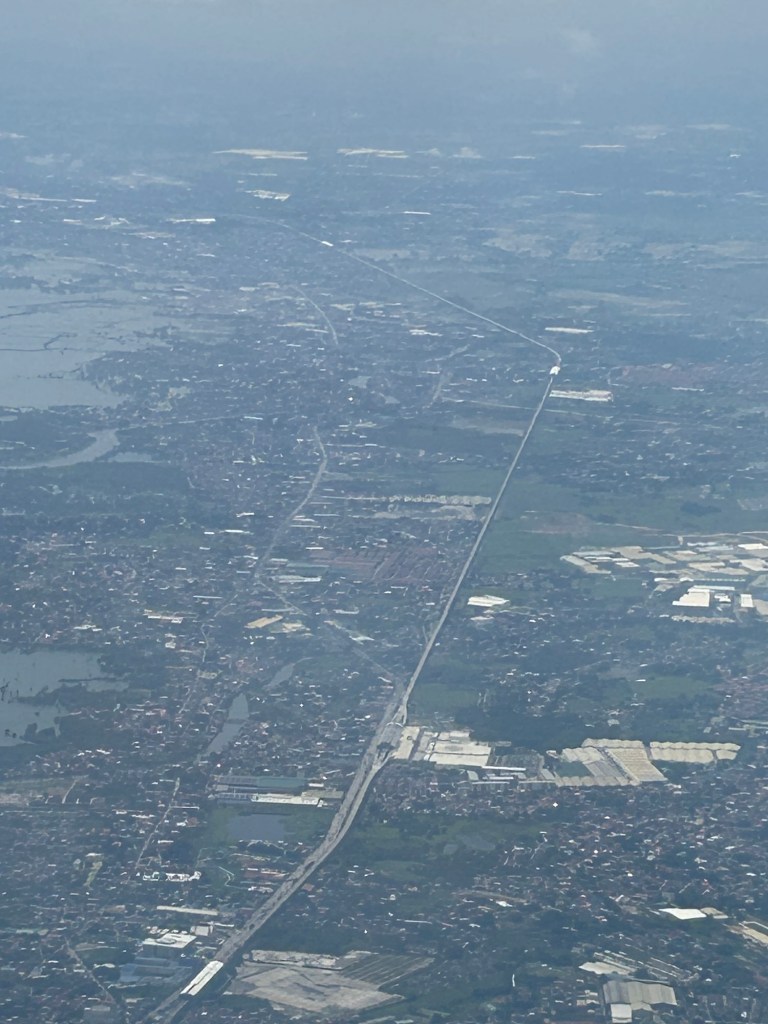
I will again pose the following questions to my readers: will the NSCR become the game changer it’s supposed to be for both long distance travel and commuting (super commuting for some cases)? Will it decongest McArthur Highway and NLEX? Will there be a significant shift from car use to rail? Or will those taking road-based public transport be the ones mainly shifting to rail?
–
Is there really a shortage of public transportation in Metro Manila? – Part 1 – Introduction
I will be doing a series of articles here on public transportation. More specifically, I will try to answer the question in the main title of the series – Is there really a shortage of public transportation in Metro Manila?
The quick answer probably is “yes” but we need to examine this concern from different perspectives and reasons so we can be objective about the “why” part of the shortage. Shortage may mean a real lack in terms of the number of public utility vehicles (PUVs) with approved franchises or perhaps the number actually operating on any given day. These two are actually different because it is possible to have fewer PUVs operating compared to the approved number or to have more PUVs operating than the approved number. The latter means there are “colorum” or illegal operations (i.e., vehicles providing public transport services without franchises).
Among the reasons why there is a perceived shortage of public transportation are as follows:
- Fewer than the number of franchises approved are operating.
- PUVs are not able to make a reasonable turnaround (e.g., due to traffic congestion).
- PUV drivers and operators refusing to operate their vehicles.
- Other factors.
- Any combination of the above including “all of the above.”
I hope I can write about these in a manner that can be easily understood – in layman’s terms.
–
PNR services from Naga City
I have yet to share the photos I took at the PNR Station in Naga City. Instead, I am sharing here the current train schedule and fares.
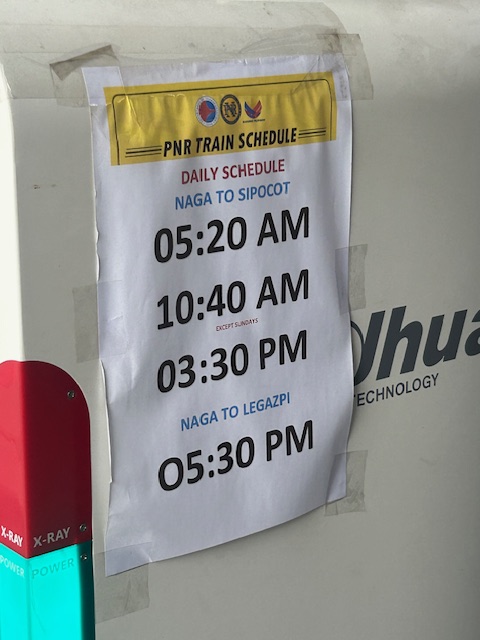 There are only three trips from Naga to Sipocot – two in the morning and one in the afternoon. Meanwhile, there is only one trip to Legazpi. Sipocot is in the same province, Camarines Sur, while Legazpi is the capital of Albay.
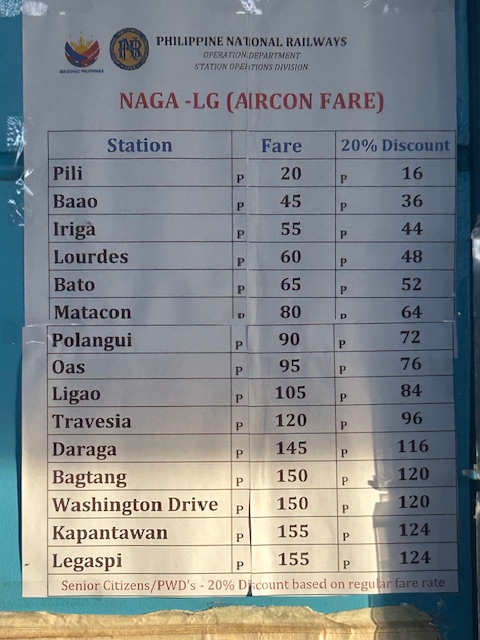 Fare rates between Naga City and Legazpi City. There are 15 stops along this route.
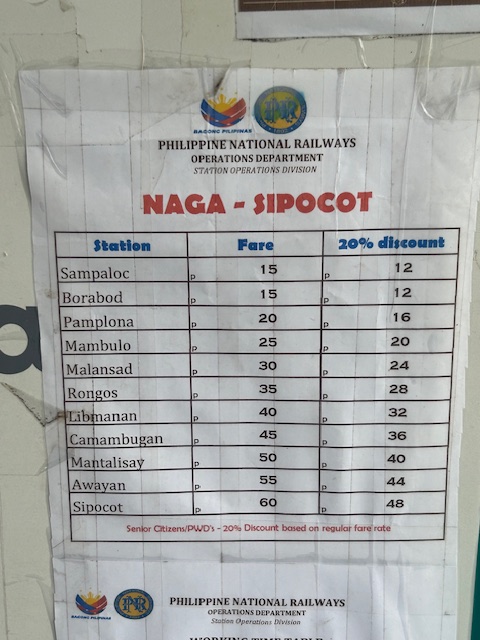 Fares for destinations between Naga and Sipocot
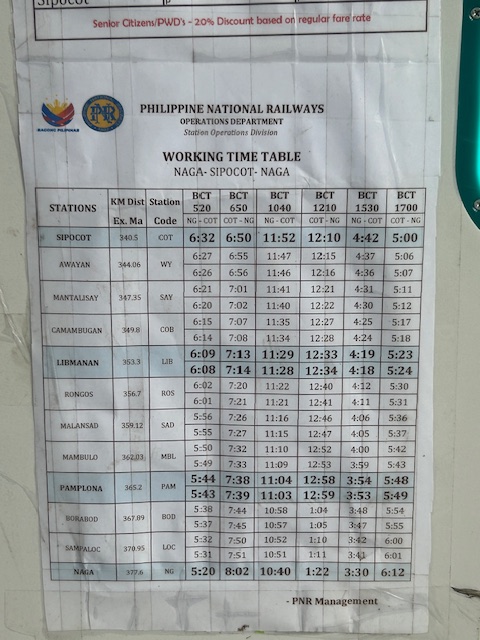 Timetable between Naga and Sipocot. It takes 1 hour and 12 minutes one way. It seems I wasn’t able to take a photo of the Naga-Legazpi timetable but the staff told us it takes 3 hours to get to Legazpi.
The station staff also told us that the train from Legazpi leaves at 4:30 AM. If it also takes 3 hours, then it arrives in Naga at 7:30AM. This can be okay for a super-commuter even at this travel time and speed (about 33 km/h). The frequency of trips between Naga and Legazpi should increase and will probably do once the PNR completes rehabilitation of what was termed as the Main Line South.
–
Railway construction at Clark
While at Clark, we also traveled along the perimeter road to see for ourselves the state of the railway construction there. The North South Commuter Railway (NSCR) is supposed to stretch from Clark in Pampanga to Calamba in Laguna once completed. Here are some photos I took along the Clark perimeter road.
 The NSCR construction is very visible from SM City Clark. So far, there is no work on the section that will cross Clark Freeport’s main gate.
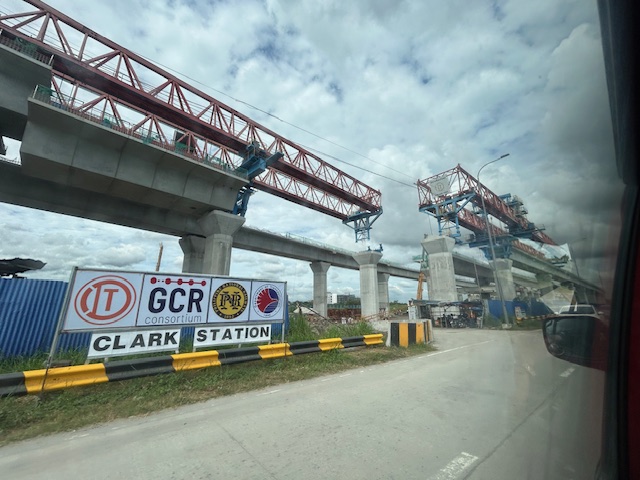 Construction of the future Clark Station
 A view of the construction along the Clark perimeter road from the direction of the Mabalacat gate.
 Project information including safety record
A lot of people are already looking forward to the completion and operation of the NSCR. This will be another game changer as the services have the potential to change the way people in Bulacan, Pampanga and Laguna commute especially those residing in these provinces and have work or school in Metro Manila. One can classify them as ‘super commuters’ considering the distances they need to travel between their home and their workplaces or schools.
–
On Metro Manila having one of the worst transit systems in the world
This is a follow-up to the previous post on the UC-Berkeley Study. Here is an example of how media featured the study outcomes:
https://www.facebook.com/CNNPhilippines/videos/1089453421728393
I didn’t see whether there was a response from government. These studies end up as features and nothing more if these do not prompt or push authorities to act on the problem. Even experts from academe or industry are reduced to being commentators or even pundits providing context, assessments and opinions, even recommendations that are perceived to fall on deaf ears. Perhaps government is already desensitized about these issues and will just trudge along at its own pace? In the end, it is the commuters mostly taking public transportation who continue to suffer and lose productive time to their daily travels.
–
Articles on railway safety
I shared a link to a Medium writer who specialized on articles about air crashes. These were investigative articles that provide details about air crashes especially since these are all tragedies and include those that have remained mysteries like Malaysian Airline Flight 370.
I am sharing today another collection of articles pertaining to transport safety. This time they are about railway or rail safety. Here is the link to the collection of articles from Max Shroeder:
https://mx-schroeder.medium.com
And here is an example of what he writes:
https://mx-schroeder.medium.com/stressful-schedule-the-2005-amagasaki-japan-derailment-12156ddd488
Again, there is much to be learned about these incidents. The circumstances, factors and experiences need to be examined in order to draw lessons from these incidents and reduce the likelihood of them happening again. In the case of the Philippines, this is especially applicable as the country rebuilds its long distance railways infrastructure with a line connecting Manila and Clark, Pampanga along what used to be called the Main Line North (MLN) of the Philippine National Railways (PNR), and another currently being rehabbed and for upgrading to the south in what was called the Main Line South (MLS). Other rail projects are also underway like the Metro Manila Subway and the MRT Line 7. All pass through populous areas, and railway crashes may not just lead to passenger and crew fatalities and injuries but also the same for those residing or working along these rail lines.
–
Comments on current transport issues – Part 3: On the obstacles to the PNR trains
2) On the obstacles to the PNR operations
We have done studies before when studies on the PNR were not considered fashionable. People who did research on rail transport were more interested in Lines 1, 2 and 3, and dismissed the PNR as a lost cause. There were many transportation experts who ridiculed it and even taunted PNR about their poor service. And yet we did our studies because we had an appreciation of the importance of this line and how it could play a major role in commuting if given the resources to improve their facilities. It was shown that the line could be more advantageous for commuters particularly those traveling between the southern parts of Metro Manila and Makati and Manila. These would be both workers and students who will benefit from the shorter travel times and less expensive fares. The downside then (and still at the present time) was the long headways between trains. That is, you can only catch a train every 30 minutes.
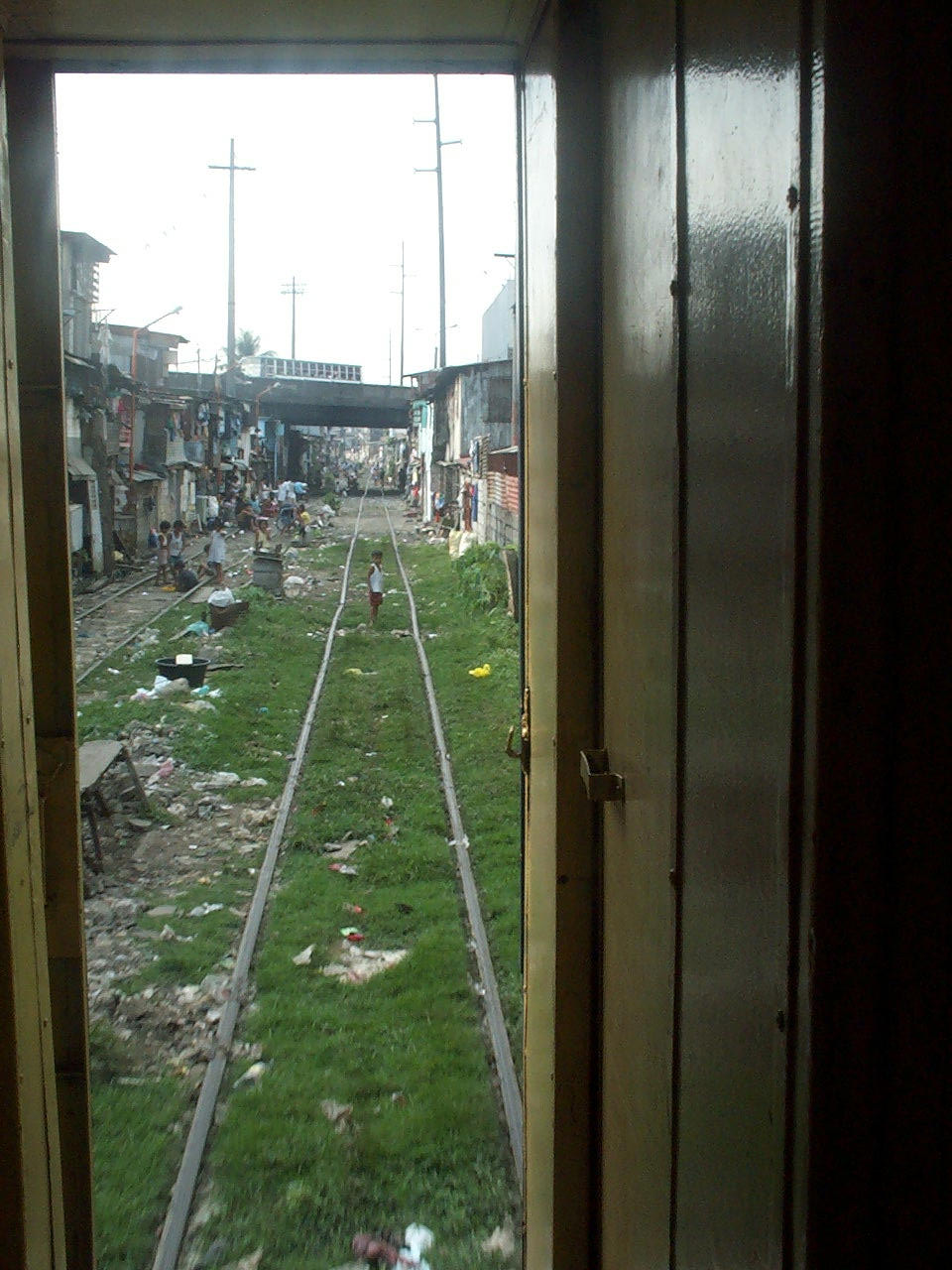 This photo taken more than a decade ago show the typical conditions along many sections of the PNR. It is pretty much the same today and the agencies involved (DOTr and PNR) have done little to reduce the informal settlers along the line. No, they didn’t just appear now, and are throwing garbage, rocks and other debris on the trains. This was already happening years ago.
Fast forward to the present and they seem to be getting a lot more resources than the last 30+ years. A Philippine Railway Institute (PRI) has been created. New train sets have just been delivered and went into operation. Unfortunately, the new trains were met with rocks and other debris as they traveled along sections occupied by informal settlers. The incident damaging the new trains puts further emphasis on the need to the need to address the squatter problem along the PNR line. Should fences be built to protect the trains and passengers? Should people be relocated? I think both need to be done in order to secure the line and in preparation for service upgrades including more frequent train services (i.e., shorter intervals between trains). And we hope to see the DOTr and PNR working on this as they attempt to attract more passengers to use their trains.
–
Another look at the PNR tracks in Bicol
Before I post on more recent photos I took from our road trip to and from Baler, Aurora, I just wanted to share photos I took of the PNR railway tracks from an earlier trip to Naga City.
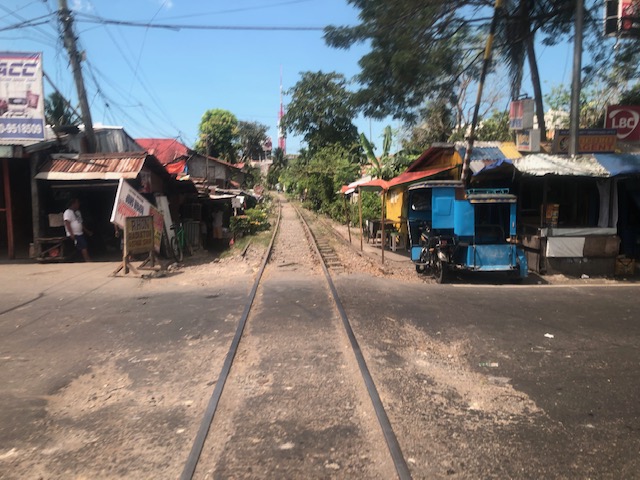 Railway crossing somewhere in Quezon – there are many crossings such as these in many towns in Laguna and Quezon
 Notice that this is a single track set-up, which means only one train at a time along either direction may use the railway tracks.
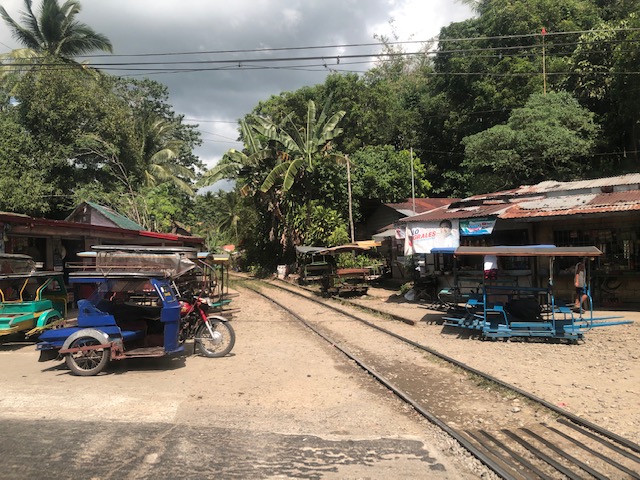 Another railway crossing with an informal tricycle and sled terminal. Yes, that’s another paratransit on the right that runs along the seldom if ever uses railway tracks.
 There seems to be no trace of railway ties or sleepers here.
 The tracks here look like they are not longer in use even by sleds.
 Old railway barrier that looks like its no longer functioning
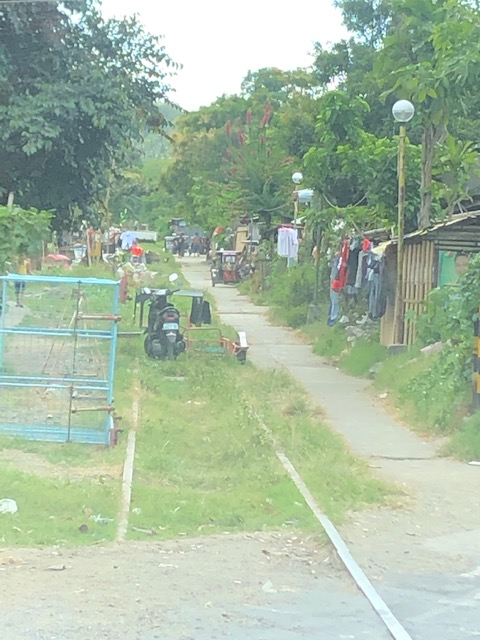 Idle tracks as evidenced by the grass and the parked vehicles. A narrow road runs parallel to the tracks; giving access to homes along the riles.
 There are railway ties/sleepers along these tracks that seem to be still in use judging from the limited growth of grass and the space being clear of obstructions.
 More idle tracks including rails buried in the ground
 Another railway crossing along the national highway
–
Railway bridges along the PNR Main Line South
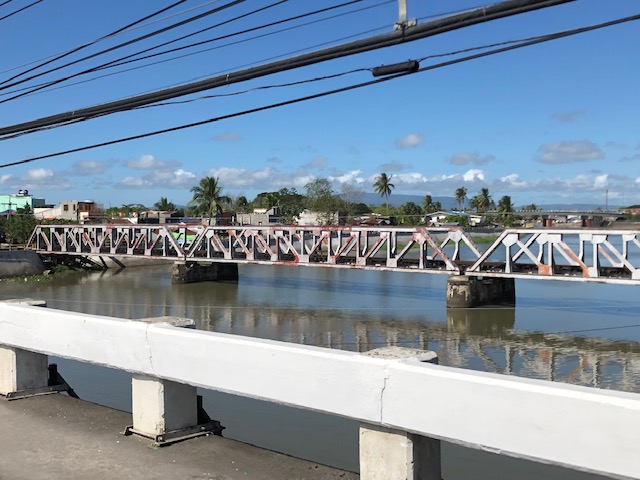
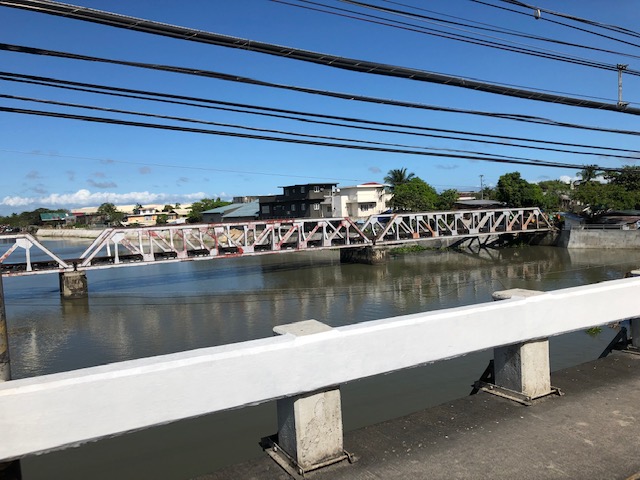
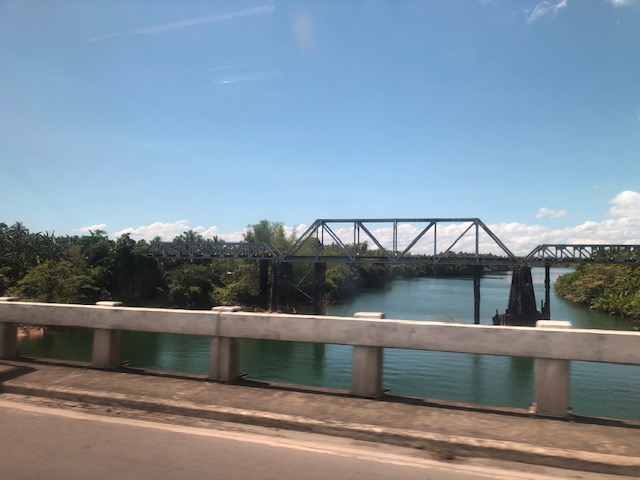
This is a continuation of the series of posts about my recent trip to Bicol where I was able to take some photos for items I generally label. These stock of photos are posted here for several reasons including convenience of access in case I need them for lectures or other presentations. Previously, I had posted on vertical curves along the Andaya Highway. This time around are some photos I took of railway bridges along the PNR’s Main Line South and particularly in Camarines Sur. It was quite challenging to look for or anticipate seeing these structures; many of which are quite old and in a state needing urgent maintenance. Most if not all are steel truss bridges and the ones in better conditions are shown in the following photos. All were taken within the Naga City boundaries.

–
 Caught (up) in traffic