
Home » Posts tagged 'policy' (Page 8)
Tag Archives: policy
Tinkering with decentralization of public transportation planning, franchising and regulations
I recall an informal discussion my colleagues and I had about the then Department of Transportation and Communications (DOTC) more than a decade ago. We were comparing the Department of Public Works and Highways (DPWH)’s and DOTC’s structures. DPWH has regional offices but also District Engineering Offices (DEO). These DEOs were practically mini me’s of the DPWH with the District Engineer calling the shots. Under him were a Design Engineer, Planning Engineer, Maintenance Engineer, etc. who were the equivalent at that level of the Bureaus. DOTC didn’t have the equivalent even though there were Land Transportation Office (LTO) and Land Transportation Franchising and Regulatory Board (LTFRB) regional offices. So if there were regional development council (RDC) meetings, the DOTC’s representatives are usually from the regional offices of LTO and LTFRB plus other offices of agencies under DOTC – Maritime Industry Authority (MARINA), Air Transportation Office (ATO now CAAP) and the Philippine Ports Authority (PPA).
I mention these because perhaps one vision for the future is to have something like Metropolitan, City or Municipal Transit Authorities similar to those you’ll find in other countries. And these should have the capacities for route planning and assessment that are currently centralized in DOTr (i.e., Road Transport Division). But perhaps these transit authorities should not only have road based public transport under them but also rail, too. This is especially applicable to metros like MM, the loosely defined Metro Cebu and Metro Davao and other HUCs that maybe ripe for some form of urban rail transport. In some cases, I would even dare include maritime transport as well since modes like the Pasig River Ferry should also be included.
This idea of decentralization is something worth considering as local government units build capacity and capability for public transportation planning, operations and management. Some are already capable though mainly concern themselves with tricycles and pedicabs. These two modes are not under the LTFRB but are arguable the most in number around the country. There are already best practices about their management including those that have been documented in past studies on sustainable transport (e.g., San Fernando, La Union, Quezon City, Olongapo City, Davao City, etc.). Many of these cities are highly urbanized and would need to deal with all public transport and might just be the most knowledgeable and experienced in their jurisdictions. National government should at least identify pilot cities where bus, jeepney and van transport planning, franchising and management (including operations and enforcement) can be devolved or delegated. That is so we can already have an idea how these local transit authorities can be operationalized. Many already have their Local Public Transport Route Plans (LPTRP) so that is a good starting point for LGUs to establish their transit units around.
–
On what local governments can do to improve road safety
Here is a very interesting article on how a small city in the US was able to reduce traffic deaths by investing in people-oriented transport programs and projects:
Kessler, E. (April 6, 2021) “EYES ON THE STREET: How Hoboken Has Eliminated Traffic Deaths,” StreetsBlog NYC, https://nyc.streetsblog.org/2021/04/06/eyes-on-the-street-how-hoboken-has-eliminated-traffic-deaths/ [Last accessed: 4/14/2021]
The article is pretty much self-explanatory. I won’t be commenting more about this except that many of the items mentioned can be taken on by many cities and municipalities in the Philippines. You don’t have to be a highly urbanized city with a big population and so much resources to come up with a plan and perhaps improvise in order to reduce costs of implementation. The most important thing is leadership since leaders like the mayor will be responsible for and making the critical decisions for the town. That is why he was elected in the first place, and the same goes for the other elected officials who are supposed to represent the interests of all their constituents and not just those who own cars.
–
Vaccine passports anyone?
As the Philippines, relaxes protocols to contain the Covid-19 pandemic, it is interesting to note that other countries have not let down their guard. And the latter includes nations that have been quite successful in dealing with the pandemic. Many countries have also received the vaccines and have started inoculating their populations. These received the doses ahead of the Philippines and have now vaccinated a significant % of their population according to their respective prioritization schemes.
But even as countries have started vaccinations, the question remains whether a vaccinated individual can now move around or travel as if it were pre-pandemic conditions (the old normal). Here’s a nice article to read as the topic of unrestricted (or restricted, depending on your take) comes up in discussions including those leading to certain policies to be formulated by governments:
Fisher, M. (March 2, 2021) “Vaccine passports, Covid’s next political flashpoint,” The New York Times, https://www.nytimes.com/2021/03/02/world/europe/passports-covid-vaccine.html [Last accessed: 3/4/2021]
–
On leaders and decision-makers taking public transport or bikes to commute
There has been clamor for our leaders and decision-makers, especially those in the transport and highway agencies, to take public transportation. This is for them to experience how most commuters fare for their daily grinds. And no, having an entourage including bodyguards or reserving your own train car does not count. Dapat pumila o maghintay sa kalye. Makipagsisikan o makipag-habulan sa bus, jeepney o van para makasakay. Many if not most of these officials have their own vehicles or are even driven (may tsuper o driver) to and from work. One even had the gall to transfer his department to where he comfortably resides so he won’t commute but that’s another story.
You see articles and posts about Dutch politicians and even royalty riding the bicycle to work.
 The Dutch Prime Minister bikes to work
Then there are politicians regularly taking public transport while in office. Here is an article about the newly inaugurated POTUS, Joe Biden, who took the train for his regular commutes:
Igoe, K.J. (May 4,2020) “Where Did “Amtrak Joe,” Joe Biden’s Nickname, Come From?”, Marie Claire, https://www.marieclaire.com/politics/a32363173/joe-biden-amtrak-joe-meaning/ [Last accessed 2/14/2021]
Do we have someone close to such an example? Commuting by private plane between your home in the Southern Philippines and your office in Manila surely won’t let one have an appreciation of the commuting experiences of typical Filipinos.
–
Lessons on housing we need to talk about
There’s this recent article on housing that presents and discusses lessons from Singapore housing that
Fischer, R. (February 2, 2021) “Singapore Housing Lessons for the Biden Administration,” Planetizen, https://www.planetizen.com/node/112077?utm_source=newswire&utm_medium=email&utm_campaign=news-02082021&mc_cid=4fac9821d0&mc_eid=9ccfe464b1 [Last accessed: 2/15/2021]
 I’m not an expert on housing but I’ve experienced living in Singapore. Here’s a photo of the wife as she walked ahead of me on our way to the MRT station near our place back in 2012. One of the factors we considered when we chose this place for our residence was its proximity to the orange line station that meant only one ride (no transfers) between our home station and the station closest to the wife’s office. We could also take the train to the nearest mall if we didn’t feel like walking 15 minutes.
To quote from the article:
“…the secret to Singapore’s success is that their housing projects are carefully designed to support mixed-incomes, beautiful green spaces, and access to high-quality public transportation that conveniently links residents to education and community centers. And last but not least, couple all that with the famous Singapore hawker centers (food courts) where all income classes and ethnicities meet, socialize, and dine on Singapore’s famously delicious and affordable cuisine.”
–
What type of seat is appropriate for your child?
I wrote yesterday about the new law requiring child seats for children 12 and under or under 4’11” in height in the Philippines. The implementation has been postponed after government received a lot of flak about it. To be fair, the info campaign started months ago but it seemed to be limited to social media and not really disseminated as widely as is ideal. The material while catchy at first glance, is not as clear in the info or message as already evidenced from the flak about the law and its provisions.
Here is a graphic from the US National Highway Traffic Safety Administration (NHTSA) that is quite easy to understand:
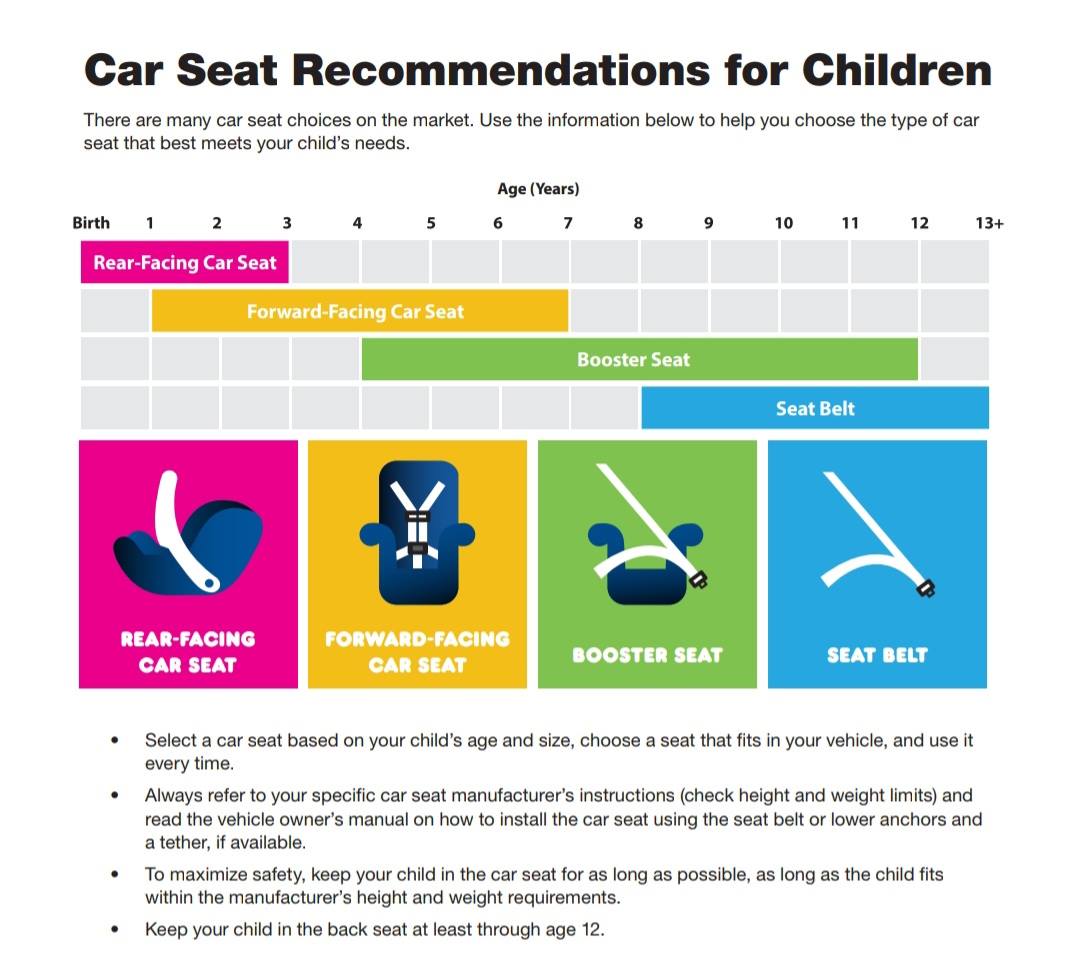
Based on the information from the NHTSA, the CDC came up with the following graphic:

It would have been clearer and more effective in communications if the agencies-in-charge came up with similar material rather than the one I shared in yesterday’s post. There are also many designs for child seats and so far there are no specifics about these that people could refer to. Ultimately, I believe there should be a list of what are allowed or not allowed including brands. Perhaps its better to have a list of what are not allowed with the reasons for these, and then let the manufacturers challenge these. Having a list of allowed products might come off as advertising or favoring certain manufacturers. Of course, it will be up to the Bureau of Product Standards (BPS) of the Department of Trade and Industry (DTI) to determine which seats will be allowed based on their specs and the standards they conform to. European and US standards are among the most stringent so perhaps these can be reviewed and determine whether they can be adopted in the Philippines.
–
On R.A. 11229 and the requirement of Child Seats
There seems to be a lot of feedback (mostly negative) on the new law and its implementing rules. RA 11229 is the “Child Safety in Motor Vehicles Act” that requires the use of child car seats. There seems to be a confusion about who are supposed to be using child seats particularly about the age and height limits mentioned. In one “controversial” interview, a government transport official was recorded replying to a question about tall children that the parents would have to get a bigger vehicle. That was obviously uncalled for but also probably what can be considered as a “snappy answer to a stupid question[see note below]” type of situation. What is clear now is that a lot of people are not aware of the provisions and implications of the new law (for various reasons including their choosing to ignore it) and there needs to be a more comprehensive and effective info campaign on this topic. Not yet mentioned in discussions are the models of car seats that are approved or certified for use.
 Screenshot of a graphic explaining who are required to use child car seats
Here are examples of the opinions and comments in one of the group discussions I am part of [I will just leave these without specific attribution or anonymous.]:
- “RA#11229 was badly written. Authored by Sen JV Ejercito, trying to copy laws in the USA. In California, the Child Safety Seat is only required for child 2 years old and below, 4 years old in NY, and 3 years old in Europe. Additional parameters: height limit of 40″ (101 cm) and weight limit of 40lbs. They differentiate rules for children up to 8 years in NY & CA.”
- “The Philippine version lumps all kids into one group below 12 years old, requiring child restraint system. Additional parameter is 150 cm height, none on weight. Two wrong premises of our law: 1) that Filipinos children are taller than Europeans and Americans of same age, and 2) Filipino children mature later at 12.”
- “They lumped it into one class because its the simplest and easiest thing to do, without going into a lot of uncertainty. Na controversial na nga yung 12 yr. old catch-all, ano pa kaya kung they broke it down into numerous classifications.”
[Note: To those who are not familiar with the term “snappy answers to stupid questions”, google it together with Mad Magazine.]
–
On the plastic barriers for jeepneys
The minimum requirements for conventional jeepneys prior to their returning to operations include the installation of barriers so as to have physical separation between passengers. Ideally, such separation should be a distance of at least one meter, which was initially relaxed to ‘one seat apart’, and then further relaxed to just the barrier separating passengers. You see various designs installed in jeepneys. I posted a couple in an earlier post showing examples of customized and DIY barriers. Here is another that looks like there was more effort involved in the making of the plastic barriers:
 Specially made plastic barriers with messages and graphics on social distancing printed on them.
 Jeepney drivers are obliged to reject or unload passengers not adhering to the protocols including those refusing to wear face masks and shields while commuting using public transportation modes. I assume that they are really doing this for their and their passengers’ safety and well-being.
–
On the RFID fiasco
Early December 2020, Metro Pacific Corporation suddenly had to deal with jam-packed toll plazas and queues that affected roads connecting to the North Luzon Expressways. Fast-forward and Valenzuela City apparently had enough of it and revoked the tollway corporation’s business permit. Later, matters were resolved with the tollways reverting to mixed toll collection to manage the queues at the toll plazas.
Prior to this, tollways corporation scrambled to meet the deadline set and re-set by the Department of Transportation (DOTr) through the Toll Regulatory Board (TRB) for contactless, cashless toll payments. The question is if there was enough time for tollway operators to acquire the best (not just the minimum required) system for this endeavor. There are some opinions that this was basically required on short notice and for the government to get some brownie points for this.
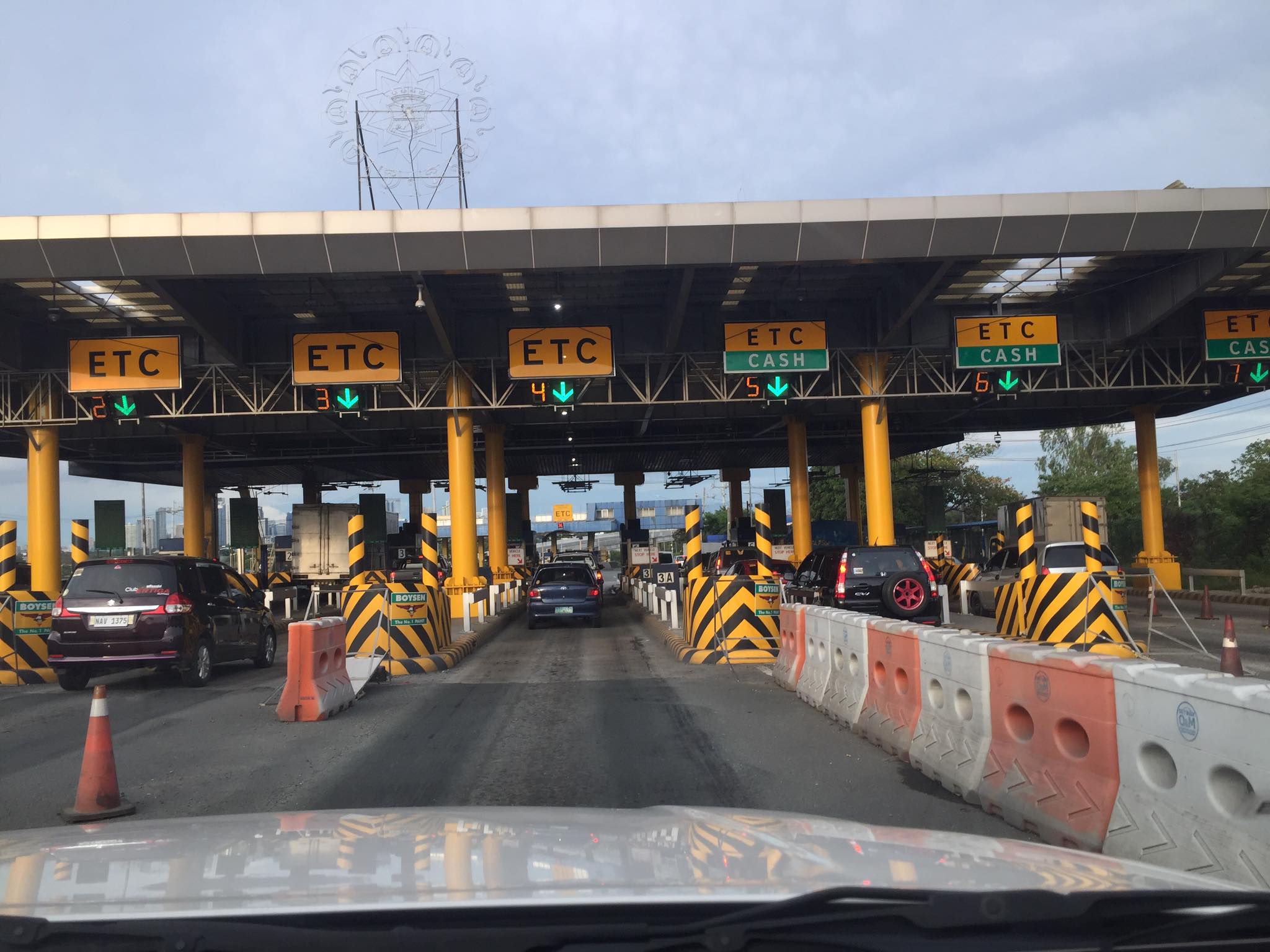
Were there issues about technology and the corresponding costs to the acquisition and deployment of the necessary devices for seamless, contactless, delay-free (in relative terms) transactions for tollways? Probably so. Those RFIDs and the readers installed at strategic locations along tollways (i.e., entries and exits) were certainly not state of the art or the best available out there. Singapore, for example, uses a more sophisticated system for their expressways where you no longer have toll plazas and you won’t have to slow down to be detected by the system. That system has corresponding costs but is perfect for the city state given that most roads are tolled anyway because of their road pricing policy. In the case of our tollways, not all travelers are actually going to utilize the tollways as frequently as it would necessitate them having to get either the Easy Trip or Auto Sweep tags. That is obvious from the relatively low penetration rates for electronic toll collection (ETC). So it still makes sense to have hybrid booths for those not availing the ETC option. Anyway, travelers will have to exercise disinfection protocols to ensure infections are prevented.
–
On cycling fatalities and the way forward
I’ve read a few articles and social media posts about how its become more dangerous or risky for cyclists during the pandemic. The statistics and observations show that there is an increase in the number of cyclists. I am not even considering here the recreational ones (and I have observed that there are a lot more of them). I focus rather on those who use bicycles to commute between their homes and workplaces; or those who cycle to market or do their groceries. The danger lies mainly from motorists who have little or no regard for cyclists and pedestrians; choosing to hog the roads for themselves. And there seem to be more of these motorists these days, too, as people owning cars have opted to use these instead of taking public transportation.
Here’s a recent article about safety in the US. Those stats and assessments can be replicated here given the availability of data on kilometers traveled and crashes that are usually employed for risk assessments.
Marquis, E. (December 22, 2020) “Cars have killed almost 700 cyclists in 2020,” Jalopnik.com, https://jalopnik.com/cars-have-killed-almost-700-bicyclists-in-2020-1845934793
The only solution for our case really is to put up protected bike lanes. Local standards or guidelines need to evolve and the people behind these should be of progressive thinking rather than relying on “what has been done” or “what they have been doing”. That attitude will only give us poorly planned and designed infrastructure for cycling and walking. The coming year offers some opportunities for active transportation as the DOTr and the DPWH (plus the MMDA in the case of Metro Manila, and perhaps the LGUs where applicable) are supposed to implement major projects intending to produce the bike lanes and walkways for Metro Manila, Metro Cebu and Davao. The budget is in the billions of pesos so much is expected about these projects. Will they become models for other Philippine cities and municipalities to follow? Or will these be like going through the motions just to appease those calling for active transport facilities?
–
 Caught (up) in traffic