
Home » Posts tagged 'research' (Page 7)
Tag Archives: research
Locally made AGT
I got my first look at the vehicle currently being developed by the DOST-MIRDC at the DOST complex in Bicutan. This was the same vehicle that was shown on some news programs a couple of days ago when there was some buzz about a MOA being signed between UP and DOST for the development of an automated guideway transit (AGT) prototype and test track at UP Diliman. The DOST Secretary was supposed to have said that it would cost somewhere between a fourth or a fifth of those developed elsewhere (read: other cities abroad) and that it would have a capacity of 60 passengers. The Secretary also was reported to have said that the AGT would eventually be travelling at 100 – 120 kilometers per hour! That’s quite fast for something that’s being packaged as an urban mass transit system.
Together with the reports, both on TV and print (I haven’t heard anything from radio.), were images of a transit vehicle used by DOST in publicizing the project. What appeared was an artist’s impression (or so it seems) of what looked more like a monorail than an AGT. But coming to Taguig for a meeting, I made it a point to ask our friends at DOST to give us a brief tour of the test track they constructed at the complex where the MIRDC with a little help from another agency involved in rail transit was testing a prototype vehicle that was shown on TV. I wasn’t able to catch those news reports so I was a little excited to see the vehicle being developed and by local engineers and scientists. Below are a few of photos of the vehicle together with the test track.
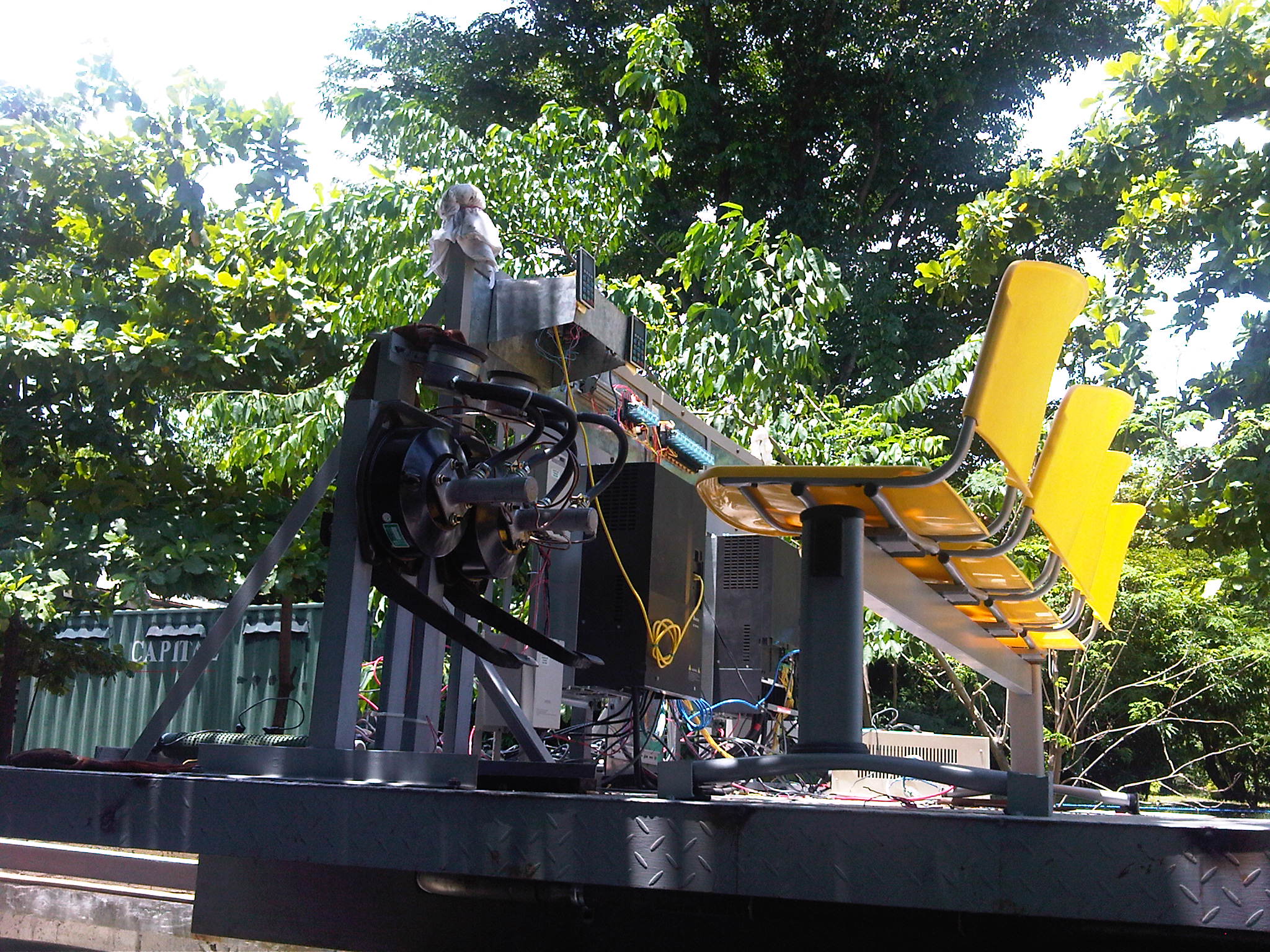
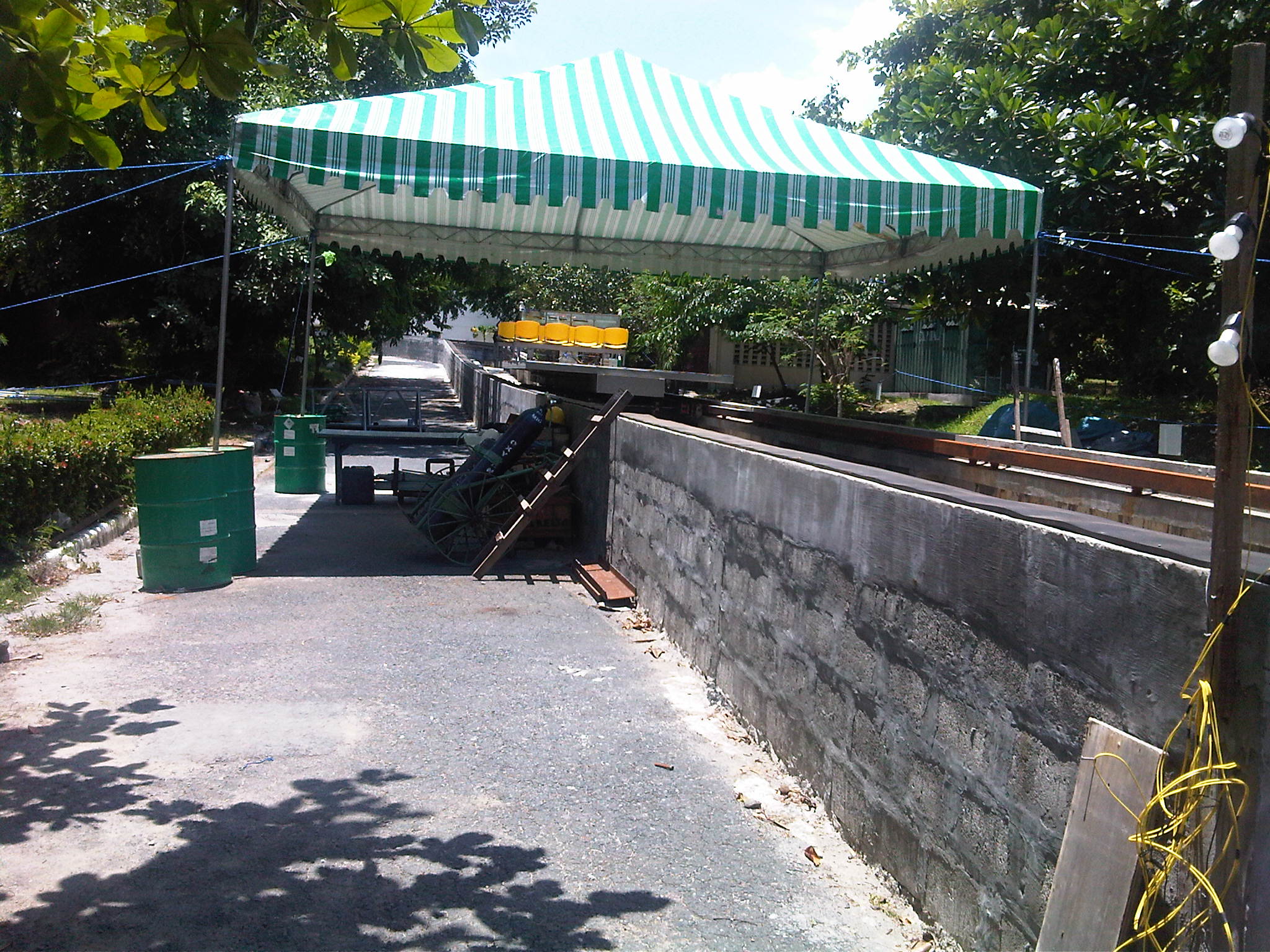
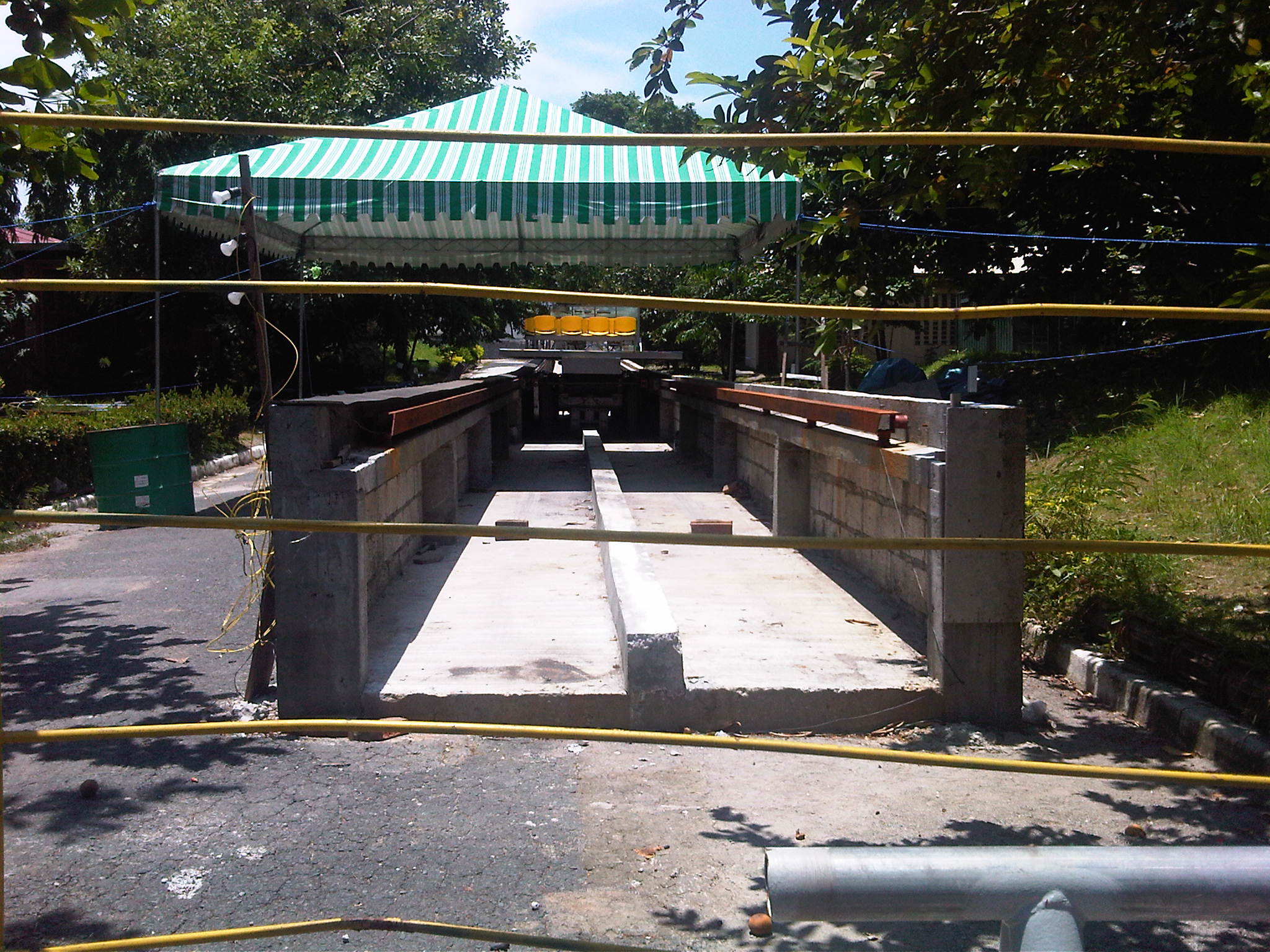
I’m sure a lot of pundits out there were disappointed with what they saw after getting all the hype about the UP AGT. However, it turns out that this won’t even be what will run along the test track to be constructed at UP Diliman. Our friends at the DOST say that this was just a practice vehicle of sorts that DOST staff experimented on just to prove that we (Filipinos) are capable of developing a transit vehicle and the track that will carry it. Of course, the future track and the proposed loop in UP Diliman will be overhead. Also, there will be other challenges pertaining to the superstructure (foundations, columns, girders, stations, etc.). Then there is the vehicle itself that should be safe and comfortable with designs adhering to ergonomic standards, an efficient motor and controller (it will be electric), and a suspension system that should give a smooth ride. Needless to say, the vehicle should also look good to be able to attract people and for it to be marketable. These are tremendous expectations indeed and it could really use all-out support from the government and maybe the private sector. I would not be talking about the funds and other resources required for this undertaking. Info on these are already available from the DOST and UP, and there are already initiatives to attract the private sector into having a look at the project and perhaps provide support in whatever way they can.
I can’t help but be proud of what has been accomplished and what is still to come in as far as the project is concerned. I believe we should be eager to pitch in what we can in order to ensure the success of this collaboration between UP and DOST. Who would not want to be involved in a project where Filipino engineers and scientists will come together to come up with a product we can not only showcase as home-grown but something that would have a significant impact on public transportation in this country.
Meanwhile, it would be better for DOST and UP to temper expectations so as not to put undue pressure on those who will be involved in the project. Pronouncements claiming that the system will replace the IKOT jeepneys are at this stage premature and only raises flags that would not be in the interest of the project. Claims, too, that the vehicle will run at 100 kph is unfounded and unnecessary considering, for one, that the average running speeds of such systems would be between 30 and 40 kph and probably top at 60 kph if there were sufficient distance between stations. I understand that the statements made were probably words of encouragement but I guess we have our work cut out before us and the challenges have been revealed on the way to the development of a home-grown AGT.
Transport topics in the 2011 Professorial Chair Colloquium
The 2011 Professorial Chair Colloquium of the College of Engineering of the University of the Philippines on July 4 will feature a number of lectures with transportation themes. These are the following:
– Development of a Diesel Hybrid Vehicle Prototype [Gerald Jo. C. Denoga, Emerson Professorial Chair in Mechanical Engineering]
– Survival Versus Sustainability: Challenges to Environmentally Sustainable Transport [Hilario Sean O. Palmiano, Transport Training Center Professorial Chair]
– LPG in Dual-Fuel SI and CI Engine Applications – Effects on Maximum Power and Fuel Consumption [Edwin N. Quiros, Emerson Professorial Chair in Mechanical Engineering]
– Traffic Congestion in Metro Manila: Is the UVVRP Still Effective? [Jose Regin F. Regidor, Pozzolanic Philippines Inc. Professorial Chair]
– Design and Production of a Vehicle Run by Cordless Drills [Joseph Gerard T. Reyes, Emerson Professorial Chair in Mechanical Engineering]
– Towards a Safer Intersection Design [Ricardo G. Sigua, Prof. Emeritus Norbert S. Vila Professorial Chair]
– Estimation of Emissions and Fuel Consumption of Sustainable Transport Measures in Metro Manila [Karl B.N. Vergel, Maynilad Professorial Chair]
The lectures are to be delivered mainly by Civil Engineering and Mechanical Engineering faculty and it is quite obvious from the titles that the ME’s have focused on vehicle technologies while the CEs are into sustainable transport and design. These topics also reflect on the researches currently being implemented at the college although it is also known that IEs and EEs are doing transport-related researches including those on Intelligent Transport Systems (ITS) and logistics. Hopefully, the outputs of these researches will be beneficial to the country considering their applications to local problems.
Philippine participation in EASTS 2011
The 9th International Conference of the Eastern Asia Society for Transportation Studies (EASTS) was recently held in Jeju, Korea. The conference was well attended with over 700 participants from at least 12 countries including those from member societies in eastern Asia. The Philippines was represented by academics and researchers coming mainly from the UP Diliman, Mapua Institute of Technology and St. Louis University (Baguio City).
Following is a photo taken during the Welcome Dinner last June 20, 2011 held at the Jeju International Convention Center.
 Seated [L-R]: Grace Padayhag (ITPS), Regin Regidor (UP); Standing [L-R]: Mark De Guzman (SLU, partially obscured), Riches Bacero, Aldrine Uy (Mapua), Francis Villareal, Dr Shigeru Morichi (ITPS), Jun Castro (UP), Ric Sigua (UP) and Ernie Abaya (UP)
The next photo shows Philippine participants taking a break at a cafeteria at the Jeju ICC:
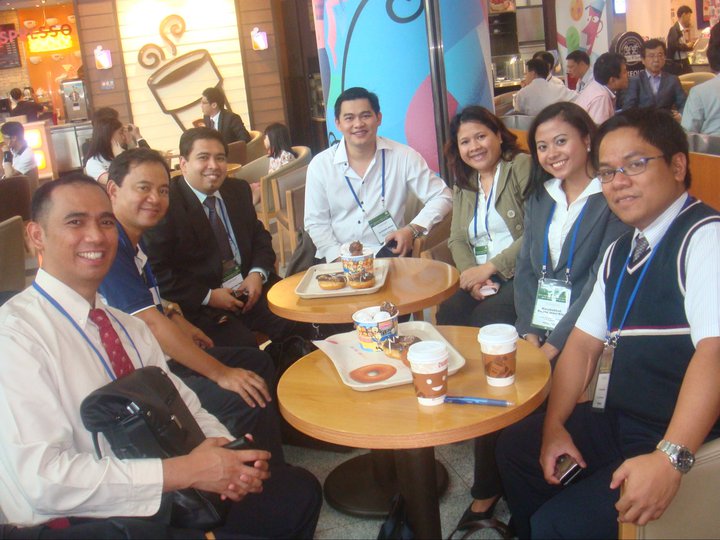 [L-R]: Riches Bacero, Ric Sigua, Regin Regidor, Aldrine Uy, Grace Padayhag, Reigna Macabbabad, and Mark De Guzman
Acquisitions
The last time the National Center for Transportation Studies (NCTS) was able to benefit from the acquisition of equipment for research and extension work was in the mid-90’s when the last of the big ticket items like the Horiba mobile air quality monitoring equipment were delivered. These items were donated by the Government of Japan through the Japan International Cooperation Agency (JICA). At the time, there was a strong JICA presence at the Center that included several experts and visiting professors because of the project that transformed what was previously the Transport Training Center (TTC) into the NCTS.
Many of the donated equipment eventually showed signs of wear and tear as a lot of researches employed them; some sparingly and others extensively. Of course, there were items such as the mainframe computer, that rapidly lost relevance and value due to the much rapid developments in computers. The problem with big ticket items, as we later found out, was that it was quite expensive to maintain and even operate them. This was especially true for the Horiba, which cost a lot because of the calibration gases required for field experiments and the costly repairs at a time when components had to be shipped to Japan and back because there were no qualified technicians in the Philippines. It was okay back then when JICA maintained a presence at the Center since the experts were able to use their budgets or apply for support for repairs directly to JICA. It became so much difficult later when, after the NCTS Project was concluded, it became just too difficult to get support for equipment repair. After almost 10 years of submitting applications and justifications for repairs or replacements, and promises by JICA experts assigned to national agencies, we practically gave up on the matter and resigned ourselves to the prospect of never getting such important tools in the foreseeable future.
In 2007, however, hope was reborn in the form of the Engineering Research and Development for Technology (ERDT) program supported by the Philippines’ Department of Science and Technology (DOST). The ERDT involved a consortium of the top universities in the country led by the University of the Philippines Diliman. It was an ambitious yet realistic program that had the best intentions of giving R&D in engineering a much needed boost. Among the essential elements of the program was the upgrading of facilities at UP that led to the construction of new laboratories and the acquisition of modern equipment to encourage relevant researches. The Institute of Civil Engineering would be acquiring a shaking table for earthquake engineering research, recent-model hydraulics equipment, and long delayed upgrades to construction materials testing machines.
In the case of its Transportation Engineering Group, the latter’s affiliation with the NCTS led to the proposals for acquiring equipment that would allow for more progressive studies on Traffic and Highway Engineering. Among those in the wishlist that were approved and have been delivered are a portable digital axle weighing equipment and a portable particulate matter monitoring system. Also approved was equipment that would finally upgrade and revive the Center’s mobile air quality measurement and monitoring system. In fact, the equipment intended for air quality measurements will also benefit the Institute’s Environment and Energy Engineering Group.
Such equipment are vital if the University is to be at par with the best in the region and perhaps, if sustained, in the world. The fact that we have been left behind is an understatement and we cannot pursue relevant and progressive researches if we do not have the necessary tools to implement programs and projects. True, we probably have the brainpower to do research considering many have been trained at the best institutions abroad, yet unless we are able to create tools and things straight out from the power of our minds, we are limited and will just end up frustrated about not being able to undertake the research and extension that we are supposed to do, whose outcomes may just spell the difference if this country of ours is to move towards progress and a more prosperous future for its citizens.

