
Home » Posts tagged 'road safety' (Page 9)
Tag Archives: road safety
Back to the old normal?
As traffic continues to worsen after, The MMDA has reinstated the number coding scheme albeit from 5:00 to 8:00 PM on weekdays for now. This is in recognition of the worsening traffic congestion brought about by people returning to their workplaces and the easing of travel restrictions across the entire population. People are now moving about as can be seen in transport terminals and commercial areas (e.g., shopping malls, markets, etc.). With the return of severe traffic congestion, it begs the question whether we are back to the ‘old normal’.
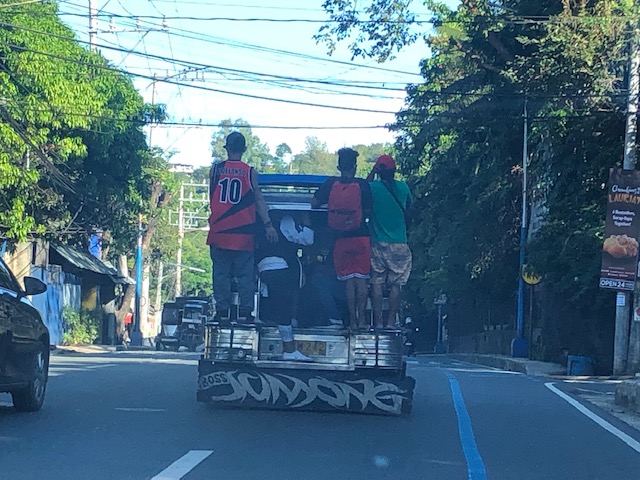
I thought the photo above pretty much describes how it was before Covid-19. The problem is that this photo was taken earlier today and we are still technically in a pandemic. Does the photo show the people’s renewed confidence in using public transportation? Or is it a matter of necessity (i.e., commuters having no choice but to risk it in order to get to their workplaces or home)? If they had motorcycles, these people would likely use them instead of taking the jeepney. I will also dare ask why don’t they bike instead? They seem able bodied enough to try cycling instead. Is it because their commuting distances are long? Or are there other reasons that evade us? If these are the same reasons and Covid-19 is not a major factor for their choice, then perhaps we are back to the ‘old normal’ and have not progressed significantly despite claims by various groups that we are experiencing a paradigm shift in favor of active transport. All the more that we need to urgently revisit and reassess how transport should be in order for us to transition to a more sustainable future.
–
Lessons to be learned about e-scooters
I recently wrote about e-scooters and I am sharing this article on the experience of Chicago from their pilots of this emerging new mobility option.
I won’t be offering much in terms of opinions at this point as there really hasn’t been much about e-scooters at present in the country. You see them every now and again but not as frequently as motorcycles and bicycles. There seems to be something about them on social media but out on the road, they are not yet significant in terms of volume but are a concern regarding safety.
–
On e-scooters
One of the so-called new mobility modes is the e-scooter. It is categorized as a micro mobility mode and in appearance is no different from a kick scooter with the difference lies in the former being motorized. Not all are powered by electric motors as I’ve seen ones that are gas-powered (small internal combustion engines). The latter are noisy and have emissions but seem to be more powerful especially when encountering inclined road sections (e.g., going up to Ortigas Center from C5, going up to Antipolo). Some seem to be customized for more power as I’ve seen motorcycle shops doing what looks like modifications and not just repairs.

I’m sharing an article below about e-scooters and their involvement in road crashes in Europe:
Meaker, M. (December 7, 2021) “E-scooters are everywhere in Europe. So are grisly accidents,” Wired, https://www.wired.com/story/escooters-accidents-europe/?bxid=5bd6761b3f92a41245dde413&cndid=37243643&esrc=AUTO_OTHER&source=EDT_WIR_NEWSLETTER_0_DAILY_ZZ&utm_brand=wired&utm_campaign=aud-dev&utm_content=WIR_Daily_120721&utm_mailing=WIR_Daily_120721&utm_medium=email&utm_source=nl&utm_term=P4 [Last accessed: 12/9/2021]
I think the proverbial jury is still out there in as far as these vehicles are concerned. Safety-wise, there should be concern if users speed up and zig-zag through traffic. These are the same concerns in the European cities mentioned in the article. Personally, I don’t see these vehicles gaining as much popularity for typical commutes compared to the bicycle, which has seen a surge in use during this pandemic and with bike lanes (pop-up and permanent) in place in many areas. These same bike lanes are now also being shared by these e-scooters. I think more people will opt for the motorcycle, which comes in different sizes and engines, and which provides more in terms of versatility of use. But again, there are risks involved here and perhaps some e-scooter users are mimicking the undesirable, risky motorcycle rider behavior. Are they e-scooter users to be regarded and treated as drivers or riders considering they are using motorized vehicles? Perhaps the government should be working on this and other relevant, current policy (if not regulations) to e-scooter use.
–
Safety remains a big issue in transportation
Even with the supposedly reduced traffic due to the pandemic, there has been a perceived increase in the road crashes. Many of these are speeding and reckless driving/riding related, and many involve pedestrians and cyclists who are most vulnerable considering the reckless behavior of drivers and riders. Following are photos taken in Antipolo along Ortigas Avenue Extension (the section leading up to the capitol):


Much has been said and written about Philippine roads not being up to par with international standards. I would agree with certain roads with designs encouraging speeding and other reckless behavior. However, there have been significant efforts to correct situations involving geometric design, signs and markings where applicable. These include engaging the International Road Assessment Program (iRAP). The road and engineering are just one part of the equation. Education and enforcement are the others that affect or influence the behavior of road users whether they be drivers, riders, cyclists or pedestrians. Even with the best road designs and their intended influence to driver and rider behavior, much is to be desired for driver/rider education and actual behavior on the road.
–
Bike lanes at BGC
We were at the Bonifacio Global City (BGC) a couple of weeks ago after almost two years of not going there mainly due to the pandemic. We frequented BGC before especially since my wife’s office is there and, if it weren’t for the ‘old normal’ traffic, the place offered a lot in terms of restaurants and shops. When traffic wasn’t as bad, we even had our Saturdays there with our daughter as her Kindermusik sessions were originally there before we transferred to their branch at The Grove. It’s not yet post-pandemic but traffic is back to ‘old normal’ levels.
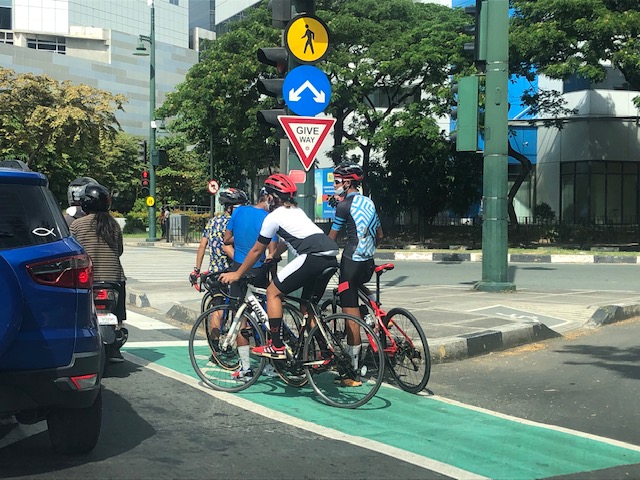
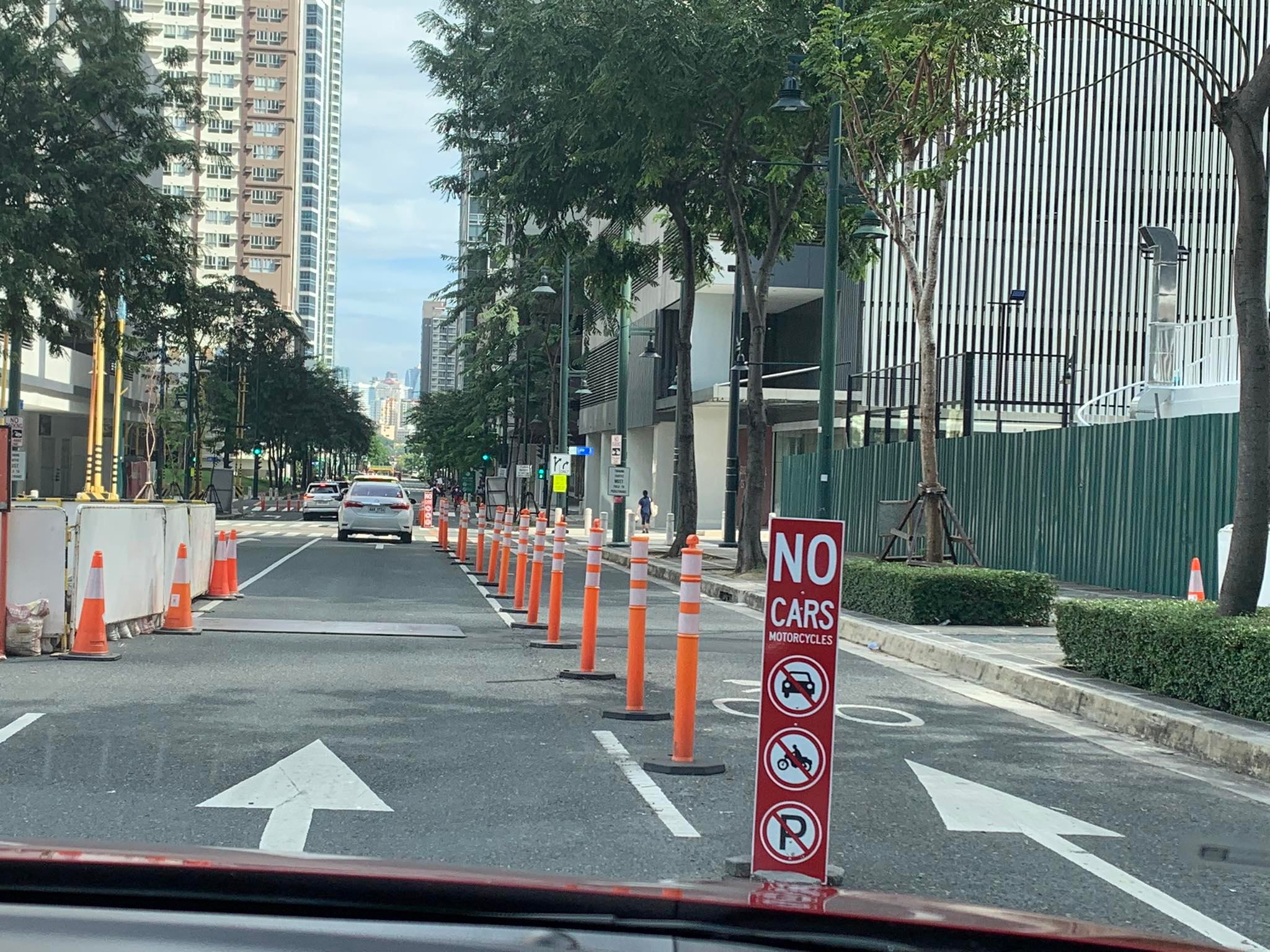
I was expecting to see the bike lanes along C5 and at BGC when we traveled there. I will post separately about the bike lanes along C5. I just wanted to share here a few photos the wife took of the bike lanes at BGC. It is truly a welcome development not just here but in many places across the country where cycling offers another option for trips of various purposes including commuting between homes and workplaces. The protected lanes along 9th Avenue are wide and can be replicated elsewhere in order to encourage more people to use bicycles. The connectivity of bike lanes, though, leaves much to be desired if one expects people to use bikes for longer trips.


–
An opinion on sharrows
We conclude November 2021 with an article about shared lanes or shared right-of-way (thus, the term ‘sharrow’). These are lanes designated for use of both motorized vehicles and bicycles. I share many of the sentiments of the writer and there are many ways to go about to have legitimate, separate and maybe protected bike lanes for multi-lane roads (yes, the kind DPWH has been so keen in having along many national roads) should be the rule. For local roads/streets, however, there might be a need to compromise.
Flax, P. (November 7, 2021) “Why Sharrows are Bullshit,” Medium, https://medium.com/@peterflax/why-sharrows-are-bullshit-b01fea1fea6f [Last accessed: 11/30/2021]
I think the issue at the local level in the Philippines is that many roads are already quite narrow and cannot really accommodate bike lanes unless you ban motorized vehicles from using them (e.g., pedestrianization of certain roads/streets). While you cannot really close off so many roads, careful study by local governments should identify which streets can be pedestrianized over a certain period (i.e., phases) while others have shared lanes to accommodate the needs of residents and commercial establishments.
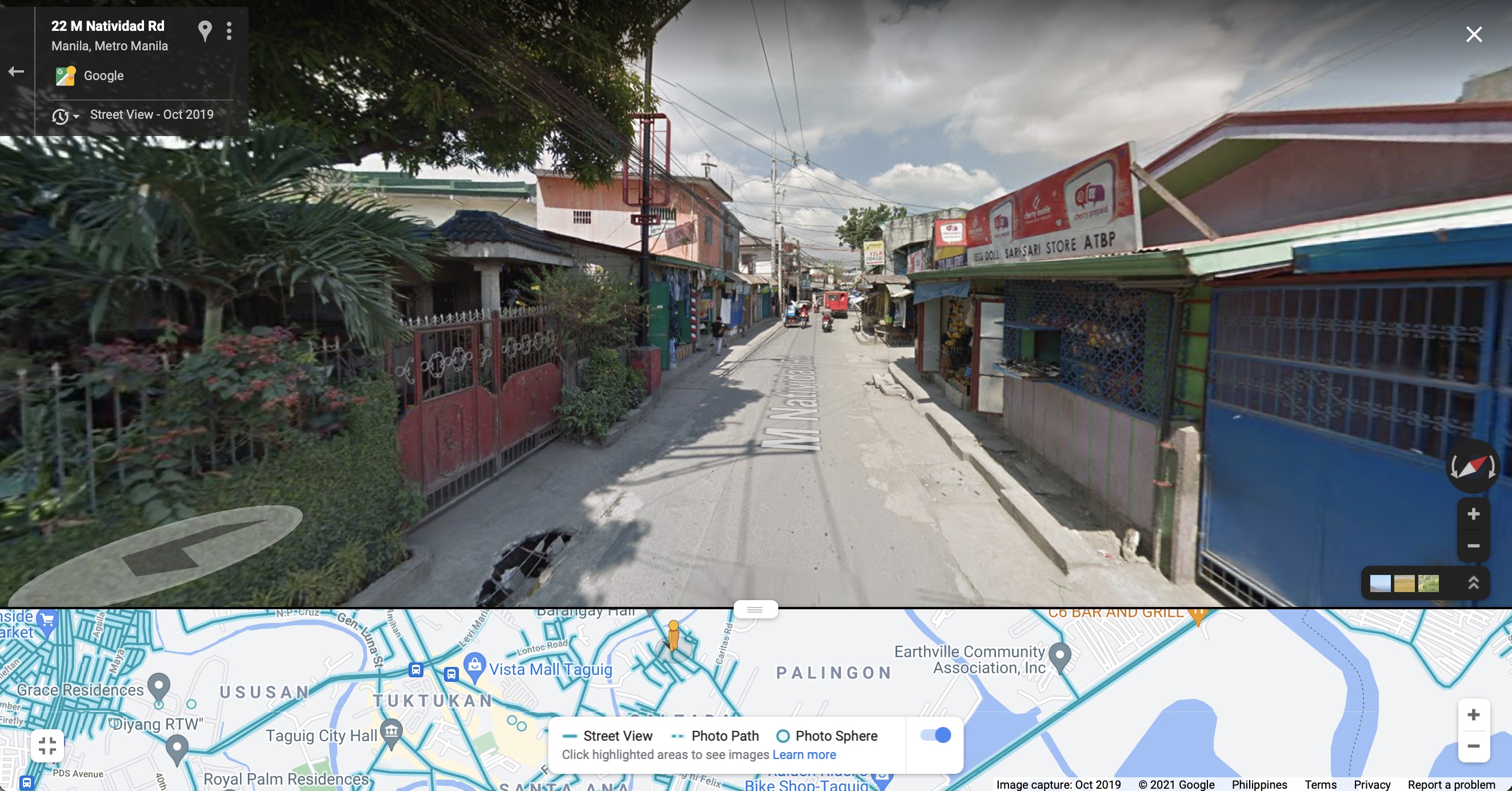

The above is just an example and should be subject to scientific or evidence-based assessments if such is indeed feasible. This can also provide an opportunity for education as people (i.e., road users) generally don’t understand the need for active transport facilities including what we assume to be common knowledge about the need for sidewalks, for example. Of course, other interventions may be implemented in order to “calm” traffic. Streets that are predominantly residential should have 20 kph tops as the speed limit. If such speed limits can be achieved and enforced then perhaps we can have safer streets, too, not just for cyclists but pedestrians as well.
–
Vaccines for road safety
If there is the current vaccination drive vs. Covid-19, there is also something like this for road safety. The International Road Assessment Program (iRAP) developed many tools and resources to address road safety issues. I am sharing the link to the Vaccines for Roads site of iRAP here:
Because Every Life Counts
It is always good to know about these resources whether you are a practitioner, a researcher. a teacher or perhaps an advocate of road safety. There are many examples here of interventions for various scenarios or conditions that will hopefully lead to safer roads for all.
–
On the 12 global road safety performance targets
The UN recently released the Global Plan for Road Safety. I’m just sharing their graphic on the global road safety performance targets:

I will try to discuss each one in future posts especially as I am involved one way or another in trying to realize these targets. Note, too, that these targets are further categorized among the five pillars mentioned at the foot of the graphic. These are (1) Road safety management; (2) Safer roads and mobility; (3) Safe vehicles; (4) Safe road users; and (5) Post-crash response.
–
Transportation topics at the College of Engineering’s Professorial Chair Colloquiums
The College of Engineering of the University of the Philippines Diliman started holding its annual colloquiums (plural because each Institute and Department under the College are holding their colloquium mostly during this last quarter of the year).
The Department of Mechanical Engineering already held theirs last September. There were four topics on transportation: 1) Dr. Gerald Ko C. Denoga (Fernando N. Serina Mechanical Engineering Professorial Chair) presented on “Reduction of Light Rail Transport Energy Demand via Powertrain Modeling and Optimization of Operating Parameters”; 2) Dr. Juvy A. Balbarona (Renato M. Tanseco Professorial Chair) presented on “Timetable Optimization for Light Rail Transit (LRT 1)”; 3) Asst. Prof. Roderaid T. Ibanez (Team Energy Professorial Chair) presented on “Energy Demand Quantification and Conservation Strategies of Bus Transport Terminal Facilities along EDSA”; and 4) Dr. Edwin N. Quiros (Federico E. Puno Professorial Chair) presented on “Fuel Economy Results from Diesel engine Tuning for Steady Speed and Drive Cycle Operation”.
There is one transport related topic in the Department of Computer Science colloquium. On October 25, Dr. John Justine S. Villar (Dean Reynaldo Vea Professorial Chair) will be presenting on the “Efficiency Measurement of Domestic Ports in the Philippines Using Data Envelopment Analysis.”
The Institute of Civil Engineering will be holding its colloquium on October 28 – 29, 2021 with the following transport-related topics: 1) Asst. Prof. Rosabelle Louise A. Caram (DCCD Engineering Corporation Professorial Chair), “Utilization of Plastic Laminates in Asphalt Cement Mastic”; 2) Dr. Hilario Sean O. Palmiano (David M. Consunji Professorial Chair in Engineering), “Validation of a Customized Local Traffic Simulator (LocalSim)”; 3) Dr. Jose Regin F. Regidor (Ambrosio Magsaysay Professorial Chair in Engineering), “Pedestrian Safety Assessment Within Public Elementary School Zones in Quezon City using Star Rating for Schools”; 4) Dr. Ricardo DG. Sigua (Dr. Olegario G. Villoria, Jr. Professorial Chair in Transportation/Logistics), “Study of Motorcycle Rider Casualties at Signalized and Unsignalized Intersections”; 5) Dr. Karl B.N. Vergel (Quintin and Norma Calderon Professorial Chair), “Estimation of Transportation Energy Demand of the Philippines”.
Other departments have not posted yet about their schedules or topics yet. The Electrical and Electronics Engineering Institute (EEEI), for example, will have their colloquium this coming October 25 but have not posted a detailed schedule yet. They usually have several transport-related topics including those on traffic signals, vehicle detection, and bike share innovations.
More details and updates including registration to these colloquia may be found at the UP College of Engineering Facebook page: https://www.facebook.com/updengg
–
Safe streets for children
We have been working with UNICEF and several partner organizations on a project on Child Road Traffic Injury Prevention (CRTIP). The Final Reports for the two pilot cities, Valenzuela City and Zamboanga City, have been submitted and represents over 2 years work including during the lockdowns due to the Covid-19 pandemic. The latter part of project implementation indeed became a challenge as we couldn’t travel and engage face-to-face or conduct field surveys like how we did in the first part of the project. Still, I believe we were able to accomplish much and most of what we initially set out to do. Here are the covers of the Final Reports we submitted to UNICEF and we understand will be officially or formally transmitted to the two cities.


The reports narrate the surveys conducted for 25 schools in Zamboanga and 41 schools in Valenzuela. Each initially had selected 25 schools but Valenzuela pushed for an additional 16 schools midway into the project. The SR4S tool developed by iRAP was used for the assessments of critical areas around the schools. The initial assessments were used to identify interventions to improve safety in these areas and recommendations were submitted for consideration of the cities as well as the DPWH where applicable (i.e., the DPWH has jurisdiction over national roads and improvements proposed along these). While some interventions were implemented, others and many were delayed mainly due to Covid-19.
We also conducted a survey to determine the commuting characteristics of schoolchildren in both cities. Since most schools were public schools, it was no surprise that most children lived near the schools or within the school district (which is basically the catchment area for these schools). Thus, it also came as no surprise that most schoolchildren came by foot (walking), motorcycles (riding with a parent) or motor tricycle. There’s a lot of information and takeaways from the data but unfortunately, we could get the bigger, more complete picture of Valenzuela City because they selected only elementary schools covering students from Grades 1 to 6. Zamboanga had a more robust data set with both elementary and high schools, covering Grades 1 to 12. The information derived from these surveys were also analyzed and related to the SR4S assessments. The commuting survey results and SR4S assessment are subject of two technical papers presented in the recent EASTS 2021 conference hosted by Hiroshima University.
What’s next? We are now drafting a proposal for a Phase 2 of the project. We hope to continue and reinforce and follow-up on the recommended interventions from Phase 1. We also hope to be able to work on the CRTIP data hub that was only partly completed due to the many constraints faced by that part of the project. I will post here from time to time about some of the outcomes from the surveys and assessments.
–
 Caught (up) in traffic