
Home » Posts tagged 'safety' (Page 4)
Tag Archives: safety
Compilation of railway incidents
I found this page on Medium that’s features railways incidents (e.g., derailments, crashes, etc.). It is a good resource or reference for railway safety since the articles provide details about each incident. The writing style is investigative so they make for engaging reads:
https://mx-schroeder.medium.com
There’s another site about air crashes that I will also share later.
–
On the increase of road crash fatalities during the pandemic
The general observation has been that roads have become less safe as drivers and riders have tended to speed up their vehicles during this pandemic. Speeding up apparently is just part of a bigger picture and even bigger concern considering what is perhaps also an issue related to mental health. We’ve read, heard or watched something about people’s transformation once they are behind the wheel or riding their motorcycles. I remember a Disney cartoon showing how Goofy transforms from being mild-mannered to somewhat demonic once behind the wheel of the car. The article below reinforces that and relates this behavior with the pandemic.
To quote from the article:
Art Markman, a cognitive scientist at the University of Texas at Austin, said that such emotions partly reflected “two years of having to stop ourselves from doing things that we’d like to do.”
“We’re all a bit at the end of our rope on things,” Dr. Markman said. “When you get angry in the car, it generates energy — and how do you dissipate that energy? Well, one way is to put your foot down a little bit more on the accelerator.”
Vaccines for road safety
If there is the current vaccination drive vs. Covid-19, there is also something like this for road safety. The International Road Assessment Program (iRAP) developed many tools and resources to address road safety issues. I am sharing the link to the Vaccines for Roads site of iRAP here:
Because Every Life Counts
It is always good to know about these resources whether you are a practitioner, a researcher. a teacher or perhaps an advocate of road safety. There are many examples here of interventions for various scenarios or conditions that will hopefully lead to safer roads for all.
–
On why people are afraid to bike
There is an interesting graphic shared by a friend on his social media account. I am also sharing it here. The source may be found at the bottom right of the graphic.

I think the graphic speaks for itself. How can we encourage people to bike whether for commuting or other utilitarian purpose if there are nuts behind the wheels of many motor vehicles? All the points raised in the graphic are true for the Philippines and are not limited to drivers of private vehicles. These are also the same for public transport drivers as well. And these cannot be solved or addressed overnight. You have to get to the roots of the problem, which are about the driver and rider education (i.e., training), and the licensing system of the Land Transportation Office (LTO).
While there are driving and riding schools that have proliferated, many seem to just go through the motions of driver and rider education. Prospective motor vehicle drivers and riders often just learn enough to pass a flawed examination to get their licenses. Do they really learn about how to behave properly when driving or riding? It certainly does not show with how they deal with cyclists and pedestrians. As for enforcement, well that’s another topic to discuss in a separate post.
–
Air crash mysteries
I wrote about the Concorde recently and how I at one time dreamt of flying in one. I shared an article in that post about the air crash that doomed the Concorde. While it appears morbid to certain people, there is that fascination about air crashes not because of the deaths but because these often lead to better designs for aircraft and policies for the aviation industry. Here is a recent article about the still missing (vanished without a trace?) Malaysian Airlines Flight 307.
Admiral Cloudberg (March 27, 2021) “Call of the Void: Seven years on, what do we know about the disappearance of Malaysia Airlines flight 370?”, Medium.com, https://admiralcloudberg.medium.com/call-of-the-void-seven-years-on-what-do-we-know-about-the-disappearance-of-malaysia-airlines-77fa5244bf99 [Last accessed: 9/23/2021]
Unlike other disastrous crashes that include weather factors, pilot errors, instrument or engine failures, we cannot learn (much) from this crash as the black box or any other parts of the aircraft were never recovered. Of course, not in the same category as these types of crashes are those that were blown up or shot down whether by accident or deliberately such as the ill-fated Korean Airlines Flight 007. There are other lessons to be learned if not yet learned from those tragedies.
–
On R.A. 11229 and the requirement of Child Seats
There seems to be a lot of feedback (mostly negative) on the new law and its implementing rules. RA 11229 is the “Child Safety in Motor Vehicles Act” that requires the use of child car seats. There seems to be a confusion about who are supposed to be using child seats particularly about the age and height limits mentioned. In one “controversial” interview, a government transport official was recorded replying to a question about tall children that the parents would have to get a bigger vehicle. That was obviously uncalled for but also probably what can be considered as a “snappy answer to a stupid question[see note below]” type of situation. What is clear now is that a lot of people are not aware of the provisions and implications of the new law (for various reasons including their choosing to ignore it) and there needs to be a more comprehensive and effective info campaign on this topic. Not yet mentioned in discussions are the models of car seats that are approved or certified for use.
 Screenshot of a graphic explaining who are required to use child car seats
Here are examples of the opinions and comments in one of the group discussions I am part of [I will just leave these without specific attribution or anonymous.]:
- “RA#11229 was badly written. Authored by Sen JV Ejercito, trying to copy laws in the USA. In California, the Child Safety Seat is only required for child 2 years old and below, 4 years old in NY, and 3 years old in Europe. Additional parameters: height limit of 40″ (101 cm) and weight limit of 40lbs. They differentiate rules for children up to 8 years in NY & CA.”
- “The Philippine version lumps all kids into one group below 12 years old, requiring child restraint system. Additional parameter is 150 cm height, none on weight. Two wrong premises of our law: 1) that Filipinos children are taller than Europeans and Americans of same age, and 2) Filipino children mature later at 12.”
- “They lumped it into one class because its the simplest and easiest thing to do, without going into a lot of uncertainty. Na controversial na nga yung 12 yr. old catch-all, ano pa kaya kung they broke it down into numerous classifications.”
[Note: To those who are not familiar with the term “snappy answers to stupid questions”, google it together with Mad Magazine.]
–
On maximizing seating capacities of public transport
The restrictions for physical distancing for public transport seems to be easing. The reason for this statement is the observation that passengers of public utility vehicles are no longer one seat apart (less than the ideal 2m distance between people but deemed sufficient with physical barriers installed in the vehicles). If allowed to be seated next to each other (of course with some sort of physical barrier between them), the set-up will increase the allowed passenger capacities of PUVs to at least their seating capacities. Conventional jeepneys will be able to seat the 16 to 20 passengers their benches are designed for and buses, depending on their sizes and seating configurations may seat perhaps 40 to 60 passengers. That doubles or even triples the number of passengers that can be carried by each vehicle from the time these were allowed to resume operations after the lockdowns.
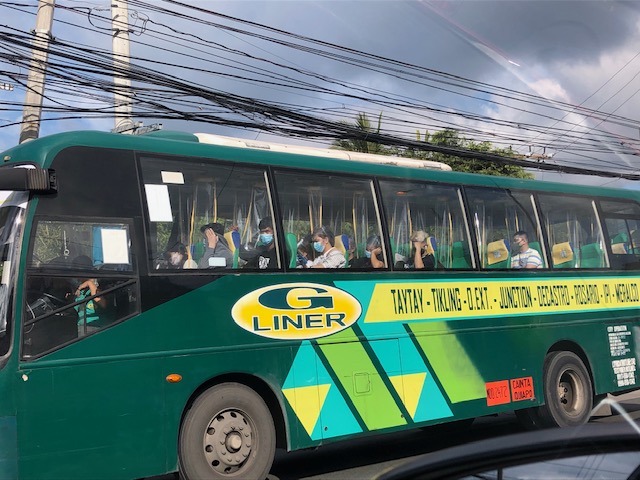
Plastic barriers separate passengers seated beside each other
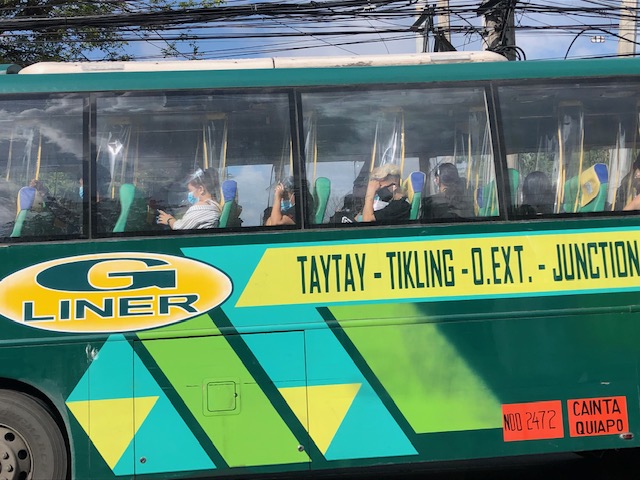
Not all physical barriers are designed and installed to provide whatever protection passengers can get from them. The photos above for a G-Liner bus seems to be the more desirable design as the barriers are practically like curtains. I have seen token plastic barriers installed in jeepneys. I wonder if these even went through some approval process of the DOTr, LTFRB or local government unit. Such inferior designs do not help the cause of promoting public transport use over private vehicles.
–
On making roads safer for students
Here is a nice article from the National Academies of Science, Engineering and Medicine about how transportation research makes roads safer for students as they go back to school:
Transportation research makes the road safer for students to get back to school
There is a wealth of information there, and one should browse and perhaps download resources shared that can be useful references not just for those in North America but elsewhere towards making journeys between homes and schools.
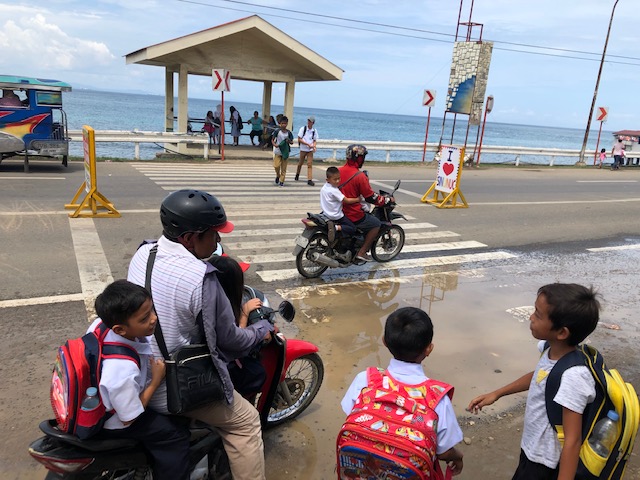 Scene near a public school in Zamboanga City [photo taken in June 2019]
We, too, have several initiatives towards making the journeys of children safer between their homes and schools. It is something that all of us find essential and worthwhile. Children, after all, represent our future and making their journeys safer gives them better chances to succeed in life. It also shows them examples that they can replicate for their own future children. I will write more about these as we obtain the data and perform our assessment.
–
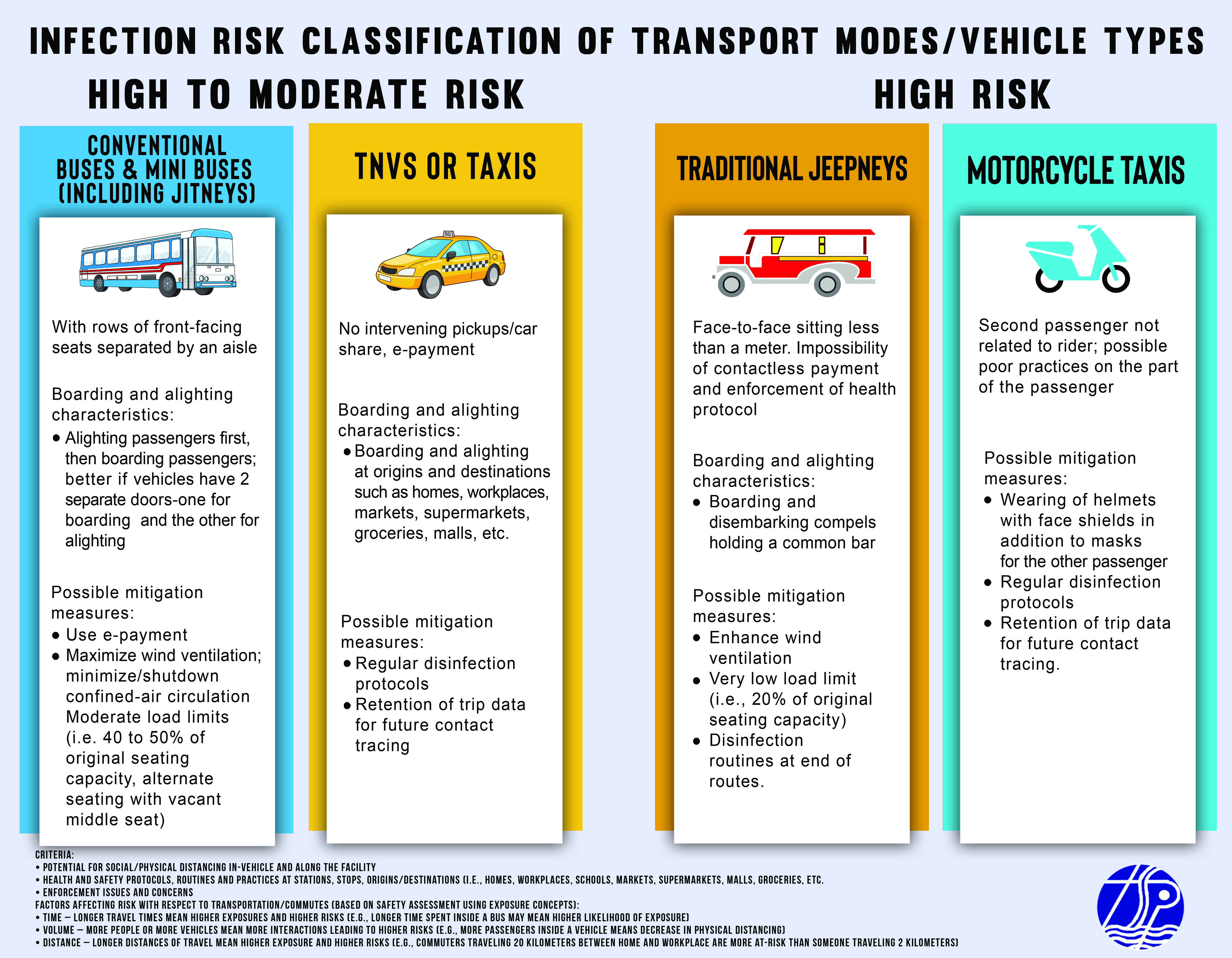
Infographics: Infection Risk Classification of Transport Modes Post-ECQ
The infection risk table I posted a few days ago was improved into the following infographics:


–
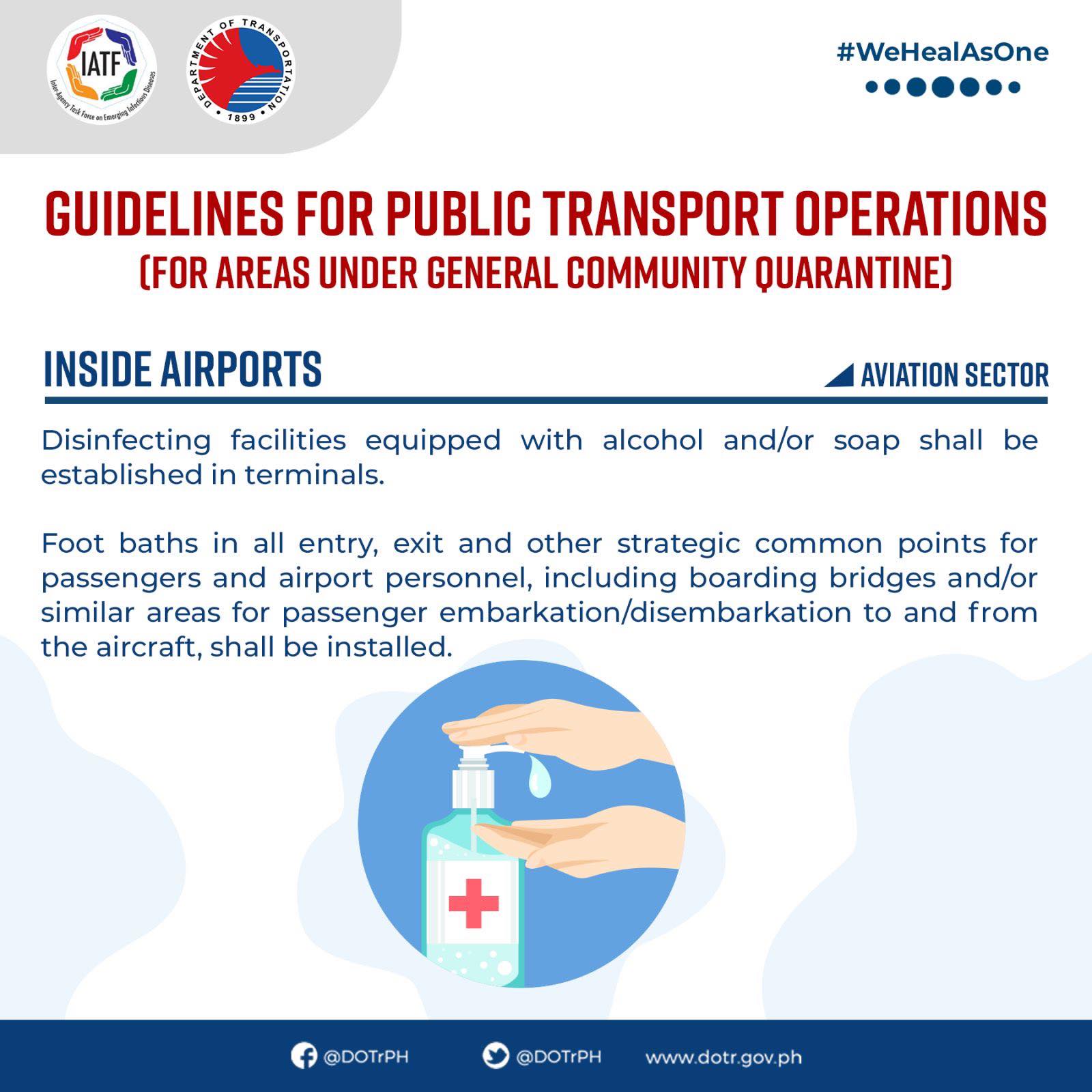
On the DOTr Guidelines for Public Transport – Aviation Sector
Here are the guidelines for the Aviation Sector. My only comment here is that many people are anxious about when they can travel again, particularly to other parts of the country mainly for business or to go home (e.g., many students have been stranded in the cities where they go to school and away from their hometowns). Part of this anxiety is the thinking that airfares will increase significantly as airlines are forced to reduce capacities for their aircraft to adhere to physical distancing guidelines. Gone, probably, are the discount fares like the Piso fare promos.
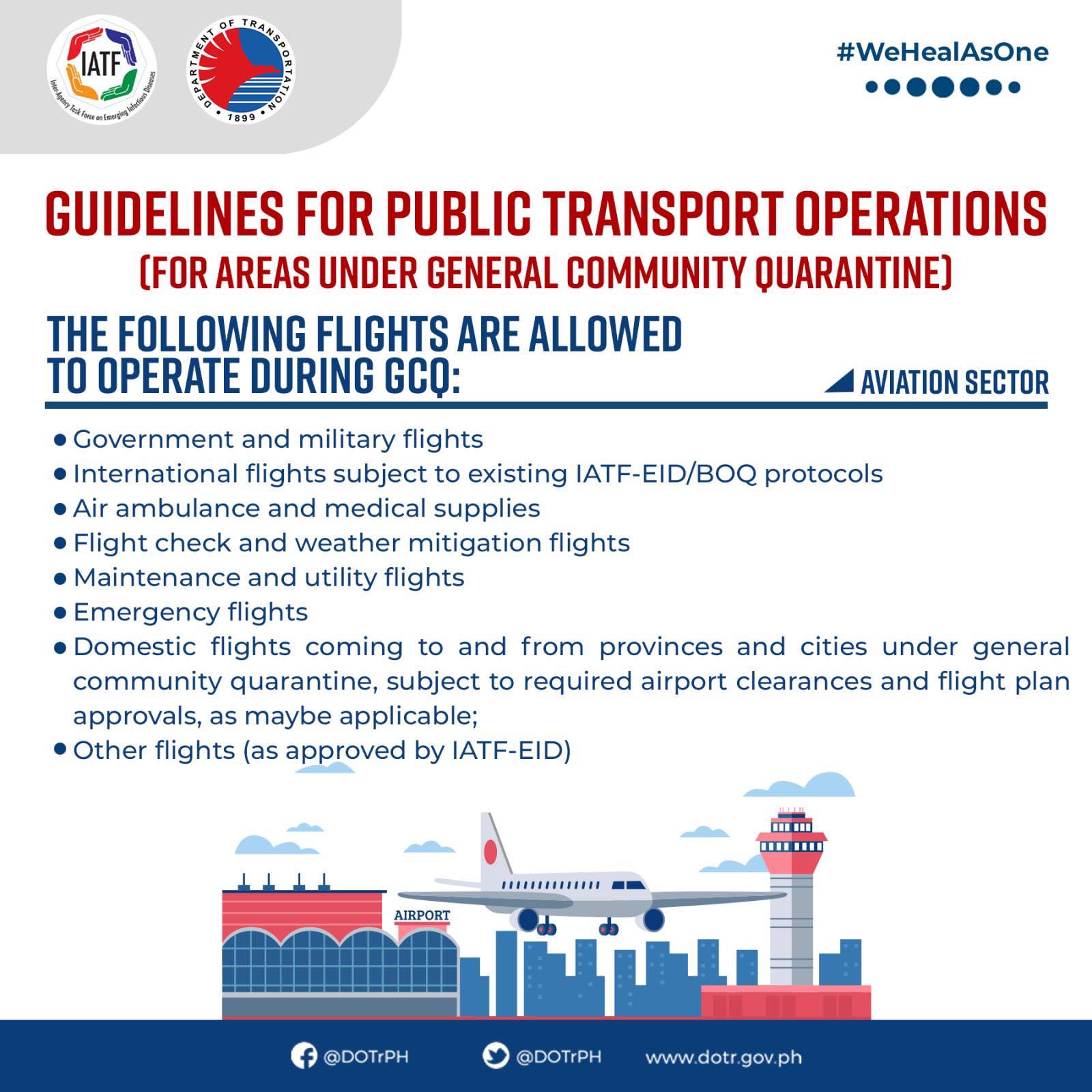
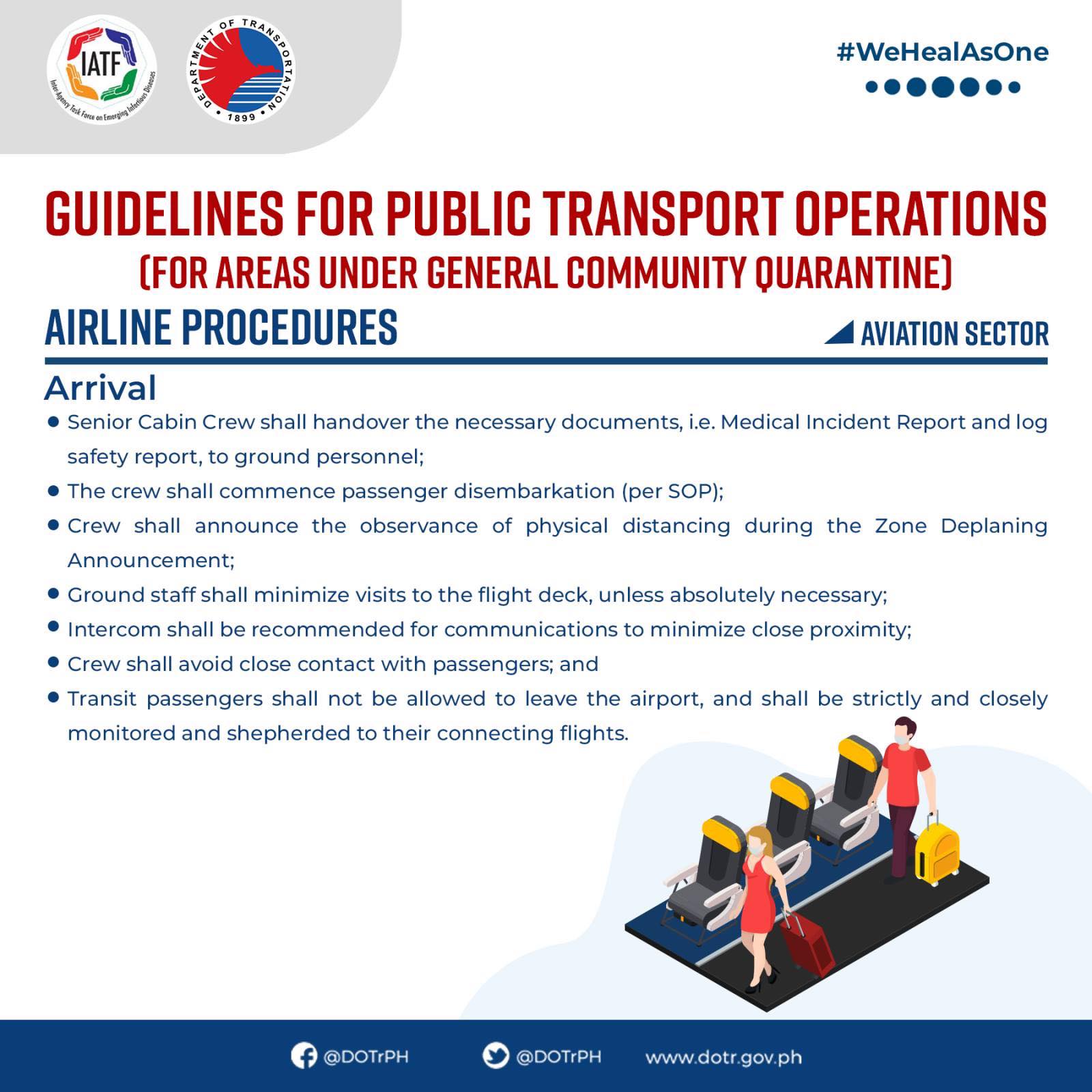
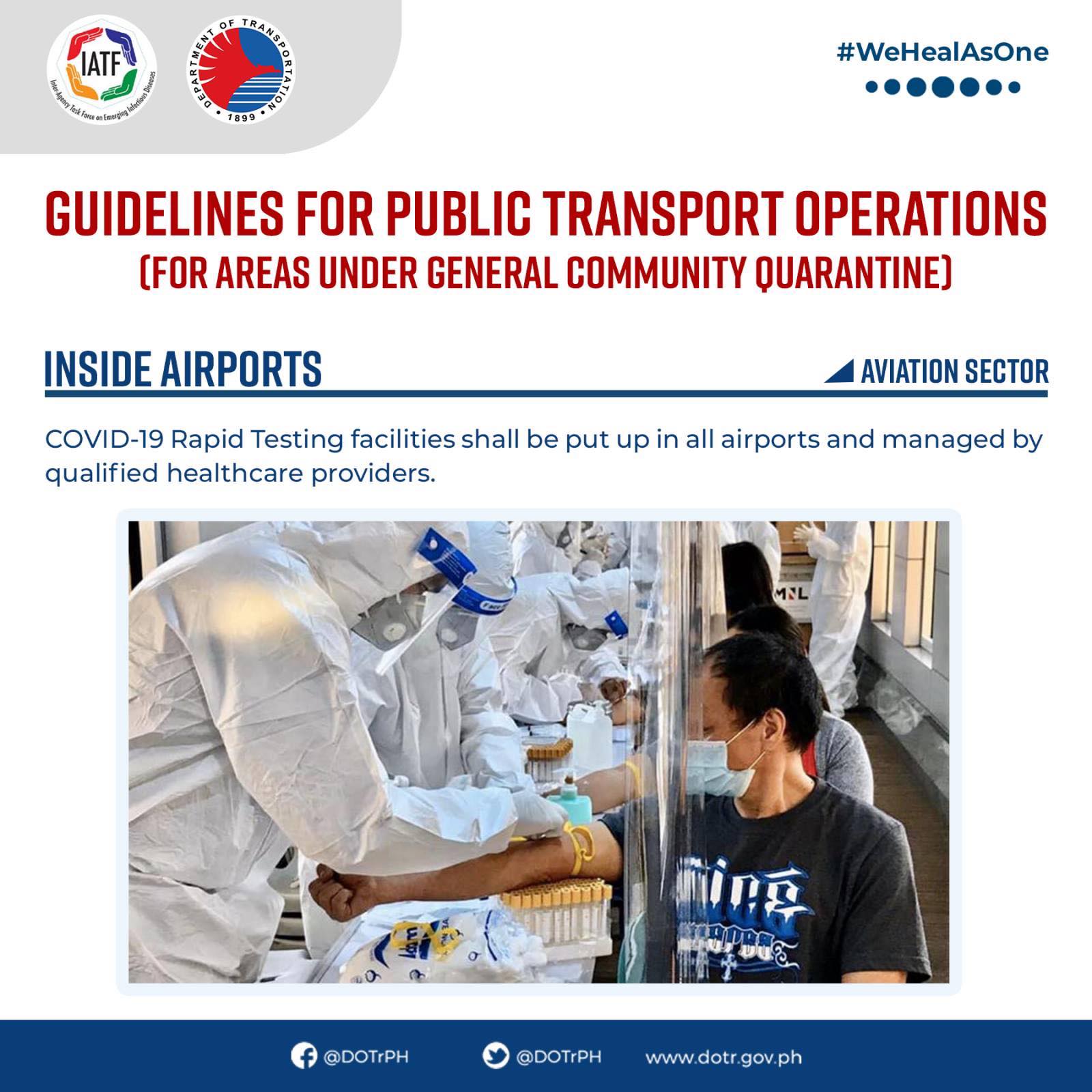
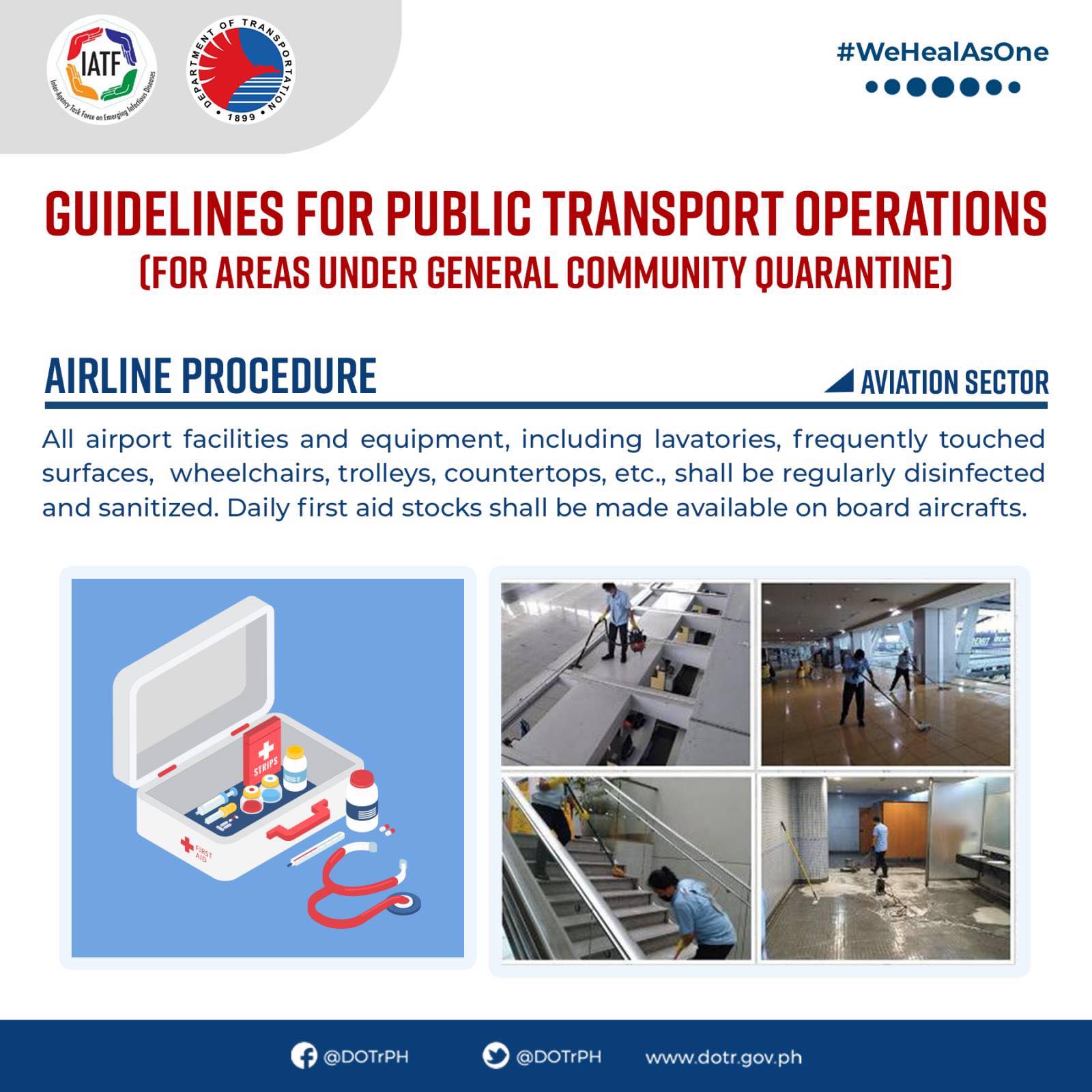
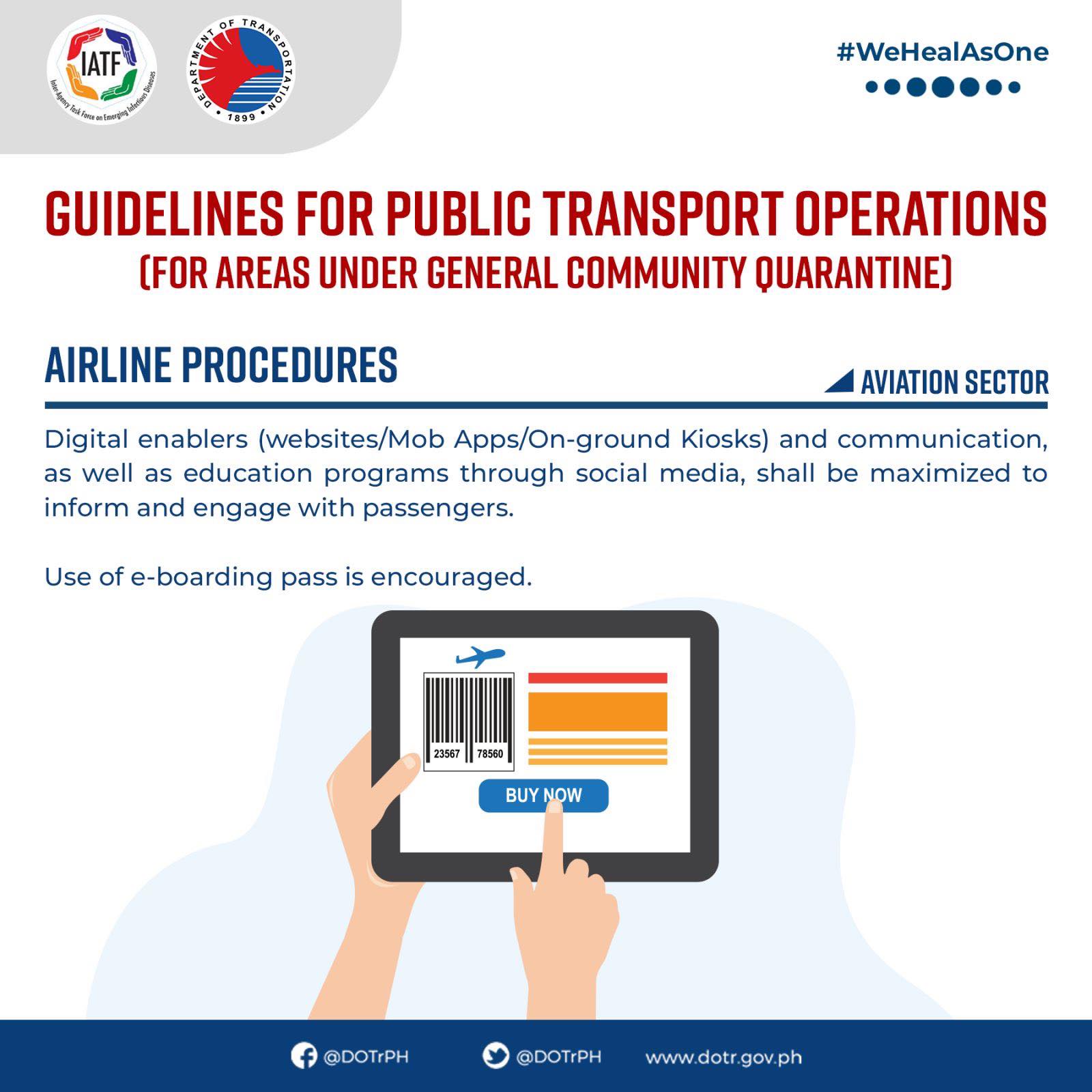
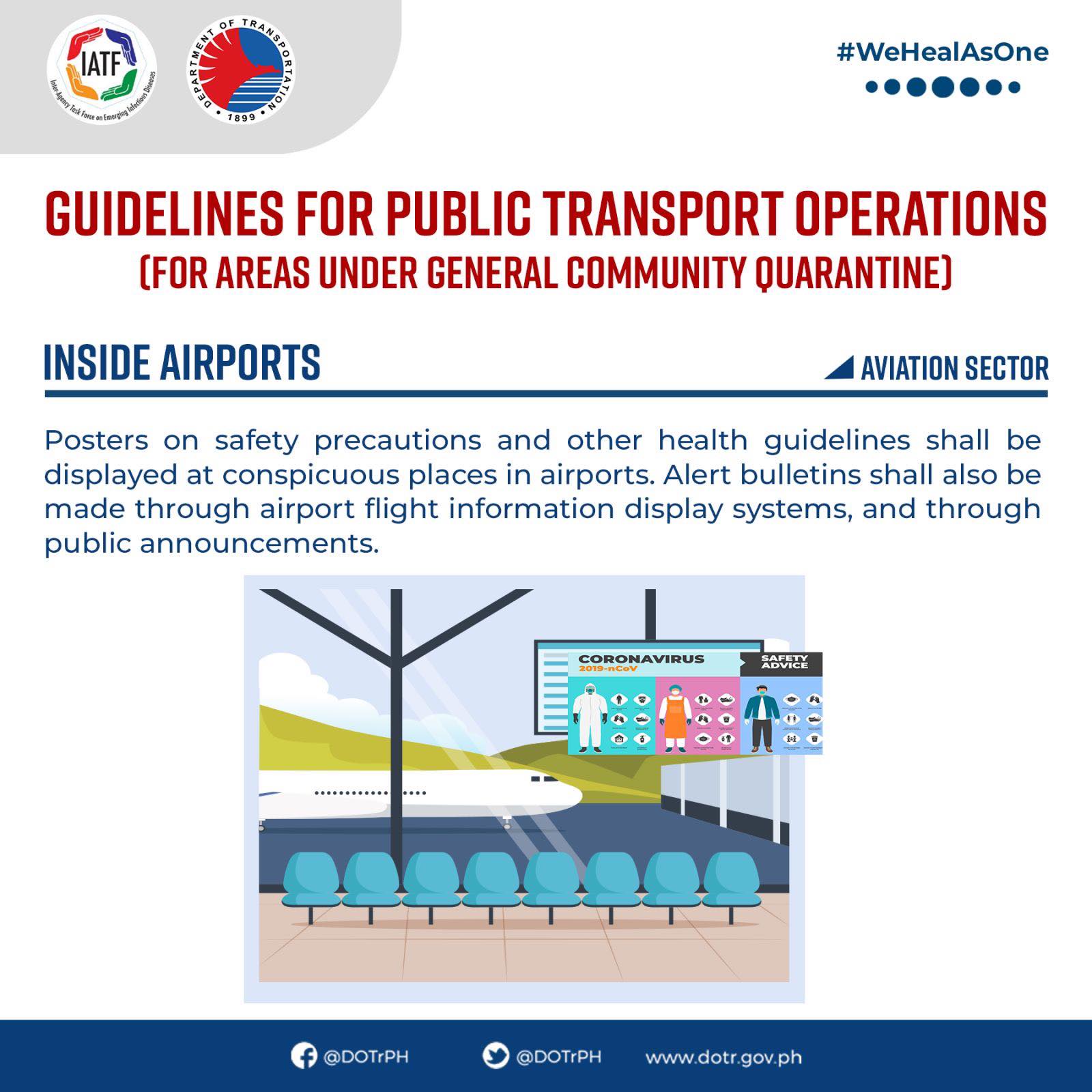
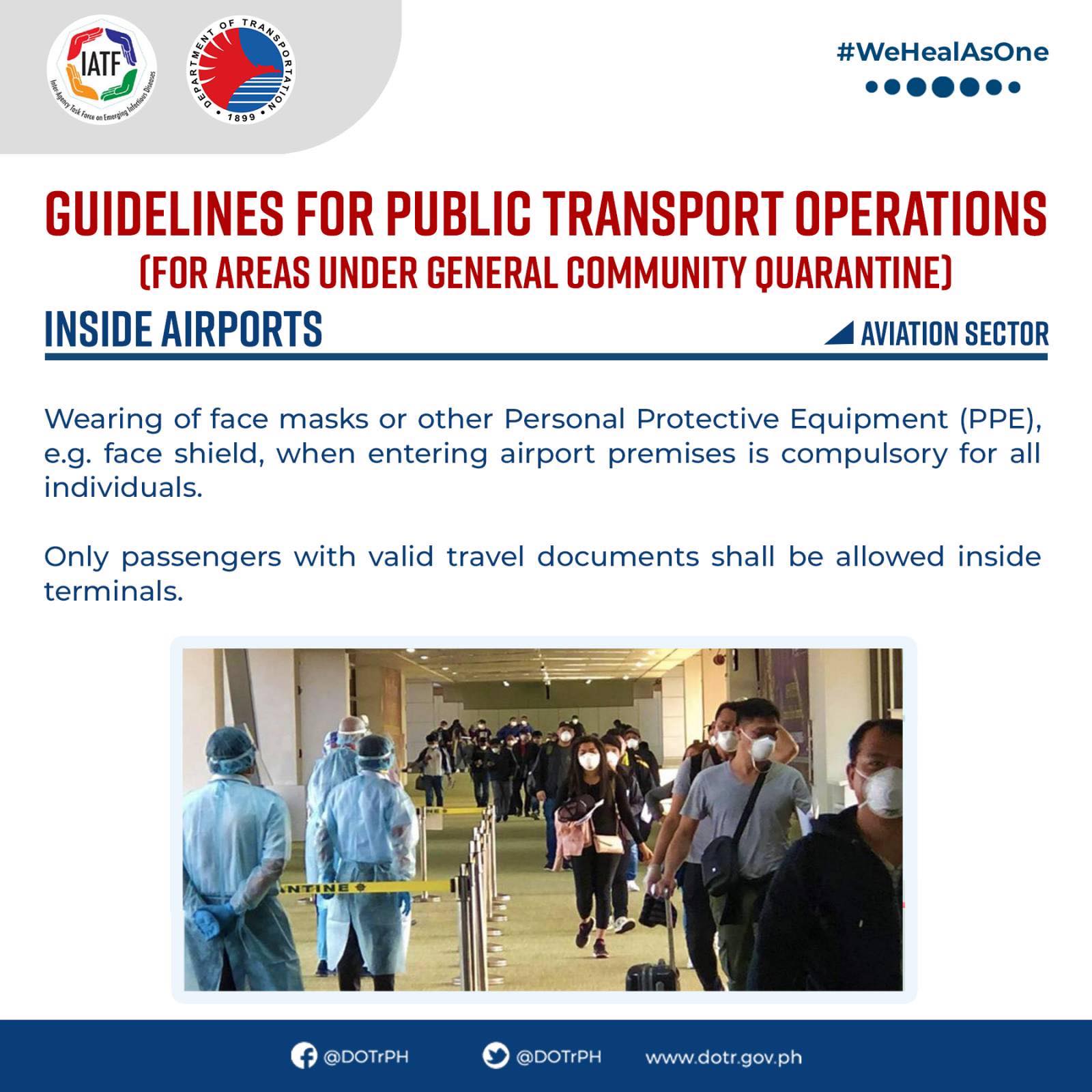
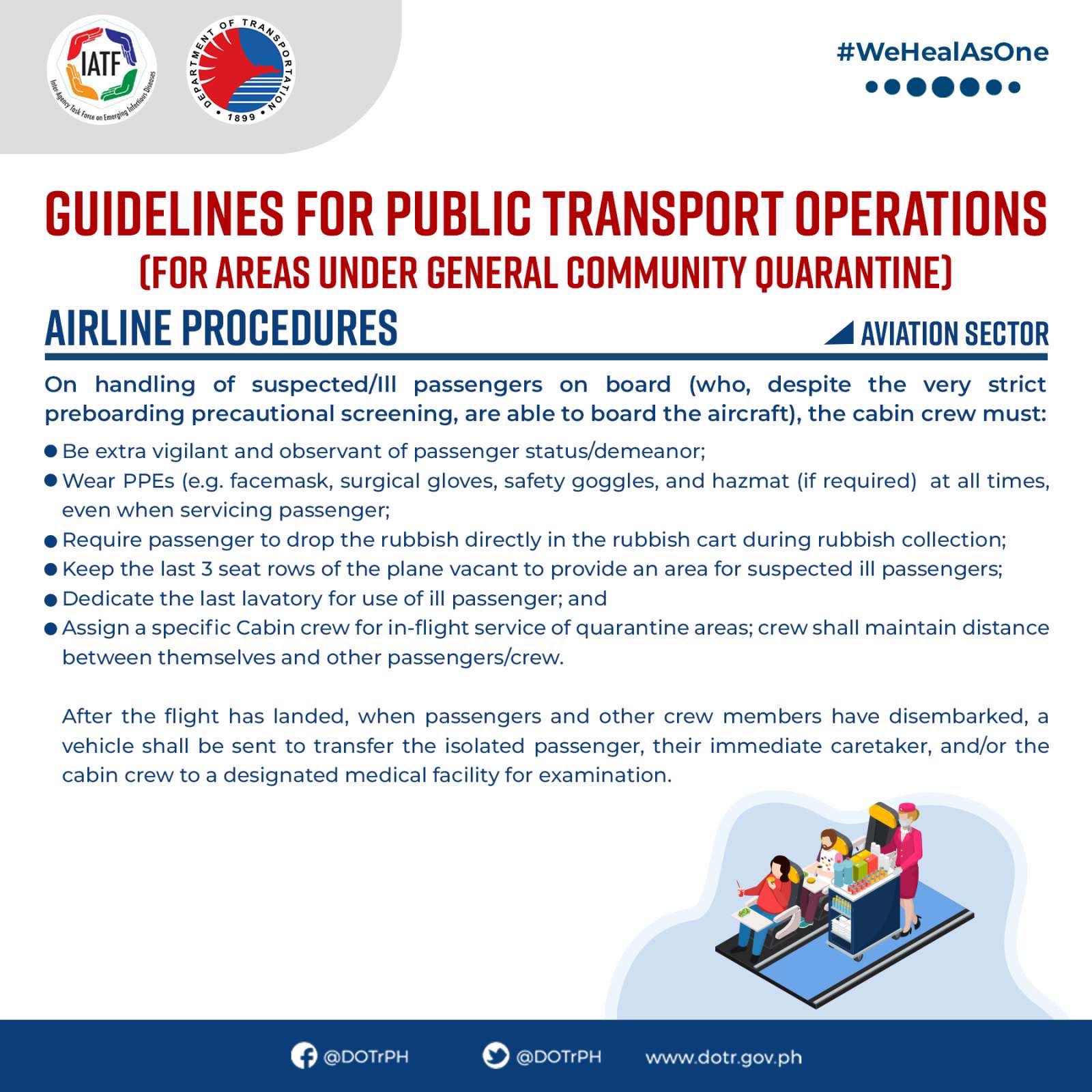
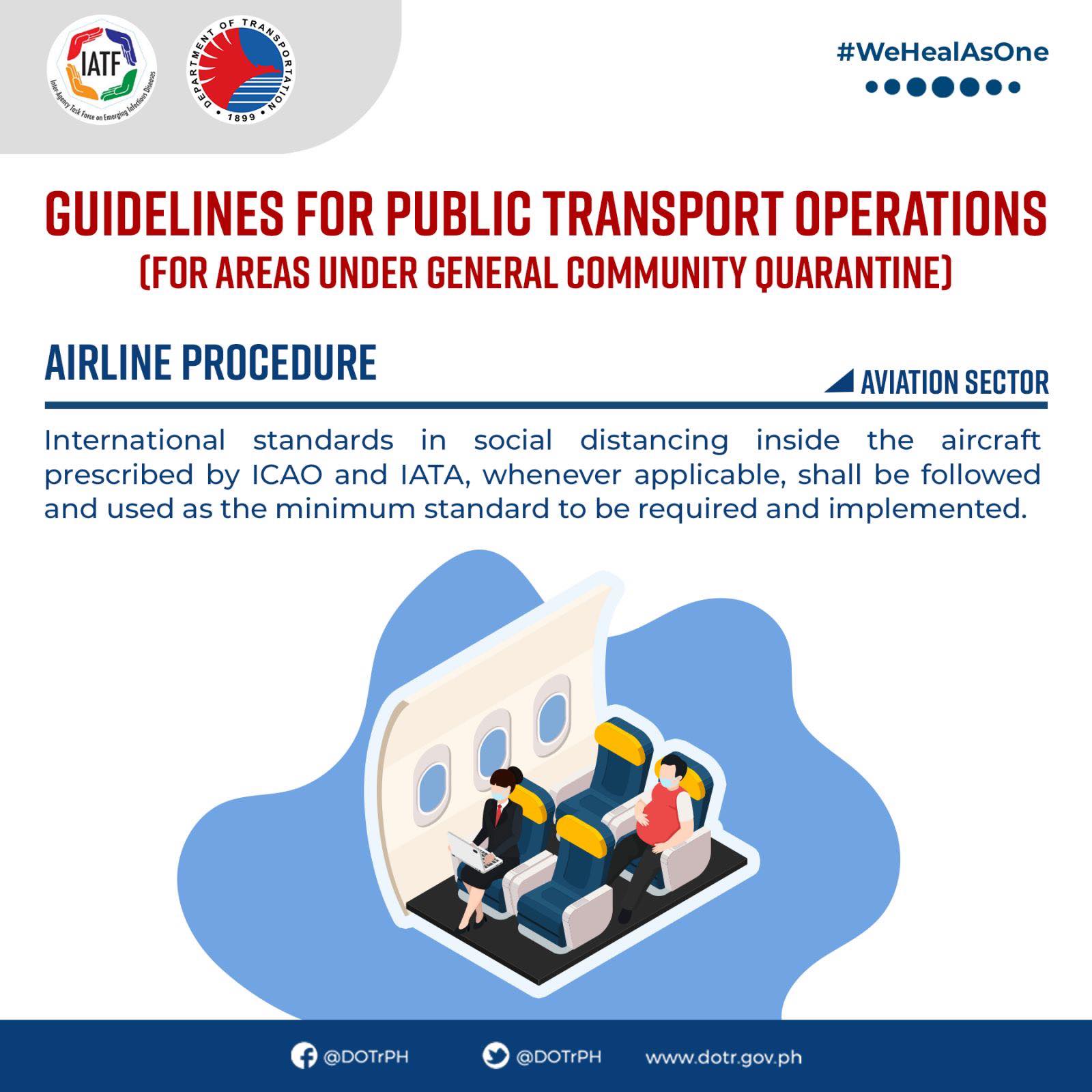
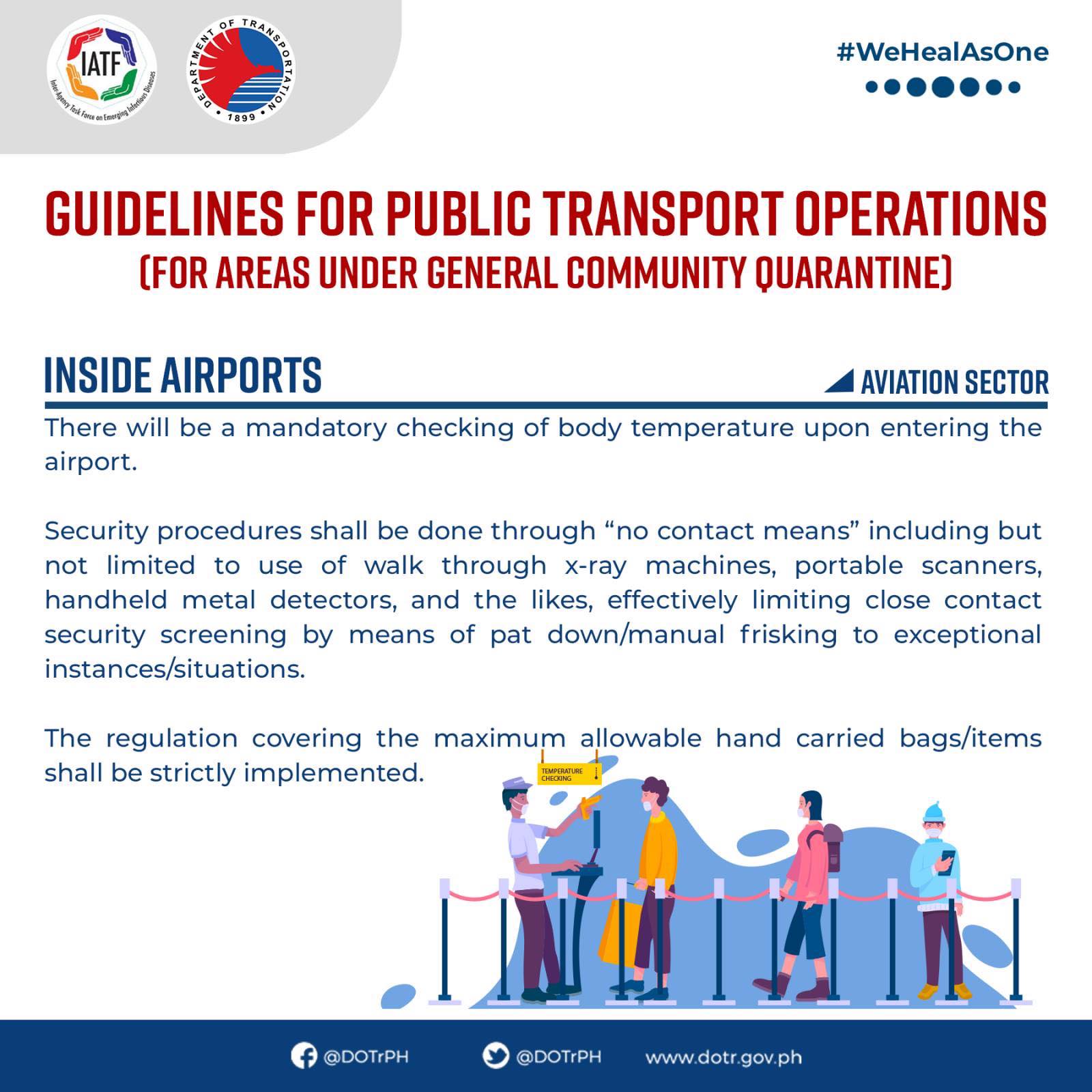
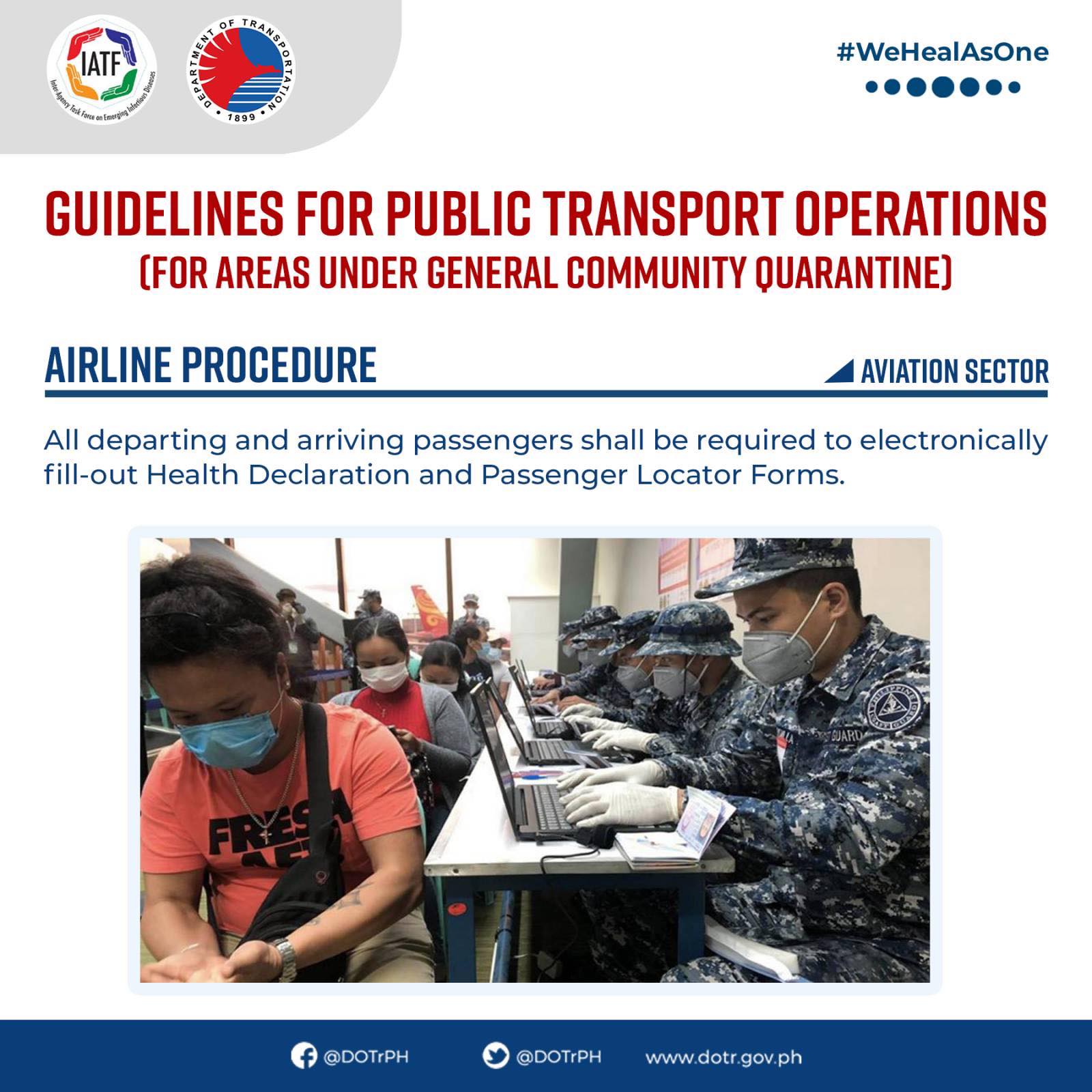
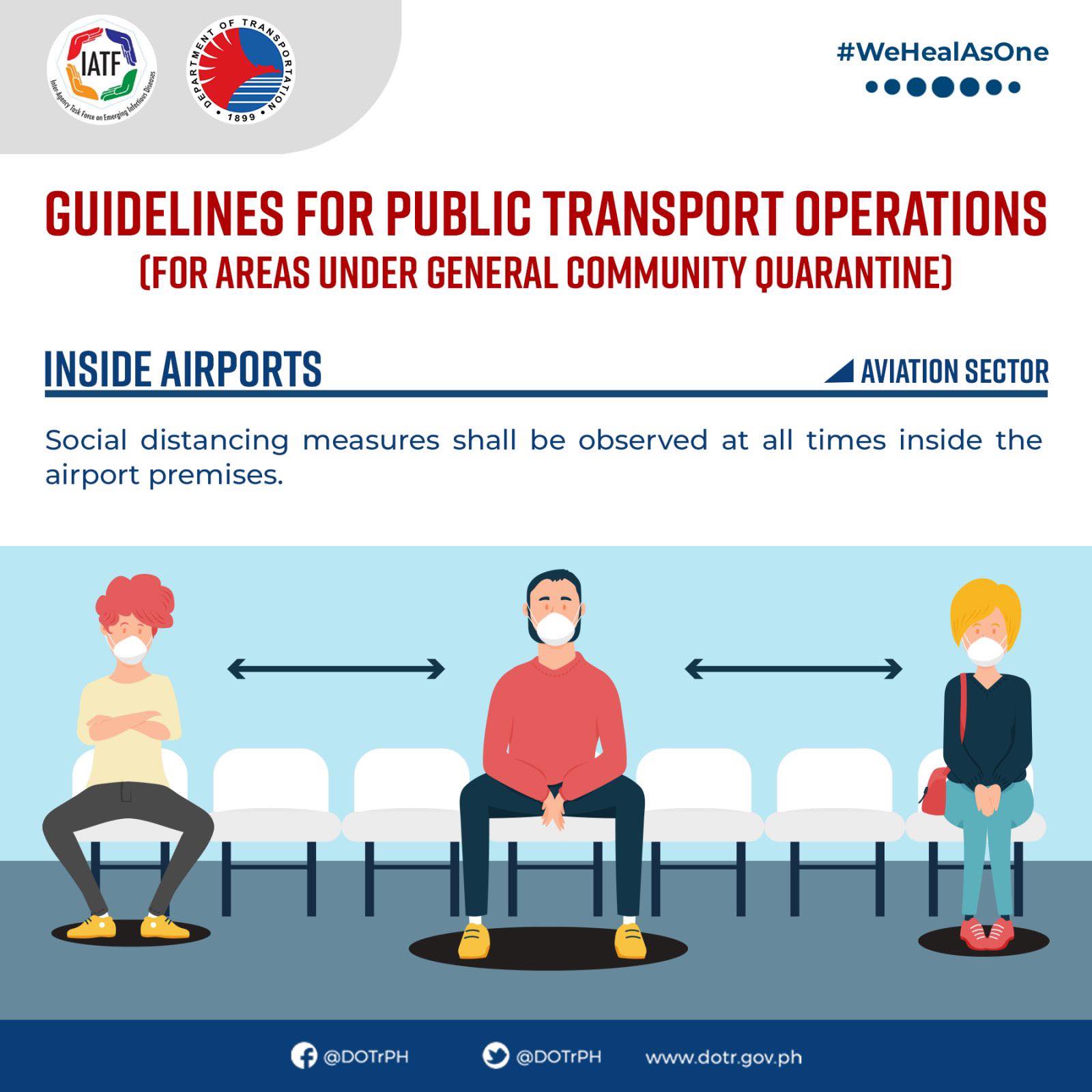
Related to this, I have received emails from 4 airlines I frequently used – Cebu Pacific, Philippine Airlines, Singapore Airlines and Japan Airlines. All provided updates on their respective efforts to ensure the future air travel will be safe, health-wise. As for the airport terminals, that’s another story…
–
 Caught (up) in traffic