
Home » Posts tagged 'traffic congestion' (Page 9)
Tag Archives: traffic congestion
On the Ortigas Avenue counter-flow scheme again
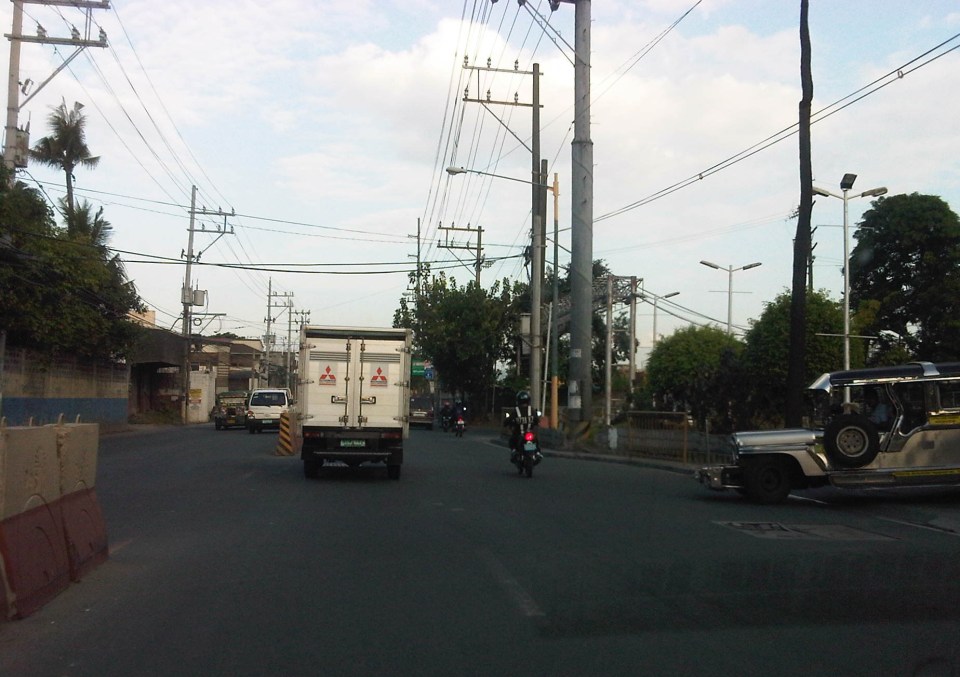
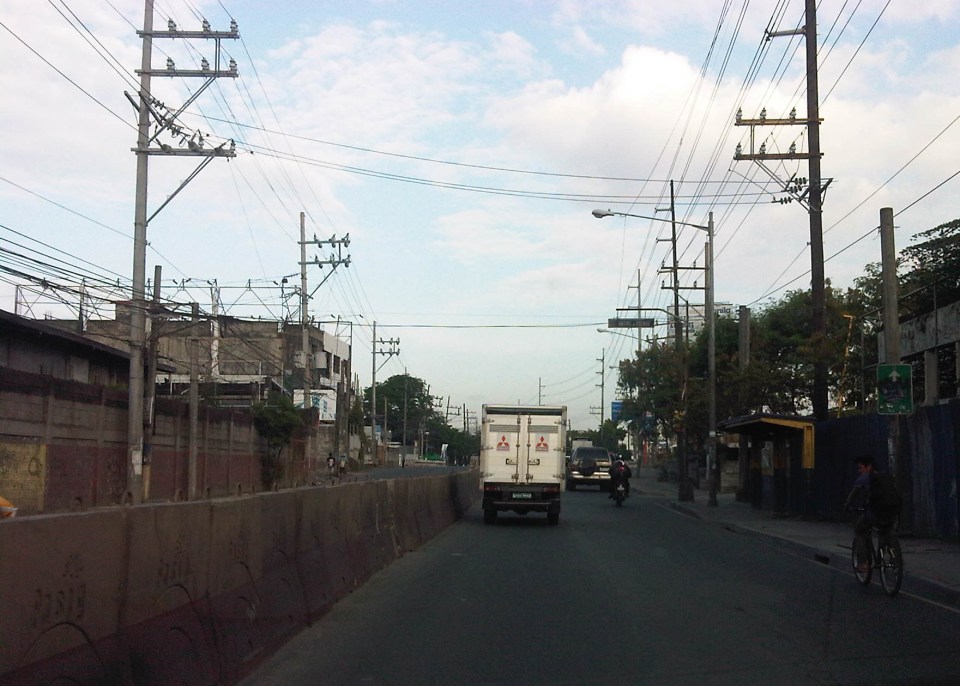
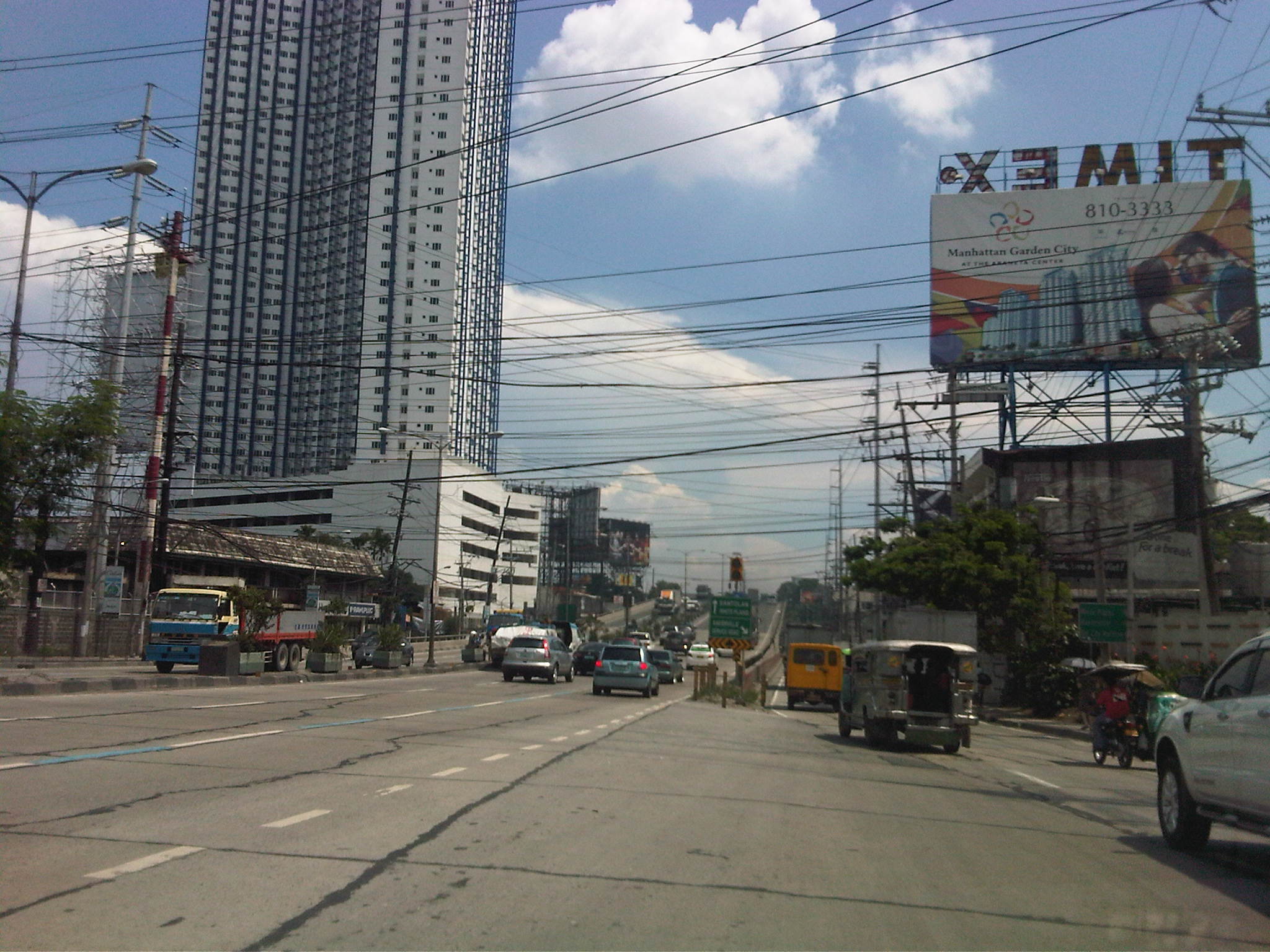
Here are some more recent photos of the morning traffic congestion and counter-flow scheme along Ortigas Avenue. The counterflow scheme starts at the approach to the Manggahan Channel Bridge and ends at the approach to C-5 right after the Rosario Bridge. This counter-flow scheme has been used by Pasig, as far as I can remember, since the early 1980s. Ortigas Avenue is one of those roads where the directional distribution of traffic very pronounced for the peak direction.
 Vehicles crowding towards the counter-flow lane on the eastbound side of Ortigas Avenue. Traffic along this lane is moving, unlike the standstill you will likely experience along the westbound side. This is particularly true at the bridge where buses and jeepneys occupy two lanes and stop for long periods to get passengers. Congestion is exacerbated by vehicles coming out of the residential development in the area. Pasig and MMDA traffic enforcers fail miserably at their duties here. Perhaps this is a job for the PNP-HPG?
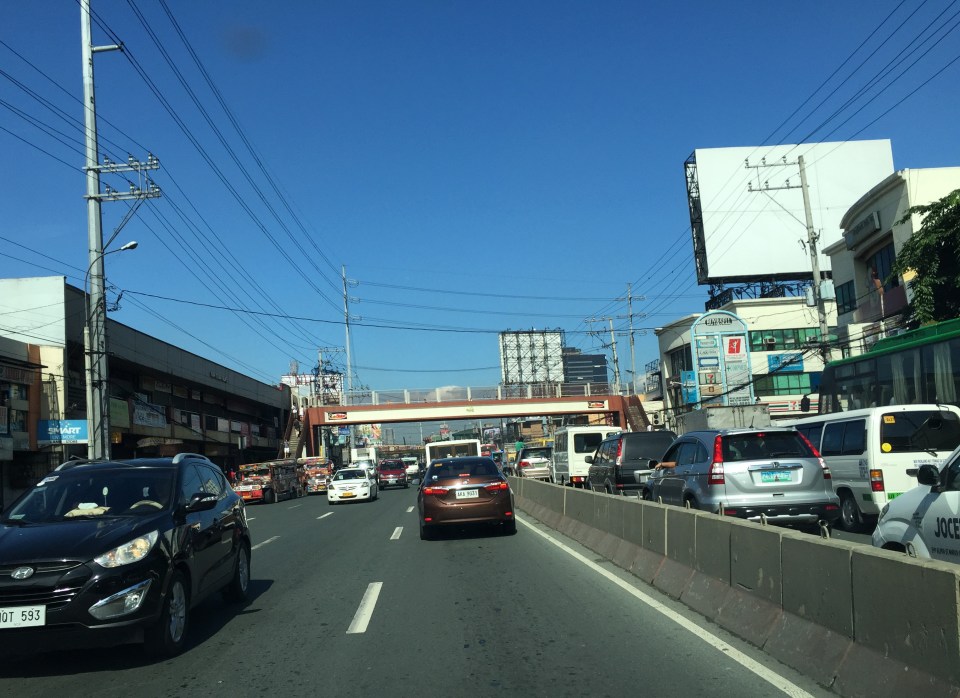 The effort of positioning towards the counter-flow lane is worth it as traffic moves faster here. The argument for counter-flow lanes (or zipper lanes as they are also called) is based on the availability of capacity along traffic lanes of the opposing direction that can be used to optimize utility of these unused lanes (i.e., off-peak direction) by peak traffic. This is a classic transport systems management scheme directed towards efficient and optimum use of existing facilities.
–
Proposals for EDSA and some alternate roads
The hellish traffic congestion along EDSA and other roads in Metro Manila spawned a bunch of ideas for alleviating congestion. Among those that were offered as solutions are the following:
- Odd-Even Scheme – suggested by the Philippines President himself in a speech delivered in Mandaluyong City
- Car-pooling (and HOV lanes) – suggested by the DPWH Secretary in another forum
- Bus Rapid Transit (BRT) and/or express bus – proposed and being studied by the DOTC
What seems to have been forgotten was a proposal to have two lanes of EDSA, one on either direction, devoted to bicycles. This proposal now seems to be the most viable compared to the above three and could have the potential for major behaviour change towards a departure from motor vehicle use. Cycling along with walking does not require fuel and these modes also promote healthy lifestyles. Also, this could become the ultimate example for road diets, which can also be applied along other roads as well. What sounds or reads like an outrageous idea (i.e., bicycle lanes along EDSA) might just be revolutionary and result in what could be a tipping point for sustainable transport in the midst of traffic mayhem.
EDSA has become the proverbial battleground representing the war with traffic congestion. However, EDSA is just one part of our arterial network comprised of circumferential and radial roads. There is also C-5 (also known for its sections – Katipunan, E. Rodriguez, C.P. Garcia), which is also a very congested road but along which there are few fixed route public transport services. It is a primary alternative route (to EDSA)for people traveling between the northern and southern halves of Metro Manila. It also serves as a collector and distributor, being connected with major radial roads like Aurora Boulevard, Ortigas Avenue and Shaw Boulevard as well as to the South Luzon Expressway. C-5 is a major truck route, however, and so carries a lot of heavy vehicles during the permitted times under the truck ban scheme being implemented in Metro Manila. C-5 is already ripe for a mass transit system and should have one along it. The quickest to put up would be a bus system on exclusive lanes. Strategically though, a rail transit line (likely elevated) should already be planned and implemented and with as seamless as possible connections to current and future lines along major corridors.
There are other routes that can be considered which I think have been overlooked (too much focus on EDSA?). C-6, for example, badly needs to be improved and this has started but is being implemented at a slow pace. This could have significant positive impacts on traffic coming from the east (towns of Rizal province) that are bound primarily for Makati and BGC. But then there also has to be a good road bypassing the narrow and already congested streets of Taguig and Pateros that are currently the only roads connecting C-5 and C-6. The roads on the Rizal side (attention: Cainta and Taytay) also need to be improved including Highway 2000 and the Barkadahan Bridge. Perhaps the Rizal Provincial Government should also get involved in this as such routes are in the best interest of Rizalenos. And then there is also the highly urbanized city of Antipolo that is a major destination and already is the 7th most populous city in the country, whose residents also use this route, which is often a faster option to Ortigas and C-5 despite the poor conditions of roads.
–
Technology push?
An acquaintance announced that his company is planning to sponsor an event aiming to attract developers to come up with apps that could help alleviate transport problems in Metro Manila (and probably and potentially, elsewhere). This reminded me of a similar event a few years ago that was sponsored by an international institution that sought to have people come up with applications (apps) that would enhance transport using transport data they have compiled. While the event attracted a healthy number of app developers and arguably came up with some useful software, the impact of such apps on commuting is at best marginal. For one, some apps attempted to reinvent the wheel, so to speak, as one app developed was too similar to the well-established Waze but with an inferior interface. Then there were those which probably could be useful if only most people had smart phones and were dependent on them for their trips.
Metro Manila is at the point when most major arterials are already saturated. Stricter traffic management (as it should be) can only do so much to address congestion along thoroughfares such as EDSA and Circumferential Road 5. Apps that are aimed at enhancing commuting would ultimately be limited as the transport infrastructure is lacking and those proposed or under construction would take time to complete. Yes, carpooling can probably help and an app enabling people to find travel/commuting companions would probably help. But it does not assure participants (both drivers and passengers) of their safety or security and so isn’t for everyone. Apps and similar or related technology pushes are categorized along with other stop-gap or band aid solutions. It might have some positive impact but these are short lived and eventually will not be productive. It definitely though will satisfy a lot of geek or nerdy egos in terms of what they can create that they think can help improve transport or traffic. And I suddenly recall a term used by one of my friends chiding others one night we were engaging in some academic discourse about transportation theory as applied to traffic problems in Metro Manila – “intellectual masturbation” – which seems an apt description for this (app development, etc.) type of exercise. One colleague even made the observation that such efforts only provide an excuse for government not to act on the urgent matter of traffic. Innovation may be welcome but it seems such a waste of time and talent to be solving the unsolvable through apps. (Can someone develop an app to fix MRT trains? Or perhaps solve contract issues of the PPP kind? I think you get my point.)
The main reason why people buy and drive their own vehicles is because these cars and motorcycles enable them from being dependent of public transport, which is generally perceived as having low service quality. While there is a need to manage the demand for private vehicles, restraint without the suitable public transport alternatives (think Singapore or Hong Kong for best practice examples) will not make sense as these punish people for something the government is not able to deliver in terms of transport services. This is a message I have seen in many papers that are the outputs of many studies presented at the recently concluded 11th International Conference of the Eastern Asia Society for Transportation Studies. In fact, this has been a message in past conferences as well. You can find the technical papers in their searchable site at the following link: www.east.info
–
Causes of congestion along Ortigas Ave. Extension
I have written about the common causes of congestion along Ortigas Avenue. The past articles mentioned the undisciplined loading and unloading along the entire stretch of the road and particularly at either ends of the Manggahan Floodway bridge in Pasig City. I have also written about the congestion caused by private vehicles generated by a private school just a stone’ throw away from DOTC headquarters. This time, I focus on Ortigas Avenue Extension, particularly the stretch from Cainta Junction to Valley Golf.
The current and more critical choke points along Ortigas Ave. Ext. are along the stretch of the road between Cainta Junction and Valley Golf. These are due to the road and drainage works along that section that effectively made the westbound side of Ortigas a single lane road between Brookside and Park Place. There are also road and drainage works along the eastbound side between Brookside and Valley Golf where the entire road section is being elevated. This section is flood prone and has been problematic during the wet season when heavy rains often result in flash floods.
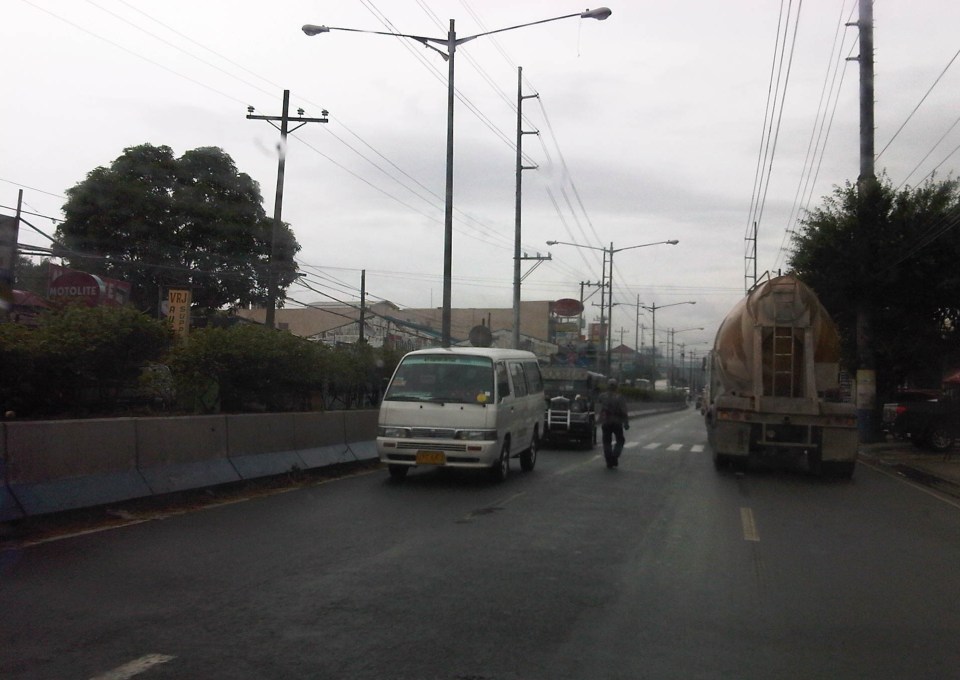 Counter flow along Ortigas Avenue Extension – this scheme has been the only option for the section between Valley Golf and Park Place Subdivision as the work proceeds one lane at a time. At the time, I took this photo, the counter flow lanes allowed for 2 lanes each for both the eastbound and westbound directions of this corridor. The past week, however, I noticed that during the afternoons and evenings, I noticed that two lanes were allocated for westbound traffic while only one was for the eastbound direction. This should not be the case as the peak direction in the afternoon to the evening is eastbound when people are home bound mainly from work and school.
 The section across from STI is another choke point as the area is one of the ends of the project raising the elevation of the avenue as well as improving the drainage along the road. The traffic along this area has improved much though vehicles still have to slow down to transition between the old pavement and new pavement sections, as well as vehicles turning towards Hunters ROTC Road.
 Unfinished sections – at the time this photo was taken, work along the site was intermittent. Commuters making the observation are often frustrated and much disappointed when they see none working along the construction site. The Mayor of Cainta did very well by talking to the contractor and apparently discussing with the latter how to improve traffic conditions as well as how to expedite the implementation of the project. My own observation was that conditions did indeed improve after that meeting (which was related by the Mayor in his Facebook page) and people could see workers busy with the project even at night time.
Traffic will continue to be bad along Ortigas Avenue Extension until this project is completed. While there should be some significant improvement in traffic flow after completion, congestion will again steadily worsen for this corridor whose private vehicle traffic continues to grow. Public transport is provided by buses, jeepneys and UV Express (whose numbers have ballooned during the last 5 years) and these have contributed a lot to congestion because of their drivers’ behavior particularly when they stop for passengers at areas like Valley Golf, Brookside, Cainta Junction, Ever, Countryside, Manggahan and Rosario.
There is hope though as news proclaim that the NEDA Board has approved the LRT 4 project along this corridor. A mass transit system is indeed necessary and this was required perhaps over a decade ago already. I do hope that this ‘LRT’ is more like the current Line 2 trains and stations than the Line 3 kind. Line 2 is a heavy rail system while Line 3 is light rail. The Ortigas corridor requires a heavy rail system considering the passenger demand in the areas that will be served by the transit system. I also hope that Line 4 is implemented like Line 2 with the government taking responsibility for constructing the system. I have maintained my view that the current administration is too fixated with Public Private Partnerships (PPP) that it had practically given up its responsibility to the general public to provide an efficient and equitable means of public transport for commuting. I just now wonder what became of the proposed BRT line along this same corridor. Perhaps the BRT option has already been abandoned by the DOTC in favor of rail?
–
Rains, floods and traffic
The wet season is here and with it the now typically heavy rains in the afternoons. Last week, the heavy rains brought upon flash floods in Metro Manila and adjacent towns. There have been no typhoons yet so these are mainly monsoon rains (Habagat), which we expect to be daily occurrences. Many of these floods are along major roads including EDSA, C5, Espana, and Quezon Ave. that transformed these roads into parking lots as most light vehicles are unable to traverse flooded streets.
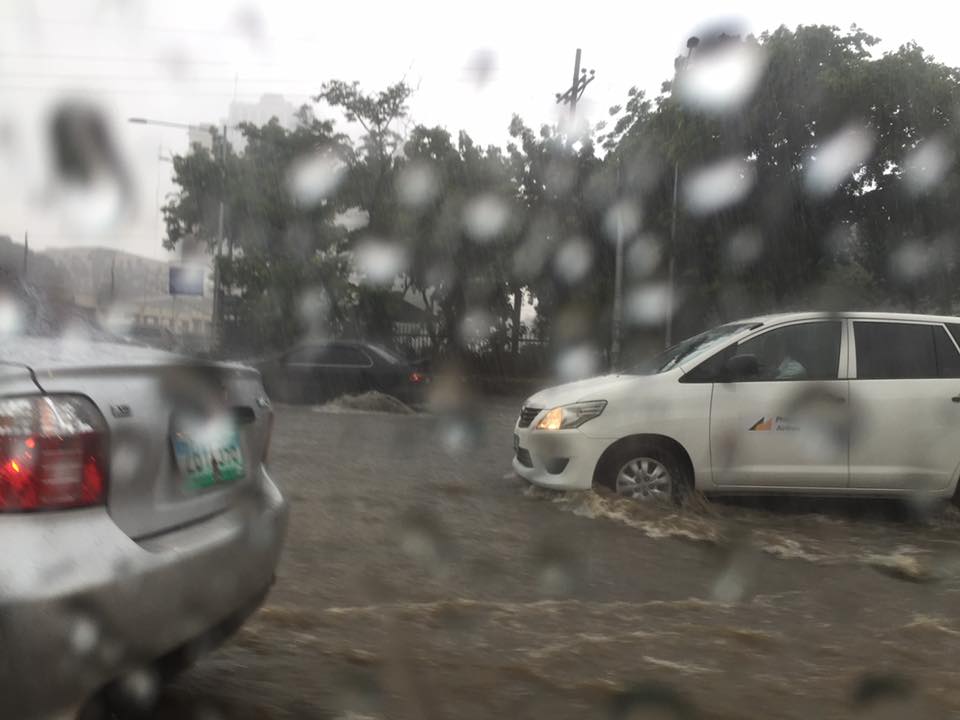 Vehicles run along the flooded Elliptical Road in Quezon City
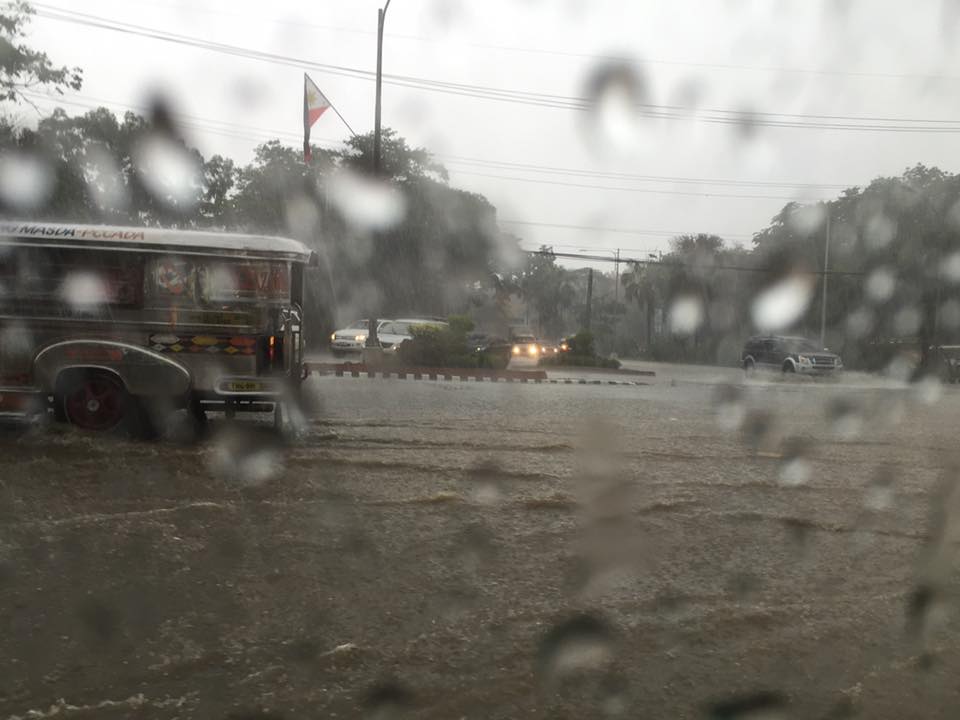 Jeepneys and SUVs (at right in the photo) take on the flooded Elliptical Road-Quezon Avenue intersection
Due to the traffic congestion resulting from the floods, many public utility vehicles especially jeepneys and UV Express vehicles were not able to go back and make their round trips.
 Cars risk the floods along Elliptical Road – the deepest waters are, ironically and curiously, along the section fronting Quezon City Hall where there is a pedestrian underpass connecting city hall with the Quezon Memorial Circle. Since the underpass is not flooded then it can be concluded that there’s something wrong with the drainage for Elliptical Road.
The weather is a very significant consideration for transport planning for cities in the Philippines. For Metro Manila it is almost everyone’s concern about how they can travel between their homes, offices, schools and other destinations without them and their things getting wet. This is what a lot of people advocating for road sharing seem to forget or choose to forget in their arguments for walking and cycling. A person residing in Fairview in Quezon City and working in Makati City will most likely not walk or cycle between his home and office because of the weather. This is a reality that could be solved by good public transportation, which, unfortunately, we also don’t have (yet) so people are ‘forced’ to do what they can to improve their plight. Unfortunately, too, what they are forced to do is purchase a car (or more). The proposal to build infrastructure to enable walking and cycling especially over medium to long distance is in the same dilemma as those for mass transit. And the latter is the more urgent matter needing action for the sheer volume of people they can carry and therefore benefit.
–
Ortigas Ave. Extension choke points
One alternative route for my daily commute is Ortigas Avenue. While there are several choke points along this road, I will focus on those between the Ever mall and Cainta Junction. Congestion is also usually experienced between the Manggahan Bridge and Ever but these are mostly due to traffic interruptions because of vehicles turning to and from the many subdivisions whose access/egress line up along Ortigas Ave.
The Ever mall is already a given as a significant traffic generator in the area. However, there is something about its circulation particularly the flow of vehicles in and out of the complex that detrimentally affects Ortigas Ave. traffic. While through traffic along the eastbound direction should use Ortigas Ave., many opt to go through the wide driveway of Ever in order to bypass the choke point that is the exit driveway of the mall. Many of these exiting vehicles are jeepneys turning left into Ortigas westbound (their routes terminate here and make their turnaround via Ever’s driveway). These effectively block the flow of traffic along Ortigas eastbound especially in cases when the westbound direction is also congested (i.e., due to sheer volume as well as stopping vehicles across the mall).
 Vehicles exiting from Ever and turning left to Ortigas westbound
Once eastbound vehicles are freed from the blockage of left-turning vehicles, they have to merge with significant right-turning traffic from Ever that includes buses and mostly through traffic vehicles whose drivers were ‘wise’ to have taken the driveway instead of Ortigas to get through the choke point. The situation results in another choke point right after the first one as the traffic along two lanes of Ortigas eastbound merge with the traffic equivalent to 2-3 lanes turning right from Ever. The total of 5 lanes of traffic squeezing into 2 lanes immediately after is a prime example of a bottleneck.
 Narrow eastbound two-lane section – additional space should be expropriated to widen Ortigas at this section
Right after the short 2-lane section is a sudden widening of Ortigas Ave. in front of BF Metals. I have heard it said that this is the ideal road width for Ortigas Ave. considering the volume of traffic passing through this major corridor connecting Rizal province with Metro Manila. There are practically 4 lanes for each direction at this short section so its easy to project these lanes on maps to see what properties would need to be expropriated if the objective is road widening. (Of course, the best option should still be to pursue a mass transit system along this corridor.)
 Ideal road width – Ortigas Avenue at its widest is the section across BF Metals. Vehicles here spread out along the many lanes suddenly available. But then people will eventually and immediately realize this is the mouth of a funnel. Note the sign indicating that vehicles are entering the Province of Rizal from this point.
 The eastbound section in front of BF Metals is usually parking lot in the evenings. This is due mainly to the 4 lanes almost abruptly constricting into 2 lanes just past BF Metals. Compounding things is the U-turn slot located here where many jeepneys whose routes end at Cainta Junction make their turnaround. Turning vehicles are assisted by “tambays” earning their money by blocking eastbound vehicles to make way for U-turning vehicles.
Finally, there is Cainta Junction itself, which is a signalized 4-leg intersection that handles a tremendous volume of traffic all-day. I am sure that there are efforts for the traffic signal settings to be optimized but more often there is human intervention for traffic management at the intersection. Whether this causes more severe congestion is quite obvious to many travelers going through this intersection. Queues along Imelda Ave./Felix Ave., for example, can reach way past Village East even reaching Vista Verde on a bad day. This only shows that the intersection is already severely saturated and conventional traffic management or signal settings can no longer handle the traffic. Perhaps the next stage of engineering intervention for this intersection is grade separation or the construction of a flyover or two at the intersection. Notably, such a project should including strategic widening along Ortigas Ave in order to balance the number of lanes feeding into and receiving traffic from the intersection.
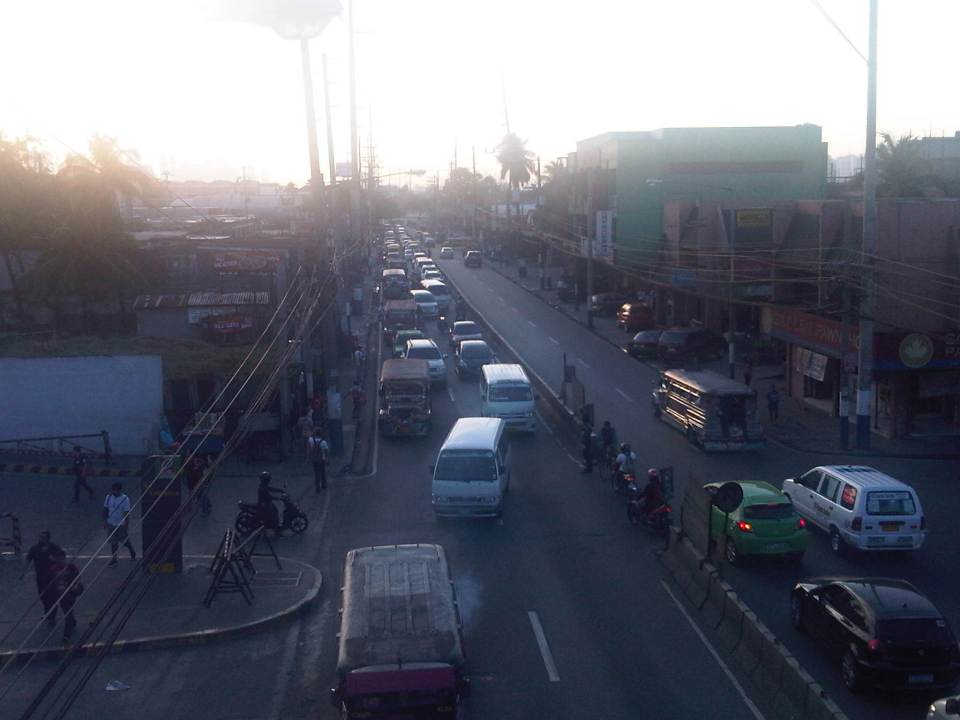 A view of the traffic approaching Cainta junction – there are only 2 lanes along the eastbound side of Ortigas and public utility vehicles stopping here only exacerbates the congestion along the road.
Is road widening the ultimate solution to Ortigas Ave congestion? I personally don’t think so. As I have mentioned earlier in this post and in previous posts the key is still to come up with a mass transit system to serve this eastern corridor. Yes, there will eventually be a Line 2 along Marcos Highway, the main alternate (or competing?) route to Ortigas but is is obvious that even with a railway line along Marcos Highway and connecting to Aurora Blvd., there will still be an urgent need for a similar capacity line along Ortigas. The buses and jeepneys can no longer handle the demand and their poor levels and qualities of service have given rise to a proliferation of UV Express and pushed people to purchase cars and motorcycles. Congestion can be reduced significantly with a mass transit system along Ortigas. Without this transit system, Ortigas will just continue to be congested even if the entire corridor is widened; except perhaps if it is widened like Commonwealth Ave. in Quezon City. I don’t think that is possible and practical.
–
Conditioning
Was traffic really bad yesterday, Dec. 21, or was it typical Friday traffic? A lot of people have been talking or posting about how traffic last Friday was expected to be the worst of the year. Apparently, it was not.
Based on posts on my social media accounts yesterday, it seems that traffic was not at all that bad in many parts of Metro Manila, especially along roads that were expected to be hellish in terms of congestion. One post stated that it him only an hour to travel from Ayala to Trinoma by bus. People usually post about really bad experiences about traffic congestion and this crowd-sourcing approach is usually very reliable. I went home early yesterday and it didn’t take me long to travel between stops for errands I had to do along the way home. Media also would have reported about terrible congestion along major roads including EDSA, C5 and the expressways.
Statements like what the MMDA made prior to Dec. 21 are typical of a psychological approach that some agencies seem to have been resorting to in order to manage people’s expectations and perceptions. Conditioning people’s minds is not a new strategy or tactic. The MMDA has been doing this a lot for as long as I can remember, including during the stint of its former chair Bayani Fernando. Many if not most of these “conditioning” activities are done through media with the agency making statements through its officials about issues such as traffic, garbage and flooding. This is no different to the perception of one agency making frequent “power point presentations” (a reference to projects involving the private sector) to announce much delayed projects supposedly for immediate implementation.
One opinion is that this is a form of damage control. People will usually have strong opinions about what government is doing to address issues like congestion. For people not react too strongly against agencies that are supposed to be responsible for the problem, the same agencies have anticipated and preempted the manifestation of their ineptness by stating the obvious ahead of its occurrence. This would not have been necessary if the agencies did what they were supposed to do in the first place. Hopefully, in the near future such conditioning and other psychological tactics will indeed not be necessary once programs and projects are finally implemented and help alleviate or solve problems.
–
The worst traffic of the year on Dec. 19?
The Metropolitan Manila Development Authority (MMDA) issued a statement a couple of days ago in reaction to comments online and offline about how transport and traffic have gone from bad to worse in December and especially in the past week. The agency warned people about the worst traffic congestion of the year happening today, December 19, and media immediately branded it as traffic armageddon. Reactions on social media varied from the hostile, desperate, to resignation about their plight for their commute today.
The worsening congestion this time of year is actually part of a pattern, a cycle of ups and downs in terms of person, freight and vehicular traffic. In our case in the Philippines, we usually expect traffic to be bad during certain times of the year and in many cases along specific routes or roads. During the Undas period (All Saints and All Souls holidays), for example, we expect congestion along the expressways and other major roads connecting Metro Manila to the provinces to its north, east and south. During the first days of classes around June (for most schools), it is also expected that congestion will be severe along roads leading to and in the vicinity of schools, especially the big private schools that generate a lot of private vehicle traffic.
December is usually the worst month for traffic because of the increase in economic activity this time of year as people travel more like to earn a bit more income and for shopping. The end of the year also brings about a lot of culminating or concluding activities for offices and even schools so trip generation tends to increase for all types of trips. However, traffic has naturally increased every year and this refers to person, freight and, consequently, vehicle traffic. And so it is inevitable that transport and traffic becomes worse every year unless a major intervention is made in the form of a mass transit system along a specific corridor.
I am not sure if the MMDA or the DPWH keeps records of daily traffic so that we can have a quantitative basis for this. The LRTA and MRTC should have data on this based on ticket sales and the tollway operators would also have data on this based on their toll collections. Such information can provide a strong indication of which dates are the most likely for severe traffic congestion and perhaps allow for prediction and the provision of ample advice for commuters.
Will today be worse than the past few days and will it be the worst day of the year in terms of traffic? Or will Dec. 22, 23 or even 24 turn out to be worse than today’s traffic? Perhaps the statement from the MMDA is a way of psyching people about what could be the worst traffic of the year. This application of psychology may make people more aware of and therefore conscious about traveling today. This may actually lead to less traffic to the relief of many people. Or this may be a way for the MMDA to escape from blame considering they did make the statement ahead of today and this manner of “I told you so” basically excuses them from the public’s ire.
–
Interesting articles on traffic congestion
Here are a few good reads on traffic congestion and its measurement or quantification:
- How Not To Measure Traffic Congestion—Hold the Hyperbole, Please! which appears on Planetizen today, October 15, 2014.
- Rethinking the economics of traffic congestion which appeared on June 1, 2012.
Reading these articles will probably make you think that traffic is good or that congestion is good. While congestion is indeed indicative of economic vibrance as movement of people and goods are a good measure for economic activity, excessive congestion results in many other problems that need to be addressed and which can also be quantified in economic terms. Note, too, that one author mentions “peak traffic” that is now becoming common in developed countries as motorization has plateaued and transport systems have become developed to provide people and goods with a variety of modes to choose from including walking and cycling. In our case, traffic has not yet “peaked” in the sense that motorization continues for many of our cities including Metro Manila. There is also a lag in the provision of transport infrastructure including mass transit systems that should have been constructed decades if not years ago. Perhaps we need to be clear about the context by which congestion costs are estimated and presented.
The somewhat dramatic presentations like the manner shown in the first article above reminds us of similar estimates of congestion costs in the Philippines, particularly for Metro Manila. The latest of these come from a JICA project that had as an objective the drafting of a roadmap for transport in the expanded region that is dubbed as Mega Manila (Region 3, National Capital Region and Region 4A). The end product has been billed as a “Dream Plan for Mega Manila” and draws on congestion cost estimates that would definitely be regarded as exaggerated if seen in the context of the two articles we mentioned above. Perhaps it is the important message (i.e., we need to build transport infrastructure) of such exaggerated presentations that we should focus on an not really the specific numbers being quoted by news organizations and circulated in social media.
We have to caution the reader that congestion is here to stay and cannot be totally eliminated, especially with economically vibrant or growing cities. What we probably would like to address, however, is excessive congestion. Yes, there is such a thing as excessive congestion. I would like to describe this as something that is “unreasonable” along the lines of say instead of your regular 1 hour commute, it took you 2 hours or more. For some, this can be due to horrendous traffic jams due to flooded streets. Or perhaps someone who takes public transport waiting for hours just to get a ride. And so people are forced to cope and in a way, their minds have been conditioned to tolerate (accept?) the levels of congestion they experience on a daily basis. Congestion is good but it does not have to be hellish.
–
Re: traffic congestion along Katipunan
Yesterday was a holiday in Quezon City so most offices and schools were closed. It was not a holiday elsewhere so through traffic along Katipunan Avenue would have been “normal.” This is assumed especially for trucks that have been blamed as the cause of the severe congestion. I was curious about how traffic would be with the holiday in QC and through traffic could practically be “isolated.” There still was significant traffic generated by establishments like restaurants and cafes along Katipunan. It was a regular weekday and not like it was a Sunday. Following are photos that were taken around 2:00 PM when the truck ban is not enforced in the area.
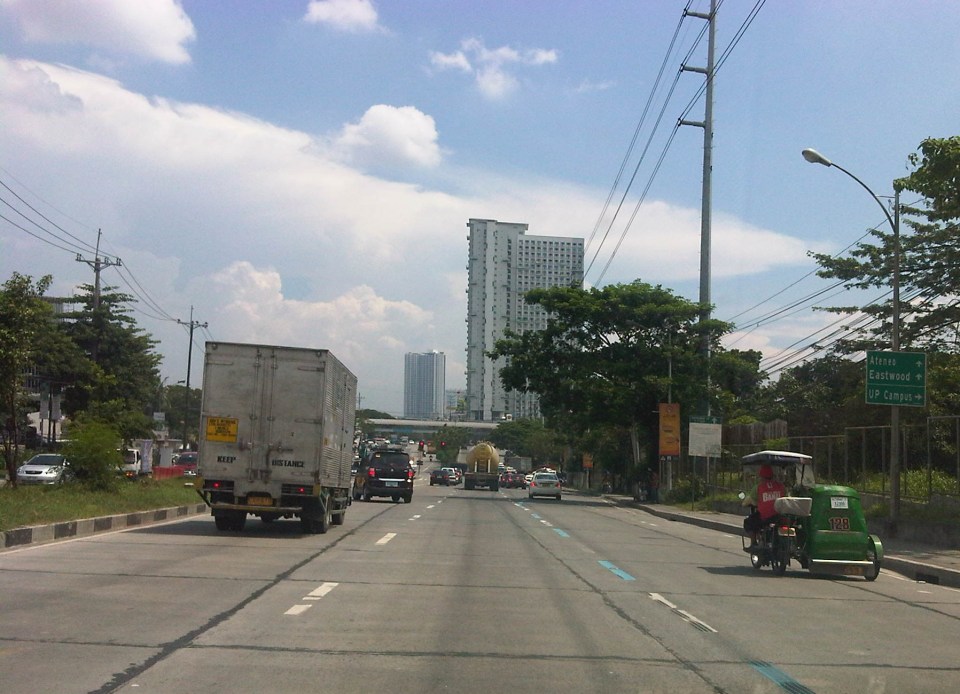 Free-flowing traffic along the section across from the UP Town Center – There were no long queues at the approach to the Katipunan-C.P. Garcia intersection.
 Free-flowing traffic along Katipunan across from Ateneo – the two universities generated few private car traffic yesterday during a period when there’s usually a lot coming in and out of the campuses due to the dismissals in the early afternoon.
 Free-flowing traffic along the Katipunan-Aurora overpass – in the early afternoons, the northbound side of Katipunan is usually full of vehicles mainly private cars and trucks. While there were many trucks yesterday, their numbers were not enough to cause traffic jams.
I think the traffic situation yesterday provided a clear picture that the major traffic generators along Katipunan are mainly the reason for traffic congestion along the stretch from Blue Ridge to Balara. These are mostly the schools (Ateneo, Miriam and UP) that generate so much private vehicle traffic on weekdays and Saturdays. Sundays are different because there’s no school nor work at offices on this day. With the QC holiday, the through traffic was still there owing to work and school in other cities (e.g., Residents of QC would still have to travel to Makati or Ortigas if their workplaces are located there. Similarly, students residing in QC whose schools are in the University Belt in Manila would have to travel.). This means there is really a need to understand why there is congestion and what causes it. A lot more effort is needed for this understanding and to ultimately reduce traffic congestion along this stretch of C5. Pointing fingers among agencies and simply putting the blame on one sector of traffic (e.g., trucks) will not get us anywhere. The solution will require strong cooperation among stakeholders and will definitely be not a painless undertaking for many.
–
 Caught (up) in traffic