
Home » 2013 (Page 10)
Yearly Archives: 2013
What Public Transit Data Teaches Us About How People Use a City
I’m sharing an interesting article featured on The Atlantic Cities, one of our favorite sites on the internet. Enjoy!
What Public Transit Data Teaches Us About How People Use a City.
National Budget Memo No. 118
The Department of Budget and Management recently released the National Budget Memo No. 118 with the subject: Adoption of the Budget Priorities Framework in the Preparation of the FY 2014 Agency Budget Proposals. The Memo emphasizes “the need to prioritize the programs critical to the attainment of the desired outcomes for the 2014-2016 period.” In addition to the bottom-up budgeting (BUB) approach, the memo identified priority geographical areas for program convergence for the 2014 budget. It is important to note the focus of the government on inclusive growth and the convergence programs for infrastructure to support industry, agriculture and tourism, as well as significant mention of climate and disaster resilience for programs to be implemented by the government. Following is a link to the DBM site where a PDF copy of the memo can be downloaded:
DBM National Budget Memorandum No. 118
I’ve downloaded a copy and this may be downloaded here:
–
NAIA Terminal 3 domestic departure
NAIA Terminal 3 hosts the domestic flights of Cebu Pacific and PAL Express (formerly Air Philippines and Air Phil Express). PAL now also flies out of T3 for major cities like Cagayan De Oro, Legazpi, Puerto Princesa and Tacloban, where PAL and PAL Express flights seem to have merged and are quite difficult to tell by the aircraft. The difference becomes clear when one boards the plane and sees no Mabuhay Class seats for PAL Express and seats have the leatherette covers (similar to Ceb Pac’s) instead of the more classy fabric in PAL planes.
 Hallway to the boarding gates – there are many shops and restaurants to choose from where one can have a meal or drink before a flight.
 This shop is packaged like the higher end duty free shops on international terminals. There’s a Krispy Kreme donut stall that’s quite popular as pasalubong.
 A typical cafe at NAIA T3
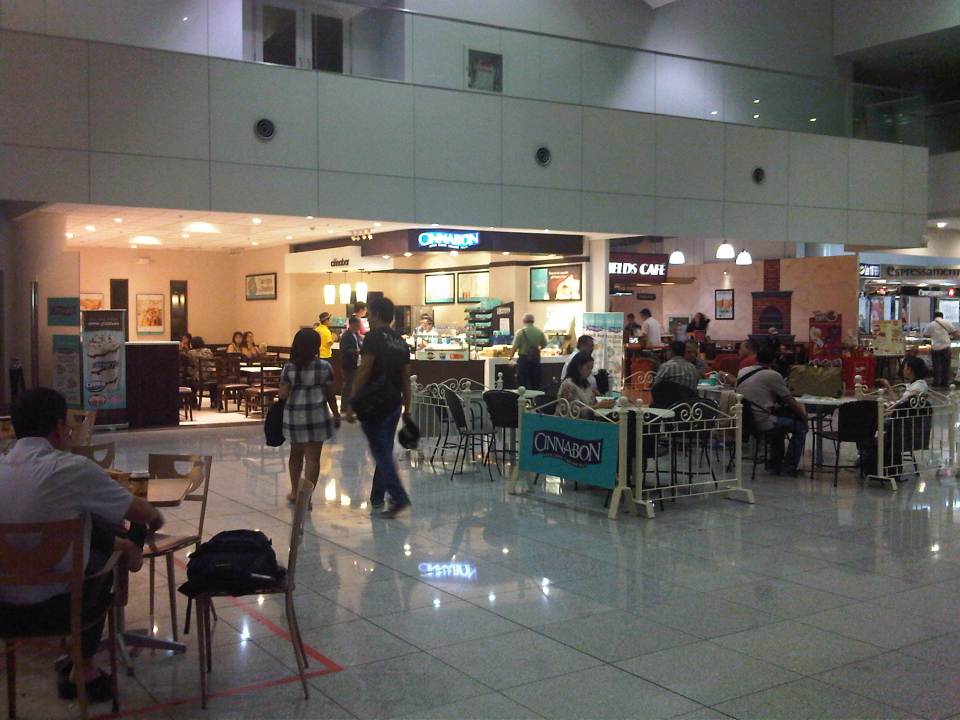 More cafes give passengers a lot of choices for where they might want to get their beverage, meal or snack.
 And still more cafes…
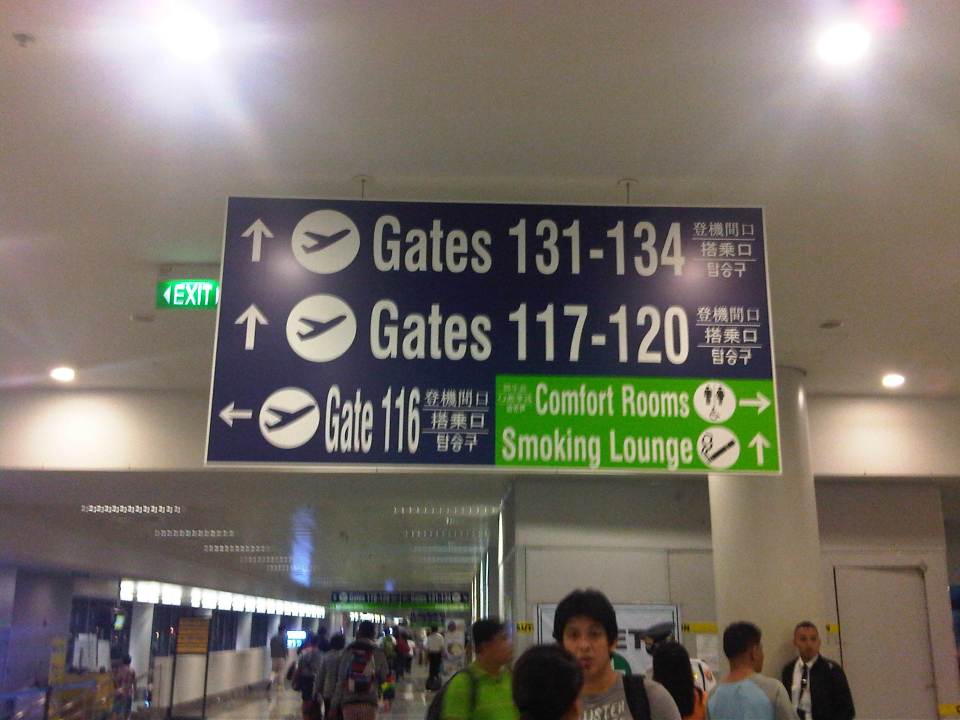 Large signs provide adequate guidance for passengers.
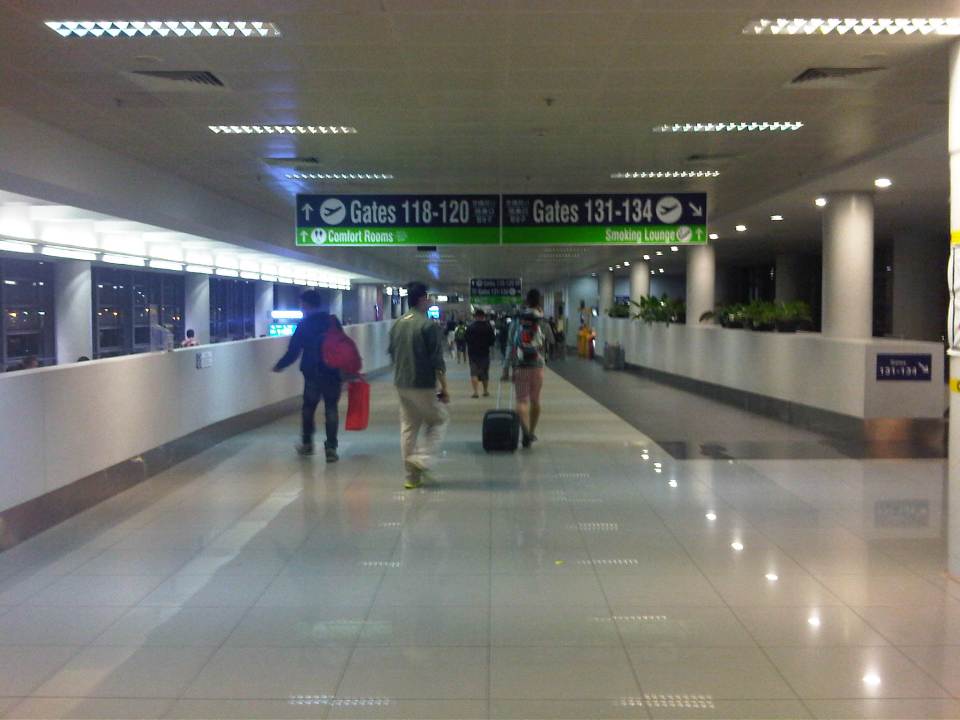 The long walk – T3 is a linear terminal with gates spread along either wing of the building, which means passengers would have to walk some distance to and from their gates for departures and arrivals.
 It’s summer in the Philippines, so there are more flights and passengers than usual. I was at the terminal for a 0440 flight to Tacloban and there were already a lot of people waiting for their respective flights to destinations such as Cebu, Iloilo, Bacolod, Dumaguete and Davao.
 Passengers at Gate 118 seated along a corridor that also features a non-functioning “walkalator” or moving walkway. Such walkways should help passengers move more conveniently and swiftly to and from their gates but all are currently not operating (for one reason or another).
 Fellow passengers at Gate 119 waiting for our boarding call
 There are many television sets at T3 where passengers can catch the latest news on cable or, in this case, a replay of an NBA Playoff game.
–
Mactan Cebu International Airport – Take 2
I haven’t been able to get decent photos inside Mactan Cebu International Airport (MCIA) in previous trips to Cebu. And so, when I finally had the opportunity recently, I wasted no time taking a few photos inside the terminal. MCIA is frequently in the news these days as its proposed expansion is being bidded out. The airport is the second busiest airport in the country after Manila’s NAIA; serving more than 6 million international and domestic passengers in 2011. This will continue to increase as Cebu develops further in terms of business and tourism.
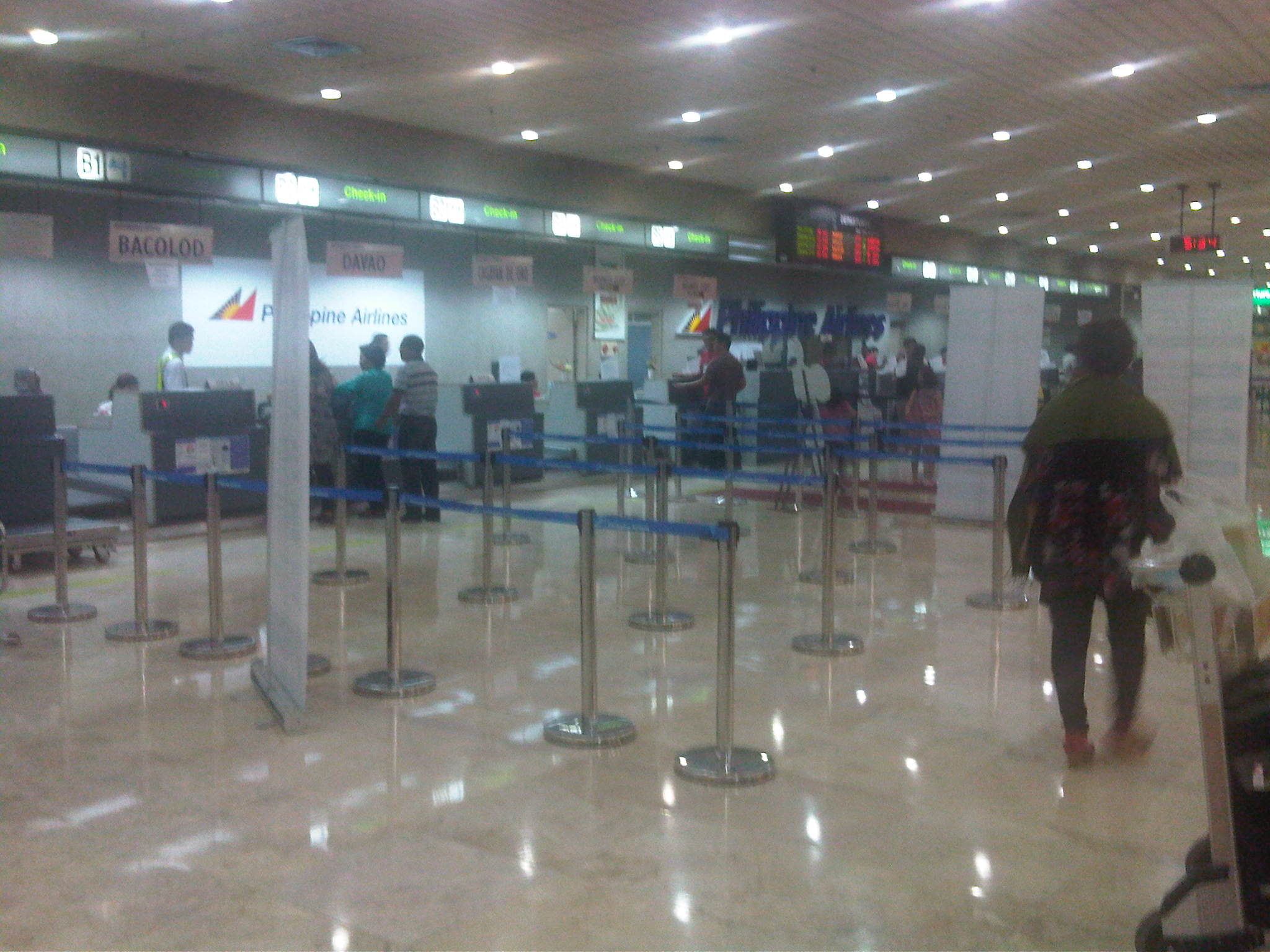
 Check-in counters for Philippine Airlines
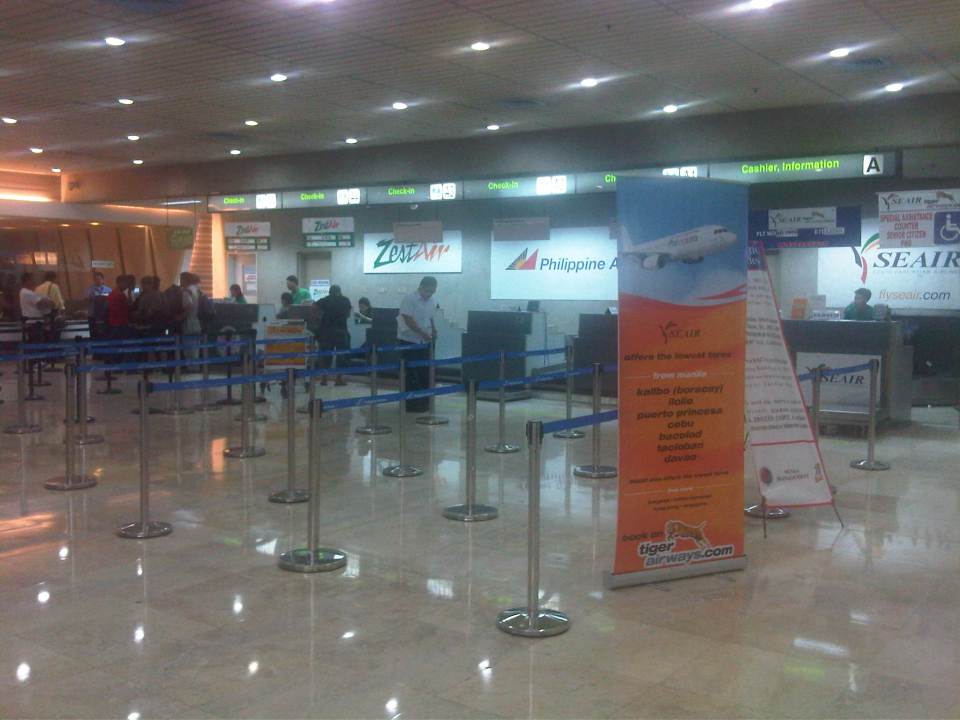 The check-in counters for Zest Air (formerly Asian Spirit) and Seair (now operated by Tiger Airways) were practically beside PAL’s. The PAL counters between Zest Air and Seair used to be Air Phil Express counters. The latter is now known as PAL Express, PAL’s repackaged budget airlines.
 Cebu connects with many other cities in Visayas and Mindanao. The number of domestic flights are comparable to Manila and there are destinations in Mindanao that do not have direct flights connecting to Manila. Instead, one would have to fly via Cebu or Davao.
 Information on designated terminals for flights to and from Manila. PAL subsidiary Air Philippines, which became Air Phil Express and now PAL Express used to fly out of NAIA Terminal 3 with PAL exclusively using Terminal 2. With the re-organization of PAL and its more aggressive approach at present, the airline now seems to have expanded and is now competing with Cebu Pacific for space at Terminal 3.
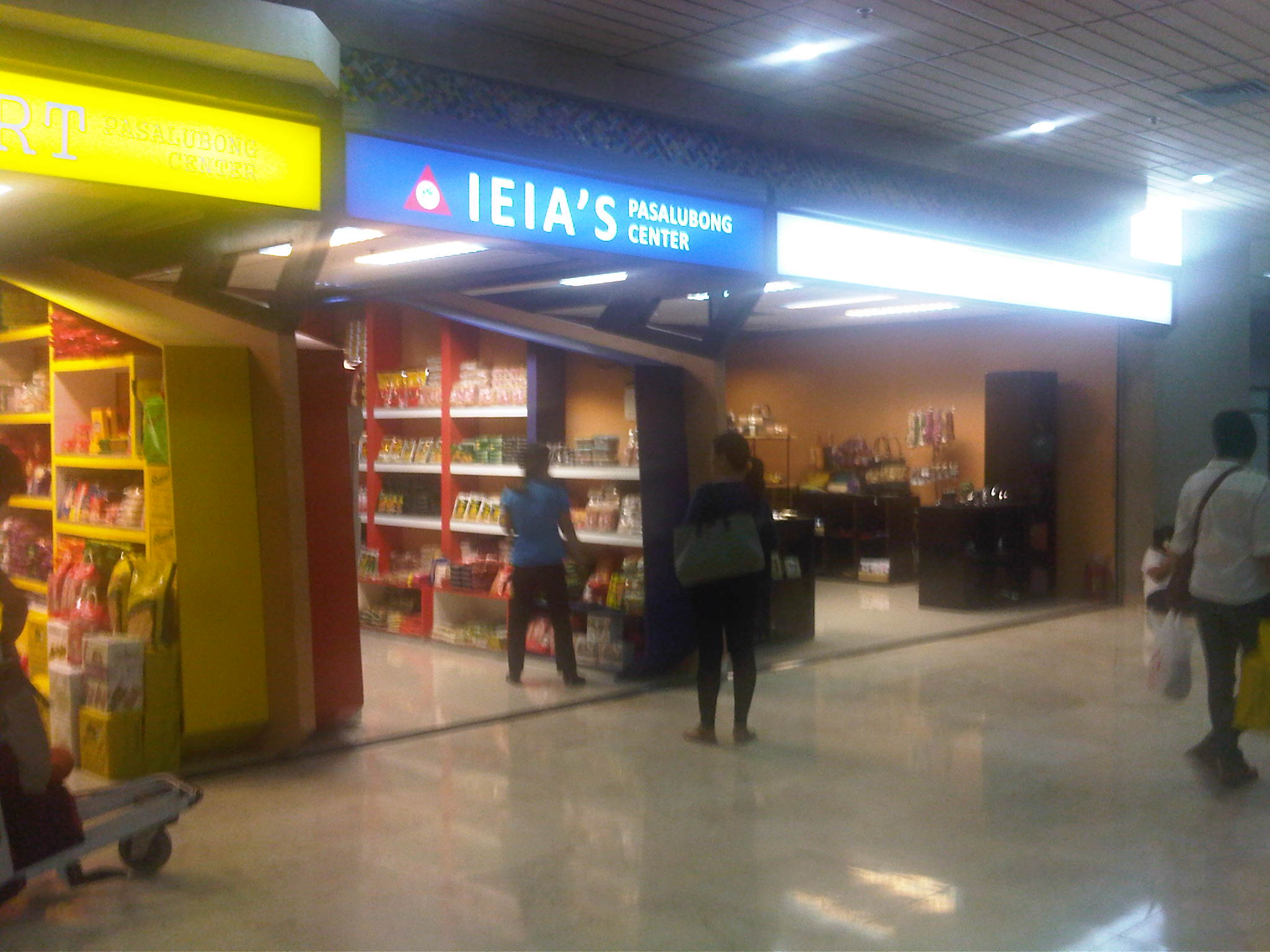 There are many souvenir shops at the airport, many selling food items like the popular dried mangoes, otap, rosquillos, and dried sea food. Popular brands are Titay’s and Shamrock. The items at the shops at the airport are priced higher so it is advisable for people to purchase souvenirs at local shops or supermarkets in the city. Titay’s and Shamrock have their own shops in Cebu and Mandaue. Dried fish is best bought at the market in Cebu (Ask your driver to take you to the “tabuan” market.).
 Islands Souvenirs is an established brand in the Philippines specializing in souvenir shirts and other items. I used to collect shirts from the cities I have visited and I have already collected quite a lot from my travels in the country. There is an Islands Souvenirs shop at most major cities in the country. MCIA also has a Timex stall at the pre-departure area. Timex is a watch company producing high quality watches out of the economic zone in Lapu-lapu City.
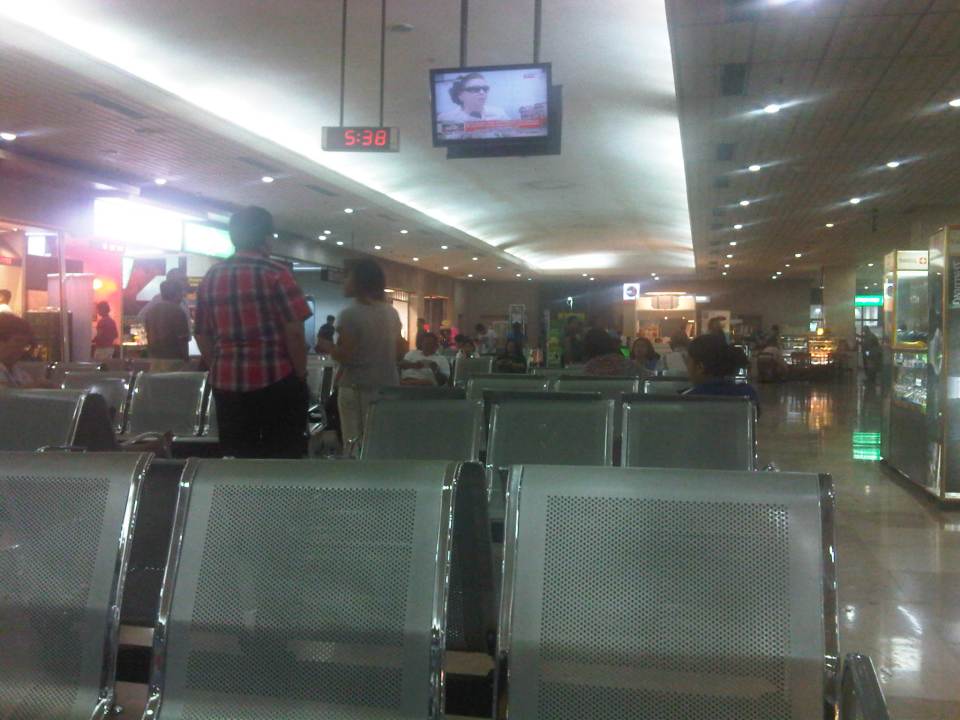 Pre-departure area at MCIA – the area can get quite crowded during the day when most flights depart out of the terminal. PAL fields wide bodied aircraft to address the high demand between Manila and Cebu during the day.
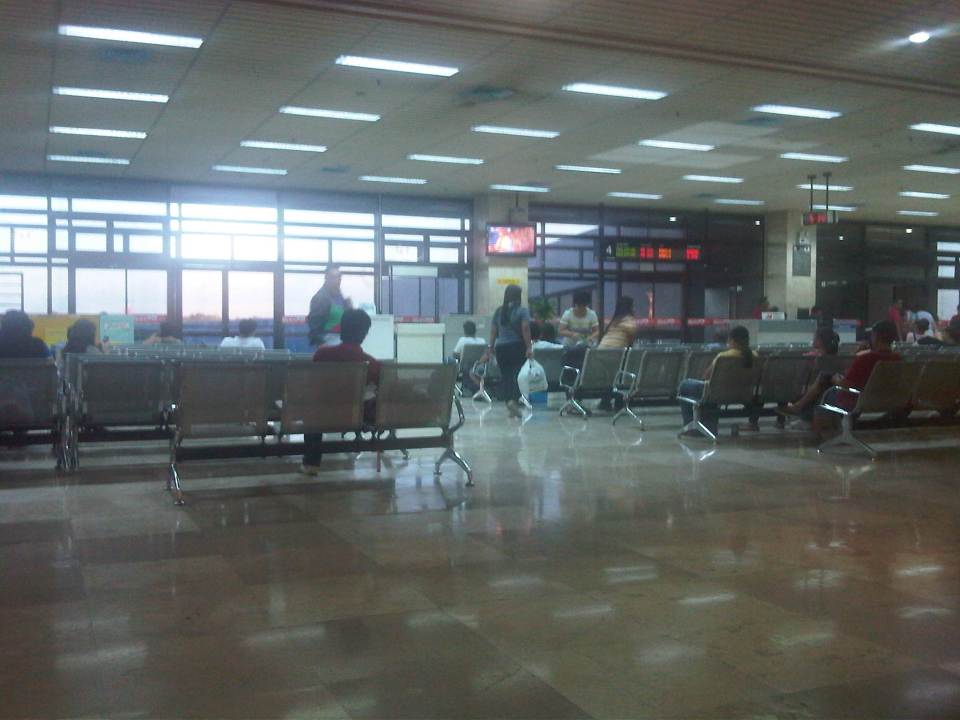 Gate 4 seats at the MCIA
 Passengers waiting for their flight. My flight back to Manila wasn’t a full one probably because it was a later flight.
There’s been a lot going on in MCIA ever since the former Cebu City Planning and Development chief Paul Villarete took over as General Manager. I’ve noticed the improvements as I have been to Cebu quite frequently since 1996. These include a cleaner terminal and more efficient services in the airport. MCIA is a work in progress and should soon be upgraded with a new terminal building. I’m hopeful that the groups bidding for the project will do a great job as at least two of them are associated with top airports in Changi (Singapore) and Incheon (Korea).
–
Daniel Romualdez Airport in Tacloban
I had been to Tacloban only once before and was not able to take some photos of the airport. This time around, I was able to get a few photos as I checked in for my flight back to Manila. Tacloban Airport is among the busiest airports in the country serving more than 1 million passengers annually. Tacloban is the regional center of Eastern Visayas and is the only airport in that region with jet airline (A319s and A320s) service. Despite the increasing demand due to growth in both industry and tourism, the airport is limited by its runway and terminal. A planeload of passengers already crowd the pre-departure area on a regular basis and conditions in the area is not at all comfortable. While there is a room for changing diapers and another for breastfeeding (thanks to DOTC’s Gender Awareness and Development program), there are few other amenities at the terminal.
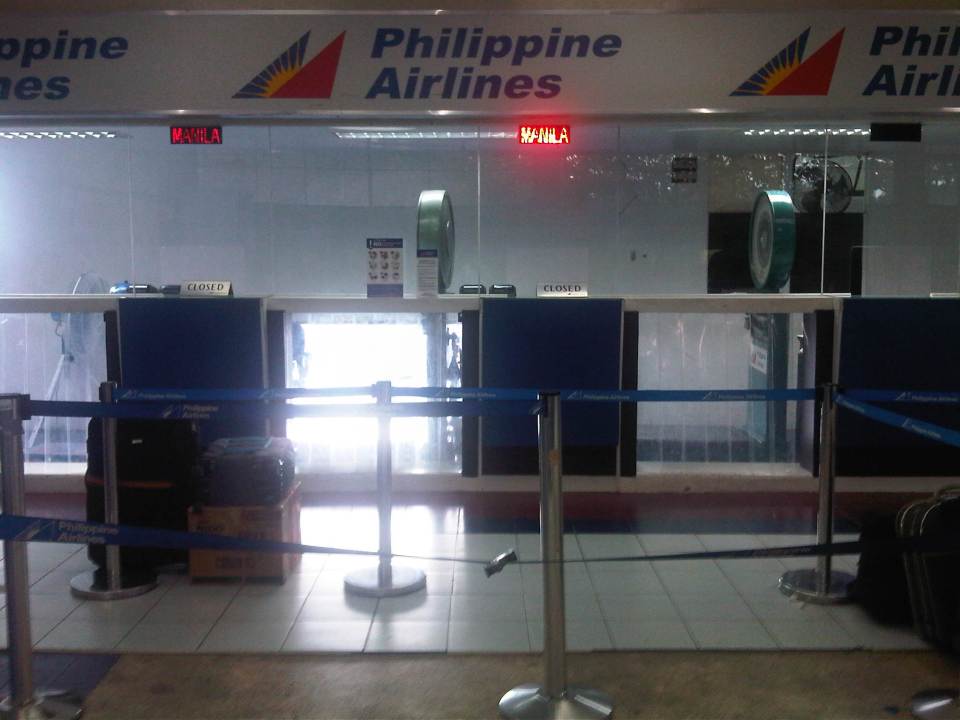 Philippine Airlines check-in counter
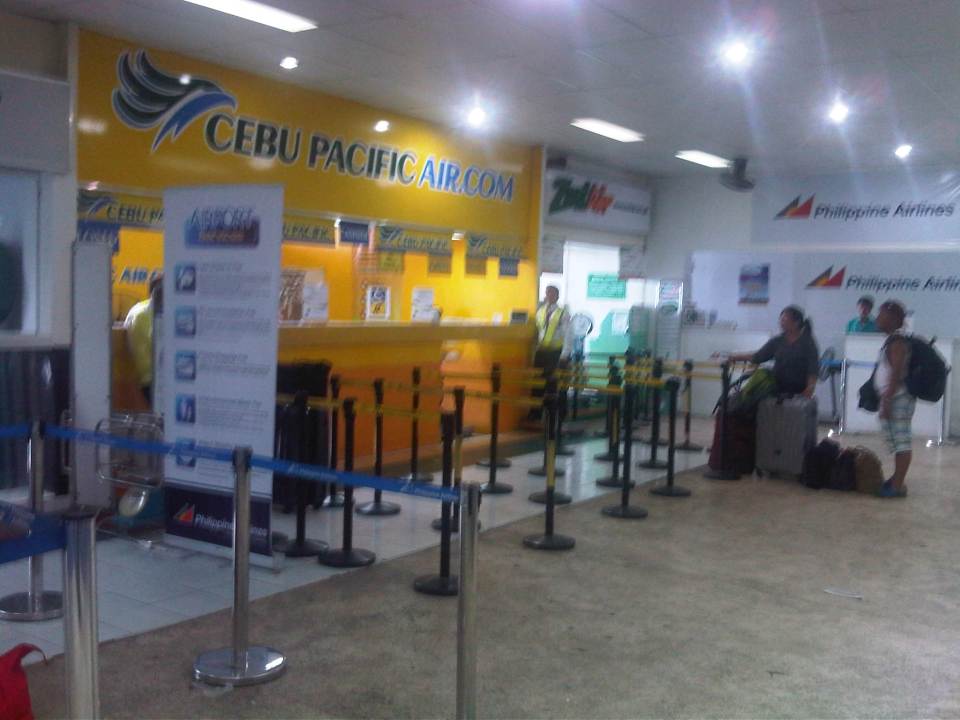 Cebu Pacific and Zest Air check-in counters
 Ceb Pac passengers waiting to board the aircraft on the tarmac
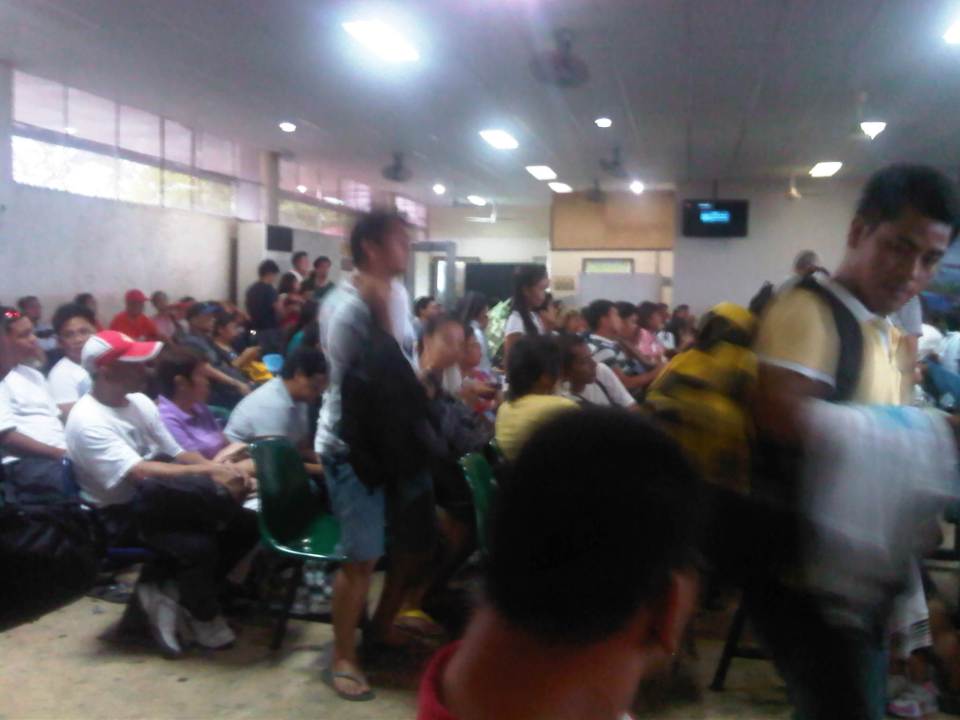 Another shot of the crowded pre-departure area
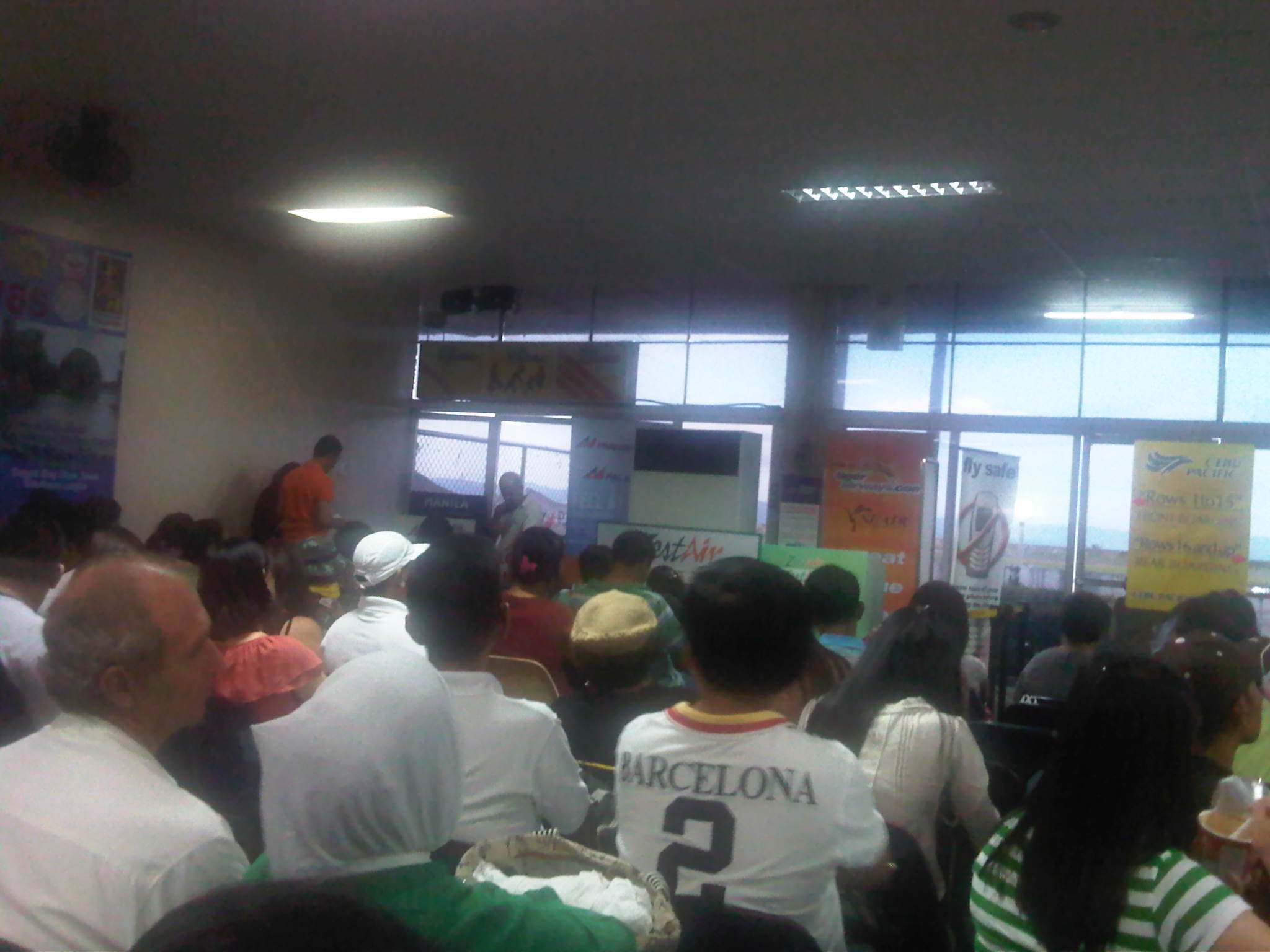 PAL passengers waiting for their plane to arrive
Tacloban Airport is due for expansion with a new terminal proposed for construction nearby. The land where the new terminal will be constructed has been acquired and cordoned off and I was told that the runway will be lengthened. I am just not sure if DOTC or CAAP has acquired the lands necessary for the runway component of the project but upgrading the runway for the airport to accommodate wide bodied aircraft will indeed require much land. Nevertheless, it is a project that is long overdue and needed to push for development of the region, which has one of the higher incidence of poverty at 37.2% for Region 8. Leyte has a 31.9% poverty incidence while Southern Leyte is at 36.4%. Neighboring Samar provinces have even worse statistics with Western Samar at 36%, Northern Samar at 43.7% and Eastern Samar at a staggering 59.4% poverty incidence. These stats are based on the figures recently released by the National Statistical Coordination Board (NSCB) based on the Family Income and Expenditure Survey (FIES) conducted in 2012.
–
Signaling
I recently read an article about signaling in the United States. It states that about 25% of turns are not signaled. That is, drivers do not signal prior to turning left or right at an intersection. This comes as somewhat a surprise for me as I thought this statistic should be lower in the US considering their stricter procedures for getting a license. I don’t really observe signaling behavior in the US when I am there also because maybe I assume that traffic enforcement is also stricter and errant behavior would usually be caught and the driver cited by the police.
In the Philippines, it’s a lot worse with many if not most drivers of all types of vehicles including motorcycles not indicating their intention to turn for other motorists. Drivers of public utility vehicles like buses, jeepneys and taxis are perceived to be the ones with the highest likelihood of not signaling prior to turning at an intersection or to change lanes. The results, of course, are chaotic driving conditions along Philippine roads and especially in urban streets where motorcycles add to the complexity as riders zip in and out of every conceivable space between vehicles.
I am not aware of any formal studies on signaling and related driver behavior in the Philippines. Perhaps there is one somewhere and not necessarily on traffic engineering but on psychology or other behavioral studies. Such researches, while appearing to be simple and somewhat trivial to some, can be quite helpful in understanding driver behavior and how these can influence the road environment. Abrupt or poor anticipation of turning or lane changing may lead to road crashes and motorists in the country are not the easiest to educate after getting their licenses. Of course, nothing can replace consistent, strict enforcement of traffic rules and regulations to encourage good behavior along our roads but this would just be a reinforcement of what was supposed to have been taught at driving school in the first place.
Here’s the link to the article appearing on the website Atlantic Cities:
DIY Urbanism of the Day: How Many Drivers in Your Nabe Aren’t Signaling?
–
Francisco Bangoy International Airport revisited
The number of views for Davao’s international airport spiked a few days ago and from the responses to the posting on Facebook, it’s clear that people are appreciative of good infrastructure provided to them. People in other cities expressed similar or related feelings in relation to the post with many expressing that they hoped their city could have a good airport. Well, we know at least that Iloilo and Bacolod have good airports in Cabatuan and Silay that are now serving international flights as well. Hopefully, we’ll have more airports upgraded like Tacloban, Tagbilaran, Legaspi and Puerto Princesa that are all very crowded as more people fly to these cities including tourists whose numbers are steadily increasing. Cebu’s airport expansion is up for bidding and Northern Mindanao will soon have a large airport opening at Laguindingan. Cagayan De Oro’s Lumbia Airport will eventually be phased out. Meanwhile, here are a few more photos on DVO from a recent trip I had.
 Check-in counter for Philippine Airlines passengers
 Check-in counters for PAL and Cebu Pacific
 The spacious terminal is desirable for large cities like Davao and generally serves the entire region.
 Cebu Pacific’s self service terminal that I first saw in Davao and now is also in other airports as well
 The check-in counters as seen from the escalator as I went up to the departure level
 The corridor to the pre-departure area Gates 1 and 2 of the terminal
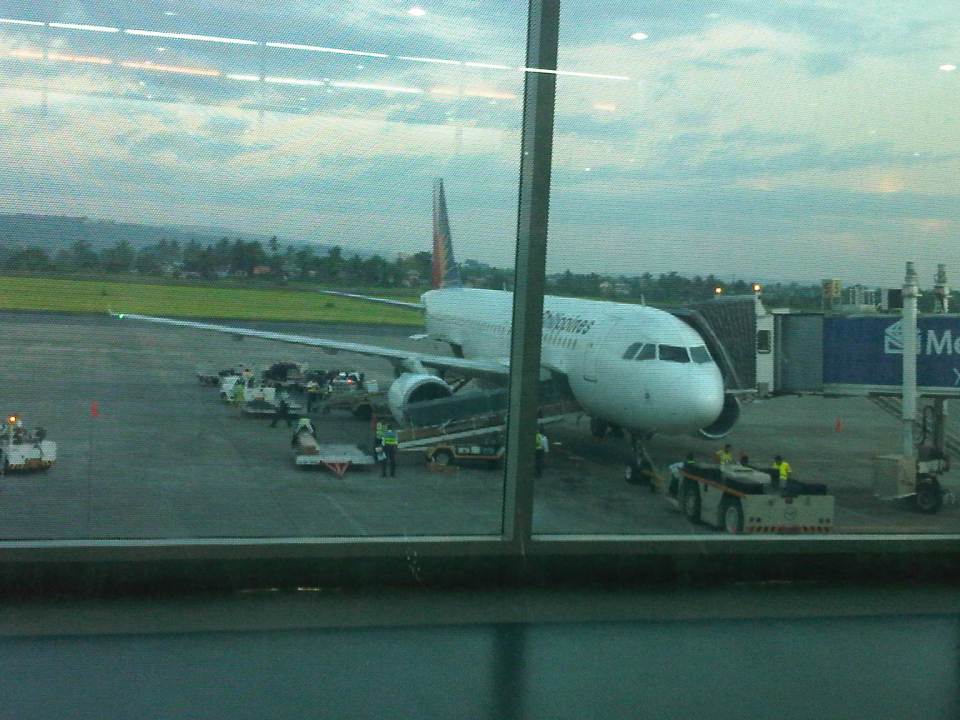 View of PAL Airbus A320 at the airport
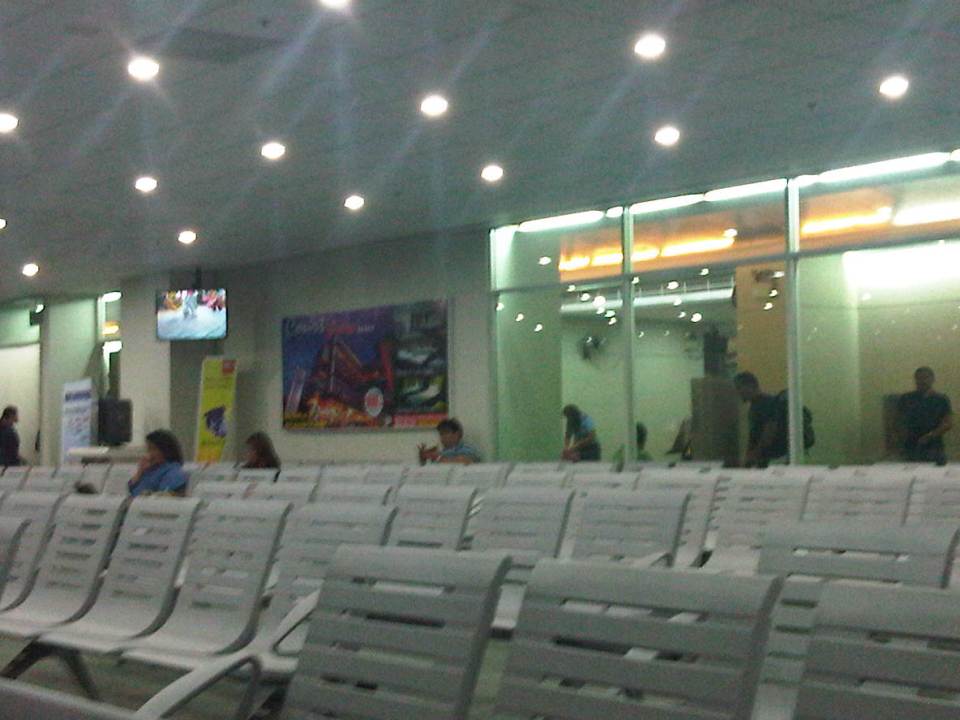 Spacious pre-departure area at the airport
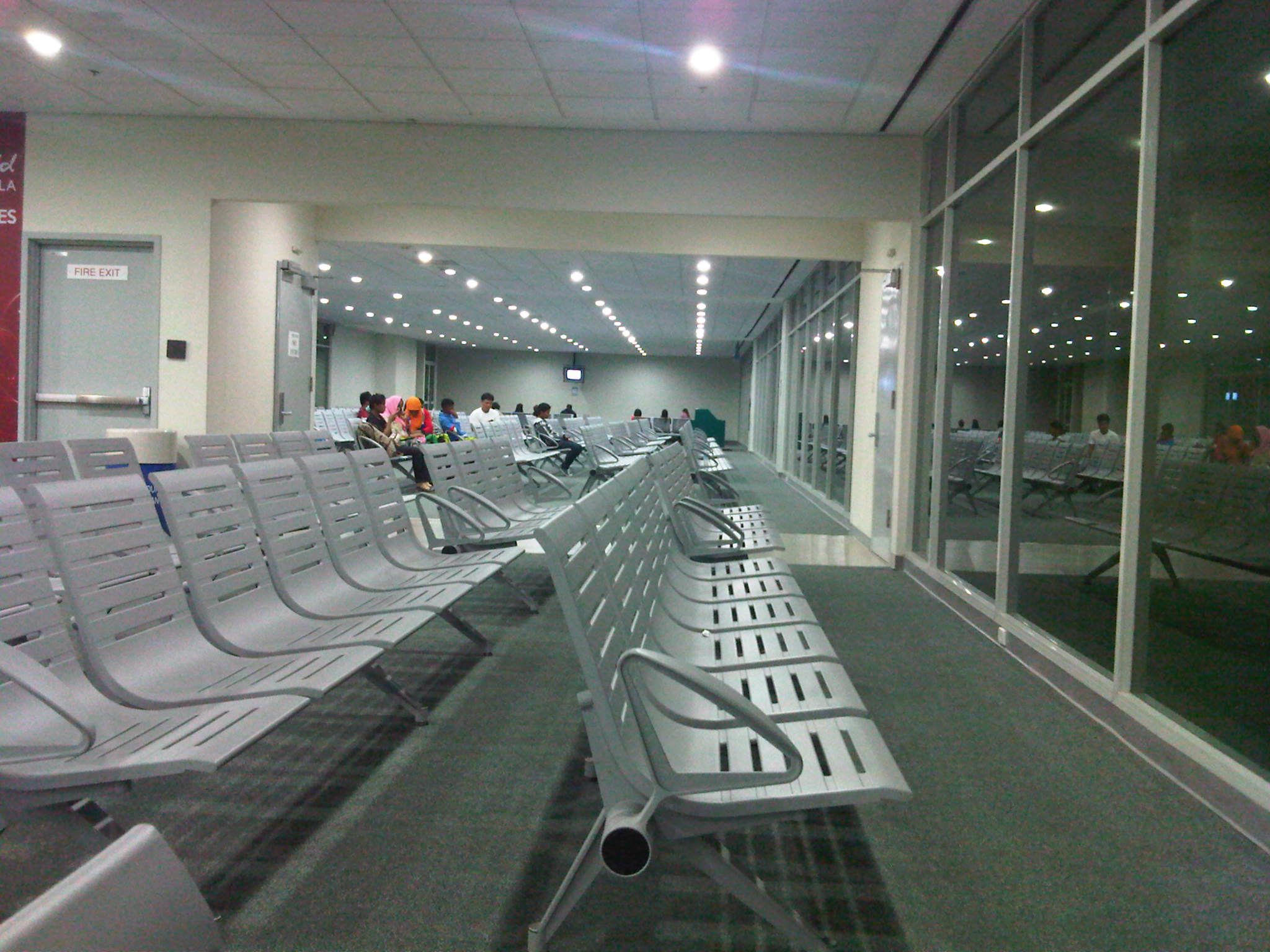 Another look at the spacious pre-departure area at Davao’s airport – I assume that the area can become full if the aircraft happens to be a widebody like the B747 or A330.
More on airports soon…
–
Poverty Statistics in the Philippines
The National Statistical Coordination Board (NSCB) of the Philippines recently released poverty statistics as of the first semester of 2012. The report is based on the outcomes of the Family Income and Expenditure Survey (FIES) conducted by the National Statistics Office (NSO) in July 2012. Both agencies are under the National Economic Development Authority (NEDA). The stats on poverty incidence are shown in the following link:
In relation to these poverty figures, the NEDA Director General Arsenio Balisacan issued the following statement:
STATEMENT OF SEC. BALISACAN AT THE PRESS CONFERENCE ON THE 2012 FIRST SEMESTER POVERTY STATISTICS
I am curious to see how much of family expenditures go to transport. Clearly, the state of the country’s transportation system is a significant factor in development and the government’s initiatives towards inclusive growth will not prosper if we continue to have inefficient transport across all modes for both people and goods.
Level up on buses in the Philippines
I chanced upon the demonstration run of an articulated bus for the Department of Transportation and Communications (DOTC) and participants of a workshop on crowd-sourcing that was being conducted that day. After seeing the interiors of the bus, I decided to ride in a vehicle following the bus to take a few photos of the vehicle and also catch the reactions of people along the street who might be seeing an articulated bus for the first time. The demo run (and others in the future) should give people an idea of what road transport still has to offer in terms of vehicles that could carry more people.
 Articulated bus approaching the EDSA-Ortigas intersection
 Articulated bus manufactured by MAN
 Inside the bus, there is space for more passengers than 2 regular buses can accommodate
 I like the look on people along the streets that the bus passed along. Some were scratching their heads and others had to have a second look (double take) at the long vehicle.
Articulated buses are not new to public transport operations. Singapore’s SMRT operates many of these buses along busy routes. Below is a photo of an articulated bus passing in front of the Central Fire Station across the Funan IT Mall.
 SMRT articulated bus passing in front of the Central Fire Station in Singapore
There are other types of buses in service in cities in other countries such as double deckers, and bi-articulated buses (equivalent of about 2.5 regular buses). These buses require skilled driving to ensure safe operations including maneuvering at intersections and terminals. The buses should be suitable for routes with passenger demands between those requiring regular buses and rail transit like routes that can be designated for bus rapid transit (BRT), and with scheduled stops. I am quite optimistic about the future of public transport in Metro Manila and other cities where buses should play a significant role for mass transport.
–
Luzon Avenue Flyover
The Luzon Avenue flyover spanning the width of Commonwealth Avenue is now open to two way traffic. Previously, only the northbound side was open, allowing vehicles to cross Commonwealth from Tandang Sora Ave./Katipunan Ave. to Luzon Ave. and towards Congressional Avenue. I took a few photos of the flyover and the vicinity of Luzon Avenue en route to NLEX a few days ago.
 The Luzon Avenue flyover has a total of 4 lanes, divided by a median island.
 The lamp posts indicate a well lighted road during night time. The pedestrian walkways on either side are quite narrow and I think the designers of the flyover could have widened this feature of the facility.
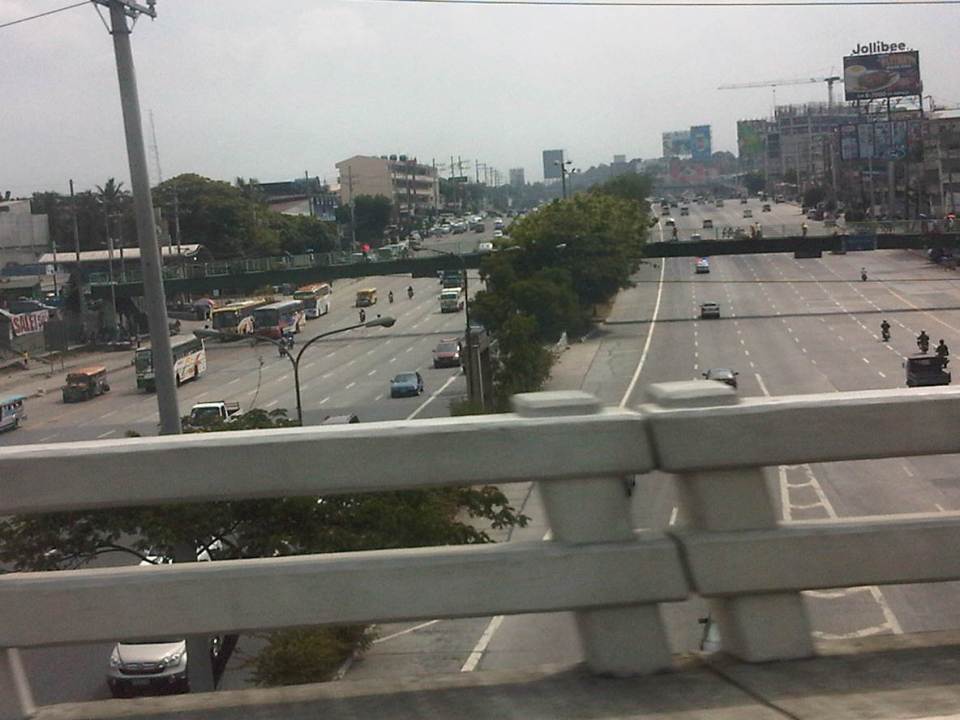 A view of Commonwealth Avenue from the flyover.
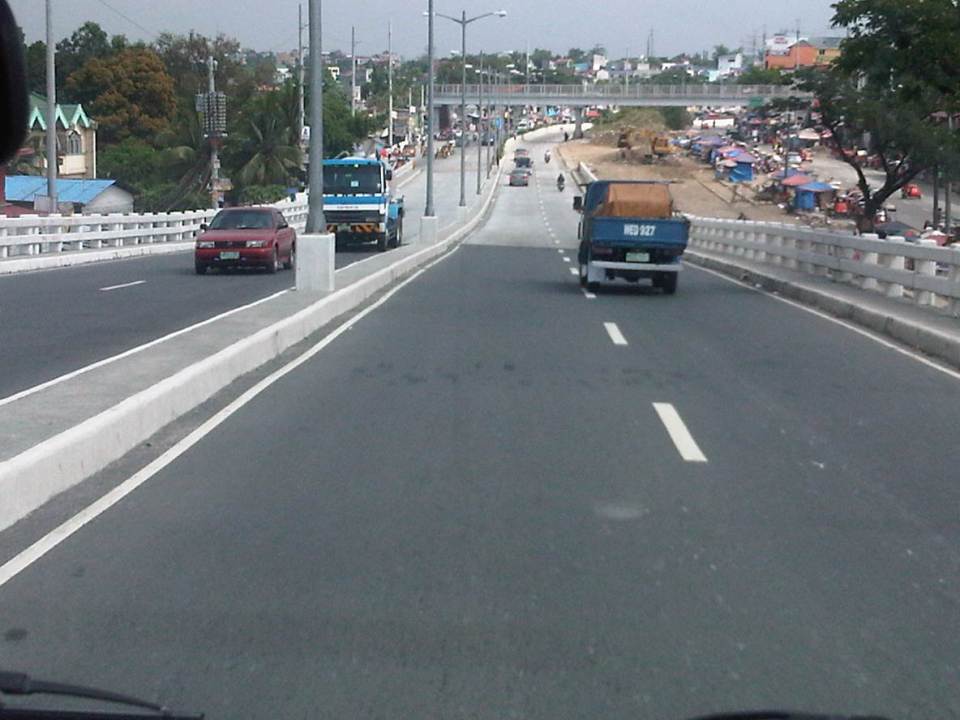 Along the other end of the flyover is Luzon Avenue, which has been widened to accommodate the flyover and the at-grade sections connecting to the QMC-bound side of Commonwealth Avenue.
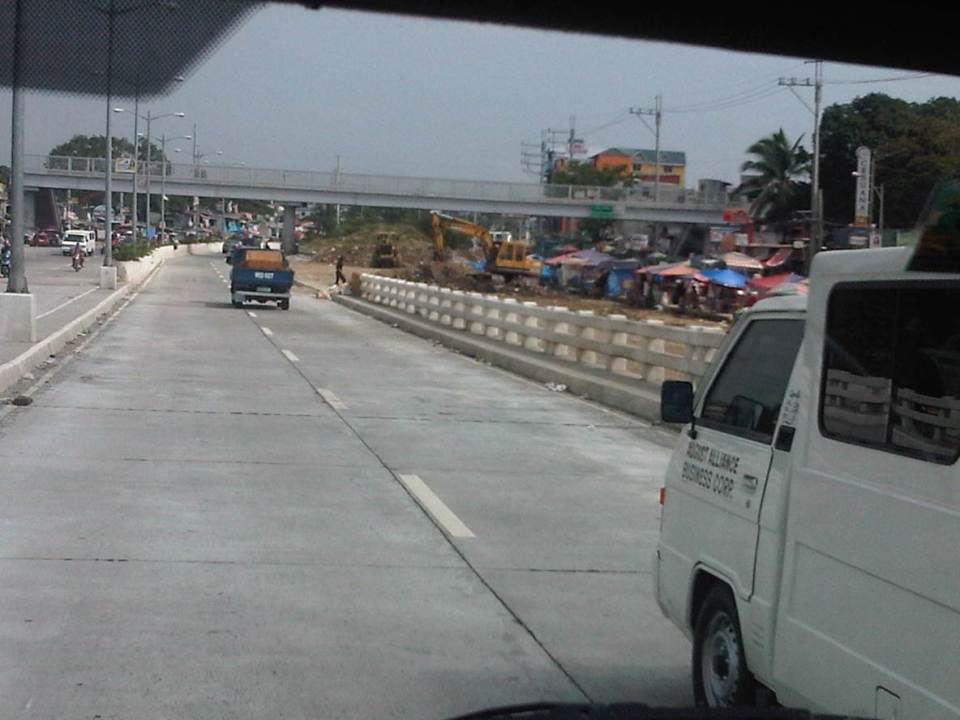 A pedestrian overpass was constructed at the foot of the Luzon Ave. flyover so pedestrians will not cross at this critical part of the flyover when vehicles would typically be picking up speed as they descend (or ascend on the other side) the flyover. There are still construction work along the northbound side of Luzon Avenue.
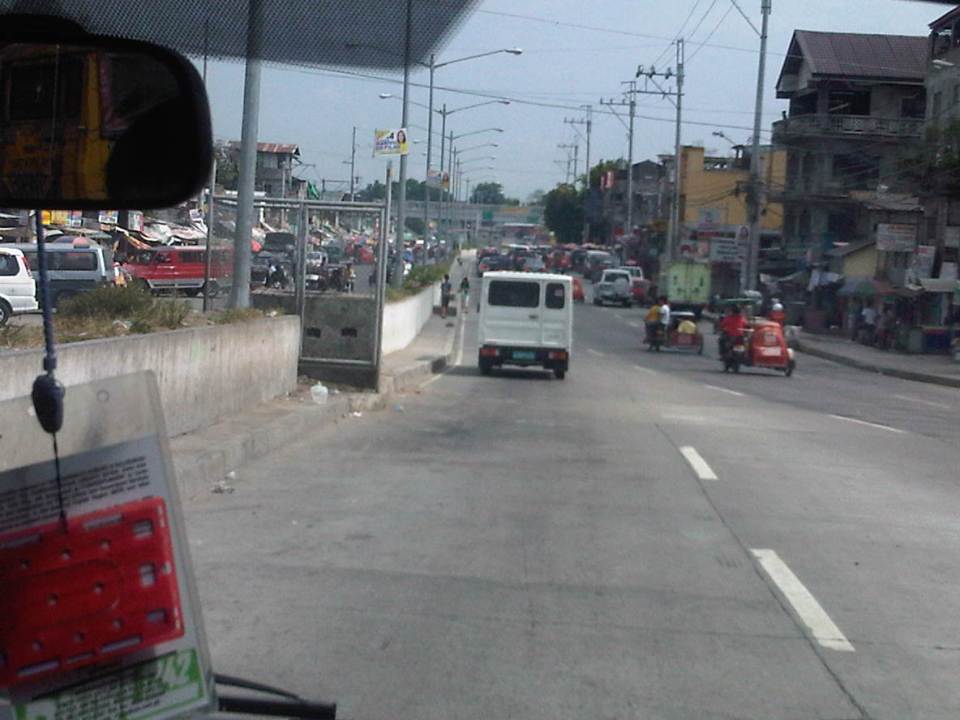 Luzon Avenue, which is a 6-lane, 2-way road divided by a median, is quite crowded with either side of the road occupied mostly by informal settlers. There is also an informal wet market (talipapa) along the road.
 The pavement is elevated compared to the land on either side of the road. There are stores and shops set up by those living along the road.
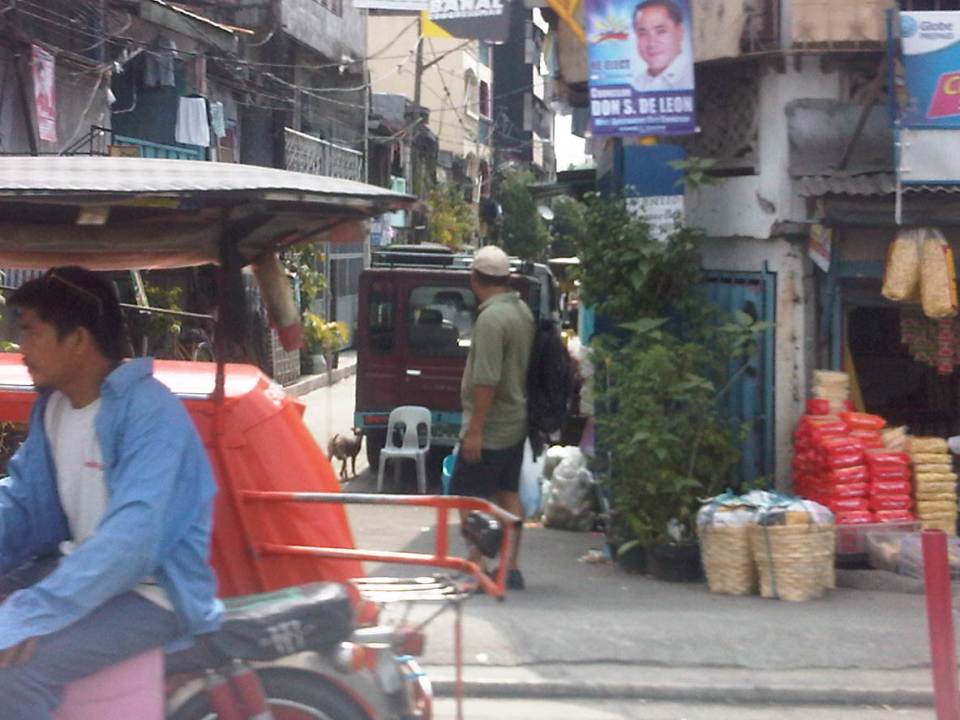 Side streets are narrow and could probably accommodate only cars or small vehicles like tricycles (also shown in the photo traveling along Luzon Ave.
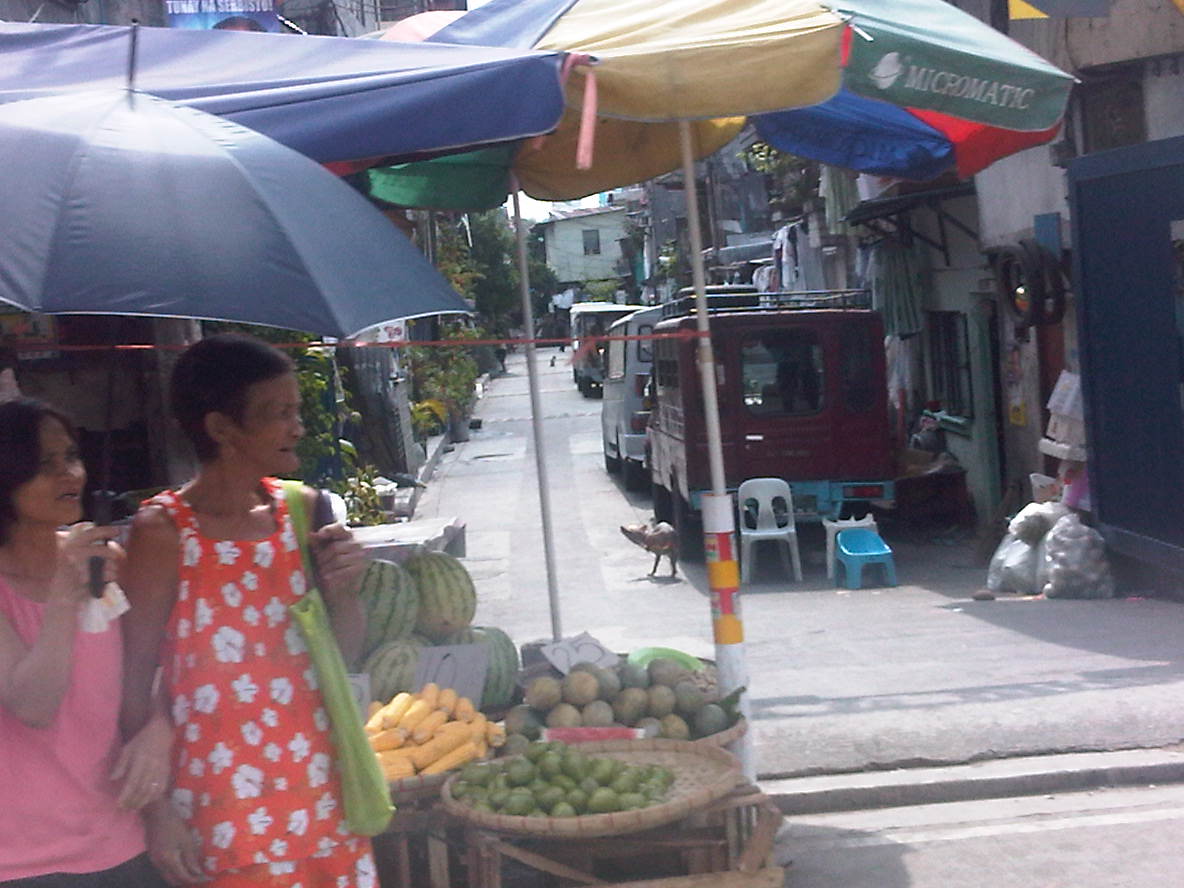 Some stalls are just along the street like this fruit stand that’s already on the carriageway. The photo also shows a better view of a side street with parked vehicles along one side of the road.
 Approach to Congressional Avenue – there is another pedestrian overpass near the junction with Congressional. Note the height of the plant box on the median that is designed to discourage or minimize jaywalking across Luzon Ave.
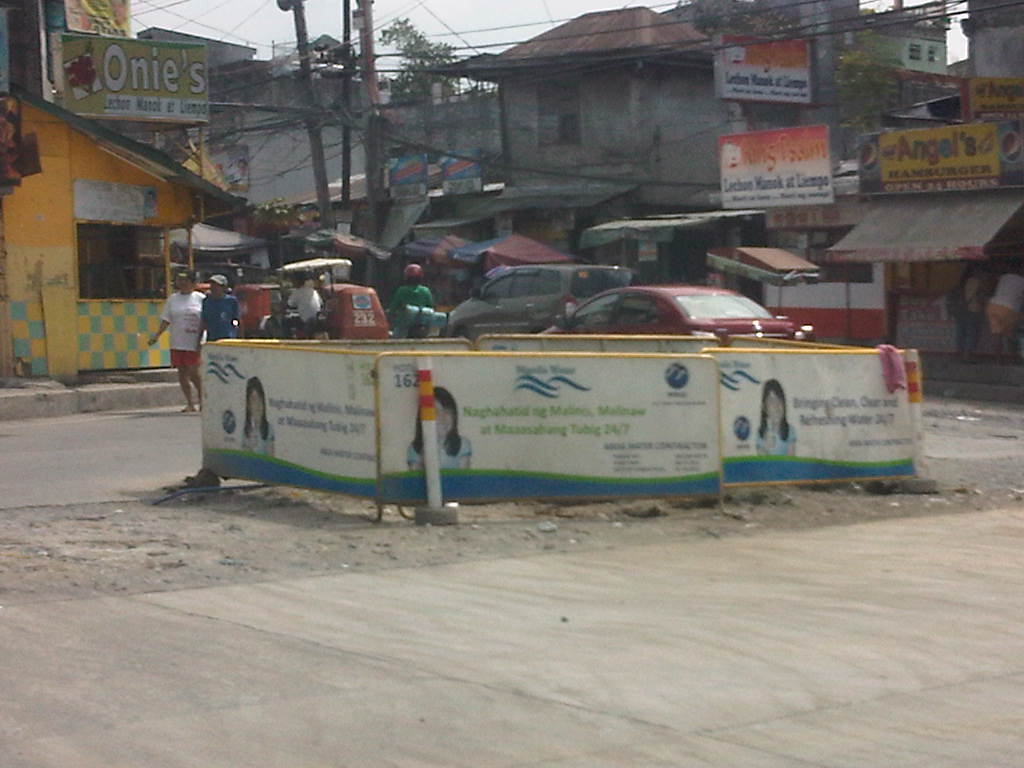 Water works at the junction of Luzon Ave. and Congressional Ave. Luzon Ave. continues as a narrow 2-lane street towards the direction of Bgy. Holy Spirit.
–
 Caught (up) in traffic