
Home » Air travel (Page 7)
Category Archives: Air travel
On delayed flights in the Philippines
I participated in a conference held in Puerto Princesa, Palawan last November and both my flights to and from Puerto Princesa were delayed. The first one was delayed by 1 hour. We boarded on time and there were no announcements of delays. However, we sat inside the plane for about an hour including taxiing towards the runway and then waiting in queue before we were cleared for take-off. The pilot was constantly on the PA system though, informing passengers about the cause of the delay, which was airport congestion. This was a reference to the many take-offs and landings (departing and arriving aircraft) being handled by the airport at the time. It seems air traffic control could not cope with the number of aircraft departing and arriving at NAIA even considering the airport had two runways that were operational (We took off using the secondary runway.).
 Aircraft taxiing towards NAIA’s main runway in preparation for take-off
I won’t mention specific airlines as I think domestic flights by all airlines have been incurring significant delays and not just recently but among the main possible reasons for delays that can be charged to the airline are the following:
1. Airport congestion – This can refer to either the runway or the passenger terminal. However, for the latter case you can have examples of very congested or crowded terminals of airports that have planes taking off and landing on time. Tagbilaran and Roxas Airports are like that, and Mactan (Cebu) and Bacolod-Silay have passenger terminals that are becoming if not already congested. Thus, airport congestion as a reason for delays must be due to runway operations. A single runway airport will handle fewer flights compared to those with multiple runways. Airport runway design and configuration are influenced by many factors but given any single runway in a major airport like NAIA it is already assumed that these factors are already considered in operation and on a typical day under normal or even favorable conditions, the only other significant factor for runway operations is air traffic control. Air traffic controllers would be responsible for guiding arriving flights and clearing planes for take-off. The number of take-offs and landings will also be significantly affected by how air traffic control “queues” planes in the air and on the ground.
2. Too many flights – Airlines tend to maximize the use of their aircraft and seem to be scheduling more flights that they can handle. This results in the very common “late arrival of turnaround aircraft” reason that airlines announce as the reason for delayed flights. Granted, in many cases this is ultimately due to reason #1, it seems that other airlines that have lesser flights also have less problems of this kind. In fact, I have observed that in many if not most instances, international carriers do not incur as much delays as local carriers and among local carriers there seem to be a unanimous observation on which “planes are always late” these days.
It seems at first that the main issue is not necessarily airlines overbooking their flights since air traffic control and the number of runways can be major factors influencing the number of aircraft that can take-off and land during a particular period. However, one particular airline has a knack for offering a lot of flights that they obviously cannot handle with all the delays and cancellations they have been incurring to the consternation of a lot of travelers. Though I myself use the airline often due to the convenience of their schedules and frequencies, I too have been victimized many times of these delays including one flight to Singapore a couple of years ago when, instead of arriving in time for dinner I ended up arriving home just after midnight.
Recently, there have been calls for the airline and others performing like it to be penalized in order for them to realize how much inconvenience they have brought on to their passengers. I think this is right in order to send a clear message to airlines that safety and service come first before profit. Too many flights, no matter how convenient to the passengers in terms of schedule, is not a substitute for good quality service. Being a budget airline also does not excuse it from what a lot of people have branded as crappy service. This mentality of airlines reminds me only of similar mentality among bus and jeepney operators (land transport) but that’s another story.
–
No PAGASA? No problem!
- Weather Underground
- Joint Typhoon Warning Center of the US Navy
 JTWC’s latest information on Hagupit
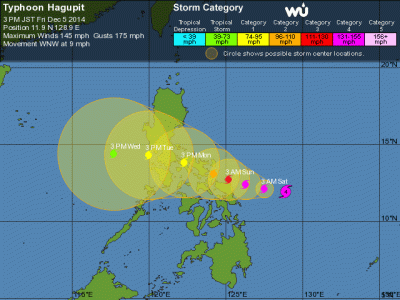 Wunderground’s latest 5-day forecast for Hagupit
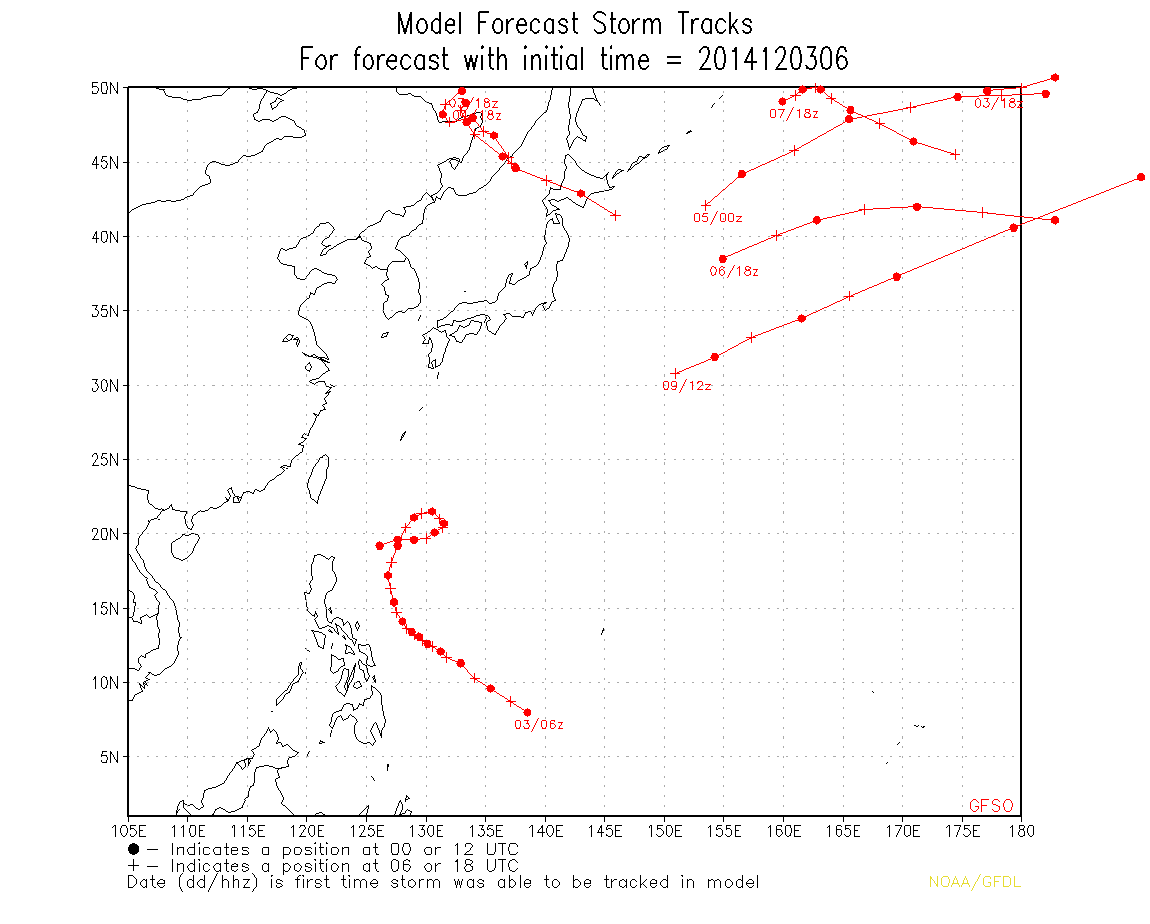 NOAA storm tracks showing current and potential weather systems in the Western Pacific
–
Narita Terminal 2 Arrival
On our most recent trip to Japan, we took Philippine Airlines instead of the usual Delta in our previous trips. For one, PAL offered full service at a competitive price (Delta and JAL were more expensive) and the new schedules meant we could fly to Narita in the morning and arrive there early afternoon, and return to Manila in the evening. This was practically Delta’s schedule. It also helped that PAL was using NAIA Terminal 2 so that meant a better terminal for us compared to the congested and dilapidated NAIA Terminal 1. Of course, there were other choices including ANA, which I would have preferred if only it wasn’t so expensive even compared to JAL. Low cost carriers were also not on our list as we had the budget for full service and we didn’t like the schedules.
We arrived at Narita after a smooth flight and our plane proceeded to Terminal 2, which most Asian airlines use. I have not used this terminal for quite some time now as I usually planed in via Delta or its predecessor Northwest. The last time I was in Terminal 2 was in 1999 when I was returning home to Manila after 3 years in Yokohama, Japan. That time, I used JAL as part of my benefits of being a Monbusho scholar.
 Moving walkway or “walkalator” to the arrivals area for immigration processing.
 A view of aircraft docked at the airport shows a couple of JAL planes and one of Cathay Pacific. I like JAL’s old logo compared to its new one. This retro look gives you a feeling of nostalgia.
 A computer-generated, anime image of an airport staff member greeting arriving passengers to Japan.
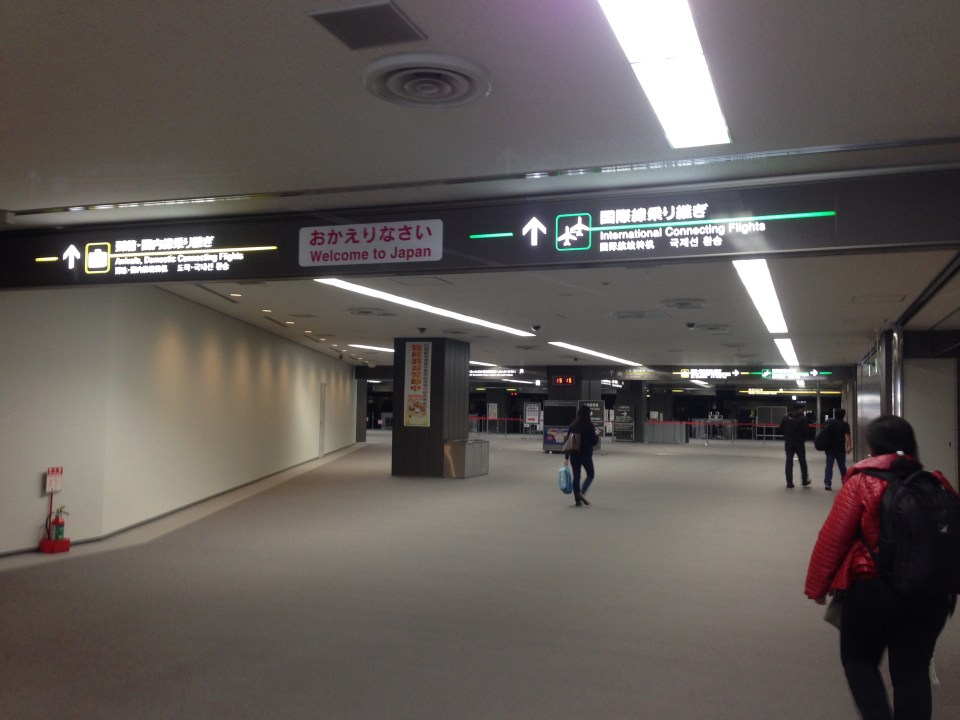 Entry towards the immigration counters
 Past immigration and proceeding towards the baggage claim area.
 Descending to the baggage claim area, passengers are provided information on a huge board on which carousel their baggage will be coming out of. To be sure, ground staff hold a placard directing PAL passengers to the assigned carousel.
 Narita’s expanse becomes more obvious at the baggage claim area.
 Luggage coming out for passengers to pick up from the carousel.
 Ground staff remind passengers to check whether they got the correct luggage from the carousel. Many bags are identical so people should have a distinctive feature on their luggage whether its a tag, sticker, strap or others.
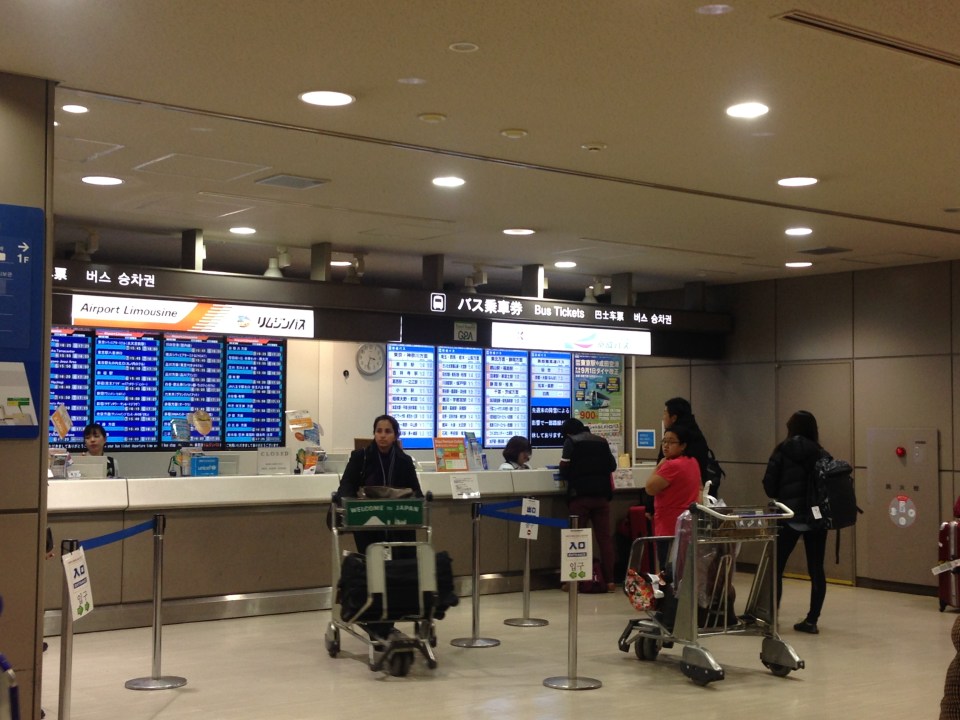 Airport limousine bus counters – there are limousine buses bound for many destinations in the Kanto area. I usually took the limousine bus to get back to Yokohama when I was a student in Japan in the 1990s.
 Keisei Skyliner train counter – the Skyliner is less expensive than the limousine buses and for those who travel light, it is a good option going to Tokyo. The last two stops are at Nippori and Ueno Stations where one can easily transfer to JR or subway lines. Other rail options are JR’s Narita Express (NEX) and JR Yokosuka-Sobu Line’s Airport Narita service. I usually take the latter from Yokohama Station.
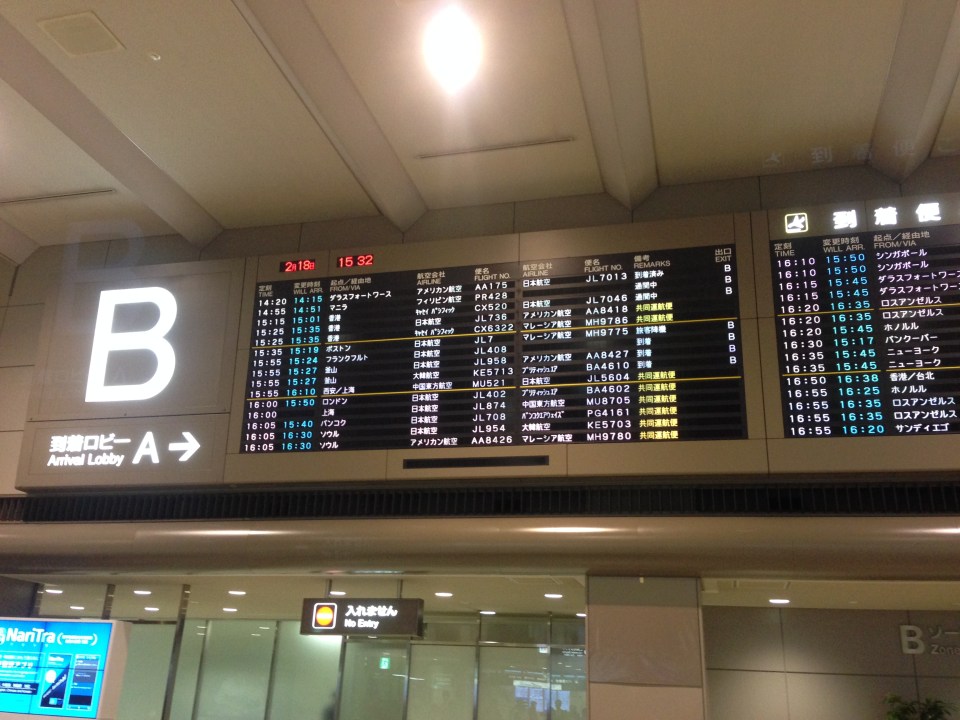 Giant electronic boards at the arrival lobby provide information on flights arriving and departing Narita Terminal 2.
 Our hosts gave instructions to take the limousine bus but part of our group were fetched by car. I was invited to join them because we were staying at the same hotel. The others stayed at another hotel. And so we walked to the upper level of the terminal to cross towards the parking building. The yellow line in the photo is a standard feature of many facilities in Japan that make them PWD-friendly. These are guides for blind people who can use their canes to “feel” the directions.
 Another view of the information board from the upper level of the terminal.
 Quite an unusual description of the parking building levels, which we thought were signature Japanese.
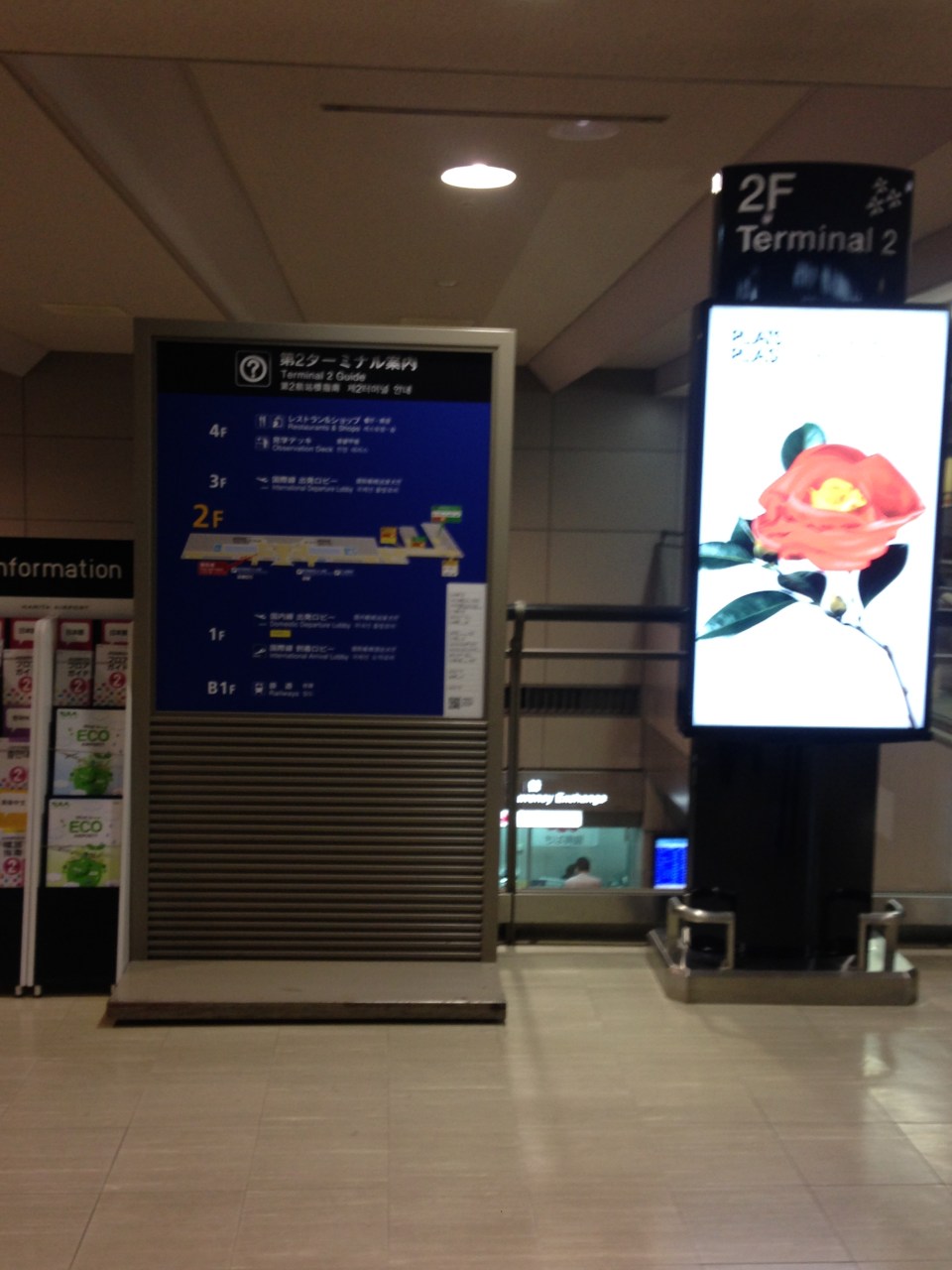 Floor information for Terminal 2
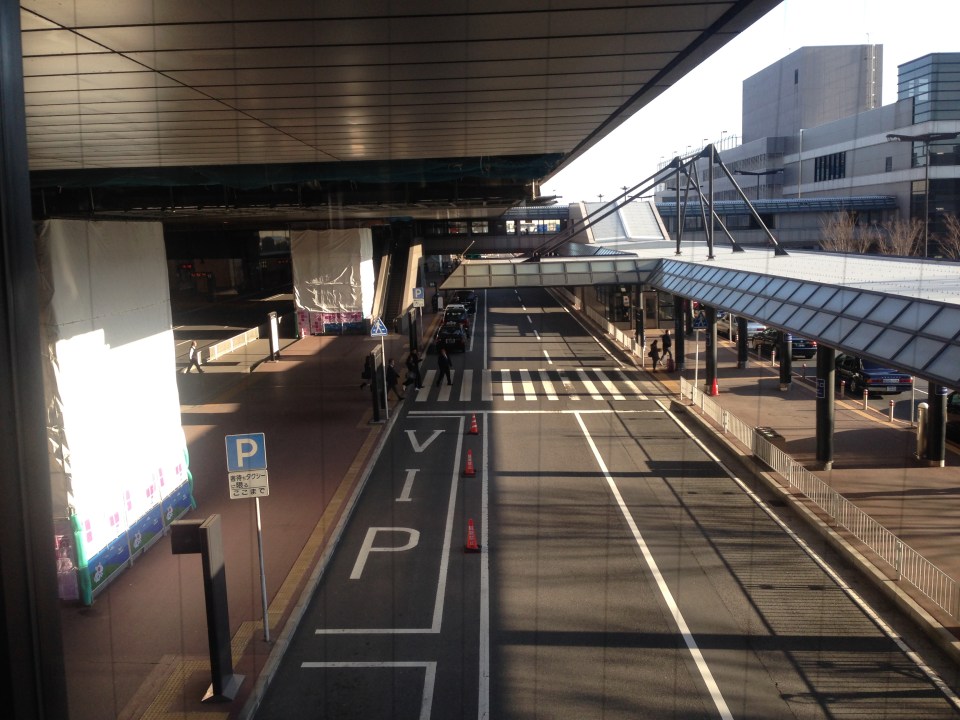 On the bridge from Terminal 2 to the parking building, we have a good view of the driveway and the slots for VIPs.
 Paying for parking at one of the machines at the parking building.
 We were curious about the sign that also mentioned a pet hotel. I guess travelers who didn’t have anyone to leave their pets with at home can now have the convenience of checking in their pets at the hotel to take care of the animals while they were away.
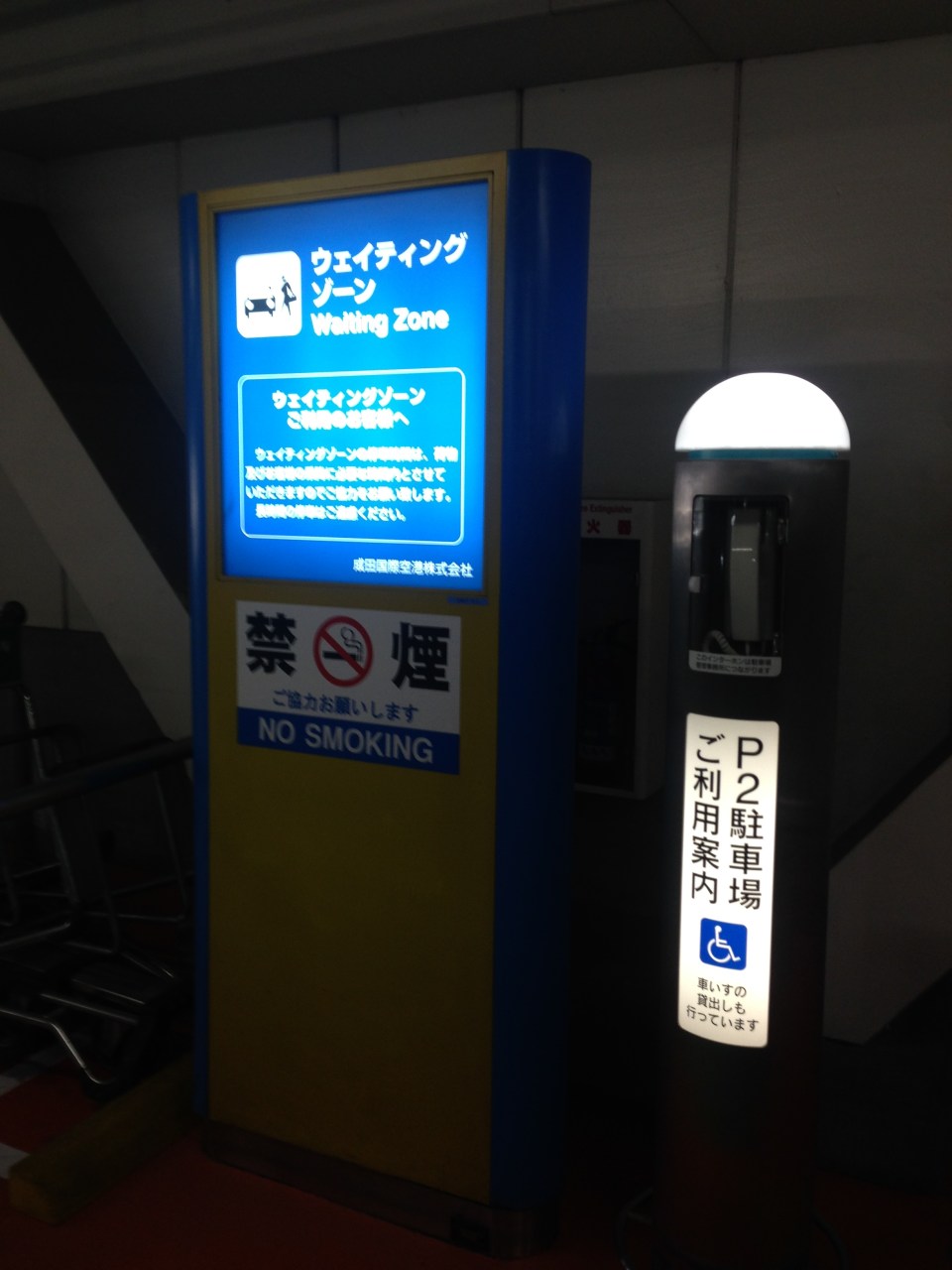 Waiting zone for vehicles – our host went to get our vehicle while we waited at the designated area.
I am already looking forward to a next trip to Japan. Perhaps I will take PAL again in a future flight? Actually, I was a bit disappointed that they used a smaller plane for our flight even if it was a new Airbus A321 Neo. I think I got used to the B747s that Delta and JAL used for their flights (I think JAL and ANA now uses the fuel efficient B777’s while Delta retained its B747s that eventually continue to the US). I think the smaller aircraft by PAL was the result of a combination of cost cutting (fuel-wise) and their increasing the frequency of flights. No matter, if you know that a nice airport like Narita is waiting on the other end of trip, it is a flight worth looking forward to.
–
YCAT – Yokohama City Air Terminal
The Yokohama City Air Terminal (YCAT) is one of two city air terminals in the Kanto area, the other being the Tokyo City Air Terminal (TCAT). I have used both in the past including my first trip to Japan where I was instructed to proceed to TCAT where I met with a good friend of mine who took me to the university I was visiting. The second time I went to Japan, I proceeded to YCAT where eventual friends also fetched me to go to the university where I was to study for 3 years. On this sentimental journey of sorts, I made sure to take a few photos at the YCAT, which I chose over my usual Yokosuka-Sobu Airport Narita train between Yokohama and the airport.
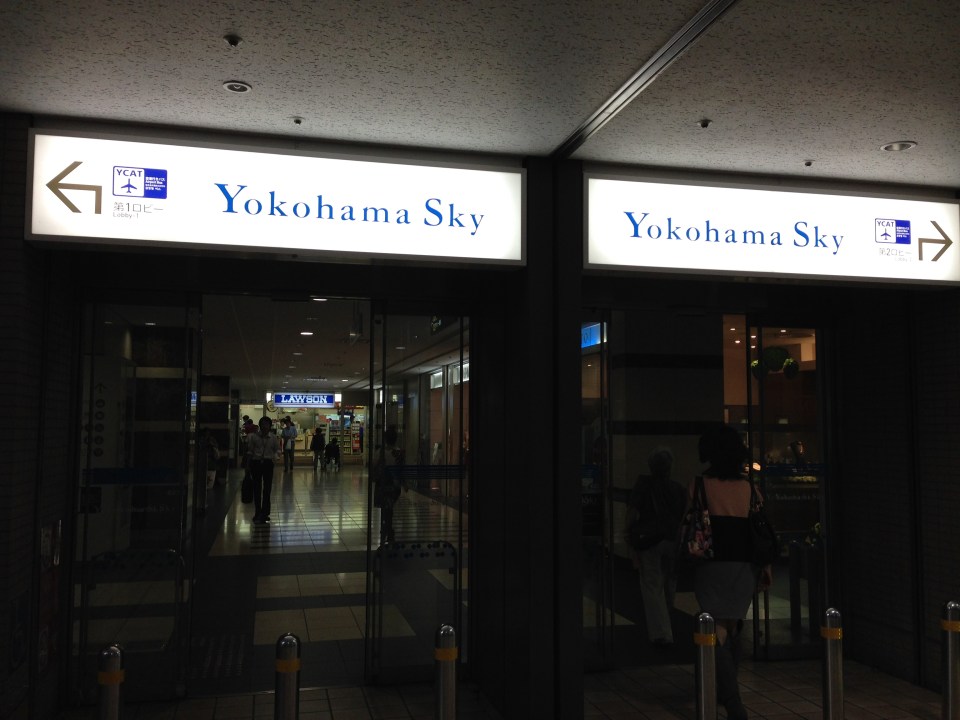 The YCAT is located at the Sky Building, which used to be the tallest building in Yokohama. The building is connected to Yokohama Station (East Exit). Proceeding left takes one to the departure lounge where people can purchase limousine bus tickets. To the right is the arrival lounge where people can wait for passengers arriving from either Haneda or Narita via limousine bus.
 Main entrance to the YCAT right next to a popular coffee shop. Here, one can purchase tickets for Haneda Airport or Narita Airport, exchange currencies and even make some last minute souvenir shopping.
 There are also many vending machines for those who just want a quick hot or cold drink.
 Airport limousine bus tickets can be purchased at these counters. The electronic boards provide information about bus schedules between YCAT and Haneda or Narita Airport. There is also a Travelex counter for currency exchange and a Western Union counter for sending or receiving money transfers.
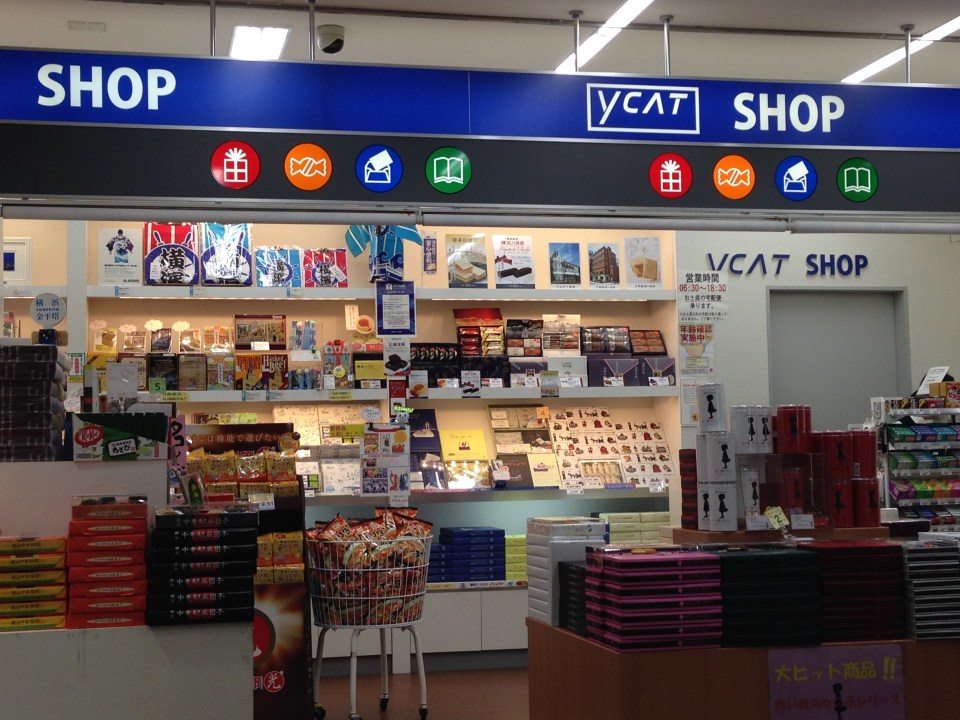 One can make some last minute shopping at the YCAT shop.
 Coin lockers for travelers who might just want to keep their luggage secure while spending a little more time in the area for a meal or some shopping. Note that YCAT is located at the Sky Building, which is connected to shopping malls and Yokohama Station.
 Airport flight information for departures and arrivals.
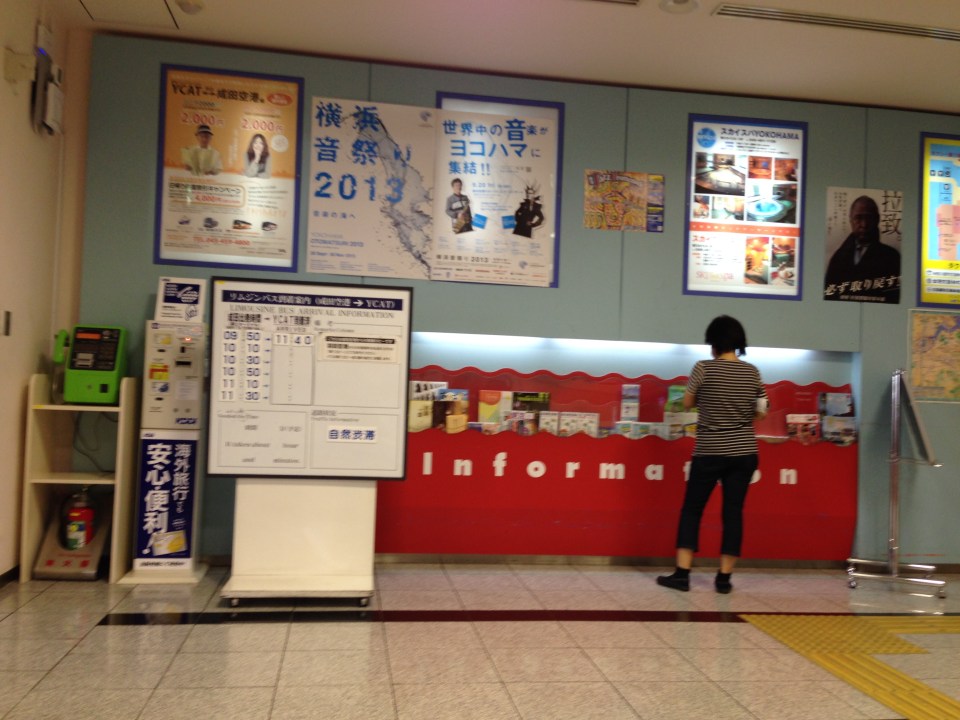 Other information on travel and events at the YCAT include brochures and posters.
 Airport Limousine Bus bound for Narita Airport arriving at the YCAT – luggage are tagged so limousine bus staff at the airport terminals can identify which bags are to be unloaded at which terminals.
 Stop 1 is for Narita-bound buses while Stop 2 is for Haneda-bound buses.
–
Narita departure
I will be traveling to Japan again in the next few weeks and so I felt I had to finish a draft that I started last month about Narita Airport. Departing for Manila after a few days of meetings in Tokyo, I was able to take some photos around the airport’s Terminal 1. Narita was the first large international airport I have been to because my first foreign trip back in the 1990s was to Tokyo. I was impressed by what I saw as a huge terminal compared to what we had in Manila back then, the current NAIA Terminal 1. Following are photos taken during my recent trip to Japan. Note that there are no photos taken in the sensitive areas where the use of cameras are prohibited.
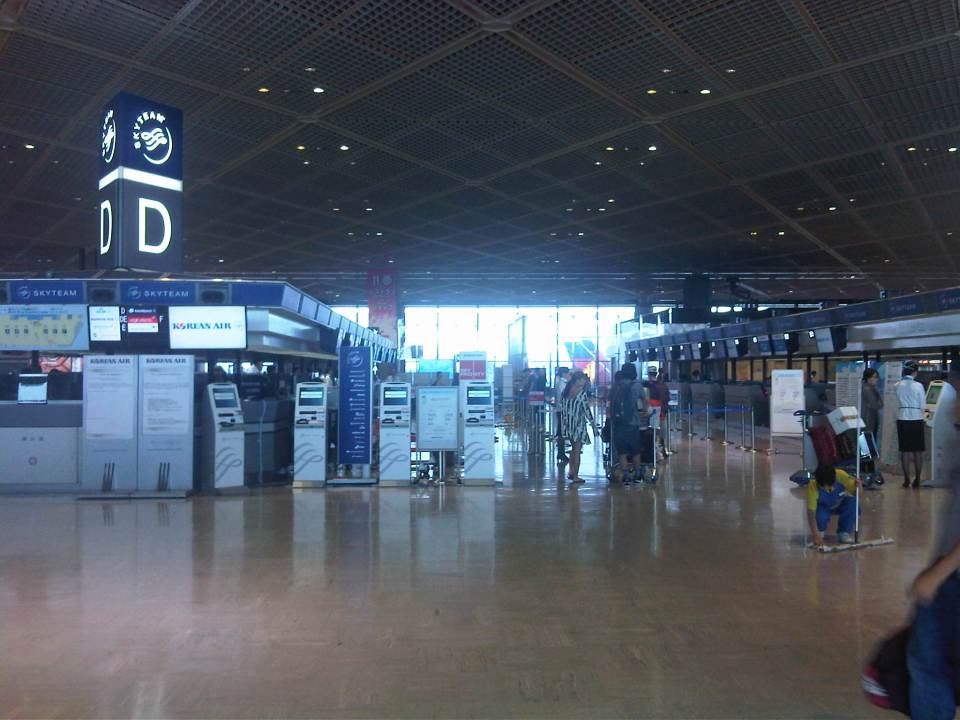 Airline check-in counters at Narita’s Terminal 1 North Wing
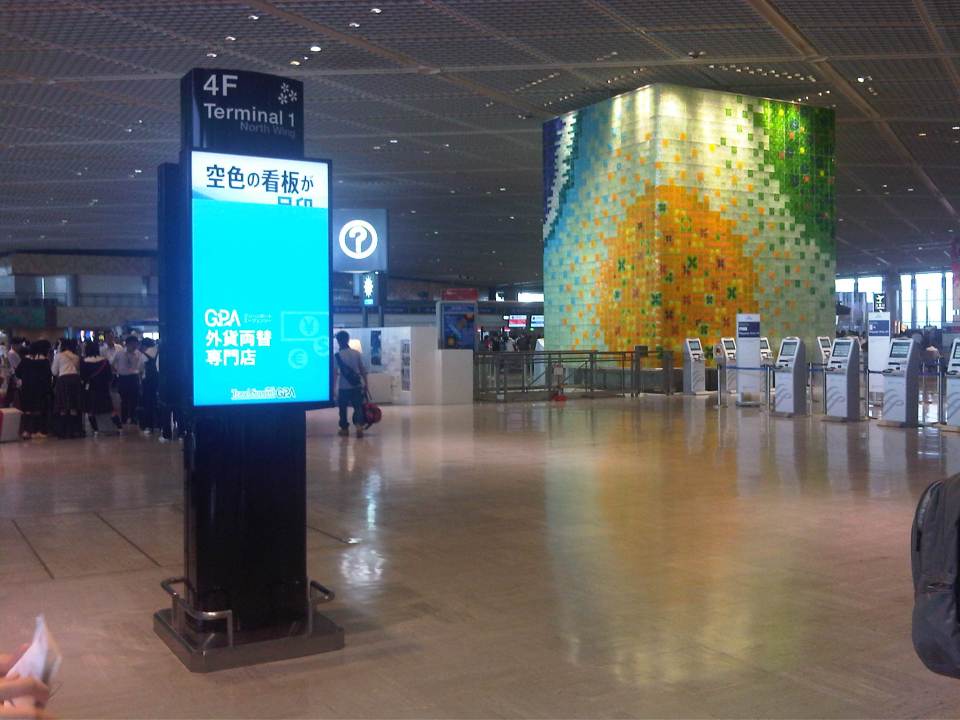 Artistic design of a column at the terminal helps lighten the environment inside the terminal
 Passengers line up to check-in their luggage at the Delta counter
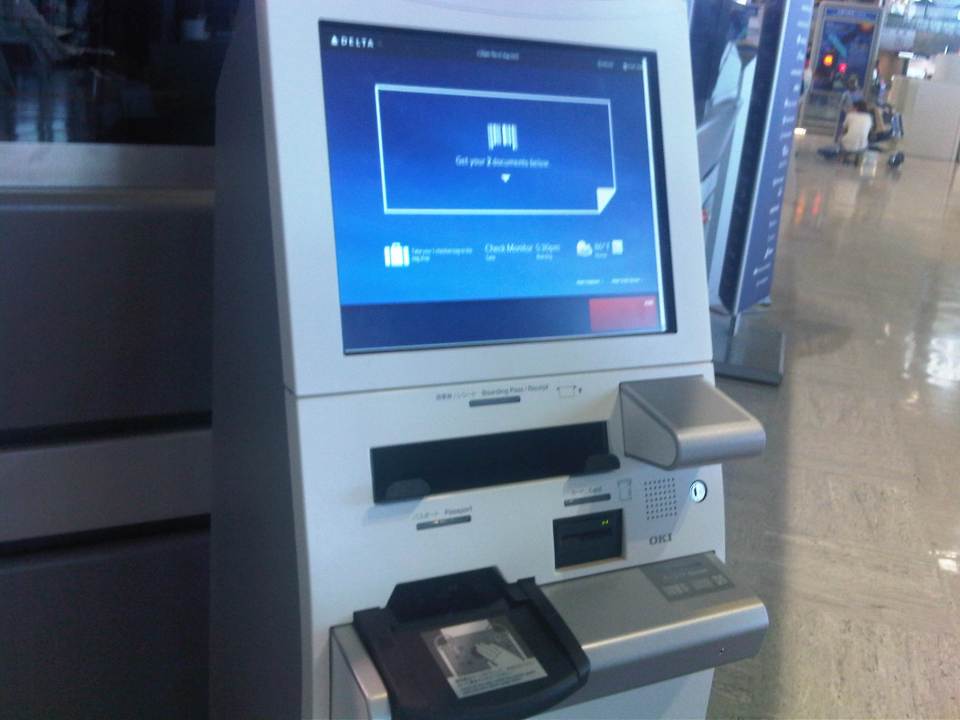 Passengers can check in at one of the many terminals or booths by using their passports and ticket information. If one has not yet selected a seat via online check-in, seats can be selected using the interface.
 Airline and airport ground staff provide assistance to passengers.
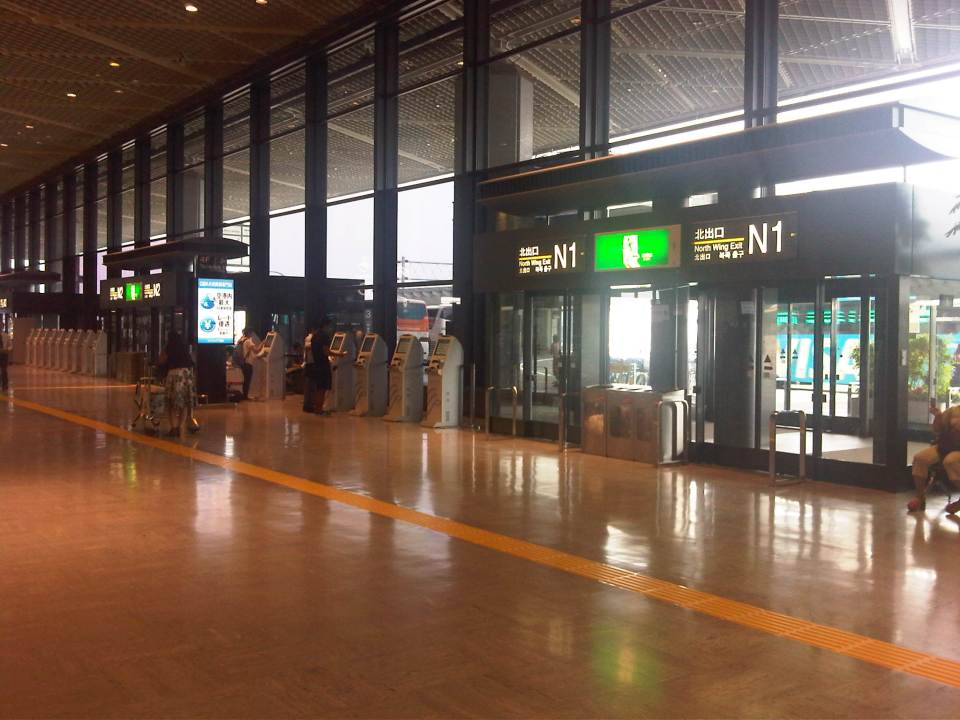 Entrances/exits at the airport. Shown in the photo is a bus parked at the curbside just outside the terminal building.
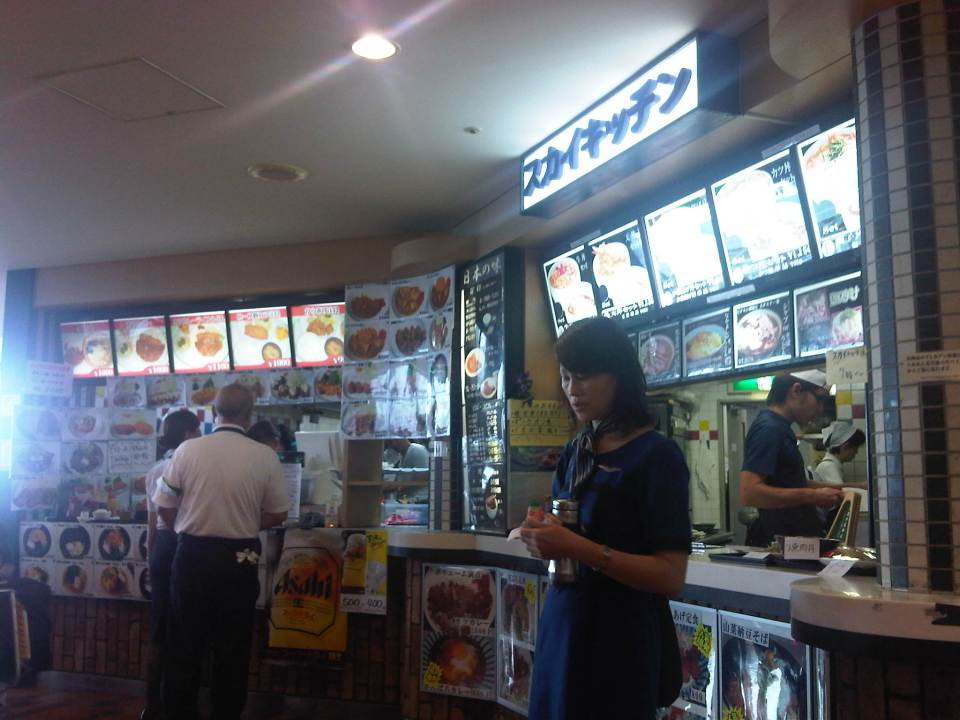 The airport has a nice food court where passengers and well-wishers can have their meals prior to going through immigration control to the pre-departure area.
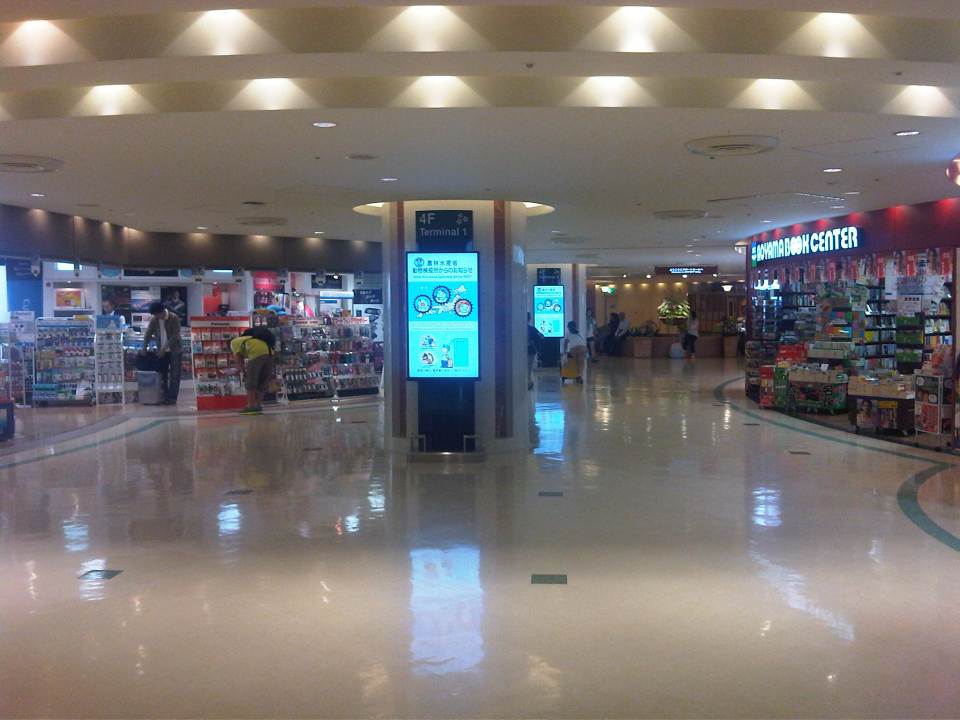 There are many shops at the terminal including those selling souvenirs.
 Shops include those selling Japanese crafts and clothing. Traditional crafts like silkware, woodcrafts, papercraft, etc. are popular souvenir items.
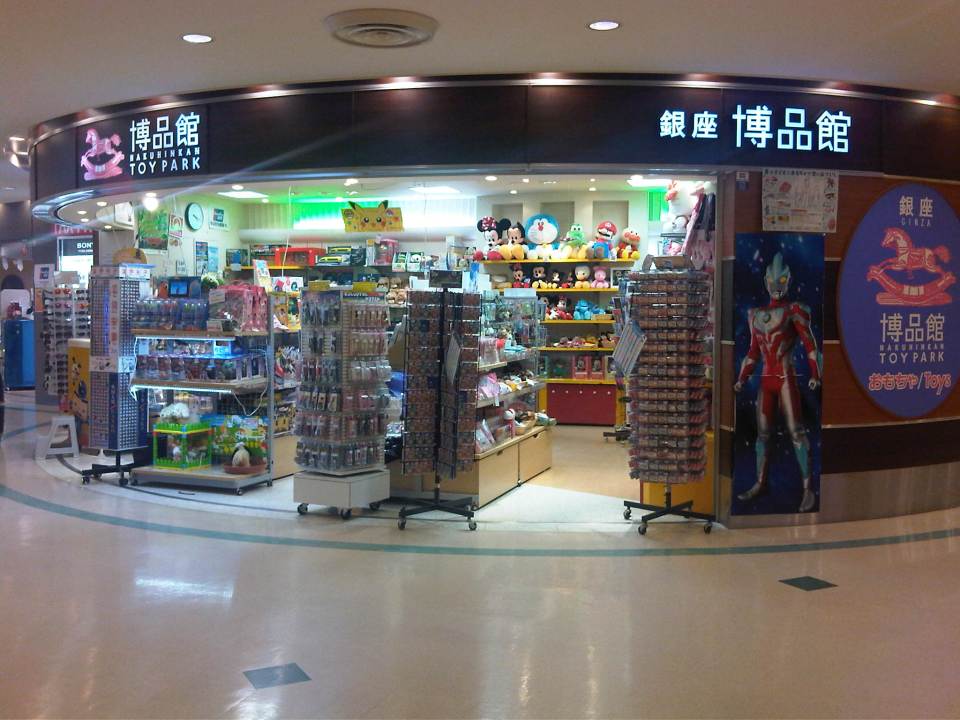 Toys, especially those from anime characters, are very popular with the younger people and children. I myself bought a few souvenirs with characters from Miyazaki’s Totoro (Studio Ghibli) and, of course, Hello Kitty for my niece. There are also Disney and Nintendo themed toys and other items at these shops.
 Information boards are strategically located around the terminal to guide passengers.
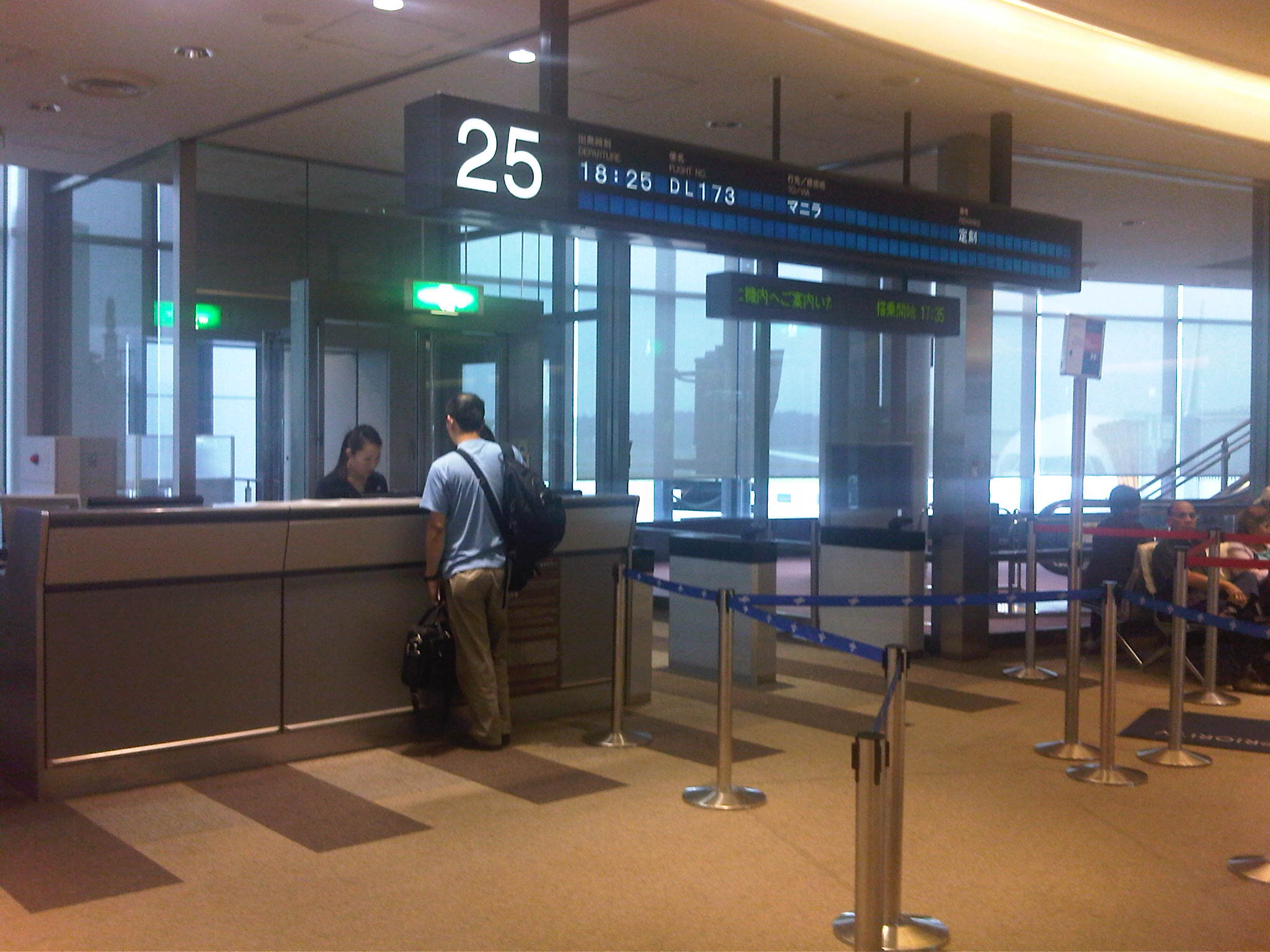 Counter at Gate 25 of Narita Terminal 1’s North Wing.
I have used only five airlines in my trips to Japan; four if one considers Delta’s acquisition of Northwest. These are Philippine Airlines, Northwest/Delta Airlines, Pakistan International Airlines (yes, it was a practical choice back in the 1990s when I was a student in Japan), and Japan Airlines. During a couple of trips within Japan, I took the domestic flights on All Nippon Airways (ANA). Perhaps I will try ANA in my next trip to Japan as the schedule for its flights are good (morning flight to Narita and evening flight to Manila) and the airline uses NAIA Terminal 3, which means its more convenient than the farther NAIA Terminals 1 or 2.
–
The positive impacts of direct EU flights from the Philippines
It’s all over the news since evening yesterday – the European Union’s lifting a ban on direct flights from/to the Philippines to/from its member countries. While the decision is limited to legacy carrier Philippine Airlines (PAL), it is quite symbolic of gates (and not just windows) of opportunity opening up for the country particularly in terms of tourism and other businesses. It is no secret that the Philippines has been pushing for more tourism from abroad, knowing that there is vast market out there who would be willing to spend money on vacations to attractions in many parts of the country.
These attractions include currently popular destinations like Boracay, Palawan (including Coron), Mindoro, Batangas, Cebu (Mactan, Bantayan, Moalboal, Camotes), Bohol (Panglao), Surigao (Siargao) and Davao (also Samal). There are also many emerging destinations for international tourists like those in Ilocos (Pagudpud, Saud, etc.), Cagayan (Sta. Ana, Palaui Island, etc.), Aurora, Bicol (Caramoan, Misibis, Bagasbas, Calaguas, etc.), Guimaras, Siquijor, Negros, Mindanao and so many other attractions in the other provinces. Obviously, that was not an exhaustive list and one would eventually get tired Googling so many places to see around the country. I purposely mentioned “international” here as I would like to believe that local tourists (i.e., Filipinos) have already discovered many of these emerging destinations that are only being developed now judging by the photos being posted on social media, the amount of info now available about so many destinations when you use the search engines, and the continuing aggressiveness of local airlines in offering promotional fares while also maintaining high frequencies to many cities.
Increased tourism arrivals would definitely have wider impact on a lot of businesses and not just those directly dealing with the visitors (i.e., hotels, airlines, etc.). The required logistics will tell us, for example, that agriculture and fisheries sectors will also benefit as they will supply the food required by tourists. Retail will also benefit as it is inevitable for people to make purchases like souvenirs and other items (need or want) during their stays. I had written before about the benefits of a healthy competition among local airlines in the Philippines and the winners are practically everyone and not just the tourists. It should be noted here that the number of Filipino Overseas Foreign Workers (OFWs) and their families along would make direct flights worthwhile for PAL.
Offhand though, this development regarding direct flights to Europe for PAL should increase the already tremendous pressure on government to provide the transport infrastructure to handle tourist arrivals. These would be airports, ports and roads that are necessary for smooth travel across the country and not just for our international gateways in Manila, Cebu, Clark and Davao. These gateways, after all, provide a first impression of the country, and I would like to see NAIA Terminal 1, for example, finally getting the upgrade that should have been done so many years ago. Perhaps, the demand translating to more passengers to be handled by our gateways will increase further should approval be granted for Philippine carriers to serve more US destinations. That is not far-fetched given the proverbial green light from the EU for PAL.
–
Near miss
The crash by an Asiana Airlines B777 in San Francisco reminded me of an experience I had in 2011 aboard an Asiana flight from Busan to Manila. Here is the account I posted elsewhere after that experience in 2011:
Lost in the past days’ heavy rains and the resulting floods that threatened to enter our home last Friday night was the close call I had last Thursday night as I returned from Korea. I had just attended the 9th International Conference of the Eastern Asia Society for Transportation Studies (EASTS) held in Jeju, Korea. From Jeju, I took the Air Busan domestic flight that was codeshared with Asiana Airlines to Busan, where I was to connect to Asiana Airlines flight OZ 705.
I had a long layover at Busan and asked for information about the city and what I could do for the 7 hours available to me prior to my flight back to Manila. I had already checked-in my baggage so I was practically unencumbered to move about. Unfortunately, the transit system from the airport to downtown Busan was not operational (surprise!) and I decided that the trip downtown where I would just probably walk around a mall was not worth it. I thought I would just end up spending on unnecessary shopping or dining.
As I entered the departure area after the routine immigration process, I proceeded for some Duty Free shopping for pasalubong. Afterwards, I took advantage of the free internet services at the airport, replying to emails received that day. There was no free WiFi at the airport so I had to make do with the terminals made available to departing passengers near the airline lounges. Afterwards, I proceeded to the gate assigned to our flight. This was about 4 hours prior to the tentative boarding time indicated on the electronic signboard near the gate.
As I had quite some time before my flight, I tried to catch up on the latest issue of Wired magazine that I had brought along specifically for the long lay-over. It was while I was reading that I noted an announcement for an Asiana flight to another Southeast Asian city being delayed due to technical problems with the their aircraft. I also noticed upon looking around outside the terminal that quite a few planes were sitting out from the terminal where passengers were brought to the aircraft by bus. I had experienced this before when our aircraft arrived in Jeju the Monday before, and at NAIA Terminal 2 in past domestic and international flights that couldn’t be accommodated at the terminal due to congestion. It was then that I noticed the Asiana Airlines Airbus A320 sitting across the terminal, and it looked like it was being serviced based on the vehicles parked beside it and the activity I could see from where I sat. I assumed that this was the aircraft that was supposed to be used by the delayed flight announced on the airport PA system.
A few minutes later, however, the airport PA announced that the delayed flight was now boarding. A while later, I saw an Asiana aircraft taking off, about 45 minutes delayed from its original flight departure time. The other aircraft still sat where it was, and still apparently being serviced. I noticed later that there were no other Asiana aircraft arriving or departing prior to our flight though there were many Korean Air, Air Busan and Jeju Air planes arriving and taking off. I also saw that a PAL flight left for Manila ahead of us and a Cebu Pacific flight left for Cebu one hour before ours. That was when I suspected that the plane sitting from across the terminal would be our aircraft for the trip to Manila.
Upon boarding the aircraft, we already noticed that the airconditioning was off along with the plane’s engine. This was already unusual for me considering a plane that was supposed to take off within the next 20 minutes normally had its engines running already. The Koreans on that same flight apparently were not pleased with the conditions as the cabin became warmer as more passengers settled in their seats for the flight to Manila. Not a few were already voicing their displeasure and were doing so in a way we usually see on TV. It seemed to me that they were already berating the crew. When the pilot started the plane’s engines, the cabin suddenly became dark and a weird sound was heard from outside the plane. Minutes later, the pilot announced that the plane was having problems with its electrical system and we had to wait out for it to be repaired. What followed were more complaints and possible offensive words from the Korean passengers who didn’t like the idea of being delayed. We were, after all, originally scheduled to arrive in Manila at 12:00 midnight. Any delay meant we were arriving early morning of Friday.
Abotu 30 minutes later, the pilot again attempted to start the plane and for the second time, the electrical system failed. This resulted in what I thought were insults and other offensive words from the Korean passengers. I could see that the flight attendants were already quite embarrassed and they could do nothing but try to assuage passengers on the situation. I was already thinking about whether we will be asked to deplane and wait our for our plane to be fixed or another aircraft to take its place. No such announcement was made and we had to wait it out for another 20 minutes. I thought that it was good though that there were cooler heads among the Korean passengers who were able to calm down others who were already threatening the pilot and the crew due to the displeasure about the situation.
The third time around, the plane finally responded and we were able to taxi and take-off without any hitch. The pilot continued to apologize even after take-off and assured everyone that the electrical system was repaired. Nevertheless, I could not sleep in the plane no matter how hard I tried to as each shake and rumble due to turbulence made me think about the possibility that the plane’s electrical system will fail, resulting in a crash. It was no light matter considering that we were traveling 3.25 hours between Busan and Manila, and we will be flying between two typhoons including one whose path was to cross ours. Such assured us of much turbulence throughout the flight including a couple that made me quite nervous as I could not even see the plane’s wings from my window seat due to the thick clouds around us. The only thing I could do was to pray silently that we don’t have a breakdown in midflight.
I was only able to relax when we finally landed in Manila. In fairness to the pilot, it was one of the smoothest landings I ever experienced even despite my being too conscious of the turbulence throughout the flight. Yet, my worries were renewed when the the cabin blacked out momentarily after we stopped at NAIA Terminal 1. I could not help but think about what could have happened if this occurred earlier while we were still in the air. Moments later, my suspicion was confirmed by an airport supervisor who was going around the conveyor belt telling Filipino passengers that our bags will be delayed due to the difficulties experienced by ground staff in opening our plane’s baggage compartment. I could not help but feel relieved that I “survived” that flight. Perhaps it was my prayers? My faith? No matter. I am truly thankful and grateful to the One Who watches over us and did so formally while in Church this morning to celebrate the feast of Corpus Christi.
–
Tacloban Airport arrival
After landing at Tacloban Airport during one trip last April, I took a few photos as our plane was taxiing towards the airport terminal. Following are those photos with annotations/comments.
 A view of the runway as our plane turned to taxi towards the airport passenger terminal. The terminal is somewhat visible in the photo. The control tower can be seen just to the right of the Cebu Pacific plane that arrived ahead of us.
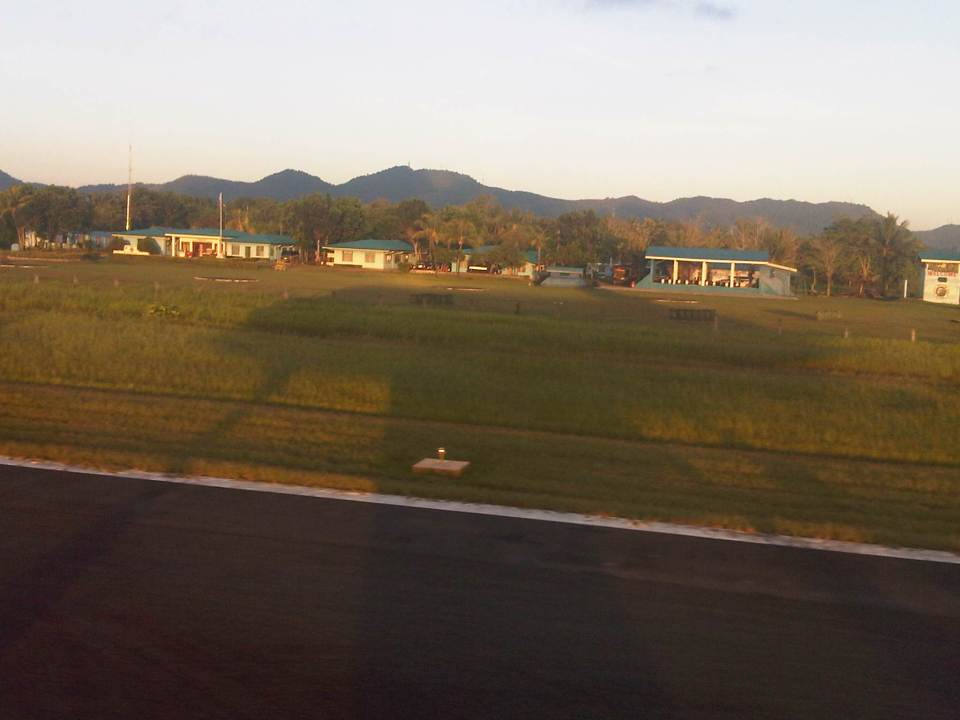 Philippine Air Force buildings at the Tacloban Airport – you tend to wonder how we can defend our country when there are no aircraft at an air force base facing the Pacific Ocean. I remembered seeing impressive planes and helicopters of the Japanese Self Defense Forces and US Marines lined up along the tarmac at Okinawa.
 Fire trucks and other emergency vehicles are always ready (SOP) for whatever incident may happen during aircraft take-offs and landings. You just wonder if they have sufficient skill and equipment to handle the more serious cases.
 Air traffic control tower at Tacloban Airport
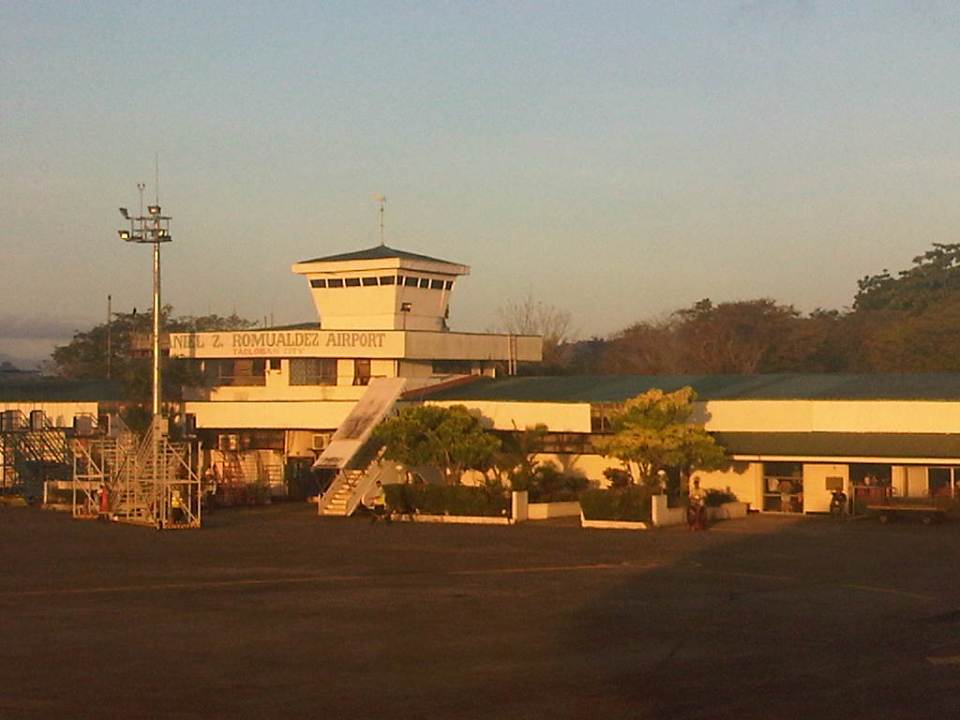 The Daniel Z. Romualdez Airport terminal building
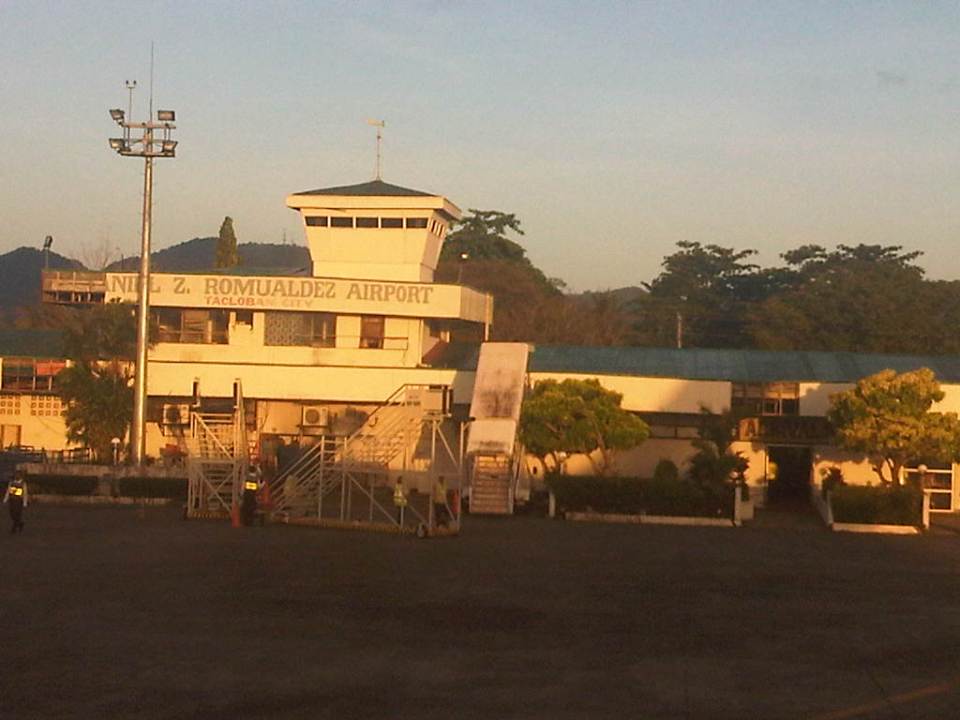 From the looks of it, the terminal has seen better days and badly needs repairs/renovations.
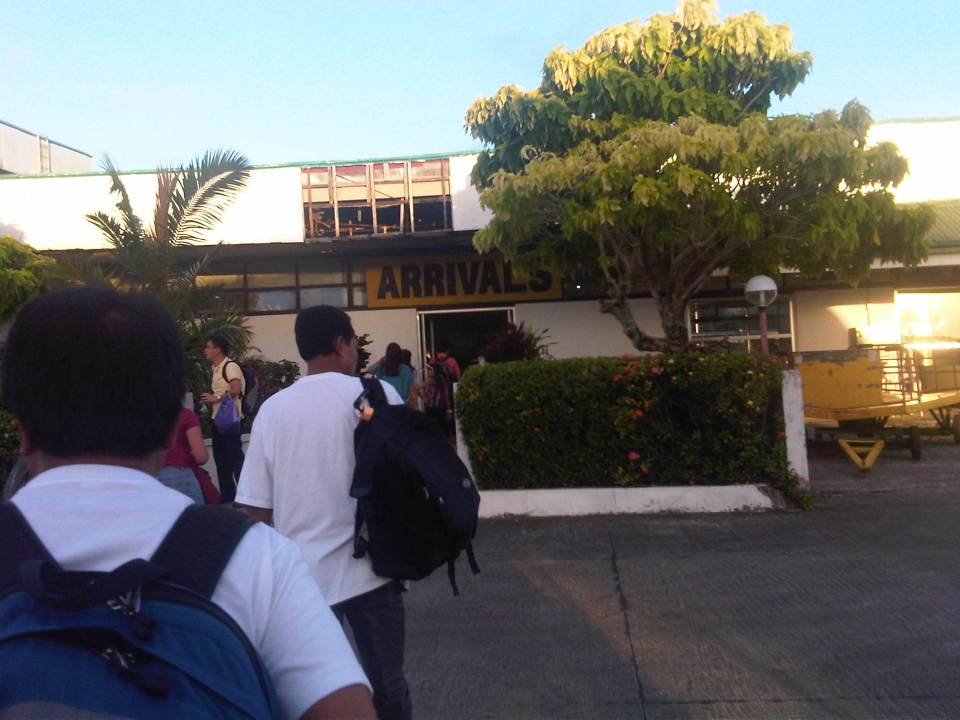 Passengers file towards the arrival area to await their baggage before exiting the terminal to proceed to their respective destinations. Many passengers may not necessarily be heading to Tacloban or other towns in Leyte but will cross over to Samar, which is physically connected to Leyte via the San Juanico Bridge. Tacloban has more regular flights in the region and is the best bet for people opting for flexibility in their travel schedules.
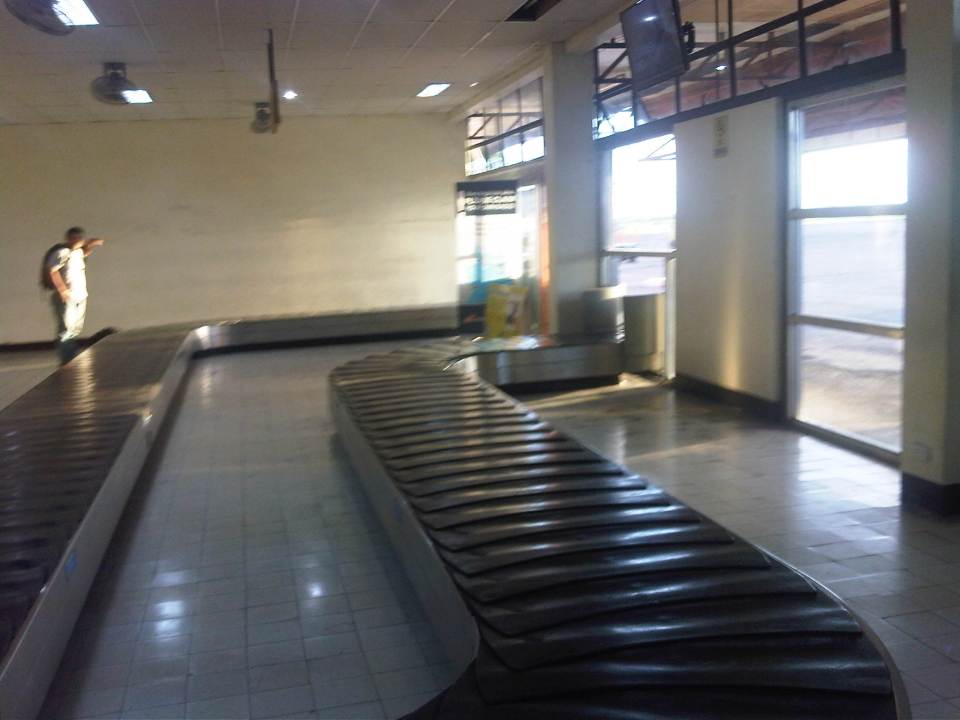 Baggage claim is similar to other old airports around the country. With passenger arrivals well above 1 million per year, Tacloban, which is the principal airport in Region VIII (Eastern Visayas), needs an upgrade.
–
Mactan Cebu International Airport – Take 2
I haven’t been able to get decent photos inside Mactan Cebu International Airport (MCIA) in previous trips to Cebu. And so, when I finally had the opportunity recently, I wasted no time taking a few photos inside the terminal. MCIA is frequently in the news these days as its proposed expansion is being bidded out. The airport is the second busiest airport in the country after Manila’s NAIA; serving more than 6 million international and domestic passengers in 2011. This will continue to increase as Cebu develops further in terms of business and tourism.
 Check-in counters for Philippine Airlines
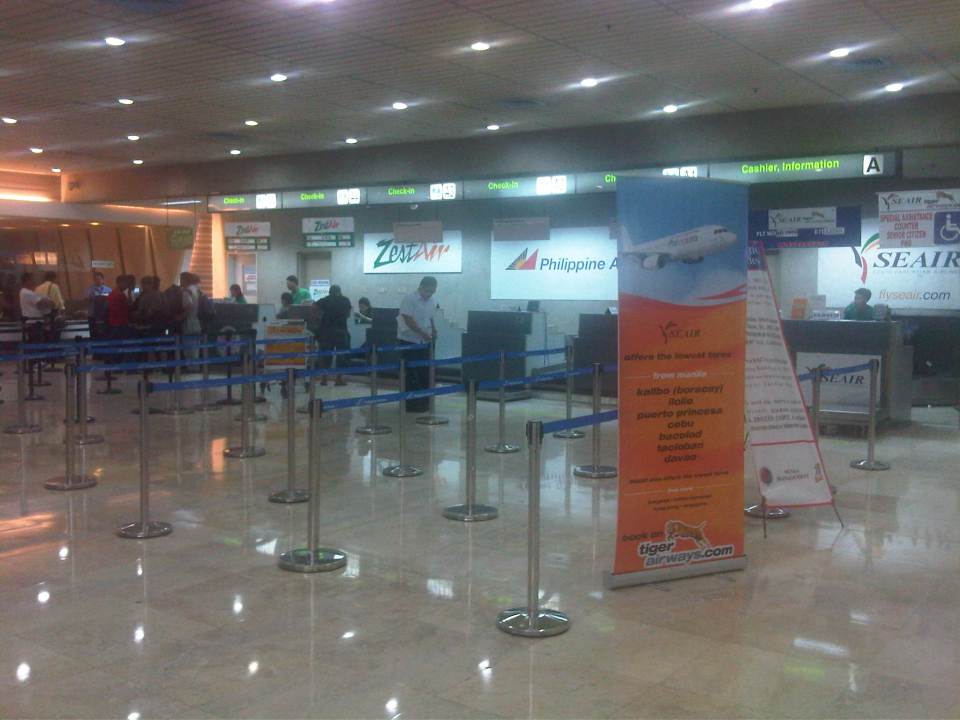 The check-in counters for Zest Air (formerly Asian Spirit) and Seair (now operated by Tiger Airways) were practically beside PAL’s. The PAL counters between Zest Air and Seair used to be Air Phil Express counters. The latter is now known as PAL Express, PAL’s repackaged budget airlines.
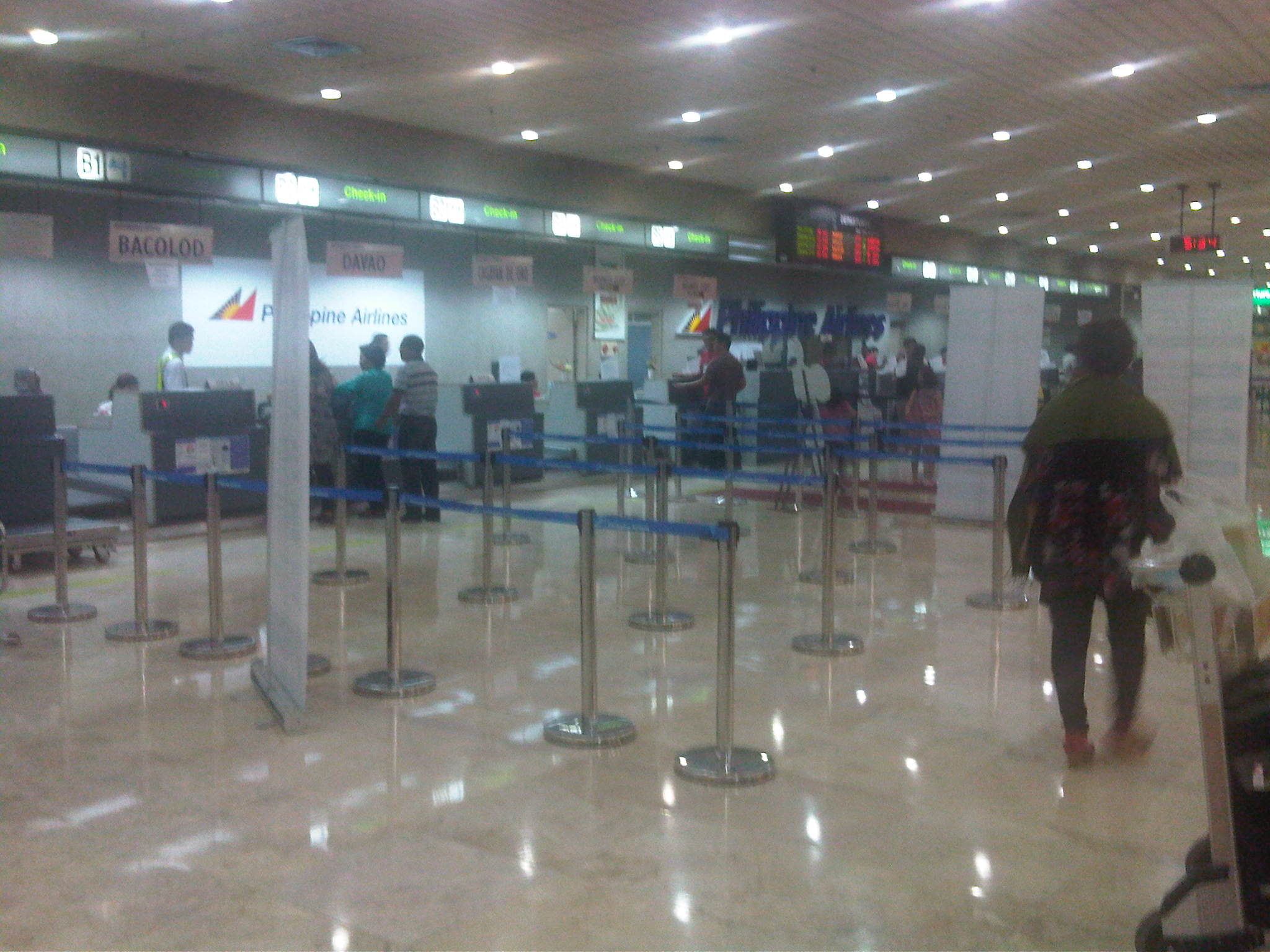 Cebu connects with many other cities in Visayas and Mindanao. The number of domestic flights are comparable to Manila and there are destinations in Mindanao that do not have direct flights connecting to Manila. Instead, one would have to fly via Cebu or Davao.
 Information on designated terminals for flights to and from Manila. PAL subsidiary Air Philippines, which became Air Phil Express and now PAL Express used to fly out of NAIA Terminal 3 with PAL exclusively using Terminal 2. With the re-organization of PAL and its more aggressive approach at present, the airline now seems to have expanded and is now competing with Cebu Pacific for space at Terminal 3.
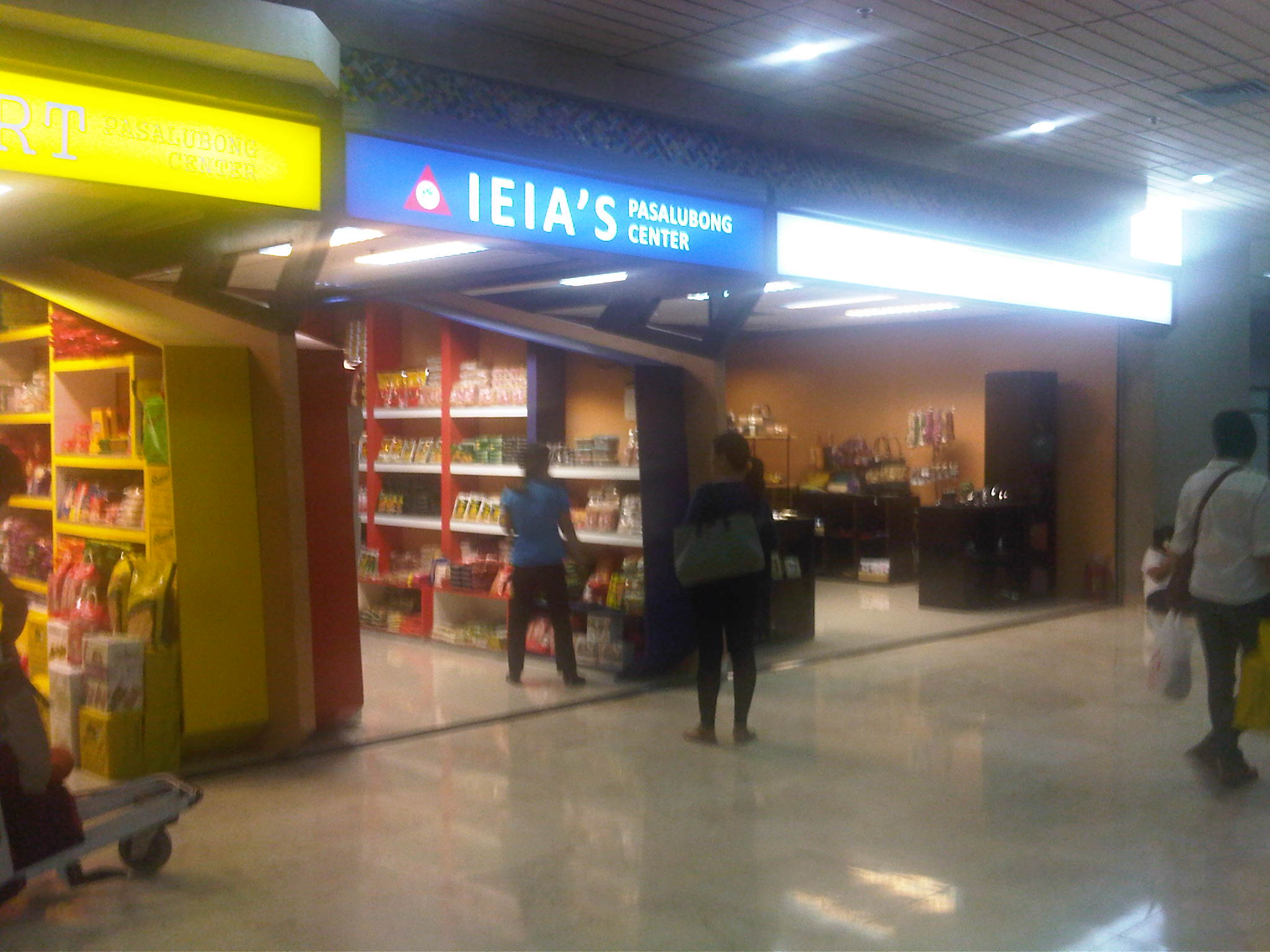 There are many souvenir shops at the airport, many selling food items like the popular dried mangoes, otap, rosquillos, and dried sea food. Popular brands are Titay’s and Shamrock. The items at the shops at the airport are priced higher so it is advisable for people to purchase souvenirs at local shops or supermarkets in the city. Titay’s and Shamrock have their own shops in Cebu and Mandaue. Dried fish is best bought at the market in Cebu (Ask your driver to take you to the “tabuan” market.).
 Islands Souvenirs is an established brand in the Philippines specializing in souvenir shirts and other items. I used to collect shirts from the cities I have visited and I have already collected quite a lot from my travels in the country. There is an Islands Souvenirs shop at most major cities in the country. MCIA also has a Timex stall at the pre-departure area. Timex is a watch company producing high quality watches out of the economic zone in Lapu-lapu City.
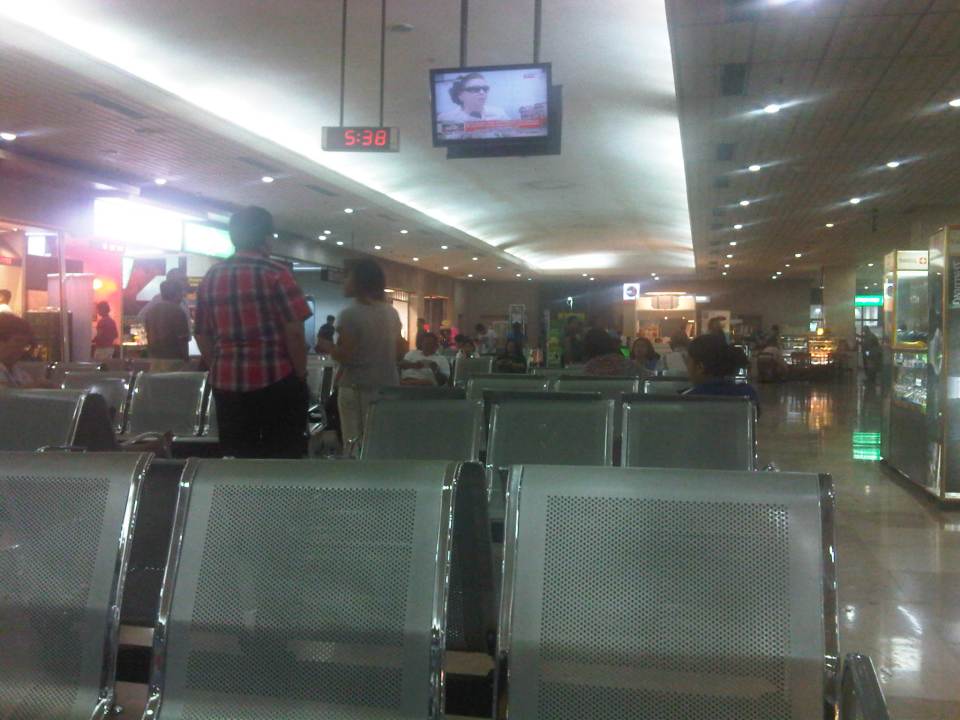 Pre-departure area at MCIA – the area can get quite crowded during the day when most flights depart out of the terminal. PAL fields wide bodied aircraft to address the high demand between Manila and Cebu during the day.
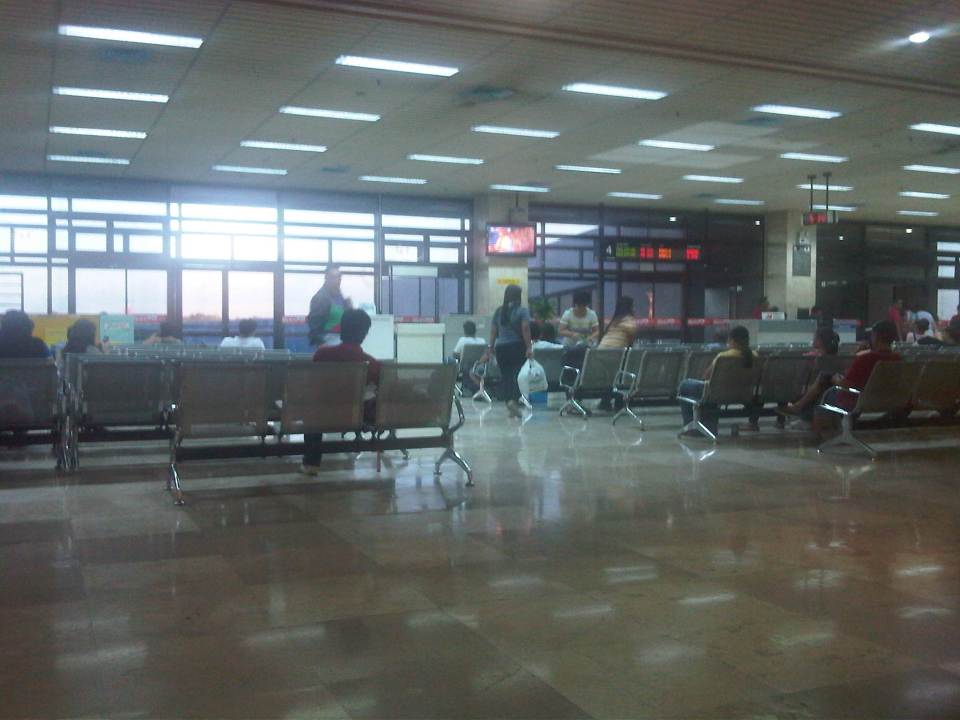 Gate 4 seats at the MCIA
 Passengers waiting for their flight. My flight back to Manila wasn’t a full one probably because it was a later flight.
There’s been a lot going on in MCIA ever since the former Cebu City Planning and Development chief Paul Villarete took over as General Manager. I’ve noticed the improvements as I have been to Cebu quite frequently since 1996. These include a cleaner terminal and more efficient services in the airport. MCIA is a work in progress and should soon be upgraded with a new terminal building. I’m hopeful that the groups bidding for the project will do a great job as at least two of them are associated with top airports in Changi (Singapore) and Incheon (Korea).
–
Daniel Romualdez Airport in Tacloban
I had been to Tacloban only once before and was not able to take some photos of the airport. This time around, I was able to get a few photos as I checked in for my flight back to Manila. Tacloban Airport is among the busiest airports in the country serving more than 1 million passengers annually. Tacloban is the regional center of Eastern Visayas and is the only airport in that region with jet airline (A319s and A320s) service. Despite the increasing demand due to growth in both industry and tourism, the airport is limited by its runway and terminal. A planeload of passengers already crowd the pre-departure area on a regular basis and conditions in the area is not at all comfortable. While there is a room for changing diapers and another for breastfeeding (thanks to DOTC’s Gender Awareness and Development program), there are few other amenities at the terminal.
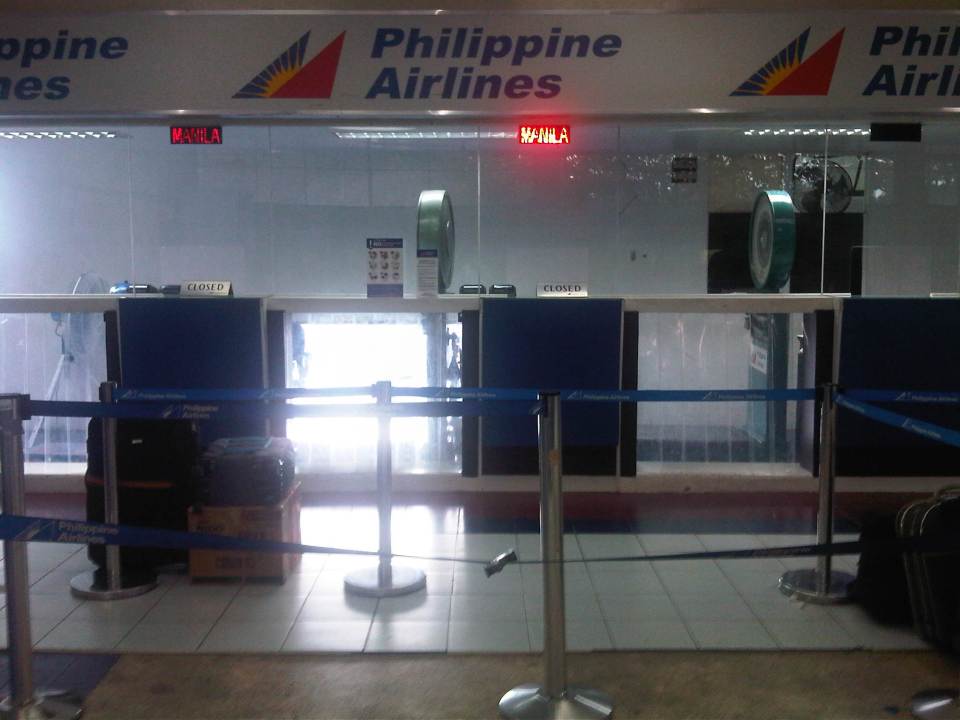 Philippine Airlines check-in counter
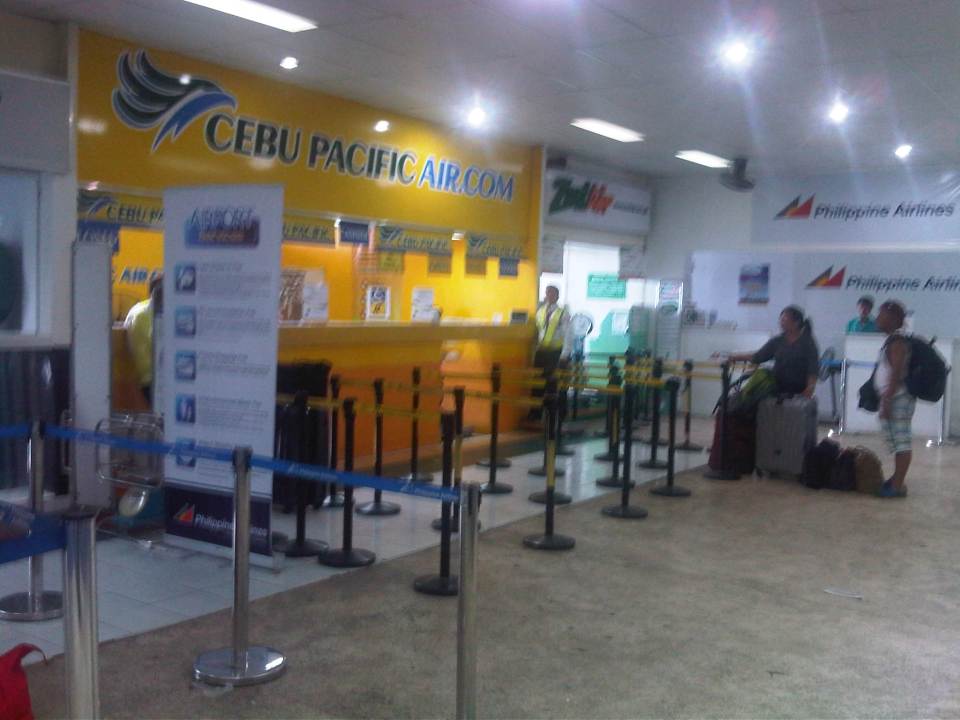 Cebu Pacific and Zest Air check-in counters
 Ceb Pac passengers waiting to board the aircraft on the tarmac
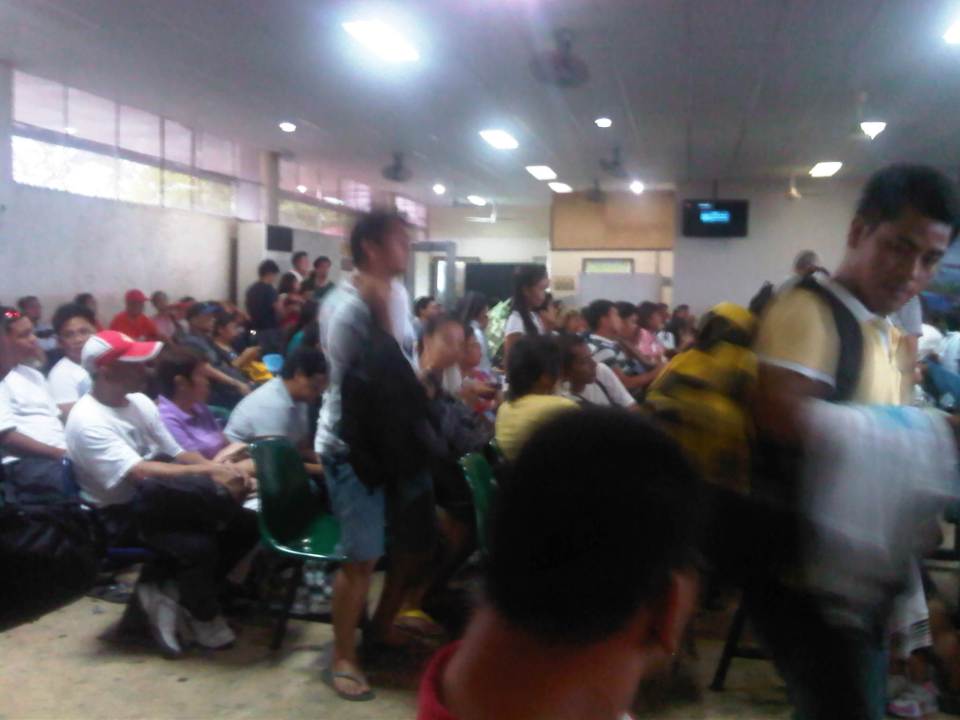 Another shot of the crowded pre-departure area
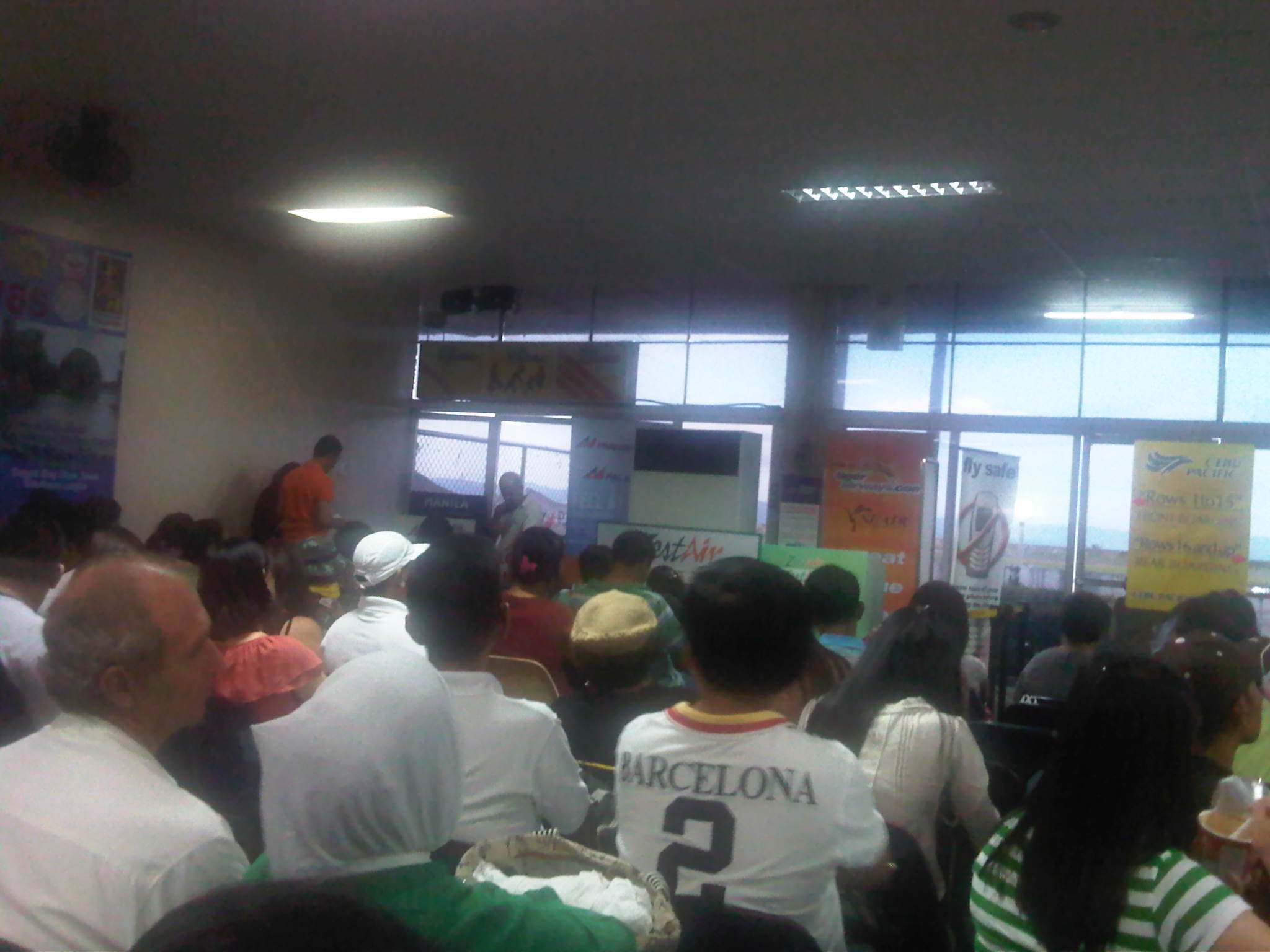 PAL passengers waiting for their plane to arrive
Tacloban Airport is due for expansion with a new terminal proposed for construction nearby. The land where the new terminal will be constructed has been acquired and cordoned off and I was told that the runway will be lengthened. I am just not sure if DOTC or CAAP has acquired the lands necessary for the runway component of the project but upgrading the runway for the airport to accommodate wide bodied aircraft will indeed require much land. Nevertheless, it is a project that is long overdue and needed to push for development of the region, which has one of the higher incidence of poverty at 37.2% for Region 8. Leyte has a 31.9% poverty incidence while Southern Leyte is at 36.4%. Neighboring Samar provinces have even worse statistics with Western Samar at 36%, Northern Samar at 43.7% and Eastern Samar at a staggering 59.4% poverty incidence. These stats are based on the figures recently released by the National Statistical Coordination Board (NSCB) based on the Family Income and Expenditure Survey (FIES) conducted in 2012.
–
 Caught (up) in traffic