
Home » Airports (Page 20)
Category Archives: Airports
Airport terminals and transfers at NAIA in Manila
Ninoy Aquino International Airport (NAIA) has four (4) terminals:
- Terminal 1 – is the international terminal for ALL foreign airlines except All Nippon Airways (ANA), which uses Terminal 3. It is located along the Ninoy Aquino Avenue from the NAIA Road.
- Terminal 2 – also called the Centennial Terminal because it opened in the year the Philippines celebrated 100 years of proclamation of independence from Spain (1998). It is used exclusively by Philippine Airlines (PAL) for both international and domestic flights. International flights use the north wing while domestic ones use the south wing. Recently, PAL transferred several domestic flights to Terminal 3, retaining only major domestic destinations at Terminal 2 (e.g., Cebu, Davao, Iloilo, Bacolod, etc.). For a complete list on which domestic flights are on T2 or T3, one can consult the PAL website. Terminal 2 is located at the end of NAIA Road.
- Terminal 3 – the newest of the three main terminals, it is located beside Villamor Air Base (actually part of it was carved out of the base) and across from the Resorts World Manila complex. It is used mainly by Cebu Pacific (Ceb Pac), currently the country’s largest airline, for both international and domestic flights. Other airlines using Terminal 3 are ANA and Airphil Express, which is a budget subsidiary of PAL. The terminal is located along Andrews Avenue at the end of Sales Road (from Fort Bonifacio).
- Domestic Terminal – now also called Terminal 4, it is the old terminal along the Domestic Road that used to be called the Manila Domestic Terminal where PAL, Cebu Pacific and other airlines used to operate domestic flights. At present, it is used by Zest Air and Seair.
More detailed information on these terminals may be found at the website of the Manila International Airport Authority (MIAA).
It is quite easy to transfer between domestic and international flights if you happen to fly Ceb Pac since all flights operate out of Terminal 3 and the airline provides assistance through its transfer desk. The same used to be the case for PAL when all flights were out of Terminal 2. But then after PAL transferred flights to Terminal 3, many passengers would now have to travel between Terminals 2 and 3. The most inconvenient cases are for travelers transferring to or from international flights at Terminal 1. Terminal 2 is quite near and can easily be reached via shuttle bus. The more challenging transfer is between Terminals 1 or 2 and Terminal 3. Shuttle buses would have to go through the NAIA Road, the Domestic Road the Airport Road
There are no internal connections between the 4 terminals operating within the NAIA complex such as AGTs, monorails. There are shuttle buses that travel between these terminals but they use the public roads rather than an internal road exclusive for the airport. As such, these shuttles are subject to traffic congestion and possible delays. The MIAA website states that using the shuttle buses are free but I saw a sign at Terminal 3 showing that there is a flat rate of PhP 20. While the fare would probably cover fuel, maintenance and other costs, it can also be argued that this service should be free at least for passengers and covered by airport authorities as part of the services they provide to travelers. Perhaps passengers can present their tickets before boarding the bus. Others may be required to pay the PhP 20 fare.
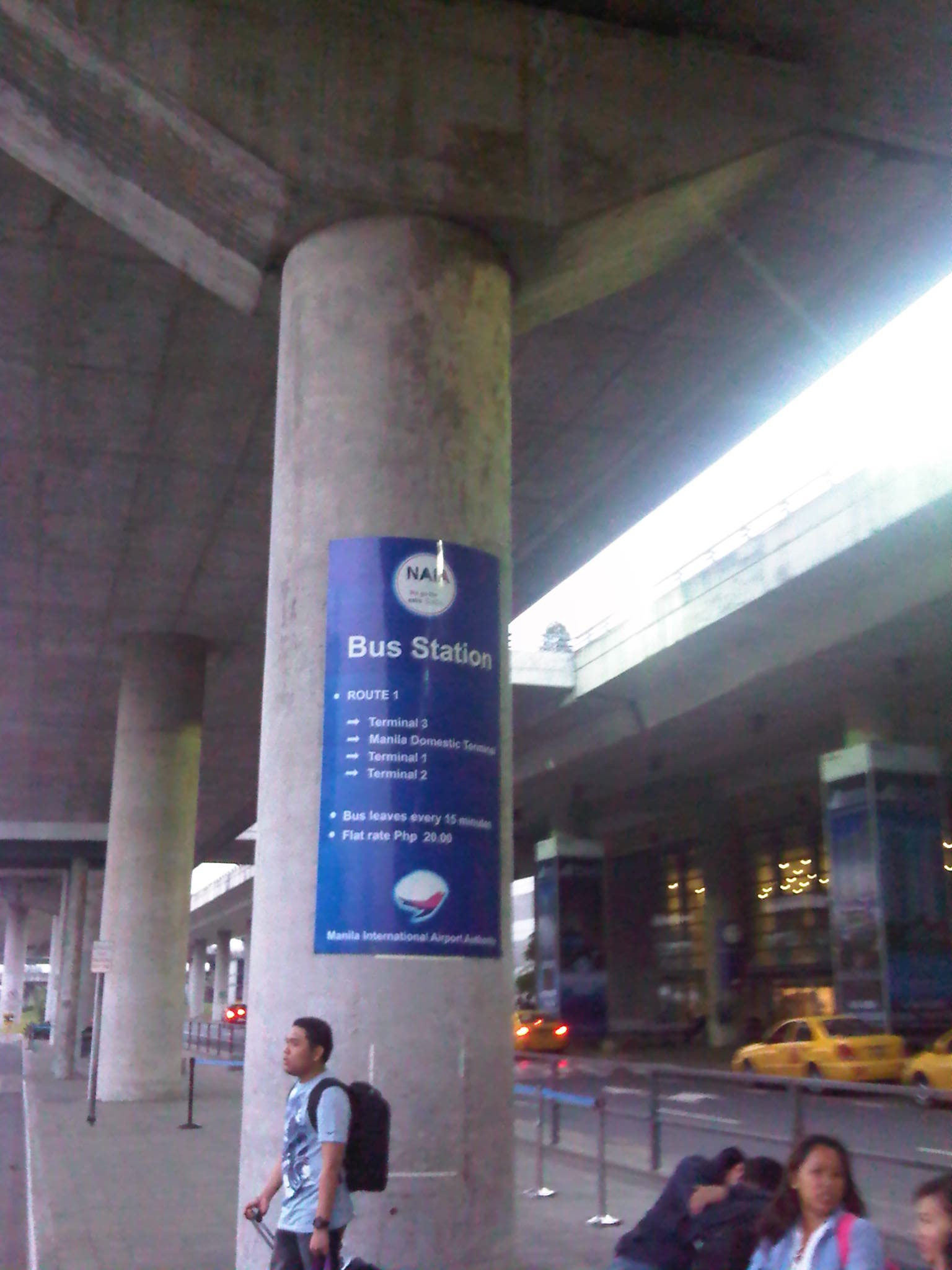 Bus station/stop at the NAIA Terminal 3 – the station is located at ground level (arrivals) beneath one of the overpasses (departure level) and across from the airport taxi stand (shown in the photo). Shuttle buses are scheduled to depart every 15 minutes according to the sign.
–
HK Airport Express: check-in and transit
I wrote about Hong Kong International Airport (HKIA) and the Airport Express service between the terminal and Kowloon in a previous post. I had an opportunity to take a few more photos on the service on my way back from Hong Kong, when I checked-in at Kowloon Station prior to proceeding to HKIA. The system is so easy and so convenient for travelers, and is something that should definitely be replicated elsewhere where they still don’t have something similar in place. More information may be found with the HKIA website and the MTR website that features all the details on the Airport Express service, including complementary services such as shuttle buses to and from hotels via Kowloon or Hong Kong Stations.
 One does not have to purchase tickets over the counter as there are ticket vending machines at the station. The easy-to-use machine can be operated in Chinese or English and accepts coins and bills for payment.
 Check-in counters for most if not all airlines using Hong Kong International Airport may be found at Kowloon Station. This makes it possible for travelers to complete the procedure including checking-in their luggage for passengers to be able to travel light between the station and HKIA.
 Monitors on top of each counter displays which airlines are served by the counter staff.
 Flight schedules are displayed at Kowloon Station and there is a security check prior to the check-in counters.
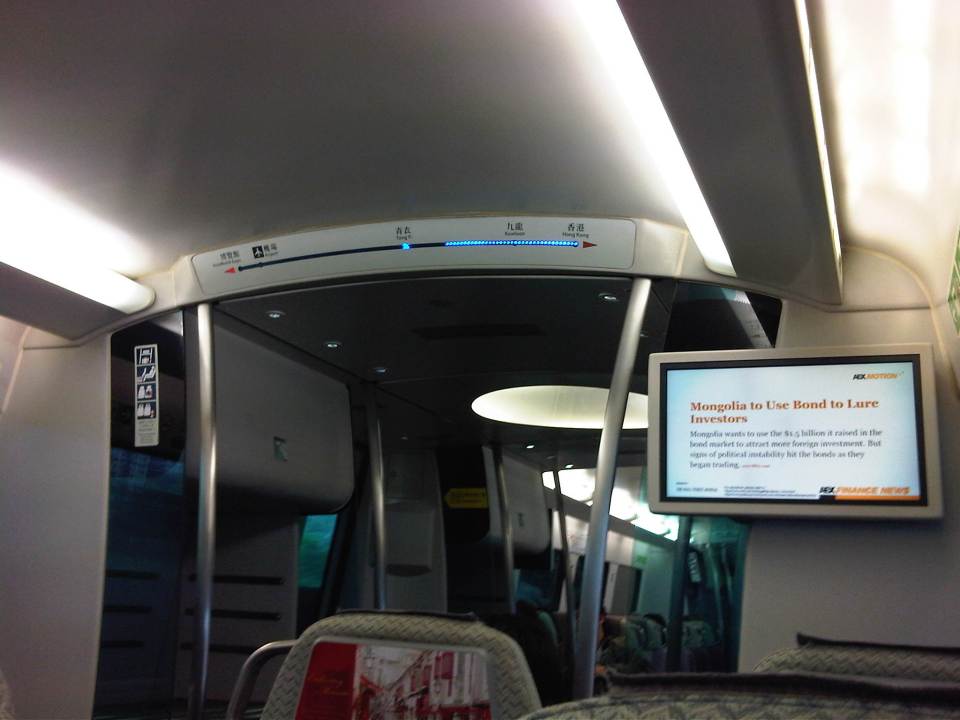 The LED display on top gives passengers information on the progress of the trip while the monitor provides business news.
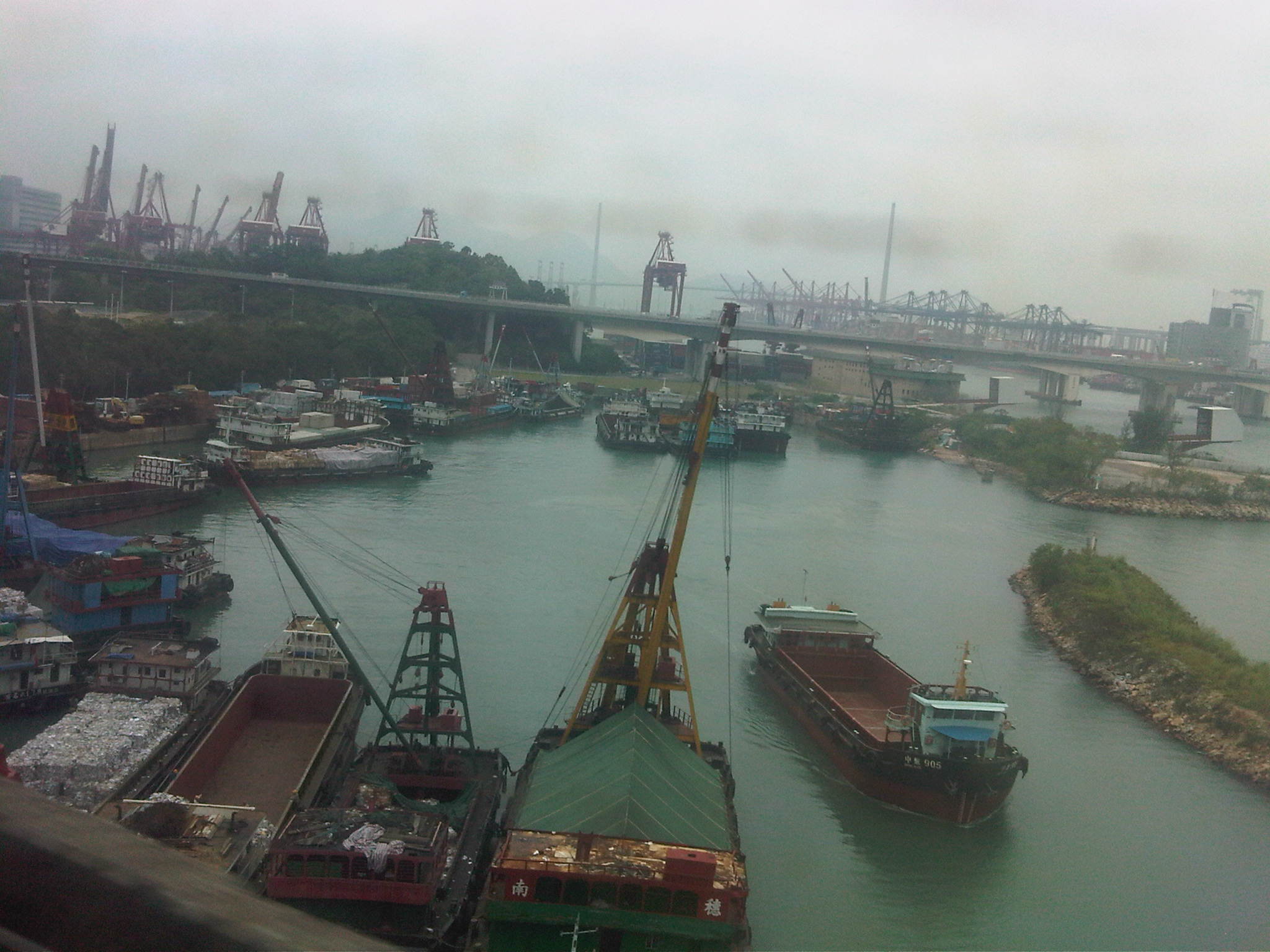 A view of the ports along the way to the airport.
The Hong Kong Airport Express provides one of the most efficient services I’ve seen for airports. It makes perfect sense in this day and age when advances in IT would allow for such services like checking-in for your flight and convenience and comfort should be the focus of service providers. I think such services are what makes airports like HKIA good examples for best practices on service delivery to passengers.
In the case of Manila, the recent opening of an airport lounge at a major mall in Quezon City serving Clark International Airport (north of Metro Manila) presents an opportunity to provide similar services for the convenience of passengers. Perhaps a local airline like Cebu Pacific should initiate check-ins at this satellite lounge so that passengers would be freed from their luggage as they make their way to Clark (a 1.5 hour trip between the Quezon City and the airport). Perhaps, too, there should be a similar system for people taking Ninoy Aquino International Airport even though the challenge is how to manage travel using the road in the absence of express rail services. These are sure to boost travel and tourism but should also have impacts on business considering the convenience and efficiency such a system can provide.
–
Suvarnabhumi departure
This is actually a continuation of a previous post on Thailand’s main international airport. In the previous post, I featured checking-in at Suvarnabhumi International Airport. In an even earlier post, airport railway access was featured. Following are photos I’ve taken while exploring the airport again eight years after my last visit to Bangkok.
 After clearing immigration, the traveler is greeted by this attraction, presenting additional photo opportunities to tourists.
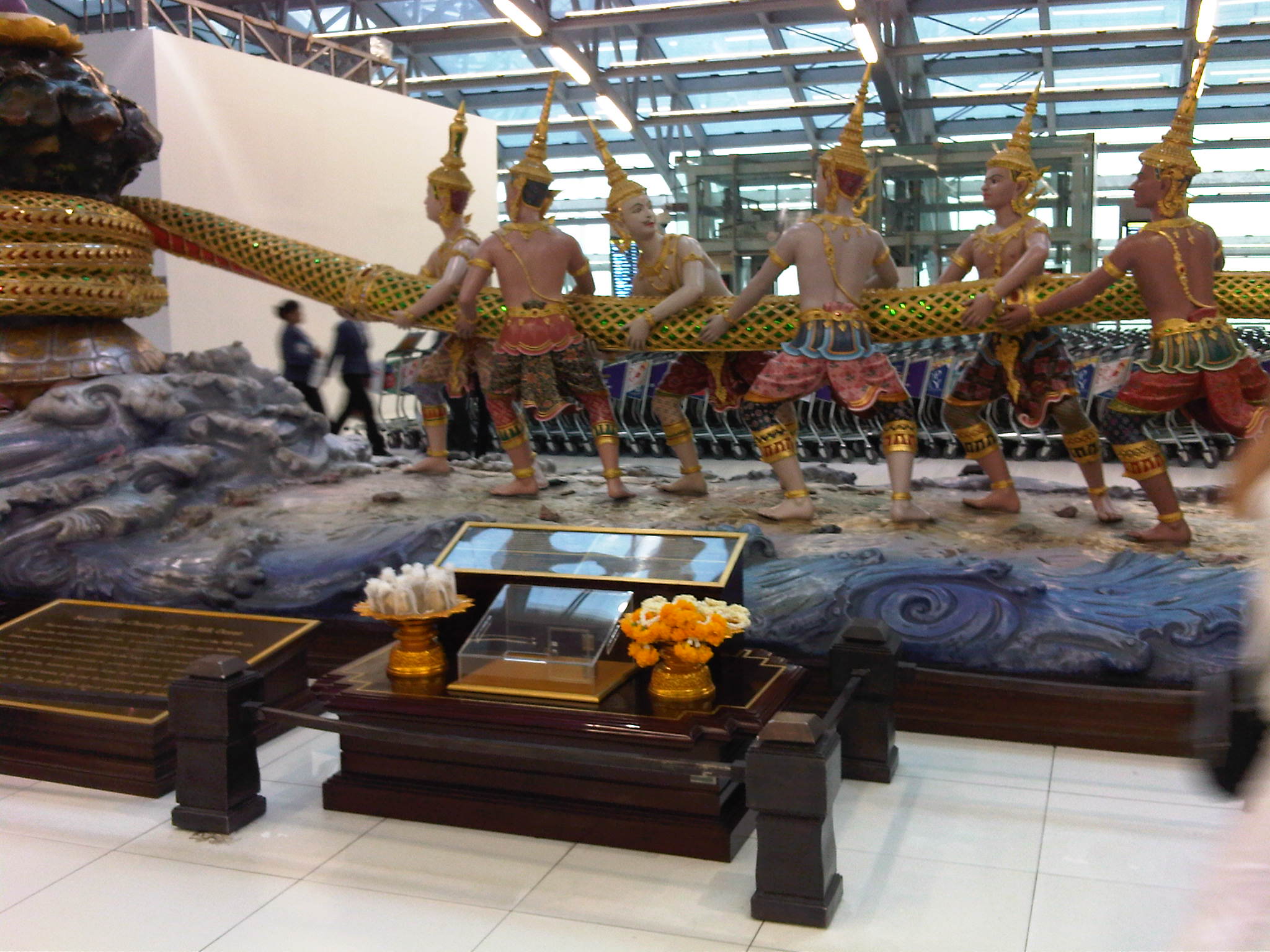 The scene is is religious in nature and there is an explanation on a plaque in front and at the center of the life-size display. Unfortunately, I wasn’t able to take a photo of the plaque.
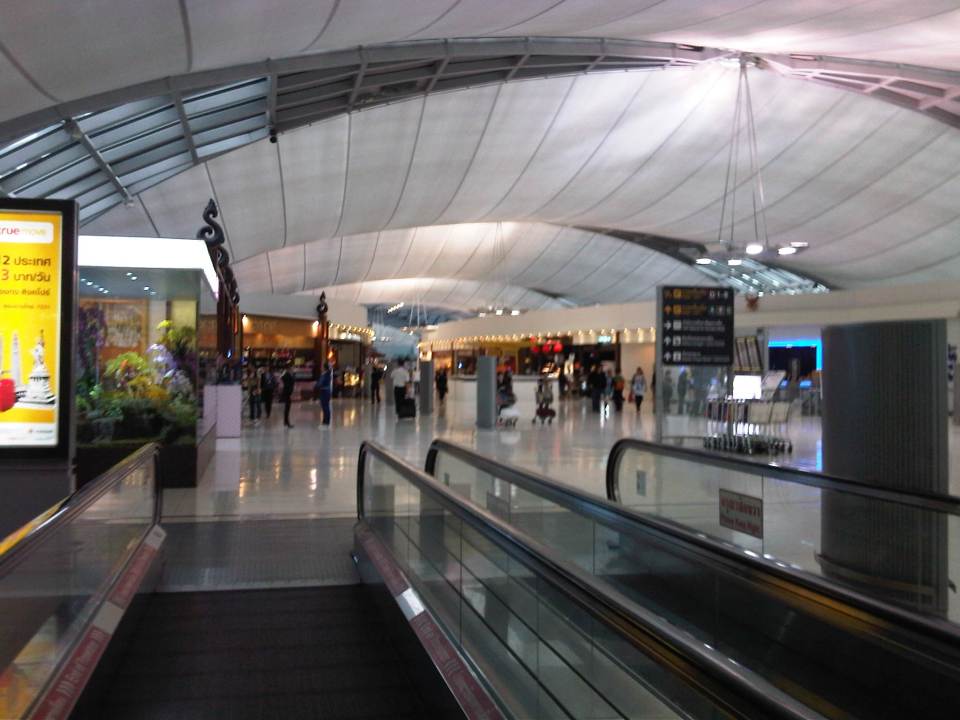 Duty free shops line both sides of the corridor to the boarding gates.
 Tourists will be happy to find more photo opportunities as they explore the airport or walk towards their boarding gates. This gazebo-like feature in the airport is a curiosity given its contrast against backdrop of the modern interiors of the airport.
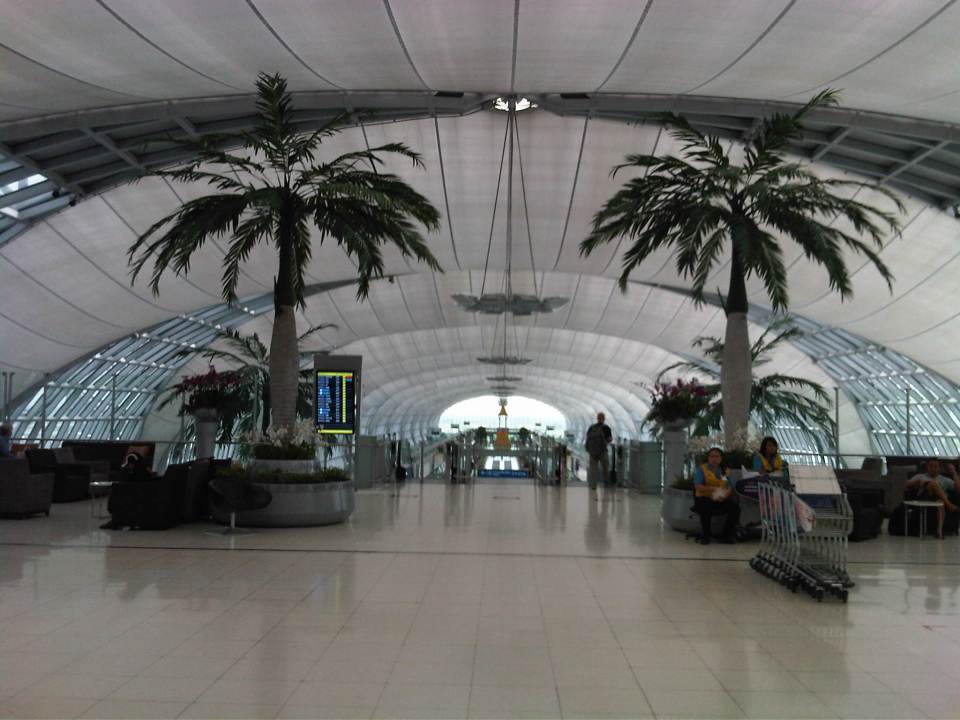 Natural features in the airport include these palm trees serving as sentinels to the escalators to the boarding gates.
 Cavernous terminal is emphasized in this photo taken during my descent via escalator.
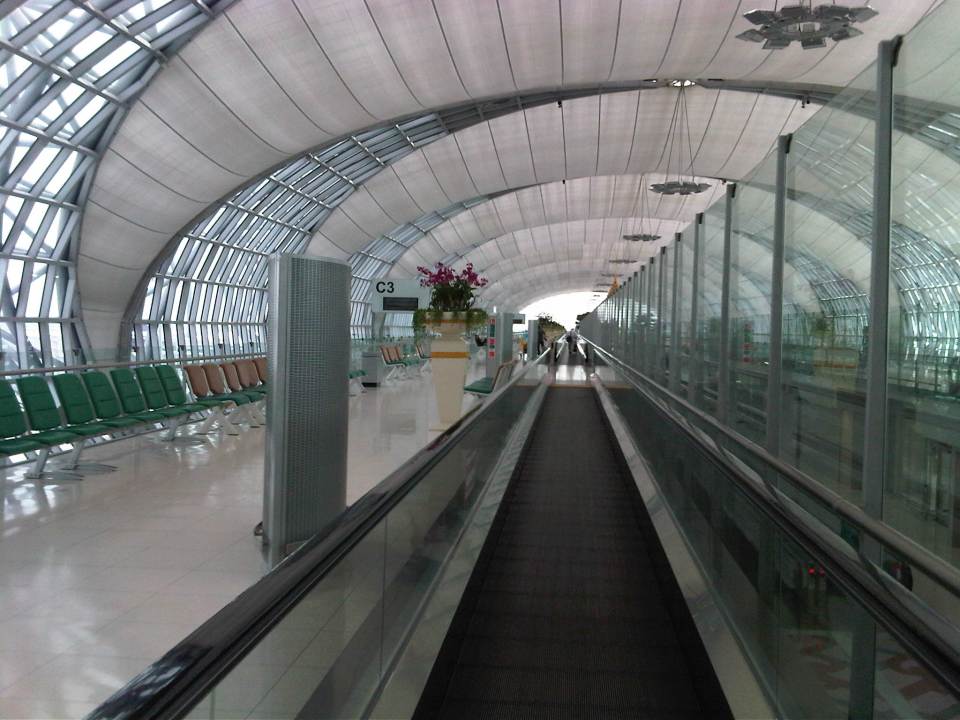 The moving walkway helps people get to their boarding gates, which may be located at the farther parts of this linear airport terminal layout.
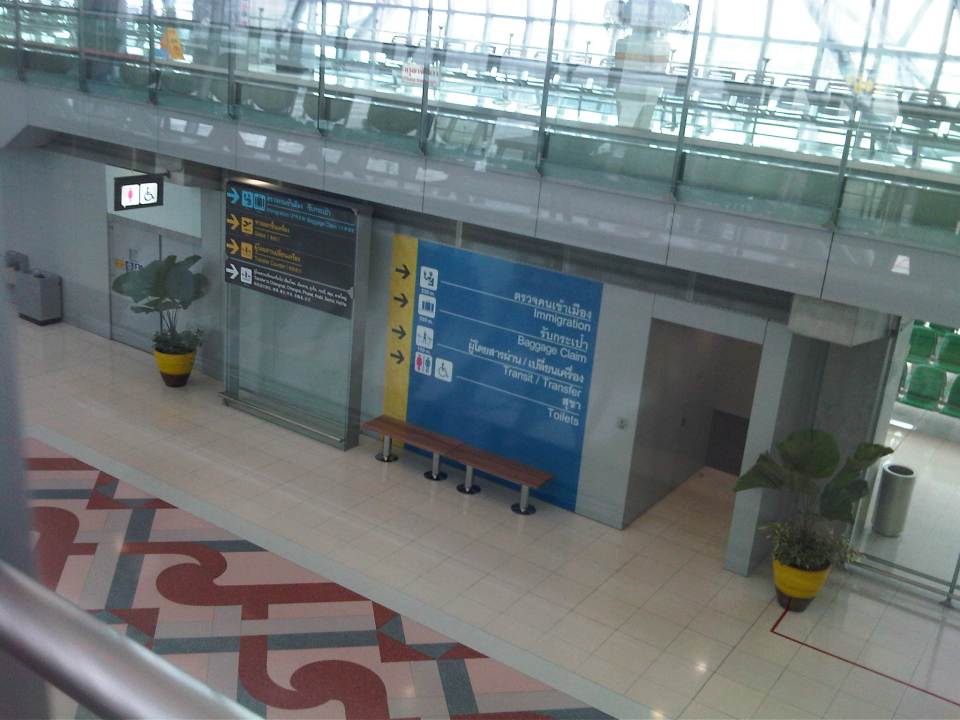 The departure level is on the upper level concourse so as to separate arriving and departing passengers. The photo gives a view of the lower level corridor for arriving passengers.
 The terminal building is linear and requires several moving walkways.
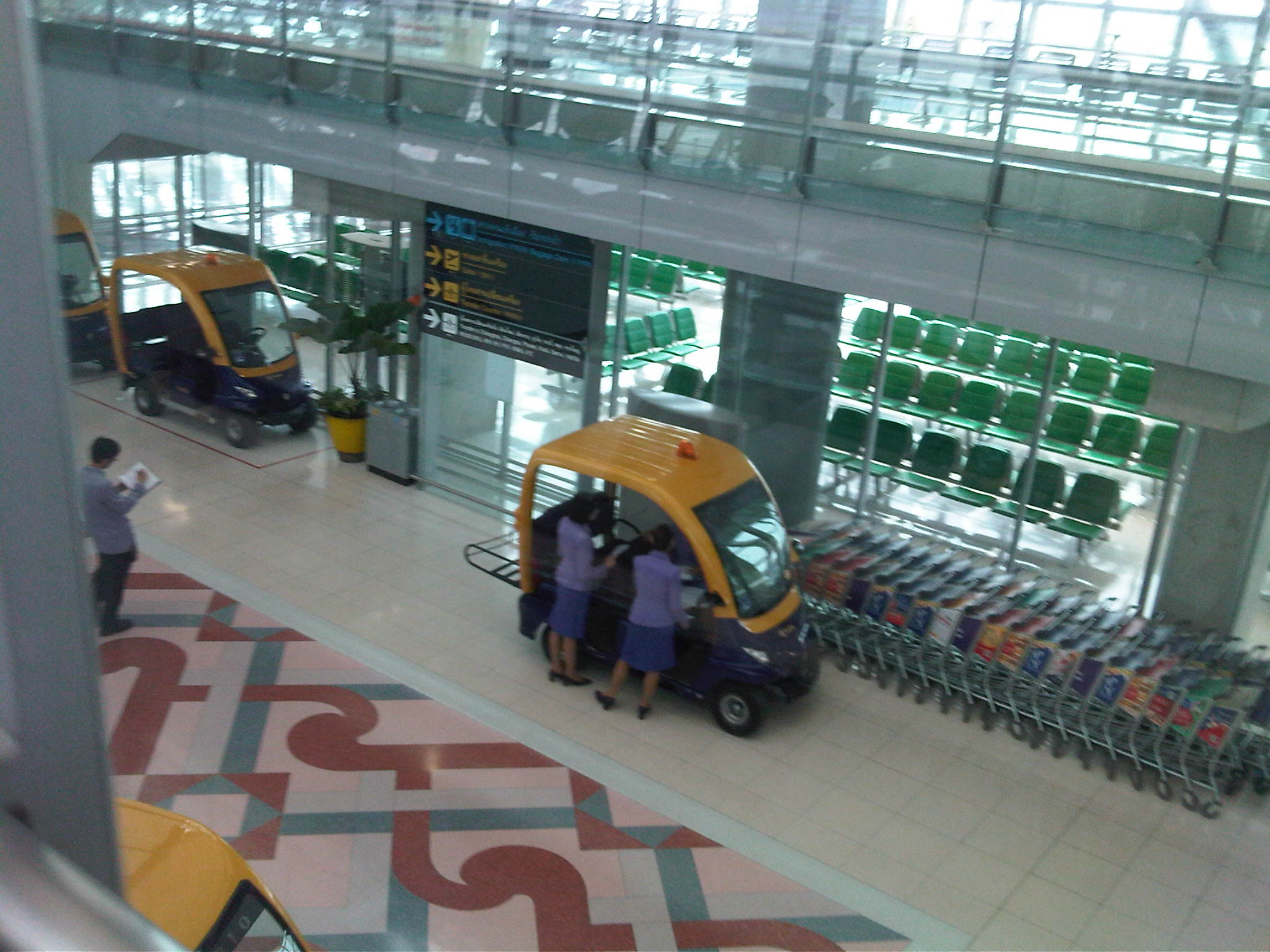 There are electric service vehicles at the airport but these are mainly for the use of airport staff.
 Another photo opp feature at the airport for last minute pictures reminds me of the royal palace.
 Another view of the attraction. The trees are real.
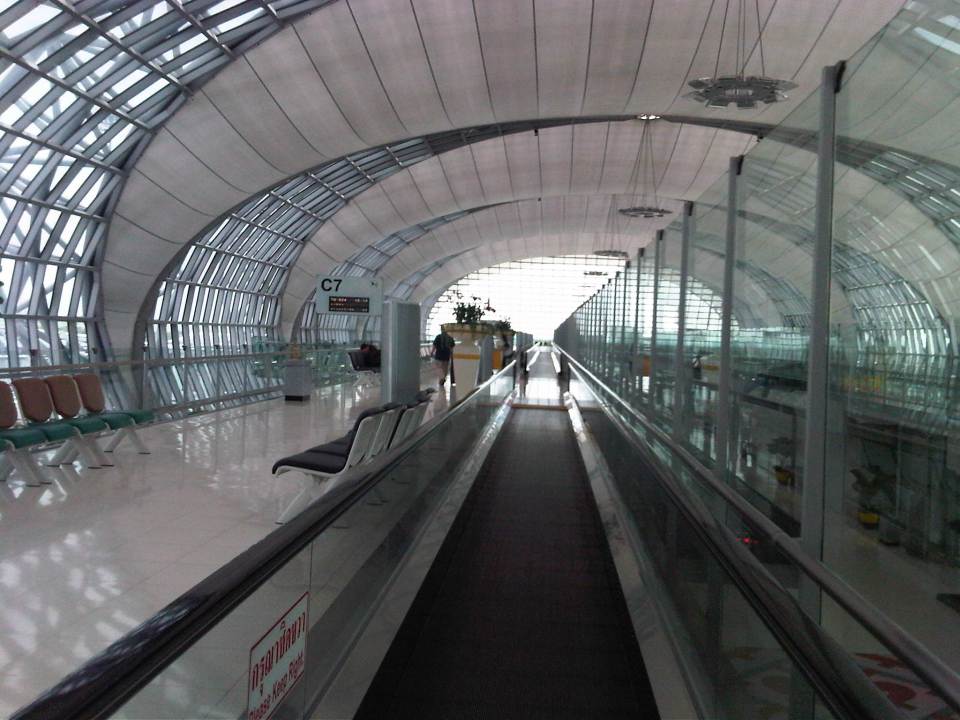 End of the line? – my boarding gate appeared to be the second to the last gate along this wing of the airport. I found this unusual and a bit inconvenient considering I flew on Thai International Airways. International airports would usually provide the more convenient gates for their national airlines.
 Waiting area for departing passengers as seen by someone descending the stairs.
 Access to the waiting area is via staircase shown in the photo.
–
Hong Kong Airport Express and Shuttle Service
Arriving at Hong Kong International Airport (HKIA), one has several options for travel between the airport and Hong Kong. The taxi is usually an expensive option unless you are with a group and sharing the fare. The most practical option is to take the Airport Express train, which also provides a free shuttle service from its stations at Kowloon and Hong Kong.
Following are a few photos I was able to take of the airport express trip from HKIA to Kowloon Station. I must admit that as we were quite in a hurry to get to our hotels, I was only able to take a few photos between HKIA and Kowloon. I promised to myself to make up for this on my return to the airport on the way back home.
 Waiting for the train – Ms. Vicky Segovia, Executive of the Philippines’ Partnership for Clean Air (PCA), reads a paper while waiting for our Airport Express ride at the platform.
 Baggage compartment – luggage rack inside the airport express train.
 Directional signs – the signs point to the parking lot (for those who parked their vehicles while away on their trips), the trains and the Airport Express shuttle bus.
 HKIA Airport Express shuttle bus counter at Kowloon Station – there are several routes going around Kowloon. One may choose the shuttle according to his/her hotel and there are information to guide the traveler. Shuttle staff are very helpful in case the traveler has doubts about the info he/she has.
 Inside the shuttle bus – there’s space for luggage so travelers don’t have to take their luggage with them to their seats. There’s only the driver to help travelers with their luggage but he does well in arranging luggage so people would have enough space.
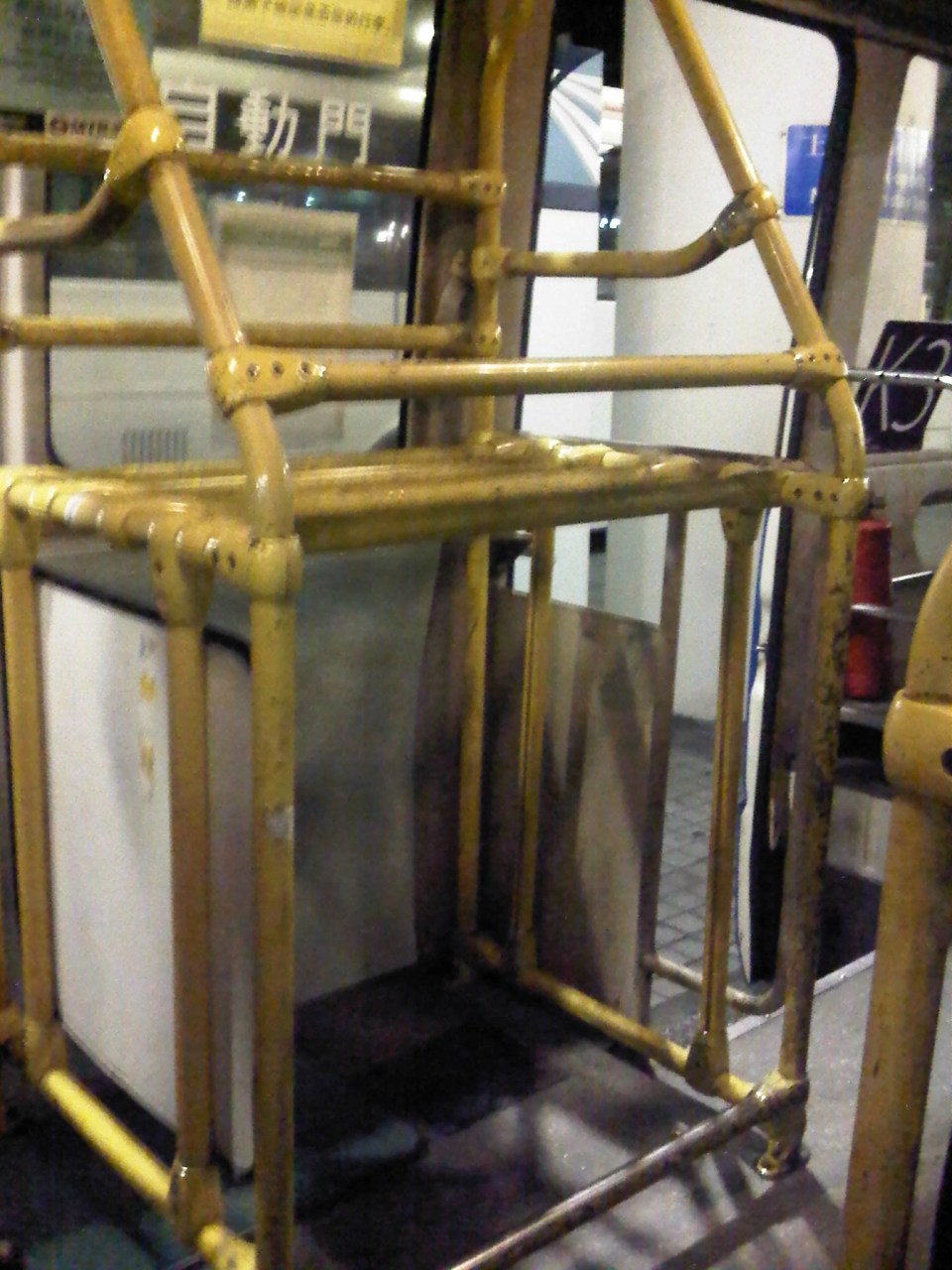 Luggage rack inside the shuttle – larger bags go under and smaller ones go up. Hand-carried luggage are best taken by the traveler.
More about the Airport Express later…
–
Another look at the HKIA – arrivals
Writing about the Hong Kong International Airport in a previous post, a friend pointed out that I needed to explore the airport to see the other terminals and its amenities. Having used Changi so frequently the past 2 years, I had been quite partial towards Singapore’s airport. And so I made sure I had the time to go around HKIA, particularly upon my return trip to Manila. Following are some photos taken upon our arrival at the airport early this December.
 Arriving at the airport, people rush towards immigration expecting long lines at one of the busiest international airports in the world
 Moving walkway helps people get around the huge airport terminal
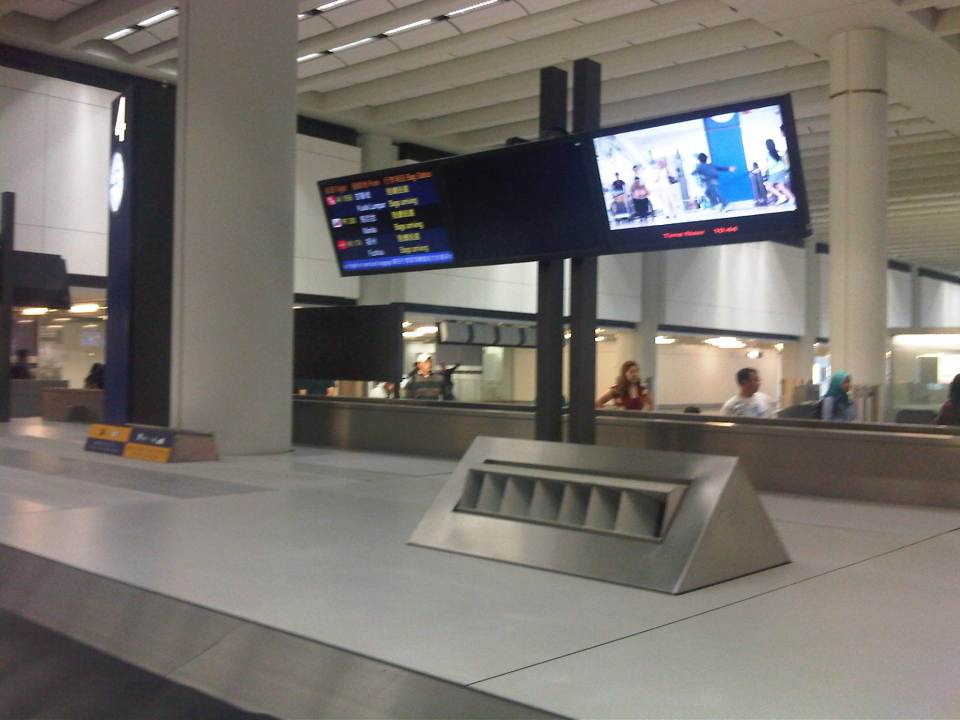 Baggage claim area is spacious and organized
 Arrival lobby is sparkling clean and could accommodate passengers and well-wishers without getting crowded
 Another look at the arrival area at HKIA showing travelers congregating with their baggage in tow. Around them are shops, visitor information/tourism counters, restaurants and foreign currency exchange counters.
 Directional signs and other information are available to travelers and well-wishers. The first time visitor will not have a hard time navigating around the airport.
 Directions to the HK Airport Express Trains. The trains are the more inexpensive options to go to Hong Kong from the airport, which is on a separate island. Taking the train to either Kowloon or Hong Kong Station, one may take the free shuttle bus services going around the districts with stopovers at most major hotels.
 HK Airport Express platform – one may purchase one-way or two-way tickets at counters or machines at the airport. A ticket to Kowloon Station costs 90 HKD (one way).
More on HKIA and the Airport Express later…
–
Suvarnabhumi Airport check-in
I forgot to post a few more photos of my recent trip to Bangkok where I was able to explore its large Suvarnabhumi International Airport. I will write more about the airport in installments to describe the airports features in more detail. For this post, the following photos show the entrance, check-in and pre-immigration areas. Taking photos at the immigration areas is not allowed so I didn’t take a chance to take photos there as I might be accosted by authorities.
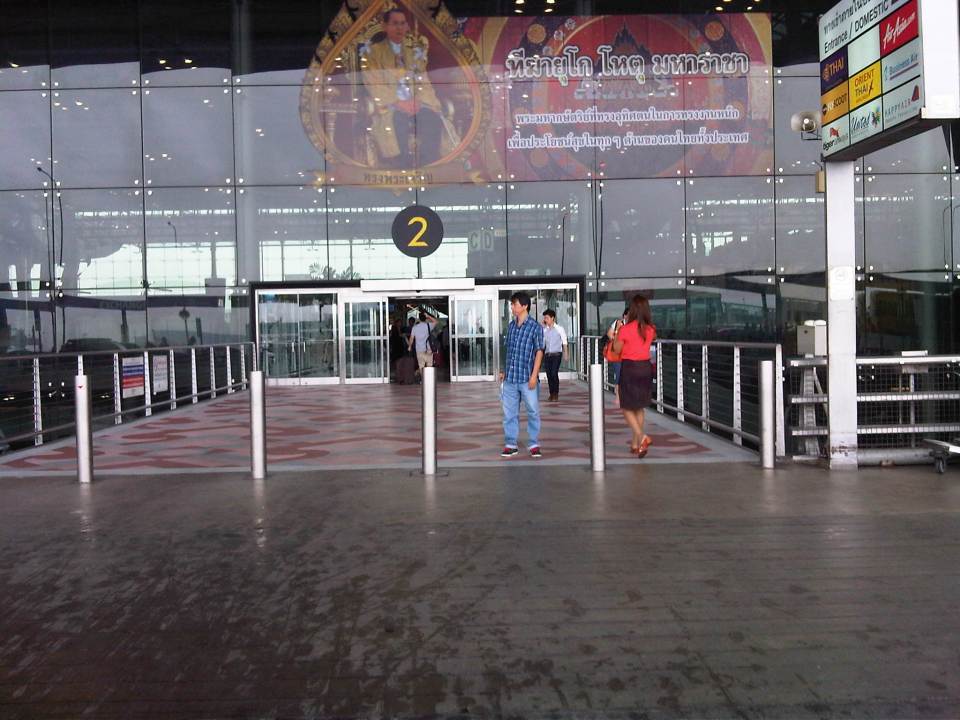 Entrance to the airport from the driveway – we took a taxi from our hotel. There were four of us and some had a little shopping so it wasn’t convenient to take the train to the airport.
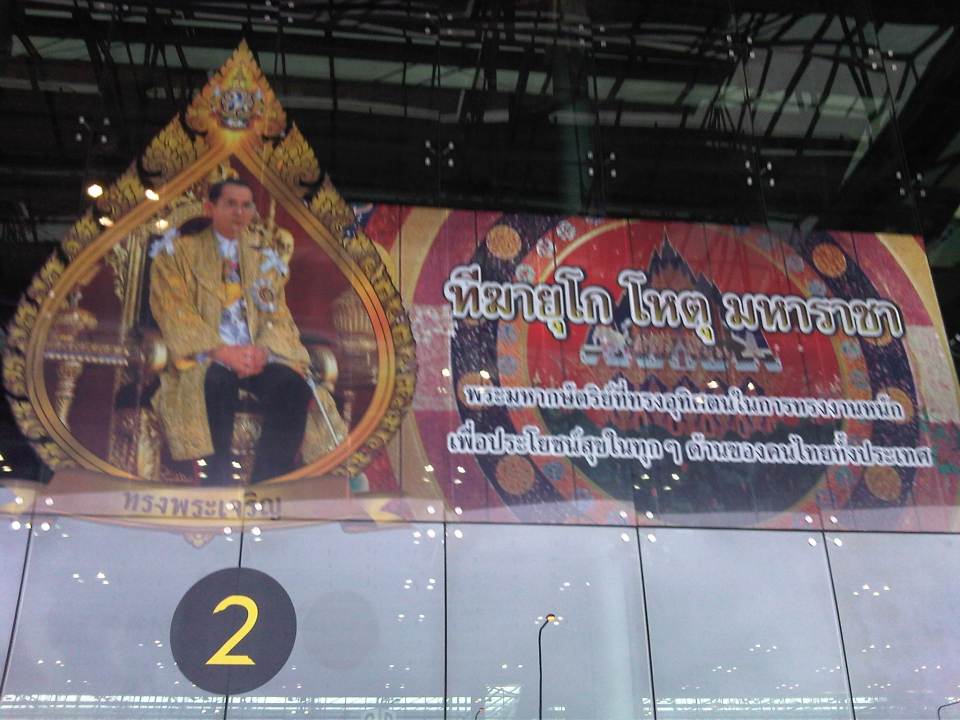 Greetings from His Royal Majesty, the King of Thailand – the Thais are proud and very respectful of their king.
 Check-in counters for the full service airlines – we traveled via Thai Airways, which is currently one of the best airlines in the world.
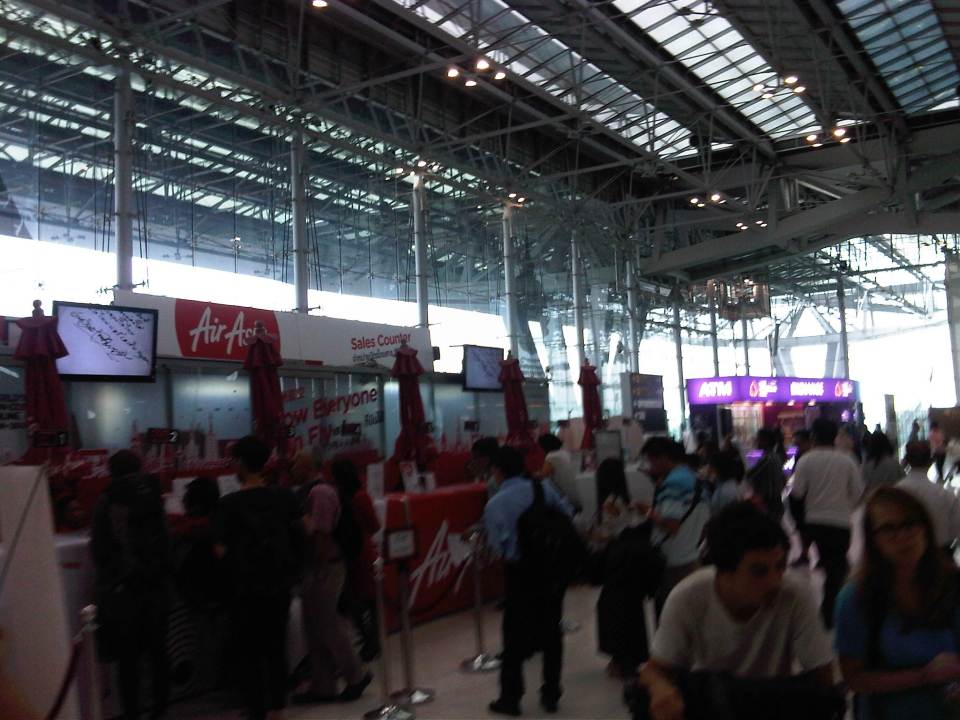 Ticketing counters for budget airlines – I found it quite unusual that the ticketing counters for some budget airlines like AirAsia was along what should have been a wide corridor leading from the entrance to the check-in counters.
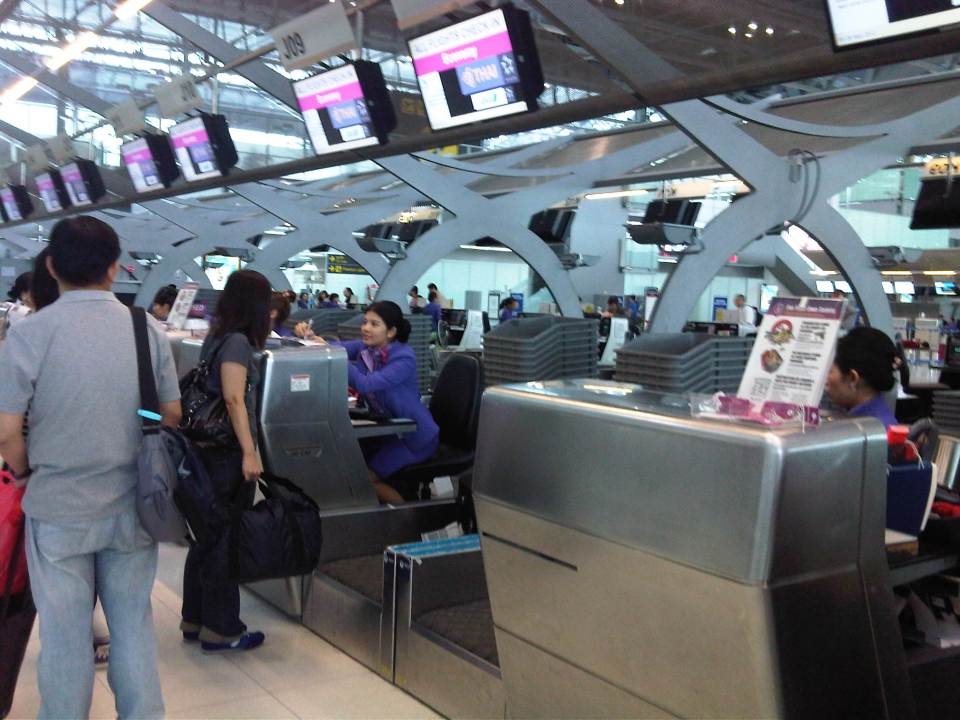 Thai Airways check-in – I had already checked-in prior to arriving at the airport for my return trip, thanks to the online check-in feature of the airline, so I just had to drop off my luggage for tagging. Others who were just checking-in to get their seats and drop off their luggage had to go through the usual procedure.
 Information board for departing passengers provide directions
 After checking-in, people have the option to shop, eat or proceed to immigration to enter the pre-departure area where there are more shops, restaurants and the airline lounges.
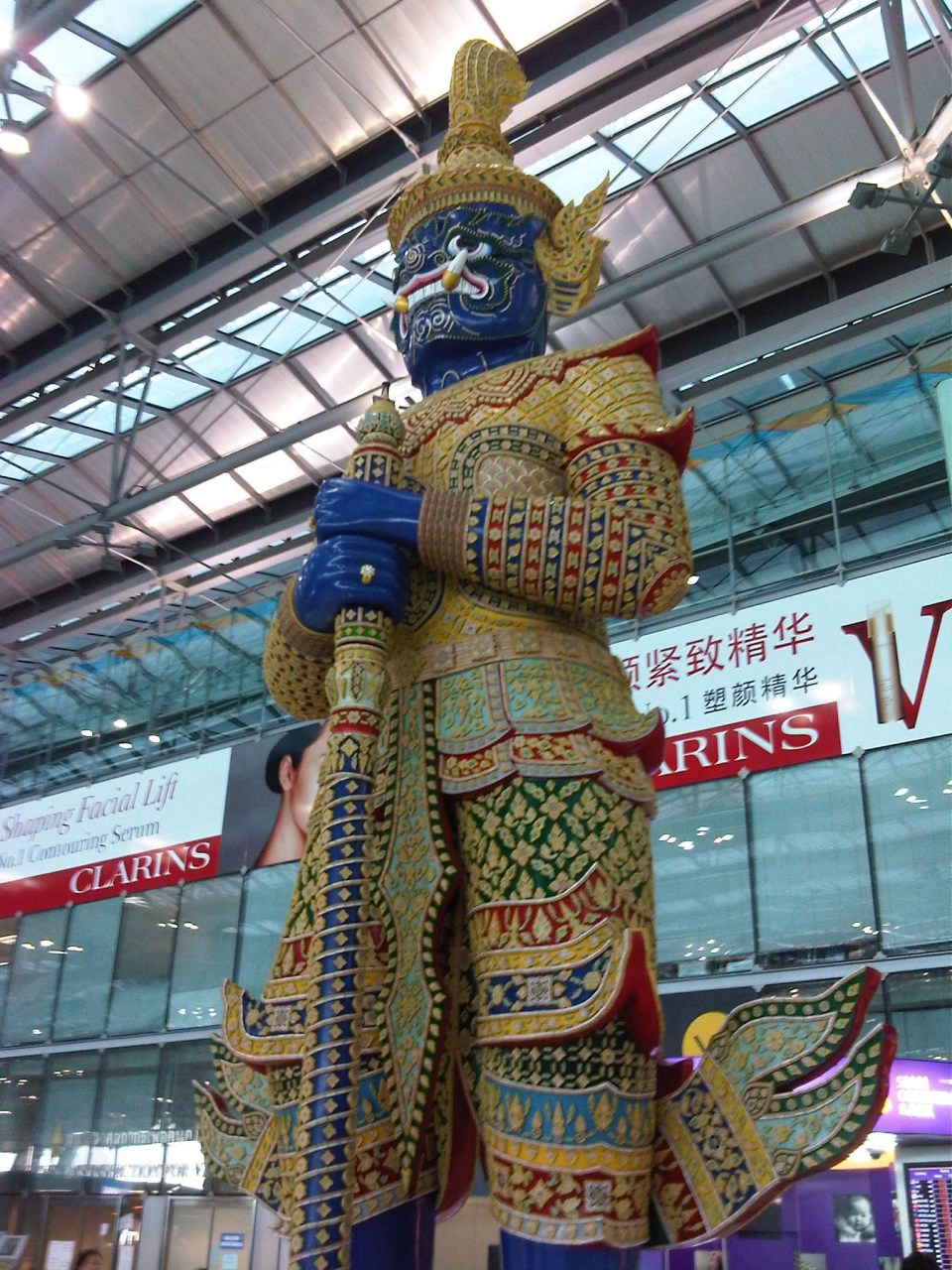 Sentinel? – among the things I like about Suvarnabhumi are the features such as this that define the airport in as far as character is concerned. It is a modern airport and yet they were able to infuse Thai culture wherever its possible. A similar case may be found in Bali and I hope they’re able to retain that airport’s character with their new terminal (under construction when I was in Bali last February 2012).
More on Suvarnabhumi Airport later!
–
Better air quality conference
The Better Air Quality 2012 Conference comes back to Hong Kong this year and is an annual event organized by the Clean Air Asia, which was formerly the Clean Air Initiative for Asian Cities (CAI-Asia), attended by government leaders, policymakers, NGOs, the academe, private companies and other stakeholders. It is actually my first time to attend the conference though colleagues have participated in the past. This year I am participating as a transport expert and will be involved in two events – a BAQ pre-event and a session during the conference itself.
The pre-event to be held at the Hotel Nikko is on “Long Term Impacts of Low Emission Transport Policies and Actions in ASEAN” while the session in the conference is on “Transport, Energy and Emissions in 2050: Implications for Asia.” These are related as they are part of the same project implemented and supported by CAI-Asia, the Institution for Transport Policy Studies (ITPS) and the Transport Research Laboratory (TRL). There are five of us from various ASEAN universities including friends from Gadjah Mada University (Indonesia), University of Malaya (Malaysia) and Thammasat University (Thailand). I’m looking forward to a very productive conference and will post again soon about this project that we have been working on since last year.
 Metro Manila smog visible in the background of this photo of our plane to Hong Kong
–
On runway configuration and orientation
We teach our students the basics of Airport Engineering including design principles for airside and landside facilities. The most important airside facility is the runway and there are several factors affecting the determination of runway configuration and orientation. Even for single runways, these factors are critical in order to ensure safe and efficient operations. Factors affecting runway configuration and orientation include:
1) Wind – the direction and magnitude of the wind is critical for aircraft as headwinds help generate the lift required for taking-off and cushioning landings. Headwinds will tend to shorten runway length requirements due to this assistance with lift while tailwinds will tend to increase runway length requirements. Cross winds are undesirable as they may cause aircraft to roll or stall. A useful tool for establishing wind behavior (e.g., directions and speeds) is a wind rose, which requires many years of data on wind speeds along different directions to establish the best orientation for a runway. The wind rose pretty much looks like a spider graph overlaid unto a compass, illustrating along which directions the winds are strongest. Wind roses may also be constructed according to the times of the year to account for seasonality in the information.
2) Neighboring airports and airways – one can just imagine the nightmarish situations faced daily by air traffic controllers in New York where there are several major airports not just in that city but in nearby metropolitan areas as well such as New Jersey, Philadelphia and Washington, D.C. where hundreds of flights converge in what is very limited airspace. Thus, air traffic controllers would have to be mindful of the shared air space among planes operating out of the different airports in providing guidance to pilots taking off or maneuvering for a landing.
3) Obstructions – these refer to possible obstructions around the airport and particularly along the flight paths of aircraft and imaginary surfaces are drawn with respect to the proposed runway configuration to determine the height restrictions for structures and other features around the airport. These imaginary surfaces include the projection of aircraft approaches from either end of a runway (or runways) that logically should be free from any obstructions. Cities are required to strictly enforce land use regulations around an airport to ensure safety.
4) Topography – the presence of mountains or bodies of water will influence how an airport will be laid out including considerations for future development or expansion. In many cases, mountains will influence other factors such as wind and obstructions. In certain areas, airports are built over plateaus, thereby restricting development options from the start. Examples of these in the Philippines are Baguio’s and Cagayan De Oro’s airports that are also affected by fog, adding to the challenges (and hazards) faced by pilots.
5) Restricted areas – there are certain “no fly” zones in cities such as the airspace directly above sensitive areas or buildings like military camps or the official residences of heads of state/government (e.g., Malacanang, the White House, etc.) are enforced as a matter of security.
6) Bird hazards – there have been an increasing incidence of bird strikes reported in the local news with many attributed to the increase in numbers of migratory birds. These pose hazards to aircraft (even the large jetliners) as the birds can get sucked by their engines resulting to damage to the propellers or fan jets. As such, many airports employ staff to ward off birds or use devices to disperse them. These efforts, however, are limited to the airport grounds. Beyond the airport, birds, particularly those in protected areas may still pose dangers to aircraft should the areas be along the aircraft flight paths.
7) Control tower visibility – air traffic control provides guidance for aircraft operations whether they be on the ground or in the air. While there are modern, hi-tech instruments available in most large or major airports, safety and guidance is greatly enhanced with the tower visibility to pilots (and vice versa).
8) Jet blast and wing tip vortices – aircraft take-offs and landings are regulated not just in terms of who has priority over the other (e.g., landing aircraft typically have the “right of way” over those waiting to take off) but also to give some headway in order to allow for the dissipation of turbulence generated by aircraft operations. This may be especially important in cases where there are multiple runways including intersecting configurations where aircraft may cross flight paths.
9) Runway length – the required length of runway may be dependent on the types or models of aircraft that intend to use it. Larger aircraft will require longer runways with the Boeing 747s requiring about 2 kilometers for take-offs under various conditions. Smaller aircraft, of course, will require shorter runways and typical airstrips for 2-seater or 4-seater aircraft can be less than a kilometer long.
10) Environmental factors – aircraft operations inevitably lead to pollution including the emissions and noise they generate. As such, land uses around airports should be planned accordingly in order to reduce issues pertaining to noise and air quality. Unfortunately, land use regulation in Philippine cities are not strictly enforced and so there will always be developments that are incompatible with airports with ironies when communities developed after the airport complain of noise and air pollution.
–
Sunduan at NAIA Terminal 1
Manila’s Ninoy Aquino International Terminal 1 has been named as the worst airport in Asia by a website that seems more focused on “sleeping in airports.” The same site ranks Changi, Incheon and Hong Kong as the top airports in the region and mentions a couple more in Southeast Asia in the top ten. Surprising for me is the low ranking for Changi’s Budget Terminal. One can practically sleep on the floor there as it is sparkling clean! But of course, I won’t encourage it as what’s not visible to thehuman eye might probably make one sick especially in places like airports where you have people from all over using the facilities. In fairness to the same site, it differentiates NAIA’s old Terminal 1 from the newer Terminals 2 and 3, which received fair assessments but again especially for sleeping. I think the value of such independent assessments is that they are very objective and given the power of social media, it informs people about the quality of facilities and challenge those in-charge to do better.
So to continue with my features on NAIA Terminal 1, I am featuring a few more photos from the perspective of someone waiting for or fetching a loved one, relative, friend or anyone arriving at the terminal from the building just across from the passengers’ arrival area.
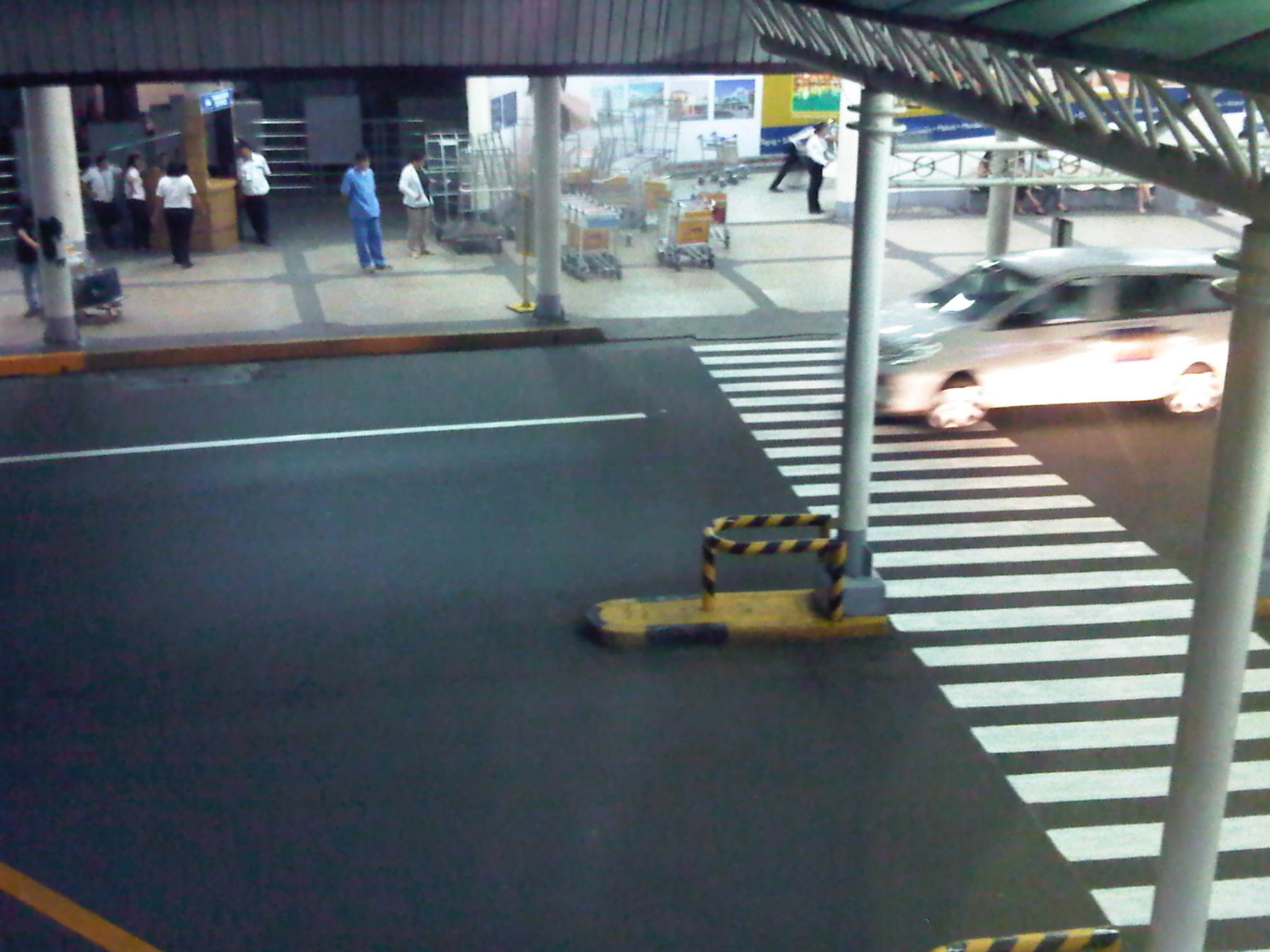 Before the mayhem – prior to the arrival of aircraft and exiting passengers, the area appears like a picture of calm with few people including airport staff.
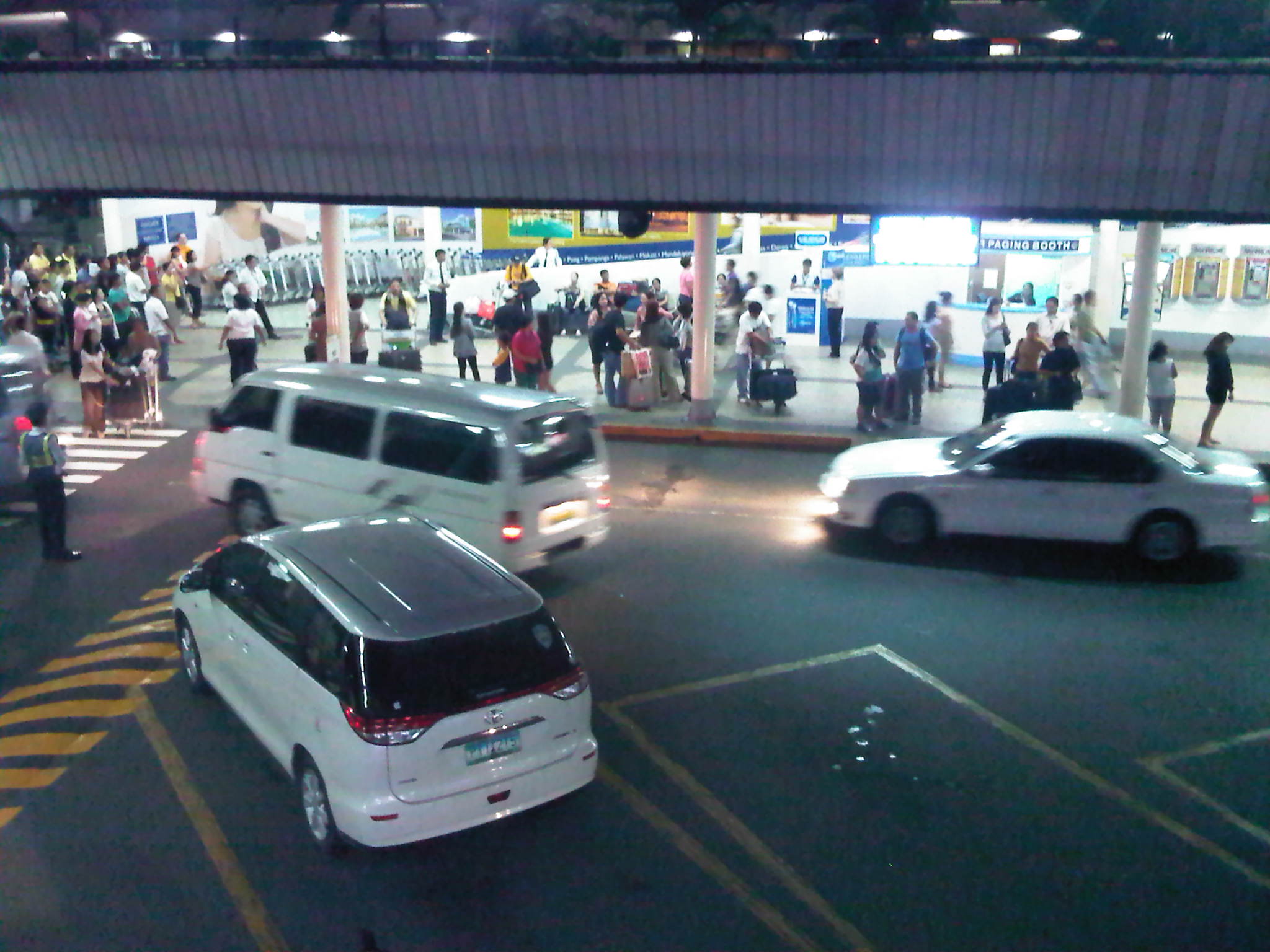 Here they come – passengers start accumulating at the area along with vehicles whose drivers have probably been notified of the arrivals
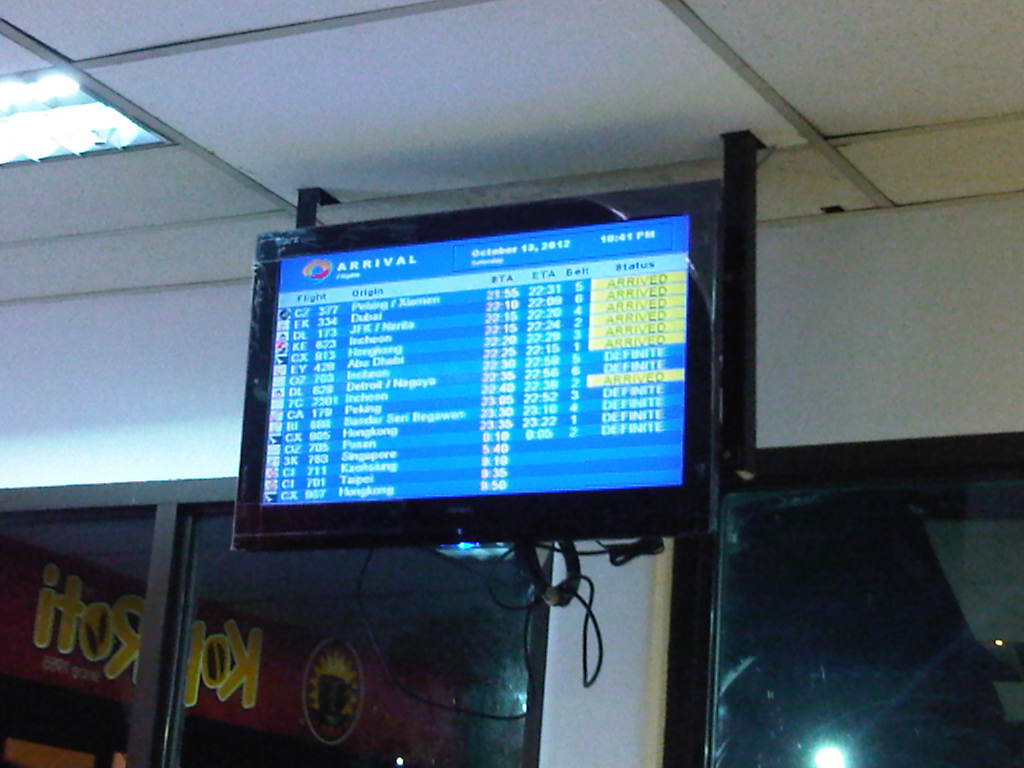 Information screen – there are several screens at the waiting area for people to check the aircraft arrivals
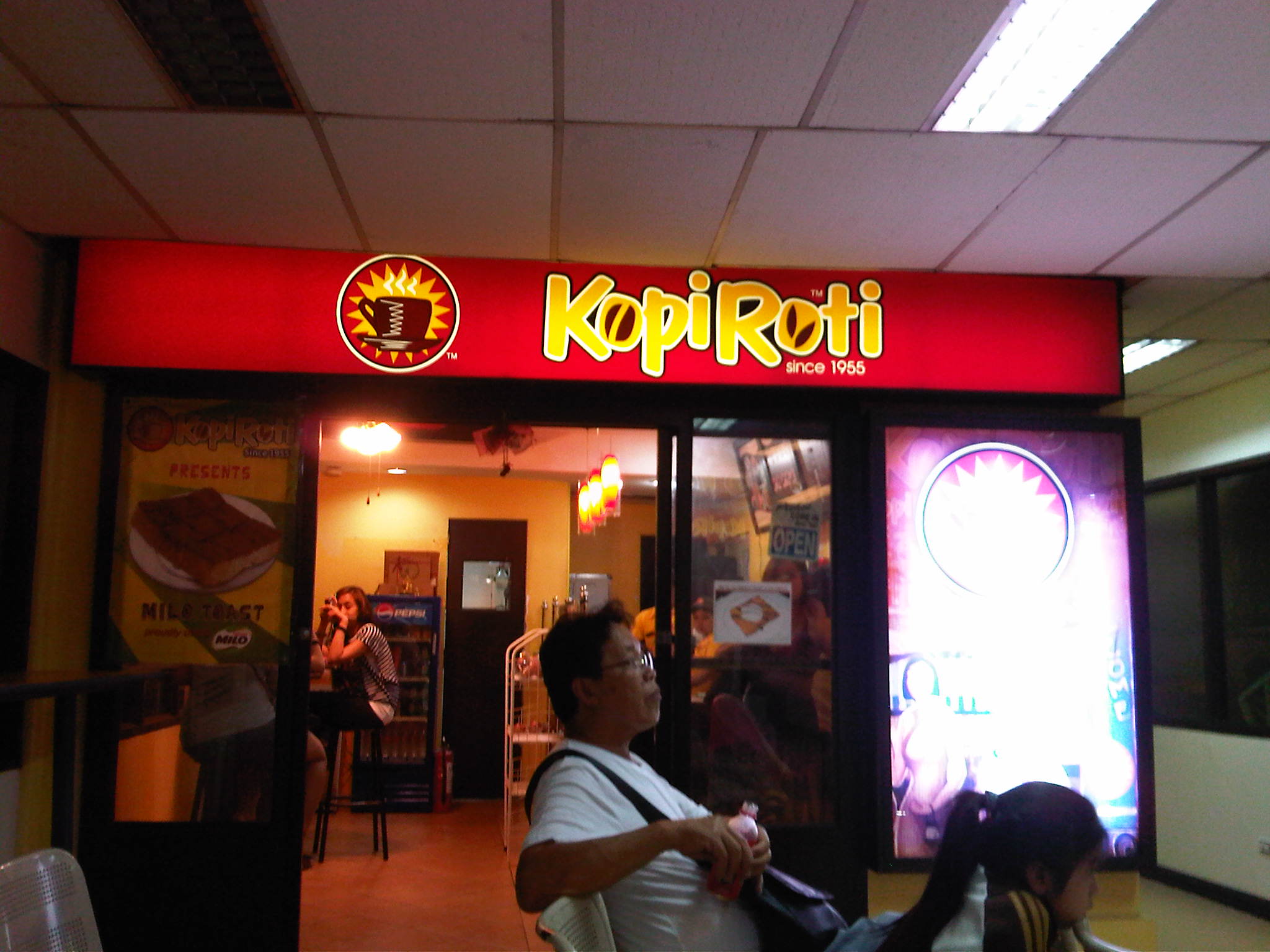 Refreshments – there are 3 concessionaires inside the building, all on the second floor, including one generic food stall and this one featured in the photo that’s quite popular for its coffee buns and kaya toast.
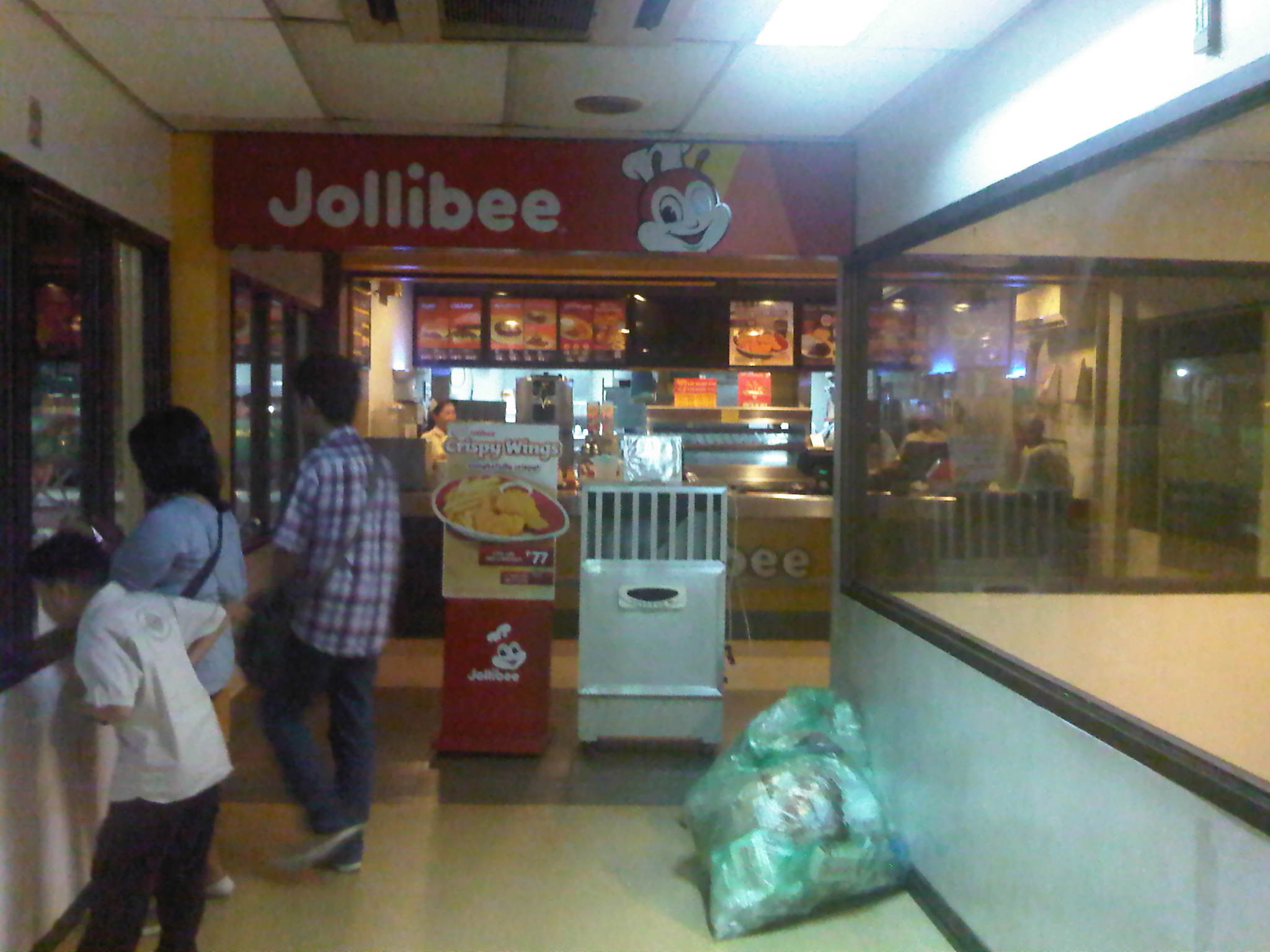 Fast food – the other concessionaire is a branch of the most popular and largest fast food chain in the Philippines
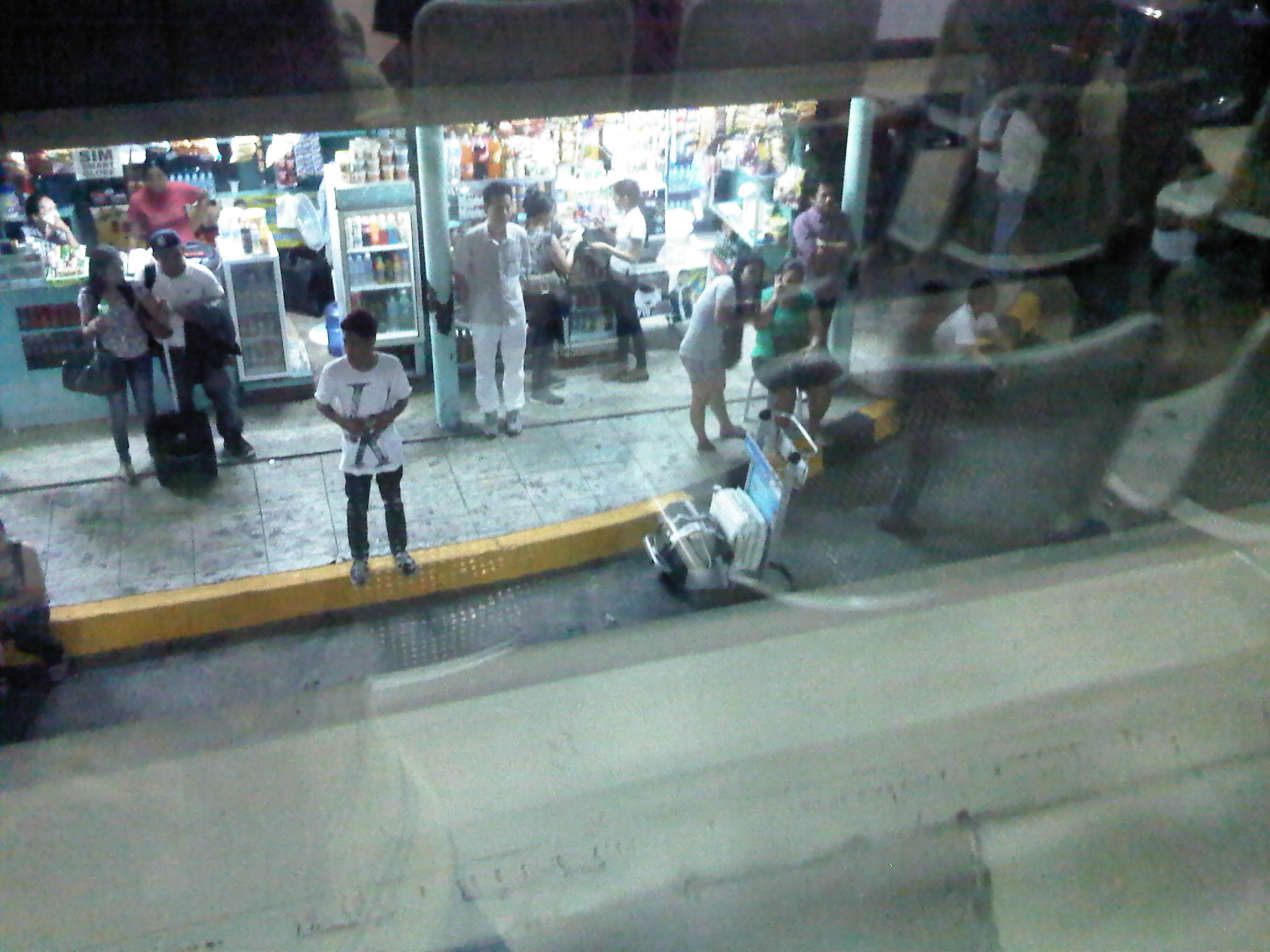 Kiosks and stalls – at the back of the building are kiosks and stores spread out in the open parking lot for people who’d rather wait in these areas. One will find here whole families and other groups loitering about or even picnicking as they wait for arriving passengers.
 Comfortable – the second level of the building is air-conditioned unlike the first level and so many people choose to lounge around the area. Most seats, however, are immediately taken and so a lot of people end up standing while watching out for people they’re fetching.
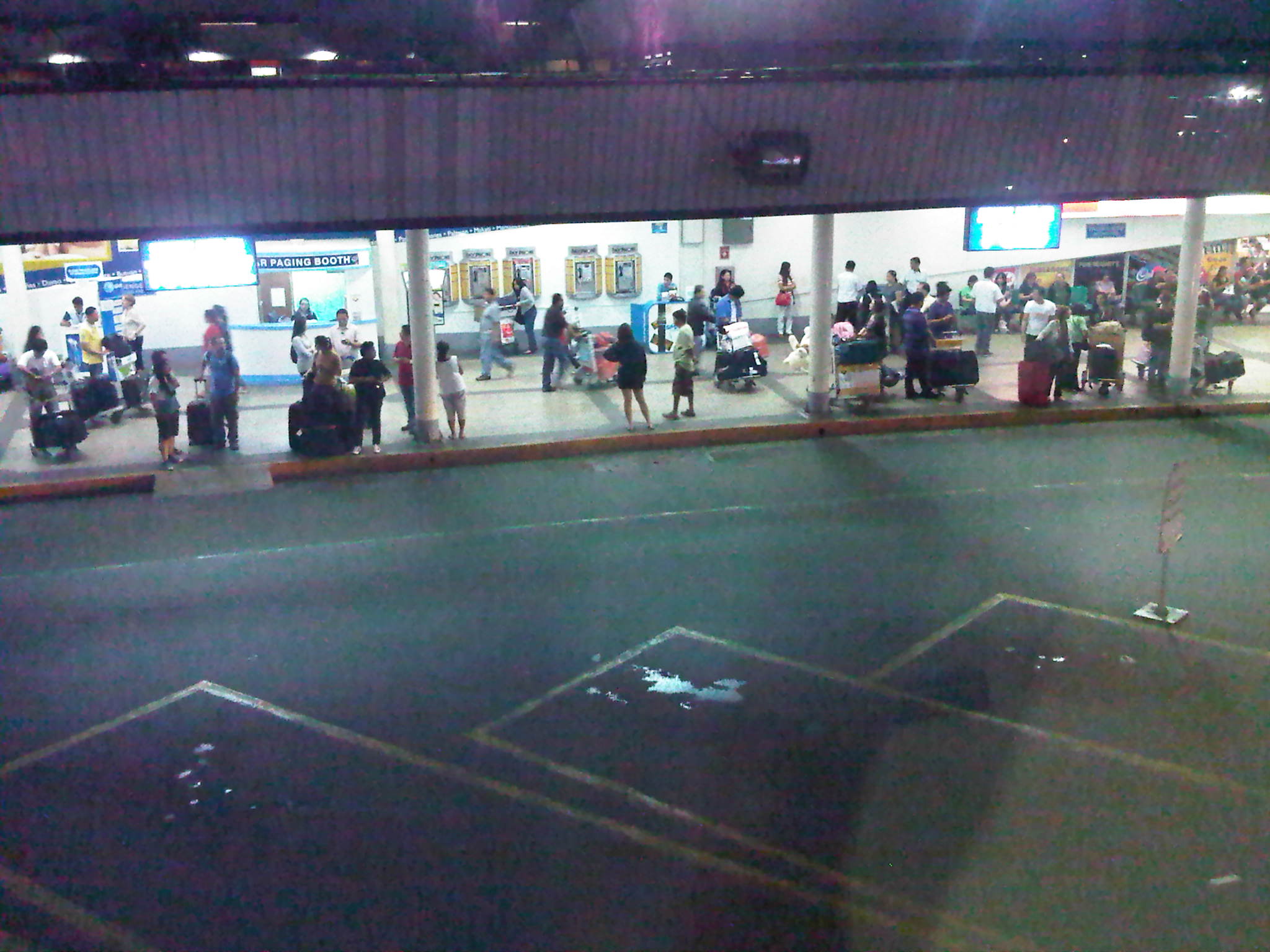 Waiting game – arrivals waiting for their sundo (people fetching them).
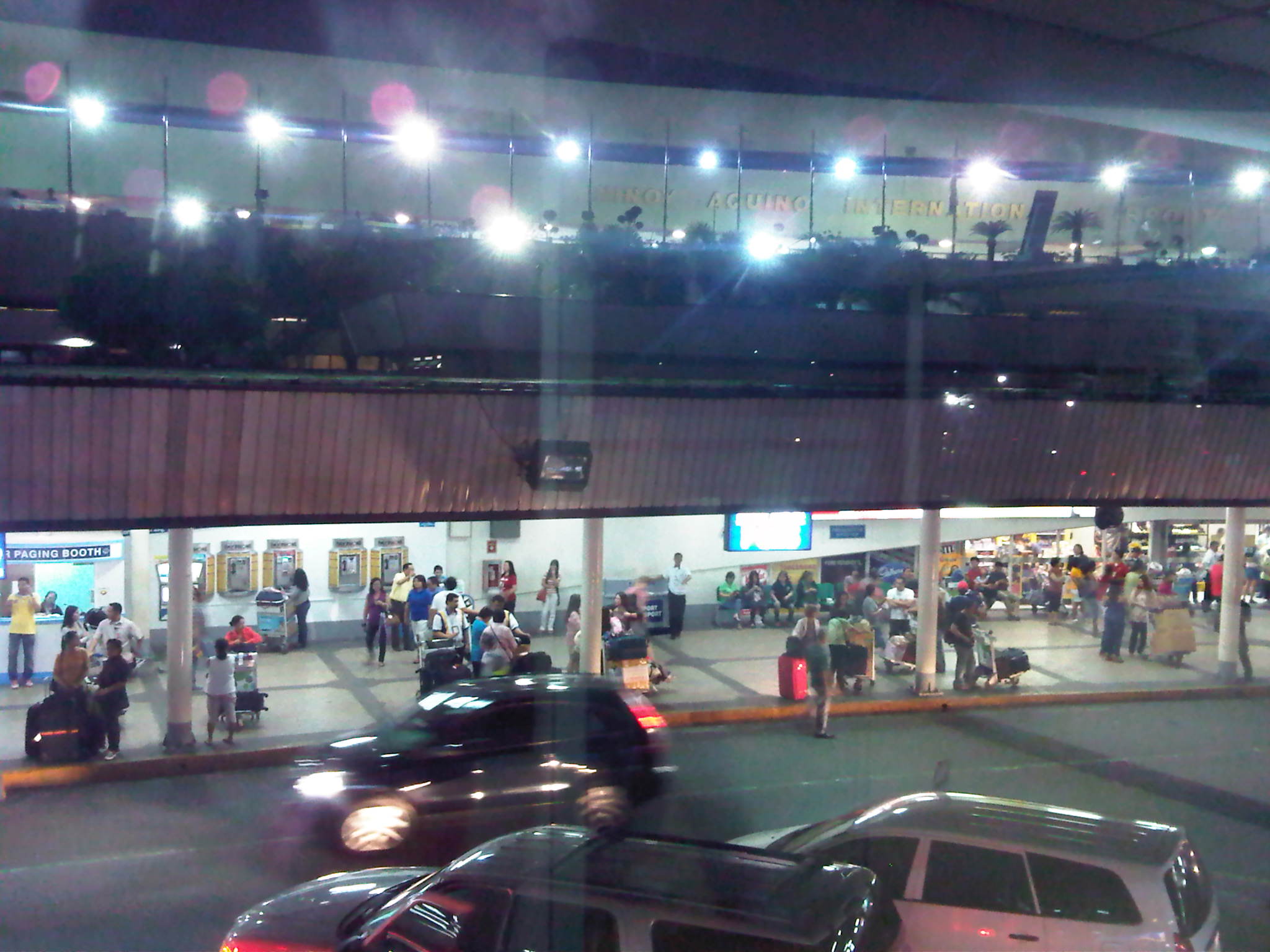 Another level – there is actually another driveway atop the one seen in the photo. The lights at the top of the photo are lined up along the driveway for the main terminal building, which is reserved for VIPs and others extended the privilege of using the driveway. All other passengers have to cross from the main terminal to descend towards the area shown and the lower driveway that’s level with the open parking lot.
 Congestion and mayhem – the arrival of several aircraft particularly from major origins like Hong Kong, Dubai and the US (via Narita and Nagoya) meant that the area would be very crowded with passengers, well-wishers and vehicles. People and drivers tend to disregard personnel trying to manage the people crossing between the terminal and the waiting area, and traffic along the driveway.
 Crowded house – the ground floor area of the building where passengers an well-wishers generally meet up is a very crowded area and airport personnel often struggle in controlling people from crossing over to the arrival area to personally fetch passengers, often with cause due to the amount of luggage (e.g., balikbayan boxes) passengers tend to bring with them when traveling to Manila.
NAIA Terminal 1 serves most international flights coming in and out of Manila that are not Philippine Airlines, Cebu Pacific or ANA (the only other foreign carrier using the larger and more modern Terminal 3). It definitely has seen better days and its current capacity and facilities are not suitable for the number of flights that it serves given that it wasn’t adequate from the time it started operation in the early 1980’s. There is the welcome news that T1 would be renovated and that a large reputable firm has been hired to do the unenviable task of improving this gateway. We can only hope that the project proceeds with little delay so that travelers would be able to avail of better services and perhaps allow this terminal to shed its tag of being the worst airport in Asia.
–
Suvarnabhumi Airport revisited
The first time I traveled to Bangkok in 2002, the international airport was still at Don Muang, which is to the north of the central business district. A few years and few more subsequent visits later the international gateway was moved to the new Suvarnabhumi International Airport located to the east of Bangkok. It is the 4th largest single terminal in the world and has the tallest control tower of any airport. At the time of the transition from the old airport, there were already other infrastructure in place or being constructed for an efficient connection to the metropolis. These included an elevated expressway and an airport rail link. Both cut down travel time between the airport and Bangkok’s CBD significantly. I was able to use the expressway several times in my previous visits to Bangkok but was only able to use the rail link recently. It is a good option particularly when arriving during the peak hours when traffic can still terrible along Bangkok roads and when your destination happens to be accessible via the BTS Skytrain to which the rail link connects at Phaya Thai station.
Following are a few photos taken upon my arrival at Suvarnabhumi after something like 5 years since my last visit to Thailand.
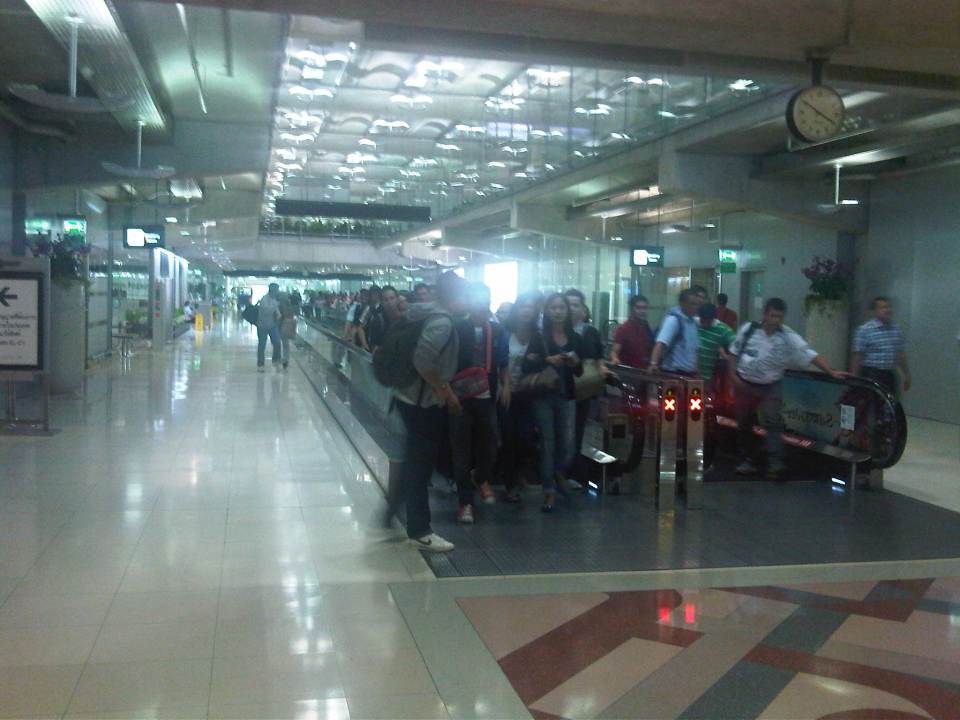 Ready, get set, go? – Filipino overseas foreign workers (OFW) in transit to Dubai and other destinations via Bangkok seem to be rushing to their transfer flight using the moving walkway or “walkalator.”
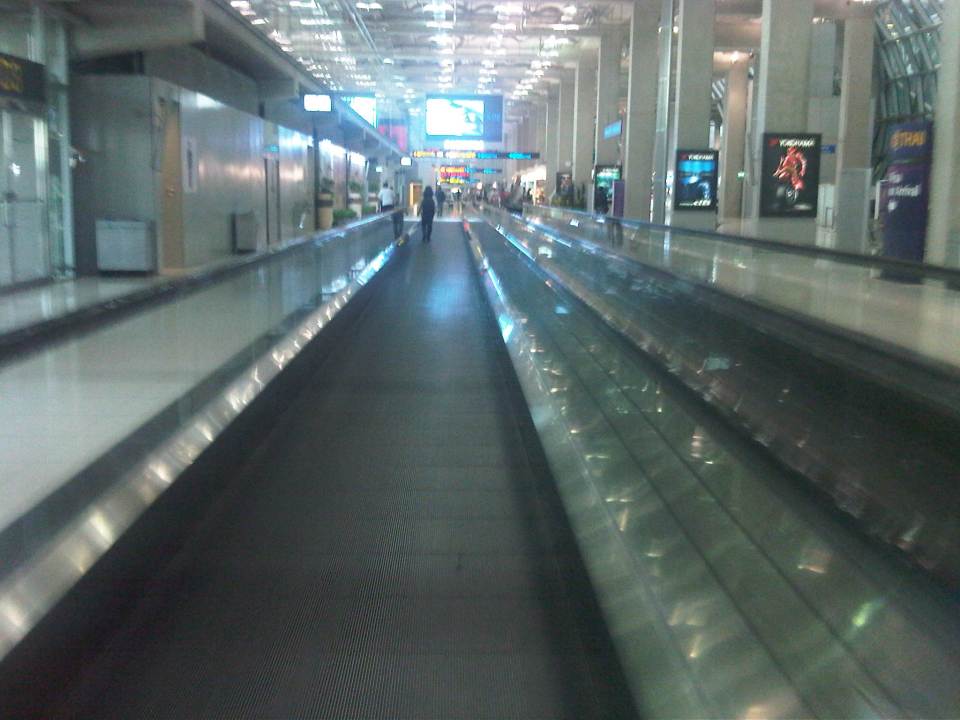 Long walks – the airport terminal is basically linear and moving inside the terminal would probably require one to use the many moving walkways especially if one is in a hurry to board or for a transfer.
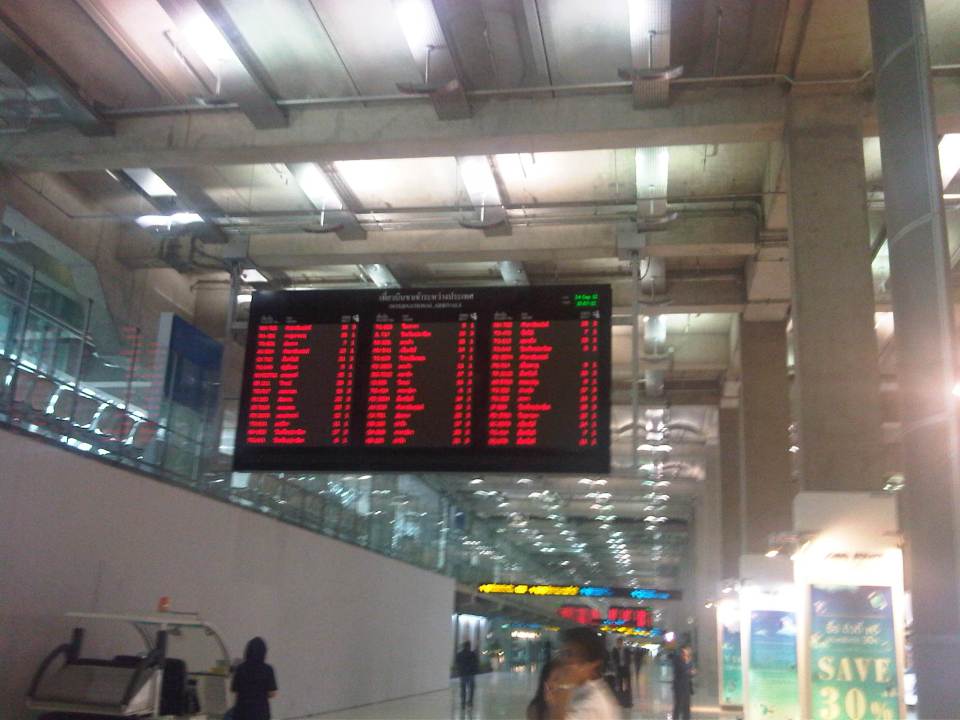
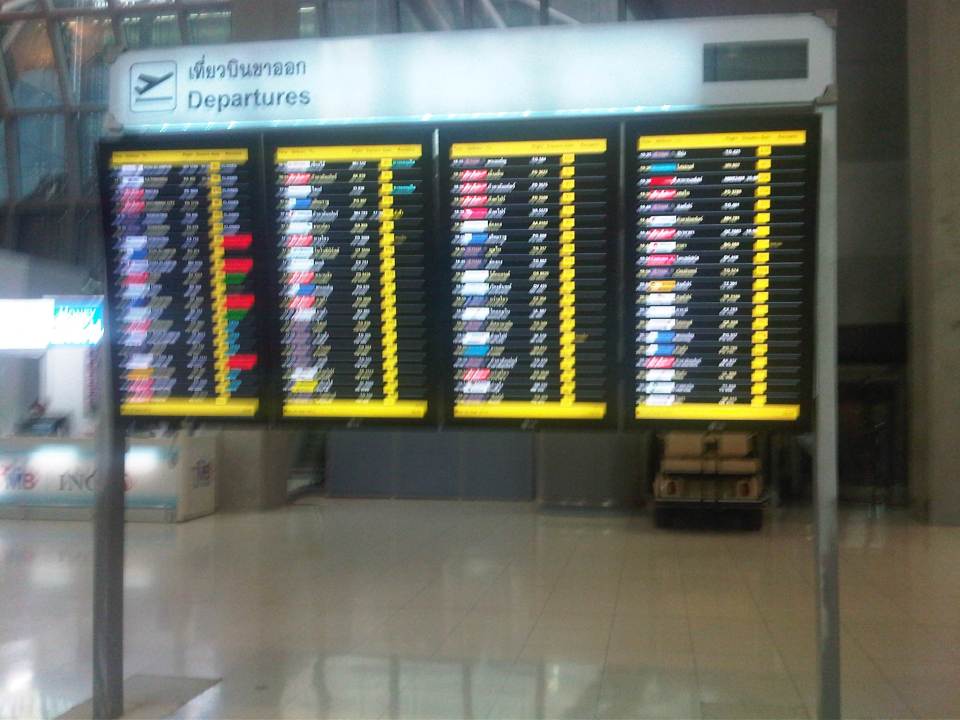 Departures – flight information board for departing aircraft
 Can’t get enough of info – overhead electronic information boards for passengers can be quite useful for transfers or boarding information
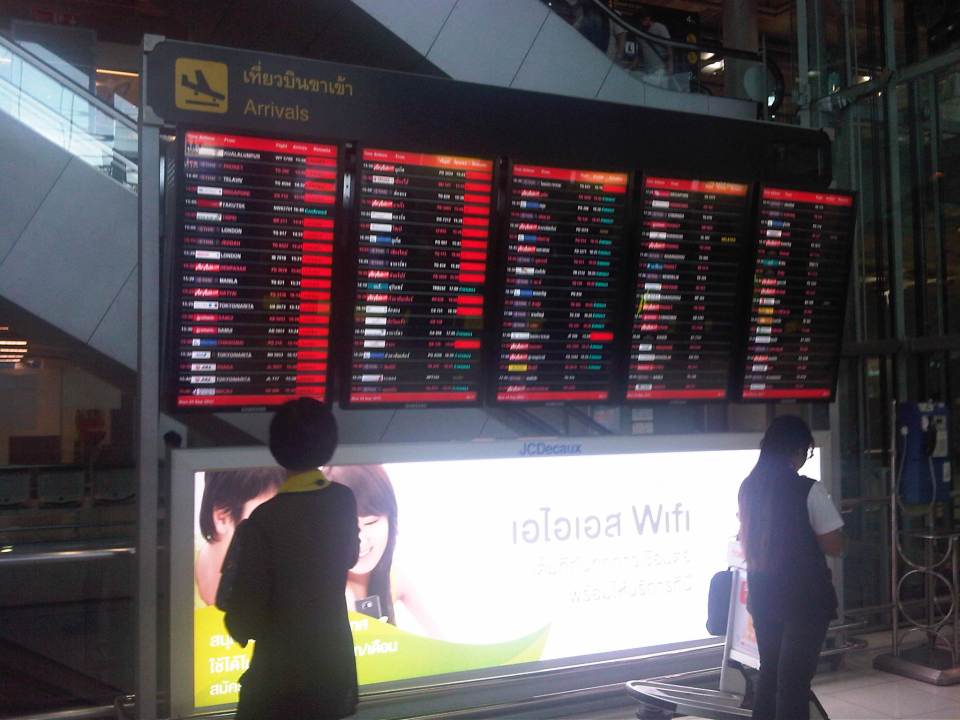 Arrivals – information board for arriving aircraft are useful to people picking up friends or clients.
 Airport concourse – the spacious airport terminal provides enough room for moving around. There are information booths for visitors/tourists as well as those catering to currency exchange, transport services, souvenirs, and snacks.
 Up and down – escalators and elevators are available for the convenience of airport users particularly when traveling to or from the rail link.
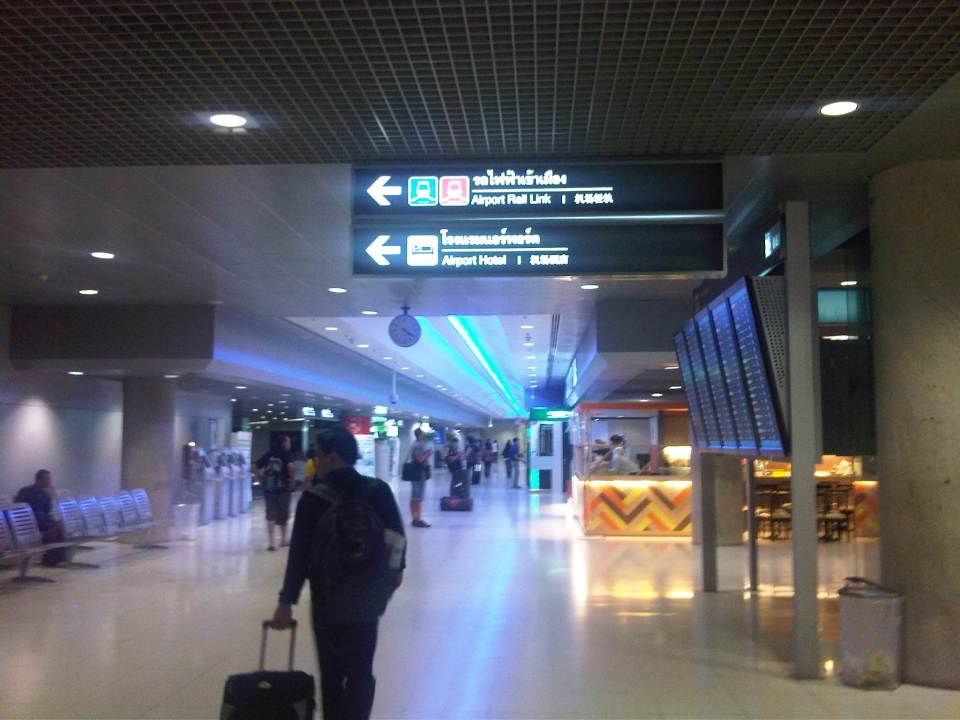 In transit within – heading to the airport rail link, travelers will be guided by the signs along the way.
 Airport rail link – ticket vending machine for the rail express link between the airport and the city center
I will post more photos later of the interior of the passenger terminal. There is not much difference between the terminal as I remember from the last time I was in Bangkok 5 years ago and this recent trip. This will be obvious in the next post on the airport.
–
 Caught (up) in traffic


