
Home » Airports (Page 22)
Category Archives: Airports
Road congestion around NAIA: Sales Bridge
A particularly urgent problem concerning traffic congestion is the case of the Sales Bridge along the Sales Road at the Nichols/Villamor Air Base area. The bridge and the road is the main access from Fort Bonifacio and the Taguig/Makati areas and is used by most vehicles going to or coming from the airport not using EDSA and Tramo. That’s practically much of the airport-related traffic from Quezon City, Pasig, Marikina and Rizal Province. There’s usually also traffic congestion along Tramo from EDSA but this is predictable and the reason why more people tend to use the route via Sales Bridge. Nowadays its pretty bad in the Villamor area and this has been an inconvenience to a lot of travelers.
It’s been more than a couple of months now since repair/rehabilitation works for the Sales Bridge began and there are only a single lane bound for the west-bound direction and 2 lanes for the east-bound side. From the last time I passed through the area, it seems that the work on the bridge will be taking more time to complete and so more people will have to endure the inconvenience of congestion in the area. There are not so many options for traffic re-routing but I believe traffic enforcers at the intersection of Sales Road and the West Service Road should prioritize traffic bound for or coming from the airport considering the latter being a major gateway not just for Metro Manila but for the country.
 Vehicles queued along the east-bound side of Sales Road. The blue wall on the right is the fence of Villamor Air Base. The overpass on top is the access ramp for the Skyway.
 2At the junction, where there is a roundabout for traffic coming from the airport, Sales Bridge and the West Service Road of the South Super Highway, traffic is all tied up and you can usually hear a lot of honking among motorists whose patience have been tested by the traffic jam.
 While there are traffic enforcers posted at the intersection to manage traffic, they can only do so much given the capacity of the bridge. The volume of traffic from the airport and the service road can usually overwhelm the enforcers but they should try to establish priority for traffic. It seems that the west service road is usually given more priority than the traffic to and from the airport. This should not be the case here considering NAIA is a main gateway to Metro Manila and the country.
–
Overnight parking at NAIA
The main terminals of Manila’s Ninoy Aquino International Airport (NAIA) each have overnight parking facilities. These are all open lots located near the terminals and have roving personnel on motorcycles for security. The overnight parking spaces for Terminals 1 and 2 are located a bit of a walk away from the terminal buildings but are generally spacious and do not reach their full capacities.
Terminal 1’s overnight parking is located on the lot to the right as travelers drive through the security check for vehicles. Terminal 2’s overnight facility is near the old Nayong Pilipino gate and appears to be the combined parking lots of the now-closed theme park and the also closed Philippine Village Hotel. Terminal 3’s overnight parking spaces are generally spread out with most along the service road or driveway that leads to its still closed multi-level parking facility. Other spaces made available for overnight parking are those near the entrance to Terminal 3.
I haven’t tried overnight parking at T1 and T2 but I recently availed of overnight parking at T3. Following are a couple of photos to describe overnight parking at T3, followed by a few tips on how to get a slot in what is always a full area.
 Overnight parking spaces are along the service road on the right that ultimately leads to a ramp access to the still closed multi-level parking facility at Terminal 3. There is a sign that states overnight parking is full. Ask for assistance from the security staff to find a slot.
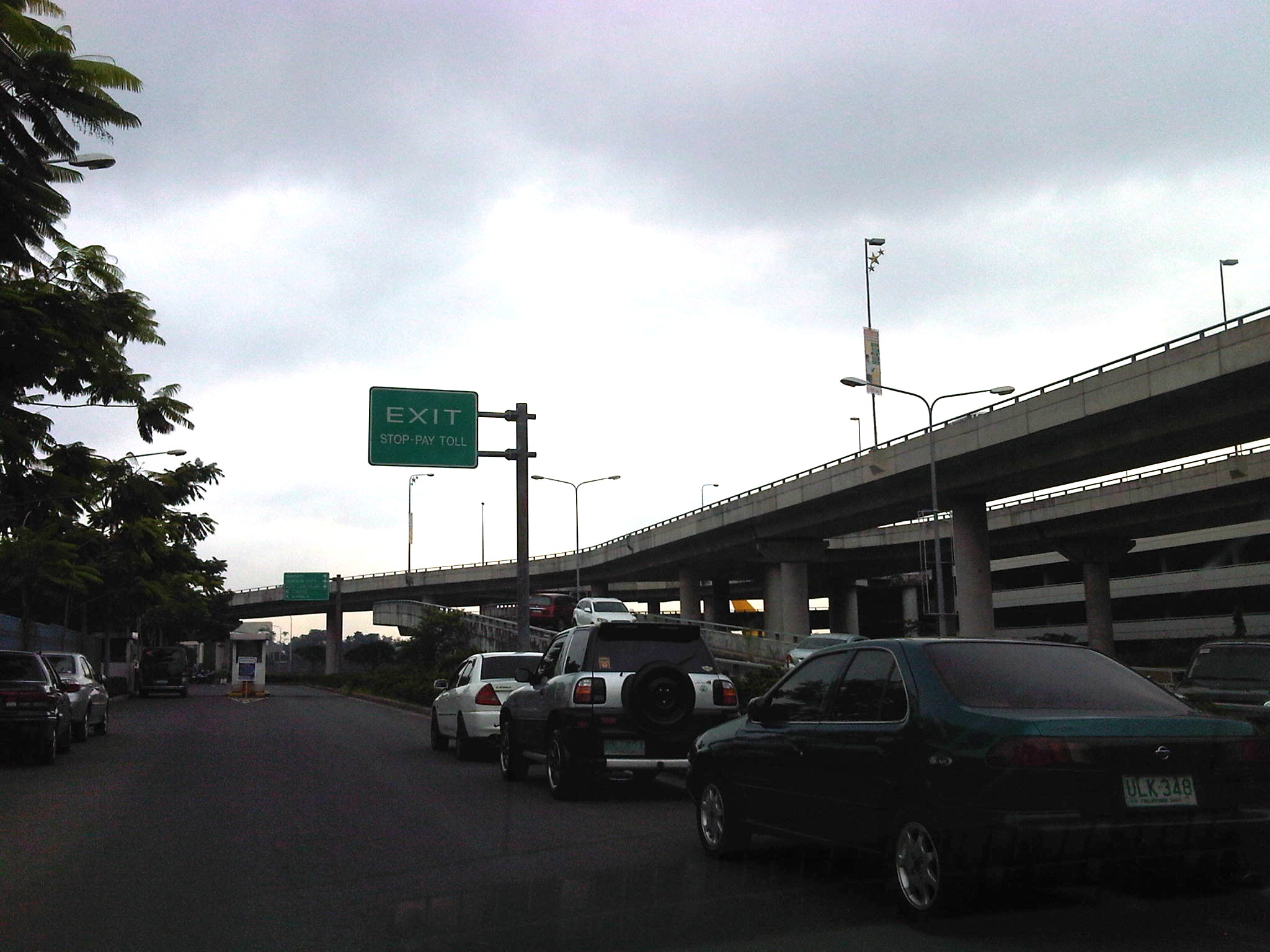 The service road leads to a ramp (visible at the center of the photo) to the closed multi-level parking (also visible on the right of the photo) of Terminal 3.
A tip for those wanting to park their cars for a night or more at Terminal 3: ask nicely for assistance from the security guard at the entrance to the parking lot. They will help you find an open space somewhere (trust me, it’s quite a challenge) in what is always a full overnight parking area. Show your gratitude by tipping. It’s definitely worth it and they’ll probably even check your car to return the favor. And yes… overnight parking fees are quite cheap at 50 pesos (about 1.15 USD) per night.
–
Persistence of stubornness? Taking photos on the tarmac
I took this photo while waiting for our plane to complete boarding procedures at Changi’s budget terminal. Two passengers (not sure if they are OFWs or tourists) stopped on the tarmac and took photos of the plane before each posed to have their photo taken by the other. They were so obvious and took quite some time on the tarmac that I was already anticipating Changi security personnel to approach them and instruct them to go and board the aircraft. For some reason, the ground staff did not seem to notice them or perhaps just decided to just let it go as a harmless act. Harmlessness notwithstanding, such incidents are actually considered security issues, which are among those ticked off by people evaluating airports. And this is why for most cases at the Budget Terminal ground staff are strict about passengers loitering on the tarmac including taking photos like what is shown below. I can understand the value, possibly sentimental, of such souvenir photos especially if one is heading home after a long stay abroad as a worker. Still, the time spent should not be as if people were already holding photo-shoots on the tarmac.
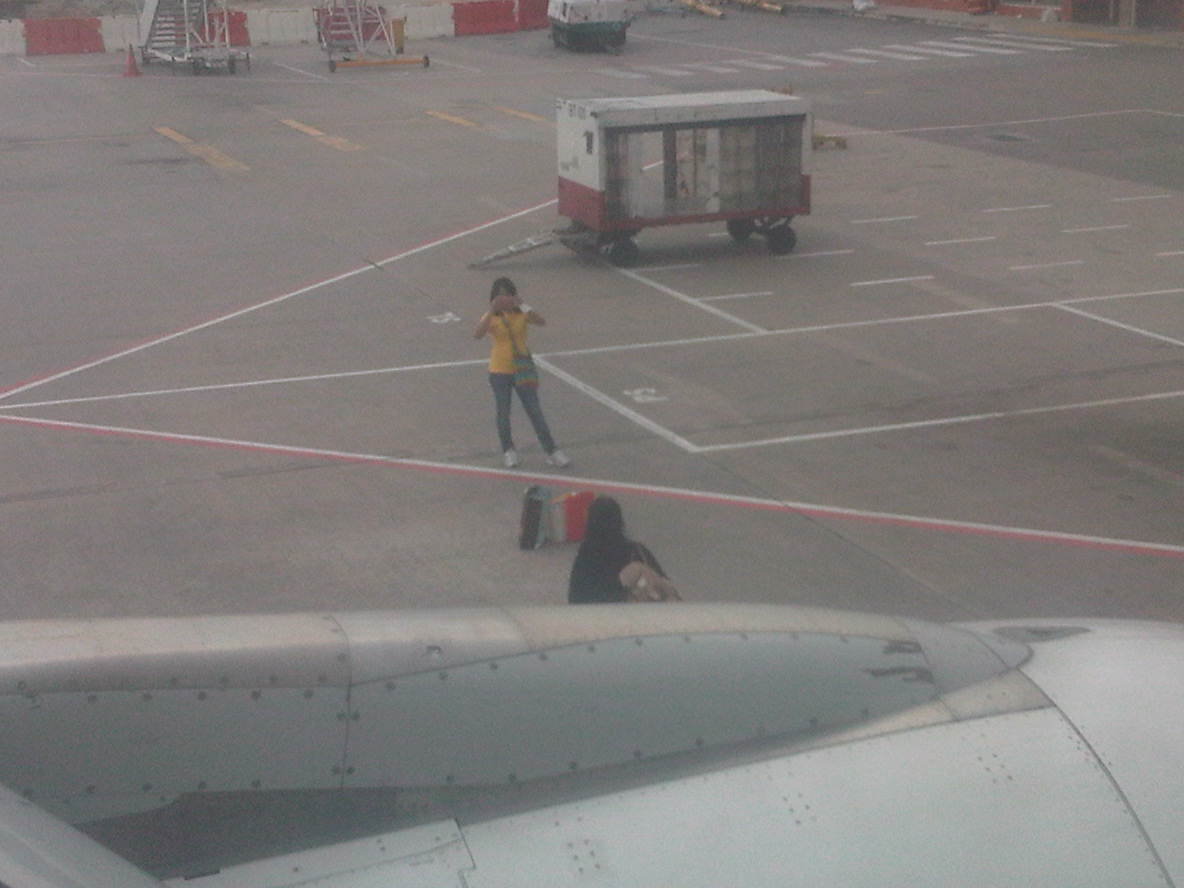 Passengers taking photos on the tarmac and near the restricted area with respect to the aircraft
Close-up of the same photo
–
Another look at Tagbilaran Airport
Tagbilaran Airport is the gateway to the province of Bohol and the resort paradise that is Panglao Island. I wrote about the airport earlier but the photos were quite limited as they were somewhat taken more as a matter of coincidence and for souvenirs than for a blog feature on airports. Following are a few photos I consciously took specifically for this post.
 Tagbilaran Airport as seen from our plane that had just arrived.
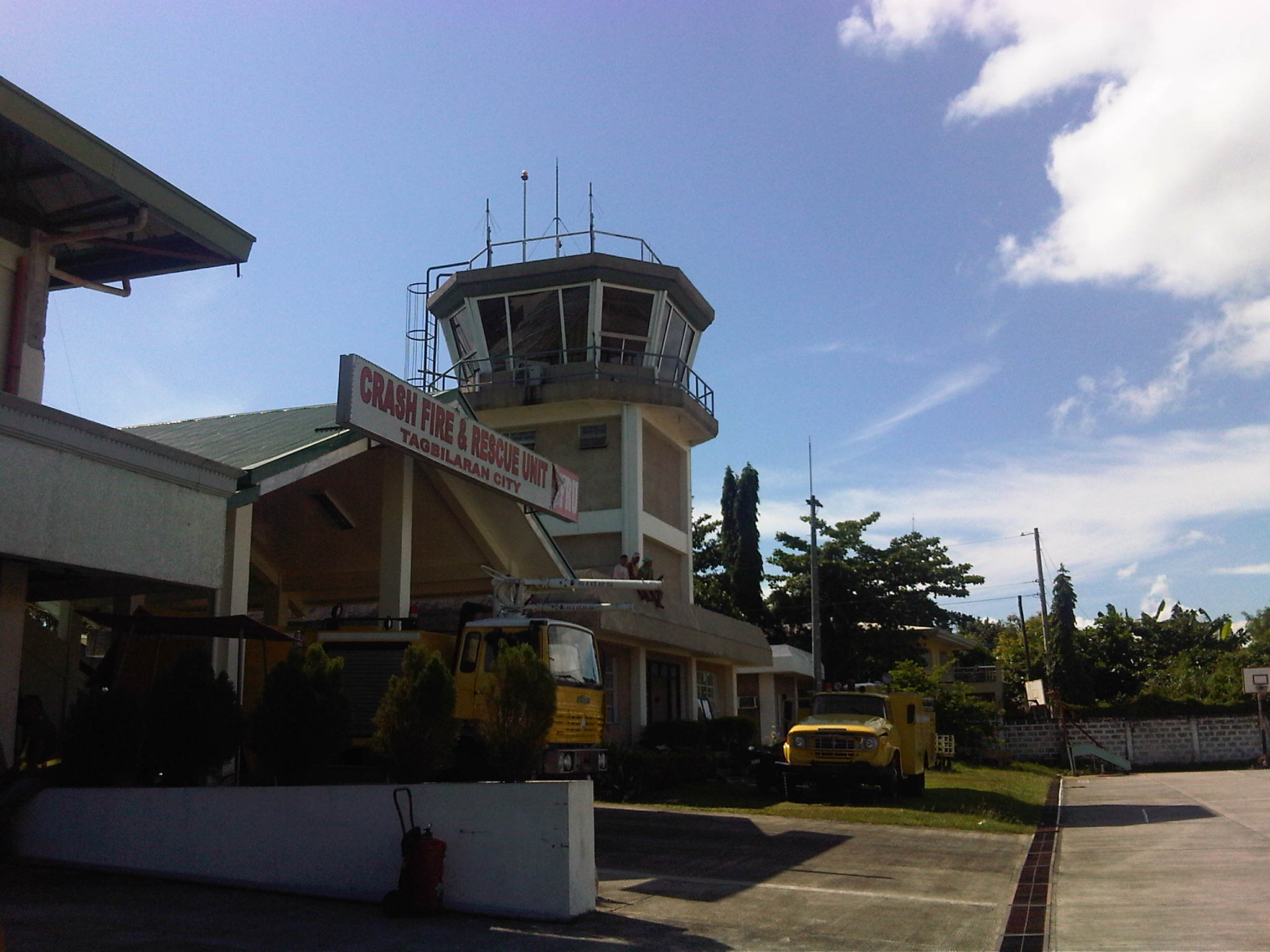 Air traffic control tower and emergency services at the airport.
 The airport is under renovation with the terminal being expanded to be able to accommodate the increasing number of passengers being handled by the airport.
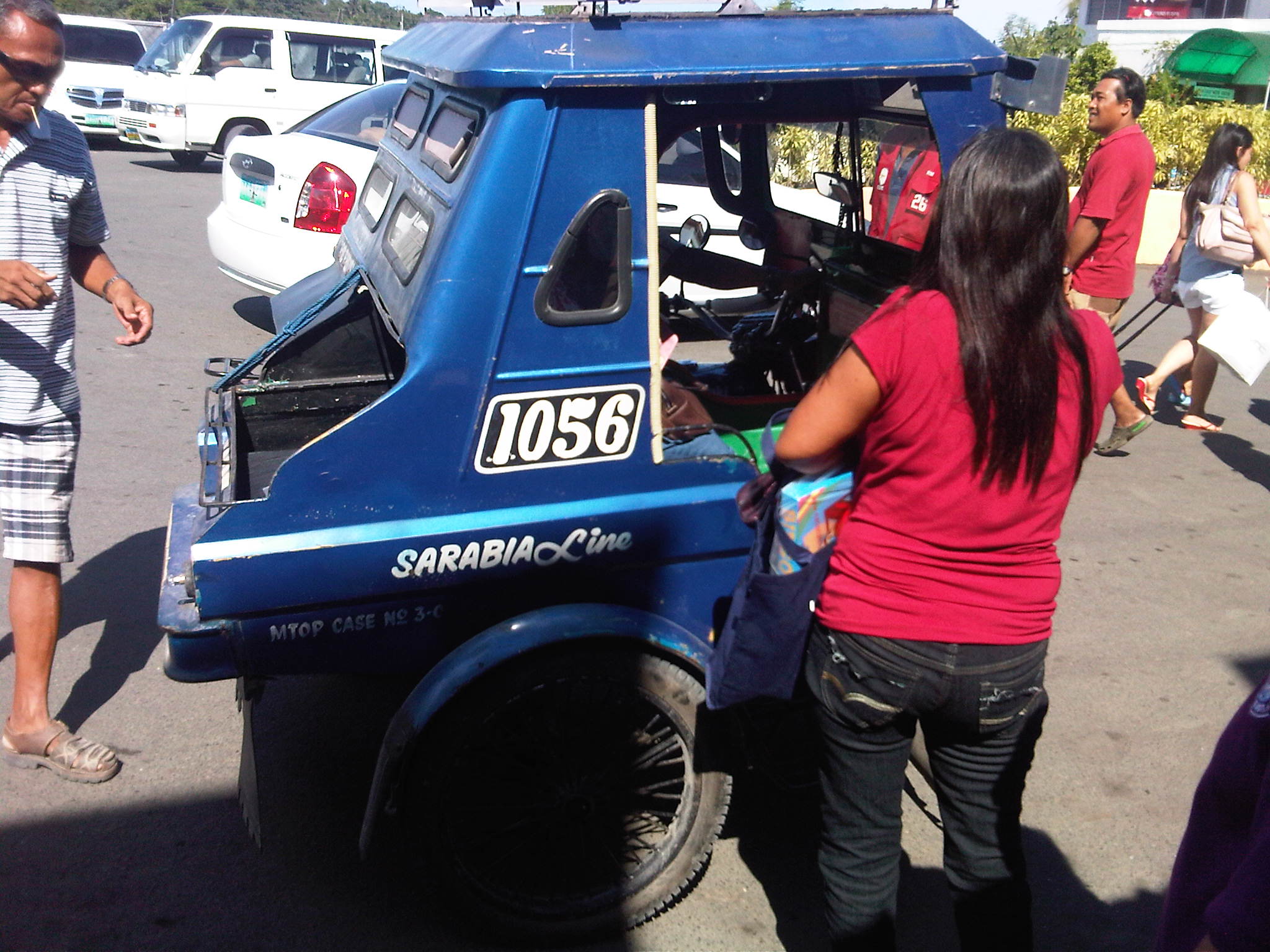 Tricycles are the dominant mode of public transport in Tagbilaran’s roads and others throughout Bohol. Their version of the tricycle comfortably seats 3 passengers including 2 in the cab and 1 behind the driver. The sidecar also features a baggage compartment or trunk in the back.
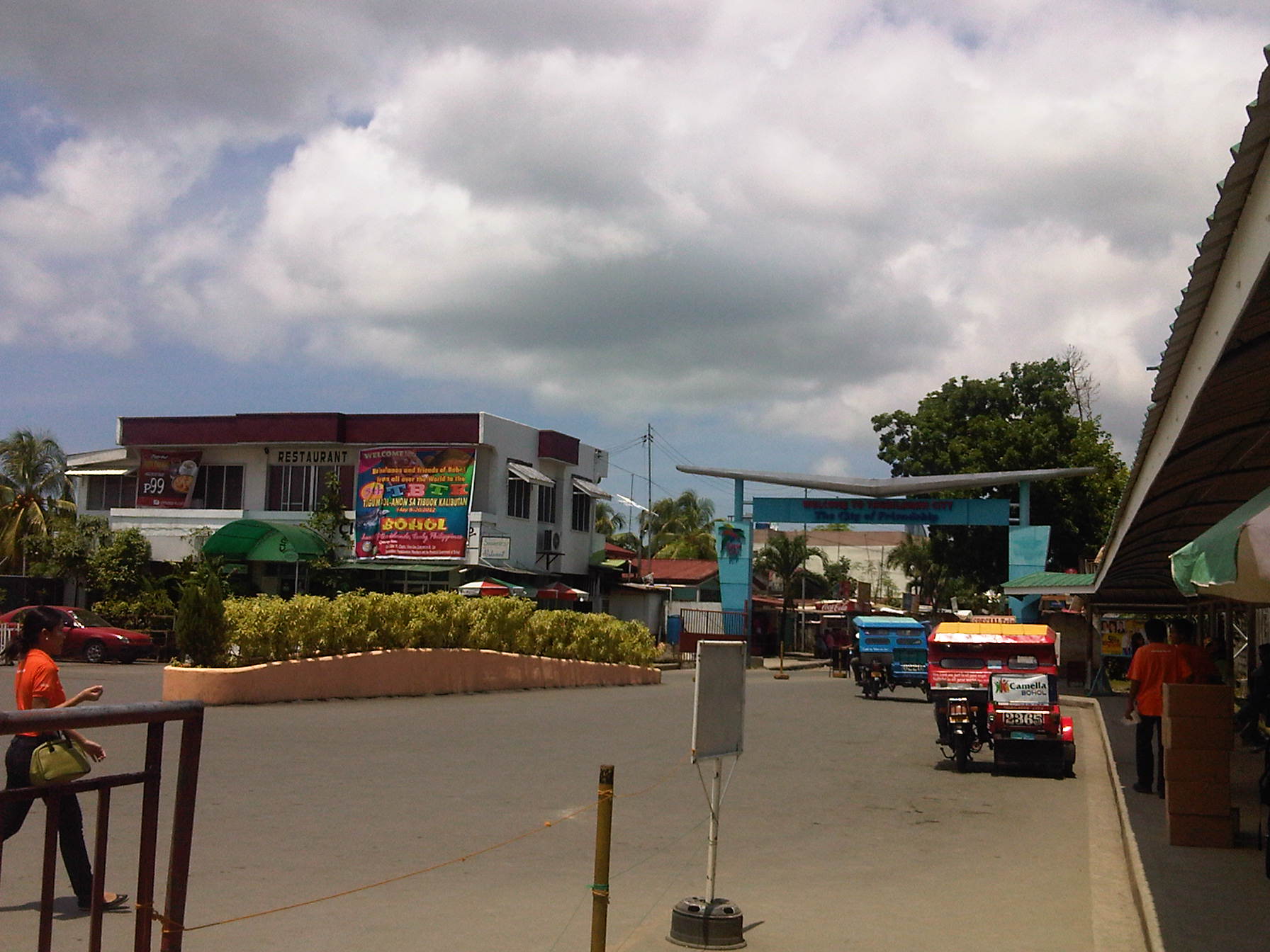 Entrance to the airport terminal – there’s precious little space at the airport for passengers and well-wishers. In fact, parking is very limited and there is usually not enough space for the mix of people and vehicles when a plane arrives at the airport.
 Pre-departure – seats at the ground floor pre-departure area at the airport. There are two concessions from where passengers may purchase refreshments or last minute souvenirs.
 Extension – the second floor is also used as waiting area for passengers. There’s one concessionaire on the second floor and a massage service with blind men as masseurs.
 Baggage handling – on the way to board our plane, I took a quick photo of the baggage being loaded unto the plane.
A new airport is being proposed for Bohol as the current one in Tagbilaran can no longer be expanded with the area required for a longer runway and a larger terminal restricted by the surrounding built up area. A new airport is planned to be constructed instead in Panglao Island where it will be closer to the resorts and other attractions that regularly bring in thousands of tourists and perhaps many more should there be a better airport for Bohol. Already, there are many issues being raised against a new airport but then if the project is implemented according to international standards, including those pertaining to the mitigation of negative environmental impacts, then we should expect the airport to be more beneficial to all involved.
–
Bali-Denpasar International Airport
One of the more interesting airports I have used in my travels is the Bali-Denpasar International Airport. I was not able to take photos when we arrived at the airport as it was already late and our group was already feeling tired from the long flight from Manila via Singapore. We also didn’t expect the long walk from the terminal to the parking lot where the guide who fetched us left his vehicle. Thus, the following photos were taken on our departure when we had some time to explore the nice airport.
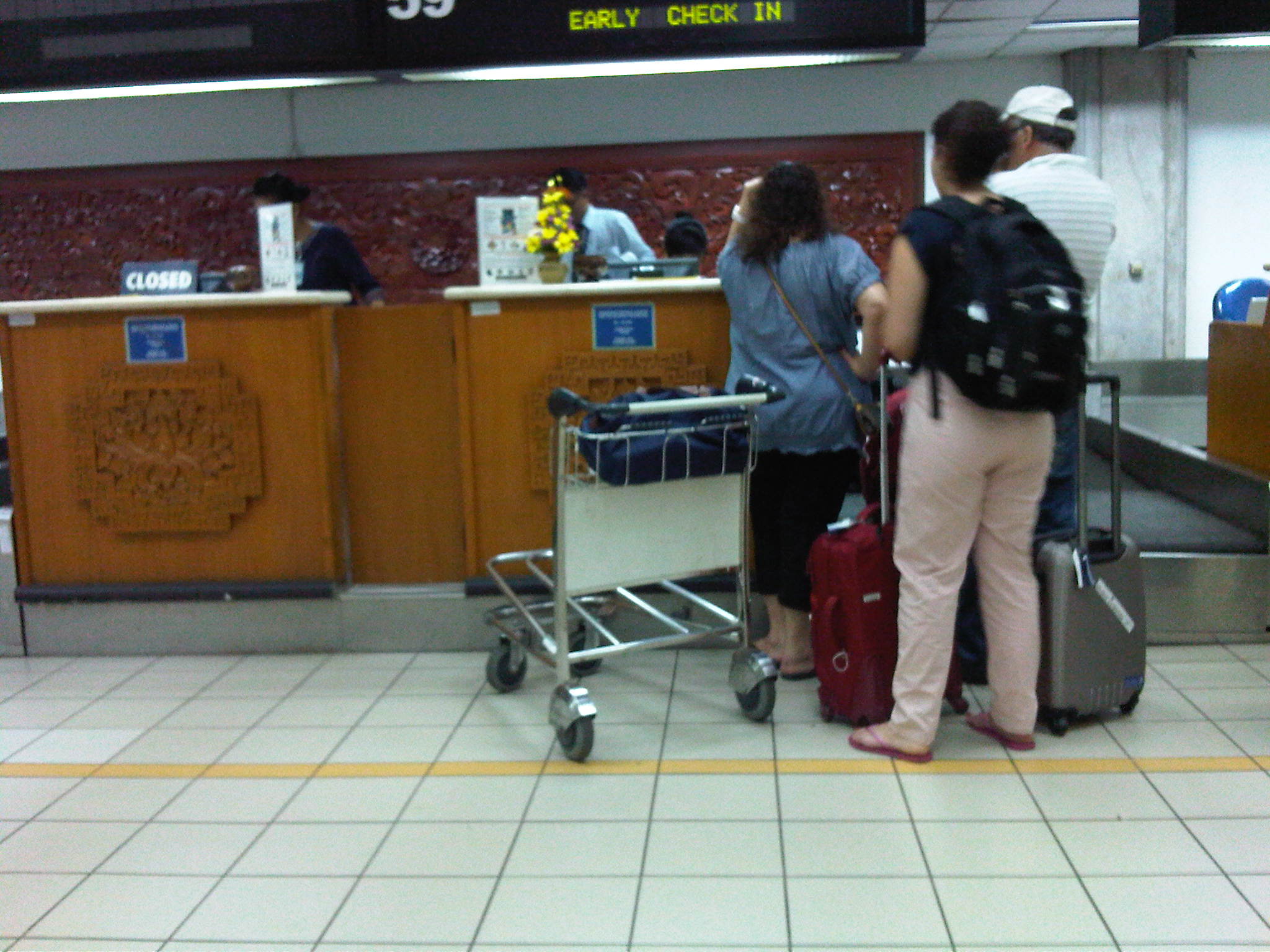 Check-in – we were quite early at the airport and were directed to the early check-in counters. I wanted to take more photos but was aware of the tight security at the airport check-in area, and didn’t want to risk being accosted by airport security.
 Where to? – Directional signs at one of the junctions inside the airport
 Time out – the spot in front of a world map with international times on display seems to be a favorite resting place for airport maintenance staff though I am not really sure about the intended use of the steel poles.
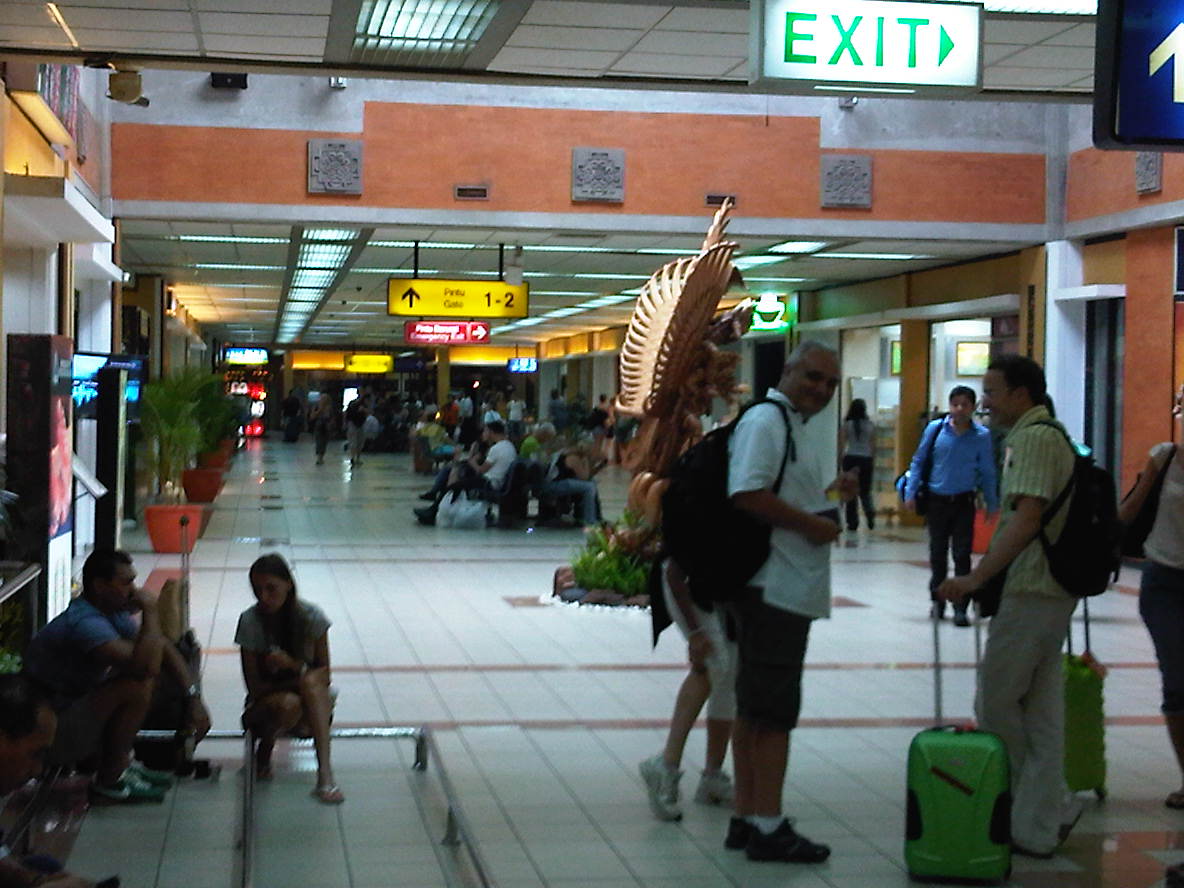 Burning time – travelers exchanging stories near a junction where stands a statue of the mythical figure Garuda, the King of Avians who is the inspiration for the name of Indonesia’s national airline
 Shopping mall – inside the airport, the layout reminded me of shopping malls as corridors were lined with shops and restaurants.
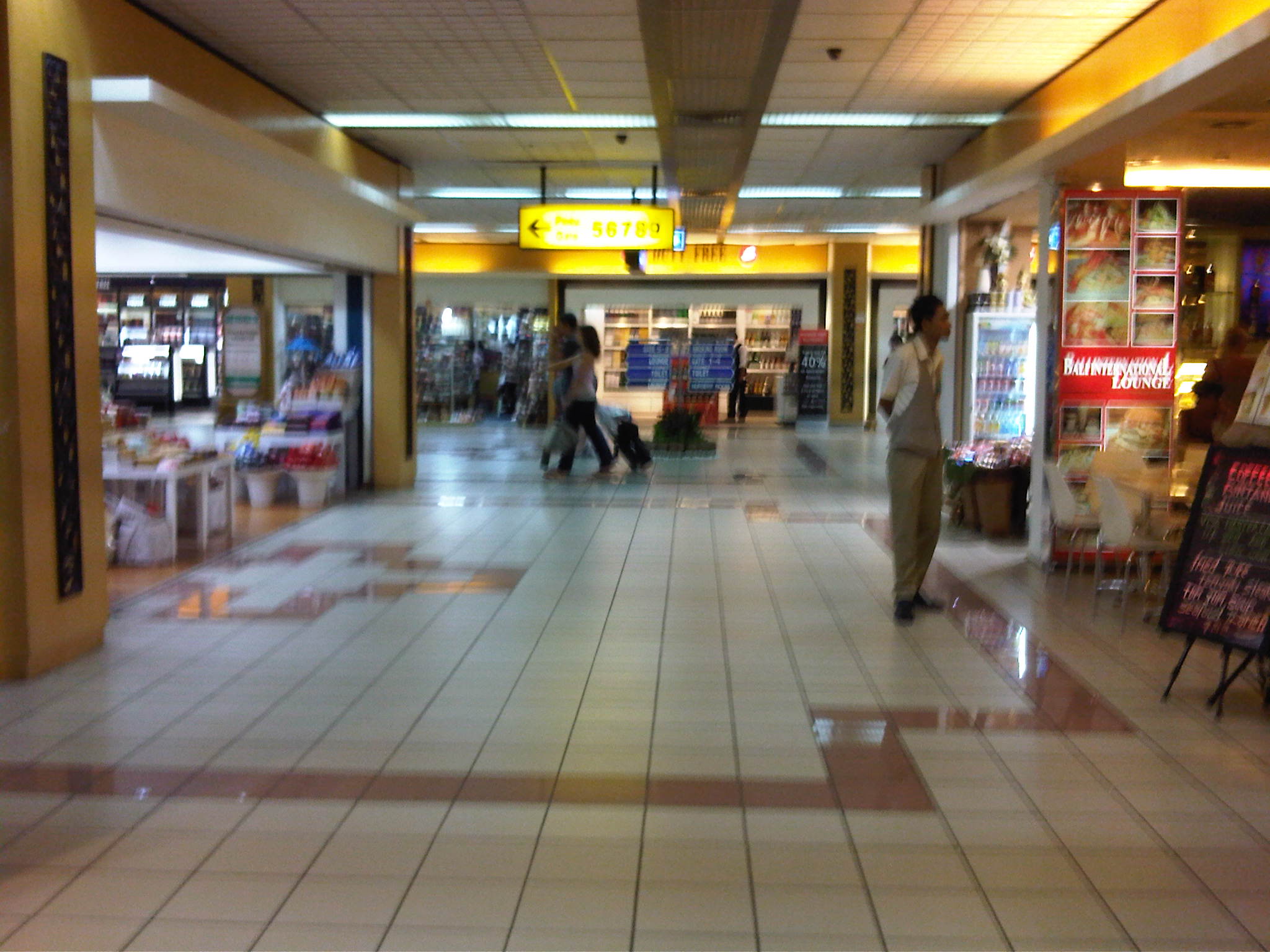 Shop and eat – while the prices indicated in the menus of restaurants were reasonable (read: they compare favorably to prices at restaurants outside the airport), the goods in the shops were priced for tourists (read: a bit expensive even considering duty free privileges). You can try haggling with some shops especially for local products like batik or souvenirs but you won’t be able to get prices close to shops elsewhere like, say, Bali Collection.
 Must try and must buy – Indonesia chocolates are available at the airport. The Monggo brand has many variants and the prices seem reasonable though I assume they are even cheaper if bought outside the airport. We didn’t have time to go to a regular supermarket and so had to do some quick shopping at the airport.
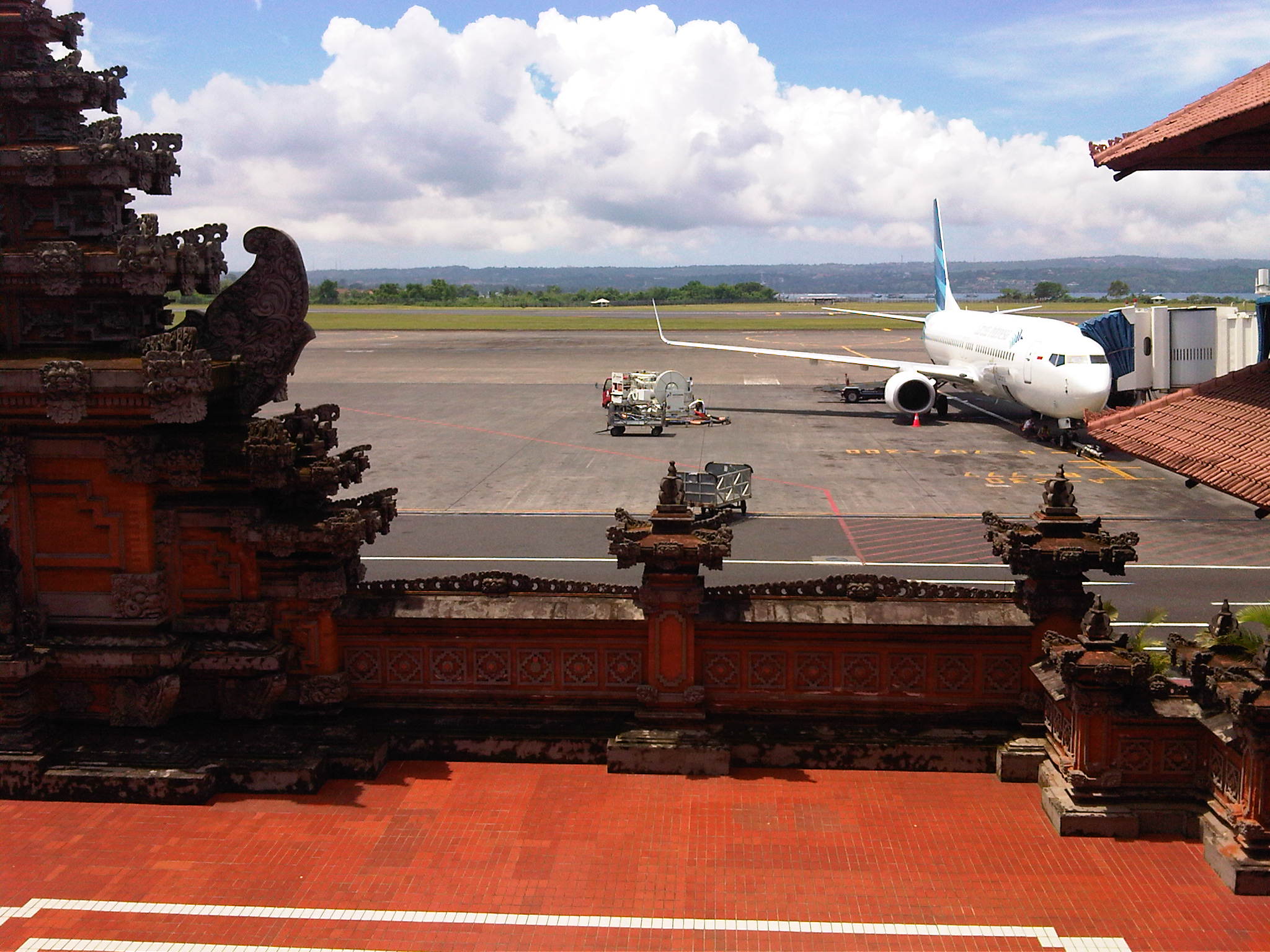 Ancient and modern – Indonesian national carrier Garuda B737 docked at the airport. Garuda, of course, also refers to the mythical God-king of the birds.
 Ancient gateway? – I am reminded of the Sci Fi series Stargate everytime I look at this photo. Such architecture gives the airport a lot of character as it banks on the cultural heritage of the region.
 The older wing of the airport with its clay-tiled roofs is shown on the right.
 Another look at the Balinese structure with a modern air bridge and the newer wing of the terminal in the background on the left.
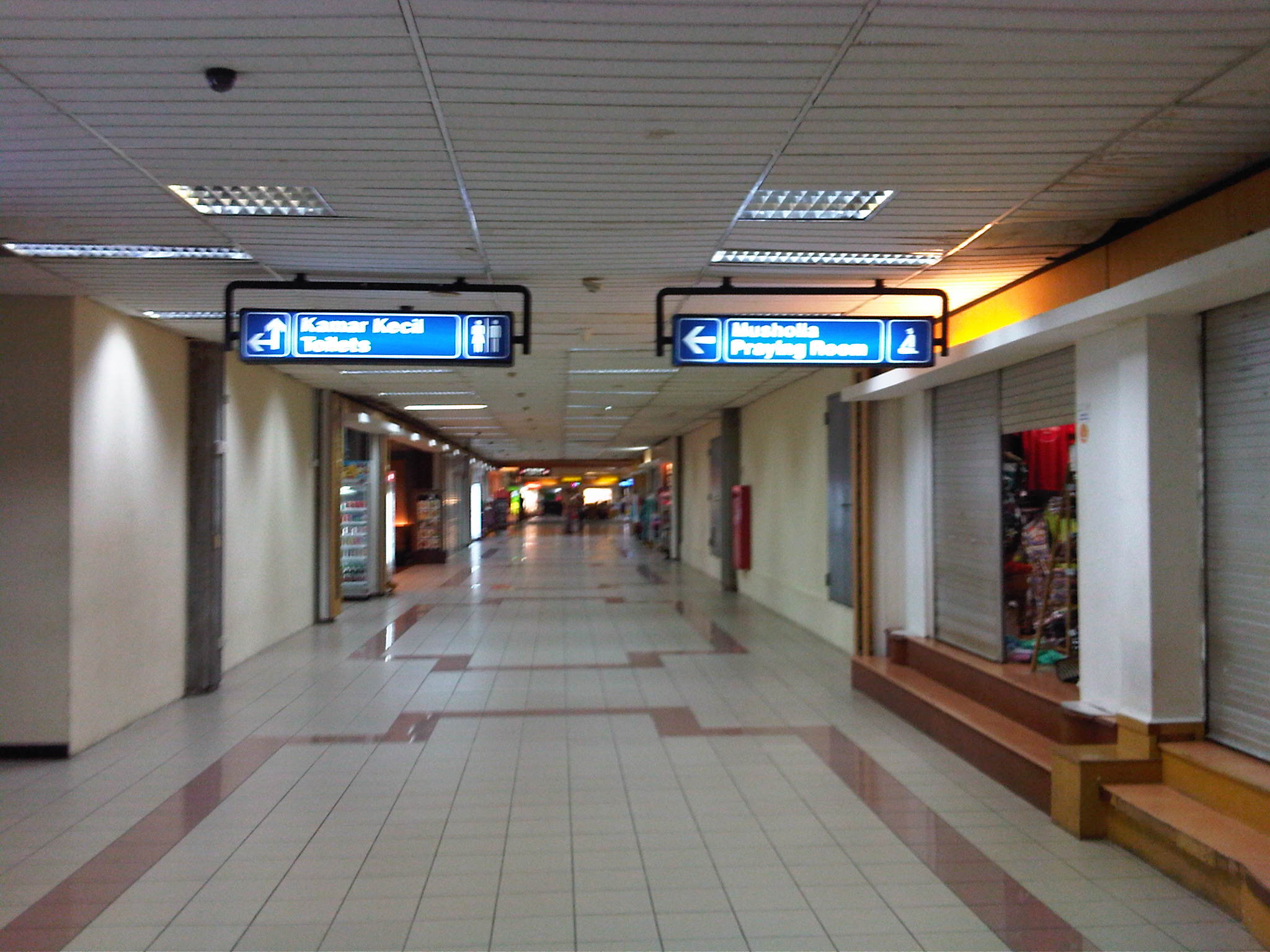 Corridor and more shops along the way towards our boarding gate.
 Benches – there were few seats near the entrance to the departure lounge. There were only two 4-seaters that were spaced a bit far from the next set of seats.
 Airport fee – Bali-Denpasar charges a 150,000 Rp (about 16.20 USD) fee for international passengers that is paid prior to the immigration counters.
 No seats? – passengers starting to crowd around benches just across from the door and the final security check to the pre-departure area. Airport staff would not allow passengers early for their flights to enter the area. It seemed to some of us that this was also a ploy for people to patronize the restaurants and shops outside the pre-departure area. There were no concessions inside.
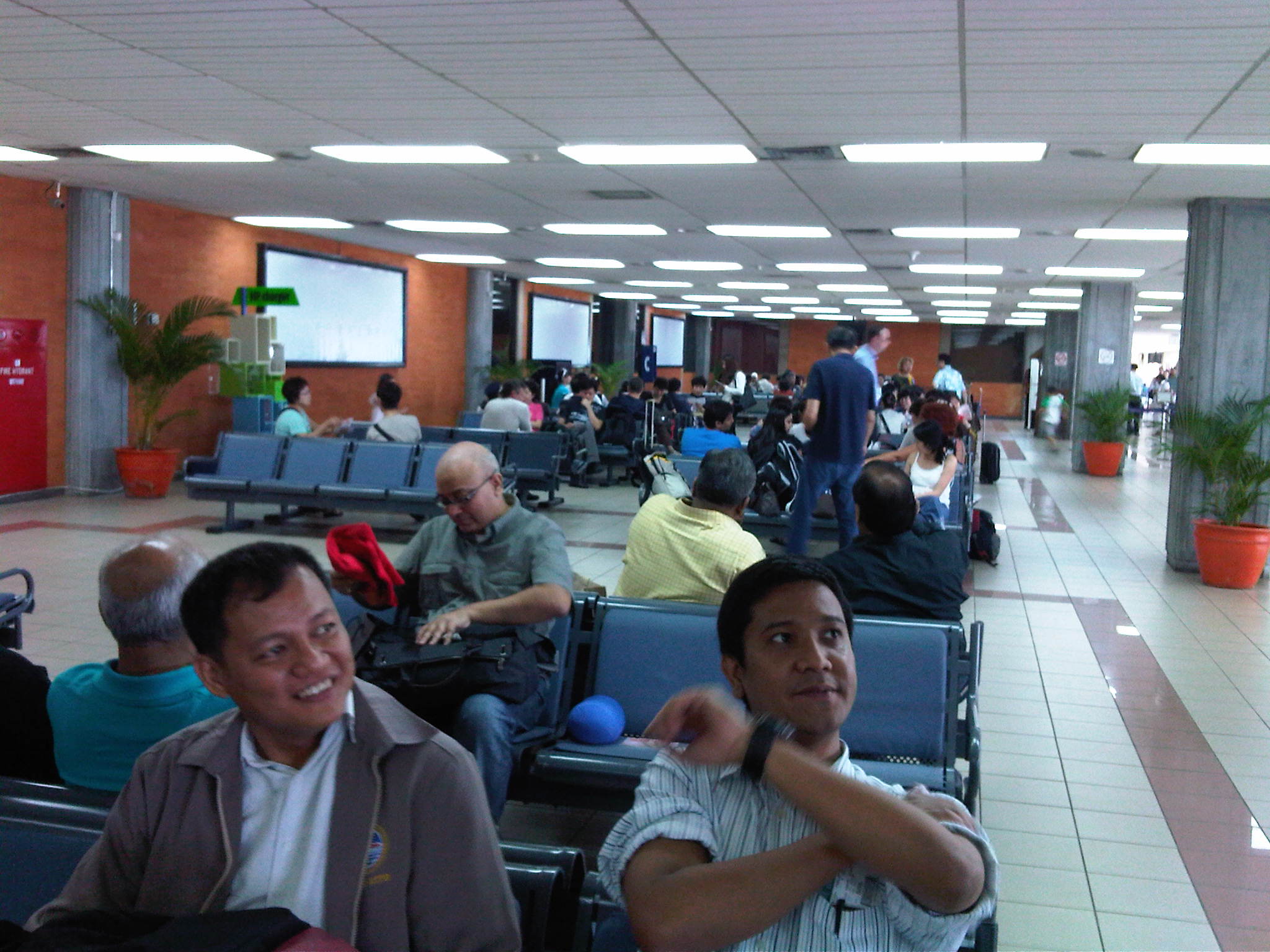 Waiting for the call – fellow passengers waiting for our respective boarding calls
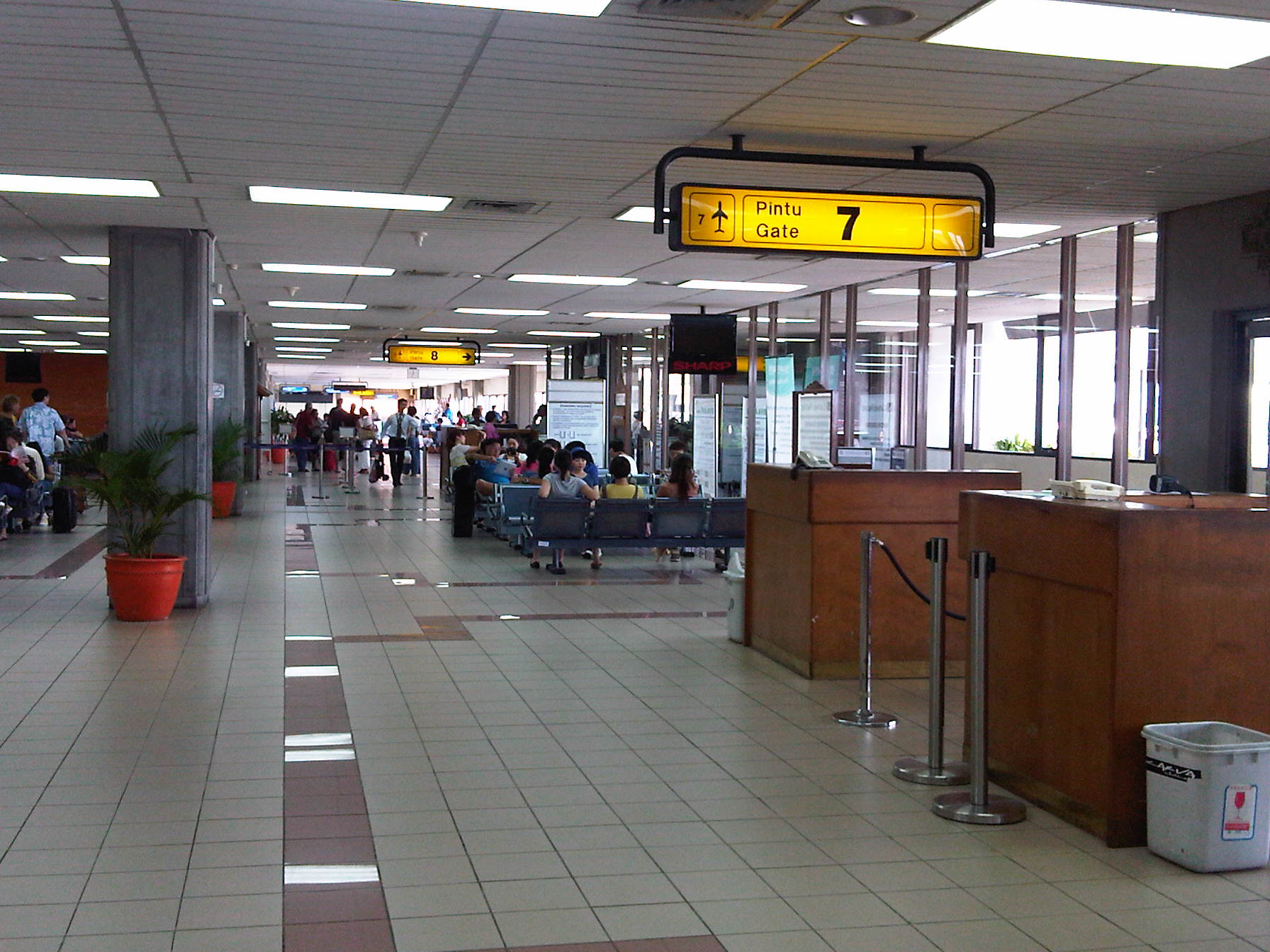 Familiar layout – the layout of the departure lounge including the boarding gates at Bali-Denpasar reminded me of the layout of the old domestic airport in Manila.
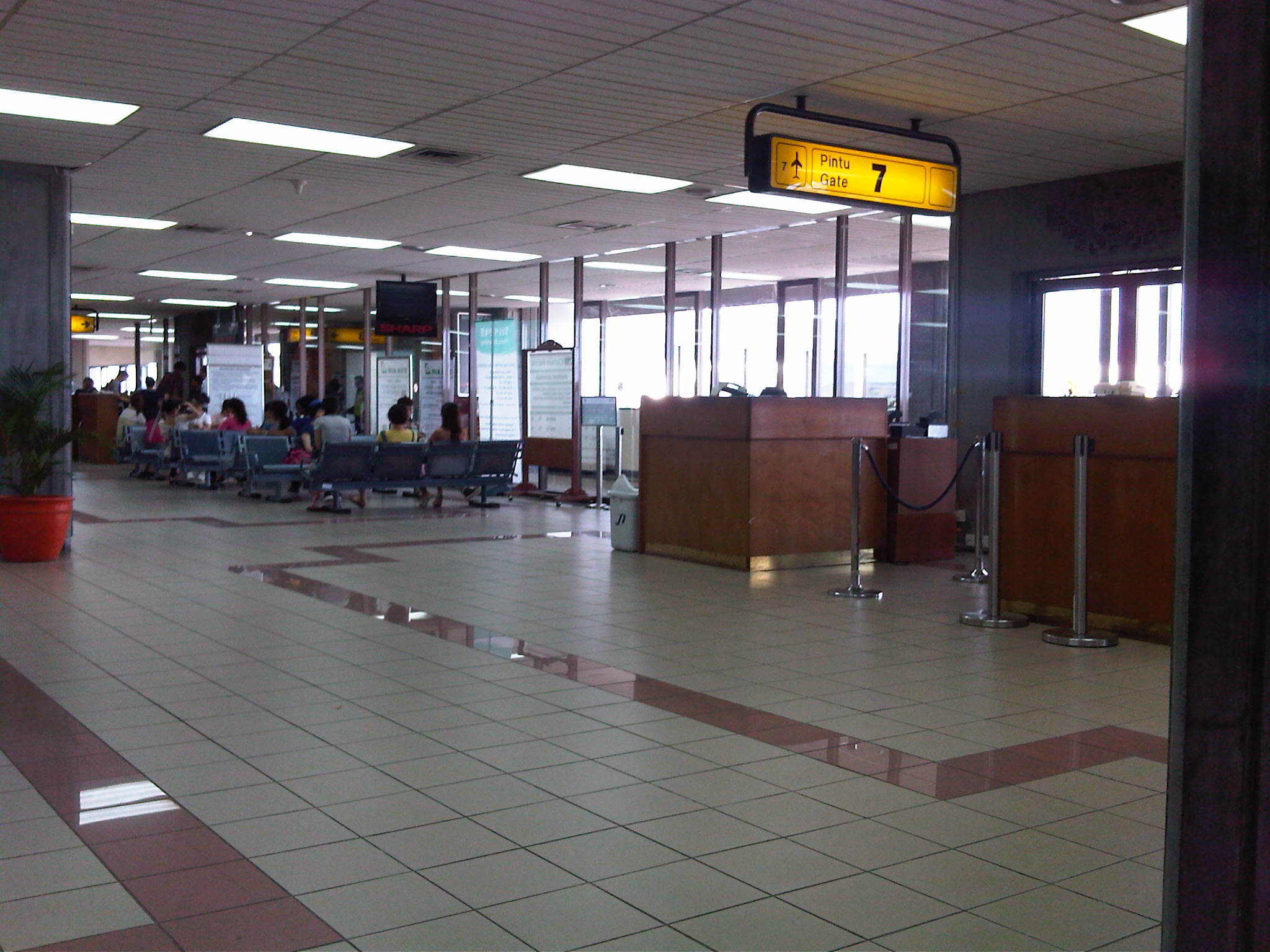 Counters – airline ground staff will eventually arrive to process passengers for boarding
Bali-Denpasar is actually constructing an even larger airport. This is necessary given what seems to be hundreds of thousands of visitors flocking to Bali mostly for recreation. The current terminal is already congested and the wise investment is for a huge modern terminal for this gateway to Indonesia. The determined push for a new terminal is admirable and seems to be what the Philippines lacks for in terms of critical aviation infrastructure that would be able to handle the projected passenger demand should the country want to attract more tourists.
–
Hong Kong International Airport
I’ve been to HKIA only twice and both have been in transit to another country rather than me visiting Hong Kong for business or its attractions. As such, I would say that the photos I was able to take do not do justice to the terminal, which is probably the caveat for this article.
Hong Kong would be in the Top 3 airports in Asia and perhaps in the world. In terms of efficiency, I would still say Singapore’s Changi would still be the best but HKIA will be a very close second. Incheon will probably come in as 3rd but not really that close to the first two.
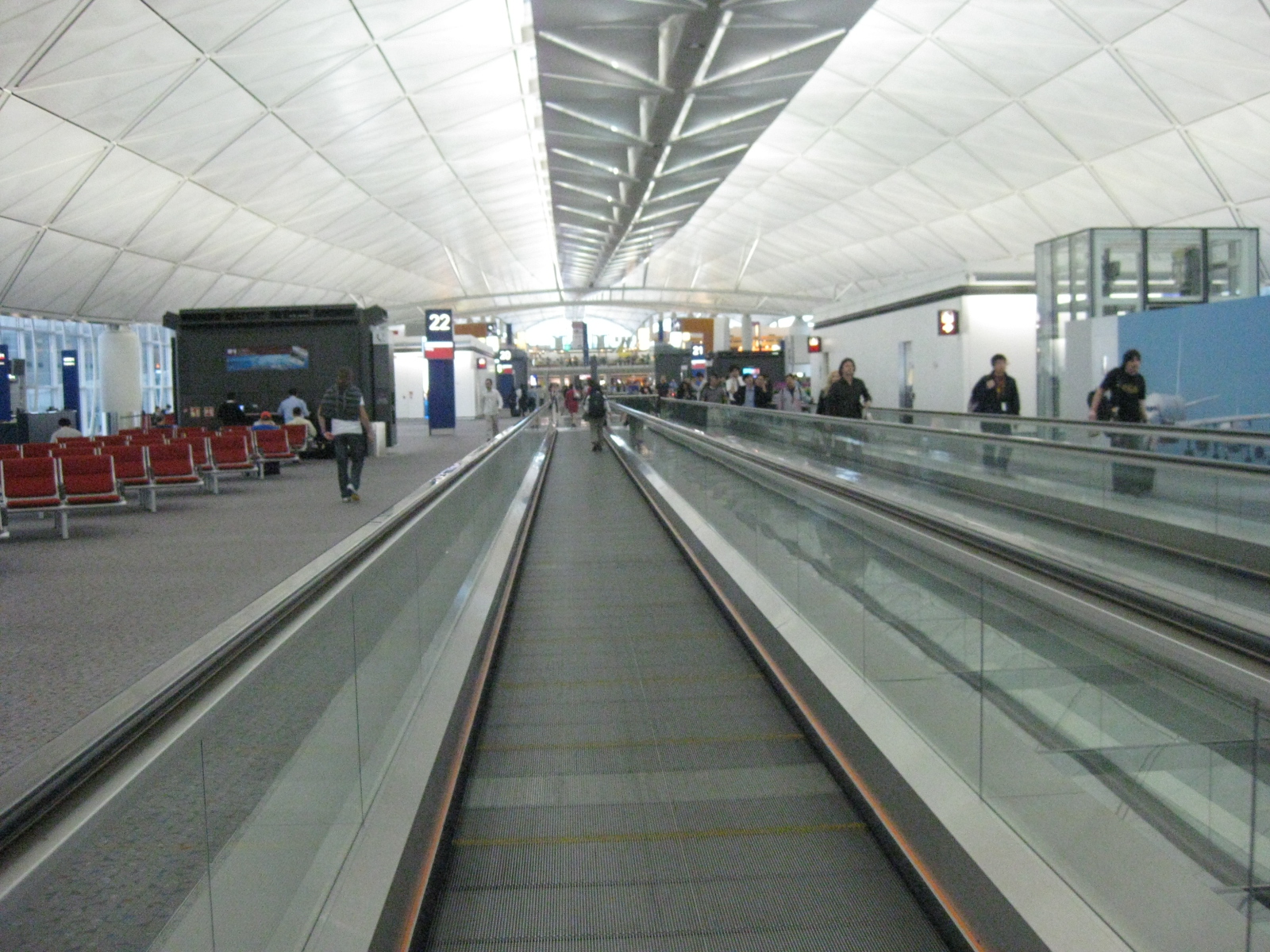 Moving walkways – these facilities are a necessity even for those who at first assume they don’t need to use them. The airport terminal is huge and it would take time for one to walk or run to catch a flight, especially a connecting one.
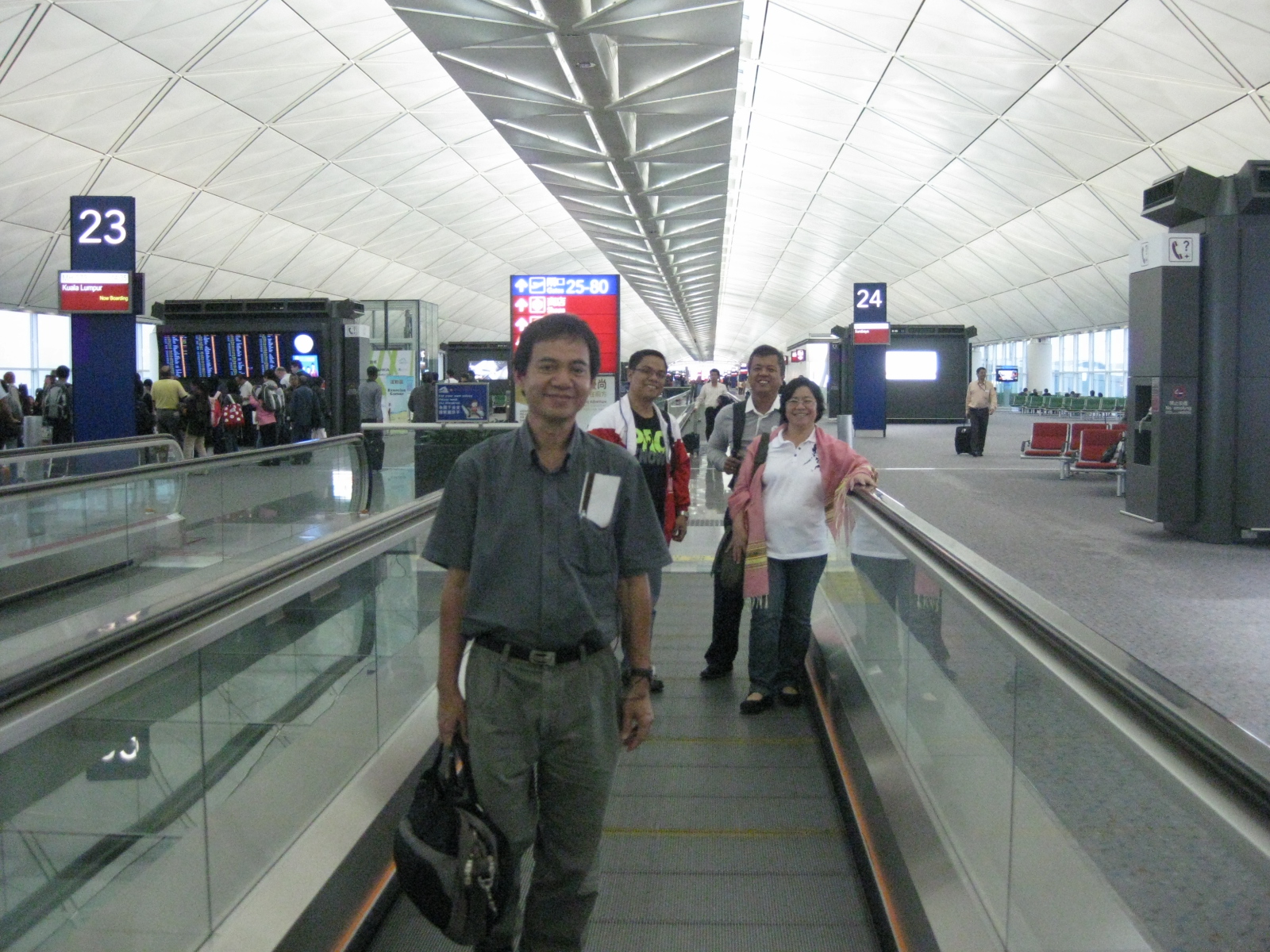 Information technology – the information systems at the airport are top of the line and allows travelers, like our group in the photo, to easily navigate the airport and know the status of our flight.
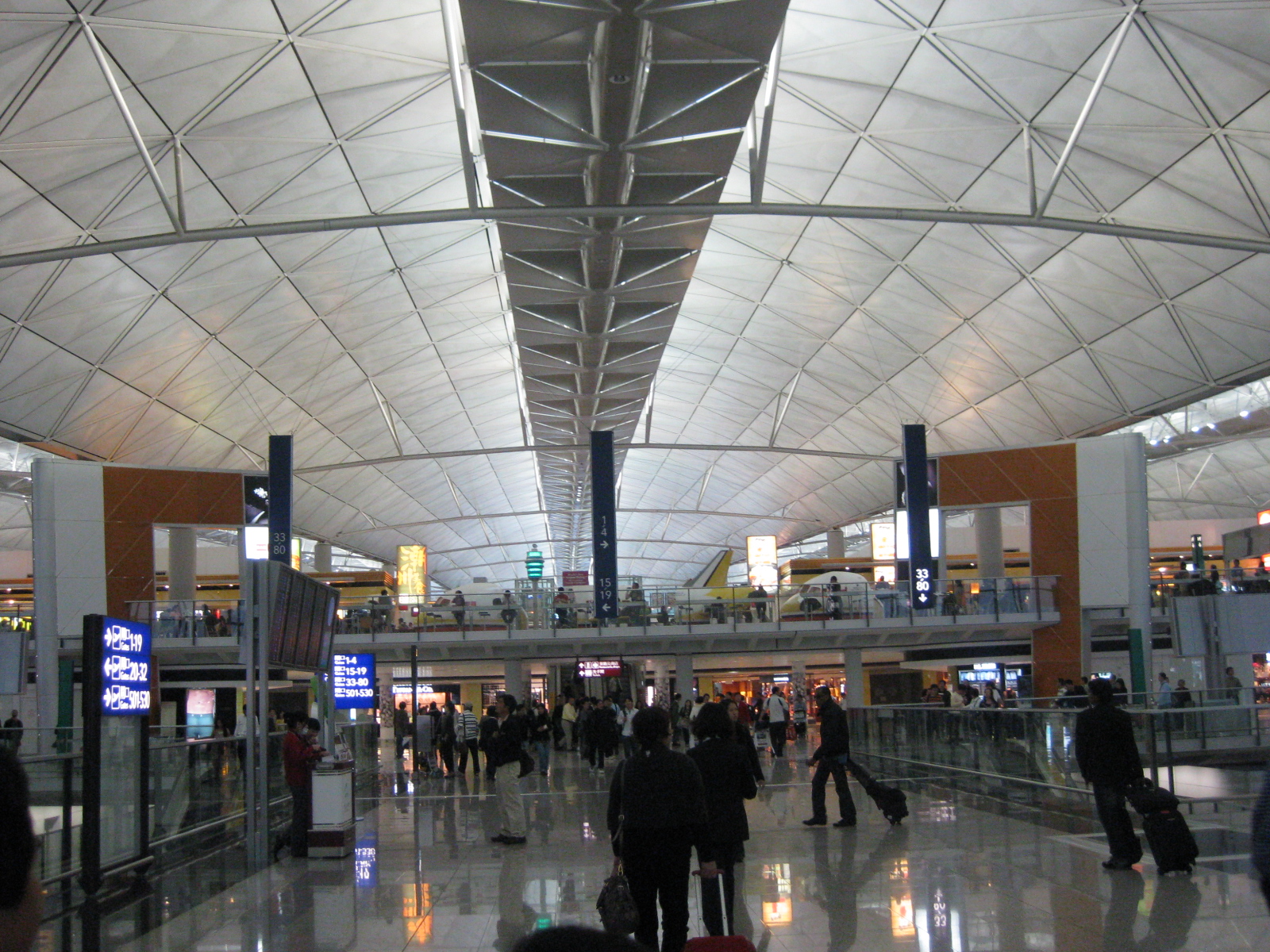 Shops and restaurants – HKIA is a microcosm of Hong Kong itself as one may go shopping or dining at the airport. We saw a lot of popular booths where travelers can grab quick meals or drinks while waiting to board their flights. The retail shops are a mix of the affordable to the more expensive goods including souvenirs even if you just happen to be in transit at HKIA. There’s even a large Disney Store at the airport.
 Cavernous – the architecture of the terminal gives travelers a sense of immensity with the very high ceiling and tremendous space for going around. This is just appropriate for a terminal handling millions of passengers.
 Hub – HKIA is the hub of the island’s major carrier, Cathay Pacific. CX, as the airline is designated, flies to so many destinations from HKIA making it a major player among international carriers. I think Cathay Pacific is easily among the top 3 or 5 airlines in the world where all in my list being Asian (e.g., Singapore Airlines, Thai Airways).
 View from afar – airport access may be via road or rail transport and one could see the Hong Kong cityscape from the airport. In the photo, the tall buildings before the mountains are probably high-rise apartments where many reside. HK is a very dense city, which necessitates such residential developments instead of the single-detached and even walk-up types to account for space limitations.
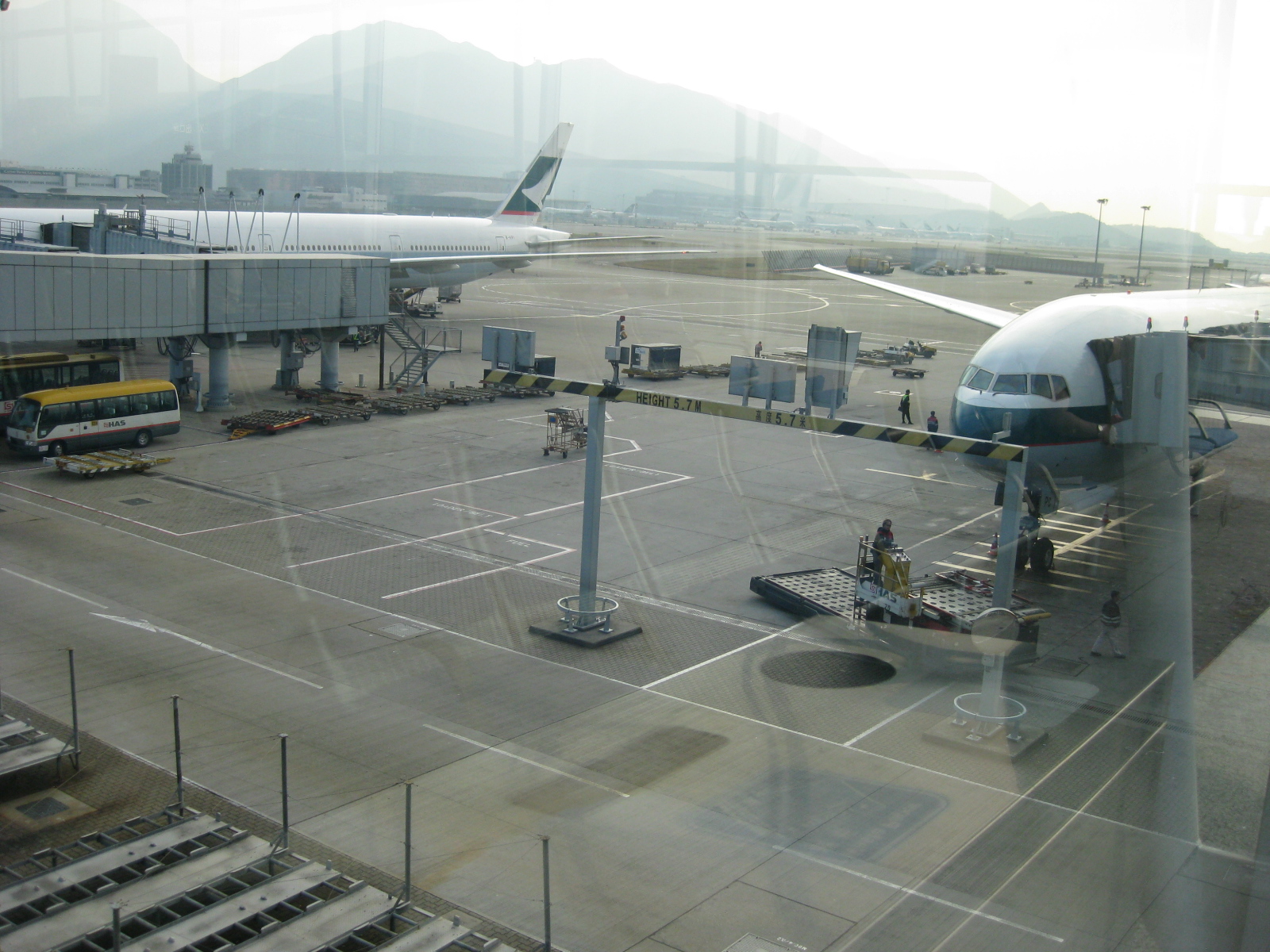 Ground handling – a view of the tarmac where a lot of activities happen. I remember a video going around in You Tube about the baggage of a Philippine carrier being mishandled by HKIA ground staff. I guess such things happen everywhere, even in what are already considered as top airports.
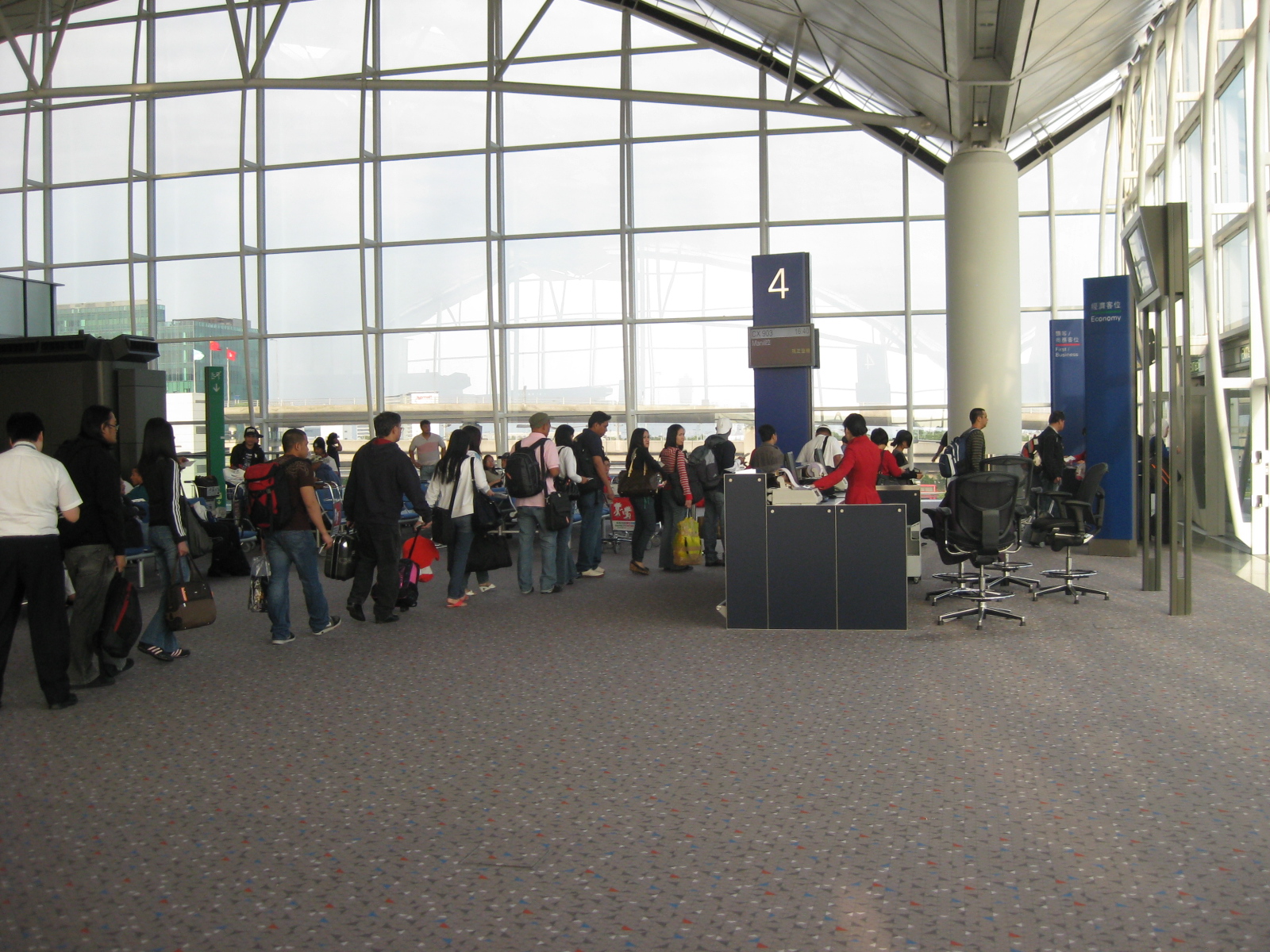 Boarding – passengers queued before Gate 4 at HKIA
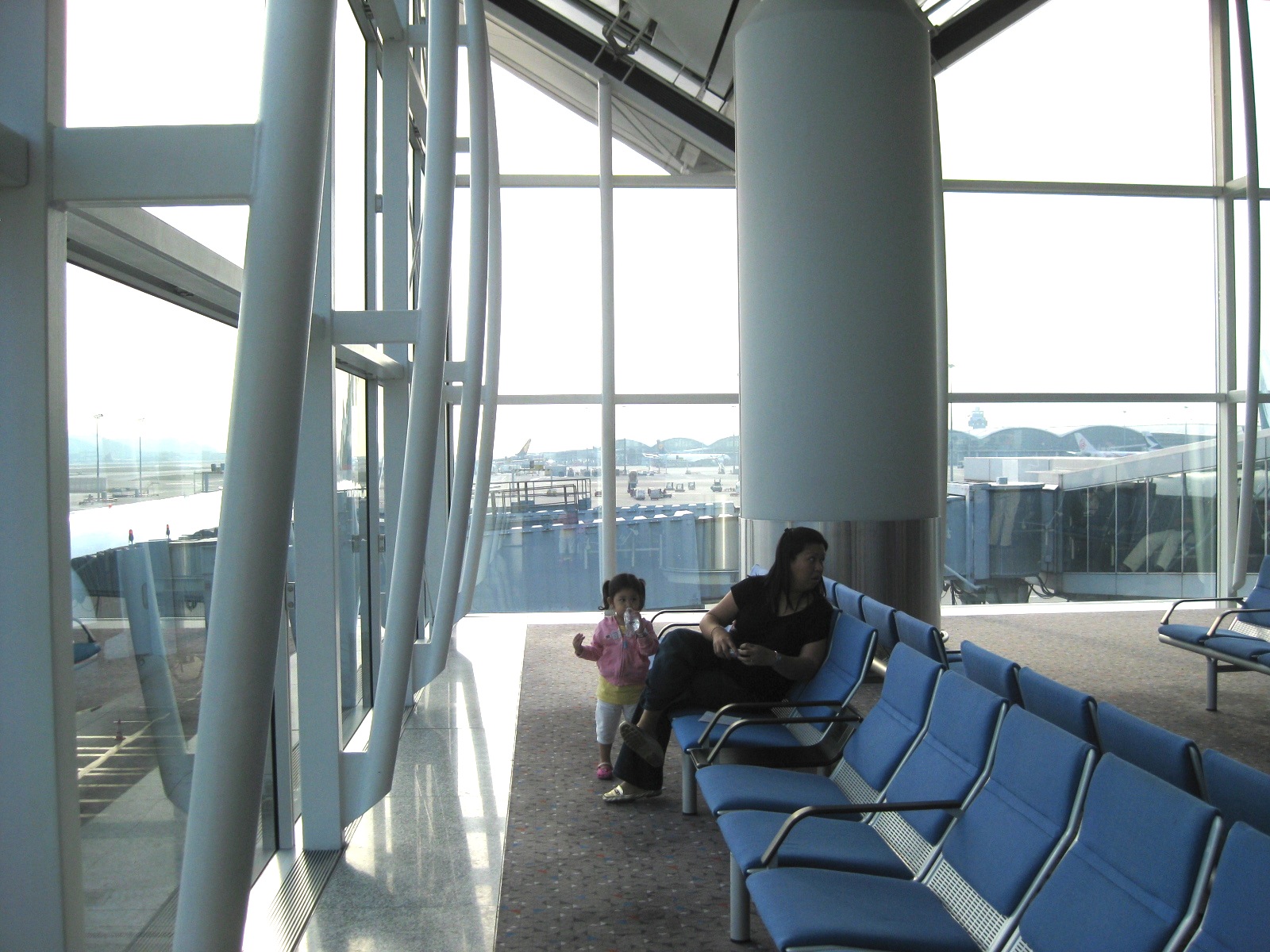 Best seats in the house – the layout of seats at the departure area allow people to have some personal space in a very public place. The windows afford a view of the surrounding area including airport operations for people interested in transport like our group just coming from an academic conference on transportation.
 Window seat – the large windows and high ceilings make every seat practically a window seat
 Not crowded at all – we were to board an Airbus A340 for our flight back to Manila. Minutes before the flight, most passengers seem to be anywhere but near the our boarding gate.
 Boarding time – I was able to take a photo of a friend taking a photo as well as two queues before a couple of boarding gates at the airport. The queues were generally orderly with airport staff checking the boarding passes of people in line to facilitate the boarding procedure.
 Line-up – this line here is actually for our flight. As there were no boarding sequence for those riding in coach, we decided to board later as the line was quite long.
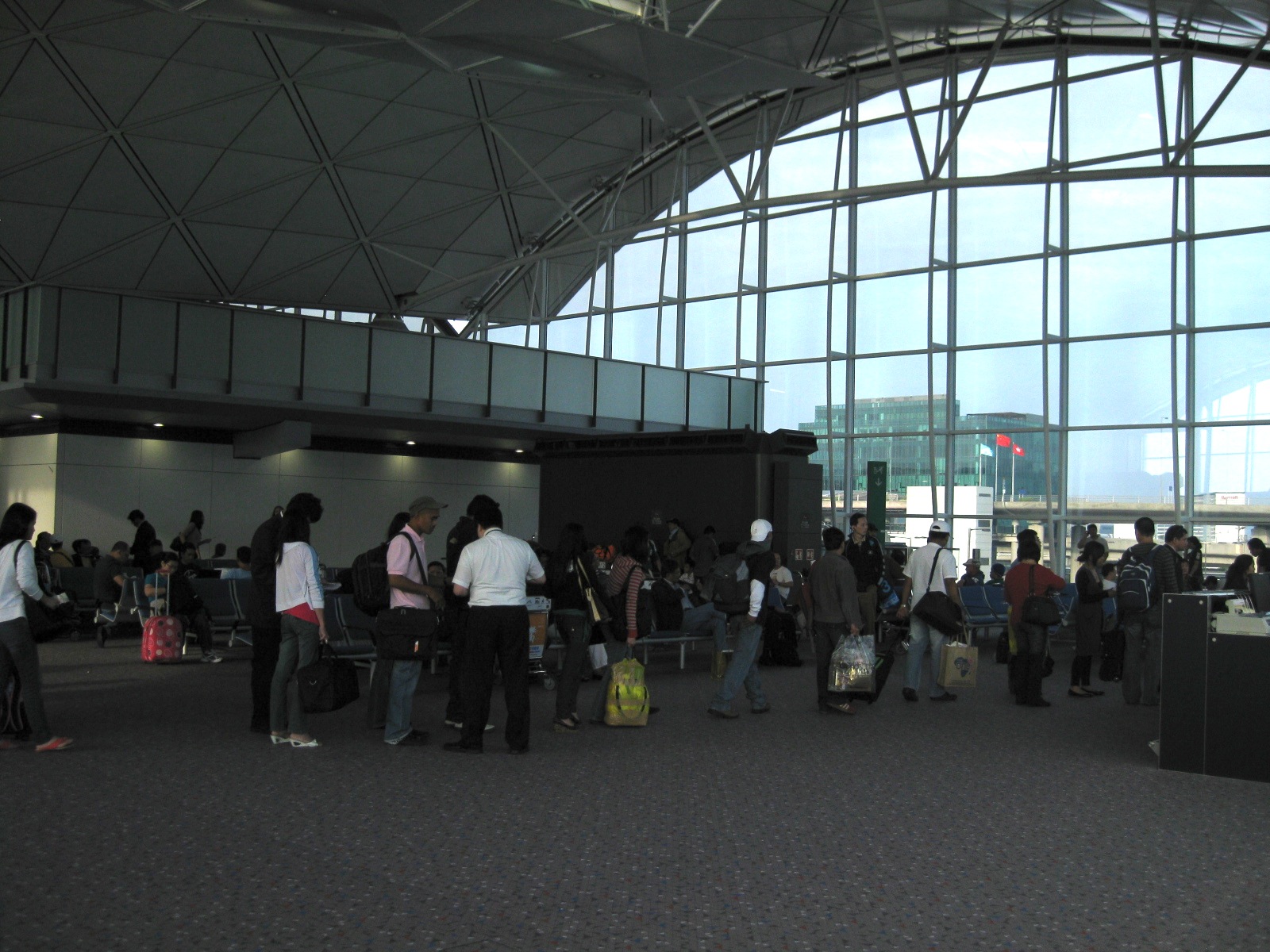 Another look at our fellow passengers lined up to board our aircraft.
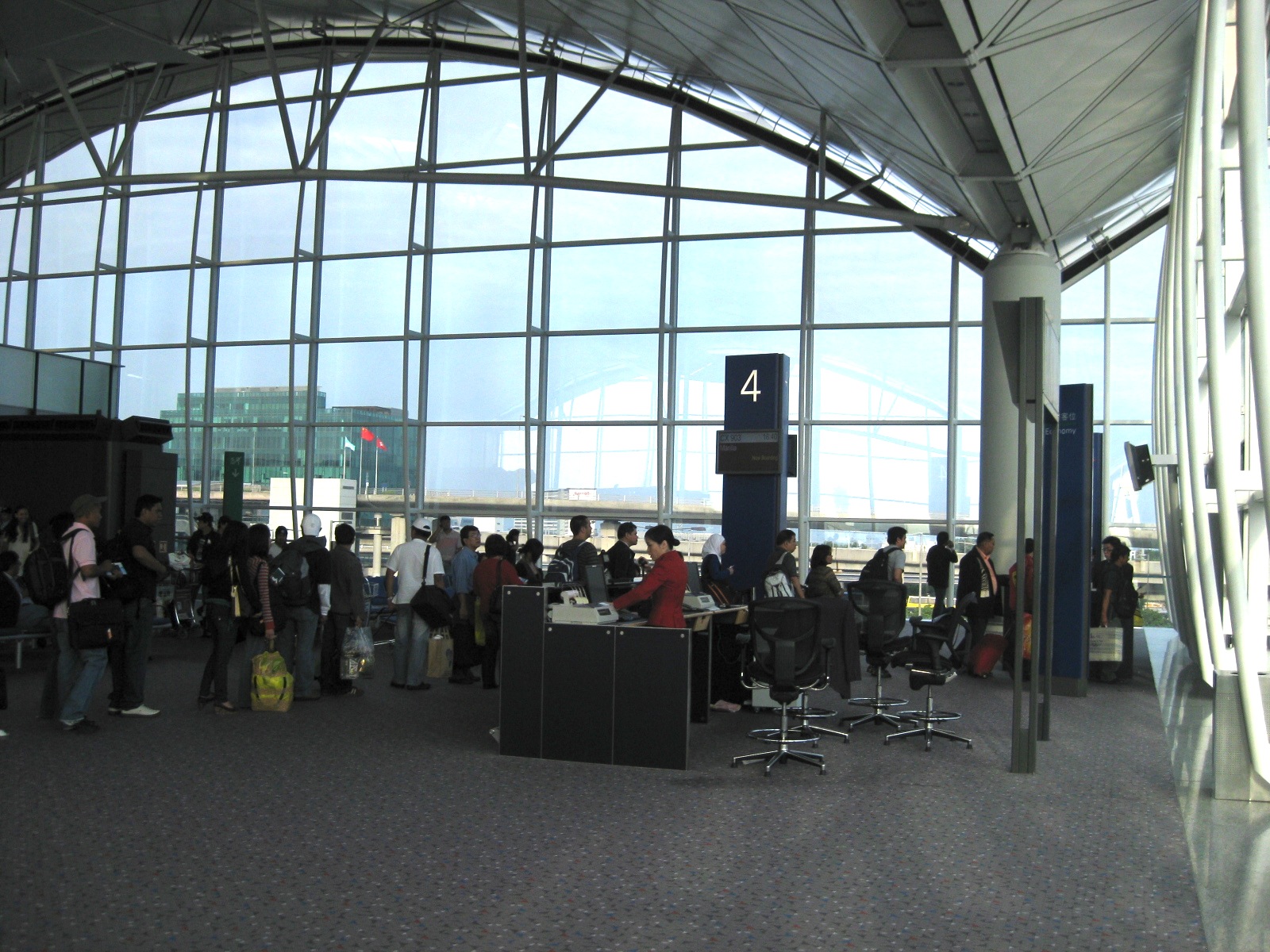 Boarding gate – we boarded our aircraft through the same gate where I took a photo of earlier
I’m not sure when I will be using the HKIA again but I’m sure I’ll be trying to take a lot more photos particularly the restaurants and shops in the terminal. Perhaps, too, I could be going around HK itself (I haven’t gone anywhere here except the airport terminal.). I am curious about the streets, the delicious food and, of course, the transportation system.
–
Surabaya’s Juanda International Airport
Traveling to Surabaya, Indonesia for a conference in 2009, we made the trip via Hong Kong rather than via Jakarta. It was the call of our sponsor rather than ours to fly via HK. I understood the logic of the arrangement as both legs of the trip (Manila to HK and HK to Surabaya) were international flights. If we flew via Jakarta, the second leg would a domestic flight. Cost-wise, the latter option could have been cheaper but comfort-wise, the first option was definitely better. Our sponsor booked us on Cathay Pacific Airways, which flew directly between HK and Surabaya. From what I’ve learned from other more experienced travelers, given the option they would always take Cathay over Garuda, which is Indonesia’s national carrier. Another option, which another friend took, was to fly via Singapore using Singapore Airlines between Manila and Changi, and then Silk Air (SIA’s regional spin-off) from Changi to Surabaya. I can imagine that to be also a good option considering the usually excellent service of SIA.
The following photos show just a glimpse of Juanda Airport as I didn’t get a chance to take photos during our check-in and stroll within the airport. I wasn’t that conscious about taking a few photos here and there as I was not blogging about transport and traffic back then. But based on what I remember, arrivals at the airport was no different from domestic operations in many of the larger Philippines airports. And for departures, the Juanda Airport offered only the basic conveniences to travelers and had few shops for last minute purchases or recognizable restaurants for quick meals. On our way back, it wasn’t really an issue as we were passing through HK and had a few hours to burn at HKIA prior to the Manila leg of our return trip.
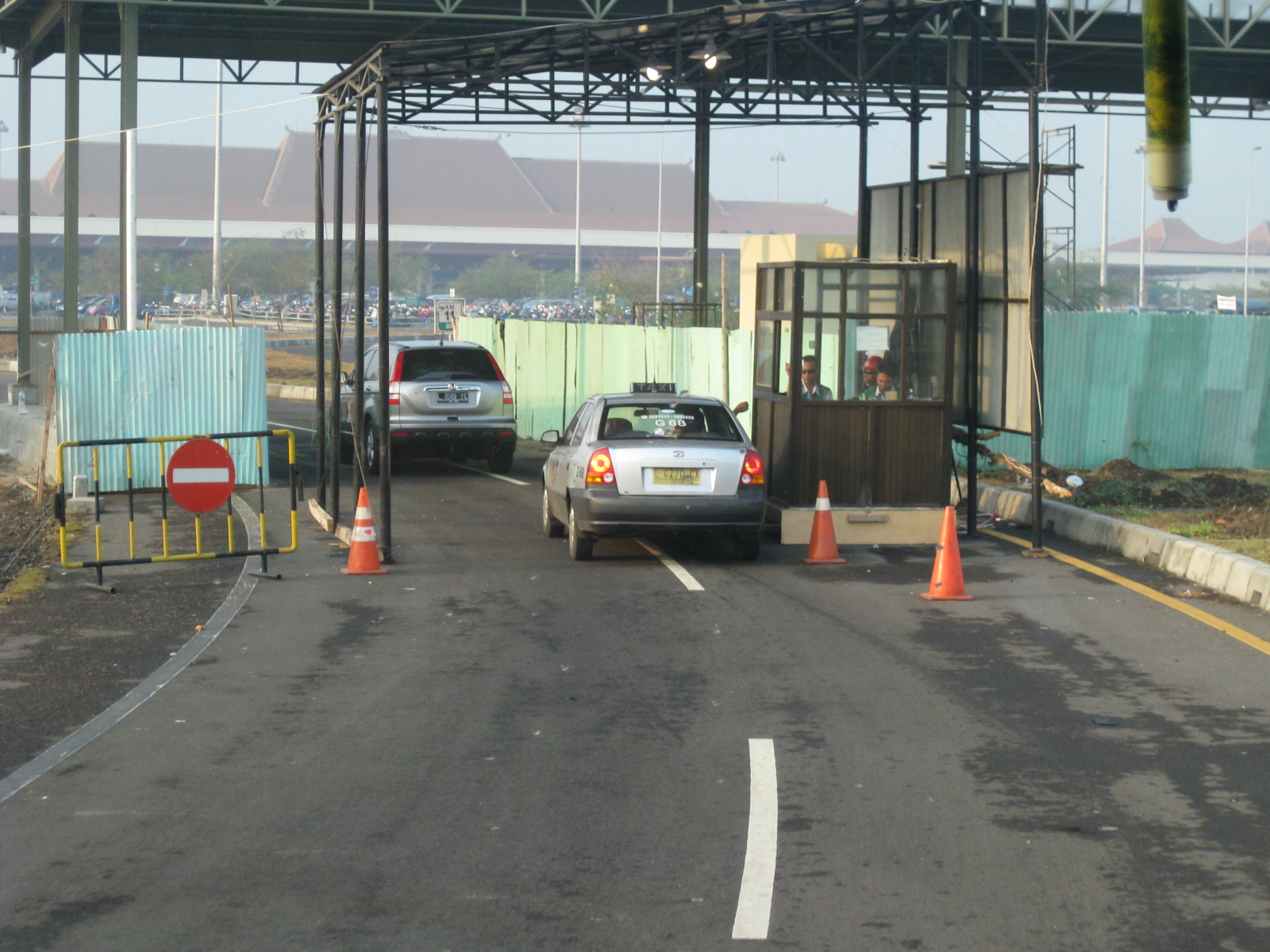 Security check for vehicles bound for the airport
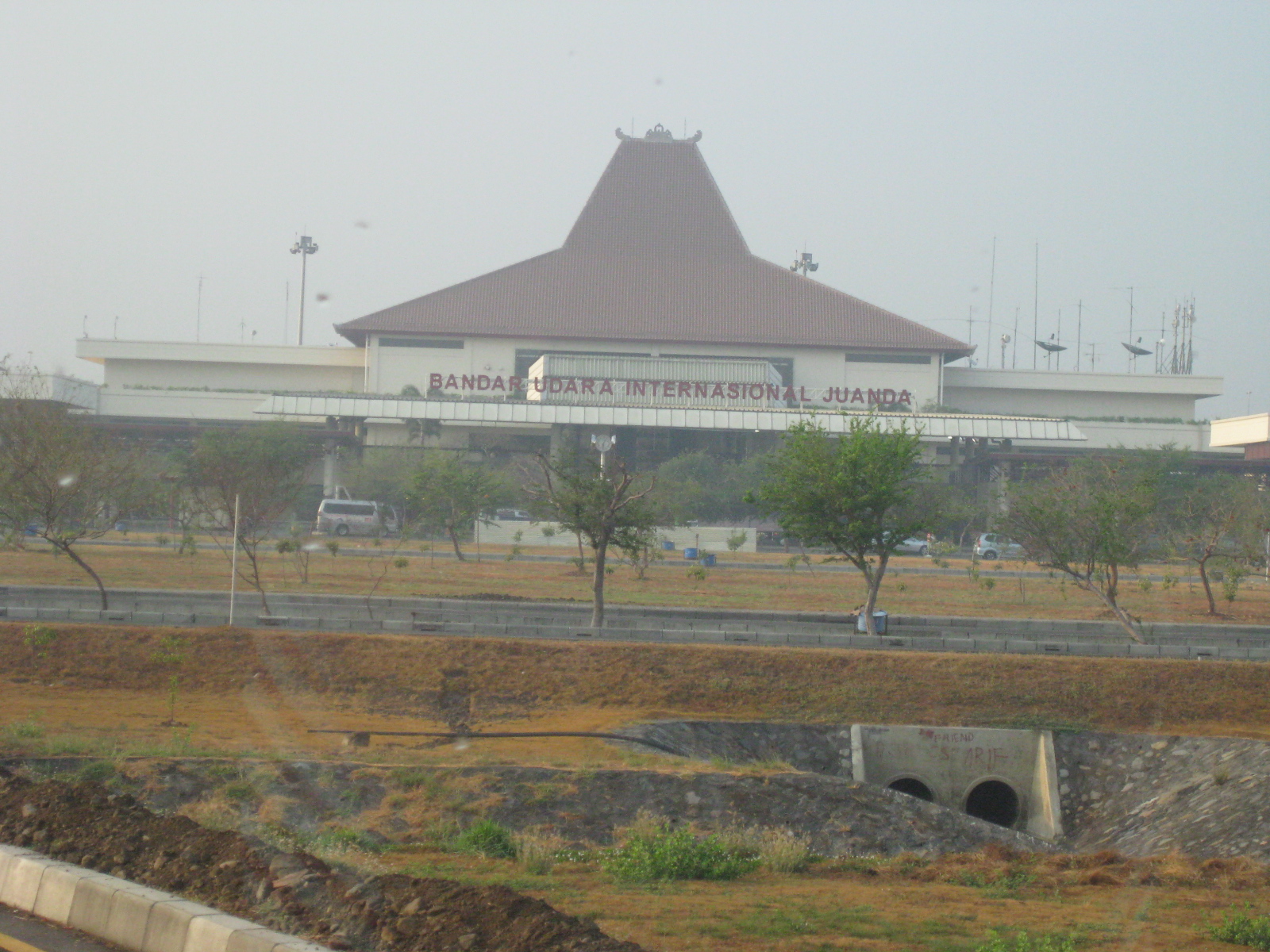 The Juanda International Airport terminal as seen from the highway
 Taxis lined up for passengers at the airport
 Approaching the terminal, we were surprised with the pedestrians crossing the wide road
 Private cars and public transport (e.g., taxis, buses) carrying common passengers stop along the terminal building
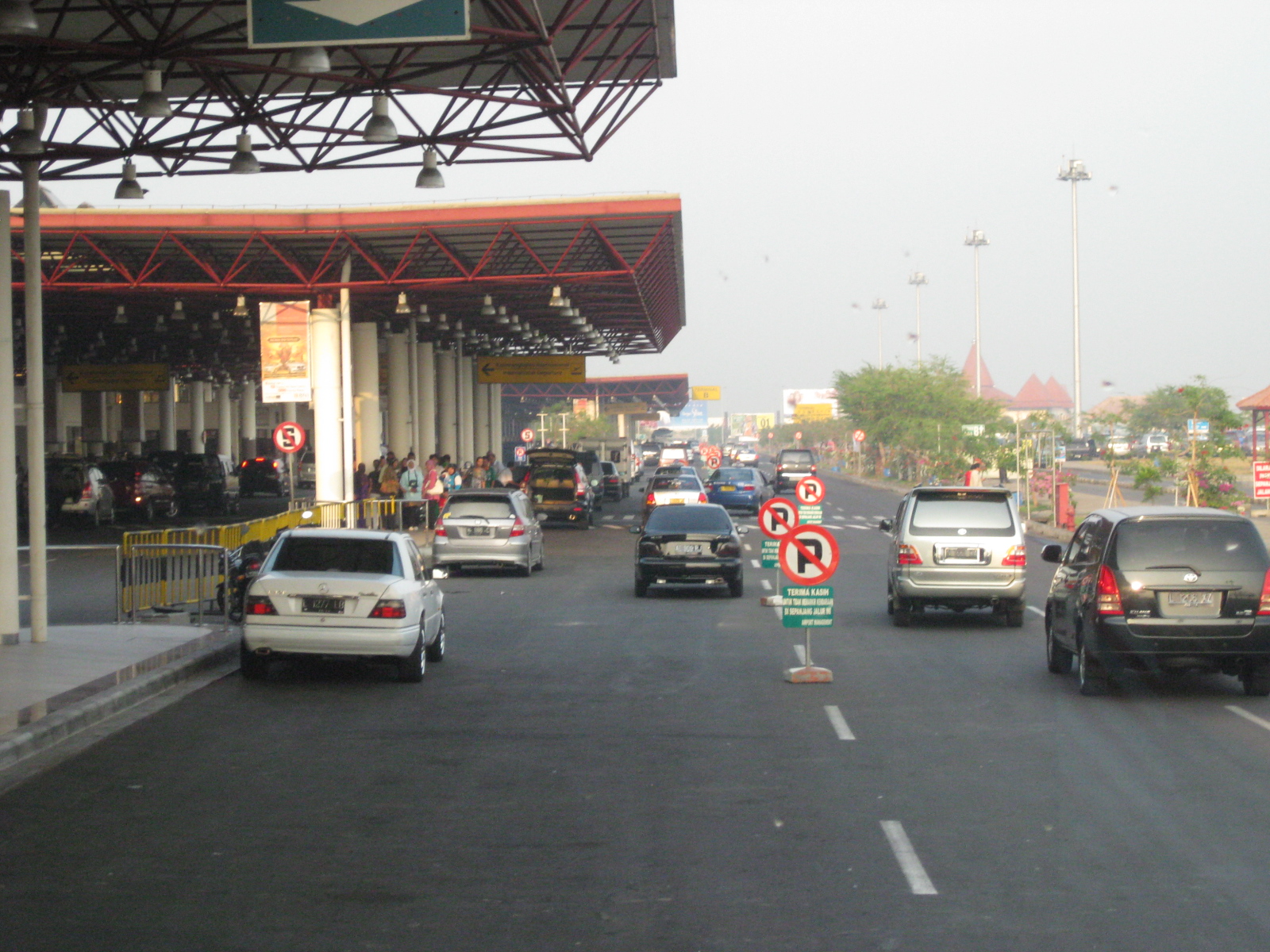 VIPs and others get to use the road closer to the terminal shown on the left in the photo
 Departure lounge at the Juanda International Airport
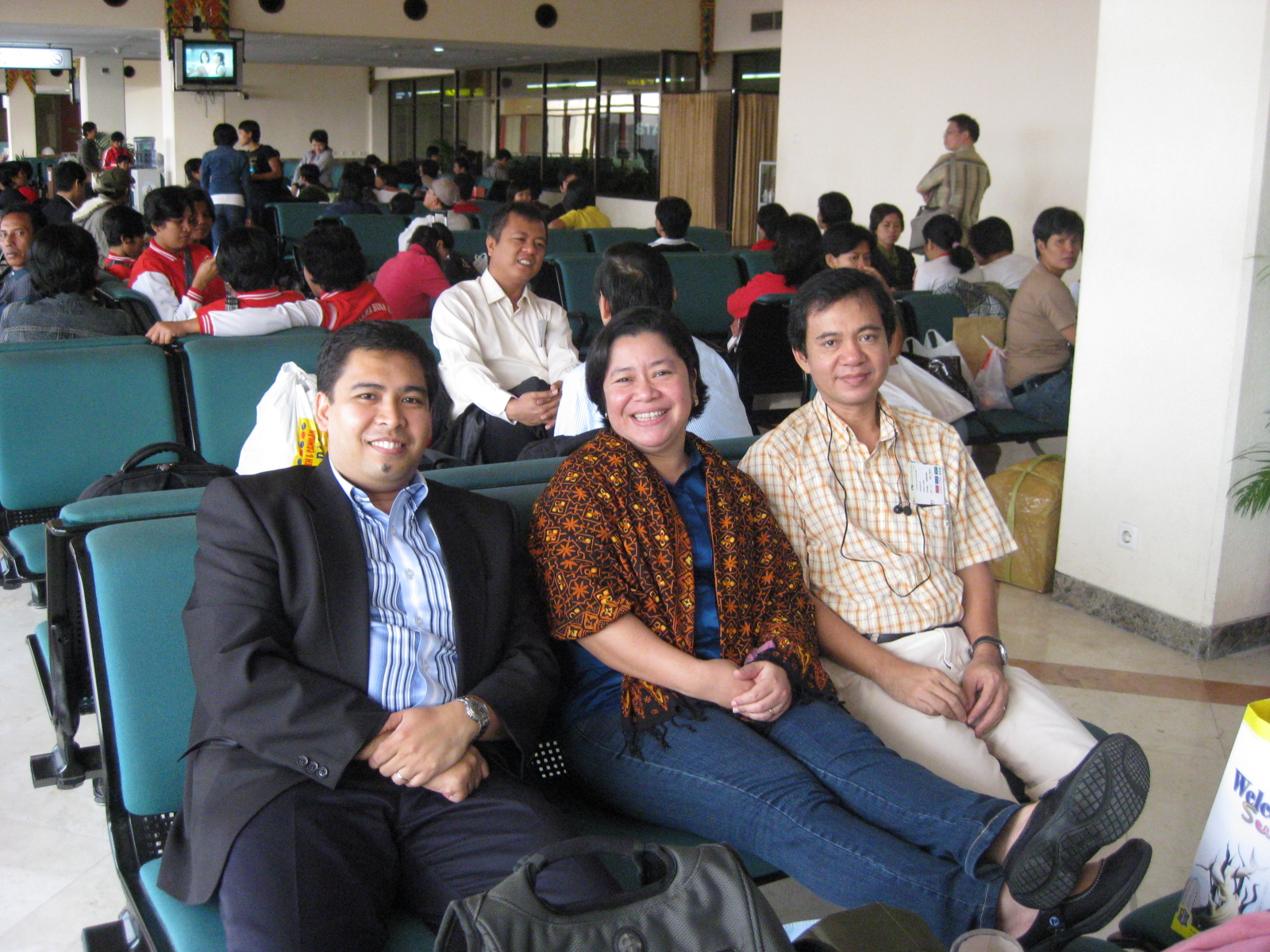 Our group posing for a souvenir photo at the airport
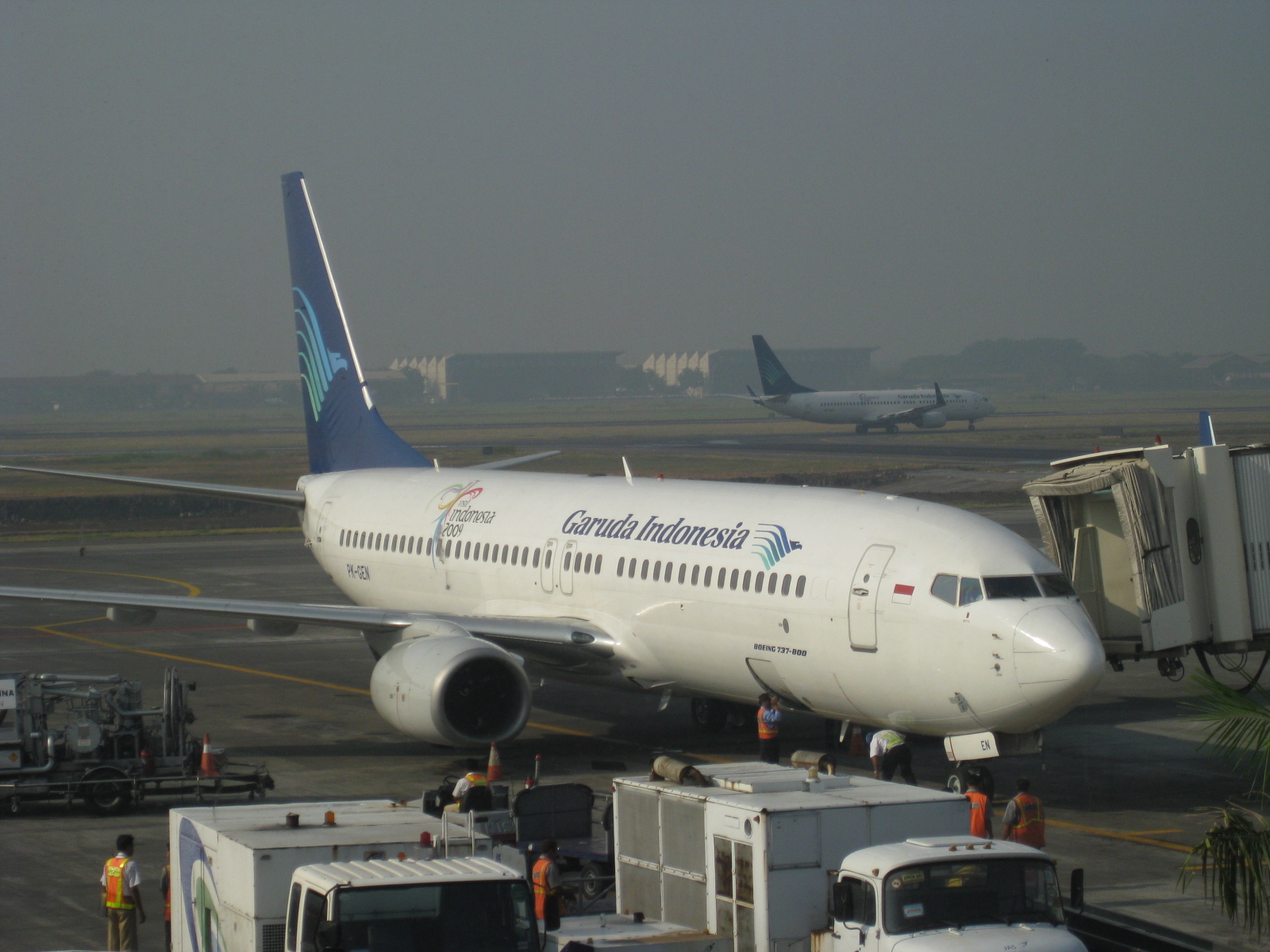 Garuda Airbus A320 docking at the air terminal, Garuda is Indonesia’s national flag carrier
I was not impressed with Juanda Airport at the time we visited Surabaya in 2009. It was my first time in Indonesia so it would be unfair to judge Indonesian airports by what I saw in Surabaya. Bali/Denpasar was much better and a more recent experience, and with a new terminal being constructed there to accommodate the millions of passengers traveling to Bali, I guess those facilities will be built to impress visitors and residents alike.
–
Mactan Cebu International Airport – Take 1
Cebu is known as the Queen City of the south and is already considered along with adjacent cities and municipalities like Mandaue, Lapu-lapu and Consolacion as a metropolitan area. In this case, Metro Cebu would be the second metropolis in the country after Metro Manila. Unfortunately, the term is also a misnomer as there is no formality to the grouping like Metro Manila, which is well-defined and governed in part by the MMDA. (Of course, the LGUs within the National Capital Region still often act independently with their own mayors and councils.)
The Mactan Cebu International Airport is located not in Cebu City but in the island of Mactan and in Lapu-lapu City. The airport is the second busiest in the Philippines after NAIA and serves cities in the Visayas and Mindanao that do not have direct flights with Manila. Mactan being an international airport, there are also direct flights to overseas destinations including those to Japan, Singapore, Korea and China. Mactan airport is currently headed by Nigel Paul C. Villarete, the former Cebu City Planning and Development Coordinator, who is also known to be a leading proponent of the Bus Rapid Transit (BRT) system that will soon be implemented in Cebu City. Such as system might eventually connect the airport with the rest of Metro Cebu in what promises to be a modern mass transit system that will address the needs of the cities.
The following few photos were taken at the airport during my second trip to Cebu sometime in the middle of 1996. The date on the prints I scanned is erroneous as I haven’t been to Cebu prior to 1995, when I went there as part of a study team evaluating the traffic signal control system in the city. At the time, Cebu had adopted the Sydney Coordinated Adaptive Traffic System (SCATS) and the system was being considered for Metro Manila as well. I was involved in the evaluation of SCATS in Cebu and the “before” assessment for Metro Manila. I remember that we worked with Cebu’s City Traffic Operations Management (CITOM) as well as the local supplier of SCATS.
 PAL B737 taxiing towards the terminal while an Airbus A330 taxis towards the runway
 B737 docking at the Mactan airport terminal
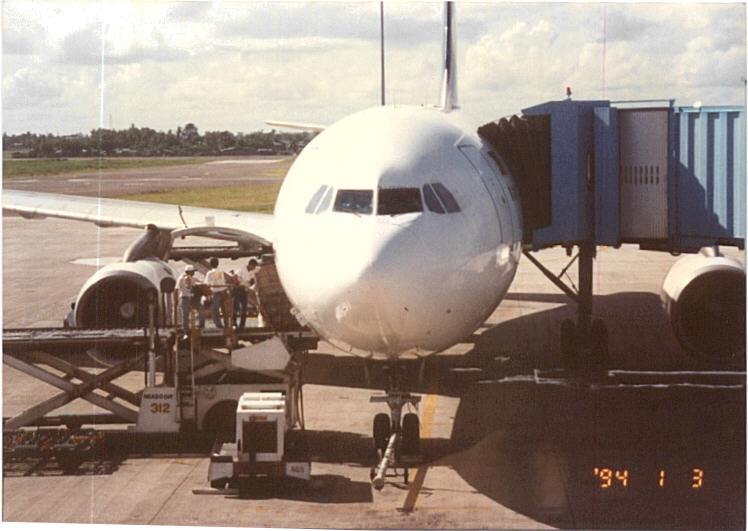 Baggage being off-loaded from a B737 while passengers deplane via tube at the Mactan airport
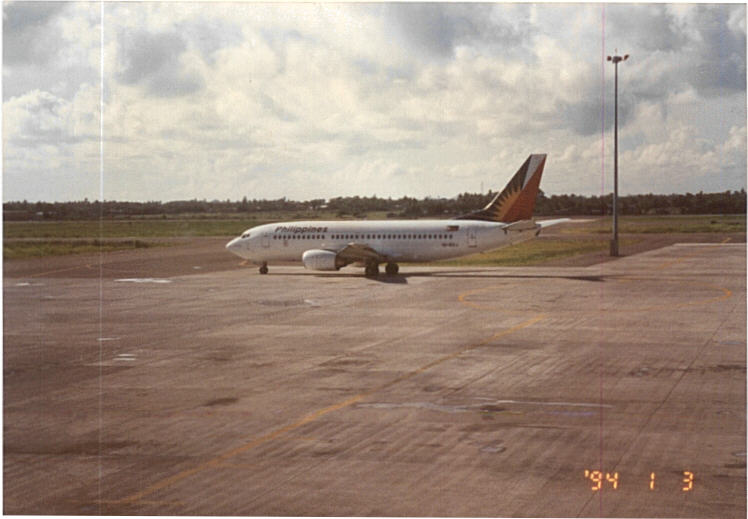 B737 taxiing to the runway
 Aircraft taking off from Mactan while others taxi to and from the passenger terminal
It is interesting to note that there seemed to be no other airline aside from PAL at the time. This was not entirely true as there was one Grand International Airways or Grand Air (by the Panlilio family) operating between Manila and Cebu. Unfortunately, that airline’s operations were short-lived and they could not solve the cost and management problems related to airline operations despite the upstart being a precursor to today’s budget airlines. Cebu Pacific eventually was established and is now the country’s largest airline despite it being classified as budget.
I forget where I saved various photos of the Mactan airport that I had taken during subsequent visits to Cebu. The following photos are a few I got from a friend who is currently involved in the Cebu BRT project and happened to have a few snapshots of the passenger terminal. I have not been to Cebu for more than three years now so I really need to have another look at the airport to see the improvements in the terminal.
 Security check – Mactan airport has modern security facilities and is perhaps second only to NAIA in terms of equipment for checks to ensure the safety and security of passengers.
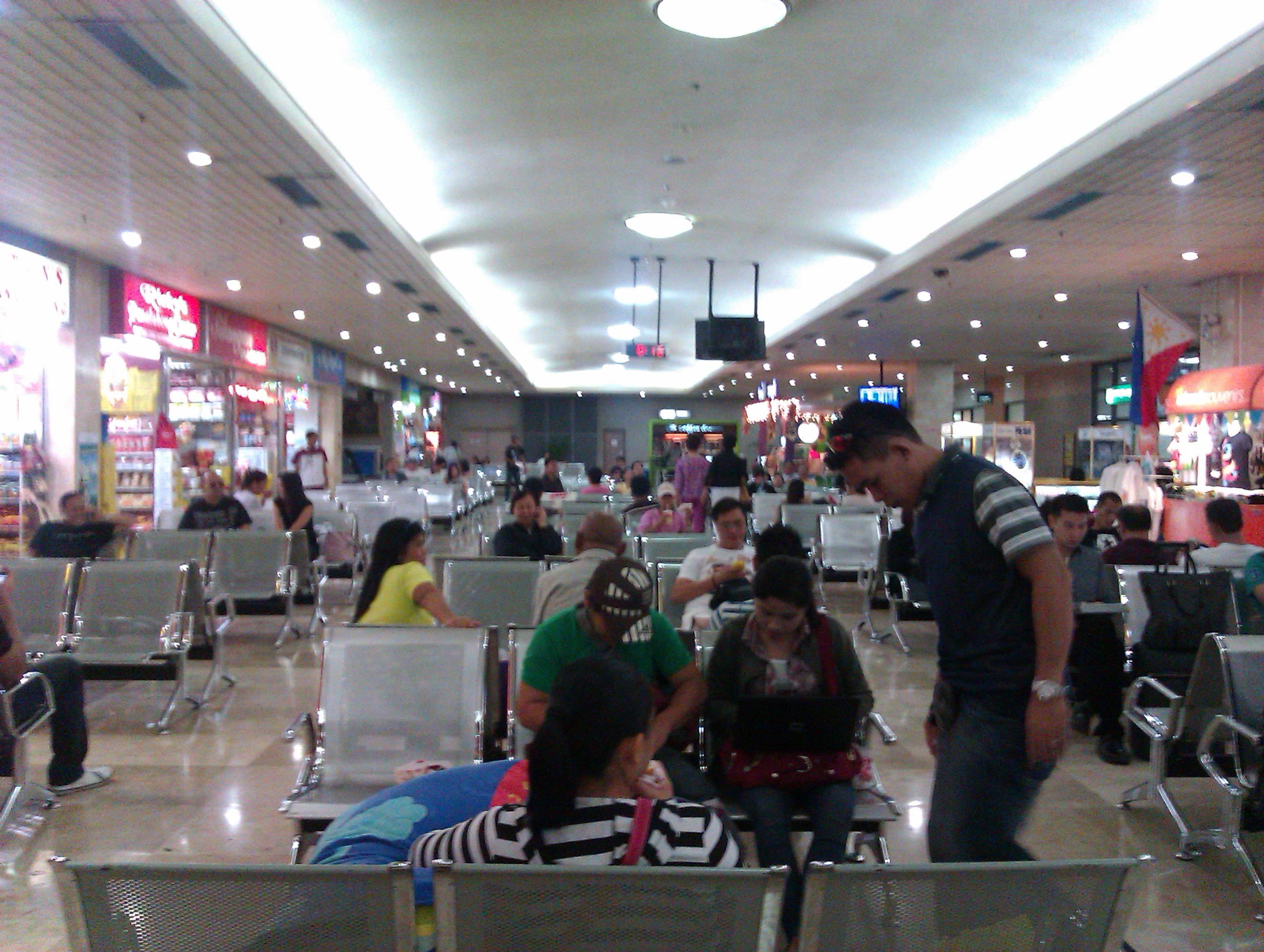 Departure lounge – Mactan’s lounge for domestic flights has many concessionaires for those wanting a quick bite before a flight or perhaps some last minute shopping
 The waiting area is spacious enough for some passengers to take a nap while waiting for the boarding call. The terminal has had a few upgrades here and there including renovations to its toilets, which are perhaps among the things people talk about when traveling through air terminals.
–
Walking around in NAIA Terminal 3
I had another opportunity to explore NAIA’s Terminal 3 last weekend. The following photos were taken while walking around to kill time while I waited for the arrival of a friend I was fetching at the airport. I arrived early at the terminal assuming it would be difficult to get a parking slot and that the flight would be arriving on time. I ended up eating dinner and having a nice stroll around the terminal building.
 Check-in counters for ANA and Zest Air
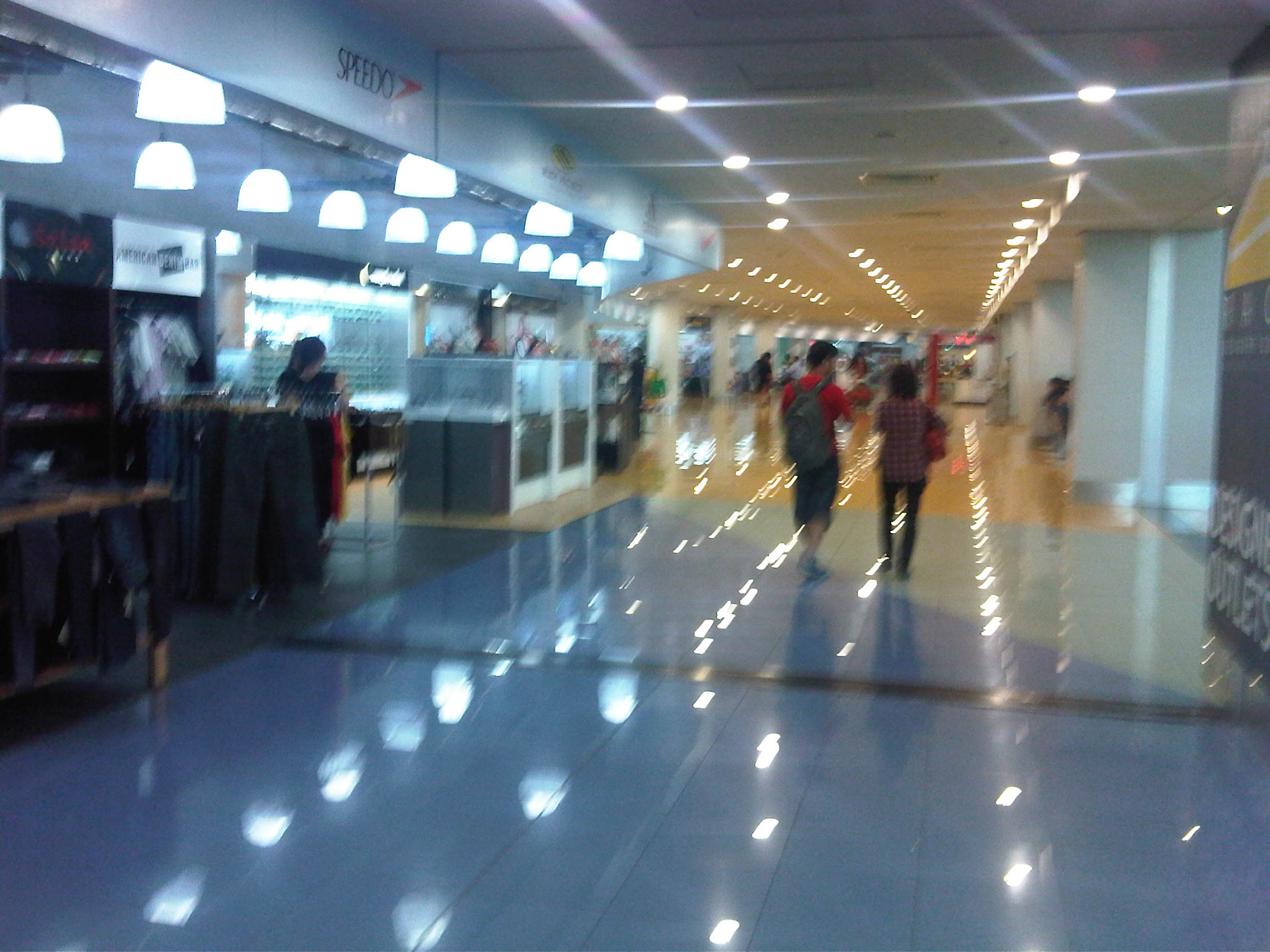 Shops at the third level of the air terminal (2nd level of the departure area) – there’s also a Mini Stop and 7-Eleven at the terminal.
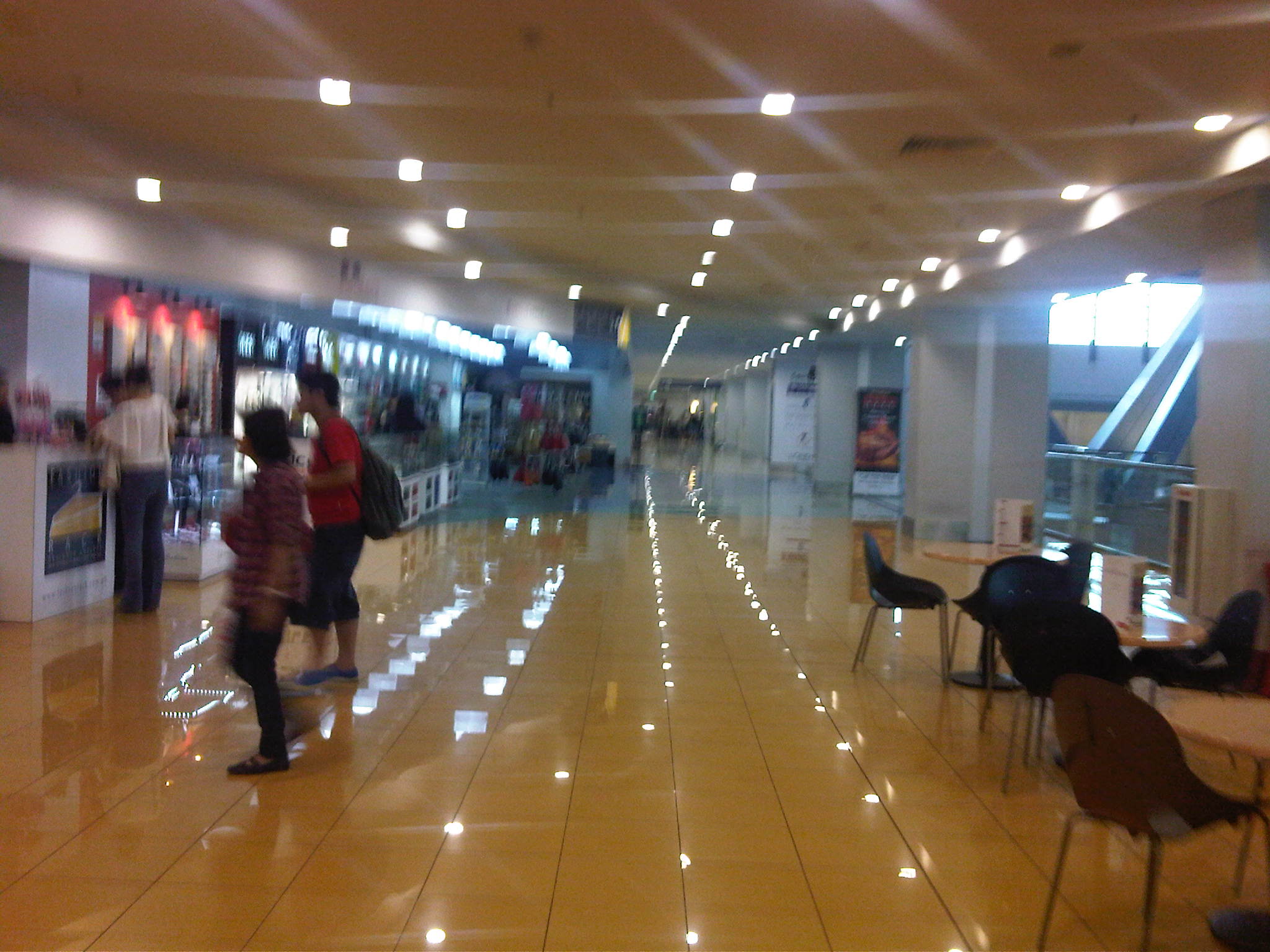 Most of the shops appear to be outlets for popular brands like Nike, Adidas, Oakley, Delsey, etc.
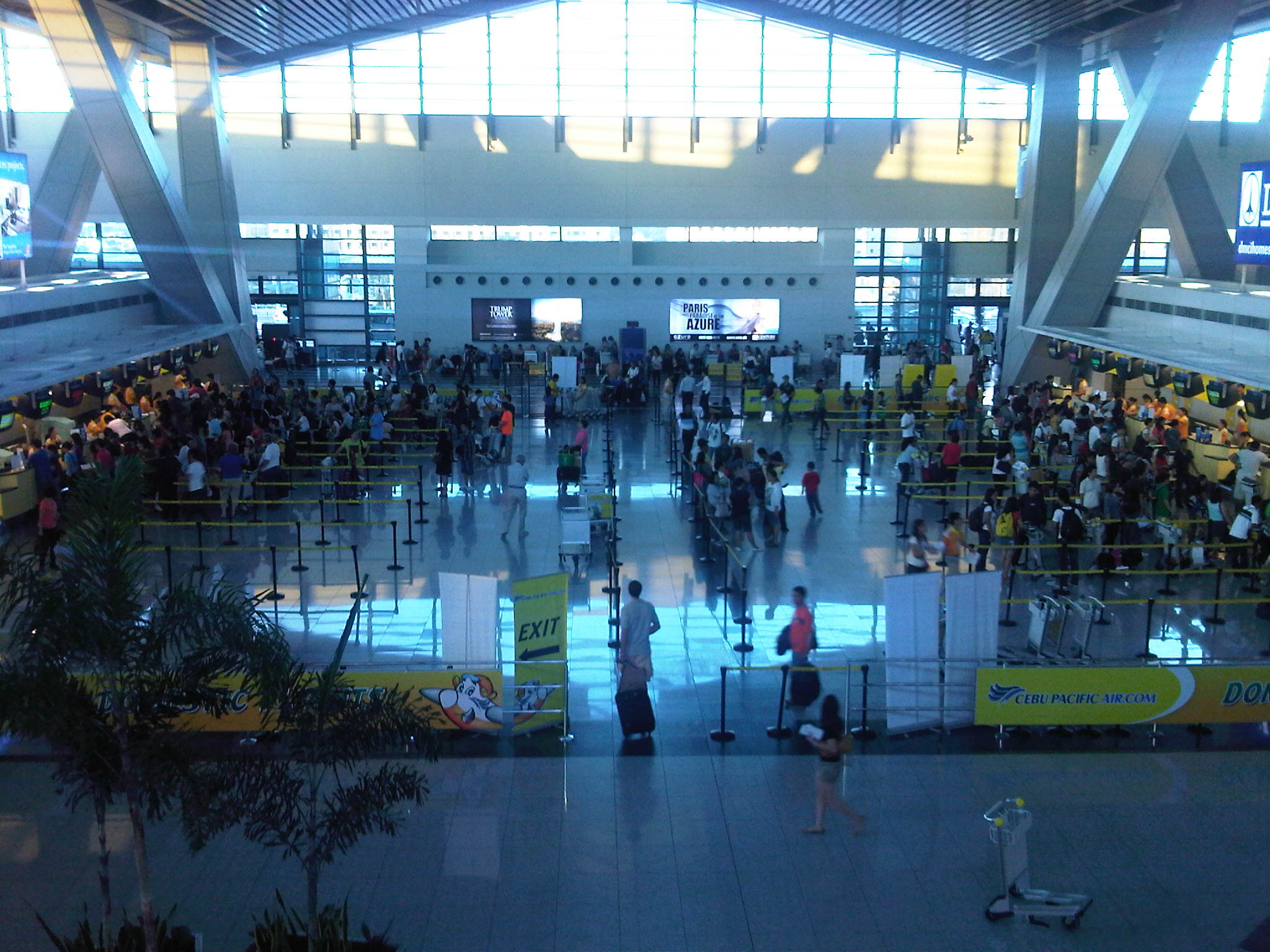 Queues before the Cebu Pacific counters for domestic flights.
 There are many restaurants including the recognizable ones like Shakey’s Pizza, Pancake House, Kenny Rogers, Yellow Cab Pizza and Jollibee.
 Screens showing flights scheduled for departure and arrival via NAIA Terminal 3.
 Spacious halls of the arrival area of Terminal 3 – surprisingly, the area was not crowded at the time (it was around 6:30 PM when the photo was taken)
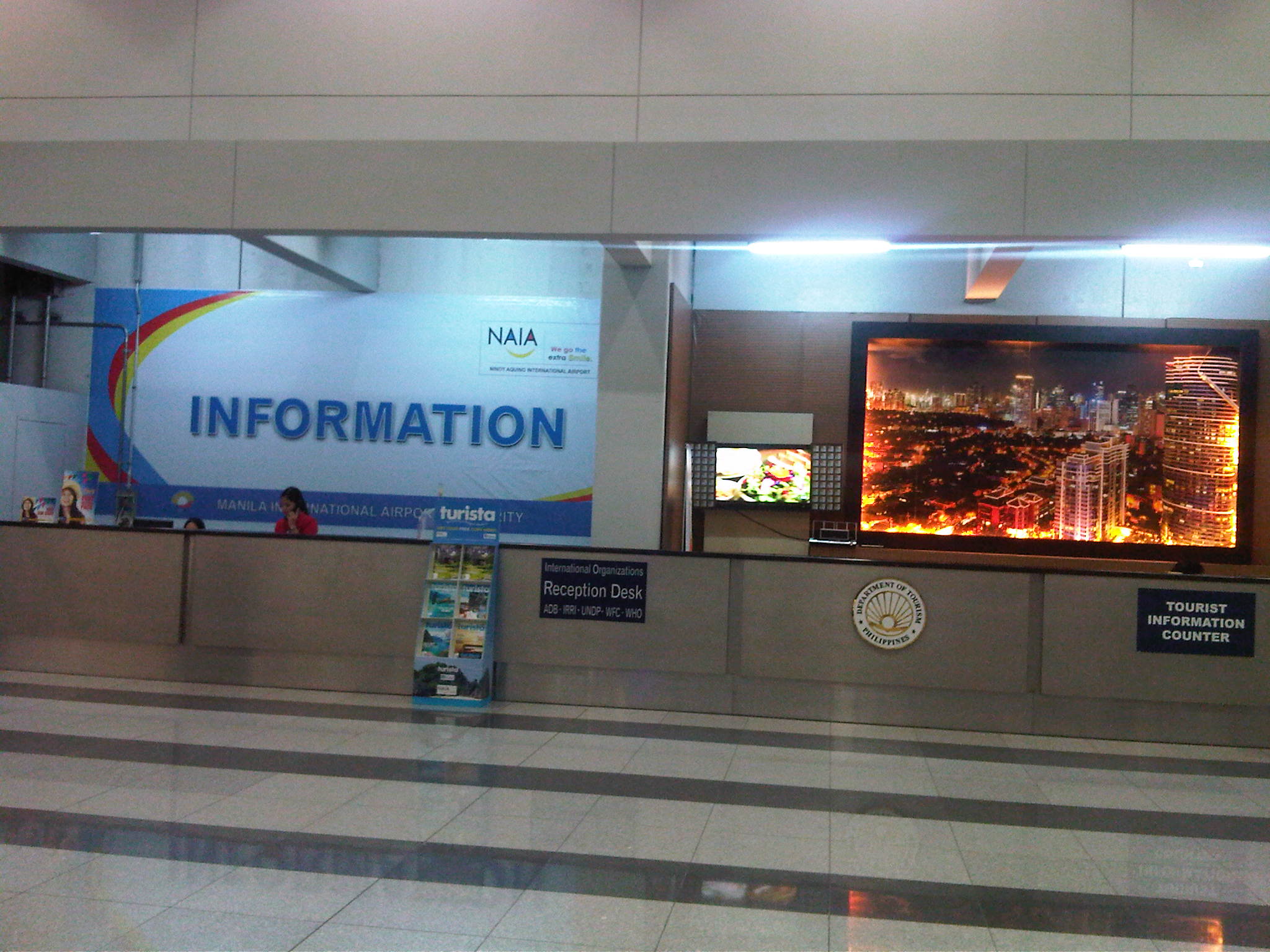 Information counters for visitors
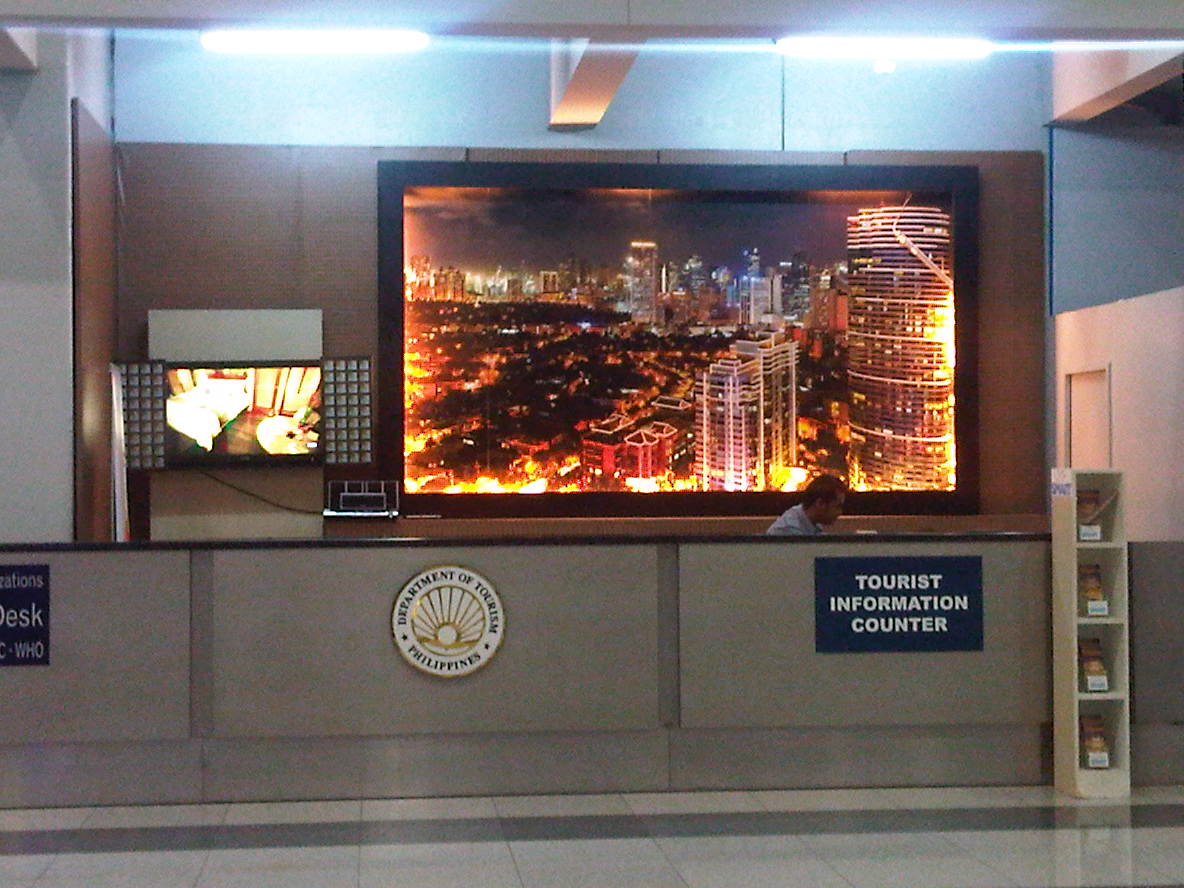 Tourist information counter of the Department of Tourism
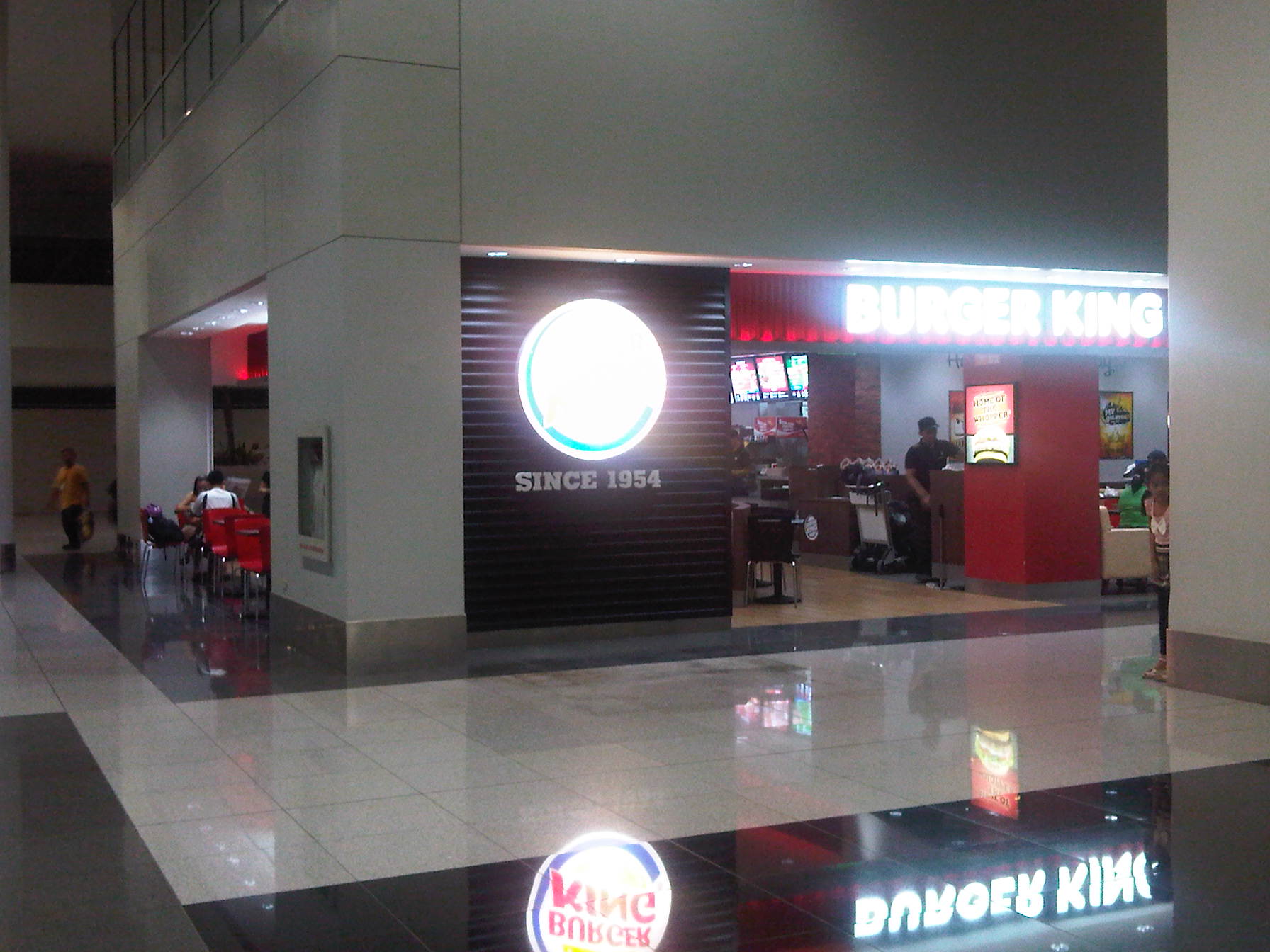 Newly opened Burger King at the ground level / arrival area of Terminal 3
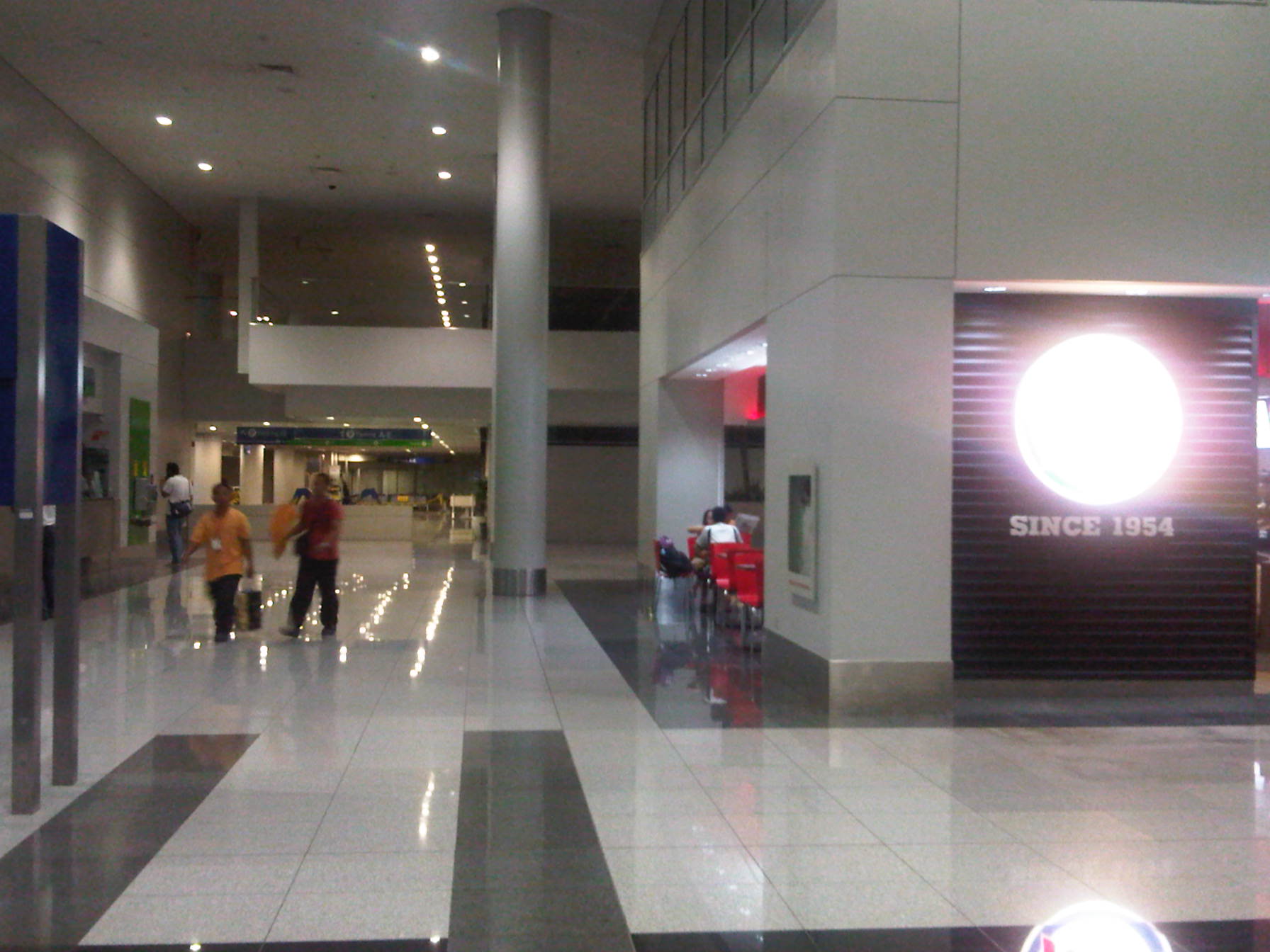 This way leads to the unopened area of the terminal, which includes space for more shops and the multi-level parking building. On the left side across Burger King are ATMs and counters of banks for currency exchange.
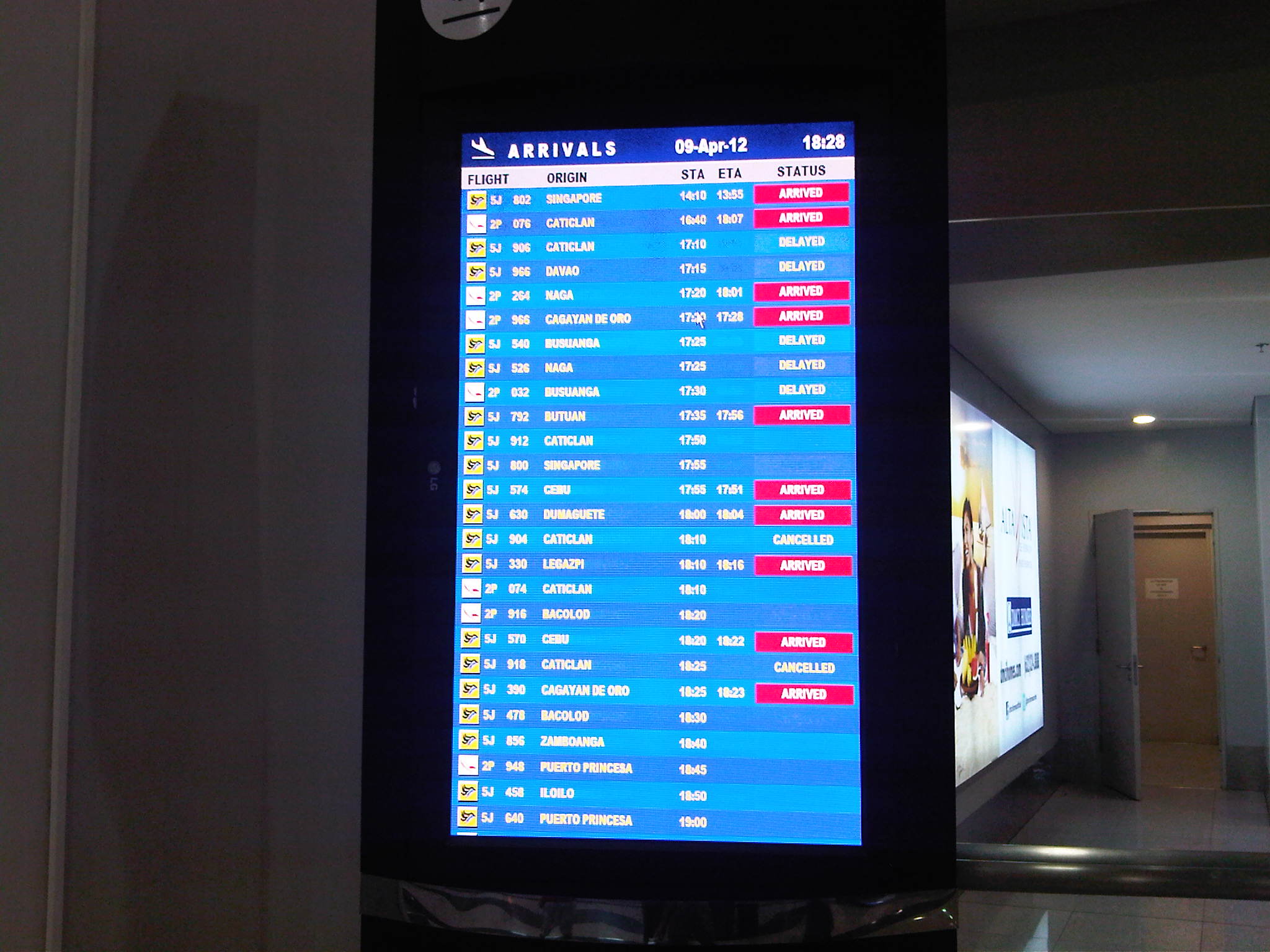 Arrival information just before the exit from baggage claim and customs
 Well-wishers view of passengers coming from the baggage claim area for domestic arrivals
–
Changi’s Budget Terminal
Singapore has the best airport in the world, a distinction it has maintained despite challenges from similar world-class airports like the ones in Hongkong and Incheon. It currently has 3 huge terminals for mainly full service airlines including the very impressive Terminal 3. Singapore also has a Budget Terminal, which I have observed as serving only 2 airlines, both budget – Tiger Airways and Cebu Pacific. The Budget Terminal has most of the amenities of the three other main terminals and is also excellently maintained with its sparkling clean floors and toilets. In fact, when one arrives at the airport for an early flight, you will notice that there are people (mostly caucasians) lying on the floor somewhere taking a nap while waiting for their counters to open. I guess it beats renting a room at a hotel considering you can burn time at the airport with all its facilities available, 24 hours. Following are a few photos I was able to take while waiting for the airline counter for my flight to open and also while waiting for my boarding call.
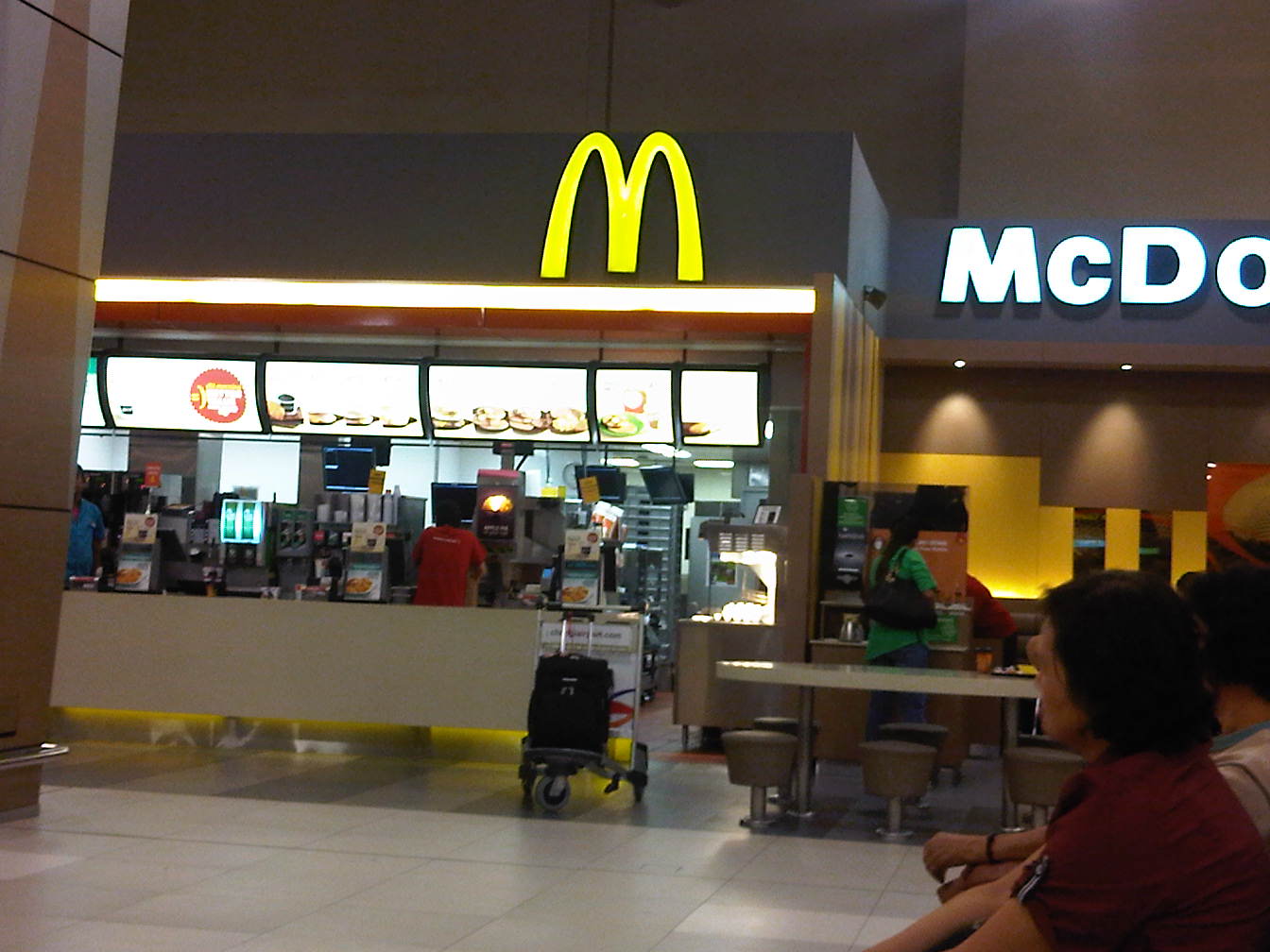 A McDonald’s outlet at the Budget Terminal
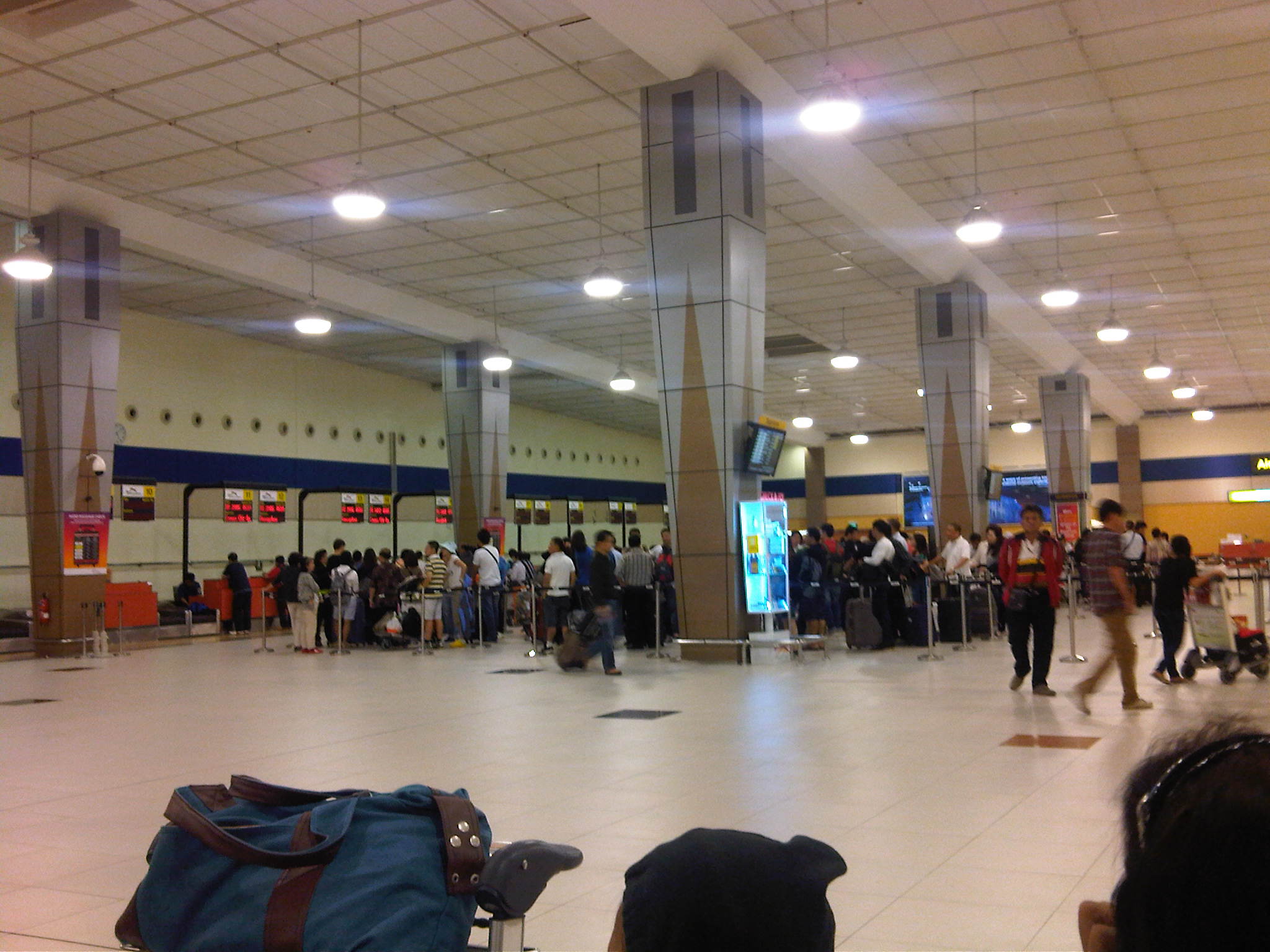 Queues at the Tiger Airways check-in counters
 Airport staff pushing carts toward the gates
 Passengers queued before the Departure gate prior to the immigration counters
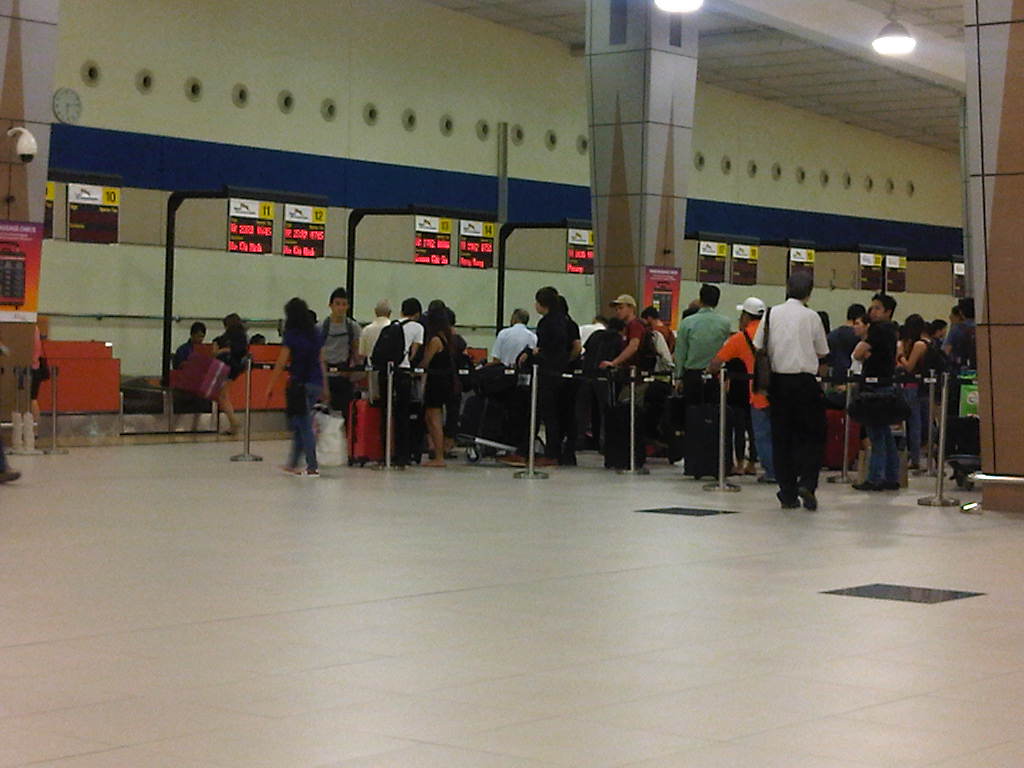 Tiger Airways is one of the more successful budget airlines in the region, a distinction in shares with AirAsia and Cebu Pacific
 You see a lot of passengers with large boxes or luggage including what are obviously electronics (giant LED or LCD TVs are quite the bargain in Singapore).
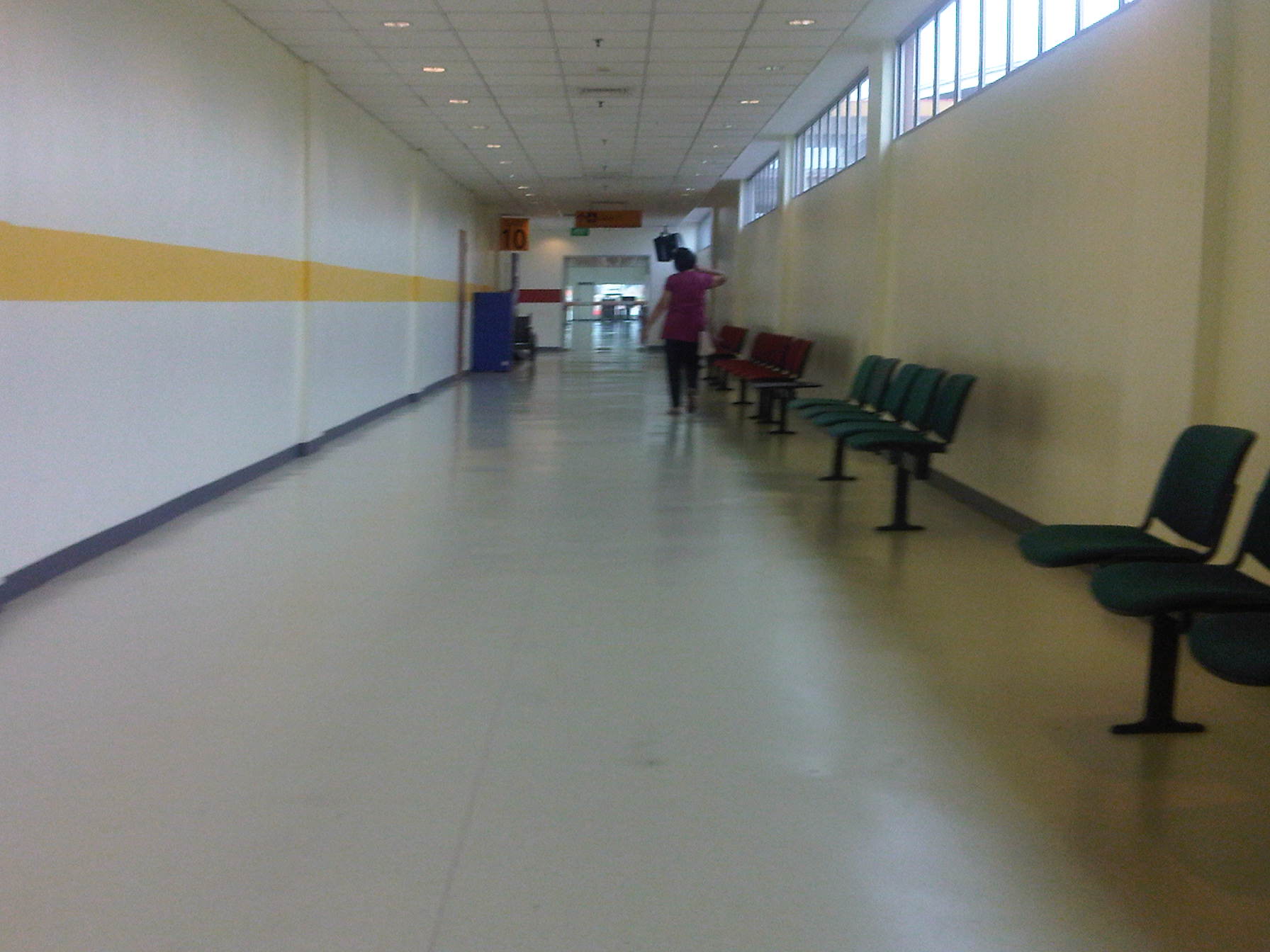 Corridor to the gate
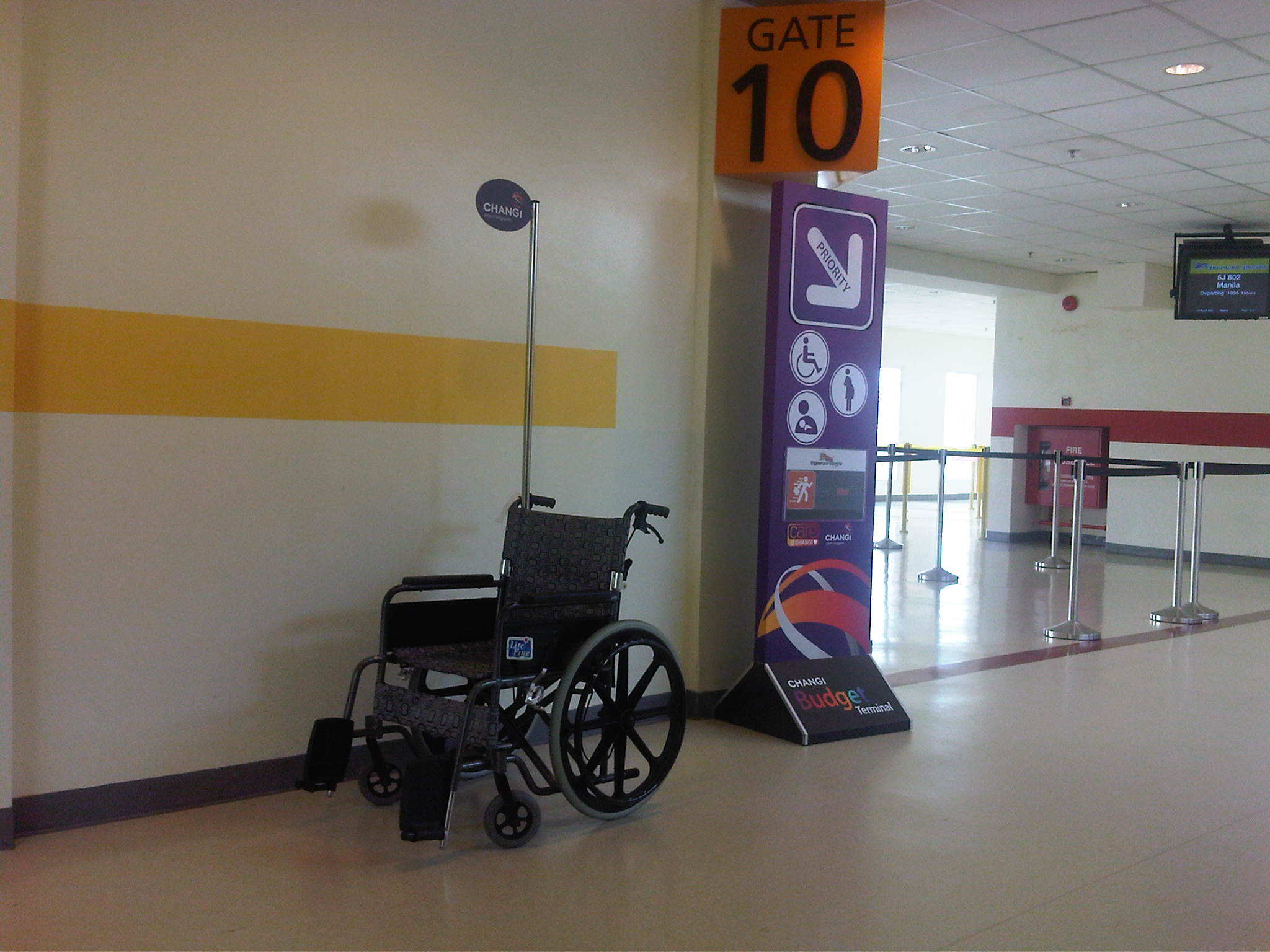 Wheelchair for passengers requiring it and sign stating priority for boarding (PWDs, pregnant women, those with small children)
 The waiting area at the end of the linear budget terminal
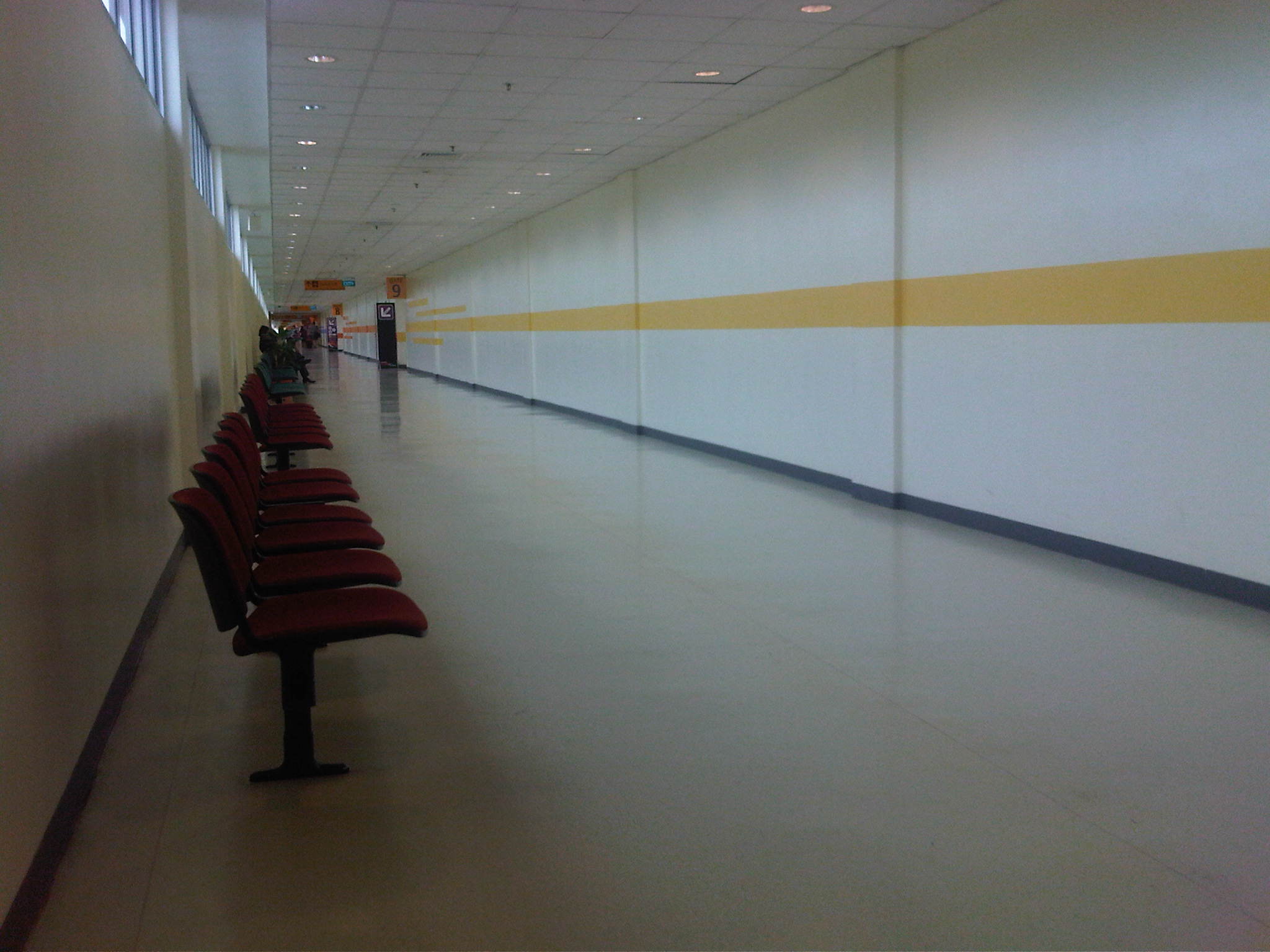 Seats at the waiting area – view from the end of the corridor
I have learned from friends and acquaintances that there are plans to scrap the Budget Terminal. In its place, a Terminal 4 will be built and all budget airlines will be served by the collective of four terminals at Changi. There has been mention of a 5th terminal but I guess that will be further in the future. One can’t be certain though since air traffic at Changi is still steadily increasing along with the travelers handled by the airport. Singapore knows it has to maintain its advantage as a hub connecting Asian destinations with the rest of the world and Changi is at the forefront of the city-state’s efforts to also maintain its leverage and status as a global center for business in the region.
–
 Caught (up) in traffic