
Home » Airports (Page 6)
Category Archives: Airports
Arrival at Mactan Cebu International Airport
It’s the Undas holidays when people typically travel to their hometowns. In the past, this has been an exodus for the big cities like Metro Manila where most people actually originated from other provinces. It is a common sight for the bus terminals, airports and seaports to be crowded this time of year and prior to November 1 as people travel home. This year is probably the most crowded in many years considering the COVID-19 pandemic has restricted travel the last 2+ years.
This is actually a late post on our travel back in July 2022. It is still relevant as I feature here Cebu’s main gateway – the Mactan Cebu International Airport. We were back in Cebu after almost 3 years and looked forward to a nice vacation. That starts with a pleasant arrival at MCIA that set the tone for a nice break from our work and an adventure for our daughter before school opened (they started in August).
 Arriving passengers are greeted by a spacious baggage claim area.
 It’s good that the airport did not feel compelled to have every space occupied by something. It makes the passengers feel and appreciate the space, which I thought was a plus for very busy airports like MCIA.
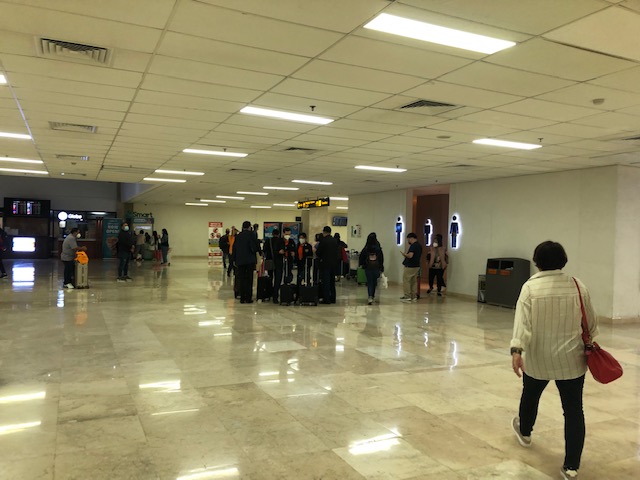 The terminal also has well-maintained tiolets, which is another feature that I think is non-negotiable for such facilities. The toilets are a major part of the first impression of a city/destination for travelers.
 Communication companies greet travelers with promos. Globe and Smart offer simcards for visitors. I think these are more for the foreigners or balikbayans who probably need a local number and simcard so they don’t max out their phone accounts while traveling in the country.
 People gather around the carousel to claim their baggage. The info board is working and there are signs reminding passengers to carefully identify and claim their baggage.
 Many bags look similar and since no one checks the tags/stickers upon exit of the terminal, people should take care in picking up the wrong luggage. It can be an inconvenience to both parties.
 This corridor leads to the airline transfer desks.
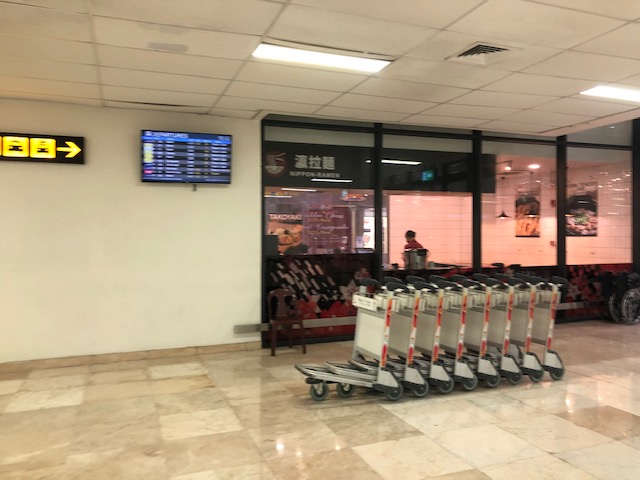 There’s a preview of one of the restaurants outside baggage claim area of the arrival level of the airport.
 Arriving passengers are greeted with a spacious lobby that has two levels of shopping and dining areas.
 There are two levels of shops and restaurants. Duty Free Philippines has a branch here for those who have the duty free privileges.
 There are seats for travelers and well-wishers.
 The corridors are lines with shops, restaurants and food stalls.
 Some shops offer the popular lechon (roasted pig) and other local favorites. [Pardon for the blurry photo.]
 The airport transport services are organized and have their own ‘formal’ counters. This is unlike the old times when these had informal stalls outside the airport. You can now more confidently book your car or van or inquire about tourist services at one of these counters.
I no longer took photos of the transport terminal at MCIA. I already posted photos on that in previous articles. It is the same and still efficient, convenient and comfortable to travelers. It is definitely better than NAIA’s and other airports in the country in terms of design.
–
Another look at the Zamboanga Airport – departure
This is another one of those late posts. I was in Zamboanga City three months ago. I had wanted to see for myself what the airport now looks like and if they were able to complete the renovations on the airport. Here are the photos I took of the departure area of the airport where most of the renovations were being done the last time we were in Zamboanga just weeks before the lockdown in March 2020.
 The driveways are still the same and so is the main concourse, which is limited to VIPs. Most passengers would have to cross this area from where they alighted to get to the terminal.
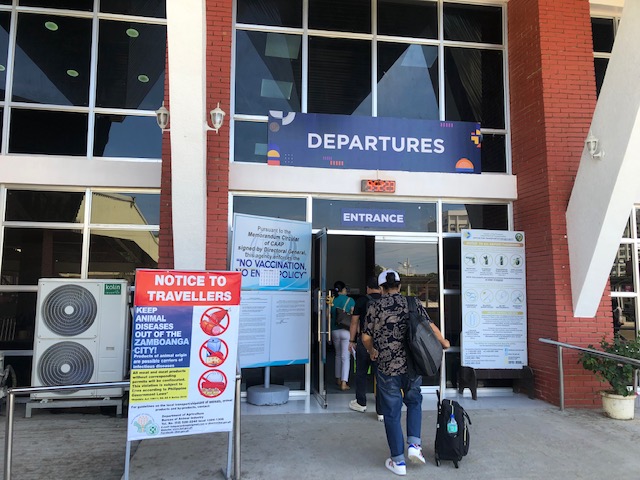 Entrance to the terminal’s departure area
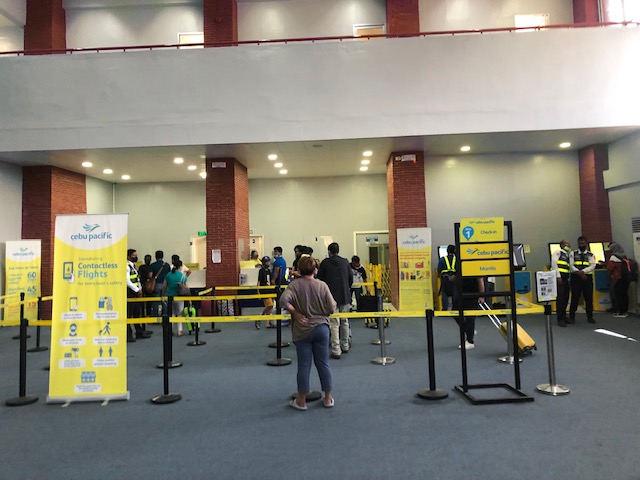 What used to be a crowded, hot and humid check-in area is now spacious, orderly and better-ventilated.
 A general view of the check-in area of the airport
 It can now accommodate more passengers and travelers will be more comfortable here compared to how it was before.
 Cebu Pacific posted this for guidance of passengers in the number of baggage they are allowed to bring according to what they paid for when they bought their tickets.
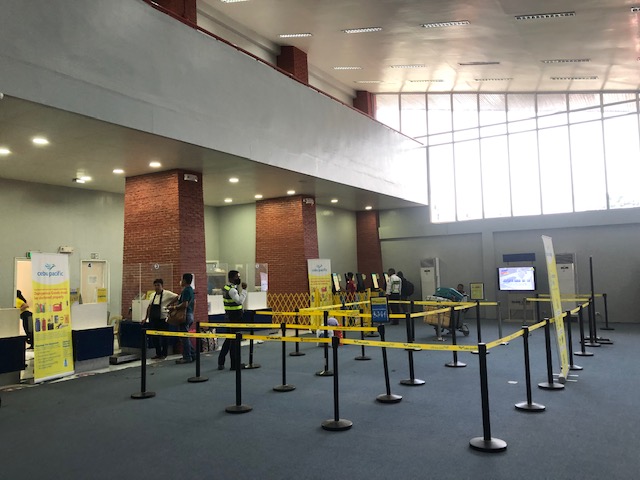 Cebu Pacific’s check-in counters
 PAL’s check-in counters
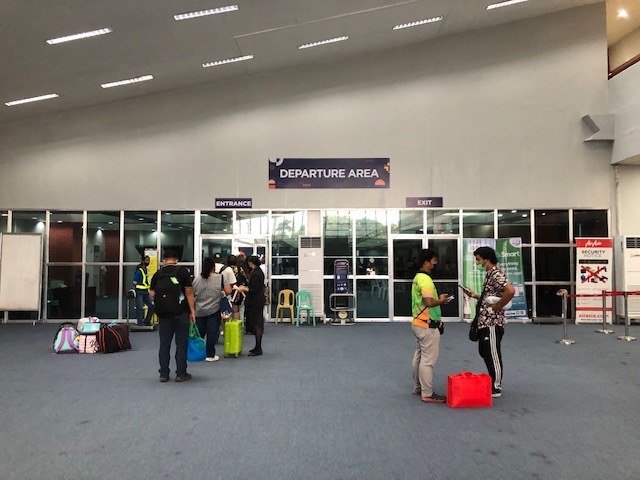 Entrance to the lounges – airport personnel check the passengers’ boarding passes and mark the seats on the plane to probably see who are already in the lounge and waiting for the boarding call.
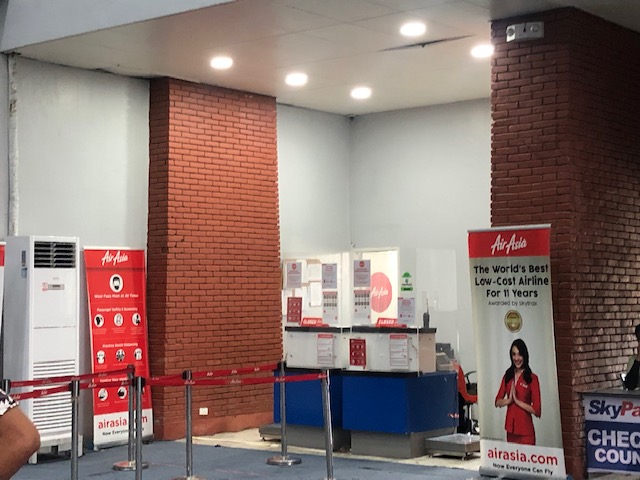 Air Asia check-in counters
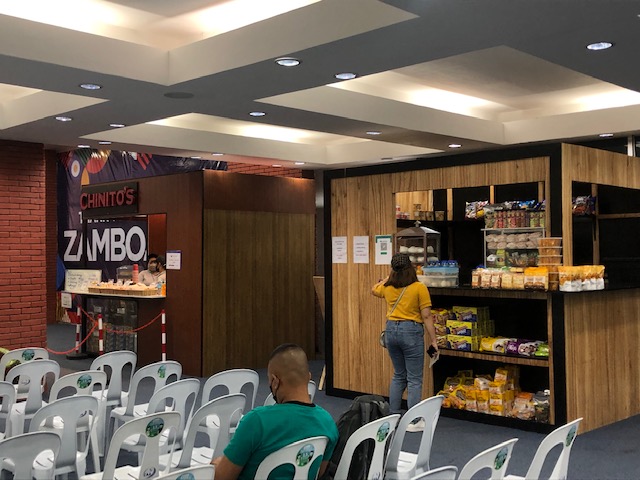 The shops and eateries that was in the mezzanine are no more. Like the airport in Panglao there are now fewer and limited food options at the departure lounge. Fortunately, there is a stall operated by the popular restaurant-cafe Chinito’s. They have good coffee, snacks and light meals there.
 The lounge area remained the same. I did not see any additional seats or areas for departing passengers. The lighting has improved though.
 There’s a separate Heroes’ Lounge for those who are from the armed forces. Zamboanga is an important post for the military and you can see drones either flying or on the ground at the air force base in Zamboanga. Andrews Air Base is just across the airport and they share the same runway.
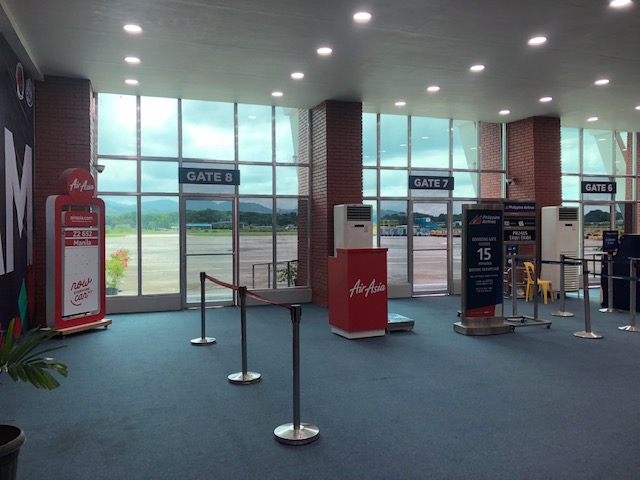 Gate assigned to Air Asia
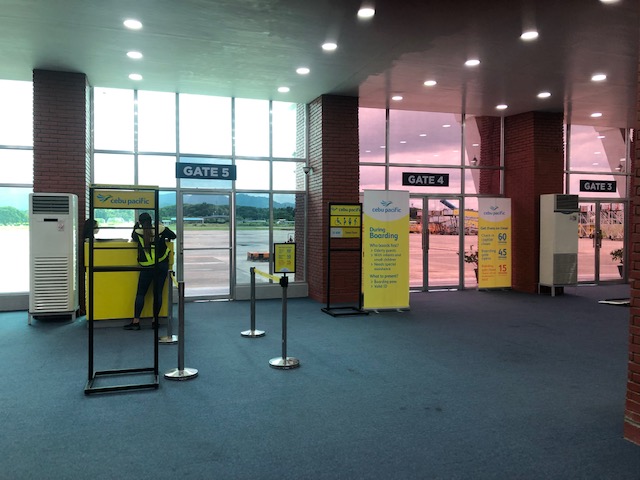 Gates assigned to Cebu Pacific
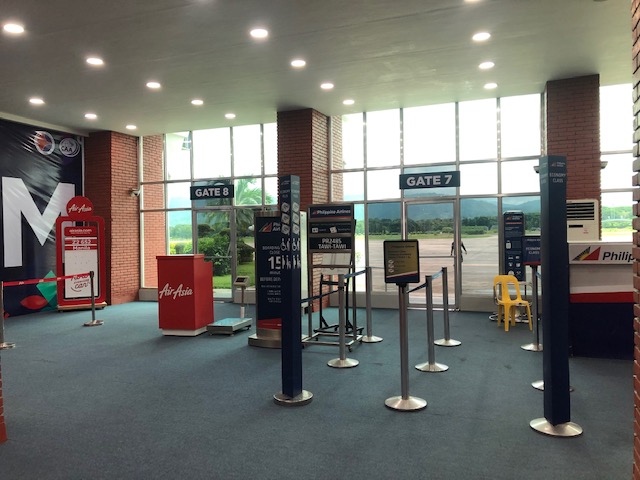 PAL’s gates are just beside the one assigned to Air Asia
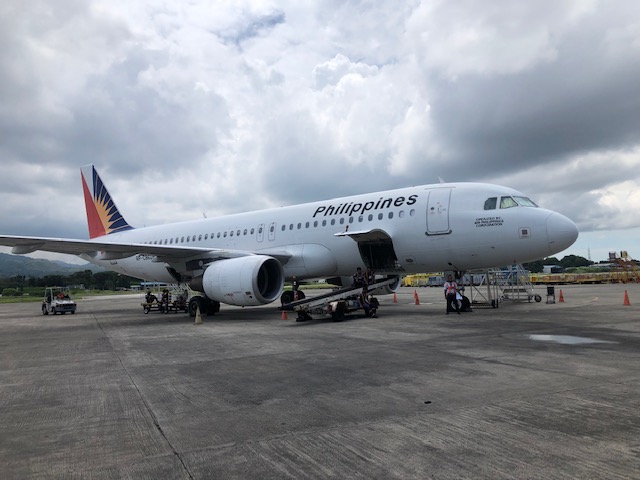 A PAL jet preparing to load luggage and freight
 Our Cebu Pacific plane uses the more passenger-friendly ramps for the forward door.
I will post more photos of airports once I am able to visit other cities once again. I am already looking forward to traveling to Cagayan De Oro via Laguindingan Airport. And perhaps my first overseas trip since December 2019. Meanwhile, I still have to post photos of Mactan’s newer terminal.
–
How my students see transport and traffic
With social media and the ascendance or popularity of influencers and the like, we have often encountered assessments or opinions about transportation and traffic. While there are those that make sense, there are more that are of the rant variety. The latter include the self-righteous who seem to relish bashing professionals and government officials while not being able to present much in terms of their own accomplishments. I am aware of my students (including research advisees) being aware of these people and I often see them posting their comments on topics, articles and opinions being shared on social media. For most, their comments and posts on social media show they’re being more informed than most, especially about the state of transportation in the country.
Here are some observations and comments from my students:
- One of my students asked me about my take on the public transport situation. I replied that it is unfortunate that public transportation has deteriorated the way it has for the past decades. The current state is not due to recent policies or regulations but a product of various policies, regulations and even trends over so many years. My student countered that perhaps the current officials must not make an excuse of the past in failing to act in the present.
- I always read about posts that anchor their arguments on the supposed low car ownership in Metro Manila. These are usually followed by calls for taking lanes away from car use for public transport and cycling. While I agree with the latter, I don’t with the former arguments. A student was curious about my statement in one lecture that we need to validate the numbers because what we see on the streets appears to be inconsistent with the notion of low car ownership. There are other ways, she said, to determine vehicle ownership other than the conventional HIS data. We could probably use the Family Income and Expenditure Survey (FIES) that is regularly conducted by the Philippines Statistics Authority (PSA). This will show if people own motor vehicles as well as how much they spend for transportation.
- I asked my students to critique the plans and implementation of airports in the Greater Capital Region (GCR) also known as Mega Manila, and which is larger than the NCR Plus used to refer to Metro Manila plus Bulacan, Rizal, Laguna and Cavite. I was not surprised about their assessments as all of them did their homework in the sense that they researched on information and data they could use for their critiques. Most were in favor of developing a new capital airport in Bulacan rather than in Cavite. And many favored the continued operation of NAIA but with reduced air traffic and a different role.
More on these opinions, observations and comments as I try to recall the more remarkable or notable ones.
Have a nice Sunday!
–
Another look at the Zamboanga Airport – arrival
We traveled to Zamboanga earlier last month and it was our first trip to the city since the first lockdowns in 2020. We were supposed to travel in March 2020 to conduct data collection for a full week but then there was the nationwide lockdown implemented to control the spread of the Covid-19 pandemic. If we were already there when the lockdowns were implemented, we could have been stranded at our hotel and perhaps spent a few weeks to perhaps a month before we could return to Manila.
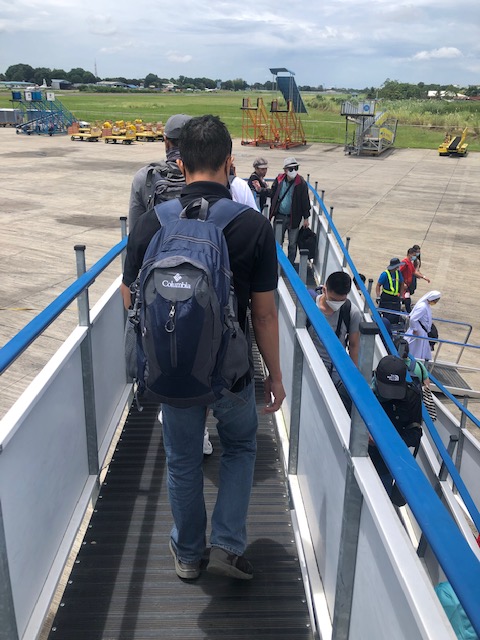 We disembarked from the plan using the more sophisticated and senior citizen- and PWD-friendly ramps.
 It took longer to get down both in terms of distance and disembarking time.
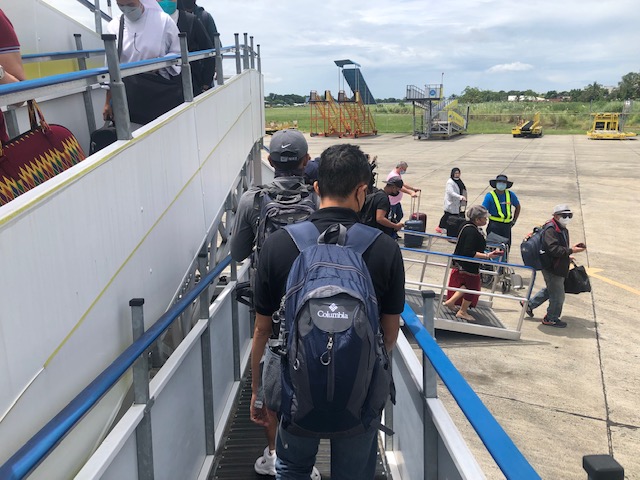 Other stairs and ramps are shown in the background. I recall only Cebu Pacific had these for their aircraft.
 Our first look at the renovated Zamboanga International Airport (Aeropuerto International de Zamboanga in the local language – Chavacano) since February 2020. At the time the roof was already falling apart at different locations.
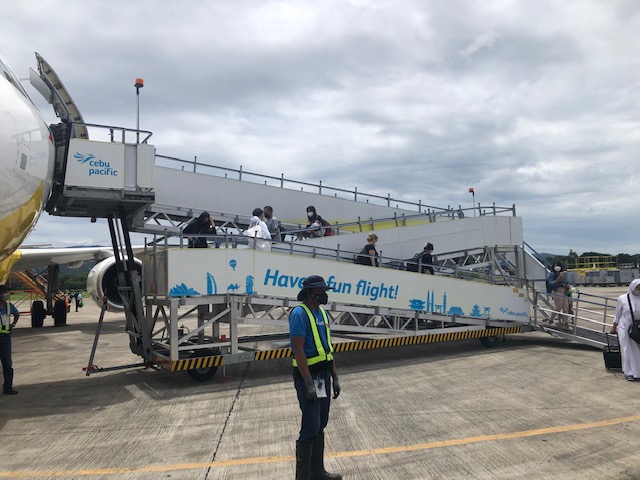 A look back at the ramp
 Passengers walk towards the arrival area of the airport
 The baggage claim area is practically the same as in 2020. The only notables are the signs encouraging physical distancing as well as the stickers on the floor that designated where passengers were to position themselves.
 As you one can see, people no longer really observe social distancing but all are wearing face masks.
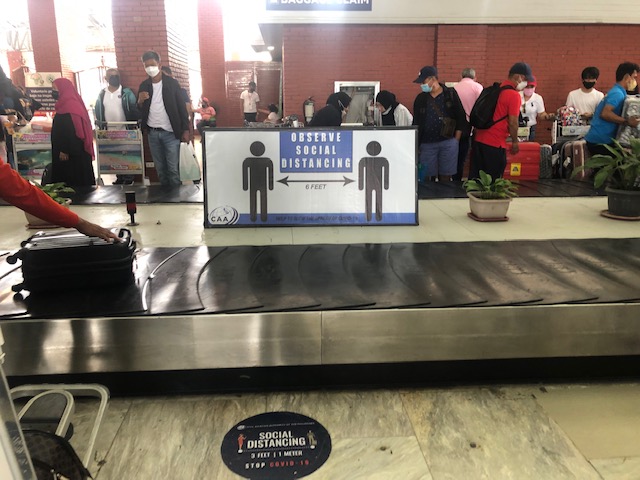 A closer and clearer look at the sign and the floor sticker asking people to practice social distancing
 The main driveway of the airport remains closed to general traffic. This is used only for special occasions and VIPs.
 A look back to the terminal’s arrival area as we walked to meet up with the driver of our service vehicle while in the city.
Photos from the departure/return leg of our trip in the next post.
–
What are closed and what are open – NAIA Terminal 3 arrival
I previously wrote about what shops and restaurants were open or closed at NAIA Terminal 3. This time, I am sharing photos of the arrival level of T3.
 Exiting the baggage claim area, we come upon what looks like the same scenes at the arrival level before the pandemic – lots of people walking around, shops and banks/money changers open for business.
 The crowd density was not really the same as pre-pandemic levels but perhaps this was also because we arrived during a relatively off-peak period in airport operations. There were no international flights that arrived at about the same time we landed. Otherwise, there will be a lot of well-wishers or people fetching (“sundo”) arriving passengers.
 The exchange rate when we arrived hovered just above 56 pesos : 1 USD.
 Most people are wearing masks, which is a good thing considering we are not yet over with the Covid-19 pandemic. I can only imagine how it was when the airports were just reopening and people were also required to wear face shields. And only those who were really traveling were allowed in the terminal.
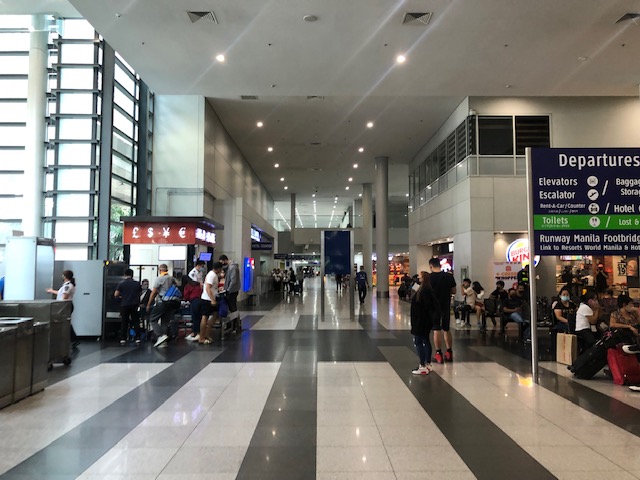 Most shops and restaurants at the arrival level were open and many people who were mostly waiting for arriving passengers were there to have a meal or snacks.
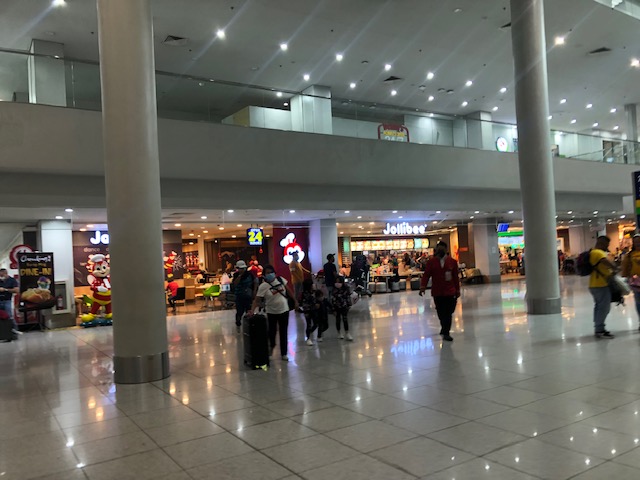 Walking towards the covered parking areas of Terminal 3, we see familiar fast-food Jollibee and Chowking with their typical patrons/customers.
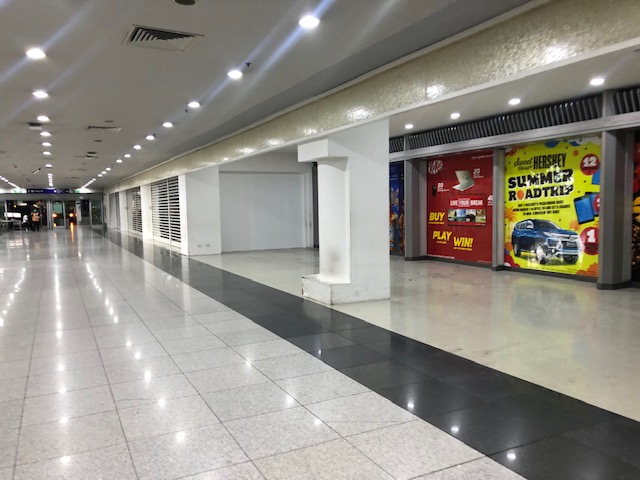 Still closed is the large Duty Free Philippines shop at the arrival level of T3.
–
Returning to Mactan, Cebu
This weekend we are in Mactan to take a much needed break after a busy 2 weeks. I will write soon about the travel between Manila and Cebu including the conditions at the airports. For now, here’s a few photos upon deplaning from the aircraft.


I look forward to the beach and a few side trips. Our plans for the weekend are quite flexible so its uncertain what places we get to visit or perhaps stay put at the resort where we are staying. I do want to see the completed bridge connecting Cordova with Cebu City (Cebu-Cordova Link Expressway or CCLEX).
More on the trip to Cebu in future posts.
What’re closed and what’re open – shops and restaurants at NAIA Terminal 3
I promised to post more photos about NAIA Terminal 3 yesterday. Prior to entering the pre-departure area, we decided to have our breakfast at the 3rd level of the terminal where most of the stores and restaurants are located. Prior to the pandemic, we ate at the area shared by Chowking, Tapa King and Army Navy Burgers. We also wanted to see which stores and restaurants were open as most of us were traveling via Terminal 3 for the first time since February 2020 (almost 2.5 years ago). Here are photos taken yesterday at the 3rd level. The scenes remind me of how friends described Haneda, Narita and Hong Kong, which also have a lot of shops, stores and restaurants still closed.
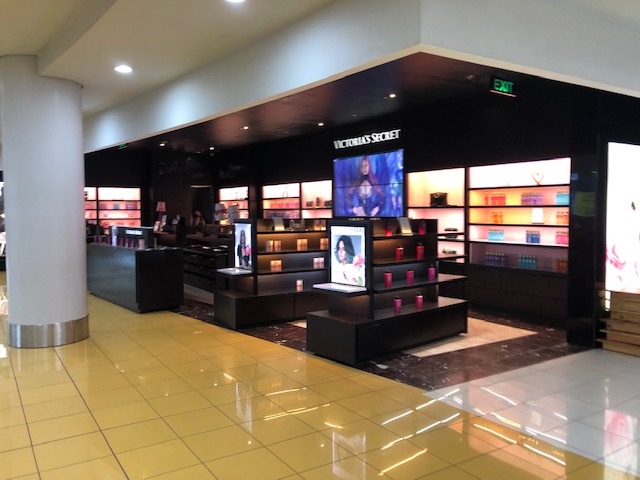 The Victoria’s Secret shop is open. So is the Bath & Body Works store across from it.
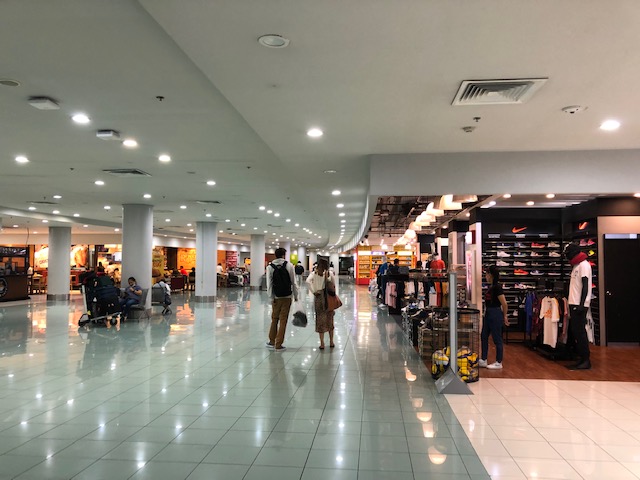 Some of the
 Many of the small stores have closed. One wonders if these will eventually reopen or they will just be replaced by other stores once things get back to ‘normal’.
 These used to be stores selling sports and outdoor wear including an Adidas store and a swimwear shop
 What used to be a WHSmith convenience store is now boarded up. I assume there are still some items inside unlike the other closed stores where only the shelves remain.
 McDonald’s is open and attracts a lot of people looking for that familiar meal.
 Some stores selling chocolates and donuts are open. I saw that there are two other Krispy Kreme stores at the pre-departure area of the terminal. One is just after the final security check and the other is at the ground level near Gates 132 and 133.
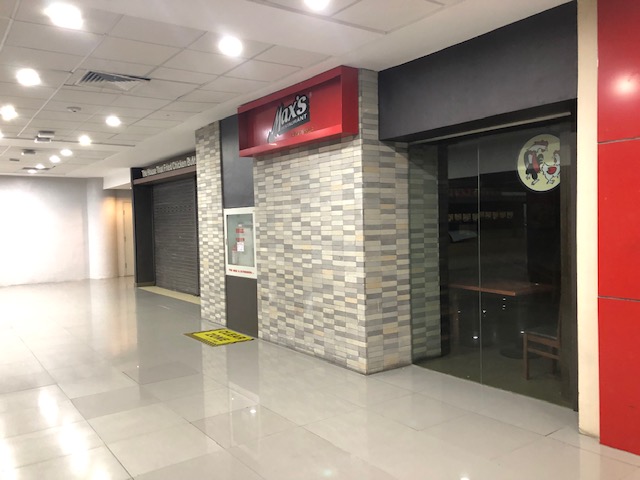 Max’s is closed. Hopefully, it will reopen once the demand returns.
 Chowking and Tapa King are closed. That means your options for no frills, inexpensive meals (particularly all-day breakfasts) are limited at the terminal.
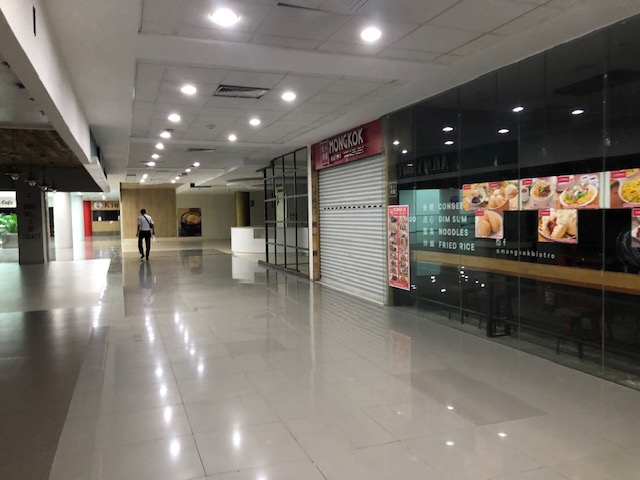 Chinese restaurant Mongkok is also closed.
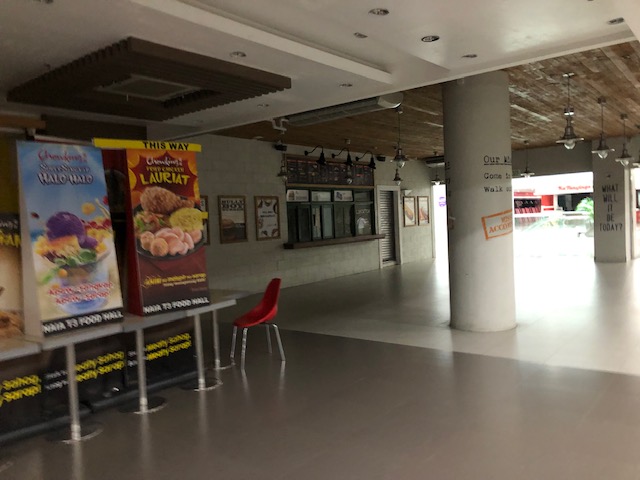 Army Navy is also closed at this area. They are open at the ground floor pre-departure area.
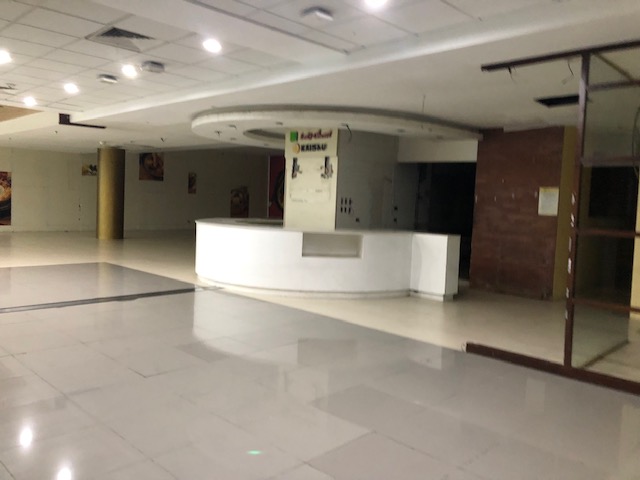 Even the kiosks are closed.
 Ka Tunying’s Cafe, which was also a popular breakfast place, is closed.
 Ramen Nagi is open.
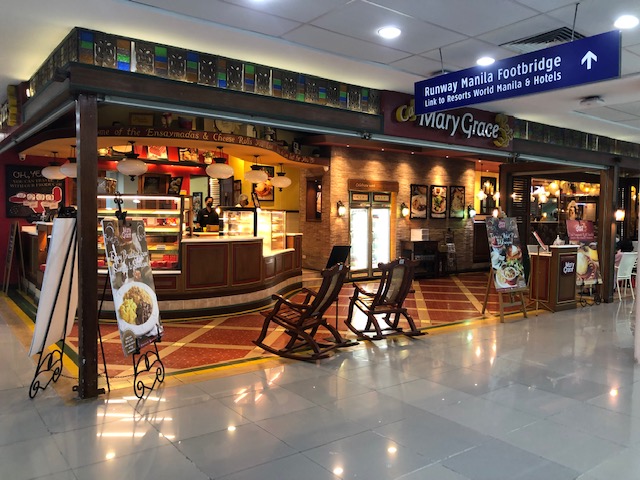 What remains open is Mary Grace where you can get really good meals. However, if you’re on a budget, look elsewhere for food. Breakfast here can set you back 500+ pesos, which can cover the meals of 3 people elsewhere.
 Kenny Roger’s Roasters is open along with the Jollibee at the same level.
 The Coffee Bean and Tea Leaf (CBTL) cafe is open as well as the Wendy’s beside it.
I have yet to see which stores and restaurants at the ground floor (arrival area) are still or already open. I hope I can take some photos when we return later this week.
–
Flying again thru T3
Its been a while since the last travel for work purposes. I used to fly at least once a month for project meetings, seminars, workshops and/or field work. My first flight during the Covid-19 pandemic was for a vacation last April. That was through NAIA Terminal 2 as we took PAL for our voyage.
This will be the first time in almost 2.5 years that I will be flying out of Terminal 3. Here are a few photos as we checked in for our flight.

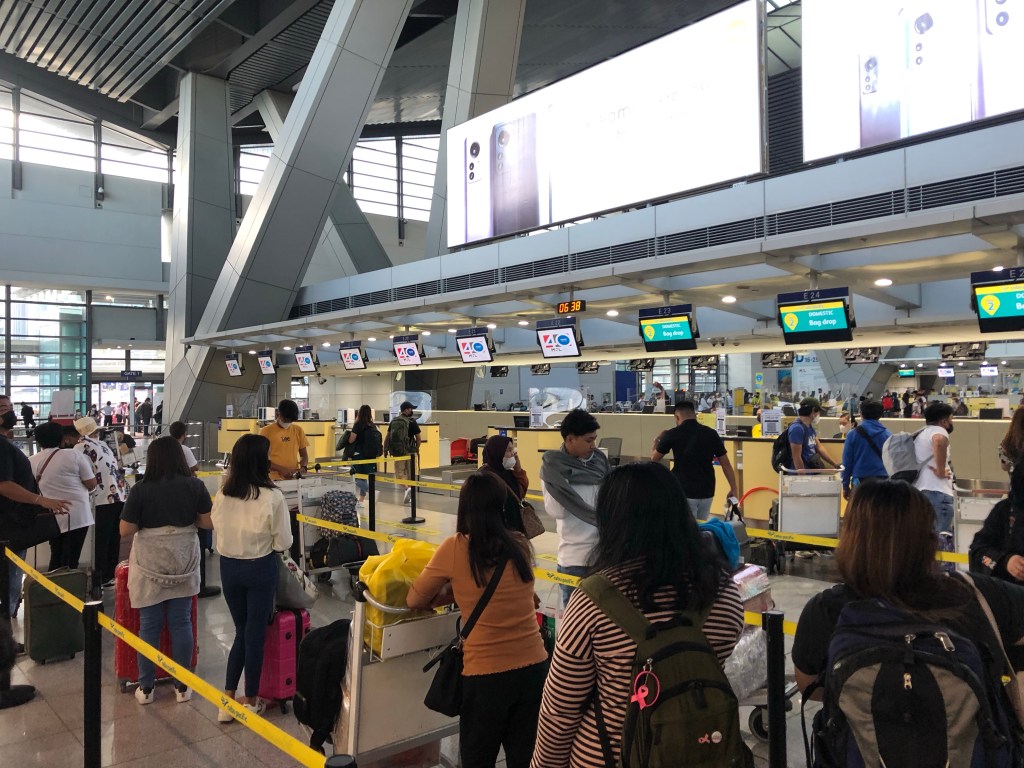
I will share more photos of T3 in the next posts.
Flashback: Transport Infrastructure Framework Plan for the Philippines
I was reading an article yesterday about the outgoing NEDA Director General stating that Philippines needing a long term strategy for infrastructure development that will address the shortcomings or gaps due to unsolicited proposals. There was already something like this drafted almost a decade ago and under the auspices of the returning NEDA DG. Unfortunately, while NEDA accepted the Final Report of the study, they never adopted it as a policy that could also be imposed on agencies like the DOTr (still DOTC back then) and the DPWH. So for a sort of Throwback Thursday and on the last day of the Duterte Administration, I am sharing the promotional video produced for the framework plan that was supported by The World Bank.
The study was conducted by Cambridge Systematics (not related to Cambridge Analytics as far as I know) and was implemented at the same time as the JICA Dream Plan study for Mega Manila. I recall there is also a video on the latter and it listed all the infrastructure projects needed to address the transport problems of the Greater Capital Region. The Infra Framework Plan for the country mentions the various infrastructure projects ongoing and proposed for the Philippines but focuses on the soft side (i.e., strategies) including the reforms and institutional set-up that need to be in place for everything to come together and produce the desired outcomes in the long term. Sadly, strategies and plans are not well appreciated despite their being essential as foundations. While the Build, Build, Build mantra of the outgoing administration is worth praising for attempting to do the catch-up needed in as far as certain transport infrastructure is concerned, it falls short of what are necessary and to be prioritized. Instead, it ended up accommodating projects that are “nice to have” but should not be prioritized considering our limited resources and the undesirable foreign debt racked up by government. Hopefully, the returning NEDA DG and other officials will be able to steer the country clear of the current and future crises that may end up bringing more hardships on Filipinos.
–
Tagbilaran – Panglao Airport Departure
With the recent popularity of my post on the Tagbilaran-Panglao Airport, I was encouraged to write this second part about the airport. Following are photos taken during our departure from Panglao. I took photos from the driveway, the check-in area and the pre-departure area and lounges. I hope this helps my readers including and especially travelers and tourists.
 Curbside at the new airport – the area is very spacious and should be able to handle the steadily increasing number of passengers and well-wishers at the airport.
 Passengers alight from their vehicles near the Philippine Airlines office at the terminal.
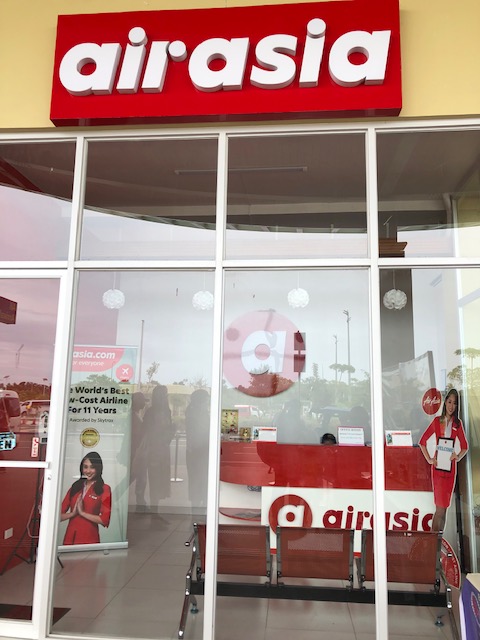 Air Asia ticket office near the terminal curbside
 Spacious check-in area – I was just discussing the requirements and standards for check-in counters and frontage to my students this last semester.
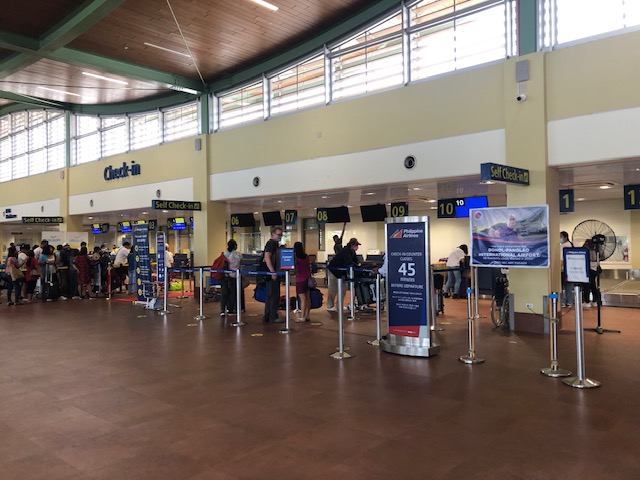 Check-in counters for PAL
 The check-in counters for Cebu Pacific were crowded when we arrived at the terminal.
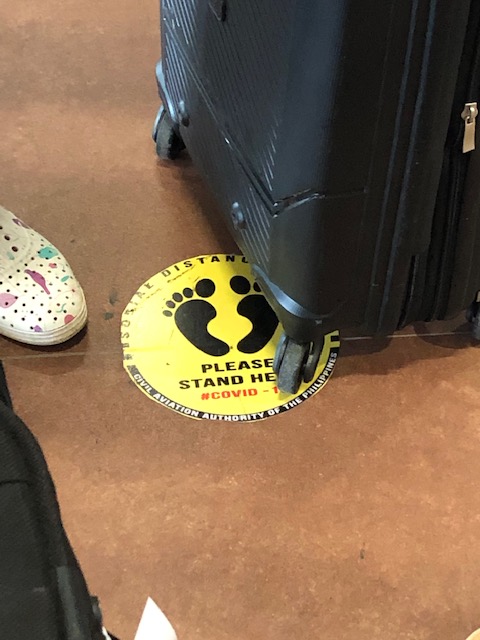 Stickers on the floor mark where passengers are supposed to position themselves to comply with health protocols (i.e., social distance).
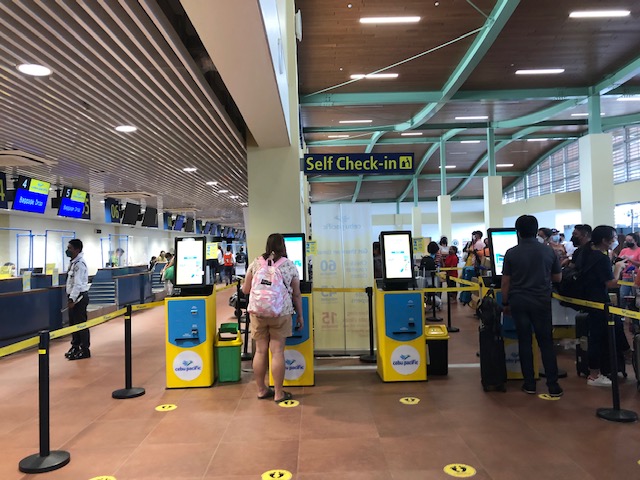 CebPac has their self check-out portals at the airport for those who have not done their online check-in and to facilitate and expedite check-in procedures.
 There’s a separate section for international departures. The airport used to service international flight (before the pandemic). I assume this is where immigration (i.e., passport and visa control) and customs would have been located for International travel.
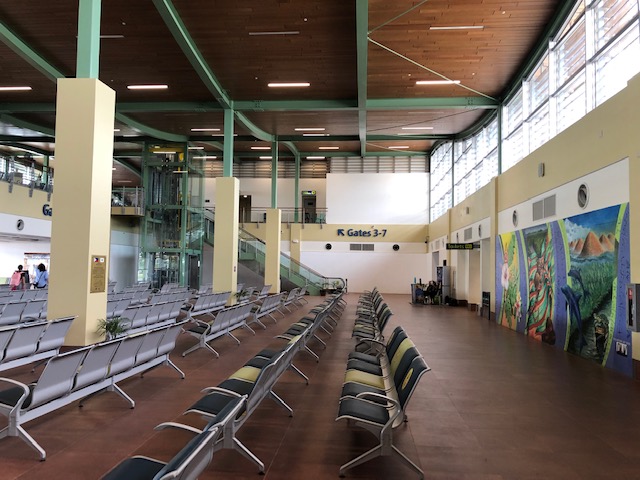 After checking-in, travelers are greeted by very spacious lounges
 This is the ground floor. Visible is the elevator and escalators to the second level pre-departure area for domestic flights. I assume this is a mirror image of the international departures wing.
 Unfortunately, there are only two kiosks at the terminal when we were there. One is this stall that sells snacks, sandwiches, instant noodles, and soft drinks and water. There are no souvenir shops or stores for last minute pasalubong shopping.
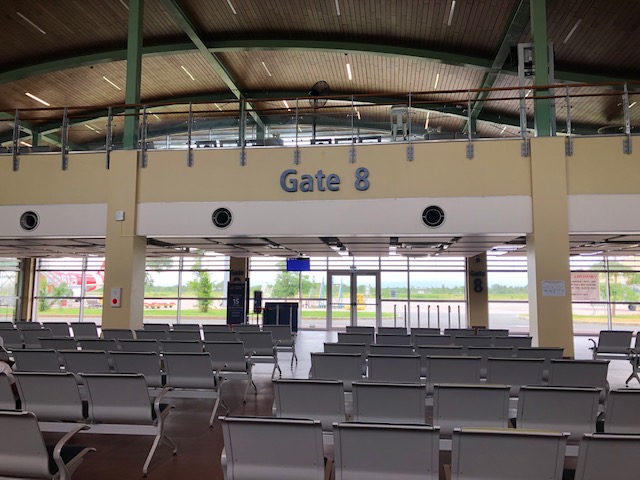 A view of the tarmac from the lounge
 The elevator to the second level lounges and boarding gates.
 Stairs and escalators to the second level
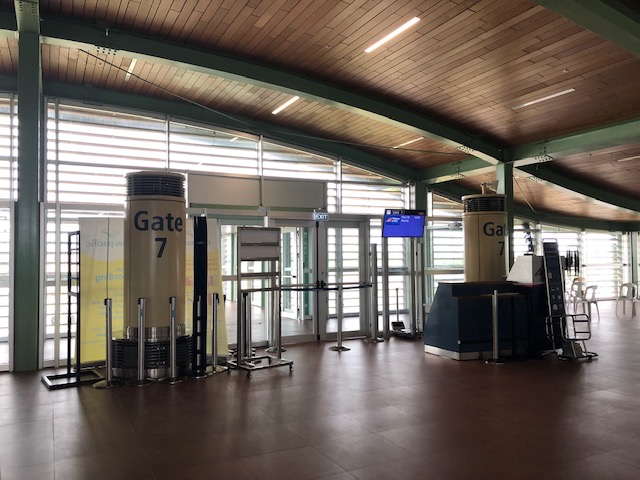 One of the boarding gates at the second level
 The second level pre-departure area
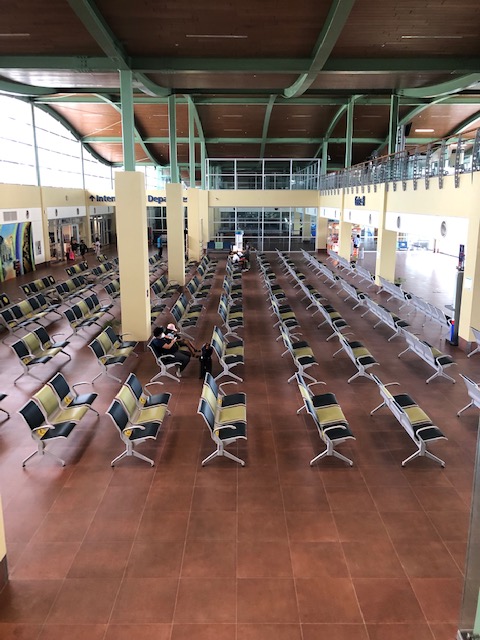 A look at the ground floor
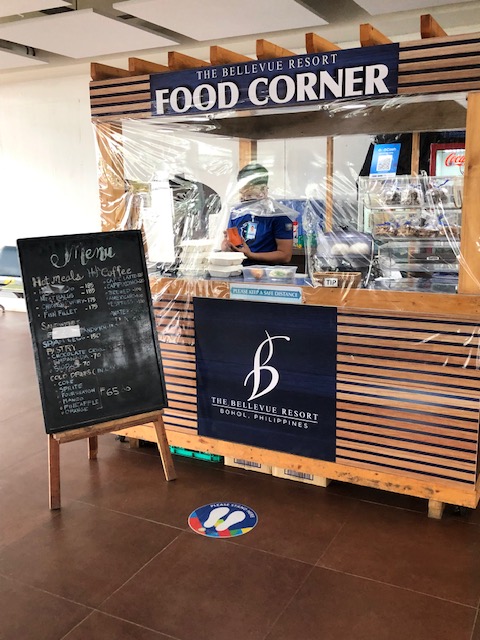 The other kiosk is by The Bellevue Resort. Their coffee is good but they ran out of food at the time we were there. We thought this was not good considering there were other flights scheduled for the rest of the day and passengers will end up with very limited or no options for meals before their flights.
 Another look at the boarding gate and kiosk at the ground level
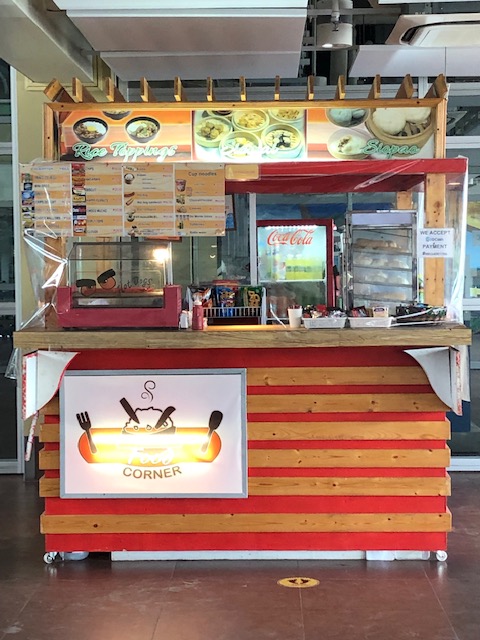 Another look at the other kiosk at the pre-departure area that sells snacks, light meals and drinks.
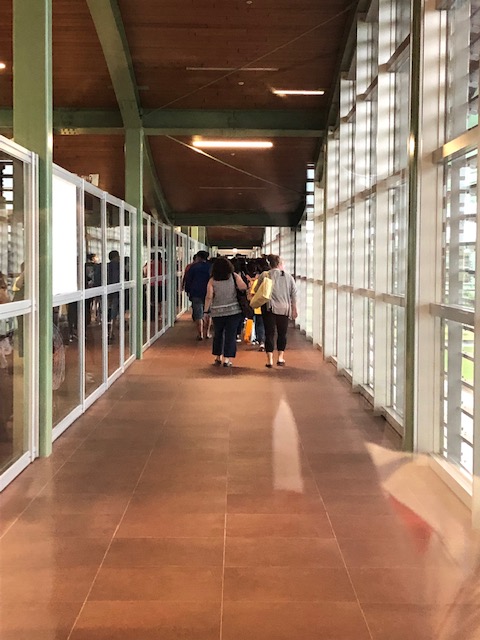 Passengers walk towards the tube connecting to aircraft
 Bridge connecting the terminal to the aircraft
 A PAL plan taking off
 The airport control tower
 Baggage being transport for loading unto the aircraft
 A family walks to board the awaiting aircraft bound for Manila.
 A view of an Air Asia plane that had just arrived and with its passengers just starting to deplane.
This airport is probably one of the better airports in the country now. There is a new airport in Bicol (replacing the old Legazpi Airport) that just started operations recently, which I have yet to visit but is likely better than Panglao in terms of shops and stores. Facilities-wise, this is a modern gateway that should serve the projected number of passengers for Bohol for the next so many years including the expected international operations for the terminal. We are still in the midst of the pandemic but the number of travelers is steadily increasing. And so I wonder how the airport will be once the ‘old normal’ number of visitors return.
They definitely need more shops and stores than the current two kiosks at the airport. They also would need to improve on the ventilation and air-conditioning (it was quite humid inside the airport when we were there – the aircon was not functioning). As a tourist, I am already looking forward to the next trip to Panglao. Hopefully, the airport will be even better on that next trip.
–
 Caught (up) in traffic