
Home » EST (Page 2)
Category Archives: EST
Senseless road crashes
My staff shared the following cctv footage of a recent road crash along C.P. Garcia Avenue just across the College of Science Complex in UP Diliman. The videos show two vehicles colliding along the road at nighttime. This is usually a busy road with traffic to and from Katipunan, mostly comprised of travelers associated with the schools I the area.
https://www.facebook.com/share/v/17MPeJnrCk/
The black SUV appears to be speeding and suddenly veered towards the opposing lane where it collided with another vehicle. It is unclear if the driver lost control of the vehicle or was aware of what he was doing. That cost 2 lives as both drivers reportedly died from the crash.
This is among those crashes that can be regarded as senseless incidents. This could have been avoided if the driver was not speeding in the first place or perhaps was not influenced by any factor like alcohol or drugs. Perhaps it’s really about the behavior of certain motorists who shouldn’t have licenses to drive in the first place? We commonly refer to them as kamote drivers or riders. The LTO should do their part in ridding the roads of these menaces.
–
On roundabouts and how they can improve safety at intersections
Roundabouts are perhaps something that should be considered for Philippine roads. The concern, however, is that Philippine drivers don’t know how to navigate or position themselves in roundabouts. And the results as we have seen in several cases are congested roundabouts or rotundas.
AASHTO (September 26, 2025) “State DOTs Highlight How Roundabouts Improve Safety,” AASHTO Journal, https://aashtojournal.transportation.org/state-dots-highlight-how-roundabouts-improve-safety/%5BLast accessed: 10/19/2025]
To quote from the article:
“To highlight the safety benefits of roundabouts, the Ohio Department of Transportation recently released an analysis of crash data from 76 intersections statewide that had been converted to roundabouts. That analysis indicated single lane roundabouts decreased injury crashes by 69 percent while multi-lane roundabouts resulted in a 25 percent decline.”
And here another quotable from the same article:
“For us, it’s simple. Roundabouts remove cross-traffic turns and eliminate T-bone crashes, while improving traffic flow,” said PennDOT Secretary Mike Carroll …”“Any design that dramatically reduces the most serious crashes we see on the road is worthy of consideration in our projects.”
The article also includes a YouTube video on traffic circles.
–
Still towards a car-oriented future?
Saw this photo being circulated on social media.
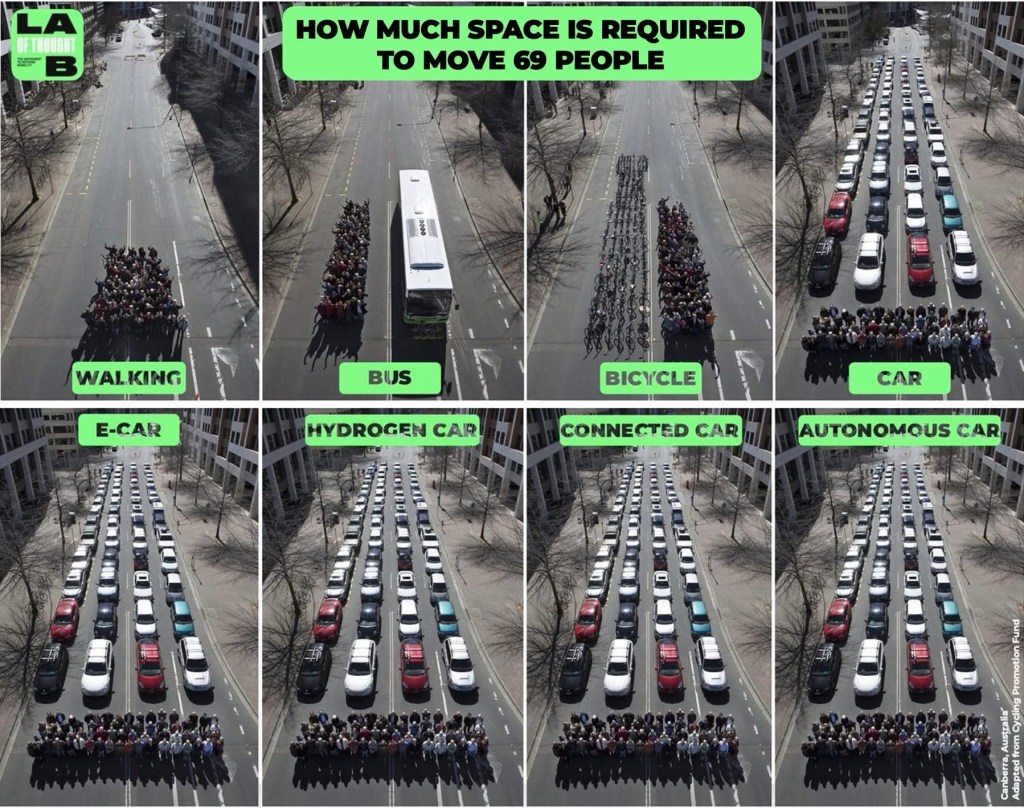
Again, there are many versions of this including the original from a town in Germany that compared 50 people on cars, a bus and on bicycles. The bottom line in the latest images (do these qualify as memes?) is that all these efforts in developing the car, whether regarding the engine or fuel, or perhaps autonomy or connectivity related, ends up being still car-oriented or car-centric. I
t doesn’t really solve our transport problems despite what is being packaged as environmentally friendly. The discussions about this is timely and relevant as electric and hybrid cars are now quickly replacing conventional ones. And there’s a kicker for those driving in Metro Manila, hybrid and electric vehicles are exempted from the travel demand management scheme that is number coding.
How do we veer away from this temptation from technology? How do we keep mode shares in favor of active and public transportation? How do we influence mode choice for the latter options?
–
Vehicle refuge during floods
Passing Felix Avenue one early morning this week, I saw familiar scene. There were lots of vehicles parked along Felix Avenue (formerly Imelda Avenue) including the service roads along either side of this major road connecting Marcos Highway and Ortigas Avenue Extension.
These vehicles are owned by residents of subdivisions along the avenue whose areas are prone to flooding. These include Vista Verde, Metroville, Kasibulan, Karangalan and the two Green Parks. I didn’t see this along the stretch so the other flood prone villages like Village East and Country Homes. Perhaps they have been able to adapt better?
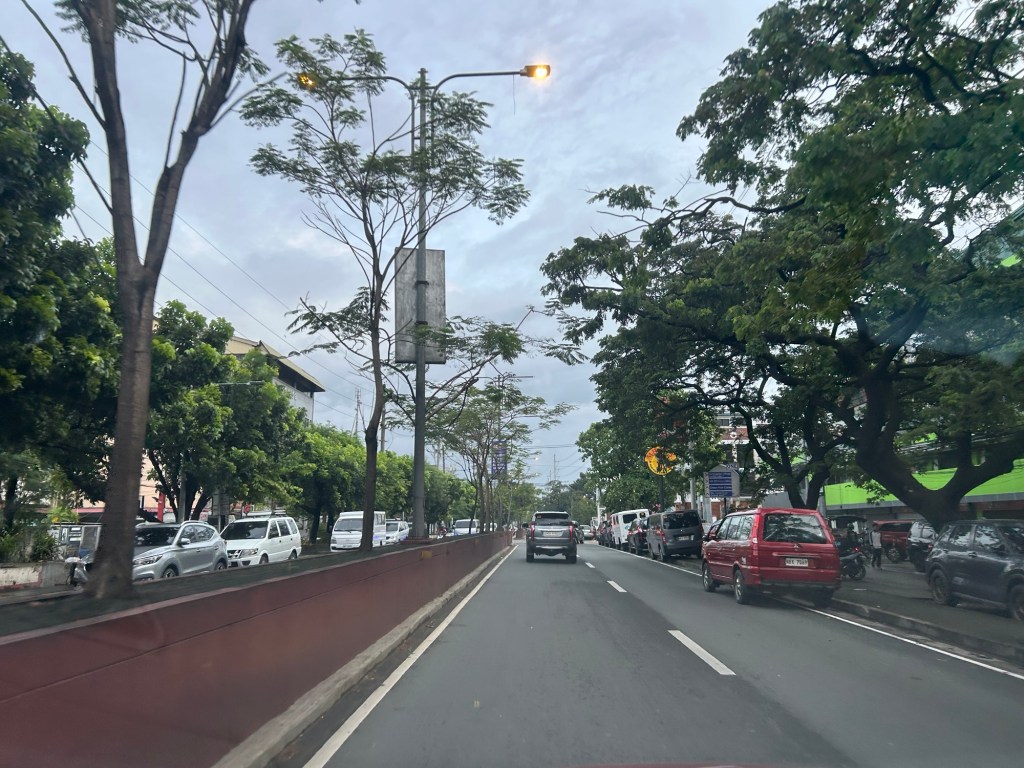
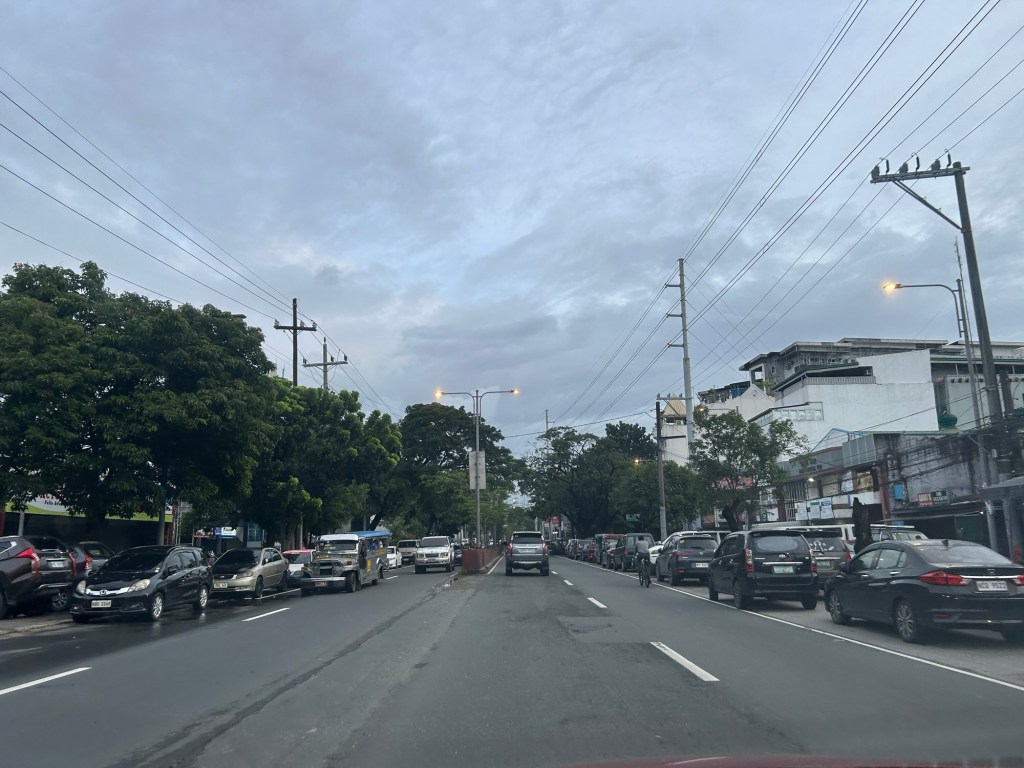
Car-centric discussions aside, when you go the ‘east’ you will notice a lot of people using SUVs. One reason probably is because many Rizal towns including Antipolo City, and Pasig and Marikina Cities are prone to flooding. Can you imagine over 50 years of flooding in these areas? And then with the current investigations concerning flood control projects, have you wondered if the ‘east’ really got their taxpayers’ money’s worth in terms of interventions?
–
Traffic congestion along EDSA
I’ve taken some photos of EDSA traffic as well as the EDSA Carousel buses. Here are the more recent EDSA photos I took as I traveled from Makati to Quezon City after serving as a panelist in the Energy Transitions Dialogue last Wednesday.
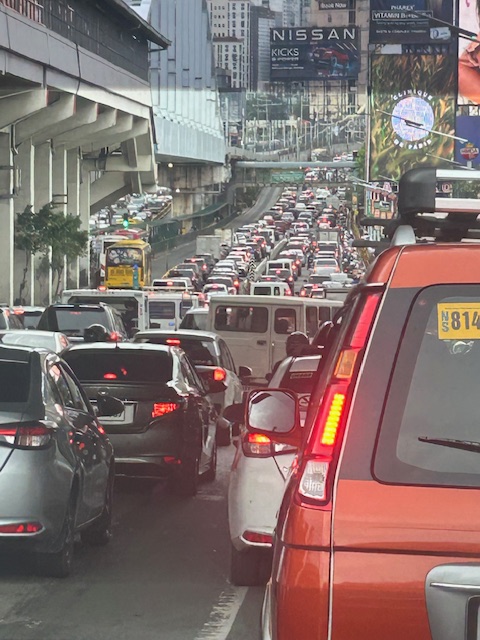 I took this photo as we passed Guadalupe. I like this in the sense that it shows the clear ROW for the EDSA Carousel buses. One wonders why most of these motorists would prefer to drive their vehicles rather than take the bus or the MRT.
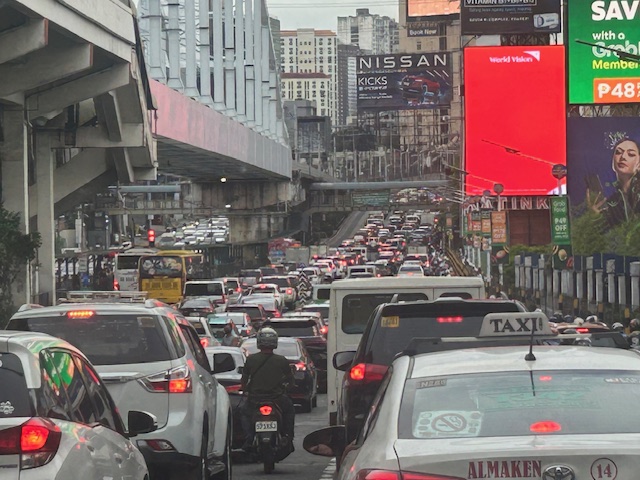 You can see in the photo that EDSA’s northbound side is clogged as far as the eye could see. If you check the image under the MRT bridge, it shows the southbound side was also congested. These photos were taken around 4 PM so this was still an hour before most people would be going home from work.
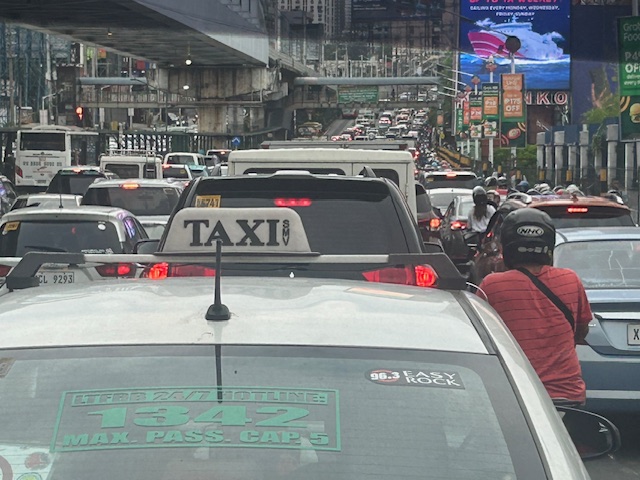 I mentioned in my comments at the panel that one consequence of giving number coding exemption to electric and hybrid vehicles is that this further diminishes the effectiveness (is it still effective?) of the MMDA’s number coding scheme. I don’t have the stats of how many EV’s and hybrids are registered and running in Metro Manila. Those numbers combined with actual counts will tell us how they are impacting traffic. That would be a nice topic for a paper. 🙂
The photos pretty much describe the transport situation in Metro Manila. Many of our major cities will be heading this way unless they improve their public transportation fast. If they do, then public transport mode share will be sustained if not increased. Metro Manila’s is already being eroded by inefficient public transport, motorcycles (including taxis) and perhaps unintentionally, electric and hybrid vehicles.
–
On the ‘silent walk’
My first post this May is an article share on what is referred to now as a ‘silent walk’. That means leaving your gadget at home or work to take walk whether in park, the city or your neighborhood. We all seem to be dependent on our gadgets these days, with many panicking when discovering they left their gadget. It’s as if their world has stopped without the gadget at hand.
Bull, M. (April 30, 2025) “The power of a “silent walk”,” Medium, https://blog.medium.com/the-power-of-a-silent-walk-93ffdd70dbcb [Last accessed: 02/05/2025]
To quote from the article:
“For many of us who rely on laptops, phones, and apps throughout the day, it can be easy to reach for those same devices when we need to relax — if they solve our productivity issues, the thinking goes, they must solve our stress, too. But just as spending the first hour of your day screen free will have an outsize effect on your inner peace, leaving the phone and headphone at home while you head out for a walk will return you to a saner place in record time.”
Granted that you bring your gadget for ’emergency purposes’, perhaps the key is not using it. Keep it in your pocket. Refrain from checking or glancing at the slightest temptation. It may be difficult at first but it will gradually build into your routine. And perhaps, too, you will feel a bit of liberation from these gadgets and reconnect with the world around you to help your well-being.
–
Shared article on shared mobility
Here’s is a nice short read on a Sunday about shared mobility. The article is of particular interest to me because it tackles the needs of persons with disabilities, senior citizens and those in low income households.
Seruga, K. (April 14, 2025) “Shared mobility: Making travel easier for all,” Knowable Magazine, https://knowablemagazine.org/content/article/society/2025/increasing-access-to-shared-transportation [Last accessed: 27/04/2025]
“But if you’re disabled or elderly, living in a low-income area or — imagine! — without a smartphone or credit card, using these shared mobility services becomes a lot more difficult. They tend to cluster in more affluent urban areas, and are often inaccessible to people with reduced mobility or those traveling with young children needing child seats. In part because of these factors, users are disproportionately younger, wealthier, able-bodied, white and male.
Shared mobility could be a key part of a more sustainable transportation system. But to be most effective, it needs to include everyone. For-profit shared mobility providers have largely failed to deliver on this, but various initiatives and projects are finding creative solutions to reach underserved communities.
The potential benefits are large. On-demand shared mobility that feeds into well-developed public transportation systems could reduce the number of vehicles in some cities by 90 percent and cut transportation emissions by 50 percent — but only if it largely replaces private car use. “The car has to be a guest, not the main actor,” says Luis Martinez, lead modeler at the International Transport Forum, who coauthored a paper on shared mobility and sustainability in the 2024 Annual Review of Environment and Resources.”
There is a cautionary tale on ‘for-profit’ shared mobility here but a major difference in countries like the Philippines from those in western countries is the presence motorcycle taxis and the surge in the ownership of electric three-wheelers. These have changed the way people travel though their impacts are only now being assessed.
–
A suddenly spacious NAIA Terminal 3 outdoor parking area
The news of NAIA being taken over by San Miguel Corporation initially drew many criticisms. I won’t talk about these here but somewhat many things have changed aside from the airline assignments among the three remaining terminals. I said three because Terminal 4, what used to be the Manila Domestic Terminal, was already demolished. Among the changes are the suddenly spacious parking areas at the terminals. Here are some photos we took en route to the multi level parking prior to a trip.
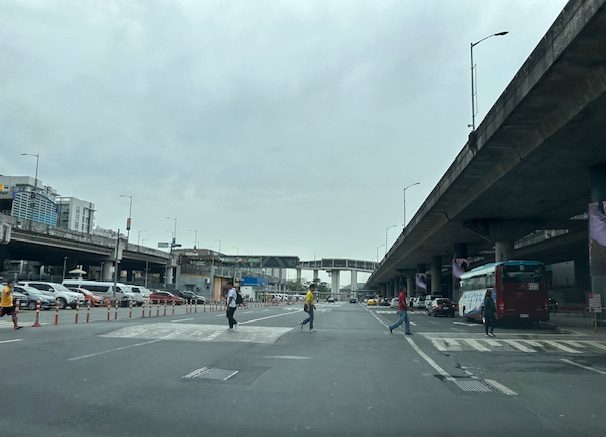 What used to be islands separating the Terminal 3 building from driveways and the open parking lot is no more.
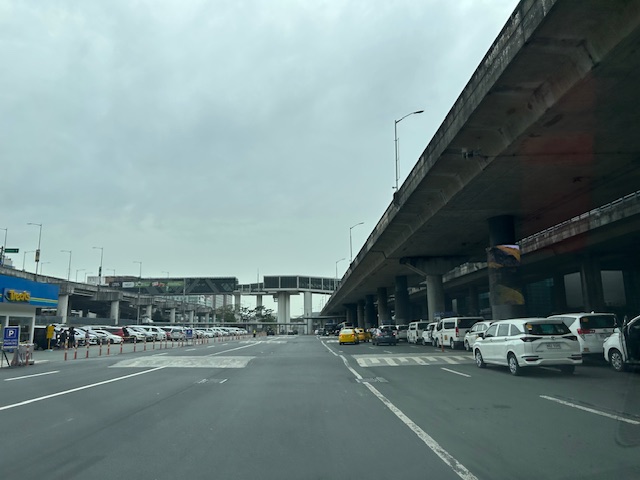 The area is suddenly very spacious allowing for more parking slots as well as a wide driveway for vehicles.
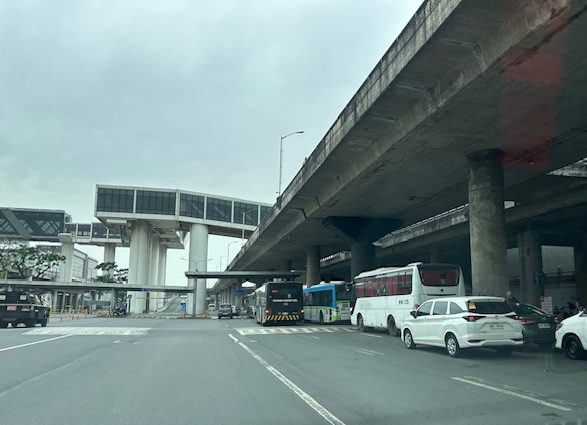 The buses also benefitted from the space as they can line up at the terminal stop without blocking other vehicles.
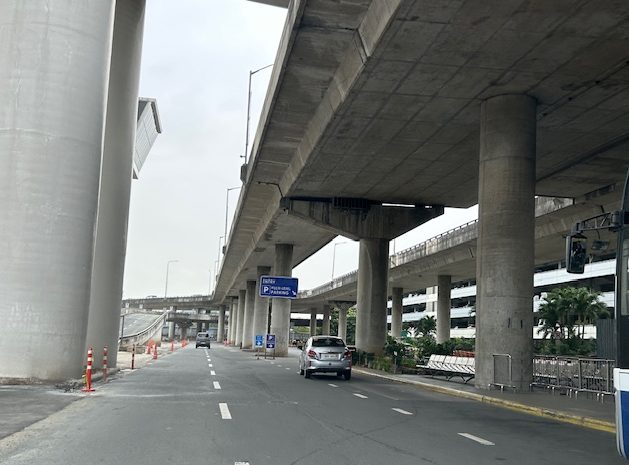 The section leading to the multi-level parking building is not as congested. Most intending to park there including those leaving there vehicles for a few days enter via the upper level driveway. Rideshare vehicles generally use the ground level entrance.
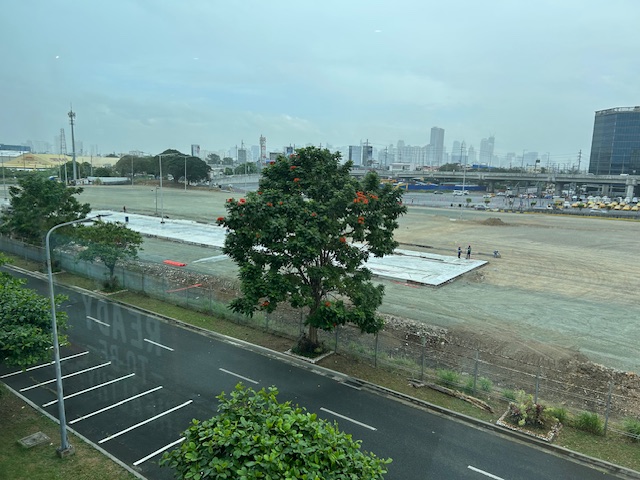 The graded open area that was just usually dirt or mud is now being paved. Perhaps this will provide additional parking spaces considering a significant part of the multi-level parking building has been committed to ride share and taxis.
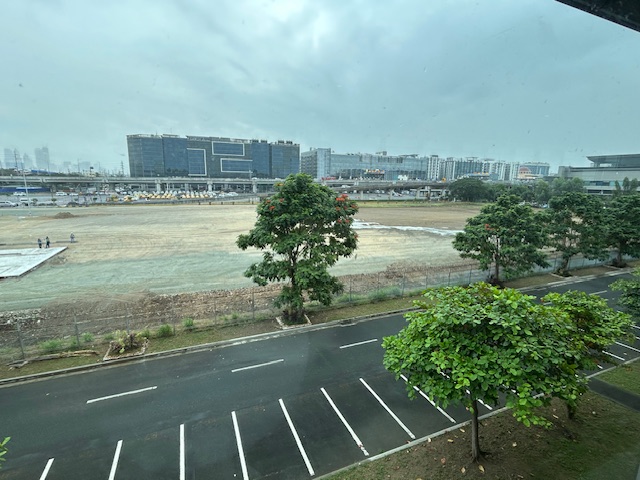 This used to be the area that was burned along with so many cars last year. Gone are the abandoned vehicles and perhaps these will all be paved. But was it necessary to just pave everything rather than have something porous and less heat generator than pavement? It would have been better to go for a multi-level facility and at the same time do some landscaping to have more trees and plants in this area.
–
To B(RT) or not to B(RT)?
I kind of expected questions or comments from my ‘students’ after my lecture last Wednesday about “Traffic Congestion.” Among my slides were those featuring solutions to transport and traffic problems. I presented both soft and hard approaches including travel demand management schemes and infrastructure that we should have built decades ago. The uniformed officers who were there had a very simple take on congestion – it’s basically because of a lack of discipline. While theirs may also be valid observations based on their experiences, ‘discipline’ is not the most critical problem that we have especially considering the ever increasing demand for travel. One government official present was very direct in his question about what I thought about the MMDA’s pronouncement that they plan to remove the EDSA Bus Carousel. I thought my reply and the following explanation was clear – it was a wrong move.
The EDSA Bus Carousel is simple. Bus lang sa bus lane (Only buses along the bus lane). Pag may private or pa-VIP, bawal at huli dapat (If there are private vehicles or those who regard themselves as VIPs using the lane, then they should be apprehended. An HOV (high occupancy vehicle) lane is more difficult to implement. Mas pahirapan ang pag monitor and enforce (It is very difficult to monitor and enforce). So this proposal to phase out the EDSA bus lanes don’t make sense from this perspective. In fact, I don’t agree with a couple of more senior transport experts who say that the MRT Line 3 is sufficient and that it hadn’t reached capacity yet. It has but in the time that the carousel has been operational, the carousel had absorbed much of the demand along the corridor. There is also the fact that it will take much time before Line 3 is upgraded. Are the new train sets here? Are the stations designed for these trains and more passengers? If the answers are no, then MRT3 will not have its capacity increased in such a short time. That also means the carousel is very much relevant not just to supplement MRT3 capacity but as a needed alternative mode for commuters.
–
Article share: On improving the Philippines’ transport system
I share this article on the desire for a sustainable transportation system for the country. This was written by a former Assistant Secretary of the Department of Transportation (on secondment) who has returned to teach at the School of Urban and Regional Planning of the University of the Philippines Diliman. Here is the article published by the Philippine Daily Inquirer:
To quote from the article:
“The present condition of the Philippine public transport system is indispensable to the desired transition from more sustainable, in this case, electric forms of transportation—to a better public transportation system. A good public transportation system is defined by reliability, accessibility, safety, and security…
The imperative to consolidate is clear and crucial. It is not just a technical necessity, but a pathway to inclusive growth where all stakeholders benefit from the transition, and where we can truly create an inclusive and sustainable system for public transportation.
Improving public transportation, by making it cleaner, safer, and more accessible, will directly enhance the quality of lives of Filipinos.”
–
 Caught (up) in traffic