
Home » EST (Page 34)
Category Archives: EST
School traffic impacts – issues along Ortigas Ave., Part 2
I had written recently about traffic congestion along Ortigas Avenue that is due mainly to traffic generated by a private school in the area. In the previous post, the photos only show vehicles parked on the sidewalks on either side of the road. They did not show the actual traffic congestion experience. The parked vehicles seem more incidental and indirect than concrete evidence of congestion brought about by school traffic generation though they are a definite manifestations of parking generation, which is directly related to traffic generation.
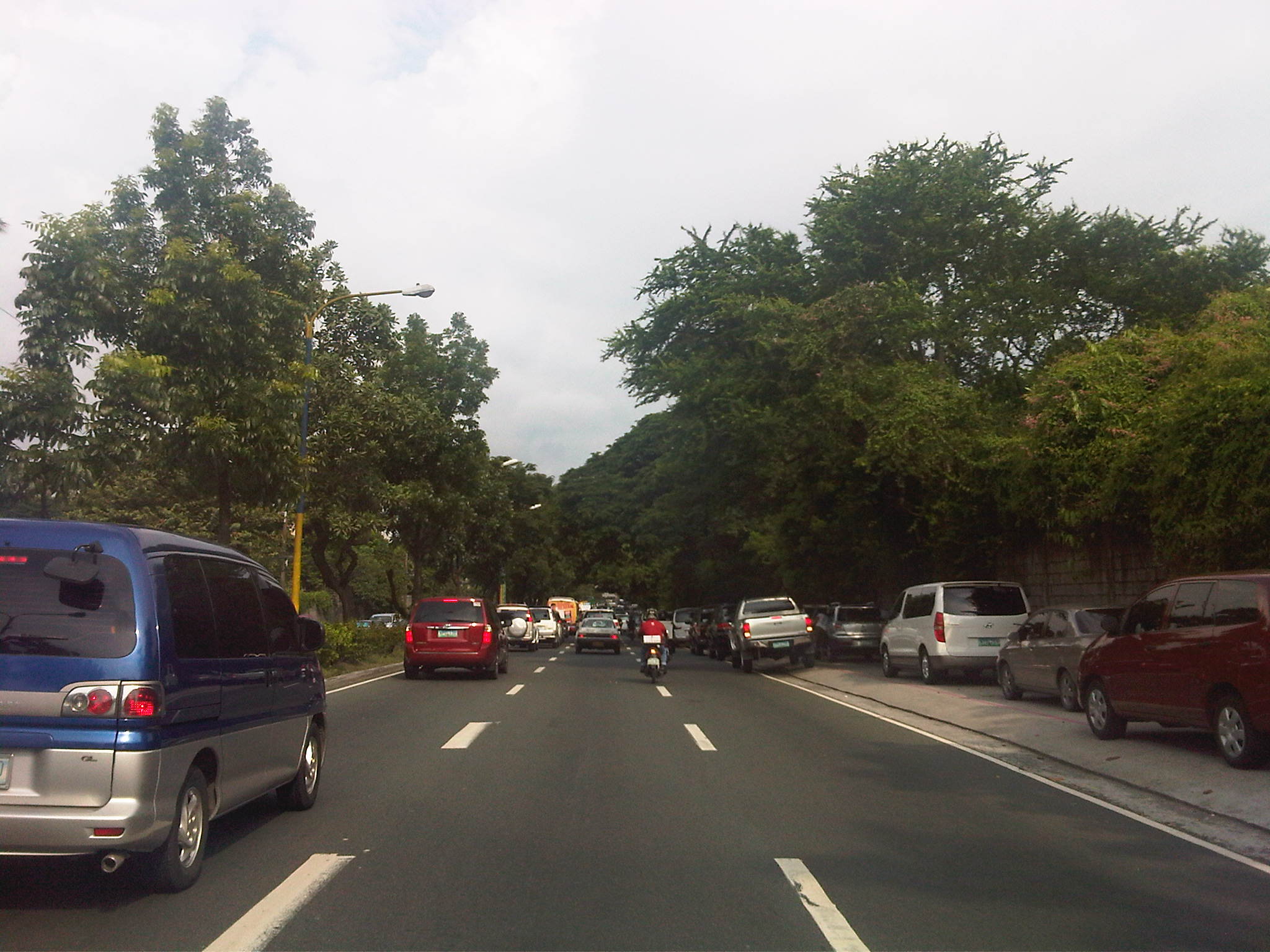 Parked vehicles on the sidewalk are seen as we approached the tail of a very slow moving platoon owing to the congestion generated by an exclusive school.
 Traffic jam with road capacity reduced by the parked and standing vehicles along the EDSA-bound side of Ortigas Ave. The trees are witnesses to the chronic traffic jams and help alleviate their impacts by absorbing emissions from the vehicle.
 Severe congestion as we approached the school – the overpass downstream in the photo is a reference for where the school is located
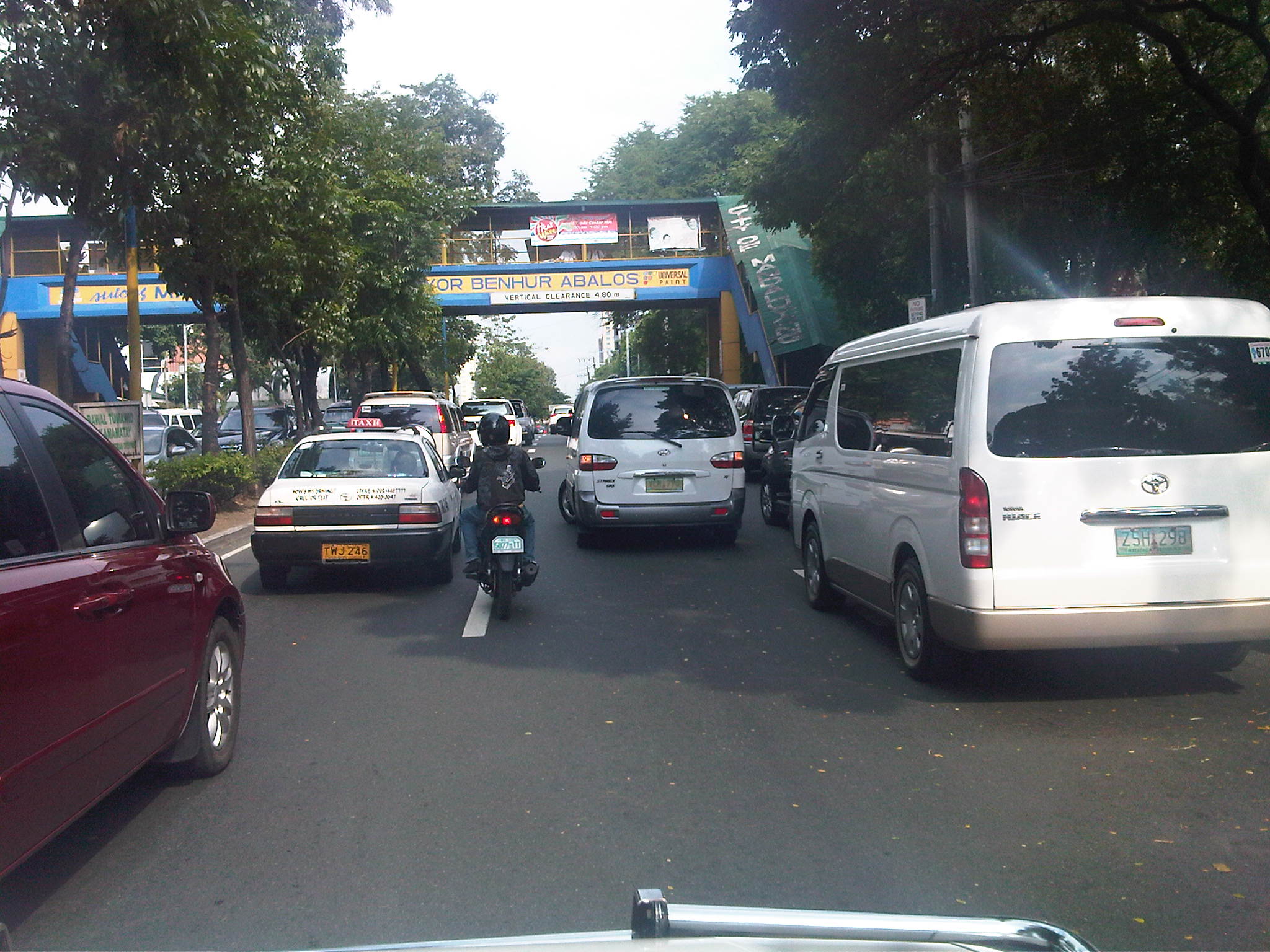 The overpass bears the name of the mayor of Mandaluyong City, where this school is located and which has jurisdiction, together with the MMDA, for traffic management in the area. At the time we passed the area though, there were no enforcers in the area despite the severe congestion. Is this because they gave the responsibility (or burden) of managing traffic to the school? Perhaps there was no need to post enforcers here as congestion is a regular thing and people seem to have been conditioned with the almost daily experience.
 The area at the foot of the pedestrian overpass actually functions as a pick-up and drop-off area for students of the school. As such, vehicles occupy not just the the sidewalk but also more than a lane of Ortigas Avenue. This effectively constricts traffic along this major road.
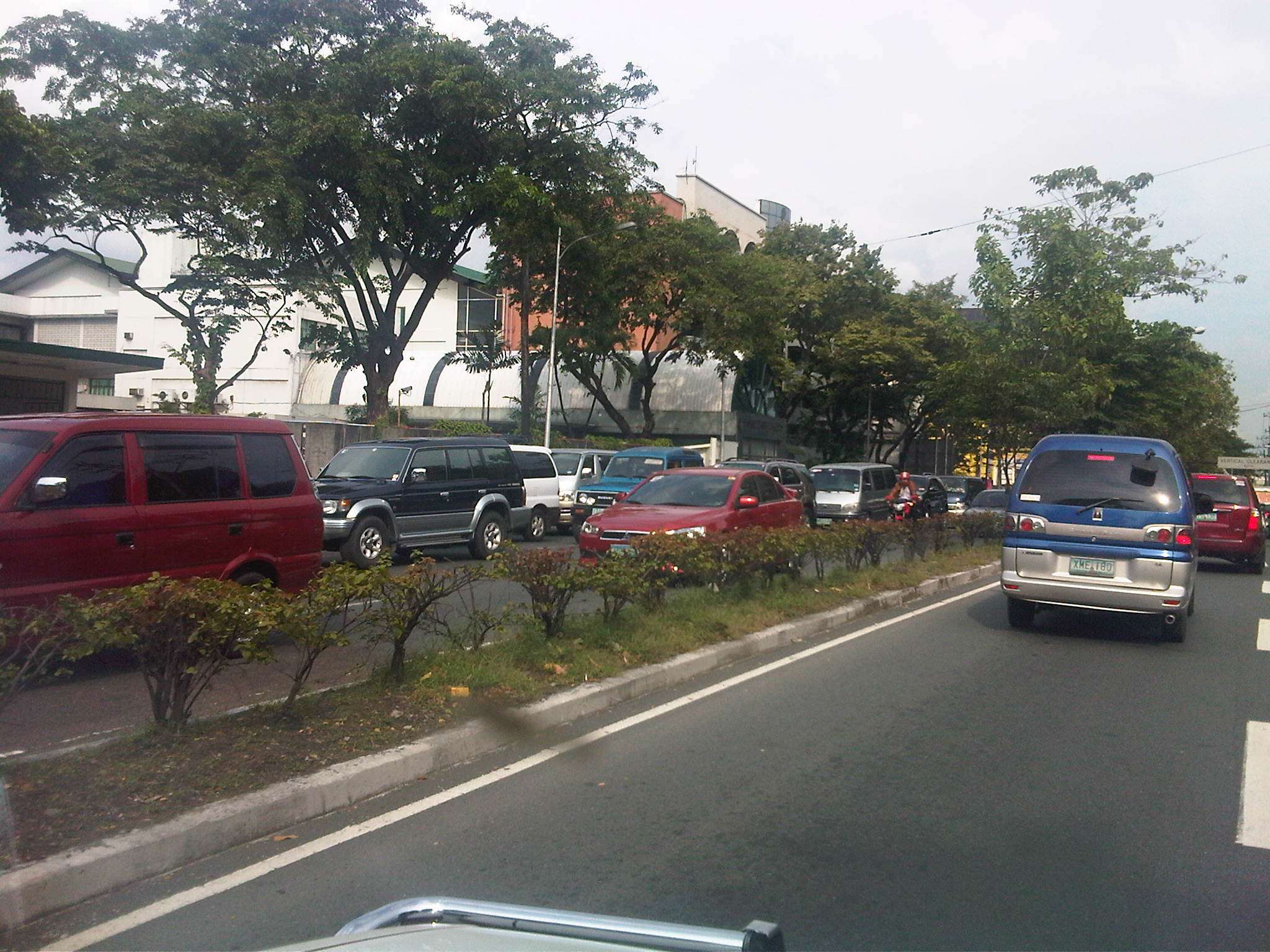 Traffic is slow along the San Juan-bound direction of Ortigas as vehicles waiting for their passengers (students of the school) are lined up and occupying the outermost and even the middle lane of the road.
 This queue is not entirely attributed to traffic generation by the school but is likely due to traffic management at the EDSA-Ortigas intersection, which is signalized. If the signal setting is not optimized or if the intersection is not cleared of straggler vehicles, traffic is backed up along all the approaches to the intersection. The tall building in the background hosts DOTC’s headquarters. I wonder if our officials are taking in the congestion that occurs almost daily (weekdays) and if they are even crosses their minds how to solve this problem and others like it around the country.
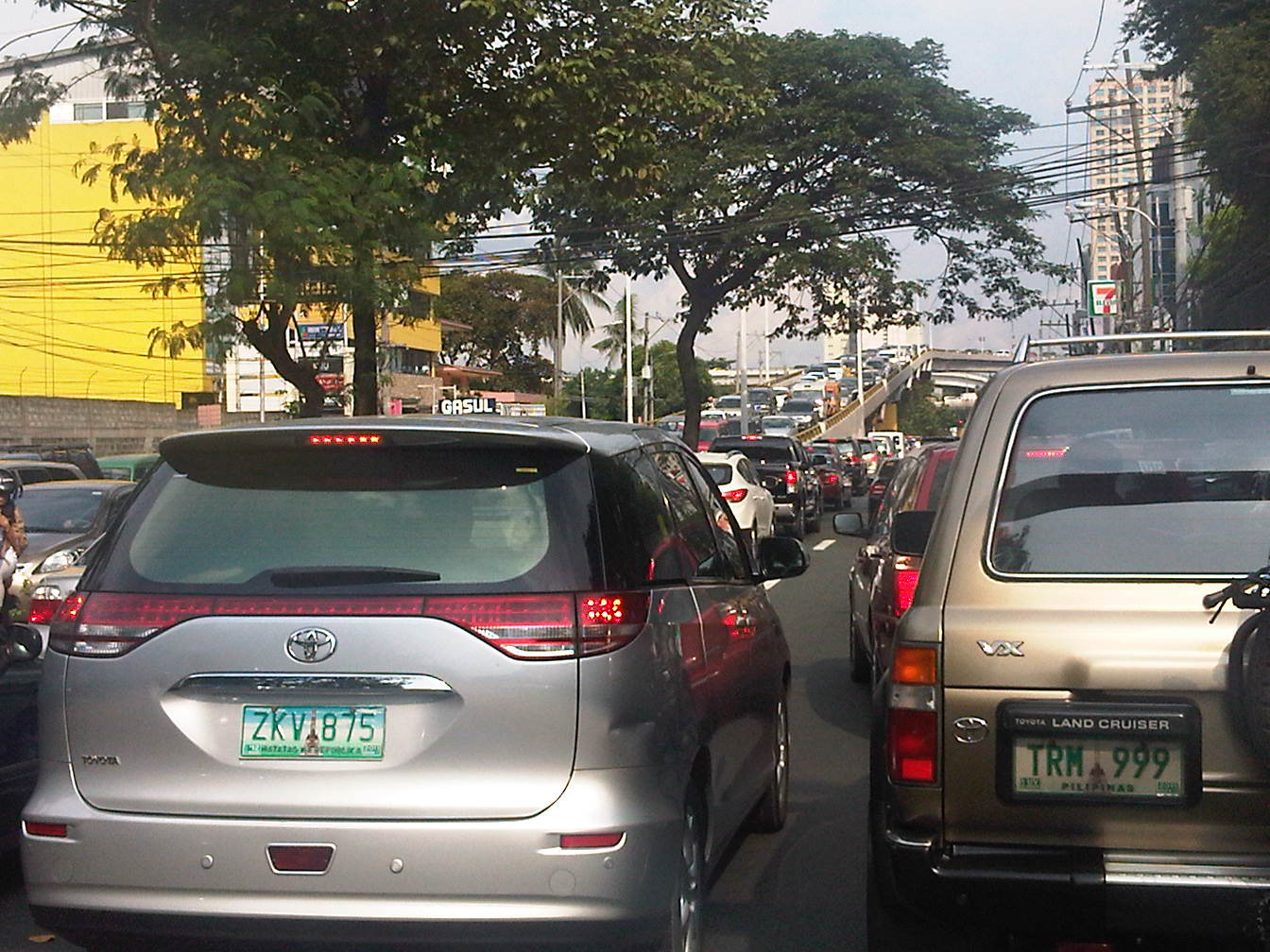 Proof that congestion is along both directions of Ortigas Ave. is seen in the middle of the photo where vehicles are also backed up along the overpass ramp coming from EDSA’s northbound side. For what it’s worth, the DOTC headquarters is right along this road at the building where the 7-Eleven (sign visible in the photo) is located.
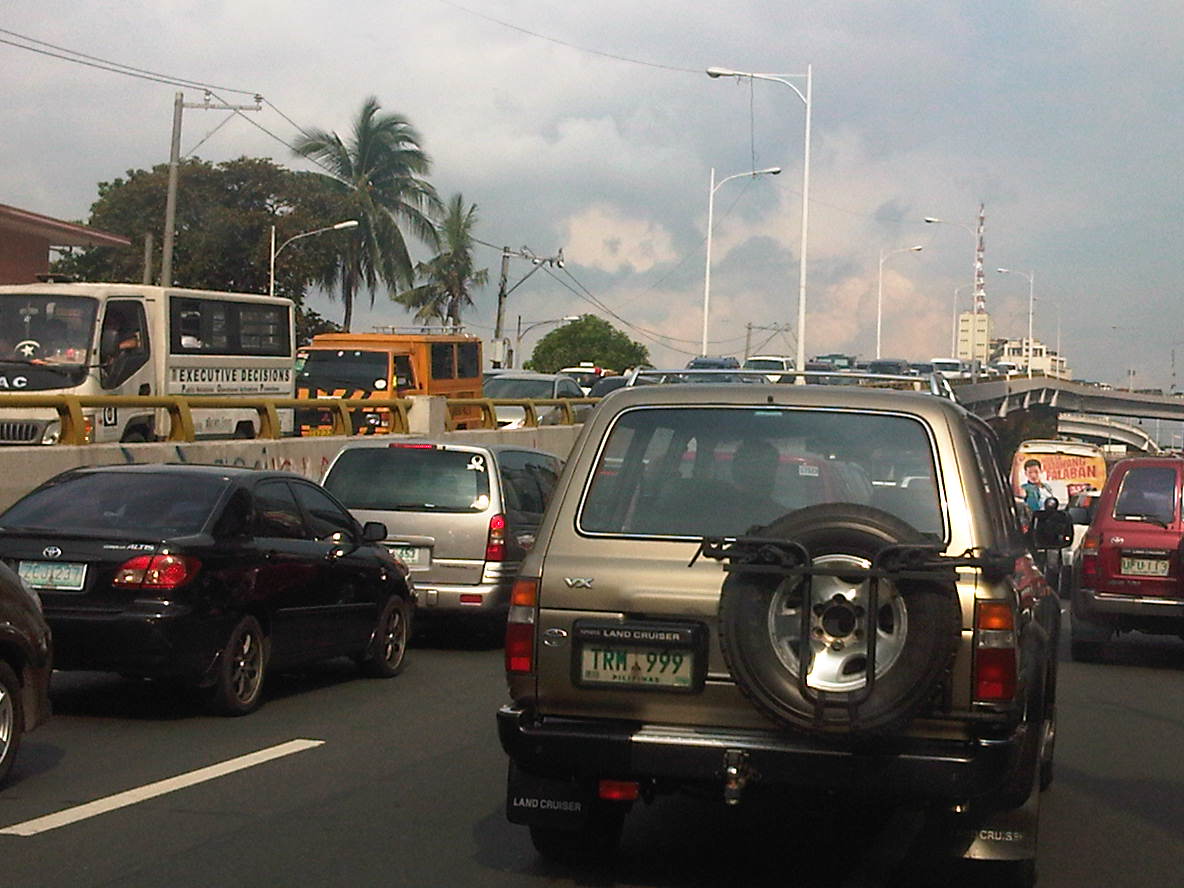 Another and even closer look of what is literally bumper-to-bumper traffic along both sides of Ortigas Avenue during the afternoon peak triggered by the exclusive school along its San Juan-bound side. Visible in the photo is the congestion along the overpass from EDSA.
–
School traffic impacts – issues along Ortigas Ave., Part 1
I have written about school traffic generation in this blog and have mentioned about the traffic congestion experiences along major thoroughfares due to the vehicles attracted by private schools. La Salle Greenhills (LSGH) is an exclusive school found along Ortigas Avenue and during the summer months of April and May, people passing through the stretch of the road from EDSA to the Greenhills Shopping Center are relieved that they won’t have to go through traffic jams due to the school-generated traffic. From June to early December and January to March, however, the area is almost always congested in the morning and afternoon. Such congestion is predictable since it occurs during a period when students come to school and when they are dismissed mid-day or in the afternoon.
Heading to a meeting at the DOTC from the University one morning, we decided to take an alternate route. Instead of EDSA or C5, we took East Ave., Tomas Morato Ave., Gilmore Street and then emerged at the westernmost end of Ortigas in San Juan. It was already 9:00 AM when we arrived at the section most affected by the traffic generated by LSGH and so we didn’t to get caught in a jam as we proceeded towards our destination. We were proven right as traffic was almost free-flowing, and I took advantage of the traffic conditions and to take a few photos of the indicators for the potential traffic congestion in the area. The following photos also show a serious parking problem and (sadly) the usurpation of space from pedestrians. For shame!
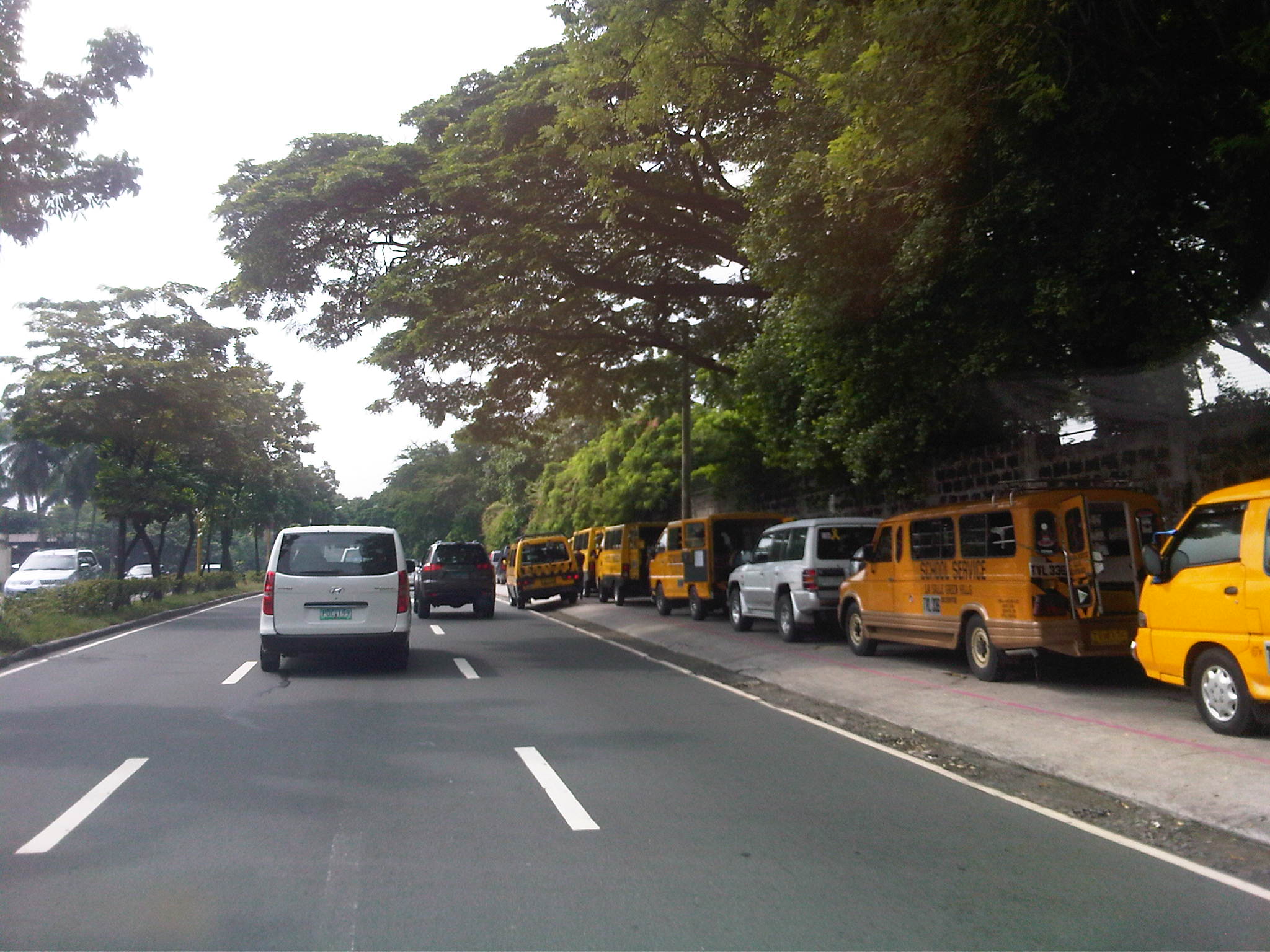 School service vehicles parked along the sidewalk along Ortigas Avenue – beyond the wall on the right is Wack-wack, a high-end residential subdivision named for the sound of golf clubs swinging at its famous course.
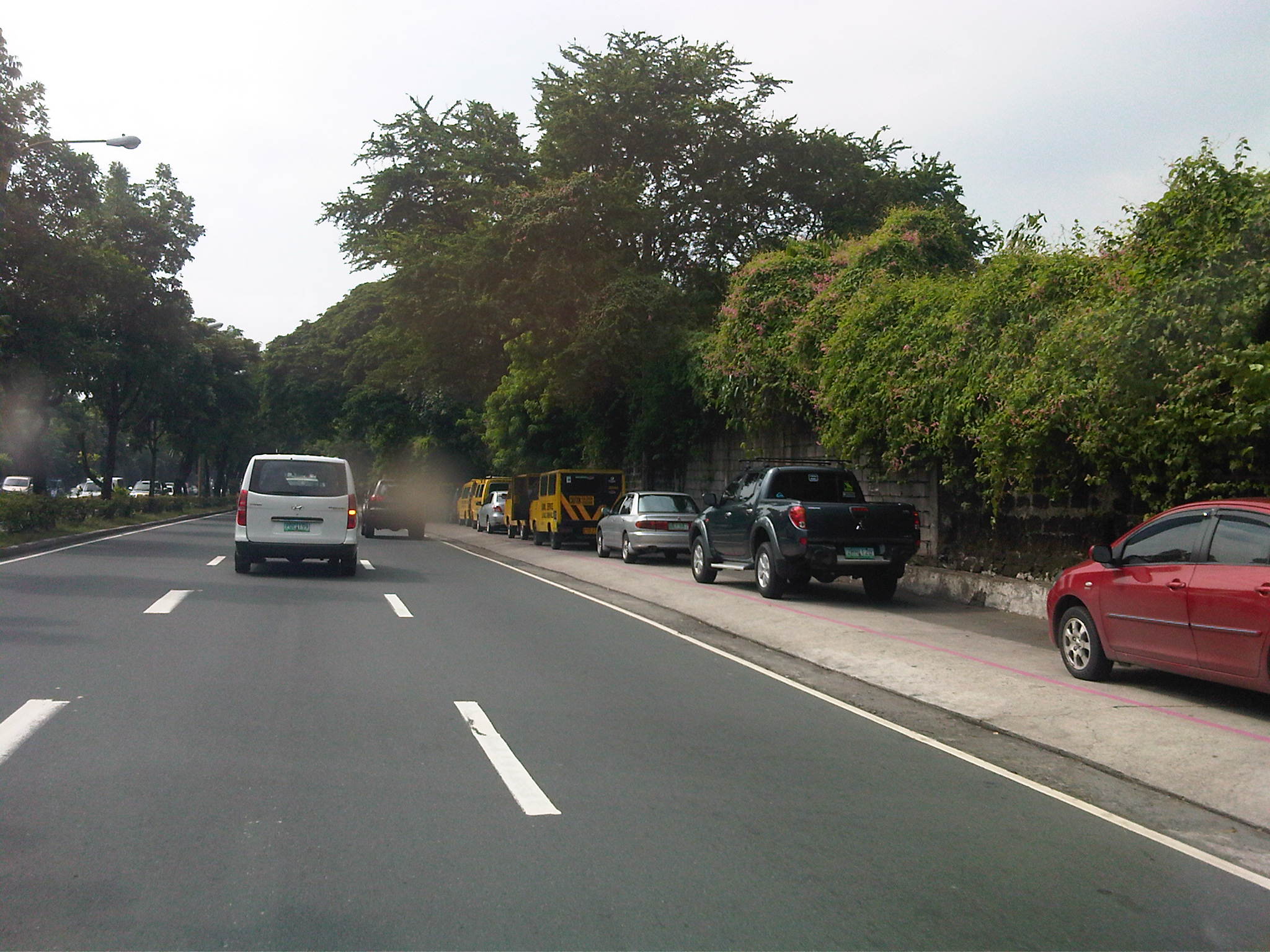 Private vehicles parked along the same sidewalk – noticeable in the photo is the pink line drawn by the MMDA to supposedly demarcate space that should not be obstructed and instead allocated for pedestrian use. It is clear in the photos that pedestrians would have to walk along the edge of the sidewalk or the outer lane of the carriageway itself, increasing the risks for them to get sideswiped by motor vehicles.
 More parked vehicles along Ortigas Avenue, mostly private vehicles that are highly likely owned by those studying at LSGH.
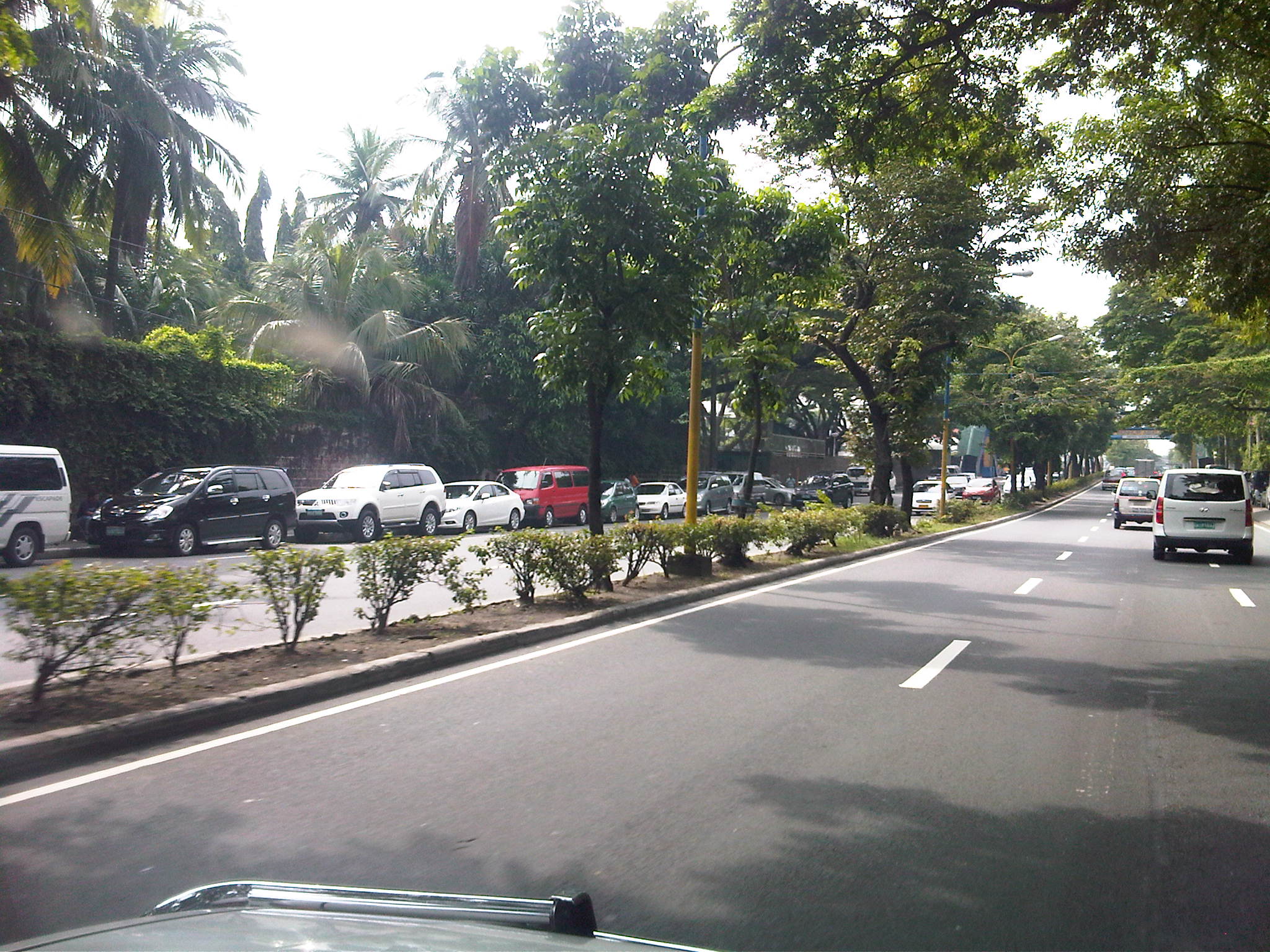 It’s actually worse on the other side of Ortigas Ave. as vehicles occupy a lane of the carriageway, effectively reducing capacity along this stretch of the road.
 It seems the main purpose of the pedestrian overpass is to allow students to safely cross the street to get from and to their vehicles. I can only imagine the congestion caused by drop-offs and pick-ups along Ortigas Ave., which for certain times of the day functions as a driveway for the school.
–
The electric bus and other thoughts on bus operations in Manila
An electric bus was on display at the 2nd Electric Vehicle Summit recently held at the Meralco Multi-purpose Hall. The exterior reminded me of the buses I rode in Yokohama and Saitama during my stints as a student and later as a visiting researcher. Following are a few photos I took of the exterior and interior of the bus. Most of the following notes are comments applicable to city buses operating in the Philippines rather than specifically for electric buses.
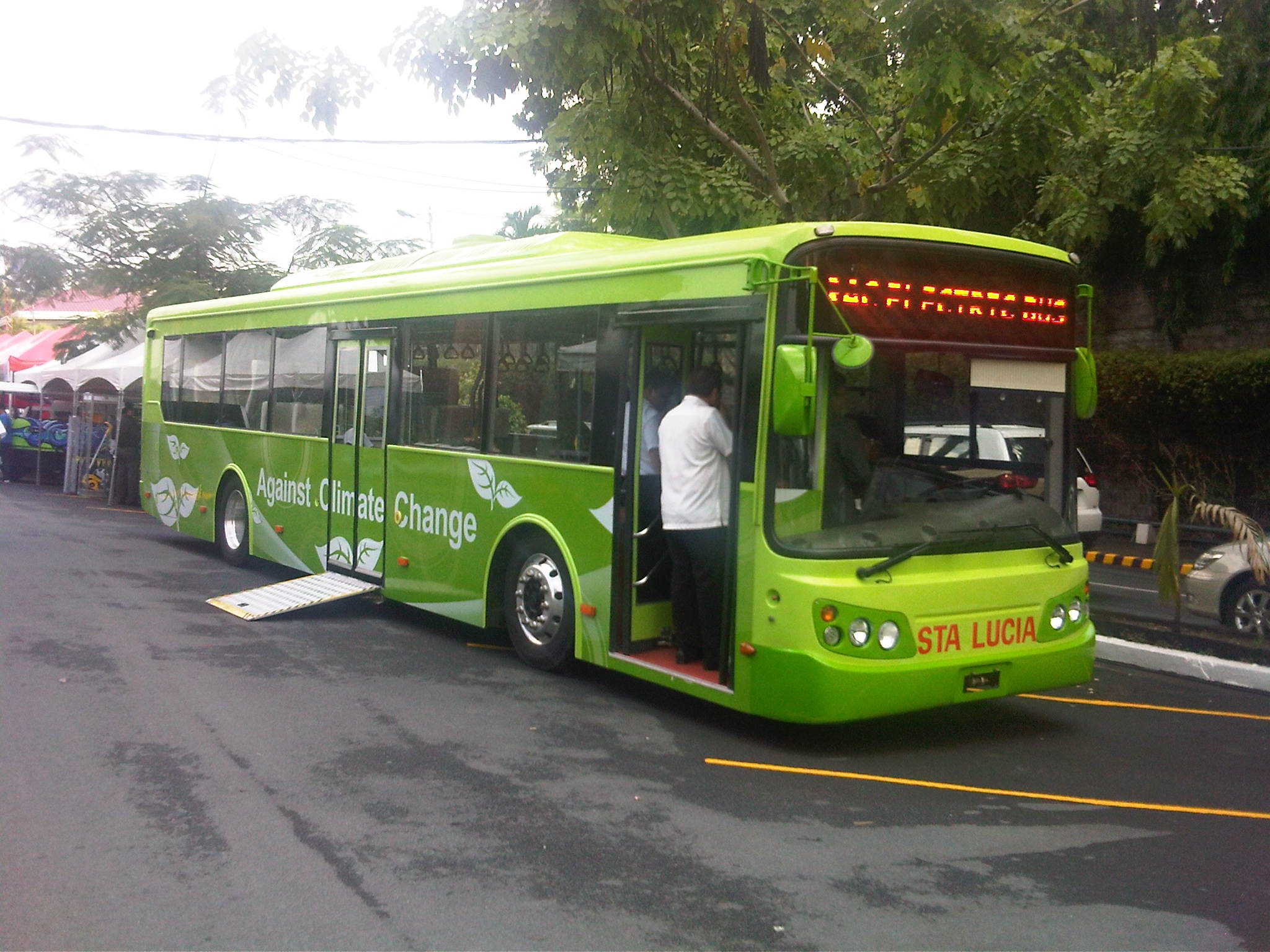 This electric bus was imported from Taiwan by the Victory Liner Inc.., which is among the largest provincial bus operators in the Philippines. The first thing I noticed is that the bus has a low floor, perhaps the same height as most curbs, but this can be a concern considering many of Metro Manila’s streets are subject to flash floods during the wet season.
 The interior and layout is perhaps the most appropriate for buses with city operations. There is sufficient standing space from the front to the middle of the bus. Seats here are usually for the elderly or physically challenged and includes space for a wheelchair. Most city buses in Metro Manila have layouts that are suitable for long distance trips, with many seats and often narrow corridors.
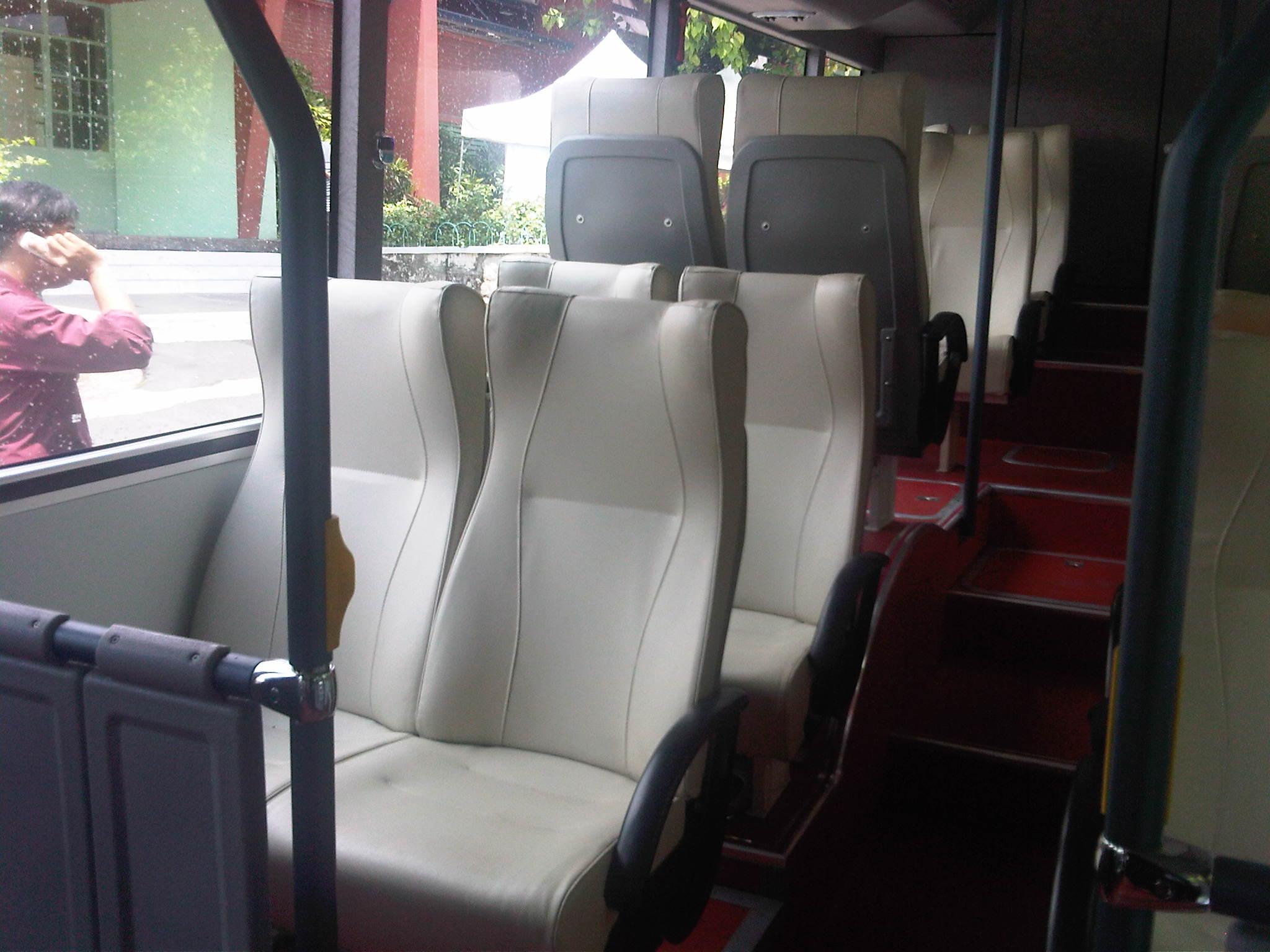 The seats at the back look very inviting and I assume are comfy for long rides not because of distances but congestion. Obviously, these seats and especially those at the back, which require passengers to negotiate a few steps are free for all though those in the lower level may be reserved for the elderly, physically-challenged or pregnant women.
 A look at the driver’s seat with the emblem of the manufacturer, RAC, on the steering wheel. I saw an article on the electric bus stating its specs (top speed of 95 kph and range of 270 km on a single charge). I’m really not worried about the specs given the advances in technology these days. I think it will still boil down to driver behavior when it comes to the question of road safety and the provision of efficient services for the public.
 Unlike most city buses in the Philippines, this bus has 2 doors. The one at the front may be used for entrance and there’s space for transactions, i.e., payment of fares, showing passes or swiping of cards. The one at the back is wider for more efficient unloading of passengers. There is also a provision for a ramp that can be used by persons on wheelchairs.
The potential benefits derived from electric buses are quite obvious from the environmental perspective. I like its chances for success considering that the initiative is being pushed by a major company like Victory, which might have to show the way by being an example and be the first to deploy these buses on an actual route. Victory’s business, however, is in provincial operations so there should be at least one taker from among the companies operating in Metro Manila to use these buses on a route.
For demonstration purposes, I think Bonifacio Global City with its Fort Bus service can provide a good route for a start. The Fort is ideal for such electric buses given the current demand and route length. Charging stations may also be provided at the route ends, particularly at the Market! Market! transport terminal. Another option might be Katipunan, with electric buses allowed to enter the Ateneo campus and perhaps help alleviate traffic congestion there by encouraging their students and staff to use public transport. One end may be at the UP Diliman campus where the buses may also be allowed to enter the campus but perhaps take a route that won’t necessarily compete with jeepneys on campus (e.g., Academic Oval). Deciding the other end of the route would be a bit tricky but one option can be near SM Marikina where a secure terminal can be established and sufficient space for “park and ride” or “kiss and ride” operations. These might just be success stories in public transport waiting to happen.
–
Overnight parking at NAIA
The main terminals of Manila’s Ninoy Aquino International Airport (NAIA) each have overnight parking facilities. These are all open lots located near the terminals and have roving personnel on motorcycles for security. The overnight parking spaces for Terminals 1 and 2 are located a bit of a walk away from the terminal buildings but are generally spacious and do not reach their full capacities.
Terminal 1’s overnight parking is located on the lot to the right as travelers drive through the security check for vehicles. Terminal 2’s overnight facility is near the old Nayong Pilipino gate and appears to be the combined parking lots of the now-closed theme park and the also closed Philippine Village Hotel. Terminal 3’s overnight parking spaces are generally spread out with most along the service road or driveway that leads to its still closed multi-level parking facility. Other spaces made available for overnight parking are those near the entrance to Terminal 3.
I haven’t tried overnight parking at T1 and T2 but I recently availed of overnight parking at T3. Following are a couple of photos to describe overnight parking at T3, followed by a few tips on how to get a slot in what is always a full area.
 Overnight parking spaces are along the service road on the right that ultimately leads to a ramp access to the still closed multi-level parking facility at Terminal 3. There is a sign that states overnight parking is full. Ask for assistance from the security staff to find a slot.
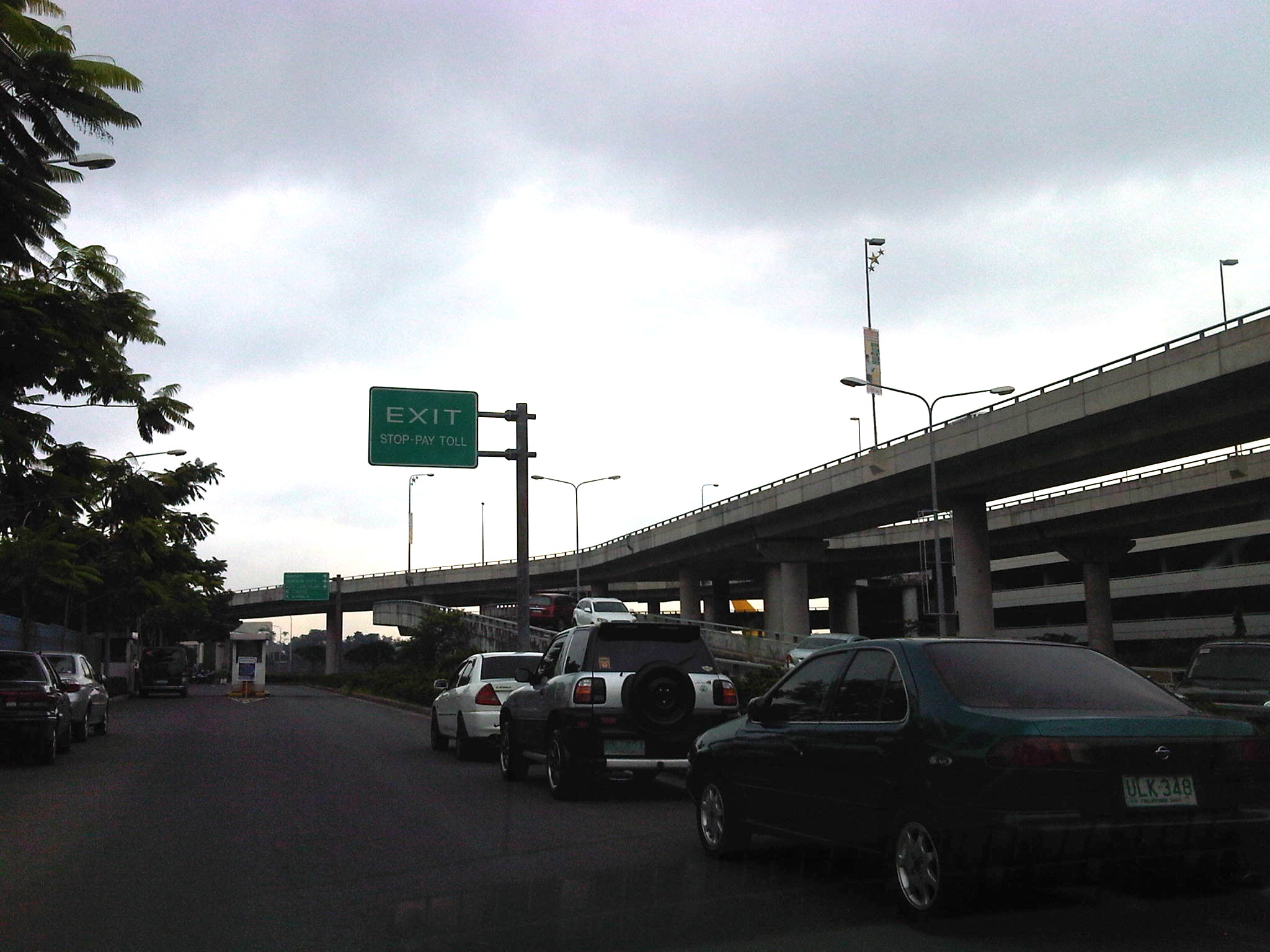 The service road leads to a ramp (visible at the center of the photo) to the closed multi-level parking (also visible on the right of the photo) of Terminal 3.
A tip for those wanting to park their cars for a night or more at Terminal 3: ask nicely for assistance from the security guard at the entrance to the parking lot. They will help you find an open space somewhere (trust me, it’s quite a challenge) in what is always a full overnight parking area. Show your gratitude by tipping. It’s definitely worth it and they’ll probably even check your car to return the favor. And yes… overnight parking fees are quite cheap at 50 pesos (about 1.15 USD) per night.
–
Electric vehicle revolution in the Philippines
It started with the deployment of the first electric jeepneys and tricycles about 5 years ago. Today, electric vehicles are the rage in the Philippines with public transport being the main application of the e-vehicles. Makati already has 3 operational e-jeepney routes including the first e-vehicles to be registered and the first franchise for public transport. E-trikes have been operating in Bonifacio Global City in Taguig as well as in limited numbers in Puerto Princesa, Surigao and Boracay. During the 2nd Electric Vehicle Summit held last May 24-25, 2012 at the Meralco grounds, models of various electric vehicles for private and public transport use were on display for people to inspect and appreciate. These included cars, motorcycles, tricycles, jeepneys and a bus. Special mention goes to the Segway booth and its clone, which featured more personalized modes that are not really in the same category as most of the e-vehicles on display.
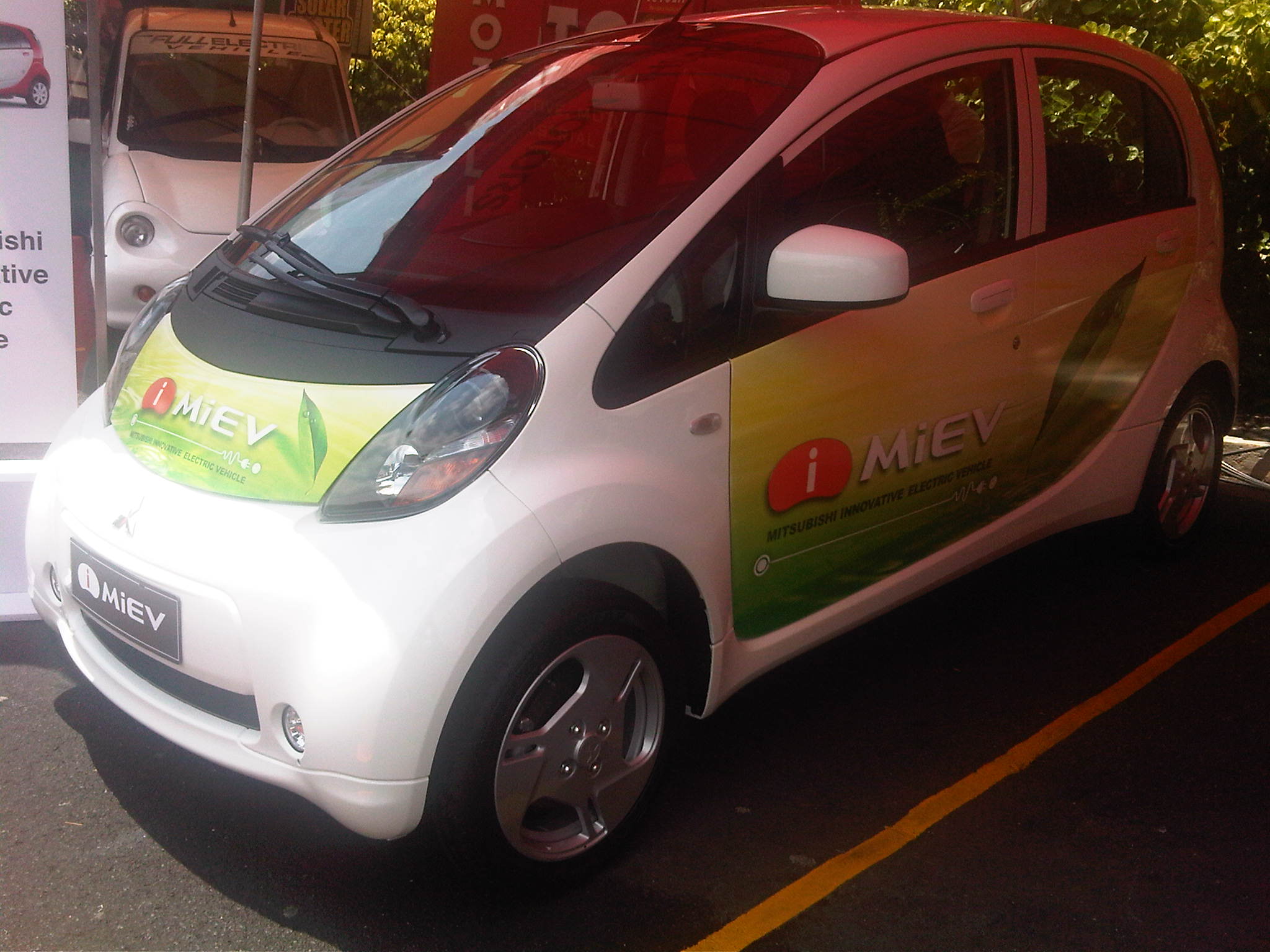 Mitsubishi’s entry in the local market is via the MiEV, a unit of which was donated to the Department of Energy (DOE)
 The REVAi is a small car produced by an Indian company. The logo on the car is of the leading battery company in the country.
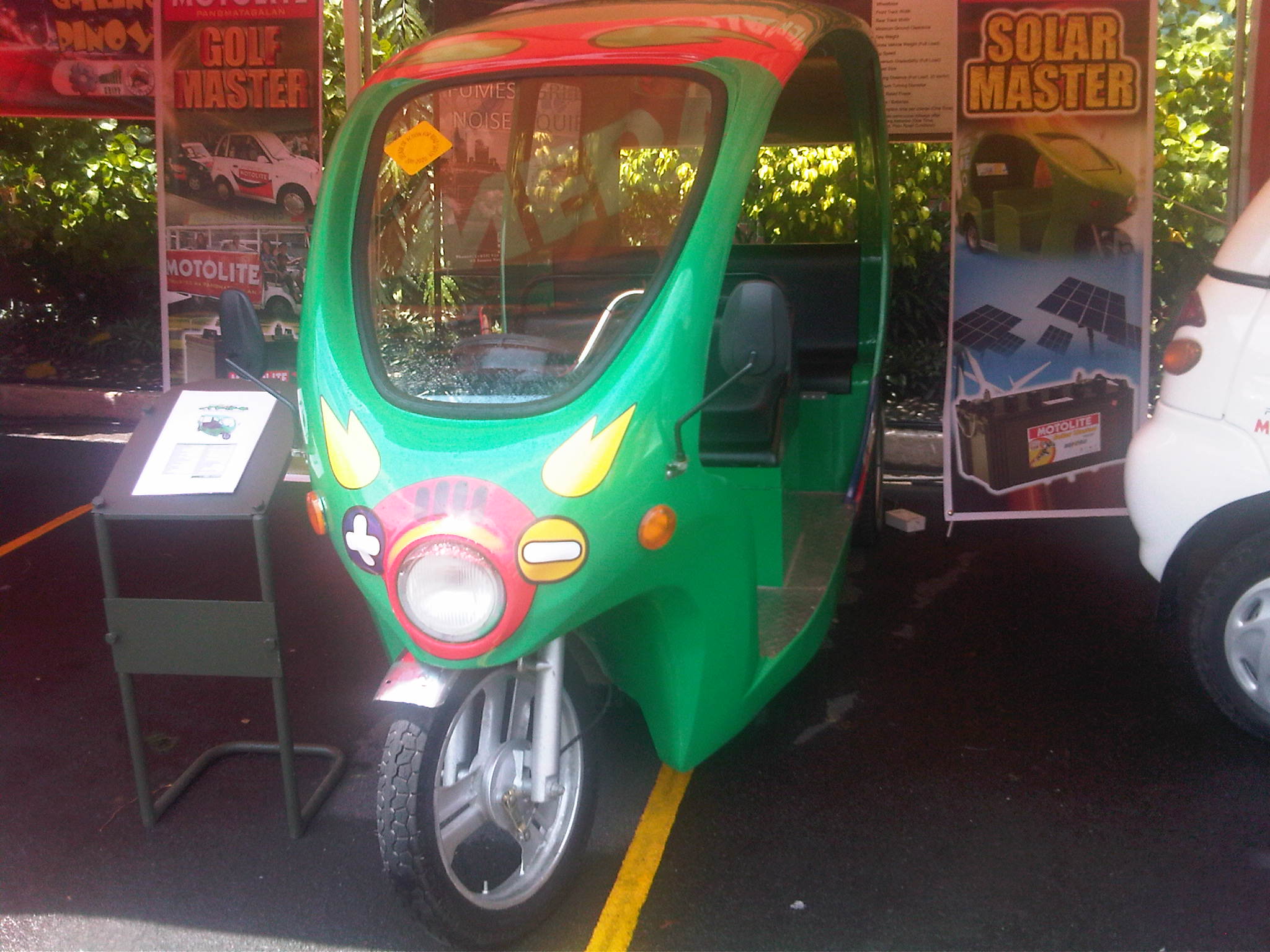 A locally assembled electric tricycle that is now popular in tourist areas like resorts.
 The 4-wheeled e-vehicle dubbed as the E-quad that is locally assembled.
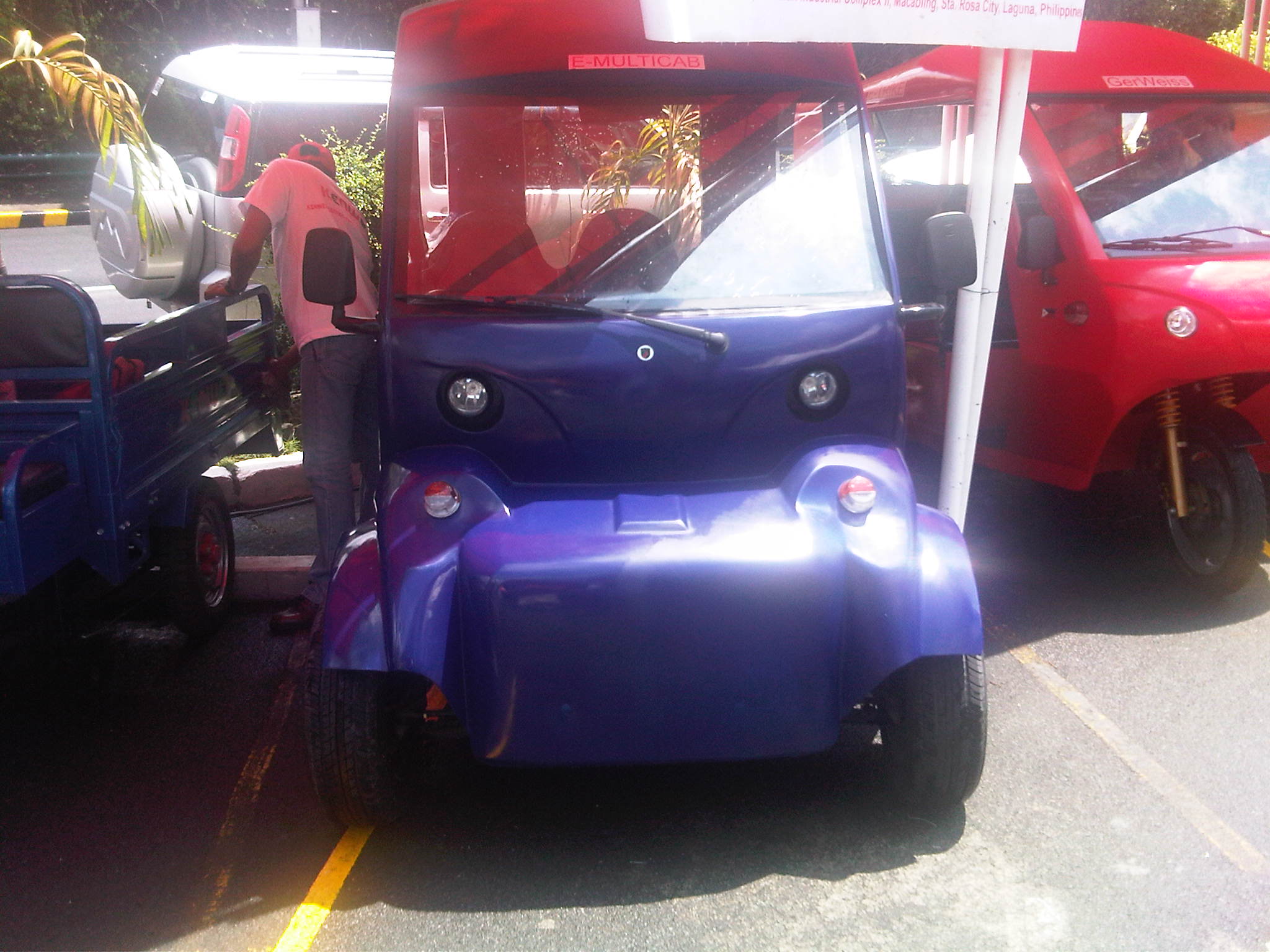 Variants of 3- and 4-wheeled e-vehicles including one (visible on the left) that is designed as a pick-up or delivery vehicle. All are made by local companies.
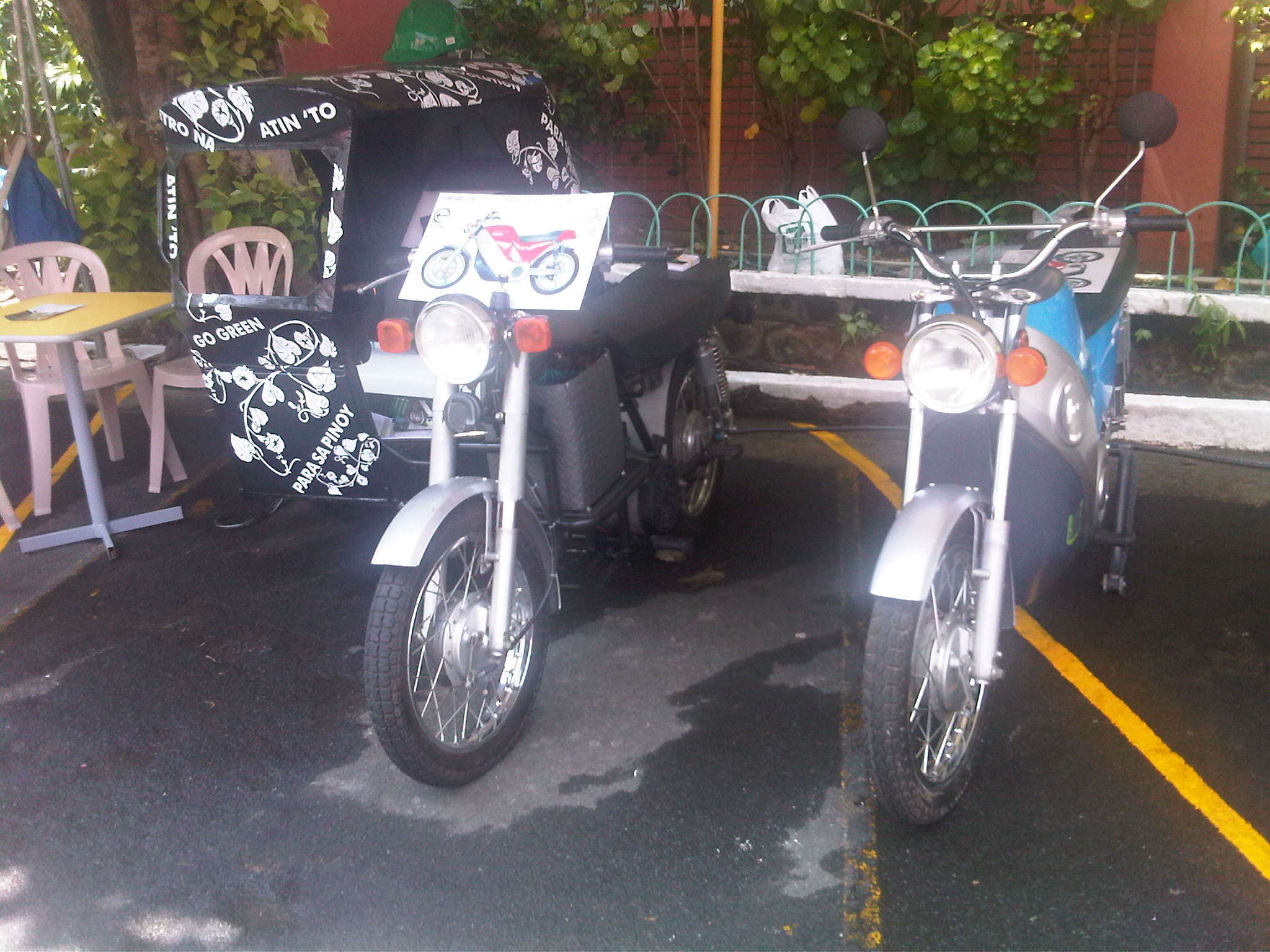 Electric motorcycles with one having a sidecar, which is the same form of the traditional tricycles that are the dominant public transport mode in local roads, many small cities and rural areas in the country.
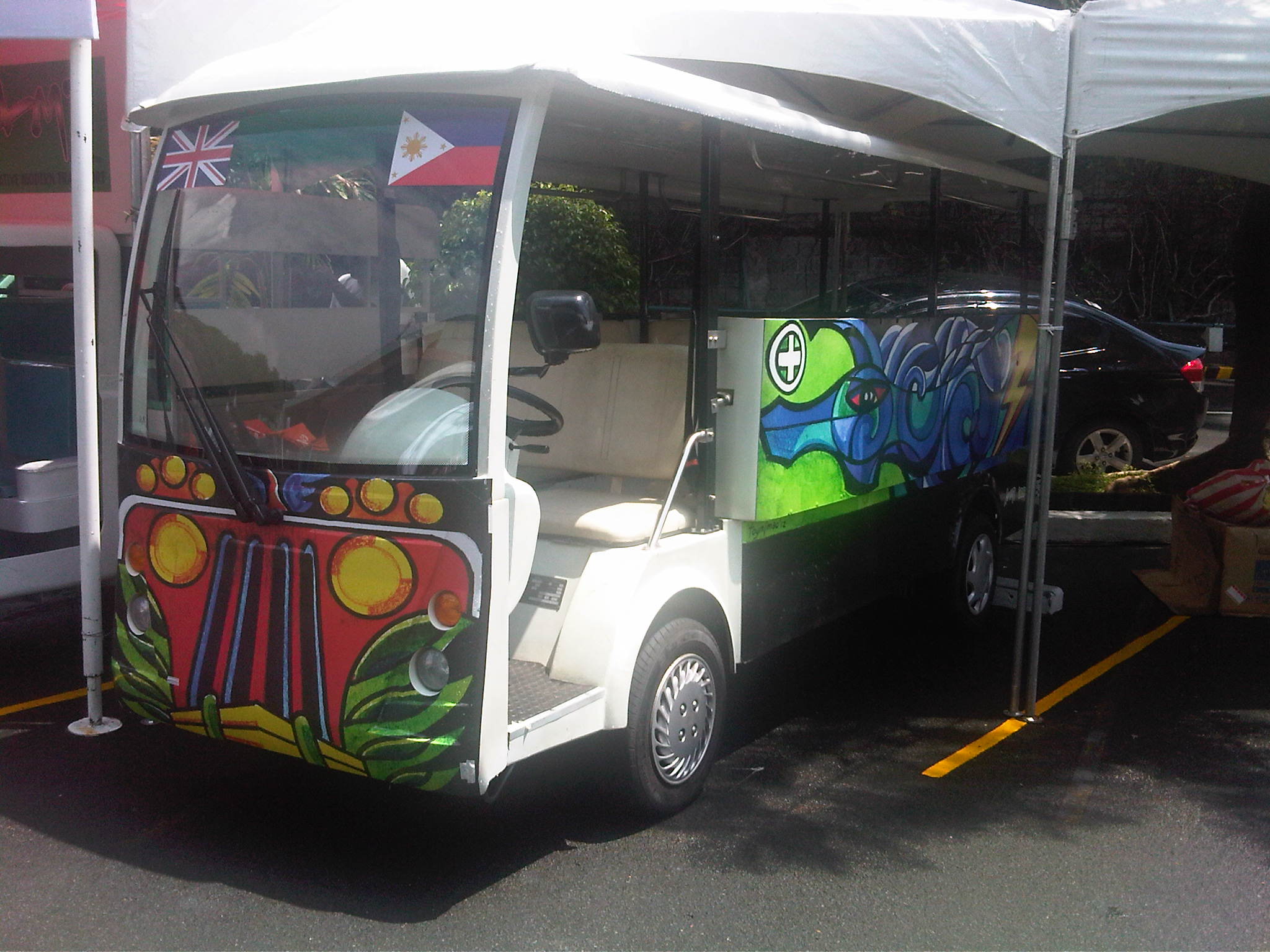 The electric jeepney that is also locally assembled with the motor and controller the only major components that are imported. I think this model is the latest one and has a more powerful motor that allows the vehicle to negotiate steeper slopes. Other models are currently operating in Makati City (CBD) and as shuttles in shopping mall complexes and industrial areas.
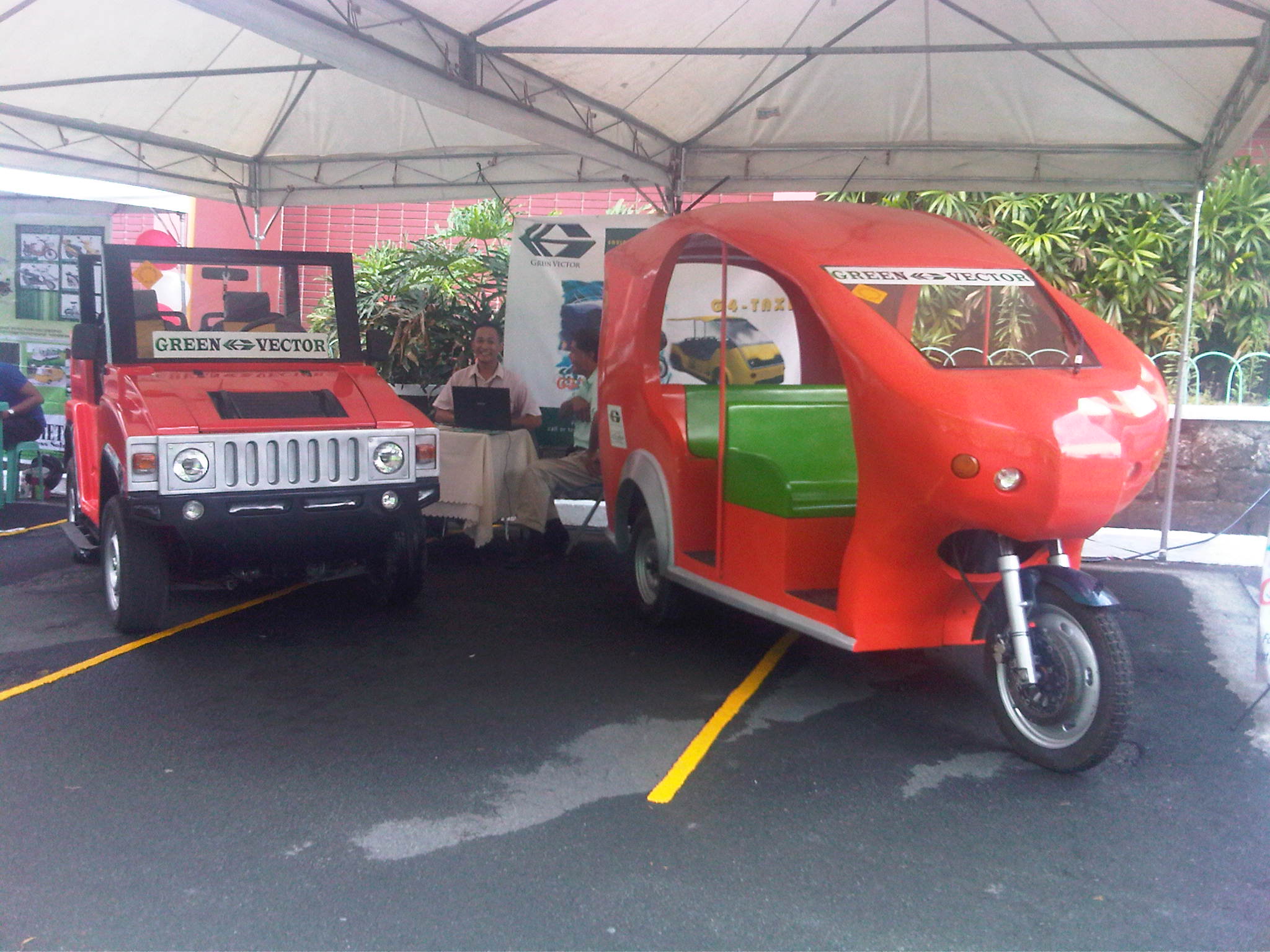 Another e-trike with form similar to the Thai tuktuks and another, a 4-wheeler, made to look like the popular Hummer vehicles.
 Electric scooters on display outside the summit venue
 The electric bus imported by a company affiliated with Victory Liner, one of the largest provincial bus companies in the Philippines was a popular attraction during the summit.
There are still many issues pertaining to the deployment or operations of e-vehicles in the Philippines. Among the more important ones involve costs and the need for infrastructure such as charging stations to support e-vehicles. Unlike the experiences in other countries, especially in Europe, the e-vehicle initiatives in the Philippines are mainly for public transport rather than for private use. In fact, the DOE’s E-trike project together with the ADB looks to the deployment of 100,000 e-trikes to replace traditional tricycles around the country. This seems to be a small initiative considering Metro Manila alone has about 250,000 legally operating tricycles (there are quite many illegally operating units) and an estimated more than 1.5 million legal units around the country. But such initiatives if carried out and evaluated scientifically, systematically and objectively will surely go a long way to addressing transport problems in this country. The Makati e-jeepneys already provide a good model for replication elsewhere and soon, more studies will be underway to evaluate such vehicles in comparison with the traditional jeepneys and the emerging Auto-LPG variant. With an impending law that will provide incentives for electric, hybrid and other alternative-powered vehicles, e-vehicles will be here to stay and perhaps effect a transformation of Philippine transport.
–
Morayta Street and some thoughts on reviving Manila
The University Belt in Manila is called such because of the proliferation of schools, particularly universities and colleges, in the area. Most recognizable are institutions such as the University of Sto. Tomas, University of the East, Far Eastern University, Polytechnic University of the Philippines, Centro Escolar University, Manuel L. Quezon University, San Beda College, San Sebastian College, La Consolacion College, National Teachers College and College of the Holy Spirit. The U-belt, as it is also known, stretches all the way to Intramuros and Padre Faura where many other institutions like UP Manila, Mapua, Letran, Lyceum, PNU and Sta. Isabel College are located.
The streets in the area are very familiar to many as they are usually indicated in the sign boards of jeepneys and buses plying routes in the area. These include Recto, Lerma, Espana, Legarda, Mendiola and Quezon Blvd. An ubiquitous street in the area is currently named Nicanor Reyes Sr., in honor of the founder of the Far Eastern University, the main gates of which are located along the street. Nicanor Reyes, of course, is more popularly known as Morayta for most people even the younger generation who picked up the old name of the street, which is more familiar with public transport drivers (jeepneys and taxis). Morayta connects Espana with Recto.
 Morayta Street (Nicanor Reyes St.) – Recto bound traffic with the FEU on the right side. There is practically two lanes per direction but one lane is usually occupied by parked or waiting vehicles. Add to this the operations of public utility vehicles as the street is along jeepney routes.
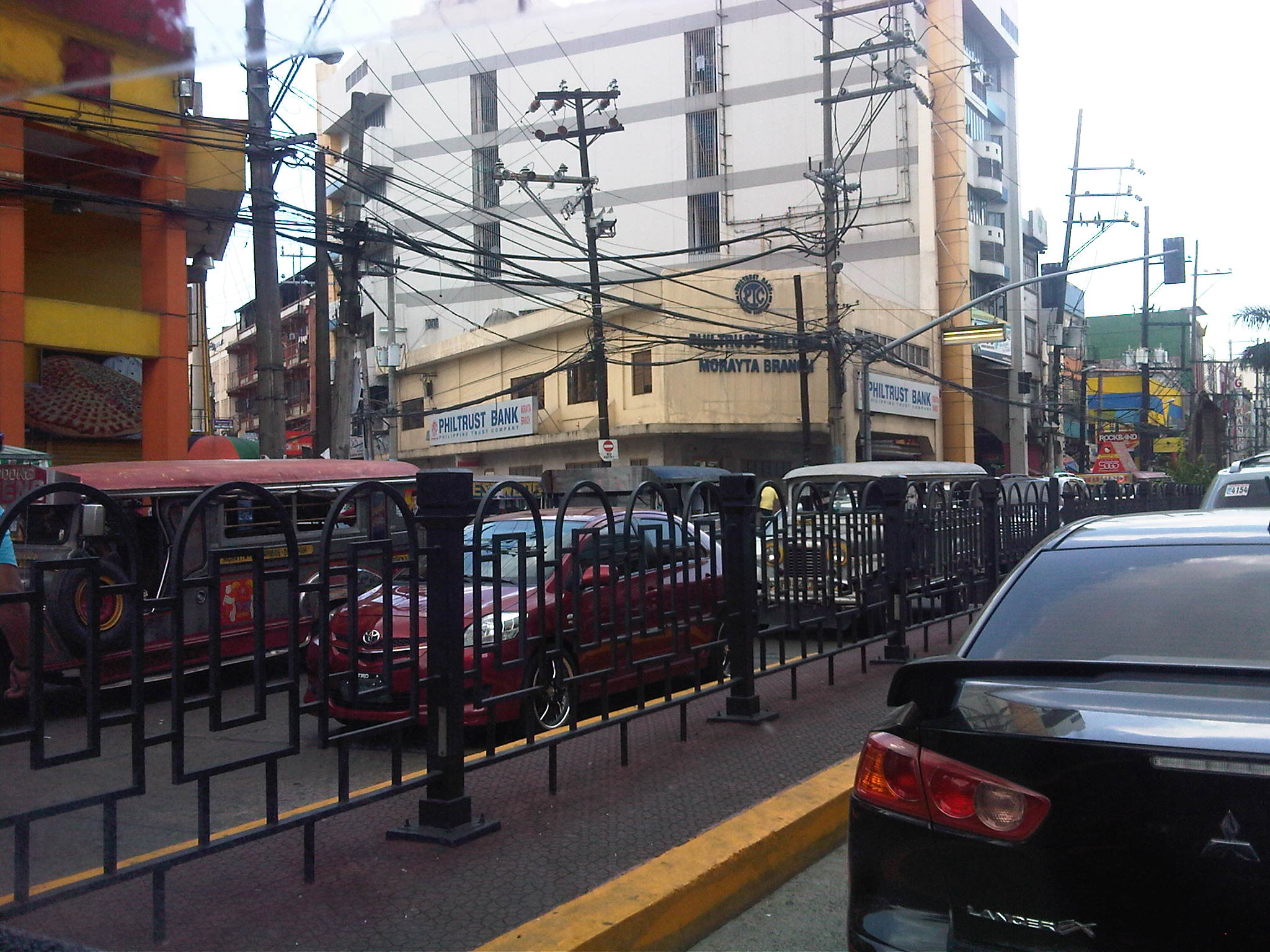 Railings – street railings on the median island along Morayta help minimize jaywalking along the busy street. There are no median openings for vehicles along the street though there are junctions like the one with R. Papa Street shown in the photo.
 Pedestrian traffic signal – there is a traffic signal along Morayta for pedestrians crossing the street in front of the FEU main gate. Such signals may be equipped with a button for on-demand green indications.
 Pedestrian flow – because of the schools, there are many students (generally in uniform) in the area. Each school would usually have a distinct uniform for females though some are generally in white with their school logos or IDs the only distinguishing aspects. Meanwhile, male students usually wear white polos and black pants. The photo above shows students crossing in front of the FEU gate. The photo also shows the typical commercial establishments in the area that include fast food and book shops.
 FEU main gate – the university has several access/egress points along Morayta including those for people only and this gate where vehicles may pass. Many universities (with only few exceptions) in the University Belt have very limited space with some having practically no campuses to speak of but only buildings where they conduct their activities.
 Parking and standing – parked and standing (waiting) vehicles occupy significant road space. While standing vehicles have their drivers and could be made to move, the parked vehicles generally take up a lane that could otherwise be used by pedestrians. I am not aware of any pay parking regulations along Morayta. There are no signs indicating pay parking schedules and rates, and have not seen parking attendants like the ones in Makati.
 Approach to Recto – the intersection with Recto Ave. is signalized and the median island is tapered to accommodate vehicles queuing to turn left towards Mendiola or Legarda. The LRT Line 2 superstructure is also visible in the photo above Recto. Pedestrians walk along the building arcades that are typical of most older buildings in Manila, which are similar to those in other old cities in the Philippines.
 Entry from Recto – the photo shows Morayta as our vehicle turned right from Recto. Taken during an April afternoon, there is very light traffic between Recto and R. Papa, and not so many students as those shown in the previous photos, which were incidentally taken during the morning of the same day. Note the vehicles parked on the curbside.
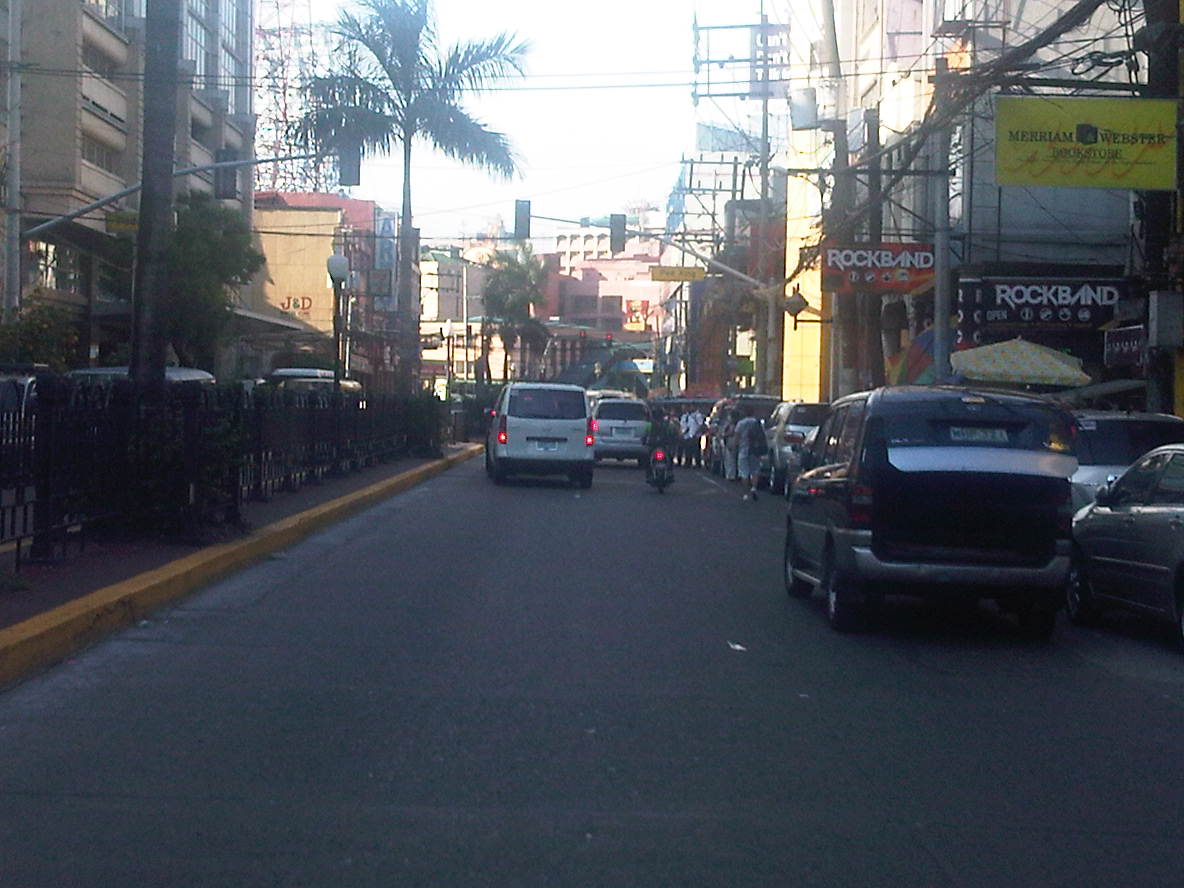 Build-up – approaching the signalized pedestrian crossing, we noticed some congestion due to the stopped vehicles and the presence of pedestrians. The section between R. Papa and Espana is usually congested due to several reasons including the presence of an informal jeepney terminal at the corner of Espana and Morayta.
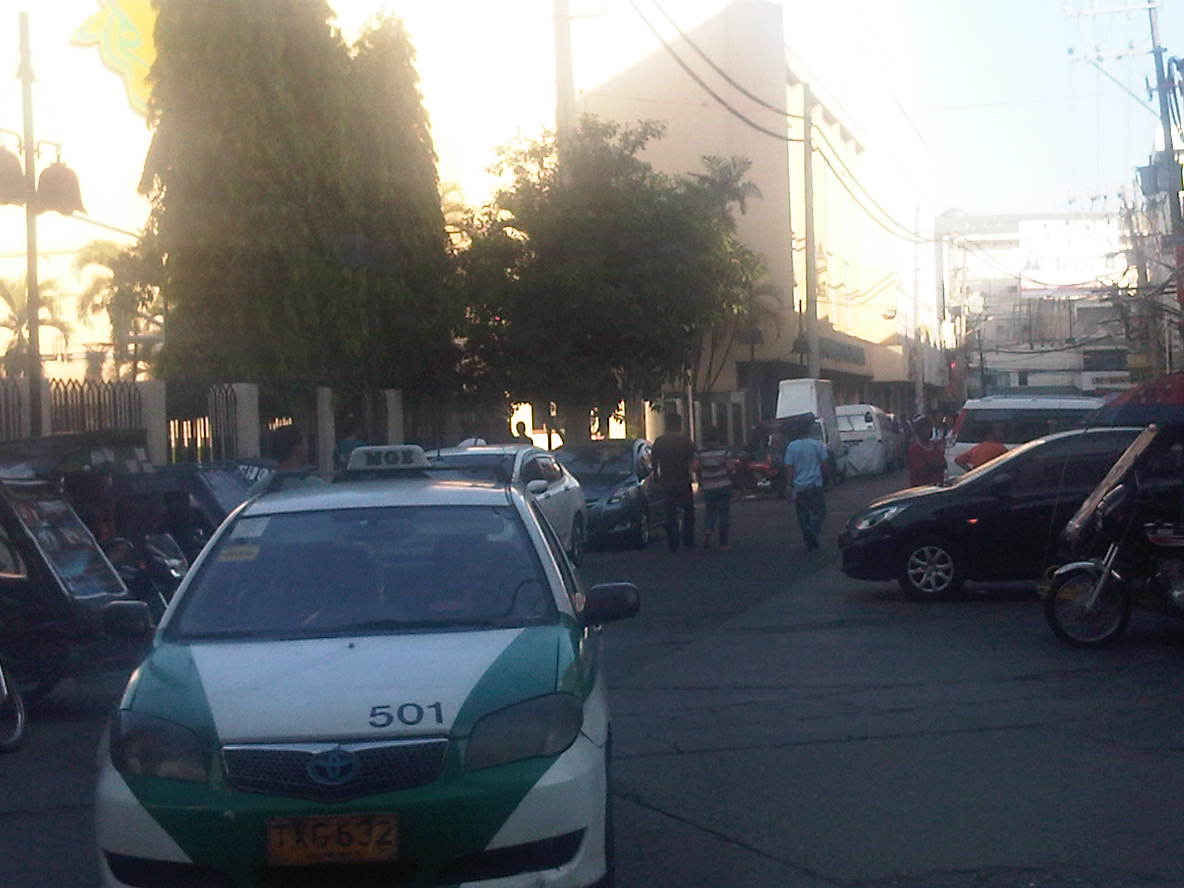 Junction with Paredes – a peek at Paredes St. shows more parked vehicles and tricycles lined up and waiting for passengers. Public transport demand along Manila’s side streets are served by tricycles and pedicabs, and until a few months ago by what were called “kuligligs.” The latter were also paratransit modes that were the motorized versions of pedicabs fitted with motors or generators much like the ones used in farm equipment or motorized bancas in seaside towns. These are called tricyboats in Davao. Meanwhile, the term “kuliglig” is used in many parts of Luzon for farm tractors used as public transport in the rural areas. Paredes St. is quite busy as the Professional Regulations Commission (PRC) is located along the street.
 Informal terminal – the approach to Espana is usually congested in part due to the informal jeepney terminal from the corner of the junction. Some jeepneys even tend to bypass the line and pick-up passengers right at the corner and often blocking turning traffic.
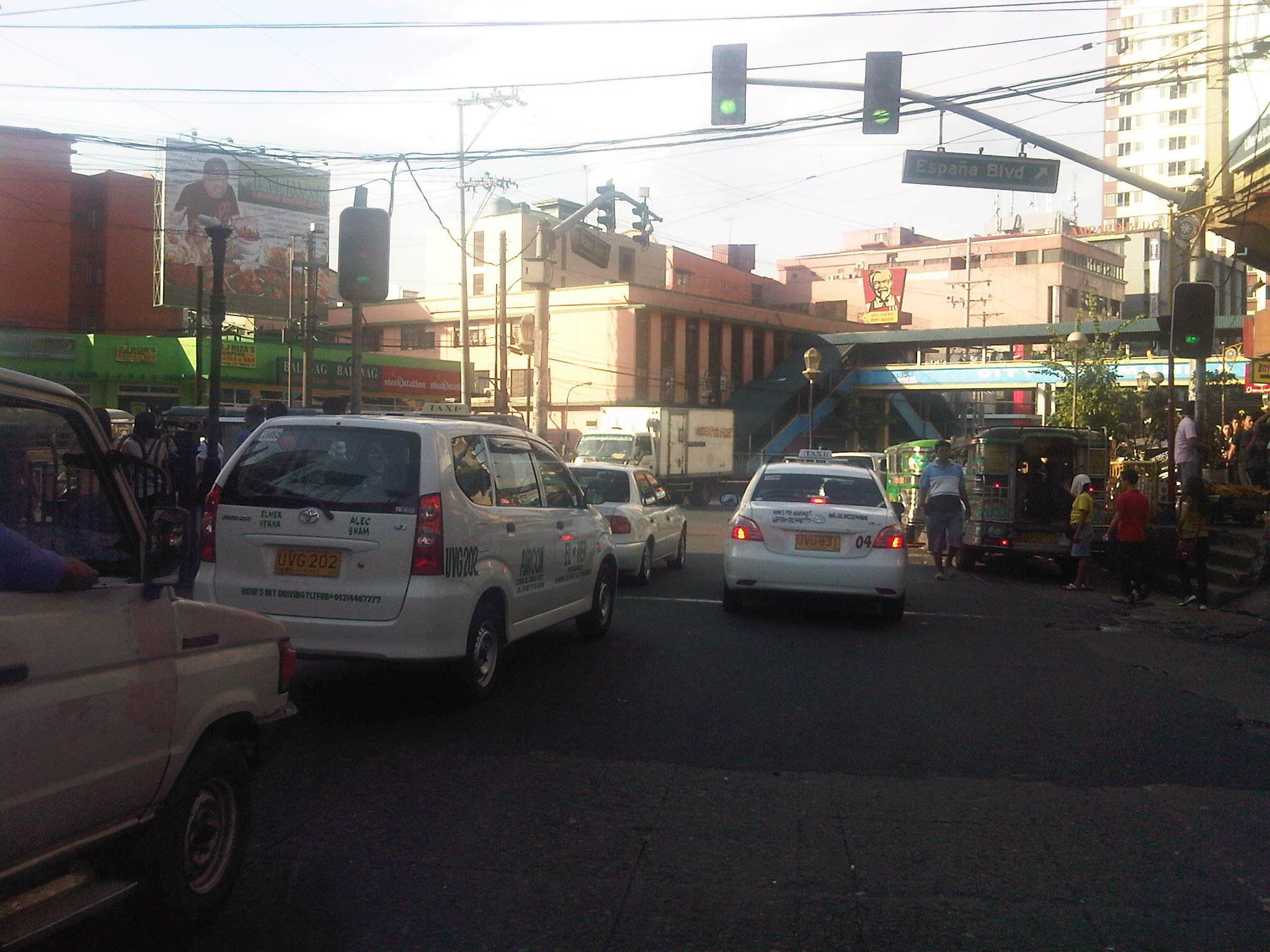 Approach to Espana – the intersection is signalized but there are jeepneys usually camped out at the corner, effectively reducing throughput along the intersection.
There are many streets like Morayta in Manila that can actually be evaluated and considered for pedestrianization if not for road diets. Careful studies and perhaps an experiment here and there should show the feasibility and practicality of generally closing some streets to motor vehicles including tricycles and jeepneys. For some streets, public transport access may be maintained but there should be genuine effort to improve pedestrian facilities to enhance the experience of walking in what are supposed to be historic streets in Manila. Considering the volume of foot traffic in the area, one would assume that the City of Manila should be thinking about how to bring down motor vehicle traffic while providing for public transport and walking needs in the city. Perhaps some radical plans need to be formulated including out of the box ideas to revive Manila streets such as Morayta? I would like to see the schools come up with these plans and perhaps be instrumental in implementing the same and not just for the sake of their students and staff who are exposed to pollution, congestion and safety risks on a daily basis. It can be done if people and institutions will collaborate to make it happen.
–
But seriously…recognizing walking as a mode of transport
There is a general observation that urban planning in the Philippines, including planning and design for transport, revolves around motor vehicles. In fact, much of what we think are sound policies and guidelines, even rules of thumb, are car-oriented rather than people-oriented. Our love for the car is often traced to our being a colony of the United States and our orientation to cars have been reinforced over the years by policies, plans and projects that seem to be biased for car users while detrimental to commuters in general. In fact, we have been used to having roads built and widened that these types of projects seem automatic, no brainer solutions to the traffic problems we encounter everyday. Not that this is a bad thing, considering that we do have many missing links to complete and infrastructure to build where they are needed. Yet, for many of our highly urbanized cities, public transport infrastructure has been too slow to address the demand for movement.
Metro Manila is already choking in as far as traffic is concerned and our proposed solutions still are road widening and the call for elevated expressways. Meanwhile, we have poor road public transport services and a limited rail or mass transit network. It seems that most of the plans for trains and BRTs have never left the proverbial pipeline and as such, we continue to languish in I would like to think that a lot of people would want to take public transport if only the quality of service is similar to systems in Singapore, Hongkong, Kuala Lumpur or even Bangkok or Jakarta. We have to deliver on this end, which will also see our streets begin to become decongested as vehicles will naturally decrease with people choosing PT over their cars, especially in this period of increasing fuel prices.
Of course, these public transport infrastructure carry hefty price tags. And so to complete the picture and solve the puzzle of transport in cities like Metro Manila, Cebu and Davao, we would need to address what is perhaps the most basic for of transport that is often forgotten when talks center on highways and mass transit – walking. It is a fact that walking is the mode with the highest share for transport; dwarfing all other modes since we all walk at some point of our trips (e.g., Car users still have to walk to and from the parking spaces.) Unfortunately, we seem to have become lazy, preferring to ride than to walk and making so many excuses even when the facilities for walking are already provided and conditions favor walking over motorized transport. Of course, the main challenges for ensuring the safety and comfort of those who choose to walk remain and investments are required for more infrastructure to encourage walking. There are good practice examples like the walkways connecting buildings at the Makati CDB and the sidewalks of Quezon City. These are, however, more the exception than the rule and so there is still a need to actually “formalize” walking as a mode of transport and one that could probably save us a lot of fuel, reduce emissions and, most importantly, improve our health and well-being.
Following are excellent articles for reading, and for consideration when we re-think what we are doing to improve transport and mobility in our cities. A re-orientation is in order for us to address
(Note: the sources and links to the online articles are shown below and in the files. These are made downloadable here only to facilitate access to the articles. There is no intent for any copyright infringements.)
Why don’t Americans walk more? The crisis of pedestrianism:
What scientists know about how pedestrians really behave:
Walking_in_America__What_scientists_know_about_how_pedestrians_really_behave_
How walk score puts a number on walkability:
Walking_in_America__How_Walk_Score_puts_a_number_on_walkability_
With America and the rest of the world taking a second and perhaps critical look into how they are planning their transport systems and focusing on encouraging people to walk, we should perhaps take this as our cue to also re-think how we are planning and designing our systems. We should, and not be too dependent on the recommendations of studies past and present that seemingly try to simplify our plights as something that can be solved by roads and cars alone.
–
Noise Standards in the Philippines
Caught a show on television featuring noise pollution in the Philippines. The feature on noise included the reporter accompanied by a person who measured ambient noise using a portable noise meter.The results were quite interesting if not surprising, including the alarming measurements inside a high school classroom at a building beside EDSA. There was also the segment where hearing damage was covered, particularly those derived from workplaces (e.g., factories).
Of course there are many sources of noise, but it seems that much of it nowadays is associated to vehicular traffic (e.g., tricycles, trucks, etc.). Nevertheless, we often disregard a lot of the other sounds around us because they are part of what we hear everyday and we have gotten used to them. To be able to appreciate the totality of the sounds (noise) that we often disregard, much is actually eliminated when we have blackouts. That means no TV, no stereos, no electronics that produce sounds that we take for granted.
I reproduce below the three pages of what was the National Pollution Control Commission’s Memorandum Circular No. 002, Series of 1980, as published in the Official Gazette of the Republic of the Philippines, which until now serves as the basis for noise standards in the country. Recent initiatives led by the DENR’s Environmental Management Bureau seeks to update/revise these standards and a draft has been circulated to members of an inter-agency committee and industry. Perhaps our local governments could take a look at laws that are often set aside in part because of a lack of instruments to be able to quantify noise. I think curbing noise pollution should significantly improve our quality of life and would have positive impacts to our health.
 Page 1 of the NPCC Memorandum Circular No. 002, Series of 1980
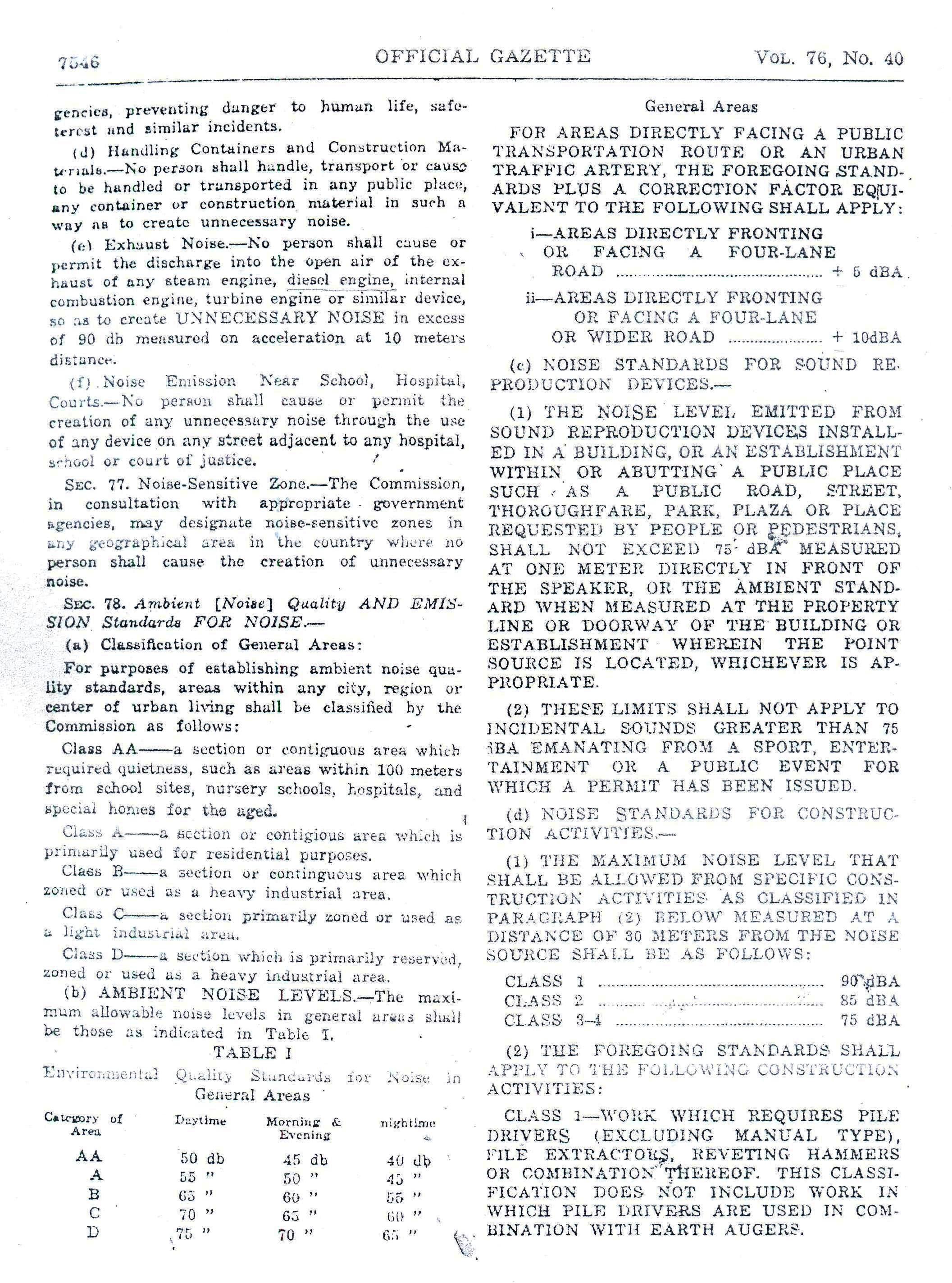 Page 2 of the NPCC Memorandum Circular No. 002, Series of 1980
 Page 3 of the NPCC Memorandum Circular No. 002, Series of 1980
Perhaps the material above should serve as a basic guide for local governments and private citizens in monitoring noise. People should be knowledgeable of what can be considered as unacceptable. We have never been known to understand and appreciate the concept of externalities such as those from congestion and emissions. So the next time your neighbor decides to go on a karaoke session or revs up his motorcycle, you have a basis for making a complaint and maybe even using the memo for reference in your barangay!
–
PhP 21.5 B for electric tricycles
Another article came out today, this time from GMA News about the NEDA’s approval of a PhP 21.5 Billion project for electric tricycles. The approval of the project is said to be based on the evaluation of a feasibility study submitted by its proponent, the Department of Energy (DOE). I have not yet seen this FS and I am not aware of any formal studies in this regard that has been made public so I cannot make a fair comment with regards to what the NEDA had as reference materials in their assessment. I am aware of one private initiative where UP was involved but to my knowledge this has not been disseminated or shared by the Client to government agencies. Though caution is still very much necessary and desired when moving forward with this e-trike project (What would happen to spent batteries? Is there adequate technical support? Charging stations? Policies regarding phasing out conventional tricycles?), it is hoped that this will be one of those “tipping point” moments that will ultimately benefit the country.
The article on the e-trike is reproduced below:
MELAY GUANZON LAPEÑA, GMA News March 26, 2012 5:29pmThe National Economic and Development Authority (NEDA) approved a P21.5-billion project to promote sustainable transportation and achieve energy efficiency.
The Market Transformation through Introduction of Energy Efficient Electric Tricycle (E-trike) Project will reduce fuel consumption of tricycles by 2.8 percent, equivalent to 560,926 oil barrels, NEDA said in a statement Monday.
“The project will distribute 100,000 E-trikes to tricycle operators on a lease-to-own arrangement, replacing their old gas-fed and two-stroke gasoline engine units. This way, we are also able to protect our environment,” according to NEDA, citing Socioeconomic Planning Secretary and NEDA board vice chair Cayetano W. Paderanga Jr.
“The electric tricycle is a specially designed, highly efficient tricycle that runs on a motor powered by a battery charged by electricity. E-trikes produce no noise, no tailpipe emissions, and represent an opportunity to make public transportation in the Philippines more environmentally conscious while improving the livelihood of tricycle drivers across the country,” reads the project description on the website of Asian Development Bank, which is financing part of the project through a P12.9-billion loan.
The project was proposed by the Department of Energy (DOE).
Additional financing will come from the Clean Technology Fund (P4.3 billion loan and P43 million grant), Clean Development Mechanism facility (P860 million), Philippine government counterpart funding (P3.397 billion).
Early this month, the DOE selected 10 winners in a nationwide contest for the best E-trike design on a theme of “Bright Now! Do Right, Be Bright.”
According to the DOE, the design is optimized to ensure structural integrity.
ADB explained that the project gives tricycle drivers the opportunity to lease or lease-to-own the E-trikes by paying less than 200 pesos a day, which translates to a higher take-home income.
“For example, a conventional tricycle needs between 5 and 7 liters of gasoline to travel approximately 100 kms, costing P250 to P350. To travel the same 100 kms, an E-trike will use between 3 kWh and 5 kWh of electricity, costing only P30 to P50. The 200 peso difference in fuel savings will help the driver pay for the cost of the E-trike,” ADB added.
The pilot project was launched in April 2011, with 20 E-trikes deployed in Mandaluyong City. The E-trikes use two different types of lithium ion battery technology—the 3 kWh and 6 kWh battery packs.
Models with the 3 kWh battery pack can run as far as 50 km on a single charge, and can be recharged to 80 percent in under 30 minutes at fast charging stations. Models using the 6 kWh battery pack can go up to 100km on a single overnight charge.
Sen. Edgardo Angara, who heads the Congressional Commission on Science, and Technology, and Engineering, lauded the E-trike project, saying the use of e-vehicles could lower air pollution levels and lessen the dependence on oil.
“Once thousands of E-trikes begin to be manufactured, many new jobs could be created. Working together, we can give Manila cleaner air, bluer skies, and a more livable environment,” Kunio Senga, director-general of ADB’s Southeast Asia Department, said in an earlier report.
The Quezon City government is preparing pilot test the E-trikes. According to a news release, the city has conducted an Eco-Driving Training for Quezon City Tricycle Operators and Drivers Associations (QC-TODA).
Discussed was the impact of good driving behavior, proper engine maintenance for lesser emissions and reduced maintenance cost as well as increased fuel saving for the current conventional tricycles operating in the city.
QC will be given 22,000 E-trikes over five years—the largest allocation among LGUs in Metro Manila—2,000 this year and 5,000 every other 4 years.
“The project is expected to complement the city government’s continuing effort to mitigate the ill effects of pollution on public health and safety. This would also pave the way for the gradual phase-out of conventional tricycles now plying city roads,” according to a statement by the Quezon City government.
Under Phase I of the project, 20,000 E-trikes will be distributed to operators in Metro Manila, Boracay, Puerto Princesa City, Cabanatuan City, and Davao City from 2012 to 2013.
Eighty thousand units will be distributed to operators in municipalities and cities that are still to be determined under Phase II (2013 to 2016).
NEDA said the project aims to promote, establish and develop electric-vehicle support industries such as battery leasing, recycling and disposal, and motor supply chain and charging stations.
But the Electric Vehicle Alliance and the Partnership for Clean Air are questioning the project, saying its funds were reallocated from the renewable energy industry—originally stipulated in the Clean Technology Fund.
Greenpeace is also not happy with the project.
“Why are we rushing this project?” asked Greenpeace Southeast Asia campaigner Francis Dela Cruz.
While E-trikes are not bad in terms of technology, Dela Cruz said
they are not necessarily good for the environment. “Hindi siya magiging source ng mobile pollution, but because you use power outlets to charge, you are just shifting to a stationary source of pollution—the fossil fuel-fired power plants,” he said.In addition, the project-mechanism that involves LGUs as lenders make the project seem dubious to Greenpeace.
“Kaya bang magpautang at maningil? Baka magpapautang tapos hindi maniningil, ang magbabayad ang taong bayan,” Dela Cruz said, noting this will be unfair to taxpayers who don’t benefit from the project but may end up having to indirectly pay for it. — VS, GMA News
–
First franchise for the electric jeepney
The first franchise for electric public transport was issued by the Land Transport Franchising and Regulatory Board (LTFRB) in favor of the electric jeepneys that currently service routes in the City of Makati, the financial center of Metro Manila. An article featuring the LTFRB’s issuance of the first electric vehicle franchise may be found here. Initially, these e-jeepneys were operating with support from the Makati City Government, which had the foresight for environment friendly public transport. But despite the formality of their routes in that city’s CBD, the e-jeepneys could only rely on donations, being unable to charge fares in part due their having no franchise to authorize them to do so.
The journey towards this first franchise was a long and somewhat arduous one. It took quite some time for the e-jeepneys to be recognized and registered under the Land Transportation Office (LTO) as the agency didn’t have guidelines that were flexible enough to admit a new generation of vehicles birthed by the desire to come up with low emission, low carbon transport to address environment concerns. For one, as the popular anecdote goes, the LTO was insisting on the vehicle having a tailpipe! Another story involved inspectors being dumbfounded by the vehicle not having a conventional engine (the e-jeepney had an electric motor). There are other stories (some probably tales) about other obstacles that the proponents of the e-jeepney had encountered from government as well as their own ranks (e.g., businessmen who just wanted to make a quick buck and weren’t really looking at the medium and long term of e-vehicle applications and deployment). And these add up to the significance of their accomplishments up to this point.
It is very fortunate and definitely admirable that proponents of the e-jeepney led by the Institute for Climate and Sustainable Cities (iCSC) and active players such as the Clean Air Initiative for Asian Cities (CAI-Asia) and those in the private sector have passionately and persistently pushed for the mainstreaming of electric vehicles. The group, now under the umbrella of the Electric Vehicle Association of the Philippines (EVAP) has been able to get the attention and support of bigger players such as Meralco and its mother corporation Metro Pacific. In fact, EVAP has been very strong in their lobbying for incentive to electric, hybrid and other vehicles using alternative energy sources. Perhaps with the continued, unflagging efforts of the group we will eventually see the transformation of Philippine road transport to one that is environmentally sustainable.
Theirs is a group that is very well grounded, knowing that the stakes are high and that the public and the transport sector need to be convinced of the viability of e-vehicles. The social and economic aspects of e-vehicles replacing conventional local transport modes such as the jeepney and the tricycle are quite complex when seen from the perspective of livelihood; a topic that seems to have been taboo to transport planners and policymakers. Yet, it is a topic that would ultimately have to be dealt with or addressed if real transformation is to be achieved for road public transport even outside the realm of the e-vehicle initiatives.
Transport, after all, is not entirely an energy issue or something simplified into such. This is why the various agencies need to work closely together and with organizations like the EVAP, the academe and international agencies like the ADB and the WB. It is a challenge to all concerned, and most especially to the DOTC, the DENR and the DOE to collaborate and encourage discussions in order to effect meaningful changes to our transport system. This should be pursued instead of the current set-up where national agencies like the DOTC and DOE appear to be working independently of each other while dealing with the same concerns. This can be problematic as well as wasteful in terms of time and other resources (e.g., funds), and may lead to confusion to the people and organizations involved.
–
 Caught (up) in traffic