Overnight parking at NAIA
The main terminals of Manila’s Ninoy Aquino International Airport (NAIA) each have overnight parking facilities. These are all open lots located near the terminals and have roving personnel on motorcycles for security. The overnight parking spaces for Terminals 1 and 2 are located a bit of a walk away from the terminal buildings but are generally spacious and do not reach their full capacities.
Terminal 1’s overnight parking is located on the lot to the right as travelers drive through the security check for vehicles. Terminal 2’s overnight facility is near the old Nayong Pilipino gate and appears to be the combined parking lots of the now-closed theme park and the also closed Philippine Village Hotel. Terminal 3’s overnight parking spaces are generally spread out with most along the service road or driveway that leads to its still closed multi-level parking facility. Other spaces made available for overnight parking are those near the entrance to Terminal 3.
I haven’t tried overnight parking at T1 and T2 but I recently availed of overnight parking at T3. Following are a couple of photos to describe overnight parking at T3, followed by a few tips on how to get a slot in what is always a full area.
 Overnight parking spaces are along the service road on the right that ultimately leads to a ramp access to the still closed multi-level parking facility at Terminal 3. There is a sign that states overnight parking is full. Ask for assistance from the security staff to find a slot.
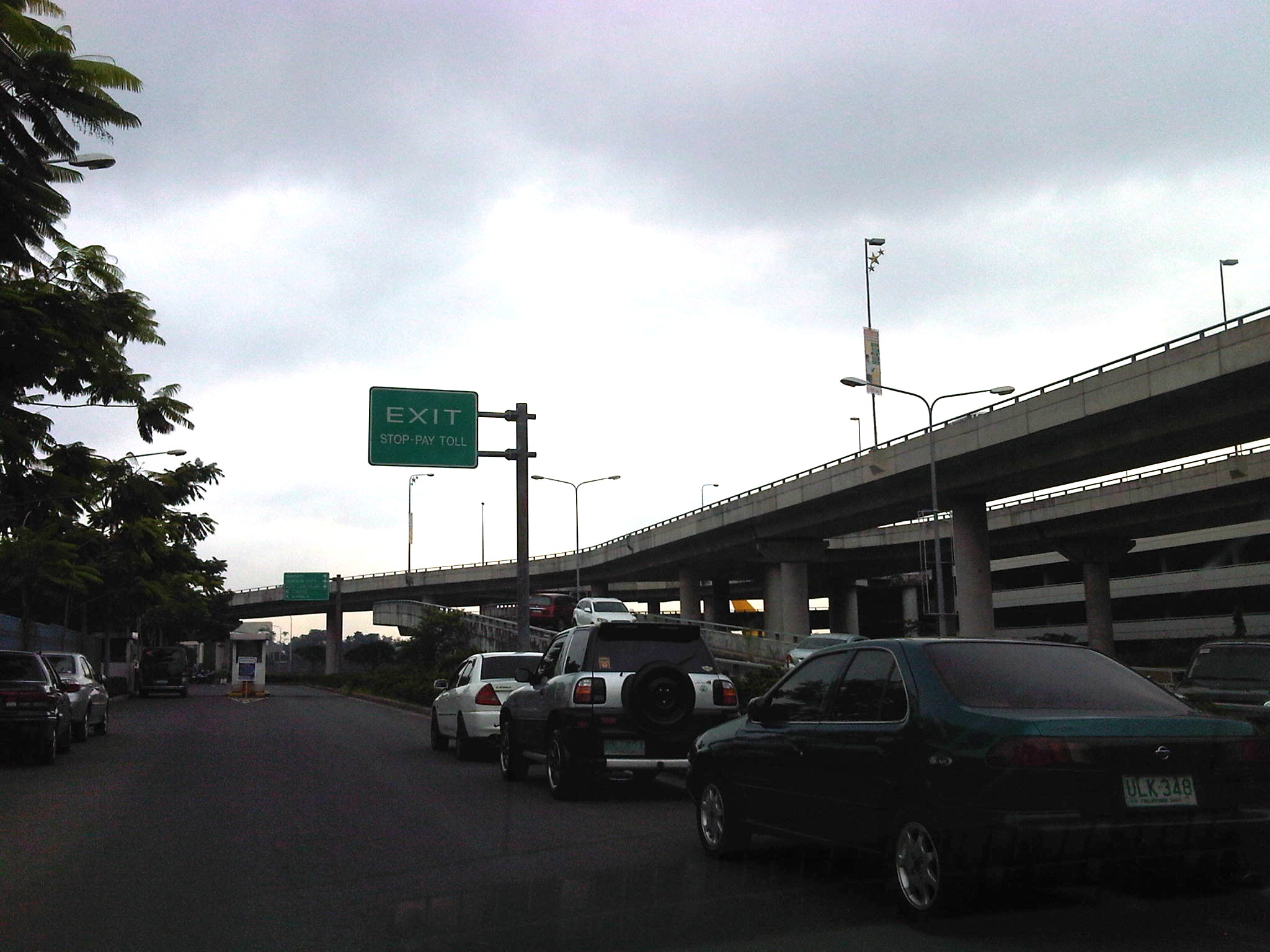 The service road leads to a ramp (visible at the center of the photo) to the closed multi-level parking (also visible on the right of the photo) of Terminal 3.
A tip for those wanting to park their cars for a night or more at Terminal 3: ask nicely for assistance from the security guard at the entrance to the parking lot. They will help you find an open space somewhere (trust me, it’s quite a challenge) in what is always a full overnight parking area. Show your gratitude by tipping. It’s definitely worth it and they’ll probably even check your car to return the favor. And yes… overnight parking fees are quite cheap at 50 pesos (about 1.15 USD) per night.
–
Morayta Street and some thoughts on reviving Manila
The University Belt in Manila is called such because of the proliferation of schools, particularly universities and colleges, in the area. Most recognizable are institutions such as the University of Sto. Tomas, University of the East, Far Eastern University, Polytechnic University of the Philippines, Centro Escolar University, Manuel L. Quezon University, San Beda College, San Sebastian College, La Consolacion College, National Teachers College and College of the Holy Spirit. The U-belt, as it is also known, stretches all the way to Intramuros and Padre Faura where many other institutions like UP Manila, Mapua, Letran, Lyceum, PNU and Sta. Isabel College are located.
The streets in the area are very familiar to many as they are usually indicated in the sign boards of jeepneys and buses plying routes in the area. These include Recto, Lerma, Espana, Legarda, Mendiola and Quezon Blvd. An ubiquitous street in the area is currently named Nicanor Reyes Sr., in honor of the founder of the Far Eastern University, the main gates of which are located along the street. Nicanor Reyes, of course, is more popularly known as Morayta for most people even the younger generation who picked up the old name of the street, which is more familiar with public transport drivers (jeepneys and taxis). Morayta connects Espana with Recto.
 Morayta Street (Nicanor Reyes St.) – Recto bound traffic with the FEU on the right side. There is practically two lanes per direction but one lane is usually occupied by parked or waiting vehicles. Add to this the operations of public utility vehicles as the street is along jeepney routes.
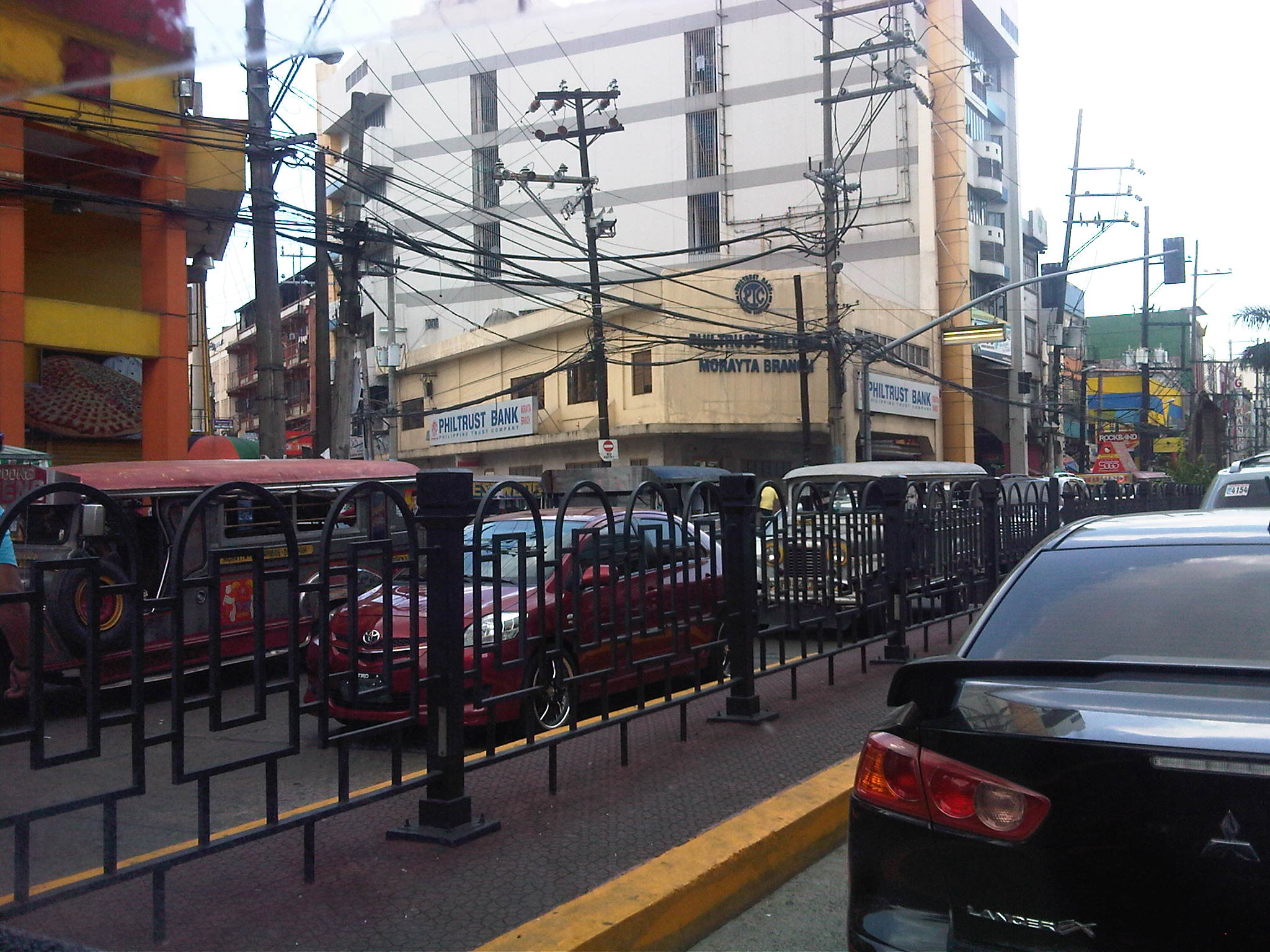 Railings – street railings on the median island along Morayta help minimize jaywalking along the busy street. There are no median openings for vehicles along the street though there are junctions like the one with R. Papa Street shown in the photo.
 Pedestrian traffic signal – there is a traffic signal along Morayta for pedestrians crossing the street in front of the FEU main gate. Such signals may be equipped with a button for on-demand green indications.
 Pedestrian flow – because of the schools, there are many students (generally in uniform) in the area. Each school would usually have a distinct uniform for females though some are generally in white with their school logos or IDs the only distinguishing aspects. Meanwhile, male students usually wear white polos and black pants. The photo above shows students crossing in front of the FEU gate. The photo also shows the typical commercial establishments in the area that include fast food and book shops.
 FEU main gate – the university has several access/egress points along Morayta including those for people only and this gate where vehicles may pass. Many universities (with only few exceptions) in the University Belt have very limited space with some having practically no campuses to speak of but only buildings where they conduct their activities.
 Parking and standing – parked and standing (waiting) vehicles occupy significant road space. While standing vehicles have their drivers and could be made to move, the parked vehicles generally take up a lane that could otherwise be used by pedestrians. I am not aware of any pay parking regulations along Morayta. There are no signs indicating pay parking schedules and rates, and have not seen parking attendants like the ones in Makati.
 Approach to Recto – the intersection with Recto Ave. is signalized and the median island is tapered to accommodate vehicles queuing to turn left towards Mendiola or Legarda. The LRT Line 2 superstructure is also visible in the photo above Recto. Pedestrians walk along the building arcades that are typical of most older buildings in Manila, which are similar to those in other old cities in the Philippines.
 Entry from Recto – the photo shows Morayta as our vehicle turned right from Recto. Taken during an April afternoon, there is very light traffic between Recto and R. Papa, and not so many students as those shown in the previous photos, which were incidentally taken during the morning of the same day. Note the vehicles parked on the curbside.
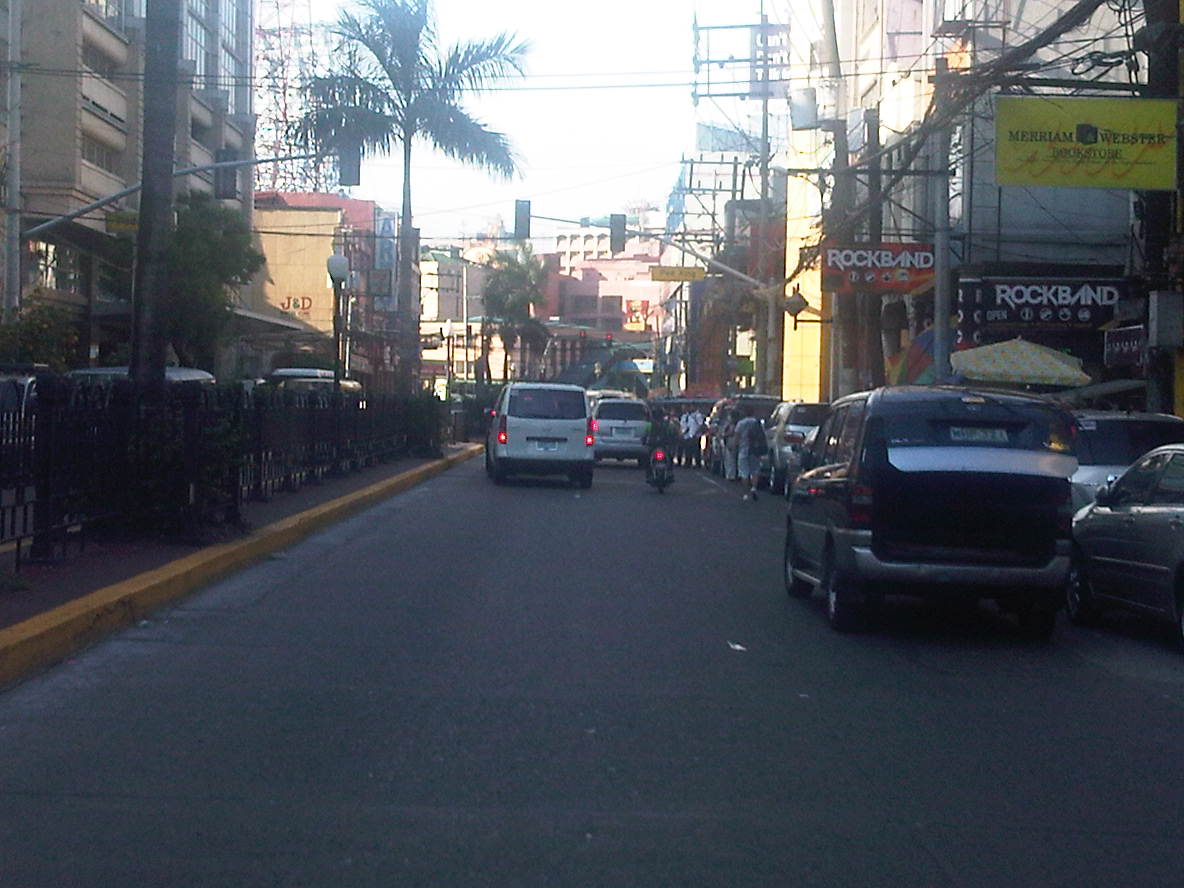 Build-up – approaching the signalized pedestrian crossing, we noticed some congestion due to the stopped vehicles and the presence of pedestrians. The section between R. Papa and Espana is usually congested due to several reasons including the presence of an informal jeepney terminal at the corner of Espana and Morayta.
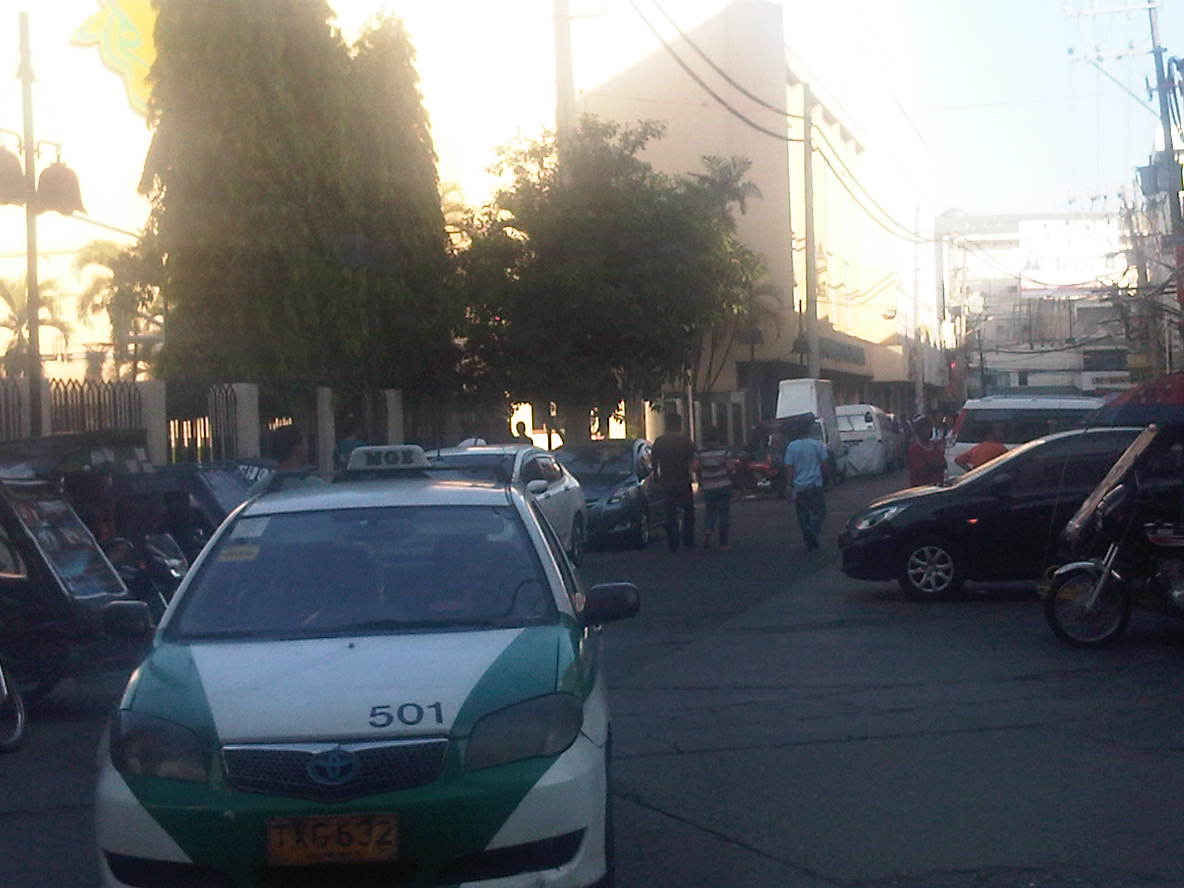 Junction with Paredes – a peek at Paredes St. shows more parked vehicles and tricycles lined up and waiting for passengers. Public transport demand along Manila’s side streets are served by tricycles and pedicabs, and until a few months ago by what were called “kuligligs.” The latter were also paratransit modes that were the motorized versions of pedicabs fitted with motors or generators much like the ones used in farm equipment or motorized bancas in seaside towns. These are called tricyboats in Davao. Meanwhile, the term “kuliglig” is used in many parts of Luzon for farm tractors used as public transport in the rural areas. Paredes St. is quite busy as the Professional Regulations Commission (PRC) is located along the street.
 Informal terminal – the approach to Espana is usually congested in part due to the informal jeepney terminal from the corner of the junction. Some jeepneys even tend to bypass the line and pick-up passengers right at the corner and often blocking turning traffic.
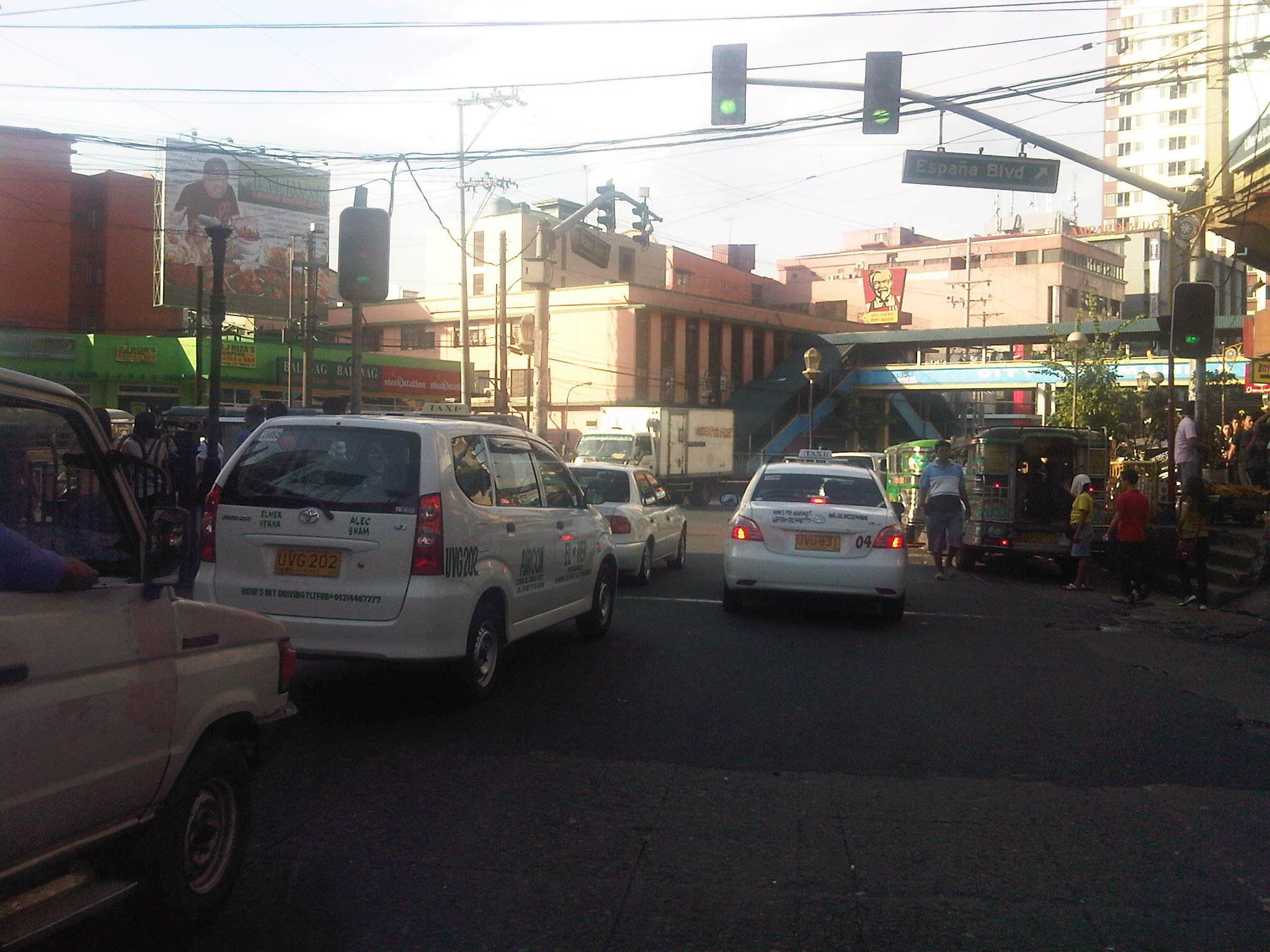 Approach to Espana – the intersection is signalized but there are jeepneys usually camped out at the corner, effectively reducing throughput along the intersection.
There are many streets like Morayta in Manila that can actually be evaluated and considered for pedestrianization if not for road diets. Careful studies and perhaps an experiment here and there should show the feasibility and practicality of generally closing some streets to motor vehicles including tricycles and jeepneys. For some streets, public transport access may be maintained but there should be genuine effort to improve pedestrian facilities to enhance the experience of walking in what are supposed to be historic streets in Manila. Considering the volume of foot traffic in the area, one would assume that the City of Manila should be thinking about how to bring down motor vehicle traffic while providing for public transport and walking needs in the city. Perhaps some radical plans need to be formulated including out of the box ideas to revive Manila streets such as Morayta? I would like to see the schools come up with these plans and perhaps be instrumental in implementing the same and not just for the sake of their students and staff who are exposed to pollution, congestion and safety risks on a daily basis. It can be done if people and institutions will collaborate to make it happen.
–
Some thoughts on airport parking for NAIA T3
I had another unpleasant experience parking at NAIA Terminal 3 just before Christmas. It seems its getting more difficult to park at the airport every time and authorities have yet to address the parking problem despite the solutions staring them in the face. I would like to believe that the typically higher demand for parking during the Christmas season can be accommodated if the available parking space can be managed and equitably allocated for users of the terminal.
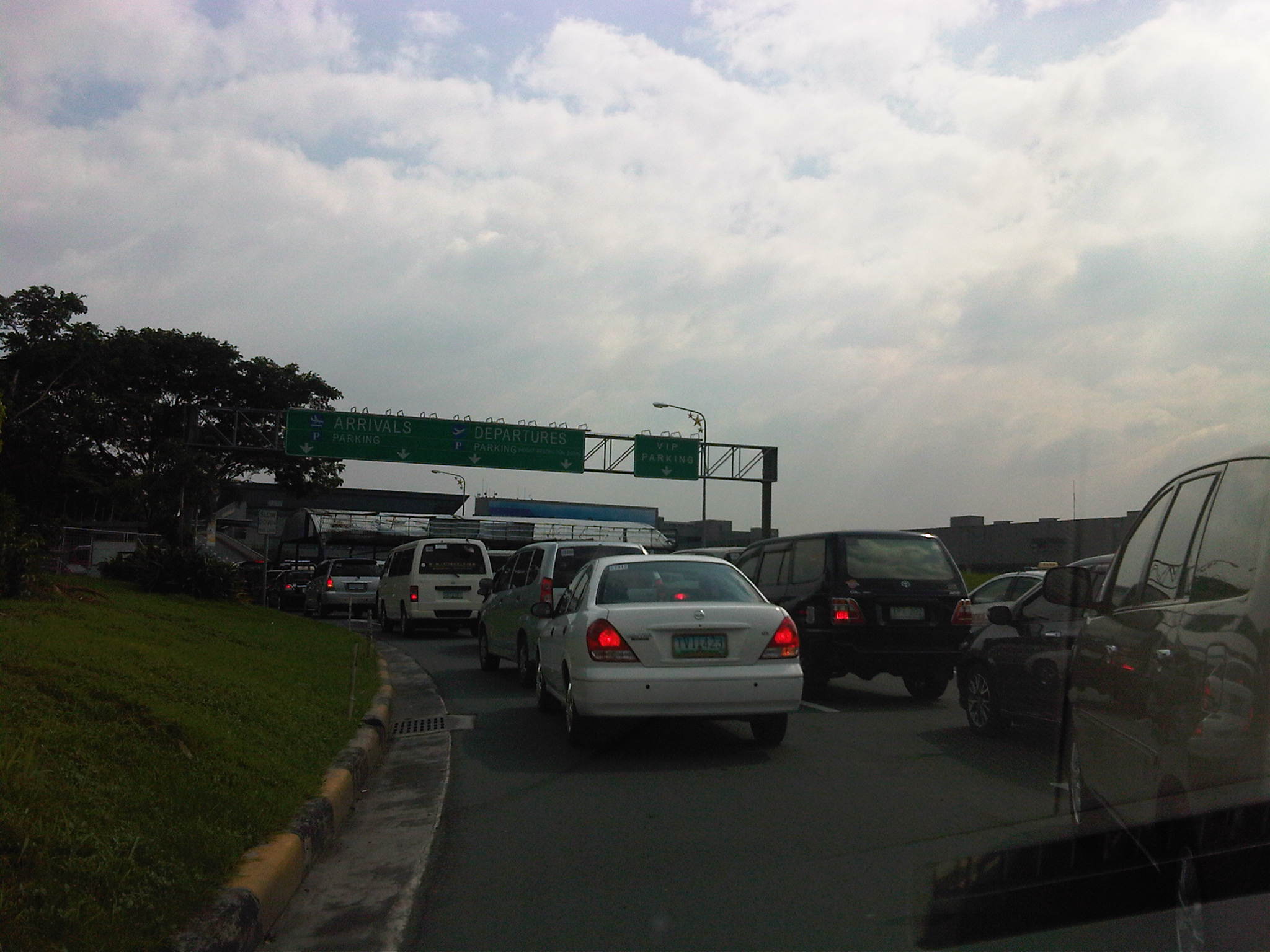 Queue at the entrance to the airport – the guards were still inspecting each vehicle but they had to wait for these to inch towards them at the inspection point.
 While the signs seem to suggest different parking facilities for arrivals and departure, there is actually one large open parking lot located in front of Terminal 3. This lot is segregated among airport taxi services, employee parking, overnight parking and general parking. Meanwhile, the parking area to the right side of the ramp to the departure area is generally empty but for a few vehicles that are said to be owned by employees of the airport. This is quite odd considering they also have a lot of parking space for them
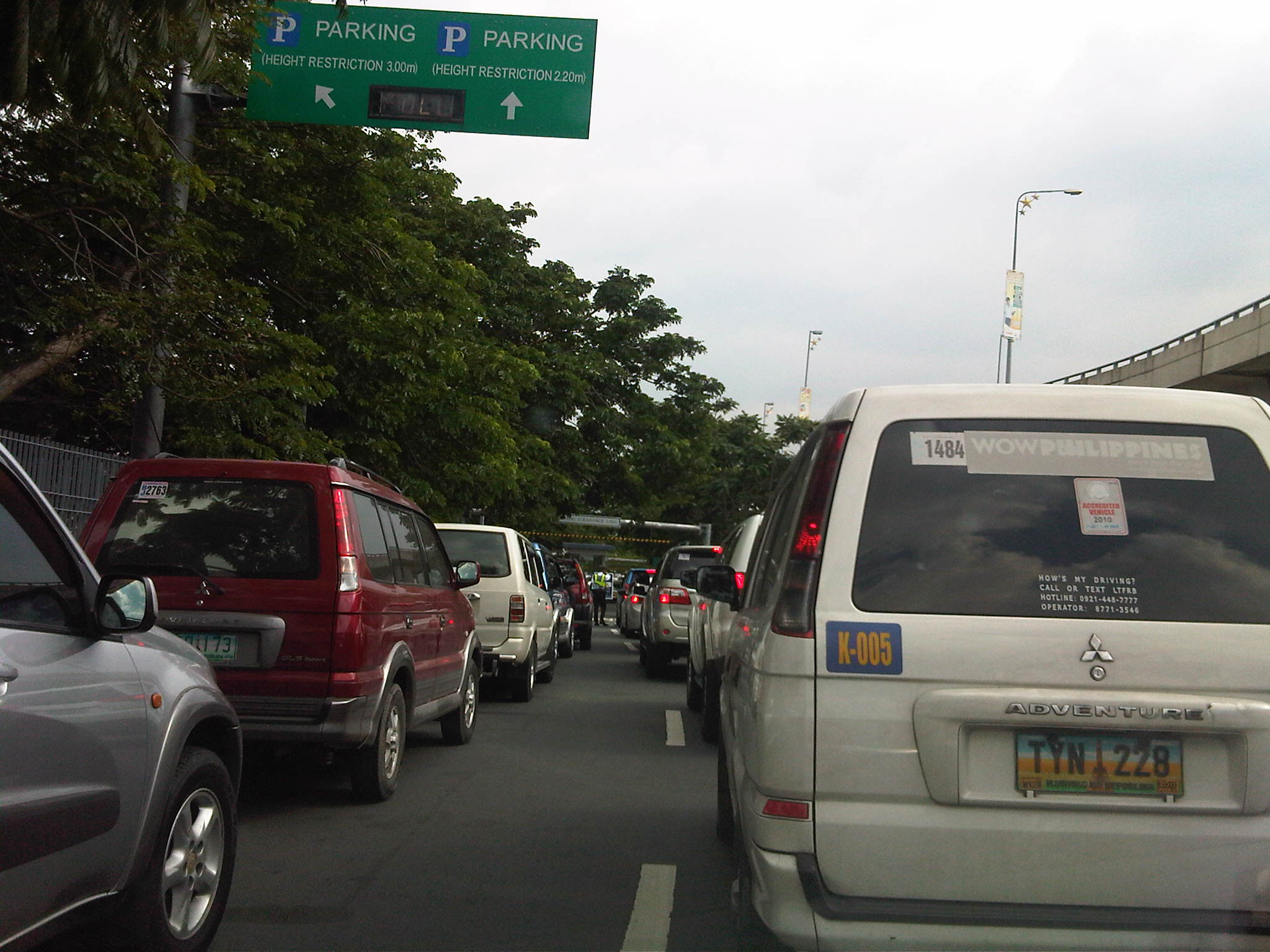 Everyone had to wait for the security to wave them through to to parking lot. Others were content with staying inside their vehicles while waiting to pick-up their passengers.
In the end, I had to rush to the airport terminal after parking my car as my wife’s plane was already arriving. I wasn’t able to take more photos of the parking situation that day but knew I had other opportunities to do so in the near future. That future was when I was back again recently at Terminal 3 when I drove someone to the airport for an outbound flight after the Christmas break. The queue at the gate was much better and we were able to enter the parking area without a glitch. There were many spaces available but these were mostly along the fringes of the lot, with some requiring a few minutes walk to or from the terminal.
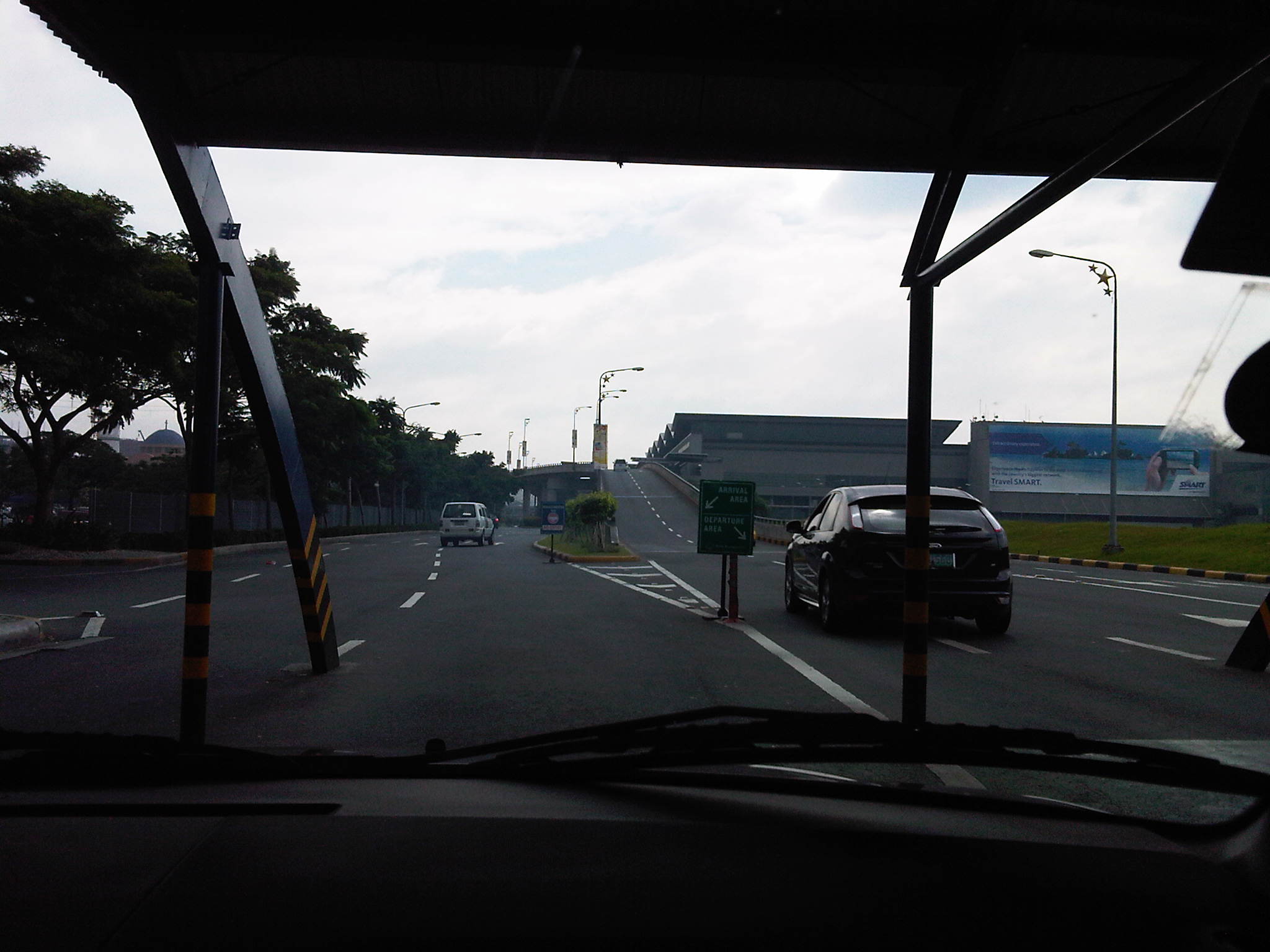 View from the inspection gate with the on-ramp for the departure level to the right and the driveway to the parking and arrival areas to the left.
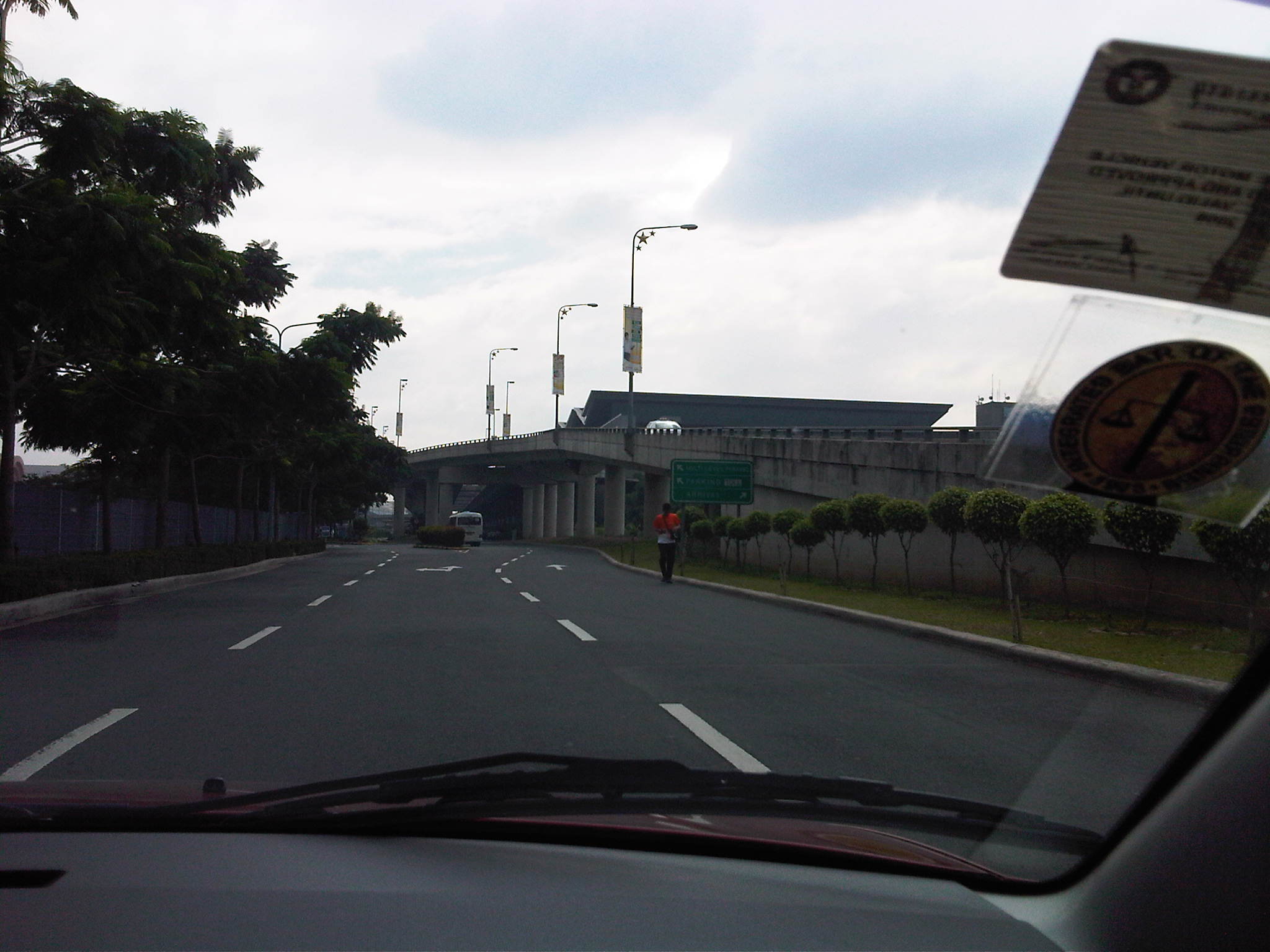 The way to the arrivals driveway (right) and the parking lot (left) was unlike the condition shown in the earlier photos taken just before Christmas.
 There was a sign stating that the overnight parking area was full. The overnight parking area for those who opt to leave their vehicles until their return is actually the driveway on the right side of the photo that eventually leads to the on-ramp for the multilevel parking building that until now has not been opened for various reasons. To the left is the driveway to the parking lot.
 Those vehicles lined up in the photo are not part of a queue for arrivals. These are parked along the driveway designated for overnight parking.
 Meanwhile, these are vehicles at the parking area designated for the general public.
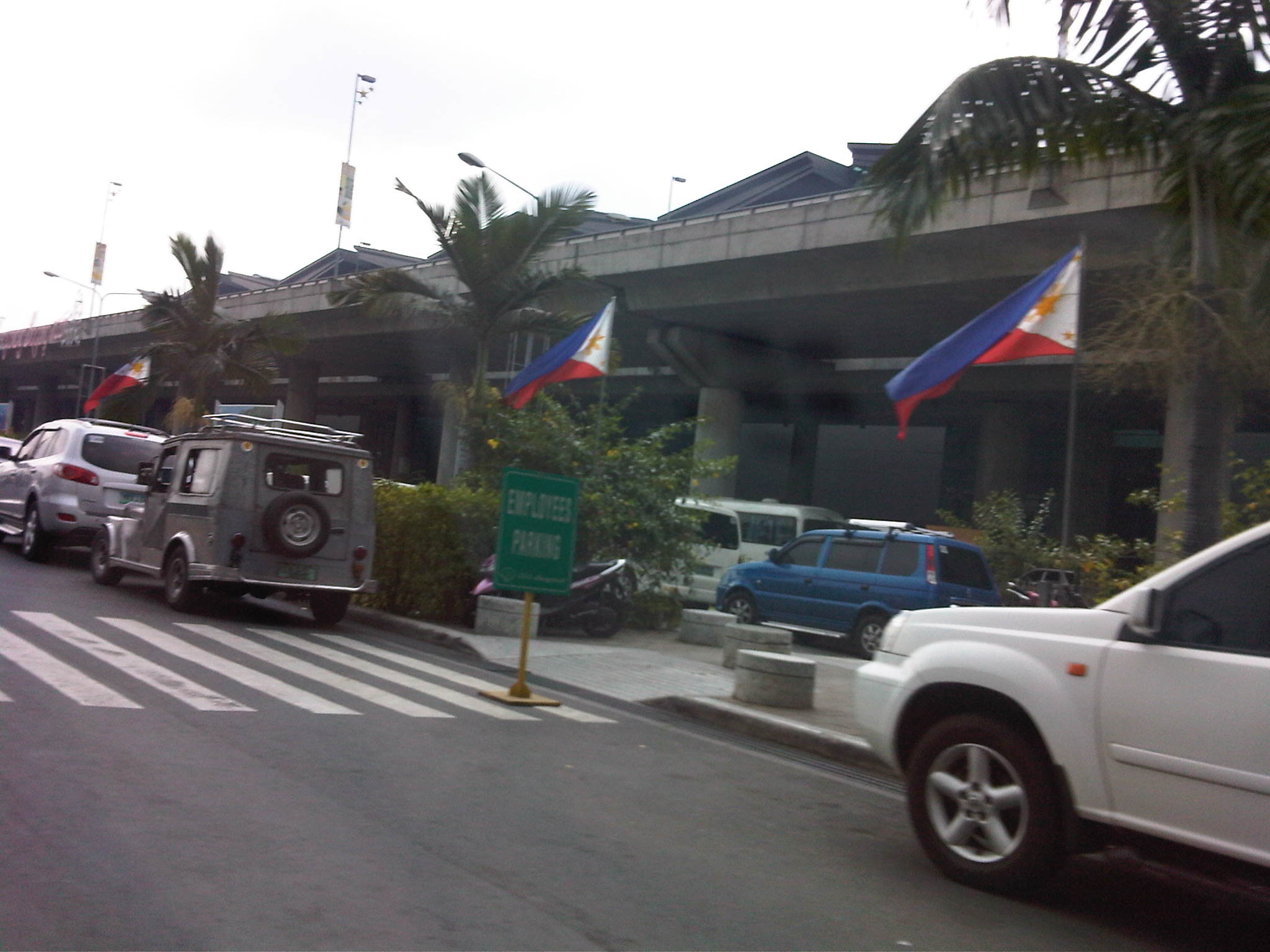 There seems to be a lot of signs for “Employees Parking” when airport authorities should prioritize space in this area for passengers and well-wishers. There are other under-utilized areas better suited for employees. I also wonder just how many employees actually have cars.
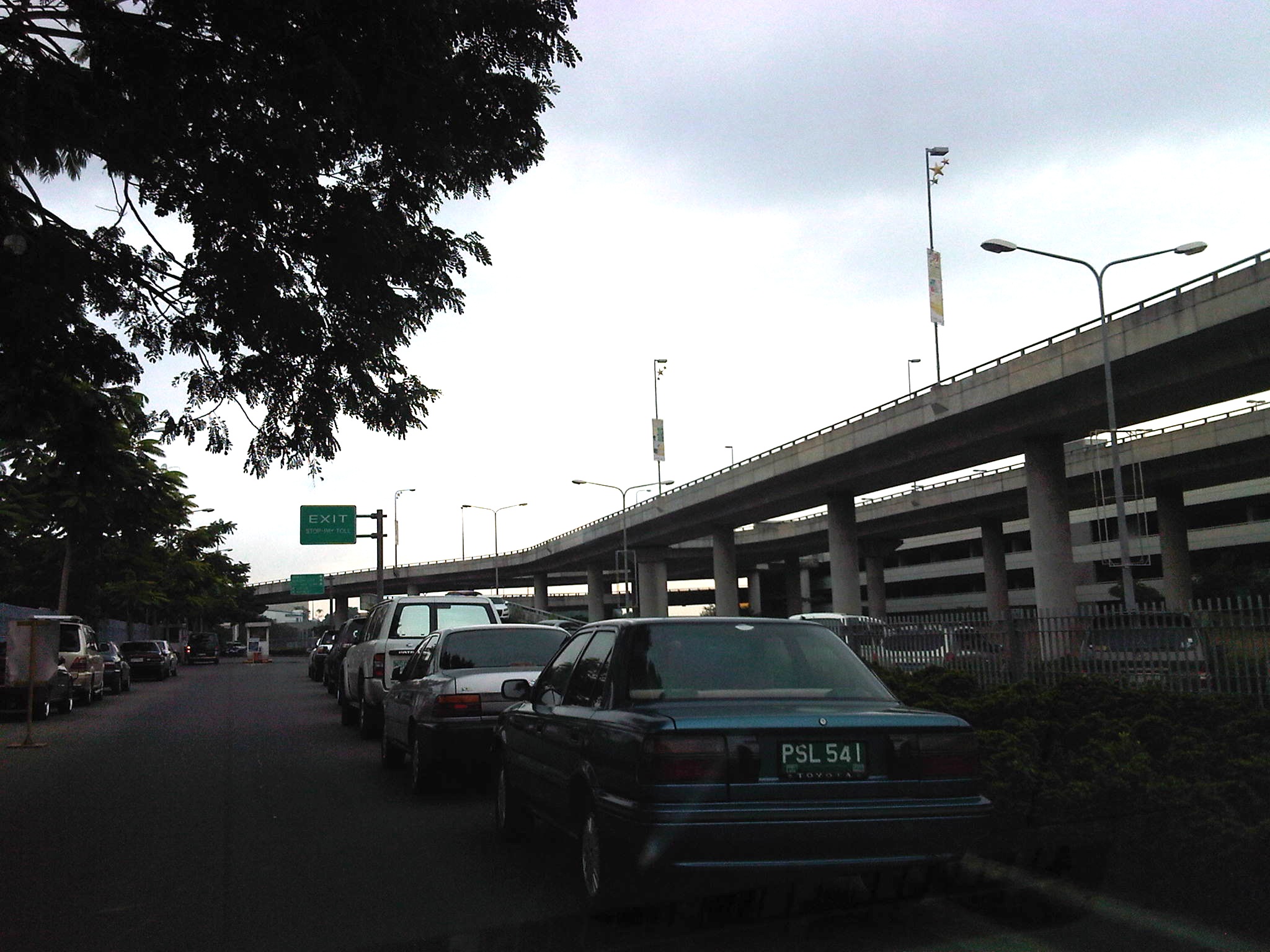 Turning towards the exit from the parking facility, one is greeted by more vehicles parked along the curbside (both sides of the driveway, actually). The fence separates this driveway from another that leads to the ramp to the multilevel parking building that is visible on the right side of the photo. This latter driveway also has vehicles parked along its length, which is allocated for overnight or long term parking. Above is the ramp from the departure level.
 In this photo, the ramp to the multilevel parking facility can be seen clearly and is occupied by parked vehicles. I still wonder how long it would be and what it would take before NAIA Terminal 3 finally makes the parking building available for use of the general public when, according to some sources, there are no structural issues barring the use of the building. Meanwhile, there is already an obvious demand given the evolving preferences of travelers with their own vehicles.
 Motorcycle parking at the fringe of the parking. This is actually another driveway utilized instead for motorcycles.
The layout of the open parking lot at Terminal 3 can be seen via Google Earth as shown in the image below. The area designated for public parking (center to right before the off ramp from the departure level) is conspicuously full while there seems to be a lot of spaces available in the area allocated for taxis and airline and airport employees (left in the image and prior to the on ramp to the departure level). There is also a relatively spacious open lot to the left and adjacent to the terminal building itself. This seems to be reserved for employees (again?) and VIPs. While the last area may be allocated for employees and VIPs, I would like to point out that more parking spaces should be allotted for travelers and well-wishers. Questionable for me is the allocation of so many spaces for taxis and vans that seem to be using the lot as their depot. I seem to remember that these public utility vehicles should have their garage somewhere and not necessarily at the airport where they seem to be lording it over “regular” taxis. These airport taxis charge significantly higher if not exorbitant rates compared to the typical taxi and to some, their preferential treatment at the airport is at the expense of passengers and well-wishers who certainly deserve better public transport service.
 Layout of NAIA Terminal 3 (image from Google Earth)
In the image above, the building with the light-colored roof to the right of the terminal building is a multilevel parking facility. The parking building is directly connected to the terminal and is accessible via the southeast wing of the terminal. I am not aware of the capacity of this facility but based on what one can see from the outside, its 5 levels should be able to accommodate quite a lot of vehicles and offer other opportunities for business (e.g., car wash, small shops, etc.) much like what is already available in similar facilities found in shopping malls.
[Note: An news article appearing on January 27, 2012 states that the parking building has a 2,000 car capacity while the open area can hold 1,200 cars. I assume these numbers refer to the number of spaces and do not include waiting or circulating vehicles.]
–
Parking galore
I met Paul Barter not too long ago when he visited Manila to give a presentation on parking at the ADB. This was at the then annual ADB Transport Forum held around May every year at the ADB’s headquarters in Manila. He is a faculty member at the Lee Kuan Yew School of Public Policy of the National University of Singapore. I keep forgetting that he is a regular blogger and writes a lot about sustainable transport and particularly about parking. And so I share this awareness to my readers about Paul’s blog Reinventing Parking.
Reinventing Parking is an excellent resource for a lot of articles and references on parking. Paul has researched on parking in most Asian countries and has been to major cities in the region where he has collected first hand data on parking policies and behavior. I find his materials well researched and his discussions and opinions on parking quite interesting as many of the issues he has delved into in his posts are very much applicable to our experience in the Philippines. I have had the pleasure of sitting down with him to talk about parking policies and standards (?) in this country for his comparative research and a paper he was doing at the time. I’m sure there’s a lot our planners and developers will learn from Paul’s work. Perhaps, even decision-makers or government officials in-charge of parking standards (e.g., National Building Code) can pick up a thing or two from his body of work.
–
Traffic going bananas
I’ve written about land use and parking along Katipunan Avenue, which is part of Metro Manila’s Circumferential Road 5. Katipunan extends southwards to Blue Ridge, St. Ignatius and White Plains (the latter subdivisions just across the street from Camp Aguinaldo) where there are also many establishments along either side of the road. Most of these establishments are restaurants that attract significant private vehicle traffic. Note that there are no public transport routes along Katipunan/C5 in the Blue Ridge, St. Ignatius and White Plains areas. As such, establishments are more likely to attract people with cars rather than those taking public utility vehicles.
Many of these establishments are on lots formerly occupied by residential buildings (i.e., houses) considering the predominant land use in the areas. These were eventually purchased and converted for commercial use, resulting in layouts that generally do not include adequate parking spaces. The consequence of shortcomings in parking have been the propensity for on-street parking such as shown in the following photo in the Blue Ridge area.
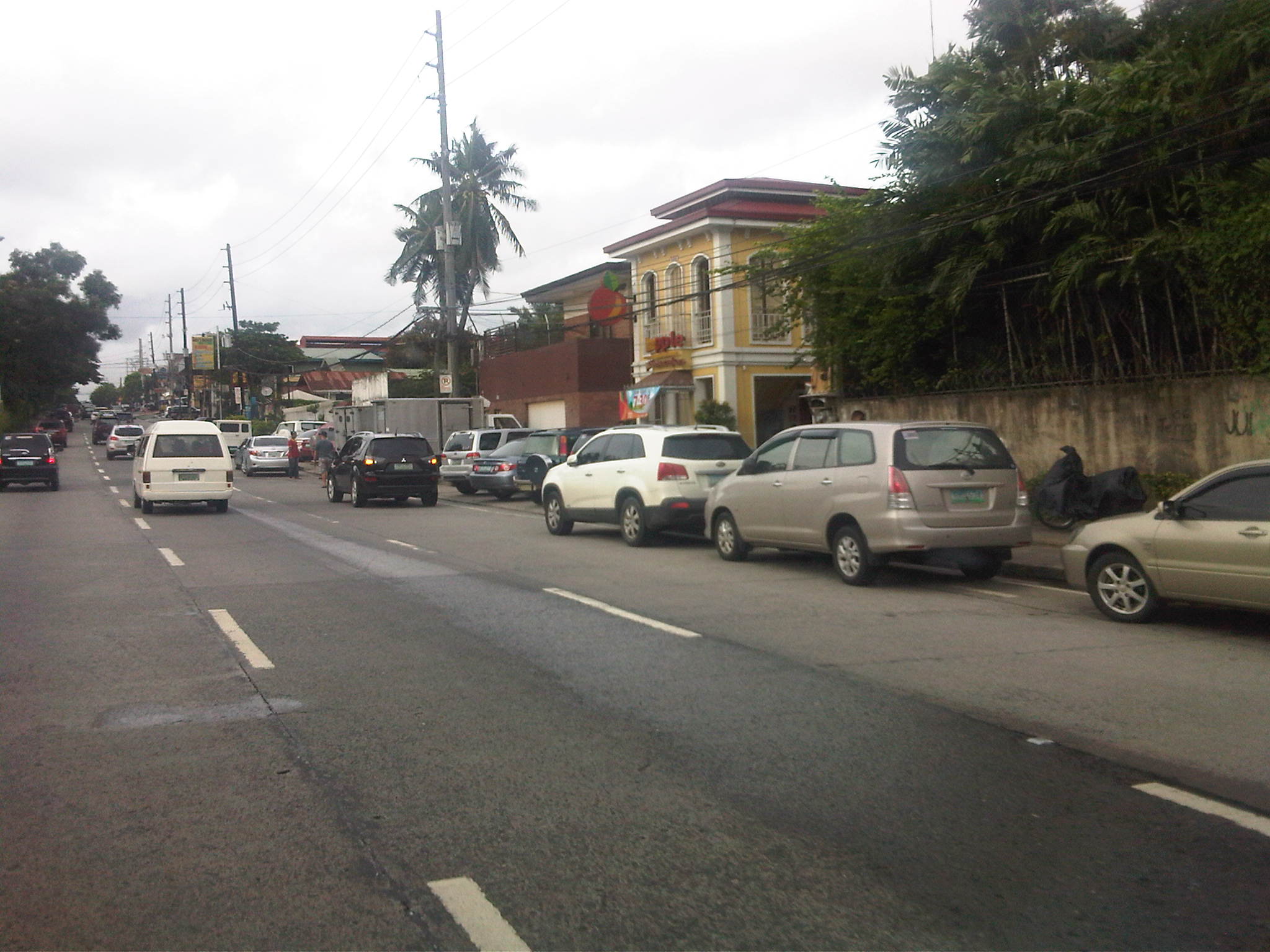 On-street parking for a popular restaurant/cafe along Katipunan/C5 at Blue Ridge.
Such case and many others like it along Katipunan (and other Metro Manila or Philippine cities roads) are the result of both poor planning and lax enforcement of traffic rules and regulations in this country. Being a primary arterial, Katipunan/C5 should be clear of such unnecessary sources of roadside friction that effectively decreases road capacities while also increasing the risk of crashes as vehicles maneuver, or in some cases wrestle, for parking spaces.
Katipunan parking predicament
Developments along Katipunan Avenue in Quezon City are good examples of fragmented land use and transport planning in Philippine cities. The developments, particularly the high rise condominiums have been the subject of much opposition from residents of subdivisions in the area as well as two major institutions of higher learning that have defined the stretch of Katipunan that has been developed in the 15 years. I mention 15 years because this is the period during which most of the high density developments along Katipunan have been constructed, apparently with the blessings of city hall. It is also in the last decade that schemes such as road widening and the U-turns were implemented.
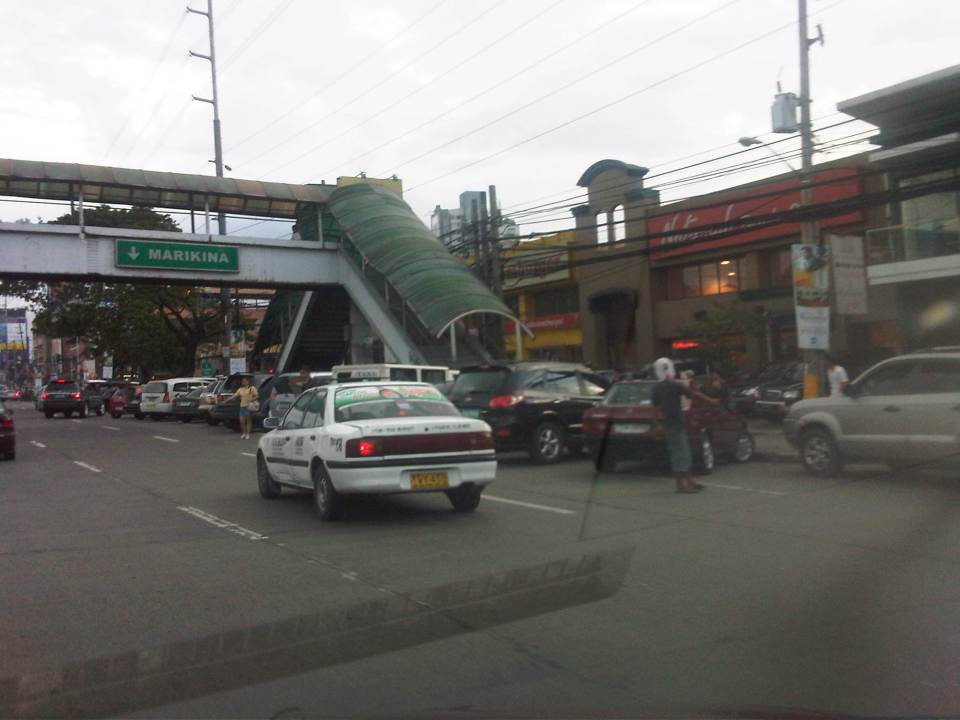
On-street parking along Katipunan at lanes that used to be part of what was a west service road. In many cases, onstreet parking has been the result of a violation of a very basic provision of the National Building Code, which prescribes the minimum number of parking slots for establishments such as restaurants, shops, banks and offices. Despite being quite outdated and disconnected with more progressive parking generation principles, the NBC should have been a basis for the local government to assess whether minimum guidelines are satisfied, and perhaps impose penalties on those who are not able to comply such provisions. This is a fundamental case where individuals (owners of parked vehicles) impose external costs (e.g., congestion and crash risk) upon the general public.
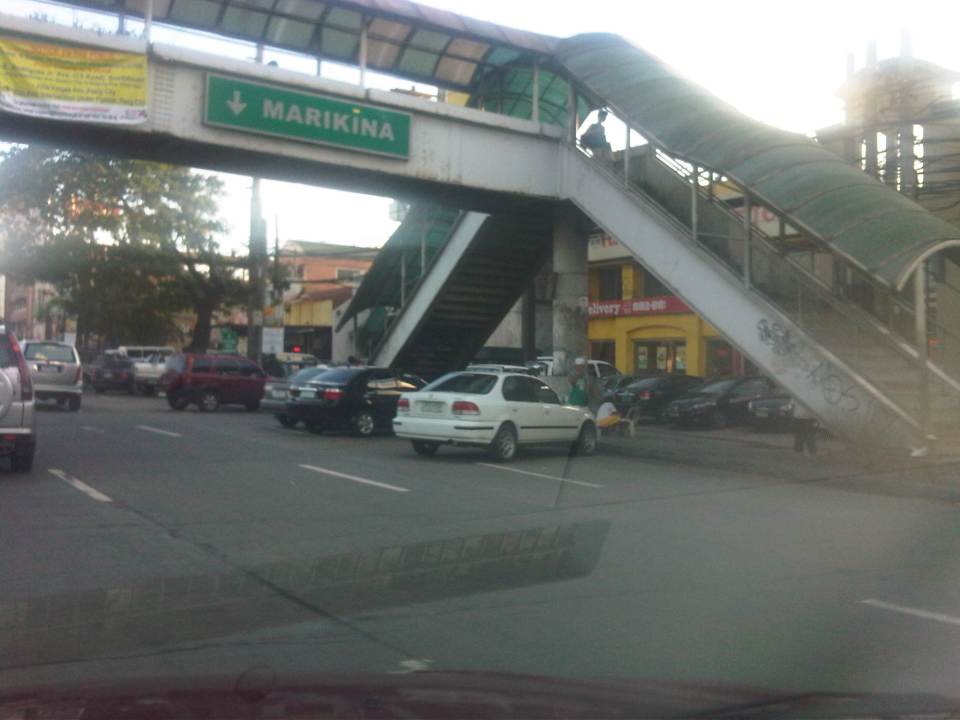
Another look at onstreet parking just beneath the pedestrian overpass across from Ateneo’s Gate 2 – restaurants along Katipunan are major traffic generators and despite the presence of public transport (jeepneys and tricycles) a significant number of trips generated by these establishments use private vehicles including cars, vans and SUVs. Katipunan’s pedestrian facilities are inadequate as there are practically no sidewalks, thereby forcing people to walk along the road. This exposes many and particulrly students to risks like getting sideswiped by vehicles driven by reckless drivers.
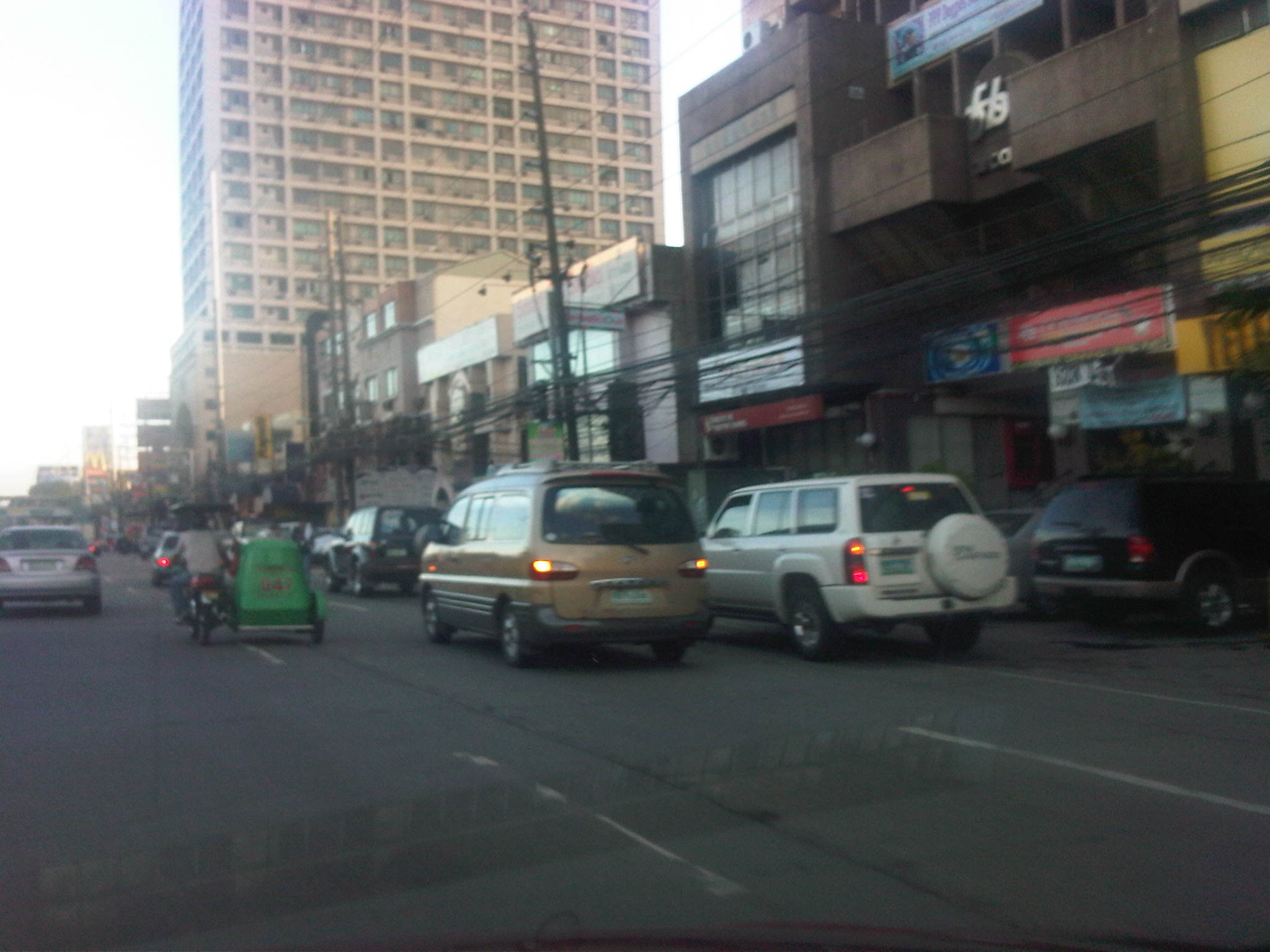
Waiting vehicles effectively occupying 2 lanes of Katipunan – many employ drivers who can stay with the vehicles while the occupants eat, shop or transact at establishments. In most cases, standing vehicles are practically parked vehicles as they occupy road space. High-rise residential condominiums along Katipunan may have complied with minimum parking requirements stipulated in the NBC but their trip generation characteristics considering the commercial establishments located at the same buildings surely require many more parking spaces than what are available.

Congestion along Katipunan’s southbound side – may be caused by onstreet parking, standing (waiting), or vehicle maneuvers with respect to the limited parking slots fronting most establishments along the road. One tutorial center located near a U-turn slot, for example, generates significant vehicle traffic that it affects both U-turn and through traffic. Meanwhile, traffic enforcers seem either ineffective or helpless in their efforts to manage traffic, including preventing vehicles from taking 2 lanes of Katipunan.

Standing/waiting vehicles in front of a new development along Katipunan – the new building hosts several establishments including a major bank, a book shop, a popular gym, and several restaurants or cafes. Despite the potential for vehicle attraction, only a few parking spaces were provided, leaving all other vehicles and their drivers on their own to find parking spaces or just occupy road space in front of the building. The footbridge across Ateneo’s Gate 3 has been extended to the building but this obviously has marginal impact in reducing vehicle generation and parking demand.

Another photo showing the parking situation in front of the new building – while traffic is generally a manifestation of economic activity, one opinion is that many developers are irresponsible by designing buildings that have inadequate parking and resulting in the general public bearing the burden of traffic externalities. Add to this local governments that turn a blind eye on such discrepancies in design (who reviewed the design that obviously violated the building code?) only to be on the receiving end of complaints. In some cases, LGUs probably will be forced to shoulder costs of providing solutions that developers should have covered in the first place if they were responsible enough or made responsible for mitigating negative impacts of their projects.
In the end, it is inevitable that we need to address the root of the problem, which pertains to land use planning and the zoning policies LGUs are implementing. Consistency is one thing and being circumspect about established guidelines is another. Sustainable development, after all, does not pertain to continuous transformation from low to high density development but more about balancing elements that would preserve the character of neighborhoods and communities, particularly and most importantly to ensure that quality of life is not compromised.
Airport parking
I’ve been to Metro Manila’s airport terminals quite frequently lately. It’s only March but I’ve traveled to Singapore twice, once using NAIA Terminal 2 for a Philippine Airlines flight in January, and again last February but using Terminal 3 for a Cebu Pacific flight. I’ve gone to Terminal 1 several times as I either dropped off or fetched the wife who flew in and out via either Singapore Airlines or Tiger Airways. Every time I went to any of the three airports, and especially when I was fetching someone, I couldn’t help but make some observations about the parking.
I’ve been to many airports including the huge modern ones in our neighboring countries. I must admit that I haven’t had the chance of using their parking facilities first hand. Most of the time I use public transportation from and to the terminals like when I use Changi or Suvarnabhumi. I have seen their parking buildings from the outside though. And I can say that my impression is that they are sufficient for their purpose whether their users be well wishers, people fetching relatives or friends, or travelers opting to leave their vehicles to return for them on their ways back.
I must say that the parking facilities of the three NAIA terminals can be viewed as a progressive case considering that there have been steady and obvious improvements when comparing features from Terminal 1 to 3. I won’t get into the technical aspects as qualitative assessment from fellow users like friends and colleagues point out that NAIA 1’s parking seem to be always full as with Terminal 2’s. The latter is quite unusual as it is used exclusively by PAL. Terminal 3 should have the largest capacity and this was expected for a terminal whose designers should have learned from the lessons of Terminals 1 and 2. However, in my recent trips to all three airports, my experiences have been quite the contrary in terms of finding a parking slot that is convenient enough; that is, not so far a walk from the respective terminal buildings.
It was surprising for me to find good parking slots in my most recent trips to NAIA 1 and 2. Meanwhile, parking at Terminal 3 seemed to be laborious especially considering the linear layout of the open parking facility. In that last sentence, allow me to emphasize open and add to it “outdoor” since Terminal 3 is supposed to have a multi-level parking building. This was supposed to be one of its features distinguishing it from 1 and 2. The problem is that airport officials have not given the go signal for this multi-level facility to be operational. This causes problems to airport users considering that there is a significant number of vehicles left by their owners for their return trips. These include overnight parkers who probably took a local trip with a schedule that prevented them from returning the same day. All these vehicles are parked along what should be a lane dedicated for traffic circulation. In fact, the line of parked vehicles extend all the way to the ramp leading to the entrance to the parking building.
Perhaps it is already time to open the parking building to the general public. It doesn’t take a genius to see that parking at NAIA 3 is already insufficient given the travel characteristics of its users. Operational costs including maintenance and security should not be a problem since users will be charged fees according to their parking durations. Also, a variety of services may be offered to users including cleaning like the ones offered in shopping malls and even quick repairs for those encountering some trouble with their engines or tires. It shouldn’t be so difficult to come up with a system for parking management that would enhance NAIA 3’s services. And it should be done now and not later.
I have other impressions of parking in the other terminals I have had the opportunity to use across the country including those of international airport in Mactan, Cebu and Davao. But these terminals do not generally serve as many people as Manila’s three terminals do so their assessments would have to be tempered against this backdrop.
Parking as an election issue – Conclusion
Parking as an election issue – Part 2
Parking or the lack of it for many establishments is partly due to the obsolete minimum parking provisions stipulated in the National Building Code. A review of this guide reveals extensive shortcomings that will always result in inadequate parking spaces when followed to the letter. In a recent project I was involved in, for example, following the NBC would have led to the conclusion (and God-forbid the recommendation) that 20 to 21 parking slots would be sufficient for a 245-bed hospital! Meanwhile, parking generation rates from abroad (Note: We don’t have local rates.) suggest a more realistic 431 slots.
Architects, engineers and developers are quick to interpret minimum parking space requirements as equivalent to the required number of slots. However, it is obvious that NBC minimum parking provisions will never be a sufficient basis for estimating the number of parking spaces to include in designs. Trip and parking generation rates have been developed in other countries and have been the basis for determining a suitable and reasonable number of parking spaces. These rates are based on trip or travel behavior and factors in typical dwell (parking) times for various types of land use. Thus, there are different parking generation rates for fast food joints when compared with fine dining restaurants. There are also different parking rates between condominiums and subdivisions, and the same applies to different types of offices.
The major shopping malls have become more aware of this and have provided more than enough parking spaces for car-using customers. In many cases, there is only the perception of parking being inadequate because drivers will also have preferences on parking space location within a lot or building. One shopping mall manager mentions that even during the Christmas holidays when mall trip generation typically peaks, their parking building’s top floors are not filled up and motorists would rather wait for slots on levels closer to the bridges to the mall.
One issue that is almost always raised by establishments regardless of type or size is the cost of providing parking spaces. Indeed, it is cheaper to mark spaces along the roadside or arrange for the use of vacant lots for the one’s purposes. But what happens when the same open lots are developed to make way for other buildings and road space is required to address traffic congestion? In the case of high rise condominiums, the cost of a parking slot is not included when one purchases a unit. The price of a slot can even be as much as a studio unit. Thus, residents would often resort to parking along streets or renting for overnight parking in nearby lots or buildings.
The experience in Makati has shown that parking can indeed become a serious problem. Makati streets were used as parking lots and office buildings could not accommodate the increasing number of vehicles owned by employees who were becoming more and more capable of buying cars. The latter is a natural phenomenon due to continuing economic development and the resulting increase in incomes. Those who can afford new cars would probably purchase one (or more) while those with less budget will acquire used vehicles. It took some time before Makati was able to build parking buildings and enforce strict roadside parking policies including pay parking managed by the city’s parking unit.
Schools are major traffic generators attracting many car users. Some campuses are fortunate that they have vacant lots or seldom used roads at their disposal. However, as one can see through fences, committing vacant lots to parking is not at all the wisest usage for such space. And as one song goes, should we “pave paradise to put up a parking lot?” On the other extreme, and there are many such cases, schools do not have the space for parking. One such school along Ortigas Avenue imposes its parking problems on the general public when cars and school service vehicles take up lanes along the major arterial as well as occupy sidewalks while waiting for their passengers.
For public places like churches, parks, markets and the like, accessibility to public transportation is often used as an excuse for not planning and providing for parking spaces. The argument is that since these are public spaces, they attract mostly commuters. What is not stated is the reality that these same public spaces also attract car and motorcycle users that when proportioned with commuters would require a significant number of parking spaces. This is very much the observation near places of worship, public markets and parks where traffic congestion is likely caused by vehicles parked along streets and even on sidewalks. [In many cases, there aren’t even sidewalks so people use the streets anyway.]
[Next: The case of Quezon City, and Conclusion]
Parking as an election issue – Part 1
A magazine article caught my attention the other day. A candidate for councilor of Quezon City, the largest city among the units comprising Metro Manila, mentioned that the candidate was against pay parking and that if elected will oppose all initiatives for pay parking in public places in the city. Further, the candidate made statements to the effect that free parking for churches, markets and schools should be guaranteed by the government.
While I am tempted to trash the candidate for being moronic in his/her view of such issues as parking fees, I will resist such temptation. Instead, I offer here my arguments “for” pay parking and let the reader assess for himself/herself if a stand against parking fees could hold water. First off, allow me to trace the origins of this issue. I believe it was last year when a local bill was filed at the Quezon City Council seeking to charge parking fees for parking slots constructed by the Quezon City government along major streets including Tomas Morato. If my recollection is correct, the parking spaces were part of a bigger project that also constructed decent sidewalks along the same streets. It is important to note here that these were projects funded by local funds and therefore were sourced from taxpayers money. It should also be noted that among the justifications for the project were the expected alleviation of congestion along the roads, considering that there was a propensity for on-street parking or waiting, and the lack of sidewalks have resulted in pedestrians also using the carriageway.
One aspect of the problem that was rarely if ever it was mentioned was the fact that the parking spaces were constructed in high activity areas where establishments failed to provide an adequate number of spaces for their customers or clients. Many of these are restaurants and shops (e.g., the ones along Morato) while there are also examples of schools and churches. I say “failed to provide” here because it is quite obvious to even the untrained observer that establishments like restaurants and bars attract many people. In the case of those along Morato, the people attracted are most often the ones who have cars. When you attract a lot of cars and do not have the spaces for them to park along, it doesn’t take a genius (or even a 6th grader) to arrive at the conclusion that there will be traffic congestion in the area. Such congestion is the result of cars being parked almost anywhere where there is open space and that includes part of if not an entire lane of the road.
[Next: Trip and parking generation concepts]
 Caught (up) in traffic